Let Sleeping Dogs Lie

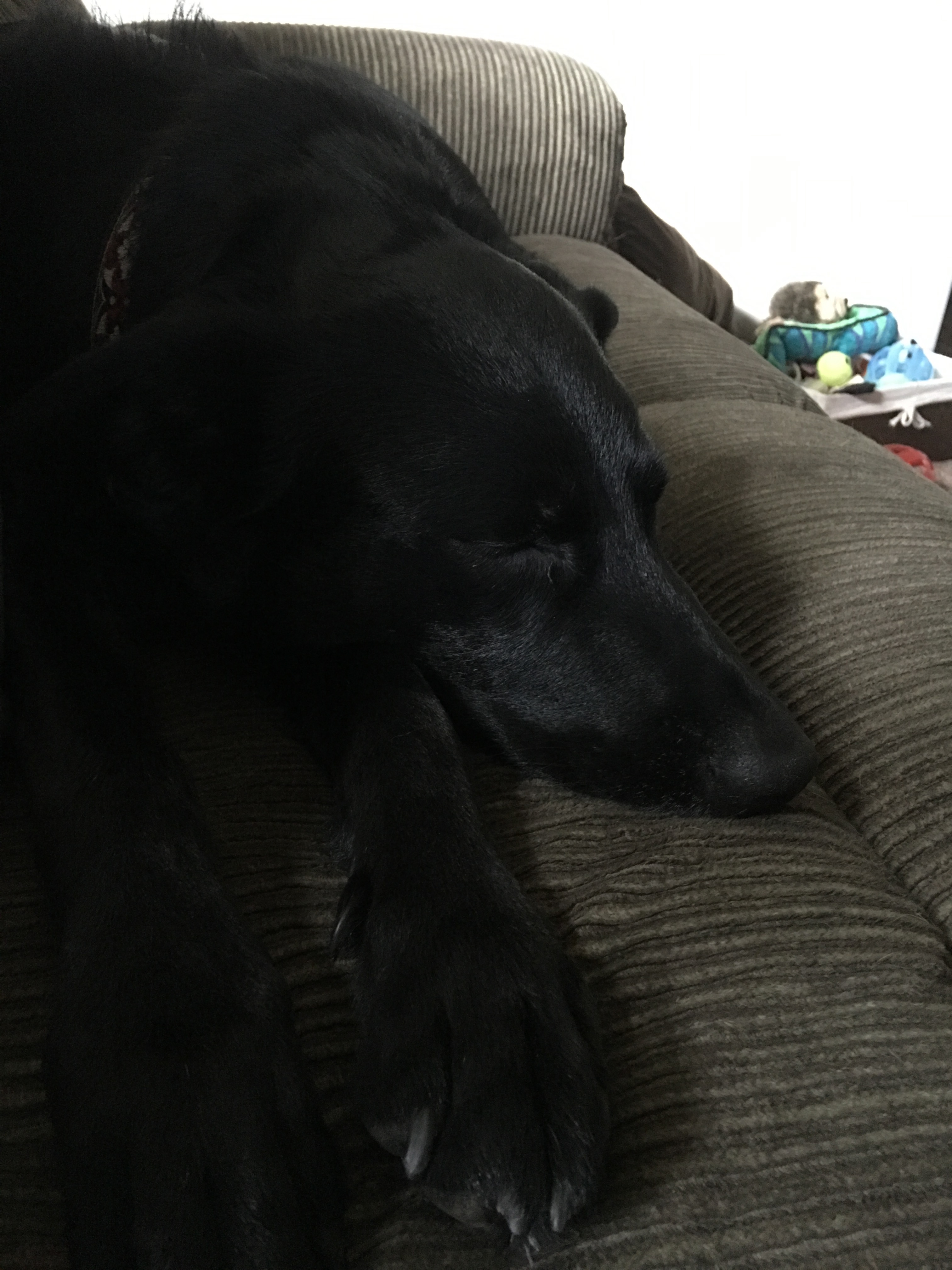
My sweet Sheprador
My sweet Sheprador

In my opinion, one of the more frustrating truths about positive advocacy is the need for repetition. I understand that because my challenges and disabilities are a part of my life, adapting, coping, and sometimes “making do” are a natural part of each and every day. I also understand that because many people with whom I interact do NOT live with hearing loss and balance issues, what is second nature for ME never crosses their minds. The trick… and something I have been struggling with, is how often do I have to ask for accommodations? How often do I repeat the same ol’ request so that I can simply interact with others equally?

The above photo is of my current service dog, Milo, from Fidos For Freedom, Inc. Milo is a young Sheprador (German Shepherd/Laborador Retriever mix) who rarely sleeps. When he does, he sure is cute. ‘Course I’m a tad bit prejudiced being Milo’s partner. The phrase, however, “Let Sleeping Dogs Lie” originates from a proverb that means to leave something alone if it is going to cause trouble, or dredge up old arguments.

However, when we strive to promote positive advocacy and request accommodations (that were asked for before and are still not a habit for those providing the service, workshop, or seminar), when do we just “leave it alone”? One of my longtime requests is that speakers use the microphone, and repeat questions asked from the audience INTO THE MICROPHONE. Yet, time after time speakers say, “Oh I don’t think I am going to use the mic. My voice carries…” or, “I’m just going to put the microphone over here… you can all hear me, correct?” I’ve even had speakers have everyone in the audience introduce themselves and give some information about their background WITHOUT A MICROPHONE in sight!

I wave like a crazy person and “shake my head no” when speakers say this, and yet time after time I sit in meetings like this with no one using the microphone. At the end of conferences I fill out surveys about my conference experience and have tried to relay how important the microphone is to me. I’m to the point that I may stand up and create a mini-scene, asking them to use the microphone. As a person with hearing loss, in a large, cavernous room, I go from hearing 95% with microphone in use, to about 20% when it is not. Any idea how hard it is to get anything out of a meeting if you are only getting 20%?

I don’t even go the extra mile and request CART. It’s expensive. In spite of people with normal hearing asking for a copy of the transcript as well and my knowing it helps more than just ME, I don’t make formal requests for CART as a simpler solution WILL actually meet my needs. Entering a new school year with loads of meetings on my calendar already, I am to the point of “letting sleeping dogs lie”.

The only problem is, it isn’t in my nature to roll over and give up. So wake up, DOG.

Denise Portis

© 2016 Personal Hearing Loss Journal


Feeling Like a Weirdo

Always thrilled to have a guest writer here at Hearing Elmo. If you live with chronic illness or a visible/invisible disability and love to write, I invite you to post in this venue to share your story.

I don’t remember when Deb and I first met. I feel like I’ve known her “forever”.  We just “clicked” early on and she is now one of my dearest friends. Deb has taught me so much just by example. We have a lot in common, but are also different in many fun ways. C.S. Lewis said, “Friendship is born at that moment when one person says to another, ‘What! You too? I thought I was the only one!” I’m thrilled to share a post from her and hope you will check out her photography site as well. Visions of Song

apropos of nothing

I was a little bit grumpy when I went into work this morning. Just your ordinary kind of grumpy, at least I think that’s what it was at the time. We had a staff meeting scheduled for 9:30. I was walking down a hall at 9, about to get some water from the kitchen, when I saw a teammate who said “we’re meeting in the first floor conference room”. Thinking I’d lost track of time, I said, doesn’t it start at 9:30? He shrugged and said “sometimes it’s different”. Later, I found out what he meant, but at that moment I was walking in the wrong direction, sans water, notepad, calendar, and orientation. I rushed to grab my things and when I walked in, everyone was seated. Now, let me mention that I am relatively new on this job, and the folks are really nice and teach me a lot about what goes on there. Today, though, I was already grumpy, and now I was LATE (and still didn’t have anything to drink because I’d forgotten to fill up in my haste). I sat at a place around the large, squared set up of tables, strategic for what I knew would be best for me, able to see the faces of everyone should I have trouble hearing anyone. My supervisor said “sit where there are papers” meaning the agenda and other materials. Well, the seats available were not strategic for me, and I was already feeling grumpy and it was obvious that I was late and slightly holding things up. I said “everyone forgets that I am hard of hearing and need to sit where I can best follow what’s going on. So, if it’s alright by you, I’m just going to get these papers and sit over here”, walking to where I intended to sit and feeling quite determined about that fact. Meanwhile, supervisor gestured as if to say “come sit by me”. I did not want to explain why that would not be ideal, and she was trying to be helpful, but it wasn’t helpful, and by the way I was feeling more and more like a grump at this point. Further, I was feeling like a weirdo. An oddball. Someone who needs something special. I deeply dislike standing out, or seeming like I need something unusual. Everyone else was sitting wherever they wanted to, and I had to have this mini-scene because, as I stated rather unprofessionally, no one seems to remember that I’m deaf and use cochlear implants to hear. At the risk of sounding like I’m bragging, among cochlear implant users, I am a super high performer. I am pleased and even thrilled by what I am able to do hearing-wise. Then I get in a typical work situation, and suddenly: I’m a weirdo. It does not help that I am also something of an introvert, friendly, social, smart, funny, but I need tons of time to process and recharge. I really don’t think it has much to do with my hearing, either, as I had relatively normal hearing for the first 10, 12 years of life but was always this way. So I seem a little odd compared to the norm in terms of social interaction to begin with, and then there’s the hearing loss and the special needs.

Grumble.

You know? Most of the time, really and truly most of the time, I am OK with being deaf and hearing again with cochlear implants. I am glad to educate and inform and certainly to advocate for myself (although I have work to do in this regard, and tend to be much better at advocating for others). Today, I wasn’t in the mood. I finally got something to drink, and good thing, because I ended up sitting through three meetings before the day was done.

beverage at Davids Diner

It did give me time to forgive myself, for feeling badly, for not feeling comfortable about asking for what I needed. I was also glad that I have become that person who knows what she needs and while the sending of the message might be a challenge at times, I can say no, I don’t need that, I need another thing, and know how to pursue what enables me to perform and participate at work. I walked through my apartment door at the end of the day thinking I either needed a drink (the after-five kind), or a good cry. I remembered I had some delicious food to make for supper, and having eaten and cleaned up, I sat and wrote this down. I don’t feel so grumpy anymore.

Deborah is a bilateral cochlear implant recipient. She experienced familial progressive hearing loss, which presented at age 10. Her first ear was implanted in 2005, the second ear in 2008. A native New Yorker, she presently resides in the central Piedmont of North Carolina. She is involved with HLA-NC, and is passionate about issues related to substance abuse, addiction, and mental health, serving as coalition coordinator for Project Lazarus of Randolph. In her spare time she enjoys traveling as much as possible, and can frequently be found wandering the backroads and practicing nature photography in the nearby Uwharrie National Forest.

My iPhone Lasts Longer Than I do

iphone 6+

The other day my iPhone died before I was getting ready for bed. I was a little shocked, because I rarely have it just “die” on me. The new ones have batteries that last much longer – even if you are a frequent user of the device like I am. I stood there with dead phone in hand trying to figure out if I had charged it overnight — the night BEFORE — like I usually do. After hitting <rewind> in my head and backtracking over how my day BEGAN, I realized that I fished my smartphone out of my pocketbook before heading out the door this morning. That means I did not charge it last night. That means my iPhone lasted over 36 FREAKING HOURS! I was impressed. As impressed as I was, I STILL went and hooked it up to the charger. It was dead. It had to be charged.

As I fiddled around with the (stoopid) cord, (made difficult when you lack any kind of pincer grasp in your fingers), I thought, “Wow. My iPhone lasts longer than I do! I could never go 36 hours without being recharged!” And ya know? That made me a little sad.

My next thought was, however, “NOW WHY DOES THAT MAKE ME SAD?

STOP Apologizing

I hate that my default to what is normal for ME, is to feel sad about it or to apologize to myself and others. Why do we do this?

Well according to Wright (1983) and Nosek et al., (2003), people who are differently-abled and chronically ill, default to apologizing and providing unnecessary explanations and dialogue about their condition to smooth the way of acceptance. These same authors point out that this often backfires. We instead bring attention to something others may not even notice. Apologies convey regret over intentional or unintentional offenses or failures. Apologizing for needing a nap, needing to relocate to a quieter room, asking someone for a repeat, or request to stand closer to a wall to keep from toppling, is not something we should REGRET. It is not a failure. It is what it is.

I would argue that falling into the habit of apologizing for our “normal” creates a dangerous pitfall and trap that our disabilities or chronic illness are an undue burden on others. This could lead to becoming preoccupied with how hard you are making life for others. Russell, Turner, and Joiner (2009) found that individuals with disability or chronic illness already have a higher tendency towards suicidal ideation. Apologizing for something we are not responsible for only creates a perfect and toxic breeding ground for suicidal thoughts.

Putnam et al., (2003) explain that true independence and self-determination falls closely on the heels of acceptance… that can only take place when we stop apologizing for our “normal“. I use to apologize a great deal. In spite of using every piece of adaptive equipment I could find and afford, in spite of partnering up with a service dog, and in spite of reading everything I could get my hands on about positive advocacy and independence, I would still apologize for putting someone else out for helping me cope with a situation. I’m trying to do better. For example:

Instead of “I’m sorry. Could I get you to move over to that wall over there so that I may lean against it and have Milo (my service dog) on the left while we speak? I hate to ask you to move, but…

… at which point they would say, “Oh, it’s no problem. Let’s move…” However, my apologizing for having to move infers that I had a choice. Apologizing makes it seem that I regret I am who I am.

I’m trying to learn to say, “I need to move to that wall over there for balance reasons. Let’s move over there and continue our conversation?

… and their response would be, “Sure!

I was in a super crowded common area once in which a colleague was trying to talk to me about something important. Not only could I not hear her, my balance was REALLY off and I stood there wobbling like a buoy. There were no walls available, and I was really starting to feel ill. I said, “I am having difficulty in this listening environment. Let me follow up with an email because what you are saying is really important to me“. They were pleased to do so and I think grateful enough that I cared to communicate WELL with them. I had to bite my tongue to keep from saying, “I’m really sorry about this…” I had nothing to feel sorry about so an apology would only have infused my confidence with negativity.

Yes, But FATIGUE is just EMBARRASSING

What if your (seemingly) undue burden on others is simply that you cannot keep up? Perhaps you need a mid-day nap to finish the day strong. Yorkston et al., (2010) found that differently-abled individuals USUALLY have accompanying pain, fatigue, or BOTH. We tend to want to apologize for this. We shouldn’t.

I have a friend with chronic (and sometimes debilitating) ankle pain. Mid-day she goes to her office and puts her feet up. If she has to go to a meeting, she unapologetically claims an additional chair so that she can rest her feet. I walked into a meeting once and saw she had her feet up on an adjacent chair. Someone walked by and said, “Are you saving that for someone?” She smiled, pointed to her feet, and said, “No. Bad ankles!” The person didn’t question her. They didn’t shoot her a pitying look. They also didn’t steal her footrest. It was a smooth and succinct explanation for her claiming an additional chair.

Several weeks later I ran into her and talked to her about what I observed. She said, “I use to apologize for having to put my feet up. But then I thought, ‘WHY am I APOLOGIZING?’ I knew that only made ME feel badly. I decided then and there to stop being sorry for having tired feet“.

If I’m at work during a meal time and the weather is nice, I often go out to my car. I load my dog up, crank the air or heat (depending on the season), turn my cochlear implant and hearing aid off, and eat my meal in the quiet. Understanding my propensity for hearing fatigue, means I take time to unplug when needed. I need to recharge. I’m not anti-social (ok… well, not VERY) and I’m perfectly capable of going to the staff lounge or faculty dining room if I want to do so. Taking a mid-day recharge in the quiet enables me to complete my day STRONG… and unapologetic. Isn’t that what independence is about?

My iPhone may hold a charge longer than I do, but I take responsibility for recharging my own battery. Do what you need to do to recharge.

Need a nap? Take one.

Need some tylenol and a twenty minute break? Take them.

Need a “mental health day”? Take it.

Need a vacation? Take one.

Need a coffee break? Take it.

… and don’t apologize.

Denise Portis

© 2016 Personal Hearing Loss Journal

Nosek, M. A., Hughes, R. B., Swedlund, N., Taylor, H. B., & Swank, B. (2003). Self-esttem and women with disabilities. Social Science and Medicine, 56(8), 1737-1747.

Putnam, M., Geenen, S., Powers, L., Saxton, M., Finney, S., & Dautel, P. (2003). Health and Wellness: People with Disabilities Discuss Barriers and Facilitators to Well Being. Journal Of Rehabilitation69(1), 37.

Russell, D., Turner, R. J., & Joiner, T. E. (2009). Physical disability and suicidal ideation: a community-based study of risk/protective factors for suicidal thoughts. Suicide & Life-Threatening Behavior39(4), 440-451. doi:10.1521/suli.2009.39.4.440

Wright, Beatrice A. , (1983). Physical disability – a psychosocial approach (2nd ed.). , (pp. 116-156). New York, NY, US: HarperCollins Publishers


Yorkston, K. M., Johnson, K., Boesflug, E., Skala, J., & Amtmann, D. (2010). Communicating about the experience of pain and fatigue in disability. Quality Of Life Research: An International Journal Of Quality Of Life Aspects Of Treatment, Care And Rehabilitation19(2), 243-251. doi:10.1007/s11136-009-9572-1


Pretzels Baby…

Snyder's of Hanover Pretzels commercial 2016
Snyder’s of Hanover Pretzels commercial 2016

We do not have the opportunity to watch much live television in my house. My husband and I tape our favorite shows and then watch them together the couple of nights a week we are both home in the evenings. It worked out this summer, that I did not have a class to teach during the first session of the summer semester. The timing is terrific since I completed my doctoral coursework, and have now started the dissertation. There is a great deal of reading and writing involved at the beginning, so not having a class to teach until 7/1 is a “plus”.

In spite of all the groundwork needed to start the dissertation right, I have had some down time as well. Trying to catch up on my HGTV favorites before I’m back to teaching, I have been surprised by new commercials as Terry nor I watch commercials. The new Synder’s of Hanover pretzel commercial is unique. Well… it’s kind of scary too, but I’ll get to that.

Laura Wernette is the new “smoky-voiced pitchwoman”. I think she’s just scary. She has this intense, no-nonsense stare that reminds me of a grown-up Wednesday Addams.

Christina Ricci in Addams Family Values

I think what bothers me about the commercial (besides the fact they are not captioned – ahem) is that the woman in the advertisement has a facial expression that says one thing (I want to kill and maim you) while her voice is saying another (Synder’s pretzels are the best). From things I have read, the advertisement is popular and folks think the pretzel woman is pretty funny. I cannot justify what I see in her face to what I hear coming out of her mouth. I spend far too long thinking about it, believe me! It made me think about all the times I misunderstand someone’s mood when I choose to only look at their face.

My poor husband has a perpetual eyebrow grimace.

IMG_2843 IMG_2835

Even when he is smiling and relaxed, his eyes seem almost angry-looking if one didn’t know him better. When he speaks, he has this laid-back, southern charm and friendliness that (in my opinion) doesn’t “jive” with his facial expression. I tease him about it all the time. (Aren’t I sweet?)

I think one of the things that is most difficult for someone new to hearing loss, is learning to look at the whole picture before jumping to conclusions. It can be hard to try to make sense of what you can actually hear, and match it up with what you think you are seeing on a person’s face or in their body language. (It’s impossible to do when you know and love someone who is fluent is the language of SARCASM, and the voice and pitch deliberately DO NOT match what is on the person’s face).

My best practice is to simply to ask for clarification when needed. If someone’s voice (as heard with my bionic ear, with some limitations on inflection, pitch, and tone) does not match up with what I see on the person’s face, I just ASK.

“Could you clarify for me what you are trying to say? You seem upset, but I don’t want to jump to conclusions”

“You seem really calm, but you practically growled that out to me. Is everything OK?”

I was at a residency this past March and the weather was beautiful. I spent every spare moment outside walking Milo (along with everyone else on break in between workshops). One afternoon, I stopped to answer some questions about Milo to a group of ladies I had been with in several workshops. I noticed the three women all scowling. I tried to pay attention to what they were saying, and occasionally they laughed as well. I had trouble concentrating on their WORDS because their faces were scowling – and looked angry. After a few minutes trying to figure out why their facial expressions were not matching what I was hearing, I realized the sun was in their eyes! With that epiphany, I quickly changed my body position with the comment… “Here. Let me move so the sun isn’t in y’all’s eyes”.

I could have silently freaked out wondering what in the world their problem was. It took me a few minutes, but I finally realized why I was having trouble understanding their mood when their faces were all sun-squinty angry. Small wonder that hearing loss is considered a communication disorder! Especially if you have an acquired hearing loss, learning to communicate without one of the major cues (hearing), can be difficult.

My proximity to Johns Hopkins University Hospital, allows me to mentor folks who are seeking cochlear implantation to restore hearing. One of the questions I am always asked during these meetings is, “What has been the hardest thing for YOU about acquiring hearing loss later in life?” I’m guessing the frequency of the question points to the desire most people have to see similarities in their own struggles. When I explain that having to ask for clarification was a necessary, but difficult thing to learn to do, the people I am meeting with seem so relieved. Some even say, “Oh gosh, it is so good to hear someone else say that! Does it ever get easier?”

It does. That always seems to give them some hope as well.

You are still going to have frustrating moments of confusion. I am 11 years post-op and I believe “hear again” with some level of confidence. I still make mistakes. I may misinterpret tone and intentions, or I may not catch that there has been a complete subject change in the conversation (something I’m rather famous for, if I do say so myself!). As with any acquired disability or life change, in time and with lots of practice, YOU WILL ADAPT. Part of that adaptation will be in recognizing that at times you are going to blow it, but it does not de-rail all the progress you’ve made to date. We can be extremely hard on ourselves! Everyone makes mistakes – even people without acquired disability or challenges.

Denise Portis

© 2016 Personal Hearing Loss Journal


Mindfulness: And the Skies Opened Up

IMG_2764

I apologize for how long it has been since I have posted anything. I am one week from finishing all my coursework towards my Ph.D. and have been busy working, going to school, and finalizing my dissertation committee. To say I’m exhausted is an understatement. I try to be serious and mindful about how much rest I am getting. I was thinking last week when I turned the big 5-0, that I have now lived longer as a person with disABILITY and chronic illness than I lived without those challenges. It influences what I have chosen to study and what I am passionate about. When you are ABD (All But Dead — just kidding: all but dissertation), you tend to think about your dissertation each and every day. This means that everything I am reading and researching for the literature review of my own work is on my mind each and every day. I even dream about it! “Predictors of Posttraumatic Growth in Persons with Acquired Disability” takes up much of my brain power.

These past few days I have been “chasing a rabbit” (like my retired service dog, Chloe)  and reading published articles on mindfulness as it incorporates one of the major domains of posttraumatic growth. I suppose “mindfulness” started out as a Buddhist tradition; however, in the last 8-9 years, the field of psychology has come to recognize it as a means to treat numerous physical and psychological disorders. In my short personal history of 25+ years, I have learned that folks with acquired physical challenges–whether the result of illness, accident, or genes–also experience comorbid anxiety or mood disorders (Carson, Ringbauer, MacKenzie, Warlow, and Sharpe, 2000; Siegert & Abernathy, 2005; Weintraub, Moberg, Duda, Katz, and Stern, 2004). You do not have to convert to Buddhism to practice mindfulness. Kozlowski (2013), explains that mindfulness has been Westernized by psychology and “it is purposefully devoid of spiritual or religious connotations and focuses simply on the act of awareness. And if you want to take it to a level that we can all relate to and understand, at its core is stress reduction” (para. 5).

You’d think as someone who has worked so hard to hear again, I would rarely purposely “go deaf”. Yet, I have discovered that if I want to do some deep thinking, praying, and just spend some time being aware of all the “stuff” in my life, I have to reach up and click my cochlear implant off. I need the quiet to take the time to be mindful of what is currently stressing me (and how to de-stress), what my priorities are, and how I can make a difference TODAY in the life of someone – ANYONE. My bionic hearing is wonderful, but I cannot focus when my processor is busy – processing. So I “go deaf” – on purpose. I need to reduce distractions. For me that means being alone with my thoughts and perhaps a pad of paper nearby so I can jot things down as I think of them.

Mindfullness & Preparation

Learning to be mindful, meant that I learned to change how I view disABILITY and illness. I learned not just to experience my “new normal”, but to own it. With that acceptance came the understanding that I am able to make a difference in such a way that I would not have been able to had my “normal” not changed. I likely wouldn’t know the people I know. I would not have been drawn to studies about posttraumatic growth. I wouldn’t have chosen to invest my time in student populations of individuals with visible and invisible conditions. My life – that I embrace and love – would not be what it is today.

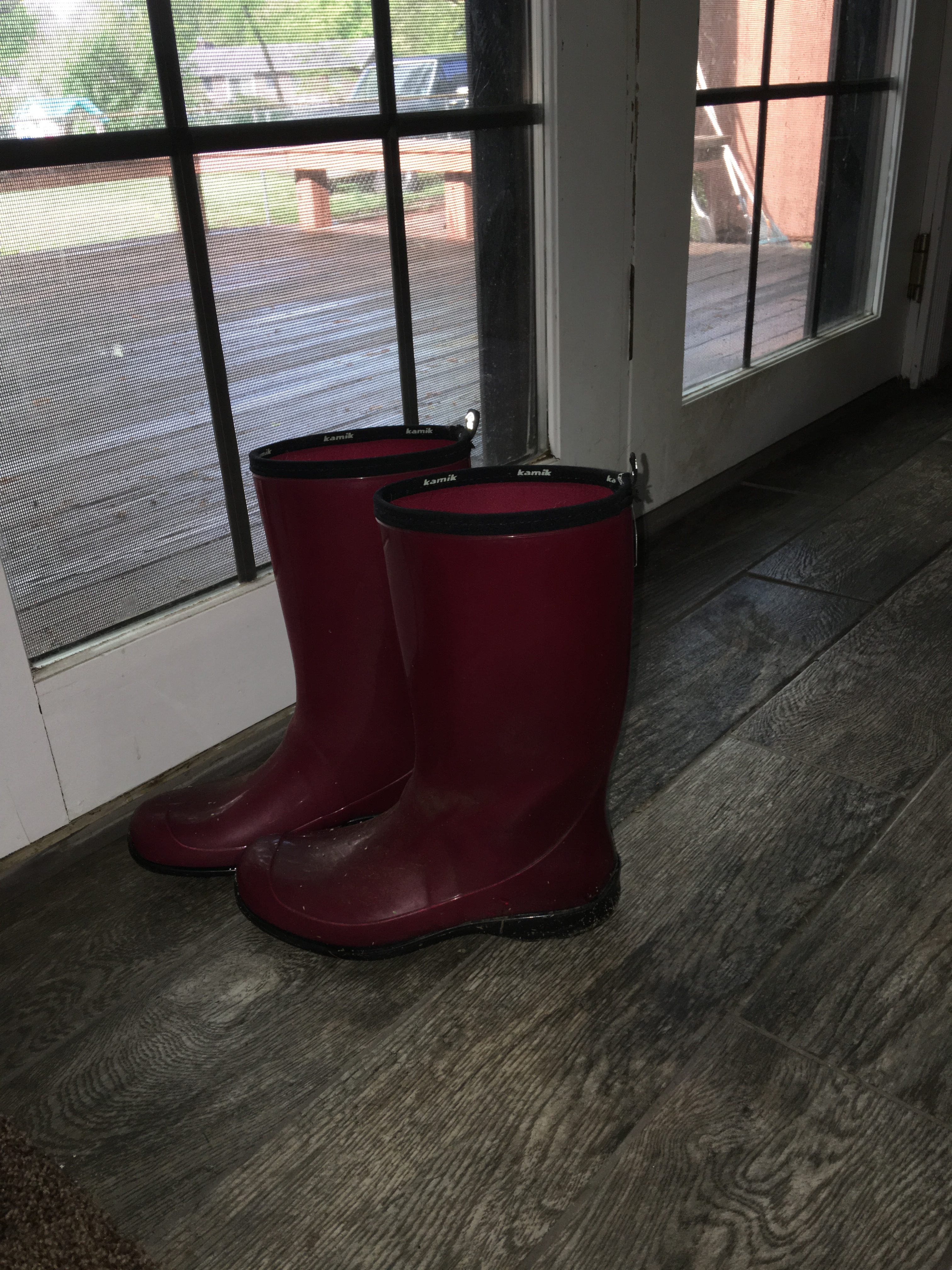
Learning to be mindful also taught me to prepare. I knew before this ten-day deluge of rain that I was going to have a much tougher time with my balance. I deliberately scheduled an additional hour of sleep each night, made sure I had my cane and service dog equipment ready to go each morning, placed my umbrella and rain boots by the back door, planned where to park to eliminate having to by-pass major puddles of standing water, deliberately stayed where I could see outside to determine when the rain had let up enough to take the service dog out or to make a quick trip to the campus testing center or copy center, and made sure that I allowed extra time to get to where I needed to go each day because I knew my mobility issues would require I traverse slowly and methodically. Even though the sun sets much later now that it is the month of May, I made sure that I had someone to drive me for evening obligations as I knew my vertigo would be worse by day’s end. Being mindful about the forecast and likely changes in my symptoms, meant that I could “hope for the best and prepare for the worst“. A nice little “perk” of Meniere’s disease is that if you learn to recognize the changes, you discover that you are a living, breathing, and walking barometer. (I’m likely more exact that local forecasters).

So… when the skies opened up, and delivered mist & sprinkles, steady, significant amounts of rain, and at times-torrential downpours, I was as ready as I could be! I suppose some folks might think that being so mindful and preparing for worsening symptoms, is the equivalent of being self-centered. I have learned the hard way, however, that if I do not take care of myself, it is impossible for me to take care of anyone else. I MUST take deliberate steps to insure I am prepared for long periods of rain, for example. If I do not, I will be nearly useless to anyone else. I’m not trying to avoid or escape the worsening symptoms I know are to come with a long bout of rainy weather. It is a type of cognitive-restructuring (from the psychologist’s point of view). As a person of faith, I work at being “mindful” of His promises. It helps me to remember He is mindful of me (Psalm 8:4, Psalm 111:5, Psalm 115:12, Romans 8:5-7, Romans 12:2, 1 Corinthians 2: 9-12, 16, Colossians 3:1, and 2 Peter 3:2).

A Long-Term Benefit of Being Mindful

In closing out this post (and greeting a day where the sun has finally breached the dark clouds), I want to share something I’ve learned simply because I really HAVE been at “this” a long time now. When you are mindful, purposefully focus your thoughts, prepare, and live deliberately, you will find that some good habits develop. On about “Day 6” of our recent monsoon-like weather, I came into my 8 AM class and… honestly? I wanted to go sit down and cry. I was tired of the vertigo, tired of the nausea, tired of the wobbling, and tired of the balance corrections. My head hurt and I was cranky. Darn — if it wasn’t only 8 in the morning! After booting up the computer, turning on the projector, and fishing out my lesson plans, I looked up to greet the class a few minutes before “launch”. I always try to ask students by name how things are going for them. I try to really get to know them and let them know I care. I noticed on changing my visual perspective an empty chair of a student who just buried her father. I caught in my peripheral, the quiet entrance of a young man making his usual unobtrusive way to his seat in the back. This young man just found out his cancer has returned for the fourth time. I saw the sleepy, single mamas and the students who took two early morning classes (including mine) before going to work for eight hours. I saw and waved to the student who attends classes, works four hours, and then goes to sit with her husband in a hospice center before staggering to bed each night. All the very temporary “woe is me” disappeared,

Just.

Like.

That.

Mindfulness doesn’t mean I do not have “bad days”. Being mindful, doesn’t mean I will always be in a super, good mood. However, being mindful gives me a better perspective and deeper appreciation for what really matters. I can more quickly rebound from self-pity and look for opportunities to make a difference – even in a sometimes “broken” body and weary mind. Being mindful allows me to wake up to a Milo-bear (service dog) alarm-clock with an attitude of “BRING IT ON“. For me… it makes a difference.

L. Denise Portis

© 2016 Personal Hearing Loss Journal

Carson, A. J., Ringbauer, B., MacKenzie, L., Warlow, C., Sharpe, M. (2000). Neurological disease, emotional disorder, and disability: They are related: A study of 300 consecutive new referrals to a neurology outpatient department. J. Neural Neurosurg Psychiatry, 68:201-206.

Kozlowski, E. (2013). Can Christians Practice Mindfulness? Huffpost Healthy Living. Retrieved May 6, 2016, from http://www.huffingtonpost.com/eden-kozlowski/mindfulness-and-religion_b_3224505.html

Siegert, R. J., Abernethy, D. A. (2005). Depression in multiple sclerosis: A review. J. Neural Neurosurg Psychiatry 76:469-475.

Weintraub, D., Moberg, P., Duda, J., Katz, I., & Stern, M. (2004). Effect of psychiatric and other nonmotor symptoms on disability in Parkinson’s disease. Journal Of The American Geriatrics Society52(5), 784-788 5p. doi:10.1111/j.1532-5415.2004.52219.x


Rejoicing

IMG_6019

— It’s such a treat to have guest writers here at “Hearing Elmo”. I welcome any and all, for we all have a story to tell, a life to share, and a voice. I am glad to offer “Hearing Elmo” as a platform for those voices. I have known Ruth for a little over 14 years. I met her at a national Hearing Loss Association convention, and then continued to touch base with her in various ways. Now we mostly connect through FaceBook and I am always tickled to see her recent photos. Ruth loves nature and has that special talent the really good photographers have–seeing things through their lens that are often overlooked by those of us who don’t stop to LOOK. When my balance issues become my “main issues”, Ruth reached out to encourage me again and again. (I have often wondered if I have been accurately diagnosed as many of my symptoms are atypical of Meniere’s). Ruth is a blessing – and lucky for you and I – a writer. I share a recent piece with you today! —

The abilities of people with chronic health problems are continuously redefined by fluctuations in whatever challenges they have:  weakness, stiffness, pain, sensory disturbances, fatigue, endurance, or mental/emotional processing.   Loss happens frequently.

Grief is commonly seen as the way to heal loss.   In the case of continuous repetitive losses, a person can get caught up in a perpetual circle of grief. Instead of experiencing healing, the overload of negative emotions such as sadness and anger can cause increased physical problems.   To maximize health, positive emotions are needed to restore balance.

How does one get from grief to happiness, when experiencing continuous losses?  They do so by making a conscious choice to response positively vs negatively to challenges.

For the first fifty plus years of my life, I allowed myself to get caught in the perceptual circle of grief. I reacted to my losses with anger and sadness.  I blamed others, from my parents to God, for my life’s challenges.  My poor choices nearly destroyed my life.

Most of my challenges came from a genetic disorder called mitochondrial myopathy, a rare form of muscular dystrophy.  The core of this disorder is the failure of powerhouses found in each body cell, to produce enough energy to sustain the health of that cell. Where ever these defective cells reside, the reduced energy results in inadequate organ function or even organ failure.

From my toddler years onward, the cells in my inner ears progressively deteriorated and died.  By the time I was in my early 20’s, I had a profound loss of hearing.   I was a survivor in the sense that I persisted in education until I got to the right career match for a deaf person.   However, I failed to maintain a healthy emotional balance and consequently experienced years of profound depression.  I was stuck in a perpetual cycle of grief.

As a young adult I began to experience progressive mobility challenges, and the grief cycle intensified.  I didn’t take care of myself, physically nor emotionally, and consequently more medical problems surfaced.  Finally, in my late 50’s, I slowly learned to focus on the good things that are a part my disability experience: my growing faith in God’s goodness, the love and understanding of my remarkable husband, incredible friendships; the cochlear implant enriching my life with sounds I had never heard; the freedom to participate in life provided by disability accommodations, including the use of my wheelchair.   I have learned to see and remember the blessings of good days.

I recently experienced a 6-month miracle in which my mobility limitations almost disappeared.  This miracle, which felt like it was here to stay, came to an end.  I grieved its loss and the opportunities that ended with it.  But now I can look back and smile warmly at the memories, much in the same way a wonderful vacation is remembered.  I truly believe that staying positive and the prayers of many people energized my body enough to stop the physical backslide, maintaining about half of the gains I experienced.  Though I continue to walk for exercise, it takes twice as long and multiple rests are necessary along the way.  My freedom to participate is again dependent on my walker or wheel chair depending on the endurance each situation requires.  But, I have learned, in spite of chronic disability and the doors it closes, to rejoice.

Ruth Ilean Fox

————————-


Misinterpreting

Misinterpreting

I haven’t had a chance to talk about Chloe, my retired service dog, much lately. The sweet ol’ lady has been retired full-time since May 2015. Chloe has not had a good year. Being together 9 1/2 years, means she was pretty set in her ways as to being with Denise 24/7. So if you take a loyal, hard-working hound dog who has done the same thing for almost a decade, retire her, bring a new dog into the pack who is now Denise’s partner, move to a new house, and have only a few things to do around the house for hearing alerts, a dog can just go a little nuts… which is what Chloe has done. Chloe is on arthritis medicine, which helps her arthritis a great deal. Being able to get around more comfortably means she is looking for stuff to do around the house. Chloe has developed an anxiety disorder, which could be the result of a number of things including age. She obsesses over things she decides is her job and continues until collapse.

We moved into a wonderful, older home, with NO STEPS! I fall once a week now instead of 2-3 times a day. Even for our two older dogs, Chloe and family dog, Tyco, the fact that we have no stairs is a plus as well! Our older home makes noises that our other home did not. We have an older HVAC system, gas heat and stove, a wood-pellet stove, and older wood floors. Chloe, retired hearing dog, believes every new sound she hears now is her JOB. So she will stand over heating vents and guard because there are strange noises coming from them. (We have checked for critter invasion, had the home inspected, etc., and this is truly just mechanical noises. The other dogs ignore the sounds completely). Chloe will stand “working” until her legs shake and she collapses. We were having trouble getting her to eat. A major vet appointment that included blood-work, scans, and over-all senior check-up, revealed nothing that would make us worry that this is anything other than an anxiety disorder. Chloe is OCD. She misinterprets what she is hearing and together with her other keen senses (like smell), seeks out the origin of the strange sound and does a perfect hunting dog “point”,  standing guard until she collapses.

Chloe is on meds and is doing better. She still guards shadows and obsesses over household noises. We are making it a priority for her to get out of the house more and “do things for mom and dad”. My husband and I discuss hound dog a great deal. She really means a lot to both of us. We know and understand the difficult changes she has had to shoulder, but also understand that she is hearing things well (she is a DOG and was trained as a hearing assistance dog)… only Chloe is misinterpreting what she hears.

The sounds are not important – but Chloe is escalating the sounds as a priority.

The sounds are harmless – but Chloe considers some of them a threat.

The sounds are minor “blips on the radar” – but Chloe equates them with cardiac arrest.

Misinterpreting

Have you ever completely misunderstood what someone said or misunderstood the behavior of someone?

WHAT? You mean you always assume correctly? Ok. Well you can quit reading. The rest of you feel free to continue…

As a person with hearing loss, I often misunderstand what people say. I work hard to consider the context, facial expression, and body language of someone speaking and I still BLOW IT sometimes.

Someone can yawn and cover their mouth and I will completely lose track of what they were saying.

My cochlear implant can pick up some random, ambient noise and I will miss what someone said.

I’ve even stood in the sunshine with someone while they squinted and wrinkled their eyebrows at the bright light, and missed that they were being sarcastic about something because their face looked MEAN.

I use email a great deal. If I have my phone out, it is to TEXT, not to talk earlobe to earlobe with someone. Because I do a great deal of writing, when I am misunderstood or misinterpreted in an email, it really hurts. I work hard at making what I write sound like what I SAY. That’s why y’all have to muddle through my exclamations and grammatical errors that emphasize how I would SPEAK something. (So thanks for that – <wink>).

Basically in misinterpreting… there are two scenarios. Either WE are being misinterpreted, or we are the one over-reacting and obsessing over unimportant cues. So what’s a person to do?

  1. You are being misinterpreted.

If you are being constantly misinterpreted, is it your problem or their problem? Really the responsibility goes both ways. If you are constantly being misunderstood, however, take a good hard look at the who, what, when and where.

Who: Do the same people always misunderstand? Maybe they are extra sensitive. Maybe they haven’t learned to see past the obvious to what you really meant. Are you sarcastic? Do you know some people just don’t GET sarcasm? They don’t appreciate it, don’t use it, and are constantly hurt by it.

My husband, son, and daughter speak fluent sarcasm. As a person with hearing loss, I had come to count on what I SAW when communicating. I finally had to explain, “Look y’all! Give me a smirk, eye roll, or something! If you don’t, you are gonna get smacked up ‘side the head!” I just don’t connect with sarcasm.

What is being misunderstood? Is it a subject others are passionate about? Is it a subject that is highly debated? (Is it an election year? <groan>) Are you being clear?

When are you being misunderstood? Is everyone tired? Are you being misinterpreted when everyone is rushed? Late?

Where are you being misunderstood? A friend told me once that she has learned not to talk about serious things during happy hour at a local bar. <grin>

Figuring these things out can be helpful and allow you to determine how you can be misinterpreted LESS.

2. You misinterpret others.

Especially because one of my “differently-abled” quirks is hearing loss, if I misunderstand someone I become rude. Not rude-rude, but interrupting rude. I stop whomever is speaking and ask for clarification. I may say:

A) I’m sorry, could you repeat that?

B) Excuse me… I thought I heard you say…     …  could you repeat that part?

These “rude” but necessary interruptions help me misunderstand and misinterpret LESS. If I wait to ask for clarification I may forget (but stay mad), or the person themselves may forget what they said.

What about if you are angered or hurt by something that someone WROTE? I still ask for clarification. Maybe even though I am searching the context or doing my best to “read between the lines”, I’m still missing something. There is nothing wrong with responding (better done in a private manner and not in a public venue) and asking for clarification. I don’t know about you, but I’ve written things before that were taken wrong and it wasn’t until someone asked for clarification that I realized how harsh something I wrote seemed to the people who were reading it.

texting

Sometimes? Sometimes people are just going to try really hard to misunderstand what you wrote too. It happens. I’ve learned to pick my battles. You cannot always expect someone to look for the best in you. Some folks look for the bad. Just drop it and go on.

being misunderstood

Change really isn’t hard

One of my offspring is a debater. The kid can argue the paint off a wall. It use to really bother me, but I never wanted to say “shut up, already”! I never wanted to act as if their opinion held no merit. I had to learn to LISTEN. Do you know my kid actually has a lot of really wonderful ideas, points, and opinions about the world? I drove him to lunch the other day and because we were each other’s “captive audience”, I got him all to myself for 20 minutes. My kid is more informed about politics than I am. If I LISTEN I have discovered he has a lot to say.

I use to misinterpret what he said all the time. I had to change. I couldn’t take sound bite snippets and judge him for being a ninny-hammer based on one comment. I had to learn to listen “in context” and wait until he had finished speaking before agreeing, or agreeing to disagree.

Some of you may be thinking… “why should *I* have to change the way I communicate?” Communication is the glue that holds all relationships together. No one communicates perfectly. We can all brush up on better communication skills.

Last week I was asking some questions about a video we watched and trying to get the students to “think like a scientist”. I saw a student grimace and shake their head. I stopped and said, “It’s fine if you don’t agree! I welcome everyone’s opinion and think it is important to express various views! Do you have another opinion about what we saw?”

They looked startled for a minute and sheepishly admitted, “No. I was making a face because someone farted”.

Oh.

You aren’t always going to understand perfectly. You are going to misunderstand facial expressions and other nonverbal cues. You, yourself, are going to contradict what you are saying by how you look or how you are saying it once in awhile.

My encouragement to all of us is simply to work harder. We can all learn to communicate clearly, hopefully creating less chance of being misunderstood. Communication matters because people matter. If you are a person with a disability or chronic illness, work hard at communicating your needs – and what you don’t need. It is much easier to “do your part” and then walk away in the face of persistent misunderstanding, than it is to share the blame for not having tried at all.

Denise Portis

© 2016 Personal Hearing Loss Journal


Cowlicks and Compromise

cowlick

Cowlicks and Compromise

I have a cowlick. I remember the first time I noticed the little tuft of hair—likely no more than 20 hairs total, in my bangs. I was at my grandmother’s house who lived on the farm 1.5 miles west of our own farm. I was washing my hands at the sink, and could just barely see my face and head in the mirror above the sink.

<SIGH> “Lookit this hair! It won’t lay down! It points the wrong direction”.

My grandmother informed me that it was a cowlick. Astonished and more than a little bit worried, I gnawed on my lower lip as I contemplated this new information. Demanding to know the “when and where”, Grandma calmly informed that it happened when I was a baby. I remember thinking, “Who would let a cow lick their baby’s head?” Either Grandma was tired of my questions, or she could see that this greatly concerned me. “It’s like a blessing. Even the cows knew you had great potential. You can do ANYTHING!”

I know she thought she was encouraging me, and later it actually WAS the source of encouragement when I recalled her words. However, she likely would have cracked up if she’d known how often I struggled to wash the cow saliva off my head after that.

Dreams, Goals, and Aspirations

I was a lucky little kid. I grew up in a small town, surrounded by really good people and warm, supportive family members. I was always told that I was really going to be something one day… I was going to make a difference. Whether it was the school counselor assisting me with college applications, or individuals in my church, each time it was said I thought, “This cowlick is coming in handy!”

Obviously, I grew to realize the cowlick had nothing to do with my “can do” attitude, but that seed planted as a youngster, certainly added to my determination. I already had a hearing loss in my left ear as I headed off to college. I would have one more surgery during Christmas break of my Freshman year. I never considered my hearing loss an issue as I had perfect hearing in my right ear.

Compromise

I know that I am a little bit stubborn. It’s not just because I’ve been told that I am, I recognize that it is hard for me to compromise. I’ve learned to compromise, which has only helped my relationships and even my marriage. I think in the beginning I saw compromise as “caving”. Because I was raised to be a strong, independent woman, I didn’t see how compromise could be a valued characteristic. I think compromise is actually misunderstood a great deal; perhaps even, considered a weakness.

My favorite definition of compromise (because there are a lot of them out there depending on the context in which the word is used), is from Chen (2004), when “a person has to give up something less feasible and achievable in order to accomplish career goals and projects that are more practical and obtainable” (p. 17).

After losing the rest of my hearing (ages 25-30), and discovering that what I thought was a natural “clumsiness”, earning the nickname of “Accident Prone Portis”, was actually Meniere’s disease, I learned to compromise simply because I was forced to do so. I learned to use adaptive devices, technology, and even learned to ask for help. I learned that to be realistic, I needed to cross some things off my my “to do” list. There are some things I just cannot do. That’s ok. It doesn’t mean I’m giving up or “settling”. I do get tickled at folks sometimes when they email me to say, “You are so inspirational!”

I’m not.

Huffingpost Post did a terrific piece on this topic. “When we think about inspiration, what inspires us most are ordinary people who have done extraordinary things. We appreciate when someone has the ability and willingness to be selfless, creative, innovative, or just dares to be different” (Green, 2013, para. 1). I’m not this person. I have no more talent, will power—or even COWLICK POWER—than anyone else. I have really good days. I have really bad days. Just this last week I found myself doing a little “soul cleansing” in the shower (the only safe place to bawl my eyes when you have service dogs in the house who cue off your mood).

I was crying because I was mad. Mad, that I’m forced to change the way I do my make-up. (I know… right?). I’ve always thought my best “feature” was my big, brown eyes and dark eye lashes. When my Daddy finally allowed me to wear make-up I learned early on how to highlight what I thought was one of my best features. My husband told me when we were dating that he just loved my eyes and wrote poetry about my peepers.

With progressive illnesses, one discovers that it is just that.

Progressive.

It sucks. Between my poor balance, shaky hands, and neuropathy in my fingers, it is impossible for me to use eye make-up now. I’ve had to change—to compromise HOW to wear and apply make-up of any kind. This… THIS is what reduced me to tears for a solid week! Some of the folks who write me and tell me that I’m “inspirational” also say, “I find that I spend too much time feeling sorry for myself!” Y’all? I’m crying in the shower because I can’t wear eye make-up!

I’m not very hospitable, but one of the great parties I know how to give is a PITY PARTY. I think most people who live with special challenges and illnesses find that they spend an inordinate amount of time feeling sorry for themselves. One quickly learns not to whine out loud because others frown on that. Both God and my husband know that I’m a whiney-baby. Trust me – I get feeling sorry for yourself. If your “differently-abledness” has you feeling sorry for yourself, you aren’t alone.

Weiner, Graham, and Chandler (1982) did some fascinating research on pity, anger, and guilt. Anger and guilt are associated causes perceived as controllable, while uncontrollable causes of negative events trigger self-pity (Weiner, Graham, & Chandler, 1982). I didn’t choose any of the challenges I deal with on a daily basis. You likely didn’t “sign up for” the challenges you face as well! When things happen outside of our control, it is natural to have feelings of self-pity. Charmaz (1983) explains that the medical field tends to “… minimize the broader significance of the suffering experienced by debilitated, chronically ill adults. A fundamental form of that suffering is the loss of self in chronically ill persons who observe their former self-images crumbling away without the simultaneous development of equally valued new ones” (p. 168).

All of us grew up with dreams and aspirations. Some of us read books about having one year goals, five year goals, and ten year goals… working hard to lay the groundwork to make sure the goals were attainable. Instead, life happens. You may feel as if your life has been de-railed as you struggle to stay on track on a journey you had all mapped out.

The key is to compromise – but not give up. You may have to change the way you do things. I threw away all my eye shadow and purchased a magnified mirror and set up a means to steady my hand so that I can at least wear mascara. Other compromises are more worthy of being called “growth”.

Finishing school through distance education instead of doing so through a brick-and-mortar institution.

Using a cane and service dog to avoid running into quite so many walls each and every day.

Asking a student to follow-up with an email because I cannot hear them over the “buzz of sound” after class, and the acknowledgment that if they speak loud enough for me to hear them, everyone will hear.

Letting someone with normal hearing take the minutes of a committee meeting, even though my desire is to take notes.

Sitting on my caboose during the music in church because I cannot stand when the words are on a screen with lights, movement, and flashes. (Remember the good ol’ days when we used hymnals?)


Asking a family member to chauffer me around if I have to be out after dark (oncoming headlights trigger vertigo).

Using a cutting board ALWAYS, since not being able to feel your fingertips is dangerous when wielding a sharp knife.

Asking my service dog to fetch clothes out of the dryer so that I can fold them, even though I occasionally have to wipe doggie drool off of clean, dry clothing.

The KICKER compromise that many of us have to learn as a result of our new normal?

Asking for help to do something when we once did it all by ourselves.

When Do You Choose Not to Compromise?

A tough lesson in living a differently-abled life, is learning how to compromise by your own volition and to accept your own reality, and learning when NOT to compromise for others. Having a long-term blog on disability issues, invisible illness and chronic conditions, I have received one type of letter more than any other.

“My _______ (family, spouse, friends, co-workers) want me to stop using ________ (a cane, walker, service dog, assistive listening devices, medication) because it _________ (embarrasses them, makes them uncomfortable, makes me look bad).”

I wish I could reach out and SMACK UP ‘SIDE the HEAD, the folks who are saying this to you. They don’t realize all the compromises you’ve already made in order to successfully navigate your life and accommodate your new normal. (That’s right… you’ve resorted to mascara ONLY).

My friends? Don’t ever compromise… on chosen means of compensating just to make someone else feel better about your challenges. That isn’t compromise. That’s caving to a bully. Compromising by doing something differently in order to continue DOING means you are in control. Buckling to the pressure of someone who doesn’t live what you are living, will only yield bitterness, brokenness, and an unhealthy dependence. Do we need to ask for help sometimes?

Yes.

However, having a means of independence and being asked to give it up to help someone else deal with your issues is detrimental to your mental health and relationships. There are plenty of people who care about me that I have learned to not “talk out loud” around. They misunderstand the reason I’m belly-aching and offer selfish advice.

“You get so mad when people interact with your service dog. Why don’t you stop using one and find some other means to cope with your disabilities?”

This from a peripheral family member who:

  1. Is never around for me to ask THEM for help because they are in absentia nor have any meaningful intersection in my life.
  2. Is able-bodied (though mean spirited)
  3. Hates dogs

If using a service dog has enabled you to be more independent, then:

  1. Be more careful of whom you belly-ache too. Contact a fellow SD partner or a trainer.
  2. Find a way for the “drive by petting” interactions to become a positive advocacy channel.
  3. Join some face-to-face or virtual support groups with individuals who mitigate their disabilities with the partnership of a service dog.

I was recently contacted by the wife of a guy I graduated high school with in 1984. He’s coming up on the BIG 5-0, and she was looking for pictures “from way back” that we had so that she could use them at his birthday party and celebration. I took out some old yearbooks and began flipping through them. My senior yearbook had some great pictures of “all those from the class of ‘84”. In one section, the class voted on and selected one male and one female for specific “categories”. I was selected as “friendliest” and also “most likely to succeed”. (Don’t get any grand ideas… my graduating class boasted of 22 students). I sat there a couple of minutes wondering…

“Am I successful?”

“Did I waste my cowlick?”  

What I find valuable is making a difference, even if in only in one person. I have good days and bad days, but ALL days are lived where I look for and try to make a difference in at least one. It’s an adopted attitude that has really helped me adjust to being a person with invisible disabilities.
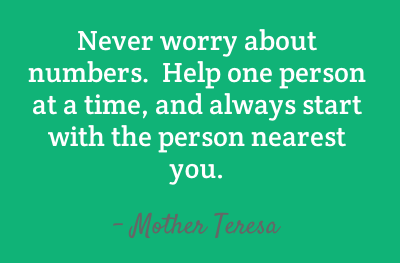
never-worry-about-numbers-help-one-person-at-a-time-2

Denise Portis

2016 Personal Hearing Loss Journal

Charmaz, K. (1983). Loss of self: a fundamental form of suffering in the chronically ill. Sociology Of Health & Illness, 5(2), 168-195. doi:10.1111/1467-9566.ep10491512

Chen, C. P. (2004). Positive compromise: A new perspective for Career Psychology. Australian Journal of Career Development. 13(2), 17-28.

Greene, R. K. (2013). What is the true meaning of inspiration? Retrieved February 1, 2016, from http://www.huffingtonpost.com/r-kay-green/giving-back_b_3298691.html

Weiner, B., Graham, S., & Chandler, C. (1982). Pity, anger, and guilt: An attributional analysis. Personality and Social Psychology Bulletin.  8(2), 226-232.

Apocalypse

apocaylpse 2

My husband teases me about my addiction to apocalyptic movies. I’ve seen so many, and new ones come out each year! My husband assumes that the reason I love them is that I do have a pessimist’s soul. I’ve tried hard to change this and I’m certainly more optimistic at “almost 50” than I was at “almost 30”. However, that “end-of-the-world” vibe is not why I love apocalyptic movies. I love them because normal people rise to the challenge and become real heroes. One I recently saw was “San Andreas Fault”. Even though it was a good movie, “The Rock” (the leading actor) is not a “normal person”, nor did he play a normal hero. (At least his acting has improved over the years…) My favorite “end-of-the-world” movies are those in which folks with normal jobs “rise to the occasion” and discover who they really are in the midst of turmoil, tragedy, and overwhelming odds.

Coincidence, or Logical Comparison?

Each semester, one of the extra credit options I offer to my students is called, “disABILITY for a Day“, or d4D. I co-advise S.O.D.A. (Students Out to Destroy Assumptions), a student club focused to raise awareness and advocate for disability populations. In the extra credit opportunity, the students must “take on” one of a list of pre-selected disABILITIES. We limit what they can choose, so that students are not taking on a disABILITY that may perpetuate a stigma, such as a mental health disorder. The choices are hearing loss, vision loss, mobility (ambulatory) challenges, and fine motor skills. Students are provided with ear plugs, or an eye mask, encouraged to borrow crutches, walkers, wheelchairs, or they can tape one or both hands into a sock to limit their fine motor skills. We ask that the students take precautions… no driving, or trying to work off campus; if vision loss… secure a sighted guide for the day, etc. Students must:

  1. Complete a class rotation with their disABILITY
  2. Answer 10 essay questions and read an article about living with disABILITY
  3. Write a reflective essay on their experience (or a video testimonial).

I was quite surprised that five students from four different classes used the same phrases in their reflection assignment. To my knowledge, these students do not know each other. Here are the similar wording or phrases used in response to the question, “What was the most difficult part of being disABLED for the day?”:

  1. “felt alone”, “if this were for real it would be like the end of the world”
  2. “I became invisible, no one even looked at me”
  3. “It was like the apocalypse happened. It was surreal, walking around in a world that completely ignored your existence. I felt like I had the plague”.
  4. “It’s like a bomb went off and I was the last person standing. I have never felt so alone”
  5. “Even my professors ignored me. I felt so alienated. It felt like the end of the world or something.”

When I see similar phrases showing up, I take notice. Is it just a new way young adults are explaining isolation, discrimination, and stigma? Interestingly, in essays this year, many of the students reflections included seeing a person they knew with disABILITIES with “new eyes”. Many were convicted to do a better job reaching out and including those who are differently-abled. One student shared, “I go to class with a girl who has fine motor [skill] challenges. I chose to tape up my hands for my disABILITY. She was so excited to see what I was doing and gave me advice during class [about] note-taking and doing a team activity. She always has a smile and doesn’t try to hide her issues at all. I admire her so much. If I ever develop disabilities, I want to be like her”. 

I’m so glad I grade essays at home. I read similar accounts from other students… a new awareness about what life is like for those living with what was their chosen disABILITY — only 24/7. I can’t tell you the number of times I cried at my desk. Not happy tears, and not sad tears. It was more of a WHEW tears.

WHEW. They get it.

I’ve never met a person with special challenges who WANTED those challenges. One of my students is legally blind. I was talking to him last year, and we got to talkin’ about acquired disABILITY. He didn’t lose his sight until his 20’s, which is when I began to lose my hearing. We discussed how we respond/think when people say how much they admire us now. He said, “Geesh. At no point did I say, “SIGN ME UP for being blind”. I didn’t ASK for this. You accept, adapt, and go on”. Isn’t that a terrific, healthy way to respond to challenges?

I (proudly) serve on my county’s Commission on Disability Issues and immerse myself in various local, state, and federal advocacy groups. Do you know that I am surrounded by heroes? Normal people with normal lives, forced to accept and adapt to significant issues. It may not seem like the apocalypse occurred – or that the end of the world is near. But… I can tell you that it can be hard. This doesn’t mean folks who are differently-abled or face significant daily challenges need Academy awards, fan clubs, or media coverage. We don’t want/need to see our “name in lights”, or for people to tell us how wonderful we are. Simply:

Include us

Befriend us

Hug us

Hire us

Believe in us

Advocate for us

Advocate? That’s right! The most important advocacy force comes from self-advocacy. However, peer advocacy, system advocacy, and legal advocacy are all highly effective forms of advocacy.

A new year is right around the corner. May I challenge you to try something in 2016? Advocate on behalf of another. Thomas and Bracken (1999) argue that peer advocacy is one of the strongest types of advocacy. You may find opportunities at work, church, or standing in line at the grocery store (check out video). You may be able to advocate at a local coffee shop (see video), or be able to participate in hiring panels. Just make sure it is advocacy that is WANTED. Be careful to avoid embarrassing someone, or advocating in a negative way. If you have the opportunity to advocate on behalf of another, I’d love to hear from you!

Thomas, P. F., & Bracken, P. (1999). The value of advocacy: putting ethics into practice. The Psychiatrist23(6), 327-329.

Denise Portis

© 2015 Personal Hearing Loss Journal

Making the Difference – in ONE

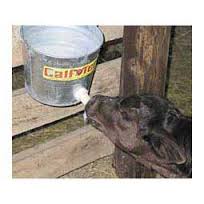
calf feeding

I grew up on a working farm. I’ve learned to add that “working” part, for after I moved to the “big city” I discovered that many people have what is called a “hobby farm”. I loved growing up on a farm, but can’t say I’ve ever considered it a HOBBY.

Growing up, I had a lot of responsibilities that included various kinds of farm work. Probably one of my least favorite chores was baling alfalfa; in part, because I was highly allergic! Sneeze at the wrong time, and the bale of alfalfa was suddenly on top of you, or worse… several piled up and rolling off the flatbed truck. I can’t tell you how many times my aggravated Daddy had to stop the truck, wait for my siblings and I to reload some scattered bales… all because I sneezed at the wrong time.

One of my favorite responsibilities was feeding the baby calves. We always had some wee calves that required bucket feeding. The picture shown is not my own calf, but it was the same kind of bucket. Now-a-days, buckets are plastic or are big “bottle-shaped thingie-majiggers”. We had these old-fashioned (but serviceable) metal buckets. In the beginning, I hated the chore. If the school bus comes at 7:40, that means all chores had to be done early. I’m talkin’ cock-a-doodle-doo early. I wasn’t a 5 o’clock in the morning kind of kid, and I’m still not that kind of adult.

We used powdered formula for the calves. Some were orphans, some were adopted from feed lots, and some were separated on purpose from mama if the calf was unlucky enough to be born to one of our milkers. The powdered formula smelled horrible. Ugh. We mixed it with hot, HOT water. In this way, by the time we carried the buckets to the barn, it was still warm for the calves. The calves drooled all over the place. Occasionally, they would head-butt the bucket (like they would their mama) and if you weren’t prepared (or had fallen asleep against the fence post), formula went everywhere and you started all over.

I’m not fastidious. I can stand dirt under my fingernails and getting my hands messy. However, returning to the house every morning covered in calf drool and formula, had me grumbling and complaining big time. My dad would let me whine and complain. He is a very quiet guy. When he did open his mouth to talk, we all practically stood in awe to see what he was going to say. It was always rather profound. One morning after listening to me bellyache, he said, “Denise, have you ever thought about how important you are to that calf?”

Well… Dad didn’t expect an answer. He had already walked off. I stood there digesting that though and I must have thought about it the rest of the day. I think I must have thought about it all the way up ’til I went to bed that night. The next morning, I awoke with a new attitude about those calves.

They needed me. They were pretty low on the “totem pole” as far as value on the farm. However, if I didn’t feed them, they were goners. For all intensive purposes, I was their mama. That morning I noticed as I walked out to the barn that the calves were all standing by the fence waiting… for ME. Likely, they always had! However, I was so busy grumblin’ I never noticed. As I set the buckets on the fence to give them one more good stir before turning them around for the hungry bovines, I noticed the calves were mooing softly and actually wagging their tails. They were expectant. They knew they needed me and that I could provide what they needed. I remember throwing my legs up and over the top rail so that I could sit and put my weight on the bucket guards to keep them from being butted to the ground. Now that my attitude was different I was seeing these calves in a whole new light. So… I started singing.

That’s right. I sang to the calves. Over the following eight or nine years, calves heard me bellowing out every 80’s tune I could think of and even some 70’s tunes as well. I sang, and I sang, and I sang. My entire outlook and attitude towards these calves had completely changed because I discovered they needed ME. At this point, you are probably wondering, nice story… but what exactly are you trying to say?

PIVOTAL MOMENTS

I truly believe that it was at that point I realized, even someone like me can make a difference. I was just a young farm girl. I had few aspirations. Yet, even *I* could make a difference – perhaps in the life of something rather lowly (and drooly), but I could still make a difference.

Do you know I believe some of my panic at 25-years-old, with the realization my issues were progressive, was that I was afraid I would no longer be able to make a difference? I’ve been forced to adapt to increasingly progressive “differently-abledness”. However, those early lessons made an impact. A “nobody”, farm girl could make a difference to a calf. Surely, a differently-abled woman could still find a way to make a difference!

Don’t get me wrong… I’m no super hero. As a matter of fact, I cringe a little when someone at work stops me and tells me “You inspire me!” I’m thinkin’, “Girl? I’m no inspiration. I’m ordinary. I’m just me. I didn’t sign up to only hear bionically, and learn to walk a semi-straight line with a vestibular disorder!” Everything about my life is rather ordinary. Sure, I have challenges, but the fact of the matter is, WE ALL DO.

I wake up each morning thinking, “I want to make a difference for ONE, today” (well… and I’m also singing 80’s tunes – some habits die hard). Perhaps this is what “trips up” folks who live with disability or chronic illness. They may have convinced themselves they have to do something rather profound to make a difference. You don’t. You can make a difference with something as ordinary as smiling. Kraut & Johnston (1979) wrote a fascinating article on research they did on unspoken messages and their impact. Smiling is actually an emotion-filled message that you send – perhaps to someone who needs that message.

Guinness (2003) wrote a book, “The Call”. I believe we each have strong, in-born desire to have a purpose. Sometimes, we mistakenly believe we are too broken, too busy, too much of a “farm girl” to have a purpose; to make a difference.

Wrong.

For some reason, folks think they have to impact the world to make a difference. Making a difference, MAKES A DIFFERENCE, even in the life of ONE. Aknin et al., (2013) recently completed some fascinating research pointing to how much good it does an individual to make a difference in the life of one person or in one way. There are physical, psychological, and emotional benefits to making a difference… also called prosocial spending (Aknin et al., 2013). You may feel you have limitations, but having the opportunity and capability of making a difference is not one of them.

This has completely changed my outlook on my own life. I can make a difference.

… and so can you.

I love the lyrics to this song (hey! I warned you earlier I’m an 80’s tunes kind of person). The Oak Ridge Boys got this one right:

Did I Make a Difference?

I’m caught up in the push and shove
The daily grind, burning time, spinning wheels
I wonder what I’m doing here
Day to day, year to year, standing still

Somewhere there’s a teacher with a heart that never quits
Staying after school to help some inner city kids
A mother who’s a volunteer, a soldier in the fight
I can’t help but ask myself when I lay down at night

Did I make a difference in somebody’s life?
What hurts did I heal? What wrongs did I right?
Did I raise my voice in defense of the truth?
Did I lend my hand to the destitute?
When my race is run, when my song is sung
Will I have to wonder, did I make a difference?
Did I make a difference?

I’ve been working hard to make a living
And forgetting what true living is
Taking more than giving, something’s missing
Lord, how long can I go on like this?
There’s a lonely old man down the street
And I should be ashamed
I’ve never been to see him, I don’t even know his name
There’s kids without their supper in my own neighborhood
Will I look back someday and say that I did all I could?

Did I make a difference in somebody’s life?
What hurts did I heal? What wrongs did I right?
Did I raise my voice in defense of the truth?
Did I lend my hand to the destitute?
When my race is run, when my song is sung
Will I have to wonder, did I make a difference?
Did I make a difference?

When my race is run, when my song is sung
Will I have to wonder, did I make a difference?
Did I make a difference?
When my race is run, when my song is sung
Will I have to wonder, did I make a difference?
Did I make a difference? Did I make a difference?

———–

Denise Portis

© 2015 Personal Hearing Loss Journal

Aknin, L. B., Dunn, E. W., Whillans, A. V., Grant, A. M., & Norton, M. I. (2013). Making a difference matters: Impact unlocks the emotional benefits of prosocial spending. Journal of Economic Behavior & Organization 88, (1), 90-95.

Kraut, R. E., & Johnston, R. E. (1979). Social and emotional messages of smiling: An ethological approach. Journal Of Personality And Social Psychology37(9), 1539-1553. doi:10.1037/0022-3514.37.9.1539