A Pocketknife to Clean Your Nails

pocketknife

ABOVE… My dad in 2011 when he visited Gettysburg with us.

Do you know every time I retrieve a nail file to smooth, clean, or file my nails I think of my dad? Isn’t it funny the kinds of things that will recall a memory for us? Not the kind of recall that triggers our sympathetic nervous system and launches a flashback in folks who suffer from PTSD. Instead, the kind of recall that knocks on the door of our heart with a “feel good” memory. The memory replays a specific conversation or event. For me, when I use a nail file I vividly recall how my dad would clean his nails with a pocketknife.

I couldn’t have been more than 7 or 8-years-old, for we had not yet returned to the family farm. My dad still worked for International Harvester at the time. One day I sat watching him clean his nails with a pocketknife.

“Why do you use your knife to clean your nails?”

Dad continued to clean his nails and thought about his reply. The man never just “spoke off the cuff”. He responded after a bit, “It does the job”.

“Well, will you clean MY nails?”

With less thought he replied, “I can’t. I can’t tell where your nail stops and your finger starts”. He scooted closer to allow me to see from a different angle how he was using his knife to clean up under the nail. I may have been young, but I immediately grasped why he couldn’t clean MY nails with this unconventional method.

Although I never could bring myself to clean my own nails with a pocketknife, I learned over the years that one can do things just as well by means of unconventional tools and methods. I would not have understood if someone had tried to tell me that I would eventually become deaf and develop Meniere’s disease – a balance disorder, and that by doing so I would have to adopt some new means to navigate my world safely.

Works For Me – But Maybe Not for you

I suppose one of my biggest pet peeves is when folks start dictating to someone who shares a diagnosis how they MUST go about treating that disease or disorder. Just because something works well for YOU, does not mean it will work well for someone else. This doesn’t mean we shouldn’t be willing to tell our story and share what works for us. Peer networks and support groups are invaluable in my opinion. However if I chose to use a nail file to clean my nails, and you choose a pocketknife, all that should be celebrated is that the end result yields positive benefits for us both. Clean nails are clean nails no matter how they got that way.

That doesn’t mean the process to clean nails is always easy. I have to sit to brush my teeth. That toothbrush swishing around in my head will make me pass out if I do not do so from a seated position. I never could sit on the lid of the commode to brush my TEETH. So I step into the bedroom and sit on the hope chest to brush my teeth. I have to be sure to keep my mouth closed so that there is no splatter. Ewww, right? This last week as I was sitting there brushing my teeth, it just hit me wrong. Here I was 47 years old and unable to brush my freakin’ teeth over a freakin’ sink like a normal – erm – FREAK! So…

I started crying.

My husband stepped into the bedroom. I can’t imagine what he saw. Here is the wife sitting and brushing her teeth, sobbing her eyeballs out, toothpaste now EVERYWHERE, including dribbling down her quivering chin. He calmly said, “You OK?”

Did I look OK? Alright, yuppers… I didn’t actually WANT his help. I just wanted to finish brushing my teeth. Those FREAKIN’ ones…

When a person with disability or chronic illness finds a way that works for THEM, it doesn’t mean it is easy. But this is why we are not disABLED. We are differently-abled. It is quite a cognitive and emotional boost to discover you can still enjoy something you did before – only in a new way. It may look strange, novel, or genius… but the reality is “it gets it done”. Yet what I find works for me, may not work for someone else with Meniere’s disease. I cannot safely clean their nails with my pocketknife.

Celebrate the Day

Gee, we live in a wonderful age of technology! When I think about the miracle in that I’m hearing again bionically, and all the cool tools available to me through simple apps on my iPhone, or special assistive technology, I get goosebumps! I live in a country where service dogs OTHER THAN guide dogs are fairly common. Email and texting – two communication devices I utilize frequently, are favored among the NORMAL hearing population. This makes my life so much easier!

Folks with mobility issues, learning challenges, hearing loss, chronic illness, and various disorders have options available here in the U.S. that we did not have 30 years ago – or even 10 years ago! Yet some of the things we learn to do are through our own ingenuity! I have quite literally patted myself on the back and mentally “high 5’d” myself when I discover a new way of doing things. To you being able to do the laundry without actually having to change the altitude of your head is not very impressive. But to me? This is a “WOO-HOO” discovery. But the proper lean formation, use of step-stool and service dog work for me. They may not work for you if you, too, have Meniere’s disease. But be willing to share ideas with each other without dictating proper protocol. The end goal is clean nails after all.

Denise Portis

©2013 Personal Hearing Loss Journal
You’re So Vain…

chloe hug

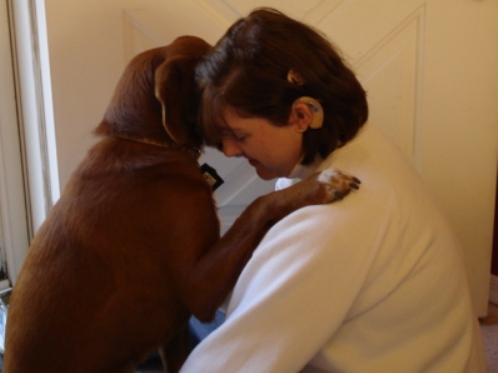
I love my local grocery store. Not so much that I was pleased I had to go twice this week after forgetting a few items, but the aisles are spacious, the employees know me (and Chloe) by name, and I save a lot of money in both sale items and even gas points. My unexpected impromptu second visit this week was disastrous, at least from an emotional standpoint. I came down the aisle looking for those elusive cotton balls that I failed to remember on my first trip and met a lady only slightly older than me with two canes. We stopped to chat for a minute and thought I had met another who understood when she surprised me by saying, “I just couldn’t work with a dog. It seems so vain because so much attention is brought on by being with one“.

I could feel the heat creep up in my face and I blinked back tears as I stuttered out, “Well different strokes for different folks I suppose“. (I’m always so proud of how eloquent I am in a pinch *rolls eyes*).

I really had very little left to say so quickly cut it short and moved on to find those STUPID cotton balls. Because ya know? Now I was MAD after that initial “kick in the gut” feeling so I determined then and there those cotton balls were stupid. Made me feel better anyway.

My husband and I kid around about how vain Chloe is. Her biggest fault as a service dog is that she is too friendly. She’s a flirt. She gets gently reprimanded on days my balance is really off if I put her in a sit/stay while talking, but then she wags and flirts and stretches for a kiss. Heaven forbid someone actually switch their attention to HER! Then she is like, “You love me. Denise loves me. We all love me. I love me.” She’s so vain! (♫♪ Chloe, you probably think this post is about you! Don’t you? Don’t you?♪♫)

Many people with invisible disabilities are not in favor of mitigating their disabilities with a service dog because it DOES bring attention to you. As a matter of fact, I know of cases where folks drop out of training programs when they discover that this service dog will bring unwanted attention to them. That isn’t worth it in their opinion. And… that’s OK. I have Meniere’s disease (a balance disorder) and am hearing again with cochlear implant technology. I HAVE chosen to mitigate those invisible disabilities with a service dog. I wear bling-bling on my cochlear implant processor. On days my balance is REALLY bad, I use a bright purple, metallic cane. This works for ME. It doesn’t mean it will work for YOU.

could’ve should’ve would’ve

If I could’ve… if I shoud’ve.. or if I would’ve – I suppose if I hadn’t been on the verge of tears I would have told this woman:

Do you know that before Chloe, I spent 20-30 minutes before work each day changing outfits trying to find one that hid all the bruises from my falls?

Do you know that when the elevator was temporarily out of service this week I didn’t have to cancel class because Chloe was able to counter-balance for me on the stairs?

Do you know this cochlear implant bling-bling helps people remember to face me when they speak if it is obvious I’m not hearing well?

Do you know all these patches and certification tags on Chloe’s vest legitimize her role as a service dog so that I have less access issues?

Do you know it takes me 45 minutes to get groceries each week now because Chloe picks up the things I accidentally drop compared to the 2 1/2 hour trips I use to have?

Do you know I never have to ask a stranger to pick up something for me now?

Do you know I’m working again because I don’t have to worry about putting students out to pick up pens, erasers, markers, or papers for me in the classroom?

Do you know I never have to worry about missing a phone call now?

Do you know I have the sweetest, “kiss me awake” alarm clock in the whole, wide world?

DO YOU KNOW I THINK YOU NEED A DOG BECAUSE YOU OBVIOUSLY DON’T HAVE ENOUGH LOVE IN YOUR LIFE?

Ok… maybe that last one is unnecessary.

But the reality?

weather vane

People with invisible disabilities or chronic illness are more likely to deal with VANES instead of vanity each and every day. We have things we pay attention to so that we stay SAFE, red flags that remind us we are pushing our limits. Boundaries in place to keep us from over-doing things. I know my body better than anyone… even my doctors. This past week we had torrential rains on Thursday. On Wednesday, I was in “full disability regalia“. Chloe, cane, and fresh batteries in the “ears” and still I wobbled and fumbled my way through the day because there was a system coming into our area! A student said, “Wow your balance is really off today!

I replied, “Yes! I’m a human barometer and much more accurate than the Weather Channel!

A thoughtful pause and then, “Is there an app for that?” (snicker… I love my students).

Like a weather vane that helps farmers or meteorologists know which way the wind is blowing, people with disabilities have things in place that allow them to “take their pulse” each day to see how to safely navigate the world around them.

I’ve met a good number of people who have a service dog. I’ve never met anyone that I suspected of choosing to do so because they wanted the attention. And so please understand that the only one who is vain in my partnership is CHLOE.

♫ You’re so vain
You probably think this POST is about you
You’re so vain
I’ll bet you think this POST is about you
Don’t you? Don’t you? ♫

That’s OK. If Chloe’s weakness is that she is warm and friendly… I can live with that.

Denise Portis

© 2013 Personal Hearing Loss Journal
Permission to SLOSH

coffee spill

“I didn’t give you permission to slosh!”

Tuesday was NOT a great day. When it is rainy out and the barometer matches my internal “tilt-a-whirl” meter, I expect to have a bad day. When it is sunny though, I get aggravated when I’m having balance problems. Tuesday was a beautiful, sunny morning! I’m beginning to think that fatigue may have something to do with it because I know I didn’t sleep well Monday night.

I headed downstairs with my morning coffee, a whole day ahead of me to work from my basement, home office, only to slosh the coffee right out of my cup on the first step. I paused. I took another two steps down. More sloshed out. I paused. Aggravated I was going to have come back with cleaner, I took one more step. Coffee sloshed out. I…

(paused? WRONG)

I screamed. “I didn’t give you permission to slosh!”

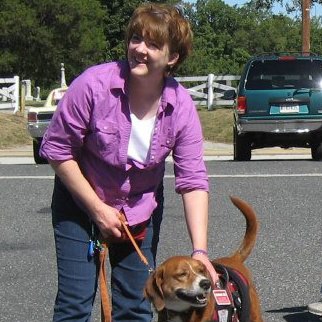
Hound dog, (a.k.a. Chloe the wonder dog) sat at the bottom of the stairs safely out of the way and quirked an eyebrow at me. ♥♥ Talking to your coffee again, Denise? ♥♥

I’d do anything to be in CONTROL

One thing that I hear people with disabilities complain about is that they really would love to control their lives better. They may even make feeble attempts (or aggravating ones) to do so.

People with hearing loss may monopolize conversations. If they are the only one talking, they don’t have to deal with the frustrating inability to hear well.

A friend of mine with Meniere’s disease admitted to me that she actually acts cold and disinterested around people because she found it keeps them at a distance. If they approach and try to talk or even hug her hello, she is overwhelmed with vertigo and nausea.

I think it is natural to want to control our environment – even our lives to a certain degree. It can help us feel safe, even secure! But let’s face it… there is much in our lives that we cannot control.

We can eat right, not smoke, and exercise and still develop high blood pressure if it is in your genes. (Yes, it can improve your health and maybe delay the onset, but according to experts you are still at risk).

We can do our best to live a healthy lifestyle and still get cancer. We can be a safe driver, never going over the speed limit and still get in a car accident. We can avoid high-crime areas and still be the victim of a crime. There is much in life that is NOT in the scope of our control.

Control or Management?

I feel very frustrated when I’ve carefully watched the weather and still get caught away from home when it starts to rain. I didn’t give the skies permission to SLOSH! I can wear tennis shoes and have my head up and eyes open on a walk, and still stumble and trip over a crack in a sidewalk. I feel – erm – sloshy.

However, people with disabilities or invisible illness don’t have to give up hope of controlling their symptoms. You may not be able to control your life, but you can manage it. Symptoms cannot be controlled but they can be managed. One of my favorite psychologists is Albert Bandura. He was one of the first to define and promote self-efficacy. Bandura said that self-efficacy is, “the belief in one’s capabilities to organize and execute the courses of action required to manage prospective situations” (Bandura, p. 72, 1994). It makes us feel better to MANAGE our lives.

With my hearing loss, I can always make sure I carry extra batteries, clean and dry my cochlear implant and hearing aid, watch my service dog for cues, ask people to email instead of call, and request moving to a quieter area to have a face-to-face talk with someone. With Meniere’s, I can avoid sodium, limit caffeine, be prepared for bad weather, and keep my service dog’s vest in tip-top shape so she can help me. I’m “managing” my life as a person with disabilities. This gives me confidence and helps me feel less – SLOSHY.

You’ve done all you can

In spite of what I’ve learned, sometimes life still sloshes. You’ve done everything in your power to navigate life and “hope for the best and plan for the worst”. Life ends up sloshing anyway. I’ve wanted to put my coffee in a sippy cup before. Or one of those cups that can be used in a moving vehicle. You know… those “slosh-less” ones? But I want my coffee in a beautiful, ceramic mug. The kind I can wrap my hands around and feel the warmth while inhaling the pleasant and comforting aroma of slow-brewed coffee! The risk of “sloshing” is worth it.

I hope that even when you’ve done all you can to manage your life, you can pick yourself up and wipe off the sloshed coffee when life …

T I L T S.

Because it will… be ready for it! 🙂

Denise Portis

© 2013 Personal Hearing Loss Journal

Bandura, A. (1994). Self-efficacy. In V. S. Ramachaudran (Ed.), Encyclopedia of human behavior,4. New York: Academic Press, pp. 71-81.

How Should I Take That?

Ever scratch your head and wonder what the heck did they mean by that?
Ever scratch your head and wonder what the heck did they meant by that?

Did you know that hearing loss is considered a communication disorder? However, I know plenty of people with normal hearing that seem to have a communication disorder. People have trouble communicating. Either they have the right words to say but the receiver interprets them wrong, or the person has “foot in mouth disease”.

Even more tiresome is the fact that we communicate with far more than our mouths. Our facial expression, body language, even our “vibe” or “aura” communicates something to others. Peter Drucker said, “The most important thing in communication is hearing what isn’t said.” Isn’t this the truth? Yet, it is so difficult to master the ability to accurately “hear what isn’t being said”.

I am learning, slowly but surely, to use reflecting – or paraphrasing – when I don’t completely understand what someone said. Either I’m not hearing all the words, or I’m hearing them but they don’t jive with what I’m seeing (either from speech reading or facial expression and body language). Here are some examples:

1. “Oh wow, I can’t believe you’re Deaf! You speak so well!”

While my first, knee-jerk reaction may be to respond: “Oh wow, I can’t believe you said that. You don’t look stupid!”, I try to take in the whole situation. What prompted their statement? Does their facial expression show confusion or delighted discovery? Do they look embarrassed seconds after having diarrhea of the mouth? I try to respond positively.

(small laugh) “Well thank you – I think. Is it your understanding that deaf people cannot speak? You know, most people with hearing loss are not culturally Deaf. They speak perfectly and are adventitiously deaf.”

2. “Why do you need a service dog? You don’t look like anything is wrong with you!”

Again, I try not to wince as I explain, “I’m glad I don’t look like anything is wrong with me, but I have invisible disabilities. Standing here you wouldn’t notice that I fall flat on my face if I try to pick things up that I’ve dropped. You wouldn’t know I have a balance disorder and am deaf by looking at me”.

This usually prompts a repeated brain fart response of #1. Scroll up and re-read.

What if it isn’t “SAID” at all?

Many of us communicate through email, texting, or even FaceBook. It is a whole ‘nuther set of problems when you take something wrong that has been written. We don’t get the extra cues of facial expression or body language. We rely more heavily on context, or what we already know about the person.

I have actually responded to an email or other written communication by asking for clarification. I do indeed have TMI (too much information) disease, but I’m learning to keep it brief. “What did you mean by that?” and then copying the sentence or question that I took wrong or in a negative way. Many times the person re-reads what they wrote and are appalled at how it came across to you. They re-word it, apologize, and you gain a better understanding of what they really meant.

I live in a family of very sarcastic people. We also text a lot. I have a family that is super thankful for unlimited data plans because we’d be homeless if we had to pay for every text kind of gratitude. Despite how much we communicate this way while apart…

SIDE NOTE: I’ll just slap you up side the head if you ever text me when we are standing next to each other.

… sometimes I can’t accurately interpret the meaning when I can’t see their faces. I’ve learned in face-to-face communications that a certain twinkle in the eye, quirk of the lips, or tension from suppressed laughter, means that the family member is being sarcastic.

So I put the gun down.

In texting or email I don’t get that. My usual response?

“Ummm. what?” (Took me a long time to teach auto-correct that for ME, ummm, is really a word).

This allows my family member to repeat in a more direct way. “Say what you mean. Mean what you say” is morphed into “Text what you mean. Mean what you text”. Hey… it works for us!

Flat out… MISUNDERSTOOD

What happens when you are flat out misunderstood though? You meant well, but someone jumped to the wrong conclusion. They are mad. They took it wrong. You are shaking your head and silently recording into your thinker, “Note to self: Never try to help so-and-so again”. Before you hit SAVE, try giving the person a chance to understand what you REALLY meant by helping, or by what you said.

I have actually said something along the lines of:

I tried to help and only meant to encourage you. You took what I said wrong and that grieves me. I wish you could see my heart and know how I meant for this to be taken. I know you’re mad. I’d like to work this out. Let me know if we can discuss this further.

Nope. It isn’t a guarantee you will make things right. Offering that olive branch may mean that the person grabs it up and smacks you on the head with it. But hey! Who did the right thing? Pop an olive in your mouth, puff that chest out, and walk away with the kind of swagger only those who know they did their part in communicating WELL can do.

Sometimes I wish we were all dogs. I’d always know you meant well if your tail was wagging.

Denise Portis

© 2013 Personal Hearing Loss Journal
I Don’t Like Music

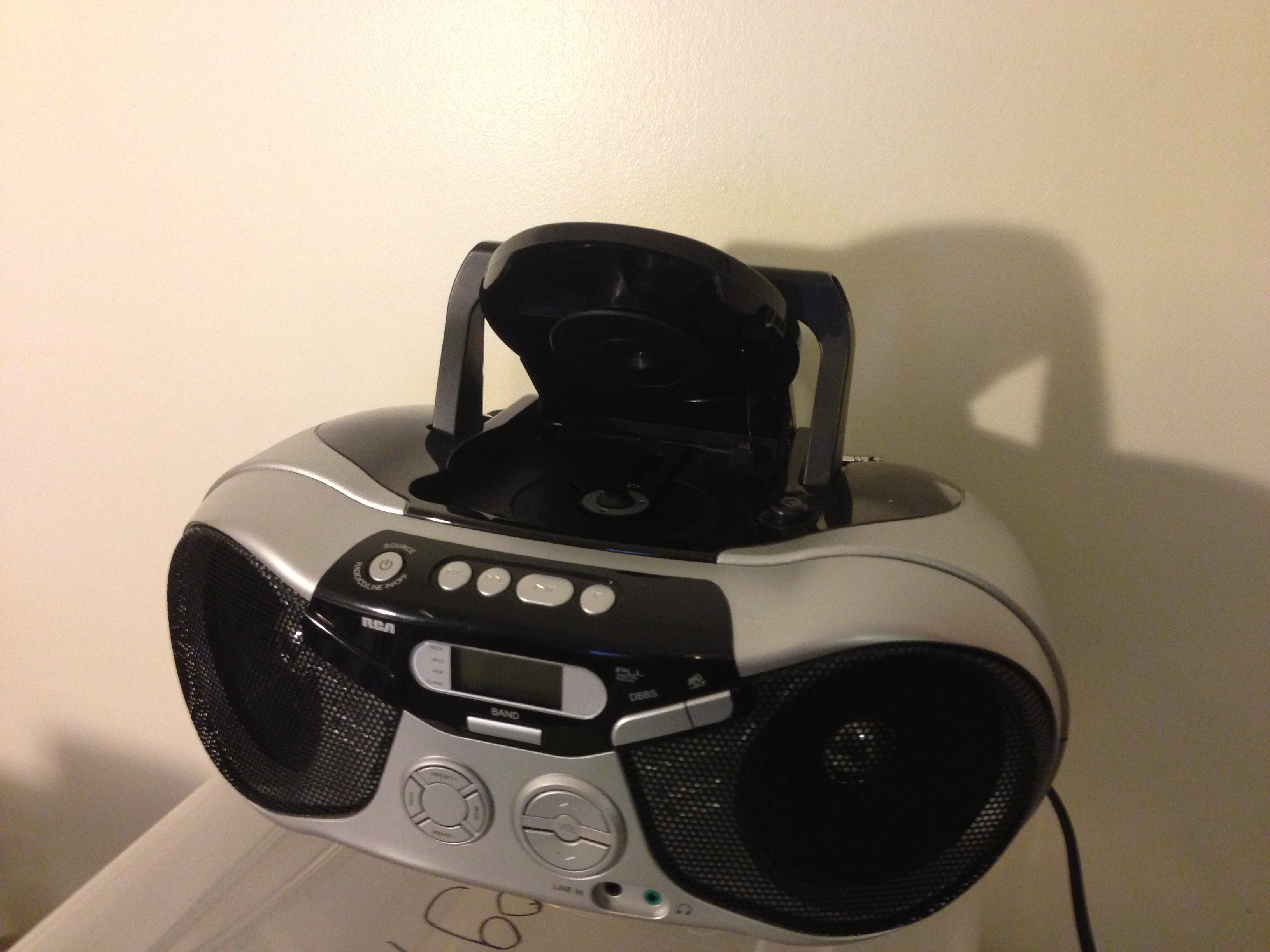
cd player

“Music was my refuge. I could crawl into the space between the notes and curl my back to loneliness.”
― Maya Angelou

If you follow Hearing Elmo you know that I want the emphasis here to be on invisible disabilities or chronic illnesses. Yes, my own challenges include hearing loss and Meniere’s disease but I always try to draw parallels to what unites us as a community of differently abled people!

I normally do not let this much time go between posts. I like to have guest bloggers (interested? email me at denise.portis@gmail.com), and I prefer that new posts are uploaded every Monday. I was dismayed to see that so much time has passed since my last post. It isn’t because I haven’t had the urge or the time. I’ve actually been trying to figure out HOW I wanted to say something without really getting caustic.

Do you have some pet peeves? Come on…’fess up! We all do, don’t we? Because we are individuals, we all have preferences, dislikes, and pet peeves. We have special things that MOVE us. There are things that energize our spirits. Yet, there are things that depress us. And folks? There are things that TICK US OFF. Consider me ticked off.

Not a Great Example?

While prepping for this post, I was relieved when I realized the person I bawled out is not a reader of Hearing Elmo. Small chance they will discover I’m relaying what happened on here – but rest assured they were fully aware of my opinion when the conversation was finished!

“I can’t believe you don’t listen to music. As a cochlear implant advocate, that is not a very good example! ‘It is too much work, is a cop out’ ”

I was stunned.

Cochlear implant companies have been working hard to make sure that those who “hear again” can also enjoy music in addition to hearing voices, being able to use the phone, and most recently to be able to enjoy water sports without having to “remove your ears”.

But I don’t listen to music. I concentrate better in the car when I do not have the radio on to interfere with my attention. On really long commutes, I do listen to talk radio. However, I don’t listen to music. Not even 80’s music which include songs I listened to while in high school! Oh sure, I have all the gadgets, wires, and assistive technology to allow me to listen to music. I just don’t like the way it sounds. Just as I worked hard at hearing voices I couldn’t see (phones), and hearing voices amongst a ton of background noise, I could devote time to listening to music – but I don’t.

Ummm… How is this Relevant?

You are probably wondering where I’m going with this. You’re shaking your head “yes” at your computer screen, aren’t you?

We have to respect the individuality of other people.

I have chosen to make the invisible things about me – visible. It was my choice. I did these things to celebrate who I am and to unashamedly live MY life.

I use a metallic purple cane on my really bad balance days. I chose to mitigate my disabilities with a service dog. I chose a cochlear implant instead of “embracing my deafness”. After a great deal of research, I chose the Nucleus Freedom instead of another brand. I wear bling-bling and would wear blinking lights on my coil if I could figure out how to make a go of that. I am only unilateral and have chosen not to go bilateral. I chose to work hard at communicating effectively. Music was just not important to me.

Is music important to you? As a person with hearing loss did you work hard at being able to once again enjoy music? Are you a musician? Does music fuel your soul? I’m am so happy for you – really I am!

But we are not cookie-cutter versions of each other. What was necessary, important, and “worth it” to you may not be the same things another would choose to work towards.

There ARE a few types of music I listen to one of which is Christmas music during the holidays. However, can I get a shout out for DISNEY TUNES? For some reason, I have really connected to a number of songs from Walt Disney movies. These animated movies were the first I viewed with closed captions as I developed hearing loss when my kids were small. Once I was implanted with a cochlear implant in 2005, one of the first types of music I DID make sure I listened to were some of these Disney songs. One of my favorite was detailed here AND just so happens to go along with this post.

United we Stand, Divided we fall

So as people who have invisible disabilities or chronic illnesses, we should strive to be respectful of individual choices. It is hard enough to work and live among folks who don’t always get it. Surely in our own community of courageous people we can respect individual choice?

Don’t agree with everything someone says or does despite your sharing a diagnosis? Cut ’em some slack.

What are some things that have left you feeling peeved when judged by your peers?

Denise Portis

© 2013 Personal Hearing Loss Journal

Team Chatter

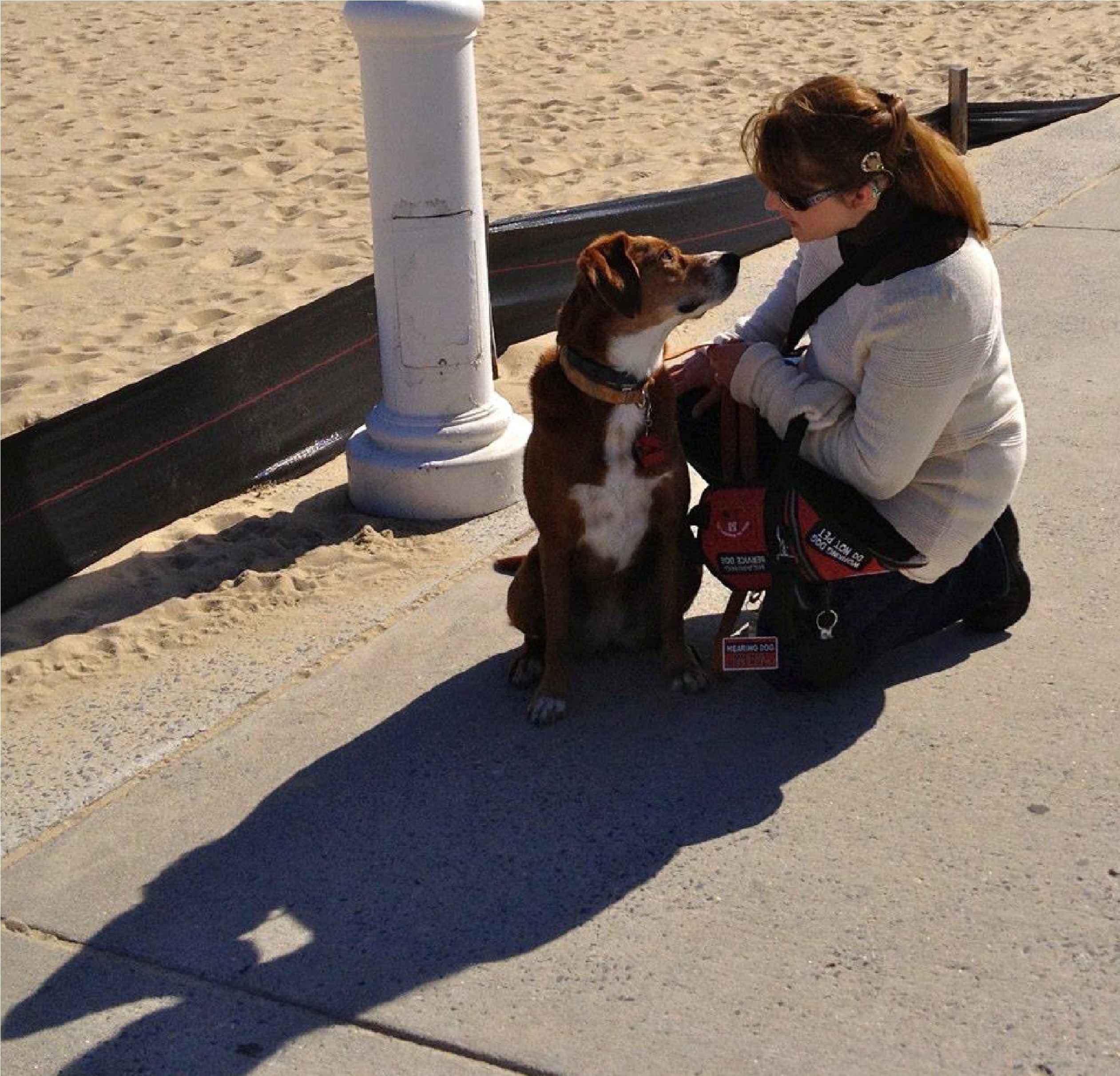
In public, I talk to Chloe constantly. May 4th I learned what this is called...
In public, I talk to Chloe constantly. May 4th I learned what this is called…

Photo by Julie Wu, volunteer and therapy dog handler for Fidos For Freedom, Inc.

A trainer exited Pi’s Deli behind me and said, “Great team chatter”.

I’m always so eloquent. I responded, “Ummmmm”, with a questioning look that spoke volumes.

Fidos For Freedom’s trainers have had a LOT of practice and experience with people with hearing loss. She rephrased. “Good communication with your dog”.

Oh.

When I hear a “new for me” phrase, I am often scrambling to catch up to the conversation as I work to interpret the meaning. Having been partnered with Chloe since 2007, I think I can safely say I’m a veteran team. That doesn’t mean that I don’t still learn new things, however. Phrases like “team chatter” may be heard, but not understood until I spend a few minutes pondering it.

What does it mean?

Team chatter is important in a service dog team for two primary reasons. Team chatter keeps your dog’s attention on YOU if you use their name a great deal and talk to them. A second reason, however, is that service dogs need to know when they are doing something right! The tone and certain words connect with them.

This trainer may not have put two and two together like I did when preparing for this post. But the trainers use team chatter as well. When I did something right, this trainer told me so. If something needed polishing, she would tell me. She gave feedback throughout the certification segment we were doing that morning. She is a trainer and I am a client. However, we too, are a team. We are co-volunteers – even teammates in an organization we both love. Fidos For Freedom, Inc. (see http://www.fidosforfreedom.org/ for more information).

Why People with Invisible Disabilities Need Team Chatter

In psychology we use the phrase, words of affirmation, to explain the inherent need we have to receive “high 5’s” literally and figuratively.

Paul Hulijich explains, “The mind is very powerful, and it needs to be spoken to. We are all aware of the power of being told, for example, that we look well; it often immediately evokes the feeling of being well. We are influenced by what people say to us” (Hulijich, 2012, para. 3). Since I have had to learn to do a great number of things “differently”, it means a lot to me when a trainer, friend, or family member tell me that I handled something well.

At my daughter's college graduation, May 11, 2013.
At my daughter’s college graduation, May 11, 2013.

My husband praised me for how I chose to ascend and descend a number of steps in various arenas this last weekend. Even with Chloe in a close “heel”, I’m just not safe on steps in large cavernous – or open air – places. I didn’t make a big deal about it, only reminding Terry, my husband to either stand immediately in front of me, or behind me. Placing a hand on his shoulder is all I need to keep from falling when going down steps. Going up is a little trickier, but we still have a well-rehearsed plan. He told me, “You use steps with a lot more confidence now. You don’t even miss a beat”.

I don’t know about YOU, but it means a lot when someone notices what was once trial and error, becomes a well-polished, good habit. I need affirmation when I’m told that I pick up cues about my volume better. It means a lot when someone notices that I grin and advocate when having a near miss in a crowded hallway, and make it a learning opportunity.

One day last week, Chloe did not accompany me to work as she wasn’t feeling well. (She has chronic early morning acid reflux). I only had two classes that day and so opted to let her stay home with my husband since he was off. Just like any normal day, I dropped a number of things in the classroom. One student watched with wide eyes as I braced myself against a desk and used my foot to pick up a stack of quiz sheets with a rubber-band around them. “Oh my gosh, you do that without even thinking about it! You live YOU very well!”

I blushed but also BEAMED at the impromptu praise. What Greg said, echoed the beat of my heart. This is what I want – to live ME very well.

We Can Use Team Chatter too!

Do you have a hearing loss? Do you live with a balance disorder? Have you learned to navigate life with low vision? Do you have a chronic or invisible illness? Whether you are new to “the new you”, or a veteran, there are people around you who could use some team chatter.

I know, I know! It may not always seem as if they are ON YOUR TEAM, but there are still co-workers, friends, and family members who could benefit from being told when they are doing something RIGHT.

Sarah, a person with low vision, once asked me where her husband was. I pointed and said, “He’s right over there”. She reached up and grabbed my pointing arm and followed it with her hand in the direction I was pointing. Off she went in the RIGHT direction, leaving me pondering my own OOPS. After that, I did much better about responding with phrases like, “at your 9′ o’clock”; or, “over your left shoulder about 25 feet away”.

She noticed. “Denise, you do a great job at giving me directional assistance. It really helps!” I’ve tried to remember to do the same for the folks in my life.

“Thanks for re-phrasing that. I understood it perfectly the second time. You don’t even have to think about doing that for me now. Thanks!”

“I appreciate you habitually moving to allow me to stand next to the side when we get on the elevator. It really helps to have something to lean against”.

“Thanks for ignoring Chloe when we talk in the office. I know you love dogs, and because she knows you it can be hard to ignore that wag! It really helps me though, so thank you!”

As a person with both Meniere’s disease and hearing loss, I do a lot of reminding about what works well to assist me, and what does not. (This can be tricky because we don’t want to embarrass or offend someone!) Sometimes I feel like I’m constantly in “education mode”. Yet, we need to remember to tell folks around us when they get it right! It affirms what they do or say in interacting with us. Perhaps they even just need to hear that they “leave us be” in a healthy way! “Thank you for not assuming I needed help with that and waiting to see if I ASKED for help”.

I hope you will work to incorporate team chatter into your own relationships. Words of affirmation and open communication can be so important. Don’t assume others know when they are doing a good job. Let them know!

Hulijich, P. (2012). Affirmations. Psychology Today. Retrieved, May 12, 2012 from http://www.psychologytoday.com/blog/mind-wellness-awareness/201211/affirmations

Denise Portis

© 2013 Personal Hearing Loss Journal
Overkill?

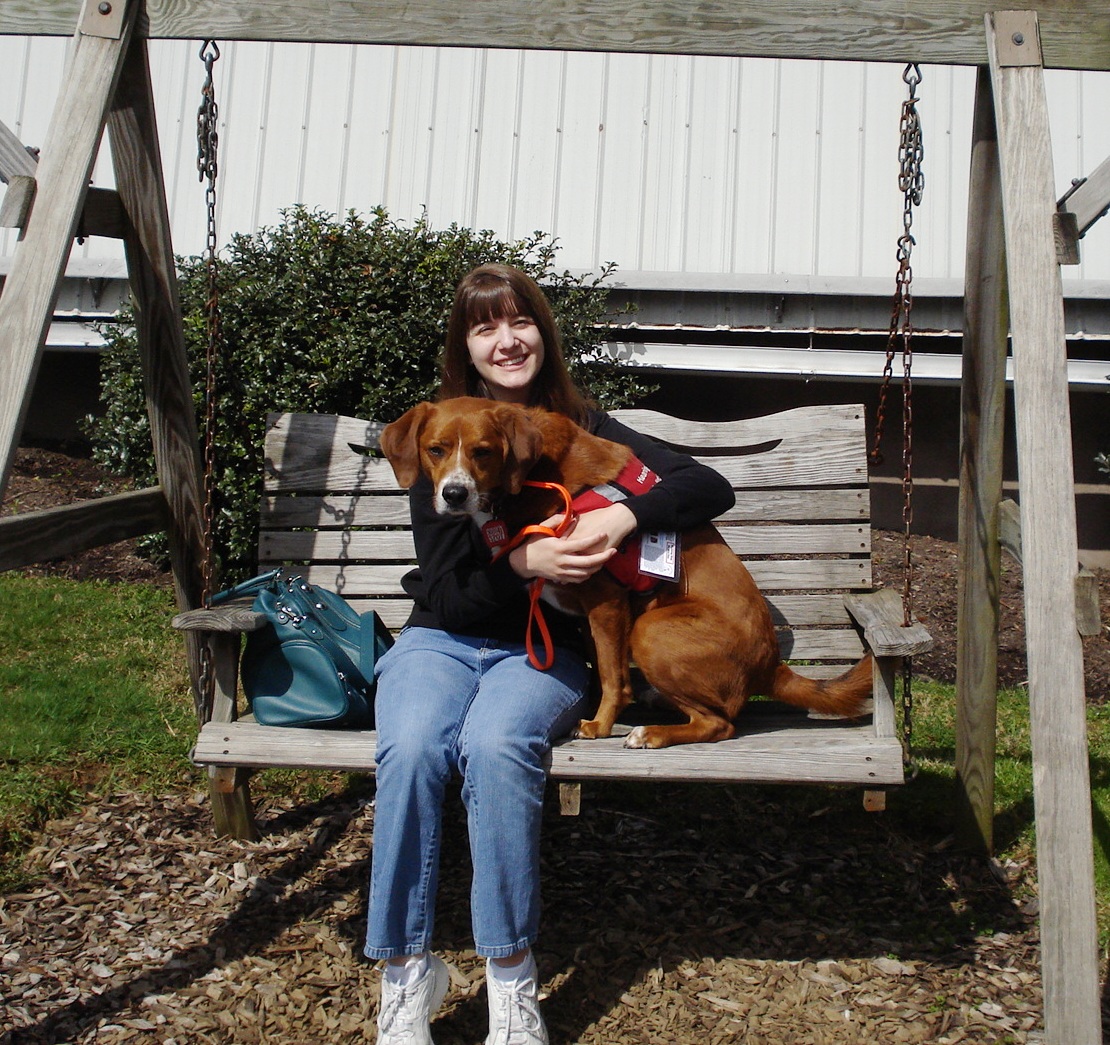
At the beach in Ocean City with cochlear implant, hearing aid, and hearing assistance dog

1. I’ve had people with cochlear implants before ask me why I don’t just use a cochlear implant. One (or two) works for them after all!

2. I’ve had people with hearing aids ask me why I choose to get a cochlear implant in my “worse” ear.

3. I’ve had folks with CI’s and HA’s ask me why I use assistive devices in the classroom if I am “hearing again” so well.

4. I’ve had people with cochlear implants ask me why I need a hearing assistance dog if I’m hearing so well now.

5. I’ve had people who were culturally Deaf ask me why I don’t just use ASL since I am proficient in the language.

6. I’ve had people who were late-deafened ask me why I do not just continue to speech read. Why embrace technology?

Overkill?

These are all legitimate questions. I will do my best to answer them.

1. I’ve had people with cochlear implants before ask me why I don’t just use a cochlear implant. One (or two) works for them after all!  Not everyone who qualifies for a cochlear implant can go bilateral. I have Meniere’s disease and I barely squeaked by in pre-surgical balance testing to be a unilateral candidate. I use a hearing aid in the opposite ear because – well, because my audiologist told me too! My audiograms and testing each year astonish my audiologist at Johns Hopkins. Who would have thought I could hear this well? However, the proof is clear. I gain an extra 3-7% when I use a hearing aid in my unimplanted ear.

2. I’ve had people with hearing aids ask me why I choose to get a cochlear implant in my “worse” ear. I chose to get a cochlear implant because with the best BTE hearing aids available, I could no longer hear well enough to carry on a normal conversation. I learned all I could about cochlear implants and took the “plunge” in April of 2005. I’ve never regretted it. A comparison of my audiograms can be found at this post: CLICK HERE.

3. I’ve had folks with CI’s and HA’s ask me why I use assistive devices in the classroom if I am “hearing again” so well.  I hear great in “most” indoor environments. I even hear outside fairly well if there is not a lot of competing noise. But let’s face it. Listening environments are not the same. Some rooms are huge with cathedral ceilings. Some have all hard surfaces. I use assistive devices because it helps to eliminate one of my greatest enemies. NOISE. Isn’t it funny that as a “hearing again” person, noise interferes with my hearing well? My favorite device as a teacher is my clipboard. You can read about it at this post: CLICK HERE.

4. I’ve had people with cochlear implants ask me why I need a hearing assistance dog if I’m hearing so well now.  This is probably the number one question I receive in person, from readers on Hearing Elmo, through FaceBook, and through email. My hearing assistance dog from Fidos For Freedom gives me something that my cochlear implant and hearing aid do not. Independence. When I trained to be matched with a service dog, I was not only learning the commands, but also learning to watch my dog – and to trust my dog. I needed that training! I am confident in knowing that if I do not hear something, my hearing assistance dog will let me know. This may mean becoming aware that a car is coming up behind me in the parking lot. It may mean that I will know before rounding the end cap, that there is a noisy family on the next aisle. I know if I drop things. I know if intercoms are giving announcements. I know about alarms going off. I know when people are saying “excuse me” so that they can get past, and much, much more. I feel safe. I feel confident. I am independent. I didn’t feel those same things when only utilizing a CI and HA. (Besides with my balance issues, Chloe has become just as necessary to me because of her balance work).

5. I’ve had people who were culturally Deaf ask me why I don’t just use ASL since I am proficient in the language. Bottom line? I am not culturally Deaf. I was not born with hearing loss. Everyone close to me has normal hearing. Don’t misunderstand. I love ASL and have been teaching the language for over twelve years. I actually rely on sign at home if I’ve taken my ears out (as well as speech reading). However, I was born into this world with ears that hear. It made sense (to me) that when I began losing my hearing that I fight to regain as much of that as I was able to do. I do not criticize those who embrace their deafness. I love the culturally Deaf and have learned how to advocate in a positive way from Deaf friends. But… I’m not Deaf. I am a person with hearing loss who is “hearing again”.

6. I’ve had people who were late-deafened ask me why I do not just continue to speech read. Why embrace technology? Speech reading (or lip reading) is not an exact science. Don’t believe me? Try it sometime. Get a friend or family member to voice some simple sentences with their volume “OFF”. Can you accurately pick up what they are saying?

According to the CDC (2012), a good speech reader will be accurate 4 to 5 words in a sentence of 12 or more words. I have news for you. 33-50% by the BEST, means they are not communicating well. Even for those who are terrific at understanding “in context”, will still be asking for repeats or clarification (or sit there “lost”). I still speech read some. It is only an additional tool to help me communicate at my best, however.

Use It All!

So. Is the way I’ve chosen to stay connected, to communicate, and to hear the world around me overkill? Perhaps to some it is. However, these choices have helped me to cope, to interact, and to be a confident “hearing again” adult responsible for my own communication. If you are a person with hearing loss, you have chosen your own path, too. I respect that! I am grateful to be living in an age where so many options are available to people with hearing loss. Decide how you want to engage the world around you – and then OWN IT.

Do you use additional things to hear at your very best? Please feel free to share those options by commenting on this post.

Happy hearing!

Denise Portis

© 2013 Personal Hearing Loss Journal

Center for Disease Control. (2012). Hearing loss in children: Learning language. Retrieved April 20, 2012, from http://www.cdc.gov/ncbddd/hearingloss/language.html

Obtuse on Purpose

Chloe enjoys some downtime in between classes.

Sometimes, someone just rubs me wrong. I try to practice what I preach here at Hearing Elmo. I know that my interactions with another person can influence their opinion about – for example, all people who have a service dog, or all people who have a balance disorder. Yet sometimes… someone just rubs me wrong and I respond inappropriately.

In the early days, if someone made a comment about my service dog, cochlear implant, or wobbly gait, I’d put my hands on my hip and “give them what for”. It was pointed out to me by friends and family that I needed to work on that. It was hard for me not to have a knee-jerk reaction to what I viewed as rudeness.

Today, I do better. Yet sometimes… someone rubs me wrong. I had a day like that this week.

I went to the copy center to copy an exam I was getting ready to give to eager Introduction to Psychology students. *snort*  The copiers are jamming up and not wanting to “do staples” right now, so I brought my exam to the front desk and asked for assistance. As I waited for it to be printed, another professor came into the copy center.

“Oh what a beautiful dog! I just think it is terrific what you do. But I don’t know how you give them up, honestly!”

I was obtuse on purpose.

“Oh, I’m keeping her. I’m not going to give her up“, I replied.

L   O   N   G          P   A   U   S   E

“I’m sorry?” she asked, clearly confused.

“I’m not going to give her up. I’m keeping her”, I repeated.

L   O   N   G          P   A   U   S   E

“But… but don’t you have to give them back?” she asked.

“She’s my service dog. We’ve been together almost 6 years now”, I replied with saccharin sweetness.

L   O   N   G          P   A   U   S   E

“You mean a therapy dog?” she asked, still clearly confused.

“Oh no. She is an assistance dog. I really couldn’t do my job without her. She’s essential to my even being here”, I admitted.

L   O   N   G          P   A   U   S   E

“But… WHY do you need her?”, she asked as she leaned closer to finally read all the details on Chloe’s vest. Her eyes got big and she murmured… “Oh…”

Then she looked at me. She actually took a step to the side to look me up and down. I was incredulous! I shouldn’t have been surprised when she said, “You don’t look deaf or talk like you’re deaf”.

With a huge, sweet smile I exclaimed, “Well thank you!” (refusing to even go there). I inwardly chanted my motto… “EDUCATE ONE PERSON AT AT TIME”.

She continued to wait in line and watch me. Finally, my copies were done and I allowed Chloe to do “paws up” to say hello to one of her friends behind the desk. He patted her once and said, “Now you take care of your mom, Chloe! Don’t let her fall today!” Chloe wagged her tail and turned to see me out the door.

I noticed this other professor’s eyes get even bigger as she stared at us while I gathered my things to prepare to leave. I’m talking, openly staring, not even pretending to be sly about it. As I turned to push open the door, I turned, looked her in the eye, and said, “You know? You don’t look like a hearing person!”

I was obtuse on purpose. And perhaps – a little mean. I’m pretty confident, however, that in this one instance – it may have helped open her eyes at her own behavior. One can hope, right?

Invisible illness and disability are invisible. Duh, right? The very nature of what these disorders, illnesses, and disabilities are mean that at first glance, you cannot see them. It may not be until someone bends, or walks, or speaks, or sits that you notice what is really going on with them. Please respect them enough to not ask impertinent questions.

Making a Difference

At a Giant grocery store several weeks ago, I came in the door right behind another lady. She sat in the nearest motorized shopping cart and proceeded to pull out carefully. To keep Chloe’s paws and my clumsy feet out of her way, I stepped to the side for a moment and smiled while waiting for her to go by me. A woman turned from the produce section with a bag of lemons in her hand (appropriate – believe me) and said to this lady, “Oh wow, you should leave those for handicapped people. That is why they are there!”

The lady sat there a minute stunned. I felt like leaning over and whispering, “Gun it dearie. You are aimed right at her!”. Instead I put a hand on her shoulder (which made her jump) and said, “Some people don’t realize that some disabilities are invisible. Ignore her”.

Her eyes filled with tears and she seemed disconcerted by both this woman’s comment and my own intervention. To not bring any more attention to the situation, I patted her shoulder one more time and walked towards the vegetables.

Whether you have an invisible condition yourself, or know someone who does, you can EDUCATE ONE PERSON AT A TIME. Perhaps being obtuse on purpose is not the best way. However, you CAN find a way to make a difference! Look for opportunities to do so!

Denise Portis

© 2013 Personal Hearing Loss Journal

Reverse Discrimination

Kyersten and Chloe at the "Candle Barn" in Bird-in-Hand, PA
Kyersten and Chloe at the “Candle Barn” in Bird-in-Hand, PA

Discrimination. Pronounced, the word even “sounds” ugly. According to the United States E.E.O.C, discrimination can fall into the following cateogries: age, disability, equal pay/compensation, genetic information, national origin, pregnancy, race/color, religion, retaliation, sex, and sexual harassment (U.S. EEOC, 2013).

For those of us with any kind of disability, the Office of Civil Rights enforces Section 504 of the Rehabilitation Act of 1973, Section 408 of the Rehabilitation Act of 1973, and Title II of the Americans with Disabilities Act of 1990. As I mitigate my own disabilities with a service dog, I was thrilled to see the ADA clarify specifics for folks like myself (See ADA 2010 Revised Requirements).

One of the more troubling truths about discrimination, however, is how quickly the “tables can turn”. Those who are often discriminated against can very easily become those who discriminate. It sneaks up on you.

Teaching the Teacher

The photo above is of my daughter, age twenty-three, and taken at one of our favorite “day trip” areas. Bird-in-Hand, Pennsylvania, is a quaint little village in Lancaster county that makes you feel as if you’ve stepped back in time. Kyersten is a young adult now and I’m pleased we are friends. She has taught me many things through the years as she usually presents tough topics with the poise and thoughtfulness someone twice her age would do.

I always welcome one-on-one talks with her, but in early 2010 I initially was NOT pleased when she informed me that I was discriminatory towards people who had normal hearing.

I sputtered, “Wha…?”

Like she tends to do she began to systematically present the proof. “For one thing, when you are exasperated with a communication problem, you call us ‘hearing people’. Makes me feel like a different species!”

She continued her argument by explaining that I often forget that people without disabilities can be just as big a champion for folks with disabilities as the individual themselves. This may be especially true of those who care for someone with disabilities.

Later, a discussion with my husband had me really feeling sheepish about my own apparent hypocrisy. “It’s perfectly natural to seek out people who struggle with the same things you do, but when is the last time you befriended someone without disabilities? You have OTHER things in common with people. For example, your faith, your background, and your profession… all put you in specific environments where you can get to know people and enjoy the reciprocal benefits of friendship.”

OUCH.

“License to Kill”

To “self-identify” is a topic discussed in many forums. Many believe that to do so goes hand-in-hand with acceptance and self-respect. One of my favorite “women of courage” buddies is a young woman by the name of Hunter. She and I both received our assistance dogs from Fidos For Freedom, Inc. Hunter was the first person I heard use the term “differently abled” instead of disabled.

I totally “get” choosing a more positive spin on a word many of us hate at times. However, I’ve also learned that because this is STILL the way the law identifies us (and protects us), I’m OK with being a person with disabilities. (Though like Hunter, I will quickly point out exactly how I simply do things differently…)

Labels – even those we pin on ourselves – can go SO WRONG, however. Once we start behaving as if our status “sets us apart” and in some way elevates us over another, we’ve really lost our purpose. Our goal is equality after all, correct? Many blogs I follow written by people with disabilities or who live with invisible illness, simply want to be accepted and treated normally.

I’m disabled and YOU are not… therefore I’m entitled to this, and This, and THIS. Obviously, a person who does this has missed the point. Yet, just as we may inadvertently reverse discriminate against those who live WITHOUT disability or invisible illness, we may choose to wear our “badge” as if it gives us free reign to disrespect others.

Guard your Tongue

Are you a person with a disability? Do you live with invisible illness? Does a chronic medical condition shape who you are? Do you have a service animal?

YOU are a person of influence.

Recently, I went to get a new contact prescription. I’m having to do so every 4-6 months unfortunately. As a result, I’m getting to know my eye care professional very well. At my last appointment with her encouragement for me to “see a specialist” ringing in my ears, she rolled her chair closer to me and said, “Can I share something with you?”

Immediately wary of the WAY she said it, I hesitated but said, “Sure! What’s up?”

She shared, “Until I started seeing you, I hated knowing a hard-of-hearing patient was waiting for me in the examination room. In the past, hard-of-hearing patients seem to be defensive, argumentative, and easily frustrated. I understand it can be hard to look through corrective lens with the Phoroptor as it means you cannot see my face to hear, but you are the first to not act as if it is my fault”.

I was stunned. I’ve always used humor to try and alleviate any discomfort others may feel as I enter an establishment with service dog and blinged-out cochlear implant. Yet later, I found myself wondering if I had ever treated someone poorly simply because I was frustrated.

Hopefully, my ability to laugh at my own fax pas and miscommunications will compensate for some of the bad experiences my optometrist had with people who have hearing loss. With regret, however, I could remember many times where I “blew it” and had a negative influence.

One rainy day, I entered a new building on another campus for a class and stopped at the security desk for directions. Before I could state the problem, the campus officer asked, “Why is that dog in here?”

Yeah. She could have stated it a little more diplomatically, but I became immediately defensive. I blurted out all the ADA information I knew about service dogs and then said with exasperation, “Where are the elevators for the classrooms above?” Several weeks later after classes were finally routine for me, I had to stop and apologize to her. I was out of line.

Every encounter you have with people at work, stores, places of business, and even church are an opportunity for you to be a GOOD influence. You set the stage for future encounters for these folks. We can be a good influence or a bad one. We shape future encounters for people just like us. Remembering that has helped me be a little more patient.

Bottom line, my point? Let’s practice what we preach…

Denise Portis

© 2013 Personal Hearing Loss Journal

United States Equal Employment Opportunity Commission (2013). Discrimination by type. Retrieved March 25, 2013, from http://www.eeoc.gov/laws/types/