Living with hearing loss. My friends, I have to tell you that I have learned long ago that it is much better to laugh at yourself than to get upset when your ears fall short. Besides I’ve tried the depressed, isolated, and “I surrender” route. It isn’t fun and it is lonely. It serves no purpose, nor makes a difference. Continuing to reach out, work hard, and laugh at yourself when needed, is much more productive – and life changing!
Although my classes sometimes have students my age or older in them, the majority of the classes I teach are mid-day so my students are “regular”, college-aged, young adults. I have two young adults living at home while they complete their education. I knew BEFORE I began teaching at a local community college that I don’t know the “lingo”. I don’t think they even CALL it “lingo”. But I digress…
I’m constantly being made aware that I “don’t get it” when students (or my children) use current idioms, slang, or acronyms. I not only have to ask for clarification, but I often need these things EXPLAINED to me. “Gullible” and naive have been terms to describe me since I was knee high to a skeeter. (Yeah… something else I seem to be proficient at is mixing my colloquial expressions!)
So this past week when a student I was working with to assist in getting caught up after being out sick? Well the fact that I misheard them AND missed their acronym is not a big stretch – let me tell you!
“So I’ll work with you to get you caught up. This will be a hard week, but you can do it!” I said with my best cheerleader professor voice.
“A soy meal.” the overwhelmed student replied.
I looked at them quizzically for a moment and repeated, “A SOY MEAL?” (I learned long ago to just go ahead and repeat what I thought I heard to help the other person, 1) learn how things sound to ME, and 2) help them understand the part I need repeated – so as to not require a repeat of the whole story).
With deliberate pauses the student repeated, “S. O. M. L. Snoring on my light”.
Stumped and exasperated, but determined to get it right I repeated, “S.O.M.L. — Snoring on my light? Like a “Clap On” gadget?”
The student’s eyes bugged out and there was a pause. Chloe, my service dog, looked from one petrified person to the other. She yawned and settled into a down-stay. “Girl friend” has been here before and knew it was gonna take awhile…
“Professor Portis! I have NO idea what you are talking about. I never said anything about a gadget! S.O.M.L. It means “Story of My Life”. The student had that “deer in the headlight” look at this point. Who says young adults don’t have the guts to see a difficult conversation to the end? They continued, “You know… it means my life is always like this!”
It took me a moment or two. After all there is a teeny tiny delay in what I hear to what I process anyway! “Oh. STORY OF MY LIFE. Got it…”
With relief the student gathered their things and proceeded to attempt ESCAPE. A twinkle in their eye and a deliberate pause to get my attention, she looked at me in the face and clearly intoned, “Snoringonmylight. You are a hoot, Professor Portis!”
Every once in awhile, something happens that really “jerks the rug out from under me” in regards to disability and invisible illness. Hearing Elmo, numerous support and community service groups, and strong connections with others who GET IT, usually keep me cruising along with optimism and a healthy passion for life. However, once in awhile something may happen and I ALLOW it to undermine my confidence and throw me for a loop.
About a month ago I was at church and turned to walk out of a small group study into the foyer. A person I see everysingle Sunday stuck out their hand and shook mine saying, “Is this your new dog?” Because I have a hearing loss, I default to a specific response when I hear something that I know cannot be right. I’m desperate to clear up what my ears MUST have misunderstood so I am eloquent in my response:
“HUH?” I asked with big eyes.
He repeated, “Is this your new service dog?”
I stammered and was able to eek out, “No, I’ve had Chloe for almost 6 years now” and walked/wobbled away as quickly as I could. I could hear him still talking and looking uncomfortable (I’m sure I looked completely shell-shocked), but I wasn’t going to stand around and “play nice” when I felt truly sucker-punched! I made my way to the car and sat waiting for my husband, trying to make sense of what I’d just heard.
Prior to this I had missed a Sunday. Chloe had been sick one weekend (something that happens as she is in contact with so many things a pet is not) and having been up all night, I skipped church with her. Had this church leader asked this because Terry probably informed him I was gone because of a sick pup and he assumed much more than what was going on? If he sees me each and every Sunday, how do you not recognize the bright, red dog who has been my partner for almost 6 years? How in the world can someone get a specially trained service dog so quickly even if you DID have to suddenly retire another dog? Did he not know it took me 15 months of training to even get matched with Chloe? You don’t slap a vest on a pet dog and call it a service dog. These dogs are tested for temperament, trained for public access, and trained to perform specific tasks. It takes years and thousands of dollars! All these questions whirled through my head.
I’ll be honest with you and admit…
I WAS MAD. After that though I was actually very hurt. A couple of weeks later I finally ‘fessed up to my husband about what happened at church. Small miracle THAT to keep it quiet from him that long – but proof positive how deeply this had affected me.
There are some real perks to being married to a psychologist. Long story – short, after discussing all the reasons this person must have misunderstood what was going on in my life, we agreed that some people just don’t get it. This doesn’t mean they don’t CARE. They just don’t get it. My response has to be – CUT ‘EM SOME SLACK.
Even though this person is in church leadership and sees me every Sunday, to my knowledge they do not have anyone close to them who lives with disability or invisible/chronic illness. I don’t think they even own a pet dog and I’m probably the only one they know with a service dog. We don’t hang out. I don’t share my life with them. (They don’t read Hearing Elmo – smile).
You are going to have people in your life you simply must, “cut ’em some slack”. Maybe they are a co-worker that you don’t work with very often – maybe only a couple of times a month. Maybe it is a cashier at a grocery store who you occasionally see when you are in her line; or, perhaps a bank teller, physicians assistant at a doctor’s office, or UPS man ringing your doorbell.
Don’t get me wrong. I’m the first one to encourage folks to educate in a proactive and positive way, how best to communicate, or assist (if needed). However, the people you take the time to share how best to interact with you, are folks you have a more intimate relationship with and see frequently. Close co-workers, friends, parents of your KID’S friends, people you see more often and converse with a lot… these are folks you are proactive with and to whom you communicate your needs. They very likely will care enough to ask YOU how best to assist or communicate. This means there are plenty of folks you’ve left out of the loop
on purpose.
They don’t need to know the details. You may have a relationship with them, but it is not a close relationship. I, for example, do not need to let a church leader know how long it took me to get matched with Chloe, nor how often we continue to train at Fidos For Freedom to polish and perfect our skills each month. We make eye contact and smile once a week. We may shake hands one or two times a month. This person does not need to know how badly he erred, nor do I need to take him to task for being clueless about something I’ve not invited him to know about regarding ME.
There are folks at work, church, and whom I interact with often enough that they have learned how best to communicate with me. It may be a friend inviting me over to her very quiet, empty house to catch up! It may be a nurse I see often at my primary care doctor who quickly re-reads the bookmark I asked to be stapled in my chart that reminds her I need her to face me. It reminds her I have Chloe so she helps me make sure Chloe doesn’t have her paws on the scale when I’m weighed (seriously, right?). It may be the lady I see every morning walking her dog who use to act hurt when she struck up a conversation with me and I didn’t hear her at first. Now she stands nearer and faces me and we talk about the weather or our families as we “potty our dogs” before heading out! It may be the friend in small group at church who knows I’m having a really bad balance day. As I sit in the back out of the way, she stops to confirm, “So if you pass out… I keep everyone from calling 9-1-1, and just get Terry, right?” It may be the co-worker I see every day while retrieving my mail from the Arts & Sciences department. Our boxes are next to each other and it stood to reason that I explain I only need her to get my attention first before speaking…
You know who needs to have a more clear idea of “who you are”. But there are plenty of people we need to cut some slack. We just do not see them frequently enough to take the time to give them our life story (smile). You know the difference. I’m not saying it is EASY when misunderstood. I felt mad, then hurt, then filled with righteous indignation, bent on educating someone who really isn’t a part of my life. I had to let it go.
I’m learning a life worth living is all about choosing the battles and knowing when to take a stand. We learn to determine who to take to task and who to cut some slack. We never stop learning!
I’m not really a history buff like some of my siblings, but I do like to watch the occasional autobiographical movie or read books on real people. I have, however, always been an Abraham Lincoln fan. I’m so excited about the new movie coming out and hope it does not disappoint. (Lincoln – the trailer). Needless to say, I’m also a big fan of President Lincoln’s quotations. Many of them I have memorized from my childhood and throughout my life.
In preparing for this post, a quote of President Lincoln’s came to mind: “I will prepare and some day my chance will come.”
I’m a big fan of using hindsight to our advantage. One of my favorite training exercises at Fidos For Freedom, Inc., is role playing… actually putting ourselves in scenarios where we face incredulous, doubtful strangers, belligerent business owners, or even just curious but nosy bystanders. These exercises have allowed me to practice what I need to say – not IF – but WHEN I need to have the words to explain my need for Chloe. I know I may need to defend my right to mitigate my disability with an assistance dog.
Experience Can Be a Harsh Teacher
Did you ever have something happen that was totally unfair? Feelings of righteous indignation and self-preservation well up and literally choke the words right out of you? I’m one of those poor folks who rarely says what I should have saidat exactly the right moment. Instead, my feelings are hurt; or, I’m madder than a wet hen. Not… that I’ve ever seen a wet hen despite my childhood experiences of owning and caring for chickens, but I digress..
Ever replay a hurtful or confrontational conversation over and Over and OVER again in your head… thinking about what you SHOULD have said? Well I take Abraham Lincoln’s advice to heart. “I will prepare and some day my chance will come.” Now I’m the first to admit that one can perseverate on a past hurt and be much worse off than if you just let it go. I’m a planner though (at times to a fault).
If my feelings are just hurt and it is someone I don’t know well, I just let it go (though I may replay the entire horrible episode to my patient husband). If it is someone I have a relationship with, I may decide to let them know that I didn’t like how the conversation went and came away hurt and would like to discuss it some more. However, most of the things that hurt my feelings or ruffle my – erm – feathers, are comments from total strangers or mere acquaintances.
How many of you have heard these comments? :
But you don’t LOOK sick.
You were just fine yesterday. What’s wrong today?
You are feeling poorly AGAIN?
Are you ever well?
You seemed to hear me fine the other day on the phone.
Don’t you get tired of being so lethargic?
I think you are just low-energy.
You are such a dramaqueen!
Are you sure it isn’t all in your head?
I love my dog too, but I don’t self-diagnose a disability just so I can be with them all day.
Maybe you should see a counselor…
I knew you the first 20 years of your life. There was nothing wrong with you then!
Is this all for attention?
Don’t you worry how your family will feel having to pick up the slack?
People with invisible disabilities, illness or chronic conditions often LOOK just fine. Being late-deafened, I speak with little or any “deaf accent” or enunciation issues. With a cochlear implant and hearing aid (a bi-modal, hearing again peep with BLING), I often hear voices well unless there is a lot of background noise. If it is a sunny day, I not only may have very little “wobble” in my step, I may actually be able to move fast. So to look at me – well, I look fine! But on rainy days or in environments with tons of LOUD surround sound, vertigo can hit me like a freight train and cause me to walk as if I’m intoxicated. I usually clam up because if I speak I may vomit. (I’m serious…)
I have friends here in Maryland, and cyber friends I have come to know across the nation – many of whom are fellow bloggers. They have fibromyalgia and/or chronic fatigue syndrome. Some have assistance dogs, some do not. Some have been diagnosed with Lymes disease. Have you ever thought about how difficult it must be to have a chronic pain condition? And oh my goodness… talk about your invisible conditions! If you don’t know the person well enough to see the pain-filled eyes or pinched expression, you would never know that every step is excruciating – that even their clothing rubbing against their skin actually hurts.
Prepare – it Empowers
Those of you who live a life described above or know someone who does, my advice is to prepare. Use hindsight to your advantage. Think about an encounter that really hurt you – or made you squawk. Chances are, you will hear it again. (I know – GROAN – right?) Plan and prepare, even practice what you will say in the future should that same thing happen again. This can actually empower you to face that “next time” with a little more certainty and courage.
But Be Careful…
I do have some warnings, however. Even good things can become bad things.
1. Don’t be consumed by the preparation.
If all you think about is being prepared for a calm but meaningful/careful reprimand, you may unleash it with venom or saccharin sweetness. Your intent becomes a premeditated choice to wound. You end up saying the wrong thing or say it unkindly and in an offensive, war-like manner.
It could also become a set-up or scenario of revenge. Trust me. You do NOT want to live that way. (Tried it – not a winner any way you look at it).
Use your time wisely in reflection and preparation, but then let it go. If you are thinking about it constantly it should “wave the red flags” for you that it has become an obsession instead of a tool to develop positive responses.
2. Don’t look for what is not there.
After wobbling into the edge of the stove and spilling my coffee, I heard my husband sigh beside me. I turned (aimed) and yelled, “What? You think I like spilling everything I carry? You think I enjoy getting burned? Do you think I…”
He cut me off with a gentle squeeze of my arm. “Denise. I sighed because someone ate all my Lucky Charms.”
OH.
If you are reading this and KNOW someone who has an invisible condition, may I give you some advice? I know it must be frustrating to not ever really understand HOW to help or WHEN to help. But the best thing you can do? Listen and believe.
A young woman I have come to admire, Hunter Lia Zager, received her service dog from Fidos For Freedom, Inc. where I train with Chloe. Hunter has a rare and unusual disease that even leaves her doctors stumped at times. She desperately needs the funds to get her vehicle modified for accessibility. The state is helping with a big chunk, but she still needs to raise over $12,000 herself. Hunter is only 25 years old and currently relies on (often unreliable) public transportation to go to work, doctor appointments, and much more. Imagine being limited to your home many times, simply because you lack a vehicle that can carry wheelchair, service dog, etc. Minimum donations are only $1.00 and you can donate using PayPal, or debit or credit card. If you would do two things?
1) Share this need with others on your own BLOGS.
2) Consider donating – even SMALL amounts add up.
I know times are hard for many people. However, I want to help this courageous, wonderful young woman reach her goal so that she can have reliable, accessible transportation. Please help. Please share! Thank you!
My name is Hunter Lia and for the first time in never I’m asking for help. At 25 years old I am terminal, but I have never held my arms up and said I was willing to stop my fight. 5.5 years ago I became ill with a very rare neurological disease, Complex Regional Pain Syndrome (CRPS), the most excruciating disease known to modern medicine. The road has been hard, but I am so terribly blessed to have such wonderful people and a wonderful service dog in my life who have helped carry me through the toughest of times.
This disease has consumed my entire body and caused me to reach deep stage 4. CRPS didn’t stop there, it turned my body into melting pot of other diseases. It has paralyzed areas of my body such as my intestines, which are incapable of processing food (Gastroparesis), created a neuro-cardio disease, Postural Orthostatic Tachycardic Syndrome, a neuro-pulmonary disease, Respiratory Dystonia of the Chest Wall, Spinal Stenosis, and countless other conditions and diseases. It is also now believed that on top of all this, Multiple Sclerosis (MS) might be one of my latest additions. Having every aspect of your body fail you is a tremendous burden for one to carry, especially when you’re just 25. Most 25 year olds are able to go out at night, travel, make plans for the future…for me, just the thought of that takes up all my energy. I wear devices for low hearing and low vision, but outside of attempting to take my wheelchair and service dog everywhere, it’s difficult to make my life easier and manage with a disintegrating spine, excruciating pain, and countless other symptoms and challenges.
One reason I’ve struggled so much is that my vehicle is not accessible. I traded in a SUV for a minivan in the hopes I could outfit it to all my body’s needs. I never realized the costs would be over $45,000 to adapt the vehicle. I am getting state assistance, but the last 25% is my responsibility. With all the other medical expenses I’ve had to incur, I don’t have even a fraction of the money to pay the company responsible for outfitting the car. I need your help. I am trying to raise over $12,000 to make my vehicle accessible. If I could do this, I would no longer have to worry I wouldn’t be able to keep my job and health insurance due to transportation challenges, worry about not having a vehicle in an emergency, reach doctors and specialists, and really just live life to the fullest. I know this economy is difficult, but every penny will help me reach my goal. And if that’s too difficult, passing this on would mean the world to me. Thank you for taking a moment to ready my story.
This week marks a very special week for me. I have been a part of Invisible Illness Awareness week for a number of years now. Sept. 10-16 is Invisible Illness Awareness Week.
There are a number of terrific speakers at this year’s virtual conference. You can check out the schedule here: CLICK
Hearing loss and Meniere’s disease are both invisible. I have struggled both successfully and unsuccessfully through the years in living with these. Those who do so live with a fair amount of frustration and stresses simply because what they deal with IS INVISIBLE. For me, one of the most frustrating things is that my symptoms may vary. To some, this makes me lack credibility at times. For example, I “hear again” with a cochlear implant and BTE hearing aid. I may hear you just fine in a quiet environment and one-on-one. However, if my tinnitus is roaring or we are in a noisy environment, my primary response may be “Huh?“.
I walk, jog, and can even RUN (believe it or not) on sunny days. However, the weather is a real trigger for my own Meniere’s disease. I may be out-walking my assistance dog one day, and the next have her close and wobble like an intoxicated person. For those who do not understand that symptoms may vary, and may fluctuate, it may seem as if I can’t make up my mind as to whether or not I live with a disability.
I have friends who have Fibromyalgia, Lymes, Multiple sclerosis, chronic fatigue syndrome, and other various illness and disabilities. They will tell you that it can be frustrating, even emotionally debilitating, to have folks in their lives choose to scorn, disbelieve, or ignore their own invisible illnesses.
It takes courageous people to live with invisible illness. I hope you will go to IIA (CLICK HERE) and learn more about how you can get involved in helping to raise awareness in your own community. You may not live with invisible illness yourself, but all of us who live with it will tell you that our friends and family that support us are just as influential as we are ourselves – if not more so!
I love Kermit. For the record, I loved Kermit before Miss Piggy loved Kermit. In the early 70’s, Kermit first poignantly croaked out that “it’s not easy being green”. Being green was something he could not help. It simply was.
This song has since been associated with people lamenting their own self-identity, yet coming to terms with “it being what it is”. By the end of the song, Kermit admits it’s OK to be green and that it is how he wants to be.
Am I OK Being This Way?
Something I have struggled with in acceptance of acquired disabilities is “the new me”. You see… I wasn’t born green. I can’t even say the transformation was similar to the beautiful miracle and mystery of a caterpillar changing into a butterfly.
And yet… it’s not like I asked to be late-deafened. It’s not like I asked to have a balance disorder like Meniere’s disease. But just like Kermit being green, it is what it is. There is no changing it.
So if this is me now, am I OK with it? Anyone with acquired disabilities ever struggle with that acquisition? If I asked for a show of hands, you’d first notice my own raised palm. I think you’d also notice a great number of hands. You aren’t alone.
Like many of you, I feel good about who I am much of the time. But I’d be lying if I said it’s always easy to be me. It’s not. So what to do?
Acceptance ≠ Resignation
I’ve never heard a person with acquired disability or chronic illness say, “This is easy”. It’s not. Yet do you know what I have discovered? I have this fuzzy, old memory of “life before disability” and IT STILL WASN’T EASY. My friends? Life is not easy. If you haven’t figured that out yet then you are still very young. Or, perhaps you are a frog.
I am discovering that acceptance of where I am (or even where I may end up), does not mean that I give up. Nor does it mean that I am resigned to an unhappy, unfulfilled life with no chance of ever giving back or having a purpose.
I get some “flack” with some of my readers about using the word “disability”. Rest assured, I welcome ALL opinions and discussion about the posts here at Hearing Elmo, as do the guest writers who participate. Some have suggested that using the term disability lowers one’s expectations and influences self-esteem. I understand the argument and point of view by those who believe this. I use the term because it is the terminology used by the ADA which ultimately protects my rights as a person with disability. It is about my freedom as a person who negotiates life a little differently. You may use disabled, differently-abled, special challenges, etc. In the end though it is green; though some may call it lime, olive, or chartreuse.
So today, August, 20, 2012, I am a person with disabilities. It’s not easy. But it isn’t impossible. Bottom line, because of who I am today, I compromise. I’m going to Hershey Park with a big group of couples from our church. I’m the self-designated pocket book holder. I won’t be riding any rides. I cannot. But I anticipate a day of fun and fellowship with other folks my age. I don’t choose not to go. For me, that would be giving up so it is not an option.
I don’t use the phone well, but I can use captioned phones, assistive technology, and my cochlear implant to make do. I use email a lot – and yes, FaceBook too. I walk like the world is in motion – especially on rainy days. Yes, yes, I know. The world IS in motion, but trust me! My earth’s rotation is faster than YOUR earth’s rotation. So I often walk with a cane. I have an assistance dog who counter-balances, and retrieves things I drop. I say, “Whoa!” a lot.
Don’t Pin a Super Hero Cape on Me!
Before you pin a super hero cape on me, please know that I don’t always have good days. I don’t always wake up and believe I can take on the world. I do not always look in the mirror and like what I see. There are times I worry about where I am in terms of what I can and cannot do. What is important, I believe, is what you do after having those very normal feelings. Worried? Totally normal. Depressed? This can be a very normal reaction. Pissed? Believe it not, being angry is a normal response to acquired disability. When you STAY worried, depressed, or pissed it becomes a problem. Don’t be afraid to talk to others. Perhaps you need to see a counselor. Maybe you need to do something just for YOU to work off some of that negative steam.
You will never hear me say it’s easy being green. It’s not. But acceptance of where we are allows us to then LIVE and even to give back – to be productive and have a life of purpose. Just like Kermit croaks, we may not be sparkly and flashy like others. Within each of us is the desire to discover and acknowledge that our being green – is OK. Perhaps even good.
It’s not that easy being green Having to spend each day the color of the leaves. When I think it could be nicer being red or yellow or gold or something much more colorful like that.
It’s not that easy being green. It seems you blend in with so many other ordinary things. And people tend to pass you over ’cause you’re not standing out like flashy sparkles in the water or stars in the sky.
But green’s the color of Spring. And green can be cool and friendly-like. And green can be big like an ocean or important like a mountain or tall like a tree.
When green is all there is to be It could make you wonder why, but why wonder why? Wonder, I am green and it’ll do fine it’s beautiful! And I think it’s what I want to be.
Several of the emails I receive through Hearing Elmo each week are questions about assistance dogs. This week is actually “Assistance Dog Awareness Week“, so I wanted to take a few minutes to talk about life with an Assistance Dog.
The first thing I always tell people who have questions is that if you are not prepared for the fact that an assistance dog will draw attention to you, then PREPARE YOURSELF. More importantly? If you are not comfortable with the attention, then an assistance dog is not for you.
Because I have a hearing loss and because I don’t hear well in stores or crowded places, I am oblivious to all the comments my family members DO hear. “Look at the dog!” “Oh look, a working dog!” “Why is that dog in here?” “Mom, why does that lady have a dog in here and why is it wearing a saddle?”
Assistance dogs lend independence to those who chose to mitigate their disability or illness with these special canines. I never worry about missing a phone call. I can do laundry without assistance from a human family member. I no longer burn supper. I always know when someone is at the door. I can shop and go out in public and never worry about not being able to bend and pick something up – important as I constantly drop things.
Some things you may not know that are actually perks of having an assistance dog?
1. Pre-Chloe, a routine doctor’s visit would result in the 3rd degree about why I always have so many bruises. It can be tiresome to field questions about whether or not I’m in an abusive relationship, when I simply fall or run into things a great deal because of Meniere’s disease. Now, Chloe lends legitimacy to those bruises. She reminds doctors why I have bruises because folks don’t go to the doctor with a dog partner if they didn’t need the assistance.
2. I’m rarely bumped into or shoved out of the way now in public. When you don’t hear well in these venues, impatient shoppers who don’t give a “fig” about why you are standing looking at dancing electronic flowers in the garden department, assume I’m being stubborn about moving to let them by. Now they see Chloe and if she doesn’t notice them and cue me, they carefully maneuver around me.
3. I never receive comments like “It’s a little early to be drinking isn’t it?” or “You should be ashamed of yourself” when I’m seen weaving a bit on rainy weather days (comments that have really been made). In the past, if I slammed into an end cap in a store, those around me assumed I was high or drunk. Now people see Chloe and think OR SAY, “Gee, it’s great she has that dog to help her”.
4. I’ve grabbed onto a fellow client’s scooter before (sorry, John) when I almost fell down. He understood. However, when what you grab is a nearby shopping cart, others aren’t as understanding. I once had a grandmotherly person stick her finger in my face and sternly say, “Let… GO”. I mumbled an apology and went my way. Now that I have Chloe, the most anyone will say in a “near swoon” moment is “Are you OK?”
Assistance dogs help people with hearing loss, mobility issues, seizure alert, PTSD, diabetes/blood sugar alerts, vision loss, balance problems, fine motor skill difficulties, and much more. I hope the next time you see someone with an assistance dog in public that you maybe take a minute and tell them that you think their independence with their canine is a great testament to courageous people. Don’t pet the dog or distract it though (grin).
If you live with invisible disabilities or chronic illness, have you ever stopped and tried to make sense of it all? More often should I choose to do this, I find it simply doesn’t make sense. What can be more difficult, however, is trying to help someone ELSE understand what it is like to be a little “different”.
The words disability is a like a nasty tasting curse word to many. Personally? I’m not afraid of the word because it does currently define my rights under the ADA – something I wish wasn’t necessary but is in order to make sure that those who navigate life differently have the same access and rights as everyone else. I’m not here to today to discuss the WORD, however. I am here to bellyache.
A friend of mine posted a link to a terrific article currently taking up space at Invisible Illness Awareness Week. It detailed why it is important to just LISTEN sometimes. You can access the article HERE.
I belong to a number of online support groups for people with Meniere’s disease. I’ve never met anyone with symptoms exactly like mine. As a matter of fact, Meniere’s disease often frustrates perplexed physicians who are trying to help treat the disease. However, because there is no cure, one can only learn to manage and treat the symptoms. What may help one person, does not help another at all.
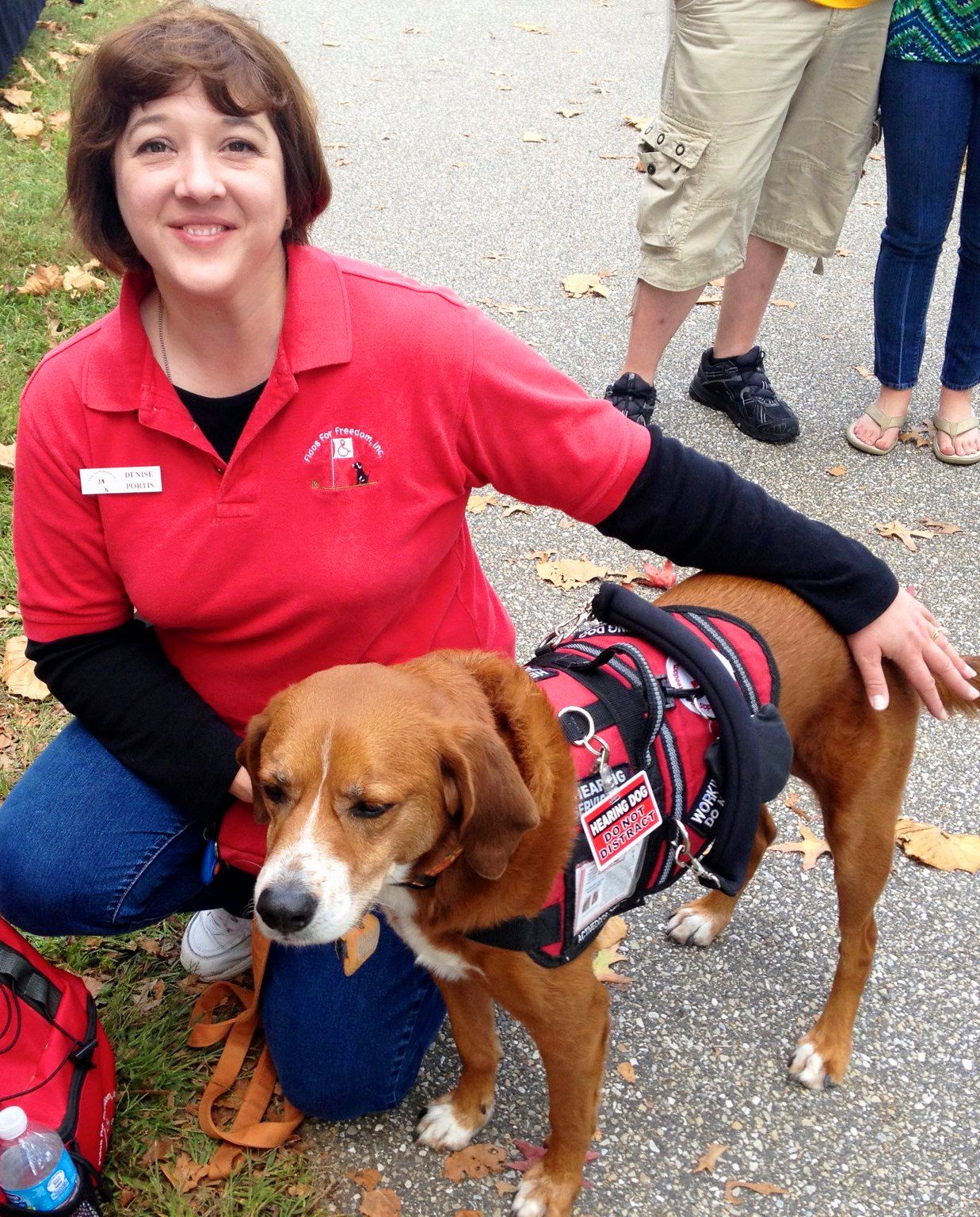
My assistance dog, Chloe, from Fidos For Freedom Inc., is a big blessing. Originally trained to be a hearing dog, she still performs all her hearing alerts with finesse and enthusiasm. As a matter of fact, 7 AM came WAY to early yesterday morning when my alarm went off. I tried to tell her to go back to bed and stop kissing my hand, elbow, and right ear. My husband rolled over and said, “Hello? Your alarm is going off!”Oh.
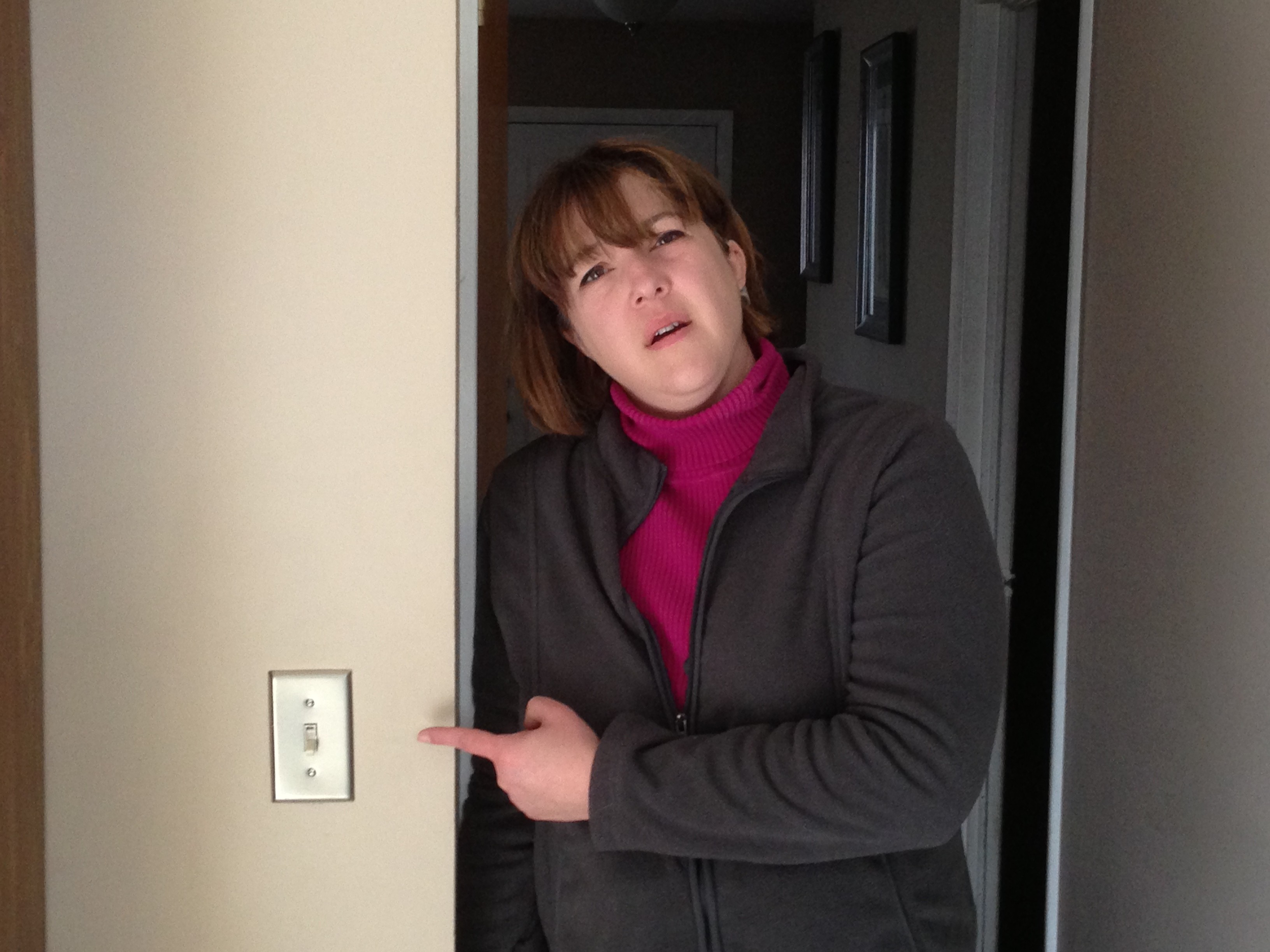
But Chloe actually helps me with far more balance related tasks each day than she does hearing alerts. I tried to “track it” one day and she performed 17 hearing alerts (alarm, kitchen timer, automatic retrieve of items I’d dropped and hadn’t heard, door knock, and cell phone ringing) and over 40 “other” tasks. (I quit counting after 40). These usually consist of directed retrieves. I drop things. I drop things a lot. Picking them up myself takes time as a bend all the way to the floor often precedes a fall. To avoid that, I simply let her get them for me. She also acts as a steady brace when I stand, sit, or go up/down stairs. She also acts as a brace if I begin to weave in a large cavernous place. The picture I chose for this post reminds me how bad my visual field was on Saturday. I ran into the mall with my husband to pick up something at a favorite store. When sound echoes, I tilt. (Picture Denise, aka Leaning Tower of Portis). Chloe has a large handle on the top of her vest that works perfectly. On my lower left is a solid helper that keeps my world from being quite so off center. I’ve been in JCPenney before and let go of her handle to look at some clothing on a sales rack. I immediately felt “swishy” because of the tall ceilings and lights. I grabbed out to keep from falling and clutched the breast of a nearby mannequin. I don’t make these things up. Thank goodness she/it wasn’t real, right?
Yet there are things Chloe cannot help me with, too. Here are some things about Meniere’s disease that surprise some folks:
1. Scrolling words or moving backgrounds on PowerPoints make me sick.
Our church places the words to songs and notes for the message on the walls in the sanctuary. This is very helpful for anyone with hearing problems… or ADHD (smile). However, sometimes there are moving points of light or star bursts that move behind the words or notes. I’m fine as long as I’M SITTING.
2. I have to sit to brush my teeth.
Yeah. I know, I know! Strange! But there is something about moving a toothbrush around in my mouth while in a standing position. I have to sit, and there are days I actually have to close my eyes on top of that!
3. Stepping down can be problematic.
This one really bugs me. On sunny days (weather is a trigger for me), I love to hike and climb around. I love rocks. Big rocks. I love heights (believe it or not). However, stepping down more than 6 inches is enough change in my altitude that I black out. It may only be for a few seconds, but if both feet are not on the ground, I’ll be picking blades of grass out of my nose hair. Chloe has learned that a “Whoa!” from me means
Move.
NOW.
4. Must… AVOID… looking… at ROTATING things (gasp)
Ceiling fans are not my friend. Neither are signs hung from ceilings when the air conditioner vents blow on them to make them twirl. For me this means heave, deep breath, heave again. I’m serious. 🙂
5. I shower while looking at my feet.
I didn’t realize how difficult it can be to get clean when you can’t look up at the shower head. Raise your eyes to reach up for shampoo or your razor? Honey? Do you want to get up close and personal to the DRAIN? Heaven help the family member who moves my shampoo or washrag from their designated place. I count on where they are so that I can shower safely… while looking at my chipped toenail polish.
6. Watching the effect of the wind can topple me too!
We’ve had some terrific storms lately. Since it has brought much needed rain, I’ve been loathe to complain. I love standing on the deck and watching the wind blowing the towering pines behind our home. Clarification: I like hanging on to the rail of our deck and watching the wind blow the towering pine trees behind our home.
7. Gingery’s Baby Pegasus can be mesmerizing to my detriment.
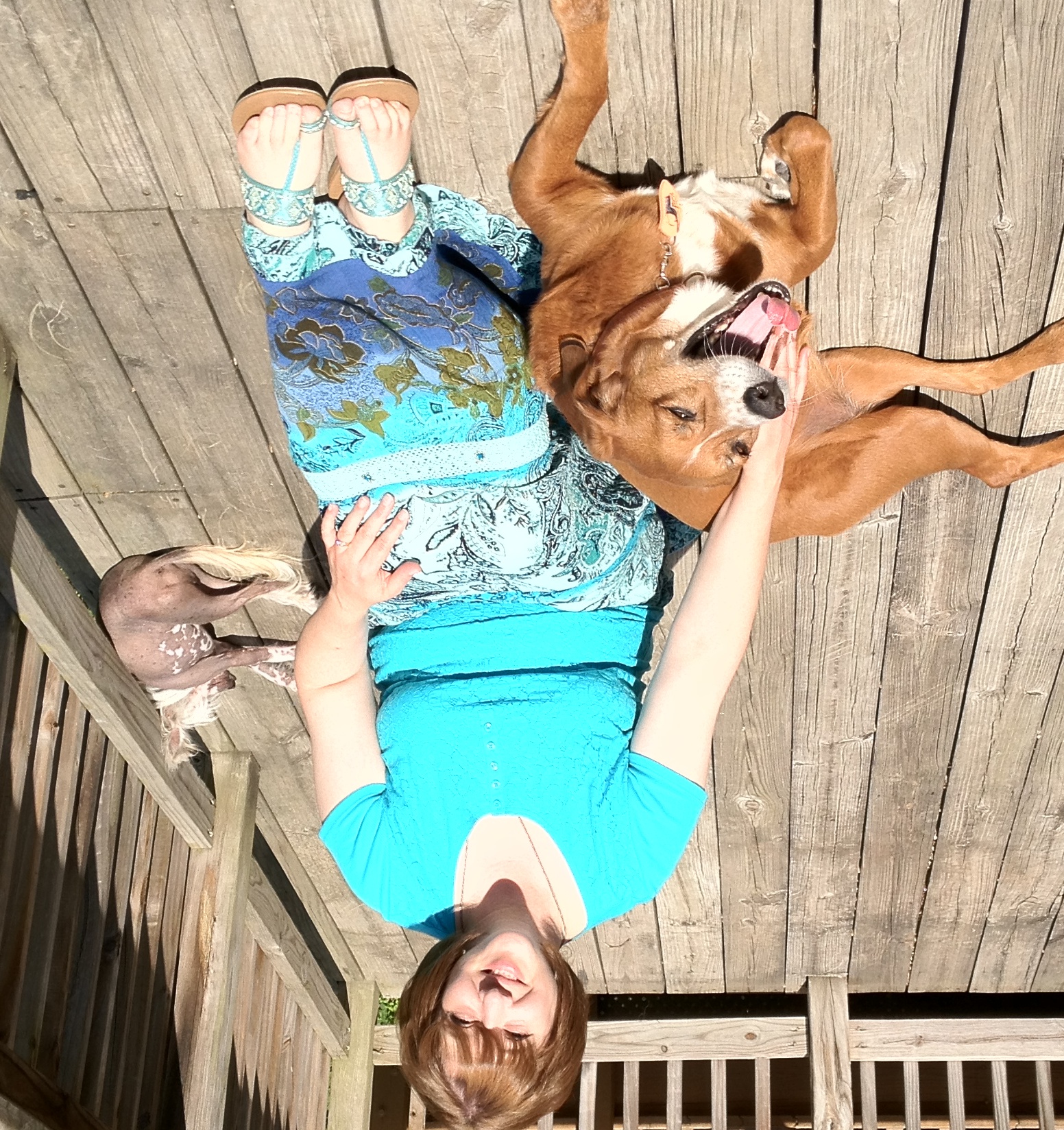
My daughter’s 12 pound hairless Chinese Crested likes to spin. For fun. Imagine that. It is quite captivating, but it only means CAPSIZING for me. “Look away, Denise, Look AWAY!”
8. I fuss at my son’s stomach.
My son… you know the one who was 7 weeks premature? He is 6 foot 3 inches tall. He’s a terrific kid. However, even at 21-years-old, he still needs the occasional “mama sermon”. I dare not look up, Up, UP into his eyes. One isn’t able to reiterate needed reminders when flat on the floor. Instead I point my finger and give his belly and chest “what for”. The kid laughs at me. LAUGHS. (sigh)
9. Glass elevators have speckled carpet.
I know this because I only see the carpet in glass elevators. Why not solids? Stripes? Only speckles. This confuses me.
10. I remind my doctor that I will NOT hold my breath while he’s listening to my ticker.
Because… well otherwise I’m waking up with nurses, hound dog, and doctor crowded around. (Why crowd someone who has swooned? Can I just ask that?)
Like many people who get up every morning and “manage” their symptoms, I hope perhaps I’ve helped you understand balance disorders a little better. Feel free to share your own “management techniques”.
Dr. Terry Portis is director of the Center on Aging at Anne Arundel Community College (AACC) and teaches in the psychology department. He supervises 205 faculty and staff who serve 4,100 students each year. Dr. Portis has presented dozens of workshops and written numerous articles on marketing, program design, psychology of disability and health, personal development and technology. Prior to coming to AACC, Dr. Portis was executive director of the Hearing Loss Association of America.
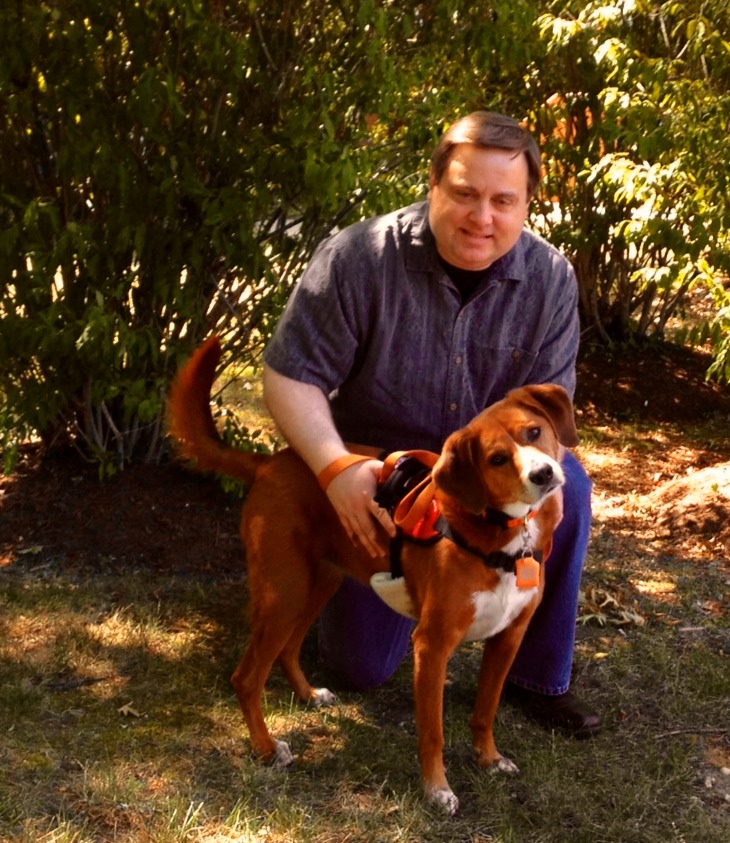
Terry’s wife Denise has been a client at Fidos for Freedom since 2006. Terry has served on the Board of Directors at Fidos For Freedom since 2011.
When a person is matched with a service dog they have to make adjustments in their life, and so do the people who are around them. This is especially true for the spouse or significant other who spends a lot of time with the person matched with the dog. You may think the service dog will only change the life of the person you love. However, there are changes you should try to anticipate as well.
Be prepared
There are a few negative issues that one has to deal with when a service dog enters your life. First, service dogs are very noticeable wherever you go. Most places we go I find people to be open and accepting. However, there are small, bitter people in the world who enjoy confrontation and have a “know it all” attitude. They may think they know the law because their third cousin has taken some classes in college. Having to occasionally deal with these unpleasant people in public can be very frustrating. It may also be difficult for you to let the person you love deal with these issues by themselves. Denise spent a lot of time in training and I suspect because of decades of advocacy work, it does not bother her to have to carefully explain the law to someone trying to deny access. At Fidos For Freedom, they spend a lot of time making sure the clients are prepared for these scenarios. Even though service dogs are not as unusual as they use to be, Denise will still occasionally enter an establishment that has never seen a service dog for hearing alerts and balance assist. Because I’m her husband, sometimes it is hard to stand by and let her stand up for herself. It certainly doesn’t hurt to make sure that family members are aware of the ADA allowances for people who mitigate their disability with a service dog. There have been times that Denise has been oblivious to someone trying to get her attention to ask her to leave the store with the dog. If I’m in the vicinity, I have spoken up and explained that Chloe is a service dog and can accompany Denise.
Another thing to be prepared for is the planning needed to make even small local trips. In the summer avoiding hot asphalt is always a consideration. Looking for parking spaces near grass is a challenge. We also think about which restaurants have the best seating for us. All of these things become second nature, and I find myself thinking about these things even when I am by myself.
Enjoy the experience
These few inconveniences though, are worth it for the value that a service dog brings into a person’s life. It is reassuring to have another set of eyes and ears to help protect and alert the person you love. Service dogs build confidence and help reduce feelings of isolation that people with disabilities often experience. If I know Denise is away from home teaching or running errands, I know I can call her phone and Chloe will let her know the phone is ringing. I know if she falls or drops things, Chloe is there to assist. I actually worry about Denise far less now that Chloe is a part of her life. According to Rintala, Matamoros, and Seitz (2008), service and hearing dog recipients reduced their dependence on other persons. As Denise became more independent, I worried less and also knew she was less dependent on me. As I knew how much she valued her independence, I fully supported her training and match with Chloe.
A service dog can be a very positive experience for everyone. You also have the opportunity to be an advocate, to tell people firsthand what you have experienced and learned. Dogs that have the intelligence and temperament to be service dogs are special, and the kind of dog most of us have never seen before.
Finally, a service dog becomes a part of the family. Chloe is like an extension of Denise, so she is around all the time. As a result, I’ve become her buddy as well. She is pretty excited about my coming home from work each night. It reminds me of when my children were little and were excited that “Daddy is home!” Having Chloe in our lives has been an easy adjustment for me. Chloe has fit seamlessly into our schedule and the peace of mind I have knowing how much she watches out for Denise is really worth the wet doggie kisses she gives when our alarms go off in the morning.
Rintala, D. H., Matamoros, R., & Seitz, L. L. (2008). Effects of assistance dogs on persons with mobility or hearing impairments: A pilot study. Journal Of Rehabilitation Research & Development, 45(4), 489-503.
Photo by Deborah Marcus, February 22, 2012, North Carolina
I just purchased a book through Amazon, Benjamin Franklin’s “Poor Richard’s Almanack”. I’ve always enjoyed books like these and have seen a number of quotes from this book over the years.
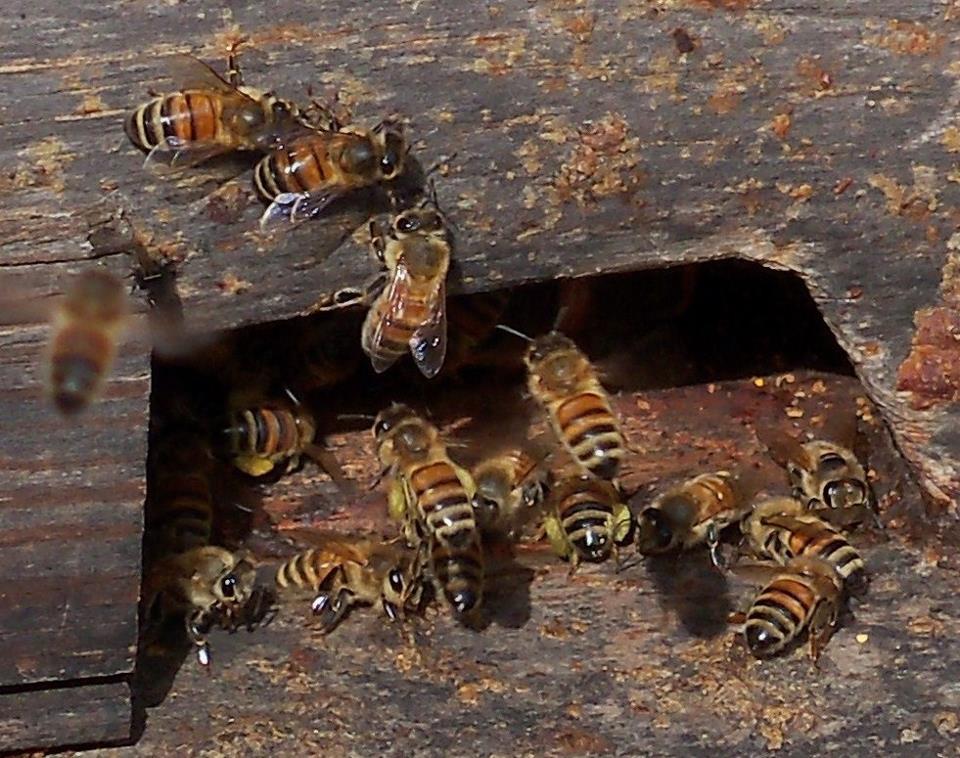
One American proverb from this book that many people have heard has to do with honey.
and vinegar.
and flies.
Benjamin Franklin, “Tart words make no friends; a spoonful of honey will catch more flies than a gallon of vinegar” (Franklin, 1980).
When I first heard this quote I remember thinking, “Well who in the heck wants to attract FLIES”? Having grown up on a farm in SE Colorado, I can tell you that flies were a problem. The animals hated them, farmers hated them, and children relegated to policing the house with fly swatter and tissue in hand hated them!
However, like many quotes, you have to look past the surface to get at the true meaning. Gee, had I known vinegar would have kept them away I may have started sprinkling it around and dabbing it behind my ears.
Ok. Maybe not.
We don’t need to go raid our friend’s hives for honey, either. This quote has to do with being tactful – on purpose.
You know what I’ve discovered? To be tactful, I DO have to be purposeful about it. It is super simple to be tactless. Especially when angry! I’ve learned that if I’m to be tactful, thereby attracting more attention with my “honey”, I have to set out with very real purpose ahead of time. It seems we were created to have a lot of excess vinegar on hand.
Tart Words
I think a lot of folks do not realize that the quote begins with, “Tart words make no friends”. Last week I received a lot of private responses about the post “A Special Kind of Stupid“. Some things people with disabilities shared with me made me very upset. You just would not believe some of the things that “normal” people say to folks with invisible illnesses or disabilities. Then again, if you follow “Hearing Elmo”, perhaps you would believe it as you likely have some connection to the disability or chronic illness communities.
Though it may be difficult, we really have to remember to put a cap on our – erm – vinegar when responding to some of the stupid things we hear in our day-to-day lives.
No, She Is Really Unhappy
Take an example from last week in “A Day in the Life with a Service Dog”. At Walmart, as per my usual mid-week major errand, Chloe and I ended up attracting some attention. As I outlined in an article for Gale Hannan at “Hearing Health Mattters“, if you don’t like attention then do not mitigate your disability with an assistance dog. You are going to attract attention. It becomes easy to ignore and if you are deaf like I am, you don’t even hear all the exclamations of surprise. However, sometimes I’m stopped. Dog-lovers like Walmart… or so it would seem. Most of the time I am very glad to stop and answer questions. I carry information about hearing dogs and balance-assist dogs with me for opportunities just like these. I’ve discovered, however, that if I stand around TOO LONG, folks begin to unplug their brains before asking questions. There is this “fine line” of how much time is “long enough”, prompting me to move on with my shopping. I evidently have not discovered that important timeframe yet. As I answered this lady’s reasonable questions, a lull occured in our conversation. That should have waved the red flags for me. Heck I’d take explosions in my underclothes if I could learn to pick up these cues.
But nope.
I stuck around too long.
“So does your beautiful service dog ever get to just be a dog? Does she ever get to play?”
Vinegar began pooling under my tongue. Chalk it up to living with a house full of very sarcastic people. I wanted to say, “You know? As a service dog she needs to earn her keep. The vest comes off at night and she is allowed to finally rest. She’s a working dog – not a playing dog. It wouldn’t do me any good for her to go around thinking she could ever play, right?” (said with saccharin sweetness).
Tactful Responses Ultimately Educate
Instead I swallowed the vinegar (grimace) and plastered on my best “WHAT A TERRIFIC QUESTION” face and replied, “Well she is a dog! She is a beloved member of our family. She gets play breaks at work and doesn’t actually wear her vest at home. She still does alerts and helps while at home, but she is off duty more than she is “on”. A healthy service dog is allowed to just be a dog. That is why she loves working for me. I set very realistic boundaries and expectations”.
Being tactful and pleasant is important if I’m to hope that I play even some small part in helping to educate others about hearing loss, balance disorders, and service dogs. If I’m angry and belligerent, I’m not going to “win friends nor influence people”.
And neither will you.
However…
Is It Ever OK to “Let ‘er Rip”?
I have lived with hearing loss and balance issues more than half of my life now. That means I have some experience. That does not mean that I do everything right. Folks ask me from time to time when it is OK to put others in their place.
We can’t exactly take out a megaphone and announce to everyone within earshot, “This person just said something STUPID”.
To demean others is never the right way to go. For one thing, it only makes US look bad. You certainly won’t promote education, compassion, or understanding in others if you deliberately embarrass or fuss at them. Having said that, I do believe that there are times that responding with sweetness and “honey” may not be the right answer. After all, it may be that you no longer WANT to attract that particular person who simply cannot and WILL not treat you like a normal human being. I believe the right time to load your water pistol with vinegar occurs when:
1. You’ve responded the right way over, and OVER again.
Maybe it is a family member that thinks their comments are funny. Maybe it is a co-worker whose remarks border on the unkind. At some point you may discover that the only way to educate someone is to be a little more FRANK – pardon the pun Benjamin Franklin!
Tired of the eye rolls and deliberate condescending response at a dinner table of “I’ll tell you later” after asking for a second repeat of what someone said? Perhaps it is time you gently laid your hand on their arm and said in a normal tone (for they likely do NOT have a hearing loss), “You know? It hurts my feelings when you say that and sigh and roll your eyes. I only want to hear what you said. You never actually remember to tell me later what it was. Don’t blow me off. What was funny? I want to participate in your life. I care about these moments and we will never re-live them or have them as “do overs”. I want to know what you said because I love you”. Others at the table may have grown quiet at this calm announcement. But that can work in your favor too. Sometimes educating others occurs by observing someone else getting educated. You may have let a little vinegar taint what you said. A little “sting” may be necessary to get through to calloused hearts.
2. You respond in defense of others.
Sometimes you may need to put up the honey aside and gear up with vinegar in order to stick up for someone else. I’m much quicker to speak up to a bully when the person being picked on is NOT ME. This has to be done carefully, however, as you do not want to take away an opportunity for someone else to stand up for themselves. When you live with disability, chronic illness, or invisible differences, you need to learn to be as independent as you can. It is healthy. You may need assistance in technology, puppy power, or by swallowing your pride and learning to ask for help.
However, there are times I believe, that we should step up and even figuratively lock arms with another who is being misunderstood to let them know they are not alone, and let a bully know they are being irrational – or STUPID.
We Won’t Always Do it Right
I can be a sour puss. Vinegar is more likely to run through my veins than honey. I’m allergic to bee stings.
Sometimes I blow it. I respond as if I don’t care if someone better understands disability and hearing loss. As a person of faith, I know this dishonors not only me, but also God. I have learned to say “I’m sorry” – and really mean it. Acknowledging that you aren’t feeling well today and mis-spoke or are feeling belligerent and should have kept your mouth shut shows maturity. Did you blow it? Well make it right. You know what to do.
Franklin, B. (2007). “Poor Richard’s Almanack”. Skyhorse Publishing, Inc. New York : New York, p. 44.


 Hearing Elmo