A Special Kind of “Stupid”


On Monday evening, May 14th, David Walters of Bel Air, MD, pulled a fire alarm in  a crowded theater. He was issued a criminal summons the following day and faces a $5,000 fine and up to 5 years in jail. You can read about the story HERE. More on the story HERE.

It seems David was upset that the movie was open captioned for patrons who are deaf or hard-of-hearing. Specific movies (identified at the ticketing counter) allow people with hearing loss to enjoy newly released movies on the big screen. It allows equal access. Sure… we can purchase the movie later after it goes to DVD and watch it at home. But who wants to miss out on the buttery popcorn, movie candy, cherry Icee‘s and being with friends and family at the theater? Nothing beats the big screen! David marches out and complains – evidently loudly. He is offered a refund which he refuses. He goes back in to finish the movie. When finished he comes out again and loudly complains – now demanding a refund. When denied (because he went back into the movie), he gets angry and pulls the fire alarm. This shuts down all the theater’s screens and panics movie goers.

This is a special kind of S.T.U.P.I.D. When I first read about this story, I have to admit. I had some “AVENGER” feelings going on in my own heart and mind for this idiot. I thought, “Wow. If he could live one day in my shoes. It would be poetic justice for him to lose his hearing someday!”

Deaf For A Day

Because I live with both deafness and a balance disorder, I can tell you honestly that really? I wouldn’t wish deafness on anyone. Yeah. This jerk probably deserves it, but hopefully what he’ll get is justice. I hope because he endangered so many people that they make an example of him. I hope everything was done correctly in his arrest so that he doesn’t get off on some kind of technicality.

Each year I ask my students in my ASL1 class to voluntarily participate in a “Deaf For a Day” assignment. Later, they write about it. Most “get it”. They understand what the assignment was about and why they are asked to participate. Each year, however, I have either a student or two, or a parent or two, very disgruntled about the assignment. In the follow-up writing assignment, some disclose how poor of attitudes family members had because they were unable to communicate with their student in a “normal” way.

Yes.

I like to think that should something happen to their child and they lost their hearing, these parents would do all that they could do to be supportive and loving in the transition to a new way of communicating. They may not use ASL even, but technology is not a 100% fix. Even cochlear implant surgery is not 100%. I’m bi-modal (both cochlear implant and hearing aid) and although I hear really well, I still am considered a person with hearing loss. There are times I have to ask for a repeat, or ask someone to follow me to a quieter location.

Put Yourself in Their Shoes

Before you think to yourself that you would never be this “special kind of stupid”, consider this.

Have you ever parked in a handicapped space to save time because you were only running into the Post Office for 5 minutes?

Have you ever sat at a table clearly marked for handicapped patrons at a local fast food place because there were no free tables, and then failed to keep a look-out for anyone coming into the establishment that may need that table?

Have you ever reached to pet a service dog without requesting permission of it’s owner?

Ever felt exasperated (and let it show) while waiting in line behind a mom with a child with autism or other special needs who was having a meltdown?

Have you ever felt impatient as someone with mobility issues that fumbles and drops items while you are waiting in line at the cashier?

Ever see someone stumble or walk funny and immediately think they’ve been drinking instead of thinking they may have a balance disorder?

Ever honked your horn and grimaced at an elderly driver who cautiously entered a very busy intersection during peak rush hour?

Not understanding what chronic fatigue syndrome, fibromyalgia, or Lyme disease actually are, have you inwardly cringed and rolled your eyes while listening to a seemingly endless list of complaints about pain from a co-worker, fellow church member, or acquaintance?

Ever see someone mistreating a homeless person or person with mental illness and not intervened?

Ever stepped into a handicapped stall in a public restroom because the others were full? Exactly how are you going to know someone is there who needs it when you are actually in there doing “business”?

You may not be pulling fire alarms and endangering hundreds of people, but you are still choosing to be a part of this special kind of stupid group. I’ll admit that I’ve made some of these mistakes myself. We all have.

I’m asking that all of us take a minute, however, to think about how we can do better. I don’t know about you, but I don’t want to be a special kind of stupid.

Ever.

Let’s love our fellow man, offer a helping hand when we can, and smile at someone just because it’s Monday. Buy a cup of coffee for the next person in line. Hold the door for someone.

Maybe.

Just maybe…

it will be contagious.

Denise Portis

© 2012 Personal Hearing Loss Journal

It is Easier to Act Your Way into Feeling…

Things will get better…

Our pastor at Weem’s Creek has been going through the story of Elijah. Interesting guy, this old testament prophet, Elijah. Through him, God shut off the rain for a long period of time. He put the false prophets of Baal to shame by having his own sacrifice (soaked in water) eaten up by fire called down from Heaven. But… Elijah could be a whiner.

Not only could the man whine, but he could exaggerate as well. After a particularly spectacular display of God’s might – working through Elijah – he claimed to be all alone and the last of his kind (a prophet). Neither were true. Elijah became depressed. God decided to force him into action, and it eventually changed his outlook.

Pastor Orr used a quote, “It is easier to act your way into a feeling, than to feel your way into an action”. I looked all over the Internet for who actually said that. Although I found plenty of examples of people USING the quote, I was unable to actually find who said it “first”.

This quote really hit home for me. I was contacted this last week by a man who follows my blog. I asked his permission to share part of that email.

“I can know that I need to change my attitude about my disability, but knowing and doing are two different things. How do you get to where you know your life is not over after acquiring a disability when you are stuck on thinking your life is over?”

I’ve been very open about my own struggles with depression. Would I have struggled with depression had I not begun to lose my hearing at the age of 25-years-old? Very possibly. But I do know know that there is a correlation between depression and disability. Research has shown that the degree of depression in people with disabilities is directly connected to their own personal acceptance of their disability (Townend, Tinson, Kwan, Sharpe, 2010). You need to accept your “new normal”. I DO realize it is easy to say, but there really IS life after disability.

I realize we all struggle with different things. Some chronic illnesses and disabilities impact important life functions such as mobility, independence, and quality of life. Being late-deafened is minor to having Meniere’s disease in my own life. As a matter of fact, my husband noted recently that Chloe does just as many balance-related tasks as she does hearing alerts (if not more) – and she is a certified hearing assistance dog. When we have a major weather system stall out over the top of us (my main vertigo trigger) I can really struggle to even get up the nerve to leave the bed in the morning. And let me tell you… it can require nerves. A recent fall left me black and blue from shoulder to hip, with an anxious husband trying to decide whether or not to call 9-1-1 as I kept losing consciousness. (Life with Denise can be exciting – grin). However, when the sun shines, my balance related symptoms are minor. I’m very aware there are courageous (and inspiring) people who do not get “sunny days”. They do not have a break in the degree of disability that directly influences the quality of their lives. Acceptance for them is different and I acknowledge may be more difficult. Regardless, one does have to accept where they are in terms of a “new normal”.

Did you know that acceptance of your “new normal” can not only influence depression, but being depressed can actually worsen your disability? I have personal experience with worsening hearing, balance and vertigo when I happen to also be in a downward spiral in depression. Karp, Skidmore, Lotz, Lenze, Dew, and Reynolds (2009), found that symptoms of specific disabilities actually worsen when the individual is also depressed, stressing that depression needs to be taken seriously and treated. I have a number of red flags that I have set up to determine if I am becoming depressed. I know and have experienced the dangers of depression. Having a “blue” day or two is different than depression. Having lived with it, I know what it “looks” like and stay on the look out for specific clues that tell me I need to seek help.

Living with “It”

One really CAN live within a “new normal”. This may mean a acceptance of a  change in your health. Perhaps you are single when you thought it would be “til death do us part”. Death may have indeed parted you from someone you counted on emotionally and physically. So how do you accept where you ARE, and move on to living a victorious life? I truly believe we have to simply take action. Our “feelers” cannot really be trusted. Don’t get me wrong. I believe compassion, mercy, and love are important. But our hearts – our “feeler” – cannot provide a new, healthier way of acceptance.

What kind of actions can we take? Many of us become involved in organizations that provide support for a specific disability we may have. Within these types of organizations, there are numerous ways to get involved. The Internet makes this connection simple. There are a number of community service projects that can use the help of volunteers. Even small communities have opportunities for service. Some people with disabilities prefer to be involved in areas of service that are not directly related to their disability. If you want to take action and get involved in helping others – LOOK. The opportunities are there. Giving back to others is a primary way in which people feel valued and useful. Getting active in giving back to our communities may actually change the way you FEEL about your own disability. We need a purpose.

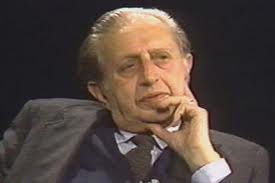
Leo Rosten

“I think the purpose of life is to be useful, to be responsible, to be honorable, to be compassionate. It is, after all, to matter: to count, to stand for something, to have made some difference that you lived at all.” —Leo C. Rosten

Denise Portis

©2012 Personal Hearing Loss Journal

Karp, J., Skidmore, E., Lotz, M., Lenze, E., Dew, M., & Reynolds, C. (2009). Use of the Late-Life Function and Disability Instrument to assess disability in major depression. Journal Of The American Geriatrics Society, 57(9), 1612-1619. doi:10.1111/j.1532-5415.2009.02398.x

Townend, E., Tinson, D., Kwan, J., & Sharpe, M. (2010). ‘Feeling sad and useless’: an investigation into personal acceptance of disability and its association with depression following stroke. Clinical Rehabilitation, 24(6), 555-564.


It Ain’t All Good

George Dawson, “People forget that a picture ain’t made from just one color. Life ain’t all good or all bad. It’s full of everything.”

I didn’t write last Monday. I almost let yesterday (Monday) go without writing as well. My reasoning was “why write when I feel so awful”? Sometimes I feel like I owe my readers and peers the truth… but only if it is pleasant and encouraging. When things are not going so good? Well… I’m less certain about how healthy it is for ME to write about it, and risk losing YOU as “compatriots in the ranks”. Right now, “life ain’t all good”. But because it is also “not all bad” I decided to write anyway.

Some things are changing for me. Not good changes. There are things going on that involve other people, so I cannot discuss it. But there are things going on with “just me” that I DO have the liberty to discuss. So I will. If you tuned in to get a dose of the warm fuzzies – this isn’t the post you want to read.

Tell Tale Signs

I have an incredibly bad habit of ignoring the obvious. Perhaps it is a defense mechanism or a form of denial. When something is scary or unpleasant I will push it down and pretend “it” doesn’t exist. I tell myself what my mother always tells me, “Don’t make a mountain out of a mole hill”. Problem is… sometimes it IS a mountain and not a mole hill.

Life can be hard. I have friends who have lost loved ones recently. I have friends who have been diagnosed with scary-sounding diagnosis, some having a good prognosis and some a dire one. I have friends who have close family members battling major health problems. I have friends who are having financial crisis that will change the course of their life and the life of their families. I have friends with children in trouble. I have friends who have been told to plan their funeral. I have friends who have been betrayed and used.

Makes it sound like I have a lot of friends, doesn’t it? (GRIN) One tremendous PLUS of my now, 9-year-old blog, is that I have met a great number of people “virtually”, and literally as a result of my going public with what it is like to live with hearing loss, invisible disabilities, and an incredible canine partner. I have been blessed with guest writers and friendships that have developed as a result of “Hearing Elmo”. You, the reader, have been a source of encouragement to me, a source of advice, and even a source of constructive criticism when I desperately needed it. I am thankful for the sense of “community” the Internet and blogs have given those with disability and invisible illnesses.

Sometimes I ignore tell tale signs in order to “deal with it”. Yes, I know that isn’t healthy but I’m just tellin’ it like it is. Folks who do not have disabilities still live in a body that ages, changes, and may face both minor and catastrophic health problems. However, people with disabilities, those who have learned to be “differently abled”, also sometimes face these same health problems. I’ve often wondered that if certain disabilities make one more prone to health related problems. For example, if you have arthritis, fibromyalgia, or chronic fatigue syndrome, perhaps you’ve put on some weight because you cannot easily exercise or lack the strength and energy to do so. As a result, diabetes or heart disease are now knocking at your door. If you have paralysis or problems with mobility, perhaps you have also developed circulatory problems. I am late-deafened and have Meniere’s disease. I actually hear voices really well in “prime” listening environments, and even do fairly well in really noisy environments with poor acoustics. I fall a lot though. When I do, I normally hit my head. Usually it is just an “ouch” moment where I rub the sore spot and go on about my business.

However, in the last year I have woken up a couple of times now – sprawled out in a heap with my dogs curled up asleep next to me. One time, a matter of hours had to have passed because it was much darker outside by the time I came to. I discuss these things with my husband and um – sort of with my doctor. I have a feeling that I’ve bumped my noggin’ often enough in my adult life, that there may be consequences to that. Thankfully, I’ve learned what a lot of my triggers are and can identify 95% of the time when I need to sit down,

NOW

no matter where I’m at

or who may be watching

or what I may be sitting in.

My eye prescription has changed 3 times in the last 11 months. Most mornings I wake up and my extremities are numb. On really bad days, I still cannot hardly feel my fingers well enough to type by my afternoon classes. I’m having all kinds of “female issues”. My balance is worse than it ever has been. Much worse. I have tried to tell myself that I am stumbling more because I’m older. I turn 46-years-old this month. I’m very good at justifying things! Don’t we tend to do that when something is “off”? My doctor is working with me. When classes are over in May I will be busy getting a lot of tests. Fun, fun (rolls eyes).

But Gee… It’s Not Fair

I don’t care who you are. The old adage, “when it rains, it pours” is only positive to a farmer. No one likes change. Nobody likes problems. No one embraces tragedy. We may have a “Bad News Not Welcome” here sign on our house door. Heck… it may be tattooed on your forearm. That doesn’t mean that bad things are not going to happen.

Life is just not fair, is it? I mean… we don’t get what we deserve when we’ve done something right. And dang, if we don’t get what we deserve when we do something WRONG.

Oscar Wilde: “Life is never fair, and perhaps it is a good thing for most of us that it is not.”

Bill Gates: “Life is not fair. Get use to it”.

(Unknown): “Expecting the world to be fair to you because you are a good person is like expecting the bull not to charge because you are a vegetarian.”

Matthew 5:45b: “For he makes his sun rise on the evil and on the good, and sends rain on the just and on the unjust.”

Most of you have already learned that life isn’t fair. We deal with it. We have to do so. There are no real alternatives.

We adjust.

We learn.

We fight.

We will lose and we will win. Regardless we DO deal with it. That can mean we do so successfully and with pizzazz. It may mean we do so poorly and like a drowning victim, struggle and pull others down with us. We always have choices. Maybe not about what we get to handle, but HOW we will handle it.

Recently while shopping at the mall with my husband, he said, “Do you realize that in 2007 you trained for a hearing dog because you needed one. Now Chloe performs more balance-related tasks for you than she does hearing alerts. What does that mean?”

Well it means that I’m changing. Thankfully, dogs are smart and so are the trainers at Fidos For Freedom. You really can teach an old dog “new tricks” – or skilled tasks.

More Than You Can Handle

Don’t you hate it when you are going through something hard and someone tells you, “God won’t give you more than you can handle”? Seriously? I mean… for most of us determination, will-power, and a fighting attitude gets us through. For those like myself who consider themselves a person of faith, we rest in the knowledge that He’s got this… and He’s with us. That doesn’t mean He’s gonna bail us out and smooth the way.

My cousin, a breast cancer survivor, blogs a great deal. I always look forward to reading her posts when “Google Reader” lets me know something new has been uploaded. Recently, she wrote “A Hard Place”. She quoted from a book called, “Kisses From Katie” by Katie Davis. I wanted to share that excerpt with you:

“Remember, God will never give you more than you can handle.” People repeat this frequently; I heard it when I was growing up and I hear it now. It is meant to be a source of encouragement, and it would be if I believed it were true. But I don’t. I believe that God totally, absolutely, intentionally gives us more than we can handle. Because this is when we surrender to Him and He takes over, proving Himself by doing the impossible in our lives. I have learned to accept it, even ask for it, this “more than I can handle.” Because in these times, God shows Himself victorious. He reminds me that all of this life requires more of Him and less of me. God does give us more than we can handle. Not maliciously, but intentionally, in love, that His glory may be displayed, that we may have no doubt of who is in control, that people may see His grace and faithfulness shining through our lives. And as I surrender these situations to Him, watch Him take over and do the impossible, I am filled with joy and peace–so much more than I can handle.”

I’m not a brave person. I’m not going to ask God to give me more than I can handle.

I’m a chicken.

a wuss.

a weakling.

You don’t have to ask God for ANYTHING though, and you still are going to get a dose of LIFE. And so I’m back around where I started. Life ain’t all good.

But it is not all bad.

And so we carry on…

Denise Portis

© 2012 Personal Hearing Loss Journal

Sometimes? You Are Going to Have a Bad Week

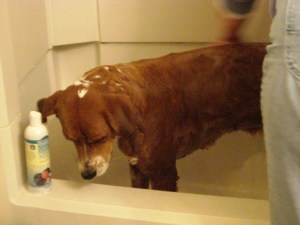
Chloe was having a pretty good week. At least she was until I told her to get in the bathtub. NOT her favorite thing. If “hound dog” could do forlorn, then honey? She’s gonna do FORLORN in the bathtub covered in suds.

While I scrubbed her and told her what an awesome dog she was, intervening during those “I’m gonna shake” moments, I thought about how quickly things can change.

Chloe was happy and excited to get home from class today. She was rough-housing with her buddy, Tyco, when she heard me call her upstairs. She came running with her tail all a-wag. I told her to get in the tub and proceeded to break her ever-lovin’ heart. She is drying and pouting over in the sun as we speak. If I’m lucky, she’ll have forgiven me by suppertime.

Spring has “sprung”, I’m getting a handle on my new schedule, Terry and I just took 2 days away to re-group ALONE (grin), I’m feeling very connected and supported at my primary “free time” activity (Fidos For Freedom Inc., in Laurel, MD), and then it happens. When you can see change coming you can run like mad… or at least brace for it. But sometimes? Well sometimes change smacks you up side the head like Gibbs smacks DiNozzo. It’s completely by surprise. You lay on the floor, dazed and confused, staring up at the ceiling fan thinking, “What just hit me?”

I’ve even let this unexpected negative “change” suck me into an old habit of depression. I could feel it creepin’ up on me. I’m blessed to have a live-in psychologist and I made sure I changed my “8 hours of sleep a night” to 10 hours immediately. That seemed to help. That in addition to some time since the SMACK DOWN, I’m feeling like I can do this thing called life again, despite the newest challenge. Change can be hard and can create a lot of stress. Heck. I was having such a meltdown (as were other members of the family), hubby announced “Let’s go out to eat for supper!” I begged and pleaded and implored him to allow me to fix supper (yeah, right!), but he insisted we go out to eat. We walked out the door discussing these serious issues that “done smacked me up ‘side the head” and half way to the car my husband stopped dead in his tracks and interrupted me saying, “Um Denise? Where’s Chloe?”

You know the service dog who is with me 24/7? The one on the other end of the leash every waking moment of my life? Poor forgotten Chloe stood inside the locked house door whining and whimpering. So yeah. I am THAT distracted by my smack.

There are various proverbs that remind us that life is not easy. Everything is not always going to go well. Sometimes bad things happen. It doesn’t matter if you have disabilities or not. Life can be very, very good. Yet any of us who have lived enough of it know that it can also be hard. I survive because of my 3 “F’s”: Faith, Family, and Friends who care. Surviving is sometimes one day at a time, one week at a time. This is why people with disabilities should take care not to isolate themselves. It’s so easy to do. Isolation is even easier than having to face interacting with others while learning to live successfully with a disability. But isolation is dangerous. We need others. Others help us do that “surviving” thing!

I for one and very glad to see Monday this week.

Chloe, on the other hand, is just glad her monthly bath can be chalked off.

Denise Portis

©2012 Personal Hearing Loss Journal

Time Off

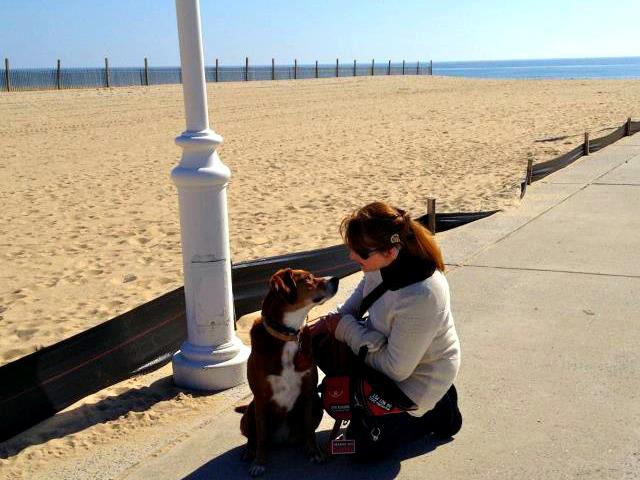
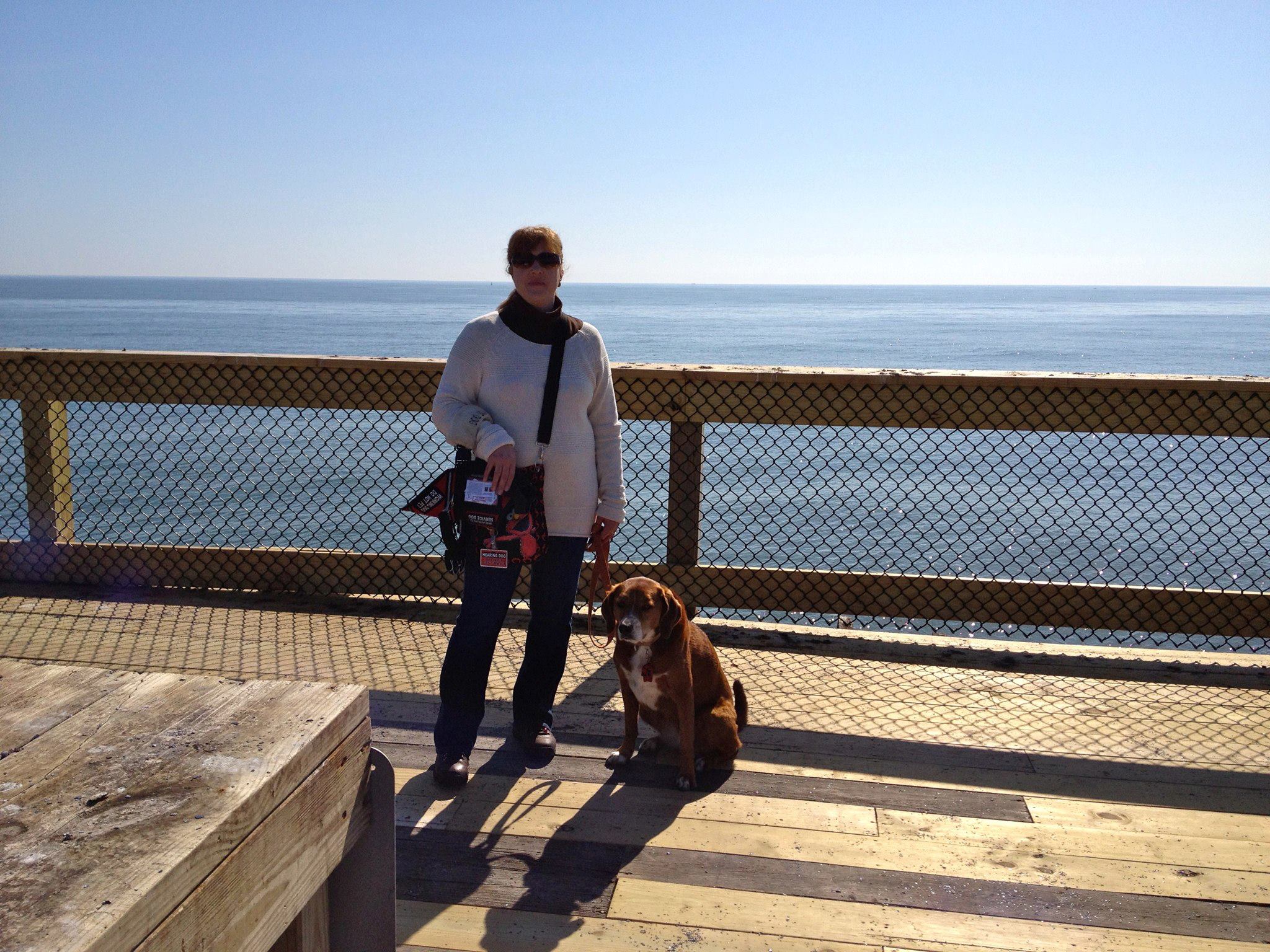
Chloe's vest comes off and she gets the "beach rules" from Denise. Unaccustomed to being "vestless" in public, she was very attentive and unsure in the beginning


As a surprise, my husband reserved a couple of  nights in a motel at Ocean City, MD, while we were on spring break from work. (One of the perks in working for a college). Apparently March is the time to go if you are not a crowd lover – or “sun” lover. Too cool to lay out or play in the surf, but beautiful weather for walking and many opportunities for quiet time.

Chloe is normally “working” when she is in public. Determined to give her some time to just be a dog, I removed her vest for large amounts of time. She was at first a little timid about being without her vest. Once she saw some other canines on leash though, the wag was back in her tail. Even working dogs need down time. People ask me all the time if Chloe gets to relax. I always have to grin. Chloe is almost 8 years old and at home? Well, let’s just say she knows how to relax. She doesn’t wear her vest at home, but she still alerts to timers, my phone, or my name being called. But she naps (and snores), she plays with her buddy, Tyco (our family dog), she has several squeaky toys, she squirrel watches, and eagerly awaits family members coming home.

Chloe enjoys working though. She danced her way on campus just this morning and wagged her way all the way to the elevator. Sometimes I wish some of her “wag” would rub off on me as 7 AM classes on Monday seemed awfully early to me after a week off!

Everyone needs time off. It can be hard to do if you are working to pay bills, save money, or try to get out of debt. But time off can be in small, “mini” vacations. Even an hour or two here and there can be very beneficial in helping a person re-group.

People with DisABILITIES Need R&R too!

I have met a number of people with various disabilities that have confided that they rarely do what others call “fun” things. Think about it for a minute. If people who walk without assistance, hear without assistance, see without assistance, and speak without assistance enjoy things like movies, walking, reading a good book, or hanging out with friends, well? It just may not be that easy for others.

I like going to the movies. I went to see “The Hunger Games” over spring break with my husband and 21-year-old son, Chris. But I don’t get the same level of enjoyment out of movies that they do. Even with Chloe by my side, I am very disoriented in the dark, especially if my cochlear implant is picking up the very loud commercials and previews on the screen. As I make my way to a vacant seat, I am often fighting the effects of vertigo. After I get seated – hopefully in a place where people won’t have to crawl over my assistance dog and I – it takes a number of adjustments to find a good program on my CI to best hear the movie. If I do that, I sometimes find it difficult to converse to the person right next to me too. At times I miss things said in the movie. If I’m with someone I know well, I’m not bashful and will lean over and ask, “What did they say?” There are not any captioned theaters close to my home (although I am glad there are some within an hour’s drive), so most of the time I go to the same movies you would attend. However, not having captions mean I have to really pay attention! Can I just be honest and say that I’m unable to eat popcorn and catch an on-screen conversation at the same time? (BIG GRIN). I have to really focus and concentrate to understand what is going on. So it is still “fun” for me… just not perhaps the same level of “fun” it may be for you because it does take WORK.

For some, sitting down and reading a book may not be “fun”, and it doesn’t mean they don’t enjoy a good book. Some folks have trouble even holding a book, or turning pages easily. Taking a walk may relax YOU, but for someone who has Meniere’s disease it can be difficult to do a simple walk. My world constantly turns counter-clockwise. It is a slow rotation, mind you, but a rotation nonetheless! On high humidity days, the rotation picks up speed – one of the reasons I just don’t try to walk on days like that! So walking on a sidewalk in a straight line takes concentration. I have given up walking with family members. Although I enjoy the conversation, I cannot talk and walk at the same time! I can talk to my walking buddy, Chloe, and she just listens. I don’t have to worry about her end of the conversation and my having to make sense of what she said while still putting one foot down in front of the other. We love to go into the woods on trails and in grassy areas too. This requires even more concentration. I usually shut up at this point as I have to carefully balance each step. So yes… I enjoy walks but probably not on the same level you do.

Despite having to make adjustments and find a new way of doing seemingly mundane things, even folks who are differently-abled need to take breaks. Perhaps even a lot of them! They may be in the form of naps. I am learning that napping or resting is a necessary requirement for many people with certain kinds of invisible illnesses. I require 8-10 hours of sleep a night. (When I tell people that, they FALL OUT, but if it helps you get through a day “hearing well”, you do anything necessary). Others may require a nap – or TWO. They aren’t lazy. They aren’t depressed (although just like anyone, people with disabilities can and do get depressed). They simply require some extra rest in order to continue a day’s work.

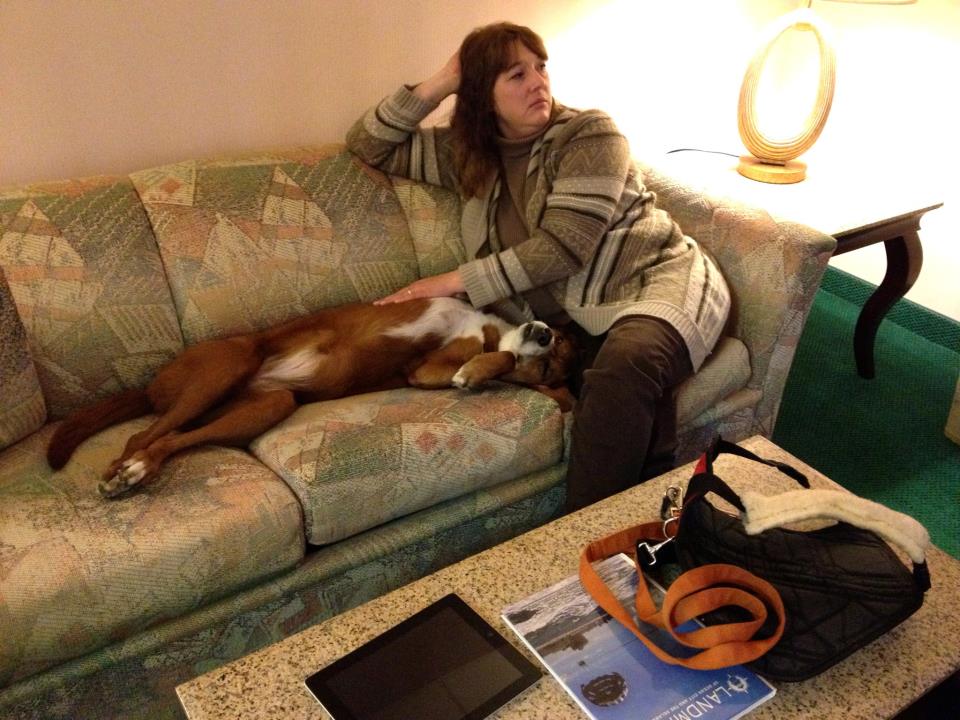
Chloe "relaxing" on a mini vacation at the beach. She really knows how to de-stress!

Careful not to judge. You may wonder why someone doesn’t enjoy the same kind of “down time” you do even though you have the same disability. Each person has individual differences in their disability. I have a friend who enjoys running in his spare time. I’m talking about REAL races… the kind where you take off after hearing a starting pistol! He’s an incredible runner and does very well. He is a bi-lateral cochlear implant user. When I first met Sam, I was astonished to hear what he did for fun! Having hearing loss and balance issues, running isn’t something I can enjoy.

I’m not saying we shouldn’t look for others who are struggling with some of the same issues. We can mentor, give advice, and support someone else in a way that will give them the tools they need to live a victorious life. But do be aware that you may share a diagnosis, but have different symptoms, struggles, and issues. We can still be a listening ear and give encouragement. Just be careful about insisting on something that works really well for YOU, because it may not work really well for them.

I’d really love to hear about some of the ways you choose to unwind! What do you do to relax? What is FUN for you? What do you need to do in order to enjoy some of the things others do without accommodation?

Denise Portis

© 2011 Personal Hearing Loss Journal


Walk a Mile in My Shoes

Gonna change directions here today as the death of Whitney Houston coincides with something I am seeing more and more in the disability community.

It doesn’t matter whether or not you like Whitney Houston. What I am disappointed to see is some of the comments and “hatin’ on” this artist since her death. I actually saw on one person’s Facebook that drug addicts and alcoholics get what they deserve. “Someone with so much talent shouldn’t have wasted it”

Wow. I mean REALLY?

Unless you were thrust into fame and fortune at a relatively young age…

Unless you had to deal with the media on a daily basis, giving up any hope of privacy…

Unless you married for love and were crushed by disappointment…

Unless you raised a child as best you could in the backdrop of an industry that can be unforgiving…

Unless you developed an addiction because of life’s crushing problems and entered rehab while the whole world knew it…

Unless you made mistakes and fell back into bad habits – all while the whole world watched…

… then keep your mouth shut about Whitney Houston.

Why Does This Upset Me? Why Should it Upset YOU?

Anytime people begin to criticize and judge someone else a change takes place. Amnesia.

I rarely hear someone criticize and judge someone who is just like THEM. It usually happens when someone is different than you are. Criticizing is easy when we don’t walk in that person’s shoes. Judging is a simple task when we cannot hope to understand what really caused someone to do something when they are different than we are. We forget all the times we have been hurt for being judged and criticized by people who do not understand our own choices in life.

Wanna get me ticked off? Criticize and judge someone who chose to mitigate their disability with a service dog when you don’t live with a disability. Sometimes even others within the disability community may scratch their head and wonder why a person would choose a service dog when “they have the same disability you do”. What they may not know is that there ARE various differences between your disabilities. Your lives may be different. They may have 24/7 help that you do not have access to in your own life. Why don’t we celebrate “whatever works”?

In the hearing loss community, I know people who criticize people who don’t allow “nature to take its course” and embrace their deafness. To some, if you do not learn ASL then you are shunning a community that could be your family. For others who have accepted technology and/or surgery to stay connected to the hearing world, they may criticize those who have learned ASL for various reasons – personal reasons! I know people who criticize other people’s choices about hearing aids or cochlear implants. Why are we prone to criticize anyone who makes a different choice than what we have made for ourselves?

I think perhaps it is a form of self-protection. We may somehow feel that if someone who is very similar to us chose another path, that their choice may mean that our own path was a wrong one. It may be a form of defensiveness. If we see someone successful at living life with a disability, we may feel the need to criticize because we still have some problems with our own disability. If we see someone floundering at living life with a disability – and they chose another path? Many point and say, “I told you so”.

We could all learn to be more compassionate. We could all learn to listen more and keep our mouths shut.

When you judge another, you do not define them, you define yourself.” –
Wayne Dyer

If you judge people, you have no time to love them.” –
Mother Teresa

What May Happen if You Reserve Judgment

If you can keep your opinions to yourself, you may just make some discoveries:

You didn’t understand why they did what they did until you got to know them better.

You misunderstood their choice

After learning more about the person, you actually agree with their choice.

After time you find that you still would have done it differently yourself, but it seems to work for them.

If you can keep your negative opinions to yourself and instead pray for and encourage that person, you may discover a…

FRIEND who has the same taste in shoes!

Denise Portis

© 2012 Personal Hearing Loss Journal

My Goals? Stop Apologizing…

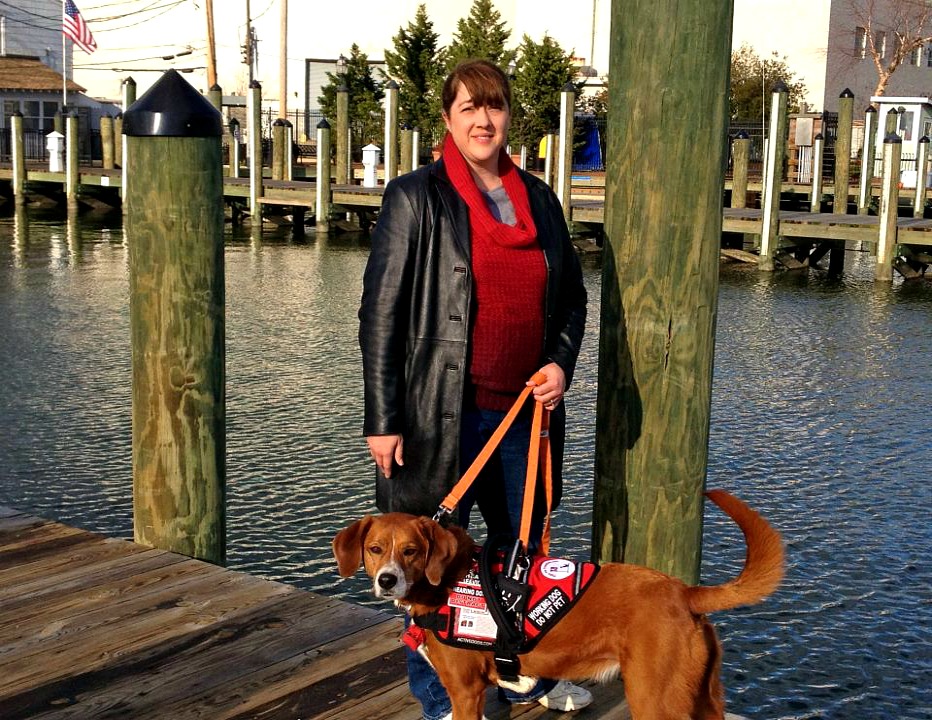
At City Dock in downtown Annapolis near the U.S. Naval Academy

I find it a little hard to believe it is 2012. Normally, the New Year doesn’t sneak up on me. However, this year it certainly did just that. In the past, I’m almost obsessive-compulsive about planning and organizing my resolutions for the New Year. I suppose that I haven’t allowed myself to obsess about it this year, points to the fact that I continue to change and evolve as I age. I think change is important and hope that I will always grow, mature, and change from one year to the next.

Sometimes though? Sometimes I see things in myself that I need to change because they are negative. In my reflection of 2011, I discovered a real negative that I really want to work on in 2012. Introspection did not really help me discover WHY I have developed this bad habit, but I can make some educated guesses.

I apologize. I apologize a great deal. I apologize for things that are not my fault. Some reasons I may do this?

1. I feel as if it will keep others from feeling the blame or reacting in a defensive way.

2. I default to shouldering the blame for most things.

3. I hope to diffuse any uncomfortable thoughts or reactions by others.

4. I hope to garner apologies and acceptance of responsibility by others by my own example.

5. HABIT

Please don’t misunderstand me. I believe that people should accept responsibility and offer apologies when they are warranted. However, I have developed a habit of apologizing for things that are not my responsibility. Sometimes when I say “I’m sorry”, it is simply a matter of miscommunication. I need to say something… but do so in a way it more accurately communicates my real meaning.

An example: “I’m sorry you misunderstood me”.

A better response would be, “I believe I have been misunderstood. May I clarify my meaning and intent?”

As a person with hearing loss I even respond with a “sorry” when I missed something. Example: “I’m sorry. I didn’t catch that”. It may very well be that it is no one’s FAULT that I missed it. After all… I am a late-deafened adult. Yes, sometimes folks may cover their mouth with their hand, or mumble. When that happens it is better to say, “I didn’t catch that. Could you repeat it please?” – or – “You were covering your mouth and I didn’t catch that. Will you repeat it please?” I’m going to try to stop myself before I respond with a habitual “I’m sorry. I didn’t catch that”.

It’s My Choice to Mitigate My Disabilities with a Service Dog

Recently, I “replied all” to an email in which a group of employees were nailing down details about when to meet for a book group. We are reading “Storm” by George R. Stewart. I actually typed out, “I apologize in advance that I will have my service dog with me as she is with me 24/7”. I sat and looked at that sentence for a minute and thought to myself, “WHAT IN THE WORLD?”

I deleted that sentence and re-typed, “Just a heads up so that no one is startled, I will have my service dog with me as she is with me 24/7”. I re-read and re-thought that sentence for several minutes. I like to give people I’ve never met before heads-up about Chloe, but it isn’t required. However, some people ARE afraid of dogs or have allergies. I like to let people know in advance when I can.

When I interviewed at the local community college, before hanging up the phone I let the person know that I would have my service dog with me at the interview. When I arrived to meet with the panel of people interviewing that day, the director let me know that he was glad I told him about Chloe. He normally has his dog with him at work during the summer, and he didn’t want his dog to interfere with my working dog.

Sometimes it cannot be helped. I arrive and people are surprised (or dismayed) that I have a service dog with me. In the past, I have intercepted looks and stepped forward to apologize that I have Chloe with me. I’m not sure why I felt compelled to do this. I’m NOT sorry I have Chloe. She has given me the independence and confidence I needed to follow my dreams! Yet, I often felt as if I needed to apologize for her presence.

When someone asks if they can pet Chloe, I would automatically say, “I’m sorry. She’s a working dog and cannot be pet while she is in vest”. A better response that I’m trying to remember to say is, “She’s a working dog and cannot be distracted right now. Thank you for asking permission though!”

I realize that many people use the “I’m sorry” phrase without thinking about the ramifications of the meaning. To many it is simply a way to break the ice, or begin communicating a difficult idea. For me, I believe that the overuse of the phrase has only served to weaken my own self-esteem and even development as a confident adult with a disability. Please understand that I am talking about ME – and how being overly zealous with apologizing has inadvertently affected ME in a negative way. You will never hear me correct YOU if you choose to use this phrase.

I believe in giving heartfelt apologies when they are needed. In the right circumstances, it conveys the desire to make right a wrong and to restore a good relationship with another person. One of my favorite books is “The Five Languages of Apology” by Chapman and Thomas. I believe in caring about our fellow man and to learn to apologize in such a way it restores good communication and healthy relationships.

It’s no one’s fault I do not hear well. There is no one to blame that I stumble around on rainy days nor am able to retrieve things from the floor. You may be surprised to learn that I wouldn’t change anything about me. Sure… it’s taken a long time for me to accept who I am and to “like me” just the way I am! I do want to correctly communicate my heart, mind, and intent to others. I believe I apologize in far too many circumstances. I want to accurately relay information without demeaning or demoralizing myself.

You may be thinking “poTAtoes” – “po-TAH-toes”. What is the difference? For me… this is something I choose to work on this year. I want to better communicate with others without taking the blame for things that cannot be helped.

In October I was at a training class at Fidos For Freedom in Laurel, Maryland. One of my least favorite exercises is the “Meet and Greet”. I hate it, yet know it is one of those necessary (evil) tasks that I must learn to accomplish with an assistance dog along side of me. Reality check? I will have to communicate with others in a group when there is background noise. It is very difficult for those of us with hearing loss to do this exercise. I have to remember to turn my t-coil off on both cochlear implant and hearing aid. Thankfully, our training room is looped and I hear the trainer very well when commands are given. However, I have to turn these OFF in order to hear a group of people in the “Meet and Greet”. We introduce ourselves and give a little information about our dogs to new people. To folks we know well we simply “catch up”. Our dogs are suppose to remain in a safe place (sit or stay) and we learn to communicate while also keeping an eye on our partners. When you also speech read, it can be very difficult to watch faces while also keeping an eye on your dog. At this particular training, Chloe was in a down/stay for the inevitable “Meet and Greet”. Some of these dogs Chloe has known for a long time. Some of them are newer puppies recently introduced to the training floor to eventually be matched with a client. I spotted Chloe stretching in her down/stay with tail all a-wag and kisses galore for another dog in a down/stay. I corrected her and then realized I missed what the fellow client said.

“I’m sorry. I missed that”, I said with exasperation.

The other client didn’t hesitate and said, “Don’t be sorry. I don’t apologize for weaving around with both a cane and a dog!”

It hit me that I was implying my inability to hear well in this environment could be changed. It is what it is. I do NOT hear well in “Meet and Greets”. It is not anyone’s fault that I do not. No apologies are necessary. I’m learning to ask for repeats without apologizing.

I wish you success in planning your own New Year’s resolutions and goals. I’m keeping it simple this year. Happy New Year and welcome 2012!

Denise Portis

© 2012 Personal Hearing Loss Journal


Once Upon a Time…

Once upon a time, there was a young woman from a small farming community in the mid-West. She was healthy and strong. She loved music, “listening” (but mostly TALKING), and books. She went away to college and met a Southern boy. She had so many dreams! She met a “circle of 8” culturally Deaf friends in college and was welcomed into their small sub-culture on this tiny college campus. She learned sign language.

To her sorrow, she couldn’t have children, so she made big plans to go right into graduate school and eventually be in a place where she could help people. She told her husband, “Someday? I want to adopt some Deaf children”. He knew she had a heart for this culture with hearing loss and also knew she longed to be a mother. He supported her dreams.

Don’t you love “Once Upon a Time…” beginnings? My favorite books begin by transporting the reader back in time. “Time” may be a real time period, oozing with history and descriptions of bygone days. The setting may be in a make-believe time and place. Somehow, it still manages to wrap my mind and heart around the characters and story, despite the make-believe.

When I think of my own “once upon a time…”, I have to smile at my naivety and immaturity. NOT that I continue to be gullible and naive at times – even immature!  However, I find that I am forced to hide my “knowing smile” when I hear my 21-year-old daughter “dream aloud”, or my 20-year-old son outline his “life’s blueprint” for me. Life has a way of taking a person down paths that are only visible through the benefit of hindsight. Our story unfolds one day at a time. Decisions are made – some irreversible. We learn to live with consequences – both good and bad ones. We may “roll with the punches” and work hard to be refined like gold. Unplanned detours have a way of changing our direction in life. Our goals may change in order to accommodate our changed lives.


At the current age of 45, I look back upon my own “once upon a time…” story. I am late-deafened and have a balance disorder. I “hear again” with bionics and navigate life with a service dog. I have two children. I’m a teacher. I am still married to my college sweetheart. It has been over ten years since I have been able to visit my hometown in that small farming community. I am “mostly” shunned by the Deaf community as I chose a different life path. I am integrated and immersed in a new community of people with hearing loss and other disabilities that I did not know even existed. I actually love technology and even my books are now in an electronic library. I don’t listen to music – but I do listen. Better than most, in fact…

Chances are I have many chapters left in my story. Regardless of the number of pages, my heart’s desire is that I may make a difference – in even just one life. Occasionally, I hear from disgruntled readers who are exasperated at my viewpoint. “You don’t know what I live. You can’t understand how few opportunities I have now”. I gently remind them that whether they are using JAWS or Dragon software or are dictating to another, they have reached across miles to touch base with me. They have shared their ideas, frustrations, and heartaches. Others respond at times in frustration that they lack the support I have around me and cannot build a foundation for happiness in their own lives. I share with them some things I am unable to share in this venue – the people who have abandoned me and have turned their backs on my family and I. I remind them that every obstacle helps me to peel back layers of who I really am to reveal strengths that are hidden when “everything is perfect”.

No. Our lives are not the same. Where is the fun in that?

Hearing Elmo is actively soliciting other writers to contribute their own stories. In other words… I’m begging. GRIN! I prefer that 50% of the posts sheltered here be from people other than Linda Denise Portis. You can have a different viewpoint! Won’t you consider sharing your own “Once Upon A Time…”? You may not consider yourself a “good writer”. I’m not… and that hasn’t stopped me sharing my own thoughts and stories. I ask because I’m astonished at what kinds of things make a difference to another. We cannot know what others are going through and whether or not their own invisible disability or chronic illness forces them to reach out for help. Some are “pointed” to Hearing Elmo by others. However, most chance upon this “once upon a time…” venue. Won’t you consider sharing your story? It can be serious or fun. You can relay facts or express dreams. If you or someone you love lives with disability, chronic illness, or mitigates personal obstacles/disabilities with a service dog… Hearing Elmo would love to be your sounding board. Are you a trainer or health professional? I hope you will consider writing!

Denise Portis

© 2011 Personal Hearing Loss Journal


Alone “On Purpose”

I recently “re-read” a terrific article by Arlene Romoff, fellow blogger and Hearing Loss Association of America member/leader. She detailed how to navigate the holidays with a hearing loss. (Her article can be viewed here).

I was reminded that these tips work well for most holiday situations, but not ALL. Are you ever invited to holiday gatherings that are not “family” or close friend centered activities? It can be quite difficult to navigate holiday gatherings that you are not in control of – or – that are attended by folks you may not know so well. My husband and I have been attending a terrific church for the past two months and are involved in a small group with similar aged people. A holiday gathering was discussed and planned. Sign-up for the activity began a couple of weeks ago. And you know? For the first time in my life with hearing loss, I explained when asked if I was coming that I’m would not be. I did not feel crushed by the guilt of being so anti-social afterwards!

Perhaps it is because I have learned in recent years that it is OK to be alone “on purpose” on occasion. Now don’t get me wrong! I’m all for relationships, communication, and forging/cementing friendships! I believe in “play time” and in working hard to participate in family and friend activities during the holiday so as to celebrate the season in all its glitter, glory, and historical significance.

I knew from paying attention in this small group at church that “sign up” would begin soon. So I embraced an opportune moment at home with my best friend and husband, Terry, to discuss the issue. I explained that I fully supported his going to “represent us” and that I know from understanding the dynamics and participators in this group… that not all attend with spouse or “significant other” for various reasons. I explained to him that I have chosen to not put myself in extremely unsettling and difficult situations. Sure… sometimes I have no choice. But in this? I did. I explained that the effort was almost debilitating and between fears of being jostled and trying to navigate and hear in an unfamiliar place – in a PARTY no less – well… I was just choosing literally NOT “to go there”. I could see him thinking about my comments and as he is very expressive, I could tell he was thinking back to various activities I had attempted in the past. He was very understanding. He agreed that should things like this come up and he desired to go, he would do so even without me. He knew I’d hound him for details later and appreciate participating vicariously.

It has been a couple of weeks now since that sign-up sheet went around in class. I still don’t feel guilty, but must be so use to that feeling I keep waiting for it to hit me! (GRIN) As it is, I simply think am finally OK with being alone “on purpose”.

Solitary Activities

I love to walk and hike. Thankfully my assistance dog, Chloe, never argues about being a walking buddy so I can depend on her ears and alerts to stay safe while doing something I enjoy. My preference is to walk alone… but I never say “no” to walking with my young adult daughter, Kyersten. However, when walking alone I actually hear better. No one to talk to you see, unless you count a very attentive hound dog. Because of this “lack of people” noise, I’m able to tune into what sounds are going on around me. I’m constantly amazed at what my cochlear implant will pick up – when no one is talking. The sound of crunching leaves, fussing squirrels, the wind blowing the now skeletal branches of the trees around me… autumn is noisy! I can hear traffic sounds both near and far, children on the playground, dogs barking at doors as we traverse the neighborhood, and cats glaring from windows in homes. OK, yeah… that last one was a bit over the top, but I certainly have “holes drilled into my back” by the glares of imperial felines who watch us pass their kingdom’s boundaries!

I love when my house empties out with various family members going to activities, movies, or different shifts at work. I work better in a quiet house. No one interrupts me and I get a lot of work done! When I don’t have work to do, I have learned to not only embrace solitary “down time”, I look forward to it! A hot cup of tea and a good book + turning off my ears “on purpose” = a type of sweet surrender to all that is good in being alone.

I participate in holiday activities and feel close to family and friends. Thanksgiving was at my house (but of course!) and we had company as well… but on my terms. No holiday music, activities were quieter ones, and I heard very well. The experience was not at all stressful. I’m learning, you see…

I DO get to know new people – but usually one-on-one. In large or even small group settings, my focus and concentration are on staying at a place I’m not “lost” in the conversation. That makes it pretty difficult to get to know others! But one-on-one meetings, lunches, or walks allow me to really discover new people. I’m quick to invite and accept the invitations for such outings!

Thankful for… the Internet

Perhaps a bit “off topic”, but as Thanksgiving was this past week, I don’t feel as if I can close this post without mentioning how thankful I am for the Internet. I know people think that you cannot have “real” friends through the Internet. However hearing loss can at times be almost isolating… and not by choice. I have discovered a network of very special friends – all who have hearing loss. I have peeled back layers of “them” to see reveal people who I am proud to call FRIEND. I have met them face-to-face in various locales… usually hearing loss related activities. I never hesitate to participate in groups – even large ones – with my peers. There is no frustration in asking for repeats at these conferences, conventions, and gatherings. I don’t mind folks invading my personal space, for it is always good EAR first. In super noisy environments, paper is always handy and darn if we don’t abbreviate and jot quick notes as good as the younger texting generation! If your batteries go dead, one need simply to remove their implant… scowl at it, and several people nearby will hand you batteries. It isn’t strange to ask hostess or waiters to turn the background music “off”, because no one in the group wants it on anyway. We finish each others sentences and clarify for each other when one voice, timbre, or pitch may not be heard as easily as another. We are comfortable with each other because we live the same kind of life. The Internet allows us to stay in touch “in between times”. For that I am grateful and mindful to acknowledge the power of connecting through this tool – the Internet.

If you are a person with hearing loss and have not yet learned it is fine to be alone “on purpose”, perhaps it is because you have not yet discovered solitary activities that you enjoy. I hope that you will learn to embrace these times. Take up a new activity that is done well as the result of your being alone. I know dynamite photographers, writers, and artists whose skills improved when they learned to embrace their own alone time. What hidden talents and skills have you not yet honed but could do so should you choose to be alone “on purpose”?

Denise Portis

© 2011 Personal Hearing Loss Journal


Entitlement

When you think of “entitlement”, do you picture someone with their arms crossed and a demanding attitude? Do you associate  negative thoughts with the word? I have heard the word “entitlement” discussed at length in various groups lately. Parents may bemoan the fact that “kids today have a sense of entitlement that promotes a feeling of justification for all they do and all they DESERVE“. My husband and I even “shake our heads” at our own kids from time to time. Don’t get me wrong… our kids are TERRIFIC. They are well-adjusted, do not use drugs or drink alcohol, their language is acceptable, they make good grades, they are responsible and willingly reach out to others. But sometimes? Sometimes they act as if they deserve certain things even before earning the right to have that luxury, trust, or understanding. Thankfully, we can simply remind them about the blessings they have and use a comparison or two between their own lives and the lives of some of their peers and they are quick to apologize for their previous attitude.

Teachers  confess that students in classrooms across the country are morphing into groups of individuals who demand respect and favors they have not earned. Elayne Clift (2011) said, “Whether it’s rude behavior, lack of intellectual rigor, or both, we are all struggling with the same frightening decline in student performance and academic standards at institutions of higher learning (para. 6)… when teachers refuse to lower standards, those students seem to resort to a new code of conduct that includes acted-out rage, lack of respect, and blame”(para. 8). From what I understand, this attitude is reaching epidemic proportions in classrooms. Thankfully, I have not experienced this in my own classrooms yet. I do, however, believe it CAN be a problem and is certainly happening in many schools. Parents and caregivers may unintentionally (or with very real intent) foster and promote this attitude in their children.

What about “Occupy… ” a city near you movement? I’ve listened to some of my peers argue that those camping out and “occupying” locations in cities across America, are individuals trying to make a point about those in power and wealth, yet harbor a sense of entitlement.

I’m not here to debate any of these issues. Instead, I wanted to point out that a sense of entitlement is alive and well in the disABILITY community. I support being a positive advocate and for educating individuals as to what their rights are under the ADA. I’m not here to debate these issues, however, and recognize that there are plenty of examples of people with disabilities being misrepresented, mistreated, and unfairly judged.

What is ENTITLEMENT?

Webster’s defines “entitlement” as:

1. a : the state or condition of being entitled : right b : a right to benefits specified especially by law or contract
2.: a government program providing benefits to members of a specified group; also : funds supporting or distributed by such a program
3.: belief that one is deserving of or entitled to certain privileges

When I first began losing my hearing at the age of 25-years-old, I knew next to nothing about hearing loss and how it can impact a life. I spent the first decade of progressive hearing loss learning about hearing loss in general. I sought support and information about how to better communicate and how to deal with the emotional consequences of an acquired disABILITY. When I developed Meniere’s disease as well, I challenged myself to learn all there is to know about a disease with no cure. As a result, I’ve learned what my own triggers are, what steps I can take to lesson the symptoms experienced, and reduce the severity of flare-ups. I’ve become an advocate for those with hearing loss… especially those who are late-deafened. I support and advocate on behalf of those who use service dogs to mitigate their disABILITY.

I’ve met PLENTY of folks who do the same. This does not mean, however, that I have not met people with hearing loss, Meniere’s disease (or other balance disorder), and people with service dogs who exhibit an attitude of entitlement. Many have taken laws that protect their rights and use them as a weapon of mass destruction. Instead of resting on the assurances these laws were meant to produce in the lives of individuals with disABILITIES, these laws are used to insist on more than what is deserved and intended. Don’t get me wrong! Companies and local and federal government should be compliant with specific criteria the ADA outlines and determines as provisions for equal access. A person with disability should be given any available means and technology at work so as to do their job in such a way they are on equal footing with another who does not have a disABILITY for promotions, raises, and opportunities. My “beef” with people with disABILITIES begins where folks insist everyone else in their life adjust their attitudes to satisfy their fragile egos.

Respect is earned…

Whether you have a disABILITY or NOT… respect is earned. We are not entitled to respect by our fellow man. Let’s face it. There are mean people out there… and mean people SUCK. But we as individuals who live with disABILITIES are going to get a whole lot further if we treat even mean people with – respect.

In the service dog industry mean people can “bring out the mean” in others. I’ve seen it happen time and again, and frankly? It’s happened to ME. Some wise-guy person in “charge” will barrel up into my personal space, put out a hand to physically stop me from entering an establishment with chest puffed out, hand on a hip and a look on their face as if to say, “over my DEAD, lifeless body“. My first reaction? “That can be arranged…

Nothing gets my back up quicker than a cocky, insolent ignoramus who chooses to invade my personal space as well! Especially since the latter may mean I over-compensate and “fall down go boom“. I know my rights. I have copies of the law. I’ve been trained (thanks to Fidos For Freedom). But I have learned that fighting “fire with fire” only leaves me with singed body parts. Sure, I may gain access, but at what cost?

One of my favorite Bible verses is Proverbs 15:1. I just love Proverbs! You could read one verse a day… strive to learn and apply something from it and be busy a very long time… or close to three years since there are 915 verses to be exact, but I digress (grin). Proverbs 15:1 (ESV) says, “A soft answer turns away wrath, but a harsh word stirs up anger.” Pardon my grammar… but AIN’T THAT THE TRUTH? Nothing takes the “wind out of the sails” of an angry store associate quicker than to be gently confronted with the truth of the law. The law is on our side, after all. Some folks are “deaf” to the truth though and because of preconceived ideas will thumb their nose at the law and insist persons with service dogs STAY OUT. Even if you need to call the police to file a report and insist on your right of entry and service, staying poised and in control should be paramount. When we lose control, it only exacerbates the situation. Worse? It sets up the next person with a service dog to encounter this same store associate with an even BIGGER chip on their shoulder.

Tired of paying the same ticket price as person’s with normal hearing at a theater, only to hear VERY LITTLE? If you want to promote open captioning or rear-window captioning… do so with a positive attitude armed with information about who uses it, what the law says, etc. Marching up to a theater manager with both guns a-blazing… accomplishes very little. When theaters do provide these services and use this available technology, be sure to thank the management. I’ve heard some HoHearies say, “why should I? Folks with normal hearing don’t have to thank the management for being able to hear a movie they paid for!” But is that the point? We are trying to raise awareness and help companies like movie theaters to provide these things so that we all benefit. (Hearing Loop.org has a great article here). We need to earn their respect. Thanking management does a number of things:

1) it reminds them who we are… real people who enjoy attending things like movies.

2) it helps them keep the numbers in perspective… many people use and enjoy captions. These “thank you’s” equal number of tickets sold and helps them remember the big picture…

3) it helps them see we ARE appreciative… not demanding snobs or spoiled people with a sense of entitlement.

A great blog post by Shanna Bartlett Groves on this issue can be viewed here and here.

Are you trying to get your church on board with providing an induction loop for people who use hearing aids and cochlear implants? Is the task difficult because there are not very many this would effect… or perhaps there is ONLY you? You will have an attentive audience and lay the groundwork for actually achieving this freedom to hear in church if you handle it the right way. Do not march up to the deacon board with a self-righteous sense of entitlement. Should they care that ALL may hear and participate in church? Well duh – of course they should! But we need to ask in the right way… with the right attitude. Non-profits have more freedom to say “no”. However, we can help them understand what this may mean for those who utilize t-coils in a way that our churches are eager to spend that little bit of money necessary to put in a virtually hassle-free technology that allows us to hear. If you hurl accusations about their lack of “Christian love” and belittle and chastise them… you will only insure they begin to believe that people with disabilities are demanding folks with a sense of entitlement. You may even need to show them how much you care about this issue. Offer to head up fund-raising for this technology. For many smaller churches, funds may be very limited in what they can provide even if they WANT to do so. (Hearing Loop.org addresses this issue here). I have a friend in another part of the country that finally talked her church into purchasing an induction loop system. She then went straight to the local newspapers and pushed for a story to be done on what this small church was doing to provide equal access for those with hearing loss. Her church ended up getting a great deal of positive publicity… reminding all in the community what churches are suppose to be doing in the first place. (A great blog post by fellow HoHearie, Shanna Bartlett Groves can be viewed here).

Yes. I think knowing our rights and standing up for equality is important. It is the “how” that concerns me. Heaven forbid that the way I handle something negatively influence the NEXT person who has a specific life challenge! We influence the thinking of those in the general public as well…

Several weeks ago I was at Costco picking up bulk items that we insist on purchasing in case the world should end. The carts there are ginormous (hey… it’s a word!), if only to hold the huge packages of paper towels, toilet paper, and bottled water we purchase to save a little money. In the pharmacy section I was busy searching for generic antihistamine. An older couple noticed me, first by spotting Chloe and then by noticing the cochlear implant (after reading her vest). They sidled closer with genuine interest on their faces. The lady said, “That’s one of those bionic things that people use to hear better with, right?

Yes,” I replied with no small amusement. Noticing the hearing aids in the ears of the gentleman I added, “I have no regrets about getting one either!” I had to repeat this actually, for he didn’t hear me very well the first time! I started to share a little information about my own hearing loss when the man piped up and said, “Well if God wanted me to hear better than I do now, He wouldn’t have allowed me to lose my hearing.

Now I could have gotten all feisty about someone questioning my own acceptance of what God has allowed in my life. I felt a little “twinge” even – to set this man straight. But I knew this would help very little where as a gentle response would accomplish much more in the long run. “Really? I look at my cochlear implant as using technology available that HE allowed as a blessing in this day and age in which we live!” The man looked confused as he had not heard me very well, but the woman said, “Honey never mind him. He can’t HEAR. You hear so much better than he does! Where did you get your implant?” … and with that I had the opportunity to plant a seed of hope and to share information that may one day provide better hearing for this (ornery) man. It is, after all, all in the attitude!

What is your attitude as a person with disABILITY? Do you at times behave as if you are entitled? Learn to gauge the reactions of those around you as you share what could be done to help you communicate more effectively. Ask for evaluations of how you handle these situations from people who are close to you. Respect is earned. May I never behave or respond in such a way that another person with disABILITY is judged at the onset to be a person with a sense of entitlement.

Denise Portis

© 2011 Personal Hearing Loss Journal

Clift, E. (March 27, 2011). From Students, a Misplaced Sense of Entitlement. The Chronicle of Higher Education. Retrieved November 14, 2011, from http://chronicle.com/article/Students-Should-Check-Their/126890/