A Disability May Keep You From WANTING to Come… but I NEED YOU TO COME!

Kyersten (18-years-old) is a contributor to Hearing Elmo. She has only known her mother as a person with hearing loss. Recognizing, supporting, and loving a parent with hearing loss and balance problems, does not mean that sometimes it is acknowledged that the disability GETS IN THE WAY.

senior7

On October 25th, 2008, my Dad, Mom, and I woke up at “4 something” in the morning. The horror! The earli-ness! With bleary eyes and a lot of yawns, we stumbled to the car in order to drive about three hours to visit Waynesburg University.  Waynesburg is the first on my list of colleges to visit. I am currently trying to decide where to transfer, and my parents are supporting me in my quest for the Perfect Fit.

benedumnew

The trip was uneventful, but rainy and foggy. We were rather glad to finally arrive.

We arrived a bit later than we had hoped, so Dad dropped mom and I off and went to park. Mom and I stood patiently (okay… impatiently) urging Chloe to “hurry up” (go to the bathroom). It was very wet and she was stubborn, so we went inside.  We were greeted by a very sweet “student ambassador” and I was given a packet of information.

Mom and I then went to “hurry up” ourselves.  Next, we walked into the main room, with Dad, who had arrived rather “wet”. A lady gestured us toward some seats and we sat down, only to stand up ten minutes later (having missed most of the introduction remarks).

Mom went outside to encourage Chloe to “hurry up”, as she still had not yet gone. She went ahead of us, so Dad and I lost track of where she was. I told Dad to go look for her, and continued on with the group. I felt a little awkward being the only student in the tour group without parents, but, I told myself I was learning to be independent.

Dad texted me and soon found me with the group. He was by himself. Mom had stayed in the van with Chloe.

So, Dad and I continued on the tour. I got a text from my mom. Her texts always make me smile; they are full of the shortened words associated with someone wanting to get a message to someone in as little time as possible, “Do not worry about me. chloe and me r hangn at van. tell dad 2 stay with u. am dizzy nyway!” I didn’t know until later that she had cried for a good twenty minutes as she texted that.

Dad and I continued the tour, which was very interesting. I really loved the small, yet beautiful, friendly college. Despite the rain, you could see the beauty of the architecture of the buildings, as well as the small-town charm of the city surrounding it.

After the tour, my Dad and I walked quickly back to the van to fetch Mom. She was surprised to see us and a little hesitant, but she “dressed” Chloe in her vest and accompanied us as the rain had stopped. We went to find the classroom where our meeting with a psychology professor was being held.  (My chosen major is psychology). The building was at the bottom of a flight of stairs. Mom wasn’t sure she could make it, and hesitated. A helpful woman saw us and showed us to another floor, from where we took the elevator down to the floor where our meeting was located. After that meeting, we made our way to the bookstore.

Mom and I had a small argument about colleges on our way to the bookstore. Frustrated, I went to search for a sweatshirt. Mom came into the store.

“Hey, want to help me find a good color?” I asked.

“I’m really dizzy, I am going to stand here,” she answered. I clenched my teeth and continued shopping. I felt selfish for being aggravated at mom for not coming to help me.

We then made our way to the cafeteria, everyone’s tempers now on edge. A woman stopped us as we tried to go into the cafeteria.

“Is that a seeing eye dog?” she asked suspiciously.

Mom looked surprised and offended, “I am not blind,” she said quickly. She then launched into her speech about what Chloe did and the law that allows Chloe to accompany Mom anywhere. Mom then offered to give the lady literature. The woman refused, saying she”just hadn’t seen something like Chloe before”.

We went to find a table. Dad went to go get his and mom’s food as it was a buffet-type of cafeteria.  Handling an assistance dog at a buffet is NOT easy business!

“Do you think I should give the lady literature about assistance dogs on our way out?” Mom asked.

“No, she said she didn’t want it,” I answered.

Mom and I are A LOT alike in many areas, but when it comes to conflict, we handle it differently. Admittedly, mine is probably a worse way to handle it. I withdraw and avoid conflict. Mom isn’t scared of it, and wanted to make sure the woman didn’t bother other assistance teams in the future.

She said as much.

“I just shouldn’t have come; I’m obviously not doing any good. I wish to God y’all had left me in the car,” Mom said.

I started crying.

Now ANYONE who knows me knows that… a) I am not a crier  b) I dislike crying, and c) I never, EVER cry in public.

The meal went downhill from there. I refused to eat, so Mom refused to eat. Dad had a concerned look on his face, but it didn’t stop him from eating his plate of food and Mom’s. Such a man.

I went to the car to get away from everything, Mom following behind, Dad finishing the meal and then coming after us.

We worked it out. That’s what a family does after all; you HAVE to live with each other, so HAVE to resolve issues.

Mom was upset because she felt like I was purposefully disagreeing with everything she said.

I was upset because I felt like she didn’t want to be involved anymore.

I know my mom has a disability, two actually, if you count her balance. I know that there are some things she can’t do. Dad and I mentioned a couple of times on the tour that it was good she didn’t come. With the slippery sidewalks, lots of stairs, and a tour guide he and I couldn’t even hear sometimes, she would not have enjoyed it. However, I want her to be as involved in my hunt for the Perfect Fit as much as she can. She’s my mom.

She and I are a lot alike. And she knows me better than anyone. Dad’s advice I greatly appreciate and value. However, he has more of a Type A, competitive personality, whereas I have a quieter personality. His idea of the Perfect Fit would probably not be the same as mine.

To me, this is one of the last things in my life that I will need my parent’s involvement. It’s a huge step into the world of adulthood and responsibility.

I don’t want Mom to let her disability keep her from being my Mom. I realize she may not be able to do everything or may have to have special accommodations to be able to do some things. But the extra work to allow her to come along is worth it, because she is my mom. I need her… just the way she is.

Kyersten Portis

—————-

Denise Portis

© 2008 Hearing Loss Journal

Does Hearing Loss Change or Affect Your Personality?

Dr. Terry Portis a counseling psychologist with 20 years of experience as an educator, education and non-profit executive, speaker and writer. His interests include history, leadership, technology, disabilities, family and faith. His wife Denise has a profound hearing loss and has a cochlear implant. They have two teenage children and have lived in Maryland for six years. They moved to Maryland from North Carolina, and Terry is still a huge UNC basketball fan, even when they are having a bad year (which almost never happens). He is a co-writes for Hearing Elmo, but has his own blog as well.

Terry with our ancient Pom, Ebony at Harpers Ferry 10/19/08

Does Hearing Loss Affect or Change Your Personality?

There are many ways to describe personality and to use the study of personality to help us understand people’s tendencies when faced with opportunities and challenges. Each person is a unique individual, and we must be cautious not to put people into neat little boxes. However, understanding how people tend to operate in comfort zones will help us understand ourselves and the people around us. In fact, personality assessment and skills assessment are the two primary ways businesses and organizations are organizing work teams and project leaders. So, personality theory is again on the cutting edge of management and human resources.

One of the most basic and easy to understand models of personality identifies 4 major personality types. Almost everyone has a “primary” personality type, but most people are a “blend.” If a person has questions about their own personality type, a short survey of family and friends usually provides the needed information.

The Choleric personality is an extrovert, “the doer”, and optimistic. They feel like they must correct wrongs and injustices, and also have a compulsive need for change. Their strengths include: goal oriented, sees the whole picture, organizes well (in a big picture sense, not details), thrives on opposition, excels in emergencies, and focuses on productivity. Their potential problem areas: can be compulsive workers who can’t relax, has an inner need to be in control, may run over people to get the job done, frequently pressures other people who are not moving at a “full-steam ahead” pace, and sometimes look down on others who are not choleric or who have different leadership styles.

When hearing loss occurs, the Choleric will “attack” the problem and will go to get help right away. However, once fitted with a hearing aid or cochlear implant, they may never interact with other hard of hearing people again. To them, the challenge has been addressed, and the various tasks of this “project” have been completed. Those who DO get involved with hearing loss issues, usually become major advocates and leaders. Hearing loss does not usually affect the choleric unless it negatively affects their job. This will damage their ego and self-esteem, and they may retreat and give up. For most Cholerics, their “job” and vocation is WHO they are. If hearing loss affects their ability to do their job, they can be extremely traumatized.

The Phlegmatic personality is an introvert, “the watcher”, and pessimistic. They want peace at any price. They love stability, and people have trouble finding something bad to say about them. Why? They hate conflict and rarely “cross swords” with anyone else! Their strengths are: competent and steady, peaceable and agreeable, mediates problems, avoids conflicts, good under pressure, and finds the easy way. Their potential problem areas: can be resistant to change, may have a problem with procrastination, do not like to communicate their feelings, often have difficulty making decisions, and may appear lazy or unmotivated.

When a Phlegmatic has a hearing loss, they may “bluff” for some time. “I don’t have a hearing loss”, they may say. When the hearing loss gets to where they cannot “bluff” any longer, then well-meaning family members or friends can finally talk them into going to get help. They may attend meetings and advocacy groups, but usually because family members with a different personality type want them too! To avoid conflict, they get involved in these groups to keep the peace. They will eventually be involved in many “behind the scenes” activities. They will more quickly recognize another phlegmatic with hearing difficulties. A phlegmatic without support during their hearing loss crisis, may be the most prone to isolate themselves. They may quit their jobs, church, social groups and LIFE.

The Sanguine personality is an extrovert, “the talker”, and optimistic. Their relationships are more important than any of the other personalities. Even at work, their co-workers are more important than the work itself. They are usually curious and expressive. Their strengths include: ready to volunteer, love to think up new activities, look great on the surface, creative and colorful, energetic and enthusiastic, can inspire others to join in, and they can be very charming. The potential problem areas: can talk too much, are sometimes good at starting things, but weak in finishing them, avoid negative situations even if they should work through it, can barge ahead without counting the costs, and are quick to give simplistic answers to every question.

When hearing loss occurs in a Sanguine personality, they will usually get help right away because they cannot communicate well with people. Communication and relationship are everything to them! They many times will be involved with hearing loss issues and groups because they love to interact. They can be negatively affected by hearing loss if it seems to hurt their relationships… divorce or loss of a partner who cannot accept the hearing loss, or children and/or parents who give negative feedback about their new communication “issues”. This can devastate a Sanguine and send them into depression, which rarely happens to this personality type.

The Melancholic personality is an introvert, “the thinker”, and pessimistic. They are content to stay in the background, love orderliness and organization, and are analytical. Their strengths are: detail conscious, schedule oriented, persistent and thorough, economical, likes charts, graphs and lists. Their potential problem areas are: can spend too much time planning, expect perfection from themselves and others, often have low self-esteem, can be gloomy, and may be prone to look for trouble.

When a Melancholic experiences hearing loss they are the most likely to be depressed and extremely emotional about it. If friends and family members can “rally” them out of their “blues”, they will usually seek help and then become very compassionate advocates for hearing loss issues. They also enjoy behind the scenes work and are great “listeners” to someone new to hearing loss.

Hearing loss does affect all personalities differently. Although equally traumatic, different personalities may adjust more quickly and readily to coping mechanisms and technology. Personalities do not change, but strengths that may not have been utilized before hearing loss may manifest themselves. Also, weaknesses that may not have been as apparent and more in control before hearing loss, may become real problem areas for the person after hearing loss. It was also noted that adjustments can be made, but then additional hearing loss might occur. Some personality types might simply adjust AGAIN, while others may have a much tougher time “rallying”.

Dr. Terry D. Portis

© 2008 Hearing Loss Journal

I May be NAKED, but I HEAR Well!

Gingery’s Baby Pegasus (Owner:  Kyersten Portis, one of the writers of Hearing Elmo)

Pegasus may be naked as a jay-bird, but he has excellent ears.  (Side note:  Exactly HOW naked is a “Jay Bird”?  Has anyone ever really looked that up?  Food for thought… )

As a matter of fact, Fidos For Freedom, Inc., the organization from which my hearing assistance/balance dog Chloe comes, also trains Chinese Crested as hearing dogs.  It doesn’t matter if you have very little hair.  You can not only be a great pet or show dog, but you can actually be trained to assist someone with a disability.  (What a PLUS to be hypo-allergenic as well!  Chinese Crested have HAIR, not FUR).

Working dogs come in all shapes and sizes.  It reminded me of what “hearing loss” looks like as well.  “Hearing loss” doesn’t “look like” any one thing.  Its causes are as varied as a dog’s “looks” or “degree of hair”.  Fever, ototoxic drugs, accidents, genetics and “cause unknown” are all reasons a person may have a hearing loss.

Different ages of people can develop hearing loss.  Some children are born with hearing loss, and thanks to infant hearing screening, many are discovered at a very early age.  This helps in the long-run with speech development and language skills.

Some women develop hearing loss after having children.  The link has yet to be clearly defined by doctors.  (My own progressive hearing loss began after having children).

Some people do not develop hearing loss until they have worked a long period of time at a particular “noisy” job.  (My father-in-law worked as a printer for decades.  All that time around noisy machinery has taken it’s toll).

Some people have SHL, or “sudden” sensorineural hearing loss.  Many of our soldiers are coming home with significant hearing loss due to road-side bombs and other “war noises” they are exposed to each day.

Some people have “age-related” hearing loss.  How many of you have grandparents who now wear hearing aids? (or should – grin)

Hearing loss is not a “respecter of persons”.  It can affect every age, gender, race, or religion.  Economics, education, nor “looks” prevent someone from having a hearing loss.  Hearing loss is wide-spread.  (In the U.S., alone there are over 36 million people with hearing loss!)

Particular personality types are not exempt from hearing loss.  If you are sanguine and outgoing, hearing loss is just as devastating to you as it is to a quiet melancholy.

Hearing loss and personality types?  Sounds like the title of a blog post. (I’ll get started on that and ask my psychologist hubby to write!)

Denise Portis

© 2008 Hearing Loss Journal

Who is Responsible?

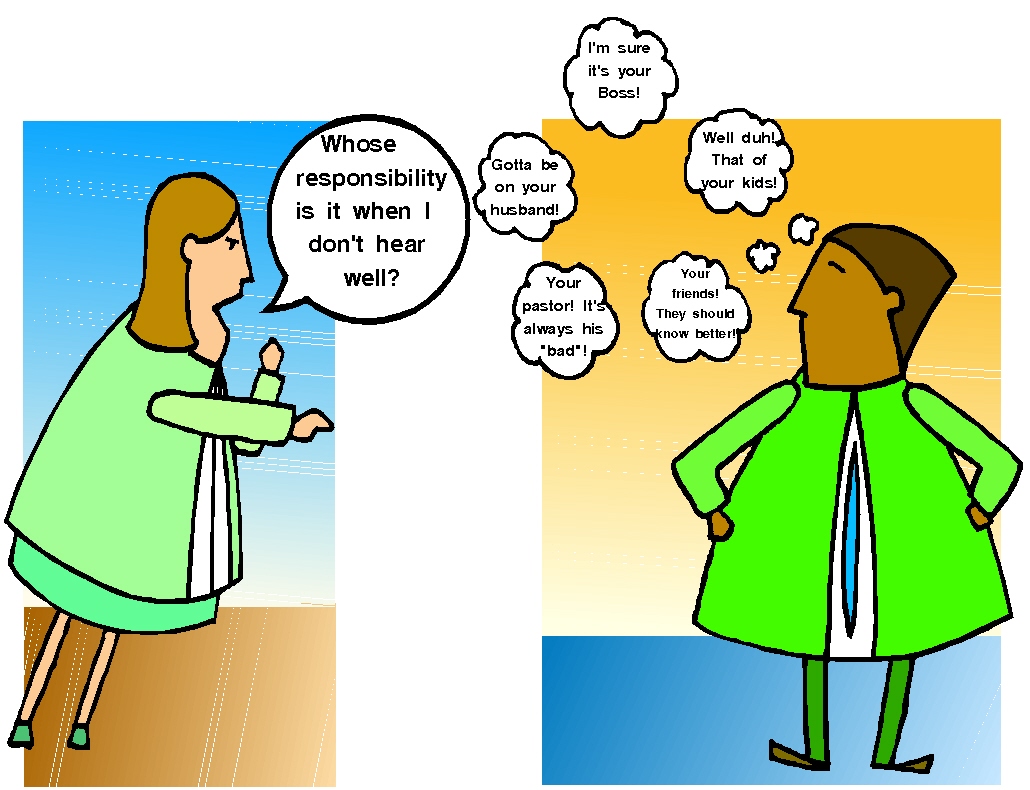
I was reminded this week about responsibility regarding my hearing loss.  A friend of mine was caught in an emotional moment, and got… well EMOTIONAL and couldn’t hear.  Instead of letting the other person know that she needed a moment to “get a grip”, she gave up.  I’ve done that so much myself, however, I wasn’t about to “cast stones”!  Even with my cochlear implant, if I get really emotional about something, I find it very difficult to understand what I’m hearing.

If I’m not hearing well, it is my responsibility to stop the conversation and “come clean” about not hearing well.  Sometimes I do that well… and umm… well, sometimes I pretty much make a mess of things.  If I act frustrated and angry because I’m not hearing well, the other person is bound to feel defensive.  I’m trying to learn that if I feel frustrated and angry, I should even say,

“You know?  I’m really frustrated right now.  I can’t hear you hardly at all and frankly it makes my head hurt to try and make sense of what you are saying.  It’s not you, it’s me.  Could you say that again and maybe speak just a little slower and lean closer?”

Sometimes people with disabilities tend to make their problem… everyone’s problem.  It can get so bad, in fact, that they end up thinking the whole world owes them the favor of setting up perfect communication settings. (for those with hearing loss).

At times, I have tried to be creative about making the best of a listening situation.  This past Sunday, my Redskins played.  After church, I generally remove my cochlear implant for a couple of hours as I have a bit of a tinnitus buzz and headache from concentrating on the sermon.  I’m many times exhausted from communicating in a restaurant , which is where my family always heads after church on Sunday morning.

My husband turns the closed captioning off for ballgames.  Those words scrolling at the bottom of the screen, tend to make it a HABIT to get in the way of that perfect interception, fumble or sack!  Normally I’m wearing my cochlear implant, so it isn’t to much of a problem.  I decided to “give in” about the CC as it was only during ballgames.

But this time… I had removed my cochlear implant.  So “free thinker” that I am, I didn’t think twice about sitting close to the television with the ear that has a tiny bit of residual hearing left in it, pressed close to the speaker.  I made sure I wasn’t in the way of anyone watching.

Now that I think about it, I have to laugh.  Hindsight is a wonderful thing!  The fact that I was sitting so close that my hair began to sizzle and spark with static electricity, means that I had to sit close enough I was practically cross-eyed.  I had the remote.  Hard to believe with hubby six feet away, yes?

Slowly but surely I began tapping the volume up.  I like to think it was unconscious, but I was pretty frustrated that I couldn’t hear the game.  So I’m reasonably certain some of that “tapping of the volume button” was conscious.

Something I’ve come to realize in the last year is that the residual hearing I have left in my right ear is practically non-existent.  It doesn’t take a genius to realize that if your cochlear implant batteries die, you scramble for fresh ones and discover the hearing aid in your “regular ear” picks up nothing… NADA… zilch… then you probably don’t have a lot of hearing left in that ear!  (And YES.  Don’t email me cuz I have had my hearing aid checked recently to make sure it works!)  Still, I was caught off guard when my daughter threw a pillow at me to get my attention.

She and my husband both had their hands over their ears, and I noticed the dogs were missing from the room.  It seems I had the volume a little high… and was still having trouble hearing.

I quickly turned it back down and was immediately bombarded with questions which included, “Why don’t I just ask for the captioning to be on?  Is that so difficult?”

The reality of it is, I simply wasn’t thinking at all.  After all, I have a cochlear implant.  It was sitting in my Dry ‘n Store upstairs just waiting for me to put it back on so that I could enjoy the ballgame like a “real” Skins fan.

But… it isn’t my family’s responsibility to remind me of that.  It is mine.  If I’m not hearing well, then I need to be pro-active in finding a way that I can.

It didn’t take me long to run retrieve my cochlear implant.  The dogs were glad to come back and enjoy the game.

Denise Portis

© 2008 Hearing Loss Journal

Parking Lot Adventure

Mom and I came out of the pet store with two huge dog food bags, a huge bag of litter, and three new litterboxes. It was starting to sprinkle rain, so Mom took her “ears” (her cochlear implant and hearing aid), out and carefully stored them in her purse. We made a plan: she and Chloe would make a break to the van and open it.  I would push the heavy cart to the van. Sounds deceptively simple right?

Mom and Chloe ran out into the rain. I pushed the cart and ran into the parking lot… in front of a car (don’t worry, they had stopped for me).  Suddenly, the three litterboxes fell from my cart, into the exact middle of the road.

Uh oh! MOM! THEY FELL! COME BACK!!!” I yelled, momentarily forgetting Mom couldn’t hear me without her “ears”. She continued to run into the distance. A woman standing on the sidewalk stared after her.

Yeah! YOU GO GET THE CAR, I’LL STAY HERE!!” I yelled, as if that was our plan all along… in case anyone thought my mom had abandoned me… to be hit by a car… as I dragged my litterboxes and cart to the sidewalk.

Well, technically she had!  But… she didn’t mean to. I am a CODA – child of a deaf adult – and I was used to having to say, “Oh, she can’t hear me, I’m on my own for this one.”

Mom turned around when she reached the car and realized what happened. She stored Chloe in the van and raced back to help me.

I was howling with laughter at this point. I have a strange sense of humor.

Mom was laughing too. I probably looked ridiculous trying to drag everything out of the way. And so we laughed  in the rain, as we smiled apologies to cars and people.  We finally dragged our cartload to the van.

“What are you – deaf??” I teased when we reached the van.

Being a CODA has taught me a certain level of independence, learning to think for myself. When household accidents, parking lot accidents, losing someone in a store, etc. happen, I learned to calmly handle the situation myself or to walk to my mom. I can’t always call for my mommy…she can’t hear me. It’s something I learned and accepted.

Just like I know I can’t stand behind my mom and talk to her. Because 99% of the time, after pouring my heart out to her back, she’ll turn around and give a piercing scream, all because she didn’t know I was there!

Having a mom with a hearing loss isn’t a trial, it’s just different. My brother and I adjusted just like my mom had to adjust to her hearing loss. It affects the whole family, but it doesn’t have to be negative. We adapt and change along with her.

And it does give us extremely amusing moments…or extremely scary, because having your mom scream loudly when she turns to see you usually causes you to scream in return. Trust me. Ask Chloe.

Kyersten Portis

18-years-old

Kyersten’s mom lost her hearing when Kyersten was only two-years-old.  Kyersten has only known her “mom” as a person with hearing loss.  Kyersten and her family live in Maryland with a menagerie of animals.

But I’m afraid…

But I’m afraid…

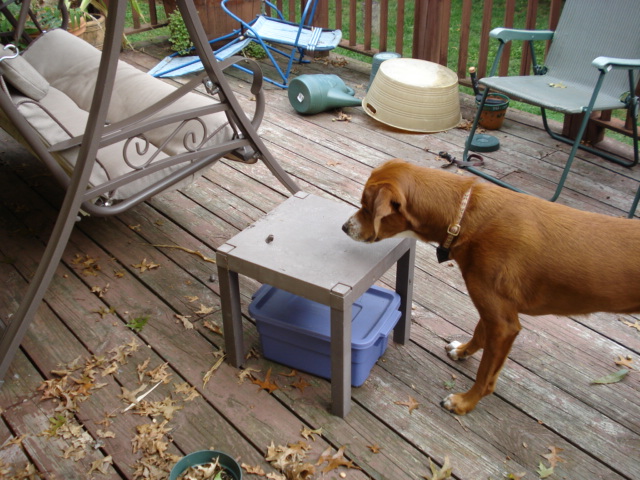
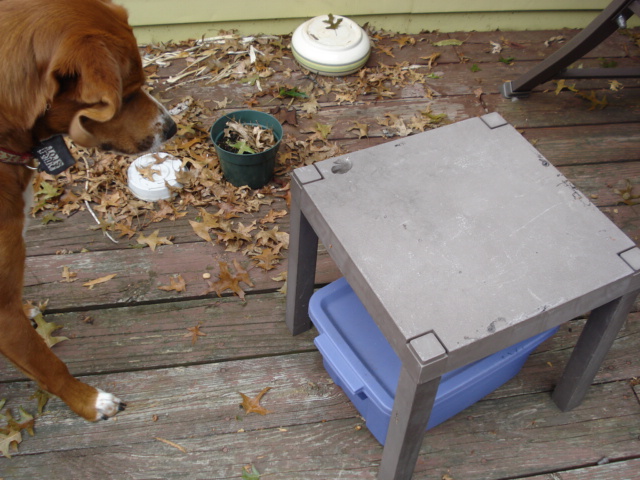
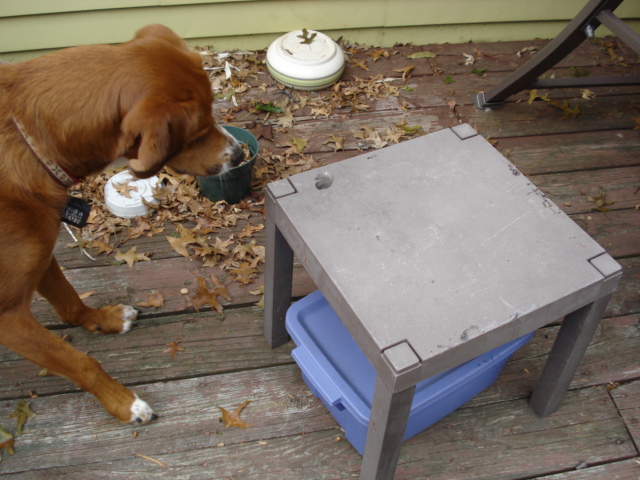
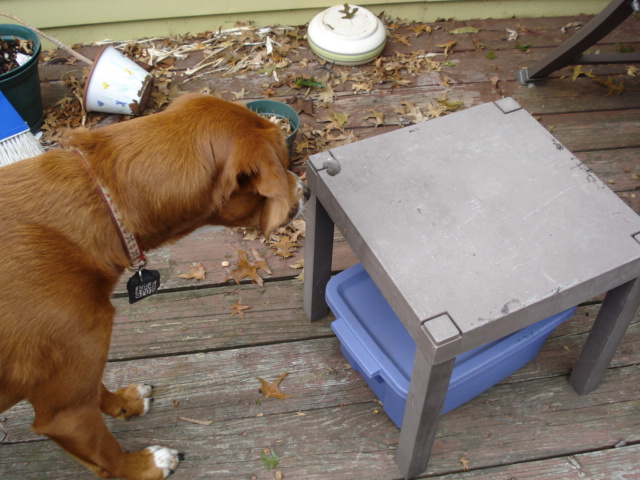
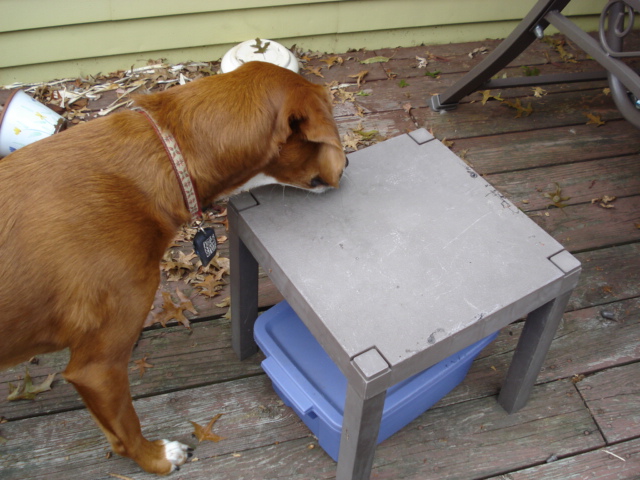
This morning my assistance dog, Chloe, was out on the porch barking her head off.  I’ve never appreciated how she looks without a head, so I found myself hustling outside to see what all the fuss was about.  At first, I couldn’t figure out what she was barking at, but it was very clear that Chloe was afraid.  Each muscle in her 4 legs were trembling with fear and tension, her forehead was wrinkled, and she whined in between high pitch barks!  I had to step closer in order to finally see what she was fixated on… a tiny bird feather.

Now I’m the first to brag that my working dog is a very smart canine!  She loves to learn, loves to work, and loves to train!  But sometimes… her fear keeps her from putting all the pieces together.  Sometimes… she needs help to look past her fear and approach things a little more logically.  I continued to reassure her that everything was fine.  I wanted her to investigate it a little closer with a little more, erm… backbone!  Grin!

Me: “Chloe… it’s OK girl!  It’s just a feather, and it won’t hurt you.  Show me!  What is it?”

Chloe: (Looks at me like, “Don’t you SEE?  Oh my gosh!  LOOK!  Show you?  But I’m afraid…“)

It seems that feathers have a smell… at least they do if you are a dog.  Chloe could smell a recent “alive kind of smell“.  When she would get close enough to sniff the feather, her sniff would MOVE the feather… and much to her dismay TOWARDS HER!!  Therefore, Chloe was convinced it was alive!  What does a hound dog do when they think something is alive?  They bark!  When Chloe would bark at the feather, it would move even MORE, but away from her!  Feathers are so light that they tend to want to follow the natural rules that feathers follow when applying physics… a hound dog’s hot air.

Even holding the feather in my hand, had her cowering in fear!  I sat on the porch and talked to her, all the while holding the feather out towards her.  Finally, she crept up behind me and with head on my shoulder sniffed and huffed at the feather in my hand.  I could feel her trembling, with her fearful “self” pressed up behind me!  Eventually a good, stiff, Maryland-September breeze picked the feather up and flew it up over the railing and out into the yard.

Chloe cocked her head to the side and looked at me like, “Well! What did you do THAT for?”

She was afraid of the feather, but wanted the feather.

But I’m afraid…

Last night I attended our school’s kick-off meeting.  All the teachers were present, and I knew I would face supper, entertainment, games, dessert, announcements and fellowship.  I have to admit it was something I had to make myself attend.  The night before I had even cried all over my husband, trying to find a way to get out of having to go!

When you have a hearing loss, there is just something incredibly intimidating about going to a group function that reverberates with the background noise of a large number of excited and “pumped” teachers!  I planned in advance, and made sure my cochlear implant batteries were fresh so that I wouldn’t “go dead” in the middle of a conversation.  I brought some assistive listening devices that work in conjunction with my t-coils on both my CI and my hearing aid.  Due to some recent rains, I knew I was wobbly enough to need Chloe’s special collar.  I was prepared.  I wanted to go.  I needed to go.  But I was afraid…

I talked to my director via email prior to going.  I’ll admit that I was trying to see if it was something I did indeed have to attend.  I did… and my director knew I needed to for more than the information we received as teachers.  She knew I needed to go in order face my fear.

My fellow teachers are very nice people.  I WANT to get to know them better… to even gain the treasure of a friend or two.  But in year’s past I’ve seen the look of panic when I put a microphone nearer their face in order to hear them better in a crowd.  I’ve seen their faces as they inwardly castigate themselves as they said something behind their napkin and I had to ask, “Pardon?”  (I’m a transplanted Southern gal, what can I say?)  I’m 100% sure that if these teachers knew how afraid I was of them, they would be devastated!

In my HEAD, I know that I have nothing to fear.  And yet, when I go to these things I find myself saying, “But I’m afraid… ”

My consolation, is that it is getting better.  The more functions I attend like this, the more comfortable I become.  The “feather moves”, and I’m a little jumpy about it; however, I’m learning it’s just a “feather”.

I’m thankful I do not seem to have the same illogical fears towards my students.  Young people seem so incredibly natural towards me.  If I have to ask a student for a repeat… seven different times… they cheerfully do so without any visible qualms at all.  Perhaps it’s because my classes are “electives”, (although many take them as alternative foreign language).  I know they CHOOSE to be there, and it doesn’t bother them that their teacher has a hearing loss.  I do not feel disabled around them.

With my peers it is different.  I hope it isn’t always so.

I want to attend meetings like these, but am afraid of meetings like these.

At least with fellow teachers, I am becoming stronger and more confident.  Perhaps I need a good, stiff, Maryland-September breeze to convince myself I’m in a “safe place”.  At least with every one I go to, I’m less “trembly”… and heck!  I quit barking months ago!

Denise Portis

© 2008 Hearing Loss Journal
Psalm 56:3: “But when I am afraid, I will put my trust in You.

Hurry Sickness

The first time I heard the phrase “hurry sickness”, I was sitting across from my elderly, widowed neighbor, Celia.  We were living in North Carolina at the time, and I had one of those rare opportunities to “soak up her wisdom” over tea and thin mints!  She was telling me about her son who had just retired for medical reasons, from a successful thoracic surgery practice.  He was depressed and suicidal.  He had put his surgery practice and surgical skills first in his life.  Now… forced to retire “young” at 52-years-old, he felt he had nothing to live for at all.  He had hurried through life, pushing himself to be the best (and he was!), making a name for himself in the nation’s Capital.  Two weeks after retiring, his practice had already replaced him and all he had to show for his sacrifice was a nice watch.

(As I recall… ) Celia told me, “Norm has ‘hurry sickness’… he always has!  He’s never been able to ‘BE STILL’ and enjoy quiet.  ‘Hurry’ has ruined his health, and now he’s alone in a big house, kids are gone… alone.  He never learned to enjoy ‘alone’… ‘Hurry’ has been like a pervasive, lethal infection, destroying him from the inside out!”

Dr. Ann McGee-Cooper has a great list of “red flags” for those who may think they have “hurry sickness”.  See if you can see yourself in any of these:

How do I know if I have “Hurry Sickness”

  • I typically drive 10 or more miles/hour over the speed limit.
  • I interrupt others and/or finish their sentences.
  • I get impatient in meetings when someone goes on a tangent.
  • I find it difficult to respect people who are chronically late.
  • I rush to be first in line, even when it doesn’t matter (for example, getting off an airplane first in order to stand at Baggage Claim longer).
  • If I have to wait over a few minutes for service in a store or restaurant, I get impatient and leave or demand service. To me time is money!
  • I generally view as less capable those who may be slower to speak act or decide. I admire people who move at my speedy pace! I pride myself on my speed, efficiency, and punctuality.
  • I view “hanging out” as a waste of time.
  • I pride myself on getting things done on time, and will sacrifice the chance to improve a product if it means being late.
  • I often rush or hurry my children and/or spouse.

Ones I have thought of as well:

  • I look for the check-out line at the grocery store with the fewest people, all the while scanning other registers to see if they are moving faster.
  • I stand in the shortest line at a fast food restaurant, and hop over to another line if the person in front of me just ordered something complex that will take time.
  • I go through my entire day multi-tasking so that I can get more accomplished in a short period of time.
  • I “dare” the kids to see who can clean their room the fastest, even offering a monetary reward for the winner!
  • I choose email over the phone because it won’t take as long as I don’t actually have to communicate.

I’m in the process of reading John Ortberg‘s book The Life You’ve Always Wanted.  He has a chapter in his book called “An Unhurried Life:  The Practice of ‘Slowing’ “.  I thought I was actually pretty good at “the practice of slowing”.  I was startled to read his opinion of what solitude is NOT.  I thought that by taking my cochlear implant off and curling up with a good book was a strategic way to practice “slowing”… to enjoy solitude.  Dr. Ortberg suggests that this is not actually practicing solitude.  It doesn’t “unhurry” you at all!  He said we need both brief periods of “real” solitude to “unhurry” our lives, but also extended periods.  Brief periods can be 30 minutes!  Extended periods should be at least for an entire day.  He states:

“What do we do when we practice solitude?  What should we bring along to that quiet place?  The primary answer, of course, is ‘nothing‘… At its heart, solitude is primarily about not doing something.  Just as fasting means to refrain from eating, so solitude means to refrain from society.  When we go into solitude, we withdraw from conversation, from the presence of others, from noise, (easy for me!  smile!  I need only remove my CI!) from the constant barrage of stimulation.

I have found that since I lost my hearing, it is especially important for me to be “quiet”.  You would think that would be easy!  But one must “quiet” more than sound.  I must “quiet” my hands from being busy, Busy, BUSY.  I must “quiet” my mind from always thinking about what I need to do next, accomplish before I go to bed, chores, work, service, etc.

This morning with my husband gone to work, my son busy working an eight hour shift at McDonald’s, and my daughter taking care of a doctor’s appointment and then a pet sitting job, I found myself alone.  Eager to take advantage of my solitude, I sat in our “quiet room”.  This room was lovingly dubbed “The Quiet Room” by my hubby.  The wallpaper is the cloth type that keeps noise from bouncing around, there are vinyl “noise reducing” blinds on the window, thick carpet and soft comfortable furniture.  NO ELECTRONICS ALLOWED.

Alone, with only a sleepy hound-dog at my side, I turned my CI off and sat in a big cushy chair and watched the rain.  Monday-Friday, our cul-de-sac is a very quiet place.  I enjoyed my time of just reflecting, praying and watching the rain!  I came away feeling rejuvenated even!

Do you have “hurry sickness”?  Do you need to learn to reflect… to enjoy solitude?

Denise Portis

© 2008 Hearing Loss Journal

“Life is My University”

Louisa May Alcott (1832-1888 )

“Life is my university, and I hope to graduate

from it with some distinction.”

I have always loved quotes.  I write them down, meditate on them, journal about them, and have learned the power of words.  Although many quotes have taken hold of my very soul… forcing me to make changes and “grow up”… I am very conscious of the fact that I am neither profound nor eloquent.  My own children will remember a couple of quotes all right!  My son will remember how fond I was of saying, “If you’d put it up when you’re done with it, I would not have to interrupt what YOU think is important to do it now!”  My daughter will remember, “You’re being to hard on yourself!”

I don’t “live”, to be “quoted”, and yet still recognize the impact “quotes” have made in my own life.  I am currently reading a book by Drs. Parrott and Warren entitled:  Love the Life You Live.  In the introduction, the authors chose to begin the book with a quote by Louisa May Alcott, “Life is a university, and I hope to graduate from it with some distinction”.  Sometimes quotes seem to leap off the page for me!  It is as if a hand reaches through the pages of the book laying in my lap, to touch my heart with the power of truths wrapped in the guise of words to forever change who I am.  I sat there re-reading, and then contemplating this quote for at least twenty minutes.  (Yes, I know!  It can take me awhile to read a book!)

“Stress 201:  MWF 8-9:30 AM.  Professor:  TBA

I’ve had a tough year if I’m to gauge it with the type of things that measure stress and anxiety.  If I’ve been “taking classes” in this “university of life”, I’ve not been able to pull a “C” and will likely need to repeat the classes if I’ve any hope of graduating!  The sobering facts about my “school year”, are that outside forces and circumstances did not cause the stress and anxiety.  These “classes” were manufactured by internal insecurities, “righteous indignation”, and the wails of a childish response screaming, “that’s not FAIR”!  I hate these kinds of classes.  The kind of classes where the professor is YOU, and you can’t believe that bad luck in ending up with yourself as the teacher!

When my husband was encouraged to resign his position as Executive Director of a national non-profit last year because his “skill set” was no longer needed, and the organization wanted to hire a younger, experienced fund-raiser that would represent the “new face” of the population, he was disappointed for all of one day.  He has the unnerving, yet enviable ability to see the positive in everything.  He is now in a completely different environment where he is making a difference in a larger population of “others”, than he ever hoped to touch at his previous job.  He is thriving, growing, and more importantly content and excited about the future.

I chose not to look at it as an opportunity to get out of a stagnate, negative environment.  Instead, I was angry that he was not given the opportunity to expose the truth, that he was not given the chance to present what was really going on behind “closed doors”.  However, I quickly went from “righteous indignation” to “praying God’s wrath” on their heads!  Yes.  Hubby and I registered for different “classes”.  His completed coursework complemented his work at life’s university.  My classes are the kind that if you looked at my “transcript”, you’d wonder why I ever chose to invest myself in things that had nothing to do with my “major”.  I may as well have registered for “Underwater Basket Weaving”.

A lady I’ve come to know who lives CLEAR across the country in California, recognized early on the poor choices I’d made in my “class schedule”.  Raegene recommended a good book about the type of forgiveness that is extended only after tough upper level courses in “life’s university”.  From there I found my attitude changing.  Quotes from my own mother came back to me as I read the book.  Quotes like, “You’re right.  LIFE ISN’T FAIR.  Shake it off!” Other quotes she has written on my heart and mind seemed to be intertwined with the words I read.  “You are not responsible for other’s actions.  You are only responsible for how you react to them.”  As a person of faith, I realized that God was hammering it “home” for me that I was not doing well when I received my “mid-terms”.  It’s not that I had even signed up for the wrong classes.  I was simply studying poorly, and failing to take “good notes” in class.

A Forced “Minor” in Hearing Loss

Sometimes we are forced to take “classes” that we have no interest in, yet need in order to graduate.  We can go belly-ache to the “Dean” if we want to, but in the end these courses are needed to complete our degree.  No one chooses to “minor” in hearing loss.  I think this avenue of “study” especially takes those by surprise who find themselves in the classes later in life.  Whether the hearing loss is sudden, or progressive… one never deliberately signs up for classes where the extra class fees include hearing aids, cochlear implants, Dry ‘n Store devices, and batteries by the truckload!

When I found myself in “hearing loss classes”, I immediately looked for tutors.  All tutors are not created equal.

The first day of class your professor may discuss “why” for about 10 minutes.  It’s all the time they have for this topic, as there is very little information to support it.  Yet students “talk it to death”.  When the professor would like to proceed with the lecture series, many students choose to dissect, discuss, and write term papers about “why”.  Some are lucky to have mentors who force them to move on to the next important chapters in the text.  These students have tenured professors who realize the important task of “moving on” and learning “life skills” instead of allowing stagnate thinking.  Others who aren’t so lucky, end up spending the majority of their classroom time arguing and trying to defend and debate a topic that doesn’t matter.  The professor may be apathetic as they will “get paid anyway”.  I long to tell people new to hearing loss to drop the class as quickly as possible.  Enroll in a class that moves on from the “why” to more important topics by the 2nd day of lecture.

Hearing loss, like most acquired disabilities, is not a chosen study.  Yet sometimes a person ends up with enough credit hours that they discover they have inadvertently minored in it!  The wonderful thing about this minor, is that all students can become substitute teachers if they choose too.  When I stopped looking at my course load, and instead sought ways to teach others what I have learned, my attitude about my “minor” began to change.  If I can help tutor ONE person with hearing loss, it will be worth the late nights I’ve spent cramming for exams, and tuition dollars I’ve thrown at “Hearing Loss”.  Because I had a series of good tutors myself, I quickly went on from the “why” to chapter two… “What now?”

I’ve met some people in the seventeen years I’ve lived with hearing loss, who have made a “major” out of hearing loss.  It was never meant to be a “major”. Life is much more than “hearing loss”.  However, I have met some people who have a Ph.D. in hearing loss.  Don’t get me wrong!  Hearing loss can shape who we are, teach us life skills, develop attitudes and mold our character.  It can have a profound effect on our studies in “life”.  But I am not defined by my hearing loss.  Hearing loss has simply brought out unique characteristics that would have never been developed had I not experienced it.  Life is never about a disability.  Life is about our ABILITIES.  I can’t hear well, but you should see what I CAN do!  And I can only do it because I’ve learned to live with the uniqueness of my own personal hearing loss history.

What about you?  Have there been unique trials and triumphs that have steered your coursework towards a special kind of “you”? Are you searching for “teachable moments” in your “studies”?  Are you “teaching” with your own life? I don’t know about you, but I want to graduate with distinction!

Denise Portis

© 2008 Hearing Loss Journal
Teasing

I was told this week by someone I was close to that my teasing had been hurting their feelings. I was so surprised and felt very badly about it. It had never occurred to me, that I was being insensitive or mean. I was very hurt.

Part of it I think, is because of the families we grow up in. Maybe this person’s family didn’t tease often or in the same way that mine does.  In my family, we are always gently poking fun at each other and teasing. If it ever did hurt, we let the other know right away, and they wouldn’t do it again. But I don’t remember that ever being a problem.

The boys, Dad and Chris, are especially big on teasing and even good-natured name calling when in competition with each other. They love jeering and laughing…all in fun. For example “My grandma could do that better in her sleep!!!” All silly…all teasing…all in fun.

Mom is one of the best sports I know. She pokes fun at herself all the time…including her hearing loss and balance problems. She doesn’t cry or become embarrassed when she doesn’t hear something or stumbles because of her balance. She’ll laugh at herself, which makes us feel like we can laugh WITH her. I have always admired this about my mom. When she mishears something, (and sometimes she can be really OFF on what she hears), she is always the one to lead the laughing. She lets herself kindly and lovingly be teased. And I consider her a sensitive person…but not in a defensive way.

Everyone in my family has learned there is a time to tease. For instance, if mom is treated like she is a lesser person because of her hearing loss at some meeting or errand, we don’t laugh. We try to comfort and are righteously angry on her behalf. If I mess up in front of people while giving some sort of small speech, they won’t laugh. They will comfort and hug.

But we’ve all learned to laugh at the small mistakes and to tease each other. This situation with this person has taught me to be careful with who I tease or how I do it. (For example, teasing over instant messaging may not be the best, since there is no facial expression or voice). I can’t expect everyone to be like my family, and they know me better than anyone.  They know the way I tease and how I mean it. It has also made me appreciate my Mom, who can laugh at the things that happen with her hearing loss and balance, and in doing so, she creates an atmosphere of cheerfulness… not depression. She is amazing and I really admire her.

Kyersten Portis

Waiting for the Woof

People who love dogs often get along great.  Folks who have an interest in dog-training, often find that they, too, can easily become friends.  Those who are in training or waiting for a service dog, have a unique bond of shared experiences, dreams, and a new-found independence.

I am very blessed to live close to Fidos For Freedom, Inc., in Laurel, Maryland.  It is not only where I received my own working dog, Chloe, but I have made many friends of the clients and “fidos” there.  We continue to train and “hone our skills”.  It’s even better that I call my trainer… FRIEND.

The internet is a wonderful thing.  Not only can you research and “learn”, but it also levels the “playing field” for many with disabilities.  I know deaf people, blind people, and folks with mobility challenges who use the internet and “connect”.

I read a lot of different types of blogs.  Obviously, I have an interest in service dogs and matches between canine/people partners.  I met Elizabeth online through our blogs.  She has a great blog called “Waiting for the Woof“.  She is waiting to be matched with a dog through PAALS

She writes about the “wait”, and also posts a great deal of information and “news” about service dogs.  I have actually learned a thing or two (or three) from reading her blog.  We’ve also connected “off blog” through email and I’m very excited about her upcoming match with a working dog of her own!

PAALS differs from Fidos For Freedom, in that the client is responsible for seeking donations and funds towards the expense of their Fido… or in this case “Woof”!  I wanted to help Elizabeth get the word out about her fund-raising campaign towards getting her own service dog.  Her goal is $7000.  Some people think, “I can only give $25 or so… how can that help?”  However, every donation adds up… so even the “small amounts” count!

I’d love for you to take a look at her website and read her story.  She’s a wonderful lady and I know her story will touch you!  If you can help with even a small donation, I know Elizabeth would appreciate it!  I’ve seen what a mobility service animal can do for their partner.  Until you see it first hand, it’s difficult to understand the freedom and independence they grant to their partner.

After reading more about Elizabeth, if you’d like to donate it is actually very easy to do so.  Simply go to this link (click here).  At the site, click on the “Donate” button under the heading of “General Donations are Greatly Appreciated.” When you are taken to the PayPal page, you can then choose to donate via credit card or directly via PayPal. There is a space to indicate special instructions – this is where you can put the name of the person for whom you are donating. (Elizabeth Riggs)

Let’s help Elizabeth reach her goal!  I’d love for her blog to direct us to a new link… “Living with the Woof”!

DeniseP