Fundamental Attribution Error

hershey park

I drive my family crazy sometimes. I have psychology on “the brain”. Things I’m studying, things I’m teaching, things I’m thinking about (the dreaded dissertation looms after all), I tend to talk about. I mean a lot. Even when you don’t want me to.

Spring is a busy month for Hearing Elmo. For some reason, lots of folks tune in and contact me. I love to write (even email responses) so I don’t mind at all. To me? This is what Hearing Elmo is all about. I’m glad to be a small part in helping to raise awareness about invisible disAbilities and chronic illnesses. I learn SO MUCH from so many of you who write. So thanks! 🙂

Lately, I’ve had a lot of conversations both email and face-to-face with folks who are struggling with bad thoughts. Thoughts about strangling someone.

Even though it’s deserved.

People with disAbilities or chronic illness are often judged. Sometimes it’s a first impression. Sometimes it is by someone who knows better. I want to cover both today. In psychology we call this the “Fundamental Attribution Error”. Lilienfeld, Lynn, Namy, and Woolf (2013), explain that the fundamental attribution error “refers to the tendency to overestimate the impact of dispositional influences on other’s behavior. By dispositional influences, we mean enduring characteristics, such as personality traits, attitudes and intelligence. Because of the fundamental attribution error, we also tend to underestimate the impact of situational influences on other’s behavior” (p. 501). It’s that last part I want to talk about in this post.

People with Disability or Chronic Illness are Misunderstood

If you are reading this post you likely have some connection to invisible illness or disAbility. Perhaps your condition is not invisible at all. You may live with personal challenges.
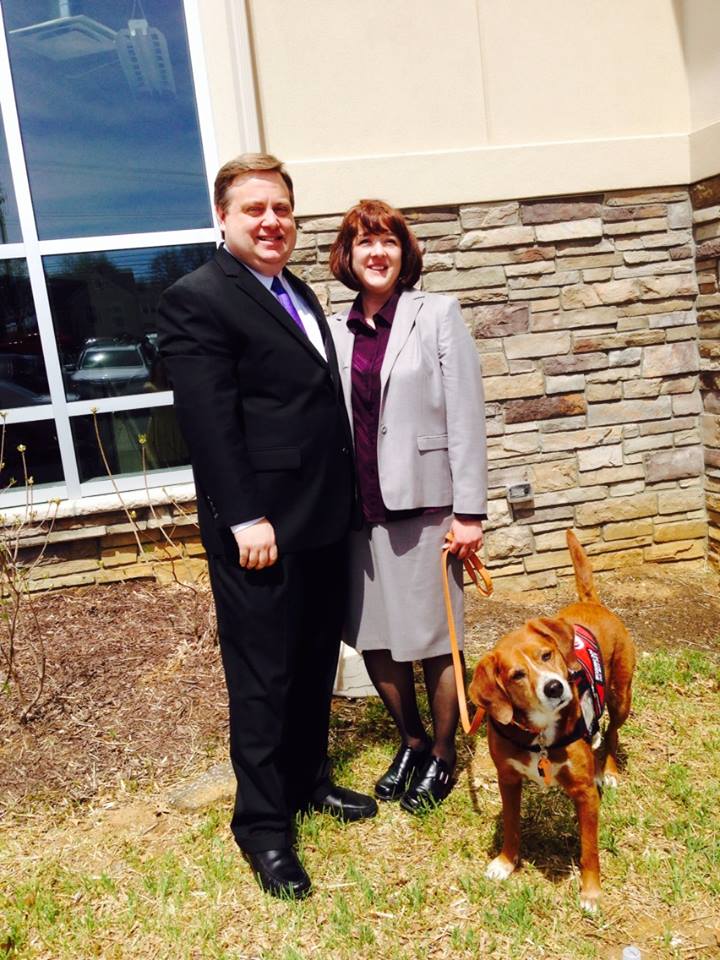
easter 2014

Easter Sunday I came home from church with husband and hound dog and went downstairs to work. After about 20 minutes I came to the realization many of you do each and every day. I was wiped out. I knew I would get far more work done if I went upstairs to take a nap. Some folks call these “power naps”. Me? I’m not going to sugarcoat it. I need naps sometimes because I have Meniere’s disease and hear with a cochlear implant. I’m 47-years-old. I get tired. I get tired a lot! So trudging upstairs I passed my husband in the family room and said, “I’m going upstairs to take a nap“. I stood there a second to see if that elicited any reaction.

Now Terry has been married to me long enough to know that if I actually say I need a nap, you better let me take a nap. No smart remarks. He only said, “Be sure to close the blinds or Chloe will bark at every little thing“. I’ve “trained him well“, yes?

But it isn’t easy being the significant other of someone who has a invisible illness or disAbility. When Terry first married me I was only unilaterally deaf and no balance disorder to speak of. Fast forward 28 years and I am now at a point where I can still do a lot. I have dreams, goals, work hard, am a wife, mother, mentor, teacher, student and writer… and I take naps.

I have been out and about before running errands or just shopping with my best friend – Terry Portis. I have out of the blue said, “Ok. You need to take me home.” The last time this happened we were going to a super Target. We had just parked in the parking garage and Terry started to get out. “Ok“, I said. “You need to take me home“.

He stopped and looked at me. After a long pause he asked incredulously, “You mean… now?

I looked at him eyeball to eyeball (which can be uncomfortable with the risk of losing your contacts – but I needed him to know I meant business). “Now” I responded.

So we went home. Sometimes when I “run out of gas” I do so very suddenly. There can be little warning. You could make me push it and we’ll both risk the reality of a major nosedive in “Lawn and Garden” with mild concussion and concerned gathered crowd to show for it. (Clean-up on aisle twelve…)

None of us ask to develop acquired disAbilities. No one prays for a chronic illness. People we know and love may get peeved at us that we require more rest than we use to need. Part of it may be that they miss doing things with you that they use to be able to do. My husband loves Target. But sometimes? Well sometimes you need to take me home and do it NOW. That can be hard.

So those of us who have the chronic illness or disAbility need to be understanding too. But… don’t be afraid to talk about it. One of my favorite “opening statements” for a heart-to-heart conversation begins like this:

“When you say (or do) _________________ it makes me feel like _______________.”

It lets the people I care about know that it DOES bother me when they say or do something – not seeing the whole picture. They don’t understand the situation well enough to get why I behaved a certain way or responded a certain way. So I need to remind them. That’s OK.

If you are the “significant other” – try to put yourself in the other person’s shoes. You don’t want to really know what they are going through for that would mean you’d have to share the disAbility or diagnosis to really get it. What they are going through is really… REALLY…

HARD.

But you know what? They can get through it because you are there to help them, encourage them, and cheer them on! (So don’t forget how influential you can be, OK?)

For Those Who Don’t Know me

Several times a year someone who doesn’t even know me will say something that I almost come unglued about. I have one of those moments where I want to strangle someone. But in most states that is still against the law…

Costco, October 2013: I was in the meat section trying to decide how many crock-pot size meals I wanted to make in the next couple of weeks when I heard a woman about 3 feet away say, “Oh MY GOD!!!!!!!!!!! A dog, in the meat section. I’m going to complain to the manager“.

I turned around and saw this woman standing there with hands on hips and an embarrassed husband standing next to her. Well my friends? Sometimes good sense just rushes right out of my head. I pointed my finger in her face and said, “This is a service dog. I am late-deafened and have a balance disorder. This dog has picked up dozens of things for me since I’ve been in this store for the last 20 minutes. You shouldn’t judge what you don’t know. I’d rather have disAbilities than be stupid. You can’t fix stupid“. And I walked away.

Amidst applause. For it seems we had drawn a crowd.

Yet I will be honest with you. More times than not I do NOT get to say something pithy and intelligent. Sometimes my heart is broken. Sometimes I walk away crushed. Sometimes I strangle people. (Ok, maybe not but I may FEEL like it).

It can be really hard when people judge what they don’t know. After stumbling into an end cap at a store I had a person jest, “Little early to be drinking, isn’t it?” I could get mad and “let it rip”. Or strangle. Cuz yeah I’m a little sidetracked by how satisfying that would be right now. But folks don’t know me. They don’t know my reality, or my day-to-day situational influences that have me moving, responding, and requesting naps. Then I have to make a decision.

A) Strangle them

B) Scream at them

C) Walk away. It isn’t worth it.

“C” is the best response most of the time.

———

Do you get tired easily? Does fatigue trigger headaches, body aches, and brain fog? Do you sometimes just need a NAP? People may not understand that. They may think you are being lazy. They may think you should try harder. They may need strangled…

… with the truth. So tell them!

Denise Portis

© 2014 Personal Hearing Loss Journal

Lilienfeld, S. O., Lynn, S. J., Namy, L. L., Woolf, N. J. (2013). Psychology: From inquiry to understanding (3rd ed.). Boston: Pearson Publishing.



Your Thinker and the Trickle Down Effect

squirrel-pin-tree-winter-snow-nature-hd-wallpaper-desktop-free-animals-picture-squirrel-hd-wallpaper

Wednesday, March 19th

I had a “pep in my step”. I had a whistle on my lips. My heart was glad. I was walking my service dog and most of the snow was gone from the ground.

“What beautiful weather for a walk!” I thought to myself.

But then a squirrel scampered down off a tree trunk merely inches in front of my well-trained service dog’s nose. It all happened so fast.

The first jerk on the leash put my body in motion. You can’t fight the laws of science. I was going to be in motion until something stopped my motion since my brain went on instant vacay. Let me tell you I stuck the landing. Nearby Olympic judges all held up “10” placards. Cheers all around (or at least in my imagination).

I lay there on the pine-needle strewn ground for a minute trying to determine if anything was broken. The world was still spinning. I closed my eyes for a minute and choked back the nausea. Flipping to my back I felt a hound dog kiss on my face.

“Whew. Chloe is still here”, I thought.

I forced my brain to verify the leash was actually still in my hand. YUP! I opened my eyes and focused for a second. Chloe went into a down/stay on her own and rested her head on my shoulder. The weight of my ding-a-ling service dog’s head was a comfort.

I heard something! Another good sign. My cochlear implant was still attached to my head. I focused on the sound and looked up – Up – UP into the tree boughs above me and spotted that rascal squirrel.

Oh.

My.

Gosh.

He had the impudence to sit up there fussing – at US. I couldn’t help but laugh. He was ticked! I laughed all the way up until he skipped away… jerking the branch he was on and dumping snow on my face and chest from twenty feet up. My laughter stopped immediately. I was choking after all…

I sat up and brushed the snow off and started to giggle again. Chloe wagged her tail in delight. It seems she wasn’t going to get a “Denise sermon” after all. Within 10-15 seconds though I was overcome with a different emotion. I sat there crying. Not just silent tears – nooooooo. This was unladylike, deep sobs with intermittent hiccups!

I sat there bawling my eyes out for five or six minutes, comforted by a hound dog most certainly sorry her instincts caused another “Timber…” moment for me.

Yes. I could see the funny. But fast on the heels of the laughter and positive attitude came an emotion near the surface most days. Self-pity. Sorrow. I hate my life.

Is Happiness a Choice?

One of my favorite books is “Happiness is a Choice” by Minirth and Meier. The premise of the book is that especially for those of us living with depression, happiness is a choice. The book’s number one principle is: “Change the way you talk to yourself”.

I’m on board with that. Really!

I am!

You can change some of the negative aspects of your thinking by challenging the irrational parts and replacing them with more reasonable thoughts” (Martin, 2010, para. 4). Whitbourne (2013) explained these, “inner monologues as “self-talk,” in which you provide opinions and evaluations on what you’re doing as you’re doing it. You can think of self-talk as the inner voice equivalent of sports announcers commenting on a player’s successes or failures on the playing field” (para. 1). I believe in the power of self-talk. I believe our “thinker” really can influence our behavior. My husband is a cognitive psychologist. He and I have a lot of discussions as I work on my own Ph.D. about the best ways to change behavior. He – and other professionals like him – believe that if you can simply change what your thinker is thinking, there will be a trickle down effect. It will influence and possibly change behaviors you wish to change. There is a lot of scholarly research and science to support this.

I believe this! I do! But I will be honest for a moment. There are times I want to just say…

SCREW SCIENCE

That’s right. Just in case you even needed MY – or ANYONE’s permission…

It is OK to be upset about the reality of your life.

Living with acquired disability sucks. Hearing loss sucks. Meniere’s disease sucks. How about you? Fill in the blank:

_____________________ SUCKS.

*Deep Cleansing Breath*

I’ve tried to explain to folks who ask, that living with a chronic condition or acquired disability is – on the best of days – HARD.

I still get the flu.

I have still lost people I love and miss them.

I have lost beloved pets.

I get headaches, body aches, and am growing older.

I get mad at my family sometimes.

I experience car problems.

I hate traffic.

I have unexpected bills.

I still have a period (hey! Jus’ layin’ it all out there! <BIG GRIN>)

All of these things happen to me just like they happen to you. Only folks with chronic illness or acquired disability have those things happen on top of what – for them, is the norm… living with challenges daily.

Yeah, yeah. I know!

I still get the flu   I can be thankful I have medicine to help and a hound dog to cuddle with. See? I can see the positive!

I have still lost people I love and miss them  I can be thankful I will see them again someday based on my personal faith beliefs and worldview.

I have lost beloved pets  I have other furry family members and that makes me happy.

I get headaches, body aches, and am growing older  Beats the alternative. Right? 

I get mad at my family sometimes   But I have a family…

I experience car problems.  But I have a car and this time we could afford the “fix”.

I hate traffic.  I have a job to go to.

I have unexpected bills.  But I’m smart enough to figure out how to pay that bill or arrange payments.

I still have a period Yeah. I got nuthin… (LOL)

So can my forced “change thinking” have a trickle down effect and influence my behavior, feelings, and perceptions? Yes.

And no.

Confused? I don’t mean to be the cause of a “What the heck you talkin’ about, Denise?” thoughts.

However, it is important – at least I think it is – to allow yourself to have moments of self-pity. Feel the sorrow. Rail at God. Write “My Life Can Suck” really big and pin it to a wall and throw darts at it. If it makes you feel better, do it. I think it is healthy to “own your feelings” about the reality of your life. It’s hard. You may feel alone. You may want to give up. It’s OK to feel that way.

But then? (Brace yourself…)

Change your thinker. Allow it to do what studies have shown actually works. The “Trickle Down Effect”. I’m here to tell you though that it isn’t a long-term fix. You may have to “adjust the knobs on your thinker” daily. Maybe on REEEEEALLY bad days – hourly!

Do you know what thoughts help me the most?

Keep on keeping on.

I can make a difference in the life of another.

Tomorrow is a new day.

Mean People Suck. (Sorry. That’s my favorite bumper sticker and I *had* to throw it in there).

Yup. They are platitudes. “Feel good self-talk”. But ya know something? It works for me because I also allow myself the freedom to sit in the pine-needles with snow covering my shoulders and bawl my eyes out.

So strive to improve your self-talk. But feel free to wail.

{{{{{{{{{CYBER HUG}}}}}}}}}}}} from me to you!

Denise Portis

©2014 Personal Hearing Loss Journal

Martin, B. (2010). Challenging Negative Self-Talk. Psych Central. Retrieved on March 21, 2014, from http://psychcentral.com/lib/challenging-negative-self-talk/0003196

Whitbourne, S. K. (2013). Make Your Self-Talk Work for You. Psychology Today. Retrieved on March 21, 2014, from http://www.psychologytoday.com/blog/fulfillment-any-age/201309/make-your-self-talk-work-you

Counseling. Only for the Weak and Needy?

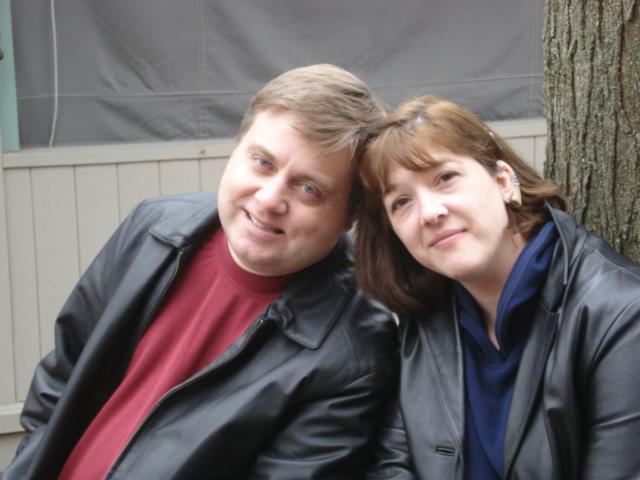
terry and denise

I’m married to a psychologist. I’m 37 hours + dissertation away from my own Ph.D. in Psychology (I know, I know it is still a lot! But to count it down helps! 2016 seems like such a long ways away!). My daughter is getting her Master’s in Psychology. My son is working on his Bachelor’s in Cyber-criminology. Needless to say our family meals – the few we have since our kids are adults now – are very weird. Weird, as in we talk about strange things. “Psycho-babble”. We are psychology geeks. Or is that freaks?

For me, to seek counseling has zero stigma attached. But… some folks do think that seeing a counselor is something to be ashamed of and try to hide the fact they may be getting professional help.

Don’t misunderstand. I don’t think you should tell your life story to every single stranger you encounter who asks, “How are you, today?” But when is it OK to seek professional help and talk to someone about all the things you DO have trouble expressing to anyone else?

I Feel Like I’m not as Independent…

A friend of mine found out I was seeing a counselor. She knows me well enough that she can ask me nosy questions and I don’t even feel as if she is being – well, NOSY. With her permission, I’m copying the gist of the conversation here:

Her: “You are one of the most independent people I know! Why are you so open about seeing a counselor? Aren’t you afraid people will think you aren’t as strong as you let on? I think if I went to see one I wouldn’t be able to let anyone know!”

Me: “Well it doesn’t work that way. I need someone to listen and who will give me objective advice. If they were my bestie like you, they wouldn’t give it to me straight!”

Her: “Hey. I tell you like it is all the time!”

Me: “Giving me a ‘dose of reality’ is different than being objective from a trained, counselor’s point of view. How can something make me less strong when I walk out of there feeling ‘stronger’?”

Her: “I dunno. I thought you were ‘Ms. Independence’. It seems strange to hear YOU are going to see a licensed counselor!”

Me: “You are missing the point. I’m seeing a counselor so that I can continue to be independent about the right things, but am also learning to be dependent in a healthy way. Geesh this life is hard enough without trying to ‘go it alone’. We all need help from time to time!”

She remains unconvinced, but hey! I think she’s coming around.

So Should you see a Counselor?

So how DO you know if you should see a counselor?

Psychology Today has a great little “self test” that helps you determine if you should seek therapy. You can find it here: CLICK HERE

Another great little quiz to help you make this determination can be found here at Psych Central’s website: CLICK HERE

The Huffington Post put out a great article in February, “8 Signs You Should See a Therapist”. You can find that article here: CLICK HERE

Those 8 “signs” include:

1. Everything you feel is intense

2. You’ve suffered a trauma and you can’t seem to quit thinking about it

3. You have unexplained and recurrent headaches, stomach-aches or a rundown immune system

4. You’re using a substance to cope

5. You’re getting bad feedback at work

6. You feel disconnected from previously beloved activities

7. Your relationships are strained

8. Your friends have told you they’re concerned

People with disability or living with invisible, chronic illness can benefit from counseling. Whether you are struggling to cope, grieving “something lost”, feeling angry or depressed, or just feeling overwhelmed, seeking help can prove very beneficial. It doesn’t make you weak. If anything, it shows how proactive you are about your own mental and emotional health. Recognizing that “all parts” of who we are need to be strong is a sign you are being pretty darn good to yourself!

How do I find Help?

Where do I find help? My favorite “how to” article is several years old, but I still think it’s the best advice I’ve seen. You can check out the article by Dr. Aletta here: CLICK HERE

For me, I had to find someone that was “in network”. I can’t afford to pay for counseling other than a co-pay. Sometimes practices will have pro-rated charges based on your income. For most of us though, we have to go see who our insurance will pay for to help alleviate costs. Depending on your insurance, you can probably find a list of “in network” counselors, therapists, and psychologists. For me, finding someone who had similar faith practices was important. Doctrine wasn’t as important as finding someone who believes there is a God. So you may have to go to the web and search too, matching practices up with who your insurance says is “in network”. If you don’t have insurance, or insurance won’t cover counseling, there are still options. (The article I gave you *points up* gives some great tips).

Feel free to comment here or privately email me. I’m pretty open about my own “journey to a healthy mental/emotional, Denise”. If you live in an area where counselors are “few”, you may find assistance at area worship centers. If confidentiality is a MUST (meaning you don’t even want to be seen coming and going), a new trend includes cyber-counseling. A licensed and trained counselor sees you at a designated time through a web-cam, so it is still face-to-face (important for those of us that need to see a face to communicate well).

Denise Portis

© 2014 Personal Hearing Loss Journal


Who Has a Right to Make Our Choices?

Ruth Fox and husband

Hearing Elmo would like to once again welcome Ruth Fox as guest writer this week. Ruth is a passionate disability advocate and also a photographer! I have enjoyed getting to know her even better through her nature photographs. Recently, Ruth reached out to me to give me some much needed information on mobility issues. If you would like to communicate with Ruth you can look her up on Facebook or email me at denise.portis@gmail.com and I will forward your email to her. Ruth asks some important questions about access issues:

Who has a right to make our choices?

My husband and I are “young” seniors, who have dealt with multiple disabilities our entire lives. Some of these disabilities are becoming more visible as we age.   Both of us have worked hard to reduce our challenges.  This means that we have had to address our barriers regardless of what other people would like to see us do.  We embrace the freedom that mobility and technology accommodations provides us.  Some of our disabilities require alterations to daily living routines and traditional ways of eating.

We enjoy sharing information with other people, so the frequent question “why?” provides opportunity to talk,  in general terms, about hearing loss, cochlear implants, Asperger’s syndrome, food sensitivities,  and Mitochondrial Disease.  However it isn’t always easy, because disabilities can be extremely variable. They fluctuate in response energy reserves, weather, degree of sensory stimulation, health, and mood and basically everything physical, mental and environmental.  People tend to understand “total” easier than “partial”. Explaining hard of hearing, partially sighted, food sensitivity, weakness and discomfort is considerably more complicated than explaining deaf, blind, food allergies, paralysis or pain.  The greater detail required to explain “why?” the more awkward and embarrassing it becomes.

Now the question:  How do we make our choices for personal disability accommodation?  Do we consider what works best for us, or do we deny what is best for us because of the comfort level of peers, coworkers, family members, acquaintances, professional service providers and society in general?

It is a work in process, but my husband and I have found what allows us to be comfortable and productive. It isn’t always easy, as we march to a different drummer, but we live life to its fullest.

Ruth Ilean Fox

—————

Denise Portis, Hearing Elmo


Illness Saved My Sex Life

Rachel and husband on her wedding day...
Rachel and husband on her wedding day…

I cannot remember who found “who” first. Rachel Meeks and I have exchanged emails and virtual “high fives” for a couple of years now. She is the talented and witty author/owner of “Do I Look Sick?”. You can check out her blog here: http://doilooksick.com/  Rachel has a knack for telling things like it really is. Folks with invisible illness and disability have trouble articulating what it is like to live “this way”. Rachel doesn’t have that problem and welcomes dialogue and comments on her blog. Recently, SEX was discussed here at Hearing Elmo. Even folks without disability or invisible illness shy away from the topic. Not us. It is Rachel’s – and my own – hope, that by openly talking about this topic, people may discover they are not alone and that there are others who deal with the same issues. Hearing Elmo, welcomes Rachel as a guest author this week!

Just after I got engaged to my high school sweetheart, I was diagnosed with endometriosis. All chronic illness has an effect on sex, but endo especially so – it’s a chronic pain condition in which the lining of the uterus ends up outside the uterus, causing intense pain centered around the uterine area – AKA all your sexy bits are the parts of you that are “sick” and hurting. That’s not really something you want to tell someone who thought they were marrying a…to be frank, normal person. Sex isn’t everything in a relationship, but it is a lot – especially to men. I’m not saying that to be sexist or anything, I just mean that there’s scientific proof that men have a greater physical need for sex, and that their minds are more geared towards sex romantically speaking. The way that long talks and thoughtful gifts say “I love you” to a woman is the way that sex says “I love you” to a man.

That’s what I’ve come to know after almost four years of marriage. But when I was a 19 year old fiance, I had a very different idea of the role sex plays in a relationship. In my mind, sex was like, the second most important thing just under love. And I had grown up believing the stereotype that men enjoy sex more than women, and that it was mostly an act of giving. That’s a nice fluffy way of saying I didn’t know anything about it because I didn’t think I was supposed to. I didn’t know what I liked or didn’t like sexually, I wasn’t very familiar with my own anatomy, and sex was actually even embarrassing just to think about, much less talk about. So now, I wasn’t faced with talking about sex – no, it was worse. I was going to have to talk to the one person who I really desperately wanted to like me and only know the best things about me, and explain things I barely understood. I’d have to explain the gross stuff that makes up my period was all over my gross organs. I’d have to use the word “uterus.” I was embarrassed enough to die. Luckily, he really loves me and never had a thought of calling off the wedding – even with a foreboding sexual forecast and the possibility of fertility problems down the line.

Rachel 2

“Coming out” to him about my condition was a pretty good indicator of how our sex life was going to be, even if I never had endo. I’ll be blunt – sex was awkward for us. We had passion and desire but we also had totally unrealistic expectations of TV sex that’s always perfect. We both really wanted to have that wordless, passionate sex that you see in movies. Without any feedback or communication, neither of us was getting a lot out of our sexual experiences. They were nice. They were just ok. They were….very odd. So we thought we must just be bad at it. It also didn’t help when it was extremely painful because of endo. We both felt like such losers. You never hear about this kind of thing. Couples get married and you just assume that because they’re in love, sex is smooth sailing. It’s actually really complicated, and I wish the world was less hush hush about it. At the very least, I wish things were open enough that we would have somehow known we weren’t the only ones.

After we became disillusioned about magical movie sex, we got bitter and mean. We wanted to have sex, but I was always hurting and we didn’t know how to talk about it so usually when we’d try, it would turn into a fight. What’s interesting is that when you get angry, you also get honest.

After our stormy stint of fighting over sex, we went through a dry spell. We lost the anger, but kept the honesty. I started talking to him more about endo and even bringing him to the OBGYN with me. We’ve always been best friends who could talk about anything – except sex. Once we started talking about endo, we broke down the last barrier between us. We became closer than ever. And we brought that talking to bed with us. We let each other know what feels good and what hurts. We give a heads up when we’re going to change positions or we want to try something new. We actually tell each other what we want and what we like. If I didn’t have endo and we didn’t have to go to the hospital and I didn’t need his help, I might never have opened up and talked with him like this. Now that he has a chance to fully understand my disease, he can help me with medical decisions too. But most importantly, we can both have a real sex life now – not only a fulfilling one physically, but also emotionally.

Endo sucks, and it sure makes sex a challenge. But I can also look at it as an opportunity for us to grow closer. When it feels like your illness is in the way of intimacy, try to see the way around it. It may just be better than your original plans.

Rachel Meeks

Do I Look Sick?

————

Denise Portis

Hearing Elmo

Post-traumatic Growth (Part 2)

pier

Post-traumatic growth. If you missed part 1 of this series, click HERE for that if you wish. In the first post we looked at what can cause post-traumatic growth, and what changes might occur in our lives as a result of the growth.

This week, however, I want to address the WHY behind growth. Have you ever wondered why some people come out on the other side of trauma a much better person? Why do some people give up, while others thrive? Is it something within the person themselves, or is it the environment they are lucky (or unlucky) enough to be in post-trauma? Does personality style have something to do with it? What decisions did the person make to get them through the worst of it? What was the time table of those decisions? Is there a magic formula? (Would you like to participate in a survey? It is very short, confidential, and your “voice” will be used in research about post-traumatic growth! Click HERE and scroll to the bottom of the page for the link about the short survey)

These are all important questions. These important questions are difficult to answer, however. In all the years I’ve thought about these questions and other related “survival” issues, I believe little can be assumed and the variables are infinite. There are, however, a few key points that I think are valid. You may not agree with me and that is OK. After all, this is not a scientific analysis and I only have personal experience and the testimony of others to generate my list of probable reasons some people experience growth. So here we go! 🙂

Taking One Day at a Time

One thing I have noticed about people who experience growth, post-trauma, is that they do not start out with long-term plans. Especially in the beginning – you may be in survival mode. You go to bed each night with the sense of, “Whew. The day is over. I made it“. There is not any fanfare or celebration of the fact, it is simply what IS. You survived.

In that day-to-day survival you may have drawn on specific helps that for YOU, allowed you to make it through that day. It may be faith, a supportive person or persons, a mentor, a counselor, a cause or purpose… love. It may even be things that some people define as negative: anger, stubbornness, revenge, or even hate. By themselves one asks how can something so ugly be used to help you survive? These things may be inter-woven into your thoughts and feelings and played a part in your survival for that day. Positive or negative, it isn’t one specific, “magical” formula. I have met people from all walks of life with different supports in their life, some of whom have grown post-trauma and some who have given up.

For some, enough time has gone by that you may feel like you can begin to look and plan for further down life’s path. Just do not be surprised if something happens and you find yourself in survival mode again. It could be triggered by something that seems so irrelevant and inconspicuous. Why is this true?

I think it is because post-traumatic growth is a PROCESS not an outcome. Those who grow do so because they continue to “take one day at a time”. They recognize there will be setbacks. They recognize there isn’t a prize or even a finish line. They know and realize that life after trauma may include days in which you are only able to trudge through.

Supports

I have met a few people who insist that they made it through a traumatic experience and grew from it all on their own. They found the wherewithal inside themselves and pushed through the crisis. However, I believe that even those whose “claim to fame” is that they are completely independent miss the point. Someone, somewhere had an impact on who they are as a person to be the kind of survivor who could dig deep and push themselves. It may not be someone who stood right next to you while you began your “life after trauma”. It may be that it was a person or persons who impacted your life years ago.

For many, however, it is a current support system. You do not have to be married or in love. You don’t have to be a person of faith. You don’t have to have a BFF. You do not have to have a dog (grin). Sure… these things can be used as supports, but they aren’t necessary. I know this because I’ve met far to many people who have experienced post-traumatic growth who do not have these things. The key is that they reached out to something or someone.

The danger of experiencing the worst life has to offer is isolation. Not solitude – something we all need from time to time to grow our souls – but isolation is the enemy of those seeking to grow post-trauma. Some folks have tried to tell me that they isolated themselves to survive. It hurt to much to interact with others “after”. If you isolate yourself long-term you are not going to make it. I’m not trying to scare you. We are human beings and at our very core we need other people. When you isolate yourself, another cannot find you to help. Those YOU were meant to help are also out of reach. The way to avoid isolation is to reach out. Join a support group. Go see a counselor. Write. You have to let others know you need them.

“And in this curious state I had the realization, at the moment of seeing that stranger there, that I was a person like everybody else. That I was known by my actions and words, that my internal universe was unavailable for inspection by others. They didn’t know. They didn’t know, because I never told them.” Kim Stanley Robinson.

An important side note? If you reach out to someone who needed you immediately after a traumatic event – a life-altering illness or diagnosis, the death of a loved one, victimization, violence, catastrophic loss – don’t forget to continue to check in with them FOR THE REST OF THEIR LIVES. Remember. Post-traumatic growth is a process, not an outcome. They remember the anniversary of the death of their loved one. They remember the accident that changed their life forever. They still have nightmares. They still need you. Continue to be there for them. When something traumatic happens to you (when – not if), you will need people who walk along side of you until the end as well.

Finding a Purpose

No worries. I’m not going to spout off an over-used platitude about lemons and lemonade. When we experience something traumatic we become an expert – at times an unwilling one. No one understands you like YOU do. Some people who experience traumatic events, collaborate with others and see significant changes in laws, supports, or after-care programs. They have the passion to see it through and to demand change.

Others, however, may not experience growth in such a measurable way. Yet, they too make a difference. There is a person in my life who has advanced MS. She writes me about three times a year. Her letters are written in a huge font because her eyesight is so poor now. I believe it very likely takes her hours to write me one newsy email. For a long time she had no idea what those emails meant to me. And so I told her. She is a transparent, significant human being who just so happens to excel in encouragement. She has impacted my life. I tell her so. She doesn’t get out much and often isn’t healthy enough for visitors. But she can use her computer on a good day – and she reaches out. She chooses people she thinks she can encourage and writes them. She may have to nap the rest of the day just to recover. She has a purpose. She matters and what she does matters.

It can be big or small. It can be something related to what you went through yourself, or a path that simply has you helping others that may be hurting in a different way. Find something or someone to be involved with and do it with passion and a purpose. It is often that cause or purpose that sees you through those days you find yourself back in survival mode…

… because it is a process – not an outcome.

You, too – CAN

I tried to grow tomato plants one summer. After only 4-5 weeks, the plants began to die and I noticed a smutty, yucky, kind of growth on the leaves, stems, and fruit. Disgusted, I pulled them all up and soothed my hankerin’ for ‘maters by visiting the produce department and local farmer’s markets. The next summer I carefully tended to new “baby” plants and tried again. In less time, the fungus-like growth was back and I was mad – and hungry for tomatoes.

I had to empty out the large planters and scrub them down. I had to buy new top soil. I had to do – what I SHOULD HAVE DONE the first time ’round. By the early Fall, I finally had fresh tomatoes from my own backyard.

You may not be experiencing growth because you have isolated yourself. Perhaps you tried – too soon – to make long-term plans. Maybe you didn’t immerse yourself in a cause to fulfill that need we all have to have a PURPOSE. Maybe you aren’t growing because you need to transplant yourself.

Are you surrounding by negative people? Do people tell you that you CAN’T do that NOW? Sometimes well-meaning people promote fungus-like growth. They destroy our fruit. We need to set boundaries and show them we CAN. We need to find people who believe that we CAN.

I welcome your input and feedback.

Denise Portis

© 2014 Personal Hearing Loss Journal

Post-traumatic Growth (Part 1)

team chatter 2

Nope.

That isn’t a typo. You have probably read articles or news stories about post-traumatic STRESS (or PTSD), but did you know that post-traumatic growth is a related and now often studied psychological topic? There is even a new field called psychotraumatology. Try saying that 5 times really fast…

At Hearing Elmo, I do my best to present topics related to invisible illness, disability, or chronic conditions. Guest writers are encouraged to have some connection to one of those topics.

*SIDE NOTE* Hearing Elmo welcomes guest writers any time! Email me for more information at denise.portis@gmail.com with “Hearing Elmo” in the subject line.

Chloe after 2013 re-certification

As you know, Fidos For Freedom, Inc. (FFF), is a big part of my life. My service dog, Chloe, comes from FFF but I also stay connected through weekly trainings and volunteering for various jobs each year. The people there have become “family” to me and I have learned so much about the disability community through my connections at this wonderful organization. Something I have observed, is that even if you’ve taken the step to train and be matched with a service dog to mitigate your disability or illness – something that can take “guts” as it can make the invisible, very visible – not everyone responds to “bad things” the same way. Many times it is simply because the person has not adjusted yet.

As my dissertation looms in my very near future, I am already thinkin’ about…

What am I gonna do? (No worries. I *can* use a scholarly voice when the environment calls for it <big grin>)

But back to my original topic! How do people come out on the other side of something traumatic, and find that they’ve grown? Do they have something in common or is the outcome as individual as the process? How do you survive and be BETTER and not BITTER?

These questions are on my mind. A LOT.

I receive hundreds of emails from readers each year and try to respond to each personally. I’m always tickled that a common question seems to be, “How do you have your ‘stuff’ all together so well? I’m floundering here!” I am always quick to respond with an honest evaluation about my own life “after disability”. Folks are surprised. I don’t try to sugar-coat how I’m doing in my own life. I deal with the same things you do:

Depression

Anxiety

Suicidal ideation

Pessimism

The trick is not to stay there. Sometimes it can be worked through on your own. Sometimes it cannot. Sometimes we need help. So how do some people come out on the other side of something traumatic – better? How do people grow in spite of experiencing something devastating?

This is going to be a “two-fer” post. Meaning: I can’t address everything I want to cover in one post (smile). For this first part I want to cover what kinds of things can cause PTG (post-traumatic growth), and clearly define what it is. Next week we’ll look at some other related issues.

What causes Post-Traumatic Growth?

Traumatic experiences.

Kinda anti-climatic, huh?

But for OUR population – those who live with disability, invisible illness, or chronic health conditions – what is a traumatic experience? It can include:

disability

invisible illness

chronic physical or mental health conditions

devastating diagnosis

sexual abuse

violence and victimization

divorce or loss of an intimate relationship

death of a loved one

war

poverty

Basically – anything that can cause stress. Not the run-of-the-mill kind of stress. You know the kinds of stress like, a “bad hair day”, my cat threw-up in my favorite shoes, I locked myself out of the house, or I ate bad sushi. We’re talkin’ the kind of stress that produces trauma. It may be specific to YOU. For example, I have met people who have heard me speak on various topics and have come up and shared that they “don’t get why hearing loss would be a reason to develop depression“. They have hearing loss and they have coped just fine. Variables, my friends… variables. Personality, background, resilience, support, worldview, gender, economics – the list goes on an on. You may respond to a life event completely different than someone else. That’s OK. This is why you hear me encourage folks to reach out and SHARE. Your experiences may help another. You won’t know if you don’t talk about it.

What is Post-Traumatic Growth?

PTG is actually something that came from a branch of Psychology called – Positive Psychology. There are scales and inventories available to see where you rate in PTG. I first started reading about it back when my cochlear implant was first activated. “Hearing again” was a tough journey. I stumbled across the term coined by Drs. Calhoun and Tedeschi. According to them,

What is posttraumatic growth? It is positive change experienced as a result of the struggle with a major life crisis or a traumatic event” (Posttraumatic Growth Research Group, 2014, para. 1).

Their research centers around 5 changes that occur in an individual, post-trauma. These include:

1. New opportunities

2. Change in relationships

3. Increased sense of one’s own strength

4. Greater appreciation for life in general

5. Spiritual or religious domain (Posttraumatic Growth Research Group, 2014)

Have you been diagnosed with a super scary, perhaps life-changing diagnosis?

Have you acquired a disability?

Were you injured, permanently changing the way you live life?

Have you experienced something that left scars (physical, mental, emotional)?

You can experience growth. It may not happen overnight. It may mean that you experience tremendous loss, fear, and grief at first. You may blow it. A LOT. However, I don’t know about you, but I experience a sense of hope knowing that something good can “come of this”.

Comment here or send me a confidential email. I’d like to know how you’ve experienced GROWTH. There is no prerequisite measure. Maybe it wasn’t a lot of growth. Maybe you experienced “three steps forward – two steps back” throughout the process. I’d love to hear from you!

Denise Portis

© 2014 Personal Hearing Loss Journal

Posttraumatic Growth Research Group. (2014). What is PTG? Retrieved January 2, 2014, from http://ptgi.uncc.edu/what-is-ptg/

Permission to SLOSH

coffee spill

“I didn’t give you permission to slosh!”

Tuesday was NOT a great day. When it is rainy out and the barometer matches my internal “tilt-a-whirl” meter, I expect to have a bad day. When it is sunny though, I get aggravated when I’m having balance problems. Tuesday was a beautiful, sunny morning! I’m beginning to think that fatigue may have something to do with it because I know I didn’t sleep well Monday night.

I headed downstairs with my morning coffee, a whole day ahead of me to work from my basement, home office, only to slosh the coffee right out of my cup on the first step. I paused. I took another two steps down. More sloshed out. I paused. Aggravated I was going to have come back with cleaner, I took one more step. Coffee sloshed out. I…

(paused? WRONG)

I screamed. “I didn’t give you permission to slosh!”

Hound dog, (a.k.a. Chloe the wonder dog) sat at the bottom of the stairs safely out of the way and quirked an eyebrow at me. ♥♥ Talking to your coffee again, Denise? ♥♥

I’d do anything to be in CONTROL

One thing that I hear people with disabilities complain about is that they really would love to control their lives better. They may even make feeble attempts (or aggravating ones) to do so.

People with hearing loss may monopolize conversations. If they are the only one talking, they don’t have to deal with the frustrating inability to hear well.

A friend of mine with Meniere’s disease admitted to me that she actually acts cold and disinterested around people because she found it keeps them at a distance. If they approach and try to talk or even hug her hello, she is overwhelmed with vertigo and nausea.

I think it is natural to want to control our environment – even our lives to a certain degree. It can help us feel safe, even secure! But let’s face it… there is much in our lives that we cannot control.

We can eat right, not smoke, and exercise and still develop high blood pressure if it is in your genes. (Yes, it can improve your health and maybe delay the onset, but according to experts you are still at risk).

We can do our best to live a healthy lifestyle and still get cancer. We can be a safe driver, never going over the speed limit and still get in a car accident. We can avoid high-crime areas and still be the victim of a crime. There is much in life that is NOT in the scope of our control.

Control or Management?

I feel very frustrated when I’ve carefully watched the weather and still get caught away from home when it starts to rain. I didn’t give the skies permission to SLOSH! I can wear tennis shoes and have my head up and eyes open on a walk, and still stumble and trip over a crack in a sidewalk. I feel – erm – sloshy.

However, people with disabilities or invisible illness don’t have to give up hope of controlling their symptoms. You may not be able to control your life, but you can manage it. Symptoms cannot be controlled but they can be managed. One of my favorite psychologists is Albert Bandura. He was one of the first to define and promote self-efficacy. Bandura said that self-efficacy is, “the belief in one’s capabilities to organize and execute the courses of action required to manage prospective situations” (Bandura, p. 72, 1994). It makes us feel better to MANAGE our lives.

With my hearing loss, I can always make sure I carry extra batteries, clean and dry my cochlear implant and hearing aid, watch my service dog for cues, ask people to email instead of call, and request moving to a quieter area to have a face-to-face talk with someone. With Meniere’s, I can avoid sodium, limit caffeine, be prepared for bad weather, and keep my service dog’s vest in tip-top shape so she can help me. I’m “managing” my life as a person with disabilities. This gives me confidence and helps me feel less – SLOSHY.

You’ve done all you can

In spite of what I’ve learned, sometimes life still sloshes. You’ve done everything in your power to navigate life and “hope for the best and plan for the worst”. Life ends up sloshing anyway. I’ve wanted to put my coffee in a sippy cup before. Or one of those cups that can be used in a moving vehicle. You know… those “slosh-less” ones? But I want my coffee in a beautiful, ceramic mug. The kind I can wrap my hands around and feel the warmth while inhaling the pleasant and comforting aroma of slow-brewed coffee! The risk of “sloshing” is worth it.

I hope that even when you’ve done all you can to manage your life, you can pick yourself up and wipe off the sloshed coffee when life …

T I L T S.

Because it will… be ready for it! 🙂

Denise Portis

© 2013 Personal Hearing Loss Journal

Bandura, A. (1994). Self-efficacy. In V. S. Ramachaudran (Ed.), Encyclopedia of human behavior,4. New York: Academic Press, pp. 71-81.

Significant Challenges Can Actually Help – our KIDS!

The video above was made in 2007. I was implanted with a cochlear implant in 2005 and matched with a service dog in 2007.

My kids have never known me with perfect hearing as my hearing loss began when they were born.

I’ll let the video tell the story.

Your thoughts? Have your own challenges influenced those closest to you?

Denise Portis

© 2013 Personal Hearing Loss Journal

Part Two – It’s Not That Easy!

Melissa Sisco

Part Two of a two part post from Melissa Sisco. You may access the first part here. Melissa poignantly describes what it is like living with this invisible illness. She has taught me a great deal in her transparency in discussing these important issues. Welcome back, Melissa!

It’s Not That Easy

If I receive one more comment from someone indicating that I should “just go on disability” already I think I will scream. I know some of the people say it with genuinely good intentions, and some say it as a way to snipe at someone or anyone. Yes, I feel bad more often than I feel good.  Yes, working 8 hour days, 40 hour weeks, drains me of every last vestige of energy I have.  Life is hard.  That concept is not news to anyone and I am far from alone in making that statement. Part of me is not ready to throw in the towel yet. I am only 33 years old for goodness’ sake! I don’t want be a welfare/disabled parasite to this community, to my family, to the economy, or to myself.

Not to mention the fact that the people who say I should quit just happen to be relatively healthy and have absolutely no idea how difficult it is to obtain disability benefits, even if a person has an obviously debilitating disease (which I don’t – mine is invisible). It can take from as little as six months to five years or longer. That estimate is the result of the research I have completed upon looking at my options. Not pretty, and add the fact that the entire time I will receive no pay. If I even have the option of continuing benefits I will have to pay out of pocket. I carry the insurance for my family. Supposedly if I have a “life changing event” I can transfer the insurance under my husband’s name. Our premiums will go up because he is in a higher salary bracket; the children will be covered because they are already dependents – Thank God for that. But, there is no guarantee that I will not be subject to a 12 month waiting period; which would exclude anything I would/could be treated for during that time. There is also no guarantee that all of the illnesses I am diagnosed with and treated for right now won’t be excluded because they are “preexisting conditions.” That’s just bone chilling to think about.

We aren’t flat broke, but we aren’t exactly comfortable either. Luckily we’ve really worked hard to pay down our credit card debts, so at the very least we should qualify for loans if necessary. But I don’t think I could live with the knowledge that I was the one who caused my family’s financial ruin. It wouldn’t take much to put us there now. I don’t want to lose everything that we have worked so hard for. I don’t want to steal my children’s futures before they’ve barely even started. We struggle some months just to pay medical bills when we have insurance, I can’t imagine what the costs would be without. People like me can’t live without current medical technology. I have accepted that fact, and chosen to be grateful that God put me on this Earth when he did. Perhaps I was careless in having children; perhaps I never should have married. But my life right now is so wonderful, despite the illness and my worries. I cannot imagine not having the awesome privilege of knowing my beautiful daughters, or loving my husband for the last 14 years (married for 10!). I would not give up those blessings for anything. But my heart aches to think that I could be the one to drag my family down.  We do try to not “live above our means” but at the same time, you can’t take the money with you, however little it may be. That’s why we choose to take family trips, “vacation,” camp –whatever- when we do have the chance. At least enjoy what we have now while it is here.

But I am scared. I don’t think my husband really truly understands what my body is going through. Truth be told I wouldn’t wish this on anyone, so I’m kind of glad he can’t understand. But at the same time I want him to see that I am not a quitter, I am not giving in, I am not broken, and I am still me. My body just doesn’t quite work the way it used to. Too often I get home from work and it’s everything I can do to help with dinner, clean up some around the house and yard, and not fall into bed before seven o’clock. It angers me to no end when I can’t do anything but lie there, hoping to feel better. The guilt gnaws at me near constantly. My husband has to not only also work his tail off at work, but come home and cook dinner, clean the house, do the laundry, mow the grass, help the girls with their homework and put them to bed. Pretty much everything. And I just lie there waiting for my head to explode or the floor to fall out from under me. Sometimes both. It just seems so unfair. I know we both vowed to work together through sickness and health, better and worse; it just never occurred to us that sickness and worse could possibly come so soon in a marriage of two young people.

I fully understand that by choosing to continue working full time might very well speed up the pace of my illness. I may pay some awful consequences for myself and my family down the road because of my own pride and fear. I can’t see the future, but I am not going to apologize for living, even if it isn’t easy.

Melissa Sisco

————————

If you would like to write for Hearing Elmo, please contact me at denise.portis@gmail.com   The only “requirement” is that you or someone you know has an invisible illness, disability or chronic condition. We learn so well from each other – those of us who live this challenging yet rewarding life!

—-

Denise Portis

© 2013 Personal Hearing Loss Journal