My Goals? Stop Apologizing…

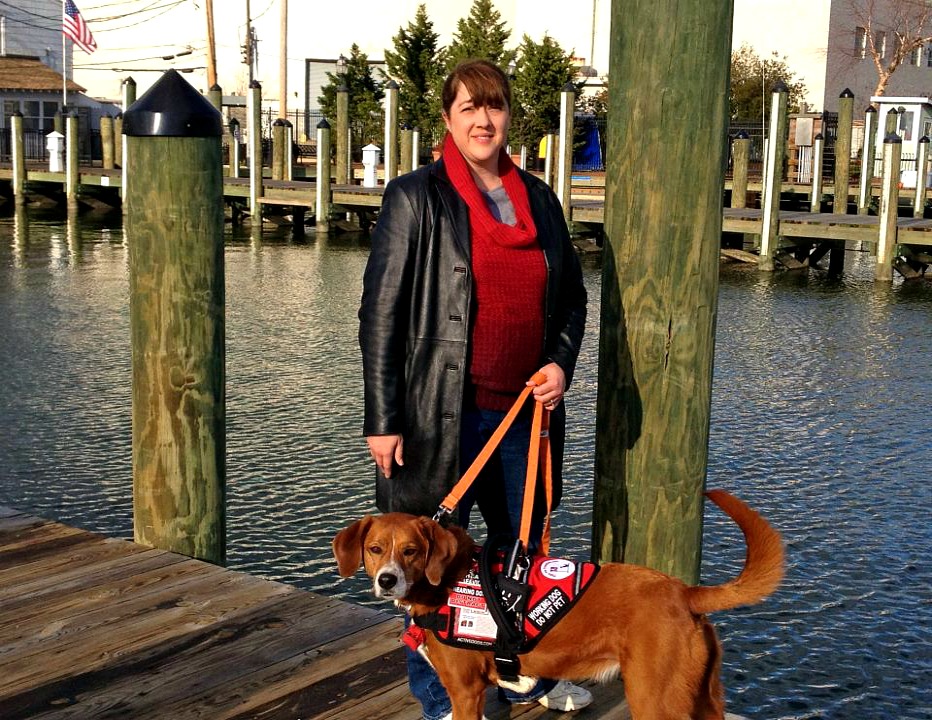
At City Dock in downtown Annapolis near the U.S. Naval Academy

I find it a little hard to believe it is 2012. Normally, the New Year doesn’t sneak up on me. However, this year it certainly did just that. In the past, I’m almost obsessive-compulsive about planning and organizing my resolutions for the New Year. I suppose that I haven’t allowed myself to obsess about it this year, points to the fact that I continue to change and evolve as I age. I think change is important and hope that I will always grow, mature, and change from one year to the next.

Sometimes though? Sometimes I see things in myself that I need to change because they are negative. In my reflection of 2011, I discovered a real negative that I really want to work on in 2012. Introspection did not really help me discover WHY I have developed this bad habit, but I can make some educated guesses.

I apologize. I apologize a great deal. I apologize for things that are not my fault. Some reasons I may do this?

1. I feel as if it will keep others from feeling the blame or reacting in a defensive way.

2. I default to shouldering the blame for most things.

3. I hope to diffuse any uncomfortable thoughts or reactions by others.

4. I hope to garner apologies and acceptance of responsibility by others by my own example.

5. HABIT

Please don’t misunderstand me. I believe that people should accept responsibility and offer apologies when they are warranted. However, I have developed a habit of apologizing for things that are not my responsibility. Sometimes when I say “I’m sorry”, it is simply a matter of miscommunication. I need to say something… but do so in a way it more accurately communicates my real meaning.

An example: “I’m sorry you misunderstood me”.

A better response would be, “I believe I have been misunderstood. May I clarify my meaning and intent?”

As a person with hearing loss I even respond with a “sorry” when I missed something. Example: “I’m sorry. I didn’t catch that”. It may very well be that it is no one’s FAULT that I missed it. After all… I am a late-deafened adult. Yes, sometimes folks may cover their mouth with their hand, or mumble. When that happens it is better to say, “I didn’t catch that. Could you repeat it please?” – or – “You were covering your mouth and I didn’t catch that. Will you repeat it please?” I’m going to try to stop myself before I respond with a habitual “I’m sorry. I didn’t catch that”.

It’s My Choice to Mitigate My Disabilities with a Service Dog

Recently, I “replied all” to an email in which a group of employees were nailing down details about when to meet for a book group. We are reading “Storm” by George R. Stewart. I actually typed out, “I apologize in advance that I will have my service dog with me as she is with me 24/7”. I sat and looked at that sentence for a minute and thought to myself, “WHAT IN THE WORLD?”

I deleted that sentence and re-typed, “Just a heads up so that no one is startled, I will have my service dog with me as she is with me 24/7”. I re-read and re-thought that sentence for several minutes. I like to give people I’ve never met before heads-up about Chloe, but it isn’t required. However, some people ARE afraid of dogs or have allergies. I like to let people know in advance when I can.

When I interviewed at the local community college, before hanging up the phone I let the person know that I would have my service dog with me at the interview. When I arrived to meet with the panel of people interviewing that day, the director let me know that he was glad I told him about Chloe. He normally has his dog with him at work during the summer, and he didn’t want his dog to interfere with my working dog.

Sometimes it cannot be helped. I arrive and people are surprised (or dismayed) that I have a service dog with me. In the past, I have intercepted looks and stepped forward to apologize that I have Chloe with me. I’m not sure why I felt compelled to do this. I’m NOT sorry I have Chloe. She has given me the independence and confidence I needed to follow my dreams! Yet, I often felt as if I needed to apologize for her presence.

When someone asks if they can pet Chloe, I would automatically say, “I’m sorry. She’s a working dog and cannot be pet while she is in vest”. A better response that I’m trying to remember to say is, “She’s a working dog and cannot be distracted right now. Thank you for asking permission though!”

I realize that many people use the “I’m sorry” phrase without thinking about the ramifications of the meaning. To many it is simply a way to break the ice, or begin communicating a difficult idea. For me, I believe that the overuse of the phrase has only served to weaken my own self-esteem and even development as a confident adult with a disability. Please understand that I am talking about ME – and how being overly zealous with apologizing has inadvertently affected ME in a negative way. You will never hear me correct YOU if you choose to use this phrase.

I believe in giving heartfelt apologies when they are needed. In the right circumstances, it conveys the desire to make right a wrong and to restore a good relationship with another person. One of my favorite books is “The Five Languages of Apology” by Chapman and Thomas. I believe in caring about our fellow man and to learn to apologize in such a way it restores good communication and healthy relationships.

It’s no one’s fault I do not hear well. There is no one to blame that I stumble around on rainy days nor am able to retrieve things from the floor. You may be surprised to learn that I wouldn’t change anything about me. Sure… it’s taken a long time for me to accept who I am and to “like me” just the way I am! I do want to correctly communicate my heart, mind, and intent to others. I believe I apologize in far too many circumstances. I want to accurately relay information without demeaning or demoralizing myself.

You may be thinking “poTAtoes” – “po-TAH-toes”. What is the difference? For me… this is something I choose to work on this year. I want to better communicate with others without taking the blame for things that cannot be helped.

In October I was at a training class at Fidos For Freedom in Laurel, Maryland. One of my least favorite exercises is the “Meet and Greet”. I hate it, yet know it is one of those necessary (evil) tasks that I must learn to accomplish with an assistance dog along side of me. Reality check? I will have to communicate with others in a group when there is background noise. It is very difficult for those of us with hearing loss to do this exercise. I have to remember to turn my t-coil off on both cochlear implant and hearing aid. Thankfully, our training room is looped and I hear the trainer very well when commands are given. However, I have to turn these OFF in order to hear a group of people in the “Meet and Greet”. We introduce ourselves and give a little information about our dogs to new people. To folks we know well we simply “catch up”. Our dogs are suppose to remain in a safe place (sit or stay) and we learn to communicate while also keeping an eye on our partners. When you also speech read, it can be very difficult to watch faces while also keeping an eye on your dog. At this particular training, Chloe was in a down/stay for the inevitable “Meet and Greet”. Some of these dogs Chloe has known for a long time. Some of them are newer puppies recently introduced to the training floor to eventually be matched with a client. I spotted Chloe stretching in her down/stay with tail all a-wag and kisses galore for another dog in a down/stay. I corrected her and then realized I missed what the fellow client said.

“I’m sorry. I missed that”, I said with exasperation.

The other client didn’t hesitate and said, “Don’t be sorry. I don’t apologize for weaving around with both a cane and a dog!”

It hit me that I was implying my inability to hear well in this environment could be changed. It is what it is. I do NOT hear well in “Meet and Greets”. It is not anyone’s fault that I do not. No apologies are necessary. I’m learning to ask for repeats without apologizing.

I wish you success in planning your own New Year’s resolutions and goals. I’m keeping it simple this year. Happy New Year and welcome 2012!

Denise Portis

© 2012 Personal Hearing Loss Journal
 

Once Upon a Time…

Once upon a time, there was a young woman from a small farming community in the mid-West. She was healthy and strong. She loved music, “listening” (but mostly TALKING), and books. She went away to college and met a Southern boy. She had so many dreams! She met a “circle of 8” culturally Deaf friends in college and was welcomed into their small sub-culture on this tiny college campus. She learned sign language.

To her sorrow, she couldn’t have children, so she made big plans to go right into graduate school and eventually be in a place where she could help people. She told her husband, “Someday? I want to adopt some Deaf children”. He knew she had a heart for this culture with hearing loss and also knew she longed to be a mother. He supported her dreams.

Don’t you love “Once Upon a Time…” beginnings? My favorite books begin by transporting the reader back in time. “Time” may be a real time period, oozing with history and descriptions of bygone days. The setting may be in a make-believe time and place. Somehow, it still manages to wrap my mind and heart around the characters and story, despite the make-believe.

When I think of my own “once upon a time…”, I have to smile at my naivety and immaturity. NOT that I continue to be gullible and naive at times – even immature!  However, I find that I am forced to hide my “knowing smile” when I hear my 21-year-old daughter “dream aloud”, or my 20-year-old son outline his “life’s blueprint” for me. Life has a way of taking a person down paths that are only visible through the benefit of hindsight. Our story unfolds one day at a time. Decisions are made – some irreversible. We learn to live with consequences – both good and bad ones. We may “roll with the punches” and work hard to be refined like gold. Unplanned detours have a way of changing our direction in life. Our goals may change in order to accommodate our changed lives.


At the current age of 45, I look back upon my own “once upon a time…” story. I am late-deafened and have a balance disorder. I “hear again” with bionics and navigate life with a service dog. I have two children. I’m a teacher. I am still married to my college sweetheart. It has been over ten years since I have been able to visit my hometown in that small farming community. I am “mostly” shunned by the Deaf community as I chose a different life path. I am integrated and immersed in a new community of people with hearing loss and other disabilities that I did not know even existed. I actually love technology and even my books are now in an electronic library. I don’t listen to music – but I do listen. Better than most, in fact…

Chances are I have many chapters left in my story. Regardless of the number of pages, my heart’s desire is that I may make a difference – in even just one life. Occasionally, I hear from disgruntled readers who are exasperated at my viewpoint. “You don’t know what I live. You can’t understand how few opportunities I have now”. I gently remind them that whether they are using JAWS or Dragon software or are dictating to another, they have reached across miles to touch base with me. They have shared their ideas, frustrations, and heartaches. Others respond at times in frustration that they lack the support I have around me and cannot build a foundation for happiness in their own lives. I share with them some things I am unable to share in this venue – the people who have abandoned me and have turned their backs on my family and I. I remind them that every obstacle helps me to peel back layers of who I really am to reveal strengths that are hidden when “everything is perfect”.

No. Our lives are not the same. Where is the fun in that?

Hearing Elmo is actively soliciting other writers to contribute their own stories. In other words… I’m begging. GRIN! I prefer that 50% of the posts sheltered here be from people other than Linda Denise Portis. You can have a different viewpoint! Won’t you consider sharing your own “Once Upon A Time…”? You may not consider yourself a “good writer”. I’m not… and that hasn’t stopped me sharing my own thoughts and stories. I ask because I’m astonished at what kinds of things make a difference to another. We cannot know what others are going through and whether or not their own invisible disability or chronic illness forces them to reach out for help. Some are “pointed” to Hearing Elmo by others. However, most chance upon this “once upon a time…” venue. Won’t you consider sharing your story? It can be serious or fun. You can relay facts or express dreams. If you or someone you love lives with disability, chronic illness, or mitigates personal obstacles/disabilities with a service dog… Hearing Elmo would love to be your sounding board. Are you a trainer or health professional? I hope you will consider writing!

Denise Portis

© 2011 Personal Hearing Loss Journal


Imagine!

Emmanuel Kelly The X Factor 2011 Auditions.

Click on above link for short performance!

I’m not a huge YouTube fan, because captions on music and video are not “perfect”. It’s better than it use to be, but it isn’t good enough that I could say I really enjoy it.

However, this past year I discovered “The X Factor”. It is now in the U.S. and the FOX network is underway on season one. I still like watching the shows in other countries as well. I came across this very special one this past week.

I was so impressed with Emmanuel Kelly’s performance. I think he and his brother’s adoption story and courage can teach so much. Bravery, courage, and “spunk” are not narrowly defined by a body that wields these attributes. Imagine what our world would be like if everyone saw with filtered eyes what Emmanuel’s mother did. Imagine what it would be like if everyone had someone in their corner during developmental years to mold and shape phenomenal human beings. Imagine if every individual with bodies that are broken, damaged, disABLED, or diseased learned to refine and use their gifts.

Learning to live with an acquired disability can be hard. There are always harsh lessons. Yet… acquired disability is not the end of life. We all have talents, skills, and gifts that are not affected by any changes you may find that define “the new me”. Sure… you may lose a few opportunities. I use to sing in choirs. (SMILE). Yet, I still choose to discover, refine, and eventually use the gifts that I DO have. You can do the same. May we all learn to look past first impressions and appearances… learning to IMAGINE.

Imagine there’s no Heaven
It’s easy if you try
No hell below us
Above us only sky
Imagine all the people
Living for today

Imagine there’s no countries
It isn’t hard to do
Nothing to kill or die for
And no religion too
Imagine all the people
Living life in peace

You may say that I’m a dreamer
But I’m not the only one
I hope someday you’ll join us
And the world will be as one

Imagine no possessions
I wonder if you can
No need for greed or hunger
A brotherhood of man
Imagine all the people
Sharing all the world

You may say that I’m a dreamer
But I’m not the only one
I hope someday you’ll join us
And the world will live as one

Denise Portis

© 2011 Personal Hearing Loss Journal

Reflections on National Invisible Illness Awareness Week

According to the Invisible Illness Awareness website, the following statistics are true:

  • Over 100 million people in the U.S. have a chronic illness;
  • 20.6 percent of the population, about 54 million people, have some level of disability;
  • 9.9 percent or 26 million people had a severe disability
  • 1.8 million used a wheelchair
  • 5.2 million used a cane, crutches, or a walker
  • So that is less than 6% who have a visible illness.
  • There are many illnesses that start out being invisible and as the disease progresses it becomes more visible.

Also note that:

  • 26 million persons were considered to have a severe disability;
  • yet, only 7 million persons used a visible device for mobility.
  • Thus, 19 million of the people who were defined as severely disabled, did not use a wheelchair, cane, crutches or walkers.
  • In other words, 73% of Americans with severe disabilities do not use such devices.
  • Therefore, a disability cannot be determined solely on whether or not a person uses visible assistive equipment.

U.S. Department of Commerce (1994). Bureau of the Census, Statistical Brief: Americans With Disabilities. (Publication SB/94-1).U.S. Department of Commerce (1997). Bureau of the Census, Census Brief: Disabilities Affect One-Fifth of All Americans. (Publication CENBR/97-5).

Why Do I “Plug” Invisible Illness Awareness Week?

I have been trying to raise awareness about this week for three years now. This year, a friend noticed my “don’t miss” posting on Facebook and couldn’t resist teasing me about it. After all, I don’t exactly allow my challenges to be INVISIBLE. I wear a bright red ear mold on the hearing aid in my “deaf” ear. I wear sparkly “bling” on the cochlear implant on my “hearing again” ear. I go about my life accompanied by a hearing assistance/balance assist dog 24/7. I learned long ago that it was in my best interests to make an invisible disability – VISIBLE. It kept me from being knocked out of the way, and helped people realize that something about me is different. I can still work, shop, go to movies, hike, and dance… yeah. OK, maybe not that last part…

I just don’t hear well… especially in big, cavernous places, or busy, buzzing atmospheres. Once you get my attention and I know you are talking to me, I can actually hear you great! I may have to ask for a very occasional repeat, but for the most part I do really well. I’m proud of how far I’ve come in my hearing. Despite all my visible reminders and “kissing sidekick”, Chloe, people who know me well (friends, co-workers, and family members) will forget that I may have trouble if you don’t get my attention first and that I can’t move FASTever. Heck… sometimes even *I* forget that I cannot move fast. Nothing reminds me quicker than when I

fall

down

and

go

BOOM!

Through the years I’ve been able to meet some wonderful people. Some examples include:

1) Folks through the training center at Fidos For Freedom.

2) People at Hearing Loss Association of America conventions or conferences

3) “Hearing Again” recipients at Cochlear America conferences

4) Individuals in support groups for tinnitus, Meniere’s disease, hearing loss, and assistance dogs users (both face-to-face and in virtual environments online).

Not every disability can be made visible. Not every person chooses to even try and make something invisible – visible. They have their reasons and it is an individual’s choice how they want to disclose or keep hidden any disabilities they may have. It could influence their work environment, relationships, and even self-esteem. I choose to support ALL individuals who live with chronic illness, invisible illness, or disability. Recognizing these illnesses once a year in a push for national awareness, I hope will eventually dispel erroneous ideas and information about these very populations. This is one of the reasons I “blog”, and invite guest authors to write for “Hearing Elmo” as well. Raising awareness makes a difference… one person at a time.

I read some incredible stories of courage, faith, and perseverance this week at the national website for invisible illnesses. You can check out some of them here. I’m proud to be a part of a community of people who choose to live a victorious life  – “in spite of”.

Take some time this week if you can to recognize the courageous people that you know who live with invisible illness and the choices they have made in order to live life to its fullest!

Denise Portis

© Personal Hearing Loss Journal

“Family”

Approximately 1 in every 8 Americans experience some degree of hearing loss (Binder, 2011). This is approximately 36 million people – just in the United States. While to some, this number may seem overwhelming or unfortunate. For me? I have to admit to a small “thrill” – for you see… I’m a part of this “family”. I am one of those “1 in 8”.

What is “family”? The obvious definition includes those to whom you are related. I’m very grateful for my immediate family, for in many ways they fall into the “family” of which I am writing today as well. For the purpose of this post, “family” consists of individuals who understand by direct or indirect experience, a life that may be different as the result of disability – whether it be congenital or adventitious.

Hearing Loss Association of America

I recently had a couple of wonderful weekends that helped solidify this feeling of “family” for me. The first was when I went to one day of the 4 day national convention for the Hearing Loss Association of America. This year it was in my area, so I could not pass up trying to go at least one day. I was able to attend a number of workshops, all of which had CART. The rooms had terrific amplification, so I was able to hear the speakers of each workshop very well thanks to my cochlear implant. However, there were a number of people in each workshop who used the CART. On a large screen next to the speaker, every word spoken was also typed by a trained captionist. Those who had never experienced CART before, and therefore had never experienced workshops such as these that were truly accessible, hung on every typed word! As I looked around, nearly every ear had a hearing aid or cochlear implant – sometimes BOTH. I counted six hearing assistance dogs in attendance at the convention on Saturday. I was surrounded by “family”. Even those without hearing loss knew someone who did, were family members, or professionals that worked with our population. Between workshops old friends and new friends often crowded around talking. I couldn’t get over feeling like I knew these people. There were no snide comments or competition over who had the better cochlear implant or hearing aid. We were all “family” – with an intimate knowledge of what it means to live with hearing loss.

I attend a local chapter of HLAA, but being at a national event has no equal. The Internet has allowed people with similar disabilities to contact, share information, and get to know each other in a supportive environment. Some of the people I met I had only known online. However, these national conventions allow us to meet face-to-face! What a treat to literally hug the neck of some of my “family”!

This past weekend, I was able to hang out with a wonderful friend who has bilateral Nucleus Freedoms. She lives in North Carolina and since my husband and I were going down to visit his mom and dad, I took the opportunity to spend the morning with her. She took me to one of her favorite places – the North Carolina Zoo. I hadn’t seen the zoo in at least nine years – not since I had moved away from the area in 2002. We have so much in common in addition to hearing loss. No – we do not have similar backgrounds or childhood experiences. But we both are advocates and do all we can in our own small realm of influence to make a DIFFERENCE. She is a sensitive soul who sees much more than a normal set of eyes can see. It shows up in her photography and in the simple things she points out. A whispered, “L o o k“, usually yields a treat of catching LIFE in an unexpected way. I consider her “family” although we are not related.

Fidos For Freedom, Inc.

At Fidos For Freedom, clients include those with mobility issues caused by numerous types of disability or illness, and people with hearing loss. I cannot count the number of different types of disease, invisible illness, and disabilities present in our “family” at Fidos. The fact we are there for the same reason makes us “family”. Whether client, trainer, puppy raiser, volunteer, or DOG… we find a bond and sense of “family” that cannot be found in other groups in our lives.

I am thrilled to share information and get to know people all across the U.S. who are partnered with assistance dogs. Our disability or invisible illness may be different… but we are the same. Some have partners from organizations like Fidos and some are owner-trained teams. Regardless, we are “family” and I feel a loyalty towards these teams that defines the kind of “family” we are.

Sometimes FAMILY are not “Family”

My readers share with me sometimes that trying to get family to understand what it is like to live life in “their shoes” is quite difficult. For those who acquired disability or invisible illness later in life it may make more sense that family members such as parents and siblings seem incapable of grasping who you are now. However, there are others who have shared that even though their own challenges began at birth, family members are unable to fully understand (or perhaps cope?) what it is like to experience life with additional challenges. I truly believe that people with disability and invisible illness are more capable than those who are “normal”. Learning to adapt, and seeking support, information, and techniques create a malleable, strong individual. Oh sure! There are times we flounder. Change is never easy. But the end result yields a person who is extremely ABLE – not disabled. It is unfortunate that many people to whom we are related are unable to really connect with us once change takes place. Perhaps our peers often become “family” to us because they help us stay connected to life in a more positive way. They understand. Relatives often lose contact with us or only see us once in a great while. These individuals who offer daily support, information, and “family” literally evolve into a close knit community and family. I have had some readers share that they are closer to those in their peer group (disability group) than they are to siblings, parents, and other relatives. They have shared that not only do these “real” family members not understand – they don’t want to understand. I was recently reminded that my own siblings do not really know who I am anymore. After something rather tragic occurred in a relationship I find now broken, I wailed to my mother on the phone how terrible it all was. I shared some things with her that I had never shared before… and she responded, “You never shared these things with me when you were going through this”. So I am (painfully) aware that sometimes our family members are unaware and out of touch because we withdraw.

I am blessed to have family who are also “family”. My immediate family have been a safe haven of support throughout all of my adult life. My children have never known me without hearing loss. Mom’s favorite word growing up has always been “huh?” My husband held my hand both literally and figuratively throughout the process of losing my hearing over 12 years. When I became profoundly deaf, he was my biggest cheerleader in seeking other technology that would help me hear again. My family willingly sacrificed so that I could attend trainings and eventually receive an assistance dog so that I could be more independent. My immediate family members advocate for those who have any type of special challenge. They have participated in TBI (traumatic brain injury) camps, hearing loss conventions, local HLAA chapters, Walks for Hearing, cancer awareness walks, and much more. They know and realize that  disability or invisible illness does not define the person. They have always seen the PERSON first. Because they understand what it means to live with disability or invisible illness simply because they LOVE someone who does have challenges, they are “family” as well as family. I hope that many of you have family members that are also “family”. People who support you without hindering you. People who cheer you on and look forward to your eventual success.

Look for – and BE – “Family”

If you are currently adjusting to acquired disability or invisible illness – please know you are not alone. Find a computer and Internet access. It won’t take you long to discover you are not walking this road alone. As you reach out, look for ways to connect and be “family”. I promise you that there is no other feeling like finally… belonging.

Binder, M. (2011). Hearing. The Ear Man: Hearing Aid Service. Retrieved June 28, 2011, from http://www.theearman.com/hearing.html

Denise Portis

© 2011 Personal Hearing Loss Journal


“I See Him as a Friend”

Hearing Elmo welcomes guest writers! (I figure you get tired of only hearing my point of view!) Today I welcome a distant cousin, Ted. Ted and I “met” on Facebook, connecting with family and friends in a way only Facebook seems able to do. It is great fun to talk to him because we grew up in the same small town, “middle of nowhere”, farming community. Ted works with a non-profit called “Aids – Out of Africa” (http://www.facebook.com/pages/AIDS-Out-of-Africa/109654919088134) and is also active in his community, helping to dispel myths about people with disabilities. How? By being their friend…

Hope to hear more from Ted in the future!

—————————————————————————————————-

When my cousin was asking for stories for the web site about disabilities I was a little confused.   But I walk around in a state of confusion anyway so it didn’t bother me.  I did however start thinking.  Disability is all around us every day.  Sure we recognize the Disabled Vet in the wheelchair or the blind with the service animal, but we miss many of the other truly disabled.  Disability comes to many in all forms.

Having been associated with the Veterans Hospital for the past 30 some years, I have become accustom seeing “Disabilities” and don’t stop to stare or wonder the why’s or what’s of this concentrated elite group of America’s often forgotten service men and women.  Some are missing arms or legs, some are blinded, some in wheelchairs.  But many have hidden  “Problems” that we don’t see.  They are legally blind but do not require a service animal or the typically white cane.  Some are deaf but with the miracles of new hearing devices are able to communicate without being obvious.  When I walk into the audiology clinic, the receptionist, Peggy, greets every patient looking directly at them, speaking clearly, just a touch of volume, and a little slower.  Suddenly I realize that she cares.  That means a lot.  And when scheduled for the optometry clinic the doctor personally called my home to reschedule an appointment because she was being transferred and wanted to personally follow up on a surgery.  I take that kind of service very serious.  I appreciate those who care to go that little extra distance.

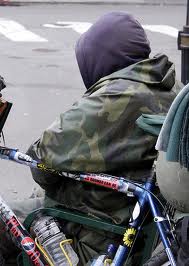
Now for the purpose of this writing and the  personal note.  Charlie is a friend, I call him a friend because he always takes the time to come over and speak to my wife and I every Monday at the weekly auction we seem to always attend.  He jokes with us and tells us what has happened during the past week.  If Mary is not with me, he will ask about her and the same if I am not in attendance.  He pats me on the back and makes me happy.  I see him on occasion at different locations all over town.   He is the kind of friend that never complains about his personal problems.  If his personal transportation broke down, I would help him replace or repair as necessary.  However he has a disability that many shy away from.   Charlie is limited mentally.  His appearance also makes many uncomfortable.  His teeth were not taken care of but that is in a stage of repair now.  Most people see him as a nuisance or embarrassment.  I see him as a friend.  I have asked myself what is there about Charlie that makes me proud to be his friend?  It is because his “Disability” only exist in the minds of the “Normal” people around him.  Charlie is seen all over town because although he is not allowed to drive, rides his bike pulling a trailer, around to selected locations to do odd jobs.  He is at the auction because he helps load items for buyers for whatever “Tip” they might give him.  During the night he sometimes shows me how much money he has taken in from his work that night.  In his mind he is not “Disabled”.  He is however truly challenged.   He lives alone, and pays his rent.  He wears clean clothes, and is showered and shaved.  I cannot compare him to all the people that thinks the world owes them a living because he makes his own lemonade out of the lemons that nature has dealt him.

So as we walk past people at Wal-Mart, or set beside them on a bus, we don’t really understand the limits of their “Disabilities”….. Perhaps better yet we do not understand their unlimited  “Abilities”.  Maybe the person just needs a friend.  I don’t think the word “Disabilities” is a true description.  I think that the word Challenged is better.  But neither fits my friend Charlie for in his mind he is not challenged nor disabled,  he is making a living the only way he knows how.  If he receives a little help along the way, that’s great.  But he would rather be accepted as is, where is.  So when you are asked to repeat a statement because the person could not hear or more likely not understand you, don’t get angry or say, “Forget it” for they can’t forget.  Try to be more like Peggy, louder, slower and facing them.    If the vision impaired need a little assistance, offer to help.  Just a, “Need some help with that?”, can make a person’s day.   It might even make your day.  An older person might be struggling to reach an item off the shelve.  When you hand it to them, there is a moment where you feel like you have really done something great and you have.

Ted C. Burhenn.

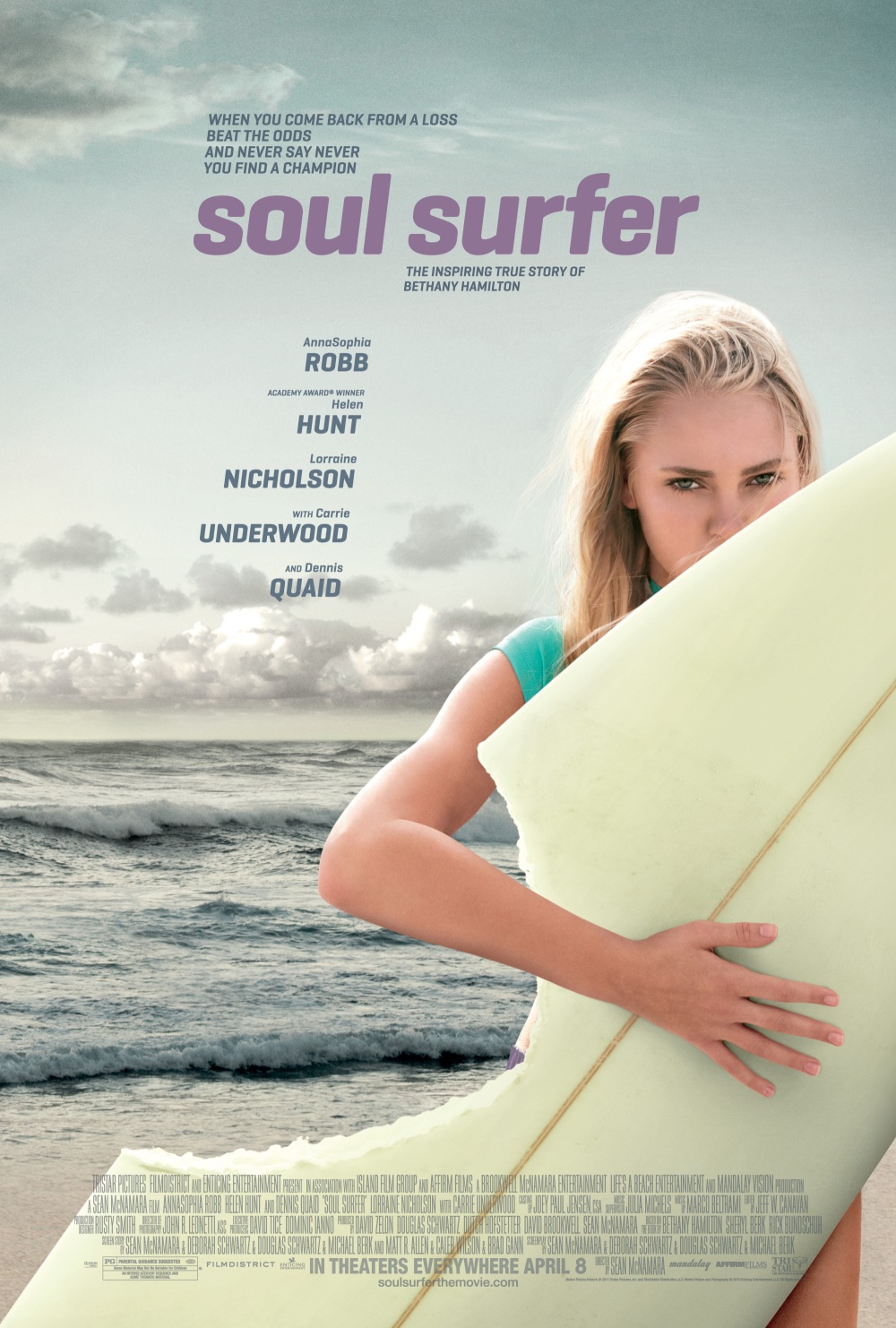
Soul Surfer

My daughter was home for Easter weekend so the family enjoyed a rare night out to the movies. The movie “Soul Surfer” had been recommended to us so we chose to attend on Sunday afternoon. I was in a bit of a huff when I arrived due to some family conflict, missing the first part of the movie while I sat and fumed. (Yup… I definitely need to learn to fume a little quicker).

Once I started paying attention, however, I really enjoyed the movie. When you “hear again” with a cochlear implant, you really do have to make the concentrated effort to PAY ATTENTION as listening is no longer a passive exercise – rather an active effort. On occasion, I’m lucky to snag a movie we are attending that is open captioned. I do not have to focus with nearly the same concentrated effort when the movie is open captioned. As it was, I finally TUNED IN and really enjoyed the movie. I won’t spoil it for you in case you haven’t seen it, but basically a teenager learns to live life differently due to circumstances that were neither predicted nor expected. She learned that “in spite of” she can continue to make a difference in the lives of others… to touch souls.

Individuals with acquired disabilities of any kind have to do the same, don’t they? I mean the alternative is isolating yourself and giving up. That isn’t a life I’d wish on anyone. (Believe me I know, because I tried it for a short time!) It takes a lot of courage to persevere and learn to do some things differently when life throws you a curve ball. I’ve always been a lousy “catch”, so wouldn’t you know when my own disabilities took hold and changed my life that I was totally unprepared?

I was at a Fidos For Freedom training with my assistance dog one Saturday and a fellow client that I have come to know quite well wasn’t at all surprised by a blunt question. We had learned to be “straight” with each other early on because we discovered that by doing so we could learn from each other. She is a client who has been matched with a service dog trained to assist her with mobility tasks. Having experienced a recent “wet week” due to spring showers in our area, I asked her how she found the wherewithal to come to trainings after having a “bad week”. She has had to learn to do things differently because of her disability and must prepare well in advance when attending trainings that other people may be able to spontaneously decide to attend! She said, “I simply remember that by coming I have opportunities to encourage someone else. I don’t want to miss those opportunities so I get my butt out of bed!”

I’ve never met anyone that was not able to MAKE A DIFFERENCE in the life of another. I don’t care who you are or what your circumstances are. The only necessary ingredient to successfully touching the life of another is BEING WILLING. If you aren’t willing, it will never happen. People with acquired disabilities have learned to maximize technology. We have learned to perhaps do something DIFFERENTLY in order to accomplish a task. We have also learned when to cut ourselves some slack. People with acquired disabilities have learned to ask for help at times. We are malleable, persistent, and BRAVE. No worries. I’m not “tooting my own horn” here, I’m simply pointing out the obvious having met numerous people with acquired disabilities.

Surfing for Souls

There are numerous ways individuals can make a difference. My “short list” is below. Feel free to leave comments and add to this!

1. Join online support groups and be active in the group. Reach out to others who are perhaps struggling with a new acquired disability.

2. If possible, participate in local support groups or chapters that meet physically each month. Go prepared to learn, but look for opportunities to serve.

3. Be open and honest. Don’t hide the fact on your Facebook. Don’t make your disability invisible. Visibility allows others to see you active in your community, doing things others do without thought. Shopping, church, or GOING TO THE MOVIES are all activities we can still accomplish. Welcome questions and be prepared to be a positive advocate.

4. Have business-card sized cards available to give to people who stop to ask questions about the: Cochlear implant bling, service animal, hearing aids, wheel chair, walker or bright purple cane! In this way they can contact you at a later date and ask questions in a more controlled, confidential way. They may need the information for themselves, or for someone they care about who struggles with their own acquired disability.

5. Don’t apologize for being different. Celebrate it!

6. Advocate, advocate, advocate! When the support groups and organizations to which you belong do annual fundraisers, DEMOS, or community service appearances, do not hesitate to get involved and advocate! At times you will be called upon to write local or state government officials. Take the time to do this!

I remind myself as I encourage you to do the same. I need to be be aware on a DAILY basis. I can surf for souls to touch. I can make a difference!

Denise Portis

© 2011 Personal Hearing Loss Journal

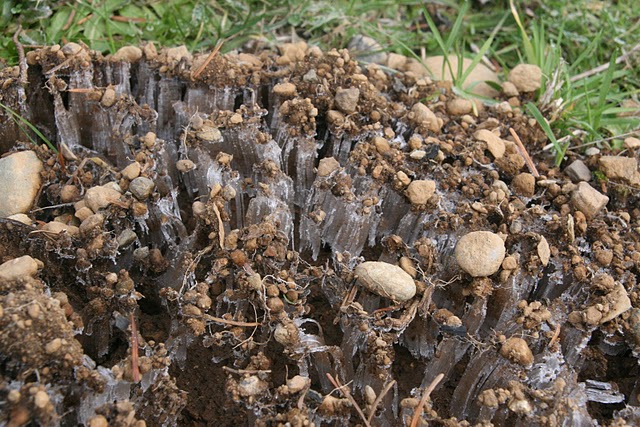
Frost Heave

picture from blog post at: Herding Grasshoppers

I recently read a post from one of my favorite bloggers. I love Herding Grasshoppers and NOT just because her son is hard-of-hearing. She is witty, adventurous and “real”. I rarely walk away form reading one of her posts without a smile on my face.

She recently posted about “Needle Ice” and frost heave. I was very intrigued. I’ve seen frost heave when walking trails before, but wasn’t really aware of what it was I was looking at. After reading her post I immediately went to look for more information about this phenomena. Frost heave occurs when moisture-retaining soils freeze in cold temperatures. As moisture sinks into the ground the freezing temperatures cause the water to freeze into ice. When water freezes… it expands and creates pressure. The soil presses up and may expose the roots of plants and has been also known to bring rocks and pebbles to the surface. Take a close look at the picture. The ice crystals have actually brought small rocks and pebbles to the surface. Once this thaws, the rocks and pebbles are left on top of the ground. One would almost think someone had “planted rocks” in an area that may have once been clear of them!

What “Heaves” out of you?

I have given a lot of thought recently about what kind of thoughts and actions are seen in my own life when the going gets “rough“? When my life becomes saturated with a seemingly endless bombardment of trials, problems, set-backs, health problems, and struggles, I am often left pleading with God “PLEASE! Not ONE more thing!” But ya know something? God must know my limits better than I do. Because there have been some difficult times that I have prayed and pleaded “not one more thing – thanks so much“, only to have a blast of cold air on top of my already “saturated life”. Exhaustion, pain, fear, depression and plain ol’ “bad attitudes” may have HEAVED to the surface of my life. These things are usually hidden. Some of the heaving exposes some thoughts and actions that just aren’t pretty. Some of it is just “junk” and “rocks”. The “heave” may expose “roots” as well and leave areas of my life vulnerable.

This past summer, I was having a pretty difficult time. I was doing my best to stave off depression as it is an unwelcome visitor that worms its way into my life at inopportune times. I was to the point of pleading, “Not ONE more thing God – please! Hello? Are you listening?” The next day Chloe was hurt in the park. For whatever reason (as we often will not understand this side of  Heaven), God allowed ONE MORE THING. Chloe’s foot took a really long time to heal and I even had fears she would ever be able to work again. Yes, she is special to me because she is my hound dog and  “doggie friend”, but she really enables me to be more independent too! What would I do if her foot would not heal? During the months (yes you read that right) that followed a lot of “stuff” heaved out of that pressure and into full view – especially to my family. It wasn’t all pretty. I was cantankerous (a nice way of saying PAIN IN THE BUTT) and aloof. I knuckled down and did the things I HAD to, but did not exert myself to do anything else. I had a major pity party several months long.

But not everything that HEAVES out of our saturation point is bad. Sometimes we discover that in spite of disability – we are very ABLE. You learn pretty early on what you CAN do, and end up doing it really, REALLY well. My saturation points have received an extra dose of FREEZE and heaved up compassion for others, patience, encouragement, and determination. I may stand and look around at the defrosted ground and spy a rock here and there. But sometimes? Sometimes I see beautiful geodes or prisms. I’ve not discovered a diamond yet – but heck. I’m only 44. I’m certain I’ve a great number of frost heaves in my future. Diamonds come with maturity. (If you ask my family – I’m not exactly THERE yet).

Have you experienced difficult times? Things that have happened in a life that already seemed completely saturated with problems and struggles? Don’t fear the weather forecast of overnight “freezing temperatures”. Meteorologists are RARELY accurate! If they happen to actually nail it one time? Welcome the heaving frost crystals to the surface and determine to unearth GOOD THINGS. Prepare your heart in advance to showcase determination, patience, long-suffering, gentleness, kindness, and love.

Experience enough frost heave and you’ll find that the soil of your heart and life is well aerated and primed for Spring.

Denise Portis

© 2011 Personal Hearing Loss Journal

Meniere’s Rant

I don’t usually go on and on about Meniere’s disease, but I’ve had a pretty bad week with the “little Rascal”. For one thing, I count myself extremely BLESSED as I seem to have only one major trigger. Rain. I know plenty of other folks who have other types of triggers that include flying, change in altitudes (vacations in the mountains!), alcohol, head cold or allergies, chocolate (oh my!), smoking, and even certain foods! So since I only have “rain” as a Meniere’s trigger, I really try not to complain very much.

A fellow Meniere’s patient pointed me to a terrific support group through Facebook today. I have already found a lot of great information. If you belong to Facebook… check it out here. There is a simple but helpful Meniere’s organization on the Internet which can be accessed here. A website providing basic information and clinical trials can be accessed here. My favorite website is the National Institute on Deafness and other Communication Disorders (NIDCD). They have a terrific Meniere’s Disease section that can be located here.  Thanks to the Meniere’s disease Facebook page, I was even directed to our very own Super Villain – Count Vertigo. Who knew?

Being a former farmer’s kid and because I still have numerous relatives that I love in a farming community in SE Colorado, I try to never belly-ache about the rain. Rain is necessary and in most cases a “shower of blessing” to farmers, ranchers, and those who get tired of moving their sprinklers around.

But this week? SIGH. I’ve had some bad experiences. On a rainy day, I fell in the laundry room this past week and happened to find the only exposed nail in the “unfinished room”. Thankfully, I hit it square and impaled myself through the fleshy part of my arm. I was able to pull it clean away and stop the bleeding very quickly. A quick verification that I had a tetanus shot recently, a severe pounding with the hammer on that (stupid) nail, and I escaped “nearly” unscathed.

This morning my alarm clock went off and my well-trained assistance dog was in my face immediately to “kiss me awake”. As soon as I sat up I knew it was raining outside. When the room spins the moment I become vertical, I rarely need to look outside to verify that it is raining. I didn’t fall until about 10 AM. Unfortunately, when I lost my balance I was on the stairs with my arms around a large load of laundry. Missing three steps means I have a pretty good chance of landing “gracefully” and still on my feet. Missing four however? Not a chance. I lay sprawled on the floor staring at the ceiling and a concerned hound dog with dirty laundry scattered all around me. I have a standard set of “OK, I’ve fallen – now what?” questions I ask myself.

1) Am I conscious? (duh)

2) Is anything broken?

3) Am I laying on anything important (like a dog or a cat)

4) Can I close my eyes and open them again and stay conscious?

5) Do I need to call a family member?

If I can answer No, No, No, YES, and NO… then I simply sit up and take my time to re-group. This time I didn’t hit anything other than my elbow on the way down. I may or may not be sporting a pretty blue spot tonight.

There is no cure for Meniere’s Disease. (Hope you aren’t new to the disease and I just depressed you for the remainder of the year!) There are some treatment options, but they only work for “some”, and all the options only serve to reduce the severity of symptoms or number of attacks. NIDCD lists several treatment options that include:

1. Medications – Prescriptions such as meclizine, diazepam, glycopyrrolate, and lorazepam can help relieve dizziness and shorten the attack.

2. Salt restriction and diuretics – I take a prescription diuretic and do restrict my salt. I’ve not seen any real difference, but continue to do these in case it has a cumulative effect.

3. Cognitive therapy – Doesn’t treat the Meniere’s but does help the patient deal with anxiety and coping with “future attacks”.

4. Injections

5. Pressure pulse treatment

6. Surgery

7. Alternative medicine. I take Manganese (5 mg) and a B complex vitamin. Researchers have found that Meniere’s disease patients have a Manganese deficiency. Manganese can be hard to find. (Magnesium is plentiful, but you’ll have to go to a specialty store or order online to find Manganese). Other treatments include acupuncture, acupressure, tai chi, and other supplements. Always tell your doctor if you are taking other supplements as many may interfere with prescription drugs.

This past year, Gene Pugnetti was surgically implanted with a special cochlear implant to treat his severe Meniere’s disease. You can read about the latest update here. The original story can be read here. I will be looking for updates about Gene and wish him the best!

Some things I have learned that help me with Meniere’s disease:

1. I take 5 mg of Manganese and a B-complex vitamin.

2. I limit my salt and take a prescription diuretic.

3. I take 50 mg. of Benedryl before bed.

4. I have inexpensive molding about 4 feet high along the hallway, kitchen, and bedroom. At night, if I have to get up in the dark, I only need to feel my way around the room to discourage getting disoriented. Without it, my eyes “play tricks on my brain” about how close the floor, walls, and doors are as I am struggling to see in the dark. The molding has allowed me to move about the house as needed in the dark without injury.

5. I never EVER go down the stairs without holding on to something. If I have something in my arms, I balance the “something” on one hip. On bad days, if it takes me 3 or 4 minutes to get down the stairs instead of 30 seconds, that’s OK. Patience is a virtue… and may prevent broken bones!

6. I avoid looking directly at ceiling fans or other contraptions that “spin”.

7. I do not ever ride roller coasters, or rides that spin in any way. If I am “spun” into an unconscious state, it is rather difficult to hold on! I made a promise to my family after “Space Mountain” in 2002 to avoid these rides for the remainder of my life. I’m finding it isn’t a difficult promise to keep.

8. I stand and sit with pre-meditation. To simply “pop up” or sit down quickly only means I will experience dizziness. Why bother when moving with a little more care will help to avoid it?

Hopefully this information may be of use to someone! I’m very thankful Meniere’s disease rarely necessitates I write about it!

Denise Portis

© 2010 Personal Hearing Loss Journal

Fallow Ground

I have really enjoyed FaceBook and reconnecting with old friends and family. However, FaceBook gets a lot of “flack”. My husband wrote a terrific, short post on his blog about this very topic and you can view it by clicking here. FaceBook has become much more than a way to “re-connect”. Because it is so simple to use, I use it connect to people I care about every single day. One can quickly see what people in your life are up to and honestly? It makes it easy to write a quick word of encouragement.

It also has some games. I’m not a big game person, but FarmVille is a popular one. I’ve become a little complacent about my own “farm”, but it is still fun to check in each day. I allow much of my farmland to be “fallow”. My busier, more industrious farming neighbors will “drop by” from time to time to take care of my fallow ground and plow it for me. If I’m really lazy and don’t plant anything, they will also fertilize the newly tilled ground.

I get tickled at the fact I don’t have to do a whole lot of work to my farm some weeks. At times, I wish that fallow ground would stay that way because it saves work for me later. (Like I said, I’ve become a lazy farmer). I grew up on the farm. Fallow ground is an important part of farming. Sections of farmland are intentionally left unplowed and unseeded during a regular growing season. Even though it is undeveloped, it is potentially useful to the farmer because it allows the ground to “recover”. The stubble left over from the previous harvest will break down and leave valuable nutrients in the ground. Because of my own sections of fallow ground on FarmVille, I have been thinking quite a bit about the concept of fallow ground.

Fallow Ground Symbolism

The Bible mentions fallow ground in Hosea 10:12 and Jeremiah 4:3. In both places it talks about breaking up the fallow ground as a word picture of cultivating your heart and life so that you can serve and minister to others. It lends the idea that a heart or life can be “hard” and unusable.

For a farmer, however, fallow ground IS useful. I am a big supporter of taking time off and having a designated time of reflection. Perhaps it is because I recognize that we are all way to BUSY. I have been emailing a lady in her 30’s who is a referral from Johns Hopkins Listening Center (their cochlear implant clinic). I’ve agreed to be a mentor and contact for people who are considering cochlear implants. (I’ve asked her permission to share this). It is difficult to be blind-sided by an acquired disability. Sometimes, the change can be sudden, extreme and permanent. Sudden sensorineural hearing loss (SSHL) had robbed this lady of her ability to hear well. She is feeling overwhelmed and at the breaking point. Her life has been in over-drive for some time, and SSHL made her feel like someone had “jerked the carpet out from under her and she lay dazed staring at the ceiling” (her words).

I said, “What you need is to allow some fallow time in your life. You are so busy and yet trying to cope with a major life-altering change. You are giving so much of yourself to so many others, you aren’t even able to weigh the pros and cons and investigate CI’s. I recommend taking time off. Allow your life to go fallow for a designated time. You need this time to re-group, think, and rest”.

She is now doing “just that”. She isn’t WASTING time. She is deliberately taking some time for herself so that she can work through her thoughts, feelings, and investigate cochlear implants.

“Fallow” is not Wasted

I think more people should determine to take time to reflect. I try to meditate and pray at least once a day. There are occasions where I take longer periods of time. But let’s face it… most of us are too busy to really have the time for reflection. What can we do about this?

This is an unpopular idea, but I firmly believe everyone should step back from “all their extra-curricular activities” from time to time. I believe elected (and volunteer) community service, non-profit, and support group positions should have specific limits on terms of service. It forces a change in leadership and allows over-worked, committed volunteers to rest (provided they don’t launch themselves into some new role).

Before insecticides and chemical fertilizers, more farmer’s left ground fallow to aid in replenishing the minerals that occur naturally from “resting the ground”. Today, leaving ground fallow may cut potential yield and profit. I believe that too many of us believe the same in our lives. If we do not keep volunteering for everything, who will do the work?

I had a real test of this in 2010. I have been told by folks I respect that, “If you step down from a leadership role, the vacancy allows God to fill it with someone He has already prepared for that position”. In 2010 I would be beginning the last year of school, and just simply could not lead my local chapter of the Hearing Loss Association of America. Numerous personal reasons and simply feeling BURNED OUT had me dreading yet another year of having to step up in a leadership role. The young mother who had taken the “reins” for 2009 had done an excellent job. I made the mistake of simply “moving” my available volunteer hours to another position of leadership within the chapter. As 2009 came to a close, this busy young mother wisely chose not to run another term. I was getting some pressure to step back up to “the plate”. Because I knew what this last year would entail for me I had to really think about it. Because I was already weary, burned out, and overwhelmed, I decided to put a “year sabbatical” to a vote for the chapter members. Incredulous that I was not going to step up and fill the vacant role, they unanimously but grudgingly agreed to a “year off”. I could tell that many were worried! We have elections in October and November each year. I actually had high hopes that God would press on someone ELSE’S heart the desire to step forward so that our chapter would not really have to close for a whole year.

I waited.

No volunteers stepped forward.

I “stuck to my guns” and we entered 2010 only meeting virtually. You know what? We didn’t “fold”, nor close our doors. As a matter of fact, numerous people once in leadership roles really needed this year off for various reasons. Elections are already underway for 2011, and we have a wonderful lady who is now able to devote her time and resources to leading our chapter in 2011. She wasn’t available last year. She needed this year off too!

I felt a little bit of pressure from well-meaning “others” to step back into the role of newsletter editor for 2011. I chose not to do so, simply because I know what my 2011 is gonna “look like” (to some degree… like many of you it is the part I DON’T know that causes significant stress – grin!). I need a “fallow” year. I’ll be finishing up school soon and will be starting to put an effort into finding that career… that position that helps shape a “better me”. Really this last year my free time was taken up with doing school! Next year? I need my life to become “fallow” in terms of allowing a rest and reprieve from even worthwhile activities and groups of which I am passionate about. I’ll still be an HLAA active member and participant, but my free time I need to be “me time”. I feel undernourished. I refuse to feel guilty.

How about you? Do you feel guilty when you aren’t OVER-involved in important, mission-minded organizations? Do you feel like you have to say “yes” to everything? Do you yearn for a bit of quiet and time to rest your soul, mind, and body?

I came across a poem written by a lady I know from FaceBook. (Like I explained earlier FaceBook is far more than reconnecting with high school classmates). She wrote a beautiful poem that I really felt “fit” the idea of needed and necessary “fallow” time in life. She agreed to let me share it here at Hearing Elmo.

Ocean’s Healing Grace
by Nancy Wilder

a lone figure sits easily on the sand
bare feet playing tag with icy foam;
so small in this vast ocean panorama
she gazes out over the horizon hues.

heart heavy and a mind in turmoil
sand and surf her refuge of choice;
breathing in the strength of nature
an open invitation for healing balm.

dawn has come and turned to morn
gray sky meets water in chilly repose;
pretty escape is not what she requires
peace provides nourishment to heart.

slowly the small figure begins to ease
battered mind gently clears in relief;
absently tiny fingers draw in the sand
as gulls dive for their morning repast.

the ocean’s healing grace envelops
urging an embattled soul to find joy;
life’s small blessings are apt minion
to supply happiness on daily course.

acceptance calls a smile to gentle lips
as she stands, the sun kisses the sky;
twirling gaily she casts away sadness
her heart and mind embrace a new day.

If you are feeling overwhelmed and near burn-out, I challenge you to allow yourself to become “fallow”. Don’t falsely bully yourself into believing this time is wasted. Go find an ocean…

Denise Portis

© 2010 Personal Hearing Loss Journal