Mitochondrial Disease in the News

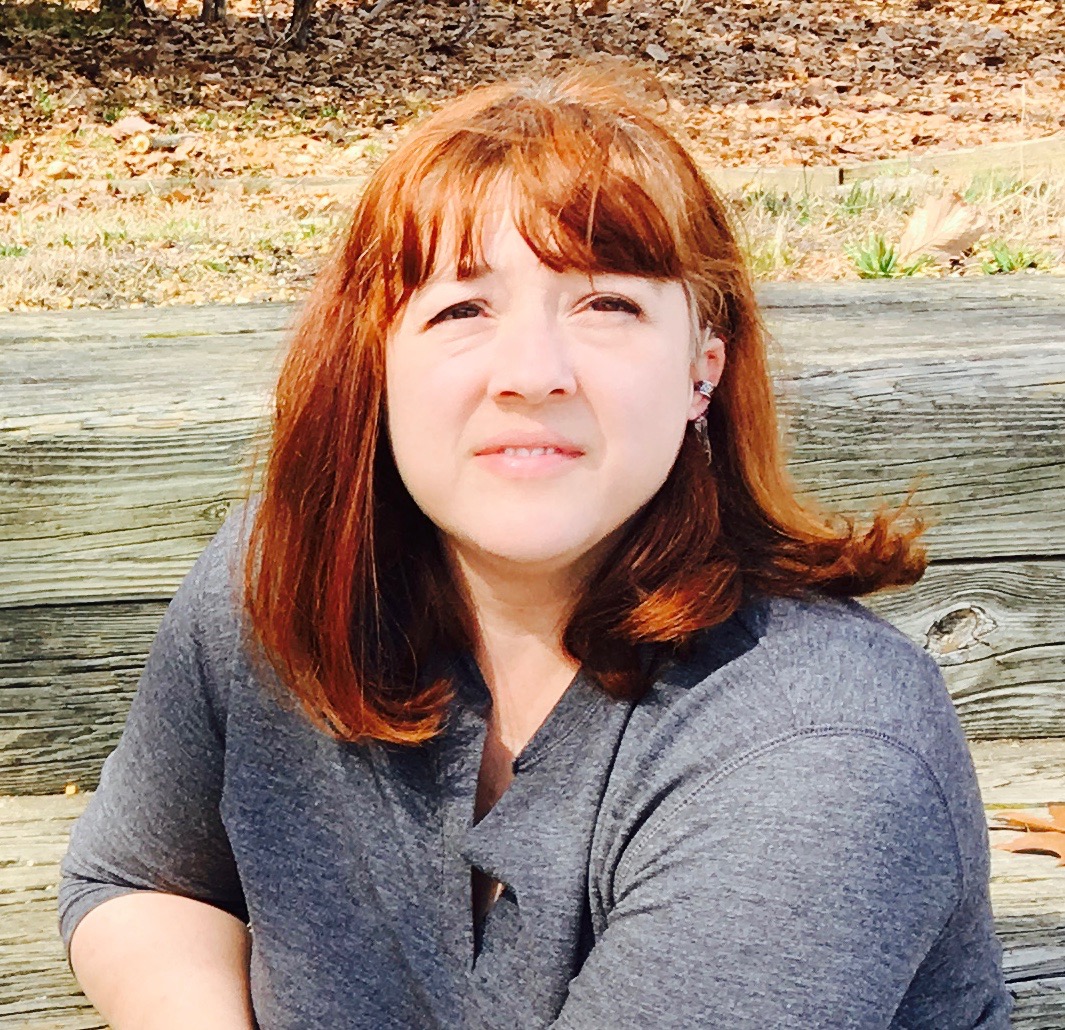
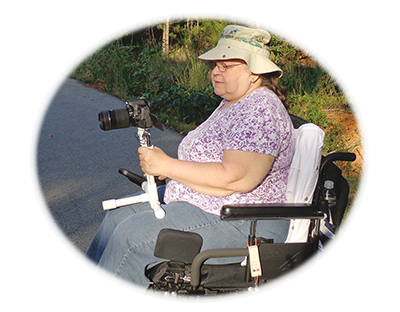
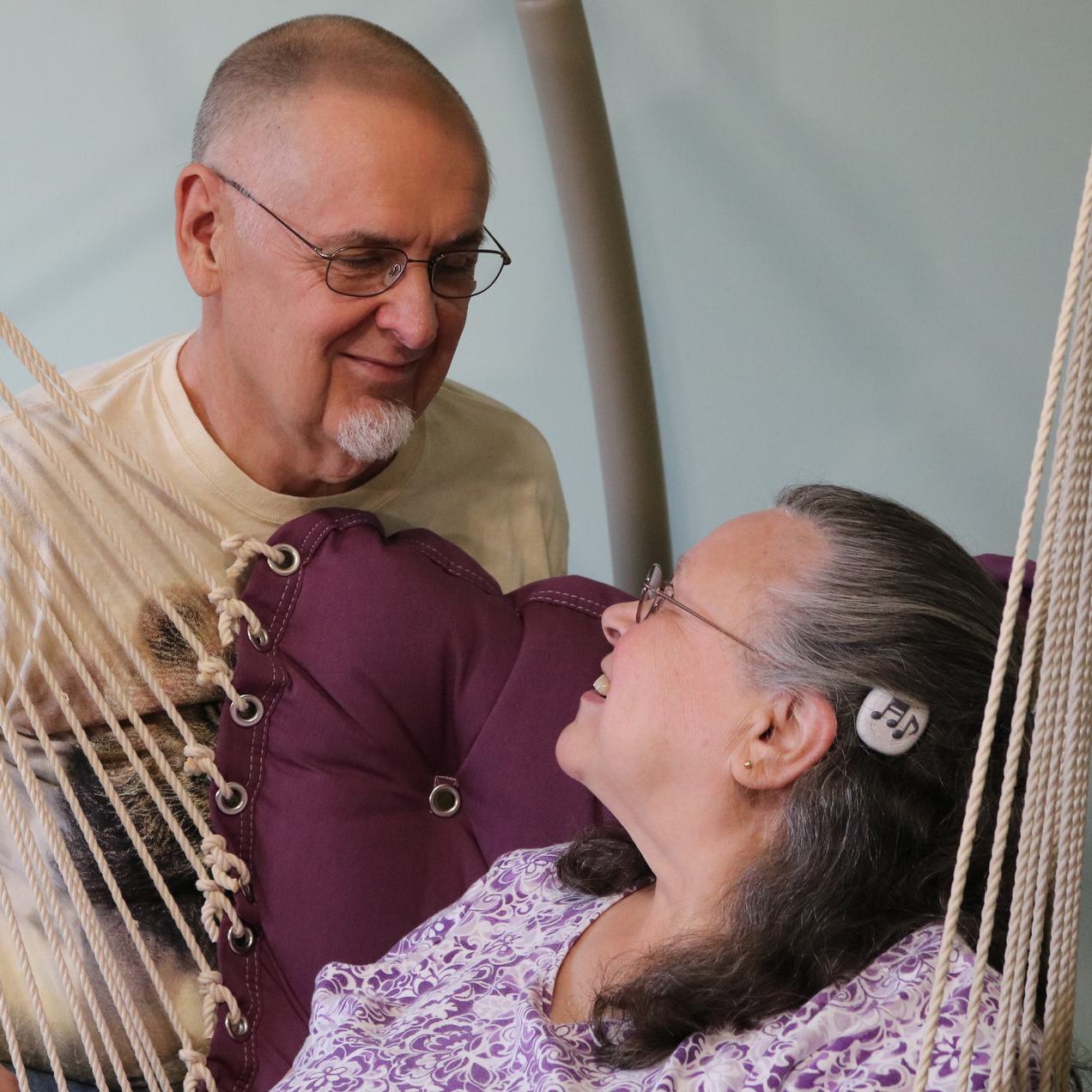
Ruth and Gary Fox

I love having guest writers at Hearing Elmo because it helps all my readers understand and stay informed about various disabilities that, frankly? I have very little information and certainly a lack of firsthand knowledge. Ruth has written for Hearing Elmo before and I always welcome her contributions. For this post her husband, Gary, contributed as well. 


Mitochondrial Disease is in the news again, because of the battle between the parents and the English justice system over the treatment of little Charlie Gard. The form of Mitochondrial Disease that Charlie Gard has is extremely severe and very rare. It has damaged everything in his body to the extent that he requires medical life support to survive.

The core of mitochondrial disorders is energy.  Mitochondria is in every body cell (minus red blood cells) and is responsible for converting food to energy. When this does not work properly, it is call Mitochondrial Disease (or Mito for short). Mito affects everyone differently, depending on where and how the person’s mitochondria are affected.  Any body system that has defective mitochondria will malfunction and possibly progress to complete failure.

As a person with Mito, people have asked me what the effect of mitochondrial disease is.  For me, it means working with multiple medical specialist to maintain the function of weakened organs. Because the degree of energy and fatigue determines the rate at which my organs deteriorate, managing that energy level is my greatest challenge.

Some people use the spoon theory to explain life with Mito fatigue. However, my husband and I wrote another narrative that makes more sense to us. Instead of spoons, we picture a zero balance bank account.  Just about, everyone knows what it means to have a bank account and how the balance of that account affects his or her activities. They also know the pain of an overdraft charge.

A healthy person makes energy deposits into their account from food, rest and exercise and has energy left in their account at the end of the day to pass over to the next day.   People with Mito do exactly the same thing, but because their energy output is very low, their account drops to zero at the end of the day with nothing to share with the next day.

People with Mito know that all of their body’s involuntary organs like their brain, heart, lungs, ears, eyes, and digestive system need a huge portion of the limited energy they are able to put into their account.  The average healthy person is typically unaware of the energy use by their involuntary body systems.

After meeting the energy needs of their involuntary functions, using energy for self-care activities is next.   This includes things like bathing, brushing teeth, dressing, or eating.  Some people with Mito do not have enough energy in their account to do these things independently, and some can do them independently, but often need to rest to build up their energy account between tasks.

After basic self-care comes necessary health related appointments to the dentist, the primary care doctor, the endless specialists, therapy appointments, etc.   The person with Mito has to anticipate ahead of time how much extra energy these appointments will demand.  To avoid having their energy balance slip into the red, which means a Mito crash where involuntary body systems are short of energy and struggling to function, they spend days ahead resting more, and building up their account to cover that extra expenditure of energy.

Everyone gets health benefit from exercise.  People with Mito have difficulty with repetitive movement, as their energy accounts are often too low to replenish the energy used by their muscles fast enough.   Yet getting some exercise, even passive exercise provided by therapists, results in strengthening.  It takes considerable effort for people with Mito to balance their energy account with exercise.

Like every other functioning human being, a people with Mito, have the same desire to live independent lives as healthy people do.  This can mean parenting children, holding down a job, keeping up their home and yard, shopping, preparing meals, participating in religious activities, attending educational classes, enjoying leisure activities, and keeping up with friends and family.  Participation in these ordinary things are difficult, or even impossible, for people with Mito because their energy account balance is too low.

People with Mito can increase the balance in their account by careful budgeting of their energy.  They can chose to sit to perform their self-care routines, instead of standing as most people do.  They can use a mobility device to save the energy they would use to walk, to do something else.  They take advantage of seating that tilts to avoid using the extra energy that it takes to sit upright against gravity.  They can chose the timing of their activities to avoid extremes of temperatures, which will drain much energy from their account.

Finally, there are those unexpected life events that may totally empty a Mito person’s energy account:  mental and emotional stress (both positive and negative), illness and surgery.  A simple cold can be life threatening for a person with Mito, depending the amount of energy left in their account to fight it.  It can take days and even weeks for the person with Mito to replenish their energy accounts.

Though I cannot do everything, I want to do, and have struggles with my limitations; life is good, because I have learned by years of practice how to budget my energy. My husband helps too by taking on the more energy consuming activities, while I do the less energy consuming things in our household.  This way we can enjoy more of what life has to offer, together.

Ruth and Gary Fox


L. Denise Portis

© 2017 Personal Hearing Loss Journal

Why Using Opioids to Treat Chronic Pain Is Problematic and What You Can Do Instead

It is always a treat to have guest writers at Hearing Elmo. Today, we welcome Jackie Waters. Jackie is a mother, a homemaker, and a farmer who lives with her family on their farm in Oregon. She is passionate about providing a healthy and happy home for her family and aims to provide advice for others on how to do the same with her site  Hyper-Tidy.com.

As a country, we are consuming more prescription opioids than ever before. We are the leading opioid-using nation in the world. The opioid epidemic has reached a point where doctors are beginning to totally rethink the way they prescribe, and this directly affects chronic pain patients. This is all with good reason, however. Using opioids to treat chronic pain can be problematic.

The difference between acute and chronic pain

“Acute pain, if you will, is a bit of a no-brainer. Pain is a message that damage is occurring to our body, and we need to take action. From a medical perspective the physiology of acute pain is well understood; it’s associated with tissue damage and resolution of the pain is associated with healing of the injury,” says physician Gary Kaplan.

Chronic pain is much more complicated. We are often unable to pinpoint the exact causes of chronic pain, as all the signs associated with acute pain have long since dissipated. Chronic pain can involve a multitude of complex issues, including mental ones, and can affect multiple areas and systems of the body. Long story short, it’s hard to pinpoint.

While using opioids to treat acute pain is simple and relatively harmless, the use of opioids to treat chronic pain is problematic. Long terms use of opioids can have devastating physical and mental health effects.

Chronic pain sufferers can develop a dependency to opioids

Even when taken as prescribed, opioids are highly habit-forming. Many chronic pain sufferers misuse the drugs, however, and take them in ways that are more harmful than their normal administration (snorting, more frequent use, higher dosage).

One of the main problems with taking opioids for a long period of time is that they become less effective over time. This forces people to continue upping their dose, which leads to addiction.

“A property of opioid drugs is their tendency, when used repeatedly over time, to induce tolerance. Tolerance occurs when the person no longer responds to the drug as strongly as he or she did at first, thus necessitating a higher dose to achieve the same effect,” says DrugAbuse.gov.

How to manage chronic pain without opioids

Your ultimate goal may be to eliminate the use of prescription drugs altogether, but it’s important to know that any reduction on the use of opioids is beneficial to your health. In order to do this, however, you have to have alternative methods to manage your chronic pain.

For temporary relief of chronic pain, many sufferers turn to acupuncture, massage, hydrotherapy, and chiropractic care. All of these can work, but all do not work for everyone. You must find the type of acute care that best helps your specific type of chronic pain.

For more sustained relief, some lifestyle changes must be considered. If you are overweight or obese, this is likely the leading exacerbating factor of your chronic pain. Losing weight reduces stress on the bones, joints, and muscles. Adopting a healthier diet is probably the best long-term strategy for managing chronic pain.

Apart from that, exercise is your next best option. You might be wary to dive into an exercise regimen for fear that it will make your chronic pain worse, but in fact it’s just the opposite. Check here for five great exercises for chronic pain.

Short-term use of opioids to treat pain is not necessarily a bad thing – in fact, it’s a widely accepted medical practice. Problems arise, however, when people start to rely on prescription drugs to help them cope with long-term pain.

Photo Credit: Pixabay.com

Sometimes It Takes Work to Stay Positive

uphill-battle

When my alarm goes off, Milo (who is laying in a ginormous dog bed on the floor by me) hops up and nudges my face and arms. There are days where my eyes pop open and I lay there for a few minutes giving myself a pep talk. Milo isn’t into pom-pom’s and cheering… he just wants breakfast. This means I can’t lay there contemplating all that is “Denise” very long.

Do you ever have trouble getting out of bed? I’m not talking about because you are sleepy. I do not mean the kind of lazy-bone feeling you have when it is rainy and cold out and you just want to stay cuddled up in the blankets. I’m talking about the weariness that comes from having to psych yourself up

one

more

day.

It can be difficult. Don’t get me wrong. I recognize that I have so much to live for and that I am blessed. PsychCentral recently wrote about what NOT to say to someone with depression. The piece included a great number of platitudes that people say to someone who struggles with depression. Some that I hear a lot are:

  1. There are a lot of people worse off than you.
  2. You have so many things to be thankful for! Why are you depressed?
  3. Happiness is a choice (this one kills me because it is actually the title of one of my favorite books!)

Several years ago I saw a quote on social media that said, “Telling someone they cannot be sad, depressed, or anxious because others have it worse is like saying someone cannot be happy because others have it better.”

Yes. I do know people who are “worse off” than I am. But by what measure?

Like many with chronic illness, or visible/invisible disabilities, I have good days and bad days. I would suspect that most people who talk to me each day in person – at work, class, check out lines, or walking – believe I am a very cheerful person. Fact is? I work at it. It does not come easily to me.

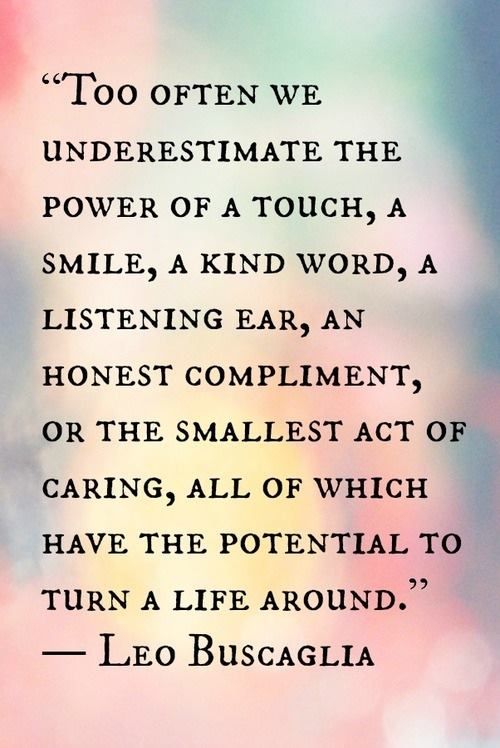
At 50 years old, however, one thing I have learned is how powerful a smile and encouraging word are to others. I try not to think about my limitations. That’s so… limiting! Instead, I work to make a difference each and every day, even if all I have the energy or ability to do is be genuinely friendly and encouraging.

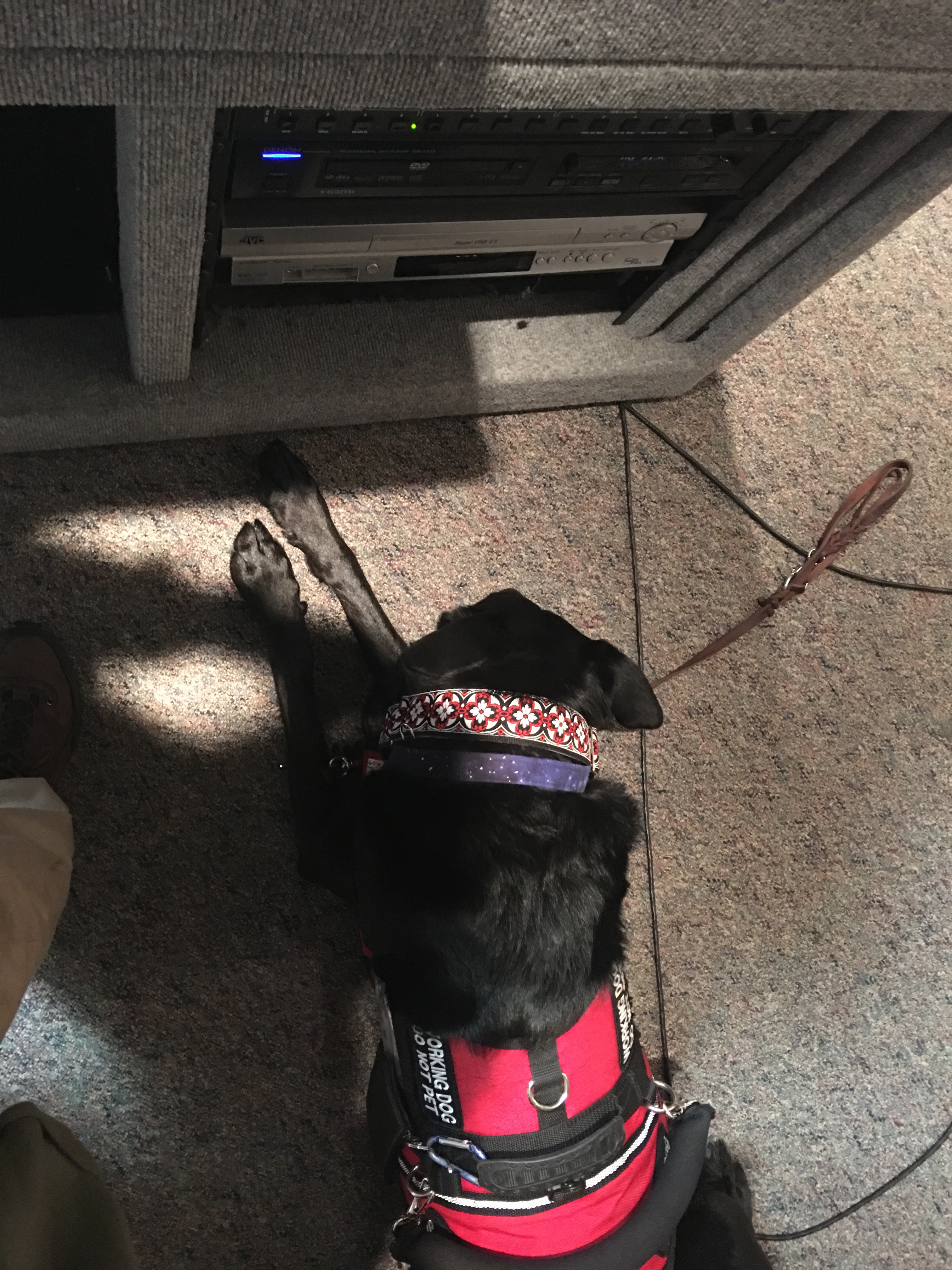
I love Fridays. On February the 17th, I posted this picture and caption on FaceBook:

Sweet and loyal ❤️ beat at my feet. Ready to work as soon as I need him! Which... was two seconds after this pic since I looked up too fast, got dizzy, cracked my head on the podium, and dropped my remote. He takes it all in stride. 🐾
Sweet and loyal ❤️ beat at my feet. Ready to work as soon as I need him! Which… was two seconds after this pic since I looked up too fast, got dizzy, cracked my head on the podium, and dropped my remote. He takes it all in stride.

What I did NOT post, is that later that day when I arrived home weary but safe from a long week doing what I love, I had a seizure. Right there on my front porch. It lasted all of ten seconds and I knew 20 minutes beforehand it was coming. Milo was safe in the back yard and I a l m o s t made it to the door. (No worries – I know that a frontal head bump, fatigue, and Meniere’s flare are the recipe for a “fall down go boom”. I have regular contact with my doctors and “we’ve got this” – promise!)

When I got home from work today, one week later, I find I am still thinking about that and a little peeved about the permanent issues of having multiple concussions. Each Friday, I feel as if I have pushed a “happy Denise” uphill all week long. It is hard. It isn’t so hard that I cannot do all that I CAN DO. Sure, I may be naive to think that my smile and small acts of kindness make a difference. But I choose to believe. I believe because someone else smiled at me and encouraged me. When they did I had the wherewithal to press on – one more day.

smile-and-encouragement

Denise Portis

©2017 Personal Hearing Loss Journal
 

Half a Stick of Juicy Fruit Gum

juicy-fruit

I miss my grandmother (Vina Jewell Burhenn – Isn’t her name the GREATEST?). As I stopped to think about how to approach my subject for Hearing Elmo this week, I found myself thinking of a very special memory.

It was always a treat to sit with my grandparents in church on Sunday. I think I convinced myself that Grandma would let me get away with more, and my mom and dad were going to make me be “super good”. The pastor was my uncle, Cecil, and so even as a little kid we were expected to be an example to other little kids in the church because we were “kin”. So whenever possible, I always sat with Grandma because I could get away with more – AND… she always gave me a 1/2 stick of Juicy Fruit gum.

Naive kiddo that I was, the truth was that Grandma made me be even more “golden” and because we sat three rows from the front, my parents sitting behind – and to the right of us – could STILL see everything I did.

In the earliest years, I don’t think I ever questioned, “why a HALF stick of Juicy Fruit gum?” I will have to hazard a guess that around  8 or 9 years old, I finally whispered and asked Grandma, “why a HALF stick?”

“When you break it in half, does it let the magic pour out?” I whispered.

Response: Blank Stare

“When you break it in half, is it teaching me to share?” I queried.

Response: Blank Stare

“When you break it in half, is it to make sure I come back for the other half?” I said softly, and with strategic wisdom.

Response: “Denise, I gave you a half a stick because it is ENOUGH”.

Oh. Well gee. I know my child-brain kinda hated the logic of that.

My grandmother would dole out half sticks of Juicy Fruit gum because it was ENOUGH. (Side note: What a shame that it was never Doublemint gum as I would have discovered at an earlier age that I was allergic to spearmint).

It Simply Doesn’t Take MUCh to be ENOUGH

I’m told I take after my grandmother in a lot of ways. Here are just a few FREQUENT reminders from siblings and parents:

  1. I doctor my own ailments to my detriment. And I have Google, which Grandma did not!
  2. I love animals – many times more than people.
  3. I expect justice and fairness.
  4. I will respect you, but by golly you better reciprocate. If you don’t we’re gonna argue!
  5. I can be stubborn.
  6. I don’t mind confrontation. (Likely only recently doing confrontation in the right way).

I think one of the things I get down about the most as a person who is differently-abled with a chronic illness, is that I often worry and fret about my limitations.

I can’t hear on the phone so I am not able to easily call up a friend and ask how they are doing.

I can’t see to drive at night (headlights trigger vertigo), so I cannot go to parties, meet-ups, etc. with friends at night. Most folks do stuff later in the day.

I can’t just drop everything and go to a friend’s rescue. My own limitations require that I determine if I’m physically ABLE. I must ready my canine partner, Milo. I am not a 9-1-1 friend. That grieves me.

You may have limitations that at times, cause you to feel as if what you have to offer is not as valuable. You see how other friends reach out to each other and are discouraged that you cannot offer the same kind of friendship. (If you’ve never read “Spoons” – you should. It eloquently describes life as a differently-abled person). You can only offer a HALF stick of Juicy Fruit gum and you are a little bit pissed off by that.

Do you know what I have learned? A half a stick of Juicy Fruit is enough. I may only be able to touch base with friends via text or Facebook, but taking the time to touch base is STILL appreciated. I may not be able to go to things at night, but when my daytime schedule allows, I can drop off a meal or come by for a quick hug. I cannot be a 9-1-1 friend and be able to just physically show up at an emergency. However, my friends know they can text me or private message me and I will drop EVERYTHING to pray, encourage, and be there for them.

“The purpose of life is not to be happy. It is to be useful, to be honorable, to be compassionate, to have it make some difference that you have lived and lived well.” 
― Ralph Waldo Emerson

We want to make a difference. We want people to see our value. We need to be needed. We all strive for that purpose in different ways.

Maybe you are passionate about social justice issues and do all you are capable of doing.

Perhaps you are a writer – and do so to encourage, educate, and advocate.

Maybe you are an artist. Your drawings, photos, paintings, and sculptures reach out and change people.

You follow up with hurting people and ask them how they are doing NOW.

Your HALF stick of Juicy Fruit is pretty darn important. What you CAN do… what you are able to do… is ENOUGH.

Don’t let anyone tell you anything differently. If they do, give them my number and I’ll take care of it. <wink>

You have value. Believe.

Denise Portis

©2017 Personal Hearing Loss Journal


You Don’t Just Decide

im-fine

… to not be depressed.

I should have gone into acting. My students and coworkers would be so surprised to learn how tough this past month has been. I have been struggling to write, but honestly? I just cannot. Not yet. (I’m in a bad place, but I will and very soon!) So how blessed and relieved was I to receive permission from a guest writer at Hearing Elmo, to post a narrative she wrote on FaceBook about depression? Ruth Fox has been a friend and fellow “chronic illness warrior” for a good number of years. I have trouble remembering when we first met even and we keep up-to-date on social media. Ruth lives in one of my favorite places… Tennessee. She is a photographer and writer… and a friend who understands invisible illness and disABILITY. 

Before I copy/paste what she has to share, as a reminder: Hearing Elmo is open to any and all who would like to share about this life we live. It can be anonymous, open and transparent, or somewhere in between. 

13012888_10208785574373696_450127612655971788_n

As a survivor of over a decade of profound life threatening depression, my heart goes out to the many people with depression who are struggling through the holiday season.

Depression is a vicious disorder, and not one easily dealt with by the affected individual, their family or friends. Like many chronic disorders, depression can be managed through medication, therapy and healthy mental, social, spiritual, and physical life choices.

Depression continues to be a chronic disorder for me, yet the devastating effects that it’s had on my life are greatly minimized due to my efforts accommodate it, as I have accommodated other physical disabilities.

Depression isn’t the consequence of what happens to us in life. Many of my friends and acquaintances have experienced the worst that life can offer. Yet, though they may be grieving, sad, or very frustrated and alone in their experiences, they don’t struggle with depression. This reinforces the fact that depression is, as scientifically proven, a physical disorder of brain chemistry; not a consequence of life circumstances.

Depression makes all aspects of life more difficult. The jovial atmosphere of holiday celebrations often exacerbates its symptoms. The challenge of coping with depression is similar to dealing with other disabilities; to accommodate it in such a way as to minimize the effect that it has on daily life.

For me, the first step was getting and maintaining medical treatment. Next was determining what life activities reduced my depression symptoms and what ones exacerbated them. Then reorganizing my activities so that they tilted the balance towards helpful activities. This occasionally required abandoning what was considered socially acceptable or traditional, which was very difficult to do at first.

Positive self-talk is an exercise I learned to use regularly, because one difficult depression symptom is the emotional twisting of reality. When depression is out of control, all actions or statements of other people tend to be taken extremely personally. If these are perceived as negative the result can be irrational tears, obsession over disappointments, and self-pity. The effect can be so strong that it paralyzes functionality. One’s sense of confidence and self-worth is often mistakenly placed into the hands of others.

Positive people, who accept the right of other people to do what works for them, even if it was a bit unconventional, are the kind of people my husband Gary and I want to be, and we try to surround ourselves with similar people. Depression isn’t fun, any more than all of other the challenges we face, but it doesn’t have to diminish the quality of life.

Ruth Fox


One-Eyed, One Horn, Flying Purple People Eater

one-eyed-one-horn

Sheb Wooley released a song in 1958 called the “One-Eyed, One Horn, Flying Purple People Eater“. I know this not because I was there (ahem), but heard the song throughout my childhood. If you have never heard this “gem”, you are MISSING OUT. To help fill that void for you, click here for a captioned version: Enjoy

Now I mention this because this song has been going through my head for a solid week. I know! I do have better things to do! However, I’m in the car enough that I tend to fill the time with singing… or maybe BELTING out the OLDIES is a more truthful admission. For some reason, this song is just stuck in my noggin’. It is a song that frankly? It doesn’t make much sense. Maybe it did to Mr. Wooley. Something doesn’t have to make sense to get stuck in our head though. It doesn’t even have to be the truth. It doesn’t even have to be healthy.

Negative Broken Record

Sometimes unhealthy thoughts and labels stick with us because at some important developmental milestone, we heard these negative things enough we have come to believe them. These negative thoughts can turn into self-fulfilling prophecies. These negative, perpetually repeating thoughts can bring us down and keep us in a state of defeat. Experience tells me that a state of defeat = dissatisfied and unfulfilled life.

A get so aggravated when people (and sometimes counselors) say you should erect boundaries with people who tell you negative things that you take to heart. Easier said than done. What if they are family? What if it is someone you work with daily? Most of the time, if someone tells me something negative I try to:

  1. Determine if there is any merit in what they are saying. If so, does it mean I need to change some behaviors?
  2. Determine if I respect the source. Should I spend any time at all contemplating what they’ve said as constructive criticism, or is something I should immediately release as misdirected and poisonous barbs?
  3. Determine the level of influence. Do I work with this person? Is this someone I must see either occasionally or frequently?

Sometimes the “stuck in my playback feature” of my brain are negative comments, labels, or criticisms from people I care about. I can set up a boundary (and have… mentioned below), but I cannot just shut the door and throw away the key (although there is a time for that too… read on!).

I’m no expert in rebuttal of mean insults, however I learned at a fairly young age that “fighting fire with fire” only burned everyone. Frankly, I can stand the smell of scorched material.

I learned that getting defensive often only made me look petty, childish, and well… DEFENSIVE. A defensive stance and demeanor is not attractive on me (perhaps on no one).

I have learned two responses that work for me:

  1. What you have said has upset me. I need some time to regroup and then I would like to talk about what you just said (or called) me.
  2. I don’t believe in labels and discussing things with mean-spirited people. I would love to continue this conversation in a more healthy way when you are ready to do so.

You-re Ugly. You-re Fat. You-re Disabled. You-re Embarassing.

It makes me so sad when I hear people say self-deprecating things, knowing they heard it somewhere else first. Those “stuck in our head” kind of hurtful descriptions are usually hurled from the mouth of someone who claims to love us. It doesn’t always have to be wounding comments either. In my Developmental Psychology course, I ask my students to write down 10 things they have heard from friends and family members about themselves that were hurtful “to date”. It takes most students 10 minutes to write down 10 things; or, about 60 seconds per recalled comment. Then I give them a new piece of paper and ask them to write down 10 things they have heard from friends and family members about themselves that were encouraging, uplifting, and positive. It takes a student three times as long. That’s right. At 30 minutes I call “time” and there are always some who have not been able to come up with a full ten items. What does this tell us? Are humans more prone to remember negative or positive?

Negative comments are like wounds. They may cause us to bleed and to fester. Maybe infection sets in as well and our wounds begin to affect other body parts. Negative comments leave scars. No amount of vitamin E, cocoa butter, or cell activator products will remove the scar. Sure! Both time and perhaps counseling and support can reduce the visibility of scars, but the scar remains.

Positive comments seep into the skin slowly. Yes, perhaps our ears are the conduit, but our hearts are what build up our self-esteem. Dr. Barbara Fredrickson (OCDE.US, 2016), explains that there is a 3:1 ratio of necessary positive to negative comments to equalize the impact. In other words, for every negative comment you hear and take to heart, it may take three positive comments to remove the potency and harmful effects of the negative comment.

Permanent Brick Walls

Sadly, there are times when you must love yourself enough to initiate self-care in building a permanent brick wall to toxic people. It isn’t easy. There may be a price tag. You may alienate others who are affected by your choice. You may become the target for people who insist that forgiveness AND reconciliation are mandatory. My friends? There are times that this is a small price to pay compared to the continued damage a toxic person may deliver.

If they are incapable of remorse and change, who will protect us? Though it may sound attractive at our low points, putting out a hit on the toxic person is not a good choice. If we do not permanently dis-allow them opportunities to harm us, who will? When I have had to do this, I do so with heavy heart. However, I also do so knowing my children are looking to me for an example. Cuz ya know what? They are going to have toxic people in their lives. When I disassociate with a poisonous soul, I do so knowing that younger adults learning to live with acquired disability or illnesses are watching me.

It Doesn’t Take a Gift of Words

I don’t know about you… but I want to be a part of the group that is telling another something positive, uplifting and encouraging, and genuine. I want to be a part of the THREE that helps to cancel out the negative things another has heard and believed. All day–each and every day–I look for opportunities to say positive, genuine things to others.

“You look great in that color!”

“Wow, look at how well you did on this exam!”

“You always have the greatest things to say during class discussions”

“Thank you for emailing me about your current crisis. You are so responsible in that and I want to help you”

To people I know who are differently-abled:

“Those running lights on your wheelchair are freaking AWESOME!”

“You have the best hearing of anyone I know” (to a student with vision loss)

“You’ve told me about your personal demons. I love how you bravely and courageously face life with a smile”

“I love how Milo (my service dog) loves you. He must sense what a caring person you are to seek you out each class period”  (to a student with recent TBI who is still coming to terms with new challenges)

That’s All Fine and Dandy – But I Cannot FORGET

Yup. I can determine to be part of the solution (instigator of the positive in the 3:1 ratio), and still have STUCK negative comments playing over and over in my head. “♫ ♪ This is the song that never ends, yes it goes on and on my friend. Some people started singing it, not knowing what it was, and they’ll continue singing it forever just because… ♫ ♪ 

So what’s a person to do?

  1. Surround yourself with people who are positive contributors. You may not be able to pick your family and have tough choices to make about boundaries, but we can pick our friends. Make wise choices.
  2. Learn self-talk. “With practice, you can learn to notice your own negative self-talk as it happens, and consciously choose to think about the situation in a more realistic and helpful way” (Martin, 2016, para. 5).
  3. Be realistic about extremes and over-generalizing. I love these 7 “steps” to eliminating negative thinking. Check them out here: CLICK
  4. Affirm yourself. CUTE VIDEO of a little girl saying all the right things in 50 seconds: CLICK.  Perhaps talking to yourself in the mirror has fallen out of style (but should it have?). Regardless, we can learn to dispute that negative STUCK phrase in our heads. You gotta identify it first, then figure out where it came from, decide if it is true, decide how you want it to CHANGE, and then do #3 above. And hey… if preachin’ at yourself in the mirror helps? Go for it!

I leave you with the challenge to be someone’s 3. Be the positive, uplifting and affirming influence for another individual. Make it genuine (no lying… who does that help? I never say something positive I don’t mean/believe) It may take some practice. You have to learn to be watchful and observant. May God grant me the opportunity to be the 3 for someone! That these comments may re-play in a person’s head with the frequency of one-eyed, one horn, flying purple, people-eaters? Well, color ME PROUD.

Denise Portis

©2016 Personal Hearing Loss Journal

Fredrickson, B. (2016). The magic ration of positive and negative moments. Retrieved November 8, 2016, from https://www.ocde.us/PBIS/Documents/Articles/Positive+$!26+Negative+Ratio.pdf

Martin, B. (2016). Challenging Negative Self-Talk. Psych Central. Retrieved on November 10, 2016, from http://psychcentral.com/lib/challenging-negative-self-talk/


Crappy Life Lessons

img_2567

I’ve had to force myself to log onto “Hearing Elmo” and write SOMETHING.

Anything!

I don’t like for too much time to go by and not be writing. Writing, blogging, and “talking to you” is important to me. I learn from you. I hope we learn from each other.

Misinterpreting

Saturday, October 1st, on her twelfth birthday, we said goodbye to Chloe, my first assistance dog. She retired in May of 2015. Chloe was diagnosed with Transitional Cell Carcinoma in August of this year.

I’ve started this post 8 times (and yes, I counted). The first couple of drafts were angry and mean. One draft was scary. Others were tearful and frankly? Were so full of random thoughts and words, the grammar itself forbade me from hitting “publish“.

Shame and Blame

lane-graves

On June 14, 2016, little Lane was killed by an alligator at Walt Disney World resorts. Like many who read his story, my first thought was, “Where the heck were his parents, and how in the world does something like this happen?

Erin S., a friend of mine, fairly quickly put me in my place–and rightly so. Why do we immediately judge what we do not know?

  1. We are shocked by something.
  2. We are heart broken.
  3. We look for someone to blame.
  4. … as if that makes it better.

We cannot ever know the “whole story”. We simply are not privy to that. There is a backstory to every tragedy and every loss. Little Lane was killed as the result of an tragic (freak) accident and he cannot be placed back into the arms of those who loved him. Why do we search for who is to blame? Sometimes, folks?

Sometimes life just sucks.

img_3148

Facebook is a wonderful place; especially for the differently-ABLED community. It is a place where technology levels the communication playing field. I have re-connected and strengthened friendships. I have “met” people in this venue I may never meet face-to-face. Last week, however, I “unfriended” and “blocked” 34 people I didn’t really know. Getting one to two messages a week, led me to believe they were simply out to get a “rise”. Many posted publicly and I exercised my right to DELETE. Haters gonna hate.

I created a public page for Chloe’s last chapter to raise awareness about an organization I love, Fidos For Freedom, Inc. I wanted to share what being a puppy raiser, sponsor, and trainer for service dogs was like. I wanted to share information about the valuable resource (even MINISTRY) of therapy dogs. I wanted to share how one dog changed my life and brought me back into the world of the living after a self-imposed isolation.

When bad things happen, we tend to look for answers or worse-someone to blame. After only reading the public “cliff notes” of Chloe’s life, I was lambasted by people for making the wrong decision.

  1. You should get a third opinion. You could treat this and prolong her life an entire year!
  2. How could you let her live the last month of her life this way?
  3. OMG. It’s just a dog. Surely you have something better to do.

Now these are folks I don’t know and you are open to these kinds of messages when you go “public” with anything. I don’t mind blocking folks who just look for ways to get people riled. I fully trust that those who know me and know my husband Terry, trusted US to make the best and most humane decision for a furry family member. (More than that… a retired partner).

politics

Ah. It’s an election year. It’s getting nasty out there in FaceBook land, isn’t it? Yet those I actually do know, I allow to post whatever they want on FaceBook. I may not click “like”. We may agree. We may disagree. More than anything though I hope we are the kind of “real” friends to agree to disagree… and love each other anyway.

I love Culture of Empathy’s website. I don’t agree with everything they post, but their message is powerful. Empathy is defined as, “identification with and understanding of another’s situation, feelings, and motives”. Empathy does not mean you may fully agree with them.

Y’all?

We can love one another and show kindness and compassion without having to acknowledge that an important connection and relationship is the equivalent of being identical twins. I love my husband and best friend, Terry, but the man is an idiot sometimes (albeit a sweet one). I do not agree with everything he says, believes, or “votes”. Yet, I respect everything he says, believes and votes and fully support him because I love him and he is my friend.

The Bible does not actually use the word “empathy” anywhere, yet it is inferred. It does use the word compassion numerous times. Compassion can be defined as “a feeling of deep sympathy or sorrow for another who is stricken with misfortune, accompanied by the strong desire to alleviate the suffering.” Especially when someone is faced with a critical decision or experiencing heart ache, can I not support them with compassion? How does judgement, argumentative jabs, and insistence they agree with ME, help? It doesn’t. It only shows I lack compassion and kindness.

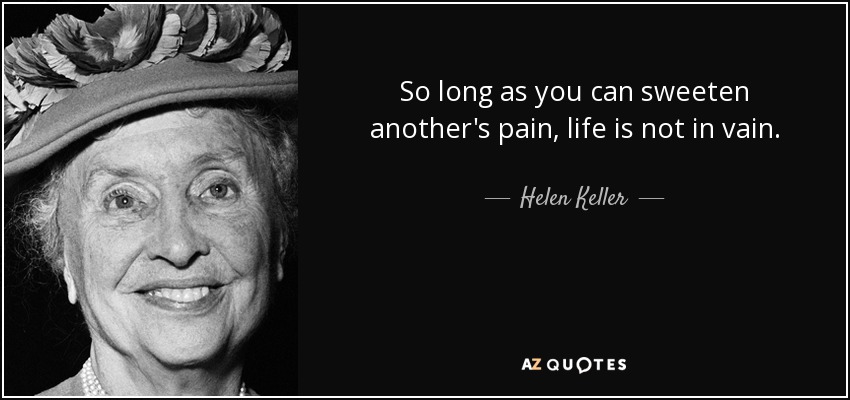
helen-keller

I’m not perfect. But…

I want to be perfectly committed to being kind, being loving, and making a difference. I may not always agree with you, but if we have the kind of relationship that we can talk about disagreements with respect and kindness, and walk away still close friends? I count myself BLESSED.

Crappy Life Lessons

So a crappy life lesson? Sometimes when grieving and in pain, people are gonna kick you when you are down. Sometimes when important decisions need to be made, folks are going to call into question my own character for an informed and personal choice. I’m gonna love you anyway.

For you see? Love isn’t love if it changes on a whim and because someone disagrees with you. I believe the world would be a better place if our first thought when getting up in the morning was,

“How can I make a difference today? How can I show kindness?” 

Hold me accountable.

Denise Portis

© 2016 Personal Hearing Loss Journal

Coping with Disability

Always such a privilege and joy to welcome guest writers to “Hearing Elmo”… especially those who have made an impact on my own life! Ruth’s blog can be found at: http://foxbuds.com/default.html  

coping-with-disability-ruth

Succeeding at being functional, in spite of major disability, requires acceptance, attitude control, and accommodation. For approximately a half year, the extreme energy challenges that defines my disability took a vacation. I went from using a wheelchair to walking a mile independently. My wheelchair was actually forgotten, and it sat unused for several weeks. Feeling so energized, I worked to increase independence and exercise. Walking in a nature park; to and from the mailbox (long city block of considerable elevation grade); to and from study groups and services at church; and during shopping became frequent occurrences. Even bi-weekly lap swimming was added to the exercise mix. Restricted time limits on activity seemed to have dissolved. I came to expect unlimited energy and endurance.

Then, as quickly as it arrived, my disability “vacation” was over. Independence and exercise became challenging; fatigue and weakness unmerciful. Within a couple of hours after awakening, my day’s energy supply was gone. Being stubborn, I let failure define my course of action. Signs of exhaustion were ignored, functioning became extremely challenging and “mito crashes” began to occur frequently. During these mito crashes, I have trouble thinking and focusing; my speech sometimes slurs; word recall fails resulting in multiple unfinished sentences; there are unexpected falls when walking; muscles feel like they are made of wet cement; sitting up is painful as gravity alone is too heavy; my heart pounds and beats become irregular; and even breathing takes effort. My unwillingness to respect my body’s inability to produce needed energy, resulted in an unnecessarily low quality of life.

To find any degree of functionality, I first had to let go of stubbornness, pride and the perception that my disability would become a focus for those around me. It is uncomfortable when people express sympathy, or question my use of accommodations again, particularly my wheelchair. Yet, when I was finally forced to go back to using my wheelchair, which is the most visible accommodation that I use, people paid very little attention to it. Everyone around me was used to seeing me in a wheelchair, it just had been a while since they had seen it. As trivial as it may seem, it wasn’t much different than people failing to notice a haircut, or new glasses.

The hardest part of a disability is figuring out which accommodations give you the greatest amount of functionality. In this day and age of high technology, canine assistance, and ADA accommodations, it is amazing the level of functionality one can reach regardless of how severe the disability. Today, a person with hearing loss/deafness has so many choices that they can make to communicate at a distance, turn speech into text, or become aware of changes in their immediate environment; a person with vision impairment/blindness has choices that
they can use to replace print, locate navigational barriers, and obtain independent transportation; for a person with a mobility impairment there is considerable access to public and even private buildings, and accessible transportation; a person with a medical disability such as diabetes, epilepsy, or compromised respiration has options of implantable medication delivery, service animals that can predict impending medical crisis, and portable treatment equipment. It is true that barriers aren’t completely eliminated by accommodation, however it is a rare person that isn’t “barrier challenged” in some way, even without a specific disability diagnosis. Technology and access will slowly, but surely, improve over time.

Accommodating my disability this time around, was easier. Everything I need for my disability barriers is already in place; I just have to use it. Also having an extremely creative and supportive husband, who is so willing to do whatever is needed to help reach an acceptable quality of life, is a huge benefit as a disability affects everyone; it’s a family affair. All that was needed was for me to stop fighting against declining energy and to start working to make the best use of the limited energy I had left.

A person with disability can accept their personal limitations and find appropriate accommodations, yet not be successful due to attitude. Anger, bitterness, and continuous frustration over the limitations of public disability access is the fastest route to an attitude of entitlement. This is a personality disability; as limiting as any physical disability. It becomes a barrier to self-advocating. It prevents a person with disability from being part of the solution, by sharing what works, as well as what doesn’t work. An entitled personality is counterproductive to legislation, research, and development of new options, as frustration and anger slows the process down. An entitlement attitude keeps a person from finding or accepting alternate ways to bridge specific barriers.

My goal is to express gratitude for every barrier that is reduced or removed, and find my own solutions when I can. Yes, frustration gets the best of me sometimes, but as with everyone else, I am a work in process.


More Vulnerable than I Thought – Stronger than I Imagined

IMG_3128

Earlier this summer my parents came to visit. For some reason, I always have a “project” for my Dad. For some reason, he never seems to mind. This time, he built and secured a lattice porch screen to give us some privacy between our deck and the neighbor’s house. We have a huge yard, but it is long and narrow–not very wide. One of the first things my Mom and I did was plant Morning Glories. This beautiful vine has done so well this summer. It’s a childhood “feel good” memory for me, so I love greeting the blooms each morning.

I think one of the things I love about Morning Glories, is that they are (ahem) … GLORIOUS in the morning.

IMG_3129

I love coming out in the morning, in the quiet and cool AM environment, and having these cheerful flowers greet me.

VULNERABLE

I think one of the most difficult things about chronic illness and being differently-abled, is a sometimes, overwhelming feeling of vulnerability. I don’t know about YOU, but I hate feeling vulnerable. I’m not talking about the healthy kind of vulnerability where one learns to open one’s heart to another. I’m not talking about learning to be transparent and (at times) brutally honest (or, receptive of someone being brutally honest to YOU). I’m talking about the kind of vulnerability where you know you are at risk – in trouble – and floundering.

I am feeling pretty vulnerable. I hate having an illness that is progressive. Even though I work my butt off trying to be independent and capable, each year it seems to be more difficult to “get my glory on“. I love mornings. I’m a (disgustingly) cheerful early-bird person; perhaps, part of the reason I have been able to greet the Morning Glories with a smile on my face. While standing and watching the dogs race around the yard and work on waking themselves up, I often find myself reflecting, even praying at times. Lately, I think I’m perpetuating my feelings of vulnerability. During my AM REFLECTIONS, I have been thinking about where I was physically a decade ago, five years ago… and even last year. Ten years ago, when I was only 40-years-old, did I know that I would navigate with a service dog and cane? Did I understand that I would only be able to hear when I had my cochlear implant connected? Did I know that I would have a pronounced limp from numerous twisted ankles as the result of falls? Did I know that on the evening of August 23rd, 2016, I would have numerous bouts of vertigo, nystagmus, and several panic attacks between bedtime and when my alarm clock kissed me awake? (The benefit of having a service dog and retired hearing dog as your alarm clock). Nope. I didn’t know this would be my life. It makes me feel vulnerable (and depressed).

STRENGTH

I am my own cheerleader.

Don’t get me wrong. When I need encouragement, I know how to reach out and ask for help. This practice being, a different and healthy kind of vulnerability. If you are a person with chronic illness, invisible or visible disabilities, and special challenges that make life rather difficult at times, you may have no problem telling someone “I’m done“. I do have problems with that. I find it easier to say, “I’m struggling“, and less easy to admit “I’m done“.

I think part of it is because I don’t want to disappoint anyone. Even at Hearing Elmo, I try to keep things positive and encouraging. As a co-advisor of a student group for people who are differently-abled, I want to model confidence and a “can do” attitude. But honestly? Sometimes, I’m just done. This morning (after the night I had), I could not “get my glory on” in spite of my special flowers greeting me the same as usual in a beautiful late summer, sun-rise welcome. I found myself struggling. I found myself feeling vulnerable, depressed, and on the verge of giving up.

When I cheerlead for myself, I tend to default to a number of cheers:

  1. There are other people worse off than I am. Yet, they are productive individuals who find purpose in life.
  2. I have support from people who care about me, who encourage me to utilize everything I can to be independent.
  3. I am making a difference. It doesn’t matter if my niche in this big world is a tiny pocket of influence. If I can help make a difference in one, it is still making a difference. 
  4. All the things I enjoy, and people I love, are opportunities and relationships I would not have if I didn’t have the challenges I have.
  5. I know, without a doubt, that I am a better, stronger woman because I have Meniere’s disease and am late-deafened. Calhoun and Tedeschi (2014) explain it best: “The encounter with a major life challenge can also include an increased sense that one has been tested, weighed in the balance, and found to be a person who has survived the worst, suggesting that one is indeed quite strong” (p. 5). 
  6. Life can be difficult. It’s a good thing I’m STRONG.

Ultimately, the way I “keep on – keeping on” is recognizing that this is hard, but I CAN do this. I’m going to have bad days. I’m going to need help. I’m going to fail, mess up, SCREW up, and want to GIVE UP. When I am weak and vulnerable, I am also strong.

I’m also learning that it is ok to say, “I’m done“. (Ouch. That hurts to even type it!) However, I recognize that this admission… this vulnerability, also means I’m strong. Stronger than I ever imagined.

Denise Portis

©2016 Personal Hearing Loss Journal

Calhoun, L. G. & Tedeschi, R. G. (2014). Handbook of posttraumatic growth: Research and practice. New York: Psychology Press.

My iPhone Lasts Longer Than I do

iphone 6+

The other day my iPhone died before I was getting ready for bed. I was a little shocked, because I rarely have it just “die” on me. The new ones have batteries that last much longer – even if you are a frequent user of the device like I am. I stood there with dead phone in hand trying to figure out if I had charged it overnight — the night BEFORE — like I usually do. After hitting <rewind> in my head and backtracking over how my day BEGAN, I realized that I fished my smartphone out of my pocketbook before heading out the door this morning. That means I did not charge it last night. That means my iPhone lasted over 36 FREAKING HOURS! I was impressed. As impressed as I was, I STILL went and hooked it up to the charger. It was dead. It had to be charged.

As I fiddled around with the (stoopid) cord, (made difficult when you lack any kind of pincer grasp in your fingers), I thought, “Wow. My iPhone lasts longer than I do! I could never go 36 hours without being recharged!” And ya know? That made me a little sad.

My next thought was, however, “NOW WHY DOES THAT MAKE ME SAD?

STOP Apologizing

I hate that my default to what is normal for ME, is to feel sad about it or to apologize to myself and others. Why do we do this?

Well according to Wright (1983) and Nosek et al., (2003), people who are differently-abled and chronically ill, default to apologizing and providing unnecessary explanations and dialogue about their condition to smooth the way of acceptance. These same authors point out that this often backfires. We instead bring attention to something others may not even notice. Apologies convey regret over intentional or unintentional offenses or failures. Apologizing for needing a nap, needing to relocate to a quieter room, asking someone for a repeat, or request to stand closer to a wall to keep from toppling, is not something we should REGRET. It is not a failure. It is what it is.

I would argue that falling into the habit of apologizing for our “normal” creates a dangerous pitfall and trap that our disabilities or chronic illness are an undue burden on others. This could lead to becoming preoccupied with how hard you are making life for others. Russell, Turner, and Joiner (2009) found that individuals with disability or chronic illness already have a higher tendency towards suicidal ideation. Apologizing for something we are not responsible for only creates a perfect and toxic breeding ground for suicidal thoughts.

Putnam et al., (2003) explain that true independence and self-determination falls closely on the heels of acceptance… that can only take place when we stop apologizing for our “normal“. I use to apologize a great deal. In spite of using every piece of adaptive equipment I could find and afford, in spite of partnering up with a service dog, and in spite of reading everything I could get my hands on about positive advocacy and independence, I would still apologize for putting someone else out for helping me cope with a situation. I’m trying to do better. For example:

Instead of “I’m sorry. Could I get you to move over to that wall over there so that I may lean against it and have Milo (my service dog) on the left while we speak? I hate to ask you to move, but…

… at which point they would say, “Oh, it’s no problem. Let’s move…” However, my apologizing for having to move infers that I had a choice. Apologizing makes it seem that I regret I am who I am.

I’m trying to learn to say, “I need to move to that wall over there for balance reasons. Let’s move over there and continue our conversation?

… and their response would be, “Sure!

I was in a super crowded common area once in which a colleague was trying to talk to me about something important. Not only could I not hear her, my balance was REALLY off and I stood there wobbling like a buoy. There were no walls available, and I was really starting to feel ill. I said, “I am having difficulty in this listening environment. Let me follow up with an email because what you are saying is really important to me“. They were pleased to do so and I think grateful enough that I cared to communicate WELL with them. I had to bite my tongue to keep from saying, “I’m really sorry about this…” I had nothing to feel sorry about so an apology would only have infused my confidence with negativity.

Yes, But FATIGUE is just EMBARRASSING

What if your (seemingly) undue burden on others is simply that you cannot keep up? Perhaps you need a mid-day nap to finish the day strong. Yorkston et al., (2010) found that differently-abled individuals USUALLY have accompanying pain, fatigue, or BOTH. We tend to want to apologize for this. We shouldn’t.

I have a friend with chronic (and sometimes debilitating) ankle pain. Mid-day she goes to her office and puts her feet up. If she has to go to a meeting, she unapologetically claims an additional chair so that she can rest her feet. I walked into a meeting once and saw she had her feet up on an adjacent chair. Someone walked by and said, “Are you saving that for someone?” She smiled, pointed to her feet, and said, “No. Bad ankles!” The person didn’t question her. They didn’t shoot her a pitying look. They also didn’t steal her footrest. It was a smooth and succinct explanation for her claiming an additional chair.

Several weeks later I ran into her and talked to her about what I observed. She said, “I use to apologize for having to put my feet up. But then I thought, ‘WHY am I APOLOGIZING?’ I knew that only made ME feel badly. I decided then and there to stop being sorry for having tired feet“.

If I’m at work during a meal time and the weather is nice, I often go out to my car. I load my dog up, crank the air or heat (depending on the season), turn my cochlear implant and hearing aid off, and eat my meal in the quiet. Understanding my propensity for hearing fatigue, means I take time to unplug when needed. I need to recharge. I’m not anti-social (ok… well, not VERY) and I’m perfectly capable of going to the staff lounge or faculty dining room if I want to do so. Taking a mid-day recharge in the quiet enables me to complete my day STRONG… and unapologetic. Isn’t that what independence is about?

My iPhone may hold a charge longer than I do, but I take responsibility for recharging my own battery. Do what you need to do to recharge.

Need a nap? Take one.

Need some tylenol and a twenty minute break? Take them.

Need a “mental health day”? Take it.

Need a vacation? Take one.

Need a coffee break? Take it.

… and don’t apologize.

Denise Portis

© 2016 Personal Hearing Loss Journal

Nosek, M. A., Hughes, R. B., Swedlund, N., Taylor, H. B., & Swank, B. (2003). Self-esttem and women with disabilities. Social Science and Medicine, 56(8), 1737-1747.

Putnam, M., Geenen, S., Powers, L., Saxton, M., Finney, S., & Dautel, P. (2003). Health and Wellness: People with Disabilities Discuss Barriers and Facilitators to Well Being. Journal Of Rehabilitation69(1), 37.

Russell, D., Turner, R. J., & Joiner, T. E. (2009). Physical disability and suicidal ideation: a community-based study of risk/protective factors for suicidal thoughts. Suicide & Life-Threatening Behavior39(4), 440-451. doi:10.1521/suli.2009.39.4.440

Wright, Beatrice A. , (1983). Physical disability – a psychosocial approach (2nd ed.). , (pp. 116-156). New York, NY, US: HarperCollins Publishers


Yorkston, K. M., Johnson, K., Boesflug, E., Skala, J., & Amtmann, D. (2010). Communicating about the experience of pain and fatigue in disability. Quality Of Life Research: An International Journal Of Quality Of Life Aspects Of Treatment, Care And Rehabilitation19(2), 243-251. doi:10.1007/s11136-009-9572-1