Illness Saved My Sex Life

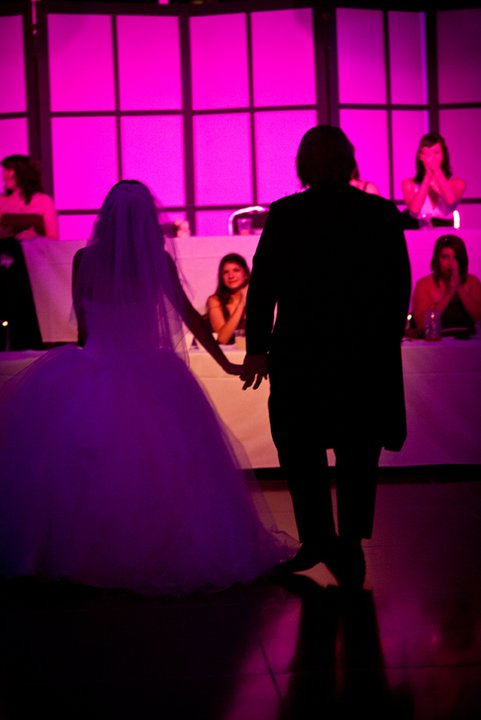
Rachel and husband on her wedding day...
Rachel and husband on her wedding day…

I cannot remember who found “who” first. Rachel Meeks and I have exchanged emails and virtual “high fives” for a couple of years now. She is the talented and witty author/owner of “Do I Look Sick?”. You can check out her blog here: http://doilooksick.com/  Rachel has a knack for telling things like it really is. Folks with invisible illness and disability have trouble articulating what it is like to live “this way”. Rachel doesn’t have that problem and welcomes dialogue and comments on her blog. Recently, SEX was discussed here at Hearing Elmo. Even folks without disability or invisible illness shy away from the topic. Not us. It is Rachel’s – and my own – hope, that by openly talking about this topic, people may discover they are not alone and that there are others who deal with the same issues. Hearing Elmo, welcomes Rachel as a guest author this week!

Just after I got engaged to my high school sweetheart, I was diagnosed with endometriosis. All chronic illness has an effect on sex, but endo especially so – it’s a chronic pain condition in which the lining of the uterus ends up outside the uterus, causing intense pain centered around the uterine area – AKA all your sexy bits are the parts of you that are “sick” and hurting. That’s not really something you want to tell someone who thought they were marrying a…to be frank, normal person. Sex isn’t everything in a relationship, but it is a lot – especially to men. I’m not saying that to be sexist or anything, I just mean that there’s scientific proof that men have a greater physical need for sex, and that their minds are more geared towards sex romantically speaking. The way that long talks and thoughtful gifts say “I love you” to a woman is the way that sex says “I love you” to a man.

That’s what I’ve come to know after almost four years of marriage. But when I was a 19 year old fiance, I had a very different idea of the role sex plays in a relationship. In my mind, sex was like, the second most important thing just under love. And I had grown up believing the stereotype that men enjoy sex more than women, and that it was mostly an act of giving. That’s a nice fluffy way of saying I didn’t know anything about it because I didn’t think I was supposed to. I didn’t know what I liked or didn’t like sexually, I wasn’t very familiar with my own anatomy, and sex was actually even embarrassing just to think about, much less talk about. So now, I wasn’t faced with talking about sex – no, it was worse. I was going to have to talk to the one person who I really desperately wanted to like me and only know the best things about me, and explain things I barely understood. I’d have to explain the gross stuff that makes up my period was all over my gross organs. I’d have to use the word “uterus.” I was embarrassed enough to die. Luckily, he really loves me and never had a thought of calling off the wedding – even with a foreboding sexual forecast and the possibility of fertility problems down the line.

Rachel 2

“Coming out” to him about my condition was a pretty good indicator of how our sex life was going to be, even if I never had endo. I’ll be blunt – sex was awkward for us. We had passion and desire but we also had totally unrealistic expectations of TV sex that’s always perfect. We both really wanted to have that wordless, passionate sex that you see in movies. Without any feedback or communication, neither of us was getting a lot out of our sexual experiences. They were nice. They were just ok. They were….very odd. So we thought we must just be bad at it. It also didn’t help when it was extremely painful because of endo. We both felt like such losers. You never hear about this kind of thing. Couples get married and you just assume that because they’re in love, sex is smooth sailing. It’s actually really complicated, and I wish the world was less hush hush about it. At the very least, I wish things were open enough that we would have somehow known we weren’t the only ones.

After we became disillusioned about magical movie sex, we got bitter and mean. We wanted to have sex, but I was always hurting and we didn’t know how to talk about it so usually when we’d try, it would turn into a fight. What’s interesting is that when you get angry, you also get honest.

After our stormy stint of fighting over sex, we went through a dry spell. We lost the anger, but kept the honesty. I started talking to him more about endo and even bringing him to the OBGYN with me. We’ve always been best friends who could talk about anything – except sex. Once we started talking about endo, we broke down the last barrier between us. We became closer than ever. And we brought that talking to bed with us. We let each other know what feels good and what hurts. We give a heads up when we’re going to change positions or we want to try something new. We actually tell each other what we want and what we like. If I didn’t have endo and we didn’t have to go to the hospital and I didn’t need his help, I might never have opened up and talked with him like this. Now that he has a chance to fully understand my disease, he can help me with medical decisions too. But most importantly, we can both have a real sex life now – not only a fulfilling one physically, but also emotionally.

Endo sucks, and it sure makes sex a challenge. But I can also look at it as an opportunity for us to grow closer. When it feels like your illness is in the way of intimacy, try to see the way around it. It may just be better than your original plans.

Rachel Meeks

Do I Look Sick?

————

Denise Portis

Hearing Elmo

Post-traumatic Growth (Part 2)

pier

Post-traumatic growth. If you missed part 1 of this series, click HERE for that if you wish. In the first post we looked at what can cause post-traumatic growth, and what changes might occur in our lives as a result of the growth.

This week, however, I want to address the WHY behind growth. Have you ever wondered why some people come out on the other side of trauma a much better person? Why do some people give up, while others thrive? Is it something within the person themselves, or is it the environment they are lucky (or unlucky) enough to be in post-trauma? Does personality style have something to do with it? What decisions did the person make to get them through the worst of it? What was the time table of those decisions? Is there a magic formula? (Would you like to participate in a survey? It is very short, confidential, and your “voice” will be used in research about post-traumatic growth! Click HERE and scroll to the bottom of the page for the link about the short survey)

These are all important questions. These important questions are difficult to answer, however. In all the years I’ve thought about these questions and other related “survival” issues, I believe little can be assumed and the variables are infinite. There are, however, a few key points that I think are valid. You may not agree with me and that is OK. After all, this is not a scientific analysis and I only have personal experience and the testimony of others to generate my list of probable reasons some people experience growth. So here we go! 🙂

Taking One Day at a Time

One thing I have noticed about people who experience growth, post-trauma, is that they do not start out with long-term plans. Especially in the beginning – you may be in survival mode. You go to bed each night with the sense of, “Whew. The day is over. I made it“. There is not any fanfare or celebration of the fact, it is simply what IS. You survived.

In that day-to-day survival you may have drawn on specific helps that for YOU, allowed you to make it through that day. It may be faith, a supportive person or persons, a mentor, a counselor, a cause or purpose… love. It may even be things that some people define as negative: anger, stubbornness, revenge, or even hate. By themselves one asks how can something so ugly be used to help you survive? These things may be inter-woven into your thoughts and feelings and played a part in your survival for that day. Positive or negative, it isn’t one specific, “magical” formula. I have met people from all walks of life with different supports in their life, some of whom have grown post-trauma and some who have given up.

For some, enough time has gone by that you may feel like you can begin to look and plan for further down life’s path. Just do not be surprised if something happens and you find yourself in survival mode again. It could be triggered by something that seems so irrelevant and inconspicuous. Why is this true?

I think it is because post-traumatic growth is a PROCESS not an outcome. Those who grow do so because they continue to “take one day at a time”. They recognize there will be setbacks. They recognize there isn’t a prize or even a finish line. They know and realize that life after trauma may include days in which you are only able to trudge through.

Supports

I have met a few people who insist that they made it through a traumatic experience and grew from it all on their own. They found the wherewithal inside themselves and pushed through the crisis. However, I believe that even those whose “claim to fame” is that they are completely independent miss the point. Someone, somewhere had an impact on who they are as a person to be the kind of survivor who could dig deep and push themselves. It may not be someone who stood right next to you while you began your “life after trauma”. It may be that it was a person or persons who impacted your life years ago.

For many, however, it is a current support system. You do not have to be married or in love. You don’t have to be a person of faith. You don’t have to have a BFF. You do not have to have a dog (grin). Sure… these things can be used as supports, but they aren’t necessary. I know this because I’ve met far to many people who have experienced post-traumatic growth who do not have these things. The key is that they reached out to something or someone.

The danger of experiencing the worst life has to offer is isolation. Not solitude – something we all need from time to time to grow our souls – but isolation is the enemy of those seeking to grow post-trauma. Some folks have tried to tell me that they isolated themselves to survive. It hurt to much to interact with others “after”. If you isolate yourself long-term you are not going to make it. I’m not trying to scare you. We are human beings and at our very core we need other people. When you isolate yourself, another cannot find you to help. Those YOU were meant to help are also out of reach. The way to avoid isolation is to reach out. Join a support group. Go see a counselor. Write. You have to let others know you need them.

“And in this curious state I had the realization, at the moment of seeing that stranger there, that I was a person like everybody else. That I was known by my actions and words, that my internal universe was unavailable for inspection by others. They didn’t know. They didn’t know, because I never told them.” Kim Stanley Robinson.

An important side note? If you reach out to someone who needed you immediately after a traumatic event – a life-altering illness or diagnosis, the death of a loved one, victimization, violence, catastrophic loss – don’t forget to continue to check in with them FOR THE REST OF THEIR LIVES. Remember. Post-traumatic growth is a process, not an outcome. They remember the anniversary of the death of their loved one. They remember the accident that changed their life forever. They still have nightmares. They still need you. Continue to be there for them. When something traumatic happens to you (when – not if), you will need people who walk along side of you until the end as well.

Finding a Purpose

No worries. I’m not going to spout off an over-used platitude about lemons and lemonade. When we experience something traumatic we become an expert – at times an unwilling one. No one understands you like YOU do. Some people who experience traumatic events, collaborate with others and see significant changes in laws, supports, or after-care programs. They have the passion to see it through and to demand change.

Others, however, may not experience growth in such a measurable way. Yet, they too make a difference. There is a person in my life who has advanced MS. She writes me about three times a year. Her letters are written in a huge font because her eyesight is so poor now. I believe it very likely takes her hours to write me one newsy email. For a long time she had no idea what those emails meant to me. And so I told her. She is a transparent, significant human being who just so happens to excel in encouragement. She has impacted my life. I tell her so. She doesn’t get out much and often isn’t healthy enough for visitors. But she can use her computer on a good day – and she reaches out. She chooses people she thinks she can encourage and writes them. She may have to nap the rest of the day just to recover. She has a purpose. She matters and what she does matters.

It can be big or small. It can be something related to what you went through yourself, or a path that simply has you helping others that may be hurting in a different way. Find something or someone to be involved with and do it with passion and a purpose. It is often that cause or purpose that sees you through those days you find yourself back in survival mode…

… because it is a process – not an outcome.

You, too – CAN

I tried to grow tomato plants one summer. After only 4-5 weeks, the plants began to die and I noticed a smutty, yucky, kind of growth on the leaves, stems, and fruit. Disgusted, I pulled them all up and soothed my hankerin’ for ‘maters by visiting the produce department and local farmer’s markets. The next summer I carefully tended to new “baby” plants and tried again. In less time, the fungus-like growth was back and I was mad – and hungry for tomatoes.

I had to empty out the large planters and scrub them down. I had to buy new top soil. I had to do – what I SHOULD HAVE DONE the first time ’round. By the early Fall, I finally had fresh tomatoes from my own backyard.

You may not be experiencing growth because you have isolated yourself. Perhaps you tried – too soon – to make long-term plans. Maybe you didn’t immerse yourself in a cause to fulfill that need we all have to have a PURPOSE. Maybe you aren’t growing because you need to transplant yourself.

Are you surrounding by negative people? Do people tell you that you CAN’T do that NOW? Sometimes well-meaning people promote fungus-like growth. They destroy our fruit. We need to set boundaries and show them we CAN. We need to find people who believe that we CAN.

I welcome your input and feedback.

Denise Portis

© 2014 Personal Hearing Loss Journal

Post-traumatic Growth (Part 1)

team chatter 2

Nope.

That isn’t a typo. You have probably read articles or news stories about post-traumatic STRESS (or PTSD), but did you know that post-traumatic growth is a related and now often studied psychological topic? There is even a new field called psychotraumatology. Try saying that 5 times really fast…

At Hearing Elmo, I do my best to present topics related to invisible illness, disability, or chronic conditions. Guest writers are encouraged to have some connection to one of those topics.

*SIDE NOTE* Hearing Elmo welcomes guest writers any time! Email me for more information at denise.portis@gmail.com with “Hearing Elmo” in the subject line.

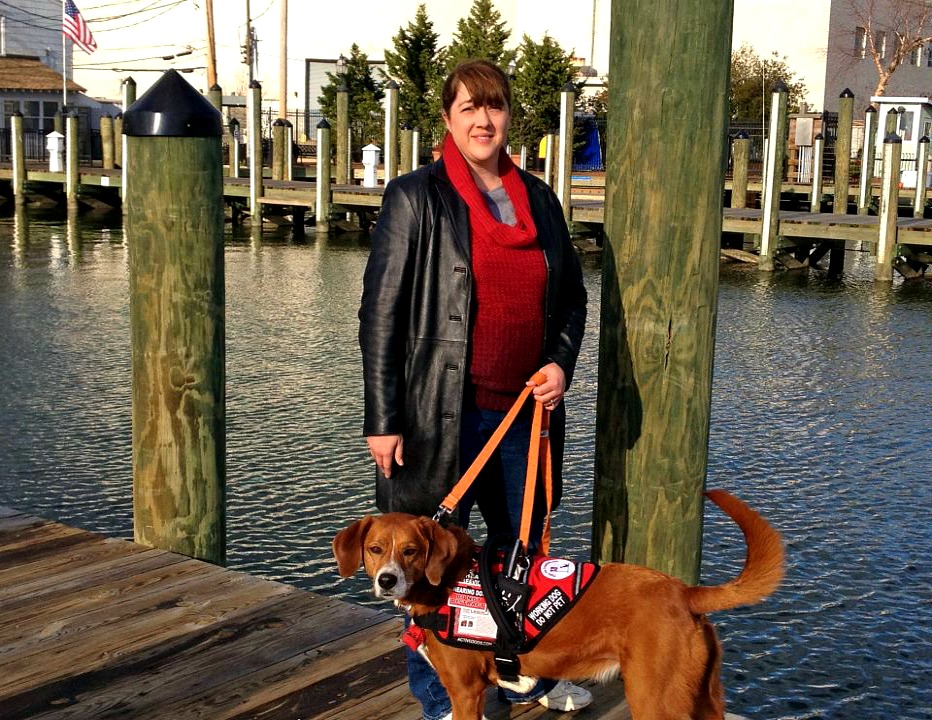
Chloe after 2013 re-certification

As you know, Fidos For Freedom, Inc. (FFF), is a big part of my life. My service dog, Chloe, comes from FFF but I also stay connected through weekly trainings and volunteering for various jobs each year. The people there have become “family” to me and I have learned so much about the disability community through my connections at this wonderful organization. Something I have observed, is that even if you’ve taken the step to train and be matched with a service dog to mitigate your disability or illness – something that can take “guts” as it can make the invisible, very visible – not everyone responds to “bad things” the same way. Many times it is simply because the person has not adjusted yet.

As my dissertation looms in my very near future, I am already thinkin’ about…

What am I gonna do? (No worries. I *can* use a scholarly voice when the environment calls for it <big grin>)

But back to my original topic! How do people come out on the other side of something traumatic, and find that they’ve grown? Do they have something in common or is the outcome as individual as the process? How do you survive and be BETTER and not BITTER?

These questions are on my mind. A LOT.

I receive hundreds of emails from readers each year and try to respond to each personally. I’m always tickled that a common question seems to be, “How do you have your ‘stuff’ all together so well? I’m floundering here!” I am always quick to respond with an honest evaluation about my own life “after disability”. Folks are surprised. I don’t try to sugar-coat how I’m doing in my own life. I deal with the same things you do:

Depression

Anxiety

Suicidal ideation

Pessimism

The trick is not to stay there. Sometimes it can be worked through on your own. Sometimes it cannot. Sometimes we need help. So how do some people come out on the other side of something traumatic – better? How do people grow in spite of experiencing something devastating?

This is going to be a “two-fer” post. Meaning: I can’t address everything I want to cover in one post (smile). For this first part I want to cover what kinds of things can cause PTG (post-traumatic growth), and clearly define what it is. Next week we’ll look at some other related issues.

What causes Post-Traumatic Growth?

Traumatic experiences.

Kinda anti-climatic, huh?

But for OUR population – those who live with disability, invisible illness, or chronic health conditions – what is a traumatic experience? It can include:

disability

invisible illness

chronic physical or mental health conditions

devastating diagnosis

sexual abuse

violence and victimization

divorce or loss of an intimate relationship

death of a loved one

war

poverty

Basically – anything that can cause stress. Not the run-of-the-mill kind of stress. You know the kinds of stress like, a “bad hair day”, my cat threw-up in my favorite shoes, I locked myself out of the house, or I ate bad sushi. We’re talkin’ the kind of stress that produces trauma. It may be specific to YOU. For example, I have met people who have heard me speak on various topics and have come up and shared that they “don’t get why hearing loss would be a reason to develop depression“. They have hearing loss and they have coped just fine. Variables, my friends… variables. Personality, background, resilience, support, worldview, gender, economics – the list goes on an on. You may respond to a life event completely different than someone else. That’s OK. This is why you hear me encourage folks to reach out and SHARE. Your experiences may help another. You won’t know if you don’t talk about it.

What is Post-Traumatic Growth?

PTG is actually something that came from a branch of Psychology called – Positive Psychology. There are scales and inventories available to see where you rate in PTG. I first started reading about it back when my cochlear implant was first activated. “Hearing again” was a tough journey. I stumbled across the term coined by Drs. Calhoun and Tedeschi. According to them,

What is posttraumatic growth? It is positive change experienced as a result of the struggle with a major life crisis or a traumatic event” (Posttraumatic Growth Research Group, 2014, para. 1).

Their research centers around 5 changes that occur in an individual, post-trauma. These include:

1. New opportunities

2. Change in relationships

3. Increased sense of one’s own strength

4. Greater appreciation for life in general

5. Spiritual or religious domain (Posttraumatic Growth Research Group, 2014)

Have you been diagnosed with a super scary, perhaps life-changing diagnosis?

Have you acquired a disability?

Were you injured, permanently changing the way you live life?

Have you experienced something that left scars (physical, mental, emotional)?

You can experience growth. It may not happen overnight. It may mean that you experience tremendous loss, fear, and grief at first. You may blow it. A LOT. However, I don’t know about you, but I experience a sense of hope knowing that something good can “come of this”.

Comment here or send me a confidential email. I’d like to know how you’ve experienced GROWTH. There is no prerequisite measure. Maybe it wasn’t a lot of growth. Maybe you experienced “three steps forward – two steps back” throughout the process. I’d love to hear from you!

Denise Portis

© 2014 Personal Hearing Loss Journal

Posttraumatic Growth Research Group. (2014). What is PTG? Retrieved January 2, 2014, from http://ptgi.uncc.edu/what-is-ptg/

Twinkle Lights that Don’t Twinkle

twinkle lights

I discovered something by accident last year. I don’t like for twinkle lights to twinkle. I mean… I want the lights to be ON and to actually light up, but I don’t want them to blink. Part of living with an acquired disability is learning to make adjustments. Having Meniere’s disease may mean that you learn what may be specific triggers for you and do what you can to avoid those triggers. I have problems with lights. This is part of the reason I don’t drive at night anymore. I don’t have night blindness, but oncoming traffic light triggers extreme vertigo. So I don’t drive at night. It’s a pain, but a necessary change in my life.

Other kinds of lights bother me. I discovered that Christmas tree twinkle lights make me feel as if the room is rotating. Quickly. So I am making adjustments that include a delay in decorating the family Christmas tree until I can get to the store to buy more twinkle lights – ones that don’t twinkle. So – picture with me plugging in our Christmas tree every evening and BAM. LIGHT everywhere. But it won’t twinkle… which means I can hang out in the same room as the tree is in without heaving all over the nearest family member.

Making Adjustments

One of the wonderful things about having a blog with numerous guest authors is that I have learned a bunch of things about other disabilities. Being a client at Fidos For Freedom, Inc., has also helped because I have been able to personally get to know people who live with other kinds of disabilities and chronic illnesses. Through the years I have learned about some of the adjustments that folks use to navigate life:

1. Get more rest

According to the National Sleep Foundation, average, healthy adults need 7-9 hours of sleep every night (National Sleep Foundation, 2011). While most of us very likely receive far less than that, the experts agree that this is the amount we should strive for every night. However, people who live with disability or invisible illness may actually require more. At the very least, these folks should make the 7-9 suggested hours a priority.

I now know that people with MS, fibromyalgia, chronic fatigue syndrome, and various neurological disorders may not only need a good night’s rest, they may also need a daily nap. Doing so may mean that they can continue their day performing at their best. Not taking one may mean they are more at risk for an accident, “brain fog”, etc. One of my friends actually said her doctor told her, “If I need to write you a prescription to take a nap everyday so that you can get the rest you need, I’ll write you one!” That’s what I need. A prescription for a nap! 🙂

2. Leave Home Prepared

People with acquired disability likely learned the hard way to leave home prepared. That may mean making sure you have extra cochlear implant batteries. It may mean that you have an extra cane in the car. Maybe it means that you make sure you have an extra meal or snack if you are diabetic. You may have a medical pack that holds injections, emergency contact information, medicines, etc. If you have a service dog it requires that you walk out the door with water, an extra meal (in case caught away from home during mealtimes), clean up bags, vest and I.D. Spontaneously running out the door while only grabbing your keys is something you just can’t do anymore. But that’s OK. Learning to leave home prepared really takes very little time and in the long run can only help you.

3. Medic Alert Identification

Whether you wear a medic alert necklace, bracelet, or carry a card, you probably have some way of letting emergency response personnel know about special medical information that may just save your life. My own bracelet was so old, the engraving was barely discernible after years of scratches and wear-and-tear. For less than $30 I replaced it. When I told my husband he’d see a charge for it on the credit card bill he said, “You know? I don’t even know where mine is. I probably should replace mine as well”. I sat there stunned for a minute – looking at my significant other who happens to only have one kidney and gave him a “Denise sermon” that was probably not only LOUD, but unforgettable. Did you know…

  • More than 95 percent of respondents look for a medical ID during emergencies.
  • More than 75 percent look for a medical ID immediately upon assessing a patient.
  • 95 percent look at the patient’s wrist to find a medical ID, and 68 percent look for an ID on the patient’s neck.

Some of the stuff out there is very attractive for those who turn up their noses at traditional looking medical alert jewelry. However, I must caution you that there has been an alarming trend suggesting these new options may not be identified during an emergency. Yes, the sterling silver band around my wrist may not be the prettiest thing in the world, but I’m confident that in the event of an emergency it will be recognized for what it is. I’m perfectly happy being “smart” if not fashionable.

4. Check the forecast

Meteorology is NOT an exact science. I always check the forecast. I may not be able to call in sick to work when it is raining and a Meniere’s flare kicks my butt, but just knowing in advance the weather is going to be bad can at least help me mentally prepare. I can make sure I grab that cane in the car and remember to hold Chloe’s vest handle instead of just her leash. People who have mobility challenges may have to make schedule adjustments if they cannot easily or safely navigate away from home if the weather is bad.

5. Charge your cell phone

Even though I have a hearing loss, with today’s technology advances I can use and carry a cell phone with t-coil settings, text, access the Internet, and much more from a mobile phone. The only problem I ever run into is when I carry around a phone that doesn’t have a charged battery. I’ve done this enough that I think I’ve finally instilled a good habit of always charging my phone at night, and making sure each vehicle has a charger that can be used with the cigarette lighter. I even carry a small charger that I can plug into a computer at work if needed.

6. Other:

Honestly? One could write a book on the number of adjustments one makes when living with a disability or chronic illness. Some of the things YOU do may not even be things someone who shares your diagnosis must do. Don’t fret about Christmas tree lights that don’t twinkle. Even people without disability make adjustments as they go through life. Folks get reading glasses, stop eating spicy food, and walk instead of run for exercise. We do this because we are smart (grin) and malleable. We do what we must. My Christmas tree may not twinkle from now on, but it is still BEAUTIFUL.

Denise Portis

© 2013 Personal Hearing Loss Journal

National Sleep Foundation. (2011). How much sleep do we really need? Retrieved October 22, 2012 from http://www.sleepfoundation.org/article/how-sleep-works/how-much-sleep-do-we-really-need

♫♪ Gloom, DESPAIR, and Agony on Me… ♫♪

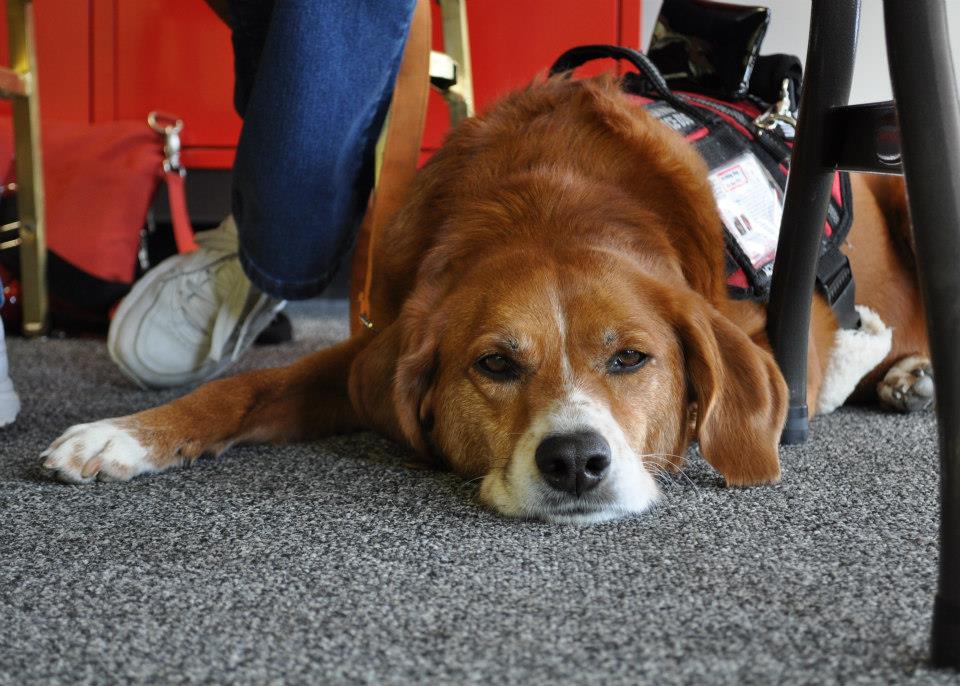
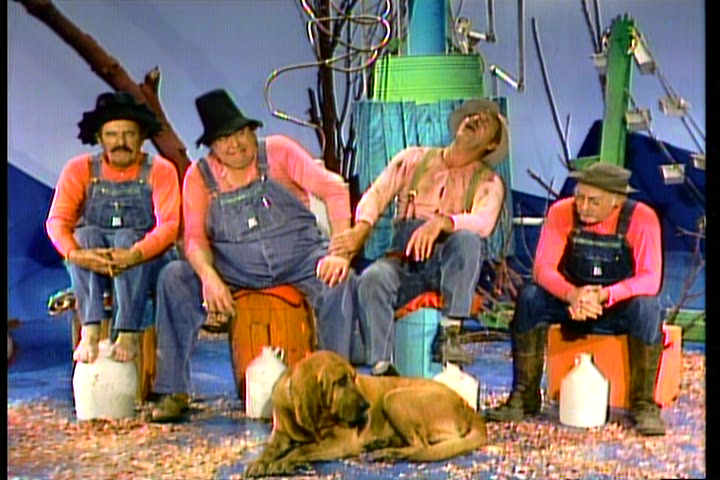
I dunno... maybe it was the hound dog I fell in love with?
I dunno… maybe it was the hound dog I fell in love with?

I have a confession to make. I loved CBS’s “Hee Haw”. Growing up I had three television channels. Thank goodness CBS was one of them. I’d list everything I loved about “Hee Haw”, but frankly I loved EVERYTHING about “Hee Haw”. I’d be listing instead of posting! Some folks hated it – even some of my siblings. But I was a true fan. I loved all things musical, even the “Lawrence Welk Show” and the “Donnie and Marie Osmond Show”. Go figure.

One of the weekly skits was done by a quartet (sometimes trio) of regulars singing “Gloom, Despair” written by Roy Clark and Buck Owens. It is a “right cheerful song” – <BIG GRIN>. Here are the lyrics:

Gloom, despair, and agony on me Deep, dark depression, excessive misery… If it weren’t for bad luck, I’d have no luck at all Gloom, despair, and agony on me…

If you’d like to listen to the lively tune, CLICK HERE.

Now that I’m in my late 40’s and have some “life” tucked under my experience belt, I hum or burst out in song far more “Hee Haw” songs than Lawrence Welk or Donnie and Marie tunes.

If It Weren’t for Bad Luck

Have you ever felt that “if it weren’t for bad luck, I’d have no luck at all”? Have you ever felt as if you were facing “deep, dark depression”? I suppose if I had to pick ONE constant theme in various emails that I receive each week from readers, it would be that people with disabilities, folks living with chronic illness, souls who live with invisible illness… deal with depression. It can be mild forms and only a sporadic nuisance. Maybe it is something you deal with on a daily basis, however, and a more chronic and constant issue for you.

I’m big on citing scholarly research about various topics. However, depression is so closely linked with various disabilities and illnesses, that there are simply to many studies to choose from for this post! I, too, struggle with depression. Gloom, despair, and agony… well OK, maybe not that last one – grin!

Something I’m having to learn to deal with is that I also cannot take many medications available to some who struggle with mild, moderate, or major depression. Dizziness and vertigo are the #1 side effect listed by most – if not all. Having Meniere’s disease can complicate things. You already know I fall a lot. However, I also lose consciousness a great deal from the fact that my head makes contact with something else on the way “down”. Seven mild concussions in five years means that I have to traverse my life carefully and methodically. I have to make decisions to lesson my chances of getting dizzy and falling. What’s a person to do if medications increase your risk of other problems – like falling?

Medications are not the only way to treat depression. As a matter of fact, I believe research shows that best results occur when medications are coupled with cognitive-behavioral therapy. But if taking medications are not an option for you, what can you do? You do all you CAN.

1. Therapy

Talk with someone. If insurance or finances do not make this a great option for you, reach out to folks who may have training in various faith-based arenas like churches or community centers.

Unload on a trusted friend. But do it. Reach out.

2. Self-help books

You can’t go into a bookstore without finding that “self help” books evidently are big sellers. Some of them are actually written by people with real expertise, however. Do some research… find out what is good (not necessarily popular).

3. Join a support group

In a digital age, there are even support groups online. This can be great for people with schedule concerns or privacy issues. There is something pretty special about discussing topics of concern with people who live what you are living. Do you prefer meeting face-to-face? Check out your local library and see what groups might be meeting there. Check with a county commission on disabilities to see if there are area support groups. Consider starting one yourself!

4. Try an “alternative” option

Complimentary and alternative medicines have brought us to a place where meditation, chiropractic medicine, acupuncture, and biofeedback are options for some people. Even herbal remedies for things like mood and depression help some folks. Do your research. Talk to your doctor. There is evidence these avenues have helped people!

Not sure if your feelings of depression are something that actually needs to be addressed? Few problems just go away on their own. When you live with disability or chronic illness, depression can creep into the picture. Psychologists will tell you that it is a co-morbid diagnosis for many who have some OTHER diagnosis. Deal with it. Find something that works for you.

Comments and feedback are welcome! You are not alone.

Denise Portis

© 2013 Personal Hearing Loss Journal

Peek-a-Boo! I Hear You!

peekaboo

When my kids were little we played “Peek-a-Boo” just like other moms with little ones. However, I would say, “Peek-a-boo, I hear you!” and uncover my mouth as well as my eyes. Nursery workers very likely wondered who taught my kids such a simple game – incorrectly!

My readers tell me that one of their biggest frustrations is when hearing folks around them act as if steps they have taken to manage their symptoms = normalcy. Readers with MS have told me that family members behave as if they should now be symptom-free since they are on medications. People with hearing loss are frustrated when family members and friends communicate as if a cochlear implant or hearing aid means they now have normal hearing in all situations. A friend of mine who lives with chronic depression told me how aggravated she was when friends did not understand that she still deals with symptoms of clinical depression despite medications and therapy. I try to tell people that managing our symptoms does not cure the disease or eliminate a disability.

I hear SO WELL with my cochlear implant…

In quiet places

when I’m not distracted

when I’ve had plenty of rest.

At my annual mapping appointment each year, my audiologist continues to say I’m hearing super well! But there are environments in the “real world” where I don’t hear as well as I do in the sound proof booth or in her office. Because of this, my family have learned that despite how well I’m hearing, I need to still see their faces in most “real world” situations. Yes. I get a thrill when I am able to easily talk to them from the other room. But the water isn’t running in the sink, the dishwasher is finished with its cycle, and the television isn’t on as they speak from the distant living room.

Ever once in awhile I reach up to gently move a hand or turn a face. They sheepishly say, “Sorry” and continue what they were saying – now fully facing me. I can’t do this with people I don’t know well, however. How important is seeing speech to understanding and hearing well?

Seeing Clear Speech

We all know a mumbler. Even people with normal hearing ask them to repeat. We all know someone with a heavy, “Duck Dynasty” kind of beard. We all know someone who shyly covers their mouth with their hand when they are laughing and talking.

In a study by Cassie et al., (2005), adults with hearing loss scored the same as those with normal hearing after the speaker was given instruction to face the other person and speak clearly (not loudly). Volume doesn’t help by the way… it only distorts speech. Hard to remember when a friend or loved one with hearing loss says, “huh?” You default to yelling! 🙂

Another study by Reed and Delhorne (2009) showed similar “near normal” results in adults with profound hearing loss when other conditions such as clear, visible speech was included in even noisy environments! (These folks were also aided or had cochlear implants). There are simply too many studies to cite that show how important visible, clear speech is to children who have hearing loss and are learning language.

Bottom line? People with hearing loss hear better if they can see your face. I’m not saying shave your beard (trimming it would be nice, however). Even if the person with hearing loss seems to hear you really well in a quiet room and actually looks away from you while communicating, when other people start filing into the room for the meeting they may need to see your face when you speak to hear well.

As to other kinds of chronic illnesses and invisible disabilities? Please reach out and celebrate the GOOD DAYS with the person you know who lives day-to-day with a diagnosis that is permanent. Your own circumstances could change and you find yourself living with a similar condition.

Denise Portis

© 2013 Personal Hearing Loss Journal

Caissie, R., Campbell, M., Frenette, W., Scott, L., Howell, I., & Roy, A. (2005). Clear speech for adults with a hearing loss: does intervention with communication partners make a difference?. Journal Of The American Academy Of Audiology, 16(3), 157-171.

Reed, C. M., & Delhorne, L. A. (2006). A Study of the Combined Use of a Hearing Aid and Tactual Aid in an Adult with Profound Hearing Loss. Volta Review, 106(2), 171-193.

A Pocketknife to Clean Your Nails

pocketknife

ABOVE… My dad in 2011 when he visited Gettysburg with us.

Do you know every time I retrieve a nail file to smooth, clean, or file my nails I think of my dad? Isn’t it funny the kinds of things that will recall a memory for us? Not the kind of recall that triggers our sympathetic nervous system and launches a flashback in folks who suffer from PTSD. Instead, the kind of recall that knocks on the door of our heart with a “feel good” memory. The memory replays a specific conversation or event. For me, when I use a nail file I vividly recall how my dad would clean his nails with a pocketknife.

I couldn’t have been more than 7 or 8-years-old, for we had not yet returned to the family farm. My dad still worked for International Harvester at the time. One day I sat watching him clean his nails with a pocketknife.

“Why do you use your knife to clean your nails?”

Dad continued to clean his nails and thought about his reply. The man never just “spoke off the cuff”. He responded after a bit, “It does the job”.

“Well, will you clean MY nails?”

With less thought he replied, “I can’t. I can’t tell where your nail stops and your finger starts”. He scooted closer to allow me to see from a different angle how he was using his knife to clean up under the nail. I may have been young, but I immediately grasped why he couldn’t clean MY nails with this unconventional method.

Although I never could bring myself to clean my own nails with a pocketknife, I learned over the years that one can do things just as well by means of unconventional tools and methods. I would not have understood if someone had tried to tell me that I would eventually become deaf and develop Meniere’s disease – a balance disorder, and that by doing so I would have to adopt some new means to navigate my world safely.

Works For Me – But Maybe Not for you

I suppose one of my biggest pet peeves is when folks start dictating to someone who shares a diagnosis how they MUST go about treating that disease or disorder. Just because something works well for YOU, does not mean it will work well for someone else. This doesn’t mean we shouldn’t be willing to tell our story and share what works for us. Peer networks and support groups are invaluable in my opinion. However if I chose to use a nail file to clean my nails, and you choose a pocketknife, all that should be celebrated is that the end result yields positive benefits for us both. Clean nails are clean nails no matter how they got that way.

That doesn’t mean the process to clean nails is always easy. I have to sit to brush my teeth. That toothbrush swishing around in my head will make me pass out if I do not do so from a seated position. I never could sit on the lid of the commode to brush my TEETH. So I step into the bedroom and sit on the hope chest to brush my teeth. I have to be sure to keep my mouth closed so that there is no splatter. Ewww, right? This last week as I was sitting there brushing my teeth, it just hit me wrong. Here I was 47 years old and unable to brush my freakin’ teeth over a freakin’ sink like a normal – erm – FREAK! So…

I started crying.

My husband stepped into the bedroom. I can’t imagine what he saw. Here is the wife sitting and brushing her teeth, sobbing her eyeballs out, toothpaste now EVERYWHERE, including dribbling down her quivering chin. He calmly said, “You OK?”

Did I look OK? Alright, yuppers… I didn’t actually WANT his help. I just wanted to finish brushing my teeth. Those FREAKIN’ ones…

When a person with disability or chronic illness finds a way that works for THEM, it doesn’t mean it is easy. But this is why we are not disABLED. We are differently-abled. It is quite a cognitive and emotional boost to discover you can still enjoy something you did before – only in a new way. It may look strange, novel, or genius… but the reality is “it gets it done”. Yet what I find works for me, may not work for someone else with Meniere’s disease. I cannot safely clean their nails with my pocketknife.

Celebrate the Day

Gee, we live in a wonderful age of technology! When I think about the miracle in that I’m hearing again bionically, and all the cool tools available to me through simple apps on my iPhone, or special assistive technology, I get goosebumps! I live in a country where service dogs OTHER THAN guide dogs are fairly common. Email and texting – two communication devices I utilize frequently, are favored among the NORMAL hearing population. This makes my life so much easier!

Folks with mobility issues, learning challenges, hearing loss, chronic illness, and various disorders have options available here in the U.S. that we did not have 30 years ago – or even 10 years ago! Yet some of the things we learn to do are through our own ingenuity! I have quite literally patted myself on the back and mentally “high 5’d” myself when I discover a new way of doing things. To you being able to do the laundry without actually having to change the altitude of your head is not very impressive. But to me? This is a “WOO-HOO” discovery. But the proper lean formation, use of step-stool and service dog work for me. They may not work for you if you, too, have Meniere’s disease. But be willing to share ideas with each other without dictating proper protocol. The end goal is clean nails after all.

Denise Portis

©2013 Personal Hearing Loss Journal

You’re So Vain…

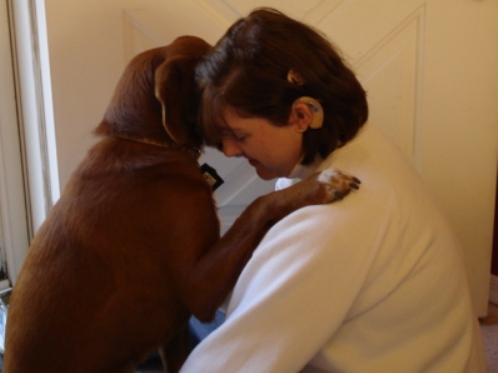
chloe hug

I love my local grocery store. Not so much that I was pleased I had to go twice this week after forgetting a few items, but the aisles are spacious, the employees know me (and Chloe) by name, and I save a lot of money in both sale items and even gas points. My unexpected impromptu second visit this week was disastrous, at least from an emotional standpoint. I came down the aisle looking for those elusive cotton balls that I failed to remember on my first trip and met a lady only slightly older than me with two canes. We stopped to chat for a minute and thought I had met another who understood when she surprised me by saying, “I just couldn’t work with a dog. It seems so vain because so much attention is brought on by being with one“.

I could feel the heat creep up in my face and I blinked back tears as I stuttered out, “Well different strokes for different folks I suppose“. (I’m always so proud of how eloquent I am in a pinch *rolls eyes*).

I really had very little left to say so quickly cut it short and moved on to find those STUPID cotton balls. Because ya know? Now I was MAD after that initial “kick in the gut” feeling so I determined then and there those cotton balls were stupid. Made me feel better anyway.

My husband and I kid around about how vain Chloe is. Her biggest fault as a service dog is that she is too friendly. She’s a flirt. She gets gently reprimanded on days my balance is really off if I put her in a sit/stay while talking, but then she wags and flirts and stretches for a kiss. Heaven forbid someone actually switch their attention to HER! Then she is like, “You love me. Denise loves me. We all love me. I love me.” She’s so vain! (♫♪ Chloe, you probably think this post is about you! Don’t you? Don’t you?♪♫)

Many people with invisible disabilities are not in favor of mitigating their disabilities with a service dog because it DOES bring attention to you. As a matter of fact, I know of cases where folks drop out of training programs when they discover that this service dog will bring unwanted attention to them. That isn’t worth it in their opinion. And… that’s OK. I have Meniere’s disease (a balance disorder) and am hearing again with cochlear implant technology. I HAVE chosen to mitigate those invisible disabilities with a service dog. I wear bling-bling on my cochlear implant processor. On days my balance is REALLY bad, I use a bright purple, metallic cane. This works for ME. It doesn’t mean it will work for YOU.

could’ve should’ve would’ve

If I could’ve… if I shoud’ve.. or if I would’ve – I suppose if I hadn’t been on the verge of tears I would have told this woman:

Do you know that before Chloe, I spent 20-30 minutes before work each day changing outfits trying to find one that hid all the bruises from my falls?

Do you know that when the elevator was temporarily out of service this week I didn’t have to cancel class because Chloe was able to counter-balance for me on the stairs?

Do you know this cochlear implant bling-bling helps people remember to face me when they speak if it is obvious I’m not hearing well?

Do you know all these patches and certification tags on Chloe’s vest legitimize her role as a service dog so that I have less access issues?

Do you know it takes me 45 minutes to get groceries each week now because Chloe picks up the things I accidentally drop compared to the 2 1/2 hour trips I use to have?

Do you know I never have to ask a stranger to pick up something for me now?

Do you know I’m working again because I don’t have to worry about putting students out to pick up pens, erasers, markers, or papers for me in the classroom?

Do you know I never have to worry about missing a phone call now?

Do you know I have the sweetest, “kiss me awake” alarm clock in the whole, wide world?

DO YOU KNOW I THINK YOU NEED A DOG BECAUSE YOU OBVIOUSLY DON’T HAVE ENOUGH LOVE IN YOUR LIFE?

Ok… maybe that last one is unnecessary.

But the reality?

weather vane

People with invisible disabilities or chronic illness are more likely to deal with VANES instead of vanity each and every day. We have things we pay attention to so that we stay SAFE, red flags that remind us we are pushing our limits. Boundaries in place to keep us from over-doing things. I know my body better than anyone… even my doctors. This past week we had torrential rains on Thursday. On Wednesday, I was in “full disability regalia“. Chloe, cane, and fresh batteries in the “ears” and still I wobbled and fumbled my way through the day because there was a system coming into our area! A student said, “Wow your balance is really off today!

I replied, “Yes! I’m a human barometer and much more accurate than the Weather Channel!

A thoughtful pause and then, “Is there an app for that?” (snicker… I love my students).

Like a weather vane that helps farmers or meteorologists know which way the wind is blowing, people with disabilities have things in place that allow them to “take their pulse” each day to see how to safely navigate the world around them.

I’ve met a good number of people who have a service dog. I’ve never met anyone that I suspected of choosing to do so because they wanted the attention. And so please understand that the only one who is vain in my partnership is CHLOE.

♫ You’re so vain
You probably think this POST is about you
You’re so vain
I’ll bet you think this POST is about you
Don’t you? Don’t you? ♫

That’s OK. If Chloe’s weakness is that she is warm and friendly… I can live with that.

Denise Portis

© 2013 Personal Hearing Loss Journal

Intimacy and Invisible Illness

sexy

I had numerous emails come in just during the last week, asking me to reconsider letting readers share their own personal stories about intimacy. We have enough, I think it makes a “good read”. Why I think it is really special though, is because it is a topic that is important, yet one that can be difficult to talk about with others. As always, I invite you to write for Hearing Elmo if you have issues, topics, or concerns that mean something to YOU. A person who lives with invisible or chronic illness, or love someone who does. Just email me at denise.portis@gmail.com to find out how. I don’t want to take away from the message and influence of this post. So I’ll shut up now. BIG GRIN! Here are a few of your stories – in your own words. I’ve made only minor spelling corrections and omitted only minor sections (with notice to the writer) for things that were maybe a little too detailed. 🙂

Intimacy and “Me”

Life happens with or without a hearing loss. Most intimacy doesn’t have anything to do with our hearing loss, but yes, hearing loss can impact how we interact with others.

I longed to have more close friends when I was in junior high and high school. The deal breaker was not that I giggled a little too much, or was a little shy at times. The deal breaker was that I was the odd girl out. I didn’t get included because I couldn’t hear well enough to be like everyone else. I didn’t get the printed memo on social activities. Maybe I was blissfully ignorant, because I ended up with a close dedicated relationship with someone I truly love, and who loves me for who I am.

I do have a few intimate friendships (non-sexual) with just a few friends. I get support that I need from a few individuals, and then I have a lot of acquaintances that I can talk to. And, more importantly, I do get out and participate in activities that I’m interested in, and I am connected to other people.

What I really miss? Is that I don’t have a close friend to call up and do something with on the spur of the moment. I don’t have a girlfriend that I talk to every day, and that asks if I want to grab lunch, or go shopping. I don’t get invited to parties, and I’m not asked over to the neighbor’s house have a drink or sit and chat. I missed out somehow, and I’m not quite sure how to correct that. Is it hearing loss? Or is it personality?

Maybe it’s confidence. I’ve gained confidence in some areas, but maybe I’m still hesitant when I should be reaching out to others. Is it hearing loss? Am I afraid of what others will think of me? Or should I embrace that perhaps it’s a little bit of hearing loss, and a lot of who I am as a person?

One thing I do know, is that I have to make things happen for myself, I can’t wait for the world to come and get me. Hearing Loss or not.

—————————————

Intimacy is affected in my relationship because I’m always fatigued and in the bed resting a lot. My illness also causes pain which comes and goes. Since I’m fatigued and in pain a lot, there are many times that I don’t feel like being intimate. My partner lets me rest and after enough times being told no, he stopped along. This quickly turned into almost no intimacy at all.

—————————————-

My partner and I are intimate despite her disabilities. I guess if we have problems it is that both of us wish we could be more spontaneous, but it just isn’t possible. Because of the issues she deals with, I know it has to be a “good day” in addition to it needing to be a low stress day. She is fast getting to where she will need to stop working full-time. We can’t afford for her to go through the lengthy process of SSDI but working part-time would be in her best interests. I think maybe things can be more spontaneous after she is able to rest more. A 40 hour a week job for some kinds of disabilities is really difficult. It makes all other parts of life shift way down the list of priorities. I love her. If the shoe were on the other foot I know she would be just as supportive. So the spontaneity I do miss, but one does what one must to make sure both are getting their needs met. There is so much more to love than the physical anyway. At least that is what we believe.

——————————————–

As two adults with hearing loss, my husband and I are used to intimate relations with limited sound. That never deterred us; I would say we have a very close, loving relationship. Hearing loss has never affected us much in that area, except that there’s not a lot of ‘giving directions’ happening in our lovemaking since neither of us would hear it! We rely more on observing each other physically than listening for sounds of pleasure, for instance.

For me, the hardest thing was going completely deaf. Lovemaking feels more isolated to me now, especially since we are ‘bedtime, after lights-out’ people. I’m extremely nearsighted and, of course, don’t wear my cochlear implants to bed. Without them, I’m 100% profoundly deaf. So in the dark of night, I can’t hear (or lip read) and I can barely see. The absence of sound is very pronounced to me in that circumstance; even though I didn’t have much hearing before, I had enough to make me feel more connected during lovemaking and less isolated. This bothers me more than I realized it would, but unless we get busy with all the lights on (not happening!) or only if I have my CIs on (very, very rare) then it’s just something I have to get used to.

I miss the closeness of lying in bed, at bedtime, and chatting with my husband. There is no casual conversation for us – I have to actively face him and lip read, and make sure the lights are bright. So now we lie next to each other and read in silence. It’s frustrating to me that I can’t just make casual comments to him like I used to, and have that ease of conversation. It’s now a huge chore because of my deafness.

————————————

I became deaf later in life, I am now 21 but I also have Chronic Regional Pain Syndrome. Intimacy and relationships are difficult regardless of ability sometimes however illness or invisible disabilities further complicate matters. My boyfriend has been wonderful, from learning signed English (ASL confused the poor man) to supporting my decision for a hearing/service dog, but we have our problems too. He sometimes forgets that I cannot hear him and will get exasperated at having to repeat himself, or he may become slightly terse when reiterating what others have said. At the end of the day it’s our open and honest communication that allows us to continue the relationship. Sometimes the little things he says maybe helping me answer the phone or telling me I’m beautiful no matter what, and the not so little things like our date nights or the days I cannot walk, where he me to my wheelchair or through the house, to reminding people at church that I cannot hear and that at certain times even small touches are excruciatingly painful. Our lives are not perfect but no ones is, we each have our faults, but our love lets us see beyond them.

——————————-

I have multiple disabilities and have been married for over 25 years. My husband and I are no longer intimate. Some of it is his fault (high blood pressure meds and failure to discuss options with the doctor), and some of it is mine. I know you, Hearing Elmo, from a Meniere’s forum. For many of us even laying flat is impossible. Being held, or other things that lead up to intimacy is just impossible without passing out or feeling so disoriented you want to throw up. That isn’t exactly helpful to a male ego. I’ve said “not now” so often it is “not ever”. We love each other. We just aren’t loving in that way now. We seem to have reached a point where there is an unspoken agreement that this is the way it is. I’m sure it isn’t healthy on our relationship, but it is where we are right now.

———————————

First a little about my chronic illnesses:

Like you I have bilateral Meniere’s, I have a cochlear implant, and will be getting a second next month. I have pretty much constant disequilibrium and use a walker to get around. I also have chronic migraines (most days I have a headache on the scale of 5 or above). I have asthma that has gotten out of control, so we are working to get that better. I have Idiopathic Intracranial Hypertension (high cerebral spinal fluid), this can cause severe headaches when exercising. But the two things that often inhibit physical intimacy the most is chronic hip and pelvic pain.

My husband and I used to have a very hard time showing intimacy. Mostly this was my fault, I was paralyzed by fear of pain. He was trying hard not to make me feel that I needed to do more than I was comfortable with so he would not flirt or do anything like that. This made me feel more uncomfortable.

After we started going to therapy because I was having a hard time dealing with the loss of my independence, we started communicating better. We’ve always communicated well, but when I started feeling like I was a burden it was hard to hear what was being said….I hope that makes sense. And my husband was having a hard time knowing how to voice things he was feeling. We did not show our intimacy for fear of hurting each other, or for fear things would get started and I would end up having to stop things because of pain or dizziness.

We began getting even closer than before, (we’ve had a great marriage, so it amazed me when things started to get even better.) We talked about everything. Communication that is understood has been so important to our marriage. We’ve always communicated, but we didn’t always make sure the other understood what was being said, we simply assumed it was.

We are now very intimate. Not always sexual, but always loving. It was important for my husband to know that I still wanted a sexual relationship with him, I was just scared. It was important for us to understand that if something happened because of my illnesses that caused us not to be able to follow through, it didn’t mean I was less of a woman, or he wasn’t doing something wrong. It was also important for me to know that he still found me sexually attractive, even at those times when I couldn’t possibly think of doing more than cuddling. Every day we say little sexy things to each other. Like when he’s getting dressed I’ll make little remarks to let him know how sexy he is. He tells me these things all the time, or we reach out and touch each other suggestively. We’ll joke telling the other they are a tease, then answer with, “No it’s a promise”. It’s so important to know that even though our sexual relationship has changed we still find each other as sexy as we ever have. A little flirting here, a little touch there….it all means so much.

When my husband looks and me and tells me that it amazes him that he is still so attracted to me even after all these years, it makes my heart swell…and I know that he is not thinking of my illnesses, or the weight I’ve gained because of the medication, he doesn’t see that, he sees me…and I love his so much for it, and it makes me want to try to have sexual relations more often. Our actual sexual intimacy doesn’t happen as often as either of us would like, but we both make each other feel desired every day, and that has kept our marriage fresh, and sexy.

———————————-

I served USArmy and was discharged in 2010. I am 26 and do not believe I will ever be in a relationship again. I have scars, both inside and out. This subject is important so I’m glad we have a chance to talk about it. PTSD rules my life. Sometimes the scars on the inside are worse than outside scars. I cannot imagine being intimate with someone. Doctors tell me I need more time. I don’t know how time can help since I even have anxiety even in my sleep. I look in the mirror and can’t love myself. How could I hope for someone else to love me? For now I am working on relationships – the friendship kind. Even that is hard. There is so much broken. Maybe for some of us intimacy is hoping for too much.

———————————-

I have a hearing loss and am 23 years old. My hearing loss has become a lot worse in the last 5 years. I don’t date. I’m reasonably attractive and work out to try and stay in shape. I work full-time and have about 4 semesters of school left. So I am in a position that I see a lot of people some of who I’m attracted too. Some are attracted to me too, but once they learn how hard it is to talk to me they stop trying to get to know me that way. At work, I’m able to speech read and write notes to clarify. I follow-up with email a lot after our team meets. I guess it is too many hurdles to jump over to date me. Right now I’m content with finishing school and then seeing if I can get into grad school fairly quickly. My goals keep me going right now. But someday I want to have a family. I would make a great mom. I cannot imagine being intimate with someone. I can’t even communicate on a date in a dark theater! So for now I just keep plugging away reaching personal goals. I do worry that a goal of being a wife and mother may never happen, however. Hopefully I can meet someone who can see past the hearing loss. I’m not contagious!

————————————-

I have MS and I am a male. I always liked to be the odd ball. My wife left me about two years after my diagnosis. I work from home right now and have a service dog. I have my routine but don’t actually get out there and mingle much if you know what I mean. I think maybe I should go back to church. I stopped after my wife left me because I was pretty peeved at God. My brothers tell me I would probably be more likely to meet people at church to look past the MS and be willing to be my friend. Why does that make me sad?

————————————-

I am in my 30’s and have a great sex life I suppose. I date a lot and enjoy the company of others. My friends and family tell me I pick real losers though when it comes to intimate relationships. Some question if I think I cannot get anyone better, someone who will treat me right. I have friends who don’t have neurological disorders who choose losers to be with too though. So it isn’t because of my own invisible illnesses. I guess I just have poor judgment. I’m willing to accept I might lack the self-esteem to try for better though.

————————————-

I am a TBI survivor – motor vehicle accident. I’ve been in a chair for six years and have had no intimate contact since the accident. I don’t speak well. I don’t move well. I’m still here though. I have hopes, dreams, desires, and goals just like everyone else. Do me a favor and don’t tell people like me the right person will come along. Or that someone will love me enough to look past all of this. Love starts with friendships right. So just be my friend. Don’t be afraid of people in a chair. Just be our friend. We aren’t asking for a commitment of more than that. People are afraid of wheelchairs. My left arm moves funny and people either look at me like I’m weird or like they want to help. I hate both of the looks. I have to think a long time before I speak. People come up and talk and then continue to talk even when I’m trying to think about what I want to say. They walk away after they stood there doing all the talking. I want to scream at them. My dad says that people are not comfortable with silence. They don’t understand I’m trying to respond. I would love to have people that would just sit with me and enjoy the scenery. If I could sit without having to listen I can say what I want to say. I have a lot to say.

If I’ve Said it Once…

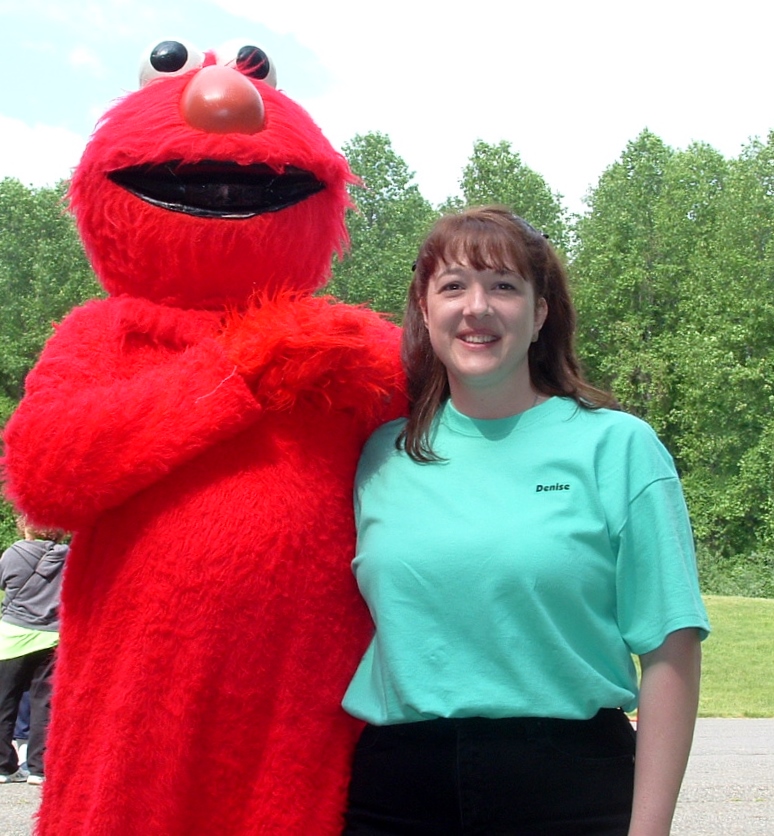
If I've said it once

The photo above was taken at the 2006 Walk4Hearing in Pennsylvania. It was completely coincidental that the Walk coordinators invited “Elmo” to interact with the children on site that day. Poor Elmo had no idea what hit him as I squealed and came flying across the parking lot to hug his neck! Children he was expecting. A grown woman – not so much. However, Elmo encapsulated my reemergence to the hearing world – the first toy I heard months following my cochlear implant activation. Elmo’s voice (emanating from the “Tickle-me-Elmo” toy I found on the shelves of a local store) was the first CHILDHOOD voice I recognized after having been tweaked and re-programmed numerous times following my activation. It was an epiphany for me. From that moment on, I knew I was going to be OK. I could hear again – and more importantly RECOGNIZE voices. So to find Elmo that beautiful August day, 7 years ago, was thrilling for me!

I stepped back to introduce myself and explain “why the exuberant hug“. Elmo interrupted me and mumbled something. I said something to the effect of “HUH?” (I’ve always been particularly good with words).

Elmo spoke up. “I CAN’T HEAR A THING INSIDE THIS SUIT“. I stared blankly at Elmo for a moment and then broke into peals of laughter. Elmo put his hands on his hips and looked as exasperated as a character was able while inside a red furry suit! I apologized. Profusely. Welcome to my world!

Welcome to My World

Something numerous readers email me about is their frustration at trying to explain what is working – or not working, to closest friends and family members. I was at an ADI (Assistance Dogs International) conference in Baltimore several years ago and just happened to be in the right place at the right time; relaxing against a wall in the hallway outside a conference room. Because of my position, I was in the perfect place to see and hear a lady take her husband by the elbow and drag him over to the side (near me) to fuss.

She whispered (loud enough for even ME to hear), “If I’ve said it once, I’ve said it a thousand times… I cannot climb over your bag when you put it in the aisle. Do you want me to fall in front of everyone?”

Readers constantly tell me how frustrated they are to have to repeat “how to’s” to those closest to them. Folks they don’t interact with much they expect to remind about what works well for them and what doesn’t work. However, people think that if they are closely acquainted with someone they don’t ever need to be reminded of what they can do to communicate better, or to assist if needed.

A close friend of mine and follower of Hearing Elmo has MS and deals with fatigue frequently as a result. She was out to eat with her mother recently at which point her body just shut down. Although they were not finished eating, she needed to leave and needed to do so right away. She stood up and wobbled, and ended up asking her mother for assistance. Her mother did so but was very quiet on the walk out to the car. It was there her mom let her exasperation get the best of her.

“I don’t understand how you can be out on the field to oversee your son’s soccer team one day, and need help to the car the next. I don’t know how things can turn on a dime like that with you!”

My friend was shocked – and grieved that her mom, someone as close to her as anyone, failed to recognize what to her was obvious. One cannot pick and choose when fatigue and weakness will hit. My friend thought she had explained this to her mom (and very likely HAD). But her mom needed a refresher course in how symptoms of MS manifest themselves to my friend – a unique individual.

When my frustrated friend relayed what happened to me I thought, “Well welcome to my world”. Don’t all of us who live with invisible illness, disability, or chronic conditions deal with the same thing? We have to repeat ourselves – often.

Learning to communicate

It cracks me up to be on the training floor at Fidos For Freedom, Inc. sometimes. Clients and volunteers are asked to “Meet and Greet”. I hate these exercises. I’m not gonna lie. You pair off in groups of 2 or 3 and shake hands, talk, and introduce yourself. This is very “real life”. It is something we do in the “real world”. But I have to tell you there are few things I dread more. For one thing, that wonderful “voice in my head” via the training room floor’s hearing loop system is gone. Instead there is a BUZZ of voices overlapping and rising in volume all around me. I struggle and ask for repeats the entire time – all the while making sure my dog is in a proper down/stay and not flirting with nearby dogs. If more than one of us in the group have hearing loss, we juggle for position trying to put everyone on our “best hearing side”. If you look around the room there are plenty of people with cocked heads leaning close, or others who have definitely invaded the personal space of someone in their group. I’ve been in groups of people who did not have hearing loss who ask, “Now remind me which is your good side?”

My balance disorder allows me to move just fine. Standing still? Not so much. I wobble when standing still. Especially when standing in a large room with low ceilings and ceiling fans. I’m not the only one to be wobbling though. I giggled out loud one day when I lost my balance and a fellow client who uses a walker reached out to steady me and almost lost her own balance. She giggled right back in response and said, “I forgot you can’t hold still!” It was comical actually. Yes, we may both have balance problems, but we could help each other. We learn to laugh at ourselves if needed. We learn to accept help. We learn to communicate what it is we need.

Significant others and Spouses are “Just PEOPLE”

Do you get frustrated with the people in your life who should “know better”? “If I’ve said it once, I’ve said it a thousand times…”!

Even those we love the most are NOT mind readers. They may know how best to communicate with you if you have hearing loss. They may know that certain things like weather or temperature influence how you feel. They may know how certain medications may help – or hinder you. If I’m honest with you, however, I will admit that even *I* do not know how I will feel from one day to the next. Maybe even from one HOUR to the next. It is my responsibility to communicate my needs. It is my responsibility to give gentle reminders. I am responsible to explain 1001 times if needed.

We need to remember that those who love us? They’re just people. They do the best they can – and 9 times out of 10? They are not being a butt-head on purpose. My own spouse doesn’t even blink when I ask him to take my elbow one day, and maneuver my way around a crowded mall without assistance the next. If I’m telling him once AGAIN that I cannot take a call in a crowded store and to please answer my phone? He simply says, “Oh yeah!” (He’s cute that way)

Someone recently belly-ached to me, “At what point do I assume they will never get it? When do I give up?” Who said anything about giving up? There is no “end game” here. It’s a journey.

Let’s all be willing to communicate – again – what we need.

Denise Portis

© 2013 Personal Hearing Loss Journal