We Need Them

20121223-182709.jpg
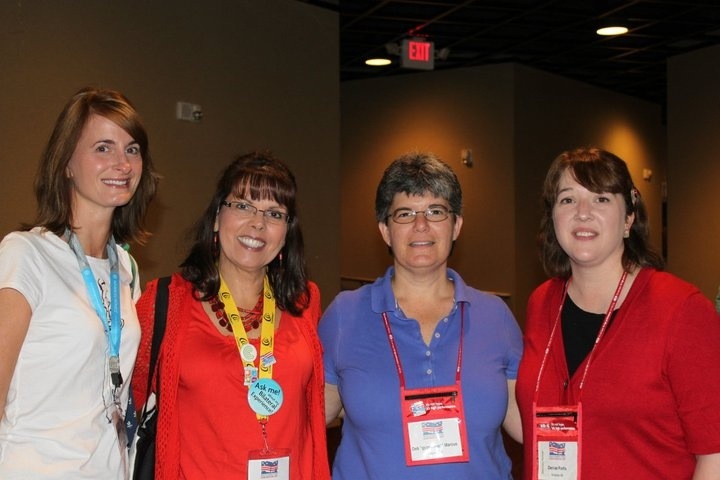
With 3 of my 4 “heartstrings”, a group of cochlear implant ladies – some who also have Meniere’s – who connected through our hearing loss.

I am visiting my parents in Florida as I write this. I haven’t seen them in over a year, so with a lot of cajoling, I talked my husband into giving up a week of his vacation time to go see his in-laws. We went to church with them Sunday morning, and I expected a “Christmas Sermon”… not that this is a bad thing. Their pastor, however, mentioned some things that I had never thought about before, and at my age I was surprised about being made to THINK about some new things regarding the Christmas story.

He read from Luke and brought up that Mary, mother of Jesus, went to stay with friend and cousin, Elizabeth. This was right after Gabriel told her, “Guess what? You will become pregnant”. In that time a 14 or 15-year-old betrothed virgin couldn’t very well go tell mom, dad, and fiancé that she was pregnant. Women were stoned for that… not that they would have ever believed her “I’m still a virgin” story anyway. So off she went to see Elizabeth. Gabriel told her that Elizabeth, too, was miraculously pregnant – simply in a different way. Elizabeth was far past child-bearing age. Her pregnancy was also a miracle. Perhaps Gabriel was giving a hint… GO SEE HER. The pastor suggested Mary NEEDED a friend and someone who would understand. God knew this. Gabriel knew this. Mary needed someone who was pregnant that shouldn’t/couldn’t be, and someone visited by an angel. She needed a friend who was going through similar challenges.

Do We Need Friends?

I have friends from my childhood. I have friends at work. I have friends at church. But do you know the friends I depend on the most are those who struggle with invisible illness or disabilities? Like Mary seeking out a friend and confidant who was also miraculously pregnant, I have sought and found friends who are “differently abled”, who face each and every day with challenges others simply do not have.

Abraham Maslow was one of the first psychologists to suggest we need relationships; we need FRIENDS. Cherry (2012) writes of Maslow’s Hierarchy of Needs, “Relationships such as friendships, romantic attachments, and families help fulfill this need for companionship and acceptance, as does involvement in social, community, or religious groups” (para. 6). Many professionals agree, we need friends.

I have friends that are different than me in personality, beliefs, politics, and culture. Despite these differences, they are my friend. When I’m having a really bad “tilt a whirl” kind of day, falling and bruising, and frankly SICK TO DEATH of having to deal with it all, these friends can sympathize. Yet, the friends I seek out to belly-ache, ask for advice, or beg for prayer even, are those who can EMPATHIZE.

“Empathy is the ability to mutually experience the thoughts, emotions, and direct experience of others. It goes beyond sympathy, which is a feeling of care and understanding for the suffering of others. Both words have similar usage but differ in their emotional meaning” (Difference and Comparison, 2012). My closest friends are those who can empathize. They “get it”.

People with invisible illness or disability often fall into a dangerous, self-imposed isolation. Rubinstein (2012) suggests that there is a difference between solitude and isolation. Solitude is healthy, something most of us do not take the time for, missing out on opportunities to meditate and re-charge. However, isolation is different. It is a negative thing… “We don’t feel better by spending time alone, or if we do, it is only that our anxiety about being around people is quelled” (Rubinstein, 2012, para. 2).

When my progressive hearing loss began to cause significant communication issues, I slowly but surely began to isolate myself. It took an “intervention” of sorts to wake me up to what I was doing. We may isolate from friends and family, all the while trying to convince ourselves that by doing so we help others as well.

“When I move to fast and pass out, it only upsets others, which isn’t fair to them.”
“I hate being trouble to anyone. Best I stay home.”
“My disability makes folks uncomfortable. I’m doing everyone a favor by not participating.”

I know some folks with logical reasons and sound argument for why they do not need friends “post-invisible illness or disability”. Have you ever thought, however, that even if you are better off you are robbing another of the gift of your own friendship? There are others dealing with invisible illness. If you do not make yourself available, you may miss opportunities to empathize and connect with others like yourself. Who better to recognize another with invisible or chronic health concerns, than someone who lives the same?

We need friends. Others need the gift of your own friendship. Make yourself available!

Denise Portis

Cherry, Kendra (2012). Hierarchy of Needs: The five levels of Maslow’s Hierarchy of Needs. Retrieved on December 23, 2012, from http://psychology.about.com/od/theoriesofpersonality/a/hierarchyneeds.htm

Difference and Comparison (2012). Empathy and sympathy. Retrieved on December 23, 2012, from http://www.diffen.com/difference/Empathy_vs_Sympathy.

Rubinstein, Noah (2012). Isolation: Issues treated in therapy. Retrieved December 24, 2012 from http://www.goodtherapy.org/therapy-for-isolation.html

A Stolen Life

stolen life

It’s that time of year again. The end of a semester. The beginning of “panic week” for students in colleges all across the country. For my own classes, this means that students are rushing to get it the extra credit because their grade isn’t going to be  what they’d hoped. I offer a fairly easy, yet time-consuming extra credit incentive.

– Read “A Stolen Life” by Jaycee Dugard

– Take a quiz on it (and pass)

– Turn in a 3-5 paragraph essay of your own reflections on the book

I’m always tickled at reading the student’s responses to this book. It’s an “easy read”, but difficult material. Jaycee Dugard writes about her long-term confinement after being kidnapped. Students normally respond with one of three attitudes.

1. They are ticked off. The theme of their essay is how unfair and unjust this case was. They are upset at all the many “players” along the way that should have seen, should have intervened. They yearn (and demand) justice.

2. They are shocked. Many are fully aware these horrible crimes occur, but to read a first-person account of someone who SURVIVED really leaves them wondering how the world can be so evil.

3. They are grieved. Some feel very down – even depressed – after reading the book. Many actually try to contact Jaycee through forums or email to let her know they look up to her and wish her the best. Some may have experienced some form of abuse themselves so they feel empathy as well. They admire Jaycee’s courage and resilience.

How Do We Respond?

While reading essays this weekend and assigning extra credit points to hyperventilating students, it struck me how similarly we tend to react to life’s problems and challenges.

I know plenty of folks who have responded to invisible illness or disability by being ticked off. They feel it is unfair they have to shoulder this burden. They may enter “offensive mode”. They make sure everyone around them are aware of the unfairness of it all, and to make sure everyone treats them with continued respect – disregarding the changes in their lives. After all, they didn’t ask for them.

Some people are shocked. The rug has been jerked out from under them and they are still sitting on their fannies watching the room spin. How did this happen? Why did this happen? I’m all ALONE! Someone HELP ME! They are often at risk to isolate themselves or become depressed.

Many people feel grief, actually going through the stages of grief as they learn to cope with their “new normal”. They may reach out to others – their peers who face the same struggles that they face each and every day. They eventually find – and become – heroes.

Do you feel that your invisible illness or disability has essentially “stolen” your own life? Do you feel out of control and unable to cope? Have you responded with anger, shock, or grief?

The Internet is a wonderful thing. I truly believe that people with invisible illness or disability are at an advantage compared to the lives of those who experienced the same before the Internet. It is a simple thing to go to your browser to search, discover, and benefit from online forums, support groups, and advocacy communities. You are not alone.

Do you feel as if your life was stolen? Jaycee eventually confided in someone, was rescued and reunited. Need a listening ear? I may be deaf but I listen very well. Or, there are many other avenues that you may find peers to help you through this time. Take part in your own rescue by reaching out. Reunion and a victorious, purposeful life may be just around the corner.

Denise Portis

© 2012 Personal Hearing Loss Journal


Hypochondriasis

Aren’t I brave to post my “just out of surgery and anesthesia” picture? I look “high”, don’t I? (GRIN)

Many folks might be surprised that hypchondriasis is an actual psychological diagnosis. Perhaps it is because we misuse the word hypochondriac a great deal! We tease each other, making a big deal about stating we “may be coming down with something“; or, perhaps you know someone who complains about “something” being wrong with them ALL THE TIME. Something always hurts, or they have aches and spasms and feel “poorly”. In writing this, I can think of one or two people I know personally who are like this. I guess since I’m from the South, I mentally categorize them as WHINERS… although that isn’t a very good psychological label.

Hypochondriasis is misused a great deal, however. A whiner is not necessarily a hypochondriac. The diagnostic features of hypochondriasis includes: 1) a fear of having a serious disease based on a misinterpretation of one or more bodily signs or symptoms, 2) an unwarranted fear or idea of having a disease that persists despite medical advice and test results to the contrary, and 3) a preoccupation that greatly influences or impairs other behavior and the ability to function (DSM-IV, p. 462).

So we all know a whiner… but they are not really a hypochondriac. Sure we use this to tease – or discuss someone negatively behind their back. This person is comfortable verbalizing how they really feel… to anyone who will listen! However, the reality is they do not have hypochondriasis.

Invisible Illnesses and unwanted labels

Yup. We’ve established we all know whiners. Some of us work with these folks. Some of us love these folks. Some of us (gulp) are these folks!

However, in recent months a common theme has come up in many of the conversations I’ve had with people who have contacted me through Hearing Elmo. It seems a good number of folks with invisible illness or disability are often accused of being hypochondriacs. Not simply because the word is misused either. People around them honestly believe it is “all in their heads”.

I posted the picture I did for this post because shortly after sharing this picture when I first had my cochlear implant surgery, an individual (whom shall remain unnamed – grin) told me in response to my “how I’m doing” email that they thought it was terrible I had this surgery – permanently changing the way I hear, all because I was pretending I had a hearing loss. You see? This person knew me growing up. They knew me when I could hear. Approximately 4 or 5 months before my CI surgery we talked on the phone. They didn’t know that:

I was using a captioned phone and was READING what they were saying.

The phone was on speaker and my husband was enunciating words I did not understand.

I tell people when they ask me what motivated me to get a cochlear implant was I was TIRED OF FAKING IT. I had reached an all-time low and struggled to communicate despite my numerous coping mechanisms and communication strategies that I had in place. I was exhausted. I dreamed of being able to communicate orally with fewer difficulties.

I didn’t sound deaf (not having been totally without sound long enough to really develop a “deaf accent”).

I was still teaching and working.

I can’t really describe for you how these comments from this person affected me. I was – in a word – devastated. I couldn’t wrap my mind around why someone would seriously believe someone would pretend to not be able to hear, fake their way through all the tests, and undergo surgery that would enable them to hear – but electronically, all for attention or for “show”.

Many invisible illnesses can be difficult to diagnosis. Some test results for diseases like Lymes, may actually come back with false results. Many pain disorders, including fibromyalgia, are difficult to diagnosis. There are still medical practitioners that believe this diagnosis is “a crock” and it can be difficult to find a doctor who takes your symptomology seriously. It doesn’t help that many women are prone to these types of illnesses or disorders, as women are more likely to be accused of being “drama queens”, worriers, and hypochondriacs. The DSM-IV points out that hypchondriasis is equally common in males and in females (p. 464).

What can YOU do?

The problem with invisible illness or disability is that they ARE invisible. You cannot see the problem. People with invisible illness or disability also start to hide what is going on with their own body. Like myself, I actually faked being able to hear better than I actually could. Some may answer “how are you?” with “fine, how are you” out of habit. However some may respond that way out of FEAR to disclose the truth. Many choose to not even tell loved ones how severe symptoms may be that day because they believe their family members are tired of hearing it.

I checked in with a friend this week to let her know I was thinking of and praying for her. She responded to “how is the pain today?” with “pain is a constant friend”. You may not be honest with how you are doing because you believe others are tired of hearing about your “bad days”. Many choose not to disclose how they REALLY are doing as they fear derisive comments, exasperation, or disdain from those around them.

Do you know someone with an invisible illness or disability? If you ask them how they are – and you REALLY care about them – be a “safe” person for them to be truthful with when they respond! Have you blown it and shown your exasperation before? Do better. It’s not like your poor response has to be your normal response. Are you married to, or do you love someone who lives with an invisible illness or disability? It can be hard; but, wouldn’t you want them to love you and encourage you if the “shoe had been on the other foot?” – rather YOUR foot?

What is the Cost?

I believe that the reason many invisible illnesses and disabilities also have a co-morbid diagnosis of depression and even suicidal ideation, is because those around them do not believe them. They live with constant negative feedback when they do open up and honestly share how they are doing with others. Your disbelief can cause them to isolate themselves – dropping out of life. Your misinformed comments could cause them to start internalizing their feelings, making it difficult for them to trust anyone. Don’t be an – erm – DONKEY. One of the best things you can do for someone who lives with invisible illness or disability 24/7 is to simply BELIEVE them.

After I found people I could trust with how things were REALLY going? I was able to actually deal with my bad days in a more proactive way. Just knowing that someone believed me – empowered me. I couldn’t hear. I staggered because my world really DOES revolve all the time. That belief enabled me to refocus my energy in discovering ways to COPE.

Will you be that person to someone this week? Can you listen without skepticism and provide that assurance?

Denise Portis

© 2012 Personal Hearing Loss Journal

American Psychiatric Association. (2000). Diagnostic and statistical
manual of mental disorders
(4th ed., text rev.). Washington, DC: Author.

“You are Getting Sleepier…”

— Oh for a patch of sunshine and an afternoon nap…

“You are getting sleepier…”

I could have handled a little hypnotic suggestion this past Friday. Thursday morning before going to work, my hearing assistance dog did just what she was suppose to do – sort of. I had just placed my breakfast of bacon and eggs on the table when Chloe alerted me to the front door. I went to see who was there to find the UPS man and a delivery for my husband. I should have been suspicious. Chloe normally wags and flirts with whomever is at the door, but she disappeared while I made small talk with the UPS guy.

Meandering back into the kitchen I noticed all three dogs sitting in a row, Chloe closest to the table of course. My plate was empty. As a matter of fact, it had been licked so clean it appeared to have come straight from the dishwasher. I fussed, even though I knew it was my own fault. Well-trained assistance dog – yes. Still a dog? YES.

I could have predicted the outcome, but was sort of hoping if I kept my hypothesis to myself it may not prove to be true. But my sensitive-tummy service dog was sick as a – ERMDOG, by Thursday evening. As a matter of fact she was sick all night long. I was up every 90 minutes to 2 hours with her – for up to 30 minutes at a time. At 3:30 in the morning, I sent out an email to all my students cancelling classes. I was so tired I was hallucinating. Seriously. After taking Chloe out around 3:00 AM I was freaked out by the hundreds of mice running all over the yard – or so I thought since I was seeing things that weren’t there.

Being a person with disability, I require more sleep than an average adult anyway. It wasn’t until hound dog was feeling better Friday night that I finally got a solid nine hours of much needed sleep.

How Much Sleep Do You Need?

According to the National Sleep Foundation, average, healthy adults need 7-9 hours of sleep every night (National Sleep Foundation, 2011). While most of us very likely receive far less than that, the experts agree that this is the amount we should strive for every night. However, people who live with disability or invisible illness may actually require more. At the very least, these folks should make the 7-9 suggested hours a priority.

People with arthritis may need more sleep (Eustice, 2012), as do people with epilepsy (NYU Langone Medical Center, 2012). What can be frustrating, however, that for many living with invisible illness or disability, sleep disorders are often a co-morbid diagnosis. I know people with fibromyalgia, Lymes disease, and other chronic pain conditions that explain sleep is difficult to obtain. Your body may need extra sleep; however, because of the illness itself the person may have difficulty falling asleep or staying asleep.

Training along side of fellow clients at Fidos For Freedom, Inc., I have a new “family” of folks who have various disabilities and illnesses. Some have chronic pain conditions, some have MS, mobility issues, Parkinson’s, and hearing loss. Since getting to know them over the years, I have heard ALL of them explain they simply do not get enough sleep, or have trouble getting a full sleep cycle in each night. As a result, each have stories to tell of “things getting worse” and symptoms causing near accidents or actual falls, bumps, bruises, etc. I recall overhearing a conversation of one of the trainers talking to a newly matched client. They were falling more and having trouble with even cognitive functioning. The (wise) trainer asked them, “How much sleep are you getting?” The client explained that they were so excited about this new chapter in their life that they had trouble sleeping – night after night. They quickly surmised this may be increasing the severity of some of their disease’s symptoms. Sleep matters!

People with hearing loss may actually require more than the average 7-9 hours necessary for most adults. According to Healthy Hearing (2008), because our brain is actually more involved than our ears in communication, a tired brain can impair how well we hear. Even if we are “hearing again” with cochlear implant, BAHA, or hearing aids, sleep deprivation may impair our ability to communicate well and to maximize what we are able to hear.

People with hearing loss often forget how much harder they have to work to communicate effectively. As a result we actually tire out much faster than our normal hearing peers. If you must pay attention and concentrate wholly on a conversation to adequately understand and respond, your brain actually TIRES.

I also have Meniere’s disease, a vestibular and balance disorder. Because I have to pay attention to stepping up, stepping down, avoiding visual vertigo triggers such as ceiling fans, paying attention to my surroundings to avoid snags in carpet, etc., I actually “think my way safely” throughout each and every day. It can take a lot out of me to constantly remain on “high alert” to possible problems to avoid falls.

So Exactly How Do I get More Sleep?

There are NUMEROUS places online from which you can find information about how to get a better night’s rest. Some of these “tips” include:

1. Avoid caffeine 5-6 hours prior to when you plan to go to sleep.

2. Avoid complex carbohydrates such as breads, pasta, and sweets several hours before bed. Some experts suggest avoiding eating ANY large quantity of food before bed.

3. Avoid exercising within several hours of when you plan to go to bed.

4. Limit “light” – especially those created by many types of technology and electronics. Computers, iPads, televisions, etc., all may stimulate your brain activity and make it more difficult for you to sleep.

5. Worried? It can keep you awake. Try writing down things you need to get done the next day so you do not lay in bed worrying about remembering to do them. If you are worried about things you cannot control, try talking to someone. It doesn’t have to be a counselor – even a close friend or family member may work.

6. Try going to bed at the same time every night. Many stay up later on Friday or Saturday nights. This can actually disrupt our sleep schedule. Our bodies like routine – especially when it comes to sleep. Or, you may love sleeping in on Saturday morning. This too, can disrupt our sleep schedule. Try waking up and going to bed at the same time – no matter what day it is.

7. Many people sleep better in a dark, cool room. Do you need to purchase room darkening blinds? Maybe purchase a fan for just the bedroom?

8. Depending on who you read, opinions vary about whether or not taking an over the counter sleep aid like Tylenol PM or even Benedryl can be helpful. There are also medications specifically FOR sleep, though most warn they are not to be taken long-term. There is a new drug to hit the “over the counter” scene called “ZzzzQuil” believe it or not – made by NyQuil. It has been getting fairly positive reviews. Some may find they need a prescription sleep medication. Discuss with your doctors any risks associated with the prescription.

Do you think you are “getting by” on what sleep you are able to get? There are too many articles (written by medical experts) that show links to very serious, even life-threatening health problems for those who are chronically sleep deprived. Check out this great article by Dr. Stephanie Schupska at WebMD: Click here. “Not Enough Sleep: 7 Serious Health Risks”

Please feel free to comment and share how sleep deprivation has posed problems for you; or, ideas about how to get a better night’s rest!

Denise Portis

©2012 Personal Hearing Loss Journal

About.com Arthritis and Joint Conditions (2012). Arthritis patients need more Zzzzzz’s. Retrieved October 22, 2012 from http://arthritis.about.com/cs/betterliving/a/needmorezzzzzs.htm

Healthy Hearing (2008). Sleep your way to better hearing. Retrieved October 22, 2012 from http://www.healthyhearing.com/content/articles/Hearing-loss/Treatments/24201-Sleep-your-way-to

National Sleep Foundation. (2011). How much sleep do we really need? Retrieved October 22, 2012 from http://www.sleepfoundation.org/article/how-sleep-works/how-much-sleep-do-we-really-need

NYU Langone Medical Center. (2012). Sleep and Epilepsy. Retrieved October 22, 2012 from http://epilepsy.med.nyu.edu/living-with-epilepsy/epilepsy-and-lifestyle/sleep-and-epilepsy

What I SHOULD Have Said

I’m not really a history buff like some of my siblings, but I do like to watch the occasional autobiographical movie or read books on real people. I have, however, always been an Abraham Lincoln fan. I’m so excited about the new movie coming out and hope it does not disappoint. (Lincoln – the trailer). Needless to say, I’m also a big fan of President Lincoln’s quotations. Many of them I have memorized from my childhood and throughout my life.

In preparing for this post, a quote of President Lincoln’s came to mind: “I will prepare and some day my chance will come.”

I’m a big fan of using hindsight to our advantage. One of my favorite training exercises at Fidos For Freedom, Inc., is role playing… actually putting ourselves in scenarios where we face incredulous, doubtful strangers, belligerent business owners, or even just curious but nosy bystanders. These exercises have allowed me to practice what I need to say – not IF – but WHEN I need to have the words to explain my need for Chloe. I know I may need to defend my right to mitigate my disability with an assistance dog.

Experience Can Be a Harsh Teacher

Did you ever have something happen that was totally unfair? Feelings of righteous indignation and self-preservation well up and literally choke the words right out of you? I’m one of those poor folks who rarely says what I should have said  at exactly the right moment. Instead, my feelings are hurt; or, I’m madder than a wet hen. Not… that I’ve ever seen a wet hen despite my childhood experiences of owning and caring for chickens, but I digress..

Ever replay a hurtful or confrontational conversation over and Over and OVER again in your head… thinking about what you SHOULD have said? Well I take Abraham Lincoln’s advice to heart. “I will prepare and some day my chance will come.” Now I’m the first to admit that one can perseverate on a past hurt and be much worse off than if you just let it go. I’m a planner though (at times to a fault).

If my feelings are just hurt and it is someone I don’t know well, I just let it go (though I may replay the entire horrible episode to my patient husband). If it is someone I have a relationship with, I may decide to let them know that I didn’t like how the conversation went and came away hurt and would like to discuss it some more. However, most of the things that hurt my feelings or ruffle my – erm – feathers, are comments from total strangers or mere acquaintances.

How many of you have heard these comments? :

But you don’t LOOK sick.

You were just fine yesterday. What’s wrong today?

You are feeling poorly AGAIN?

Are you ever well?

You seemed to hear me fine the other day on the phone.

Don’t you get tired of being so lethargic?

I think you are just low-energy.

You are such a drama queen!

Are you sure it isn’t all in your head?

I love my dog too, but I don’t self-diagnose a disability just so I can be with them all day.

Maybe you should see a counselor…

I knew you the first 20 years of your life. There was nothing wrong with you then!

Is this all for attention?

Don’t you worry how your family will feel having to pick up the slack?

People with invisible disabilities, illness or chronic conditions often LOOK just fine. Being late-deafened, I speak with little or any “deaf accent” or enunciation issues. With a cochlear implant and hearing aid (a bi-modal, hearing again peep with BLING), I often hear voices well unless there is a lot of background noise. If it is a sunny day, I not only may have very little “wobble” in my step, I may actually be able to move fast. So to look at me – well, I look fine! But on rainy days or in environments with tons of LOUD surround sound, vertigo can hit me like a freight train and cause me to walk as if I’m intoxicated. I usually clam up because if I speak I may vomit. (I’m serious…)

I have friends here in Maryland, and cyber friends I have come to know across the nation – many of whom are fellow bloggers. They have fibromyalgia and/or chronic fatigue syndrome. Some have assistance dogs, some do not. Some have been diagnosed with Lymes disease. Have you ever thought about how difficult it must be to have a chronic pain condition? And oh my goodness… talk about your invisible conditions! If you don’t know the person well enough to see the pain-filled eyes or pinched expression, you would never know that every step is excruciating – that even their clothing rubbing against their skin actually hurts.

Prepare – it Empowers

Those of you who live a life described above or know someone who does, my advice is to prepare. Use hindsight to your advantage. Think about an encounter that really hurt you – or made you squawk. Chances are, you will hear it again. (I know – GROAN – right?) Plan and prepare, even practice what you will say in the future should that same thing happen again. This can actually empower you to face that “next time” with a little more certainty and courage.

But Be Careful…

I do have some warnings, however. Even good things can become bad things.

1. Don’t be consumed by the preparation.

If all you think about is being prepared for a calm but meaningful/careful reprimand, you may unleash it with venom or saccharin sweetness. Your intent becomes a premeditated choice to wound. You end up saying the wrong thing or say it unkindly and in an offensive, war-like manner.

It could also become a set-up or scenario of revenge. Trust me. You do NOT want to live that way. (Tried it – not a winner any way you look at it).

Use your time wisely in reflection and preparation, but then let it go. If you are thinking about it constantly it should “wave the red flags” for you that it has become an obsession instead of a tool to develop positive responses.

2. Don’t look for what is not there.

After wobbling into the edge of the stove and spilling my coffee, I heard my husband sigh beside me. I turned (aimed) and yelled, “What? You think I like spilling everything I carry? You think I enjoy getting burned? Do you think I…”

He cut me off with a gentle squeeze of my arm. “Denise. I sighed because someone ate all my Lucky Charms.”

OH.

If you are reading this and KNOW someone who has an invisible condition, may I give you some advice? I know it must be frustrating to not ever really understand HOW to help or WHEN to help. But the best thing you can do? Listen and believe.

Denise Portis

© 2012 Personal Hearing Loss Journal


The Road to Rescue

Hunter with service dog, Raven.

A young woman I have come to admire, Hunter Lia Zager, received her service dog from Fidos For Freedom, Inc. where I train with Chloe. Hunter has a rare and unusual disease that even leaves her doctors stumped at times. She desperately needs the funds to get her vehicle modified for accessibility. The state is helping with a big chunk, but she still needs to raise over $12,000 herself. Hunter is only 25 years old and currently relies on (often unreliable) public transportation to go to work, doctor appointments, and much more. Imagine being limited to your home many times, simply because you lack a vehicle that can carry wheelchair, service dog, etc. Minimum donations are only $1.00 and you can donate using PayPal, or debit or credit card. If you would do two things?
1) Share this need with others on your own BLOGS.
2) Consider donating – even SMALL amounts add up.

I know times are hard for many people. However, I want to help this courageous, wonderful young woman reach her goal so that she can have reliable, accessible transportation. Please help. Please share! Thank you!

TO DONATE

Hunter’s story:

My name is Hunter Lia and for the first time in never I’m asking for help. At 25 years old I am terminal, but I have never held my arms up and said I was willing to stop my fight. 5.5 years ago I became ill with a very rare neurological disease, Complex Regional Pain Syndrome (CRPS), the most excruciating disease known to modern medicine. The road has been hard, but I am so terribly blessed to have such wonderful people and a wonderful service dog in my life who have helped carry me through the toughest of times.

This disease has consumed my entire body and caused me to reach deep stage 4. CRPS didn’t stop there, it turned my body into melting pot of other diseases. It has paralyzed areas of my body such as my intestines, which are incapable of processing food (Gastroparesis), created a neuro-cardio disease, Postural Orthostatic Tachycardic Syndrome, a neuro-pulmonary disease, Respiratory Dystonia of the Chest Wall, Spinal Stenosis, and countless other conditions and diseases. It is also now believed that on top of all this, Multiple Sclerosis (MS) might be one of my latest additions. Having every aspect of your body fail you is a tremendous burden for one to carry, especially when you’re just 25. Most 25 year olds are able to go out at night, travel, make plans for the future…for me, just the thought of that takes up all my energy. I wear devices for low hearing and low vision, but outside of attempting to take my wheelchair and service dog everywhere, it’s difficult to make my life easier and manage with a disintegrating spine, excruciating pain, and countless other symptoms and challenges.

One reason I’ve struggled so much is that my vehicle is not accessible. I traded in a SUV for a minivan in the hopes I could outfit it to all my body’s needs. I never realized the costs would be over $45,000 to adapt the vehicle. I am getting state assistance, but the last 25% is my responsibility. With all the other medical expenses I’ve had to incur, I don’t have even a fraction of the money to pay the company responsible for outfitting the car. I need your help. I am trying to raise over $12,000 to make my vehicle accessible. If I could do this, I would no longer have to worry I wouldn’t be able to keep my job and health insurance due to transportation challenges, worry about not having a vehicle in an emergency, reach doctors and specialists, and really just live life to the fullest. I know this economy is difficult, but every penny will help me reach my goal. And if that’s too difficult, passing this on would mean the world to me. Thank you for taking a moment to ready my story.

TO DONATE

Invisible Illness Awareness Week

This week marks a very special week for me. I have been a part of Invisible Illness Awareness week for a number of years now. Sept. 10-16 is Invisible Illness Awareness Week.

There are a number of terrific speakers at this year’s virtual conference. You can check out the schedule here:  CLICK

Hearing loss and Meniere’s disease are both invisible. I have struggled both successfully and unsuccessfully through the years in living with these. Those who do so live with a fair amount of frustration and stresses simply because what they deal with IS INVISIBLE. For me, one of the most frustrating things is that my symptoms may vary. To some, this makes me lack credibility at times. For example, I “hear again” with a cochlear implant and BTE hearing aid. I may hear you just fine in a quiet environment and one-on-one. However, if my tinnitus is roaring or we are in a noisy environment, my primary response may be “Huh?“.

I walk, jog, and can even RUN (believe it or not) on sunny days. However, the weather is a real trigger for my own Meniere’s disease. I may be out-walking my assistance dog one day, and the next have her close and wobble like an intoxicated person. For those who do not understand that symptoms may vary, and may fluctuate, it may seem as if I can’t make up my mind as to whether or not I live with a disability.

I have friends who have Fibromyalgia, Lymes, Multiple sclerosis, chronic fatigue syndrome, and other various illness and disabilities. They will tell you that it can be frustrating, even emotionally debilitating, to have folks in their lives choose to scorn, disbelieve, or ignore their own invisible illnesses.

It takes courageous people to live with invisible illness. I hope you will go to IIA (CLICK HERE) and learn more about how you can get involved in helping to raise awareness in your own community. You may not live with invisible illness yourself, but all of us who live with it will tell you that our friends and family that support us are just as influential as we are ourselves – if not more so!

Denise Portis

© 2012 Personal Hearing Loss Journal

They May Not Get It

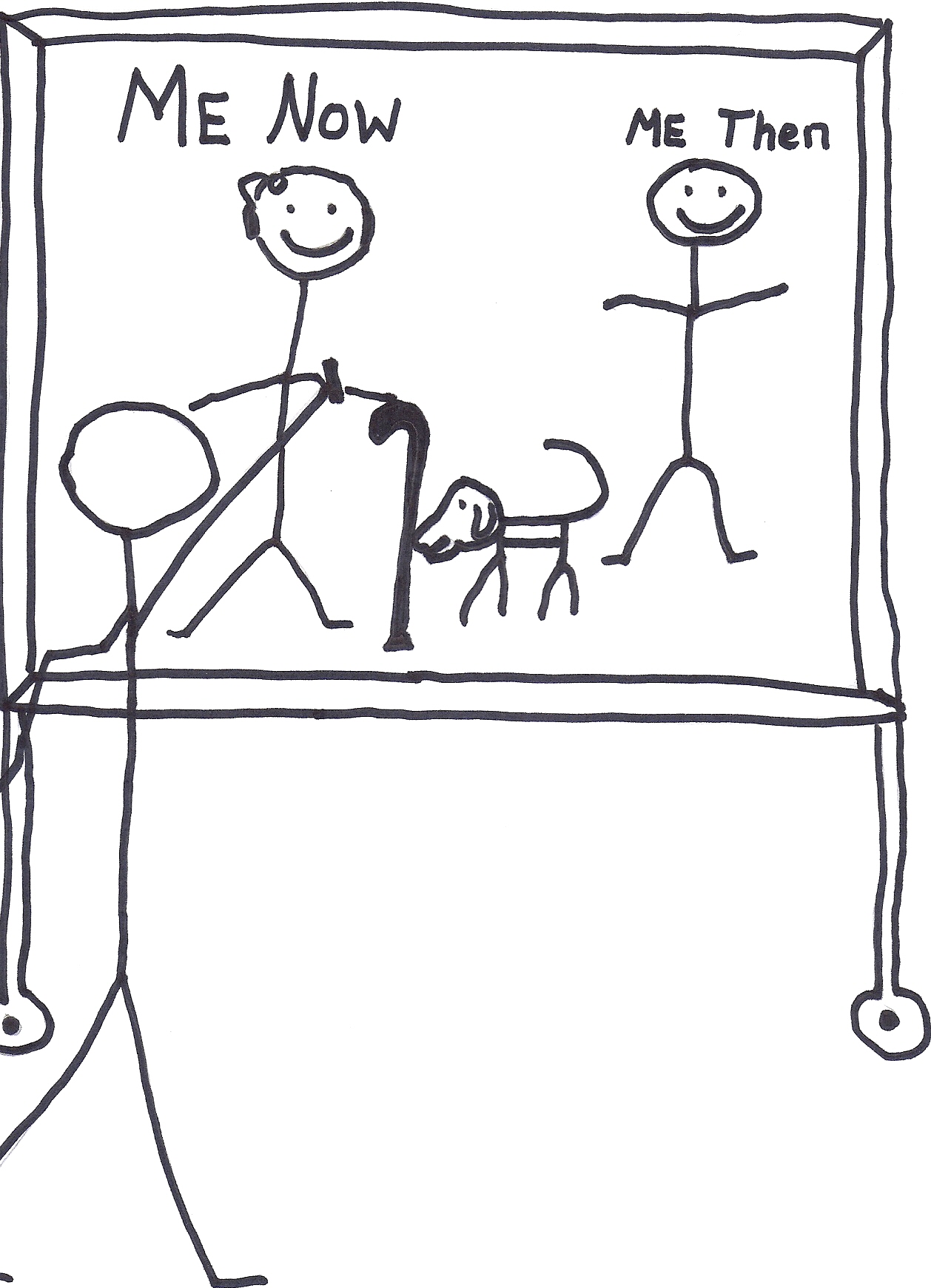
(Hey… I’m not an artist! But have you ever felt this way?)

One of the questions I am asked the most by folks who contact Hearing Elmo, is “Why doesn’t my family accept and understand who I am NOW?”

Before I even begin writing, let me express my hope that many of you will respond and share as I am very aware I do not have all the answers.

Why It Hurts

1. It hurts because the transition from “normal” to where you are was painful.

The school of hard knocks is – well – hard. Acquired disabilities and invisible/chronic illness are not easy to get use to when they first change a person. The journey from diagnosis to acceptance is a hard one. It hopefully has made us “better” and not “bitter”. I can attest to feeling stronger, more confident, and much more in tune with who I really am post-disability. Some of us have progressive symptoms and illnesses. We may adjust, only to have to do so again in a year or so. This too can grow us. But honey? It isn’t easy.

However, BECAUSE it was hard, it is hurtful when folks who knew us WHEN (back before our diagnosis), don’t accept or try to understand who we are NOW. We are still the same people. Our personalities have not changed. Our strengths and weaknesses are all still present – although you may have developed some new strengths because of your life path. So it is difficult when family members may sometimes be the hardest to teach how to talk to us now that we have a hearing loss. Or perhaps you are frustrated because a family reunion at a theme park is not ideal for you because you cannot ride any of the rides. Maybe you are utilizing a wheelchair, walker, or cane. A picnic and hike may not be a good way for you and your siblings to catch up – even if it has been a year since you’ve seen each other.

It’s not like we want recognition for the pain we’ve experienced. We aren’t looking for a medal. However, seeing any eye rolls or hearing frustrated sighs serve only to remind us our family

STILL

DOESN’T

GET

IT.

2. You expect your family members to care enough to accept you.

It’s not wedding vows. “In sickness and in health, for richer or for poorer…” But we have a reasonable expectation that our family members are going to love us and be there for us regardless. It doesn’t matter if we acquire a disability. We are still the same person. If Lymes disease has you aching and feverish a week out of every month, we expect compassion, not disdain. If CFS or MS has you weary, tired, and feeling as energetic as a centenarian, you expect understanding and maybe an offer to run an errand for you. If your eyesight is worsening due to various illness or disorders, you never expect frustrated outbursts when you explain you don’t have a ride to go to your nephew’s graduation.

But friends? Family members can need educating. Advocacy may begin at home. We wish it wasn’t necessary, but it may be very necessary. My kids grew up with me at best, hard-of-hearing. My husband, however, knew me before hearing loss. So I have to be willing to tell (nicely) him what works and what doesn’t. Don’t be surprised if it takes numerous lessons. Some heads are thicker than others.

What to Do

Talk to them. I’d elaborate, but honestly? You need to talk to them. Explain how you feel. Be willing to be vulnerable. Start with phrases that explain specifics and not general accusations. Example:

“When you sigh as I wobble into a shelf at the store it really hurts my feelings. I can’t help it when my world ‘twirls’. It’s hard enough to face the stares and hear the whispered remarks from strangers. I expect better from you. I expect your support.”

They May Never Get it

We can choose our friends, but we don’t choose our family. Blood is blood and it simply cannot be changed. However, you do not have to put up with people who ridicule you or try to injure you with words. You do not have to deliberately spend time with people who only make you feel worse. Sometimes? Sometimes those toxic people are family members. I hate it for you. I hate it for me. But it can be the painful truth.

Sometimes those friends that we choose? They become family. Maybe not by blood. Perhaps not by legal adoption. But folks who encourage us, lift us up, make us better people, understand, lend compassion and energy? They can become like family members. My heart’s desire is that you will find some folks like this if you haven’t already.

I welcome your thoughts on this. Knowing family members may grieve the person they once knew, or have trouble adjusting to the fact you are “differently abled” is important. Be patient. But also put healthy boundaries in place to keep unhealthy people from de-railing your progress with your own adjustments.

Denise Portis

© 2012 Personal Hearing Loss Journal

A Whispered Thank You

Praying Mantis calisthenics – photograph by Deborah Marcus (NC), friend and nature photographer

Not long ago while visiting in NC, I spent an afternoon with my friend, Deb, at the North Carolina Zoo. Deb takes pictures of life in nature; everything from plant life to animal life (and everything in between). She sees things that most folks miss and often stopped and pointed out things I would have just walked right by as my “notice-er” is out of practice. When Deb takes a picture she always whispers, “thank you”. When I first caught her doing it we were just thrilled and tickled that I was actually hearing her whisper of thanks! Cochlear implant sisters-in-arms, we always celebrate those moments.

However, since my visit I have given her habitual murmured thanks a lot more thought. When I tend to think on somethin’, I ponder, speculate, question, and soul-search. Eventually I write about it – even if it takes me almost 15 months to get around to it!

Like a Dangling Spider Cares?

I have to admit, when I first heard her thank a lily-pad, skimming dragonfly, I thought, “Umm. This critter does NOT care if she thanks it for the Kodak moment or not”. But it’s deeper than that. An attitude of gratitude and respect is cultivated. We certainly aren’t born with it. I remember teaching my toddlers “please” and “thank you”. Sure… some of that can be a learned behavior from appropriate modeled examples. Some folks are just naturally friendly and easy-going. Some walk around like a sour puss (I’ll not mention any names) and thanks is a foreign language. Most of us fall somewhere in between, our emotional health dependent on life circumstances. This is why an attitude of gratitude must be created and exercised faithfully to instill a HABIT.

It starts with the small things. Walking out underneath my porch to dispose of an empty plastic container, I thank the spider who just snagged that mosquito. (No. I haven’t found it in my soul yet to thank any skeeters). I try to thank my family members for doing things – EVEN IF IT IS THEIR JOB TO DO SO. I thank my students for turning their work in on time; or, if late, for eventually turning it into me! I thank the very pregnant, adjunct coordinator for my department, as she certainly has better things to do (like nesting) than to email all of us our reminders for the semester. I thank the person in training at the U.S. Post Office for waiting on me – which they stuttered out a very surprised “Your welcome!”. (Doin’ everything I can to assist in a decrease of “goin’ postal”). I thank the cashiers at the grocery store, Wal-mart, and CVS. (I thank the produce department workers, which is only funny to you if you know me well). I thank my waiter/waitress every time they do the smallest thing for me at a restaurant… even though it is their job. I thank “hound dog” for every task she does for me, which only increases the tempo of her wag. Do you see how far this attitude of gratitude can go?

Sitting with a friend waiting for small group to start one Sunday morning, I startled her by saying, “thank you for being my friend”. She sat there with her mouth hanging open waiting for “more” or for “the other shoe to drop” (like… would you DO THIS FOR ME?) She said, “That’s it? Well gee. I’ve not received a thanks like that in awhile!” I grinned at her but thought, ►well why not?◄  Why do we not thank the folks in our life even when there is no real reason? Keeping it to ourselves doesn’t bless anyone.

“Silent gratitude isn’t much use to anyone.”

~ Gladys B. Stern

Expressing our thanks must be EXPRESSED. William Ward said, “”Feeling gratitude and not expressing it is like wrapping a present and not giving it.” According to “Happy Life U” (you should check it out!) expressing thanks can actually improve emotional happiness.

New research shows that practicing gratitude may be the fastest single pathway to happiness, health, long life, and prosperity. In a remarkable study performed by Dr. Emmons, people who kept a gratitude journal for just 3 weeks measured 25% higher on life satisfaction after wards. They exercised more, drank alcohol less, and their families and friends noticed that they were nicer to be around. And the effects lasted for several months beyond the initial 3 week study. Other studies on gratitude are confirming these results. People who take the time to notice and appreciate the good things that come their way through grace, or luck, or the goodness of others are happier and more peaceful. They do better on cognitive tests and tests of problem solving skills. They practice healthier habits, have better relationships, are more optimistic and live longer. Gratitude is one powerful emotion (Happy Life U, 2011-2012, para. 5).
 

So What Has This Taught Me?

I already explained I’ve been thinkin’ on this topic for better than 15 months. I’ve even followed up with a conversation or two with my friend, Deb, about this which likely has her wondering why this is so important to me. I write a great deal about invisible and chronic illness, acquired disabilities, and living victorious lives in the bodies in which we find ourselves living.

Naturally, I had to research if being thankful could help folks in the community of souls of which I self-identify. Wood, Joseph, and Linley (2007), suggest that gratitude can be a powerful social support tool that folks with disabilities can use to help them. They asked 236 folks with various burdens (disabilities, chronic and terminal illnesses, addictions, etc.) to participate in a study that asked them to keep a gratitude journal. Folks discovered their written “thanks” eventually jumped off their pages and out of their mouths. “Gratitude correlated positively with seeking both emotional and instrumental social support, positive reinterpretation and growth, active coping, and planning” (Wood, Joseph, & Linley, 2007, p. 1076).

Allison Shadday has MS. She believes we need to shift our attention. “Sometimes we all have to slow down intentionally before we’re able to genuinely appreciate the many positive aspects of our lives. If you find yourself feeling critical or negative during the day, take a deep breath and redirect your attention to something for which you’re grateful. Notice if your body becomes more relaxed and your breathing more steady. Tune in to how your attitude shifts when you focus on the sweetness in life. This is living consciously” (Shadday, 2006, p. 51).

It seems… being thankful makes us healthy. More than that… it can make us HAPPY. The recipient of our thanks may not deserve it. They may not look like they need it.

Do

It

Anyway.

I think you will find it can change YOUR life, for the better.

Denise Portis

© 2012 Personal Hearing Loss Journal

Note:  You can “see” and “hear” more from Deb at http://visionsofsong.wordpress.com/

Happy Life U. (2011-2012). New Science of Happiness. Retrieved August, 12, 2012, from http://www.happylifeu.com/Attitude-of-Gratitude.html

Shadday, A. (2006). Embracing an attitude of gratitude. Inside MS, 24(6), 50-51.

Wood, A. M., Joseph, S., & Linley, P. (2007). Coping style as a psychological resource of grateful people. Journal Of Social & Clinical Psychology, 26(9), 1076-1093.

Unexpected Perk, or Bother?

Several of the emails I receive through Hearing Elmo each week are questions about assistance dogs. This week is actually “Assistance Dog Awareness Week“, so I wanted to take a few minutes to talk about life with an Assistance Dog.

The first thing I always tell people who have questions is that if you are not prepared for the fact that an assistance dog will draw attention to you, then PREPARE YOURSELF. More importantly? If you are not comfortable with the attention, then an assistance dog is not for you.

Because I have a hearing loss and because I don’t hear well in stores or crowded places, I am oblivious to all the comments my family members DO hear. “Look at the dog!” “Oh look, a working dog!” “Why is that dog in here?” “Mom, why does that lady have a dog in here and why is it wearing a saddle?”

Assistance dogs lend independence to those who chose to mitigate their disability or illness with these special canines. I never worry about missing a phone call. I can do laundry without assistance from a human family member. I no longer burn supper. I always know when someone is at the door. I can shop and go out in public and never worry about not being able to bend and pick something up – important as I constantly drop things.

Some things you may not know that are actually perks of having an assistance dog?

1. Pre-Chloe, a routine doctor’s visit would result in the 3rd degree about why I always have so many bruises. It can be tiresome to field questions about whether or not I’m in an abusive relationship, when I simply fall or run into things a great deal because of Meniere’s disease. Now, Chloe lends legitimacy to those bruises. She reminds doctors why I have bruises because folks don’t go to the doctor with a dog partner if they didn’t need the assistance.

2. I’m rarely bumped into or shoved out of the way now in public. When you don’t hear well in these venues, impatient shoppers who don’t give a “fig” about why you are standing looking at dancing electronic flowers in the garden department, assume I’m being stubborn about moving to let them by. Now they see Chloe and if she doesn’t notice them and cue me, they carefully maneuver around me.

3. I never receive comments like “It’s a little early to be drinking isn’t it?” or “You should be ashamed of yourself” when I’m seen weaving a bit on rainy weather days (comments that have really been made). In the past, if I slammed into an end cap in a store, those around me assumed I was high or drunk. Now people see Chloe and think OR SAY, “Gee, it’s great she has that dog to help her”.

4. I’ve grabbed onto a fellow client’s scooter before (sorry, John) when I almost fell down. He understood. However, when what you grab is a nearby shopping cart, others aren’t as understanding. I once had a grandmotherly person stick her finger in my face and sternly say, “Let… GO”. I mumbled an apology and went my way. Now that I have Chloe, the most anyone will say in a “near swoon” moment is “Are you OK?”

Assistance dogs help people with hearing loss, mobility issues, seizure alert, PTSD, diabetes/blood sugar alerts, vision loss, balance problems, fine motor skill difficulties, and much more. I hope the next time you see someone with an assistance dog in public that you maybe take a minute and tell them that you think their independence with their canine is a great testament to courageous people. Don’t pet the dog or distract it though (grin).

Denise Portis

© 2012 Personal Hearing Loss Journal