Beaver – Destructive or Discerning?

swimming-beaver-344367-m

We have beaver. Actually, we’ve had beaver for about 16 months now, however this summer it is really evident WE HAVE BEAVER.

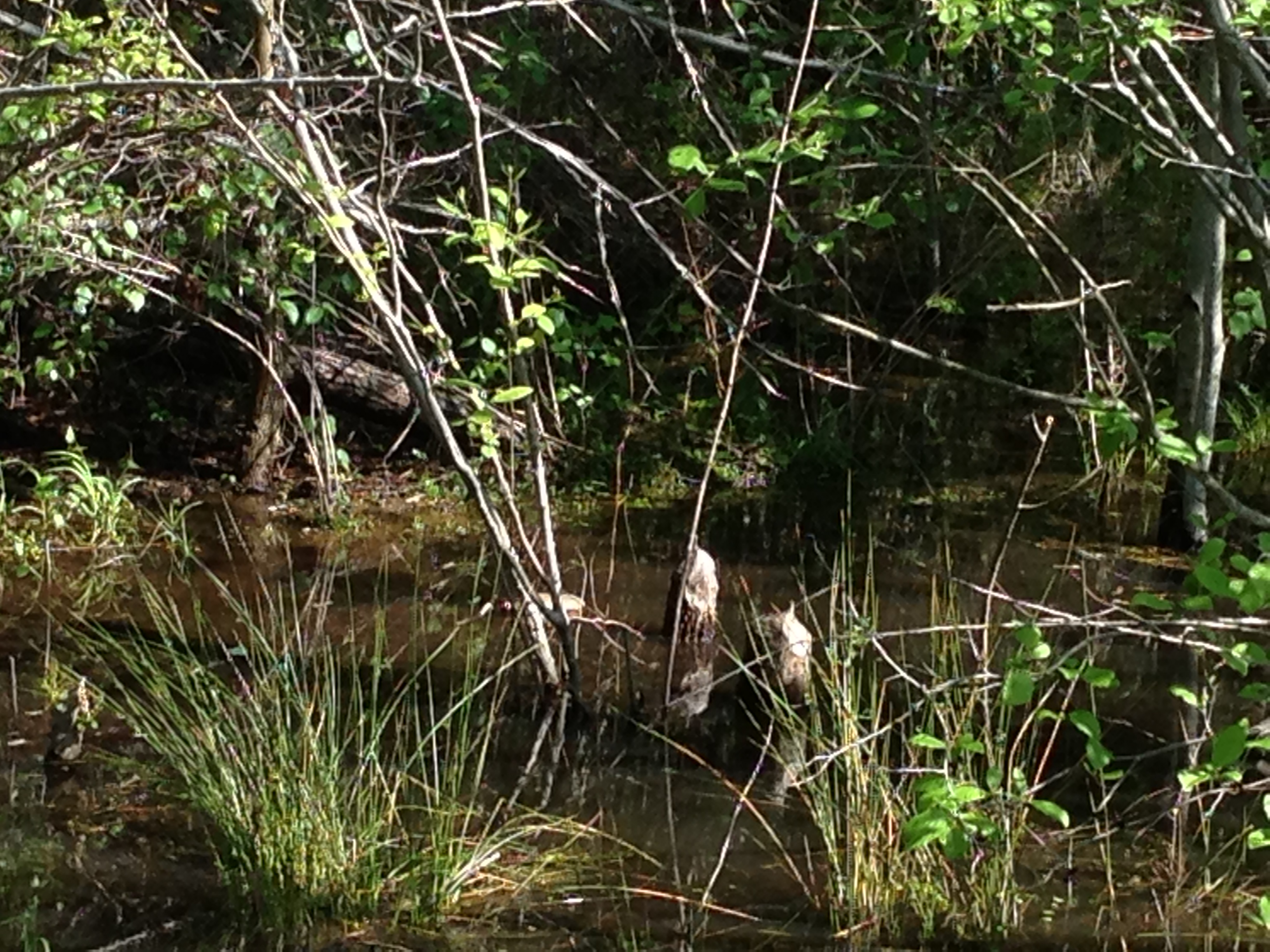
Our townhouse community sits up at the top of a hill. It is a closed cul-de-sac community, so it is great that “through traffic” is not an issue here. A brand-new walking path is now within footsteps of my front door. It will eventually connect to other walking paths, but for now it is about 1.5 miles round trip. At the bottom of our “hill” the path takes us by both a busy road, and what was once a small creek. In the Spring, I use to get a kick out of “hearing” the water sounds, especially after heavy rains. Last Spring those water sounds disappeared. However, I spotted this:
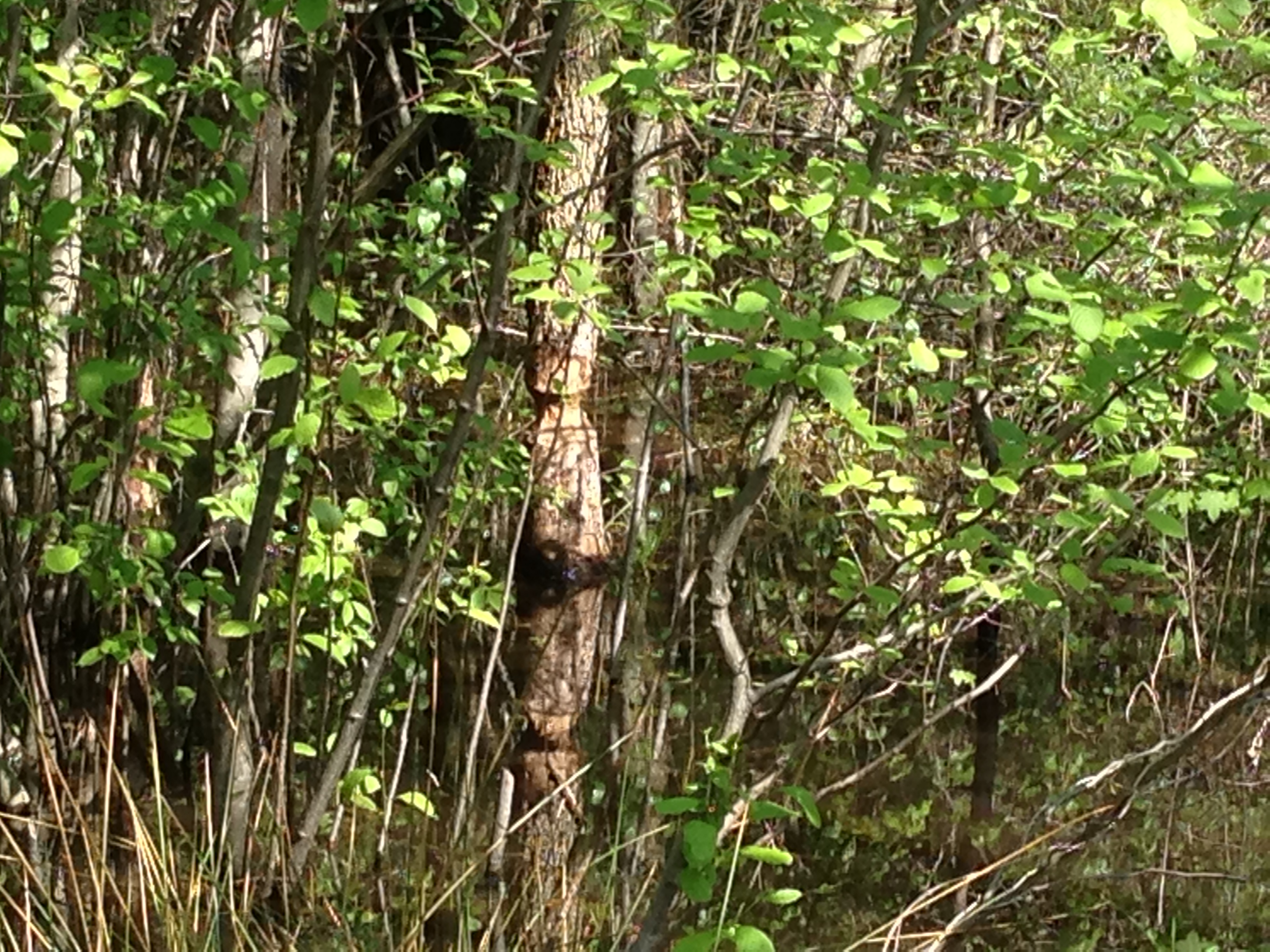
beaver10

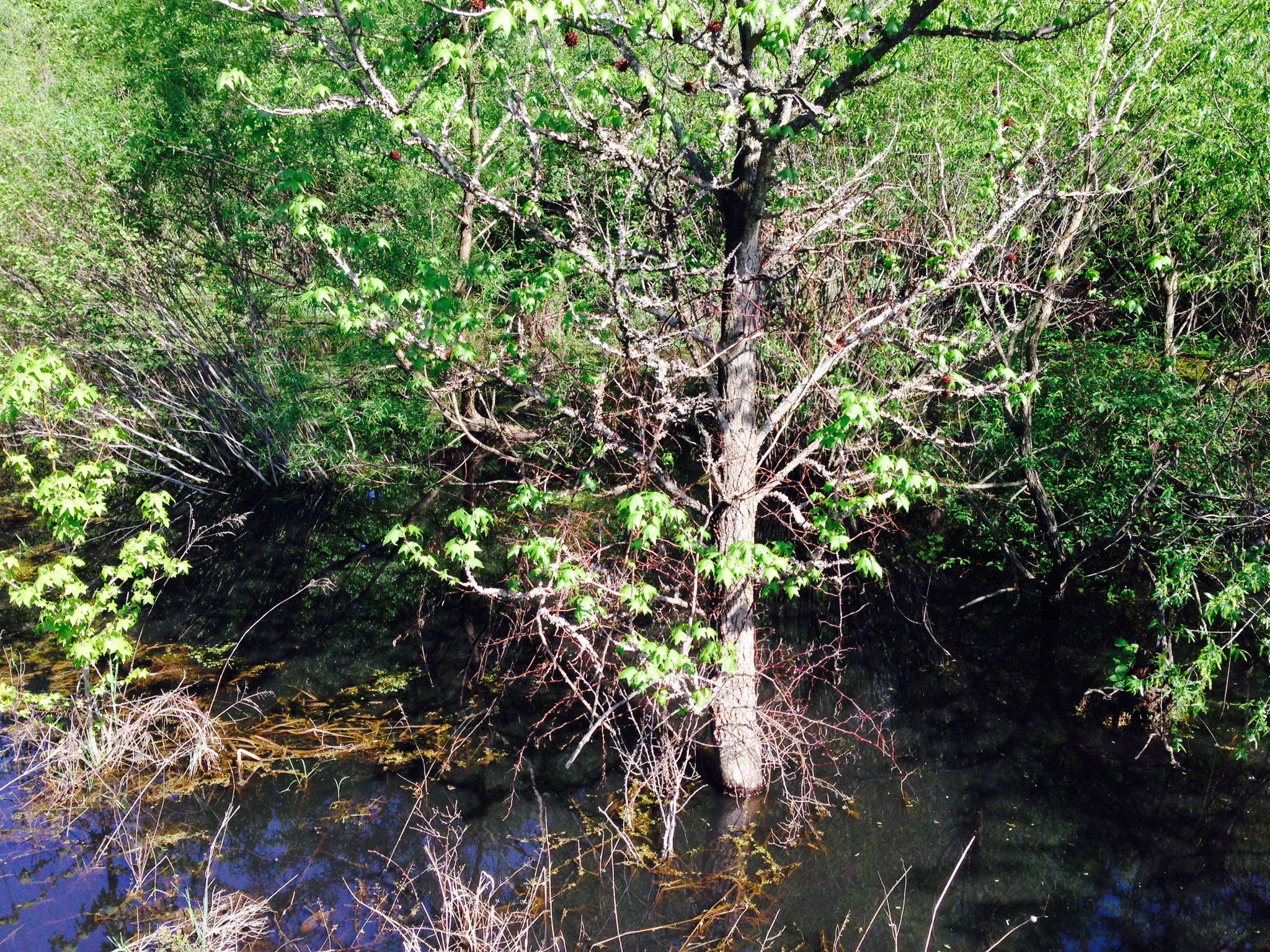
… and then this:

beaver11

The creek quickly turned into a pond. And this year? Well let’s just say there is a new ecosystem near my house.

I came across a huddled group of homeowners about 3 weeks ago, whispering and gesturing towards the pond with banks now within 60 feet of our back doors. I stopped to see what was going on, and because it was early enough in the morning with few traffic sounds, I could actually hear their whispers.

“Will the water level rise much more?”

“What do you think they are up to?”

“Do they bite?”

Now my first thought was, “FOLKS. Beaver do not understand human language and to my knowledge they don’t have bionic hearing like I do. Why the HECK are you whispering?”

I didn’t voice those thoughts. Instead I said, “Ummm” (I’m ever so eloquent…)

Yeah, but have y’all been down to the pond area where the walking path is? Have y’all seen what has happened down there?

Blank looks. I discovered they don’t comprehend SOUTHERN. I tried to speak a little more cultured…

Yes, you should walk down there. There are 2 HUGE culverts about 8 feet in diameter. That water level will never get any higher unless those culverts become dammed up as well. If that happens, the city will just unplug them. After all, that road will flood before our homes will“.

Blank looks. See what a lack of exercise will do? Go walking folks, go walking. Check out what the beaver have done up close. Geesh. I think they were miffed I was talking in a normal tone of voice. After all… *sneaky whisper* … the beaver probably HEARD ME.

Beaver have made a comeback in Maryland. I pulled this from a neighboring county’s website:

“Beaver can be among the most beneficial of the county’s wildlife. They create favorable habitat for a variety of wildlife species including fish, birds, amphibians, reptiles, and mammals. This variety of wildlife is in turn valued for recreational, scientific, educational and aesthetic purposes. Beaver activity is also helpful in retaining storm water runoff and improves water quality by trapping sediment, nutrients, and pollutants. Beaver activity can also cause flooding of roads, trails, forest land. They also consume trees and shrubs. Their impacts often occur suddenly and dramatically.

These benefits and detriments often occur simultaneously at a single location. Because of the varying degrees of tolerance levels among people to beaver activity, there are bound to be disagreements on how best to “deal” with beaver conflicts.” (Howard County Parks and Recreation, 2014).

Living side-by-side with these amazing creatures is fairly simple. I’ve been thinking a lot about this family of beaver.
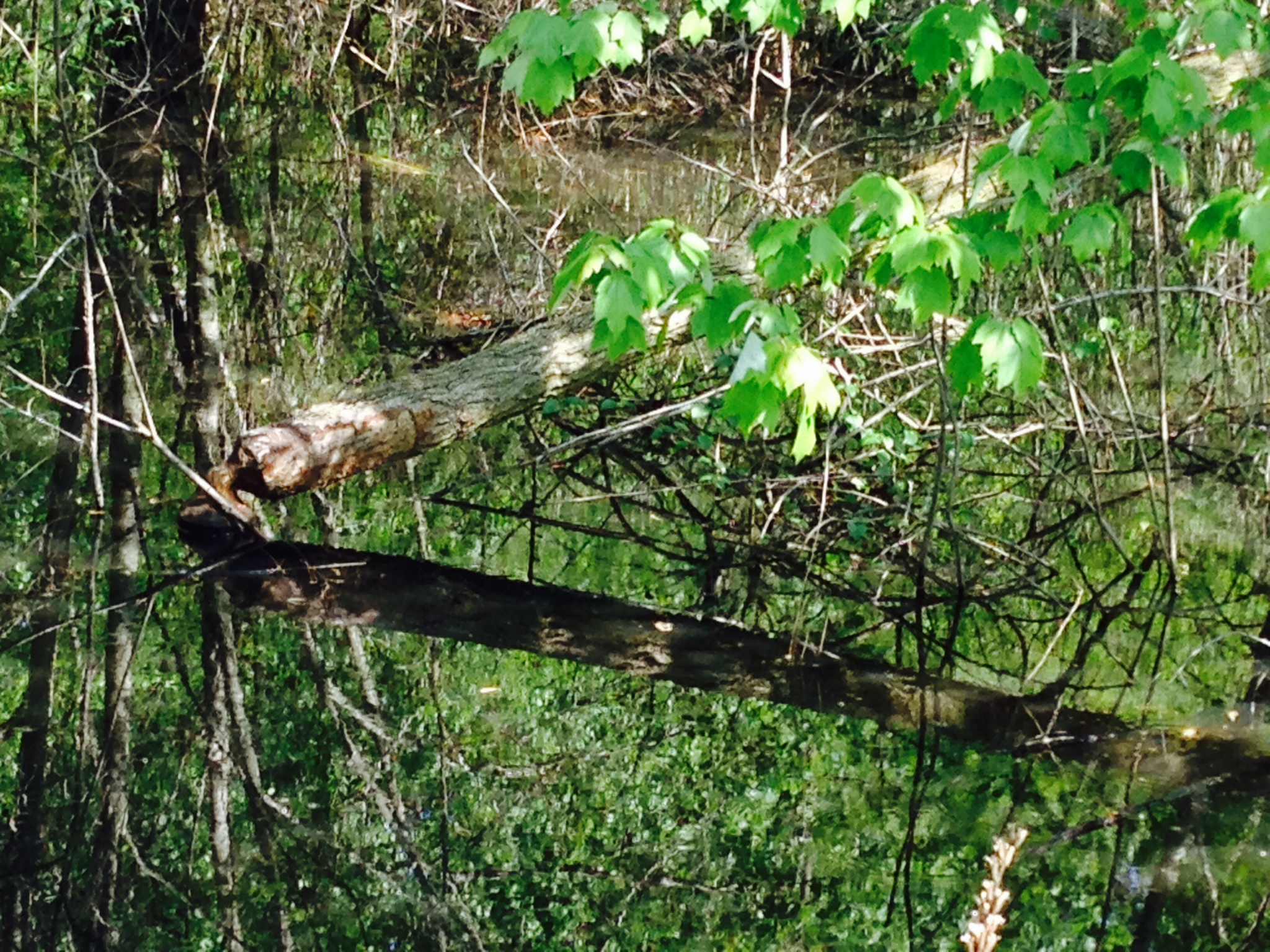
beaver3

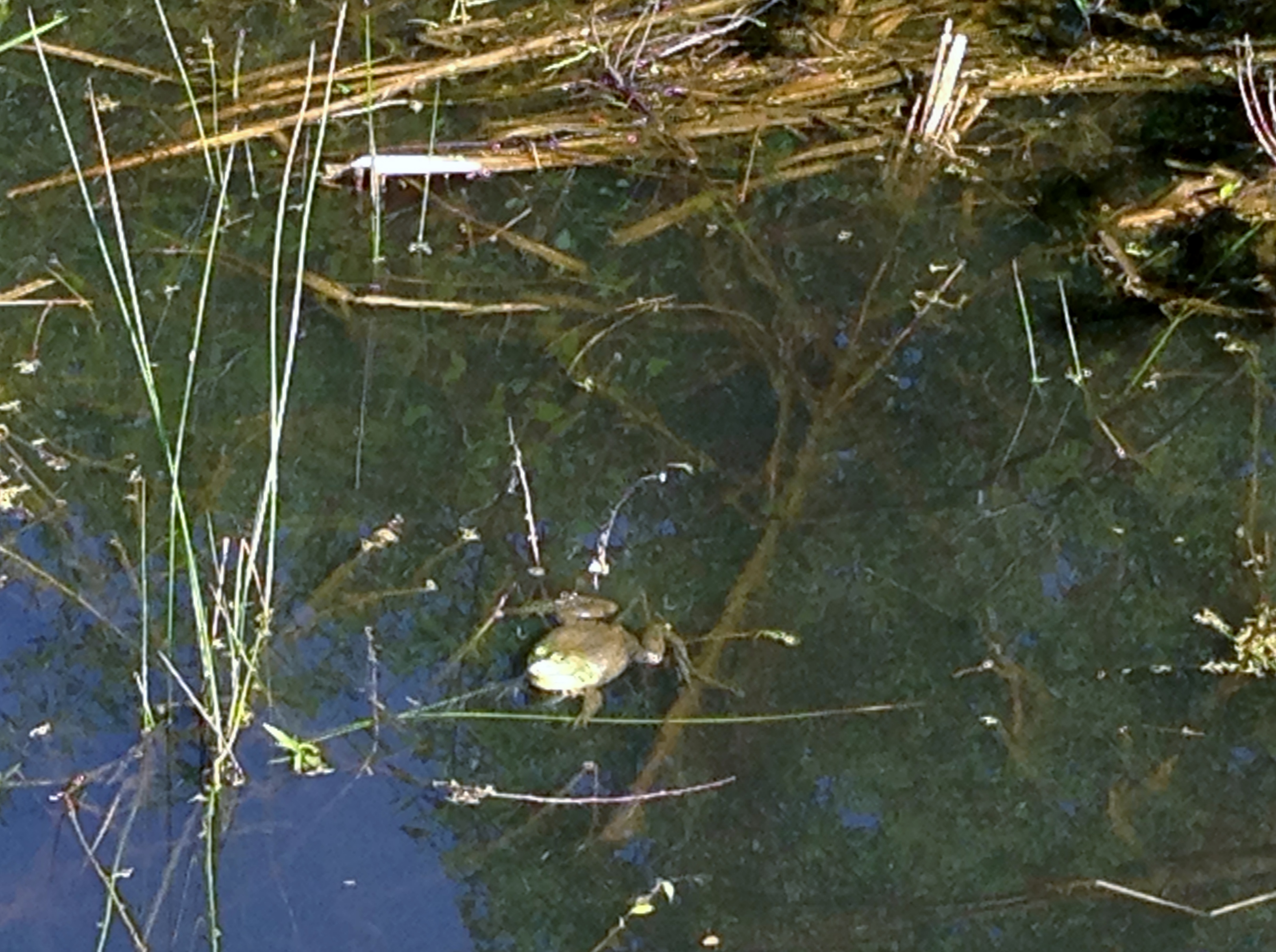
They migrated to this area near the bay bridge and did what came naturally to them. Not with destruction in mind… but cunning and incredibly discerning architects, this family of beaver have created a whole new ecosystem. We’ve always had tree frogs (although it took Chloe’s trainer to clue me in to what I was hearing each year). But now we have:
Beaver8

… bullfrogs. You should have seen Chloe’s head and ears the first time she heard THEM! These fellas stretch about two feet, nose to tip of hind legs. I know this, because I’m the crazy neighbor lady screeching to the neighborhood boys who have caught them and held them up to “Return them to the pond when you are done!”  There are also numerous plants I have never seen before in this area when all we once had was a creek…
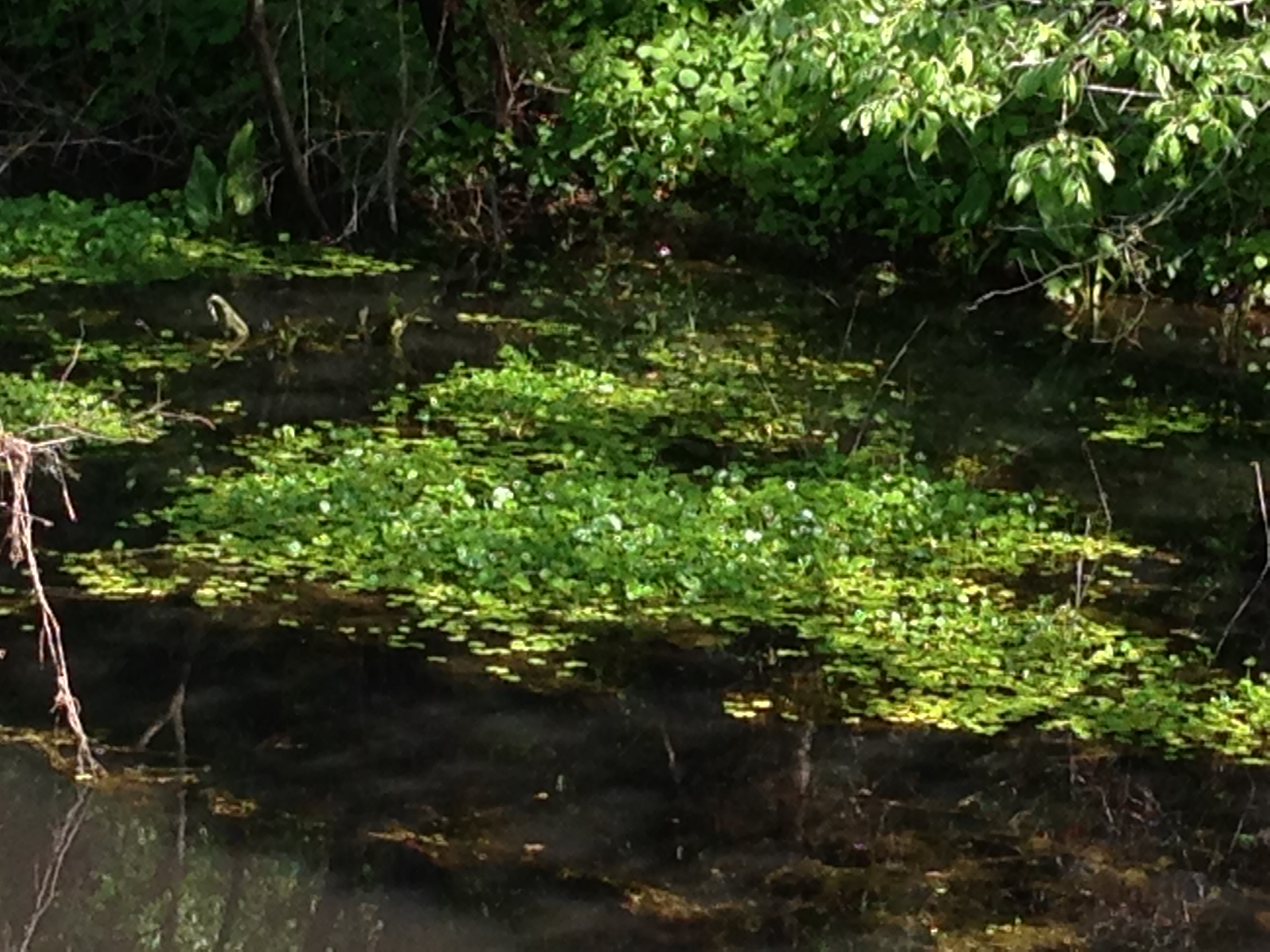
Beaver7

and the trees are flourishing…

beaver1

I counted 4 different families of mallard duck one evening, with little ones thriving in this secluded and protected environment. Turtles are sunbathing on any log or rock that breaches the surface of the water. The fox are back (having been gone for at least two summers). There are enough deer in our area now to make my poor hound dogs hoarse for all the barking alerts they insist on for me.

I cannot help but be amazed. The beaver strengthened and created a home just right for them, and in the process created a place to thrive for other species. Folks? I want to be a beaver.

I didn’t ask for disabilities. I never once thought, “When I grow up… I want to be DEAF and have a significant BALANCE DISORDER”. However, in my own process of adapting and making my environment safe and liveable for ME (cochlear implant surgery, service dog from Fidos For Freedom, be-dazzled canes, no-slip shoes, discovering where all the elevators are on campus, practicing all I learned in vestibular rehab.), I have created a new ecosystem.

I want MY WORLD to intersect with the REAL WORLD and help folks recognize the importance of inclusion. I work to make sure that my new life, teaches and advocates in accepting differences. I want others to recognize abilities rather than disabilities. I want my invisible disabilities to be visible and “pond-like“. I want my life to inspire others to choose to live equally purposeful lives. In my own small way I do this by working with my campus disability office. I openly talk about being “differently-abled” in class. I “plug” what I know whenever I can to whomever will listen… cochlear implants and service dogs, depression and coping skills. I have discovered my environment changing. People are coming out of the woodwork… or umm… newly created POND, and sharing with me that they have a mental illness, invisible challenge or diagnosis such as fibromyalgia, chronic fatigue syndrome, or Lyme’s disease.

Yes. Having an attitude of gratitude and focus on education and advocacy, has me walking by concerned citizens from time to time, whispering about a beaver conspiracy. But just as I’ve learned that being transparent is contagious, these folks will eventually HEAR and go walking to discover other new ecosystems. At least… I hope they will.

Do you live with disability? Are you struggling with an invisible illness? Do you have a chronic condition that folks do not seem to understand, nor comprehend how it affects you? Hearing Elmo is not just a place to “hear”. My desire is that numerous authors, both named and anonymous, begin to disseminate the kind of information that changes our environments. In the end, the beaver aren’t the sole beneficiaries. We all benefit. Would you like to write for Hearing Elmo? Contact me at denise.portis@gmail.com and type “Hearing Elmo” in the subject line. Building dams is pretty fun. It is unexpected. It is worthwhile. We can all make a difference!

Denise Portis

©2014 Personal Hearing Loss Journal

Howard County Parks and Recreation. (2014). Beavers. Retrieved May 16, 2014, from http://howardcountymd.us/DisplayPrimary.aspx?id=2396

When Lightening Strikes TWICE

Wendi, husband Dave, and daughter Paige at a Hearing Loss Association Convention

Hearing Elmo welcomes, Wendi Tirabassi Kast, fellow blogger and cochlear implant buddy. Wendi writes at “Sudden Silence” (http://suddensilence.wordpress.com/). I have been a big fan of Wendi for years now. She writes about LIFE – life with hearing loss and cochlear implants. Life with other kinds of struggles – but her posts remind me that this is LIFE. Her positive attitude and quirky sense of humor connects with me – and I think will with you! You should check out her blog – she frequently updates and every read is worth the time to check in!

In 1993, when I was 28 years old, I lost all of the hearing in my right ear.

 I grew up with a hearing loss that was discovered when I was four years old.  I never expected to lose more hearing; nobody knew why I lost some of my hearing to begin with, but a high fever from roseola was what we suspected.  (Knowing what I know now, I would also suspect the antibiotics used to treat it back in the mid-1960s.)  I always thought my hearing would stay the same; in fact, I never really gave my hearing (or lack thereof) much thought at all.  I treated my hearing aid like I did my glasses … just an aid to help me with one of my senses.  I certainly never thought I might lose all of my sight some day, so why would I think I might lose all of my hearing?

 Finding out that all of my hearing had vanished virtually overnight, for no known reason, rocked me to my core.  I was absolutely devastated and terrified.  Suddenly a whole host of worries was presented to me, including the possibility of going completely deaf someday.  I woke up terrified every morning, wondering if I would lose the rest of my hearing that day.  I lived in the hearing world, not the Deaf world.  I didn’t know sign language; none of my family or friends knew it.

I spent two weeks without my hearing aid, because I wore the aid in my right ear and it was suddenly unaidable.  They made an ear mold for my left ear and ordered analog bi-CROS hearing aids for me.  While I waited the two weeks for my left ear mold to be completed, I had to navigate my hearing world using nothing but the hearing that remained in my left ear.  I did word processing for an industrial parts supply company; I could still type and do my job, but communicating with my coworkers was very, very difficult.

When my new ear mold and hearing aids were fitted, I was weak with relief.  Things sounded normal again.  The bi-CROS aids picked up sounds from my now-deaf right side and transmitted them to the left.  My hearing remained stable; I slowly began to stop worrying and started taking my new level of hearing for granted again.  I mean, this couldn’t happen to the same person twice, right?

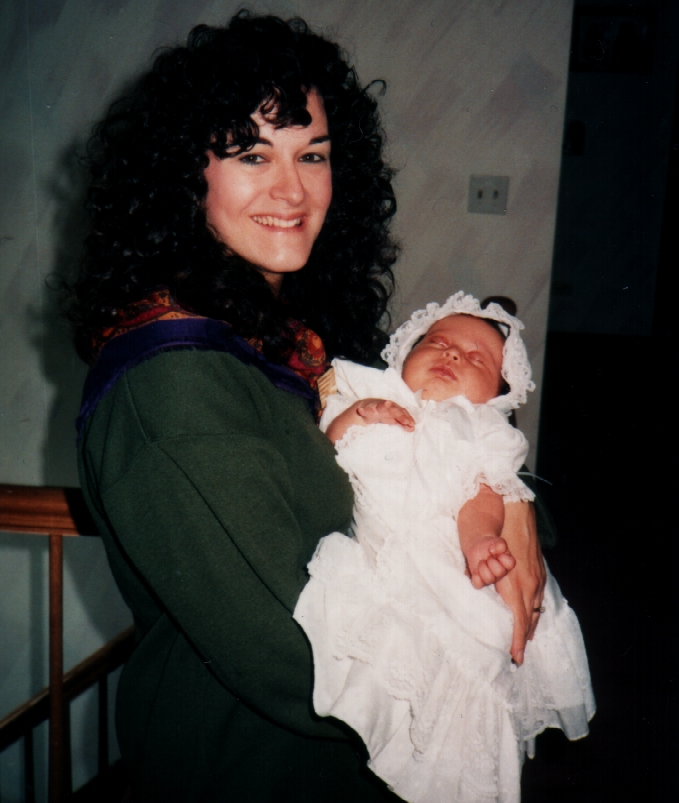
Wendi with daughter Paige at her baptism in 1994 after she lost her hearing.

When I realized the hearing in my left ear was getting a little strange, in early April 2008, I chalked it up to an illness.  It was that same kind of faint ‘hearing things from the bottom of a tunnel’ type of hearing that I get when I’m fighting a fever or virus of some kind.  I wasn’t sick but still assumed I was on the verge of something.  Well, I was … but I was on the verge of total, profound deafness, not a virus.

My husband scheduled an appointment with my otolaryngologist.  The day before my appointment, I woke up and realized I was completely deaf.  I could not hear anything.  My teenage children were leaving for school and I tried to keep it together until they left, but I was so scared.  I burst into tears in front of them, wailing to my husband, “I don’t want to be deaf!  I can’t believe I’ll never hear you guys talking to me again!”  I was completely hysterical.

Well, I gave in and let myself grieve.  It was only a few days before I realized I could only do so much crying and feeling sorry for myself.  I was still sad and scared, and I used my blog to express my feelings during this time.  But I also decided I had to move on and decide how I was going to live my life as a deaf woman.

My first concern was communicating with my family.  I had remarried in 2002 and my husband knew some sign language, so he began teaching signs to me and the kids.  We rented DVDs, bought books, and learned to fingerspell the alphabet.  We never did learn ASL but we learned enough signs to communicate and get the message across.  My speech reading skills kicked into high gear, and these really saved me.  My family was very, very patient – they made sure to face me, to speak at a rate that was easy for me to lip read, and would repeat words or fingerspell until I got it all.  They never said, “Oh never mind” or “It’s not important.”  They knew I wanted to be part of the conversation, important or not.

After a few big scares, my husband put up mirrors around my desk so I could see if someone was approaching from behind.  (It’s pretty terrifying to suddenly feel a hand on your shoulder when you aren’t expecting it!)  We ordered a free TTY from the state and got a flashing light for the phone.  I used online relay for phone calls as well.  I already had a bed shaker alarm clock and, of course, we were already using captions on the TV.  (My husband has a hearing loss as well so we both use these accommodations.)

I found out that I qualified for cochlear implants, and began the process of testing and insurance approval.  My hearing tests were easy; I sat in the soundproof booth, listening to nothing, until they opened the doors and said I was done.  I asked if I could get a cochlear implant in each ear at the same surgery.  Although it wasn’t done very often, they said it was no problem as long as my insurance approved it … which they did.  The whole process was quick:  I had my testing in May, my insurance approval in early June, and my simultaneous bilateral surgery was on July 22, 2008.

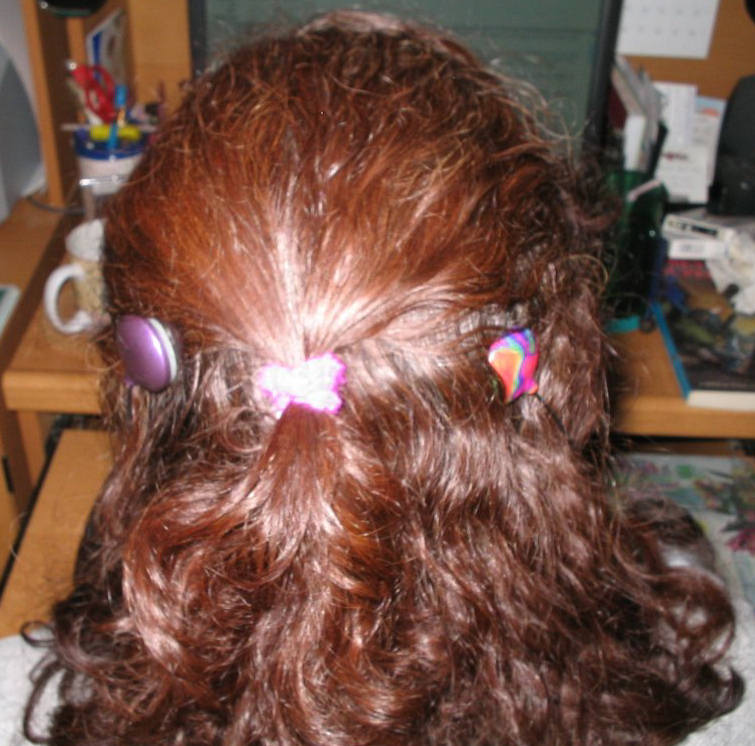
Wendi's cochlear implants from the back
Wendi’s cochlear implants from the back

On August 20, 2008, the hearing world came back to me.  The sounds that came into my brain that day were nothing like anything I’d ever heard before … but it was sound and I was speechless with delight.  If someone had told me back in 1993 that someday I would have little computers in my head, and I would hear sound again in an ear that hadn’t worked since before 1968, I would’ve just laughed.

As my brain learned how to hear with my new cochlear implants, my tinnitus faded away to nothing.  Every day, I asked my family to help me identify what I was hearing until finally I could identify sounds on my own.  With each mapping, things sounded more and more the way I remembered them.  I heard the voices of my husband and children, music, my cats meowing and my dog barking.  One day, as I was leaving the audiologist’s office, somebody asked me for directions.  They were behind me, and I heard them clearly without lip reading!

It’s been over five years now and I never, ever take what I hear for granted.  It’s been gratifying to know that I can deal with my deafness even if something happens to my CIs someday.  But every day that I wake up, put on my processors and hear the rush of sounds once again, I am thankful, amazed and humbled.

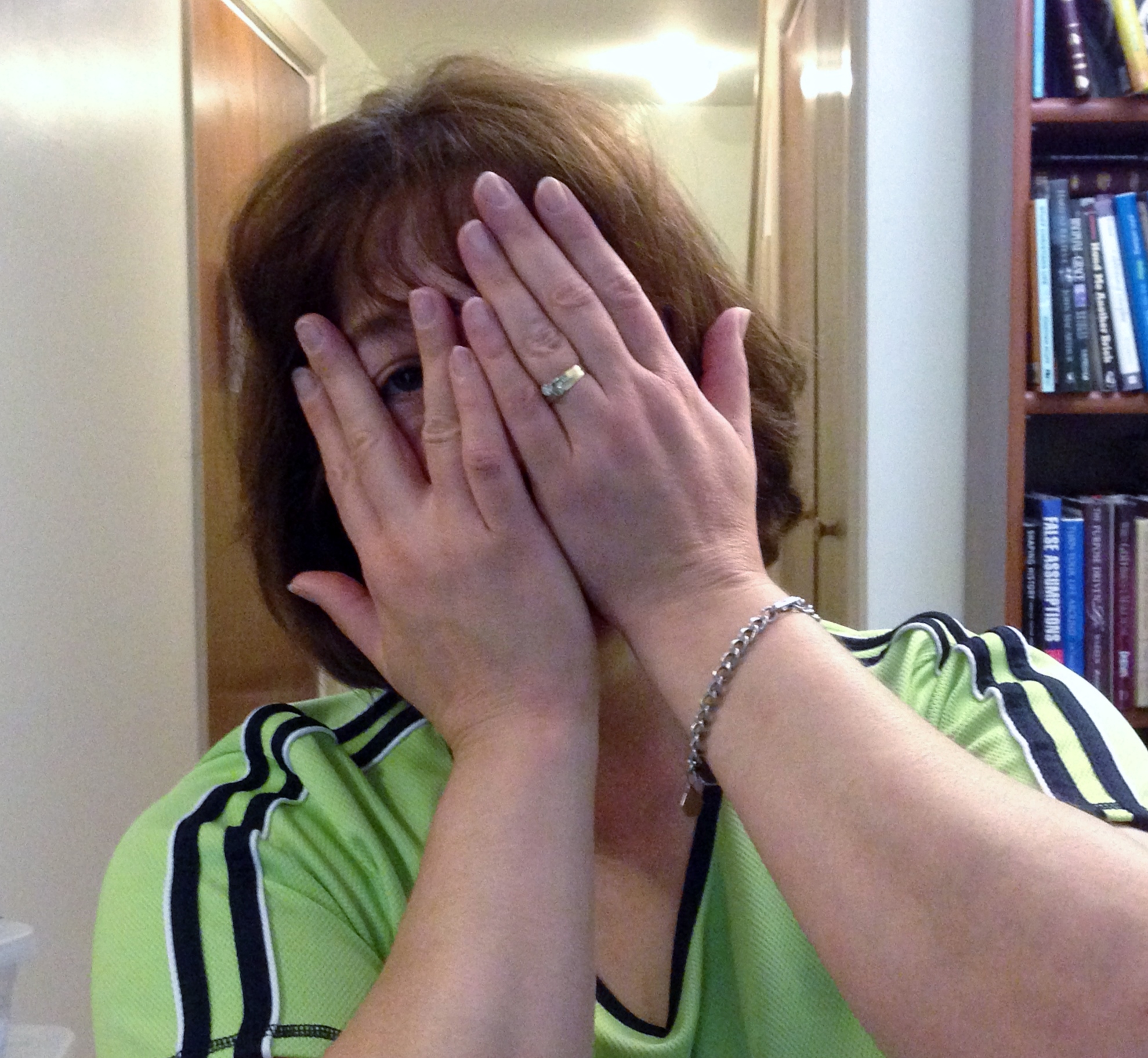
Peek-a-Boo! I Hear You!

peekaboo

When my kids were little we played “Peek-a-Boo” just like other moms with little ones. However, I would say, “Peek-a-boo, I hear you!” and uncover my mouth as well as my eyes. Nursery workers very likely wondered who taught my kids such a simple game – incorrectly!

My readers tell me that one of their biggest frustrations is when hearing folks around them act as if steps they have taken to manage their symptoms = normalcy. Readers with MS have told me that family members behave as if they should now be symptom-free since they are on medications. People with hearing loss are frustrated when family members and friends communicate as if a cochlear implant or hearing aid means they now have normal hearing in all situations. A friend of mine who lives with chronic depression told me how aggravated she was when friends did not understand that she still deals with symptoms of clinical depression despite medications and therapy. I try to tell people that managing our symptoms does not cure the disease or eliminate a disability.

I hear SO WELL with my cochlear implant…

In quiet places

when I’m not distracted

when I’ve had plenty of rest.

At my annual mapping appointment each year, my audiologist continues to say I’m hearing super well! But there are environments in the “real world” where I don’t hear as well as I do in the sound proof booth or in her office. Because of this, my family have learned that despite how well I’m hearing, I need to still see their faces in most “real world” situations. Yes. I get a thrill when I am able to easily talk to them from the other room. But the water isn’t running in the sink, the dishwasher is finished with its cycle, and the television isn’t on as they speak from the distant living room.

Ever once in awhile I reach up to gently move a hand or turn a face. They sheepishly say, “Sorry” and continue what they were saying – now fully facing me. I can’t do this with people I don’t know well, however. How important is seeing speech to understanding and hearing well?

Seeing Clear Speech

We all know a mumbler. Even people with normal hearing ask them to repeat. We all know someone with a heavy, “Duck Dynasty” kind of beard. We all know someone who shyly covers their mouth with their hand when they are laughing and talking.

In a study by Cassie et al., (2005), adults with hearing loss scored the same as those with normal hearing after the speaker was given instruction to face the other person and speak clearly (not loudly). Volume doesn’t help by the way… it only distorts speech. Hard to remember when a friend or loved one with hearing loss says, “huh?” You default to yelling! 🙂

Another study by Reed and Delhorne (2009) showed similar “near normal” results in adults with profound hearing loss when other conditions such as clear, visible speech was included in even noisy environments! (These folks were also aided or had cochlear implants). There are simply too many studies to cite that show how important visible, clear speech is to children who have hearing loss and are learning language.

Bottom line? People with hearing loss hear better if they can see your face. I’m not saying shave your beard (trimming it would be nice, however). Even if the person with hearing loss seems to hear you really well in a quiet room and actually looks away from you while communicating, when other people start filing into the room for the meeting they may need to see your face when you speak to hear well.

As to other kinds of chronic illnesses and invisible disabilities? Please reach out and celebrate the GOOD DAYS with the person you know who lives day-to-day with a diagnosis that is permanent. Your own circumstances could change and you find yourself living with a similar condition.

Denise Portis

© 2013 Personal Hearing Loss Journal

Caissie, R., Campbell, M., Frenette, W., Scott, L., Howell, I., & Roy, A. (2005). Clear speech for adults with a hearing loss: does intervention with communication partners make a difference?. Journal Of The American Academy Of Audiology, 16(3), 157-171.

Reed, C. M., & Delhorne, L. A. (2006). A Study of the Combined Use of a Hearing Aid and Tactual Aid in an Adult with Profound Hearing Loss. Volta Review, 106(2), 171-193.

A Pocketknife to Clean Your Nails

pocketknife

ABOVE… My dad in 2011 when he visited Gettysburg with us.

Do you know every time I retrieve a nail file to smooth, clean, or file my nails I think of my dad? Isn’t it funny the kinds of things that will recall a memory for us? Not the kind of recall that triggers our sympathetic nervous system and launches a flashback in folks who suffer from PTSD. Instead, the kind of recall that knocks on the door of our heart with a “feel good” memory. The memory replays a specific conversation or event. For me, when I use a nail file I vividly recall how my dad would clean his nails with a pocketknife.

I couldn’t have been more than 7 or 8-years-old, for we had not yet returned to the family farm. My dad still worked for International Harvester at the time. One day I sat watching him clean his nails with a pocketknife.

“Why do you use your knife to clean your nails?”

Dad continued to clean his nails and thought about his reply. The man never just “spoke off the cuff”. He responded after a bit, “It does the job”.

“Well, will you clean MY nails?”

With less thought he replied, “I can’t. I can’t tell where your nail stops and your finger starts”. He scooted closer to allow me to see from a different angle how he was using his knife to clean up under the nail. I may have been young, but I immediately grasped why he couldn’t clean MY nails with this unconventional method.

Although I never could bring myself to clean my own nails with a pocketknife, I learned over the years that one can do things just as well by means of unconventional tools and methods. I would not have understood if someone had tried to tell me that I would eventually become deaf and develop Meniere’s disease – a balance disorder, and that by doing so I would have to adopt some new means to navigate my world safely.

Works For Me – But Maybe Not for you

I suppose one of my biggest pet peeves is when folks start dictating to someone who shares a diagnosis how they MUST go about treating that disease or disorder. Just because something works well for YOU, does not mean it will work well for someone else. This doesn’t mean we shouldn’t be willing to tell our story and share what works for us. Peer networks and support groups are invaluable in my opinion. However if I chose to use a nail file to clean my nails, and you choose a pocketknife, all that should be celebrated is that the end result yields positive benefits for us both. Clean nails are clean nails no matter how they got that way.

That doesn’t mean the process to clean nails is always easy. I have to sit to brush my teeth. That toothbrush swishing around in my head will make me pass out if I do not do so from a seated position. I never could sit on the lid of the commode to brush my TEETH. So I step into the bedroom and sit on the hope chest to brush my teeth. I have to be sure to keep my mouth closed so that there is no splatter. Ewww, right? This last week as I was sitting there brushing my teeth, it just hit me wrong. Here I was 47 years old and unable to brush my freakin’ teeth over a freakin’ sink like a normal – erm – FREAK! So…

I started crying.

My husband stepped into the bedroom. I can’t imagine what he saw. Here is the wife sitting and brushing her teeth, sobbing her eyeballs out, toothpaste now EVERYWHERE, including dribbling down her quivering chin. He calmly said, “You OK?”

Did I look OK? Alright, yuppers… I didn’t actually WANT his help. I just wanted to finish brushing my teeth. Those FREAKIN’ ones…

When a person with disability or chronic illness finds a way that works for THEM, it doesn’t mean it is easy. But this is why we are not disABLED. We are differently-abled. It is quite a cognitive and emotional boost to discover you can still enjoy something you did before – only in a new way. It may look strange, novel, or genius… but the reality is “it gets it done”. Yet what I find works for me, may not work for someone else with Meniere’s disease. I cannot safely clean their nails with my pocketknife.

Celebrate the Day

Gee, we live in a wonderful age of technology! When I think about the miracle in that I’m hearing again bionically, and all the cool tools available to me through simple apps on my iPhone, or special assistive technology, I get goosebumps! I live in a country where service dogs OTHER THAN guide dogs are fairly common. Email and texting – two communication devices I utilize frequently, are favored among the NORMAL hearing population. This makes my life so much easier!

Folks with mobility issues, learning challenges, hearing loss, chronic illness, and various disorders have options available here in the U.S. that we did not have 30 years ago – or even 10 years ago! Yet some of the things we learn to do are through our own ingenuity! I have quite literally patted myself on the back and mentally “high 5’d” myself when I discover a new way of doing things. To you being able to do the laundry without actually having to change the altitude of your head is not very impressive. But to me? This is a “WOO-HOO” discovery. But the proper lean formation, use of step-stool and service dog work for me. They may not work for you if you, too, have Meniere’s disease. But be willing to share ideas with each other without dictating proper protocol. The end goal is clean nails after all.

Denise Portis

©2013 Personal Hearing Loss Journal

Permission to SLOSH

coffee spill

“I didn’t give you permission to slosh!”

Tuesday was NOT a great day. When it is rainy out and the barometer matches my internal “tilt-a-whirl” meter, I expect to have a bad day. When it is sunny though, I get aggravated when I’m having balance problems. Tuesday was a beautiful, sunny morning! I’m beginning to think that fatigue may have something to do with it because I know I didn’t sleep well Monday night.

I headed downstairs with my morning coffee, a whole day ahead of me to work from my basement, home office, only to slosh the coffee right out of my cup on the first step. I paused. I took another two steps down. More sloshed out. I paused. Aggravated I was going to have come back with cleaner, I took one more step. Coffee sloshed out. I…

(paused? WRONG)

I screamed. “I didn’t give you permission to slosh!”

Hound dog, (a.k.a. Chloe the wonder dog) sat at the bottom of the stairs safely out of the way and quirked an eyebrow at me. ♥♥ Talking to your coffee again, Denise? ♥♥

I’d do anything to be in CONTROL

One thing that I hear people with disabilities complain about is that they really would love to control their lives better. They may even make feeble attempts (or aggravating ones) to do so.

People with hearing loss may monopolize conversations. If they are the only one talking, they don’t have to deal with the frustrating inability to hear well.

A friend of mine with Meniere’s disease admitted to me that she actually acts cold and disinterested around people because she found it keeps them at a distance. If they approach and try to talk or even hug her hello, she is overwhelmed with vertigo and nausea.

I think it is natural to want to control our environment – even our lives to a certain degree. It can help us feel safe, even secure! But let’s face it… there is much in our lives that we cannot control.

We can eat right, not smoke, and exercise and still develop high blood pressure if it is in your genes. (Yes, it can improve your health and maybe delay the onset, but according to experts you are still at risk).

We can do our best to live a healthy lifestyle and still get cancer. We can be a safe driver, never going over the speed limit and still get in a car accident. We can avoid high-crime areas and still be the victim of a crime. There is much in life that is NOT in the scope of our control.

Control or Management?

I feel very frustrated when I’ve carefully watched the weather and still get caught away from home when it starts to rain. I didn’t give the skies permission to SLOSH! I can wear tennis shoes and have my head up and eyes open on a walk, and still stumble and trip over a crack in a sidewalk. I feel – erm – sloshy.

However, people with disabilities or invisible illness don’t have to give up hope of controlling their symptoms. You may not be able to control your life, but you can manage it. Symptoms cannot be controlled but they can be managed. One of my favorite psychologists is Albert Bandura. He was one of the first to define and promote self-efficacy. Bandura said that self-efficacy is, “the belief in one’s capabilities to organize and execute the courses of action required to manage prospective situations” (Bandura, p. 72, 1994). It makes us feel better to MANAGE our lives.

With my hearing loss, I can always make sure I carry extra batteries, clean and dry my cochlear implant and hearing aid, watch my service dog for cues, ask people to email instead of call, and request moving to a quieter area to have a face-to-face talk with someone. With Meniere’s, I can avoid sodium, limit caffeine, be prepared for bad weather, and keep my service dog’s vest in tip-top shape so she can help me. I’m “managing” my life as a person with disabilities. This gives me confidence and helps me feel less – SLOSHY.

You’ve done all you can

In spite of what I’ve learned, sometimes life still sloshes. You’ve done everything in your power to navigate life and “hope for the best and plan for the worst”. Life ends up sloshing anyway. I’ve wanted to put my coffee in a sippy cup before. Or one of those cups that can be used in a moving vehicle. You know… those “slosh-less” ones? But I want my coffee in a beautiful, ceramic mug. The kind I can wrap my hands around and feel the warmth while inhaling the pleasant and comforting aroma of slow-brewed coffee! The risk of “sloshing” is worth it.

I hope that even when you’ve done all you can to manage your life, you can pick yourself up and wipe off the sloshed coffee when life …

T I L T S.

Because it will… be ready for it! 🙂

Denise Portis

© 2013 Personal Hearing Loss Journal

Bandura, A. (1994). Self-efficacy. In V. S. Ramachaudran (Ed.), Encyclopedia of human behavior,4. New York: Academic Press, pp. 71-81.

If I’ve Said it Once…

If I've said it once

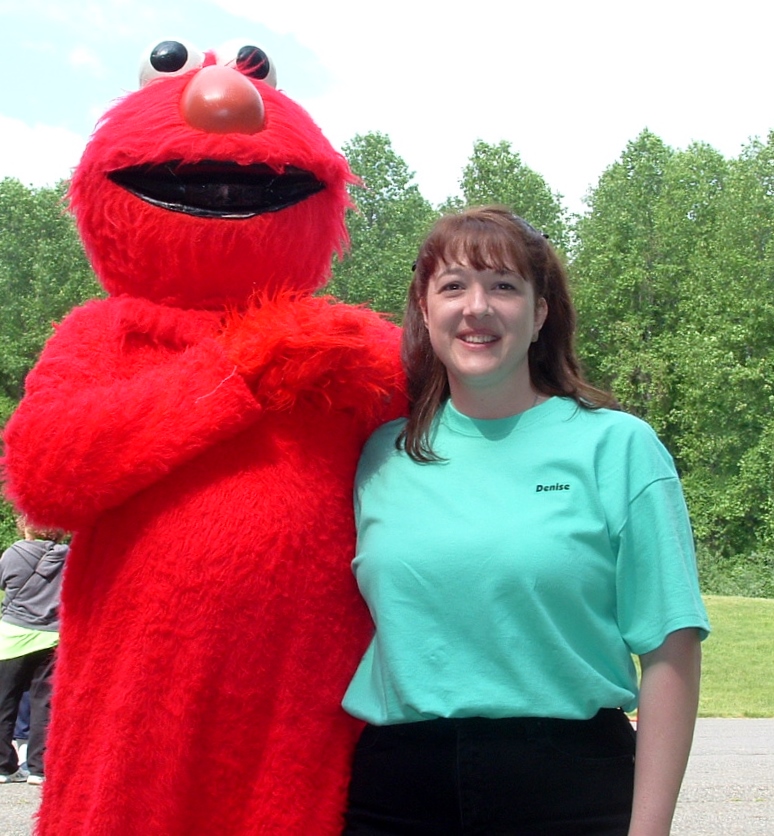
The photo above was taken at the 2006 Walk4Hearing in Pennsylvania. It was completely coincidental that the Walk coordinators invited “Elmo” to interact with the children on site that day. Poor Elmo had no idea what hit him as I squealed and came flying across the parking lot to hug his neck! Children he was expecting. A grown woman – not so much. However, Elmo encapsulated my reemergence to the hearing world – the first toy I heard months following my cochlear implant activation. Elmo’s voice (emanating from the “Tickle-me-Elmo” toy I found on the shelves of a local store) was the first CHILDHOOD voice I recognized after having been tweaked and re-programmed numerous times following my activation. It was an epiphany for me. From that moment on, I knew I was going to be OK. I could hear again – and more importantly RECOGNIZE voices. So to find Elmo that beautiful August day, 7 years ago, was thrilling for me!

I stepped back to introduce myself and explain “why the exuberant hug“. Elmo interrupted me and mumbled something. I said something to the effect of “HUH?” (I’ve always been particularly good with words).

Elmo spoke up. “I CAN’T HEAR A THING INSIDE THIS SUIT“. I stared blankly at Elmo for a moment and then broke into peals of laughter. Elmo put his hands on his hips and looked as exasperated as a character was able while inside a red furry suit! I apologized. Profusely. Welcome to my world!

Welcome to My World

Something numerous readers email me about is their frustration at trying to explain what is working – or not working, to closest friends and family members. I was at an ADI (Assistance Dogs International) conference in Baltimore several years ago and just happened to be in the right place at the right time; relaxing against a wall in the hallway outside a conference room. Because of my position, I was in the perfect place to see and hear a lady take her husband by the elbow and drag him over to the side (near me) to fuss.

She whispered (loud enough for even ME to hear), “If I’ve said it once, I’ve said it a thousand times… I cannot climb over your bag when you put it in the aisle. Do you want me to fall in front of everyone?”

Readers constantly tell me how frustrated they are to have to repeat “how to’s” to those closest to them. Folks they don’t interact with much they expect to remind about what works well for them and what doesn’t work. However, people think that if they are closely acquainted with someone they don’t ever need to be reminded of what they can do to communicate better, or to assist if needed.

A close friend of mine and follower of Hearing Elmo has MS and deals with fatigue frequently as a result. She was out to eat with her mother recently at which point her body just shut down. Although they were not finished eating, she needed to leave and needed to do so right away. She stood up and wobbled, and ended up asking her mother for assistance. Her mother did so but was very quiet on the walk out to the car. It was there her mom let her exasperation get the best of her.

“I don’t understand how you can be out on the field to oversee your son’s soccer team one day, and need help to the car the next. I don’t know how things can turn on a dime like that with you!”

My friend was shocked – and grieved that her mom, someone as close to her as anyone, failed to recognize what to her was obvious. One cannot pick and choose when fatigue and weakness will hit. My friend thought she had explained this to her mom (and very likely HAD). But her mom needed a refresher course in how symptoms of MS manifest themselves to my friend – a unique individual.

When my frustrated friend relayed what happened to me I thought, “Well welcome to my world”. Don’t all of us who live with invisible illness, disability, or chronic conditions deal with the same thing? We have to repeat ourselves – often.

Learning to communicate

It cracks me up to be on the training floor at Fidos For Freedom, Inc. sometimes. Clients and volunteers are asked to “Meet and Greet”. I hate these exercises. I’m not gonna lie. You pair off in groups of 2 or 3 and shake hands, talk, and introduce yourself. This is very “real life”. It is something we do in the “real world”. But I have to tell you there are few things I dread more. For one thing, that wonderful “voice in my head” via the training room floor’s hearing loop system is gone. Instead there is a BUZZ of voices overlapping and rising in volume all around me. I struggle and ask for repeats the entire time – all the while making sure my dog is in a proper down/stay and not flirting with nearby dogs. If more than one of us in the group have hearing loss, we juggle for position trying to put everyone on our “best hearing side”. If you look around the room there are plenty of people with cocked heads leaning close, or others who have definitely invaded the personal space of someone in their group. I’ve been in groups of people who did not have hearing loss who ask, “Now remind me which is your good side?”

My balance disorder allows me to move just fine. Standing still? Not so much. I wobble when standing still. Especially when standing in a large room with low ceilings and ceiling fans. I’m not the only one to be wobbling though. I giggled out loud one day when I lost my balance and a fellow client who uses a walker reached out to steady me and almost lost her own balance. She giggled right back in response and said, “I forgot you can’t hold still!” It was comical actually. Yes, we may both have balance problems, but we could help each other. We learn to laugh at ourselves if needed. We learn to accept help. We learn to communicate what it is we need.

Significant others and Spouses are “Just PEOPLE”

Do you get frustrated with the people in your life who should “know better”? “If I’ve said it once, I’ve said it a thousand times…”!

Even those we love the most are NOT mind readers. They may know how best to communicate with you if you have hearing loss. They may know that certain things like weather or temperature influence how you feel. They may know how certain medications may help – or hinder you. If I’m honest with you, however, I will admit that even *I* do not know how I will feel from one day to the next. Maybe even from one HOUR to the next. It is my responsibility to communicate my needs. It is my responsibility to give gentle reminders. I am responsible to explain 1001 times if needed.

We need to remember that those who love us? They’re just people. They do the best they can – and 9 times out of 10? They are not being a butt-head on purpose. My own spouse doesn’t even blink when I ask him to take my elbow one day, and maneuver my way around a crowded mall without assistance the next. If I’m telling him once AGAIN that I cannot take a call in a crowded store and to please answer my phone? He simply says, “Oh yeah!” (He’s cute that way)

Someone recently belly-ached to me, “At what point do I assume they will never get it? When do I give up?” Who said anything about giving up? There is no “end game” here. It’s a journey.

Let’s all be willing to communicate – again – what we need.

Denise Portis

© 2013 Personal Hearing Loss Journal

Significant Challenges Can Actually Help – our KIDS!

The video above was made in 2007. I was implanted with a cochlear implant in 2005 and matched with a service dog in 2007.

My kids have never known me with perfect hearing as my hearing loss began when they were born.

I’ll let the video tell the story.

Your thoughts? Have your own challenges influenced those closest to you?

Denise Portis

© 2013 Personal Hearing Loss Journal

I Don’t Like Music

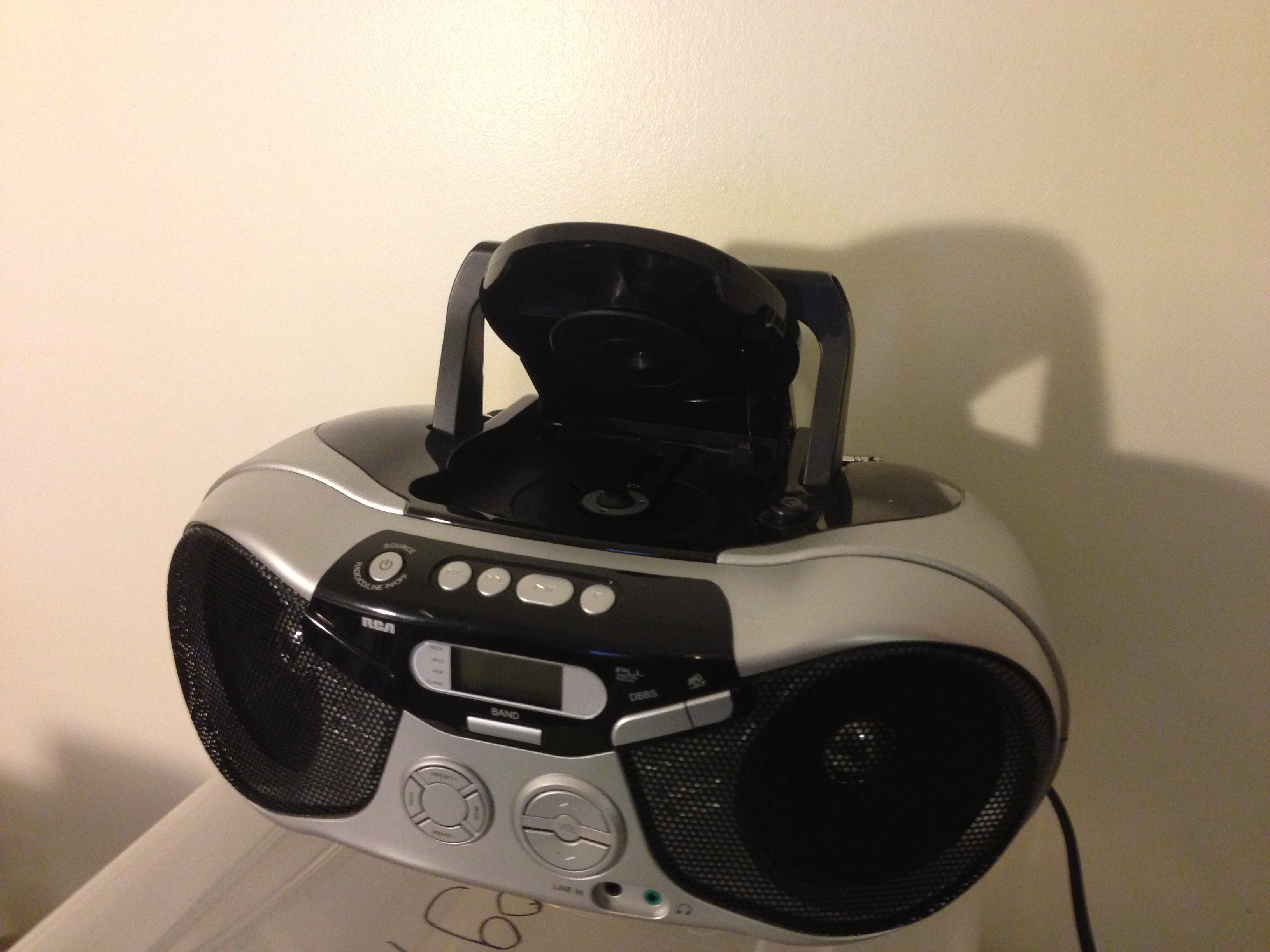
cd player

“Music was my refuge. I could crawl into the space between the notes and curl my back to loneliness.”
― Maya Angelou

If you follow Hearing Elmo you know that I want the emphasis here to be on invisible disabilities or chronic illnesses. Yes, my own challenges include hearing loss and Meniere’s disease but I always try to draw parallels to what unites us as a community of differently abled people!

I normally do not let this much time go between posts. I like to have guest bloggers (interested? email me at denise.portis@gmail.com), and I prefer that new posts are uploaded every Monday. I was dismayed to see that so much time has passed since my last post. It isn’t because I haven’t had the urge or the time. I’ve actually been trying to figure out HOW I wanted to say something without really getting caustic.

Do you have some pet peeves? Come on…’fess up! We all do, don’t we? Because we are individuals, we all have preferences, dislikes, and pet peeves. We have special things that MOVE us. There are things that energize our spirits. Yet, there are things that depress us. And folks? There are things that TICK US OFF. Consider me ticked off.

Not a Great Example?

While prepping for this post, I was relieved when I realized the person I bawled out is not a reader of Hearing Elmo. Small chance they will discover I’m relaying what happened on here – but rest assured they were fully aware of my opinion when the conversation was finished!

“I can’t believe you don’t listen to music. As a cochlear implant advocate, that is not a very good example! ‘It is too much work, is a cop out’ ”

I was stunned.

Cochlear implant companies have been working hard to make sure that those who “hear again” can also enjoy music in addition to hearing voices, being able to use the phone, and most recently to be able to enjoy water sports without having to “remove your ears”.

But I don’t listen to music. I concentrate better in the car when I do not have the radio on to interfere with my attention. On really long commutes, I do listen to talk radio. However, I don’t listen to music. Not even 80’s music which include songs I listened to while in high school! Oh sure, I have all the gadgets, wires, and assistive technology to allow me to listen to music. I just don’t like the way it sounds. Just as I worked hard at hearing voices I couldn’t see (phones), and hearing voices amongst a ton of background noise, I could devote time to listening to music – but I don’t.

Ummm… How is this Relevant?

You are probably wondering where I’m going with this. You’re shaking your head “yes” at your computer screen, aren’t you?

We have to respect the individuality of other people.

I have chosen to make the invisible things about me – visible. It was my choice. I did these things to celebrate who I am and to unashamedly live MY life.

I use a metallic purple cane on my really bad balance days. I chose to mitigate my disabilities with a service dog. I chose a cochlear implant instead of “embracing my deafness”. After a great deal of research, I chose the Nucleus Freedom instead of another brand. I wear bling-bling and would wear blinking lights on my coil if I could figure out how to make a go of that. I am only unilateral and have chosen not to go bilateral. I chose to work hard at communicating effectively. Music was just not important to me.

Is music important to you? As a person with hearing loss did you work hard at being able to once again enjoy music? Are you a musician? Does music fuel your soul? I’m am so happy for you – really I am!

But we are not cookie-cutter versions of each other. What was necessary, important, and “worth it” to you may not be the same things another would choose to work towards.

There ARE a few types of music I listen to one of which is Christmas music during the holidays. However, can I get a shout out for DISNEY TUNES? For some reason, I have really connected to a number of songs from Walt Disney movies. These animated movies were the first I viewed with closed captions as I developed hearing loss when my kids were small. Once I was implanted with a cochlear implant in 2005, one of the first types of music I DID make sure I listened to were some of these Disney songs. One of my favorite was detailed here AND just so happens to go along with this post.

United we Stand, Divided we fall

So as people who have invisible disabilities or chronic illnesses, we should strive to be respectful of individual choices. It is hard enough to work and live among folks who don’t always get it. Surely in our own community of courageous people we can respect individual choice?

Don’t agree with everything someone says or does despite your sharing a diagnosis? Cut ’em some slack.

What are some things that have left you feeling peeved when judged by your peers?

Denise Portis

© 2013 Personal Hearing Loss Journal

There’s a Goldfish in Mine!

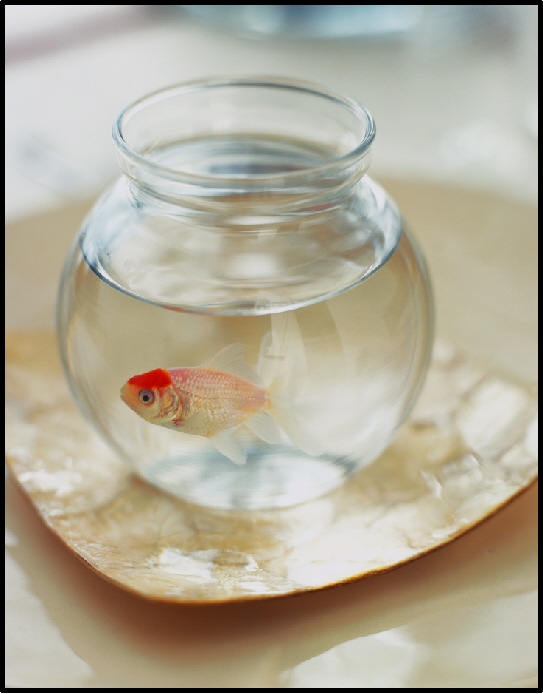
Half empty, or half full? Well MINE has a goldfish in it.

I was in line at my local grocery store recently and overheard two women talking behind me. They were there to purchase their lunch evidently as they had salads and drinks only. Normally, I let people with just a few items go in front of me. For once, however, I was actually only there to pick up a couple of things I had forgotten in a previous trip. Besides… I was having too much fun eavesdropping.

Evidently one of the women had recently been dumped. Her friend and co-worker was trying to give her a pep talk using the old analogy of a “glass half full or glass half empty”. I continued to listen in, partly because I was thrilled I could do so <BIG GRIN> but also because I was really fascinated by the arguments she put forth about an issue that to her, was black and white. It was either a great thing you got dumped, or a really awful thing.

Lines were moving pretty quickly, so before I knew it I was headed out the door with my bag and faithful hound dog in heel. I continued to think about the analogy. The original intent was meant to convey, “Are you a pessimist or an optimist?” We all have relatively fixed personalities, but they can be adjusted. Cognitive behavioral psychology capitalizes on that truth to help people change negative thoughts and behaviors.

I really believe most of us do not respond to everything in a “half full” or “half empty” way, however. The more I thought about my own responses to life as it happens, I realized it certainly isn’t a “half full” or “half empty” option for me at least. My glass has a goldfish in it.

My Goldfish

I think folks who live with disability or chronic illness, cannot react to life in a concrete, optimistic or pessimistic way. For me, hearing again with a cochlear implant and navigating life with a balance disorder means that I react to life in a different way just because those two things are a part of who I am. I don’t just have a glass of water. Mine has a goldfish in it. I’ve learned how to take care of my goldfish. I wouldn’t be who I am without my goldfish.

I have some friends in a Meniere’s disease support group who have said that because their “glass is half full” (or half empty depending on their personality), things normal people deal with are just different for them. If they have a headache, are diagnosed with cancer, or lose someone close to them it is compounded by the fact they also live with an invisible or chronic illness. I get where they are coming from and understand what they are trying to say. They believe that experiencing normal life things (diagnosis, loss, etc) are different for them because they do so from a body that is already dealing with something else.

We all know each other pretty well in this group so when I bring psychology into it, they all roll their eyes at me. I truly believe that living with a chronic illness is all about perspective – but not in a “half full” or “half empty” kind of way. When I mentor someone, I try to help them get to a point of acceptance as soon as possible. Acceptance is not an attitude of “I give up. I’m not fighting anymore”. It is a recognition of the “new you” and learning to understand your new normal. That “normal” may even change if you have an illness that fluctuates or is a degenerative disease. For me, it was important to acknowledge this goldfish. I can’t change it and I don’t get a new glass. This is me… and I have a goldfish.

Just accepting that, has allowed me to be the best ME I can be. Psychologist Jennifer Kunst said, “The good news is that when relative changes can be made in one‘s basic approach to life, it makes a big difference. A modest change in your filter doesn’t change who you are at the fiber of your being. It helps you become a better version of yourself” (Kunst, 2012, para. 4).

For me, the hardest thing wasn’t that goldfish or learning how to take care of it. The tough thing was being around a whole lot of other people with only water in their glass.

“Sure, I’ll meet you up in the classroom, but I’m taking the elevator at the end of the hallway. See you in a few…”

“The dishwasher is running so I need you to come in here if you are going to ask me questions.”

“I hate to interrupt you, but I need to go up these stairs and I have to actually concentrate. Hold that thought…”

Family, friends at church, co-workers, and neighbors, are so accustomed to my goldfish they don’t really even see it anymore sloshing around in my glass. No one knows me better than my husband, Terry, I suppose. Yet, I even have to remind him that although I can talk to him in a restaurant that is almost empty without looking at him, I really need him to put his coffee cup down if the restaurant is full so that I can read his lips. It is my responsibility to feed my goldfish. Not his. I may have explained to him twenty different times that there are atmospheres I will hear “near normal”, and environments in which I’ll need his lips plastered to my forward microphone. However, it is my responsibility to communicate this to him.

We have very narrow staircases at home. On “good” days, I can jog up and down the stairs. Terry isn’t surprised anymore if I ask him to carry the laundry downstairs before he leaves, when I may have been “jogging” earlier. He isn’t shocked if I tell him to “go on up” at the end of the night, knowing I’m going to need to go up on all fours and take the time to do so. He knows I will communicate what I need. This goldfish is mine.

There is a terrific list of “acceptance rules” that the University of Washington put out. You can access it here. Two of my favorite “acceptance of the goldfish” quotes are:

Do not make people feel sorry for you or pity you. Get people to view you as an able person who is capable of anything within your reach if the doors of opportunity are open. (graduate student with a hearing impairment)

We should focus on the ABILITY in disability more than the DIS. If we can do that, then we are more apt to succeed. Also, know your limits. If you don’t know what you can or can’t do, how do you expect other people to know? Plan for success by using more of the cans than the can’ts. (college student with mobility impairments)

(University of Washington, 2013)

Don’t be aggravated about the goldfish. Honestly? Everyone has something in their glass besides water. If we were all just glasses of water, we’d all look alike. We are unique individuals. We all have something else in our glass. My opinion is that we accept that. I’m not this person that has a goldfish temporarily. The goldfish isn’t visiting and it isn’t something I can scoop out. This glass with a goldfish IS me. And I’m OK with that. I love what Karen Hall, Ph.D., said in her article “Radical Acceptance”. She said, “Radical acceptance is about accepting of life on life’s terms and not resisting what you cannot or choose not to change. Radical Acceptance is about saying yes to life, just as it is” (Hall, 2012, para. 1).

Denise Portis

© 2013 Personal Hearing Loss Journal

Hall, K. (2012). Radical Acceptance. Psychology Today. Retrieved June 12, 2013, from http://www.psychologytoday.com/blog/headshrinkers-guide-the-galaxy/201203/is-your-glass-half-empty-or-half-full

Kunst, J. (2013). Is your glass half empty, or half full? Psychology Today. Retrieved June 12, 2013, from http://www.psychologytoday.com/blog/pieces-mind/201207/radical-acceptance

University of Washington (2013). Mentor tip: Acceptance of disability. Retrieved on June 12, 2013, from http://www.washington.edu/doit/Mentor/mt_acceptance.html


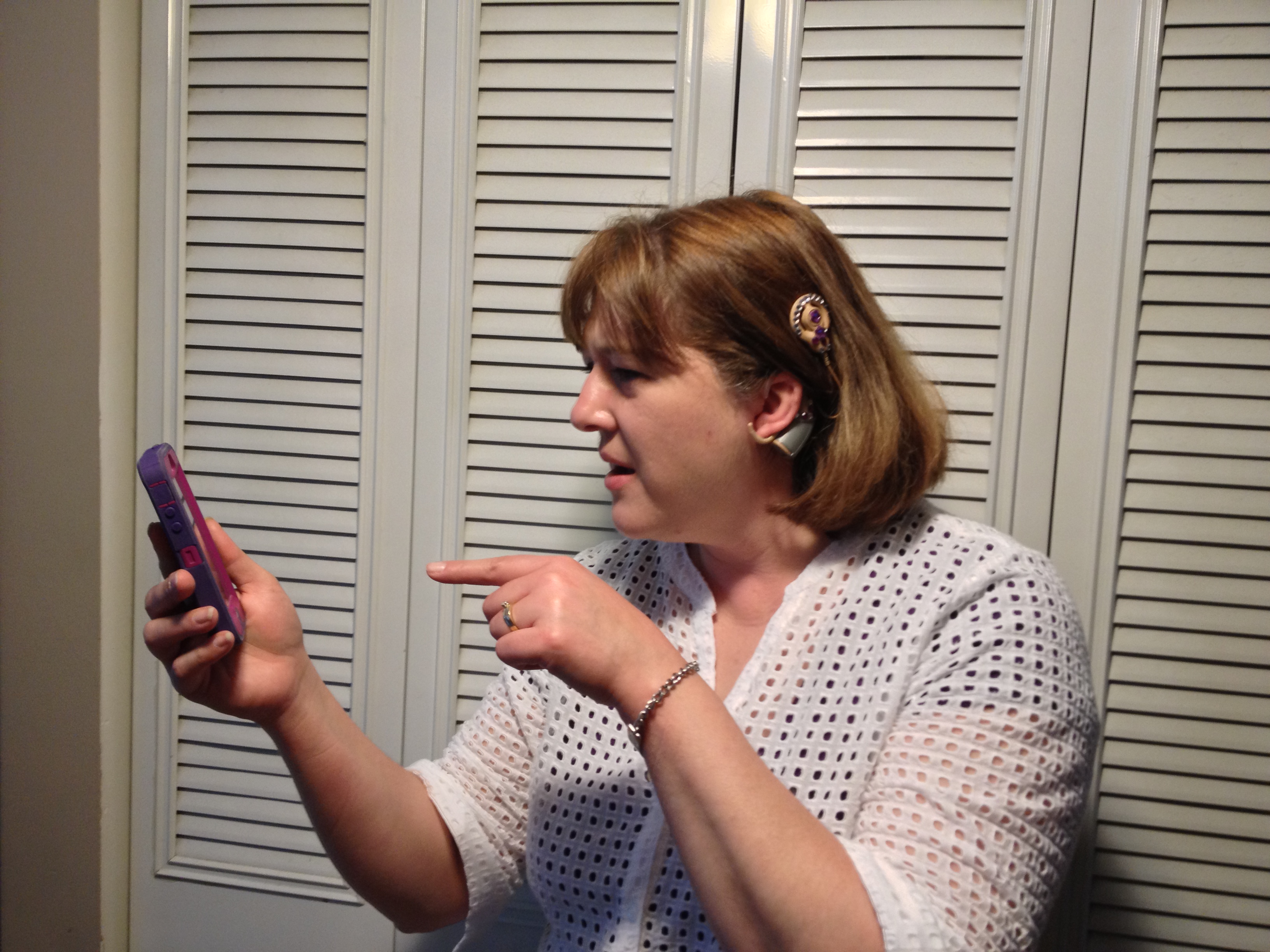
I Stare at my Phone and LAUGH!

If I'm not married to you or if I didn't birth you... I'm just not going to talk to you on the phone! :-)
If I’m not married to you or if I didn’t birth you… I’m just not going to talk to you on the phone! 🙂

Last week after a meeting with Anne Arundel County Commission on Disabilities, I received a follow-up phone call about changes in a training that I would be participating in for the Public Safety committee. There are five of us on the committee, two of which (including myself) have hearing loss. I never give out my cell phone number, but do have a number that we use as our “home phone” through Google Voice. The reality is that Google Voice isn’t a phone at all. It transcribes messages from a messaging service when people call the number and leave a message. I receive both a written transcription and the taped message.

So I received the message with changes about our training and read/heard at the end: “Call me to let me know you received this”.

I laughed.

Out loud.

Twice.

I don’t use the phone. On rare occasions I will speak to my husband or grown kids on my cell phone. However, I know their voices VERY well. Sometimes I will talk to my mother but only long enough to ask her to switch to FaceTime. (Always helps to see the face to pick up more of the conversation). With all other people, however, I do not use the phone.

It isn’t that I cannot use the phone. It simply isn’t my first choice (or second, or third choice). If I want to talk on the phone I have to stop everything. No multi-tasking such as continuing what I’m doing on my computer, or folding laundry, or working in the kitchen. I have to sit (that’s right… I can’t stand!) switch to t-coil on my cochlear implant and hearing aid, close my eyes (I’m not kidding), and concentrate. How often would YOU be able to talk on the phone if this were the parameters for you to do so? <BIG GRIN>

Email is a Great Choice

email

Email is a great choice for people with disabilities or chronic illness. In my opinion, it is actually a great choice for everyone. Why?

1. Email gives a written record of exactly what was said.

It doesn’t really matter if the conversation is personal or business. A written record of what was actually said can help us better remember dates, times, and other important information.

2. Email fits into our schedule.

You can check email on many phones now. You can check email on devices such as iPods and iPads, and Kindle Fire. Many types of technology allow you to read and respond to emails no matter where you are.

When we need to respond to emails from our desks, something business related or important, we can do so on OUR schedule. No playing telephone tag. Instead you can read and respond at a time that is convenient.

3. Email can eliminate communication problems.

Have a habit of interrupting someone mid-sentence? Do you have attention-deficit disorder and are easily distracted by what is going on around you? Is the person you need to communicate with hard to talk to – angers easily, defensive, mumbles, etc? Email eliminates those kinds of problems.

4. Email is free.

Most of us have a computer at home now. If you do not, you likely have a way to access email through mobile devices or at least have a library nearby where you can access the Internet. There are numerous free email options. I personally use Google’s gmail for my email account. However, there are numerous free email options discussed at About.com. You can access that HERE.

Email can also be a great choice for people with disabilities or chronic illness. I am late-deafened and hear again with a cochlear implant. For me, email eliminates the pressure to HEAR. When folks get a hold of my cell phone number for some reason and call, I really do stare at my phone and laugh. Email can be read by special programs such as JAWS (a Microsoft computer screen reader) and written with Braille displays for folks with low-vision or people who are blind. Email font can be enlarged to assist those with problems seeing smaller type. Email can be a great communication device (along with various social media) for people who have difficulty expressing themselves and using their voice. Email may be easily accessed with various tools for people who have mobility issues. Email is available when you are ready to read/send communications… something that may be important to people who have Chronic Fatigue Syndrome, FibromyalgiaLymes disease, or other disorder where fatigue and pain are a factor. Can you tell I’m a big fan of email?

Some of you are thinking, “But I just want to hear your voice!” I totally understand that. Even as a person with hearing loss, I understand how important inflection, emotion, and accents may be in communication. We do need to be sensitive to the fact that there are a great number of people who do not feel the same way. Just because you like to hear someone’s voice with a phone tucked under your ear, doesn’t mean that others are able to have a hands-free, low-anxiety audible communication with you. Perhaps Skype would be a good choice for you – free to anyone with a computer or modern cell phone. FaceTime is rising in popularity with people who have Apple products. These communication devices allow people to both hear and see when communicating. You can even have conference calling!

I think the only thing I love more than email is texting! Unless, you want to discuss a major problem called autocorrect… but hey! That’s a topic for another post!

Denise Portis

© 2013 Personal Hearing Loss Journal