Untreated Hearing Loss

An initiative by Phonak – http://www.hear-the-world.com/

I just loved the movie UP! Not just because it had main characters that were dogs – and ones that could talk at that! Carl, a 70’s something animated actor sported hearing aids and spunk. Mostly the latter…

I recently ran into a 70’s something gentleman at the gas pump. I was leaning against the car waiting for my tank to fill, trying desperately to avoid looking at the high numbers scrolling across the screen as my 12 gallon tank drained my bank account. It was a pretty fall day, so I had the car windows down and was talking to Chloe. She could really care less about the price of unleaded, but she does like to flirt with other people nearby. I caught sight of a low tire, and changed positions so as to look at it better. This gentleman caught my eye and said, “I noticed that too… you need air in that tire”.

With some apprehension I looked around the station and could not see an air pump. I responded, “Oh dear, I don’t see an air pump!”

The gentleman cupped his ear and said, “teardrops and dare what?”

I think my eyes popped wide. Another person with hearing loss! I just beamed at him and turned to face him while repeating, “I don’t see an air pump, do you?”

He dropped his cupped hand and turned in a circle looking around the islands of pumps at the station. “Nope! I don’t see one either. You may have to go to another station and get some air in that tire!”

I pointed to my head and said, “I have a hearing loss too…”

He looked at me quizzically and moved to see the side of my head. “Oh! I thought that was one of those new-fangled gadgets people use to talk into. Is that a hearing aid?”

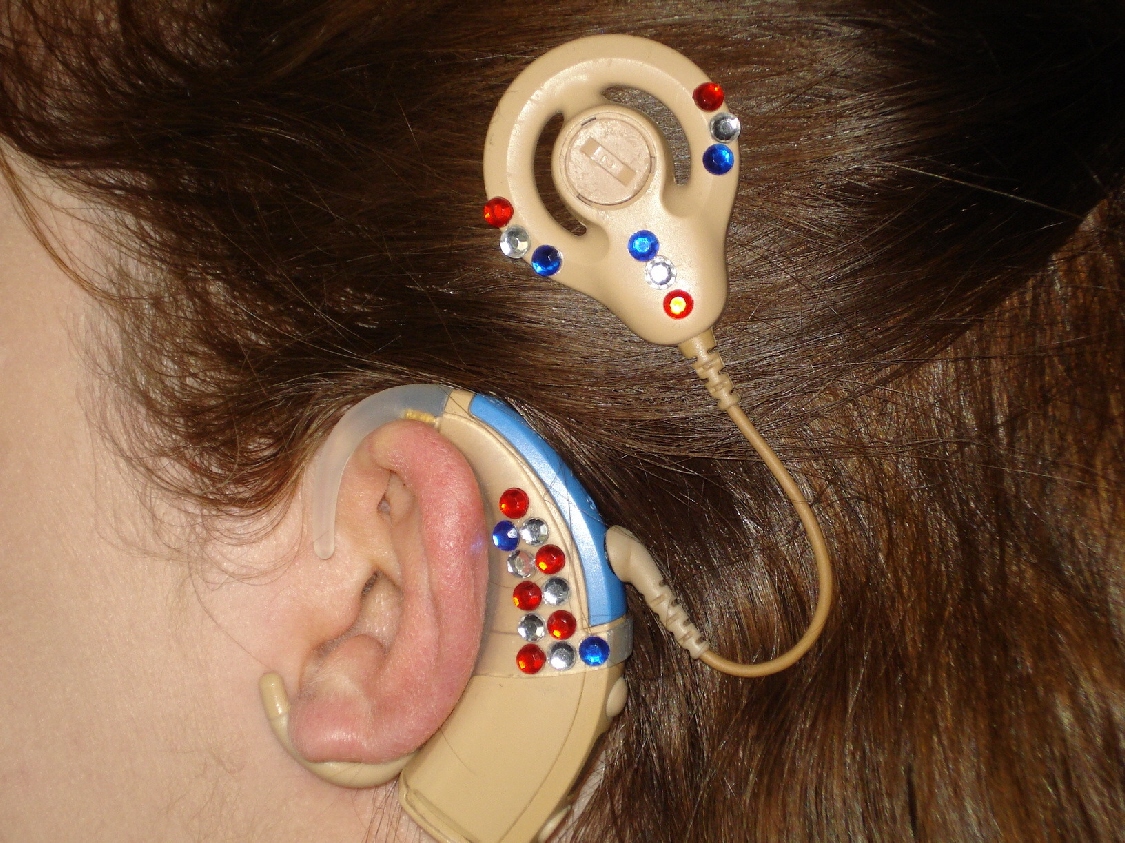
I beamed again, always excited to share and said, “No. It’s a cochlear implant.” I pointed to my other ear,… “but I have a hearing aid in this ear even though it doesn’t do me much good”.

He shook his head sadly and said, “Yes, I tried them for awhile but all I got was squeals and whistles. I never could hear better.”

Pointing to my CI again I said, “You should go to your audiologist and get evaluated for a cochlear implant. I hear much better than I ever did with just a hearing aid.”

He moved closer to me, still occasionally cupping his ear. I couldn’t tell if he was understanding all I was saying, so I really concentrated on speaking at a moderate pace and clearly. At least as clear as a pronounced southern accent would let me.

He stood within a yard from me and looked longingly at my CI. “If I were young again, I’d get that surgery!”

I put my hand on his arm and said, “Oh! You shouldn’t let age stand in your way. I know plenty of folks who are older who get the CI. They do very well!”

“No… no. I’m too old. It’s too late for me”, he said sadly. His eyes glistened and his chin dropped. It was all I could do not to throw my arms around him and hug him tight. Demonstrations of physical affection and empathetic squeezes were not likely to be accepted by a total stranger. So I restrained my impulses and instead said clearly, “You should think about that some more. It’s the quality of life that matters.”

My tank was full, as was his and cars were in line. I gave him my card and told him to email me. I hope he does.

Untreated Hearing Loss

Untreated hearing loss may result in depression, anxiety, little to no social activity, and insecurity (cited by Zounds). Helen Keller, who was both blind and deaf, said that deafness cuts one off from people, whereas blindness cuts one off from things. Even those who have received treatment for hearing loss may experience some of these same results, but in different degrees.

I recently went to a small group Bible study and had trouble hearing when I first came in since everyone was talking at the same time. Someone addressed me and I didn’t hear them. They ended up reacting negatively to that and I sat in shock at having been misunderstood and unfairly judged – and “I’m a veteran!” I thought to myself. But I think as a result of taking concrete steps towards hearing better, those of us who have made an effort to communicate with assistive listening devices and technology have also developed coping skills towards dealing with bouts of depression, anxiety, and insecurities. We have very likely also made great strides in being more socially active. In my case, having a negative experience at least meant I could email my peers and belly-ache about it and get some great advice!

But what if your hearing loss is untreated? If your hearing loss began as an adult, do you remember those early days of not hearing well? I sure do. I can tell you they aren’t GOOD memories either. Slowly, but surely I dropped out of nearly everything. When Terry and I first got married we vowed to continue to date. So even after the kids were born, we’d swap baby-sitting favors and go out on dates. After I began losing my hearing (when our 2nd child was born), those dates dwindled away and eventually stopped. I’d have hubby “order in” so that I could eat something I didn’t have to fix but would not have to face the noise of a restaurant. Now that I have a CI, I’m enjoying dining out again.

If you are still a working adult when hearing loss occurs, it can greatly impact your ability to do your job. You can only “fake it” so long. Hearing loss can be treated discreetly and privately. I have met some people at work, church, or in public who I didn’t realize had a hearing loss until they noticed my own “bling” (or hearing assistance dog) and mentioned it to me. For many, disclosing hearing loss is a choice you can make, whether you are at work or another place you often hang out (ballgames, church, community events, etc).

If you know of someone who may have a hearing loss, you may discover they can be stubborn about agreeing to go get evaluated by an audiologist. Encourage them to do so! Many times audiologists will do a hearing test for free. Even if you do not yet need a hearing aid or other technology in order to maximize hearing, it is good to get a baseline audiogram to chart where your hearing is “going”. Not all types of hearing loss are progressive – but then again there are many that ARE. Having a real way to chart what is happening to your hearing is important.

We use to get our hearing checked regularly in school. Because of budget cuts few schools do hearing tests anymore. Parents should be diligent about periodic hearing tests for their children. Especially those who had tubes put in when young, or suffered from numerous ear infections. If hearing loss runs in the family, it is even more important to religiously set up audiograms for members of the family.

Don’t Chalk it Up to “Age”

I have heard many say that they expected some hearing loss when they reached their late 60’s or 70’s. Age-related hearing loss is not uncommon. However, many choose not to do anything about it. Hearing aids have “come a long way baby”. They come in all sizes, shapes, and COLORS. (Yeah, of course I would mention THAT!) They can be worn discreetly or worn all “be-dazzled”. You may find that you hear fine in “most” situations, but perhaps you have trouble understanding and hearing in noisy places. Hearing aids are also able to isolate voices close and zero in on direction of the listener. You’ll never know what is available until you go see an audiologist and talk to them about your options!

If you tried hearing aids and hated them, but know your hearing loss has worsened – please don’t discount cochlear implants without sitting down and talking to recipients. All three cochlear implant manufacturers have message boards and forums in which you can ask questions and discover answers from actual cochlear implant recipients. Age doesn’t matter either – the oldest person I personally knew who was implanted was 87-years-old. I have read stories of others who are even older. A person does need to be healthy enough to undergo outpatient surgery and anesthesia, but age doesn’t disqualify anyone!

The American Academy of Audiology reported the findings of a study done by the National Council on the Aging. Over 2,300 individuals participated in the study, and 2,090 hearing family members were also surveyed. The results of the study can be viewed here. The study noted that, “Hearing loss is one of the most prevalent chronic conditions in the United States, affecting more than nine million Americans over the age of 65 and 10 million Americans age 45 to 64. But about three out of five older Americans with hearing loss and six out of seven middle-aged Americans with hearing loss do not use hearing aids”.

If you or someone you know has a hearing loss, go get an audiogram and information about your hearing loss. What have you got to lose?

Denise Portis

© 2011 Personal Hearing Loss Journal

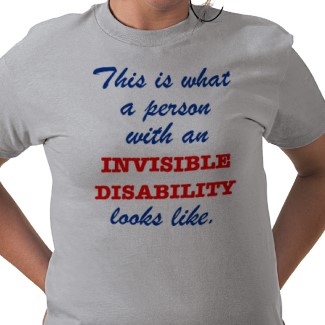
Reflections on National Invisible Illness Awareness Week

According to the Invisible Illness Awareness website, the following statistics are true:

  • Over 100 million people in the U.S. have a chronic illness;
  • 20.6 percent of the population, about 54 million people, have some level of disability;
  • 9.9 percent or 26 million people had a severe disability
  • 1.8 million used a wheelchair
  • 5.2 million used a cane, crutches, or a walker
  • So that is less than 6% who have a visible illness.
  • There are many illnesses that start out being invisible and as the disease progresses it becomes more visible.

Also note that:

  • 26 million persons were considered to have a severe disability;
  • yet, only 7 million persons used a visible device for mobility.
  • Thus, 19 million of the people who were defined as severely disabled, did not use a wheelchair, cane, crutches or walkers.
  • In other words, 73% of Americans with severe disabilities do not use such devices.
  • Therefore, a disability cannot be determined solely on whether or not a person uses visible assistive equipment.

U.S. Department of Commerce (1994). Bureau of the Census, Statistical Brief: Americans With Disabilities. (Publication SB/94-1).U.S. Department of Commerce (1997). Bureau of the Census, Census Brief: Disabilities Affect One-Fifth of All Americans. (Publication CENBR/97-5).

Why Do I “Plug” Invisible Illness Awareness Week?

I have been trying to raise awareness about this week for three years now. This year, a friend noticed my “don’t miss” posting on Facebook and couldn’t resist teasing me about it. After all, I don’t exactly allow my challenges to be INVISIBLE. I wear a bright red ear mold on the hearing aid in my “deaf” ear. I wear sparkly “bling” on the cochlear implant on my “hearing again” ear. I go about my life accompanied by a hearing assistance/balance assist dog 24/7. I learned long ago that it was in my best interests to make an invisible disability – VISIBLE. It kept me from being knocked out of the way, and helped people realize that something about me is different. I can still work, shop, go to movies, hike, and dance… yeah. OK, maybe not that last part…

I just don’t hear well… especially in big, cavernous places, or busy, buzzing atmospheres. Once you get my attention and I know you are talking to me, I can actually hear you great! I may have to ask for a very occasional repeat, but for the most part I do really well. I’m proud of how far I’ve come in my hearing. Despite all my visible reminders and “kissing sidekick”, Chloe, people who know me well (friends, co-workers, and family members) will forget that I may have trouble if you don’t get my attention first and that I can’t move FASTever. Heck… sometimes even *I* forget that I cannot move fast. Nothing reminds me quicker than when I

fall

down

and

go

BOOM!

Through the years I’ve been able to meet some wonderful people. Some examples include:

1) Folks through the training center at Fidos For Freedom.

2) People at Hearing Loss Association of America conventions or conferences

3) “Hearing Again” recipients at Cochlear America conferences

4) Individuals in support groups for tinnitus, Meniere’s disease, hearing loss, and assistance dogs users (both face-to-face and in virtual environments online).

Not every disability can be made visible. Not every person chooses to even try and make something invisible – visible. They have their reasons and it is an individual’s choice how they want to disclose or keep hidden any disabilities they may have. It could influence their work environment, relationships, and even self-esteem. I choose to support ALL individuals who live with chronic illness, invisible illness, or disability. Recognizing these illnesses once a year in a push for national awareness, I hope will eventually dispel erroneous ideas and information about these very populations. This is one of the reasons I “blog”, and invite guest authors to write for “Hearing Elmo” as well. Raising awareness makes a difference… one person at a time.

I read some incredible stories of courage, faith, and perseverance this week at the national website for invisible illnesses. You can check out some of them here. I’m proud to be a part of a community of people who choose to live a victorious life  – “in spite of”.

Take some time this week if you can to recognize the courageous people that you know who live with invisible illness and the choices they have made in order to live life to its fullest!

Denise Portis

© Personal Hearing Loss Journal

10 Year Anniversary of 9-11

Patriotic Cochlear Implant "Bling"

It is hard to believe we’ve seen the 10 Year Anniversary of “9-11” come and go already. It really put it into perspective for me when my 21-year-old daughter relayed an amusing anecdote to me. She had gone to Union Station to pick up “the boyfriend“. They walked around a bit before getting on the METRO and she spied a police car outside with “9-1-1” on the side. Because of the anniversary of 9-11, and a result of what I think those numbers MEAN to someone of her generation, she pointed at the car and said, “Oh look! I guess that is on there to commemorate the 10 year anniversary!”  I think “the boyfriend” was hard pressed not to laugh.

Hers is a generation that grew up without William Shatner and his “Rescue: 9-1-1” television show. Although 9-1-1 was covered in school, for her it left a permanent link to a different meaning other than how to call in the event of an emergency. For her, those 3 numbers meant something far different. She was old enough to understand that the world had changed for those here in the U.S.A., but young enough to experience different kinds of fear, anxiety, and apprehension experienced by parents and their peers.

On 9-11 I was “only” hard-of-hearing at the time. The progressive loss and downward spiral of my own hearing had not left its life-changing mark as yet. However, even with my first hearing aid, I still relied on closed captioning. I think if I had to put my finger on ONE memory of 9-11, it would be being afraid and confused about what was happening because those professionals who did closed captioning were FREAKING OUT. At times, the closed captioning was just gibberish, and there was a great deal more of instantaneous corrections being made for “Live” television. When the first tower came down I remember sitting – quicklySTUNNED.

Ten years later I am a different person. Hopefully, all of us can say we are “different” after a decade of life. Our goal should be to mature, learn, and even blossom. I am completely deaf now, but “hear again” through cochlear implant technology. Who I count as friends are peers who also live with hearing loss, live with invisible disability/illness, or work with those populations. Sometimes we live victoriously and sometimes there are setbacks. I have found a “community”, however, and they have become family and friends to me. I watched a number of specials about 9-11 and still used closed captioning. However, it was with some confidence that I also HEARD the commentary and watched the speeches at various memorials. I am grateful for my cochlear implant and for the privilege of living in America.

We will never forget…

Denise Portis

© 2011 Personal Hearing Loss Journal
30 Things

From Invisible Illness Week

30 Things About My Invisible Illness You May Not Know:

1. The illness I live with is:

Invisible if I want it to be, but I wear bling and use a service dog so that it is not.
2. I was diagnosed with it in the year:

1993
3. But I had symptoms since:
I was 6 years old after a car accident.

4. The biggest adjustment I’ve had to make is:
Learning to hear with a cochlear implant and learning how to adjust on days my Meniere’s disease symptoms have me wobbling around with poor balance.

5. Most people assume:
My cochlear implant has “fixed me”.

6. The hardest part about mornings are:
Not being able to hit “snooze” on my alarm clock since that happens to be my service dog, Chloe. When the alarm goes off, she kisses me awake and there is no going back to sleep. The dog is definitely a “morning dog”.

7. My favorite medical TV show is:
Not really a medical show but I do like Dr. Phil. He’s a “reality therapist” and I think everyone who has an invisible illness needs to have a healthy dose of reality!

8. A gadget I couldn’t live without is:
FM Clipboard for classes.

9. The hardest part about nights are:
Trying to ignore the tinnitus that comes roaring into play after removing my cochlear implant.

10. Each day I take __ pills & vitamins. (No comments, please)
1 prescription (blood pressure) and 9 different vitamins – one of which is Manganese. Studies have shown that people with Meniere’s disease may have a Manganese deficiency.

11. Regarding alternative treatments I:
Have tried numerous ones including acupuncture, chiropractor, and vitamins.

12. If I had to choose between an invisible illness or visible I would choose:
Visible – no question. This is why I try to make my invisible illness – VISIBLE.

13. Regarding working and career:
I am proud that I am able to work having made a number of adjustments and having chosen to be partnered with an assistance dog.

14. People would be surprised to know:
That I dread group activities because I don’t hear as well as they think I do.

15. The hardest thing to accept about my new reality has been:
That I must sometimes choose not to do things I once enjoyed because of my symptoms. For example: If there is a movie I wanted to see that is coming out, but the weather is bad and my Meniere’s disease has flared up, I cannot go and have to put it off.

16. Something I never thought I could do with my illness that I did was:
Go back to school and finish my MS.

17. The commercials about my illness:
There are none. I’ve never seen a late-deafened/cochlear implant commercial, nor a commercial about Meniere’s disease.

18. Something I really miss doing since I was diagnosed is:
Listening to music.

19. It was really hard to have to give up:
Friends who couldn’t cope with the new me accompanied by a service dog.

20. A new hobby I have taken up since my diagnosis is:
Blogging/writing

21. If I could have one day of feeling normal again I would:
Go to an amusement park and ride every roller coaster there!

22. My illness has taught me:
That the disability community is live and well and fully utilize the Internet to connect, support, share information and to be proactive.

23. Want to know a secret? One thing people say that gets under my skin is:
“Nevermind”. If you aren’t willing to repeat it for someone who hears differently are you not behaving as if it doesn’t matter to THEM?

24. But I love it when people:
Include me.

25. My favorite motto, scripture, quote that gets me through tough times is:
Helen Keller:  “Blindness separates us from things but deafness separates us from people. “

26. When someone is diagnosed I’d like to tell them:
Email me. Ask questions. I want to help!

27. Something that has surprised me about living with an illness is:
How family members who once knew you “when” are not willing to learn about the new you.

28. The nicest thing someone did for me when I wasn’t feeling well was:
Email me and ask how I was doing.

29. I’m involved with Invisible Illness Week because:
Many illnesses and disabilities are invisible. I want to raise awareness.

30. The fact that you read this list makes me feel:

Appreciative that you care enough to learn more!

Denise Portis

© 2011 Personal Hearing Loss Journal

Sometimes? There’s Not a Great Solution…

Chloe doesn't know Spanish...

Sometimes? There is not a great solution available for positive advocacy.

This past Friday, my 21-year-old daughter asked me to go shopping with her. I’m always thrilled when she CHOOSES to spend time with me, so I agreed so long as it was the morning so that we could “beat the heat”. She agreed. She wanted to shop for new “under things” and I knew JCPenny was having a sale on these items. Kyersten, Chloe and I headed for Annapolis Mall to shop.

The bad thing about shopping in the “intimates” department is that there is not much room to maneuver. I was having some difficulty with my balance as well so I was just being extra careful about how much moving I had to do. Chloe does great even in confined spaces with the exception of that tail. I talk to her a great deal while we are out because it helps to keep her attention on me. Kyersten was busy looking at different styles available.  My main job was to offer the occasional opinion and situate Chloe so that her tail didn’t knock things off with her loving “wag”. Chloe may not understand all that I say to her, but she does know her name and will wag as if she is paying attention to everything else I’m saying. Because my attention was on HER, and as we were in “tight quarters”, I was taken by surprise by two little girls who ran up and threw their arms around Chloe’s neck.

One little girl was about 4-years-old, and the other (obviously big sister) was probably 9 or 10-years-old. I stuttered out, “Oh! I’m sorry. She’s a working dog and cannot be petted right now”. The girls continued to squeeze and talk excitedly.

I tried to tune in a bit better and realized they were talking in Spanish. With my heart plummeting to my stomach, I held up my hand and shook my head NO saying, “Please don’t pet her. She is a working dog”.

The older girl stopped and tried to talk to me in English, and I understood “She’s a pretty dog”. At this point Chloe broke her sit/stay in order to break the choke hold. I was unprepared and went to my knees and caught myself on a rack.

With bras, panties, and tiny hangers attached to various body parts, I again held up my hand, shook my head no and said, “No please!” in a very firm voice. As I was still wobbling, I sat on my caboose to get my bearings.

The older girl said, “Oh … sorry” with some other words that I could not make out because of the accent. I did understand that she understood that Chloe was NOT to be petted. In Spanish she (I think) explained to her younger sister about Chloe. I think she realized something was amiss because I was now sitting on the floor with lingerie scattered around me. She left quickly with her little sister in tow.

I had Chloe brace so that I could get up, and asked my daughter to pick up some scattered articles. (Chloe could have, but I didn’t figure anyone else would want dog saliva on merchandise). Right as I was on one knee about to stand, the youngest came zooming around the corner with a squeal to squeeze Chloe again (who was now in a stand/stay and “brace”). I held up my hand and intercepted the young lady and my hand blocked her at the chest. Although I did not PUSH, it did stop her in her tracks. I said firmly with a head shake, “NO!” She turned and ran away.

I did NOT want to place my hands on someone else – let alone a child. I didn’t injure her, but I really felt out of options. I was “rattled” the remainder of the day. I was very upset with MYSELF that the resolution to this problem ended up playing out like it did.

When All Else Fails… Be Firm

I did look around for the youngster and never did see her or her older sister during the remainder of our shopping trip. When something doesn’t go according to plan I tend to beat myself up about it I’m afraid! I kept thinking about other options I may have had, and tried to think of what I might do should this happen again. (I’m open to suggestions – grin).

Sometimes we can try to advocate in a positive way – and the situation may just fall apart. Sometimes? You just have to be firm and resolute. We should always try to be positive and upbeat at the beginning…

“It would assist me in staff meetings if everyone would just pop a hand up before speaking so I can locate who is talking”.

“I can easily do my share of answering the phone if I had access to a captioned telephone that would provide understanding for when I don’t hear everything”.

“She’s not a pet. She’s a service dog and she can come into the store with me”.

Yet there are times we may have exhausted other options and have to stand firm.

“I need everyone to simply pop your hand up with a small wave before you speak. Thanks in advance”.

“I will require a captioned telephone so that I can do my job and share the task of answering the phone”.

“Here is a flier about what the ADA says about my rights. I’ll be over there shopping should you have any additional questions”.

I don’t think ANY of us welcome having to be firm and insistent, but there is a time and place for being firm. I try to always remember that there will be others who come after me that may also have accessibility issues. How I handle a situation may condition someone with normal hearing to respond to the next person they interact with who has a disability. There are times, however, when all pleasant and positive avenues have been closed to you. Even in your firmness… keep your cool. Keep it short and stick to the facts. My husband grins and tells me, “Denise! TMI. Keep it short! They don’t care about your background or care to hear your story”!

Accents, Foreign Languages, and Hearing Loss

The great thing about our country is the diversity. Because of where I live there are a large number of minority populations who speak English as their SECOND language. I do not speak an oral foreign language so I’m a little jealous of those who can! My mother taught high school Spanish for over twenty years, but her children never learned (much to her dismay). I have a lot of respect for people who speak English as their 2nd language. It is difficult, however, to understand language when an accent distorts the way a cochlear implant and/or hearing aid pick up the words. I have trouble understanding people with thick accents that may speak PERFECT English. I even have problems with American accents such as folks from Boston, Texas, etc. (I understand “Southern” as I lived there for so long!)

However, the fact that I have difficulty with accents, is MY problem. People with hearing loss should have patience with those who speak other languages as their primary language. I have heard late-deafened folks demean and criticize those who speak other languages. I always think to myself, “Really?” It is far more productive to explain that you have a hearing loss and have trouble understanding when an accent is present. Let them know that you are aware it is your problem, and pleasantly ask if they can perhaps speak slower and face you when they speak. I’ve overheard HoHearies blast people with heavy accents – as if it is THEIR fault! Always – ALWAYS – remember you are an advocate for others with hearing loss whether you signed up for it or not! If you are negative, critical and defensive, you are having a negative influence on how the rest of us are treated in the future. Yes, it can be frustrating and even embarrassing to have to ask someone with a heavy accent to repeat themselves again and again. But “own” the problem as yours – it isn’t their problem. It’s a big thing to be fluent in more than one language, so treat them with the respect they deserve.

Denise Portis

© 2011 Personal Hearing Loss Journal
Timeless Reminders

In 483 B.C., Medo-Persian King Xerxes (also known as Ahasuerus) threw a huge, 7 day party. What was strange about this party is that it FOLLOWED a 180 day, kingdom-wide celebration. I mean… who has THAT kind of money? I guess Xerxes did – and he had no qualms about spending it. At some point in the party, Xerxes makes a mistake. He assumes his queen, the beautiful Vashti, will want to come to the men’s party and parade around for everyone. She set him straight pretty quickly… all through the channels of the first private messaging system… eunuchs. After consulting the fellas in his “boys club”, Xerxes boots Vashti to the curb… or actually to a part of the harem where he’ll never see her again. ‘Cept… now he’s lonely. This lonliness sets in play a kingdom-wide search for all the beautiful single women in the kingdom. That’s right… there’s a job opening in the palace.

Hadassah was a young Jewess being raised in Susa by her cousin Mordecai. Was it because she was near the palace at Susa that she was picked up so quickly? We don’t know, but we do know she was a “hottie”. Beautiful in form and face. Her name was changed to Esther and she began the year-long process of getting her chance with Xerxes to see if he liked her well enough to become his new queen. History tells us that in 478 B.C., Esther becomes queen. Guess she made an impact…

Xerxes was a “strange ‘un”. He paid attention to seemingly unimportant things and completely overlooked really important details… like signing a law from a “Jew hater” named Haman to wipe out and annhilate all the Jews on a specific day. Haman is conniving and manipulative and leaves out the little detail about exactly WHO the race was to be destroyed. Xerxes didn’t have a problem with the Jews – one saved his life even (wouldn’t you know it was Esther’s cousin Mordecai?) – but Haman certainly did. If you are familiar with the story, you know that Queen Esther is given the opportunity to save her people from this vengeance edict that was drawn-up and pushed through into law by Haman. During a pep talk from her cousin Mordecai via that early private messaging system… he tells Esther something that has reverberated down through the years to words we all know. “FOR SUCH A TIME AS THIS”. Those six words are profound, aren’t they? Unfortunately, Esther 4:14, has an even greater timeless reminder that is often overlooked. Mordecai actually says, “And who knows whether you have not attained royalty for such a time as this”. Yup. Esther saves her people by exposing Haman and suggesting to Xerxes to write a counter-law that will allow the Jews to fight for their very lives instead of rolling over and giving up. It seems no one wants to face a Jew with a sword. They are saved.

I think we miss an important reminder when we take only those six words out of context. All the pieces were in play at the right time, right place… all for a very important reason. I’ve often thought about my own life and tried to look at opportunities available to me that I have as a result of – all the pieces being in play at the right time and right place. Who knows whether or not I became deaf for such a time as this?

You Have a Disability. Now what?

I’m reasonably certain that if I asked for a show of hands for anyone who signed up for developing a disability or acquiring an invisible illness, I’d see a “room” full of people sitting on their hands. To be painfully honest with you, there are days that I really hate being deaf and only being able to hear if I wear bionics. I can get extremely depressed after experiencing a day where I had to navigate my space hanging on to walls or using a cane. I didn’t ask to become deaf, nor aspire to being a person with Meniere’s disease. Yet I firmly believe that everything has a purpose. So I’m deaf and hear again with a CI. What can I do with that?

Do you know that you have access to people that may be unique to YOU? The Internet may bring like-minded people together for discussion and support, but many of these people you may never meet face-to-face. Yet in YOUR life, there are real people that you have contact with that I do not. You don’t know the sad-eyed waitress at my favorite locally-owned restaurant. You don’t buy stamps from the grumpy postal worker I see once a month. You don’t stop and wait your turn at the crosswalk where a harried, sweaty, “I can’t take much more of this”, crossing guard faithfully sees school children across the busy street each weekday. These folks are unique to me, just as specific individuals you know at work, school, church, and PTA are unique to YOU.

Do you literally navigate life by using a power-scooter or walker? Then you are mobile in a manner I do not understand. Do you have fibromyalgia? I don’t understand that kind of pain – symptomatic of an invisible illness often misunderstood. Even those I know who have hearing loss and Meniere’s disease face different problems, frustrations, and symptoms than I experience. Hearing loss is often as unique as the individual. Yet all that is YOU, puts you in a unique position to make a difference where you are. I cannot influence the people that are unique to you.

You know something? It helps me to remember this timeless reminder when I am feeling particular frustrated about my life. I’m in a specific time and place with specific gifts, skills, and personality to influence those around me in a positive way. What is frightening is remembering that I can also influence others in a negative way. Going back to Mordecai’s pep talk to Queen Esther, he also reminds her that if she keeps her mouth shut and doesn’t ask Xerxes for the life of her people, then deliverance will come from another place.

Esther 4:14, “For if you remain silent at this time, relief and deliverance will arise for the Jews from another place and you and your father’s house will perish. And who knows whether you have not attained royalty for such a time as this?”

I don’t know about YOU, but I want to seize my opportunities. Sure… some may seem like small opportunities for impacting the life of another, but who is to say that opportunity is without worth? If I don’t live my life actively looking for opportunities to make a difference, then someone else will be in a position to do it instead. Especially if it is an opportunity to be a blessing and to make a positive difference in another. You are unique. The opportunities available to YOU are unique.

President Harry Truman said, A pessimist is one who makes difficulties of his opportunities and an optimist is one who makes opportunities of his difficulties”. Yup. I realize there is some therapeutic value in the occasional pity party. However, don’t stay as a permanent guest. You are missing opportunities if you keep your eyes on SELF. I believe living a life looking for opportunities makes life worth living. I try to re-evaluate where I am in finding and seizing opportunities every Monday. Mondays are dreaded by most; however, I’ve come to look forward to them as I’ve discovered self-evaluation can be invigorating – or at least a KICK IN THE PANTS.

Denise Portis

© 2011 Personal Hearing Loss Journal


Get Their Attention

I recently attended the annual national convention of the Hearing Loss Association of America because it was actually held in my area this year. At one point, I was in the crowded convention hall perusing the numerous hearing loss vendors and booths. At a distance, I saw an old acquaintance scoot by in their scooter. I tried to wave them down but I was not in their peripheral so they did not see me. After they quickly rolled out of my sight, it hit me! I could have raised my voice and said, “Hey Bob!” This friend did not have a hearing loss, but attended these conventions alongside of his wife who WAS deaf and hearing again with two cochlear implants. I had to smile at my mistake, because I forget that people with normal hearing do not have to have a visual cue in order to get their attention. (Thankfully we ran into each other later…)

I see this all the time in my kids. Kyersten and Chris (now 21 and 20-years-old) attend college but live at home. They really have no memories of my not having a hearing loss. Even though I had a progressive loss, it took twelve years before my hearing was completely gone. They have both told me that they don’t remember my ever hearing well. They are so accustomed to speaking with someone who has a hearing loss, they automatically do things that are more difficult for someone who isn’t in constant contact with someone who is deaf. They always come into the same room that I am in, and rarely try to have a conversation from another room with ANY family member… even those with normal hearing. Recently my son came all the way into the family room to ask my husband a question. It was a simple question that could have easily been asked from the kitchen. The television wasn’t on, and the area was fairly quiet. However, he is so accustomed to facing the person he is talking to, it is difficult to remember that he can do some communicating from another room when it comes to his dad. My daughter is often told that even as shy as she is, she has “uncanny eye contact” when communicating with someone.

Teaching Them Early

When my kids were about 2-3 years old, they were already “old hats” at communicating with a person who had hearing loss. They cannot remember watching television without captions. Even “Barney, the Dinosaur” had captions, as did “Sesame Street” and “Thomas the Tank Engine”. I believe it helped them learn to read as early as they did!

If I needed to tell my kids something, I would walk over to them and get down on their level. I would put my hands on each side of their face and say, “I’ve got my GUESS WHAT FACE ON!” I’d then (almost nose to nose) tell them what I wanted to tell them, or simply say “I love you”.

If they came to talk to me, I could hear that they were talking, but not understand what they were saying. So I’d lean down and put my palms on each side of their face and ask, “Wow! Do you have your GUESS WHAT FACE ON?” It didn’t take long for them to begin putting their own palms on the sides of my face when talking to me.  As they grew older, we dropped putting our hands on the face of the other, but they would come and tell me with direct eye contact…  “Mom, I’ve got my GUESS WHAT FACE ON…” and then tell me what they were going to say.

By the time my kids were 5 and 6-years-old, it had become habit. I was eventually able to afford a refurbished hearing aid that gave me some help in hearing for several years. I recall my daughter (from the next room) telling my son, “Wait a minute. Let me put my GUESS WHAT FACE ON and ask Mom!” As they continued to age and mature, what “stuck” was direct eye contact and face-to-face conversations. It was actually a wonderful gift to help nurture in them, for all of us do very well to give the other person the attention they need and deserve when communicating. No competing with electronic games, closed captioning on television, or computers when we talk. We put everything down and LOOK at the other person.

How to Get a Deaf Person’s Attention

Here are some great tips in how to get the attention of a person with hearing loss.

1. Wave your hand in their line of sight.

2. Touch their shoulder or hand before speaking.

3. Move into their line of sight with your body to gain their attention.

4. Turn the lights off and on (this is especially helpful in a room that may have more than one person with hearing loss and you need EVERY person’s attention).

5. If sitting at a table with the person, gently knock on the top to get their attention through vibrations.

Can you think of any others? I welcome your input!

How Service Dogs Get Attention

Hearing assistance dogs are taught to get their partner’s attention by gently bumping them with their nose or touching them with a paw. As I have a balance disorder, Chloe tries to garner my attention by standing and staring and WAGGING LIKE MAD. She only places a paw on me or bumps me with her nose if her 1st efforts have failed. Smaller assistance dogs, may get their partner’s attention by actually jumping up on them.

Even though hearing assistance dogs are trained how to get the attention of their partner to alert them to sounds, the human partner has to be responsible as well. Shortly after being matched with Chloe my trainer, Pat, took me to many different types of public places to train ME. Chloe was already trained. She drilled into me, two important things:

1. WATCH YOUR DOG

2. TRUST YOUR DOG

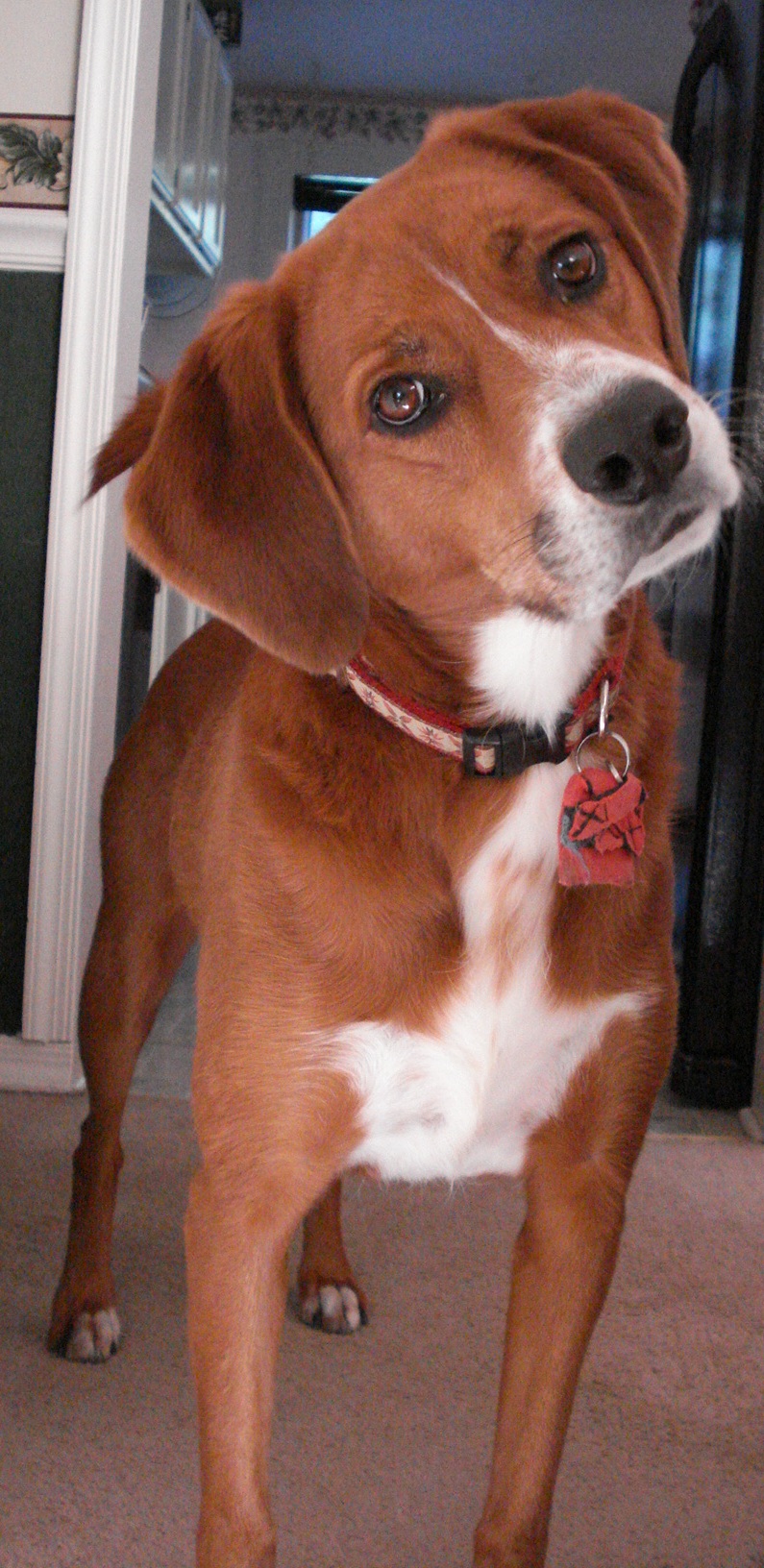
I quickly learned to pay attention to what has Chloe’s attention. Her hearing is not only much keener than my own, it is more sensitive than people with normal hearing. I can now even recognize when she hears something if she is standing in front of me (with my only seeing the back of her head). Chloe has a modified “heel”. “Heel” position is when the dog’s shoulders are parallel to their partner’s left leg. However, I do not have peripheral vision on my lower left. So we taught Chloe a modified “heel” that is slightly forward of a true “heel”. I had to learn how to observe the BACK of her head. Thankfully she has these wonderful hound ears that perk up and she “points with her nose” in the direction from which a sound is coming. She will even cock her head to the side to really tune in.

Look the neighbor came out...
Look at that family over there...
something is in the bushes...

If the sound is something she thinks I should hear, she’ll come and get me – phone ringing, door bell, someone calling my name, kitchen timer, etc. These are all trained alerts. However, I have been in situations where I could tell a sound had completely distracted her yet I could not hear or place what it was. When this happens, I ask “Chloe… what is it? Show me!”

Chloe will start to wag and TAKE me to what is making the sound. I have to be careful about this. I don’t want her to take me to every single sound she hears. She may hear the kid’s arguing and cock her head as she listens. I do NOT want her to take me to where they are arguing because they are old enough to work out their own problems! She seems to understand when it is a sound that I need to pay attention to – such as a cat locked in the laundry room, the low-battery sound on the phone in the bottom of my purse, or “Daddy” hollering from the bathroom because there isn’t any toilet paper!

A Word of Caution

I believe that individual’s with hearing loss should get the attention of every person they wish to speak to – even if that person has normal hearing. Do you know how many conversations I have interrupted because I walked up to someone and started talking without hearing that they were talking to someone else? I try to make it a habit (and still sometimes fail) to make sure I have the attention of someone before I begin speaking. This eliminates the likelihood of my talking over someone already talking.

I suspect all of us can improve our communication skills. If you have someone in your life who has a hearing loss, I encourage you to sit them down and ask them in what ways you may better communicate with them. If you have a hearing loss (whether a veteran of deafness or a “rookie” – new to coping with hearing loss), try to sit folks down and have a “heart to heart” about ways they might better communicate with you. This may include family members, co-workers, or even supervisors. Don’t think, however, that once you share with them how to better communicate with you that they will always do “right” from that point forward. I have learned that the people in my life need occasional (positive) reminders.

“Could you put your hand down please? You are covering your mouth”.

“Do you mind looking my direction when you speak?”

“Could you get my attention before you begin speaking? I’m afraid I missed all that you said prior to my looking up and seeing you standing there!”

Stay positive. Few people will put any genuine effort into communicating with you if you belly-ache and whine about it. If you get angry, it may cause resentment and defensiveness. Keep your cool! Smile… be positive! In the end, you are actually helping them better communicate with ALL!

Denise Portis

© 2011 Personal Hearing Loss Journal

“Family”

Approximately 1 in every 8 Americans experience some degree of hearing loss (Binder, 2011). This is approximately 36 million people – just in the United States. While to some, this number may seem overwhelming or unfortunate. For me? I have to admit to a small “thrill” – for you see… I’m a part of this “family”. I am one of those “1 in 8”.

What is “family”? The obvious definition includes those to whom you are related. I’m very grateful for my immediate family, for in many ways they fall into the “family” of which I am writing today as well. For the purpose of this post, “family” consists of individuals who understand by direct or indirect experience, a life that may be different as the result of disability – whether it be congenital or adventitious.

Hearing Loss Association of America

I recently had a couple of wonderful weekends that helped solidify this feeling of “family” for me. The first was when I went to one day of the 4 day national convention for the Hearing Loss Association of America. This year it was in my area, so I could not pass up trying to go at least one day. I was able to attend a number of workshops, all of which had CART. The rooms had terrific amplification, so I was able to hear the speakers of each workshop very well thanks to my cochlear implant. However, there were a number of people in each workshop who used the CART. On a large screen next to the speaker, every word spoken was also typed by a trained captionist. Those who had never experienced CART before, and therefore had never experienced workshops such as these that were truly accessible, hung on every typed word! As I looked around, nearly every ear had a hearing aid or cochlear implant – sometimes BOTH. I counted six hearing assistance dogs in attendance at the convention on Saturday. I was surrounded by “family”. Even those without hearing loss knew someone who did, were family members, or professionals that worked with our population. Between workshops old friends and new friends often crowded around talking. I couldn’t get over feeling like I knew these people. There were no snide comments or competition over who had the better cochlear implant or hearing aid. We were all “family” – with an intimate knowledge of what it means to live with hearing loss.

I attend a local chapter of HLAA, but being at a national event has no equal. The Internet has allowed people with similar disabilities to contact, share information, and get to know each other in a supportive environment. Some of the people I met I had only known online. However, these national conventions allow us to meet face-to-face! What a treat to literally hug the neck of some of my “family”!

This past weekend, I was able to hang out with a wonderful friend who has bilateral Nucleus Freedoms. She lives in North Carolina and since my husband and I were going down to visit his mom and dad, I took the opportunity to spend the morning with her. She took me to one of her favorite places – the North Carolina Zoo. I hadn’t seen the zoo in at least nine years – not since I had moved away from the area in 2002. We have so much in common in addition to hearing loss. No – we do not have similar backgrounds or childhood experiences. But we both are advocates and do all we can in our own small realm of influence to make a DIFFERENCE. She is a sensitive soul who sees much more than a normal set of eyes can see. It shows up in her photography and in the simple things she points out. A whispered, “L o o k“, usually yields a treat of catching LIFE in an unexpected way. I consider her “family” although we are not related.

Fidos For Freedom, Inc.

At Fidos For Freedom, clients include those with mobility issues caused by numerous types of disability or illness, and people with hearing loss. I cannot count the number of different types of disease, invisible illness, and disabilities present in our “family” at Fidos. The fact we are there for the same reason makes us “family”. Whether client, trainer, puppy raiser, volunteer, or DOG… we find a bond and sense of “family” that cannot be found in other groups in our lives.

I am thrilled to share information and get to know people all across the U.S. who are partnered with assistance dogs. Our disability or invisible illness may be different… but we are the same. Some have partners from organizations like Fidos and some are owner-trained teams. Regardless, we are “family” and I feel a loyalty towards these teams that defines the kind of “family” we are.

Sometimes FAMILY are not “Family”

My readers share with me sometimes that trying to get family to understand what it is like to live life in “their shoes” is quite difficult. For those who acquired disability or invisible illness later in life it may make more sense that family members such as parents and siblings seem incapable of grasping who you are now. However, there are others who have shared that even though their own challenges began at birth, family members are unable to fully understand (or perhaps cope?) what it is like to experience life with additional challenges. I truly believe that people with disability and invisible illness are more capable than those who are “normal”. Learning to adapt, and seeking support, information, and techniques create a malleable, strong individual. Oh sure! There are times we flounder. Change is never easy. But the end result yields a person who is extremely ABLE – not disabled. It is unfortunate that many people to whom we are related are unable to really connect with us once change takes place. Perhaps our peers often become “family” to us because they help us stay connected to life in a more positive way. They understand. Relatives often lose contact with us or only see us once in a great while. These individuals who offer daily support, information, and “family” literally evolve into a close knit community and family. I have had some readers share that they are closer to those in their peer group (disability group) than they are to siblings, parents, and other relatives. They have shared that not only do these “real” family members not understand – they don’t want to understand. I was recently reminded that my own siblings do not really know who I am anymore. After something rather tragic occurred in a relationship I find now broken, I wailed to my mother on the phone how terrible it all was. I shared some things with her that I had never shared before… and she responded, “You never shared these things with me when you were going through this”. So I am (painfully) aware that sometimes our family members are unaware and out of touch because we withdraw.

I am blessed to have family who are also “family”. My immediate family have been a safe haven of support throughout all of my adult life. My children have never known me without hearing loss. Mom’s favorite word growing up has always been “huh?” My husband held my hand both literally and figuratively throughout the process of losing my hearing over 12 years. When I became profoundly deaf, he was my biggest cheerleader in seeking other technology that would help me hear again. My family willingly sacrificed so that I could attend trainings and eventually receive an assistance dog so that I could be more independent. My immediate family members advocate for those who have any type of special challenge. They have participated in TBI (traumatic brain injury) camps, hearing loss conventions, local HLAA chapters, Walks for Hearing, cancer awareness walks, and much more. They know and realize that  disability or invisible illness does not define the person. They have always seen the PERSON first. Because they understand what it means to live with disability or invisible illness simply because they LOVE someone who does have challenges, they are “family” as well as family. I hope that many of you have family members that are also “family”. People who support you without hindering you. People who cheer you on and look forward to your eventual success.

Look for – and BE – “Family”

If you are currently adjusting to acquired disability or invisible illness – please know you are not alone. Find a computer and Internet access. It won’t take you long to discover you are not walking this road alone. As you reach out, look for ways to connect and be “family”. I promise you that there is no other feeling like finally… belonging.

Binder, M. (2011). Hearing. The Ear Man: Hearing Aid Service. Retrieved June 28, 2011, from http://www.theearman.com/hearing.html

Denise Portis

© 2011 Personal Hearing Loss Journal
 

When Family Can’t Forget

For the sake of this post, I’m brave enough to admit my age. I’m 45-years-old. I remember thinking that 45 seemed really old when I saw my parents celebrate that birthday. Now that I’m 45 myself, it doesn’t seem very old at all. As a matter of fact, I spend a lot of my time wondering when I will grow up.

Are you who you were at 10-years-old? (Can you remember back that far?)

Are you who you were at 16-years-old?

How about 20-years-old? Are you the same person you were then?

I think about who I was at these *mile stone* birthdays and realize how much I’ve changed over the years. Oh sure, our personalities, quirks, and even some habits remained ingrained in our make-up even decades later. But something happens to an individual growing older.

Life.

And you know what? Life can be hard. Oh yes – I know! Life can be very good. However, in my own life the more positive changes in who I am, occurred as the result of crisis and difficulties. One of the more frustrating things about “growing up”, however, is that our families won’t let go of who we were.

Think about it for a second. I left home at the age of 18-years-old. Many of you did the same, or perhaps even younger. Our parents, siblings, and close relatives who sat in the same pew as we did at church and attended the same high school football games, very likely have had very little participation in your growing up since that time. That’s what leaving home is all about. We make our own lives, invest ourselves in our own families, make mistakes, and grow. All this happens with very little influence of the people that were ONCE a major influence!

It’s very frustrating to me, however, to not be seen as who I AM around my family as they think I’m still who I WAS. I wasn’t the best big sister in the world. Having dealt with a number of emotional issues in my late teens, I can admit I wasn’t the best daughter in the world either. Now that I’m 45-years-old I don’t get to see my family nearly as often as I prefer. I have seen my sister 5 times since 1986. I have seen my brothers one time in the last 9 years. We all live in different states – spread out all across the U.S. I am able to see my parents at least once a year. However, I haven’t seen my grandparents since 1999 – which grieves me to no end bein’ they had such a major influence on my life in my developmental years. (Colorado is a long way off from Maryland). I was getting a bit aggravated when family members would make comments about me – even in a teasing fashion -as if I’m still the same person that I was. But then it hit me! How could they know who I AM, since they have not been involved in my life on a daily basis for the last 2 decades? The answer to that is that – they cannot!

As a result of this “middle of the night” epiphany, I began to ease out of feeling frustrated at not being able to leave my past – in the past – around my family. Worse? Try evolving into a person with an acquired disability when your family can only remember you “disability free”. I feel for them! It can be very hard to understand exactly what it may mean for you to live life on a daily basis – different now- solely because of an invisible disability or acquired chronic illness. For my immediate family members the process was gradual and progressive. They would be unable to pinpoint a point in time when I began to be who I AM. But for other friends and family members it can be very difficult to understand who you are now that acquired disability or invisible illness has changed you.

A young woman with fibromyalgia said: “I guess, where i’m very frustrated today, is, i’m having a fibro flareup, no doubt due to stress, i work at a bank, and we’re getting audited tomorrow, so checking, double checking, to make sure everything is just right, and i am so tight, and sore today, and NO ONE gets it, to look at me,i might look tired, but they just assume i’m ok, well, i’m NOT. It’s one of those diseases that no one can see that you have it, they have no idea how much pain we’re in, and they just assume everything is ok, and they don’t understand why I’m being so quiet, and they think i’m mad, and it is not that, i just feel like dirt” (Dannape, 2011).

Invisible illness with invisible symptoms are difficult to explain or even complain about. You LOOK fine.

On a hearing loss forum, 16-year-old Xatego explained:  “How do I deal with my family who claim they completely understand my hearing loss? I appreciate the fact that they were supportive and gave some of their time to look after me. But it annoys me when they like to think that they understand my hearing loss and the implications it has on my day to day life. I basically have a 90% loss of hearing. For example, my parents question my need to have subtitles when I’m watching TV. They say if only I watch TV without subtitles, it would reduce my need for it. I explained to them why, they didn’t listen. My cousin and I are basically the odd ones out of our whole family. He has severe autism and behind his back he is labeled by other relatives as the “crazy” one. I wonder what they call me since they treat me like an idiot. One of them even asked me if I was ‘still’ deaf. My sister and my mother gets irritated when I ask them to repeat their words. I get so frustrated; it’s not like I like having to ask them to repeat what they’re saying continually. When they say they understand.. They don’t. If you don’t have a hearing loss you don’t understand the way it cuts you off from people” (Xatego, 2011).

It can be really hard to explain what life is like for you when you are only beginning to understand it yourself.

Trying to Leave your Past – in the Past

Have you ever lived with someone who was losing weight? Someone with a great deal of weight to lose has learned that in order to keep it off, weight loss should be gradual with numerous lifestyle changes. The people who live with you may not SEE a lot of weight dropping off of you. But if a friend or family member came to visit who has not seen you in a long time, they are astonished at how different you look! I think it is the same for family members who spend time with me that have not seen me in a really long time. They are taken aback by the cochlear implant, hearing aid, and assistance dog. They remember who I WAS.

Earlier I asked if you were the same person you were when you were 10, 16, and 20-years-old. As for me? I didn’t really like who I was at any of those ages. Did you make stupid mistakes when you were younger? Did you ever make a decision that left long-term consequences? Ever feel as if you are wearing “scars” as the result of some past experience? I think some of the most crucial, vulnerable moments are in the weeks, months and years immediately following a firm decision to be DIFFERENT. An alcoholic may remember the day and time of their last drink – even if it was decades ago. But they will be the first to tell you that family and friends hurt by their alcoholism had a hard time believing “this time” was for real.

The ex-con will tell you that when they made 180 degree turn and CHANGED, their skeptical family and friends had a hard time believing it was for real!

The drug addict who is now free from the poisons they once put into their body will tell you that family and friends who had “seen it all” – wait around waiting for the other shoe to drop! For a significant amount of time everyone’s expectation is that the person will go back to being who they WERE.

Why do we long for people we love to break bad habits, yet make it hard for them to really do so? Why do we believe they will only fail again? In spite of testimonies of people who have gone on to serve in their communities and churches, raise families of their own, and be contributing, POSITIVE influences in their homes and workplaces, we who knew them “when” expect more of the same. Shame on us! I have seen God use people who were once drug addicts, alcoholics, and criminals in ways He could never use people who look perfect.

At some point in time these changed people made a choice.

and they never turned back.

Victor Frankl said, “When we are no longer able to change a situation, we are challenged to change ourselves”. God uses hardship to change us. But our biggest skeptics may be those who love us best. We may be misunderstood and even spurned. You may feel as if your family cannot let go of who you were. But I’ll never be that needy, selfish, emotional basket-case of young womanhood again. My trials have made me strong. Angela Barron McBride once said, “Full maturity is achieved by realizing that you have choices to make”. I made choices. You’ve made choices. Hopefully we are ALL continuing to reach towards what being mature is all about! For the Christian, it is becoming more like Christ. We’ll never “get there” – but our goal should be to become more like Him day by day.

Because I’m not who I was 2 decades ago, I long to be the kind of person who believes that people who hurt me years ago are not who they were either. That sister-in-law you couldn’t stand? Twenty years may have changed her into someone you can now not only like – but love. That brother who was in and out of rehab and managed to drag the family through the disaster of three failed marriages may not be who he was. At what point do we believe the BEST of people? If God can change ME, He can change anyone. I’m not perfect… and I have not “arrived”. But I do like who I am. I wouldn’t change a thing. The process was (and IS) painful, but worth who I see in the mirror each day.

Try not to be aggravated when family members have trouble letting go of who you were. Time will tell – and if you are lucky? You may live to hear one of them say, “You aren’t who you were… you’ve changed!”

Dannape (2011, April 27). Fibromyalgia General Discussion. Message posted to “The Pain No One Sees”. Retrieved May 25, 2011, from http://www.fibromyalgia-symptoms.org/forums/Fibromyalgia_General_Discussion/The_pain_no_one_sees/
Xatego (2011, April). Yahoo Answers: People with disabilities. Message posted to “How do I deal with my family who claim they completely understand my hearing loss?” Retrieved May 25, 2011, from http://answers.yahoo.com/question/index?qid=20110424135942AA52fMB

Denise Portis

© 2011 Personal Hearing Loss Journal

Idiot Lights

Don’t you love “idiot lights”? And if you know me, you know that I pay attention to them. (Gulp. Does that make me an idiot?)

I’m one of those people who drives 64 MPH in a 65 MPH zone. I always stop on red even if it is 2 A.M. and no one is around.

Needless to say since one of our car’s “idiot lights” has been telling us for 3 months that the oil needed changed, I’ve been bugging my husband to take the car to get the oil changed. The fact that the “Jiffy Lube” sticker on the windshield ALSO said the oil should have been changed at the end of MARCH, only further compelled me to NAG. His insistence that the manufacturer’s guidelines and the lube center’s guidelines differ, does not instill a lot of confidence in me. After all… the car’s “idiot lights” told me the oil needed changed as much as that sticker on the windshield! You see? My husband is PURE GENIUS when it comes to computers. He can do a number of “handy man” things around the house thanks to having worked at Home Depot while in college. But cars? Nope. I’ll just reiterate that his stating “not needed” – failed to inspire confidence in me!

According to him, the sticker always indicated changing the oil much sooner than needed. Instead, follow the manufacturer’s guidelines. How about those “idiot lights” though?

“Everyone knows those things rarely work right. You have to get them reset after getting your oil changed AT the car dealership. I don’t ever go there for oil changes!” he replied.

Evidently (according to hubby) “LOW FUEL” actually means you can drive another 100 miles. “CHECK  ENGINE” may very well be an irregularity that has to be re-set occasionally and is often reported as a problem with the model. “LOW TIRE” means you are parked at an incline and the car “thinks” it has a low tire. Sigh.

If People Had Idiot Lights

Wouldn’t it be grand if PEOPLE had idiot lights? You could meet someone for the first time and know some things without any words exchanged. You’d see a flashing:

Needs Work

Snores Loudly

Back Stabber

Yup… it would make life a little easier. We would know what to expect of a person before ever expending any emotional energy to get to know them! EXCEPT… my husband insists those idiot lights aren’t accurate. So that could mean that the little warnings we get about people we meet may be false.

The reality may be:

Works WELL

SINGS loudly

And Back SCRATCHER

If Dogs Had Idiot Lights

How about if working dogs in training had idiot lights? It might help trainers determine who would be best matched with particular dogs. It might help puppy raisers find out about the personality of the puppy they are raising to be a working dog. Perhaps a dog in training would have idiot lights such as:

Stays Calm

Very Instinctive

Easily Potty-trained

And Chloe’s may have been:

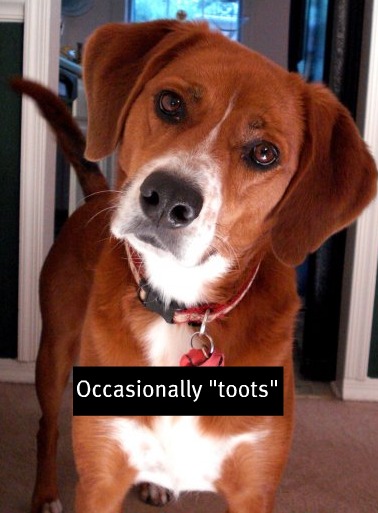
Ah… but remember? The idiot lights are not accurate. After all, trainers tell me Chloe was an incorrigible “hard-to-train” pup. But she is a hard-working, completely engaged, working adult dog. Thankfully, I can manage the occasional unfeminine “toots”.

Idiot Lights and First Impressions

Just as idiot lights for vehicles seem to be more bother than help, rarely providing accurate feedback, so too may “first impressions” fail us. People who come across as prideful, pompous, and bossy may actually be insecure. Controlling people may get on your nerves, but they often are the ones who can easily make decisions and get things done. I’m not saying this can’t go wrong. We would not see abusive relationships if it never went wrong.

What I am beginning to realize in this game of “life”, is that first impressions are often wrong. A quiet, reserved individual may actually make a warm, loyal friend if you work a little harder to get to know them. A loud and obnoxious know-it-all may actually have some insecurities and may thrive in a relationship that allows them to not have to work so hard at being perfect.

I’m all for boundaries. One of my favorite books is “Safe People: How to Find Relationships that are Good for You and Avoid Those that Aren’t” by Henry Cloud and John Townsend. However, we cannot allow our first impressions to “warn us off” people permanently. I think boundaries are set up AFTER we really get to know someone and identify they are not a “safe” friend or family member. But first impressions? Leave your brick and mortar at the door when you first begin to get to know someone. Sure, you may get some vibes that have you treading carefully as you work with a person or attend small group with a person. But how many of our relationships would we NOT have if people relied solely on first impressions? I think of the first impression others may see in my own life:

“I thought you were so stuck up when I first met you but eventually learned you could not hear in crowds”.

“Because of your BLING and service dog it was obvious you had some disability of some sort. In getting to know you, I often forget you are deaf. You are as normal as anyone else!”

“When you first asked for the main points of the meeting to be emailed to you I thought that you were basically asking for special privileges. Little did I know after receiving the “recap email” sent to the entire department that I missed a lot of important notes from the meeting too. This step helps ALL of us.”

If first impressions are a type of “idiot light”, we should remember that they are often wrong. Extend the benefit of the doubt to people who rub you the wrong way when you first meet them. In time you will discover if you had good intuition and need to erect some safe boundaries to interact with someone. However, you may learn that it was really a smoke screen that hid a wonderful person who simply had trouble letting the real “soul” show.

—————

I was so thrilled when my husband brought the car back this past week and said all the fluid levels were checked, oil changed, filters changed, and tire pressure checked. However, as I Headed to work on Thursday I happened to look down at the dash and lights. I grimaced as I saw the “CHANGE OIL” scroll across the bottom of the display. I tore my gaze back up to the road and mirrors and began to chant, “Idiot lights are inaccurate. Idiot lights are inaccurate…”

Denise Portis

© 2011 Personal Hearing Loss Journal