Yup, I talk to My Dog. Don’t You?

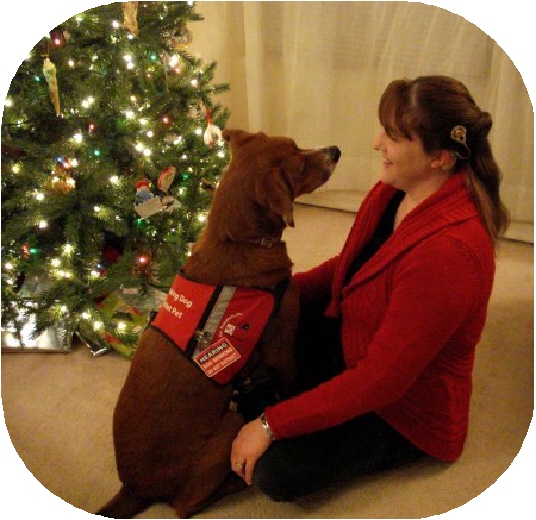
I’ve embarrassed myself a couple of times in Wal-mart recently. I’ve caught the HUGE smiles of people passing by or catch the gleam in their eye as I look up and around. You see? I talk to my dog. It’s not just because she’s an assistance dog either. I talk to all of our dogs. But Chloe is the only one I talk to in the middle of Wal-mart, for obvious reasons.

People have heard me ask, “Chloe do you think the guys will want french-style green beans this week or do you think I can sneak some fresh green beans into the menu?” Chloe cocks her head and wags her tail. For some reason I’m able to make a decision. It’s not that I interpreted her body language to mean, “I’d go with the French-style, Denise”, but it helps to talk to her.

I caught an actual chuckle when I exclaimed to Chloe, “Chloe! Look! Can you believe it? It’s an Elmo Christmas SNOW GLOBE! Hope Santa knows I’ve been very good!” Chloe bumps my hand and wags her tail again. She thinks I’ve been very good.

Paying Attention

You might think I’m crazy. But actually… I’m helping Chloe keep her attention on me. If you look at a dog’s eye-level at Wal-mart, you will see things that aren’t as readily apparent to those who are taller than 3 feet. Stuffed animals, “Roll Back the Prices” price tags that Chloe thinks she really should swipe off the shelf and hand to me… all kinds of tempting things. By talking to Chloe, she pays attention to me. When I have a dizzy moment, I say, “Whoa….” and Chloe knows to take a step out of heel to make sure she can move if I actually fall. It’s important for Chloe to pay attention to me.

That’s why it is really not a great idea for people to “ooo and ahhh” over an assistance dog/service dog in public. You are getting the dog’s attention. They can’t help it. They KNOW they are beautiful/handsome and wonderful. Chloe’s vest actually has a tag on it that says, “Do not distract”. I realize people mean well, but if I’m having a bad balance day AND I don’t hear your “oh what a pretty dog” remark, I could fall just because Chloe wants to go and greet you.

What Distractions Can Do

I had this happen in Best Buy once. I was on my knee, balancing to see something lower, and someone got Chloe’s attention. She broke her heel to stand and WAG at them, and I fell right over. I laid there blinking up at the man whose eyes had widened in horror. “Gee, I’m sorry Miss. I can’t read, obviously”.

“Oh, that’s OK. I just wasn’t prepared”, I replied cheerfully from the FLOOR. I waved his hand away and said, “Actually she needs the brace practice, so no problem”. I had Chloe help me up, and the man again apologized. He even had tears in his eyes. I laid my hand on his arm and said, “Honestly, it’s no big deal. I sprawl at least once a day!” He wandered away unconvinced.

I do understand that seeing a well-behaved, dog identified as a “helper dog” can be really hard to just walk by for those of you who love dogs. I actually do not mind being stopped and asked about Chloe. However, it is really helpful if you talk to ME and not Chloe. Feel free to ask people with assistance dogs if you can pet their dog – because some people do not mind at all. I’m not those “some people” (grin). I will always (pleasantly) say, “I’m sorry she’s working and I’m trying to keep her from being distracted”. Be prepared for some people to say “no, I’m sorry”. They appreciate that you think their dog is “swell”, but it really doesn’t do the dog or the owner any good to constantly allow people to pet them in public. Many people use service dogs for disabilities that are invisible. It may not be easy to pick that up and asking to pet the dog might put the owner at risk.

If we meet someone we know real well, I actually do allow Chloe to say a quick “hello”. She is very good about giving quick kisses and then stepping back into heel. To do so is my choice though. Those who know me well, actually know not to ask on rainy days when they know my balance is going to be really bad. When Chloe sees someone she knows in public (usually folks from our small church, or close friends), she will do better to say a quick “hello”, so that she can get back to work. It is like identifying someone she knows from her “pack”.

Chloe’s Safety

By talking to Chloe in public, I let other people know she is there. Now that I’m completely independent and don’t have to worry about what I’m not hearing or dropping things I can’t pick up, I even head out on really busy shopping days. Not on purpose mind you! I’m not completely nuts! (grin) But I’ve been in a “crush” of people and talked to Chloe non-stop so that people would know she was there.

We made the mistake of going to Hershey’s Chocolate World the weekend after Thanksgiving this year. We go there a lot, but this was the first time it was literally wall-to-wall people. I couldn’t have fallen down if I had wanted too! I was completely surrounded by people! I talked to Chloe non-stop so that people would know she was down there. It’s hard to see someone 3 feet tall! I would even stick out my hand in a real “crush” and say rather loudly, “Excuse me… service dog coming through!” I was so intent on keeping Chloe safe by talking to her and watching where we were going that I mis-placed my daughter. I looked up and could see my husband in the distance, and my 6’3″ son was easy to spot… but where was Kyersten?

My heart was pounding and I held my arm out and just kind of plowed through to the nearest wall. I frantically searched for her little 5’3″ self and could not see her anywhere. I was scared spitless! I reached for my phone to see if I could send an S.O.S. text to her. Just then I felt a hand on my elbow. I whipped my head up and stared right into the smiling eyes of my daughter.

“Kyersten! I lost you!” I managed to sputter out. (It was hard, because I was spitless, remember?)

She rolled her eyes, and gave my shoulder a squeeze. “Mom. I’m 20-years-old. It’s not like I’m lost. If I lose track of you guys I’ll call. You are kind of hard to lose track of” and she gestured down to the red assistance dog complete with holiday jingle bell.

Freedom

You may run into me in a store, restaurant, movie theater, post office, pharmacy or doctor’s office with Chloe. You may HEAR me before you see me. I talk to my dog. But you know something? It’s not ONLY because it helps her pay attention. For you see… Chloe is the reason I’m alone in a store, restaurant, movie theater, post office, pharmacy, or doctor’s office. Before being matched with Chloe, I rarely went out alone. Talking to Chloe is a reminder to me… I’m in public, enjoying life, and yup! I’m talking to my dog. Don’t you?

Denise Portis

© 2010 Personal Hearing Loss Journal
Sex and Hearing Loss

When preparing to write this post, I went back and forth about providing “hard and fast” FACTS about gender differences in hearing loss and writing about personal observations. Because I can easily provide links to documents, research and scholarly articles about the topic, I decided to write about personal observations. Before I do that, let me provide those links!

A wonderful article about gender and race differences can be accessed HERE.

How hormones can have a part in the way hearing loss manifests in individuals can be read about HERE.

An article about why men are more likely to experience hearing loss can be accessed HERE.

An article by ASHA and Cochlear Americas can be accessed HERE.

Personal Observations

I realize that personal observations are somewhat limited by the experiences of the individual themselves. However, as I have had the opportunity to be a part of a number of hearing loss organizations, and have had the privilege of speaking to groups of my peers and professionals across the United States, I have a lot of faith in my own personal observations about gender differences. Sometimes new information was gleaned as the result of attending workshops, conferences and meetings; listening to experts on hearing loss discuss gender differences was very informative. However, I also happen to be a terrific “listener” in spite of my own profound hearing loss. Corresponding with people from across the United States that I may have met in my travels, or are frequently visiting “Hearing Elmo”, I have drawn some conclusions about how hearing loss affects the different sexes. Please allow me to share my observations with you!

Men with Hearing Loss

1. Men are more apt to be pushed into getting help. Perhaps men stay in a stage of denial longer than women do, but men are usually encouraged to do something about their hearing loss as opposed to taking the initiative to doing it themselves. I don’t think it is because they are unable to make decisions about their hearing health; rather, men are more likely to “fake” their way through life pretending they don’t really have a hearing problem. This does not mean that women do not “fake it”, nor does it mean that women are not ever pestered to visit an audiologist. I just believe that men are more likely to be badgered into going to a hearing health professional than women are.

2. Men do not usually seek support from peers until hearing loss has reached a critical point. I believe that men are more likely to “go on about their life” and “making do” after getting that first hearing aid than women are. If assistive technology allows a man to continue working, interacting, and living life, they will be unlikely to join support groups or advocacy groups compared to women with hearing loss. If hearing loss is progressive, men will also begin to seek out information, support, and peers once hearing loss interferes with communication and relationships. On the positive side, men with a stable, mild to moderate level of hearing loss are more likely to not let hearing loss define who they are. Hearing aids and assistive devices are merely tools. I think men may equate support groups with “talking about your feelings”, and as a result miss opportunities such as learning more about advances in technology, discovering legislation that may have an effect on hearing loss populations, and learning valuable communication strategies.

3. At the severe to profound level, men are more likely to shut people out. I can’t tell you the number of times men have told me that they alienated everyone that cared about them when their hearing loss really began to affect their lives. Perhaps it is a coping mechanism? One man wrote to me and shared, “I filed for divorce from my wife of 11 years. I felt in a panic to do it before she filed for divorce from me because I wasn’t the man she married”. One man came up to me after a workshop and said, “It’s easier to be be cranky and belligerent than to discuss with my family how my hearing loss makes me feel”. Still another shared, “I’d rather be accused of being distant than to talk about my hearing loss with her”.

4. Men are less likely to use hearing assistance dogs. Of all the people I know who chose to be partnered with a hearing assistance dog… most are women. Yes – there are some men… but my experience is that they are the minority. I believe if you are partnered with a hearing assistance dog, you have shouldered the responsibility of knowing that by doing so you will be making a potentially invisible disability very visible. Perhaps men are less likely to place their safety and trust in a canine partner? That doesn’t mean they are less likely to like dogs. (On the contrary, I am asked by more men to pet Chloe or field questions about what she does for me). The budding psychology student in me believes that men are more likely to strive to be independent of help from any avenue compared to women. What I find ironic, is that my own hearing assistance dog actually PROVIDES independence to me rather than a new dependent relationship. I think men and women simply view this very visible “assistance” in different ways.

Men in the Supportive Role

I believe men are supportive of those they care about that may have hearing loss. Many husbands attend HLAA, ALDA or AGBell meetings, conferences and conventions in support of someone they care about. However, I have heard women make complaints such as:

“He gets so frustrated that I’m still so SAD about my hearing loss!”

“He is supportive of MY problem, but does not acknowledge it is OUR problem.”

“He doesn’t mind making phone calls for me, but I can tell it frustrates him sometimes”

Women usually welcome a “helping hand” with something as intensely personal as hearing loss. They normally welcome a shared role in learning to live with the acquired disability.

Women with Hearing Loss

1. Women are more likely to “grieve” hearing loss. I think both males and females go through stages of grief when they experience hearing loss. However, I think women tend to get bogged down in depression and experiencing feelings of grief than men do. Perhaps it is because women are usually living more with their “feeler” than men do? I just know that I have heard countless testimonies of women who experienced real grief about their hearing loss. Maybe women are more likely to admit they feel sad about their hearing loss in comparison to men.

2. Women seem to need peer support groups even early in hearing loss. Not all hearing loss is progressive. However, I have been a part of a number of hearing loss support groups and traveled to visit groups across the country. Many hearing loss support groups have women who attend that have a moderate to severe hearing loss. Most of the time, the men I meet who attend these groups have a more significant loss. I think women rely on communication more than men do as a part of what holds their relationships together. When women see a threat to their relationships, they are spurred to action to seek out assistance from their peers. Women tend to flood the workshops on communication tips and will be the attendees who are taking copious notes.

3. Women tend to care about how their hearing loss affects others more than men do. Yikes. I may get “grief” for this one. Fellas? Before you send a barrage of emails to my INBOX, please note that I am not saying men do not care about how hearing loss affects the “others” in their lives. It has been my experience that women seem to be more concerned about how their hearing loss affects others… to a fault. Women can actually become bogged down in worrying about how their hearing loss is changing the lives of those around them. They may worry more about being a burden and how others “feel about them now”. A positive reaction, however, is that women are more likely to actively discover how the “others” in their lives are doing, and in the process adopt or modify communication strategies.

Women in the Supportive Role

I think communication is so important to women, that they may become NAGS to the men in their lives who have hearing loss. It is important to learn “HOW” to encourage the male in your life to seek help. Women may resort to desperate and negative measures if they see that communication has been influenced by hearing loss.

Men may attend support groups with their significant other with hearing loss as an ongoing part of their “protective/provider” role. When the male is the one with hearing loss, however, women should understand that the men in their lives may not necessarily welcome a partnership view of hearing loss. Men (especially at first) may prefer attending support groups alone so that they may continue in what they view as being independent in their role. Women should carefully choose how to discuss that support groups provide them with important information and tools as well as peer support from others who love someone with hearing loss.

As always, I welcome your input and own experiences as they relate to sex and hearing loss!

Now… for all those that saw the title of this post and thought I was going to write about something much different? You have an assignment:

Denise Portis

© 2010 Personal Hearing Loss Journal

Meniere’s Rant

I don’t usually go on and on about Meniere’s disease, but I’ve had a pretty bad week with the “little Rascal”. For one thing, I count myself extremely BLESSED as I seem to have only one major trigger. Rain. I know plenty of other folks who have other types of triggers that include flying, change in altitudes (vacations in the mountains!), alcohol, head cold or allergies, chocolate (oh my!), smoking, and even certain foods! So since I only have “rain” as a Meniere’s trigger, I really try not to complain very much.

A fellow Meniere’s patient pointed me to a terrific support group through Facebook today. I have already found a lot of great information. If you belong to Facebook… check it out here. There is a simple but helpful Meniere’s organization on the Internet which can be accessed here. A website providing basic information and clinical trials can be accessed here. My favorite website is the National Institute on Deafness and other Communication Disorders (NIDCD). They have a terrific Meniere’s Disease section that can be located here.  Thanks to the Meniere’s disease Facebook page, I was even directed to our very own Super Villain – Count Vertigo. Who knew?

Being a former farmer’s kid and because I still have numerous relatives that I love in a farming community in SE Colorado, I try to never belly-ache about the rain. Rain is necessary and in most cases a “shower of blessing” to farmers, ranchers, and those who get tired of moving their sprinklers around.

But this week? SIGH. I’ve had some bad experiences. On a rainy day, I fell in the laundry room this past week and happened to find the only exposed nail in the “unfinished room”. Thankfully, I hit it square and impaled myself through the fleshy part of my arm. I was able to pull it clean away and stop the bleeding very quickly. A quick verification that I had a tetanus shot recently, a severe pounding with the hammer on that (stupid) nail, and I escaped “nearly” unscathed.

This morning my alarm clock went off and my well-trained assistance dog was in my face immediately to “kiss me awake”. As soon as I sat up I knew it was raining outside. When the room spins the moment I become vertical, I rarely need to look outside to verify that it is raining. I didn’t fall until about 10 AM. Unfortunately, when I lost my balance I was on the stairs with my arms around a large load of laundry. Missing three steps means I have a pretty good chance of landing “gracefully” and still on my feet. Missing four however? Not a chance. I lay sprawled on the floor staring at the ceiling and a concerned hound dog with dirty laundry scattered all around me. I have a standard set of “OK, I’ve fallen – now what?” questions I ask myself.

1) Am I conscious? (duh)

2) Is anything broken?

3) Am I laying on anything important (like a dog or a cat)

4) Can I close my eyes and open them again and stay conscious?

5) Do I need to call a family member?

If I can answer No, No, No, YES, and NO… then I simply sit up and take my time to re-group. This time I didn’t hit anything other than my elbow on the way down. I may or may not be sporting a pretty blue spot tonight.

There is no cure for Meniere’s Disease. (Hope you aren’t new to the disease and I just depressed you for the remainder of the year!) There are some treatment options, but they only work for “some”, and all the options only serve to reduce the severity of symptoms or number of attacks. NIDCD lists several treatment options that include:

1. Medications – Prescriptions such as meclizine, diazepam, glycopyrrolate, and lorazepam can help relieve dizziness and shorten the attack.

2. Salt restriction and diuretics – I take a prescription diuretic and do restrict my salt. I’ve not seen any real difference, but continue to do these in case it has a cumulative effect.

3. Cognitive therapy – Doesn’t treat the Meniere’s but does help the patient deal with anxiety and coping with “future attacks”.

4. Injections

5. Pressure pulse treatment

6. Surgery

7. Alternative medicine. I take Manganese (5 mg) and a B complex vitamin. Researchers have found that Meniere’s disease patients have a Manganese deficiency. Manganese can be hard to find. (Magnesium is plentiful, but you’ll have to go to a specialty store or order online to find Manganese). Other treatments include acupuncture, acupressure, tai chi, and other supplements. Always tell your doctor if you are taking other supplements as many may interfere with prescription drugs.

This past year, Gene Pugnetti was surgically implanted with a special cochlear implant to treat his severe Meniere’s disease. You can read about the latest update here. The original story can be read here. I will be looking for updates about Gene and wish him the best!

Some things I have learned that help me with Meniere’s disease:

1. I take 5 mg of Manganese and a B-complex vitamin.

2. I limit my salt and take a prescription diuretic.

3. I take 50 mg. of Benedryl before bed.

4. I have inexpensive molding about 4 feet high along the hallway, kitchen, and bedroom. At night, if I have to get up in the dark, I only need to feel my way around the room to discourage getting disoriented. Without it, my eyes “play tricks on my brain” about how close the floor, walls, and doors are as I am struggling to see in the dark. The molding has allowed me to move about the house as needed in the dark without injury.

5. I never EVER go down the stairs without holding on to something. If I have something in my arms, I balance the “something” on one hip. On bad days, if it takes me 3 or 4 minutes to get down the stairs instead of 30 seconds, that’s OK. Patience is a virtue… and may prevent broken bones!

6. I avoid looking directly at ceiling fans or other contraptions that “spin”.

7. I do not ever ride roller coasters, or rides that spin in any way. If I am “spun” into an unconscious state, it is rather difficult to hold on! I made a promise to my family after “Space Mountain” in 2002 to avoid these rides for the remainder of my life. I’m finding it isn’t a difficult promise to keep.

8. I stand and sit with pre-meditation. To simply “pop up” or sit down quickly only means I will experience dizziness. Why bother when moving with a little more care will help to avoid it?

Hopefully this information may be of use to someone! I’m very thankful Meniere’s disease rarely necessitates I write about it!

Denise Portis

© 2010 Personal Hearing Loss Journal

Fallow Ground

I have really enjoyed FaceBook and reconnecting with old friends and family. However, FaceBook gets a lot of “flack”. My husband wrote a terrific, short post on his blog about this very topic and you can view it by clicking here. FaceBook has become much more than a way to “re-connect”. Because it is so simple to use, I use it connect to people I care about every single day. One can quickly see what people in your life are up to and honestly? It makes it easy to write a quick word of encouragement.

It also has some games. I’m not a big game person, but FarmVille is a popular one. I’ve become a little complacent about my own “farm”, but it is still fun to check in each day. I allow much of my farmland to be “fallow”. My busier, more industrious farming neighbors will “drop by” from time to time to take care of my fallow ground and plow it for me. If I’m really lazy and don’t plant anything, they will also fertilize the newly tilled ground.

I get tickled at the fact I don’t have to do a whole lot of work to my farm some weeks. At times, I wish that fallow ground would stay that way because it saves work for me later. (Like I said, I’ve become a lazy farmer). I grew up on the farm. Fallow ground is an important part of farming. Sections of farmland are intentionally left unplowed and unseeded during a regular growing season. Even though it is undeveloped, it is potentially useful to the farmer because it allows the ground to “recover”. The stubble left over from the previous harvest will break down and leave valuable nutrients in the ground. Because of my own sections of fallow ground on FarmVille, I have been thinking quite a bit about the concept of fallow ground.

Fallow Ground Symbolism

The Bible mentions fallow ground in Hosea 10:12 and Jeremiah 4:3. In both places it talks about breaking up the fallow ground as a word picture of cultivating your heart and life so that you can serve and minister to others. It lends the idea that a heart or life can be “hard” and unusable.

For a farmer, however, fallow ground IS useful. I am a big supporter of taking time off and having a designated time of reflection. Perhaps it is because I recognize that we are all way to BUSY. I have been emailing a lady in her 30’s who is a referral from Johns Hopkins Listening Center (their cochlear implant clinic). I’ve agreed to be a mentor and contact for people who are considering cochlear implants. (I’ve asked her permission to share this). It is difficult to be blind-sided by an acquired disability. Sometimes, the change can be sudden, extreme and permanent. Sudden sensorineural hearing loss (SSHL) had robbed this lady of her ability to hear well. She is feeling overwhelmed and at the breaking point. Her life has been in over-drive for some time, and SSHL made her feel like someone had “jerked the carpet out from under her and she lay dazed staring at the ceiling” (her words).

I said, “What you need is to allow some fallow time in your life. You are so busy and yet trying to cope with a major life-altering change. You are giving so much of yourself to so many others, you aren’t even able to weigh the pros and cons and investigate CI’s. I recommend taking time off. Allow your life to go fallow for a designated time. You need this time to re-group, think, and rest”.

She is now doing “just that”. She isn’t WASTING time. She is deliberately taking some time for herself so that she can work through her thoughts, feelings, and investigate cochlear implants.

“Fallow” is not Wasted

I think more people should determine to take time to reflect. I try to meditate and pray at least once a day. There are occasions where I take longer periods of time. But let’s face it… most of us are too busy to really have the time for reflection. What can we do about this?

This is an unpopular idea, but I firmly believe everyone should step back from “all their extra-curricular activities” from time to time. I believe elected (and volunteer) community service, non-profit, and support group positions should have specific limits on terms of service. It forces a change in leadership and allows over-worked, committed volunteers to rest (provided they don’t launch themselves into some new role).

Before insecticides and chemical fertilizers, more farmer’s left ground fallow to aid in replenishing the minerals that occur naturally from “resting the ground”. Today, leaving ground fallow may cut potential yield and profit. I believe that too many of us believe the same in our lives. If we do not keep volunteering for everything, who will do the work?

I had a real test of this in 2010. I have been told by folks I respect that, “If you step down from a leadership role, the vacancy allows God to fill it with someone He has already prepared for that position”. In 2010 I would be beginning the last year of school, and just simply could not lead my local chapter of the Hearing Loss Association of America. Numerous personal reasons and simply feeling BURNED OUT had me dreading yet another year of having to step up in a leadership role. The young mother who had taken the “reins” for 2009 had done an excellent job. I made the mistake of simply “moving” my available volunteer hours to another position of leadership within the chapter. As 2009 came to a close, this busy young mother wisely chose not to run another term. I was getting some pressure to step back up to “the plate”. Because I knew what this last year would entail for me I had to really think about it. Because I was already weary, burned out, and overwhelmed, I decided to put a “year sabbatical” to a vote for the chapter members. Incredulous that I was not going to step up and fill the vacant role, they unanimously but grudgingly agreed to a “year off”. I could tell that many were worried! We have elections in October and November each year. I actually had high hopes that God would press on someone ELSE’S heart the desire to step forward so that our chapter would not really have to close for a whole year.

I waited.

No volunteers stepped forward.

I “stuck to my guns” and we entered 2010 only meeting virtually. You know what? We didn’t “fold”, nor close our doors. As a matter of fact, numerous people once in leadership roles really needed this year off for various reasons. Elections are already underway for 2011, and we have a wonderful lady who is now able to devote her time and resources to leading our chapter in 2011. She wasn’t available last year. She needed this year off too!

I felt a little bit of pressure from well-meaning “others” to step back into the role of newsletter editor for 2011. I chose not to do so, simply because I know what my 2011 is gonna “look like” (to some degree… like many of you it is the part I DON’T know that causes significant stress – grin!). I need a “fallow” year. I’ll be finishing up school soon and will be starting to put an effort into finding that career… that position that helps shape a “better me”. Really this last year my free time was taken up with doing school! Next year? I need my life to become “fallow” in terms of allowing a rest and reprieve from even worthwhile activities and groups of which I am passionate about. I’ll still be an HLAA active member and participant, but my free time I need to be “me time”. I feel undernourished. I refuse to feel guilty.

How about you? Do you feel guilty when you aren’t OVER-involved in important, mission-minded organizations? Do you feel like you have to say “yes” to everything? Do you yearn for a bit of quiet and time to rest your soul, mind, and body?

I came across a poem written by a lady I know from FaceBook. (Like I explained earlier FaceBook is far more than reconnecting with high school classmates). She wrote a beautiful poem that I really felt “fit” the idea of needed and necessary “fallow” time in life. She agreed to let me share it here at Hearing Elmo.

Ocean’s Healing Grace
by Nancy Wilder

a lone figure sits easily on the sand
bare feet playing tag with icy foam;
so small in this vast ocean panorama
she gazes out over the horizon hues.

heart heavy and a mind in turmoil
sand and surf her refuge of choice;
breathing in the strength of nature
an open invitation for healing balm.

dawn has come and turned to morn
gray sky meets water in chilly repose;
pretty escape is not what she requires
peace provides nourishment to heart.

slowly the small figure begins to ease
battered mind gently clears in relief;
absently tiny fingers draw in the sand
as gulls dive for their morning repast.

the ocean’s healing grace envelops
urging an embattled soul to find joy;
life’s small blessings are apt minion
to supply happiness on daily course.

acceptance calls a smile to gentle lips
as she stands, the sun kisses the sky;
twirling gaily she casts away sadness
her heart and mind embrace a new day.

If you are feeling overwhelmed and near burn-out, I challenge you to allow yourself to become “fallow”. Don’t falsely bully yourself into believing this time is wasted. Go find an ocean…

Denise Portis

© 2010 Personal Hearing Loss Journal

Is INVISIBLE good?

Chloe and Denise at 2010 Fall Family Weekend

A person that I know with invisible challenges (Fibromyalgia, IBS, and Chronic Fatigue) said to me recently, “Denise… you have mostly positive advocacy experiences because you make your invisible disability – visible. That isn’t always possible for other people with invisible problems!”

I thought about that statement for a week. Then I thought about it for another week. I actually thought about it for a third week, which for me? It’s nearly impossible for me to “simply think” on an issue without going ahead and blogging about it! I decided to do a “test”. I would dampen the visibility of my disability and see if I had any problems as a result. If you don’t want an invisible disability to ever become apparent – don’t get an assistance dog. Nothing shouts, “THERE’S SOMETHING DIFFERENT ABOUT YOU” more than having an assistance dog with you. Let’s face it… it’s not the norm to see a dog in a public place. Having a canine partner is not for the faint of heart, for you will have questions, be stopped constantly by admirers, skeptics and the occasional unattended child. Because of my balance problems, having an assistance dog has yielded far more benefits than any negatives. I wasn’t about to leave my assistance dog at home for the sake of a “test” so I had to think of other ways. Thankfully, those who know me well are so accustomed to seeing Chloe with me, she is almost invisible as well.

I have always worn my hair up since acquiring hearing loss. I made the decision early on to make sure my hearing aids could be seen. The decision came as the result of being knocked out of the way in a Sam’s warehouse in 2000. Someone had been trying to get by and I continued to look at the shelves since I couldn’t hear the “excuse me” in such a cavernous place. I think the woman who knocked me down was equally as startled as I, for she certainly had no intent of sending me to the floor. She said, “Why didn’t you move?”

I replied, “I’m deaf”, and watched the color drain out of her face. She helped me up and hurried away. That week I began to wear my hair up AND I opted to purchase brightly colored earmolds for my hearing aids. In 2005, I was implanted with the cochlear implant. It was very natural for me to continue to wear my hair up and to add the CI “bling”. Making an invisible disability – not – has helped me. The only time I’ve had a problem with my CI being so visible is when I would on very rare occasions run into a defensive, belligerent, culturally Deaf person who was vehemently against the technology.

So for my “test” I thought I’d wear my hair down and not have any visible assistive listening devices. I chose to do it on a “long” work day. Shortly after arriving at school I ran into one of my student’s parents. I couldn’t discern any difference in the way we interacted and communicated. I went to the office and made copies for my classes, and checked my folder for any notes from the administrator. My first class seemed to go OK. During discussion time, it can get pretty noisy. It seemed to me students addressed their desk instead of looking up when speaking, but I was very aware I could just be guessing at that. Another student helped me pull the overhead projector screen down and I could tell he was responding to a question with his back to me as he reached to pull it down. Again, I was very aware this was probably just my imagination and… after all what proof did I have that this doesn’t happen on a normal school day?

I was well into the afternoon classes and began to think that this was a poor test since all of my students know I have a hearing loss. I was already “plotting” to venture into a store or restaurant with my hair down for a more accurate test. That may actually BE a better way to test my theory, however I was surprised by a late afternoon comment.

After a requested “repeat”, a student said, “Oh sorry! I forget you have a hearing loss when your hair is down!”

Yes. I realize that my students interact with me quite a bit and are more likely to notice a change in my hair. This meant I needed a new test.

I went to Costco this weekend with my son. He’s 6’3″ and strong enough to assist with all those items we buy in BULK to save money. I deliberately wore my hair down. I hate going to Costco on a Saturday because it is always so much busier. However, I figured for this test… that would be a good thing. I pointed out items and my easy-going, “glad to be of help” son would load them up on the big cart. I had several people stop to admire Chloe and ask questions about her. It seemed pretty standard until my son pointed out…

“You know they only ask how long you’ve been training her because they can’t tell you have a hearing loss, right?”

Ta da! This was the proof I needed, right? Who knows. I did know that my friend with invisible challenges was right about one thing. I do try to make my disability visible and usually it is to my benefit.

I enjoy answering questions about my CI and my assistance dog. People ask great questions for the most part, and most are curious because they know someone who has hearing loss or someone that could use the assistance of a canine partner.

Should everyone with an invisible disability make it visible?

No.

Cochlear implant manufacturers produce the CI’s in a variety of colors… usually HAIR colors. Individuals choose a processor and magnetic coil based on their hair color in order to eliminate the visibility. The idea is to help you keep it “your business” if that is what you desire.

I’ve heard from others with invisible challenges or disabilities who have said:

1. I don’t want anyone feeling sorry for me. If I want someone to know about it, I’ll tell them at an opportune moment.

2. I don’t want my co-workers treating me any differently. It would be terrible if they thought any advancements or promotions I got were the result of special privileges.

3. I don’t want to appear weak. I have bad days but do my best to camouflage them.

4. I don’t want to draw a bull’s eye on my disability, putting me at risk for crime or making me a target.

5. I want people to know who I AM, and not judge me or define me by my disability.

These are legitimate and persuasive arguments. If you have an invisible disability or challenge, it is YOUR CHOICE how open you want to be about it. My heart goes out to those struggling with depression or mental illness. These challenges can be very difficult to disclose. Sometimes invisible challenges carry with them a stigma that can wound and demoralize an individual. Never forget that we are people first. We are NOT our disability or challenge. I chose to look at it as my disability is simply a part of who I am now… a new me. As we mature and/or age (as the two do not always coexist), all of us change. We may choose to color our hair, or take care of wrinkles through the help of a trusted plastic surgeon. Maybe we wear glasses or contact lenses now. Many choose to do what they must to avoid the stigma of an invisible challenge. Those who choose to keep their challenges hidden have the right to do so. I do not judge them and trust my personal choice is treated with the same respect.

Care to comment on why you do or do NOT make your own invisible challenges or disability more visible?

Denise Portis

© 2010 Personal Hearing Loss Journal
Exercising My Right to VOTE

Since my husband wasn’t going to get home until around 7:15 and the polls are crowded right before they close, I chose to walk to our polling place today. It was a beautiful, crisp, cold morning and required very little encouragement to get Chloe to make the long walk to go vote.

About a block from the school where we vote I stopped to get Chloe’s vest out of my bag and “got her dressed”. She looked at me sort of quizzically for I don’t usually “dress her for work” on a walk. She was immediately “all business” though and stayed in a proper “heel” instead of her “I’m on a walk meandering trot”. I entered the school cafeteria and stopped to remove gloves, scarf and unzip my coat. (Hey! I said it was CRISP!) While waiting in line a nice lady asked if she could pet Chloe. Chloe’s body always wags, “yes, please”, but I have to ask people not to pet her in vest in public places. Days my balance is “off” only requires her reaching for a friendly hand that I’m FLAT ON MY FACE. So I pleasantly explained why I couldn’t allow her to say hello, and continued waiting in line.

I didn’t have to wait long. Mr. “I really need a smoke” was sitting waiting for me and motioned me to come over. In this big cavernous, noisy room with hard floors, walls and high ceilings, I had to struggle to hear. Ever try to speech read someone who was chewing gum like a cow? This poor guy really needed his nicotine fix. I asked for a repeat on the birthday question 3 times. I finally pointed to my mouth and said, “I can’t understand you I’m afraid. Would you repeat that once again?”

I guess it was the hound dog head resting on the table top, bright bling on my CI and the fact that I asked for a repeat 3 times that he finally got that “light bulb” look on his face. He looked up, stared me square in the eye, moved his gum to his cheek, and clearly enunciated, “Birthday month and day?” Well WHEW.

Now I headed to a shorter line waiting for a poll volunteer to show me to a booth. The lady standing there waiting with me seemed friendly. She looked at Chloe, looked at me and said, “Oh wow! I saw you speaking to Earl! I can’t believe you are deaf because you speak so well!”

“Yes, most Americans with hearing loss actually speak very well and do not use sign” I explained.

We stood there waiting silently but I could see a funny look on her face like she was about to bust. The polling folks aren’t really suppose to have a conversation with you. Since I was ‘ready for it’ though I heard her whisper, “My husband can’t hear a thing even with hearing aids. It’s driving me bananas“.

Since she was trying to be unobtrusive I lowered my voice and said towards the floor, “Well I hear voices very well now that I have a cochlear implant. They require a very simple surgery and most folks I know do really well. You should have your husband look into it”.

She looked thoughtful and motioned to another worker to show someone BEHIND me to the next open booth. Again talking to the FLOOR she whispered, “Well I don’t know if he’d go for that”. (pause) “Does the dog come with the implant?”

I looked up to catch the wink so I just grinned and shook my head. “Sadly, but no!” I whispered back. I told the floor, “Well you should check into the Hearing Loss Association of America. They have a terrific website. You both could find out much more”.

Finally she could not delay any longer and showed me to an empty booth. “Push the card all the way in until you hear it click”, she said in a normal tone of voice. She turned to leave me to my voting and whispered, “Thank you!”

I took 15 minutes to vote and Chloe and I both got a sticker. (BIG GRIN)

On the walk home I couldn’t help but send up a quick prayer for this lady and her husband. Remembering how hearing loss once drove my own loved ones “bananas“, I really felt empathy for them. Hopefully she will follow through and find out more information about HLAA. I had to grin to myself as we headed up the last big hill towards my neighborhood. I went out to vote and ended up being pro-active about my hearing loss once again.

Funny how our own circumstances allow us to do that, isn’t it? I felt overwhelmed with gratitude to be able to have a whispered conversation to someone random that obviously had a “need”. It reminded me of one of my favorite “lists” that I periodically put around the house when needed.

Alice Gray‘s “Treasures of the Heart” seminar:

How to Put a Wow in Every Tomorrow:

1) Develop an attitude of gratitude: When you are experiencing tough times, remember the blessings in your life. It’s like sprinkling sunshine on a cloudy day.

2) Encourage others: When someone has a goal, most people point out the obstacles. You be the one to point out the possibilities.

3) Give sincere compliments: We all like to be remembered for our best moments.

4) Keep growing: Walk a different path. Take a class. Read something inspiring.

5) Give the gift of forgiveness: Forgiveness is a blessing for the one who forgives as well as for the one who is forgiven.

6) Take care of yourself: Exercise, eat a healthy diet, sing, and dance a little bit every day.

7) Do random acts of kindness: The most fun is when the other person doesn’t know who did it.

8.) Treasure relationships: Eat meals together, take walks, listen. Share laughter and tears. Make memories.

9) Share your faith: You can wish someone joy and peace and happy things, but when you share your faith–you’ve wished them everything.

Hope you went out to vote today!

Denise Portis

© 2010 Personal Hearing Loss Journal
Hook Up – What Does It Mean?


... even Elmo was surprised!


As I prepped for the blog post this week I found myself astonished. I’m not often ASTONISHED, and even more seldom “at a loss for words”. After all, I’m a motor mouth. I was going to blog about “Hook Up Day”, but started noticing the phrase in odd situations and places. It didn’t take me very long to discover that “hook up” to me meant something entirely different to other people.

I heard the phrase “hook up” on a BONES episode that my husband TIVO’d for us to watch. In the episode… it was very clear that “hook up” meant to meet for the purpose of having sex. I’m fairly sure my mouth dropped open. As a matter of fact – I’m certain. My husband turned to me and said, “Your mouth is hanging open! What’s up?”

With “fear and trembling” I tentatively managed to squeak out, “Ummm… what does HOOK UP mean?”

My husband could tell the response was important so he properly managed to hide a grin and look serious as he responded, “You mean in this show? It means meeting up to have sex”.

Seeing all my preparation for the post swirling around an empty, flushing commode in a colorful mental image, I stammered out, “Well… well… can it mean anything ELSE?”

Survey SAYS…

According to my 20-year-old daughter the phrase can mean a number of things. Yup, it can mean “sex”, but most of the time when she hears it is when it means other things. After all (she assured me) she doesn’t hang out with people that go around having casual sex. She informed me that “hook up” can mean to just meet up with someone… an arranged meeting.

My 19-year-old son said that he has only heard it in the entire phrase of “let’s hook up later and…” (fill in the blank). He insisted (and rightly so being that he was talking to ME) that it never meant sex in the crowd he hung out with at school.

I asked a “30-something” friend her opinion and she said that she has only heard the context of “hook up” meaning sex if you were actually talking about the “crowd” that engages in casual sex. “For the rest of the planet”, she grinned and explained, “it simply means to get together with someone!”

Well WHEW. But…

Isn’t it Interesting?

… how interesting is it that who you ARE may change the meaning of a phrase for you? Prior to losing my hearing, “hook up” may have only meant that we were getting our telephone or cable “hooked up”. Now that I identify with the “hearing again” crowd, the phrase means something much more profound. I hear some CI recipients call their special day – “activation day”, but I still hear “Hook Up Day” a great deal. One “ol-timer” recipient may ask a newbie, “When is your HOOK UP day?”

My own “hook up” story can be found here. I never tire of watching it as I am very aware of all the emotions flooding through my body as I sat there being “hooked up”. My eyes open and stare in amazement as I hear from my left ear for the first time in decades. One of my students told me last week:

“Mrs. Portis, you are so cute when you hear something because you turn your head and look really thoughtful with your eyes SO BIG with surprise!”

I’m not sure I like the description of being “so cute” (grin), but am not at all shocked to hear I LOOK as surprised as I feel when I hear something out of the ordinary. Sometimes it is hard to not make a big deal about it. Making a big deal about it may bring embarrassment to someone else. Examples?

1. One week a student asked to be excused to go to the bathroom. We are in a separate building from the main structure and so we have our own bathroom. When the student was finished I heard the toilet flush from the other room. I paused (and know my eyes got very big) and had trouble continuing with my lecture without missing a beat. I came very close to exclaiming to the student as he re-entered the classroom, “I’m so excited! I just heard you flush the toilet!”

2. Standing talking to the mother of one of my students (near lunch hour), I distinctly heard her stomach growl. Her face pinkened just a bit, but she continued on as if nothing happened. It was all I could do to not throw my arms around her and shout, “I heard your stomach growl! Yipeee!”

When a cochlear implant recipient is activated for the first time (and all subsequent mappings), the individual is literally HOOKED up to the computer. The audiologist can test various electrodes, programs, and “tweak” settings to maximize and individualize the processor to the person. As the result of being a part of a wonderful network of “hearing again” people, I have learned that not everyone has a wonderful Hook Up day. Sometimes it is frustrating… even disappointing.

Various causes of hearing loss, number of years the individual was without sound, and concurrent health factors can influence Hook Up day. What I love, however, is that it always gets BETTER. Those who may have a very disappointing Hook Up Day, eventually (and with a lot of hard work and aural rehab) get to where they are very happy with the results. I have met very few who regret getting a cochlear implant. Much more frequently the “hearing again” people I meet only wish they had done it sooner.

I have been in contact with numerous “hearing again” people who have only recently been Hooked Up. The first weeks and months can be very frustrating. Especially for those who have some memory of sound and are disappointed that it isn’t perfect hearing… right away… just exactly as we remember. The robotic squeals and whistles, “tin-like” voices and mechanical whirring can be very disappointing at first! I always encourage people to 1) don’t ever miss a mapping, 2) insist on 3 -4 visits the first month, and 3) take lots of notes so that you can describe for your audiologist exactly what you hear.

Identifying with a “Crowd”

Isn’t it interesting how we identify with a culture group, or crowd of people that are like us? Perhaps you are into “going green”,  “breast cancer awareness”, some specific disability group, religious identification, or political affiliation. A group may have a specific language and use of words that others outside the group do not use in the same manner. I think these words, phrases and language help to define the group in many ways. If you are “hearing again”, the phrase “hook up day” is simply a natural default to the day in which a cochlear implant was activated. What are some of your “default” phrases that are indicative of a culture group or identification that you have? We all have them!

Denise Portis

© 2010 Personal Hearing Loss Journal

We’ll Never Be the Same

“observe a leaf falling from on high…listen to the sounds it makes as it touches branches on the the way down…then the sound of landing. I didn’t realize until today that I can do that. I cried. Good thing no one was there. 🙂

A friend of mine penned the above words in her “status message” on Facebook, yesterday. Honestly? When I read the words, goosebumps erupted on my arms and neck and I felt an overwhelming emotion well up in my chest. I sat at my desk and “cried like a baby” if you must know. Deep, wrenching sobs that shook my entire body and caused my assistance dog to lay her head on my knee and look imploring up at me … asking to “help” as best she could.

Why?

Unless you’ve lost something and regained it through surgery, rehab, hard work, and perseverance you could never understand completely. When an individual chooses to be surgically implanted with cochlear bionics, they can only do so after their “natural hearing” has reached a point that other assistive devices provide little help. Many resign themselves to not ever hearing again “this side of Heaven”. To regain that and as an added benefit, the ability to interact and communicate with others, strengthening old relationships or forging new ones, repairing self-confidence and esteem, all “sweeten the deal” and make the decision even more lifechanging. For some, aural rehab goes very quickly, while for others that first year can be frustrating and challenging. In the end, we’ll never be the same. We will never take for granted our hearing and the ability to listen to the sounds around us. One becomes a part of a “family” of other folks who are “hearing again” as well. We get it. We understand. We’ll never be the same.

The Internet has changed our world, but there are some unheralded benefits of having the Internet. It has provided a connection for people with disabilities, health concerns, or chronic illness. Support groups and message boards exist for every type of health issue.

Those with the invisible illness/disability of fibromyalgia or chronic fatigue syndrome are connected to others who live with the knowledge that today things might be pretty good – but tomorrow you may be bedridden. Those with chronic, hard-to-explain pain disorders can communicate with others who live the same life and share the burdens and triumphs of living with a disease that WILL NOT squelch their inner spirit.

Those who have a loved one that has survived a traumatic brain injury can find others who “miss the person they once loved” and are “learning to love the person left behind”. They can share successes and set-backs, fashioning relationships with other parents, spouses and loved ones who understand because they LIVE IT.

Individuals who live with mental illness can connect with others who understand the stigma and prejudices. They can connect with others who are SURVIVORS.

People (finally) diagnosed with the new epidemic of Lyme disease can find a community of people who have learned how to talk to their doctors, discuss holistic practices that provide relief, discover medications and lifestyle changes that can make a difference in the number of recurring flares, and how to remain positive and proactive in living with the illness.

I have a cousin in the latter stages of treatment for breast cancer. Her “voice” has changed throughout this process and I can tell by reading her penned words that she has a new fascination, anticipation and appreciation for life. She will never be the same.

I think we are slow to recognize how hardship, tragedy, trials, and adversity can provide the surprising and unexpected benefit of a permanent change in hearts, minds, and bodies. For many of us our very foundation has been rocked and rebuilt. Life is different. Sweeter.

We’ll never be the same.

Denise Portis

© 2010 Personal Hearing Loss Journal

Walking in the Autumn

One thing I love about cooler temperatures, is that when “Chloe takes me for a walk” I can do so – HEARING. I’ll probably get “wrung out to dry” for this, but I do not usually exercise with my CI processor on my head. It’s not that I CANNOT, but more about a choice I made. I know people who run races with their cochlear implant! When I use to go to the gym, I would lift weights with my CI and my hearing “intact”. I don’t have a gym membership anymore, so my primary means of exercise is walking.

This summer I made the choice to walk in the cool of the evening without my cochlear implant. It is “wicked hot” here in Maryland on summer evenings, and I tend to perspire a lot. Oh gee… that’s stretching it a bit, because I honestly? I sweat! I walk “very fast”, much to the delight of my beloved assistance hound. It’s just short of a “jog” and because I move at a pretty good clip, I tend to perspire a great deal. I got tired of having to stick my CI in the “Dry ‘n Store” when I got home. After all, when I arrive back home I’m walking into a house full of people I care about. I want to hear them and interact with them. That doesn’t really happen if I have to go “deaf” upon my return from a walk!

However, it looks like cooler temperatures are here to stay for the season. (Hope I don’t jinx that!). One thing I love about the fall, winter, and early spring is being able to walk with my CI on and “working” since I do not perspire as much. It’s especially fun when walking for the first time in a long time WITH SOUND. I had forgotten that Chloe’s feet can actually be heard on the sidewalk. The sound of the breeze in the branches above the sidewalk sounds like music to these ears! Squirrels scamper about and “fuss at me” from lower branches of the trees as I pass. Those dogs we always see in fenced yards that either greet with a friendly bark and wag, or snarl/bark with a territorial warning, each have a unique sound, tone and “voice”!

I can hear the leaves skitter on the sidewalk in front of me as the breeze picks a few up and scatters them ahead. I can hear the distant traffic, occasional siren, or overhead jet… these peripheral sounds that make up the noisy world in which we live. Some of the “pressure is off” in walking with sound. I don’t have to concentrate so intently on the direction of Chloe’s attention, or worry about unheard traffic as I cross streets.

I think Chloe enjoys our walks more because I actually talk to her more. Isn’t that strange? I wonder why my voice tends to go SILENT when I cannot hear? I’m much more “chatty” as we walk along when I can hear the world around us. I realized I must talk infrequently when I took note that Chloe would turn her head to look at me. I realized she was startled to hear me talk! (I’ll have to make a better effort next summer of talking even when ‘deaf’)

In anticipation of winter, I look forward to hearing my boots on icy sidewalks and the sound of skeletal branches click-clacking in the cold wind!

Seasons of Life

Re-adjusting to hearing while walking at night brought a reminder of a parallel I’m currently experiencing. I’m at a “new place” in my life. At the age of 44, I have a child living on a college campus away from home. The “baby’ of our family is almost twenty and as a young man has really begun asserting some independence. (This is a good thing… though hard to adjust to not being needed like I was!) I’m in my last semester of school and feel the pressure of finding more part-time work come January!

It’s funny how different seasons in life we may “hear” differently. Specifically in hearing God, this often changes depending on the season of life one finds themselves living. At times, hearing Him is by choice… after all, He’s never the One who “leaves” or temporarily disconnects with us. Much like the choice to deliberately not wear my CI, I can choose to disconnect with God. It has happened in times of anger, depression, and even when everything was going “swell”.

It’s not that I’m coming back to the place of a LOUDER relationship with God. However, this season of my life I have found that I am having to lean more heavily on Him and on the power of our relationship. I guess you could say that right now, I really need God in my life… in an ever-present, constant sort of “coil connected to my head” kind of way! I have numerous little “worries” and concerns that seem to weigh heavily on my heart and mind. It’s just a season I’m going through. I’m thankful I’ve deliberately and consciously chosen to listen more carefully to God during this time.

Denise Portis

© 2010 Personal Hearing Loss Journal

Markers

Sunday I had the rare treat of hearing my husband, Terry speak. In the past I was able to attend and listen to numerous speaking opportunities that he had, but our lives do not “intersect” outside of HOME as often as they once did. So the opportunity to hear him speak on Sunday when our pastor invited him to “fill the pulpit” while he was gone was pretty special. Our church is beginning a study on the book of Ezekiel.

We don’t have a “deaf ministry” in our church. We also do not have a loop system. Our church family is a pretty small group – but we love it! There are two of us with cochlear implants. Myself and a young teenage boy are the “hearing again” crowd in our church family. When you hear with a CI, there is a teeny, tiny delay in processing what you hear until you understand what it is you hear. Most of the time I do not notice the delay at all. However, in large cavernous place like the auditorium in which we meet, plus the fact I have all this noise around me which includes children, rustling of papers, sneezes, adjusting body weight in chairs, etc., I’m a little more distracted by what I’m hearing! It’s also strange to focus your attention on a speaker, but the sound of their voice is coming from another place. I suppose since I was without sound completely for almost two years, I still habitually speech read. Looking at Terry, I “understand” much of what is enunciated on his lips. However, Terry’s voice was coming from the two large speakers from the side. Since we aren’t “looped” for hearing assistive technology, what I heard was what everyone else heard… coming from the speakers. (BIG GRIN). It’s hard to explain… but trust me when I say it can be difficult when you hear with a CI!

Anyway, Terry began by talking about his past work with BIANC (Brain Injury Association of North Carolina). He brought up examples of people talking about markers in their life. As I’m playing a constant game of “catch up” throughout the study… when he said this the first thing that came to mind was Crayola Markers. After I understood what he meant, I was pretty cracked up. Some examples he gave:

“Well before my brain injury, I ….”

“After I lost my hearing, I…”

“Before I got married, I…”

“After we had kids…”

We all have these markers in our life. At some point – LIFE HAPPENS. And when it does, you are left with a permanent “marker” in your life. Things at THAT POINT changed and your life would forever be different. These markers are not always a BAD thing… they can be a good thing too! These markers in our life indicate a point in time where our focus changed. They indicate where we ‘chose a new road’, or embraced a new calling or mission. The markers can also indicate a point in time where the “bottom dropped out” of the world as we knew it. Tragedy, loss, and heartache have a way of searing a painful scar on our hearts and minds, leaving a point in time where we recognize our lives changed.

Terry had some main points from Ezekiel chapters 1-4. Ezekiel’s marker was an encounter with God. Before this “marker” in Ezekiel’s life:

BEFORE

He was entering a new season of life.

He was with people who were dealing with problems.

He was looking for opportunities from God.

Then during the “great moment in time” that would forever change Ezekiel’s life:

DURING

It was impossible to ignore.

Impossible to explain

and Impossible to get over.

After the encounter, Ezekiel found that:

AFTER

What defined him would be different.

What discouraged him would be different.

What satisfied him would be different.

I think all of us can say that these points hold true to any “marker” we have in our own lives. Invisible disabilities may define individuals in different ways but there is one thing we have in common. Our lives will never be the same. That isn’t always a bad thing… for even in “losing something” we often gain so much. It may be hard to recognize at first, but the ‘gain’ is there if you really look for it. I think of my own life and the marker of “After I lost my hearing…” What now defines me and discourages me is different than before the marker. What SATISFIES me is different. My goals, desires, and passions are much different than they were. I have a friend who deals with numerous invisible disabilities. I love her. She has ministered to me in ways she does not understand. She once wrote about her new satisfaction about what a friend was. Allow me to share…

“Several years ago I fell ill, unable to continue a life that was full of people. They were genial folks, kindhearted and interesting. As they faded away when I was no longer able to do things with them and for them, I discovered the difference between a friend and a friendly acquaintance… A good friend changed from something I was owed to a breathtakingly beautiful gift. The sorrow and grief made that change possible, leaving behind it a bit of wisdom. There have been many an acquaintance made after I lost my pre-illness social circle, but now they are held rather lightly. I enjoy them, but resist having expectations of them. Often I will find myself sensing when a relationship feels more like a requirement, or when I seem to be taking more than I give back. Not in IOU or UOME terms, but in an awareness of balance.”

She goes on to explain that really the only ONE who can meet our needs is God.

I am reminded of an Ebenezer. To some of my readers, you may recognize that word from a VERY old hymn, rarely sung in churches today. “Come Thou Fount of Every Blessing” is not widely known in today’s churches. I had a grandmother who was not only fond of old hymns, but also of explaining what words meant. Ebenezer comes from two Hebrew words Even and Haazer. It looks like this:

It means “stone of help” and represents a memorial stone set up specifically to TESTIFY and REMEMBER.

These markers in our life are indelible, permanent fixtures on our own hearts and minds. For some things, however, I like to have a literal Ebenezer. Something tangible, something I can hold, and something that forces me to remember.

You are going to think I’m crazy… but check out this Ebenezer:

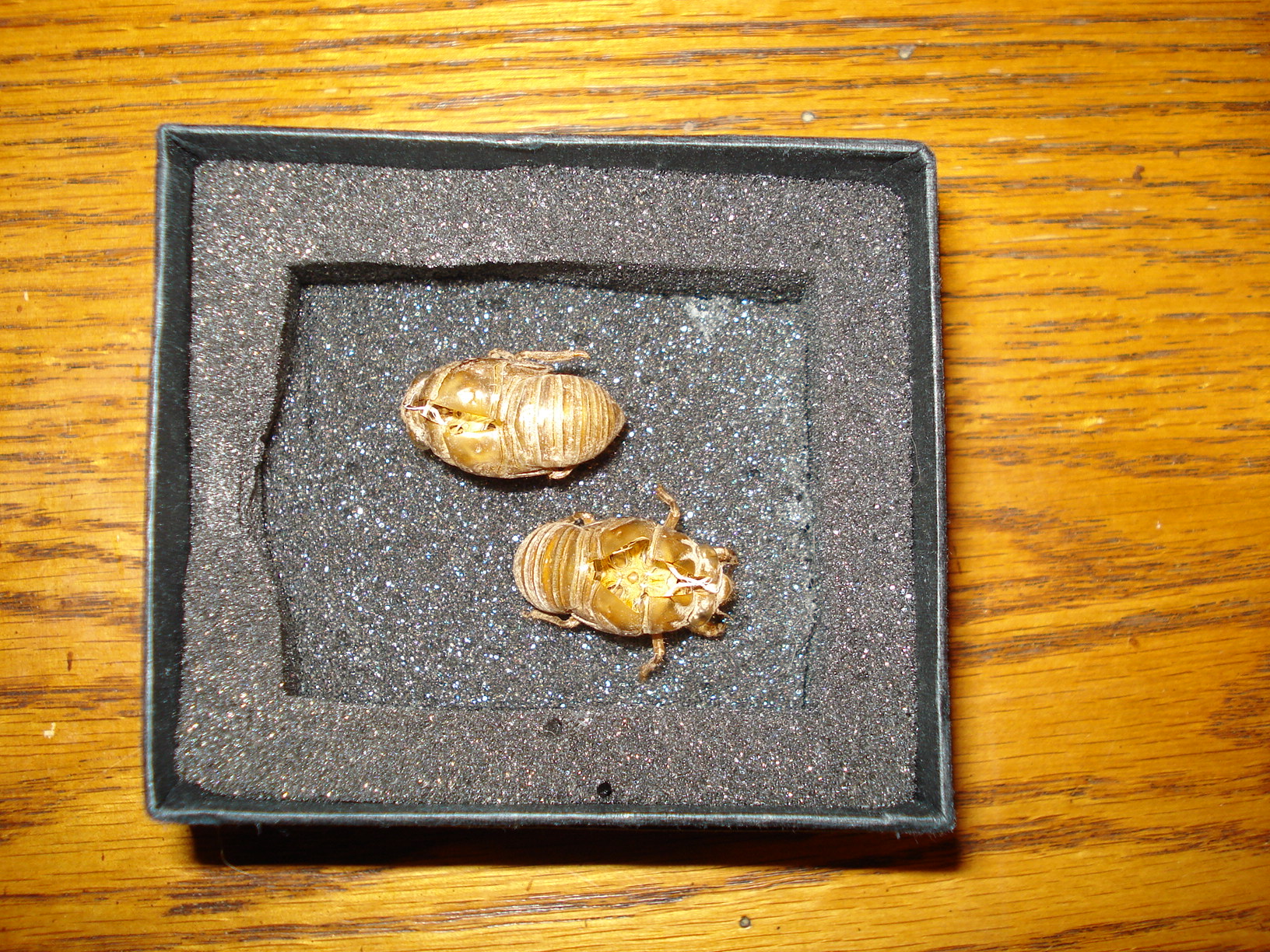
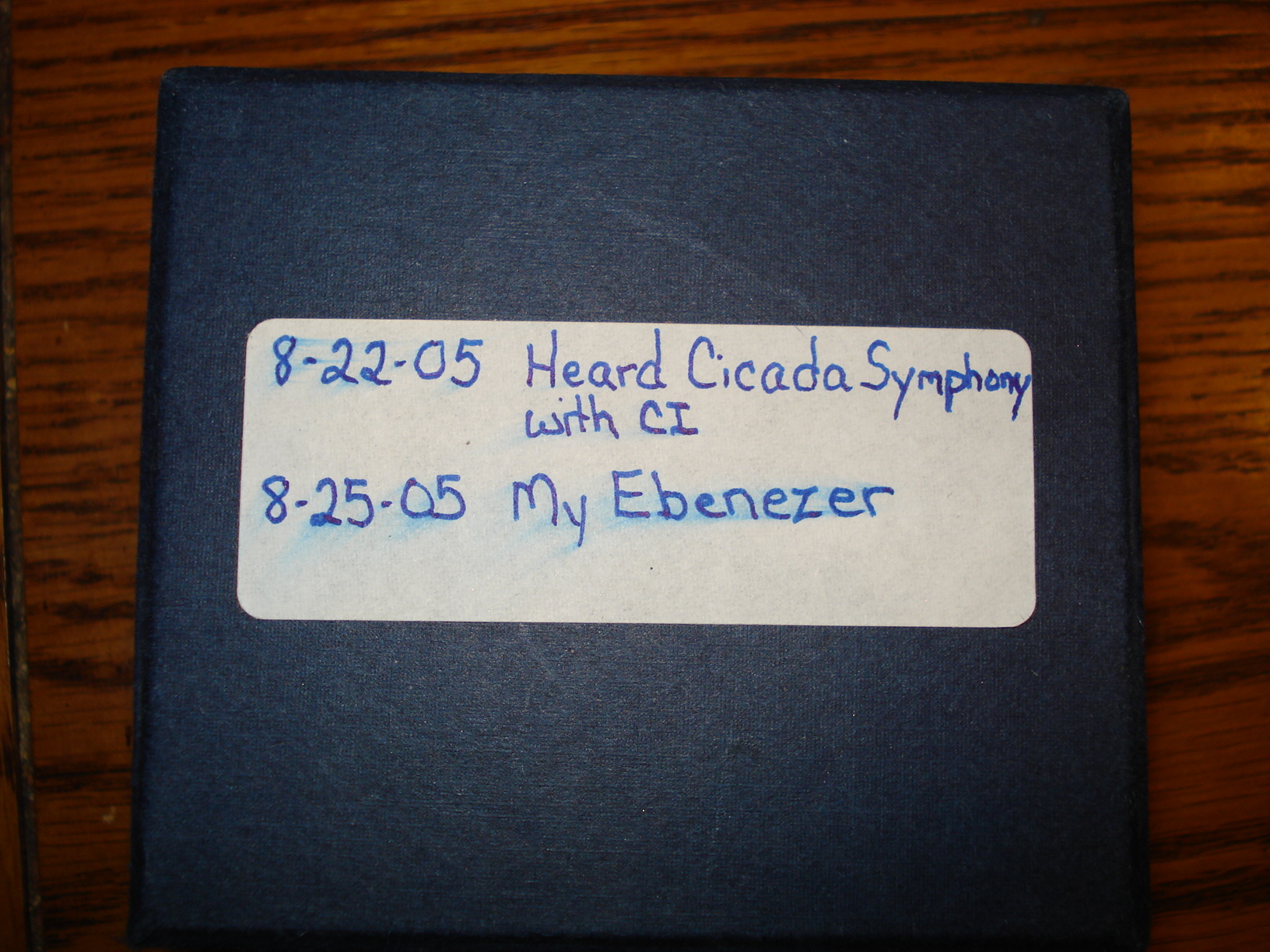
Nope! Your eyes do not deceive you. These are two shed cicada skins. Before you think I’ve lost it and am “gruesome beyond belief”, read the LID of the box:

Unless you’ve lost your hearing… only to regain it through a cochlear implant, you cannot understand what it means to hear and recognize a sound from your past.

You cannot understand what it means to bend and pick up something unless you live with arthritis.

You cannot understand what it means to see again unless you’ve lived with cataracts and then had them removed.

You cannot understand what it means to stretch for a glass from your cubboard and realize you feel no pain today, unless you live with fibromyalgia.

You cannot understand what it means to have independence because of an assistance dog, unless you live with mobility issues and difficulties.

You cannot understand what it means to look forward to “today”, unless you live with mental illness.

Life challenges bring a new appreciation… a new satisfaction for what once were mundane tasks. If you haven’t yet identified markers in your life, well my friend? It’s one of two things… you either aren’t living life, or you haven’t lived enough of it YET.

One of the hardest things about being a parent is seeing my young adult children identify and experience things that etch permanent markers in their own lives. Perhaps you aren’t a parent, but you know someone who is experiencing a first “marker”. Do your best to encourage them. Be a living testimony of someone whose own life markers made them “better”. Make a difference…

Denise Portis

© 2010 Personal Hearing Loss Journal