Invisible Illness Awareness Week

This week marks a very special week for me. I have been a part of Invisible Illness Awareness week for a number of years now. Sept. 10-16 is Invisible Illness Awareness Week.

There are a number of terrific speakers at this year’s virtual conference. You can check out the schedule here:  CLICK

Hearing loss and Meniere’s disease are both invisible. I have struggled both successfully and unsuccessfully through the years in living with these. Those who do so live with a fair amount of frustration and stresses simply because what they deal with IS INVISIBLE. For me, one of the most frustrating things is that my symptoms may vary. To some, this makes me lack credibility at times. For example, I “hear again” with a cochlear implant and BTE hearing aid. I may hear you just fine in a quiet environment and one-on-one. However, if my tinnitus is roaring or we are in a noisy environment, my primary response may be “Huh?“.

I walk, jog, and can even RUN (believe it or not) on sunny days. However, the weather is a real trigger for my own Meniere’s disease. I may be out-walking my assistance dog one day, and the next have her close and wobble like an intoxicated person. For those who do not understand that symptoms may vary, and may fluctuate, it may seem as if I can’t make up my mind as to whether or not I live with a disability.

I have friends who have Fibromyalgia, Lymes, Multiple sclerosis, chronic fatigue syndrome, and other various illness and disabilities. They will tell you that it can be frustrating, even emotionally debilitating, to have folks in their lives choose to scorn, disbelieve, or ignore their own invisible illnesses.

It takes courageous people to live with invisible illness. I hope you will go to IIA (CLICK HERE) and learn more about how you can get involved in helping to raise awareness in your own community. You may not live with invisible illness yourself, but all of us who live with it will tell you that our friends and family that support us are just as influential as we are ourselves – if not more so!

Denise Portis

© 2012 Personal Hearing Loss Journal

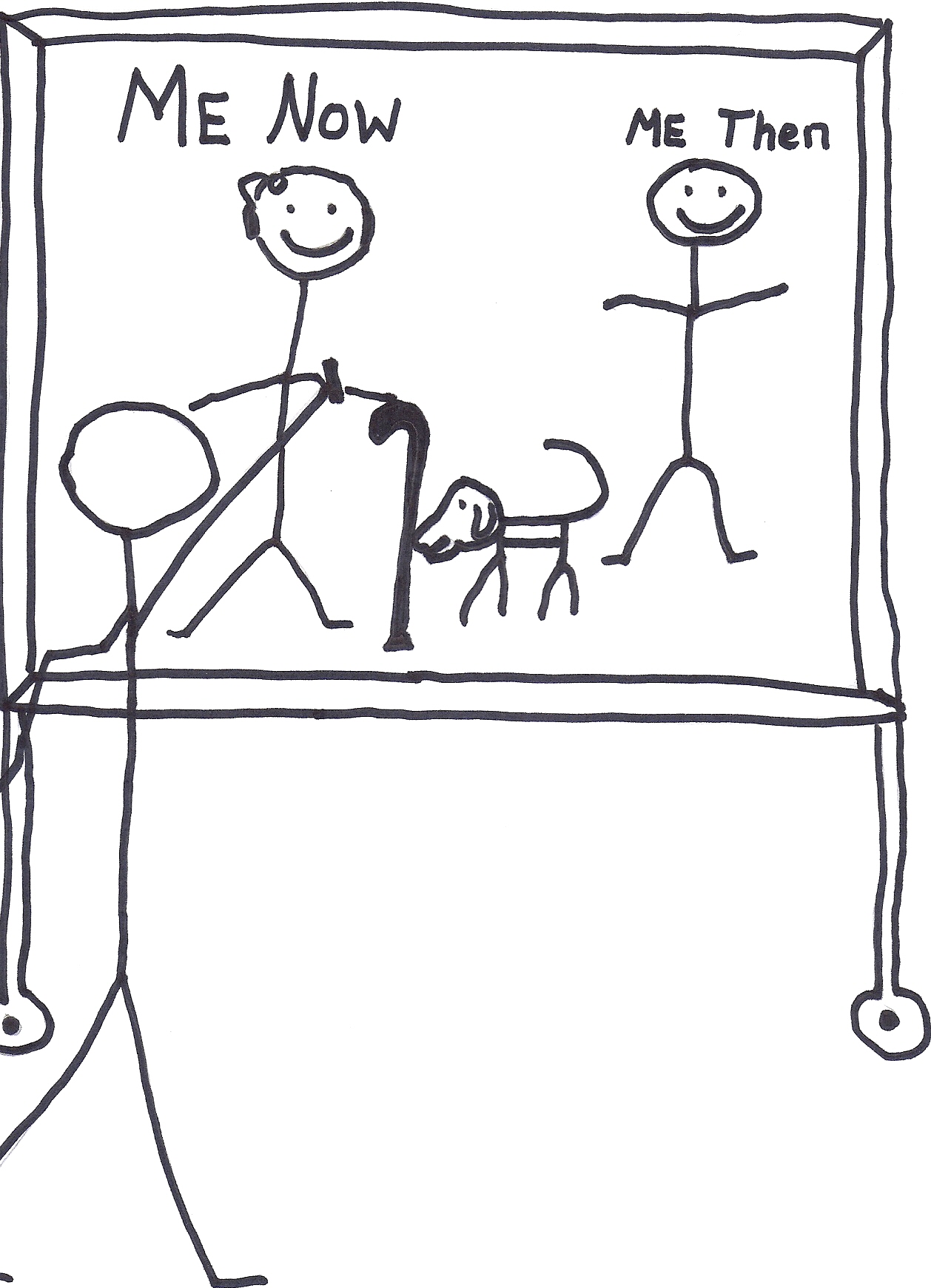
They May Not Get It

(Hey… I’m not an artist! But have you ever felt this way?)

One of the questions I am asked the most by folks who contact Hearing Elmo, is “Why doesn’t my family accept and understand who I am NOW?”

Before I even begin writing, let me express my hope that many of you will respond and share as I am very aware I do not have all the answers.

Why It Hurts

1. It hurts because the transition from “normal” to where you are was painful.

The school of hard knocks is – well – hard. Acquired disabilities and invisible/chronic illness are not easy to get use to when they first change a person. The journey from diagnosis to acceptance is a hard one. It hopefully has made us “better” and not “bitter”. I can attest to feeling stronger, more confident, and much more in tune with who I really am post-disability. Some of us have progressive symptoms and illnesses. We may adjust, only to have to do so again in a year or so. This too can grow us. But honey? It isn’t easy.

However, BECAUSE it was hard, it is hurtful when folks who knew us WHEN (back before our diagnosis), don’t accept or try to understand who we are NOW. We are still the same people. Our personalities have not changed. Our strengths and weaknesses are all still present – although you may have developed some new strengths because of your life path. So it is difficult when family members may sometimes be the hardest to teach how to talk to us now that we have a hearing loss. Or perhaps you are frustrated because a family reunion at a theme park is not ideal for you because you cannot ride any of the rides. Maybe you are utilizing a wheelchair, walker, or cane. A picnic and hike may not be a good way for you and your siblings to catch up – even if it has been a year since you’ve seen each other.

It’s not like we want recognition for the pain we’ve experienced. We aren’t looking for a medal. However, seeing any eye rolls or hearing frustrated sighs serve only to remind us our family

STILL

DOESN’T

GET

IT.

2. You expect your family members to care enough to accept you.

It’s not wedding vows. “In sickness and in health, for richer or for poorer…” But we have a reasonable expectation that our family members are going to love us and be there for us regardless. It doesn’t matter if we acquire a disability. We are still the same person. If Lymes disease has you aching and feverish a week out of every month, we expect compassion, not disdain. If CFS or MS has you weary, tired, and feeling as energetic as a centenarian, you expect understanding and maybe an offer to run an errand for you. If your eyesight is worsening due to various illness or disorders, you never expect frustrated outbursts when you explain you don’t have a ride to go to your nephew’s graduation.

But friends? Family members can need educating. Advocacy may begin at home. We wish it wasn’t necessary, but it may be very necessary. My kids grew up with me at best, hard-of-hearing. My husband, however, knew me before hearing loss. So I have to be willing to tell (nicely) him what works and what doesn’t. Don’t be surprised if it takes numerous lessons. Some heads are thicker than others.

What to Do

Talk to them. I’d elaborate, but honestly? You need to talk to them. Explain how you feel. Be willing to be vulnerable. Start with phrases that explain specifics and not general accusations. Example:

“When you sigh as I wobble into a shelf at the store it really hurts my feelings. I can’t help it when my world ‘twirls’. It’s hard enough to face the stares and hear the whispered remarks from strangers. I expect better from you. I expect your support.”

They May Never Get it

We can choose our friends, but we don’t choose our family. Blood is blood and it simply cannot be changed. However, you do not have to put up with people who ridicule you or try to injure you with words. You do not have to deliberately spend time with people who only make you feel worse. Sometimes? Sometimes those toxic people are family members. I hate it for you. I hate it for me. But it can be the painful truth.

Sometimes those friends that we choose? They become family. Maybe not by blood. Perhaps not by legal adoption. But folks who encourage us, lift us up, make us better people, understand, lend compassion and energy? They can become like family members. My heart’s desire is that you will find some folks like this if you haven’t already.

I welcome your thoughts on this. Knowing family members may grieve the person they once knew, or have trouble adjusting to the fact you are “differently abled” is important. Be patient. But also put healthy boundaries in place to keep unhealthy people from de-railing your progress with your own adjustments.

Denise Portis

© 2012 Personal Hearing Loss Journal

It’s Not Easy Being Green

I love Kermit. For the record, I loved Kermit before Miss Piggy loved Kermit. In the early 70’s, Kermit first poignantly croaked out that “it’s not easy being green”. Being green was something he could not help. It simply was.

This song has since been associated with people lamenting their own self-identity, yet coming to terms with “it being what it is”. By the end of the song, Kermit admits it’s OK to be green and that it is how he wants to be.

Am I OK Being This Way?

Something I have struggled with in acceptance of acquired disabilities is “the new me”. You see… I wasn’t born green. I can’t even say the transformation was similar to the beautiful miracle and mystery of a caterpillar changing into a butterfly.

And yet… it’s not like I asked to be late-deafened. It’s not like I asked to have a balance disorder like Meniere’s disease. But just like Kermit being green, it is what it is. There is no changing it.

So if this is me now, am I OK with it? Anyone with acquired disabilities ever struggle with that acquisition? If I asked for a show of hands, you’d first notice my own raised palm. I think you’d also notice a great number of hands. You aren’t alone.

Like many of you, I feel good about who I am much of the time. But I’d be lying if I said it’s always easy to be me. It’s not. So what to do?

Acceptance ≠ Resignation

I’ve never heard a person with acquired disability or chronic illness say, “This is easy”. It’s not. Yet do you know what I have discovered? I have this fuzzy, old memory of “life before disability” and IT STILL WASN’T EASY. My friends? Life is not easy. If you haven’t figured that out yet then you are still very young. Or, perhaps you are a frog.

I am discovering that acceptance of where I am (or even where I may end up), does not mean that I give up. Nor does it mean that I am resigned to an unhappy, unfulfilled life with no chance of ever giving back or having a purpose.

I get some “flack” with some of my readers about using the word “disability”. Rest assured, I welcome ALL opinions and discussion about the posts here at Hearing Elmo, as do the guest writers who participate. Some have suggested that using the term disability lowers one’s expectations and influences self-esteem. I understand the argument and point of view by those who believe this. I use the term because it is the terminology used by the ADA which ultimately protects my rights as a person with disability. It is about my freedom as a person who negotiates life a little differently. You may use disabled, differently-abled, special challenges, etc. In the end though it is green; though some may call it lime, olive, or chartreuse.

So today, August, 20, 2012, I am a person with disabilities. It’s not easy. But it isn’t impossible. Bottom line, because of who I am today, I compromise. I’m going to Hershey Park with a big group of couples from our church. I’m the self-designated pocket book holder. I won’t be riding any rides. I cannot. But I anticipate a day of fun and fellowship with other folks my age. I don’t choose not to go. For me, that would be giving up so it is not an option.

I don’t use the phone well, but I can use captioned phones, assistive technology, and my cochlear implant to make do. I use email a lot – and yes, FaceBook too. I walk like the world is in motion – especially on rainy days. Yes, yes, I know. The world IS in motion, but trust me! My earth’s rotation is faster than YOUR earth’s rotation. So I often walk with a cane. I have an assistance dog who counter-balances, and retrieves things I drop. I say, “Whoa!” a lot.

Don’t Pin a Super Hero Cape on Me!

Before you pin a super hero cape on me, please know that I don’t always have good days. I don’t always wake up and believe I can take on the world. I do not always look in the mirror and like what I see. There are times I worry about where I am in terms of what I can and cannot do. What is important, I believe, is what you do after having those very normal feelings. Worried? Totally normal. Depressed? This can be a very normal reaction. Pissed? Believe it not, being angry is a normal response to acquired disability. When you STAY worried, depressed, or pissed it becomes a problem. Don’t be afraid to talk to others. Perhaps you need to see a counselor. Maybe you need to do something just for YOU to work off some of that negative steam.

You will never hear me say it’s easy being green. It’s not. But acceptance of where we are allows us to then LIVE and even to give back – to be productive and have a life of purpose. Just like Kermit croaks, we may not be sparkly and flashy like others. Within each of us is the desire to discover and acknowledge that our being green – is OK. Perhaps even good.

I welcome your thoughts on this!

Denise Portis

© 2012 Personal Hearing Loss Journal

It’s Not Easy Being Green lyrics

It’s not that easy being green
Having to spend each day the color of the leaves.
When I think it could be nicer
being red or yellow or gold
or something much more colorful like that.

It’s not that easy being green.
It seems you blend in with so many other ordinary things.
And people tend to pass you over
’cause you’re not standing out like flashy sparkles in the water
or stars in the sky.

But green’s the color of Spring.
And green can be cool and friendly-like.
And green can be big
like an ocean
or important like a mountain
or tall like a tree.

When green is all there is to be
It could make you wonder why, but why wonder why?
Wonder, I am green and it’ll do fine
it’s beautiful!
And I think it’s what I want to be.

A Whispered Thank You

Praying Mantis calisthenics – photograph by Deborah Marcus (NC), friend and nature photographer

Not long ago while visiting in NC, I spent an afternoon with my friend, Deb, at the North Carolina Zoo. Deb takes pictures of life in nature; everything from plant life to animal life (and everything in between). She sees things that most folks miss and often stopped and pointed out things I would have just walked right by as my “notice-er” is out of practice. When Deb takes a picture she always whispers, “thank you”. When I first caught her doing it we were just thrilled and tickled that I was actually hearing her whisper of thanks! Cochlear implant sisters-in-arms, we always celebrate those moments.

However, since my visit I have given her habitual murmured thanks a lot more thought. When I tend to think on somethin’, I ponder, speculate, question, and soul-search. Eventually I write about it – even if it takes me almost 15 months to get around to it!

Like a Dangling Spider Cares?

I have to admit, when I first heard her thank a lily-pad, skimming dragonfly, I thought, “Umm. This critter does NOT care if she thanks it for the Kodak moment or not”. But it’s deeper than that. An attitude of gratitude and respect is cultivated. We certainly aren’t born with it. I remember teaching my toddlers “please” and “thank you”. Sure… some of that can be a learned behavior from appropriate modeled examples. Some folks are just naturally friendly and easy-going. Some walk around like a sour puss (I’ll not mention any names) and thanks is a foreign language. Most of us fall somewhere in between, our emotional health dependent on life circumstances. This is why an attitude of gratitude must be created and exercised faithfully to instill a HABIT.

It starts with the small things. Walking out underneath my porch to dispose of an empty plastic container, I thank the spider who just snagged that mosquito. (No. I haven’t found it in my soul yet to thank any skeeters). I try to thank my family members for doing things – EVEN IF IT IS THEIR JOB TO DO SO. I thank my students for turning their work in on time; or, if late, for eventually turning it into me! I thank the very pregnant, adjunct coordinator for my department, as she certainly has better things to do (like nesting) than to email all of us our reminders for the semester. I thank the person in training at the U.S. Post Office for waiting on me – which they stuttered out a very surprised “Your welcome!”. (Doin’ everything I can to assist in a decrease of “goin’ postal”). I thank the cashiers at the grocery store, Wal-mart, and CVS. (I thank the produce department workers, which is only funny to you if you know me well). I thank my waiter/waitress every time they do the smallest thing for me at a restaurant… even though it is their job. I thank “hound dog” for every task she does for me, which only increases the tempo of her wag. Do you see how far this attitude of gratitude can go?

Sitting with a friend waiting for small group to start one Sunday morning, I startled her by saying, “thank you for being my friend”. She sat there with her mouth hanging open waiting for “more” or for “the other shoe to drop” (like… would you DO THIS FOR ME?) She said, “That’s it? Well gee. I’ve not received a thanks like that in awhile!” I grinned at her but thought, ►well why not?◄  Why do we not thank the folks in our life even when there is no real reason? Keeping it to ourselves doesn’t bless anyone.

“Silent gratitude isn’t much use to anyone.”

~ Gladys B. Stern

Expressing our thanks must be EXPRESSED. William Ward said, “”Feeling gratitude and not expressing it is like wrapping a present and not giving it.” According to “Happy Life U” (you should check it out!) expressing thanks can actually improve emotional happiness.

New research shows that practicing gratitude may be the fastest single pathway to happiness, health, long life, and prosperity. In a remarkable study performed by Dr. Emmons, people who kept a gratitude journal for just 3 weeks measured 25% higher on life satisfaction after wards. They exercised more, drank alcohol less, and their families and friends noticed that they were nicer to be around. And the effects lasted for several months beyond the initial 3 week study. Other studies on gratitude are confirming these results. People who take the time to notice and appreciate the good things that come their way through grace, or luck, or the goodness of others are happier and more peaceful. They do better on cognitive tests and tests of problem solving skills. They practice healthier habits, have better relationships, are more optimistic and live longer. Gratitude is one powerful emotion (Happy Life U, 2011-2012, para. 5).
 

So What Has This Taught Me?

I already explained I’ve been thinkin’ on this topic for better than 15 months. I’ve even followed up with a conversation or two with my friend, Deb, about this which likely has her wondering why this is so important to me. I write a great deal about invisible and chronic illness, acquired disabilities, and living victorious lives in the bodies in which we find ourselves living.

Naturally, I had to research if being thankful could help folks in the community of souls of which I self-identify. Wood, Joseph, and Linley (2007), suggest that gratitude can be a powerful social support tool that folks with disabilities can use to help them. They asked 236 folks with various burdens (disabilities, chronic and terminal illnesses, addictions, etc.) to participate in a study that asked them to keep a gratitude journal. Folks discovered their written “thanks” eventually jumped off their pages and out of their mouths. “Gratitude correlated positively with seeking both emotional and instrumental social support, positive reinterpretation and growth, active coping, and planning” (Wood, Joseph, & Linley, 2007, p. 1076).

Allison Shadday has MS. She believes we need to shift our attention. “Sometimes we all have to slow down intentionally before we’re able to genuinely appreciate the many positive aspects of our lives. If you find yourself feeling critical or negative during the day, take a deep breath and redirect your attention to something for which you’re grateful. Notice if your body becomes more relaxed and your breathing more steady. Tune in to how your attitude shifts when you focus on the sweetness in life. This is living consciously” (Shadday, 2006, p. 51).

It seems… being thankful makes us healthy. More than that… it can make us HAPPY. The recipient of our thanks may not deserve it. They may not look like they need it.

Do

It

Anyway.

I think you will find it can change YOUR life, for the better.

Denise Portis

© 2012 Personal Hearing Loss Journal

Note:  You can “see” and “hear” more from Deb at http://visionsofsong.wordpress.com/

Happy Life U. (2011-2012). New Science of Happiness. Retrieved August, 12, 2012, from http://www.happylifeu.com/Attitude-of-Gratitude.html

Shadday, A. (2006). Embracing an attitude of gratitude. Inside MS, 24(6), 50-51.

Wood, A. M., Joseph, S., & Linley, P. (2007). Coping style as a psychological resource of grateful people. Journal Of Social & Clinical Psychology, 26(9), 1076-1093.

Unexpected Perk, or Bother?

Several of the emails I receive through Hearing Elmo each week are questions about assistance dogs. This week is actually “Assistance Dog Awareness Week“, so I wanted to take a few minutes to talk about life with an Assistance Dog.

The first thing I always tell people who have questions is that if you are not prepared for the fact that an assistance dog will draw attention to you, then PREPARE YOURSELF. More importantly? If you are not comfortable with the attention, then an assistance dog is not for you.

Because I have a hearing loss and because I don’t hear well in stores or crowded places, I am oblivious to all the comments my family members DO hear. “Look at the dog!” “Oh look, a working dog!” “Why is that dog in here?” “Mom, why does that lady have a dog in here and why is it wearing a saddle?”

Assistance dogs lend independence to those who chose to mitigate their disability or illness with these special canines. I never worry about missing a phone call. I can do laundry without assistance from a human family member. I no longer burn supper. I always know when someone is at the door. I can shop and go out in public and never worry about not being able to bend and pick something up – important as I constantly drop things.

Some things you may not know that are actually perks of having an assistance dog?

1. Pre-Chloe, a routine doctor’s visit would result in the 3rd degree about why I always have so many bruises. It can be tiresome to field questions about whether or not I’m in an abusive relationship, when I simply fall or run into things a great deal because of Meniere’s disease. Now, Chloe lends legitimacy to those bruises. She reminds doctors why I have bruises because folks don’t go to the doctor with a dog partner if they didn’t need the assistance.

2. I’m rarely bumped into or shoved out of the way now in public. When you don’t hear well in these venues, impatient shoppers who don’t give a “fig” about why you are standing looking at dancing electronic flowers in the garden department, assume I’m being stubborn about moving to let them by. Now they see Chloe and if she doesn’t notice them and cue me, they carefully maneuver around me.

3. I never receive comments like “It’s a little early to be drinking isn’t it?” or “You should be ashamed of yourself” when I’m seen weaving a bit on rainy weather days (comments that have really been made). In the past, if I slammed into an end cap in a store, those around me assumed I was high or drunk. Now people see Chloe and think OR SAY, “Gee, it’s great she has that dog to help her”.

4. I’ve grabbed onto a fellow client’s scooter before (sorry, John) when I almost fell down. He understood. However, when what you grab is a nearby shopping cart, others aren’t as understanding. I once had a grandmotherly person stick her finger in my face and sternly say, “Let… GO”. I mumbled an apology and went my way. Now that I have Chloe, the most anyone will say in a “near swoon” moment is “Are you OK?”

Assistance dogs help people with hearing loss, mobility issues, seizure alert, PTSD, diabetes/blood sugar alerts, vision loss, balance problems, fine motor skill difficulties, and much more. I hope the next time you see someone with an assistance dog in public that you maybe take a minute and tell them that you think their independence with their canine is a great testament to courageous people. Don’t pet the dog or distract it though (grin).

Denise Portis

© 2012 Personal Hearing Loss Journal

Round and Round She Goes, Where She Stops…

… is USUALLY on her nose.

If you live with invisible disabilities or chronic illness, have you ever stopped and tried to make sense of it all? More often should I choose to do this, I find it simply doesn’t make sense. What can be more difficult, however, is trying to help someone ELSE understand what it is like to be a little “different”.

The words disability is a like a nasty tasting curse word to many. Personally? I’m not afraid of the word because it does currently define my rights under the ADA – something I wish wasn’t necessary but is in order to make sure that those who navigate life differently have the same access and rights as everyone else. I’m not here to today to discuss the WORD, however. I am here to bellyache.

A friend of mine posted a link to a terrific article currently taking up space at Invisible Illness Awareness Week. It detailed why it is important to just LISTEN sometimes. You can access the article HERE.

I belong to a number of online support groups for people with Meniere’s disease. I’ve never met anyone with symptoms exactly like mine. As a matter of fact, Meniere’s disease often frustrates perplexed physicians who are trying to help treat the disease. However, because there is no cure, one can only learn to manage and treat the symptoms. What may help one person, does not help another at all.

My assistance dog, Chloe, from Fidos For Freedom Inc., is a big blessing. Originally trained to be a hearing dog, she still performs all her hearing alerts with finesse and enthusiasm. As a matter of fact, 7 AM came WAY to early yesterday morning when my alarm went off. I tried to tell her to go back to bed and stop kissing my hand, elbow, and right ear. My husband rolled over and said, “Hello? Your alarm is going off!” Oh.

But Chloe actually helps me with far more balance related tasks each day than she does hearing alerts. I tried to “track it” one day and she performed 17 hearing alerts (alarm, kitchen timer, automatic retrieve of items I’d dropped and hadn’t heard, door knock, and cell phone ringing) and over 40 “other” tasks. (I quit counting after 40). These usually consist of directed retrieves. I drop things. I drop things a lot. Picking them up myself takes time as a bend all the way to the floor often precedes a fall. To avoid that, I simply let her get them for me. She also acts as a steady brace when I stand, sit, or go up/down stairs. She also acts as a brace if I begin to weave in a large cavernous place. The picture I chose for this post reminds me how bad my visual field was on Saturday. I ran into the mall with my husband to pick up something at a favorite store. When sound echoes, I tilt. (Picture Denise, aka Leaning Tower of Portis). Chloe has a large handle on the top of her vest that works perfectly. On my lower left is a solid helper that keeps my world from being quite so off center. I’ve been in JCPenney before and let go of her handle to look at some clothing on a sales rack. I immediately felt “swishy” because of the tall ceilings and lights. I grabbed out to keep from falling and clutched the breast of a nearby mannequin. I don’t make these things up. Thank goodness she/it wasn’t real, right?

Yet there are things Chloe cannot help me with, too. Here are some things about Meniere’s disease that surprise some folks:

1. Scrolling words or moving backgrounds on PowerPoints make me sick.

Our church places the words to songs and notes for the message on the walls in the sanctuary. This is very helpful for anyone with hearing problems… or ADHD (smile). However, sometimes there are moving points of light or star bursts that move behind the words or notes. I’m fine as long as I’M SITTING.

2. I have to sit to brush my teeth.

Yeah. I know, I know! Strange! But there is something about moving a toothbrush around in my mouth while in a standing position. I have to sit, and there are days I actually have to close my eyes on top of that!

3. Stepping down can be problematic.

This one really bugs me. On sunny days (weather is a trigger for me), I love to hike and climb around. I love rocks. Big rocks. I love heights (believe it or not). However, stepping down more than 6 inches is enough change in my altitude that I black out. It may only be for a few seconds, but if both feet are not on the ground, I’ll be picking blades of grass out of my nose hair. Chloe has learned that a “Whoa!” from me means

Move.

NOW.

4. Must… AVOID… looking… at ROTATING things (gasp)

Ceiling fans are not my friend. Neither are signs hung from ceilings when the air conditioner vents blow on them to make them twirl. For me this means heave, deep breath, heave again. I’m serious. 🙂

5. I shower while looking at my feet.

I didn’t realize how difficult it can be to get clean when you can’t look up at the shower head. Raise your eyes to reach up for shampoo or your razor? Honey? Do you want to get up close and personal to the DRAIN? Heaven help the family member who moves my shampoo or washrag from their designated place. I count on where they are so that I can shower safely… while looking at my chipped toenail polish.

6. Watching the effect of the wind can topple me too!

We’ve had some terrific storms lately. Since it has brought much needed rain, I’ve been loathe to complain. I love standing on the deck and watching the wind blowing the towering pines behind our home. Clarification: I like hanging on to the rail of our deck and watching the wind blow the towering pine trees behind our home.

7. Gingery’s Baby Pegasus can be mesmerizing to my detriment.

My daughter’s 12 pound hairless Chinese Crested likes to spin. For fun. Imagine that. It is quite captivating, but it only means CAPSIZING for me. “Look away, Denise, Look AWAY!”

8. I fuss at my son’s stomach.

My son… you know the one who was 7 weeks premature? He is 6 foot 3 inches tall. He’s a terrific kid. However, even at 21-years-old, he still needs the occasional “mama sermon”. I dare not look up, Up, UP into his eyes. One isn’t able to reiterate needed reminders when flat on the floor. Instead I point my finger and give his belly and chest “what for”. The kid laughs at me. LAUGHS. (sigh)

9. Glass elevators have speckled carpet.

I know this because I only see the carpet in glass elevators. Why not solids? Stripes? Only speckles. This confuses me.

10. I remind my doctor that I will NOT hold my breath while he’s listening to my ticker.

Because… well otherwise I’m waking up with nurses, hound dog, and doctor crowded around. (Why crowd someone who has swooned? Can I just ask that?)

Like many people who get up every morning and “manage” their symptoms, I hope perhaps I’ve helped you understand balance disorders a little better. Feel free to share your own “management techniques”.

Denise Portis

© 2012 Personal Hearing Loss Journal

Another Look at Isolation

Hearing Elmo welcomes Melissa Sisco, from Alabama to our list of talented writers who have learned to “write from the heart”. Melissa is the mother of two young daughters. She was first diagnosed with Meniere’s Disease in 2007, and also has asthma/allergies, a heart condition, weak bones, endometriosis, and diabetes Type II. Melissa admitted that “Meniere’s Disease has been the single most challenging medical diagnosis I have experienced in my 32 years”.

I’m not really sure why I’m attempting to do this.  I’m not much of a writer; at least I haven’t been for a very long time. But writing is one thing that, luckily, I can still do.  I really connected to the last piece that Denise wrote because I am right there, right now. Alone and isolated.  I don’t go out much at all, especially by myself.

In brief summary, my name is Melissa, I am a late-deafened adult, 32 year old female, married for 9 years (to an amazingly understanding husband), mother of 2 beautiful girls, ages 3 and 5. I was first diagnosed with Meniere’s Disease in my left ear when my oldest was 4 months old. I woke up one morning and could not hear anything out of my left ear and I was so dizzy I couldn’t even sit up straight in bed. About two years ago I joined the ranks of the Bilateral, but am lucky to only have moderate hearing loss in my right ear.  I wear an obscenely expensive digital hearing aid in my left ear (sometimes) and I need one in my right ear, but just can’t afford it right now.  I am not Deaf enough to qualify to be a member of the Deaf community where I live, and I am apparently “wrong” for choosing a hearing aid. But I can’t hear enough to qualify for the Hearing World anymore either.  I feel lost in limbo. I simply belong nowhere.

Why It Can be Difficult

I used to enjoy simple things like shopping, (especially shoe shopping) but now I avoid shopping trips as they make me nervous and, frankly the last time I did go out, (to my favorite shoe store) I literally knocked over a little old lady who was standing directly behind me.  I didn’t know she was there, couldn’t hear her or sense her at all.  I backed up from a store display to get a better view and plowed that precious little woman straight into a mannequin.  I was so embarrassed, I apologized profusely as other patrons helped her up and glared at me like I was the devil incarnate.  I left the store and haven’t gone back since.

At work I hide in my cubby hole of an office (it’s actually the records closet and my office).  Once upon a time, I was a 911 dispatcher, and I was really good at it. I did that for nearly 8 years, before my hearing loss reached the point where I can no longer do that job safely.  I was lucky to not have been let go, and I am now relegated to some sort of mish/mash office manager and dispatch supervisor. I know I am unbelievably blessed just to have a job, but I avoid even my coworkers now because most of the time I have no idea what they are saying, so I just nod my head and try to wear my neutral “yes I understand” expression, which is a big fat lie.  I have a strong aversion to my work desk phone.  It’s set as loudly as possible, yet I still have to ask people to repeat.  (My employer is working on getting me a CapTel phone, but our system is slow as molasses). Sometimes, when I see a number from someone I know I have a particularly hard time understanding (ahem –soft spoken females like me), I just let it ring to voicemail. I have found I also do this at home, and on my cell phone.  Although to be fair, half the time I really can’t hear them ring, or –at home anyway- I hear it but can’t find where the “ring” is coming from.  (Usually I’m hoping it’s a real sound and not just a figment of my broken cochlear nerve as I frantically search room to room looking for my telltale “flashing strobe light” phone.)

Recently a group of female friends (ok coworkers and coworker’s wives – I don’t really have a lot of friends anymore) went out to dinner and a movie and actually invited me to go along.  I really wanted to go, I wanted to be with other people and I really wanted to see that movie!  But I remembered that previously, I had a difficult time asking for, receiving, and setting up the captioning device at that particular theater and I’m not going to pay $15.00 to see a movie I can’t “hear/read.” Keep in mind if you are new to the whole captioning thing, you can ask for it, but that doesn’t mean the minimum wage paid teenage employee has any idea what you’re talking about. I dreaded the embarrassment of going through the captioning device thing again, especially in front of others. Also the chosen restaurant was a loud, noisy Mexican joint with great food and a fun ambience, but a terrible place for even the highest quality hearing aid to make a difference. So I lied and said I had no one to watch my kids. Can you say Avoidance?

I rarely get invited anywhere nowadays and subsequently lost a number of “friendships” because of having to cancel last minute because of my lovely vertigo spells. Apparently, “Sorry I’m too busy hanging on to the floor for dear life and vomiting to go out tonight,” has a limit on the number of times it can be used as a forgivable excuse.

Trying to Find the Positive

There are good things about losing your hearing, really there are. If it’s really noisy and I’m trying to sleep (like my neighbor and his oh so noisy garage band at 10 pm, or the neighborhood dogs howling for no reason at all) I can sleep on my good ear so I can’t hear anything.  If I have a migraine the hearing loss is actually a relief.  I can sometimes pretend I didn’t hear something if it’s something I don’t want to talk about.  (I think my husband has figured that last one out, drat.)  When my daughter(s) start whining/throwing tantrums I can literally turn my deaf ear to it.  Although they have also figured that out too.  I really try to appreciate the few sounds I can still hear, now more than ever. I try to imprint these sounds upon my memory so that I never forget – the giggling laughter of my little girls, my husband whispering “I love you” in my good ear, the melody of morning songbirds, and the relaxing sound of ocean waves.

I can actually swim in real life, (well I could swim once anyway), but as for living the new life of a Deaf/ Hard of Hearing person I am barely hanging on to my flotation device.  Denise always manages to end her musings on a positive note, so I will try my best.

I hate feeling sorry for myself.  I hate being depressed.  I hate hating everything. I can’t stand people who constantly whine and throw pity parties for themselves. I certainly don’t want to BE one of them. I’ve always been of the mindset that if you fall, you pull yourself up by your bootstraps and keep going.

I know that I am lucky not to be dying from some terminal disease, I am just going deaf and I’m dizzy most of the time.  I know, rationally, that I just have to learn to adjust to my “new” normal. I just don’t happen to be particularly impressed with what my new normal is, or what it may be in the future.  So I’m angry sometimes.  Well, really more like awfully T’d off. And I am actually annoying myself with the unnecessary amount of negative energy that I am producing.

I try to remember that the good Lord doesn’t give us more than we can handle. But God apparently thinks I have the strength of Hercules or something, but I disagree.  Grrrr.  I get so mad at myself, at what is happening to me, and I’m mad at being mad.  I don’t like mad people!

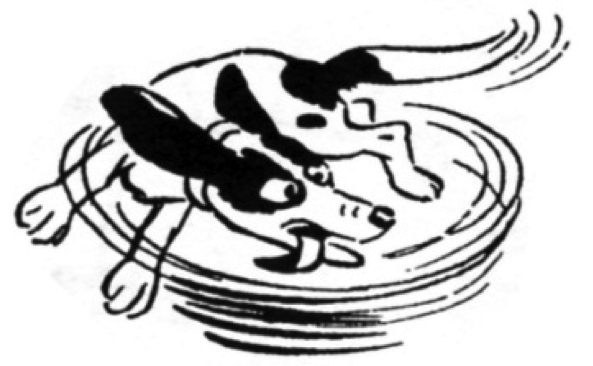
I suddenly have a great amount of sympathy for that poor dog that continues to chase his own tail in circles.

I might be barely hanging on, and I can’t hear the people who may be shouting at me –trying to help me, but I’m not giving up either.  I’m pretty good at the doggie paddle, so I will keep on paddling, I just don’t really know where I will end up. I try to keep a sense of humor about all this when I can, although, sometimes others (fully hearing or truly Deaf) kind of miss the point.

I truly believe that where there is humor there is laughter and laughter spreads joy.  And one can still laugh even if you can’t hear yourself do so.

One of my favorite quotes is by Gustave Flaubert –

– “One can be the master of what one does, but never of what one feels.”

At this point in my journey, I know my future is up to me and my actions will determine what is next, but I just feel lost at sea- drifting somewhere, and I don’t even have any oars, or a decent GPS system to help me navigate.

Salud and good luck on wherever you are on your personal journey.

Melissa

© 2012 Hearing Elmo

Decisions, Decisions…

For a totally unrelated reason, I was reminded this week that my husband cannot swim. I hate it when a discussion brings up old nightmares about the topic too! Goes to show how much our subconscious is at work… especially when sleeping. Anyway, this conversation about the fact that my husband cannot swim had me dreaming about one of the most terrifying events that led up to my banning him from going into the ocean.

The year was 2001, and my family and I were in Siesta Key, Florida. Terry was taking some classes to finish up his doctorate. Always nice when degree completion requires on-site classes in Sarasota, and you can time it where the whole family can be dragged down with you! Terry wasn’t getting much rest and relaxation. Going to class all day and putting the finishing touches on his dissertation were exhausting. At night he was glad to just catch whatever sunshine was left in the day and rest on the beach while I corralled the kids into a distance I could easily manage their activities.

I’m not sure what prompted a non-swimmer without a life vest to decide to get on an inner tube, launch one’s self into the ocean, and drift off to sleep. He swears up and down he had no idea he’d drift out to sea. After all, when he got past the breakers and could just snooze, the ocean was calm and serene. I’m the one with hearing loss (a fact I’ve made plain on this blog). But exhaustion and FREAKIN’ DISTANCE FROM SHORE will dissipate sound waves and keep someone from hearing shouted warnings; even from hearing ear-drum piercing screamed warnings. That’s right. Picture me on shore with kids, jumping up and down, screaming warnings that a riptide had caught him and he was oblivious to the danger. I remember thinking, “he has the room key around his wrist so I can’t even get into our condo and have one of the kids call my parents to let them know Terry drowned”. Morbid, yes? But I knew Terry could not swim AT ALL. The man cannot even dog paddle (something Chloe has told me since that she’s a little embarrassed about actually).

We may not have been able to attract Terry’s attention, but we did other folk’s. Soon a small crowd of people were whistling and hollering for “Terry!” A man, likely a native, stopped close to me and said something. I could hear the rumble and pitch of his voice. I stopped screaming long enough to sputter, “I have a hearing loss and have to see your face to hear”. So he touched my shoulder to get my attention and said, “He can’t swim? Want me to go after him?” I looked out at my still sleeping husband and agreed immediately. “YES PLEASE!!!!” (At least I’m polite...)

So the man went after my husband. He must have been shouting as he swam, because when he got closer to Terry, I could barely make out that Terry finally woke up. I saw a flail of hands, legs, and arms and prayed he’d hold on to that inner tube! The rescuer had started further up the beach to Terry and I think the tide and his strokes eventually got him safely to Terry’s side. He must have given him instructions to kick, which he did as well along with some steering, and eventually ended up on shore about a mile from where we all started. The small crowd of people had followed the kids and I down the beach. Some kind soul had picked up our things and carried them with us, knowing I wasn’t cognizant enough to even do that.

Drifting Off

A very popular topic for writers who discuss acquired disabilities and chronic illness, is social isolation. Isolation does not happen all at once. It is a gradual process; a series of small decisions and choices that eventually yield a self-perpetuated aloneness. We become “deaf” to the shouted (and well-meaning) warnings of people around us. Can we be rescued? Will we even allow a “strong swimmer” to intervene?

For people with hearing loss, isolation is almost a part of the process of learning to live with it. I know few people who are late-deafened that did not have at least a short period of self-imposed isolation. Why? Well experts have said of the late-deafened, “They no longer felt they belonged in the hearing world, and neither did they belong in the prelingually deaf world. Onset of deafness had left them in a twilight zone between worlds and had robbed them of their identity” (Barlow, Turner, Hammond, & Gailey, 2007, p. 442). Other acquired disabilities can produce the same isolation, however.

Physical difficulties can prevent people with a mobility impairment from creating social networks. Even the weather can keep some folks with mobility issues away from others. If you have a power wheelchair or scooter, you do not want to go out in the pouring rain or blistering heat. Despite the intentions of the ADA, not all places where friends get together are accessible. Whether you are born with some limitations, or acquired them later in life, disabilities or chronic illness may result in feelings of loneliness and isolation, and a lack of access to support information (Matt & Butterfield, 2006).

Not As It Seems

Not all decisions to RSVP to invitations with a “No, thank you” are because of isolation, however. Friends and relatives need to understand and trust that sometimes? Those “no’s” are not a pity party nor decision to pull back. I don’t go to pool parties. I have technology that cannot get wet and a husband who cannot be in the heat because of having one kidney. (And have you picked up yet that THE MAN CAN’T SWIM?) Sometimes there are very legitimate reasons for declining an invitation. A person may not be able to do evening gatherings because they have legitimate needs for an early night. Folks with disabilities and chronic illnesses often require more sleep than the average adult. It is not always possible to nap the afternoon before in order to go to some evening “shin dig”. Some people have to offer late apologies to activities they had planned to go to… but they have a “flare” when it comes time to prepare for an outing of fun and fellowship. The weather gets the final say for some of us. I can agree to go to a “Girl’s Night Out” a week in advance, only to have a weather system move in to where I can barely move in an upright position.

But…

I have also fudged about going to things I really could have had I really wanted to attend. Sometimes we say “no” because that is

EASIER or

HABIT.

We have to learn to police ourselves and ask ourselves some legitimate questions when our first impulse is to decline an invitation.

Social Networks

Nothing gets on this female’s nerves more than when I hear someone ‘pooh-pooh’ social networks like FaceBook, My Space, Blog networks, online support groups, and message boards and forums. I have heard holier-than-thou folks spout that these avenues “aren’t real people” and therefore are not “real relationships”. Drs. Patricia Obst and Jana Stafurik refute this much better than I can. “Online we are all able-bodied“. Online there is a “psychological sense of community and social support found through membership of disability-specific websites” (Obst & Stafurik, 2010, p. 525). These researchers looked at 160 different individuals who had various disabilities or chronic illnesses. “Results indicated that users did receive moral support and personal advice through participating in such online communities. Further, results indicated that online social support and feeling a sense of community online were positively associated with participants’ well-being in the areas of personal relations and personal growth” (Obst & Stafurik, 2010, p. 526).

I am always thrilled to have guest writers here on Hearing Elmo. (Interested? Email me at denise.portis@gmail.com). This forum has provided information and support to individuals “living it” and to family members and friends for information. I have been invited to write in other forums and welcome the opportunity. Ever heard the phrase, “dissemination of information”? The Internet makes us equal. It provides an easy, inexpensive way to find support, learn, advocate, and connect.

It can also serve as an avenue in which a warning comes through loud and clear… even to those of us who are late-deafened.

Are you avoiding outside activities?

Are the reasons you are doing so legitimate?

Are you connecting with others?

Are our decisions prompted by necessity or the result of anxiety, depression, and an attitude of giving up? These are important questions to ask ourselves. Please don’t find yourself adrift on an ocean with the shore out of reach. Ask for help. Discover a hero swimmer on their way to rescue you.

Denise Portis

© 2012 Personal Hearing Loss Journal

Barlow, J., Turner, A., Hammond, C., & Gailey, L. (2007). Living with late deafness: insight from between worlds. International Journal Of Audiology, 46(8), 442-448.

Matt, S. B., & Butterfield, P. (2006). Changing the disability climate: Promoting tolerance in the workplace. American Association of Occupational Health Nurse, 54, 129–134.

Obst, P., & Stafurik, J. (2010). Online we are all able bodied: Online psychological sense of community and social support found through membership of disability-specific websites promotes well-being for people living with a physical disability. Journal Of Community & Applied Social Psychology, 20(6), 525-531. doi:10.1002/casp.1067

How Important is it to Prepare?

With family in Colorado dealing with the fires, and our own area’s recent experience with widespread power outages after a “land hurricane”, disaster preparedness has been on my mind lately.

Isn’t it crazy that we don’t think to plan for something until it actually happens? Then we get some things together for the next time, only for a decade to go by before it repeats itself. By that time batteries are dead, water is stale and evaporated, and extra dog food has turned to powder.

Preparing can be expensive too; something most of us have difficulty budgeting for should a disaster occur. Yet, little by little we CAN get together some essentials. Purchased over time, these items may be less of a punch to our weekly budget for food and other essentials. If you dislike gathering things together for a price, disaster preparedness kits can be purchased at stores or online.

What to Put in a “Kit”

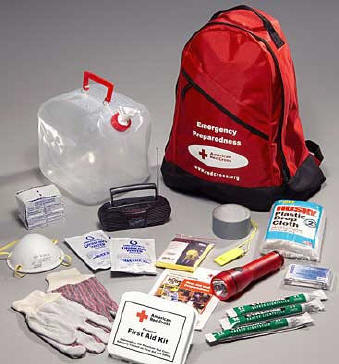
You can find numerous resources online with information about what to put in a disaster preparedness kit. You may have to prepare with numerous people in mind, or even numerous pets. According to the experts it is best to have a kit on hand that can be picked up and taken with you in the event of an emergency – fire, hurricane, or flooding… things that can be predicted to some degree as the result of early warning systems in the area.

With power outages, however, you may need a bigger “kit” for numerous days. Power outages can be planned as the result of city construction or tree removal. Most of the time though? Power outages are an unpleasant surprise. Causes can range from results of mother nature at work, or a hubby at work with a shovel and a poor attention span.

72Hours.org has some terrific ideas in what to put in a disaster kit. You can access the site HERE. FEMA and Ready.Gov has some additional plans and ideas at their site. These include how to let friends and loved ones know where you are and how you are doing. You can access these plans HERE. The ASPCA has some wonderful ideas and plans for those of us who may have service animals and other family pets. You can access that information HERE.  The Red Cross has some additional ideas for pet owners HERE.

The key is to BE PREPARED. When my family and I experienced 36 hours of no power in 95 degree heat, it isn’t something we decided to do for FUN. It was an unexpected and unpleasant surprise. We had plenty of water and gas in our cars, but could not even leave the house at night in sweltering heat because of numerous pets that needed attention, supervision, and assurance. We holed up in the basement and did our best to keep everyone calm and as cool as possible. Because I shop at Costco, when I buy batteries, I buy A LOT. But I wasn’t keeping close tabs on what sizes we had, and our flashlights and lanterns were scattered all over the place. (The power outage began late at night after the sun had gone down). I discovered after doing a little investigating after the power returned, that generators are expensive. They can also be dangerous to operate if you do not know what you are doing. Yet after our experience, I started a “generator piggy bank”. It may take us YEARS to have enough to actually buy one, but imagine being able to run some fans and keep the refrigerator running during a long-term power outage?

I welcome additional ideas our websites that may help folks prepare.

Disabilities or Health Issues?

As a person with disabilities I was prepared BY ACCIDENT. I purchase cochlear implant batteries in bulk once or twice a year. Thankfully, my cochlear implant is NOT the type that uses rechargeable batteries or I may have been deaf as well as sweaty! I noticed that because of the excessive heat, my balance was worse than usual. I was unprepared for a SUNNY day to be staggering around as if it were a rainy, overcast day. My husband who only has one kidney, was especially fatigued and weak because of the heat. I had friends that were unable to power their scooters that they use for mobility purposes, but their manual wheelchairs were in storage! These kinds of things can make a difficult situation much worse.

If you have special needs of ANY kind, be sure to take these into consideration when you do your planning. Because we are all aware of how important that planning is, right? (GRIN)

Denise Portis

© 2012 Personal Hearing Loss Journal

Dissension in the Ranks?

We get along great – thank you very much!

One of the big arenas in which I connect with others struggling with some of the same issues as I do, is Facebook. It never ceases to amaze me some of the criticisms I read among not only the hearing loss community, but the disability community as a whole.

Take the word “disability” itself. Some people have a good ol’ fashioned hissy fit if someone uses the “D” word.

Others may get uptight if someone brags on the brand of hearing aid or cochlear implant they use. Some folks may get up in arms about who did the right thing by whether or not they owner trained an assistance dog, or trained for a “program” service dog. I actually saw a conversation about whether or not people who lose their hearing should – or should not – use ASL (American Sign Language).

At times I just want to throw up my hands and whine loudly, “Can’t we all just get along?”

Nothing Wrong with Being Proud

Pride is often vilified. The phrase “Pride goeth before a fall” is used frequently to remind us that a prideful (almost disdainful) attitude not only turns others off, but ultimately may cause a person to fail or not achieve their goals. Pride is often categorized as a negative trait. However, pride may also be a GOOD thing. We can be proud of our kids, our skills/talents, or of our affiliation with a group or organization. It may instill a sense of identity. Zia and Katzenbach (2010), suggest that a healthy sense of pride can potentially motivate an individual to doing good work for others; to serve, inspire, and ignite a passion to do your very best.

Sometimes I “rag on” my husband about being prideful. It is usually with an eye roll while inferring “we all know how you can be”. Men are often accused of being susceptible to a negative kind of pride and ego. But ya know something? One of the things I love most about my husband is his healthy sense of pride. He knows what he is good at and in that knowledge comes a sense of urgency to share those things. He recognizes his gifts, talents, and skills, and uses them to assist others. I’m reminded when I choose to give him a hard time about being cocky occasionally, that many of the things I love about him actually stem from his sense of pride.

Part of embracing who you are “now” may mean you begin to associate with a group or community of people. Chandler (2009) believes that people with chronic illness or visible and invisible disabilities should use disability pride to their advantage. This doesn’t mean we become our disability, but rather we embrace who we are despite our disability. “Fundamentally, Disability Pride represents a rejection of the notion that our difference from the non-disabled community is wrong or bad in any way and is a statement of our self-acceptance, dignity and pride. It signifies that we are coming out of the closet and are claiming our legitimate identity. It’s a public expression of our belief that our disability and identity are normal, healthy and right for us and is a validation of our experience” (Triano, 2009).

So Why Do We Criticize Others?

If you follow Hearing Elmo, you know that I get really excited about guest authors. (If you are interested in writing for Hearing Elmo, shoot me an email at denise.portis@gmail.com). I know there are experiences within the community that I do not understand because I do not live it. It is good to get other’s perspectives and thoughts about issues that relate to our community.

Being diagnosed with hearing loss can frustrate patient, family, audiologist, and doctors. It is not “one size fits all”. Causes, degrees, implications, and symptoms may be extremely varied. Having balance problems does not mean that we have similar experiences, or erm… all FALL THE SAME WAY. My life with hearing loss and the balance problems I have, may be completely different from someone who shares the same diagnosis. We are still individuals.

So why do people within our community argue, posture, and belittle someone else who chooses a different path? Through the Hearing Loss Association of America, I have heard the motto “whatever works”. This means that whatever a person chooses to mitigate their own challenges is supported by the community as a whole. Have a hearing loss but do not want to learn ASL? No problem. But don’t blast those who chose to embrace the Deaf community and use ASL as their primary means to communicate. Don’t criticize those who choose to use the language (or variations of) when batteries die, or environments are not conducive to communication. Love your hearing aid? I’m happy for you! But if someone else chooses not to use them or horror of horrors… chooses another brand, don’t verbally bash them!

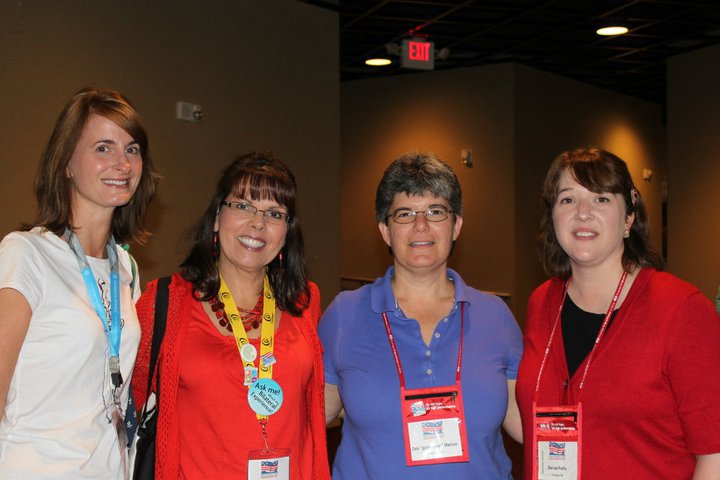
The picture at the top of this post is a photo of some of my dear friends who I met as a result of my own hearing loss. Our hearing loss is as different as our appearances – and ACCENTS (grin). We struggle with different things and may have chosen various coping skills by which to live a victorious life despite our challenges. Yet, we celebrate our SAMENESS. (Hey! That is a word – – look it up!). Is it not hard enough to keep a positive attitude and strive to make a difference without cutting down those who have challenges of their own?

Does this mean we aren’t entitled to our own opinion? Of course not. However, there is a big difference between having an opinion and expressing your opinion. To do so and deliberately criticize or demean another is never the right thing to do. As a matter of fact, to insist “it is my way or the highway” makes you disabled instead of a person who happens to have a disability. ‘Course… that is just my opinion as well!

Denise Portis

© 2012 Personal Hearing Loss Journal

Chandler, E. (2009). Pride and shame: Orienting towards a temporality of disability pride. Radical Psychology: A Journal Of Psychology, Politics & Radicalism, 8(1), 2.

Triano, S. (2009). What is disability pride? Retrieved June 30, 2009, from https://www.disabledandproud.com/power.htm    

Zia, K., & Katzenbach, J. (2010). Getting back on the fast track with pride. Leader To Leader, 2010(58), 33-38.