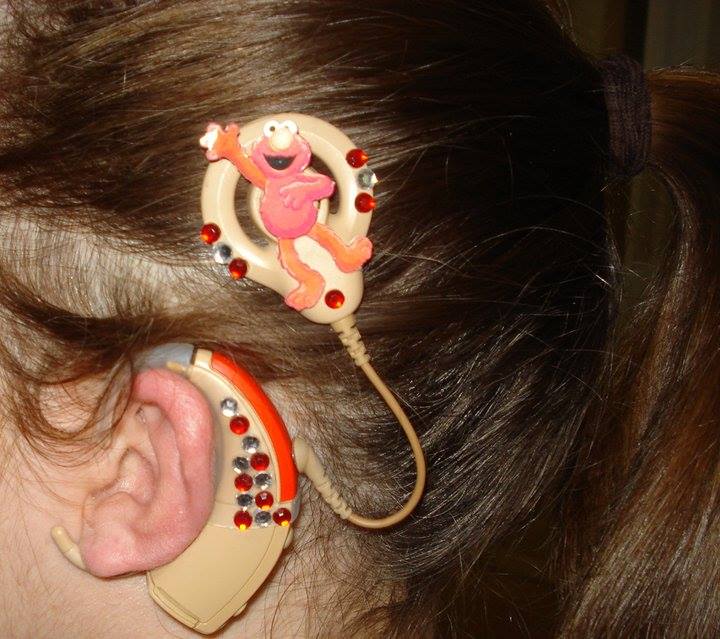
Turn On Date

Elmo bling

One of my favorite discussions to have with people who have chronic illness, invisible or visible disabilities, or living a “new normal”, is sharing stories of how their adopted vernacular throws others they communicate with for a loop. We probably all have stories to tell. If your life is different because of a surgery, technology, or diagnosis, you may be using words and phrases that confuse and irritate folks who don’t live a similar life. I try to be careful and take a quick look around at WHO I’m talking to when having a conversation, but that is after really screwing up a lot in the early years. Here are some of my more memorable screw ups:

Your Turn On Date

Johns Hopkins sends folks my way when they are considering a cochlear implant, especially if they have Meniere’s disease as well. I have learned that when talking to someone new to the idea of cochlear implants, you cannot talk to them like someone who has already had the surgery. Cochlear implant peeps throw around terms that make perfect sense to US, but not so much to others. Case in point: I met with a lady with Meniere’s at a library who was investigating cochlear implants. At some point in the conversation I said, “Now the date you are turned on, you need to have a designated driver if possible. Everything will be so strange and you may not be able to drive safely if you don’t have someone to drive for you after you are turned on“.

Her eyes got big and she paled. She stuttered out, “Wha…wha… WHAT!?!?” I’m savvy enough to figure out by the way she answered that she didn’t understand my terminology. I thought I’d clear it up but succeeded in only making it worse…

Yes, when you go to the audiologist and they turn you on…” I stopped. Seeing her dropped jaw will silence me. I backed up and tried again, using “activation date” instead of “turn on date”. Do you know something? Unlike others who meet with me, she never followed up with post-surgery emails or meetings! <BIG GRIN>

I Lost My Ears

I had only been activated 8 months when I lost my ears. Now for CI folks, they get that when we talk about our “ears” we are talking about the external technology… not about our “listening appendages”. I was in a super Walmart, looking for a very specific jar of dill pickles (because yes… I’m that picky), when my cochlear implant – which has a magnetic coil to keep it on my head – flew off my ear and into the pickles.

Had I stayed still and searched the immediate jars I would have found it right off. As it was, being new to “hearing again”, I immediately stood up and screeched because my world had suddenly and completely gone SILENT. An older lady shopping amongst the same shelved pickles looked at me strange. I nervously picked up jars of pickles looking for my “ear”. The lady came closer and joked, “Are you pregnant?“. I turned to her with big tears in my eyes which made her come closer and immediately quit teasing me.

Are you OK?” she asked kindly. I looked at her and wailed, “I lost my ear! I can’t find it!

She looked at me bug-eyed and walked away. Quickly.

Thankfully I found my CI attached to the metal lid of some nearby olives. No wonder I couldn’t find it amongst the pickles.

I’m Not Turned On

When we lived in another part of Maryland, we use to have to drive a long way to go to church on Sunday. We actually went into another county to do so. Normally my family doesn’t listen to the car radio because they know that I’m totally incapable of tuning out the radio and hearing just the conversation. However, on longer trips, I often say, “I’m turning my ears off” so that they can listen to the radio and they know if they need me they only need to tap my shoulder. In truth, it is nice being able to sit in “total silence” from time to time. It is certainly conducive to “deep thinking”.

So one Sunday on our way to church, I gave the family heads up that I was going silent on purpose. I must have moved from “deep thinking” to day dreaming. We got to church, got our stuff out of the car, and Terry and I waved goodbye to the kids as we headed over to the building where we had small group Bible study. I’m still deaf at this point and I couldn’t tell ya if Terry was talking to me. I know my mind was somewhere else – that’s for sure! We went into the classroom and sat down at the big table. Some other couples were already there. One of the ladies leaned up so that she could see around Terry and said something. It was then I realized I still hadn’t turned my cochlear implant back on. “Oh! Wait, I’m not turned on!

I reached up and punched the correct button and looked around at a bunch of stunned faces. Terry was actually embarrassed. (If you know Terry, you know he rarely gets flustered). A few who caught on a little late began to snicker. Me? Well I thought it was just HYSTERICAL. So I managed to get out in between laughs, “Oooops. I need to find a better way to say I don’t have my CI on“. Terry quickly said, “Yes Denise. Yes you do!“. It took a number of months for me to live that one down.

Remember Your Audience

Do you live with a chronic condition or acquired disability? Have you become an expert in navigating your “new normal”? Can you “talk shop” with the rest of your population?

It’s hard to remember that just because WE understand what we mean, others may not. We tend to use words and phrases that become a part of our vocabulary. Try to pay attention to your audience. A good advocate learns to do that. You may have to deliberately choose to use a different word or phrase if no one really connects with it but you. For example, I had to stop referring to my bright purple cane as “my third leg”. I’m fairly naive and had no idea the shocked looks were from folks who had heard that phrase in a completely different context.

In order to really educate and advocate, you need to use terminology that the general public will understand. You may think a word or phrase is very obvious, but others may not ever hear that word in conversation. I was trained at Fidos For Freedom, Inc., to know how to advocate for accessibility with my service dog. The trainers didn’t tell us, however, that not everyone in the general public knows what the ADA is! (Thankfully, they also equipped us with great little brochures and handouts with the law explained on them).

Fibro fog” may only mean something to other folks with fibromyalgia. “CFS zombie” may only be a phrase others with chronic fatigue syndrome use. HoHearies can be figured out by most of the population, but is only self-identified by those who are hard of hearing. The general public may even make incorrect associations just because they don’t understand your chosen words. I had no idea anyone would ever think “tinnitus” was something caused by a cut from a dirty tin can.

You are a more effective advocate when you “consider your audience” and appropriately explain symptoms, treatment, and diagnosis. The goal is to educate after all. If you only succeed in confusing those around you, you haven’t really helped to educate.

What’s REALLY fun is when those closest to you start to confuse others as well. Terry often asks if I “have my ears on” now.

Denise Portis

© 2014 Personal Hearing Loss Journal

Folding Fitted Sheets and “Good ‘Nuff”

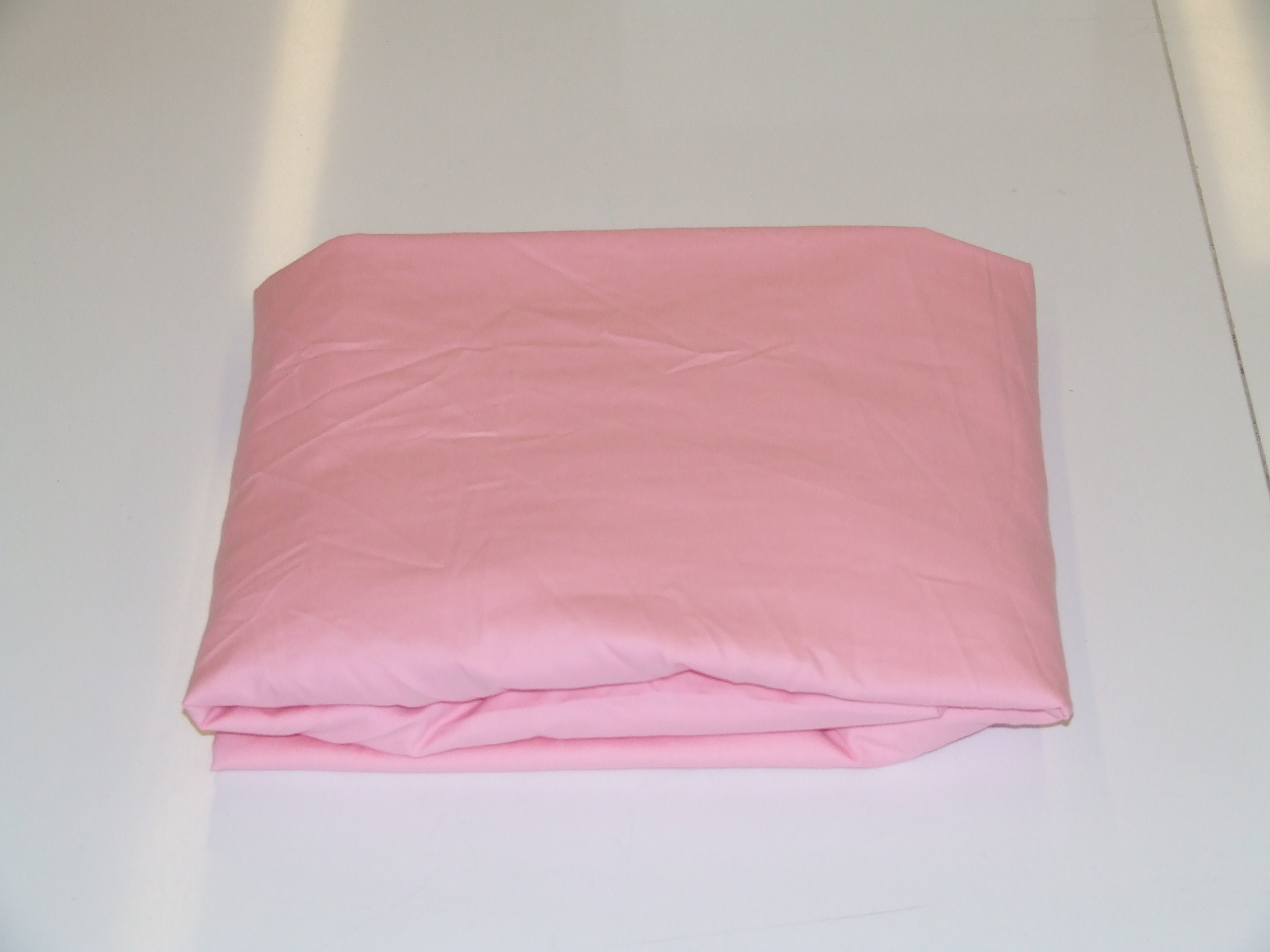
fitted sheet2

My newlywed daughter bragged to me recently that her husband can fold a fitted sheet. Pressing for details I found out that he evidently can fold them where they are laying flat.

… like they just came out of the package.

… making Martha Stewart proud.

I think I hate him (just kidding…)

I’ve seen various videos, blog posts, articles and pictures explaining how to fold a fitted sheet. I once saw a 5 step-by-step diagram of how to fold a fitted sheet on a beautifully laminated bookmark.

Because evidently we worry about that while reading…

Evidently a newly laundered fitted sheet can look like this after folding...
Evidently a newly laundered fitted sheet can look like this after folding…

As a student and professor of psychology, it is fun to “look back”. Although I didn’t know it at the time, I definitely had OCD (Obsessive-Compulsive Disorder) as a kid. I’ve given some examples of things I would do to help me feel like I was coping and controlling in class before that made jaws drop. OCD can look different lived out in different people. For me, it meant ordering, organizing, labeling, etc. I had a full-size bed growing up with bright yellow “sunshiny” sheets. I’ve often wondered how that young, OCD Denise dealt with folding fitted sheets. Because you see? I can’t. 

Fold fitted sheets I mean. I must have gotten around that by only having one pair of sheets. When laundered, they went right back on the bed.

I’ve come a long way from that OCD Denise. Now some of you who know me WELL are saying to yourselves, “Honey? You’ve still got a long ways to go!”

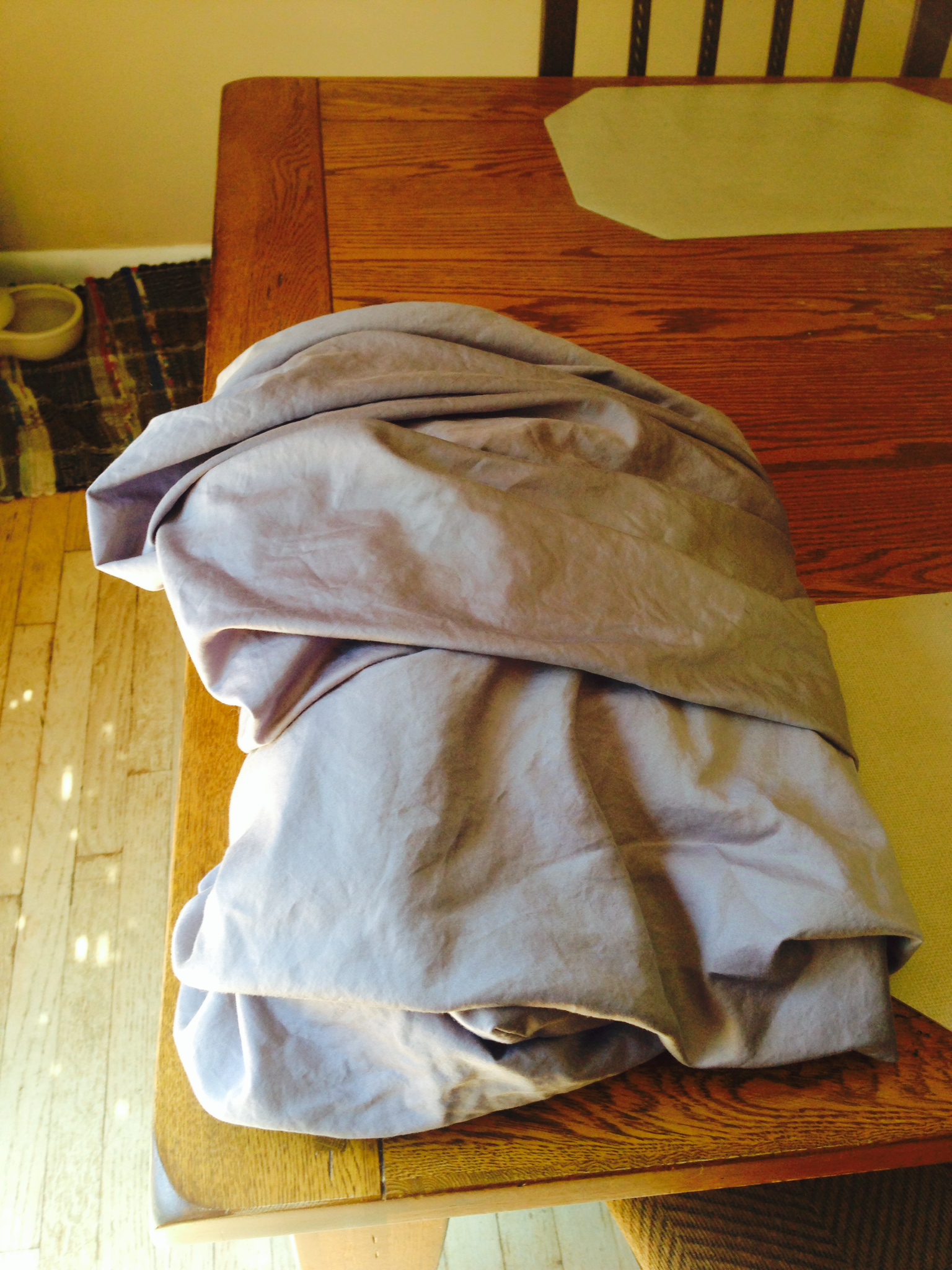
But to give you an idea about how far I’ve come, look at the fitted sheet I folded this morning straight out of the dryer. As a matter of fact, I have my very own 5 step-by-step instruction guide:

photo-3


1. Remove from dryer and hold up high to avoid pet fur.

2. Shake to allow dryer sheets to fall to the floor.

3. While holding up high, match corner to corner.

4. Fold.

5. Admire work. It ain’t purty. But it’s GOOD ‘NUFF.

Stacked in a linen closet, it does not take up anymore space than one folded perfectly. At least… that’s what I tell myself. You see? I had to learn something. Sometimes you pat yourself on the back, murmur, “Good job!” and go on to something else. It’s “good ’nuff“. The sheets are clean, stacked neatly and await being put in use for the next time I change the sheets out.

Allowing a Fitted Sheet to Rock Your Boat

So when do you determine by reviewing your priorities, when to keep at that “fitted sheet” or when to determine it’s “good ’nuff”? Only YOU can decide.

I’m pursuing a Ph.D. in Psychology. I’m over half-way through and doing well. However, now I’ve reached the detailed statistics phase. And folks? I haven’t had statistics since the 80’s and long before the sophisticated analysis softwares were available. This past week I hit a wall. I mean that both literally and hypothetically. I have been staying up really late reviewing videos and media, reading, Reading and doing more READING, learning SPSS and writing like crazy. As a person who lives with invisible disabilities that include post-concusive syndrome, hearing loss, and Meniere’s disease, I require 8-10 hours of sleep each night just to live a “normal for me” day. I’ve not been getting that. I’m almost cross-eyed with fatigue. So this past week, falling more than usual as a result of that fatigue, I walked into my husband’s home office, showed him a new bruise from hugging a wall with ridiculous and unbridled passion, collapsed on the floor and bawled my eyes out. Do you know what my very wise husband reminded me? “You may not be understanding all of this. Just keep plugging away. By the time your dissertation is complete you will look back on this and realize you are very knowledgeable about your research and understand it well. For now you are doing ‘good enough’ and passing. You don’t need perfection at this stage“. Sometimes we have to “let go” of needing something to be perfect and accept that it is “good ’nuff”.

This past week a lady who has admired Chloe several times sat behind us in church. She leaned up and said something and honestly? I caught about 10% of what she was saying. (In case that doesn’t sink in, I was missing 90% of it <big grin>) I already had my cochlear implant on a special program to utilize the hearing loop in our auditorium. I’m one of the first people to tell folks new to hearing loss, “Don’t fake your way through a conversation“. However, it was obvious she was just saying something about Chloe again. She had a smile on her face, and I was set up to hear through the loop, not someone sitting on my “non CI” side and behind me. So I smiled and nodded my head and turned back to the front. Yup. Poor form on my part. But…

I have learned that if it is important and I responded with a smile inappropriately, someone will respond with a shocked or hurt look, confusion, etc., and I can hasten to explain I wasn’t hearing well. I didn’t see any of that on this lady’s face. She smiled, I smiled, and I determined then and there this “fitted sheet didn’t need to be folded perfectly”. For a few minutes I sat there thinking, “I have no idea what she just said!” I re-analyzed what I saw on her face, her indication of Chloe in a perfect down/stay and sleeping at my feet, a returned smile and decided, “You know? This fitted sheet (conversation) is not folded properly, but it is good ’nuff“! I brought my attention back to the service and felt OK about my decision.

This past Saturday, a fellow client from Fidos For Freedom rolled up to me in her scooter with service dog at her side. She has been with Fidos longer than I have and I consider her a friend and mentor. Another friend of mine and fellow client, Cara, is taking ASL (American Sign Language). She has been practicing her ASL with me during trainings. She is doing great (You rock, girl!). Cara noticed that I was talking to this other client who at times is hard to understand – especially when you have a hearing loss. Cara stopped behind the lady I was talking to and I know she was hesitating to see if she could interpret for me. I wanted this fitted sheet folded perfectly. I said, “I’m not catching what you are saying“. No faking nor presumptions on my part. This fitted sheet needed folded the right way because it was important to me. I love this lady and wanted to “hear” what she was saying. So she got out her little electronic board and began writing. It was what I needed to “hear” too. Cara waited long enough to see if I was “getting it” and then went on her way. I continued to communicate with this lady and left that conversation encouraged and with some great advice. I needed to hear her. I worked to hear her. She worked to communicate with me. Good ’nuff, wasn’t good enough. I needed to communicate 100% effectively with her. So… I did.

Living with invisible disabilities or chronic illness means that YOU have to decide what your priorities are and when to determine a task is “good ’nuff”. Only YOU can determine when you need to make sure something is accomplished to your satisfaction – to your personal standards. There are things you will decide to do that require work. It may mean you use up all of your reserves for the day. If you are into the “spoon theory“, you use every single one of your spoons. There are other things that happen during the day that result in the decision that, “this is good enough”. The worst thing you can do is stubbornly work at folding a fitted sheet that belongs to someone else. Worse, you allow someone else to bully you into re-folding one that you already decided was “good ’nuff”.

Are you one of those (annoying) people who can fold a fitted sheet perfectly? Well:

If-you-can-fold-a-fitted-sheet


Denise Portis

© 2014 Personal Hearing Loss Journal
False Coping Skills and Elephants

IMG_1238
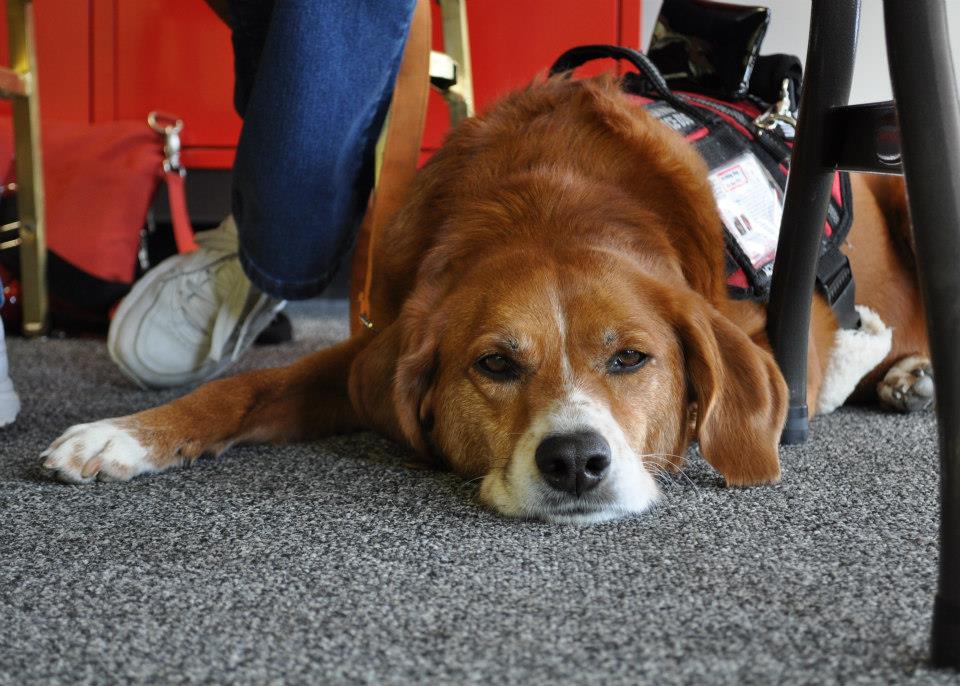
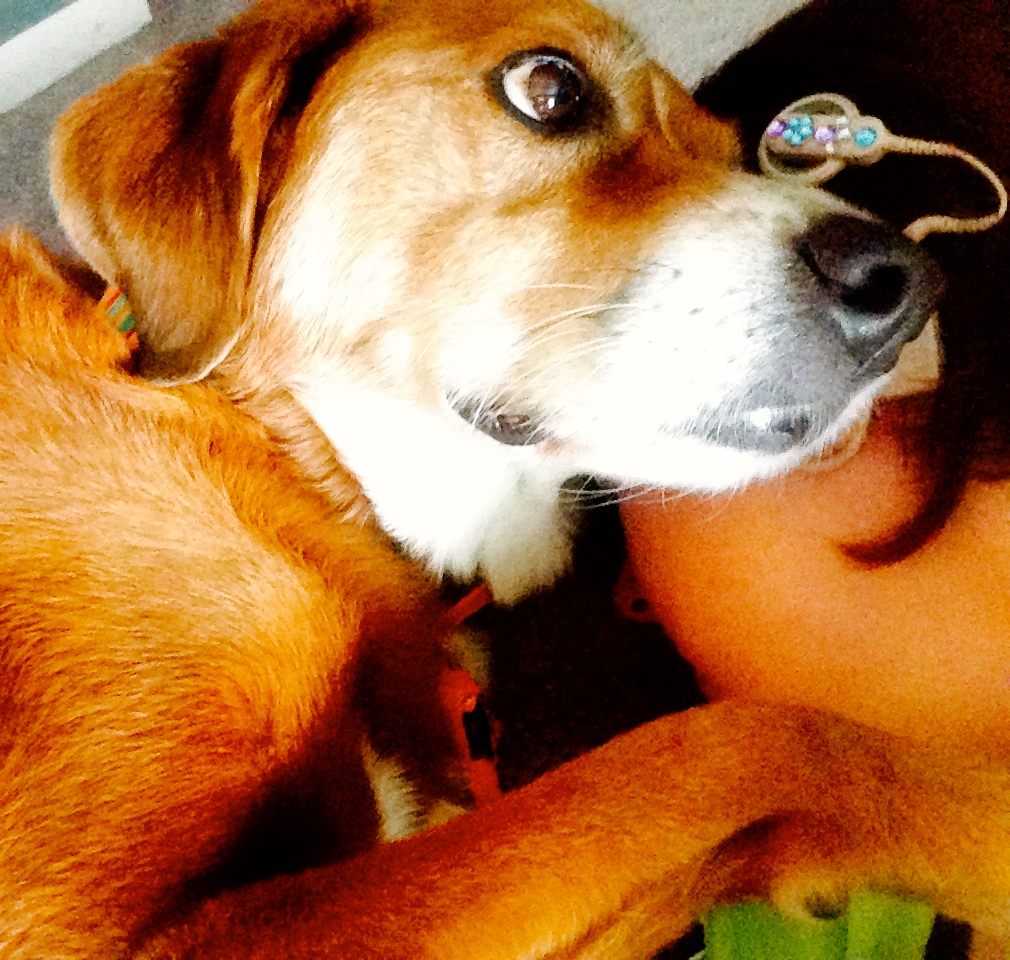
Hound dog knows when I’m “finished”

Ever wake up just feeling completely whipped?

I feel like I’ve developed GREAT coping skills. After all, you either learn to cope or you’re “done”. So the options are pretty clear cut IMHO. Two coping skills I learned early on in adjusting to my “new normal” as a person who is “differently abled”, include:

1. Start each day new. Yesterday is gone. Tomorrow will come without my worrying about it now. Handle today and today only.

2. Stay busy. Staying busy helps to keep your mind off your troubles and focus on the here and now. It can be busy-ness towards important things, or even the mundane.

The second one I use a great deal, but I’ll be honest. It isn’t exactly a HEALTHY coping mechanism. I don’t do well with a lot of down time. A perfect day for me is getting up (safely – believe me, it can be hard when you have a balance disorder and go VERTICAL for the first time that day), taking my dog for a walk while planning my day, re-enter the house in high gear without stopping until bedtime.

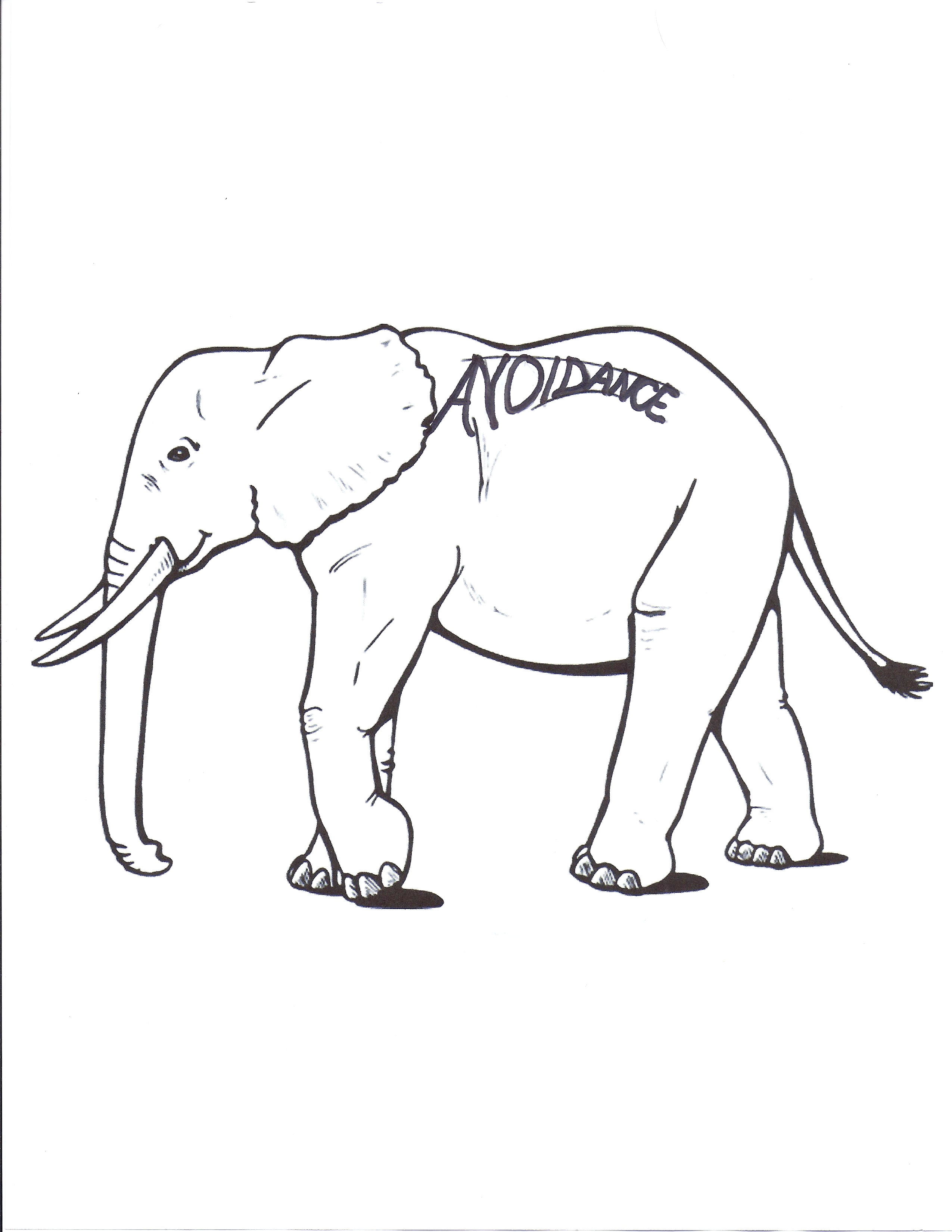
Yeah. Not always healthy. The problem with staying BUSY in order to cope is that it is a false kind of coping. This type of coping skill isn’t actually a coping skill at all. It is called avoidance. And friends? I do this really well. Some of you do too. (You know who you are…)

Staying Busy to Avoid

Do you “do busy” really well? It may be time to stop to discover WHY you stay so busy. Do you strive to remain busy to avoid unpleasant thoughts, actions, environments, even people? Don’t confuse healthy boundaries with avoidance. One is – well… HEALTHY. The other? Not so much. As a matter of fact, avoidance can lead to a number of physical and emotional problems. Psychologists have recognized avoidance for what it is for decades now. Yes, in the right context it can be healthy. But it is easy to AVOID to the point of harm. Spira, Zvolensky, Eifer, and Feldner (2004) explain that being busy to avoid our problems is actually a predictor of panic disorders. You see? The problem with staying busy to avoid something is that eventually you really will run out of things to do. Worse? Your body physically screams, “ENOUGH ALREADY!” and shuts down.

I am finishing up the last of numerous classes in my doctoral work and have already begun the very long process of dissertation study. This work keeps me really busy and it is work I actually enjoy because psychology is what I “do”. I work part-time as an adjunct professor and this helps to keep me busy. I love my work, love my students, and love to teach. The problem with working as part-time faculty at a community college is that it is impossible to predict how many courses you will be teaching semester to semester. For example, I taught the first summer school section, but not the second. I used the extra time in the beginning to catch up on some of my own school work and to do some “Spring cleaning” that had been long delayed… seeing as how it is SUMMER. These past few days though I’ve found I have had some down time. *grimace*

Forced Mindfulness

When I am forced to the point of literally running out of things to do… even for just a day or so, I find it debilitating.

Scan 3

Whoosh.

(Hear that? That was the air being sucked out of my lungs when the elephant in the room finally sat. On. My. Chest.)

I don’t do “mindfulness” well. I’m learning though.

Brown and Ryan (2003) explain mindfulness as being AWARE and ATTENTIVE. Let me explain on a more personal level and maybe you can “see” yourself somewhere in this:

Avoidance:

My new normal of hearing with a cochlear implant and living with a balance disorder is not easy. I’ve adjusted. Only to have to re-adjust. That’s OK. I’m flexible. Most of the time.

I work at a job I love and navigate life safely with a service dogMost of the time.

I am optimistic, cheerful, can poke fun at myself and enjoy busting my butt to help others. Most of the time.

I’m very busy and drop exhausted into bed each night and sleep well. Most of the time.

I have taken control of chronic depression and don’t let it control me. Most of the time.

I don’t feel sorry for myself. I like me. I recognize that I am doing well. Most of the time.

Truthfulness:

My new normal of hearing with a cochlear implant and living with a balance disorder is not easy. I’ve adjusted. Only to have to re-adjust. That’s OK. I’m flexible. Most of the time. 

Some days having a CI and Meniere’s disease sucks. I don’t hear perfectly. I feel left out. I’m tired of falling. I’m tired of running into things. I hate long-sleeves and high collars since they only hide bruises. I’m tired of adjusting. I’m going to cry. I’m going to scream. I may swear. 

I work at a job I love and navigate life safely with a service dog. Most of the time.

I love my job but it is really hard when the hallways are crowded. It can be overwhelming to have to rush from one side of campus to another. Crap. It’s raining? Really? *waves white flag*

I am optimistic, cheerful, can poke fun at myself and enjoy busting my butt to help others. Most of the time.

Sometimes I want to change my “… I’m fine, how are you?” to “I’m having a sucky day. And frankly? I don’t care how you are doing if you want to know the truth!!!!”. I’m going to have to ask for help. After all, Chloe cannot 1) retrieve a bag of dropped potatoes in the grocery store, 2) pick up that tiny paperclip without risk of swallowing it, 3) get the umbrella I dropped in a puddle without getting really muddy, 4) tell me EVERYTHING WILL BE OK.

I’m very busy and drop exhausted into bed each night and sleep well. Most of the time.

I can lay in bed and worry. 

I have taken control of chronic depression and don’t let it control me. Most of the time.

It’s hard when I have to “own” the knowledge that I will always “deal” with depression. 

I don’t feel sorry for myself. I like me. I recognize that I am doing well. Most of the time.

uh-huh. Ri -i -i -i -i -i…ght.

So yeah, sometimes I’m forced to pay attention and be aware. How is that helpful? Well, for starters attentive awareness facilitates choices of behaviors that are consistent with my needs, values, and interests (Brown & Ryan, 2003). It is healthy to really navigate personal feelings, thoughts, and even pain. David Cain wrote about mindfulness in a way that really “stuck” with me. It changed the way I view “forced attentive awareness”. Check out this great article, “How to Make Mindfulness a Habit With Only a Tiny Commitment“.

For me, mindfulness means being truthful with ME. I am learning to be mindful even when I am super busy. I do this because there will be days I am NOT busy and I want mindfulness to be an invited friend instead of unexpected guest. As a person of faith, it is also super helpful to be frank with God. In doing so, I am actually able to recognize false coping skills that in the long run are not healthy for me.

I’ve heard some folks say, “Oh golly. I can’t go there and allow myself to FEEL. You don’t know what I’ve been through“.

No. No I don’t. But I do know that pretending those feelings don’t exist do not change the fact that the elephant is THERE. At some point in time it’s gonna sit. On your chest. You won’t be able to breathe.

Be Mindful of Your Pachyderm

It is healthy to habitually and mindfully pay attention and be aware of what and who you really are. What are your struggles and successes? Where have you been, where are you now, and where are you going? Who is helping you get there?

What is really hard for you? What have you learned to do well? What do you need to change?

WHO ARE YOU? 

Don’t pretend that being mindful is the same thing as having your mind full. The latter is just another form of busy-ness on the cognitive level. Be attentive. Be aware. Do this with enough frequency that you can be mindful each and every day – for even just a few moments. I make it a priority to be mindful for a longer period of time – like a whole DAY, at least once a year.

But the elephant “sat” without invitation for me this past week. It took me by surprise. That is going to happen. However, if you’ve practiced mindfulness, you are going to discover…

YOU CAN BENCH PRESS AN ELEPHANT.

Denise Portis

© 2014 Personal Hearing Loss Journal
Brown, K., & Ryan, R. M. (2003). The benefits of being present: Mindfulness and its role in psychological well-being. Journal Of Personality And Social Psychology84(4), 822-848. doi:10.1037/0022-3514.84.4.822

Cain, D. (2013). How to make mindfulness a habit with only a tiny commitment. Rapitude.com. Retrieved July 20, 2014, from http://www.raptitude.com/2010/03/how-to-make-mindfulness-a-habit-with-only-a-tiny-commitment/

Spira, A. P., Zvolensky, M. J., Eifert, G. H., & Feldner, M. T. (2004). Avoidance-oriented coping as a predictor of panic-related distress. Journal of Anxiety Disorders, 18(3), 309-323. dii: 10.1016/S0887-6185(02)00249-9

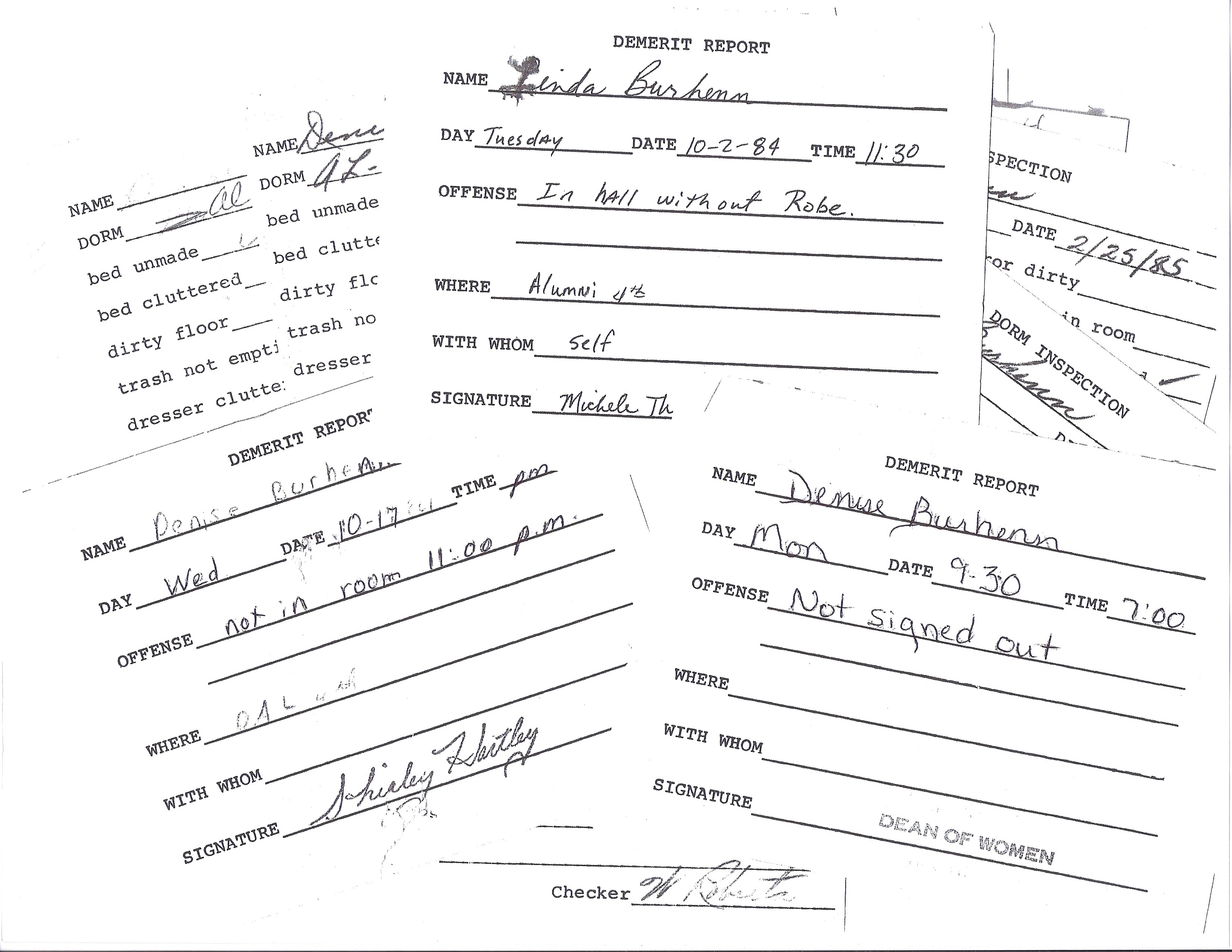
TONS of Demerits = Life Turning Point

demerit

I went to a Christian University right out of high school. I lived in a small rural farming community with no Christian colleges nearby so I thought that I may as well go to the one my parents attended … 5 states away. What I didn’t realize, is that little had changed in the 25 years since my parents went there. Rules, regulations, and unequal criteria for males/females were still early 1960’s. If I had it to do over again, I would have transferred out after I met my husband-to-be my Freshman year. He was smart and he did that. I’m stubborn though and wanted to finish where I started. I remember the first week when I received my first demerit. I still have every demerit I ever received. Back to that in a minute…

Some Background

You see? In high school I was “the weird one”. I had some close friends, which coupled with my dream of “leaving forever”, was part of the reason I survived high school. I grew up in a legalistic, religious background. It was a loving home… and most of what I experienced I wouldn’t change because I’m sure it is a part of who I am today (and I happen to like who I am today). However, in high school I was not allowed to do anything OUTSIDE OF SCHOOL. No “dragging main” on Friday and Saturday nights. I wasn’t allowed to date until I was 16 years old, and by the time I hit that milestone everyone thought I was “weird”. I didn’t get to go to movies or dances. I got really tired of people thinking I felt as if I was better than everyone else, when the boundaries put in place were not of my choosing. I was bullied. I’ve never really talked about it to many people. Classmates would probably be shocked if they knew some of the things that happened to me when I was caught in the gym alone, or in the hallway on the way to Study Hall. One of my bullies (a second cousin one year older) would actually follow me into the bathroom (he was male) and shove me around just for kicks. Another bully, also one year older, not only shoved me around and called me names, but he pinched private parts, threatened me with horrible death threats, and basically made my life hell. I would just see him coming and start to have a panic attack. I learned to duck into safe places like the office, or favorite teacher’s rooms “just to say hi” to escape an encounter with him. One of the things he constantly pounded (quite literally) into me was that I thought I was better than everyone else because I was so “holy”. This is the baggage I took into college with me <smile>!

Yay! A Demerit!

By the time I was 18 and started getting written up (for really ridiculous things), I began to really excel at breaking stupid rules. Sure, I got a LOT of demerits but I did plenty of things I never got caught for either. I don’t say that in a bragging way. My point is that I really was proud of having proof on paper what a “rebel” I was. I even sat through some “sermons” from hall monitors and dorm mothers because of what my last name was. My family name was known at this university and they couldn’t believe I wasn’t behaving “perfectly”. I got married young and tease my husband that it was “just to get out of the dorm”. I even received some demerits after I said “I do“… for sitting to close to my husband in chapel. *rolls eyes* But ya know something? I hung on to every single one of those demerits because they were important to me. They represented a turning point in my life. I finally realized as a young adult that I could make decisions about what I would – and wouldn’t do – by myself. I really filled my lungs deeply with the freedom of that feeling! Demerits were received for not meeting someone else’s expectations. Now I could determine what my own boundaries were, what my expectations were for my own life.

I’m a person of faith (and haven’t tried to hide that on here), but I like to think I really live my faith and am a REAL person. Life isn’t about rules and regulations. Nothing wrong with some of those as they keep us on track, help us reach goals, and provide security. However, these rules and boundaries are only good when they set us free, not when they cripple us. Trying to follow someone else’s rules will only get you a box full of demerits. You have to believe what you live and live what you believe.

Life Turning Point

My college experiences and changes set the stage for how I handle life today. It was a turning point for me. I stopped apologizing for who I was, and felt comfortable in my own skin because *I* had made decisions and set standards for myself that I approved of and felt comfortable with as well. If someone didn’t like what I did, I gently (OK, sometimes it wasn’t gentle) argued that I respected their choices, so they should respect mine. I learned to be responsible for ME. I wanted to live a transparent, REAL kind of life, and wanted to make a difference because of that “realness”.

I had single-sided deafness from a car accident at the age of 6-years-old. I had my last ear surgery at the age of 18. I STILL think it took us all by surprise when I developed rather rapid, bi-lateral,  progressive, sensorineural hearing loss after the birth of my kiddos. At the same time, I developed Meniere’s disease (although I didn’t know what it was at the time). I determined early on what kind of “person with disabilities” I wanted to be. I would be responsible for who I am and how I cope. My top TEN decisions that turned my life around:

1. It is OK to grieve. It is OK to scream.

I learned how important it is to give yourself permission to FEEL. Bottling up those feelings only leads to physical and emotional problems.

2. Discover your “safe people”.

I’ve blogged about this before. However, find who is “safe”; cherish and nurture these relationships. (Some of those posts are HERE, HERE, and HERE.)

3. I can “be deaf and have a balance disorder” however I want!

Disability and invisible illnesses are often unique and you may not share exactly the same symptoms as another. Own who you are. Do what makes you comfortable with your “new normal”. For me this means bling-bling on the cochlear implant, bright canes and assistance dog. I am far better served to make the invisible, visible.

4. When necessary, get professional help.

There is no shame in seeking help. Finding a trusted, objective professional can be very beneficial for a variety of reasons. If you aren’t happy with who you are seeing, find someone else.

5. When necessary, ASK for help from others.

There is no shame in asking for help when you need assistance. I have never had anyone turn me down if I ask for help getting to my car, or to help me identify what sound Chloe is zeroed in on. In spite of the negative headlines, most people are nice. Most are glad to help when asked and feel good about offering assistance. (There is a trick to this though – you DO have to ASK. If you are an independent peep like me, folks have learned to wait to see if I ask for help).

6. Believe you can make a difference.

I don’t care what your limitations are. I have never met ANYONE that didn’t have a way to make a difference – to be a catalyst for positive change. Our disabilities don’t limit us – WE limit ourselves.

7. Avoid negative people.

We all have these folks in our lives. But you can limit your interaction. Set boundaries. Protect yourself.

8. Dream big. Have goals.

Just because special challenges “rocked your world” doesn’t mean you can’t have short-term and long-term goals. Your attitude is the only barrier to achieving these.

9. Write. Share. Take photos. 

Thinking is great. I recommend THINKING. However, the single most powerful tool I have is my writing. I know others who draw, take pictures, or attend support groups and share. Make sure your “new normal” is something tangible, something you can look back on and identify and recognize change.

10. Don’t work at meeting someone else’s expectations.

If you haven’t learned this already, here’s a news flash. You can’t please everyone. It is healthy to have expectations for yourself, but those alone are all you should work towards.

Have you ever received “grief” for not following someone else’s directions about how to live your life? As a kid, this is OK because we need older (and sometimes wiser) folks to give us direction and instill good habits. But as an adult, you are responsible for you. Don’t apologize for choices you have made. If you deal with your challenges a certain way and it works for you, pat yourself on the back. Be careful though. Like ALL people, we can become focused on self. That isn’t what I’m trying to encourage here. We need other people. Don’t isolate yourself and say, “to heck with the rest of the world”.

Denise Portis

© 2014 Personal Hearing Loss Journal


Beaver – Destructive or Discerning?

swimming-beaver-344367-m

We have beaver. Actually, we’ve had beaver for about 16 months now, however this summer it is really evident WE HAVE BEAVER.

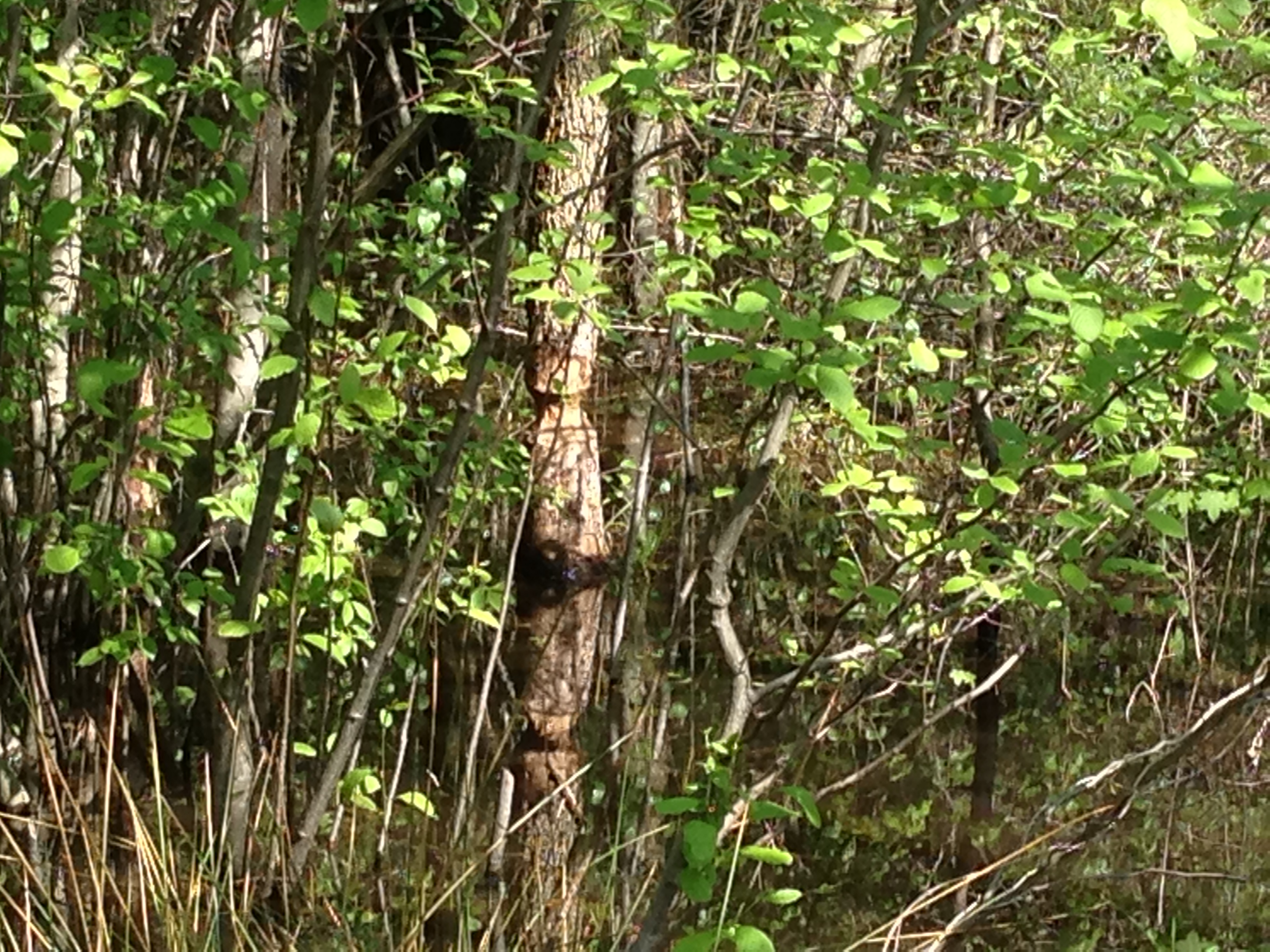
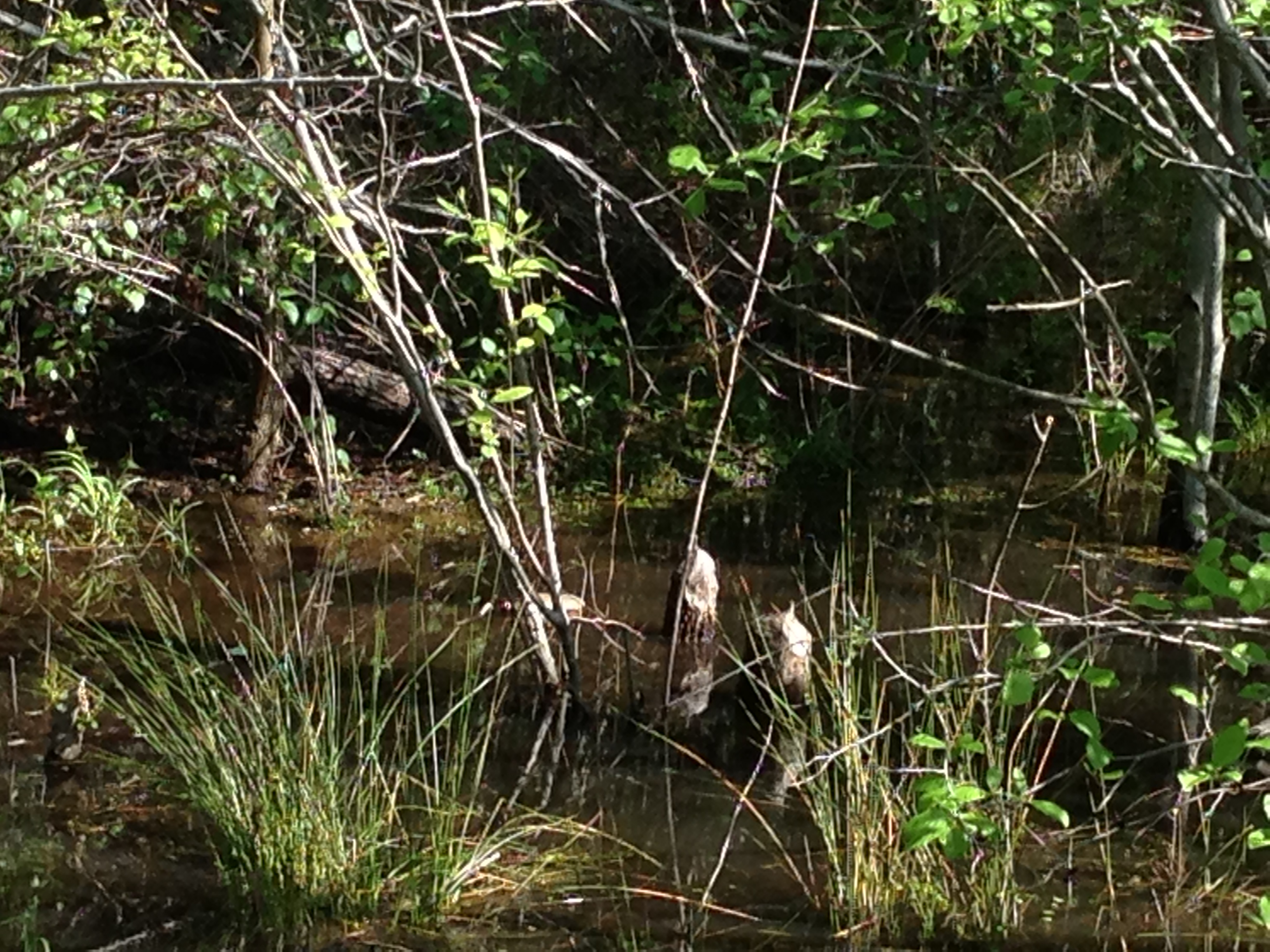
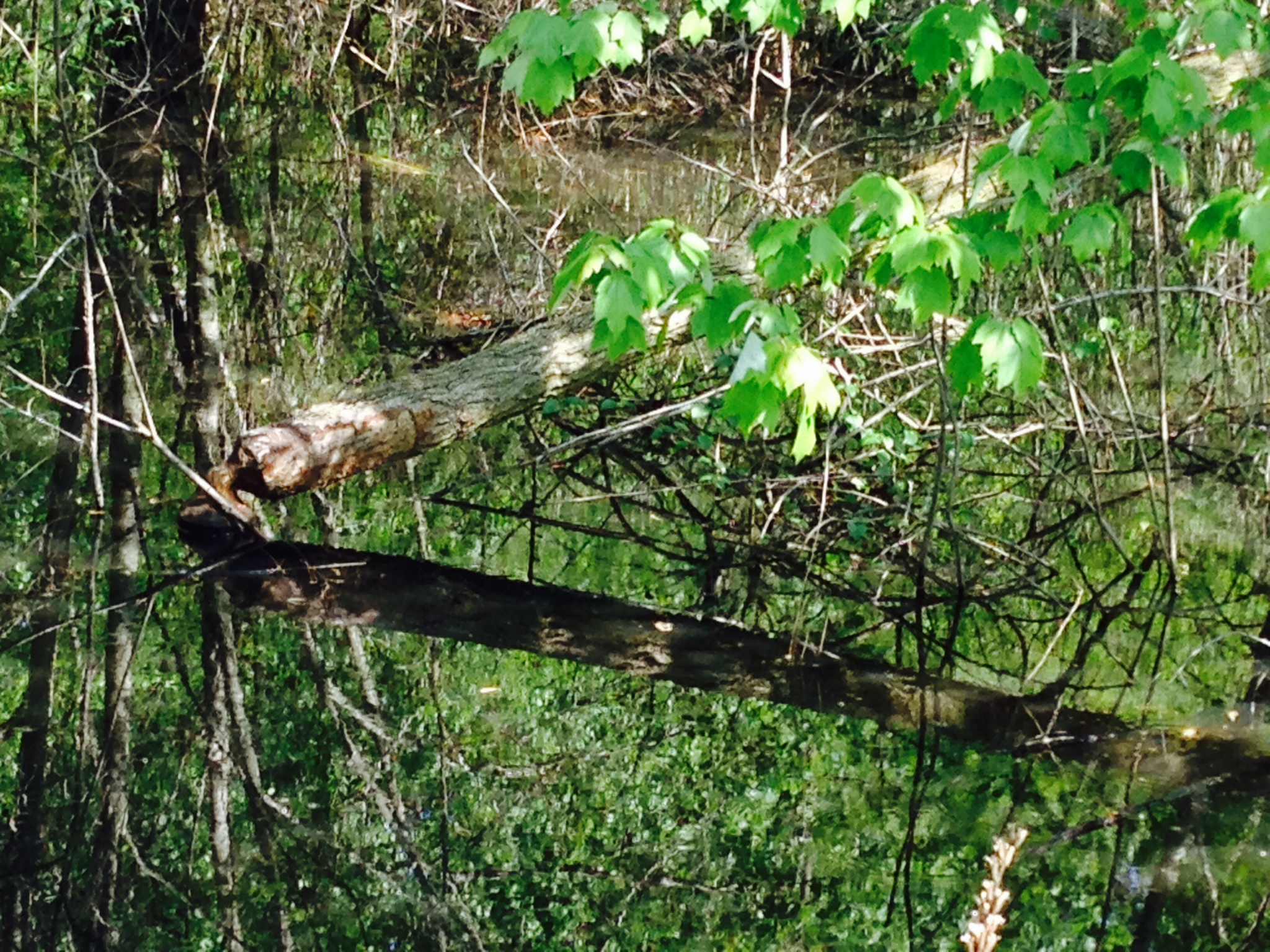
Our townhouse community sits up at the top of a hill. It is a closed cul-de-sac community, so it is great that “through traffic” is not an issue here. A brand-new walking path is now within footsteps of my front door. It will eventually connect to other walking paths, but for now it is about 1.5 miles round trip. At the bottom of our “hill” the path takes us by both a busy road, and what was once a small creek. In the Spring, I use to get a kick out of “hearing” the water sounds, especially after heavy rains. Last Spring those water sounds disappeared. However, I spotted this:

beaver10

… and then this:

beaver11

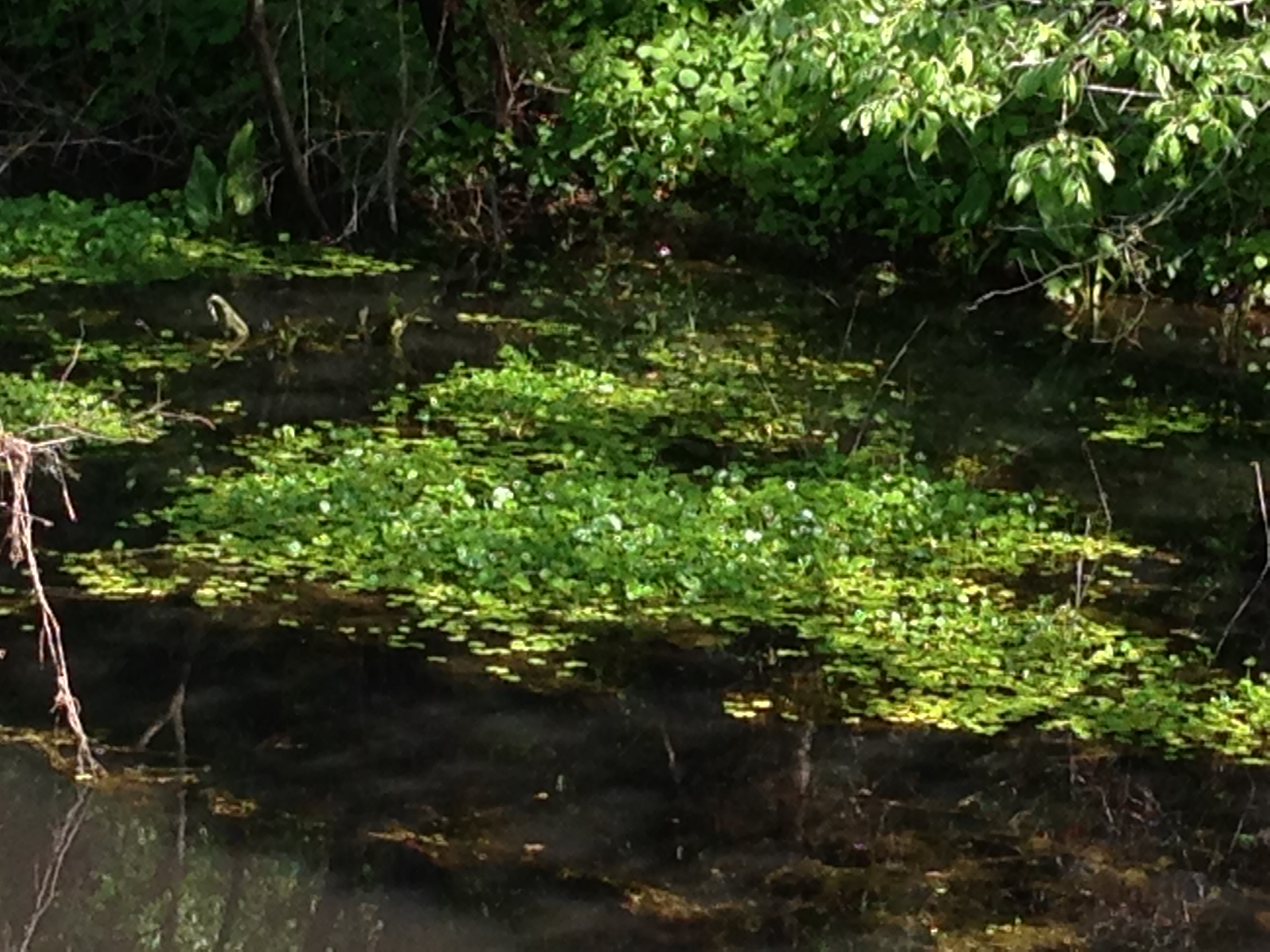
The creek quickly turned into a pond. And this year? Well let’s just say there is a new ecosystem near my house.

I came across a huddled group of homeowners about 3 weeks ago, whispering and gesturing towards the pond with banks now within 60 feet of our back doors. I stopped to see what was going on, and because it was early enough in the morning with few traffic sounds, I could actually hear their whispers.

“Will the water level rise much more?”

“What do you think they are up to?”

“Do they bite?”

Now my first thought was, “FOLKS. Beaver do not understand human language and to my knowledge they don’t have bionic hearing like I do. Why the HECK are you whispering?”

I didn’t voice those thoughts. Instead I said, “Ummm” (I’m ever so eloquent…)

Yeah, but have y’all been down to the pond area where the walking path is? Have y’all seen what has happened down there?

Blank looks. I discovered they don’t comprehend SOUTHERN. I tried to speak a little more cultured…

Yes, you should walk down there. There are 2 HUGE culverts about 8 feet in diameter. That water level will never get any higher unless those culverts become dammed up as well. If that happens, the city will just unplug them. After all, that road will flood before our homes will“.

Blank looks. See what a lack of exercise will do? Go walking folks, go walking. Check out what the beaver have done up close. Geesh. I think they were miffed I was talking in a normal tone of voice. After all… *sneaky whisper* … the beaver probably HEARD ME.

Beaver have made a comeback in Maryland. I pulled this from a neighboring county’s website:

“Beaver can be among the most beneficial of the county’s wildlife. They create favorable habitat for a variety of wildlife species including fish, birds, amphibians, reptiles, and mammals. This variety of wildlife is in turn valued for recreational, scientific, educational and aesthetic purposes. Beaver activity is also helpful in retaining storm water runoff and improves water quality by trapping sediment, nutrients, and pollutants. Beaver activity can also cause flooding of roads, trails, forest land. They also consume trees and shrubs. Their impacts often occur suddenly and dramatically.

These benefits and detriments often occur simultaneously at a single location. Because of the varying degrees of tolerance levels among people to beaver activity, there are bound to be disagreements on how best to “deal” with beaver conflicts.” (Howard County Parks and Recreation, 2014).

Living side-by-side with these amazing creatures is fairly simple. I’ve been thinking a lot about this family of beaver.

beaver3

They migrated to this area near the bay bridge and did what came naturally to them. Not with destruction in mind… but cunning and incredibly discerning architects, this family of beaver have created a whole new ecosystem. We’ve always had tree frogs (although it took Chloe’s trainer to clue me in to what I was hearing each year). But now we have:

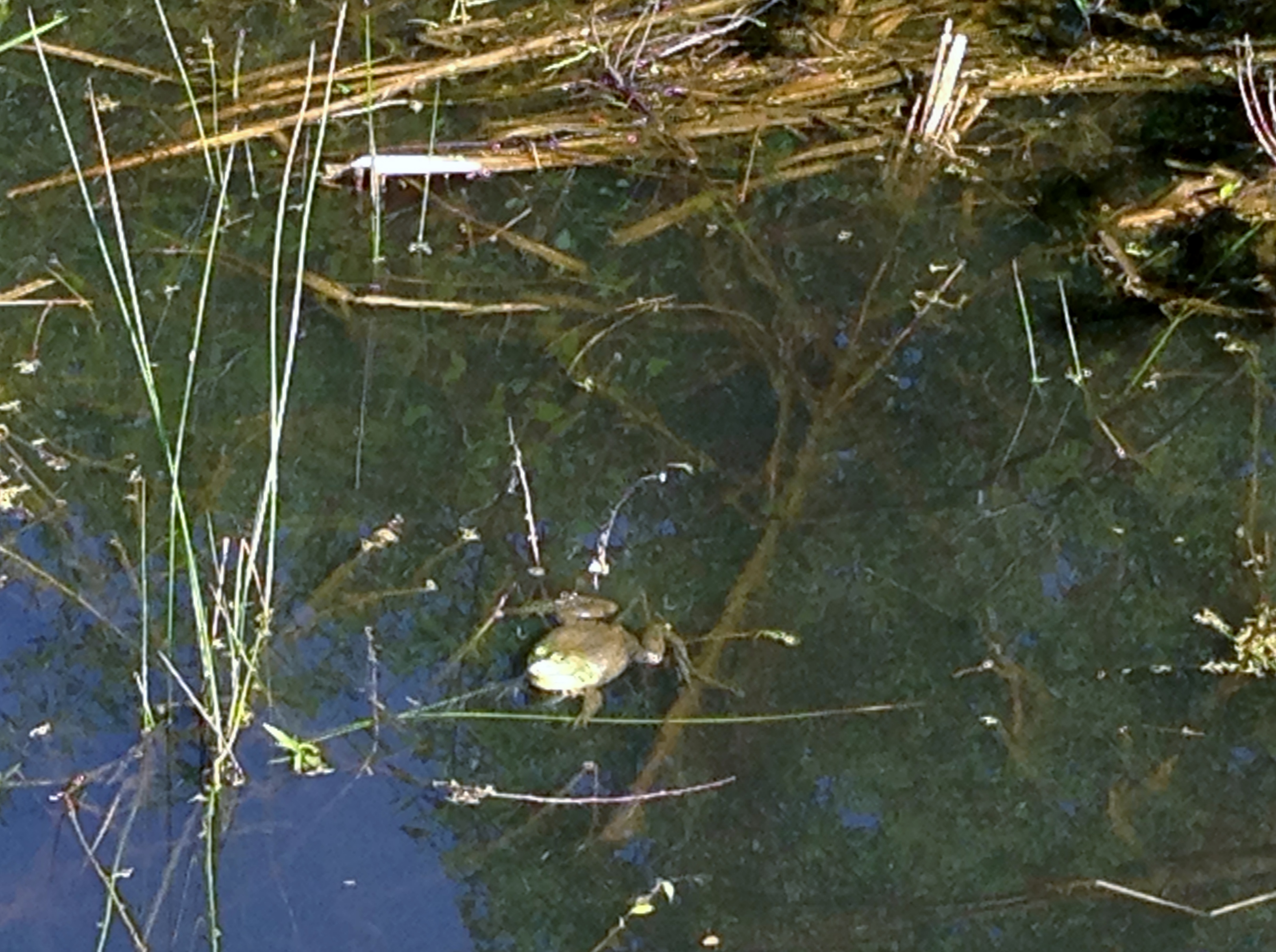
Beaver8

… bullfrogs. You should have seen Chloe’s head and ears the first time she heard THEM! These fellas stretch about two feet, nose to tip of hind legs. I know this, because I’m the crazy neighbor lady screeching to the neighborhood boys who have caught them and held them up to “Return them to the pond when you are done!”  There are also numerous plants I have never seen before in this area when all we once had was a creek…

Beaver7

and the trees are flourishing…

beaver1

I counted 4 different families of mallard duck one evening, with little ones thriving in this secluded and protected environment. Turtles are sunbathing on any log or rock that breaches the surface of the water. The fox are back (having been gone for at least two summers). There are enough deer in our area now to make my poor hound dogs hoarse for all the barking alerts they insist on for me.

I cannot help but be amazed. The beaver strengthened and created a home just right for them, and in the process created a place to thrive for other species. Folks? I want to be a beaver.

I didn’t ask for disabilities. I never once thought, “When I grow up… I want to be DEAF and have a significant BALANCE DISORDER”. However, in my own process of adapting and making my environment safe and liveable for ME (cochlear implant surgery, service dog from Fidos For Freedom, be-dazzled canes, no-slip shoes, discovering where all the elevators are on campus, practicing all I learned in vestibular rehab.), I have created a new ecosystem.

I want MY WORLD to intersect with the REAL WORLD and help folks recognize the importance of inclusion. I work to make sure that my new life, teaches and advocates in accepting differences. I want others to recognize abilities rather than disabilities. I want my invisible disabilities to be visible and “pond-like“. I want my life to inspire others to choose to live equally purposeful lives. In my own small way I do this by working with my campus disability office. I openly talk about being “differently-abled” in class. I “plug” what I know whenever I can to whomever will listen… cochlear implants and service dogs, depression and coping skills. I have discovered my environment changing. People are coming out of the woodwork… or umm… newly created POND, and sharing with me that they have a mental illness, invisible challenge or diagnosis such as fibromyalgia, chronic fatigue syndrome, or Lyme’s disease.

Yes. Having an attitude of gratitude and focus on education and advocacy, has me walking by concerned citizens from time to time, whispering about a beaver conspiracy. But just as I’ve learned that being transparent is contagious, these folks will eventually HEAR and go walking to discover other new ecosystems. At least… I hope they will.

Do you live with disability? Are you struggling with an invisible illness? Do you have a chronic condition that folks do not seem to understand, nor comprehend how it affects you? Hearing Elmo is not just a place to “hear”. My desire is that numerous authors, both named and anonymous, begin to disseminate the kind of information that changes our environments. In the end, the beaver aren’t the sole beneficiaries. We all benefit. Would you like to write for Hearing Elmo? Contact me at denise.portis@gmail.com and type “Hearing Elmo” in the subject line. Building dams is pretty fun. It is unexpected. It is worthwhile. We can all make a difference!

Denise Portis

©2014 Personal Hearing Loss Journal

Howard County Parks and Recreation. (2014). Beavers. Retrieved May 16, 2014, from http://howardcountymd.us/DisplayPrimary.aspx?id=2396

Make a Difference

make a difference

My paternal grandmother passed away unexpectedly on March 28th. She was instrumental in my becoming, well – ME. I told her the FIRST time how important she was to me at Silver State Youth Camp in the Rocky Mountains when I was 13-years-old. I made it a point to tell her at least once a year, and to my knowledge never missed a year of telling her how important she was to me.

We have people we care about, and then there are usually a smaller group of people who influenced who you are. I’m convinced we do not have a whole lot of opportunities in life to invest ourselves THAT WAY in the life of another.

Searching for Significance

One of my favorite books is by Robert McGee. Searching for Significance is something all of us long for I believe. Something it took me years to learn, however, is that “significant” is what you deem important. What I think is significant and life-changing, may not mean a hill of beans to you. And that’s OK. We can’t find significance by asking others how they measure that. Significant things are as unique as people are. This is why so many of us are invested in causes, hobbies, and community service. For US, these things add significance to our lives. We want to make a difference by being involved.

One of my favorite quotes is by Joseph Campbell. “Life has no meaning. Each of us has meaning and we bring it to life. It is a waste to be asking the question when you are the answer.”  I find this rather profound. WE bring meaning TO life.

Life is hard. Living with disabilities is hard. Living with adult children at home is hard (not really but I had to throw that in there). If I expect my life – with all it’s trials and successes, joys and sorrows, to provide meaning, I’ve missed the whole point of living.

Some folks think they are not in a position to make a difference. You don’t have to have money or advanced degrees to make a difference. Everyone has some kind of talent. I have friends whose disabilities are severe enough they are really home-bound. Yet they have made such a difference in my life through the short emails or messages they send me – right when I need encouragement the most. I have had people I don’t even know make a difference.

I will never forget the homeless man I met at the inner harbor in Baltimore. My “quick diagnosis” was schizophrenia. He was a beggar, entertainer, and to many a nuisance. He stopped me to ask about my service dog. He asked if he could have her and promised to take good care of her. When I explained what she does for me I actually got choked up. He listened attentively and then squatted down and held her head for a moment. He muttered something to her and I couldn’t make it out. (It hadn’t registered with him that I said I was late-deafened). He looked up and said a little louder, “I was jus’ tellin’ her to be the best dog for you she could be because life is short. She makes a difference so she has to count now, not tomorrow”. I was like, “Woah.” That has stuck to me like super glue for 6 years now. It has inspired me to make a difference TODAY. We aren’t promised tomorrow to make a difference. Count now.

Just Remember to TELL THEM

If someone else does something that makes a difference to you, won’t you tell them so? It doesn’t have to be a huge announcement. It doesn’t have to be a flamboyant gesture. No need for helium balloons and streamers. Just tell them, “You made a difference”.

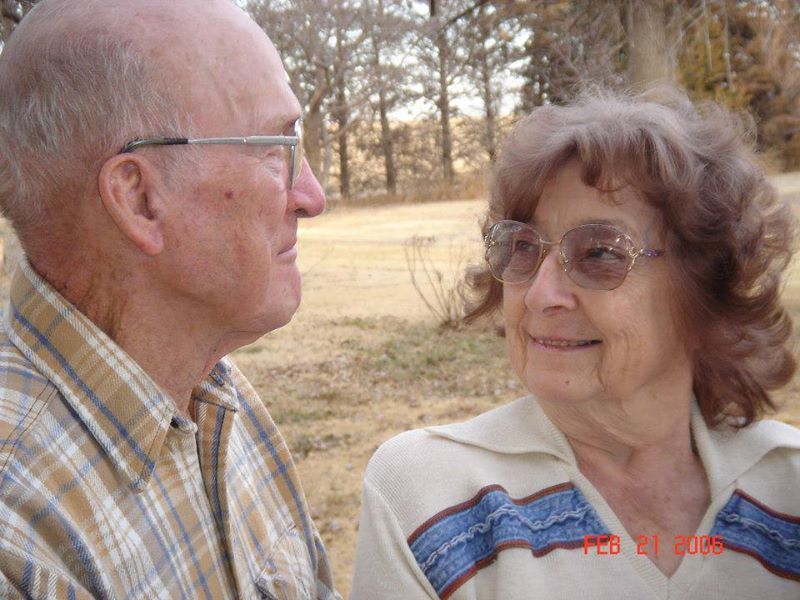
My grandparents... together again.
My grandparents… together again.

We need to let others know when they influence us or inspire us. Who am I because of my grandmother? Those who knew us both tell me I get my stubbornness from her. They also tell me my love of dogs, singing voice, hair color, and ability to confront people with courage all come from her. The reality is that even when my life began to change as the result of Meniere’s disease and deafness, her letters made a difference. She is a writer, and encourager, a cheerleader, an advocate, a teacher, and a legacy-builder. When she wrote, a common theme included near constant reminders that *I* could still make a difference. She encouraged me to be an advocate.

I am.

She encouraged me to write.

I do.

She told me I should not be afraid to speak and present to others.

I’m not and I do.

Her legacy of “making a difference” spans generations.

Very likely I do not know you personally. However, I do know that you *POINTS THROUGH YOUR COMPUTER SCREEN* can make a difference. It doesn’t have to be big. Betcha it is big to someone else though! That is what making a difference is all about.

Denise Portis

© 2014 Personal Hearing Loss Journal
Post-traumatic Growth (Part 1)

team chatter 2

Nope.

That isn’t a typo. You have probably read articles or news stories about post-traumatic STRESS (or PTSD), but did you know that post-traumatic growth is a related and now often studied psychological topic? There is even a new field called psychotraumatology. Try saying that 5 times really fast…

At Hearing Elmo, I do my best to present topics related to invisible illness, disability, or chronic conditions. Guest writers are encouraged to have some connection to one of those topics.

*SIDE NOTE* Hearing Elmo welcomes guest writers any time! Email me for more information at denise.portis@gmail.com with “Hearing Elmo” in the subject line.

Chloe after 2013 re-certification

As you know, Fidos For Freedom, Inc. (FFF), is a big part of my life. My service dog, Chloe, comes from FFF but I also stay connected through weekly trainings and volunteering for various jobs each year. The people there have become “family” to me and I have learned so much about the disability community through my connections at this wonderful organization. Something I have observed, is that even if you’ve taken the step to train and be matched with a service dog to mitigate your disability or illness – something that can take “guts” as it can make the invisible, very visible – not everyone responds to “bad things” the same way. Many times it is simply because the person has not adjusted yet.

As my dissertation looms in my very near future, I am already thinkin’ about…

What am I gonna do? (No worries. I *can* use a scholarly voice when the environment calls for it <big grin>)

But back to my original topic! How do people come out on the other side of something traumatic, and find that they’ve grown? Do they have something in common or is the outcome as individual as the process? How do you survive and be BETTER and not BITTER?

These questions are on my mind. A LOT.

I receive hundreds of emails from readers each year and try to respond to each personally. I’m always tickled that a common question seems to be, “How do you have your ‘stuff’ all together so well? I’m floundering here!” I am always quick to respond with an honest evaluation about my own life “after disability”. Folks are surprised. I don’t try to sugar-coat how I’m doing in my own life. I deal with the same things you do:

Depression

Anxiety

Suicidal ideation

Pessimism

The trick is not to stay there. Sometimes it can be worked through on your own. Sometimes it cannot. Sometimes we need help. So how do some people come out on the other side of something traumatic – better? How do people grow in spite of experiencing something devastating?

This is going to be a “two-fer” post. Meaning: I can’t address everything I want to cover in one post (smile). For this first part I want to cover what kinds of things can cause PTG (post-traumatic growth), and clearly define what it is. Next week we’ll look at some other related issues.

What causes Post-Traumatic Growth?

Traumatic experiences.

Kinda anti-climatic, huh?

But for OUR population – those who live with disability, invisible illness, or chronic health conditions – what is a traumatic experience? It can include:

disability

invisible illness

chronic physical or mental health conditions

devastating diagnosis

sexual abuse

violence and victimization

divorce or loss of an intimate relationship

death of a loved one

war

poverty

Basically – anything that can cause stress. Not the run-of-the-mill kind of stress. You know the kinds of stress like, a “bad hair day”, my cat threw-up in my favorite shoes, I locked myself out of the house, or I ate bad sushi. We’re talkin’ the kind of stress that produces trauma. It may be specific to YOU. For example, I have met people who have heard me speak on various topics and have come up and shared that they “don’t get why hearing loss would be a reason to develop depression“. They have hearing loss and they have coped just fine. Variables, my friends… variables. Personality, background, resilience, support, worldview, gender, economics – the list goes on an on. You may respond to a life event completely different than someone else. That’s OK. This is why you hear me encourage folks to reach out and SHARE. Your experiences may help another. You won’t know if you don’t talk about it.

What is Post-Traumatic Growth?

PTG is actually something that came from a branch of Psychology called – Positive Psychology. There are scales and inventories available to see where you rate in PTG. I first started reading about it back when my cochlear implant was first activated. “Hearing again” was a tough journey. I stumbled across the term coined by Drs. Calhoun and Tedeschi. According to them,

What is posttraumatic growth? It is positive change experienced as a result of the struggle with a major life crisis or a traumatic event” (Posttraumatic Growth Research Group, 2014, para. 1).

Their research centers around 5 changes that occur in an individual, post-trauma. These include:

1. New opportunities

2. Change in relationships

3. Increased sense of one’s own strength

4. Greater appreciation for life in general

5. Spiritual or religious domain (Posttraumatic Growth Research Group, 2014)

Have you been diagnosed with a super scary, perhaps life-changing diagnosis?

Have you acquired a disability?

Were you injured, permanently changing the way you live life?

Have you experienced something that left scars (physical, mental, emotional)?

You can experience growth. It may not happen overnight. It may mean that you experience tremendous loss, fear, and grief at first. You may blow it. A LOT. However, I don’t know about you, but I experience a sense of hope knowing that something good can “come of this”.

Comment here or send me a confidential email. I’d like to know how you’ve experienced GROWTH. There is no prerequisite measure. Maybe it wasn’t a lot of growth. Maybe you experienced “three steps forward – two steps back” throughout the process. I’d love to hear from you!

Denise Portis

© 2014 Personal Hearing Loss Journal
Posttraumatic Growth Research Group. (2014). What is PTG? Retrieved January 2, 2014, from http://ptgi.uncc.edu/what-is-ptg/

Purposeful Down Time

24486_1390844928154_3468044_n

I’m back in school. I never thought I’d return to school to be honest. All that changed when I realized that I may not ever land a full-time faculty position if I am constantly going to be applying for the same jobs as those with doctorates. Here I am – back in school.

I manage my time very effectively, almost obsessively. I am a very organized and detailed person. Something I have learned to do, however is to be very purposeful in my down time. For some reason, even though I found that it was fairly easy for me to be organized and to schedule my day, I was unable to enjoy any free time I might have. When I was “off”, I wasn’t really enjoying the time. I even recall telling my mother that if I didn’t have plenty to do, I was convinced it would contribute to my feeling depressed. “Be so busy you don’t have time to feel blue” was my motto, I guess.

The truth of the matter, this is dangerous. Some folks think their time is too valuable to be spent in frivolous activities. Some believe that there is too much to do to waste time doing nothing at all. I argue that not taking the time to simply “be” is deadly. You don’t have to search very long to find reports of Americans who are stressed. We seem to be over-worked, over-scheduled, and over-committed. I have family members who don’t take vacation time because their company will pay them back for it at the end of the year if they don’t use it. My response is, “Whaaaa…?”

(I’m very eloquent).

I’ve been reading “Essential Guide to Online Learning” as many of the classes I am taking to finish up my doctorate are in an asynchronous classroom. The author of the book explained that we need to “be present in your downtime” (Laureate Education, Inc., 2013, p. 27). In order to make time for school, work, family, errands, and all the “other stuff” we squeeze into our schedules, I employ the use of Google calendar. Every task has a specific color. As detailed as I am, however, every day has blank time slots open. FREE TIME!

“Let’s Par-teeeeeey!” Or not.

I try to be purposeful with my free time. If I choose to use my free time to read a good book, groom my dog, or take a walk, I mindfully do those things. So often, folks spend their free time worrying about what they have to do next in their schedule! How is that enjoying your free time? How does one reap any benefit from having some time to yourself?

The first time I realized I had trouble with this was when I realized I couldn’t even go to sleep at night. Here I was, drop-dead tired and weary, exhausted from having to “hear” all day and needing a good eight hours of sleep. Instead, I would lay in bed worrying about what I had to do tomorrow – often things that I had little control over. I was losing sleep over losing sleep. Oh the irony…

I realized that I was going to have to get serious about fun and relaxation. There are things I do each week for just me. There are things I do each DAY – although some days I have more time than others. If I have the time every single day to walk my service dog, Chloe, then by gosh when I’m walking her I will do nothing but walk her and enjoy the moment. I run into folks who are walking their dogs too. By run into, I mean that quite literally. Their attention is on their cell phone instead of the dog at the end of the leash. They are not looking up and around, which means they may not be aware of their surroundings, who is in their vicinity, or what *blech* they are getting ready to step in with their brand new walking shoes. I breathe deeply, look around, talk to my dog, and intentionally notice the world around me.

If I have 30-45 minutes to read before bed in order to decompress and unwind, you can be sure I am not reading a required text. I will be reading something for me… something that “feeds my soul” or “fires my imagination”.

This morning I had two hours to put up my family’s Christmas tree. The house was quiet, with hubby already gone to work and kiddos sleeping in since their work schedules were later. I mindfully put up my Christmas tree. I didn’t think about the assignment I had due by 3 PM. I reminisced as I hung old ornaments and strung lights. I arranged and re-arranged. I asked the dogs if things looked “purtee”. Then I turned off all the lights in the room, pulled the blinds down, and turned on the twinkle lights. I listened to Christmas music. I rubbed my dogs’ bellies. At 11 AM, however, I had research that I had scheduled to do in advance. However, I deliberately refused to think about it prior to my free time being “up”.

Do you need to be more purposeful with your down time? Do you need to reduce stress and schedule “me time”? Please feel free to share tips and favorite “purposeful me time” moments in the comments.

Denise Portis

©2013 Personal Hearing Loss Journal
Laureate Education, Inc. (2013). Essential guide to online learning. Baltimore: Laureate International Universities Publishing, Inc.

Twinkle Lights that Don’t Twinkle

twinkle lights

I discovered something by accident last year. I don’t like for twinkle lights to twinkle. I mean… I want the lights to be ON and to actually light up, but I don’t want them to blink. Part of living with an acquired disability is learning to make adjustments. Having Meniere’s disease may mean that you learn what may be specific triggers for you and do what you can to avoid those triggers. I have problems with lights. This is part of the reason I don’t drive at night anymore. I don’t have night blindness, but oncoming traffic light triggers extreme vertigo. So I don’t drive at night. It’s a pain, but a necessary change in my life.

Other kinds of lights bother me. I discovered that Christmas tree twinkle lights make me feel as if the room is rotating. Quickly. So I am making adjustments that include a delay in decorating the family Christmas tree until I can get to the store to buy more twinkle lights – ones that don’t twinkle. So – picture with me plugging in our Christmas tree every evening and BAM. LIGHT everywhere. But it won’t twinkle… which means I can hang out in the same room as the tree is in without heaving all over the nearest family member.

Making Adjustments

One of the wonderful things about having a blog with numerous guest authors is that I have learned a bunch of things about other disabilities. Being a client at Fidos For Freedom, Inc., has also helped because I have been able to personally get to know people who live with other kinds of disabilities and chronic illnesses. Through the years I have learned about some of the adjustments that folks use to navigate life:

1. Get more rest

According to the National Sleep Foundation, average, healthy adults need 7-9 hours of sleep every night (National Sleep Foundation, 2011). While most of us very likely receive far less than that, the experts agree that this is the amount we should strive for every night. However, people who live with disability or invisible illness may actually require more. At the very least, these folks should make the 7-9 suggested hours a priority.

I now know that people with MS, fibromyalgia, chronic fatigue syndrome, and various neurological disorders may not only need a good night’s rest, they may also need a daily nap. Doing so may mean that they can continue their day performing at their best. Not taking one may mean they are more at risk for an accident, “brain fog”, etc. One of my friends actually said her doctor told her, “If I need to write you a prescription to take a nap everyday so that you can get the rest you need, I’ll write you one!” That’s what I need. A prescription for a nap! 🙂

2. Leave Home Prepared

People with acquired disability likely learned the hard way to leave home prepared. That may mean making sure you have extra cochlear implant batteries. It may mean that you have an extra cane in the car. Maybe it means that you make sure you have an extra meal or snack if you are diabetic. You may have a medical pack that holds injections, emergency contact information, medicines, etc. If you have a service dog it requires that you walk out the door with water, an extra meal (in case caught away from home during mealtimes), clean up bags, vest and I.D. Spontaneously running out the door while only grabbing your keys is something you just can’t do anymore. But that’s OK. Learning to leave home prepared really takes very little time and in the long run can only help you.

3. Medic Alert Identification

Whether you wear a medic alert necklace, bracelet, or carry a card, you probably have some way of letting emergency response personnel know about special medical information that may just save your life. My own bracelet was so old, the engraving was barely discernible after years of scratches and wear-and-tear. For less than $30 I replaced it. When I told my husband he’d see a charge for it on the credit card bill he said, “You know? I don’t even know where mine is. I probably should replace mine as well”. I sat there stunned for a minute – looking at my significant other who happens to only have one kidney and gave him a “Denise sermon” that was probably not only LOUD, but unforgettable. Did you know…

  • More than 95 percent of respondents look for a medical ID during emergencies.
  • More than 75 percent look for a medical ID immediately upon assessing a patient.
  • 95 percent look at the patient’s wrist to find a medical ID, and 68 percent look for an ID on the patient’s neck.

Some of the stuff out there is very attractive for those who turn up their noses at traditional looking medical alert jewelry. However, I must caution you that there has been an alarming trend suggesting these new options may not be identified during an emergency. Yes, the sterling silver band around my wrist may not be the prettiest thing in the world, but I’m confident that in the event of an emergency it will be recognized for what it is. I’m perfectly happy being “smart” if not fashionable.

4. Check the forecast

Meteorology is NOT an exact science. I always check the forecast. I may not be able to call in sick to work when it is raining and a Meniere’s flare kicks my butt, but just knowing in advance the weather is going to be bad can at least help me mentally prepare. I can make sure I grab that cane in the car and remember to hold Chloe’s vest handle instead of just her leash. People who have mobility challenges may have to make schedule adjustments if they cannot easily or safely navigate away from home if the weather is bad.

5. Charge your cell phone

Even though I have a hearing loss, with today’s technology advances I can use and carry a cell phone with t-coil settings, text, access the Internet, and much more from a mobile phone. The only problem I ever run into is when I carry around a phone that doesn’t have a charged battery. I’ve done this enough that I think I’ve finally instilled a good habit of always charging my phone at night, and making sure each vehicle has a charger that can be used with the cigarette lighter. I even carry a small charger that I can plug into a computer at work if needed.

6. Other:

Honestly? One could write a book on the number of adjustments one makes when living with a disability or chronic illness. Some of the things YOU do may not even be things someone who shares your diagnosis must do. Don’t fret about Christmas tree lights that don’t twinkle. Even people without disability make adjustments as they go through life. Folks get reading glasses, stop eating spicy food, and walk instead of run for exercise. We do this because we are smart (grin) and malleable. We do what we must. My Christmas tree may not twinkle from now on, but it is still BEAUTIFUL.

Denise Portis

© 2013 Personal Hearing Loss Journal
National Sleep Foundation. (2011). How much sleep do we really need? Retrieved October 22, 2012 from http://www.sleepfoundation.org/article/how-sleep-works/how-much-sleep-do-we-really-need

Reliable Transportation for Cara and her Tanks

cara

I have met so many special people in my life. One of those special people is someone who has become one of my closest friends. Cara is a fellow client at Fidos For Freedom, Inc., where I trained and received my own assistance dog, Chloe. I rarely promote fundraisers on here so I hope you understand that when I do choose to share a story it is because it is for a very unique and special reason.

Cara first joined the Fidos For Freedom, Inc., family to train and be matched with a service dog to mitigate a chronic illness – Multiple Sclerosis. Since that match with her beloved, Tank, she has also been diagnosed with additional life-threatening illnesses. Cara doesn’t let “life” get in her way. She continues to volunteer for Special Olympics as her son enjoyed the activities. Justin (her son) passed away a couple of years ago, but she continues to stay active giving of her time and energy to this wonderful organization. Cara also often provides leadership in various roles at Fidos For Freedom, Inc., and encourages new clients as well as “veterans” like myself.

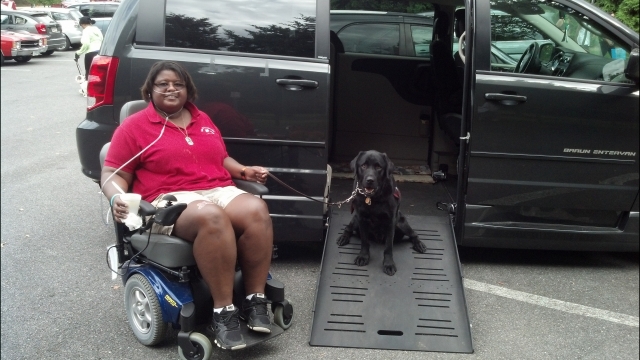
Cara’s current transportation is “beyond any mechanic’s ability to fix” and she is fast coming to the point where she will no longer be able to attend Special Olympics activities, or Fidos For Freedom activities and trainings. Cara is trying to raise money for the conversion of a used van to make it accessible for her use. Please read her story below and click on the links provided to read an in-depth biography of this incredible lady – as well as information about why she is raising money.

Imagine not being able to go out and hop in a car, call a taxi, etc., because you do not have transportation that can carry you, your wheelchair, service dog, and oxygen tanks. You become house bound and lose the ability to be involved with others and with life. Help us not let this happen to my friend, Cara.

This is not a scam. Would you consider donating even a small amount? More importantly, will you share this post with others and encourage them to donate small amounts as well? In a short time, people networking with other people, folks who CARE about others and reach out to help, will help Cara meet her goal to have reliable transportation so that she may continue the quality of life she enjoys. I hope you will consider helping – and sharing!

===================================

Today I’m launching a fundraiser at http://tinyurl.com/AVanForCaraAndHerTanks. I usually don’t like asking for help, but find myself in the humbling position of needing to do that.

Due to my failing health, I am using my wheelchair a lot more often lately. The lift in my van is labor intensive and is becoming more difficult for me to use. In addition, my van is old and I’m concerned about it’s safety on the road. I drive myself to the hospital and to several specialists, almost once a week.

I am asking for your help in raising the funds I need to modify a used van with an automatic ramp, lower the floor, put in a kneeling system, etc. This will allow me to transfer to my chair safely from inside the van. I’ll be out of the elements, away from strangers, and out of the way of traffic.

Please visit my fundraising page at http://tinyurl.com/AVanForCaraAndHerTanks where I share my story and to find out how you can help. If you would also share this with your friends and family, it would help me greatly!

Thanks in advance for taking a look and helping if you can! Cara, service dog Tank, and O2 Tank, Jr  🙂

Denise Portis

© 2013 Personal Hearing Loss Journal