Can You Be Arrested for That?

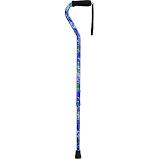
My favorite cane...
My favorite cane…

I have friends who are police officers. One, Carl, is actually chief of police for a district in our area. I see him most Sundays, and tomorrow I plan to ask him, “Can you be arrested for that?” I love his sense of humor and he and his wife, Pam, are two of my favorite people. Though I know he will be witty, I also know he will be straight with me. Anything that pertains to the law, he’s gonna be frank with me.

Maybe I should back up though, and tell you the story? <grin>

First of all, I’m really tired. I could list you dozens of citations that link differently-abled people with fatigue and insomnia. I’m usually good about listing all those for you, but honestly there are over 26,000 articles since 2012 alone. (Yes… I counted, or rather Google scholar did!). But I digress…

When I’m tired I have a little more trouble filtering what I say. I am much more apt to just say the first thing on my mind. I’m trying to live with the “pause – respond” method (thanks for that Toby Mac post, Helen), and being mindful of not saying the first thing that comes to mind really helps. When I am tired though, I’m less likely to turn that filter on.

I have a dog in hospice care at home (sweet, retired Chloe), and I am very likely involved in way… too… much. Finishing my dissertation, teaching four classes, volunteering at a number of places; the list goes on an on. Just color me tired. This tired woman, with turned-off filter, entered Giant grocery store on Thursday. Milo-bear (my current service dog from Fidos For Freedom, Inc.) was tired as well as we had just completed a long training at the county police academy and he had a fairly long demo (that he NAILED). I only needed to get a few things, and so encouraged Milo for a last push before heading home.

When I’m tired, I wobble. <ahem> Ok. I wobble all the time. However, I wobble MORE when I am tired! I had one of the smaller carts, Milo, cane, and enough time that I did not need to rush. This didn’t seem to matter. I was a mess. I even wobbled when I moved my field of vision from one shelf to another. Being late-deafened, I do not always hear things in a big, cavernous store with lots of tile and hard surfaces. I turned suddenly, and almost plowed into a man standing there shopping with one of those hand baskets. He threw up his hands and watched me wobble, screech (just a little), and grab for everything stationary in my vicinity.

No face plant (this time). I whooshed out a breath of air, and locked eyes with him and was getting ready to say, “Wow. That was close“. He beat me to airtime, however.

“Well you are more than a little pathetic today, aren’t you?” with a grin and twinkle in his eyes.

Now… I’m late-deafened. I often mishear things. My husband could tell you a thousand stories about WHAT I THOUGHT I HEARD. He’s one of the few voices I can hear on a telephone, and has never let me live it down when he called and said, “Dinner at six?” I misheard and thought he said, “Dinner and sex?” Maybe inside I was thinking, “yes, please“, mature adult that I was said, “Excuse me…?” Yeah. That one has been hard to live down.

So this smiling man with a twinkle in his eye standing there waiting for me to respond, may NOT have said, “Well you are more than a little pathetic today, aren’t you?” I had to give him the benefit of the doubt.

Maybe he said “phonetic“. Eh, likely not since I only screeched and had not said anything.

Maybe he said “poetic”. I could dream.

Maybe he said “prophetic“. Perhaps he sensed I was getting ready to assault him.

To clarify, I said, “Ummm, pathetic?”

“Yes”, he replied, “because you….” his voice cut off because at this point? I had my cane raised.

I poked him with it. HARD. I’M pathetic? You’re the pathetic piece of humanity standing there making snide comments about people who are a little different than you!” 

He rubbed his chest where I poked him, mumbled something that I’m not EVEN gonna pretend I heard well or understood, and wandered off. I sat there hyperventilating.

Milo-bear looked up at me like, “Are we done yet?” cool as a cucumber. Me? My cucumber was fried.

As I stood there wobbling and taking deep, calming breaths, I gave myself a pep talk that the guy likely just had a poor choice of words. He seemed friendly, nice even. I’m sure he didn’t mean the way it sounded… the way I took it. I even had the grace to ask God that if He brought me face-to-face with the man later in the store, I would apologize and try to explain how his comment made me feel. Thankfully, I did NOT run into him, because… well I wasn’t really wanting to apologize.

Yes. I should have just moved on, or perhaps even “only” blasted him with my “how pathetic are YOU” rebuttal. I need to keep my cane to myself. (Can you tell I am preaching to myself?) Who knows why he chose the words he did. I make poor choices all the time.

And I do mean ALL the time.

So perhaps I need to practice the “pause method” even more:

13661858_10153727086711179_5341764973726458521_o

Denise Portis

© 2016 Personal Hearing Loss Journal


Boundaries & Brick Walls

brick

I’ve shared on “Hearing Elmo” before how important I think boundaries are to people with invisible illness, disability or chronic conditions. I believe we are already vulnerable. Not a WEAK sort of vulnerability, for we are actually very resilient in comparison to people who do not struggle with similar challenges. Dunn, Uswatte, and Elliott (2009) report that people with acquired conditions and challenges are often more resilient, happy, and have a positive sense of well-being. Yet, because we struggle to be all that we can be with new limitations, we can be vulnerable to others through criticism, disbelief, and lack of support. I believe that as people learn to cope and adjust to a “new normal”, boundaries–and sometimes BRICK WALLS–are imperative.

Boundaries

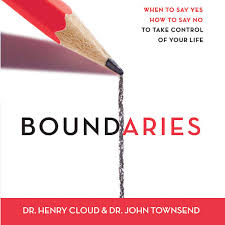
One of my favorite books that I often mention, is “Boundaries” by two of my favorite psychologists/writers, Cloud and Townsend. I highly recommend the book if you are seeking to establish healthy boundaries.

boundaries

I could go on and on about how MEAN PEOPLE SUCK, but this is more than that. We have all experienced interacting with people who are toxic, negative, and critical. These interactions inhibit our growth and our ability to cope effectively and successfully with challenges–that to us are not CHOICES, rather realities of living in our bodies. Boundaries can, and should be, set for these people. A boundary limits our interaction with someone that we have discovered hinders our growth or influence. Boundaries are not permanent. People can re-establish a good relationship. I always cringe when I hear people say, “Once you’ve lost my trust, you’ve lost it forever“.

I am not who I was. I hope that my life reflects a “work in progress”. I want to be a person who continues to grow each year that I live. I believe I can set a boundary for a critical and negative person, and my faith can be restored in this person at a later date. Life changes people, folks! The boundary keeps me at a safe distance, however, for whatever period of time is needed by that person to change or grow themselves.

Yes.

It hurts when you have to set up a boundary with a family member or someone who was once a close friend. Even these boundaries are necessary at times. Self-care is not only important, it is necessary. If we do not do what we must (by setting up a boundary for an unsafe person), we cannot thrive or make a difference in the life of another. Boundaries limit what we offer to these people. You may choose to not share specific things about yourself with them. You may limit how often you interact. These boundaries protect you and allow you to continue to live victoriously. They allow you to be the champion… the WARRIOR, that you are!

However, there are times when boundaries become more than safe zones for us. Boundaries can turn into permanent and impenetrable fixtures to completely cut us off from unsafe people. The boundaries become brick walls.

Brick Walls

When do you know that a boundary needs to be replaced with a brick wall? I believe…

… you will know.

The person has habitually harmed you. You have provided an avenue for reconciliation and  they have repeatedly taken advantage and continue to injure you. When this happens, it’s time for a brick wall, my friend! When and if you choose to permanently block someone from your life, it is important to remember:

  1. You are not responsible for their behavior.
  2. You are not selfish, nor stubborn.
  3. Your applied masonry skills mean you can continue making a difference in the life of others.

How do you build a brick wall and permanently dismantle a relationship? I have had to do this. It wasn’t easy. It hurts when it is someone who once mattered a great deal. However, self-preservation may mean you need to build that wall. Here are some things that worked for me:

  1. Block them from all social media outlets.
  2. Block their phone number.
  3. Block their email address.
  4. If you can, eliminate all face-to-face interactions.
  5. Don’t feel guilty. If you do, you are weakening that brick wall. You were not the toxin, they were.
  6. Avoid other’s efforts of reuniting you to this person. Well-intentioned people often do not know the whole story.
  7. If you must grieve the loss of this person, allow yourself to do so.

Because this is something I once did, I feel like I should give a warning as well. Don’t build walls because you are hurt and hunker down into protective mode. This is self-imposed isolation, not deliberate wall-building to keep out those who are toxic to you.

A perk I’ve discovered of brick walls? It can force a change of direction. You never know “who” or “what” awaits you as you step in the opposite direction.

Denise Portis

© 2016 Personal Hearing Loss Journal

Dunn, D., Uswatte, G., and Elliott, T. (2009). Happiness, resilience, and positive growth following physical disability: Issues for understanding, research, and therapeutic intervention. Retrieved September 5, 2016, from https://www.researchgate.net/profile/Timothy_Elliott/publication/232514358_Happiness_resilience_and_positive_growth_following_physical_disability_Issues_for_understanding_research_and_therapeutic_intervention/links/09e4150a3327348871000000.pdf

When Rules Don’t Apply to YOU

dog-with-pen

*tongue in cheek*  It ROCKS when a guest writer chooses to post here at Hearing Elmo. I welcome guest writers and if you ever feel the “itch” to write, email me at denise.portis@gmail.com  Today’s post comes from Milo-bear, my second service dog.  Let’s welcome newbie writer, Milo, to the blogosphere and trust that what he has to say can be echoed by many service dog teams.

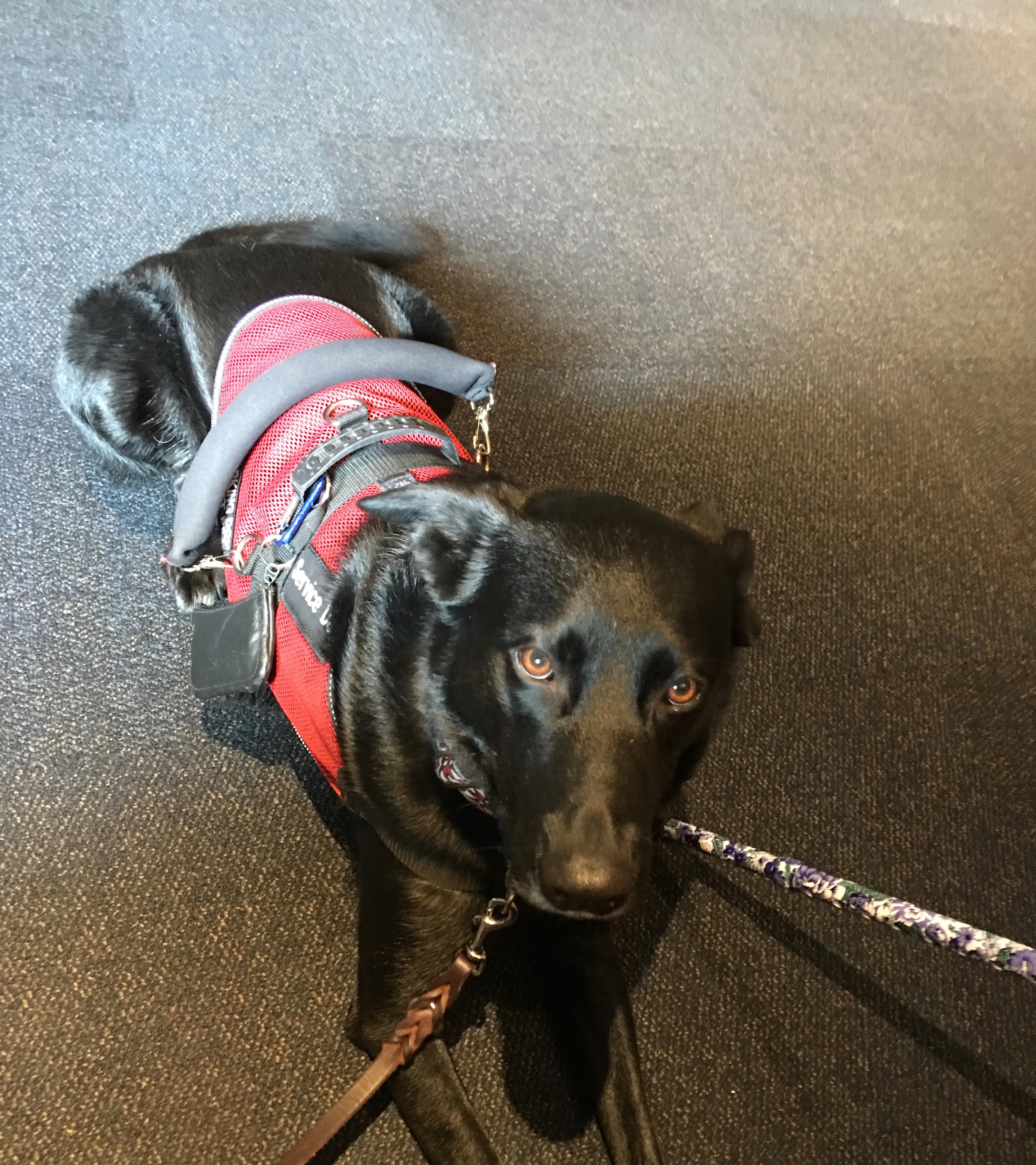
I have working clothes. Don’t laugh… you have them too. I pretty much have a great time side-by-side with my human partner 24/7. However, when my working clothes go on — my vest — I am having fun WORKING. Oh… I also happen to be GQ handsome.

IMG_2849 (1)

Denise has had a lot of people come up to me that she does not know asking to pet me. When we know the person already, Denise actually likes for us all to say hello because I can be kinda aloof and she doesn’t really want that being a teacher and all. She draws the line at sniffing butts though so I have learned to lean, wag, and keep my nose to myself.

Sometimes though, a total stranger comes up and starts talking to me. One day last week at the craft store, someone came up and leaned down to talk to me totally ignoring Denise. If they had been paying attention, they would have seen Denise desperately gripping the shelves and trying to keep from wobbling as this person invaded our space. The stranger said, “Oh I just love working dogs. I have always wanted to see if that was something I could do… train working dogs. Oh my, you have a very cool vest pretty boy. Don’t you look handsome!?” Now – mind you – I couldn’t argue with the handsome part, but this gal was missing two important clues:

  1. My vest says “Do not Pet” and “Do Not Distract
  2. I neither speak NOR interact with strangers. They are STRANGE.

I was so proud of Denise! She hates to make people feel badly, and at times she puts herself at risk by not standing up for herself. Perhaps it was because she was wobbling SO MUCH, that she immediately chimed in on the tail end of this stranger’s gushing intrusion to say, “Yes, isn’t it a nice vest? Complete with patches asking you not to pet or distract him”. 

I would have high5-paw’d Denise, but hey… she was wobbling enough and I didn’t want her to do a face plant. The stranger kind of sputtered and backed away. Then with a huff, she turned on her heel and walked away. I yawned really big trying to relax and Denise scratched me behind the ears and talked quietly to me. I didn’t understand everything she said, but it was something along the lines of just wanting to shop without the drama.

Denise doesn’t partner with me to create drama. I’m her helper to reduce the drama. She wobbles less when I’m by her side. If she drops something I get it for her. And ya know something? My gal pal drops things A LOT. I’m ok with that because – heck. I get paid to just pick it up and give it back to her. I have the world’s best job. I do things that are super easy for me and get treats and affection for my efforts! If Denise  reaches for dropped items, she tends to end up on her butt – which I have to tell you is OK with me too because I can easily kiss her whole face when she is eye-level.

When I know someone, the whole scenario is different. For one thing, I don’t stiffen up. I usually start to wag like crazy. I just can’t help it. When I see a friend my tail just wags and wags. Denise releases the tension some on my leash and I can say a quick hello. When it is a stranger though, I’m nervous and she is nervous. I’m thinking, “WHY are they talking to me? Who IS this strange person staring at me and in my space?”

A couple of weeks ago, Denise and I had a break after a class. This was before the pant-’til-you-drop heat hit our area. We were sitting outside on a bench enjoying the sunshine. I was double-daring a butterfly to come a little closer, and Denise was checking her email on her phone. Some students came pushing and shoving their way around the corner and then stood right in front of us. Denise was a little startled, but continued to sit and check her email. I was SERIOUSLY uptight. I mean… they chased off my butterfly! Boy was I peeved. And then you know what they did? They all had their phones out and were jostling each other and pointing their phones at us. Here I was surrounding by all these noisy and rowdy strangers, and all of them were pointing their phones at us. My hair stood up and I made sure Denise could feel my tension all the way up through the leash. She looked down at me, looked up at the students and said, “Ummm. Let me guess. Pokemon GO?” They completely ignored her. Thank goodness they didn’t hang around long. I was starting to get really antsy. After they left Denise reached down to scratch my ears again.

“People can be clueless sometimes, Milo. Don’t let them bother you. I would have moved but DARN IT. We were here FIRST”. 

I sighed really loud and pouted about not getting that butterfly. I tell ya what, I just don’t get people sometimes. I worked my butt off all morning, showing Denise where sounds were coming from, picking up things she dropped, and standing behind her while she wobbled at the board. She calls this command “WRAP”. I just call it smart, because it only takes my touching her on the back of the legs to keep her from wobbling so much. Anyway, I worked my tail off this particular morning. Well ahem, not literally of course. I just wanted to rest a bit – and yeah ok. I wanted to eat that butterfly, too. Instead, rude strangers caused me to get my hackles up. SMH.

Some people don’t think the rules apply to them. It’s just common decency to not invade someone’s space, make a lot of noise, and point your phone at them. That’s a rule even dogs understand. When my pack mates put their butt in the air and wag their tails at me, I will come over and say hello. If they are laying still and have their face pointed away from me though, I figure they are staring down a butterfly. This body language and lack of eye contact means that I know to stay clear. Especially my older sister, Chloe. That girl can be Grrr-ummmm-py! She still does the kitchen timer alert for Denise, and let me tell ya… you better get out of that girl’s way when the kitchen timer goes off. I watch her body language. I know when Tyco wants to play and I also know when his legs hurt and he wants me to leave him alone. People need to just pay attention to my body language when I’m trying to help Denise. Better yet, they need to know the patches on my vest are rules to be followed. Not because I’m snooty. I have a job to do and can’t do it if you come into my space and act like we are best buds.

I know what strangers are. When Denise’s classes start, everyone is a stranger. However, the students that sit in the front are students I start to recognize. After a few weeks of class, sometimes when Denise is talking I will lean over and put my head on a student’s desk and make goo-goo eyes at them. They aren’t a stranger anymore. At this point though, WE KNOW EACH OTHER. They may laugh and tell me I’m a silly boy, but it doesn’t distract me because I know them. Even knowing me they don’t take advantage. They know the rules. Towards the end of the semester, Denise will take off my vest right after class. OH BOY! I get to say hello to all the front-row students. Naked=Right to Visit. I take advantage of any naked time I can get.

So I guess what I am trying to say is that I know seeing me where you shop, eat, or work grabs your attention. I thought I gathered folk’s attention because I am so incredibly handsome. I’m sure that’s part of it, but it is also because some people just love dogs. Let me tell you a secret though. One of the things I’m most proud of is that Denise shops, eats out, and works because I make that possible. She told me that before Chloe she was almost house-bound. She was scared to do anything because people would jostle her when she didn’t hear them and knock her down. After Fidos For Freedom, Inc., came into her life — first with Chloe and now with me — she went back to school, went back to work, and shops alone. Listen up though… if you are a stranger and invade our space and make a grab for me? Well Denise goes back to being in danger of falling really fast. That makes her nervous again. If we know you, it’s different. Think about it this way: Would you go up to a stranger and only talk to their kiddo, and reach out to touch them without asking? Sometimes I sigh and wish I could say, “AHEM. The eyes that matter are up HERE“, and swing to point at Denise’s face. Denise said, “eyes up here” is kind of kinky and doesn’t mean what I think it means. So I haven’t tried to correct anyone with that yet.

Rules are rules. If you see a service dog with a partner in public, it may be obvious at first glance why that dog is with that person. A lot of times, though, it may not be obvious at all. Just trust that a working dog is WORKING. If you do not know them, let them shop. If you do not know them, let them eat in peace. If you do not know them, let them work and do their job. Service dogs are like a piece of adaptive equipment. You wouldn’t pet Denise’s cane would you?

A specific exception for just Denise, is that if we know you it’s great to say hello to me and scratch my ears for a minute. Denise wants me to know that there are friends in the world and to recognize them. If I don’t know you though, how about you just let me do my job? That way Denise is safe and I can focus on why I am with her. If you have to take a picture of me, cuz seriously I’m drool-worthy, just be sly about it and don’t make a scene.

Milo-bear Portis

Successor dog extraordinaire


Let Sleeping Dogs Lie

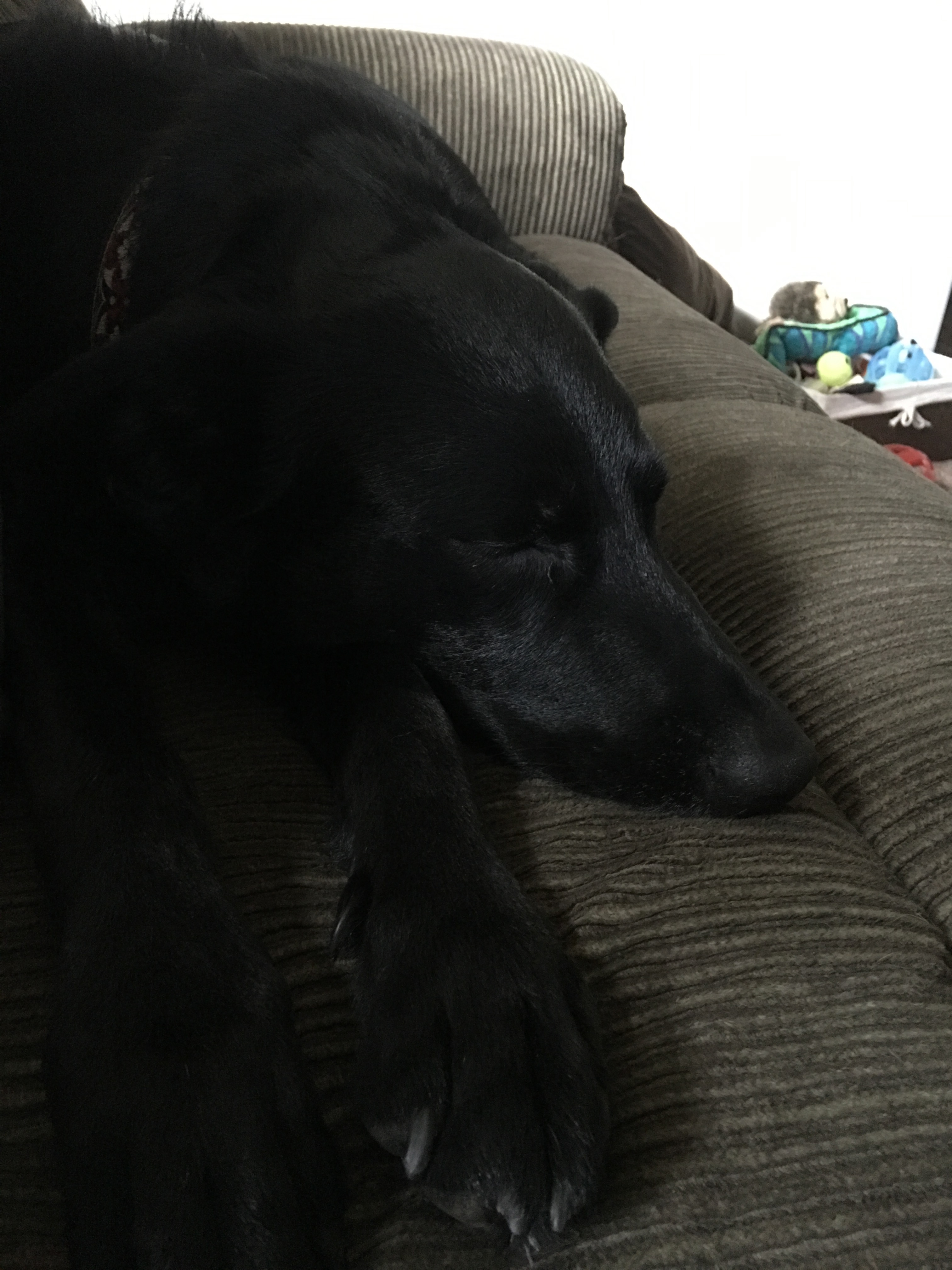
My sweet Sheprador
My sweet Sheprador

In my opinion, one of the more frustrating truths about positive advocacy is the need for repetition. I understand that because my challenges and disabilities are a part of my life, adapting, coping, and sometimes “making do” are a natural part of each and every day. I also understand that because many people with whom I interact do NOT live with hearing loss and balance issues, what is second nature for ME never crosses their minds. The trick… and something I have been struggling with, is how often do I have to ask for accommodations? How often do I repeat the same ol’ request so that I can simply interact with others equally?

The above photo is of my current service dog, Milo, from Fidos For Freedom, Inc. Milo is a young Sheprador (German Shepherd/Laborador Retriever mix) who rarely sleeps. When he does, he sure is cute. ‘Course I’m a tad bit prejudiced being Milo’s partner. The phrase, however, “Let Sleeping Dogs Lie” originates from a proverb that means to leave something alone if it is going to cause trouble, or dredge up old arguments.

However, when we strive to promote positive advocacy and request accommodations (that were asked for before and are still not a habit for those providing the service, workshop, or seminar), when do we just “leave it alone”? One of my longtime requests is that speakers use the microphone, and repeat questions asked from the audience INTO THE MICROPHONE. Yet, time after time speakers say, “Oh I don’t think I am going to use the mic. My voice carries…” or, “I’m just going to put the microphone over here… you can all hear me, correct?” I’ve even had speakers have everyone in the audience introduce themselves and give some information about their background WITHOUT A MICROPHONE in sight!

I wave like a crazy person and “shake my head no” when speakers say this, and yet time after time I sit in meetings like this with no one using the microphone. At the end of conferences I fill out surveys about my conference experience and have tried to relay how important the microphone is to me. I’m to the point that I may stand up and create a mini-scene, asking them to use the microphone. As a person with hearing loss, in a large, cavernous room, I go from hearing 95% with microphone in use, to about 20% when it is not. Any idea how hard it is to get anything out of a meeting if you are only getting 20%?

I don’t even go the extra mile and request CART. It’s expensive. In spite of people with normal hearing asking for a copy of the transcript as well and my knowing it helps more than just ME, I don’t make formal requests for CART as a simpler solution WILL actually meet my needs. Entering a new school year with loads of meetings on my calendar already, I am to the point of “letting sleeping dogs lie”.

The only problem is, it isn’t in my nature to roll over and give up. So wake up, DOG.

Denise Portis

© 2016 Personal Hearing Loss Journal


Feeling Like a Weirdo

Always thrilled to have a guest writer here at Hearing Elmo. If you live with chronic illness or a visible/invisible disability and love to write, I invite you to post in this venue to share your story.

I don’t remember when Deb and I first met. I feel like I’ve known her “forever”.  We just “clicked” early on and she is now one of my dearest friends. Deb has taught me so much just by example. We have a lot in common, but are also different in many fun ways. C.S. Lewis said, “Friendship is born at that moment when one person says to another, ‘What! You too? I thought I was the only one!” I’m thrilled to share a post from her and hope you will check out her photography site as well. Visions of Song

apropos of nothing

I was a little bit grumpy when I went into work this morning. Just your ordinary kind of grumpy, at least I think that’s what it was at the time. We had a staff meeting scheduled for 9:30. I was walking down a hall at 9, about to get some water from the kitchen, when I saw a teammate who said “we’re meeting in the first floor conference room”. Thinking I’d lost track of time, I said, doesn’t it start at 9:30? He shrugged and said “sometimes it’s different”. Later, I found out what he meant, but at that moment I was walking in the wrong direction, sans water, notepad, calendar, and orientation. I rushed to grab my things and when I walked in, everyone was seated. Now, let me mention that I am relatively new on this job, and the folks are really nice and teach me a lot about what goes on there. Today, though, I was already grumpy, and now I was LATE (and still didn’t have anything to drink because I’d forgotten to fill up in my haste). I sat at a place around the large, squared set up of tables, strategic for what I knew would be best for me, able to see the faces of everyone should I have trouble hearing anyone. My supervisor said “sit where there are papers” meaning the agenda and other materials. Well, the seats available were not strategic for me, and I was already feeling grumpy and it was obvious that I was late and slightly holding things up. I said “everyone forgets that I am hard of hearing and need to sit where I can best follow what’s going on. So, if it’s alright by you, I’m just going to get these papers and sit over here”, walking to where I intended to sit and feeling quite determined about that fact. Meanwhile, supervisor gestured as if to say “come sit by me”. I did not want to explain why that would not be ideal, and she was trying to be helpful, but it wasn’t helpful, and by the way I was feeling more and more like a grump at this point. Further, I was feeling like a weirdo. An oddball. Someone who needs something special. I deeply dislike standing out, or seeming like I need something unusual. Everyone else was sitting wherever they wanted to, and I had to have this mini-scene because, as I stated rather unprofessionally, no one seems to remember that I’m deaf and use cochlear implants to hear. At the risk of sounding like I’m bragging, among cochlear implant users, I am a super high performer. I am pleased and even thrilled by what I am able to do hearing-wise. Then I get in a typical work situation, and suddenly: I’m a weirdo. It does not help that I am also something of an introvert, friendly, social, smart, funny, but I need tons of time to process and recharge. I really don’t think it has much to do with my hearing, either, as I had relatively normal hearing for the first 10, 12 years of life but was always this way. So I seem a little odd compared to the norm in terms of social interaction to begin with, and then there’s the hearing loss and the special needs.

Grumble.

You know? Most of the time, really and truly most of the time, I am OK with being deaf and hearing again with cochlear implants. I am glad to educate and inform and certainly to advocate for myself (although I have work to do in this regard, and tend to be much better at advocating for others). Today, I wasn’t in the mood. I finally got something to drink, and good thing, because I ended up sitting through three meetings before the day was done.

beverage at Davids Diner

It did give me time to forgive myself, for feeling badly, for not feeling comfortable about asking for what I needed. I was also glad that I have become that person who knows what she needs and while the sending of the message might be a challenge at times, I can say no, I don’t need that, I need another thing, and know how to pursue what enables me to perform and participate at work. I walked through my apartment door at the end of the day thinking I either needed a drink (the after-five kind), or a good cry. I remembered I had some delicious food to make for supper, and having eaten and cleaned up, I sat and wrote this down. I don’t feel so grumpy anymore.

Deborah is a bilateral cochlear implant recipient. She experienced familial progressive hearing loss, which presented at age 10. Her first ear was implanted in 2005, the second ear in 2008. A native New Yorker, she presently resides in the central Piedmont of North Carolina. She is involved with HLA-NC, and is passionate about issues related to substance abuse, addiction, and mental health, serving as coalition coordinator for Project Lazarus of Randolph. In her spare time she enjoys traveling as much as possible, and can frequently be found wandering the backroads and practicing nature photography in the nearby Uwharrie National Forest.

My iPhone Lasts Longer Than I do

iphone 6+

The other day my iPhone died before I was getting ready for bed. I was a little shocked, because I rarely have it just “die” on me. The new ones have batteries that last much longer – even if you are a frequent user of the device like I am. I stood there with dead phone in hand trying to figure out if I had charged it overnight — the night BEFORE — like I usually do. After hitting <rewind> in my head and backtracking over how my day BEGAN, I realized that I fished my smartphone out of my pocketbook before heading out the door this morning. That means I did not charge it last night. That means my iPhone lasted over 36 FREAKING HOURS! I was impressed. As impressed as I was, I STILL went and hooked it up to the charger. It was dead. It had to be charged.

As I fiddled around with the (stoopid) cord, (made difficult when you lack any kind of pincer grasp in your fingers), I thought, “Wow. My iPhone lasts longer than I do! I could never go 36 hours without being recharged!” And ya know? That made me a little sad.

My next thought was, however, “NOW WHY DOES THAT MAKE ME SAD?

STOP Apologizing

I hate that my default to what is normal for ME, is to feel sad about it or to apologize to myself and others. Why do we do this?

Well according to Wright (1983) and Nosek et al., (2003), people who are differently-abled and chronically ill, default to apologizing and providing unnecessary explanations and dialogue about their condition to smooth the way of acceptance. These same authors point out that this often backfires. We instead bring attention to something others may not even notice. Apologies convey regret over intentional or unintentional offenses or failures. Apologizing for needing a nap, needing to relocate to a quieter room, asking someone for a repeat, or request to stand closer to a wall to keep from toppling, is not something we should REGRET. It is not a failure. It is what it is.

I would argue that falling into the habit of apologizing for our “normal” creates a dangerous pitfall and trap that our disabilities or chronic illness are an undue burden on others. This could lead to becoming preoccupied with how hard you are making life for others. Russell, Turner, and Joiner (2009) found that individuals with disability or chronic illness already have a higher tendency towards suicidal ideation. Apologizing for something we are not responsible for only creates a perfect and toxic breeding ground for suicidal thoughts.

Putnam et al., (2003) explain that true independence and self-determination falls closely on the heels of acceptance… that can only take place when we stop apologizing for our “normal“. I use to apologize a great deal. In spite of using every piece of adaptive equipment I could find and afford, in spite of partnering up with a service dog, and in spite of reading everything I could get my hands on about positive advocacy and independence, I would still apologize for putting someone else out for helping me cope with a situation. I’m trying to do better. For example:

Instead of “I’m sorry. Could I get you to move over to that wall over there so that I may lean against it and have Milo (my service dog) on the left while we speak? I hate to ask you to move, but…

… at which point they would say, “Oh, it’s no problem. Let’s move…” However, my apologizing for having to move infers that I had a choice. Apologizing makes it seem that I regret I am who I am.

I’m trying to learn to say, “I need to move to that wall over there for balance reasons. Let’s move over there and continue our conversation?

… and their response would be, “Sure!

I was in a super crowded common area once in which a colleague was trying to talk to me about something important. Not only could I not hear her, my balance was REALLY off and I stood there wobbling like a buoy. There were no walls available, and I was really starting to feel ill. I said, “I am having difficulty in this listening environment. Let me follow up with an email because what you are saying is really important to me“. They were pleased to do so and I think grateful enough that I cared to communicate WELL with them. I had to bite my tongue to keep from saying, “I’m really sorry about this…” I had nothing to feel sorry about so an apology would only have infused my confidence with negativity.

Yes, But FATIGUE is just EMBARRASSING

What if your (seemingly) undue burden on others is simply that you cannot keep up? Perhaps you need a mid-day nap to finish the day strong. Yorkston et al., (2010) found that differently-abled individuals USUALLY have accompanying pain, fatigue, or BOTH. We tend to want to apologize for this. We shouldn’t.

I have a friend with chronic (and sometimes debilitating) ankle pain. Mid-day she goes to her office and puts her feet up. If she has to go to a meeting, she unapologetically claims an additional chair so that she can rest her feet. I walked into a meeting once and saw she had her feet up on an adjacent chair. Someone walked by and said, “Are you saving that for someone?” She smiled, pointed to her feet, and said, “No. Bad ankles!” The person didn’t question her. They didn’t shoot her a pitying look. They also didn’t steal her footrest. It was a smooth and succinct explanation for her claiming an additional chair.

Several weeks later I ran into her and talked to her about what I observed. She said, “I use to apologize for having to put my feet up. But then I thought, ‘WHY am I APOLOGIZING?’ I knew that only made ME feel badly. I decided then and there to stop being sorry for having tired feet“.

If I’m at work during a meal time and the weather is nice, I often go out to my car. I load my dog up, crank the air or heat (depending on the season), turn my cochlear implant and hearing aid off, and eat my meal in the quiet. Understanding my propensity for hearing fatigue, means I take time to unplug when needed. I need to recharge. I’m not anti-social (ok… well, not VERY) and I’m perfectly capable of going to the staff lounge or faculty dining room if I want to do so. Taking a mid-day recharge in the quiet enables me to complete my day STRONG… and unapologetic. Isn’t that what independence is about?

My iPhone may hold a charge longer than I do, but I take responsibility for recharging my own battery. Do what you need to do to recharge.

Need a nap? Take one.

Need some tylenol and a twenty minute break? Take them.

Need a “mental health day”? Take it.

Need a vacation? Take one.

Need a coffee break? Take it.

… and don’t apologize.

Denise Portis

© 2016 Personal Hearing Loss Journal

Nosek, M. A., Hughes, R. B., Swedlund, N., Taylor, H. B., & Swank, B. (2003). Self-esttem and women with disabilities. Social Science and Medicine, 56(8), 1737-1747.

Putnam, M., Geenen, S., Powers, L., Saxton, M., Finney, S., & Dautel, P. (2003). Health and Wellness: People with Disabilities Discuss Barriers and Facilitators to Well Being. Journal Of Rehabilitation69(1), 37.

Russell, D., Turner, R. J., & Joiner, T. E. (2009). Physical disability and suicidal ideation: a community-based study of risk/protective factors for suicidal thoughts. Suicide & Life-Threatening Behavior39(4), 440-451. doi:10.1521/suli.2009.39.4.440

Wright, Beatrice A. , (1983). Physical disability – a psychosocial approach (2nd ed.). , (pp. 116-156). New York, NY, US: HarperCollins Publishers


Yorkston, K. M., Johnson, K., Boesflug, E., Skala, J., & Amtmann, D. (2010). Communicating about the experience of pain and fatigue in disability. Quality Of Life Research: An International Journal Of Quality Of Life Aspects Of Treatment, Care And Rehabilitation19(2), 243-251. doi:10.1007/s11136-009-9572-1


Have you tried? Do You Think _______ Caused It?

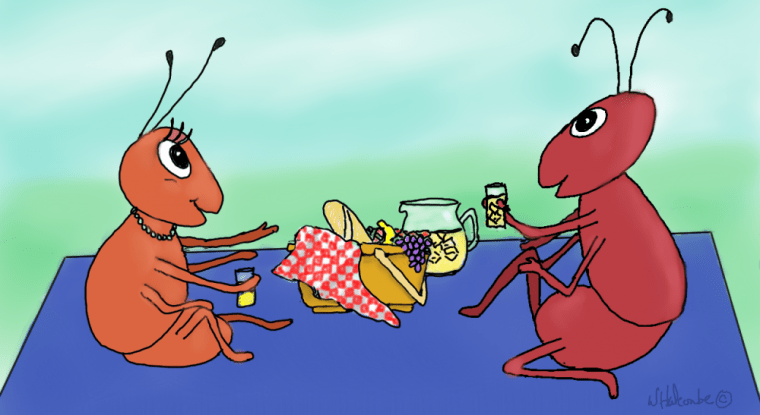
Picnic with Ants

I don’t often cross-post, but when I do I hope you know that IMO, it is a post everyone should read. This is one of those posts. Wendy (friend and fellow blogger at Picnic with Ants) writes about a topic all people with chronic illness and/or disability deal with and have to learn to respond to when it happens.

Because it will. One of the best written posts around about this topic:


Hello.  My name is Wendy.  I just turned 53 years old and I have chronic illnesses, including Meniere’s Disease.  Unless something amazing happens, they are not going to go away.  Sometimes I feel I need to make this statement before anyone speaks to me.

Recently I was asked a few things about my health.  This was not by people who see me often, or have much knowledge about my illnesses.  This is how I handled a few of the questions, some of it was good, some not so good.

Have you tried yoga?  It can really help your balance.  I used to do yoga regularly…

Read more: Click here

Denise Portis


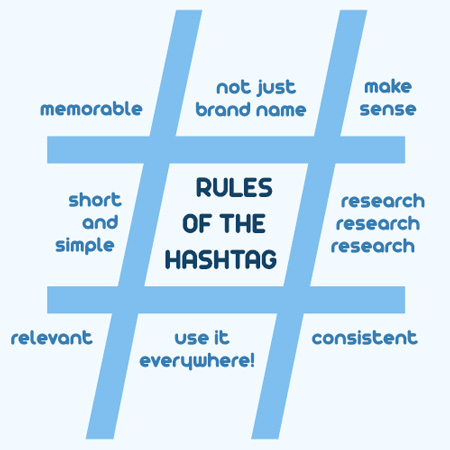
#TheCheeseStandsAlone

the-cheese-stands-aloneHashtags-graphic

I have always spent WAY too much time on things I do not understand. I remember as a kid having a great deal of trouble with the nursery rhyme, “The Farmer in the Dell”. Why did everyone — have SOMEONE, except for the cheese? Why did the cheese have to stand alone? This bothered me at 6-years-old. I didn’t have “Google” or other search engines to discover the “why”. Siri wasn’t there to tell me (though she is precious little help in my humble opinion). I remember asking my parents (who didn’t know), my grandmother (who explained the cheese wasn’t “living”) and my brother (who smacked me good for such an inane question).

Now if I don’t know something and spend WAY too much time pondering something, I can easily look it up. Take hashtags, for example. I was using hashtags before I knew what hashtags were. I was being ridiculous. (Surprise anyone?) I used them for anything and everything, not fully understanding what they were for. I still use them to be silly sometimes, but there really is a reason to use them. Hashtags make social media (Twitter, WordPress, Facebook, and much more) posts “searchable”. A high school friend of mine, Janet, is currently using one: #wheredoyousummer. Janet knows how to use hashtags correctly. People all over the world can pick up and use the same hashtag, making it possible to search what others are posting about the same topic; that is, where and what you do for summer fun. Here is a great article about hashtags in case you are still in the dark: 10 Reasons Why You Should Use Hashtags and Where

Sometimes I’m Left Pondering

You cannot always look up what you don’t know. This is especially true when one considers the human psyche and the reason some people do what they do. You can google, “Why does my husband leave dirty clothes on the floor?” and you won’t get very far. (Actually, if you Google that, you will find some information which just floors me!). You cannot search why some people respond negatively to you in regards to your disability. “Why is my co-worker a butthead when I explain I cannot hear her over her desk radio, chewing gum like a cow, and tapping foot?

Friends? You just aren’t going to find the answer to all questions that plague you! Sometimes there are no answers. I’m frequently left wondering why something is the way it is, or why someone behaves as they do. There are no easy answers.

I like to think if I had not developed Meniere’s disease and become “the bionic woman” with my hearing, I would still have patience and understanding for differently-abled people. I like to think my heart was “right” before ever acquiring challenges myself. But… I can’t know that for sure.

I’m sure it is not always easy to be around someone whose favorite response is “huh?” First day of class today for a summer session of Introduction to Psychology, and a Latino student came up and whispered something to me with a slight accent. I took a step closer and asked him to speak up so that I could hear him. I turned my cochlear implant ear towards him. He stepped back, his eyes got big since I encroached on his personal space, and he had trouble talking to me in a louder voice (he is likely soft-spoken to begin with). I understand reactions like this. They do not bother me anymore. Eventually I understood what he was asking, and we got it all “sorted”.

What is tiresome is when you ask someone to repeat themselves, and they do — exactly like they did the first time. (Quietly, mumbling, chewing gum or inhaling a Subway sandwich, etc). By the time I’ve asked for a repeat a second time, often repeating at least what I DID HEAR that go ’round, I have received some cantankerous retorts. I often have to take a deep breath and put my cane down so that I don’t bean someone. It’s frustrating! You are not always going to know why someone reacts the way that they do.

Boundaries

I have readers at Hearing Elmo who often ask me tough questions about the behavior of other people. Why do their loved ones seem so disrespectful at times? Why do people you count on let you down over and over? Why do people in our support system act as if this is all harder on them than it is on you–the person with the acquired disability or chronic illness?

There just aren’t any easy answers. Communication is important, but communication breaks down in the BEST of times. When trying to learn to cope and adjust to an acquired disability or chronic illness, communication is tough. Sometimes, you can write someone off after giving them numerous chances to accept you as you are. You can throw up your hands and #BootToCurb.

More often than not, we have to swallow our frustration and WORK at it. You may need a counselor or mediator even. I know my own acquired disabilities had an effect on much more than me. There was adjustment for both my husband and my children. It is important to remember that when you LOVE someone, what negatively affects them often has an affect on you as well.

Other times, we can distance ourselves from toxic people. Sometimes these may just be “former friends”, but sometimes they can be family. This is especially difficult. Boundaries are important. I have some folks in my life who are unreasonable in their expectations, hateful, and often bring me down (way down). I may not be able to cut them out of my life because we are related, but I can set up boundaries. Cloud and Townsend wrote: “Boundaries: When to say Yes, When to Say No, To Take Control of Your Life”. I highly recommend it. When negative people cross invisible boundaries I have set up for proper and normal human behavior, I can distance myself with a clear conscious if they choose to continue harming me.

If you lay down the ground rules of respectful HUMAN behavior and someone does not hold up their end? Distance yourself. Walk away.

“But I work with this idiot” (#TriesHardToRefrainFromBadWords).

That doesn’t mean you have to share your life with them. Do your job as it requires interacting with them, but don’t feel like you have to invite them to a party, become FaceBook friends with them, or include them in more intimate details of your life. Frankly, these folks are likely horrible to anyone different than they are. Your disabilities or chronic illness aren’t what set them against you. Their own issues have them responding negatively to anyone “different”.

Blog. Just do It

In closing, I wish I could explain to you how therapeutic blogging is. Even if you do not want to start your own blog–many health and advocacy bloggers (like Hearing Elmo) welcome guest writers. It is SO helpful to me to be able to write about what works, what doesn’t, what I’ve learned, and what I’ve forgotten. #LoveToBlog

I think we need an outlet. When burdened with an acquired disability, chronic illness, or special health/mental health challenge, we need an avenue to vent. Writing can help with that. I (as always) welcome guest writers.

Want to start your own blog? Here is a great place to start: Blogging Basics

Have a great week!

Denise Portis

© Personal Hearing Loss Journal

Pretzels Baby…

Snyder's of Hanover Pretzels commercial 2016
Snyder’s of Hanover Pretzels commercial 2016

We do not have the opportunity to watch much live television in my house. My husband and I tape our favorite shows and then watch them together the couple of nights a week we are both home in the evenings. It worked out this summer, that I did not have a class to teach during the first session of the summer semester. The timing is terrific since I completed my doctoral coursework, and have now started the dissertation. There is a great deal of reading and writing involved at the beginning, so not having a class to teach until 7/1 is a “plus”.

In spite of all the groundwork needed to start the dissertation right, I have had some down time as well. Trying to catch up on my HGTV favorites before I’m back to teaching, I have been surprised by new commercials as Terry nor I watch commercials. The new Synder’s of Hanover pretzel commercial is unique. Well… it’s kind of scary too, but I’ll get to that.

Laura Wernette is the new “smoky-voiced pitchwoman”. I think she’s just scary. She has this intense, no-nonsense stare that reminds me of a grown-up Wednesday Addams.

Christina Ricci in Addams Family Values

I think what bothers me about the commercial (besides the fact they are not captioned – ahem) is that the woman in the advertisement has a facial expression that says one thing (I want to kill and maim you) while her voice is saying another (Synder’s pretzels are the best). From things I have read, the advertisement is popular and folks think the pretzel woman is pretty funny. I cannot justify what I see in her face to what I hear coming out of her mouth. I spend far too long thinking about it, believe me! It made me think about all the times I misunderstand someone’s mood when I choose to only look at their face.

My poor husband has a perpetual eyebrow grimace.

IMG_2843 IMG_2835

Even when he is smiling and relaxed, his eyes seem almost angry-looking if one didn’t know him better. When he speaks, he has this laid-back, southern charm and friendliness that (in my opinion) doesn’t “jive” with his facial expression. I tease him about it all the time. (Aren’t I sweet?)

I think one of the things that is most difficult for someone new to hearing loss, is learning to look at the whole picture before jumping to conclusions. It can be hard to try to make sense of what you can actually hear, and match it up with what you think you are seeing on a person’s face or in their body language. (It’s impossible to do when you know and love someone who is fluent is the language of SARCASM, and the voice and pitch deliberately DO NOT match what is on the person’s face).

My best practice is to simply to ask for clarification when needed. If someone’s voice (as heard with my bionic ear, with some limitations on inflection, pitch, and tone) does not match up with what I see on the person’s face, I just ASK.

“Could you clarify for me what you are trying to say? You seem upset, but I don’t want to jump to conclusions”

“You seem really calm, but you practically growled that out to me. Is everything OK?”

I was at a residency this past March and the weather was beautiful. I spent every spare moment outside walking Milo (along with everyone else on break in between workshops). One afternoon, I stopped to answer some questions about Milo to a group of ladies I had been with in several workshops. I noticed the three women all scowling. I tried to pay attention to what they were saying, and occasionally they laughed as well. I had trouble concentrating on their WORDS because their faces were scowling – and looked angry. After a few minutes trying to figure out why their facial expressions were not matching what I was hearing, I realized the sun was in their eyes! With that epiphany, I quickly changed my body position with the comment… “Here. Let me move so the sun isn’t in y’all’s eyes”.

I could have silently freaked out wondering what in the world their problem was. It took me a few minutes, but I finally realized why I was having trouble understanding their mood when their faces were all sun-squinty angry. Small wonder that hearing loss is considered a communication disorder! Especially if you have an acquired hearing loss, learning to communicate without one of the major cues (hearing), can be difficult.

My proximity to Johns Hopkins University Hospital, allows me to mentor folks who are seeking cochlear implantation to restore hearing. One of the questions I am always asked during these meetings is, “What has been the hardest thing for YOU about acquiring hearing loss later in life?” I’m guessing the frequency of the question points to the desire most people have to see similarities in their own struggles. When I explain that having to ask for clarification was a necessary, but difficult thing to learn to do, the people I am meeting with seem so relieved. Some even say, “Oh gosh, it is so good to hear someone else say that! Does it ever get easier?”

It does. That always seems to give them some hope as well.

You are still going to have frustrating moments of confusion. I am 11 years post-op and I believe “hear again” with some level of confidence. I still make mistakes. I may misinterpret tone and intentions, or I may not catch that there has been a complete subject change in the conversation (something I’m rather famous for, if I do say so myself!). As with any acquired disability or life change, in time and with lots of practice, YOU WILL ADAPT. Part of that adaptation will be in recognizing that at times you are going to blow it, but it does not de-rail all the progress you’ve made to date. We can be extremely hard on ourselves! Everyone makes mistakes – even people without acquired disability or challenges.

Denise Portis

© 2016 Personal Hearing Loss Journal