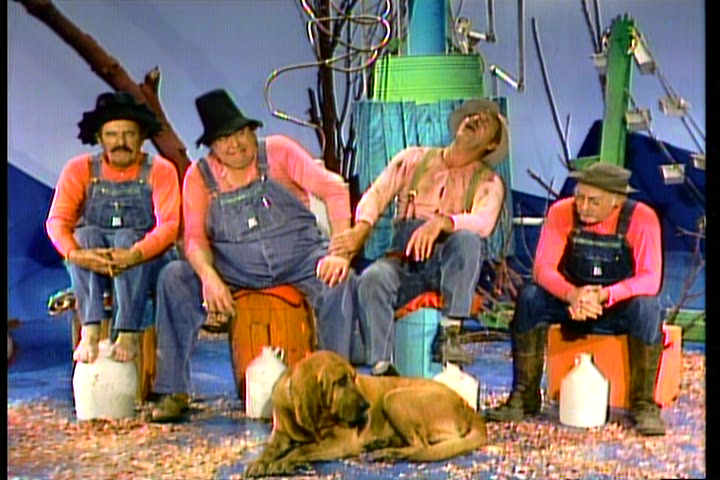
♫♪ Gloom, DESPAIR, and Agony on Me… ♫♪

I dunno... maybe it was the hound dog I fell in love with?
I dunno… maybe it was the hound dog I fell in love with?

I have a confession to make. I loved CBS’s “Hee Haw”. Growing up I had three television channels. Thank goodness CBS was one of them. I’d list everything I loved about “Hee Haw”, but frankly I loved EVERYTHING about “Hee Haw”. I’d be listing instead of posting! Some folks hated it – even some of my siblings. But I was a true fan. I loved all things musical, even the “Lawrence Welk Show” and the “Donnie and Marie Osmond Show”. Go figure.

One of the weekly skits was done by a quartet (sometimes trio) of regulars singing “Gloom, Despair” written by Roy Clark and Buck Owens. It is a “right cheerful song” – <BIG GRIN>. Here are the lyrics:

Gloom, despair, and agony on me Deep, dark depression, excessive misery… If it weren’t for bad luck, I’d have no luck at all Gloom, despair, and agony on me…

If you’d like to listen to the lively tune, CLICK HERE.

Now that I’m in my late 40’s and have some “life” tucked under my experience belt, I hum or burst out in song far more “Hee Haw” songs than Lawrence Welk or Donnie and Marie tunes.

If It Weren’t for Bad Luck

Have you ever felt that “if it weren’t for bad luck, I’d have no luck at all”? Have you ever felt as if you were facing “deep, dark depression”? I suppose if I had to pick ONE constant theme in various emails that I receive each week from readers, it would be that people with disabilities, folks living with chronic illness, souls who live with invisible illness… deal with depression. It can be mild forms and only a sporadic nuisance. Maybe it is something you deal with on a daily basis, however, and a more chronic and constant issue for you.

I’m big on citing scholarly research about various topics. However, depression is so closely linked with various disabilities and illnesses, that there are simply to many studies to choose from for this post! I, too, struggle with depression. Gloom, despair, and agony… well OK, maybe not that last one – grin!

Something I’m having to learn to deal with is that I also cannot take many medications available to some who struggle with mild, moderate, or major depression. Dizziness and vertigo are the #1 side effect listed by most – if not all. Having Meniere’s disease can complicate things. You already know I fall a lot. However, I also lose consciousness a great deal from the fact that my head makes contact with something else on the way “down”. Seven mild concussions in five years means that I have to traverse my life carefully and methodically. I have to make decisions to lesson my chances of getting dizzy and falling. What’s a person to do if medications increase your risk of other problems – like falling?

Medications are not the only way to treat depression. As a matter of fact, I believe research shows that best results occur when medications are coupled with cognitive-behavioral therapy. But if taking medications are not an option for you, what can you do? You do all you CAN.

1. Therapy

Talk with someone. If insurance or finances do not make this a great option for you, reach out to folks who may have training in various faith-based arenas like churches or community centers.

Unload on a trusted friend. But do it. Reach out.

2. Self-help books

You can’t go into a bookstore without finding that “self help” books evidently are big sellers. Some of them are actually written by people with real expertise, however. Do some research… find out what is good (not necessarily popular).

3. Join a support group

In a digital age, there are even support groups online. This can be great for people with schedule concerns or privacy issues. There is something pretty special about discussing topics of concern with people who live what you are living. Do you prefer meeting face-to-face? Check out your local library and see what groups might be meeting there. Check with a county commission on disabilities to see if there are area support groups. Consider starting one yourself!

4. Try an “alternative” option

Complimentary and alternative medicines have brought us to a place where meditation, chiropractic medicine, acupuncture, and biofeedback are options for some people. Even herbal remedies for things like mood and depression help some folks. Do your research. Talk to your doctor. There is evidence these avenues have helped people!

Not sure if your feelings of depression are something that actually needs to be addressed? Few problems just go away on their own. When you live with disability or chronic illness, depression can creep into the picture. Psychologists will tell you that it is a co-morbid diagnosis for many who have some OTHER diagnosis. Deal with it. Find something that works for you.

Comments and feedback are welcome! You are not alone.

Denise Portis

© 2013 Personal Hearing Loss Journal

Alone in a Crowded Room

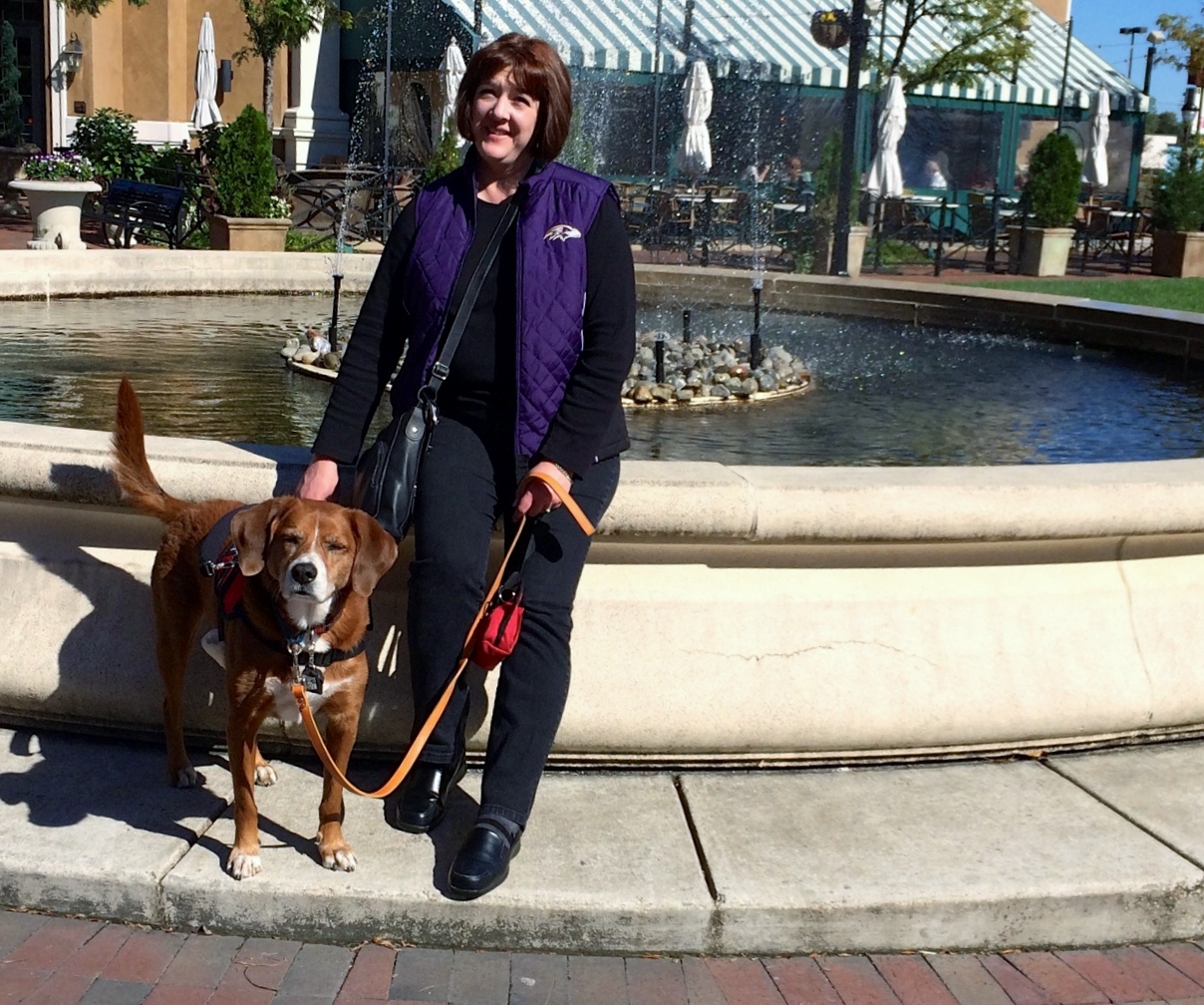
I can clear out a crowded fountain area just by "arriving". My wobble and service dog can put people off.
I can clear out a crowded fountain area just by “arriving”. My wobble and service dog can put people off.

I’m big on time alone. I guess I’ve always been a bit of a homebody. Don’t get me wrong. I love interacting with people. However, if I go to much time without some “alone time”, I’m a grouch. I can tell I’ve reached my limit when I don’t filter what I’m saying and just “tell it like it is”. I’ve always wondered if it is an unconscious desire to drive people away by just being mean and ornery because I want – I NEED – to spend some time alone? It is a little “red flag” for me. If I get grouchy, I examine my schedule to see if I’m spending enough time alone. The time is necessary for me to re-group.

Hearing loss requires ACTIVE listening

Perhaps it is because I have a hearing loss and it requires so much attention just to listen. I may need to repeat all or part of what I heard in order to seek clarification. I can’t listen without thinking about listening. Gone are the days I can prepare food in the kitchen or wash dishes while talking. I have to stop what I’m doing and actively engage in conversation to communicate. I have to see well to hear well. I have to stop what I’m doing and concentrate just to hear.

My husband has been accompanying Chloe and I for our evening walks lately. I’ve discovered that it is even difficult to WALK and talk at the same time. If I’m to communicate while walking, I don’t look to see where I’m stepping. It doesn’t take much for me to stumble. But who can watch the path if you are having to look at the talking head?

Needing alone time means that I prioritize “me time” just to give my mind a break. I don’t even have to “turn my ears off”. But just being able to “be” without having to give something – or someone my undivided attention is very necessary to my coping.

Alone because of Self-imposed isolation

People with disability or invisible illness are sometimes alone by choice. It is easier to be alone than it is to deal with others. Maybe the stares bother us. Maybe we are tired of having to tell the same ol’ story about why we move funny, have a service dog, or overuse the word “Huh?“. Maybe it is just HARD to get out and about. Physical barriers can prevent some people with mobility impairment from creating social networks, creating a feeling of isolation and a lack of access to support (Matt & Butterfield, 2006). It may be HARD to go shopping or run errands. It may require a plan of action not needed by others. Spur-of-the-moment activities may be a thing of the past for people who are “differently-abled”.

Maybe the person has felt shunned or as if they are “too much work”. I know that I have made the choice to not participate in something if I know I can’t be independent. It has kept me isolated at times. Chloe, service dog extraordinaire, can do so much for me. But she can’t disintegrate background noise so that I can hear better, nor can she eliminate a spin in my visual field. I’m incapable of visiting, for example, a food court in a mall without assistance. I cannot order, carry a tray, and walk to a table by myself. I’ve even clipped Chloe to my belt loop before with faith she would heel on command, and would find that I still have trouble balancing a tray with food and drink. I can’t balance it all and also look up to find an empty table. Balancing myself and avoiding falls is hard enough without trying to balance “stuff”! This has caused me to feel like I’m not as connected to some of the people I know who go and hang out at the mall or go to a coffee shop together.

Isolated because of Stereotypes

Sometimes people who are differently-abled are isolated because they ARE different. It is a common problem with human beings. If someone is different we may have stereotypes about what we perceive is different about them and then treat them in a unique way as a result. Sometimes people ignore folks with disabilities or chronic illness because they don’t know what to do or say. A colleague at work once told me, “Denise I’ve seen you wobble before just standing and waiting for an elevator. I was fearful that if I stopped and talked to you and accidentally bumped you that you’d go down for the count!” She had to learn through numerous interactions with me that I rarely fall as the result of another. I fall flat on my face under my own steam thank you very much. This same colleague told me that I “looked vulnerable”. Having a disability can scare people into keeping a distance – fearing what they don’t understand and choosing not to interact to cope with that fear.

People with disabilities can sometimes advocate in a very negative, belligerent way. After doing so, they only succeed in setting the stage for that person when they encounter the NEXT person with disability that comes into their store or restaurant. I can always tell when a manager has had “difficult encounters” when they come up apologizing all over themselves to ask if Chloe is a service dog or if they can assist with anything. They have had to “battle it out” with angry people before to simply inquire if the dog they have brought into their establishment is a service dog.

One day last month when I went out to eat I was given one of those electronic alert boxes to alert me as to when a table was available. The hostess kept apologizing and asking if she needed to come and get me, or would I be able to tell if the box was vibrating. Since it lit up and shook, I explained I didn’t need to hear anything. I would know when a seat was available. After being helpful to the point of almost becoming a nuisance, she said, “You are so nice. Usually when I ask if I can help someone who needs extra help they become angry and loud“.

I blinked a couple of times. It helps me process. I responded, “Oh I’m loud, but I can tell you want to help. Maybe you should wait to see if the person asks for extra assistance“.

Her eyes lit up and she acted as if that was the most novel, innovative idea. “Well why didn’t I think of that?” she gushed. Why indeed?

The administrator at one of the schools I teach at told me, “Denise? I never know if you want or need my help with something. So I’m going to trust that if you need help you will ask!” I’ve always appreciated that. I know my limits. I’ll ask if I need help.

Yet many don’t know what – if anything – to do to help. So they hang back and inadvertently ignore a person who is “differently-abled”. Regardless of abilities, most people just want to fit in and belong. They need connection. Without it a person can become depressed or anxious – even paranoid.  Pretty, Andrews, and Collet (1994) explain that two important aspects of connectivity: a sense of community and social support have both been found to buffer against the effects of stress, anxiety and depression and to enhance well-being. People don’t realize that by forcing isolation on someone they can cause emotional injury. There is a difference between choosing quiet time alone, and enduring the painful reality of being alone in a crowded room. So what’s a person to do?

Include them. Treat them like you would anyone else. Trust they will ask for assistance if needed. Treat them with respect – just like you should every person. Love them. There may be a few things they do differently, but their need for inclusion and connection is the same as your own. Work at really seeing every soul in a crowd. No one should be invisible.

Denise Portis

© 2013 Personal Hearing Loss Journal

Matt, S. B., & Butterfield, P. (2006). Changing the disability climate: Promoting tolerance in the workplace.American Association of Occupational Health Nurse, 54, 129–134.
Pretty, G. M. H., Andrews, L., & Collet, C. (1994). Exploring adolescents’sense of community and its relationship to loneliness.Journal of Community Psychology, 22, 346–358.

Invisible Disabilities and Relationships

hidden disabilities

Hearing Elmo welcomes Dr. Terry D. Portis as a guest author this week. Terry has worked with the disability community since 1990 with The Brain Injury Association of NC, and then the Hearing Loss Association of America. He now works as the director of the Center on Aging and LifeStages at AACC. He supervises more than 220 faculty who teach more than 1,600 course sections each year, making it the largest program of its kind in the country.

In the September 21, 2013, edition of the New York Times, Katherine Bouton wrote an excellent article on the quandary of hidden disabilities. In the article she talked a lot about workplace issues, and whether or not a person should reveal their hidden disability. It is an excellent article, and I recommend it.

While the Bouton article focuses on the workplace, or potential workplace, what about issues with hidden disabilities with family and friends? Here are three things that happen in relationships where a disability is a factor. 

I’m used to it, and don’t think about it anymore.

Often a person who is facing the challenge of a disability thinks about it frequently. They have to. They have to think about ordinary tasks differently, like going to the grocery store, or sitting in a concert. To their family and friends, it is just “Sue” or “Tim”. Family and friends are used to the disability and might even forget about it. The psychological term is “habituation.”

As family members and friends, we might want to remind ourselves the challenge that the person faces living on a daily basis with a disability or chronic illness. It might have taken all the courage they could muster just to go to work today.

For the person with disability, don’t let this forgetfulness hurt your feelings! How could they forget? Well, you want them to forget. You want people to see you for you, not you, the disability.

Good days, bad days… how bad is it?

With many disabilities, the person will have good days and bad days (like all of us). Numerous factors such as the weather, fatigue, stress, or even diet can have a significant impact. If those issues are managed or under control, then the person’s disability might not manifest itself as prominently. Change one of those factors, and the person might struggle with tasks today that they seemed to handle quite well yesterday. A personal example would be that two days ago my wife,  who lives with a balance disorder, could walk across the room without any difficulty. A major weather system is now coming into our area which means that yesterday I had to grab her elbow to correct her balance a number of times just to talk to her.

For the friends and family members, don’t let this uneven performance cause you to doubt that the person is struggling as much as they really are.  They aren’t “faking” on the bad days, even though to the casual observer it may appear that way.

For the person with the disability, celebrate the good days, and don’t let the bad days cause too much frustration. Realize that the people around you don’t intuitively know whether you are having a good day, a bad day, or something in between. People also do not have your level of understanding of what having a good day or bad day means. They work and live with you; however, you live with the disability.

You’re healed!

With advances in prescription medicines and medical technologies, people often find some relief or remediation for their disability. New hearing technology? Well, glad you can hear now. New medicine for your seizure disorder? Glad that’s over. The truth is, it is not quite that miraculous.

For both friends, family members, and the person with the disability, realize that new medicines and technologies will probably not take away all the challenges created by the hidden disability. In many ways, they are miraculous, and we should be thankful for the day and time in which we live. On the other hand, let’s not allow unrealistic expectations dampen our enthusiasm for the better life that people with disabilities can lead.

Hidden disabilities create challenges in a person’s life, and in their relationships. Relationships are always “messy,” and often unpredictable. Taking a few minutes to remind ourselves of other people’s perspectives strengthens those relationships. In turn, our lives are enriched and we find deeper meaning in everyday life and work.

If you would like to contact Dr. Portis you may contact him at Lightkeeper’s Journal.

Hearing Elmo welcomes guest authors! Interested? Contact Denise at denise.portis@gmail.com

Denise Portis

© 2013 Personal Hearing Loss Journal

Peek-a-Boo! I Hear You!

peekaboo

When my kids were little we played “Peek-a-Boo” just like other moms with little ones. However, I would say, “Peek-a-boo, I hear you!” and uncover my mouth as well as my eyes. Nursery workers very likely wondered who taught my kids such a simple game – incorrectly!

My readers tell me that one of their biggest frustrations is when hearing folks around them act as if steps they have taken to manage their symptoms = normalcy. Readers with MS have told me that family members behave as if they should now be symptom-free since they are on medications. People with hearing loss are frustrated when family members and friends communicate as if a cochlear implant or hearing aid means they now have normal hearing in all situations. A friend of mine who lives with chronic depression told me how aggravated she was when friends did not understand that she still deals with symptoms of clinical depression despite medications and therapy. I try to tell people that managing our symptoms does not cure the disease or eliminate a disability.

I hear SO WELL with my cochlear implant…

In quiet places

when I’m not distracted

when I’ve had plenty of rest.

At my annual mapping appointment each year, my audiologist continues to say I’m hearing super well! But there are environments in the “real world” where I don’t hear as well as I do in the sound proof booth or in her office. Because of this, my family have learned that despite how well I’m hearing, I need to still see their faces in most “real world” situations. Yes. I get a thrill when I am able to easily talk to them from the other room. But the water isn’t running in the sink, the dishwasher is finished with its cycle, and the television isn’t on as they speak from the distant living room.

Ever once in awhile I reach up to gently move a hand or turn a face. They sheepishly say, “Sorry” and continue what they were saying – now fully facing me. I can’t do this with people I don’t know well, however. How important is seeing speech to understanding and hearing well?

Seeing Clear Speech

We all know a mumbler. Even people with normal hearing ask them to repeat. We all know someone with a heavy, “Duck Dynasty” kind of beard. We all know someone who shyly covers their mouth with their hand when they are laughing and talking.

In a study by Cassie et al., (2005), adults with hearing loss scored the same as those with normal hearing after the speaker was given instruction to face the other person and speak clearly (not loudly). Volume doesn’t help by the way… it only distorts speech. Hard to remember when a friend or loved one with hearing loss says, “huh?” You default to yelling! 🙂

Another study by Reed and Delhorne (2009) showed similar “near normal” results in adults with profound hearing loss when other conditions such as clear, visible speech was included in even noisy environments! (These folks were also aided or had cochlear implants). There are simply too many studies to cite that show how important visible, clear speech is to children who have hearing loss and are learning language.

Bottom line? People with hearing loss hear better if they can see your face. I’m not saying shave your beard (trimming it would be nice, however). Even if the person with hearing loss seems to hear you really well in a quiet room and actually looks away from you while communicating, when other people start filing into the room for the meeting they may need to see your face when you speak to hear well.

As to other kinds of chronic illnesses and invisible disabilities? Please reach out and celebrate the GOOD DAYS with the person you know who lives day-to-day with a diagnosis that is permanent. Your own circumstances could change and you find yourself living with a similar condition.

Denise Portis

© 2013 Personal Hearing Loss Journal

Caissie, R., Campbell, M., Frenette, W., Scott, L., Howell, I., & Roy, A. (2005). Clear speech for adults with a hearing loss: does intervention with communication partners make a difference?. Journal Of The American Academy Of Audiology, 16(3), 157-171.

Reed, C. M., & Delhorne, L. A. (2006). A Study of the Combined Use of a Hearing Aid and Tactual Aid in an Adult with Profound Hearing Loss. Volta Review, 106(2), 171-193.

A Pocketknife to Clean Your Nails

pocketknife

ABOVE… My dad in 2011 when he visited Gettysburg with us.

Do you know every time I retrieve a nail file to smooth, clean, or file my nails I think of my dad? Isn’t it funny the kinds of things that will recall a memory for us? Not the kind of recall that triggers our sympathetic nervous system and launches a flashback in folks who suffer from PTSD. Instead, the kind of recall that knocks on the door of our heart with a “feel good” memory. The memory replays a specific conversation or event. For me, when I use a nail file I vividly recall how my dad would clean his nails with a pocketknife.

I couldn’t have been more than 7 or 8-years-old, for we had not yet returned to the family farm. My dad still worked for International Harvester at the time. One day I sat watching him clean his nails with a pocketknife.

“Why do you use your knife to clean your nails?”

Dad continued to clean his nails and thought about his reply. The man never just “spoke off the cuff”. He responded after a bit, “It does the job”.

“Well, will you clean MY nails?”

With less thought he replied, “I can’t. I can’t tell where your nail stops and your finger starts”. He scooted closer to allow me to see from a different angle how he was using his knife to clean up under the nail. I may have been young, but I immediately grasped why he couldn’t clean MY nails with this unconventional method.

Although I never could bring myself to clean my own nails with a pocketknife, I learned over the years that one can do things just as well by means of unconventional tools and methods. I would not have understood if someone had tried to tell me that I would eventually become deaf and develop Meniere’s disease – a balance disorder, and that by doing so I would have to adopt some new means to navigate my world safely.

Works For Me – But Maybe Not for you

I suppose one of my biggest pet peeves is when folks start dictating to someone who shares a diagnosis how they MUST go about treating that disease or disorder. Just because something works well for YOU, does not mean it will work well for someone else. This doesn’t mean we shouldn’t be willing to tell our story and share what works for us. Peer networks and support groups are invaluable in my opinion. However if I chose to use a nail file to clean my nails, and you choose a pocketknife, all that should be celebrated is that the end result yields positive benefits for us both. Clean nails are clean nails no matter how they got that way.

That doesn’t mean the process to clean nails is always easy. I have to sit to brush my teeth. That toothbrush swishing around in my head will make me pass out if I do not do so from a seated position. I never could sit on the lid of the commode to brush my TEETH. So I step into the bedroom and sit on the hope chest to brush my teeth. I have to be sure to keep my mouth closed so that there is no splatter. Ewww, right? This last week as I was sitting there brushing my teeth, it just hit me wrong. Here I was 47 years old and unable to brush my freakin’ teeth over a freakin’ sink like a normal – erm – FREAK! So…

I started crying.

My husband stepped into the bedroom. I can’t imagine what he saw. Here is the wife sitting and brushing her teeth, sobbing her eyeballs out, toothpaste now EVERYWHERE, including dribbling down her quivering chin. He calmly said, “You OK?”

Did I look OK? Alright, yuppers… I didn’t actually WANT his help. I just wanted to finish brushing my teeth. Those FREAKIN’ ones…

When a person with disability or chronic illness finds a way that works for THEM, it doesn’t mean it is easy. But this is why we are not disABLED. We are differently-abled. It is quite a cognitive and emotional boost to discover you can still enjoy something you did before – only in a new way. It may look strange, novel, or genius… but the reality is “it gets it done”. Yet what I find works for me, may not work for someone else with Meniere’s disease. I cannot safely clean their nails with my pocketknife.

Celebrate the Day

Gee, we live in a wonderful age of technology! When I think about the miracle in that I’m hearing again bionically, and all the cool tools available to me through simple apps on my iPhone, or special assistive technology, I get goosebumps! I live in a country where service dogs OTHER THAN guide dogs are fairly common. Email and texting – two communication devices I utilize frequently, are favored among the NORMAL hearing population. This makes my life so much easier!

Folks with mobility issues, learning challenges, hearing loss, chronic illness, and various disorders have options available here in the U.S. that we did not have 30 years ago – or even 10 years ago! Yet some of the things we learn to do are through our own ingenuity! I have quite literally patted myself on the back and mentally “high 5’d” myself when I discover a new way of doing things. To you being able to do the laundry without actually having to change the altitude of your head is not very impressive. But to me? This is a “WOO-HOO” discovery. But the proper lean formation, use of step-stool and service dog work for me. They may not work for you if you, too, have Meniere’s disease. But be willing to share ideas with each other without dictating proper protocol. The end goal is clean nails after all.

Denise Portis

©2013 Personal Hearing Loss Journal

You’re So Vain…

chloe hug

I love my local grocery store. Not so much that I was pleased I had to go twice this week after forgetting a few items, but the aisles are spacious, the employees know me (and Chloe) by name, and I save a lot of money in both sale items and even gas points. My unexpected impromptu second visit this week was disastrous, at least from an emotional standpoint. I came down the aisle looking for those elusive cotton balls that I failed to remember on my first trip and met a lady only slightly older than me with two canes. We stopped to chat for a minute and thought I had met another who understood when she surprised me by saying, “I just couldn’t work with a dog. It seems so vain because so much attention is brought on by being with one“.

I could feel the heat creep up in my face and I blinked back tears as I stuttered out, “Well different strokes for different folks I suppose“. (I’m always so proud of how eloquent I am in a pinch *rolls eyes*).

I really had very little left to say so quickly cut it short and moved on to find those STUPID cotton balls. Because ya know? Now I was MAD after that initial “kick in the gut” feeling so I determined then and there those cotton balls were stupid. Made me feel better anyway.

My husband and I kid around about how vain Chloe is. Her biggest fault as a service dog is that she is too friendly. She’s a flirt. She gets gently reprimanded on days my balance is really off if I put her in a sit/stay while talking, but then she wags and flirts and stretches for a kiss. Heaven forbid someone actually switch their attention to HER! Then she is like, “You love me. Denise loves me. We all love me. I love me.” She’s so vain! (♫♪ Chloe, you probably think this post is about you! Don’t you? Don’t you?♪♫)

Many people with invisible disabilities are not in favor of mitigating their disabilities with a service dog because it DOES bring attention to you. As a matter of fact, I know of cases where folks drop out of training programs when they discover that this service dog will bring unwanted attention to them. That isn’t worth it in their opinion. And… that’s OK. I have Meniere’s disease (a balance disorder) and am hearing again with cochlear implant technology. I HAVE chosen to mitigate those invisible disabilities with a service dog. I wear bling-bling on my cochlear implant processor. On days my balance is REALLY bad, I use a bright purple, metallic cane. This works for ME. It doesn’t mean it will work for YOU.

could’ve should’ve would’ve

If I could’ve… if I shoud’ve.. or if I would’ve – I suppose if I hadn’t been on the verge of tears I would have told this woman:

Do you know that before Chloe, I spent 20-30 minutes before work each day changing outfits trying to find one that hid all the bruises from my falls?

Do you know that when the elevator was temporarily out of service this week I didn’t have to cancel class because Chloe was able to counter-balance for me on the stairs?

Do you know this cochlear implant bling-bling helps people remember to face me when they speak if it is obvious I’m not hearing well?

Do you know all these patches and certification tags on Chloe’s vest legitimize her role as a service dog so that I have less access issues?

Do you know it takes me 45 minutes to get groceries each week now because Chloe picks up the things I accidentally drop compared to the 2 1/2 hour trips I use to have?

Do you know I never have to ask a stranger to pick up something for me now?

Do you know I’m working again because I don’t have to worry about putting students out to pick up pens, erasers, markers, or papers for me in the classroom?

Do you know I never have to worry about missing a phone call now?

Do you know I have the sweetest, “kiss me awake” alarm clock in the whole, wide world?

DO YOU KNOW I THINK YOU NEED A DOG BECAUSE YOU OBVIOUSLY DON’T HAVE ENOUGH LOVE IN YOUR LIFE?

Ok… maybe that last one is unnecessary.

But the reality?

weather vane

People with invisible disabilities or chronic illness are more likely to deal with VANES instead of vanity each and every day. We have things we pay attention to so that we stay SAFE, red flags that remind us we are pushing our limits. Boundaries in place to keep us from over-doing things. I know my body better than anyone… even my doctors. This past week we had torrential rains on Thursday. On Wednesday, I was in “full disability regalia“. Chloe, cane, and fresh batteries in the “ears” and still I wobbled and fumbled my way through the day because there was a system coming into our area! A student said, “Wow your balance is really off today!

I replied, “Yes! I’m a human barometer and much more accurate than the Weather Channel!

A thoughtful pause and then, “Is there an app for that?” (snicker… I love my students).

Like a weather vane that helps farmers or meteorologists know which way the wind is blowing, people with disabilities have things in place that allow them to “take their pulse” each day to see how to safely navigate the world around them.

I’ve met a good number of people who have a service dog. I’ve never met anyone that I suspected of choosing to do so because they wanted the attention. And so please understand that the only one who is vain in my partnership is CHLOE.

♫ You’re so vain
You probably think this POST is about you
You’re so vain
I’ll bet you think this POST is about you
Don’t you? Don’t you? ♫

That’s OK. If Chloe’s weakness is that she is warm and friendly… I can live with that.

Denise Portis

© 2013 Personal Hearing Loss Journal

Permission to SLOSH

coffee spill

“I didn’t give you permission to slosh!”

Tuesday was NOT a great day. When it is rainy out and the barometer matches my internal “tilt-a-whirl” meter, I expect to have a bad day. When it is sunny though, I get aggravated when I’m having balance problems. Tuesday was a beautiful, sunny morning! I’m beginning to think that fatigue may have something to do with it because I know I didn’t sleep well Monday night.

I headed downstairs with my morning coffee, a whole day ahead of me to work from my basement, home office, only to slosh the coffee right out of my cup on the first step. I paused. I took another two steps down. More sloshed out. I paused. Aggravated I was going to have come back with cleaner, I took one more step. Coffee sloshed out. I…

(paused? WRONG)

I screamed. “I didn’t give you permission to slosh!”

Hound dog, (a.k.a. Chloe the wonder dog) sat at the bottom of the stairs safely out of the way and quirked an eyebrow at me. ♥♥ Talking to your coffee again, Denise? ♥♥

I’d do anything to be in CONTROL

One thing that I hear people with disabilities complain about is that they really would love to control their lives better. They may even make feeble attempts (or aggravating ones) to do so.

People with hearing loss may monopolize conversations. If they are the only one talking, they don’t have to deal with the frustrating inability to hear well.

A friend of mine with Meniere’s disease admitted to me that she actually acts cold and disinterested around people because she found it keeps them at a distance. If they approach and try to talk or even hug her hello, she is overwhelmed with vertigo and nausea.

I think it is natural to want to control our environment – even our lives to a certain degree. It can help us feel safe, even secure! But let’s face it… there is much in our lives that we cannot control.

We can eat right, not smoke, and exercise and still develop high blood pressure if it is in your genes. (Yes, it can improve your health and maybe delay the onset, but according to experts you are still at risk).

We can do our best to live a healthy lifestyle and still get cancer. We can be a safe driver, never going over the speed limit and still get in a car accident. We can avoid high-crime areas and still be the victim of a crime. There is much in life that is NOT in the scope of our control.

Control or Management?

I feel very frustrated when I’ve carefully watched the weather and still get caught away from home when it starts to rain. I didn’t give the skies permission to SLOSH! I can wear tennis shoes and have my head up and eyes open on a walk, and still stumble and trip over a crack in a sidewalk. I feel – erm – sloshy.

However, people with disabilities or invisible illness don’t have to give up hope of controlling their symptoms. You may not be able to control your life, but you can manage it. Symptoms cannot be controlled but they can be managed. One of my favorite psychologists is Albert Bandura. He was one of the first to define and promote self-efficacy. Bandura said that self-efficacy is, “the belief in one’s capabilities to organize and execute the courses of action required to manage prospective situations” (Bandura, p. 72, 1994). It makes us feel better to MANAGE our lives.

With my hearing loss, I can always make sure I carry extra batteries, clean and dry my cochlear implant and hearing aid, watch my service dog for cues, ask people to email instead of call, and request moving to a quieter area to have a face-to-face talk with someone. With Meniere’s, I can avoid sodium, limit caffeine, be prepared for bad weather, and keep my service dog’s vest in tip-top shape so she can help me. I’m “managing” my life as a person with disabilities. This gives me confidence and helps me feel less – SLOSHY.

You’ve done all you can

In spite of what I’ve learned, sometimes life still sloshes. You’ve done everything in your power to navigate life and “hope for the best and plan for the worst”. Life ends up sloshing anyway. I’ve wanted to put my coffee in a sippy cup before. Or one of those cups that can be used in a moving vehicle. You know… those “slosh-less” ones? But I want my coffee in a beautiful, ceramic mug. The kind I can wrap my hands around and feel the warmth while inhaling the pleasant and comforting aroma of slow-brewed coffee! The risk of “sloshing” is worth it.

I hope that even when you’ve done all you can to manage your life, you can pick yourself up and wipe off the sloshed coffee when life …

T I L T S.

Because it will… be ready for it! 🙂

Denise Portis

© 2013 Personal Hearing Loss Journal

Bandura, A. (1994). Self-efficacy. In V. S. Ramachaudran (Ed.), Encyclopedia of human behavior,4. New York: Academic Press, pp. 71-81.

Intimacy and Invisible Illness

sexy

I had numerous emails come in just during the last week, asking me to reconsider letting readers share their own personal stories about intimacy. We have enough, I think it makes a “good read”. Why I think it is really special though, is because it is a topic that is important, yet one that can be difficult to talk about with others. As always, I invite you to write for Hearing Elmo if you have issues, topics, or concerns that mean something to YOU. A person who lives with invisible or chronic illness, or love someone who does. Just email me at denise.portis@gmail.com to find out how. I don’t want to take away from the message and influence of this post. So I’ll shut up now. BIG GRIN! Here are a few of your stories – in your own words. I’ve made only minor spelling corrections and omitted only minor sections (with notice to the writer) for things that were maybe a little too detailed. 🙂

Intimacy and “Me”

Life happens with or without a hearing loss. Most intimacy doesn’t have anything to do with our hearing loss, but yes, hearing loss can impact how we interact with others.

I longed to have more close friends when I was in junior high and high school. The deal breaker was not that I giggled a little too much, or was a little shy at times. The deal breaker was that I was the odd girl out. I didn’t get included because I couldn’t hear well enough to be like everyone else. I didn’t get the printed memo on social activities. Maybe I was blissfully ignorant, because I ended up with a close dedicated relationship with someone I truly love, and who loves me for who I am.

I do have a few intimate friendships (non-sexual) with just a few friends. I get support that I need from a few individuals, and then I have a lot of acquaintances that I can talk to. And, more importantly, I do get out and participate in activities that I’m interested in, and I am connected to other people.

What I really miss? Is that I don’t have a close friend to call up and do something with on the spur of the moment. I don’t have a girlfriend that I talk to every day, and that asks if I want to grab lunch, or go shopping. I don’t get invited to parties, and I’m not asked over to the neighbor’s house have a drink or sit and chat. I missed out somehow, and I’m not quite sure how to correct that. Is it hearing loss? Or is it personality?

Maybe it’s confidence. I’ve gained confidence in some areas, but maybe I’m still hesitant when I should be reaching out to others. Is it hearing loss? Am I afraid of what others will think of me? Or should I embrace that perhaps it’s a little bit of hearing loss, and a lot of who I am as a person?

One thing I do know, is that I have to make things happen for myself, I can’t wait for the world to come and get me. Hearing Loss or not.

—————————————

Intimacy is affected in my relationship because I’m always fatigued and in the bed resting a lot. My illness also causes pain which comes and goes. Since I’m fatigued and in pain a lot, there are many times that I don’t feel like being intimate. My partner lets me rest and after enough times being told no, he stopped along. This quickly turned into almost no intimacy at all.

—————————————-

My partner and I are intimate despite her disabilities. I guess if we have problems it is that both of us wish we could be more spontaneous, but it just isn’t possible. Because of the issues she deals with, I know it has to be a “good day” in addition to it needing to be a low stress day. She is fast getting to where she will need to stop working full-time. We can’t afford for her to go through the lengthy process of SSDI but working part-time would be in her best interests. I think maybe things can be more spontaneous after she is able to rest more. A 40 hour a week job for some kinds of disabilities is really difficult. It makes all other parts of life shift way down the list of priorities. I love her. If the shoe were on the other foot I know she would be just as supportive. So the spontaneity I do miss, but one does what one must to make sure both are getting their needs met. There is so much more to love than the physical anyway. At least that is what we believe.

——————————————–

As two adults with hearing loss, my husband and I are used to intimate relations with limited sound. That never deterred us; I would say we have a very close, loving relationship. Hearing loss has never affected us much in that area, except that there’s not a lot of ‘giving directions’ happening in our lovemaking since neither of us would hear it! We rely more on observing each other physically than listening for sounds of pleasure, for instance.

For me, the hardest thing was going completely deaf. Lovemaking feels more isolated to me now, especially since we are ‘bedtime, after lights-out’ people. I’m extremely nearsighted and, of course, don’t wear my cochlear implants to bed. Without them, I’m 100% profoundly deaf. So in the dark of night, I can’t hear (or lip read) and I can barely see. The absence of sound is very pronounced to me in that circumstance; even though I didn’t have much hearing before, I had enough to make me feel more connected during lovemaking and less isolated. This bothers me more than I realized it would, but unless we get busy with all the lights on (not happening!) or only if I have my CIs on (very, very rare) then it’s just something I have to get used to.

I miss the closeness of lying in bed, at bedtime, and chatting with my husband. There is no casual conversation for us – I have to actively face him and lip read, and make sure the lights are bright. So now we lie next to each other and read in silence. It’s frustrating to me that I can’t just make casual comments to him like I used to, and have that ease of conversation. It’s now a huge chore because of my deafness.

————————————

I became deaf later in life, I am now 21 but I also have Chronic Regional Pain Syndrome. Intimacy and relationships are difficult regardless of ability sometimes however illness or invisible disabilities further complicate matters. My boyfriend has been wonderful, from learning signed English (ASL confused the poor man) to supporting my decision for a hearing/service dog, but we have our problems too. He sometimes forgets that I cannot hear him and will get exasperated at having to repeat himself, or he may become slightly terse when reiterating what others have said. At the end of the day it’s our open and honest communication that allows us to continue the relationship. Sometimes the little things he says maybe helping me answer the phone or telling me I’m beautiful no matter what, and the not so little things like our date nights or the days I cannot walk, where he me to my wheelchair or through the house, to reminding people at church that I cannot hear and that at certain times even small touches are excruciatingly painful. Our lives are not perfect but no ones is, we each have our faults, but our love lets us see beyond them.

——————————-

I have multiple disabilities and have been married for over 25 years. My husband and I are no longer intimate. Some of it is his fault (high blood pressure meds and failure to discuss options with the doctor), and some of it is mine. I know you, Hearing Elmo, from a Meniere’s forum. For many of us even laying flat is impossible. Being held, or other things that lead up to intimacy is just impossible without passing out or feeling so disoriented you want to throw up. That isn’t exactly helpful to a male ego. I’ve said “not now” so often it is “not ever”. We love each other. We just aren’t loving in that way now. We seem to have reached a point where there is an unspoken agreement that this is the way it is. I’m sure it isn’t healthy on our relationship, but it is where we are right now.

———————————

First a little about my chronic illnesses:

Like you I have bilateral Meniere’s, I have a cochlear implant, and will be getting a second next month. I have pretty much constant disequilibrium and use a walker to get around. I also have chronic migraines (most days I have a headache on the scale of 5 or above). I have asthma that has gotten out of control, so we are working to get that better. I have Idiopathic Intracranial Hypertension (high cerebral spinal fluid), this can cause severe headaches when exercising. But the two things that often inhibit physical intimacy the most is chronic hip and pelvic pain.

My husband and I used to have a very hard time showing intimacy. Mostly this was my fault, I was paralyzed by fear of pain. He was trying hard not to make me feel that I needed to do more than I was comfortable with so he would not flirt or do anything like that. This made me feel more uncomfortable.

After we started going to therapy because I was having a hard time dealing with the loss of my independence, we started communicating better. We’ve always communicated well, but when I started feeling like I was a burden it was hard to hear what was being said….I hope that makes sense. And my husband was having a hard time knowing how to voice things he was feeling. We did not show our intimacy for fear of hurting each other, or for fear things would get started and I would end up having to stop things because of pain or dizziness.

We began getting even closer than before, (we’ve had a great marriage, so it amazed me when things started to get even better.) We talked about everything. Communication that is understood has been so important to our marriage. We’ve always communicated, but we didn’t always make sure the other understood what was being said, we simply assumed it was.

We are now very intimate. Not always sexual, but always loving. It was important for my husband to know that I still wanted a sexual relationship with him, I was just scared. It was important for us to understand that if something happened because of my illnesses that caused us not to be able to follow through, it didn’t mean I was less of a woman, or he wasn’t doing something wrong. It was also important for me to know that he still found me sexually attractive, even at those times when I couldn’t possibly think of doing more than cuddling. Every day we say little sexy things to each other. Like when he’s getting dressed I’ll make little remarks to let him know how sexy he is. He tells me these things all the time, or we reach out and touch each other suggestively. We’ll joke telling the other they are a tease, then answer with, “No it’s a promise”. It’s so important to know that even though our sexual relationship has changed we still find each other as sexy as we ever have. A little flirting here, a little touch there….it all means so much.

When my husband looks and me and tells me that it amazes him that he is still so attracted to me even after all these years, it makes my heart swell…and I know that he is not thinking of my illnesses, or the weight I’ve gained because of the medication, he doesn’t see that, he sees me…and I love his so much for it, and it makes me want to try to have sexual relations more often. Our actual sexual intimacy doesn’t happen as often as either of us would like, but we both make each other feel desired every day, and that has kept our marriage fresh, and sexy.

———————————-

I served USArmy and was discharged in 2010. I am 26 and do not believe I will ever be in a relationship again. I have scars, both inside and out. This subject is important so I’m glad we have a chance to talk about it. PTSD rules my life. Sometimes the scars on the inside are worse than outside scars. I cannot imagine being intimate with someone. Doctors tell me I need more time. I don’t know how time can help since I even have anxiety even in my sleep. I look in the mirror and can’t love myself. How could I hope for someone else to love me? For now I am working on relationships – the friendship kind. Even that is hard. There is so much broken. Maybe for some of us intimacy is hoping for too much.

———————————-

I have a hearing loss and am 23 years old. My hearing loss has become a lot worse in the last 5 years. I don’t date. I’m reasonably attractive and work out to try and stay in shape. I work full-time and have about 4 semesters of school left. So I am in a position that I see a lot of people some of who I’m attracted too. Some are attracted to me too, but once they learn how hard it is to talk to me they stop trying to get to know me that way. At work, I’m able to speech read and write notes to clarify. I follow-up with email a lot after our team meets. I guess it is too many hurdles to jump over to date me. Right now I’m content with finishing school and then seeing if I can get into grad school fairly quickly. My goals keep me going right now. But someday I want to have a family. I would make a great mom. I cannot imagine being intimate with someone. I can’t even communicate on a date in a dark theater! So for now I just keep plugging away reaching personal goals. I do worry that a goal of being a wife and mother may never happen, however. Hopefully I can meet someone who can see past the hearing loss. I’m not contagious!

————————————-

I have MS and I am a male. I always liked to be the odd ball. My wife left me about two years after my diagnosis. I work from home right now and have a service dog. I have my routine but don’t actually get out there and mingle much if you know what I mean. I think maybe I should go back to church. I stopped after my wife left me because I was pretty peeved at God. My brothers tell me I would probably be more likely to meet people at church to look past the MS and be willing to be my friend. Why does that make me sad?

————————————-

I am in my 30’s and have a great sex life I suppose. I date a lot and enjoy the company of others. My friends and family tell me I pick real losers though when it comes to intimate relationships. Some question if I think I cannot get anyone better, someone who will treat me right. I have friends who don’t have neurological disorders who choose losers to be with too though. So it isn’t because of my own invisible illnesses. I guess I just have poor judgment. I’m willing to accept I might lack the self-esteem to try for better though.

————————————-

I am a TBI survivor – motor vehicle accident. I’ve been in a chair for six years and have had no intimate contact since the accident. I don’t speak well. I don’t move well. I’m still here though. I have hopes, dreams, desires, and goals just like everyone else. Do me a favor and don’t tell people like me the right person will come along. Or that someone will love me enough to look past all of this. Love starts with friendships right. So just be my friend. Don’t be afraid of people in a chair. Just be our friend. We aren’t asking for a commitment of more than that. People are afraid of wheelchairs. My left arm moves funny and people either look at me like I’m weird or like they want to help. I hate both of the looks. I have to think a long time before I speak. People come up and talk and then continue to talk even when I’m trying to think about what I want to say. They walk away after they stood there doing all the talking. I want to scream at them. My dad says that people are not comfortable with silence. They don’t understand I’m trying to respond. I would love to have people that would just sit with me and enjoy the scenery. If I could sit without having to listen I can say what I want to say. I have a lot to say.

How Should I Take That?

Ever scratch your head and wonder what the heck did they mean by that?
Ever scratch your head and wonder what the heck did they meant by that?

Did you know that hearing loss is considered a communication disorder? However, I know plenty of people with normal hearing that seem to have a communication disorder. People have trouble communicating. Either they have the right words to say but the receiver interprets them wrong, or the person has “foot in mouth disease”.

Even more tiresome is the fact that we communicate with far more than our mouths. Our facial expression, body language, even our “vibe” or “aura” communicates something to others. Peter Drucker said, “The most important thing in communication is hearing what isn’t said.” Isn’t this the truth? Yet, it is so difficult to master the ability to accurately “hear what isn’t being said”.

I am learning, slowly but surely, to use reflecting – or paraphrasing – when I don’t completely understand what someone said. Either I’m not hearing all the words, or I’m hearing them but they don’t jive with what I’m seeing (either from speech reading or facial expression and body language). Here are some examples:

1. “Oh wow, I can’t believe you’re Deaf! You speak so well!”

While my first, knee-jerk reaction may be to respond: “Oh wow, I can’t believe you said that. You don’t look stupid!”, I try to take in the whole situation. What prompted their statement? Does their facial expression show confusion or delighted discovery? Do they look embarrassed seconds after having diarrhea of the mouth? I try to respond positively.

(small laugh) “Well thank you – I think. Is it your understanding that deaf people cannot speak? You know, most people with hearing loss are not culturally Deaf. They speak perfectly and are adventitiously deaf.”

2. “Why do you need a service dog? You don’t look like anything is wrong with you!”

Again, I try not to wince as I explain, “I’m glad I don’t look like anything is wrong with me, but I have invisible disabilities. Standing here you wouldn’t notice that I fall flat on my face if I try to pick things up that I’ve dropped. You wouldn’t know I have a balance disorder and am deaf by looking at me”.

This usually prompts a repeated brain fart response of #1. Scroll up and re-read.

What if it isn’t “SAID” at all?

Many of us communicate through email, texting, or even FaceBook. It is a whole ‘nuther set of problems when you take something wrong that has been written. We don’t get the extra cues of facial expression or body language. We rely more heavily on context, or what we already know about the person.

I have actually responded to an email or other written communication by asking for clarification. I do indeed have TMI (too much information) disease, but I’m learning to keep it brief. “What did you mean by that?” and then copying the sentence or question that I took wrong or in a negative way. Many times the person re-reads what they wrote and are appalled at how it came across to you. They re-word it, apologize, and you gain a better understanding of what they really meant.

I live in a family of very sarcastic people. We also text a lot. I have a family that is super thankful for unlimited data plans because we’d be homeless if we had to pay for every text kind of gratitude. Despite how much we communicate this way while apart…

SIDE NOTE: I’ll just slap you up side the head if you ever text me when we are standing next to each other.

… sometimes I can’t accurately interpret the meaning when I can’t see their faces. I’ve learned in face-to-face communications that a certain twinkle in the eye, quirk of the lips, or tension from suppressed laughter, means that the family member is being sarcastic.

So I put the gun down.

In texting or email I don’t get that. My usual response?

“Ummm. what?” (Took me a long time to teach auto-correct that for ME, ummm, is really a word).

This allows my family member to repeat in a more direct way. “Say what you mean. Mean what you say” is morphed into “Text what you mean. Mean what you text”. Hey… it works for us!

Flat out… MISUNDERSTOOD

What happens when you are flat out misunderstood though? You meant well, but someone jumped to the wrong conclusion. They are mad. They took it wrong. You are shaking your head and silently recording into your thinker, “Note to self: Never try to help so-and-so again”. Before you hit SAVE, try giving the person a chance to understand what you REALLY meant by helping, or by what you said.

I have actually said something along the lines of:

I tried to help and only meant to encourage you. You took what I said wrong and that grieves me. I wish you could see my heart and know how I meant for this to be taken. I know you’re mad. I’d like to work this out. Let me know if we can discuss this further.

Nope. It isn’t a guarantee you will make things right. Offering that olive branch may mean that the person grabs it up and smacks you on the head with it. But hey! Who did the right thing? Pop an olive in your mouth, puff that chest out, and walk away with the kind of swagger only those who know they did their part in communicating WELL can do.

Sometimes I wish we were all dogs. I’d always know you meant well if your tail was wagging.

Denise Portis

© 2013 Personal Hearing Loss Journal

If I’ve Said it Once…

If I've said it once

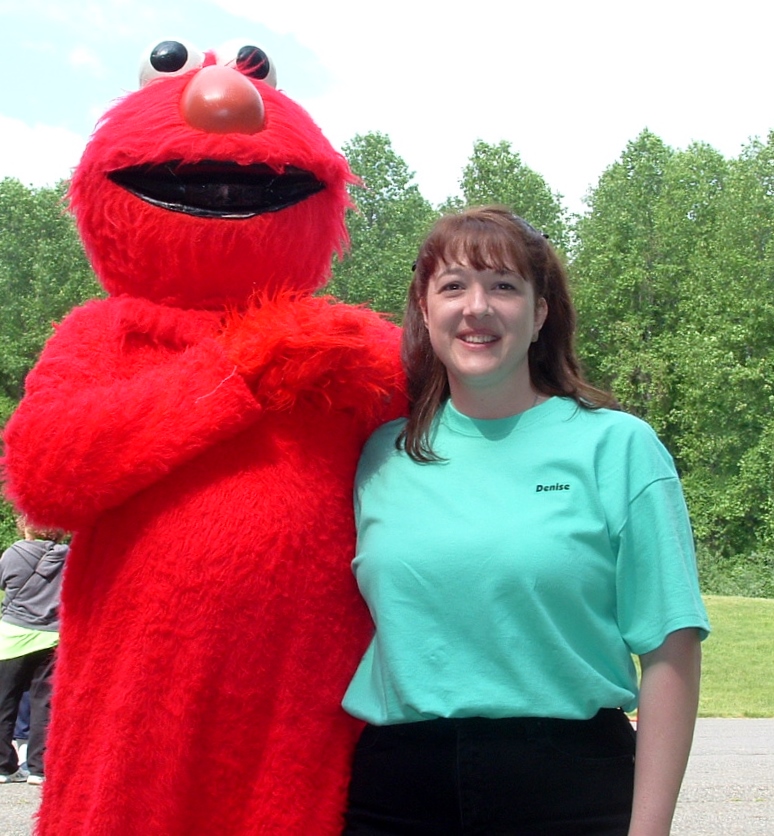
The photo above was taken at the 2006 Walk4Hearing in Pennsylvania. It was completely coincidental that the Walk coordinators invited “Elmo” to interact with the children on site that day. Poor Elmo had no idea what hit him as I squealed and came flying across the parking lot to hug his neck! Children he was expecting. A grown woman – not so much. However, Elmo encapsulated my reemergence to the hearing world – the first toy I heard months following my cochlear implant activation. Elmo’s voice (emanating from the “Tickle-me-Elmo” toy I found on the shelves of a local store) was the first CHILDHOOD voice I recognized after having been tweaked and re-programmed numerous times following my activation. It was an epiphany for me. From that moment on, I knew I was going to be OK. I could hear again – and more importantly RECOGNIZE voices. So to find Elmo that beautiful August day, 7 years ago, was thrilling for me!

I stepped back to introduce myself and explain “why the exuberant hug“. Elmo interrupted me and mumbled something. I said something to the effect of “HUH?” (I’ve always been particularly good with words).

Elmo spoke up. “I CAN’T HEAR A THING INSIDE THIS SUIT“. I stared blankly at Elmo for a moment and then broke into peals of laughter. Elmo put his hands on his hips and looked as exasperated as a character was able while inside a red furry suit! I apologized. Profusely. Welcome to my world!

Welcome to My World

Something numerous readers email me about is their frustration at trying to explain what is working – or not working, to closest friends and family members. I was at an ADI (Assistance Dogs International) conference in Baltimore several years ago and just happened to be in the right place at the right time; relaxing against a wall in the hallway outside a conference room. Because of my position, I was in the perfect place to see and hear a lady take her husband by the elbow and drag him over to the side (near me) to fuss.

She whispered (loud enough for even ME to hear), “If I’ve said it once, I’ve said it a thousand times… I cannot climb over your bag when you put it in the aisle. Do you want me to fall in front of everyone?”

Readers constantly tell me how frustrated they are to have to repeat “how to’s” to those closest to them. Folks they don’t interact with much they expect to remind about what works well for them and what doesn’t work. However, people think that if they are closely acquainted with someone they don’t ever need to be reminded of what they can do to communicate better, or to assist if needed.

A close friend of mine and follower of Hearing Elmo has MS and deals with fatigue frequently as a result. She was out to eat with her mother recently at which point her body just shut down. Although they were not finished eating, she needed to leave and needed to do so right away. She stood up and wobbled, and ended up asking her mother for assistance. Her mother did so but was very quiet on the walk out to the car. It was there her mom let her exasperation get the best of her.

“I don’t understand how you can be out on the field to oversee your son’s soccer team one day, and need help to the car the next. I don’t know how things can turn on a dime like that with you!”

My friend was shocked – and grieved that her mom, someone as close to her as anyone, failed to recognize what to her was obvious. One cannot pick and choose when fatigue and weakness will hit. My friend thought she had explained this to her mom (and very likely HAD). But her mom needed a refresher course in how symptoms of MS manifest themselves to my friend – a unique individual.

When my frustrated friend relayed what happened to me I thought, “Well welcome to my world”. Don’t all of us who live with invisible illness, disability, or chronic conditions deal with the same thing? We have to repeat ourselves – often.

Learning to communicate

It cracks me up to be on the training floor at Fidos For Freedom, Inc. sometimes. Clients and volunteers are asked to “Meet and Greet”. I hate these exercises. I’m not gonna lie. You pair off in groups of 2 or 3 and shake hands, talk, and introduce yourself. This is very “real life”. It is something we do in the “real world”. But I have to tell you there are few things I dread more. For one thing, that wonderful “voice in my head” via the training room floor’s hearing loop system is gone. Instead there is a BUZZ of voices overlapping and rising in volume all around me. I struggle and ask for repeats the entire time – all the while making sure my dog is in a proper down/stay and not flirting with nearby dogs. If more than one of us in the group have hearing loss, we juggle for position trying to put everyone on our “best hearing side”. If you look around the room there are plenty of people with cocked heads leaning close, or others who have definitely invaded the personal space of someone in their group. I’ve been in groups of people who did not have hearing loss who ask, “Now remind me which is your good side?”

My balance disorder allows me to move just fine. Standing still? Not so much. I wobble when standing still. Especially when standing in a large room with low ceilings and ceiling fans. I’m not the only one to be wobbling though. I giggled out loud one day when I lost my balance and a fellow client who uses a walker reached out to steady me and almost lost her own balance. She giggled right back in response and said, “I forgot you can’t hold still!” It was comical actually. Yes, we may both have balance problems, but we could help each other. We learn to laugh at ourselves if needed. We learn to accept help. We learn to communicate what it is we need.

Significant others and Spouses are “Just PEOPLE”

Do you get frustrated with the people in your life who should “know better”? “If I’ve said it once, I’ve said it a thousand times…”!

Even those we love the most are NOT mind readers. They may know how best to communicate with you if you have hearing loss. They may know that certain things like weather or temperature influence how you feel. They may know how certain medications may help – or hinder you. If I’m honest with you, however, I will admit that even *I* do not know how I will feel from one day to the next. Maybe even from one HOUR to the next. It is my responsibility to communicate my needs. It is my responsibility to give gentle reminders. I am responsible to explain 1001 times if needed.

We need to remember that those who love us? They’re just people. They do the best they can – and 9 times out of 10? They are not being a butt-head on purpose. My own spouse doesn’t even blink when I ask him to take my elbow one day, and maneuver my way around a crowded mall without assistance the next. If I’m telling him once AGAIN that I cannot take a call in a crowded store and to please answer my phone? He simply says, “Oh yeah!” (He’s cute that way)

Someone recently belly-ached to me, “At what point do I assume they will never get it? When do I give up?” Who said anything about giving up? There is no “end game” here. It’s a journey.

Let’s all be willing to communicate – again – what we need.

Denise Portis

© 2013 Personal Hearing Loss Journal