Boundaries & Brick Walls

brick

I’ve shared on “Hearing Elmo” before how important I think boundaries are to people with invisible illness, disability or chronic conditions. I believe we are already vulnerable. Not a WEAK sort of vulnerability, for we are actually very resilient in comparison to people who do not struggle with similar challenges. Dunn, Uswatte, and Elliott (2009) report that people with acquired conditions and challenges are often more resilient, happy, and have a positive sense of well-being. Yet, because we struggle to be all that we can be with new limitations, we can be vulnerable to others through criticism, disbelief, and lack of support. I believe that as people learn to cope and adjust to a “new normal”, boundaries–and sometimes BRICK WALLS–are imperative.

Boundaries

One of my favorite books that I often mention, is “Boundaries” by two of my favorite psychologists/writers, Cloud and Townsend. I highly recommend the book if you are seeking to establish healthy boundaries.
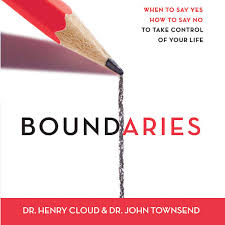
boundaries

I could go on and on about how MEAN PEOPLE SUCK, but this is more than that. We have all experienced interacting with people who are toxic, negative, and critical. These interactions inhibit our growth and our ability to cope effectively and successfully with challenges–that to us are not CHOICES, rather realities of living in our bodies. Boundaries can, and should be, set for these people. A boundary limits our interaction with someone that we have discovered hinders our growth or influence. Boundaries are not permanent. People can re-establish a good relationship. I always cringe when I hear people say, “Once you’ve lost my trust, you’ve lost it forever“.

I am not who I was. I hope that my life reflects a “work in progress”. I want to be a person who continues to grow each year that I live. I believe I can set a boundary for a critical and negative person, and my faith can be restored in this person at a later date. Life changes people, folks! The boundary keeps me at a safe distance, however, for whatever period of time is needed by that person to change or grow themselves.

Yes.

It hurts when you have to set up a boundary with a family member or someone who was once a close friend. Even these boundaries are necessary at times. Self-care is not only important, it is necessary. If we do not do what we must (by setting up a boundary for an unsafe person), we cannot thrive or make a difference in the life of another. Boundaries limit what we offer to these people. You may choose to not share specific things about yourself with them. You may limit how often you interact. These boundaries protect you and allow you to continue to live victoriously. They allow you to be the champion… the WARRIOR, that you are!

However, there are times when boundaries become more than safe zones for us. Boundaries can turn into permanent and impenetrable fixtures to completely cut us off from unsafe people. The boundaries become brick walls.

Brick Walls

When do you know that a boundary needs to be replaced with a brick wall? I believe…

… you will know.

The person has habitually harmed you. You have provided an avenue for reconciliation and  they have repeatedly taken advantage and continue to injure you. When this happens, it’s time for a brick wall, my friend! When and if you choose to permanently block someone from your life, it is important to remember:

  1. You are not responsible for their behavior.
  2. You are not selfish, nor stubborn.
  3. Your applied masonry skills mean you can continue making a difference in the life of others.

How do you build a brick wall and permanently dismantle a relationship? I have had to do this. It wasn’t easy. It hurts when it is someone who once mattered a great deal. However, self-preservation may mean you need to build that wall. Here are some things that worked for me:

  1. Block them from all social media outlets.
  2. Block their phone number.
  3. Block their email address.
  4. If you can, eliminate all face-to-face interactions.
  5. Don’t feel guilty. If you do, you are weakening that brick wall. You were not the toxin, they were.
  6. Avoid other’s efforts of reuniting you to this person. Well-intentioned people often do not know the whole story.
  7. If you must grieve the loss of this person, allow yourself to do so.

Because this is something I once did, I feel like I should give a warning as well. Don’t build walls because you are hurt and hunker down into protective mode. This is self-imposed isolation, not deliberate wall-building to keep out those who are toxic to you.

A perk I’ve discovered of brick walls? It can force a change of direction. You never know “who” or “what” awaits you as you step in the opposite direction.

Denise Portis

© 2016 Personal Hearing Loss Journal

Dunn, D., Uswatte, G., and Elliott, T. (2009). Happiness, resilience, and positive growth following physical disability: Issues for understanding, research, and therapeutic intervention. Retrieved September 5, 2016, from https://www.researchgate.net/profile/Timothy_Elliott/publication/232514358_Happiness_resilience_and_positive_growth_following_physical_disability_Issues_for_understanding_research_and_therapeutic_intervention/links/09e4150a3327348871000000.pdf


More Vulnerable than I Thought – Stronger than I Imagined

IMG_3128

Earlier this summer my parents came to visit. For some reason, I always have a “project” for my Dad. For some reason, he never seems to mind. This time, he built and secured a lattice porch screen to give us some privacy between our deck and the neighbor’s house. We have a huge yard, but it is long and narrow–not very wide. One of the first things my Mom and I did was plant Morning Glories. This beautiful vine has done so well this summer. It’s a childhood “feel good” memory for me, so I love greeting the blooms each morning.

I think one of the things I love about Morning Glories, is that they are (ahem) … GLORIOUS in the morning.

IMG_3129

I love coming out in the morning, in the quiet and cool AM environment, and having these cheerful flowers greet me.

VULNERABLE

I think one of the most difficult things about chronic illness and being differently-abled, is a sometimes, overwhelming feeling of vulnerability. I don’t know about YOU, but I hate feeling vulnerable. I’m not talking about the healthy kind of vulnerability where one learns to open one’s heart to another. I’m not talking about learning to be transparent and (at times) brutally honest (or, receptive of someone being brutally honest to YOU). I’m talking about the kind of vulnerability where you know you are at risk – in trouble – and floundering.

I am feeling pretty vulnerable. I hate having an illness that is progressive. Even though I work my butt off trying to be independent and capable, each year it seems to be more difficult to “get my glory on“. I love mornings. I’m a (disgustingly) cheerful early-bird person; perhaps, part of the reason I have been able to greet the Morning Glories with a smile on my face. While standing and watching the dogs race around the yard and work on waking themselves up, I often find myself reflecting, even praying at times. Lately, I think I’m perpetuating my feelings of vulnerability. During my AM REFLECTIONS, I have been thinking about where I was physically a decade ago, five years ago… and even last year. Ten years ago, when I was only 40-years-old, did I know that I would navigate with a service dog and cane? Did I understand that I would only be able to hear when I had my cochlear implant connected? Did I know that I would have a pronounced limp from numerous twisted ankles as the result of falls? Did I know that on the evening of August 23rd, 2016, I would have numerous bouts of vertigo, nystagmus, and several panic attacks between bedtime and when my alarm clock kissed me awake? (The benefit of having a service dog and retired hearing dog as your alarm clock). Nope. I didn’t know this would be my life. It makes me feel vulnerable (and depressed).

STRENGTH

I am my own cheerleader.

Don’t get me wrong. When I need encouragement, I know how to reach out and ask for help. This practice being, a different and healthy kind of vulnerability. If you are a person with chronic illness, invisible or visible disabilities, and special challenges that make life rather difficult at times, you may have no problem telling someone “I’m done“. I do have problems with that. I find it easier to say, “I’m struggling“, and less easy to admit “I’m done“.

I think part of it is because I don’t want to disappoint anyone. Even at Hearing Elmo, I try to keep things positive and encouraging. As a co-advisor of a student group for people who are differently-abled, I want to model confidence and a “can do” attitude. But honestly? Sometimes, I’m just done. This morning (after the night I had), I could not “get my glory on” in spite of my special flowers greeting me the same as usual in a beautiful late summer, sun-rise welcome. I found myself struggling. I found myself feeling vulnerable, depressed, and on the verge of giving up.

When I cheerlead for myself, I tend to default to a number of cheers:

  1. There are other people worse off than I am. Yet, they are productive individuals who find purpose in life.
  2. I have support from people who care about me, who encourage me to utilize everything I can to be independent.
  3. I am making a difference. It doesn’t matter if my niche in this big world is a tiny pocket of influence. If I can help make a difference in one, it is still making a difference. 
  4. All the things I enjoy, and people I love, are opportunities and relationships I would not have if I didn’t have the challenges I have.
  5. I know, without a doubt, that I am a better, stronger woman because I have Meniere’s disease and am late-deafened. Calhoun and Tedeschi (2014) explain it best: “The encounter with a major life challenge can also include an increased sense that one has been tested, weighed in the balance, and found to be a person who has survived the worst, suggesting that one is indeed quite strong” (p. 5). 
  6. Life can be difficult. It’s a good thing I’m STRONG.

Ultimately, the way I “keep on – keeping on” is recognizing that this is hard, but I CAN do this. I’m going to have bad days. I’m going to need help. I’m going to fail, mess up, SCREW up, and want to GIVE UP. When I am weak and vulnerable, I am also strong.

I’m also learning that it is ok to say, “I’m done“. (Ouch. That hurts to even type it!) However, I recognize that this admission… this vulnerability, also means I’m strong. Stronger than I ever imagined.

Denise Portis

©2016 Personal Hearing Loss Journal

Calhoun, L. G. & Tedeschi, R. G. (2014). Handbook of posttraumatic growth: Research and practice. New York: Psychology Press.

The Last Straw

last straw

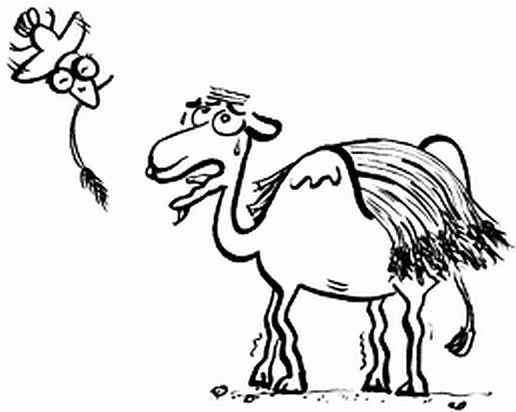
The Last Straw (that broke the camel’s back): The final, additional, small burden that makes the entirety of one’s difficulties unbearable.

Isn’t it interesting that there are so many idioms and colloquial expressions that mean “I’m done”?

The straw that broke the camel’s back (1816)

The last feather breaks the horses back (1829)

The final straw

Hitting a brick wall

Hanging up one’s gloves

The final stroke

I’m sure there are others. I’ve had a heck of a month. No worries – I actually thrive under (some) pressure. However, once in a while each one of us is simply not going to be able to take ONE MORE THING. That ONE MORE THING is often inconsequential and “small” in the grand scheme of things. Perhaps that is why we are so frustrated for breaking under what seems like a “small” thing.

This morning I was stepping off the porch when a “throw your head back to sneeze” came out of nowhere. Just. Like. That. I was horizontal with a teeny, tiny bit of remaining tunnel vision. My ears were roaring. I was nauseous. I had two very concerned service dogs in my face.

IMG_2781

Do you know I sat there and CRIED? I use to cry over everything. I mean, every, little thing! Happy, sad, angry, or confused, I’d unload some stress by crying my eyes out. These days I rarely cry. If I’m crying now, something is seriously wrong, or I have no reserves left and I’m “just done“.

It only lasted a minute or two. With retired neighbors on both sides of me, I can’t sit on the ground wailing very long before I garner some unwanted attention. I chanted to myself, “Suck it up, buttercup!” and struggled back to my feet. I’m sporting a few new bruises, and my pride? Well heck. My pride wasn’t hurt at ALL. When you have Meniere’s disease, pride isn’t crushed in falling, for one falls a lot. Pride is when you KEEP yourself from falling <big grin>

I felt so much better and finished watering the hanging baskets and flowers before making my way back inside. I likely over-analyze things too much. When psychology is your main squeeze, you tend to analyze everything. I took a few minutes to think about why falling on my face and experiencing a short bout of vertigo set me off. I determined it was “the last straw“. Have you ever felt that way when burdened with one more “little” thing?

It is very normal to have days like that. We all have stress. Stress can be good – and bad. Do not confuse stress with burnout. How do you know if you are becoming burnt out? According to the Help Guide organization (2016),

You may be on the road to burnout if:

  • Every day is a bad day.
  • Caring about your work or home life seems like a total waste of energy.
  • You’re exhausted all the time.
  • The majority of your day is spent on tasks you find either mind-numbingly dull or overwhelming.
  • You feel like nothing you do makes a difference or is appreciated.

(para. 6).

I love this chart (for I am a “chart” kind of person). I think it does a terrific job explaining the difference between stress and burnout:

Stress vs. Burnout
Stress
Burnout
Characterized by overengagement Characterized by disengagement
Emotions are overreactive Emotions are blunted
Produces urgency and hyperactivity Produces helplessness and hopelessness
Loss of energy Loss of motivation, ideals, and hope
Leads to anxiety disorders Leads to detachment and depression
Primary damage is physical Primary damage is emotional
May kill you prematurely May make life seem not worth living
Source: Stress and Burnout in Ministry

As you can see, both stress and burnout can be dangerous. Short-term stress, and at times – chronic stress, are a normal part of life. The “last straw” can actually be a good thing if it means you do something to alleviate some stress.

I cried. I hugged my dogs. I over-analyzed to my heart’s content.

However, the “last straw” can also be a prerequisite to something far more dangerous.

So what do you do when you feel your knees buckle and your back breaking? Well the first step in successfully recovering from collapsed camel syndrome is recognition of the problem or problems. Take some time to evaluate where you are at in your life. Are you over-extended? If so, what can be cut out? Start working on de-stressing. What can you take off the back of your camel?

Are you getting enough rest and taking care of yourself by eating right, getting some fresh air and sunshine, and laughing out loud occasionally? If not, make it a priority to do those things. They can strengthen “your back“.

The Help Guide organization explains how we can unload some of the burden on our camel:

Burnout prevention tips

  • Start the day with a relaxing ritual. Rather than jumping out of bed as soon as you wake up, spend at least fifteen minutes meditating, writing in your journal, doing gentle stretches, or reading something that inspires you.
  • Adopt healthy eating, exercising, and sleeping habits. When you eat right, engage in regular physical activity, and get plenty of rest, you have the energy and resilience to deal with life’s hassles and demands.
  • Set boundaries. Don’t overextend yourself. Learn how to say “no” to requests on your time. If you find this difficult, remind yourself that saying “no” allows you to say “yes” to the things that you truly want to do.
  • Take a daily break from technology. Set a time each day when you completely disconnect. Put away your laptop, turn off your phone, and stop checking email.
  • Nourish your creative side. Creativity is a powerful antidote to burnout. Try something new, start a fun project, or resume a favorite hobby. Choose activities that have nothing to do with work.
  • Learn how to manage stress. When you’re on the road to burnout, you may feel helpless. But you have a lot more control over stress than you may think.

(Help Guide.Org, 2016, para. 23).

Finally, acknowledge how incredibly resilient camels are! In Arab cultures, the camel symbolizes patience, tolerance, and endurance. Yes, at times you will need to ask for (and hopefully receive) help. This is a terrific article on finding help: (Where to Begin: Finding Help During Chronic Illness).

camel2

Denise Portis

© 2016 Personal Hearing Loss Journal

Help Guide.Org (2016). Preventing burnout: Signs, symptoms, causes, and coping strategies. Retrieved May 26, 2016, from http://www.helpguide.org/articles/stress/preventing-burnout.htm

Mindfulness: And the Skies Opened Up

IMG_2764

I apologize for how long it has been since I have posted anything. I am one week from finishing all my coursework towards my Ph.D. and have been busy working, going to school, and finalizing my dissertation committee. To say I’m exhausted is an understatement. I try to be serious and mindful about how much rest I am getting. I was thinking last week when I turned the big 5-0, that I have now lived longer as a person with disABILITY and chronic illness than I lived without those challenges. It influences what I have chosen to study and what I am passionate about. When you are ABD (All But Dead — just kidding: all but dissertation), you tend to think about your dissertation each and every day. This means that everything I am reading and researching for the literature review of my own work is on my mind each and every day. I even dream about it! “Predictors of Posttraumatic Growth in Persons with Acquired Disability” takes up much of my brain power.

These past few days I have been “chasing a rabbit” (like my retired service dog, Chloe)  and reading published articles on mindfulness as it incorporates one of the major domains of posttraumatic growth. I suppose “mindfulness” started out as a Buddhist tradition; however, in the last 8-9 years, the field of psychology has come to recognize it as a means to treat numerous physical and psychological disorders. In my short personal history of 25+ years, I have learned that folks with acquired physical challenges–whether the result of illness, accident, or genes–also experience comorbid anxiety or mood disorders (Carson, Ringbauer, MacKenzie, Warlow, and Sharpe, 2000; Siegert & Abernathy, 2005; Weintraub, Moberg, Duda, Katz, and Stern, 2004). You do not have to convert to Buddhism to practice mindfulness. Kozlowski (2013), explains that mindfulness has been Westernized by psychology and “it is purposefully devoid of spiritual or religious connotations and focuses simply on the act of awareness. And if you want to take it to a level that we can all relate to and understand, at its core is stress reduction” (para. 5).

You’d think as someone who has worked so hard to hear again, I would rarely purposely “go deaf”. Yet, I have discovered that if I want to do some deep thinking, praying, and just spend some time being aware of all the “stuff” in my life, I have to reach up and click my cochlear implant off. I need the quiet to take the time to be mindful of what is currently stressing me (and how to de-stress), what my priorities are, and how I can make a difference TODAY in the life of someone – ANYONE. My bionic hearing is wonderful, but I cannot focus when my processor is busy – processing. So I “go deaf” – on purpose. I need to reduce distractions. For me that means being alone with my thoughts and perhaps a pad of paper nearby so I can jot things down as I think of them.

Mindfullness & Preparation

Learning to be mindful, meant that I learned to change how I view disABILITY and illness. I learned not just to experience my “new normal”, but to own it. With that acceptance came the understanding that I am able to make a difference in such a way that I would not have been able to had my “normal” not changed. I likely wouldn’t know the people I know. I would not have been drawn to studies about posttraumatic growth. I wouldn’t have chosen to invest my time in student populations of individuals with visible and invisible conditions. My life – that I embrace and love – would not be what it is today.

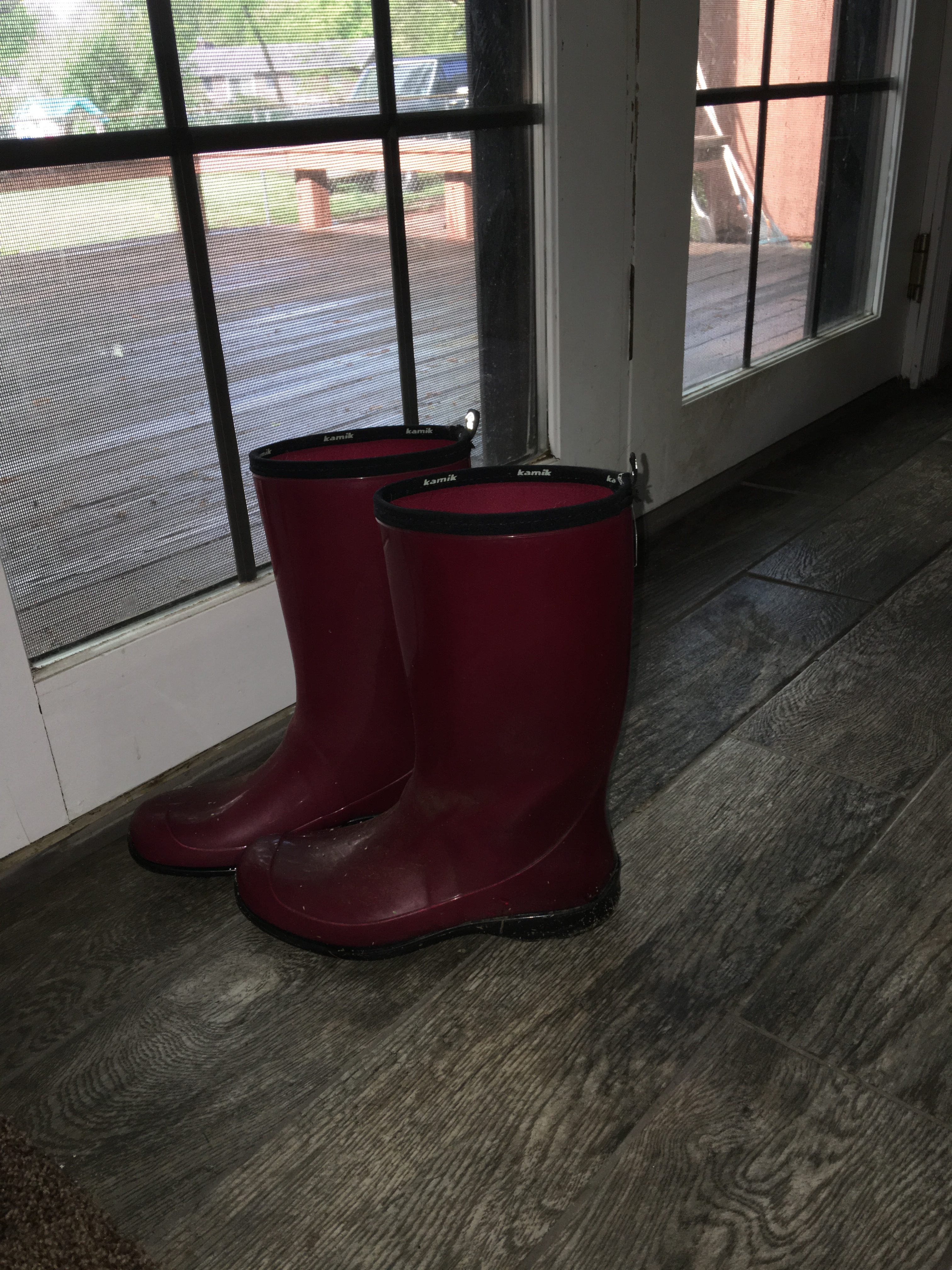
Learning to be mindful also taught me to prepare. I knew before this ten-day deluge of rain that I was going to have a much tougher time with my balance. I deliberately scheduled an additional hour of sleep each night, made sure I had my cane and service dog equipment ready to go each morning, placed my umbrella and rain boots by the back door, planned where to park to eliminate having to by-pass major puddles of standing water, deliberately stayed where I could see outside to determine when the rain had let up enough to take the service dog out or to make a quick trip to the campus testing center or copy center, and made sure that I allowed extra time to get to where I needed to go each day because I knew my mobility issues would require I traverse slowly and methodically. Even though the sun sets much later now that it is the month of May, I made sure that I had someone to drive me for evening obligations as I knew my vertigo would be worse by day’s end. Being mindful about the forecast and likely changes in my symptoms, meant that I could “hope for the best and prepare for the worst“. A nice little “perk” of Meniere’s disease is that if you learn to recognize the changes, you discover that you are a living, breathing, and walking barometer. (I’m likely more exact that local forecasters).

So… when the skies opened up, and delivered mist & sprinkles, steady, significant amounts of rain, and at times-torrential downpours, I was as ready as I could be! I suppose some folks might think that being so mindful and preparing for worsening symptoms, is the equivalent of being self-centered. I have learned the hard way, however, that if I do not take care of myself, it is impossible for me to take care of anyone else. I MUST take deliberate steps to insure I am prepared for long periods of rain, for example. If I do not, I will be nearly useless to anyone else. I’m not trying to avoid or escape the worsening symptoms I know are to come with a long bout of rainy weather. It is a type of cognitive-restructuring (from the psychologist’s point of view). As a person of faith, I work at being “mindful” of His promises. It helps me to remember He is mindful of me (Psalm 8:4, Psalm 111:5, Psalm 115:12, Romans 8:5-7, Romans 12:2, 1 Corinthians 2: 9-12, 16, Colossians 3:1, and 2 Peter 3:2).

A Long-Term Benefit of Being Mindful

In closing out this post (and greeting a day where the sun has finally breached the dark clouds), I want to share something I’ve learned simply because I really HAVE been at “this” a long time now. When you are mindful, purposefully focus your thoughts, prepare, and live deliberately, you will find that some good habits develop. On about “Day 6” of our recent monsoon-like weather, I came into my 8 AM class and… honestly? I wanted to go sit down and cry. I was tired of the vertigo, tired of the nausea, tired of the wobbling, and tired of the balance corrections. My head hurt and I was cranky. Darn — if it wasn’t only 8 in the morning! After booting up the computer, turning on the projector, and fishing out my lesson plans, I looked up to greet the class a few minutes before “launch”. I always try to ask students by name how things are going for them. I try to really get to know them and let them know I care. I noticed on changing my visual perspective an empty chair of a student who just buried her father. I caught in my peripheral, the quiet entrance of a young man making his usual unobtrusive way to his seat in the back. This young man just found out his cancer has returned for the fourth time. I saw the sleepy, single mamas and the students who took two early morning classes (including mine) before going to work for eight hours. I saw and waved to the student who attends classes, works four hours, and then goes to sit with her husband in a hospice center before staggering to bed each night. All the very temporary “woe is me” disappeared,

Just.

Like.

That.

Mindfulness doesn’t mean I do not have “bad days”. Being mindful, doesn’t mean I will always be in a super, good mood. However, being mindful gives me a better perspective and deeper appreciation for what really matters. I can more quickly rebound from self-pity and look for opportunities to make a difference – even in a sometimes “broken” body and weary mind. Being mindful allows me to wake up to a Milo-bear (service dog) alarm-clock with an attitude of “BRING IT ON“. For me… it makes a difference.

L. Denise Portis

© 2016 Personal Hearing Loss Journal

Carson, A. J., Ringbauer, B., MacKenzie, L., Warlow, C., Sharpe, M. (2000). Neurological disease, emotional disorder, and disability: They are related: A study of 300 consecutive new referrals to a neurology outpatient department. J. Neural Neurosurg Psychiatry, 68:201-206.

Kozlowski, E. (2013). Can Christians Practice Mindfulness? Huffpost Healthy Living. Retrieved May 6, 2016, from http://www.huffingtonpost.com/eden-kozlowski/mindfulness-and-religion_b_3224505.html

Siegert, R. J., Abernethy, D. A. (2005). Depression in multiple sclerosis: A review. J. Neural Neurosurg Psychiatry 76:469-475.

Weintraub, D., Moberg, P., Duda, J., Katz, I., & Stern, M. (2004). Effect of psychiatric and other nonmotor symptoms on disability in Parkinson’s disease. Journal Of The American Geriatrics Society52(5), 784-788 5p. doi:10.1111/j.1532-5415.2004.52219.x


Rejoicing

IMG_6019

— It’s such a treat to have guest writers here at “Hearing Elmo”. I welcome any and all, for we all have a story to tell, a life to share, and a voice. I am glad to offer “Hearing Elmo” as a platform for those voices. I have known Ruth for a little over 14 years. I met her at a national Hearing Loss Association convention, and then continued to touch base with her in various ways. Now we mostly connect through FaceBook and I am always tickled to see her recent photos. Ruth loves nature and has that special talent the really good photographers have–seeing things through their lens that are often overlooked by those of us who don’t stop to LOOK. When my balance issues become my “main issues”, Ruth reached out to encourage me again and again. (I have often wondered if I have been accurately diagnosed as many of my symptoms are atypical of Meniere’s). Ruth is a blessing – and lucky for you and I – a writer. I share a recent piece with you today! —

The abilities of people with chronic health problems are continuously redefined by fluctuations in whatever challenges they have:  weakness, stiffness, pain, sensory disturbances, fatigue, endurance, or mental/emotional processing.   Loss happens frequently.

Grief is commonly seen as the way to heal loss.   In the case of continuous repetitive losses, a person can get caught up in a perpetual circle of grief. Instead of experiencing healing, the overload of negative emotions such as sadness and anger can cause increased physical problems.   To maximize health, positive emotions are needed to restore balance.

How does one get from grief to happiness, when experiencing continuous losses?  They do so by making a conscious choice to response positively vs negatively to challenges.

For the first fifty plus years of my life, I allowed myself to get caught in the perceptual circle of grief. I reacted to my losses with anger and sadness.  I blamed others, from my parents to God, for my life’s challenges.  My poor choices nearly destroyed my life.

Most of my challenges came from a genetic disorder called mitochondrial myopathy, a rare form of muscular dystrophy.  The core of this disorder is the failure of powerhouses found in each body cell, to produce enough energy to sustain the health of that cell. Where ever these defective cells reside, the reduced energy results in inadequate organ function or even organ failure.

From my toddler years onward, the cells in my inner ears progressively deteriorated and died.  By the time I was in my early 20’s, I had a profound loss of hearing.   I was a survivor in the sense that I persisted in education until I got to the right career match for a deaf person.   However, I failed to maintain a healthy emotional balance and consequently experienced years of profound depression.  I was stuck in a perpetual cycle of grief.

As a young adult I began to experience progressive mobility challenges, and the grief cycle intensified.  I didn’t take care of myself, physically nor emotionally, and consequently more medical problems surfaced.  Finally, in my late 50’s, I slowly learned to focus on the good things that are a part my disability experience: my growing faith in God’s goodness, the love and understanding of my remarkable husband, incredible friendships; the cochlear implant enriching my life with sounds I had never heard; the freedom to participate in life provided by disability accommodations, including the use of my wheelchair.   I have learned to see and remember the blessings of good days.

I recently experienced a 6-month miracle in which my mobility limitations almost disappeared.  This miracle, which felt like it was here to stay, came to an end.  I grieved its loss and the opportunities that ended with it.  But now I can look back and smile warmly at the memories, much in the same way a wonderful vacation is remembered.  I truly believe that staying positive and the prayers of many people energized my body enough to stop the physical backslide, maintaining about half of the gains I experienced.  Though I continue to walk for exercise, it takes twice as long and multiple rests are necessary along the way.  My freedom to participate is again dependent on my walker or wheel chair depending on the endurance each situation requires.  But, I have learned, in spite of chronic disability and the doors it closes, to rejoice.

Ruth Ilean Fox

————————-


See — Look — Watch

here's looking at you

Last week I was in a different building with Milo, my new service dog. Early on, he was not a big fan of elevators. When you are a service dog trained to help mitigate mobility and balance issues, this is a serious thing. His trainer worked very hard with him to get him over his fear of “the moving box”. He now enters elevators with a tail wag and is confident and alert. Unless…

… he enters a new elevator. I forget to take things a little slower when we get into a brand new elevator. To Milo, “different” is not good, and should be approached with extreme caution. I suppose that is why when I entered the library elevator on campus, and Milo immediately dropped to the floor trembling, I was taken by surprise. I spoke to him with confidence and calm tones, and he was eventually standing by the time we reached the correct floor. Some students on the elevator with me said, “You are doing such a good job training him! I could never do that though… train a dog only to have to give it up after training”.

The elevator door was opening and everyone was filing out. I didn’t take the time to set the students straight because it wasn’t really important. However, as I walked around trying to find the study room my students were meeting in, I was thinking, “Didn’t they see my cane? Can my bling be any more noticeable? There isn’t any way I can make my invisible conditions any more visible. AAARGH!”

… and yeah. I think in pirate-speak at times.

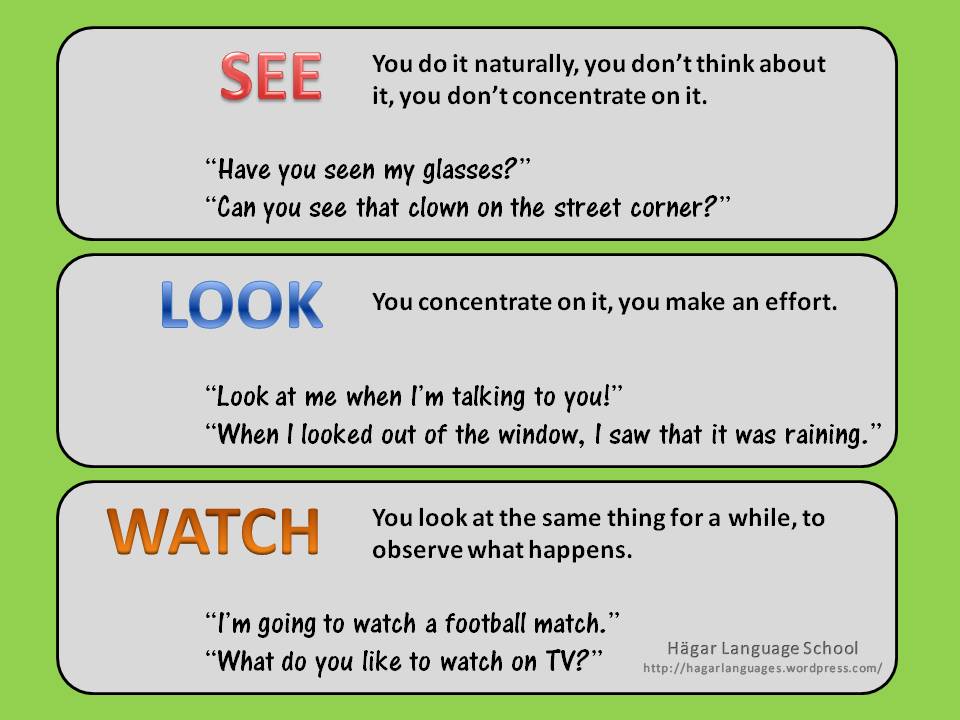
I have to remind myself that we are all guilty of only SEEING sometimes. We forget to LOOK instead. Worse, we often do not take the time to WATCH.

See — Look — Watch

see-look-watch

So often we go throughout our day only SEEING. I’m guilty of this. I believe SEEING people is the equivalent of saying, “How are you today?” with the expectation of hearing the response, “I’m fine, how are you?” SEEING is going through the motions with our eyes. SEEING is inactive. We SEE, but we are not doing so with deliberation. We are not concentrating. The students in the elevator were seeing me, but they were not looking. Well… that isn’t altogether fair as they were likely LOOKING at Milo, but only seeing me.

LOOKING means you deliberately concentrate… you notice. LOOKING is active. I suppose it is a little bit like being in “search mode”. When we are LOOKING, we ignore distractions, and recognize more than the superficial “window dressing”. My friends Deb and Ruth are photographers. I’m trying to learn to LOOK when taking pictures and not just seeing something pretty.

I love teaching. However, everything I really love about teaching has little to do with the subject I teach. I love teaching because I really feel like I’m making a difference. Somewhere along the line I learned to LOOK at my students instead of SEEING my students. Perhaps I had good role models. Perhaps it is because I have felt invisible myself. Do you know in my head I say, “Here’s LOOKING at you, kid”… with my best Bogart impression? I don’t just SEE you. I’m LOOKING at you.

I remember reading Blume’s book, “Are You There God? It’s Me, Margaret” as a kid. I can’t tell you the number of times I have asked God this same thing… only I insert Denise. There have been times I have been angry and added some things like, “Do You even CARE? Do you really see me?” I don’t always deal with my “new normal” in a positive way. I struggle with depression. I get angry–even at God. I need constant reminders that He looks at me. He is watching me; that He does care.

My husband hasn’t been looking at me lately. I don’t mean this as a slam, and I’m not telling you something that I haven’t shared with him. He signed me up to go to a banquet/game night/workshop for Valentine’s day at our church. Many couples and singles will be there. I don’t go to things like this… at least not with people who do not understand disabilities. Three weeks ago I told him I wasn’t going… that he shouldn’t have signed me up. He asked me (nicely) to go… “I rarely ask you step outside your comfort zone“. We argued. I pleaded. Two weeks ago we repeated the conversation. One week ago we practiced redundancy. Yesterday, I said I would go, but I told him, “You aren’t looking at me. You see me, but you aren’t looking at me. If you were, you’d know that I’m suffering from panic attacks. If you were, you’d recognize the sleep walking I’ve been doing as anxiety“. Sometimes we see right through the people we love the most. We aren’t looking at them. (Because I recognize that being a chicken can isolate me from others, I’m trying to find my courage…)

Please know that I understand we cannot have our LOOKING eyes on all the time. That level of concentration is impossible to do during every waking hour. However, I do believe that we can do more LOOKING than SEEING.

Yes. It takes a little more time and perhaps more effort.

No. We don’t burn calories for our trouble (darn it!)

Do you ever WATCH others? It goes beyond looking and does take the sacrifice of time. In a world of “time is money”, few people perceive that they can afford to take the time to WATCH. I believe we cannot afford not to take the time to do some WATCHING. Our very soul depends on it.

WATCHING changes you. WATCHING often changes the world. It is only that level of concentration and taking precious, valuable moments to study what your eyes see, that any connection is made to your heart–where all change is born.

See — Look — Watch

Be deliberate in how you exercise your eye muscles.

Denise Portis

© 2016 Personal Hearing Loss Journal

Where the People Aren’t

"I Wanna Be Where the People Aren't"
“I Wanna Be Where the People Aren’t”

I recently saw the above picture on FaceBook, and since I love “The Little Mermaid”, (and because I know cats can be SO “offended”), I found this VERY funny.

As an Introvert, I often want to be where the people AREN’T. I, and most Introverts, love people. However, folks misunderstand what an introvert, and extrovert are.

Heck.

There is even a newly labeled “blend” for those who exhibit both introvert and extrovert tendencies (lest others think we have multiple personalities, or Dissociative Disorder). Evidently an Ambivert, is one who has both characteristics, often in dependence on their role in that specific environment.

The difference between an Introvert and Extrovert, however, is simply how a person prefers to RECHARGE. It has nothing to do with whether or not they like people. Extroverts recharge by being around others. Introverts recharge by being alone.

All this thinking about “versions” had me contemplating how each dimension is effected by acquiring a disability. As a person who is differently-abled, my mind just “goes there” automatically when I think about personality characteristics. Who copes “better” with acquired disability? An Introvert or Extrovert (or Ambivert)?

“Version” affect

Interestingly, research shows that people who are extroverted are more likely to acquire a disability that limits mobility or results in chronic pain (Malec, 1985). Evidently extroversion can be equated with higher risk behavior and decisions that may result in injuries associated with motor loss/coordination or chronic pain. Introverts, too, are diagnosed with acquired disability, but often with diagnoses that are “non-traumatic” (Malec, 1985). This doesn’t mean Introverts are not involved in motor-vehicle accidents, or risky behavior that results in injury. The research simply shows that extroverts are more likely to choose activities that could result in these types of disability. Frustrated in my search for information regarding “version” types and acquired disabilities more like my own — those that are the result of genetics and/or “unspecified contributors” for deafness and Meniere’s disease, I continued searching the research databases.

I came across an interesting study by Noonan et al., (2004), called, “A Qualitative Study of the Career Development of Highly Achieving Women with Physical and Sensory Disabilities”.

BINGO.

I figured I hit the jackpot with this search and find! What I discovered, however, has nothing to do with a connection between “version” types and successful coping with acquired disability. According to Noonan et al., (2004), successful coping includes  “developmental opportunities (education, peer influences), family influences (background and current), disability impact (ableism, stress and coping, health issues), social support (disabled and nondisabled communities, role models and mentors), career attitudes and behaviors (work attitudes, success strategies, leadership/pioneering), and sociopolitical context (social movements, advocacy)” (p. 68). The difference between those who successfully cope and are extroverted and those who successfully cope and are introverted, centers around social support. An extrovert is more likely to identify and ask for help from any peers or individuals within their environment and in so doing actively engage in demonstrative advocacy. Introverts are more choosy about who they enlist support from, but are often “background” advocates. This is supported by research from Ellis (2003) in findings that include the difference in how extroverts and introverts enlist support, openly or privately – respectively.

“Version” Types and Assistive Technology

Having lived with special challenges for more than 31 years, I have had the (privileged) opportunity to meet hundreds of individuals who are differently-abled. Networking through organizations such as Fidos For Freedom, Inc., Assistance Dogs International (ADI), the Hearing Loss Association of America (HLAA), the American Association of People with Disabilities (AAPD), and numerous other organizations, I have met both extroverts and introverts who cope well — and some not so well — with acquired disability.

Some discouraging research does suggest that extroverts are more likely to use assistive technology and devices (Johnson, 1999).

This sucks.

I struggled for so many years with invisible disabilities and challenges, that my “epiphany” moment of changing that… making the invisible very visible, still gives me psychological goosebumps. My introverted life changed when I determined that I would embrace technology and assistive devices. I use bright canes, an assistance dog, bling up my cochlear implant and have informative brochures with me wherever I go. You’ll notice I didn’t say my introverted self became extroverted. I’m aware of and fully accept who I am – an introvert. Yet, using assistive technology and devices (and canine) has dramatically improved mitigating my own disabilities. Extroverts are more likely to seek “tools” early on in a diagnosis that incorporates an acquired disability (Wressle, Samuelsson, 2004; Kintsch & DePaula, 2015). Once introverts determine that the benefit of using assistive technology and devices improves quality of life, they, too, are able to embrace tools that improve life with the downside of making them (perhaps) more noticeable.

In closing, can I just say, “I LOVE PEOPLE”? We are different yet, are alike. We react to things differently and yet similarly. We all love dogs. 

Cuz… well, that just makes sense.

Denise Portis

© 2015 Personal Hearing Loss Journal

Ellis, A. E. (2003). Personality Type and Participation in Networked Learning Environments. Educational Media International40(1/2), 101.

Johnson, D. (1999). Why is assistive technology underused? Library Hi Tech News, (163), 15-17. Retrieved from http://search.proquest.com/docview/201534320?accountid=14872

Kintsch, A., & DePaula, R. (2015). A framework for the adoption of assistive technology. Retrieved on November 24, 2015, from http://citeseerx.ist.psu.edu/viewdoc/download?doi=10.1.1.124.3726&rep=rep1&type=pdf

Malec, J. (1985). Personality factors associated with severe traumatic disability. Rehabilitation Psychology30(3), 165-172. doi:10.1037/h0091027

Noonan, B. M., Gallor, S. M., Hensler-McGinnis, N. F., Fassinger, R. E., Wang, S., & Goodman, J. (2004). Challenge and Success: A Qualitative Study of the Career Development of Highly Achieving Women With Physical and Sensory Disabilities. Journal Of Counseling Psychology51(1), 68-80. doi:10.1037/0022-0167.51.1.68

Wressle, E., & Samuelsson, K. (2004). User satisfaction with mobility assistive devices. Scandinavian Journal Of Occupational Therapy11(3), 143-150 8p.

Pressure Cookers and “The BIG REVEAL”

pressure cooker

I can hear my grandmother’s voice saying, “Turn up the heat and see what boils out!” None of us like pressure.

None of us enjoy being stressed.

None of us “sign up for” difficult times.

Yet life is full of difficult times. It’s just the way it is. I use to get so aggravated at my mother for responding to my self-pitying tears and hiccup-sobbing announcement that “It’s not FAIR” with, “Denise… life is NOT fair“.

Life isn’t. Bad things happen to good people. Wonderful people suffer. Terrific human beings have their hearts broken.

Sucks, don’t it?

How a Pressure Cooker Works

I don’t know of very many people who own a pressure cooker. I don’t use one. I had a grandmother who used one fairly frequently, however. Why use a pressure cooker?

Pressure cookers essentially do two things.

  1. Raises the boiling point from about 212° to 250°.
  2. Raises the pressure inside the pot and forces moisture into the food.

Using the pressure cooker as a great analogy for LIFE, it helps us deal with higher temperatures, and keeps us from DRYING OUT. That’s right. When you are forced to deal with stress and pressures, you actually work out your “dealing with it” muscles and make it easier to handle the next burden. This is especially true if you are dealing with it often enough that you’ve developed good habits. New good habits include:

  1. Taking it to God and recognizing that “He’s got this”.
  2. Learning to ask for help from trusted friends.
  3. Learning to pace yourself; taking the time to rest when needed.
  4. Looking for the GOOD in a very BAD DAY.
  5. Burning your “Blame Game” after recognizing it is no one’s FAULT.
  6. Showing off your “BIG REVEAL”

That’s right. After the burner is turned down and the pressure is OFF, we lift the lid and  take our bows. The big reveal.

My former pastor from North Carolina reminded me however, that the “reveal” is often long before we lift that lid.

“The true test of character is not just seen in your actions but your reactions. We often like to excuse our inappropriate behavior by saying, “I’m sorry I was just under a lot of pressure.” But it’s the pressure that often reveals what’s on the inside and what we’re really like!” (Pastor Jake Thornhill)

While we are blowing off steam, we are also revealing to all who watch, who we really are. I have a dear friend who recently lost her young adult daughter in a car accident. As a person of faith, she knows she will see her daughter again one day. Yet, she has been very “real” in blowing off some steam. She is hurting. She misses her daughter. Her faith is strong. She’s dealing with it. However, I repeat: She is hurting. She misses her daughter. It is a poignant reminder to me that the very best people need our love, support, and prayers. Bad things DO happen to good people.

People who live with chronic illness, invisible conditions, or disabilities have good days and bad days. There will be days that you handle “your normal” in a positive, healthy way. There will also be days that you need to go back to bed and zip your lips because everything spewing out is pretty ugly. Not everyone is going to understand that. (Even some folks close to you won’t understand). Want to know some “ol’ sayings” that get on my very last nerve?

“What doesn’t kill you will make you stronger”

“Shine – don’t whine!”

“Be better, not bitter”

“When life hands you lemons, make lemonade!”

If we take these oft-used encouragements too far in our attitude towards OTHERS who are going through tough times, we miss out on one of life’s biggest blessings. One of the quickest ways to alleviate someone else’s stress and pressures are simply to let them know you are there for them. Pray for them. Hug them. Tell them, “I care about you. If you deliberately look away when life increases the temperature under someone’s pot and assume “this is good for them”, you miss the opportunity to be used in a special way.  Throwing a chirpy little positivism at them will not help them. BEING there for them is what matters.

Love someone with significant challenges? You will learn what to SAY, and what NOT to say, to support your loved one best. Please allow me to mangle one more colloquial expression?

“A watched pot never boils”. Oh yes it does. You can stand there and watch the pressure gauge go up and Up and UP on a friend or loved one’s pressure cooker, and it’s going to boil. There is no escaping the heat. I don’t know about you, but I want to be the kind of friend who is there through the cooking process and present for the big “reveal”, for when the pressure is gone and the lid is lifted. That’s what friends do. That’s what support is.

Denise Portis

©2015 Personal hearing Loss Journal


Specificity

specificity

Some posts get a lot of response both publically and privately. Back in March of this year, “When they SHOULD, but They Don’t” posted. In 2015, this post has generated the most “mail”. This tells me that the topic is important. This tells me that this problem exists. This tells me that people with chronic illness, invisible illness or disability, and health challenges struggle with:

  1. Asking for help
  2. Accepting help
  3. Realizing that assistance ≠ diminished independence

My husband and I travelled to see his parents two states away this weekend. I love having Terry all to myself in a car where he can’t get away from my enthusiastic chatter and conversation. Thankfully, the man doesn’t seem to mind that a seatbelt is all that separates him from his talkative wife.

I shared with him how much follow-up email I have received about this post. I know many people who are differently-abled personally. I also “know” many only through “Hearing Elmo”. Why is it so hard for the people in our lives to support us in a healthy, loving way without creating codependency, “IOU mentality”, and decreased self-esteem? I shared with my husband an article I recently read at the Invisible Disabilities Association, on what family members of differently-abled people should know. (You can read it HERE).

My husband, a psychologist who has worked with special populations for 25 years, reminded me of something that I really needed to hear. You see… lately we have not been communicating very well. Yeah, yeah, I know! Hearing loss is a communication disorder, but this isn’t new to us! Once in awhile, our communication breaks down. I get frustrated, he gets defensive, and the dogs choose sides. It’s ugly.

Be Specific or Be Quiet

One of the most common things people say to me about this topic is, “If the shoe were on the other foot, and THEY were differently-abled… I would be supportive and accepting!” In other words, “I’m sure I’d respond to all of this much better because I’m a super hero and they are NOT”.

Now don’t get me wrong! Maybe you WOULD respond more effectively! I believe that circumstances such as dealing with a health challenge can make us more compassionate, empathetic, and helpful to others in the same boat. I tried to point out to a reader that they “could not know how they would respond and support the other person because it isn’t their reality”. They “could not know how hard it is to love and support someone 24/7 that is differently-abled because they are not living that life”. These folks immediately fire back, “Well I LIVE WITH THIS 24/7 so I think I would know how hard it is”. Apples and oranges, my friends! They are both fruits and grow on trees, but are different in every way. Bottom line, if you are differently-abled or live with chronic illness, your perceptions and reality have changed. You cannot know what it would be like to be completely healthy and instead love/support someone who has special challenges.

I can already HEAR picture some of you freaking out about this. Before you send me hate mail though, please remember that I, too, am a person with special challenges, married to someone whose only significant challenge is to lose 20 pounds now that he’s middle-aged. (Hmmm. I may get called out for that comment should hubby read this week’s post).

I’ve already explained that my “captive audience” reminded me of something about good communication because I have slipped into some old habits and was feeling frustrated with him as a result. We need to be specific. Our loved ones are not mind readers. Here are some REAL specifics I have learned in my own communication – all of which we re-visited on this trip since communication has broken down lately.

Instead of:

You need your laundry done? Do it yourself MORON!

You know I love doing laundry. I need you to carry it down the two flights of stairs to the laundry room. Then, when you get home from work, at some point I will need you to carry it all back upstairs.

Instead of:

What? You can’t carry your own plate to the sink? Well I guess I’m making dinner FOR ONE from now on, You MORON! 

I don’t mind cleaning up after meals. My Meniere’s disease does not allow me to carry things to the sink very safely. Could you pile your stuff in the sink please?

(This specific instruction garnered the benefit of his carrying MY dishes to the sink, too!)

Instead of:

I can only walk one dog at night. You think I have excess energy? I guess poor Chloe is going to believe she is unloved and definitely UNWALKED. MORON!

Would you walk Chloe with Milo and I tonight? She needs the exercise.  You don’t need to go as far as I do, and it will mean a lot to her.

Instead of:

You’re tired of the empty cupboards and fridge? Go get your own groceries, MORON!

(Can you tell my unfiltered, “go to” cut-down is moron? Poor Terry) 

I am running on empty this week. Milo is a huge help, but I’m just “done”. Would you go get groceries with me this week? It would really help.

Instead of:

You never help me! (and just to stay consistent… MORON!)

Would you mind helping me with some housework today? My balance is particularly bad. I could dust if you would vacuum?

Specificity helps communication. Generalizations will lead to communication breakdown. It takes practice. You wouldn’t think it would, but it really does. Learn to be specific. You may even have to learn to be specific in how you want your loved ones to back off! A recent example:

Instead of:

Cripes, Terry! I can do this, you know. I’m not totally incapable!

(He was trying to help me get Milo’s leash on and Milo was super excited).

I know Milo is “blowing a gasket” here. But I have to learn to calm him down and give him the proper commands since I’m usually alone with him. He has to learn to settle on MY terms. Thanks for the help, but I’ve got this!

If you need help, be specific. If you can do something yourself, be specific. If you need a listening ear, be specific. If you need a hug, be specific.

Denise Portis

© 2015 Personal Hearing Loss Journal

P.S. I’m hoping to launch a series of blog posts over the next year. See HERE for more information. We need guest authors! 🙂