I Have Meniere’s Disease – Harsh Reminder

I have Meniere’s Disease. It is easy for folks to forget that as the disease is “invisible”. Amazingly, I sometimes forget I have it myself. So that is just embarrassing! GRIN. Meniere’s disease manifests itself in individuals in a variety of ways. The disease lacks specific symptoms and triggers that are true of everyone. The disease varies person to person. For myself, the weather tends to be a very specific trigger for me. If pressure systems come into the area that include heavy rains or even high humidity, I know that I will have a “bad balance day”. If that day is simply the beginning of a string of similar weather days, I can be so off-balance by day 3 or 4, that I practically have to CRAWL up and down steps. It’s rather embarrassing to crawl when you are 45 – believe me!

Here in Maryland, we have had a significant amount of sunny, low-humidity days. As a result, my balance has been pretty good. Yesterday, I did laundry and actually jogged up and down the steps WITH a laundry basket. Yet I forget sometimes that in spite of my having few visible symptoms, I still HAVE Meniere’s disease even on bright sunny days.

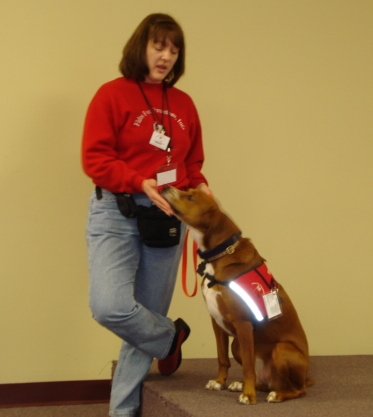
Chloe does a number of things for me, only some of which are hearing alerts (what she was originally trained for at Fidos For Freedom). Chloe has also been trained to help me with a number of “balance assist” tasks which are very helpful on days I am experiencing Meniere’s disease symptoms. As a matter of fact, there are weeks that Chloe actually does more balance work for me than she does hearing alerts. One thing we have taught her to do is to “roll” her own blanket. I carry a blanket that is HERS. The blanket goes to every place I teach. It smells like her and she knows it is her “safe place” to be unless I ask her to do something for me. I usually put it out of the way in the classroom, but where she can easily see me. The blanket and Chloe are usually within 4-5 feet of me at all times. Below is a video of Chloe “rolling” her blanket — she adjusts the carpet square to be high enough that I can easily reach it without having to bend past my limitations.

Harsh Reminders

I get aggravated at family and close friends sometimes when they make suggestions for me to do something or try something that they KNOW I cannot do. It’s easy to forget certain things I cannot do because I don’t walk around with a sign on my shirt that says, “Beware of fall when bending!” You know what? Sometimes the person who forgets what I can and cannot do is – ME. You’d think I’d always be aware of the fact that I cannot bend to get something off the floor without paying the price. For me… bending far enough to retrieve something off the floor means that I lose consciousness for just a few seconds. Everything goes “black” in my vision, and my “hearing” (even with a cochlear implant) turns off. As soon as I stand back up, everything snaps back into focus. If I bend quickly, (for example to try and catch something as it is falling), I usually “join” the item on the floor… only I am sprawled out looking ungainly and mystified as to how I got there.

We’ve had beautiful weather here in Maryland lately. I need to remind myself on days like these that I still HAVE Meniere’s disease. In class this morning, I began gathering my things up to pack into my bag and exit the room. I dropped my roll sheet, so Chloe went over to pick it up and bring it to me (an automatic retrieve). As I was standing next to her pink blanket, I decided to save myself time and reached down to pick up her blanket. I lost my balance and my forehead crashed into the podium. After connecting with a wicked CRACK, the impact popped me back on my caboose. Thankfully, I didn’t lose consciousness. Chloe trotted over to me with the roll sheet and dropped it into my lap. She wagged her tail at me, nose 3 inches from my face.

“Hey Denise! Umm… why are you on the floor?” (Yup. I can read my assistance dog’s mind. Scary, huh?)

“Guess I should have had you roll your blanket, huh Chloe?”

Upon hearing “roll blanket”, she calmly rolled the end of the blanket and then tugged it over closer to where I sat.

I heard a student over my shoulder ask, “Ummm. Mrs. Portis? Are you OK? Was that your HEAD?”

I tried to chirp out in a manner that was convincing, “Oh sure! I’m fine, no problem!”

As I used Chloe in a stand/stay to get off the floor… I thought to myself one word – over and over again.

stupid

Stupid

STUPID!

Harsh reminders are needed from time to time, if not for any other reason than to remind us of the consequences of forgetting our own limitations.

We need to remember our own limitations. As a person with hearing loss, it helps me to remember that I cannot hear well in really noisy, crowded areas. If I need to have a conversation with someone, it is better to ask them to step over to the side out of the “hub-bub” of noise if I need to talk to them. Failure to acknowledge what I cannot do well (hearing in noise) only results in that I will be frustrated and angry at my inability to understand the conversation. If I want to play with my dogs, I need to remember to sit on the floor in order to tug on toys, throw balls, and squeak stuffed animals at them. If I try to “play” standing, I am sure to take an unplanned nosedive.

Have you had some harsh reminders about your own invisible illness or disability? Some lessons are hard to learn!

Denise Portis

© 2011 Personal Hearing Loss Journal

Reflections on National Invisible Illness Awareness Week

According to the Invisible Illness Awareness website, the following statistics are true:

  • Over 100 million people in the U.S. have a chronic illness;
  • 20.6 percent of the population, about 54 million people, have some level of disability;
  • 9.9 percent or 26 million people had a severe disability
  • 1.8 million used a wheelchair
  • 5.2 million used a cane, crutches, or a walker
  • So that is less than 6% who have a visible illness.
  • There are many illnesses that start out being invisible and as the disease progresses it becomes more visible.

Also note that:

  • 26 million persons were considered to have a severe disability;
  • yet, only 7 million persons used a visible device for mobility.
  • Thus, 19 million of the people who were defined as severely disabled, did not use a wheelchair, cane, crutches or walkers.
  • In other words, 73% of Americans with severe disabilities do not use such devices.
  • Therefore, a disability cannot be determined solely on whether or not a person uses visible assistive equipment.

U.S. Department of Commerce (1994). Bureau of the Census, Statistical Brief: Americans With Disabilities. (Publication SB/94-1).U.S. Department of Commerce (1997). Bureau of the Census, Census Brief: Disabilities Affect One-Fifth of All Americans. (Publication CENBR/97-5).

Why Do I “Plug” Invisible Illness Awareness Week?

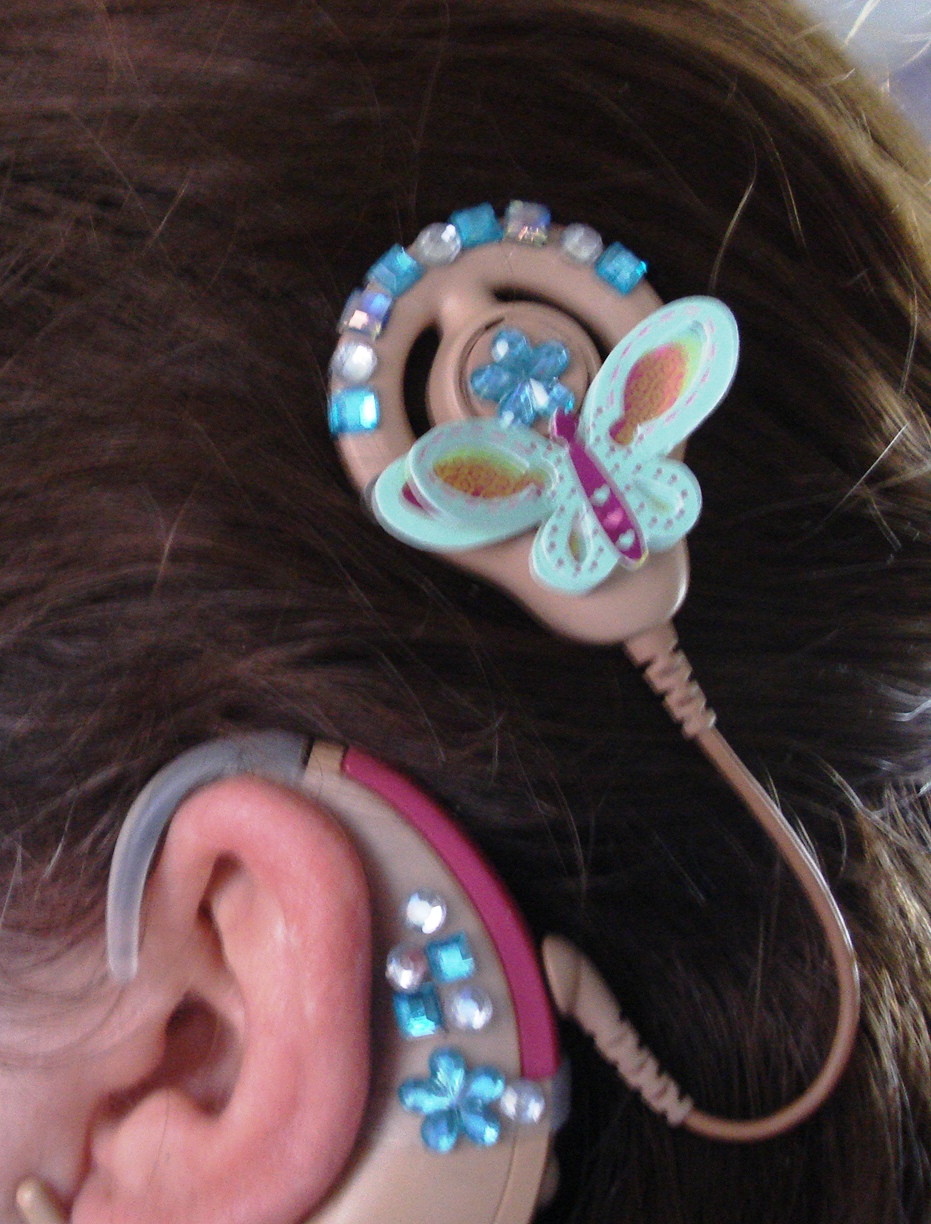
I have been trying to raise awareness about this week for three years now. This year, a friend noticed my “don’t miss” posting on Facebook and couldn’t resist teasing me about it. After all, I don’t exactly allow my challenges to be INVISIBLE. I wear a bright red ear mold on the hearing aid in my “deaf” ear. I wear sparkly “bling” on the cochlear implant on my “hearing again” ear. I go about my life accompanied by a hearing assistance/balance assist dog 24/7. I learned long ago that it was in my best interests to make an invisible disability – VISIBLE. It kept me from being knocked out of the way, and helped people realize that something about me is different. I can still work, shop, go to movies, hike, and dance… yeah. OK, maybe not that last part…

I just don’t hear well… especially in big, cavernous places, or busy, buzzing atmospheres. Once you get my attention and I know you are talking to me, I can actually hear you great! I may have to ask for a very occasional repeat, but for the most part I do really well. I’m proud of how far I’ve come in my hearing. Despite all my visible reminders and “kissing sidekick”, Chloe, people who know me well (friends, co-workers, and family members) will forget that I may have trouble if you don’t get my attention first and that I can’t move FASTever. Heck… sometimes even *I* forget that I cannot move fast. Nothing reminds me quicker than when I

fall

down

and

go

BOOM!

Through the years I’ve been able to meet some wonderful people. Some examples include:

1) Folks through the training center at Fidos For Freedom.

2) People at Hearing Loss Association of America conventions or conferences

3) “Hearing Again” recipients at Cochlear America conferences

4) Individuals in support groups for tinnitus, Meniere’s disease, hearing loss, and assistance dogs users (both face-to-face and in virtual environments online).

Not every disability can be made visible. Not every person chooses to even try and make something invisible – visible. They have their reasons and it is an individual’s choice how they want to disclose or keep hidden any disabilities they may have. It could influence their work environment, relationships, and even self-esteem. I choose to support ALL individuals who live with chronic illness, invisible illness, or disability. Recognizing these illnesses once a year in a push for national awareness, I hope will eventually dispel erroneous ideas and information about these very populations. This is one of the reasons I “blog”, and invite guest authors to write for “Hearing Elmo” as well. Raising awareness makes a difference… one person at a time.

I read some incredible stories of courage, faith, and perseverance this week at the national website for invisible illnesses. You can check out some of them here. I’m proud to be a part of a community of people who choose to live a victorious life  – “in spite of”.

Take some time this week if you can to recognize the courageous people that you know who live with invisible illness and the choices they have made in order to live life to its fullest!

Denise Portis

© Personal Hearing Loss Journal

30 Things

From Invisible Illness Week

30 Things About My Invisible Illness You May Not Know:

1. The illness I live with is:

Invisible if I want it to be, but I wear bling and use a service dog so that it is not.
2. I was diagnosed with it in the year:

1993
3. But I had symptoms since:
I was 6 years old after a car accident.

4. The biggest adjustment I’ve had to make is:
Learning to hear with a cochlear implant and learning how to adjust on days my Meniere’s disease symptoms have me wobbling around with poor balance.

5. Most people assume:
My cochlear implant has “fixed me”.

6. The hardest part about mornings are:
Not being able to hit “snooze” on my alarm clock since that happens to be my service dog, Chloe. When the alarm goes off, she kisses me awake and there is no going back to sleep. The dog is definitely a “morning dog”.

7. My favorite medical TV show is:
Not really a medical show but I do like Dr. Phil. He’s a “reality therapist” and I think everyone who has an invisible illness needs to have a healthy dose of reality!

8. A gadget I couldn’t live without is:
FM Clipboard for classes.

9. The hardest part about nights are:
Trying to ignore the tinnitus that comes roaring into play after removing my cochlear implant.

10. Each day I take __ pills & vitamins. (No comments, please)
1 prescription (blood pressure) and 9 different vitamins – one of which is Manganese. Studies have shown that people with Meniere’s disease may have a Manganese deficiency.

11. Regarding alternative treatments I:
Have tried numerous ones including acupuncture, chiropractor, and vitamins.

12. If I had to choose between an invisible illness or visible I would choose:
Visible – no question. This is why I try to make my invisible illness – VISIBLE.

13. Regarding working and career:
I am proud that I am able to work having made a number of adjustments and having chosen to be partnered with an assistance dog.

14. People would be surprised to know:
That I dread group activities because I don’t hear as well as they think I do.

15. The hardest thing to accept about my new reality has been:
That I must sometimes choose not to do things I once enjoyed because of my symptoms. For example: If there is a movie I wanted to see that is coming out, but the weather is bad and my Meniere’s disease has flared up, I cannot go and have to put it off.

16. Something I never thought I could do with my illness that I did was:
Go back to school and finish my MS.

17. The commercials about my illness:
There are none. I’ve never seen a late-deafened/cochlear implant commercial, nor a commercial about Meniere’s disease.

18. Something I really miss doing since I was diagnosed is:
Listening to music.

19. It was really hard to have to give up:
Friends who couldn’t cope with the new me accompanied by a service dog.

20. A new hobby I have taken up since my diagnosis is:
Blogging/writing

21. If I could have one day of feeling normal again I would:
Go to an amusement park and ride every roller coaster there!

22. My illness has taught me:
That the disability community is live and well and fully utilize the Internet to connect, support, share information and to be proactive.

23. Want to know a secret? One thing people say that gets under my skin is:
“Nevermind”. If you aren’t willing to repeat it for someone who hears differently are you not behaving as if it doesn’t matter to THEM?

24. But I love it when people:
Include me.

25. My favorite motto, scripture, quote that gets me through tough times is:
Helen Keller:  “Blindness separates us from things but deafness separates us from people. “

26. When someone is diagnosed I’d like to tell them:
Email me. Ask questions. I want to help!

27. Something that has surprised me about living with an illness is:
How family members who once knew you “when” are not willing to learn about the new you.

28. The nicest thing someone did for me when I wasn’t feeling well was:
Email me and ask how I was doing.

29. I’m involved with Invisible Illness Week because:
Many illnesses and disabilities are invisible. I want to raise awareness.

30. The fact that you read this list makes me feel:

Appreciative that you care enough to learn more!

Denise Portis

© 2011 Personal Hearing Loss Journal

“It’s Just Lack of Sleep…”


When I was in college I adopted horrendous study habits that included “all nighters” and cramming. I also began to nap. I needed them. Between work study at the campus library and going to school full-time, naps were a coveted, hard-earned prize. I felt better after a nap. I could think better, got along better with my roommates, and could better survive the next long night of studying.

My children are 11 months a part. (No… it was not planned that way!) I did various “odd jobs” throughout their childhood so that I could stay home with them when they were babies, toddlers, and pre-schoolers. Thankfully, this meant I could nap at the same time they did. Let me tell you nap time may have been a thing of dread for a precocious three-year-old, but they were a luxury I enjoyed! I used a baby monitor even after my kids were not babies so that I could sleep with my good ear on it in order to make sure they stayed in their beds for their naps.

Darn it. My kids grew up and my part-time jobs began insuring I would no longer have a nap. I miss them still. I may not get a nap anymore, but I do make it a priority to get a good night’s rest. There is no magic number for hours of sleep necessary for an adult to function optimally. According to the National Sleep Foundation, sleep needs are individual; however, experts agree that healthy adults need 7 to 8 hours every night without risking accumulation of sleep debt (National Sleep Foundation, 2010). You may be slack-jawed having just read that. What adult consistently gets 7-8 hours of sleep every night? Few do.

According to the 2008 Morbidity and Mortality Report, 29% of all American adults report sleeping less than seven hours a night habitually. The report clearly stated that, “The importance of chronic sleep insufficiency is under-recognized as a public health problem, despite being associated with numerous physical and mental health problems, injury, loss of productivity, and mortality” (MMWR, 2008, p. 1175). So if we know we need more sleep, but don’t make it a priority… what is really at risk? Actually… a lot. Depression, heart disease, injury at work or when driving, and risk of DEATH may result from habitually losing sleep.

Factor in Invisible Illness or Disability

Let’s say you have an invisible illness or disability. You may argue (albeit weakly) that you get as much rest as other adults you know. I heard a mother with severe hearing loss complain of rarely getting a good night’s rest, “… in spite of being completely deaf at night without the hearing aids. It’s a matter of getting to bed and going to sleep. So much to do!” You may not realize that if you are operating with an invisible illness or disability you actually need more sleep. Don’t take my word for it. Lack of sleep may seriously impact the quality of life of a person with hearing loss (Preminger & Meeks, 2010). I have met people with Fibromyalgia, Chronic Fatigue Syndrome, MS, brain injury, PTSD, hearing loss, balance disorders, and paralysis who have all shared that they do not get as much sleep as they really need to live their best life.

For some, it may be that they are trying but chronic pain or discomfort may limit how much sleep they are able to get each night. For MANY, however, they simply do not take into account that they need more sleep than the average adult. Why do we make excuses for not making sleep a priority? If a doctor told you that you will feel better and perform better if you could make it a priority to get 2 to 3 more hours of sleep each night, would you do it? “Doctor’s orders”? If research and word-of-mouth testimonies give two thumbs up to getting more sleep, why do we ignore this?

I get 8 hours of sleep every single night – and sometimes I get nine! I’m no saint, but honey? Let me tell you I am ALL DEVIL if I do not get enough rest. It is beyond being grouchy too. I’m more insecure because I don’t hear as well. I fall more and sport pretty, but painful bruises. I don’t make time to exercise if I’m tired. My heart needs to exercise. I have a propensity towards depression when I don’t get regular aerobic exercise. My tinnitus is worse. I say “HUH?” more. (Honestly, I do!) Those who know me well… know how poorly I function when I do not get enough sleep. I lack the finesse of it being a cumulative effect too. Instead it shows up immediately. One of the most unselfish, “good for me” things that I do for myself is make 8 hours of sleep a night a priority. It’s a MUST in my daily schedule.

How about you? Do you get enough sleep? I have never met anyone that couldn’t re-arrange LIFE in order to prioritize sleep if they really chose to do so. It is a little embarassing the things we cut out of our life in order to make a good night’s rest a priority. You may cut out things like less time on FaceBook, or surfing the net, or channel surfing on television. If you live with an invisible illness or disability, how about trying a little test. For one month, really strive to get at least 8 hours of sleep each night. Journal about how you feel and about the steps you took in order to make sleep a priority. Ask others if they notice any changes in behavior, over all mood, and performance. You just may be surprised how important sleep is to even YOU.

Do you know you need more sleep but simply cannot find those hours? Talk to your doctor about whether or not you have a comorbid sleep disorder in conjunction with your illness/disability diagnosis. It is not uncommon to have difficulties going to sleep and STAYING asleep when you struggle with other issues.

I’m interested in your feedback! Have you found getting more (or less) sleep impacts your disability?

Denise Portis

© 2011 Personal Hearing Loss Journal
————–

Are sleepy workers a threat to safety, productivity?. (2009). Occupational Health Management, 19(2), 20-21. Retrieved from EBSCOhost.

National Sleep Foundation (2010). How much sleep do we really need? Retrieved August 22, 2011, from http://www.sleepfoundation.org/article/how-sleep-works/how-much-sleep-do-we-really-need

Perceived insufficient rest or sleep among adults — United States, 2008. (2009). MMWR: Morbidity & Mortality Weekly Report, 58(42), 1175-1179. Retrieved from EBSCOhost.

Preminger, J., & Meeks, S. (2010). The influence of mood on the perception of hearing-loss related quality of life in people with hearing loss and their significant others. International Journal of Audiology, 49(4), 263-271. doi:10.3109/14992020903311396

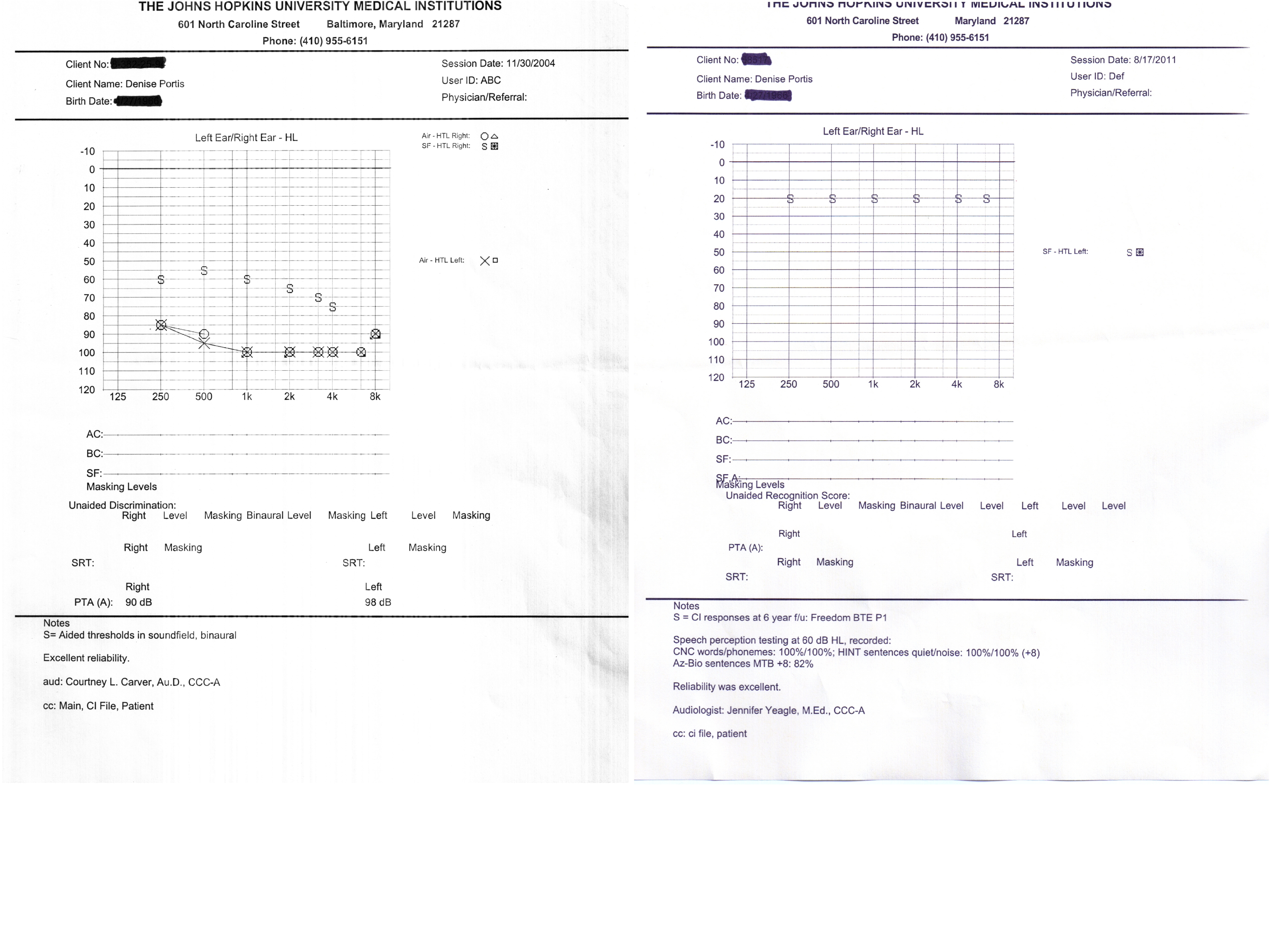
Six Year Post Activation Mapping at Johns Hopkins

(left) 2004 Pre-CI (right) August 17, 2011


(Click on photo above to enlarge)

Today I traveled to Johns Hopkins for my 6 year post-activation mapping of my cochlear implant. A number of things went through my head as I traveled a familiar road to my audiologist at the Listening Center. For one thing, I listened to the GPS give directions and didn’t glance at it once – for I was hearing it. I talked to my assistance dog, Chloe, in the back seat when I pointed out the stadium as we passed and heard her bark in response to let me know she was an Oriole fan.

As I entered the parking deck for Johns Hopkins Outpatient Center, I mashed the button to give me a ticket. I heard the instructions to pay before returning to my vehicle prior to leaving. Walking across the enormous lobby I could hear families chatting while they waiting to check in, and admissions counselors quietly talking to patients ON MY DEAF (implanted) SIDE. As I approached the elevators I heard a series of “dings” as different cars reached the lobby level waiting to take patients “up” or “down”. The elevator announced the floor level on each concourse and warnings to stand clear of the door echoed through the car.

All of these sounds were silent for me in 2005. Six years later I hear them all and do so with relative ease. When I was originally tested to see if I qualified for a CI, I entered the sound-proof booth with my husband. I waited to hear sounds in order to “mash the button” and turned to my husband to say, “Gee… when will it start do you think?” My voice drifted off when I saw the look on his face. SHOCK.

He gestured to the window and then the speakers and said, “Denise, the test has been going for 2 or 3 minutes already”. Neither one of us realized how poorly I was hearing since I relied on speech reading so much. Today I entered the booth with confidence and even took a test “brand new” for me. With crowd noise I had to repeat different voices (male and female) of a conversation. My audiologist was very impressed. She said she could see “the switch turn on” after a sentence or two when my CI picked out the important voices from among all the others.

I realize cochlear implants are not an option for everyone with hearing loss. I also know that some people get a cochlear implant and are not 100% happy with the outcome. For me… the Nucleus Freedom cochlear implant changed my life. I hear SO well, in fact, that I’ve chosen not to go bi-lateral like many in my peer group have done. On my “bad” balance days, I cannot risk having my balance worsen because of a 2nd implant at this time. I was diagnosed with Meniere’s disease PRIOR to my first CI, and my family and I cannot tell that it made my symptoms any worse. I have, however, found some research that may indicate a 2nd CI could worsen Meniere’s symptoms – so for now? I wait to see what the future may bring. My audiologist believes I hear as well with one as well or better than many do with two. I’m happy with how I am hearing!

Denise Portis

© 2011 Personal Hearing Loss Journal
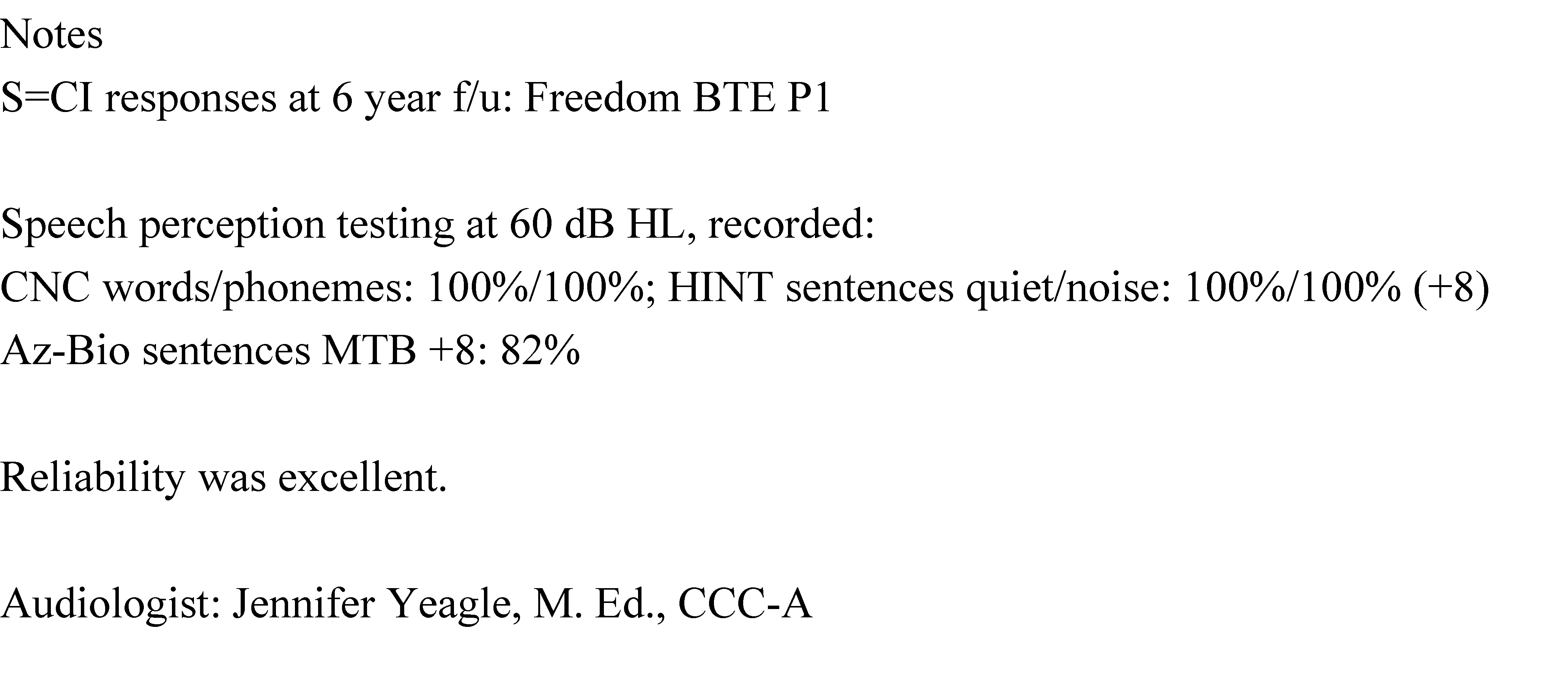
 

Sometimes? There’s Not a Great Solution…

Chloe doesn't know Spanish...

Sometimes? There is not a great solution available for positive advocacy.

This past Friday, my 21-year-old daughter asked me to go shopping with her. I’m always thrilled when she CHOOSES to spend time with me, so I agreed so long as it was the morning so that we could “beat the heat”. She agreed. She wanted to shop for new “under things” and I knew JCPenny was having a sale on these items. Kyersten, Chloe and I headed for Annapolis Mall to shop.

The bad thing about shopping in the “intimates” department is that there is not much room to maneuver. I was having some difficulty with my balance as well so I was just being extra careful about how much moving I had to do. Chloe does great even in confined spaces with the exception of that tail. I talk to her a great deal while we are out because it helps to keep her attention on me. Kyersten was busy looking at different styles available.  My main job was to offer the occasional opinion and situate Chloe so that her tail didn’t knock things off with her loving “wag”. Chloe may not understand all that I say to her, but she does know her name and will wag as if she is paying attention to everything else I’m saying. Because my attention was on HER, and as we were in “tight quarters”, I was taken by surprise by two little girls who ran up and threw their arms around Chloe’s neck.

One little girl was about 4-years-old, and the other (obviously big sister) was probably 9 or 10-years-old. I stuttered out, “Oh! I’m sorry. She’s a working dog and cannot be petted right now”. The girls continued to squeeze and talk excitedly.

I tried to tune in a bit better and realized they were talking in Spanish. With my heart plummeting to my stomach, I held up my hand and shook my head NO saying, “Please don’t pet her. She is a working dog”.

The older girl stopped and tried to talk to me in English, and I understood “She’s a pretty dog”. At this point Chloe broke her sit/stay in order to break the choke hold. I was unprepared and went to my knees and caught myself on a rack.

With bras, panties, and tiny hangers attached to various body parts, I again held up my hand, shook my head no and said, “No please!” in a very firm voice. As I was still wobbling, I sat on my caboose to get my bearings.

The older girl said, “Oh … sorry” with some other words that I could not make out because of the accent. I did understand that she understood that Chloe was NOT to be petted. In Spanish she (I think) explained to her younger sister about Chloe. I think she realized something was amiss because I was now sitting on the floor with lingerie scattered around me. She left quickly with her little sister in tow.

I had Chloe brace so that I could get up, and asked my daughter to pick up some scattered articles. (Chloe could have, but I didn’t figure anyone else would want dog saliva on merchandise). Right as I was on one knee about to stand, the youngest came zooming around the corner with a squeal to squeeze Chloe again (who was now in a stand/stay and “brace”). I held up my hand and intercepted the young lady and my hand blocked her at the chest. Although I did not PUSH, it did stop her in her tracks. I said firmly with a head shake, “NO!” She turned and ran away.

I did NOT want to place my hands on someone else – let alone a child. I didn’t injure her, but I really felt out of options. I was “rattled” the remainder of the day. I was very upset with MYSELF that the resolution to this problem ended up playing out like it did.

When All Else Fails… Be Firm

I did look around for the youngster and never did see her or her older sister during the remainder of our shopping trip. When something doesn’t go according to plan I tend to beat myself up about it I’m afraid! I kept thinking about other options I may have had, and tried to think of what I might do should this happen again. (I’m open to suggestions – grin).

Sometimes we can try to advocate in a positive way – and the situation may just fall apart. Sometimes? You just have to be firm and resolute. We should always try to be positive and upbeat at the beginning…

“It would assist me in staff meetings if everyone would just pop a hand up before speaking so I can locate who is talking”.

“I can easily do my share of answering the phone if I had access to a captioned telephone that would provide understanding for when I don’t hear everything”.

“She’s not a pet. She’s a service dog and she can come into the store with me”.

Yet there are times we may have exhausted other options and have to stand firm.

“I need everyone to simply pop your hand up with a small wave before you speak. Thanks in advance”.

“I will require a captioned telephone so that I can do my job and share the task of answering the phone”.

“Here is a flier about what the ADA says about my rights. I’ll be over there shopping should you have any additional questions”.

I don’t think ANY of us welcome having to be firm and insistent, but there is a time and place for being firm. I try to always remember that there will be others who come after me that may also have accessibility issues. How I handle a situation may condition someone with normal hearing to respond to the next person they interact with who has a disability. There are times, however, when all pleasant and positive avenues have been closed to you. Even in your firmness… keep your cool. Keep it short and stick to the facts. My husband grins and tells me, “Denise! TMI. Keep it short! They don’t care about your background or care to hear your story”!

Accents, Foreign Languages, and Hearing Loss

The great thing about our country is the diversity. Because of where I live there are a large number of minority populations who speak English as their SECOND language. I do not speak an oral foreign language so I’m a little jealous of those who can! My mother taught high school Spanish for over twenty years, but her children never learned (much to her dismay). I have a lot of respect for people who speak English as their 2nd language. It is difficult, however, to understand language when an accent distorts the way a cochlear implant and/or hearing aid pick up the words. I have trouble understanding people with thick accents that may speak PERFECT English. I even have problems with American accents such as folks from Boston, Texas, etc. (I understand “Southern” as I lived there for so long!)

However, the fact that I have difficulty with accents, is MY problem. People with hearing loss should have patience with those who speak other languages as their primary language. I have heard late-deafened folks demean and criticize those who speak other languages. I always think to myself, “Really?” It is far more productive to explain that you have a hearing loss and have trouble understanding when an accent is present. Let them know that you are aware it is your problem, and pleasantly ask if they can perhaps speak slower and face you when they speak. I’ve overheard HoHearies blast people with heavy accents – as if it is THEIR fault! Always – ALWAYS – remember you are an advocate for others with hearing loss whether you signed up for it or not! If you are negative, critical and defensive, you are having a negative influence on how the rest of us are treated in the future. Yes, it can be frustrating and even embarrassing to have to ask someone with a heavy accent to repeat themselves again and again. But “own” the problem as yours – it isn’t their problem. It’s a big thing to be fluent in more than one language, so treat them with the respect they deserve.

Denise Portis

© 2011 Personal Hearing Loss Journal
Timeless Reminders

In 483 B.C., Medo-Persian King Xerxes (also known as Ahasuerus) threw a huge, 7 day party. What was strange about this party is that it FOLLOWED a 180 day, kingdom-wide celebration. I mean… who has THAT kind of money? I guess Xerxes did – and he had no qualms about spending it. At some point in the party, Xerxes makes a mistake. He assumes his queen, the beautiful Vashti, will want to come to the men’s party and parade around for everyone. She set him straight pretty quickly… all through the channels of the first private messaging system… eunuchs. After consulting the fellas in his “boys club”, Xerxes boots Vashti to the curb… or actually to a part of the harem where he’ll never see her again. ‘Cept… now he’s lonely. This lonliness sets in play a kingdom-wide search for all the beautiful single women in the kingdom. That’s right… there’s a job opening in the palace.

Hadassah was a young Jewess being raised in Susa by her cousin Mordecai. Was it because she was near the palace at Susa that she was picked up so quickly? We don’t know, but we do know she was a “hottie”. Beautiful in form and face. Her name was changed to Esther and she began the year-long process of getting her chance with Xerxes to see if he liked her well enough to become his new queen. History tells us that in 478 B.C., Esther becomes queen. Guess she made an impact…

Xerxes was a “strange ‘un”. He paid attention to seemingly unimportant things and completely overlooked really important details… like signing a law from a “Jew hater” named Haman to wipe out and annhilate all the Jews on a specific day. Haman is conniving and manipulative and leaves out the little detail about exactly WHO the race was to be destroyed. Xerxes didn’t have a problem with the Jews – one saved his life even (wouldn’t you know it was Esther’s cousin Mordecai?) – but Haman certainly did. If you are familiar with the story, you know that Queen Esther is given the opportunity to save her people from this vengeance edict that was drawn-up and pushed through into law by Haman. During a pep talk from her cousin Mordecai via that early private messaging system… he tells Esther something that has reverberated down through the years to words we all know. “FOR SUCH A TIME AS THIS”. Those six words are profound, aren’t they? Unfortunately, Esther 4:14, has an even greater timeless reminder that is often overlooked. Mordecai actually says, “And who knows whether you have not attained royalty for such a time as this”. Yup. Esther saves her people by exposing Haman and suggesting to Xerxes to write a counter-law that will allow the Jews to fight for their very lives instead of rolling over and giving up. It seems no one wants to face a Jew with a sword. They are saved.

I think we miss an important reminder when we take only those six words out of context. All the pieces were in play at the right time, right place… all for a very important reason. I’ve often thought about my own life and tried to look at opportunities available to me that I have as a result of – all the pieces being in play at the right time and right place. Who knows whether or not I became deaf for such a time as this?

You Have a Disability. Now what?

I’m reasonably certain that if I asked for a show of hands for anyone who signed up for developing a disability or acquiring an invisible illness, I’d see a “room” full of people sitting on their hands. To be painfully honest with you, there are days that I really hate being deaf and only being able to hear if I wear bionics. I can get extremely depressed after experiencing a day where I had to navigate my space hanging on to walls or using a cane. I didn’t ask to become deaf, nor aspire to being a person with Meniere’s disease. Yet I firmly believe that everything has a purpose. So I’m deaf and hear again with a CI. What can I do with that?

Do you know that you have access to people that may be unique to YOU? The Internet may bring like-minded people together for discussion and support, but many of these people you may never meet face-to-face. Yet in YOUR life, there are real people that you have contact with that I do not. You don’t know the sad-eyed waitress at my favorite locally-owned restaurant. You don’t buy stamps from the grumpy postal worker I see once a month. You don’t stop and wait your turn at the crosswalk where a harried, sweaty, “I can’t take much more of this”, crossing guard faithfully sees school children across the busy street each weekday. These folks are unique to me, just as specific individuals you know at work, school, church, and PTA are unique to YOU.

Do you literally navigate life by using a power-scooter or walker? Then you are mobile in a manner I do not understand. Do you have fibromyalgia? I don’t understand that kind of pain – symptomatic of an invisible illness often misunderstood. Even those I know who have hearing loss and Meniere’s disease face different problems, frustrations, and symptoms than I experience. Hearing loss is often as unique as the individual. Yet all that is YOU, puts you in a unique position to make a difference where you are. I cannot influence the people that are unique to you.

You know something? It helps me to remember this timeless reminder when I am feeling particular frustrated about my life. I’m in a specific time and place with specific gifts, skills, and personality to influence those around me in a positive way. What is frightening is remembering that I can also influence others in a negative way. Going back to Mordecai’s pep talk to Queen Esther, he also reminds her that if she keeps her mouth shut and doesn’t ask Xerxes for the life of her people, then deliverance will come from another place.

Esther 4:14, “For if you remain silent at this time, relief and deliverance will arise for the Jews from another place and you and your father’s house will perish. And who knows whether you have not attained royalty for such a time as this?”

I don’t know about YOU, but I want to seize my opportunities. Sure… some may seem like small opportunities for impacting the life of another, but who is to say that opportunity is without worth? If I don’t live my life actively looking for opportunities to make a difference, then someone else will be in a position to do it instead. Especially if it is an opportunity to be a blessing and to make a positive difference in another. You are unique. The opportunities available to YOU are unique.

President Harry Truman said, A pessimist is one who makes difficulties of his opportunities and an optimist is one who makes opportunities of his difficulties”. Yup. I realize there is some therapeutic value in the occasional pity party. However, don’t stay as a permanent guest. You are missing opportunities if you keep your eyes on SELF. I believe living a life looking for opportunities makes life worth living. I try to re-evaluate where I am in finding and seizing opportunities every Monday. Mondays are dreaded by most; however, I’ve come to look forward to them as I’ve discovered self-evaluation can be invigorating – or at least a KICK IN THE PANTS.

Denise Portis

© 2011 Personal Hearing Loss Journal


“Tag” You’re IT

Chloe and I were recently in a Wal-mart shopping. In the household cleaning section, one doesn’t expect to run into a child. Among the 4 or 5 other shoppers and carts stood a 5 or 6-year-old little girl. I don’t know how she ditched mom, but she was obviously unsupervised. She was about 20 feet away when she first caught sight of us and slowly made her way down the isle towards us. Inwardly I cringed… for I didn’t really feel like asking her not to pet Chloe. Instead she got close enough and looked at Chloe’s vest (although I’m not sure she could even read), and then at the side of my head where my cochlear implant and BLING sparkle for all the world to see!

She smiled at me and said, “This is a WORKING DOG”.

I replied (with some surprise), “You are EXACTLY right! Chloe is a working dog”.

Unsure of what communication might follow that exchange, she smiled impishly up at me… reached over with her index finger an POKED me while exclaiming, “TAG! You’re IT”. With a squeal she was gone and around the corner with pony-tails flying behind her.

Service Dogs and Play

Chloe’s tail started wagging and she looked up at me with an expectant, “Yeah! Let’s go!”

I just grinned at her and caught sight of a lady about 3 yards from us just grinning from ear-to-ear, having seen the whole thing. I smiled back, calmly walked by her and just as I was passing her – reached out and poked her while saying, “Now YOU’RE it…”  She burst out laughing and we went on our way.

I am asked occasionally if Chloe is ever allowed to play. Most recently this came up at a DEMO we did for the Department of Disabilities for the state of Maryland. I think people love the idea of working dogs, but often wonder if the dog is ever allowed to be “just a dog”. We always assure people that our dogs have plenty of opportunities to rest, play, and just be a dog. They are frequently rewarded throughout the day with treats, praise, and physical touch. Walmart is not the BEST place to induce Chloe to play, so I opted out of the game of “tag”… but I can assure you that Chloe is allowed to play with our family dog, and with family members very often.

All Work and No Play

Just like people, dogs need down time. Especially working dogs IMHO. But we could learn a few things from our furry partners. Chloe often naps when waiting in line at a busy cash register, or if we are traveling by Metro, airplane, or even the family car. She knows when to rest and get some shut eye. She also knows when to play and enjoy a major tail-wagging romp! I try to remember to take “5” and rest when I can. I try to get 8 solid hours of sleep each night because I actually hear better, and walk more steady if I make sure a good night’s rest is priority.

Perhaps we should all play tag from time to time. Hey! It is good exercise, and I’ve not met anyone yet who didn’t smile after being tagged!

Denise Portis

© 2011 Personal Hearing Loss Journal

Disabled (Grimace)

Denise and Chloe at a dAP for HLAA-Frederick County in 2009

Disability (grimace). There is a small part of me that cringes when I hear that word, for often it is heard with real (or imagined) inflection that denotes a negative meaning. Occasionally, I get some “flack” from some of my readers about using the term “disability” so freely. Some folks hate the word and avoid it all costs. Others embrace it freely, caring not what the “label” may be since they are struggling to simply cope with WHAT IS. Recently, a fellow client at Fidos For Freedom used the term “differently abled”. I like that! That is the first time I’ve heard that particular variation. At Fidos For Freedom (where my hearing assistance/balance assist partner comes from), numerous programs are designed to carry the maximum “punch” in creating awareness in our community. One program is the dAP (disABILITY Awareness Program). Demonstrations are given at schools, churches, community groups, fairs, and much more to inform and teach the public about the different types of assistance dogs available, partnered with people with various disabilities. The program focuses on the abilities of all people and how an assistance dog can provide independence to people who do things “differently” as a result of chronic disease, invisible disabilities, hearing loss, mobility challenges, and much more.

Personally, I use the word ‘disabled’ freely for it is the wording in the Federal law that protects my rights as an individual who happens to have disabilities. As long as the law uses the term, I will continue to use it in order to identify with my freedoms – not my actual disability. I’m all for changing the term “disability” to something less negative, but until that happens on the federal level – I’m sticking with the term that protects my rights. Labels are awful aren’t they? I actually prefer “person with disabilities” for it identifies me as a person FIRST, and the disability second – as a descriptor, not a noun. I’ve been a member of the American Association for People with Disabilities for a number of years. They have done a lot of terrific work in laying the foundation for future laws that protect Americans who happen to be “differently abled”. Do I hope the word is eventually abolished and changed to something more politically correct? Well sure I do… but in the meantime I will continue to use a word that represents my freedom as an individual with disabilities.

Why is the Word So Negative?

Many people who hate the word “disabled” explain that it reminds them they are different. Yet we are. Acceptance of that is key IMHO to truly becoming independent in spite of a “disability”. One reader explained, “the word makes it sound as if I’m broken, or flawed”. It’s a shame society (and sometimes our peer groups) create this false picture of what a disability is. Often these negative connotations are the result of interactions with people who do not live with physical, mental, or emotional limitations that require a “new way”. People can be uncaring and mean (and you don’t have to be in junior high to experience this!). Sometimes the most hurtful things are said by people who actually care about us and are struggling to understand. Ignorance (not stupidity) is often to blame. It’s very difficult – but when you have the opportunity to correct and inform someone who doesn’t get it, do so in a proactive (not reactive) way. I try to remember that what I say may influence how this person interacts with someone else who has a disability in the future.

I believe that those who are born with a disability have the hardest time accepting the term. For example, I have met culturally Deaf people who really despise the word. (The culturally Deaf are identified with a capital “D” to identify a group of individuals who use ASL as their primary means of communication). I’ve often wondered if deaf people (lowercase “d” to identify adventitious deafness) are more accepting of the word because they experienced “normal hearing” for a time and now understand the difference because they are living WITHOUT a sense they once had? I had a Deaf friend at CSD complain that the word “slapped them with a label that meant they couldn’t do something”. I have struggled to understand that. Deaf (and many deaf) people cannot hear. What is wrong with that? Perhaps their thinking is that by accepting that label it requires the adoption of a number of other labels such as “slow”, “dumb”, “broken”, “reject”, “mistake”, and “different”. People who cannot see well without corrective lenses don’t fear being labeled with other words! Why do people with hearing loss fear that? I don’t hear in a normal way. So what?

I’ve heard others mention that the word makes them remember there are things they cannot do. I recently watched a YouTube video of a young Deaf lady who was “going off” on the fact that the only thing she cannot do is HEAR. Anything else she wanted to do she could, and she was not “disabled”. Yet the ADA protects her rights as a Deaf person to insure she has equal access to public events, education, doctor visits, and much more by requiring ASL interpretation so that she may interact on equal footing with those who use their voices to communicate. I suppose I’m a realist. I don’t understand the problem with being aware of what I cannot do. I understand that as a result of Meniere’s disease and hearing with a cochlear implant I will never:

  1. Be a rollercoaster tester.
  2. Wash windows on skyscrapers.
  3. Be a DJ
  4. Be a judge on American Idol
  5. Swing on a swing set (until they come up with an adult size seat similar to the protective seats for toddlers!)
  6. Tune pianos
  7. HEAR without the assistance of my CI

So what? I don’t center my life around this knowledge, nor do I attach any value to “being able to” as opposed to “not being able to”. I chose to enjoy OTHER things. 1) When I go to amusement parks I’m the official photographer. I ride a great number of rides that do not go “around and around”. I can throw a dart that insures I come home with large, ridiculous stuffed gorillas. 2) I can wash windows on lower levels. 3) I can listen to music and “ad lib” as best I can, but if it is a new song I’m lost. 4) I can be a judge on other types of panels. 5) I can climb on jungle gyms. 6) I can PLAY the piano (took 8 years of lessons!). 7) I can hear SO MUCH now as a result of my wonderful CI!

I believe that problem is that OTHERS often attach other meanings to the word “disability”. When they choose to do that, it fosters an attitude of treating a person with disability differently, or of having different expectations of them. Is this where the word “goes wrong”? I welcome your feedback and comments. As long as you don’t swear at me – I’ll post anything even if it disagrees with my own personal opinion. After all, if my desire is that you respect my opinion I can only promise to do the same. So many of you write me to give me “thumbs up”, or “thumbs down” in response to a post. I still welcome feedback privately as well! However, this is a topic I really welcome your feedback for I really am trying to understand everyone’s opinion about this word. I believe voicing opinions about this may help others! So “voice yourself”!

Denise Portis

© 2011 Personal Hearing Loss Journal
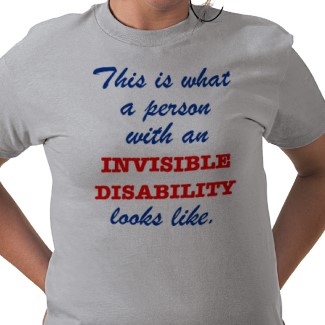
We Are All Ambassadors

We are all ambassadors… of SOMETHING.

We are a living, breathing, advertisement of “something”. How you choose to live your life, and how that choice is reflected in your daily interactions with others is so important. We don’t realize when someone is watching, listening, or studying how we live. I think it is so important that people with invisible and visible disabilities live their lives in a way that reflects how their disability doesn’t overshadow their abilities. I suppose being a mother I have always been cognizant of “who is watching”. But now that my kids are grown and in college, they rarely study mom and her life anymore. Others are watching, however.

I shouldn’t be surprised when people stop me to ask questions or make an observation. In spite of having invisible disabilities (“hearing again” with a cochlear implant, and Meniere’s disease), I try to make them visible so that I’m not taken by surprise by not hearing something or getting bumped by “I’m in a hurry” people. I wear “bling” on my cochlear implant to draw attention to the fact that I hear differently than folks with normal hearing. I am with the constant companion of my hearing assistance dog, Chloe. Let’s face it. Nothing draws attention to “something is different about me” more quickly than entering places of business with a service dog. But in spite of my own mom’s occasional teasing of “you’re such a drama queen”, the biggest reason I am visible about who I am is because I’m not ashamed of it. I welcome questions and curious people. Hearing loss is so misunderstood. People seem to understand the culturally Deaf. People born deaf and then choose to embrace American Sign Language as their primary means of communication seem to be understood better than those who are adventitiously deaf and choose technology, surgery, speech reading, and spoken language.

Baby boomers were recently cited as a fast growing “hearing loss” crowd. (Story can be accessed here). Yet young people are part of a new (and alarming) growing crowd of individuals with hearing loss as the result of iPods, concerts, and environmental noises. (Story can be accessed here). I am proud of my cochlear implant and proud that I am now independent thanks to the assistance of my service dog. I don’t have to worry about what I am not hearing thanks to her alerts, and I know if I drop something she will be right there to pick it up for me. I like being an ambassador.

It’s not always easy. Sometimes I’m in a hurry and do not really want to stop to answer questions. That’s why I try to carry my card with me so that people can contact me through email. I also carry information about my cochlear implant and information about Fidos For Freedom. (We discussed how to handle questions when in a hurry at a recent client chat at Fidos For Freedom!) In this way, even when I am in a hurry I can still be a good ambassador for people with hearing loss and people with service dogs. Am I always a good ambassador?

No. No one is perfect. You are going to have “bad days”.

In spite of those bad days, however, I encourage you to remember that people watch you. Some are people who know about your invisible or visible disabilities. Others may be folks who know nothing about you. I love meeting other “great ambassadors”. If we ever “meet up” in public, don’t be surprised by a HIGH 5 from me!

Denise Portis

© 2011 Personal Hearing Loss Journal