How Should I Take That?

Ever scratch your head and wonder what the heck did they mean by that?
Ever scratch your head and wonder what the heck did they meant by that?

Did you know that hearing loss is considered a communication disorder? However, I know plenty of people with normal hearing that seem to have a communication disorder. People have trouble communicating. Either they have the right words to say but the receiver interprets them wrong, or the person has “foot in mouth disease”.

Even more tiresome is the fact that we communicate with far more than our mouths. Our facial expression, body language, even our “vibe” or “aura” communicates something to others. Peter Drucker said, “The most important thing in communication is hearing what isn’t said.” Isn’t this the truth? Yet, it is so difficult to master the ability to accurately “hear what isn’t being said”.

I am learning, slowly but surely, to use reflecting – or paraphrasing – when I don’t completely understand what someone said. Either I’m not hearing all the words, or I’m hearing them but they don’t jive with what I’m seeing (either from speech reading or facial expression and body language). Here are some examples:

1. “Oh wow, I can’t believe you’re Deaf! You speak so well!”

While my first, knee-jerk reaction may be to respond: “Oh wow, I can’t believe you said that. You don’t look stupid!”, I try to take in the whole situation. What prompted their statement? Does their facial expression show confusion or delighted discovery? Do they look embarrassed seconds after having diarrhea of the mouth? I try to respond positively.

(small laugh) “Well thank you – I think. Is it your understanding that deaf people cannot speak? You know, most people with hearing loss are not culturally Deaf. They speak perfectly and are adventitiously deaf.”

2. “Why do you need a service dog? You don’t look like anything is wrong with you!”

Again, I try not to wince as I explain, “I’m glad I don’t look like anything is wrong with me, but I have invisible disabilities. Standing here you wouldn’t notice that I fall flat on my face if I try to pick things up that I’ve dropped. You wouldn’t know I have a balance disorder and am deaf by looking at me”.

This usually prompts a repeated brain fart response of #1. Scroll up and re-read.

What if it isn’t “SAID” at all?

Many of us communicate through email, texting, or even FaceBook. It is a whole ‘nuther set of problems when you take something wrong that has been written. We don’t get the extra cues of facial expression or body language. We rely more heavily on context, or what we already know about the person.

I have actually responded to an email or other written communication by asking for clarification. I do indeed have TMI (too much information) disease, but I’m learning to keep it brief. “What did you mean by that?” and then copying the sentence or question that I took wrong or in a negative way. Many times the person re-reads what they wrote and are appalled at how it came across to you. They re-word it, apologize, and you gain a better understanding of what they really meant.

I live in a family of very sarcastic people. We also text a lot. I have a family that is super thankful for unlimited data plans because we’d be homeless if we had to pay for every text kind of gratitude. Despite how much we communicate this way while apart…

SIDE NOTE: I’ll just slap you up side the head if you ever text me when we are standing next to each other.

… sometimes I can’t accurately interpret the meaning when I can’t see their faces. I’ve learned in face-to-face communications that a certain twinkle in the eye, quirk of the lips, or tension from suppressed laughter, means that the family member is being sarcastic.

So I put the gun down.

In texting or email I don’t get that. My usual response?

“Ummm. what?” (Took me a long time to teach auto-correct that for ME, ummm, is really a word).

This allows my family member to repeat in a more direct way. “Say what you mean. Mean what you say” is morphed into “Text what you mean. Mean what you text”. Hey… it works for us!

Flat out… MISUNDERSTOOD

What happens when you are flat out misunderstood though? You meant well, but someone jumped to the wrong conclusion. They are mad. They took it wrong. You are shaking your head and silently recording into your thinker, “Note to self: Never try to help so-and-so again”. Before you hit SAVE, try giving the person a chance to understand what you REALLY meant by helping, or by what you said.

I have actually said something along the lines of:

I tried to help and only meant to encourage you. You took what I said wrong and that grieves me. I wish you could see my heart and know how I meant for this to be taken. I know you’re mad. I’d like to work this out. Let me know if we can discuss this further.

Nope. It isn’t a guarantee you will make things right. Offering that olive branch may mean that the person grabs it up and smacks you on the head with it. But hey! Who did the right thing? Pop an olive in your mouth, puff that chest out, and walk away with the kind of swagger only those who know they did their part in communicating WELL can do.

Sometimes I wish we were all dogs. I’d always know you meant well if your tail was wagging.

Denise Portis

© 2013 Personal Hearing Loss Journal
If I’ve Said it Once…

If I've said it once

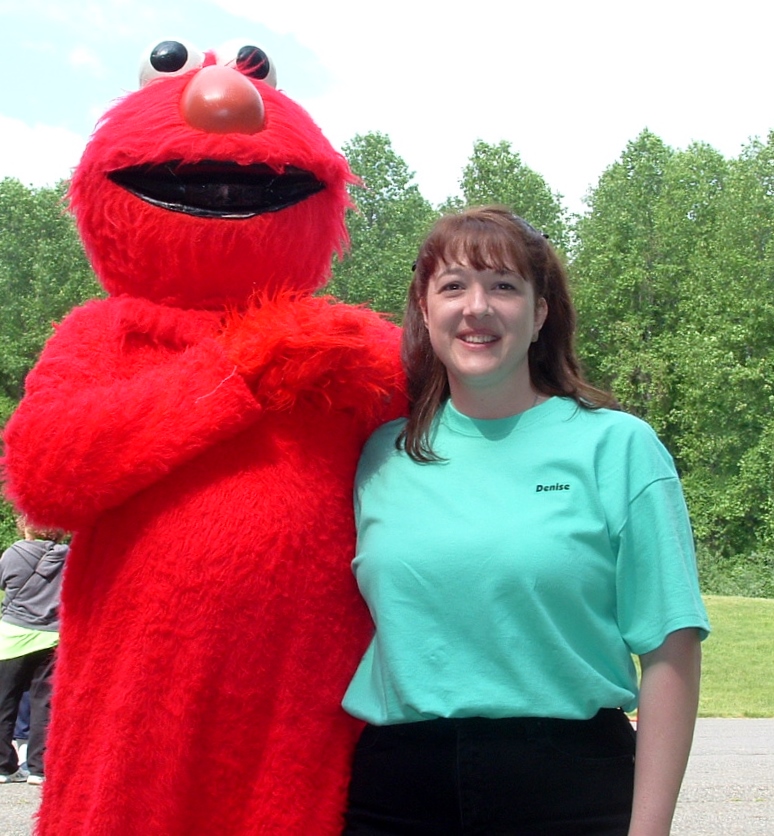
The photo above was taken at the 2006 Walk4Hearing in Pennsylvania. It was completely coincidental that the Walk coordinators invited “Elmo” to interact with the children on site that day. Poor Elmo had no idea what hit him as I squealed and came flying across the parking lot to hug his neck! Children he was expecting. A grown woman – not so much. However, Elmo encapsulated my reemergence to the hearing world – the first toy I heard months following my cochlear implant activation. Elmo’s voice (emanating from the “Tickle-me-Elmo” toy I found on the shelves of a local store) was the first CHILDHOOD voice I recognized after having been tweaked and re-programmed numerous times following my activation. It was an epiphany for me. From that moment on, I knew I was going to be OK. I could hear again – and more importantly RECOGNIZE voices. So to find Elmo that beautiful August day, 7 years ago, was thrilling for me!

I stepped back to introduce myself and explain “why the exuberant hug“. Elmo interrupted me and mumbled something. I said something to the effect of “HUH?” (I’ve always been particularly good with words).

Elmo spoke up. “I CAN’T HEAR A THING INSIDE THIS SUIT“. I stared blankly at Elmo for a moment and then broke into peals of laughter. Elmo put his hands on his hips and looked as exasperated as a character was able while inside a red furry suit! I apologized. Profusely. Welcome to my world!

Welcome to My World

Something numerous readers email me about is their frustration at trying to explain what is working – or not working, to closest friends and family members. I was at an ADI (Assistance Dogs International) conference in Baltimore several years ago and just happened to be in the right place at the right time; relaxing against a wall in the hallway outside a conference room. Because of my position, I was in the perfect place to see and hear a lady take her husband by the elbow and drag him over to the side (near me) to fuss.

She whispered (loud enough for even ME to hear), “If I’ve said it once, I’ve said it a thousand times… I cannot climb over your bag when you put it in the aisle. Do you want me to fall in front of everyone?”

Readers constantly tell me how frustrated they are to have to repeat “how to’s” to those closest to them. Folks they don’t interact with much they expect to remind about what works well for them and what doesn’t work. However, people think that if they are closely acquainted with someone they don’t ever need to be reminded of what they can do to communicate better, or to assist if needed.

A close friend of mine and follower of Hearing Elmo has MS and deals with fatigue frequently as a result. She was out to eat with her mother recently at which point her body just shut down. Although they were not finished eating, she needed to leave and needed to do so right away. She stood up and wobbled, and ended up asking her mother for assistance. Her mother did so but was very quiet on the walk out to the car. It was there her mom let her exasperation get the best of her.

“I don’t understand how you can be out on the field to oversee your son’s soccer team one day, and need help to the car the next. I don’t know how things can turn on a dime like that with you!”

My friend was shocked – and grieved that her mom, someone as close to her as anyone, failed to recognize what to her was obvious. One cannot pick and choose when fatigue and weakness will hit. My friend thought she had explained this to her mom (and very likely HAD). But her mom needed a refresher course in how symptoms of MS manifest themselves to my friend – a unique individual.

When my frustrated friend relayed what happened to me I thought, “Well welcome to my world”. Don’t all of us who live with invisible illness, disability, or chronic conditions deal with the same thing? We have to repeat ourselves – often.

Learning to communicate

It cracks me up to be on the training floor at Fidos For Freedom, Inc. sometimes. Clients and volunteers are asked to “Meet and Greet”. I hate these exercises. I’m not gonna lie. You pair off in groups of 2 or 3 and shake hands, talk, and introduce yourself. This is very “real life”. It is something we do in the “real world”. But I have to tell you there are few things I dread more. For one thing, that wonderful “voice in my head” via the training room floor’s hearing loop system is gone. Instead there is a BUZZ of voices overlapping and rising in volume all around me. I struggle and ask for repeats the entire time – all the while making sure my dog is in a proper down/stay and not flirting with nearby dogs. If more than one of us in the group have hearing loss, we juggle for position trying to put everyone on our “best hearing side”. If you look around the room there are plenty of people with cocked heads leaning close, or others who have definitely invaded the personal space of someone in their group. I’ve been in groups of people who did not have hearing loss who ask, “Now remind me which is your good side?”

My balance disorder allows me to move just fine. Standing still? Not so much. I wobble when standing still. Especially when standing in a large room with low ceilings and ceiling fans. I’m not the only one to be wobbling though. I giggled out loud one day when I lost my balance and a fellow client who uses a walker reached out to steady me and almost lost her own balance. She giggled right back in response and said, “I forgot you can’t hold still!” It was comical actually. Yes, we may both have balance problems, but we could help each other. We learn to laugh at ourselves if needed. We learn to accept help. We learn to communicate what it is we need.

Significant others and Spouses are “Just PEOPLE”

Do you get frustrated with the people in your life who should “know better”? “If I’ve said it once, I’ve said it a thousand times…”!

Even those we love the most are NOT mind readers. They may know how best to communicate with you if you have hearing loss. They may know that certain things like weather or temperature influence how you feel. They may know how certain medications may help – or hinder you. If I’m honest with you, however, I will admit that even *I* do not know how I will feel from one day to the next. Maybe even from one HOUR to the next. It is my responsibility to communicate my needs. It is my responsibility to give gentle reminders. I am responsible to explain 1001 times if needed.

We need to remember that those who love us? They’re just people. They do the best they can – and 9 times out of 10? They are not being a butt-head on purpose. My own spouse doesn’t even blink when I ask him to take my elbow one day, and maneuver my way around a crowded mall without assistance the next. If I’m telling him once AGAIN that I cannot take a call in a crowded store and to please answer my phone? He simply says, “Oh yeah!” (He’s cute that way)

Someone recently belly-ached to me, “At what point do I assume they will never get it? When do I give up?” Who said anything about giving up? There is no “end game” here. It’s a journey.

Let’s all be willing to communicate – again – what we need.

Denise Portis

© 2013 Personal Hearing Loss Journal

Part Two – It’s Not That Easy!

Melissa Sisco

Part Two of a two part post from Melissa Sisco. You may access the first part here. Melissa poignantly describes what it is like living with this invisible illness. She has taught me a great deal in her transparency in discussing these important issues. Welcome back, Melissa!

It’s Not That Easy

If I receive one more comment from someone indicating that I should “just go on disability” already I think I will scream. I know some of the people say it with genuinely good intentions, and some say it as a way to snipe at someone or anyone. Yes, I feel bad more often than I feel good.  Yes, working 8 hour days, 40 hour weeks, drains me of every last vestige of energy I have.  Life is hard.  That concept is not news to anyone and I am far from alone in making that statement. Part of me is not ready to throw in the towel yet. I am only 33 years old for goodness’ sake! I don’t want be a welfare/disabled parasite to this community, to my family, to the economy, or to myself.

Not to mention the fact that the people who say I should quit just happen to be relatively healthy and have absolutely no idea how difficult it is to obtain disability benefits, even if a person has an obviously debilitating disease (which I don’t – mine is invisible). It can take from as little as six months to five years or longer. That estimate is the result of the research I have completed upon looking at my options. Not pretty, and add the fact that the entire time I will receive no pay. If I even have the option of continuing benefits I will have to pay out of pocket. I carry the insurance for my family. Supposedly if I have a “life changing event” I can transfer the insurance under my husband’s name. Our premiums will go up because he is in a higher salary bracket; the children will be covered because they are already dependents – Thank God for that. But, there is no guarantee that I will not be subject to a 12 month waiting period; which would exclude anything I would/could be treated for during that time. There is also no guarantee that all of the illnesses I am diagnosed with and treated for right now won’t be excluded because they are “preexisting conditions.” That’s just bone chilling to think about.

We aren’t flat broke, but we aren’t exactly comfortable either. Luckily we’ve really worked hard to pay down our credit card debts, so at the very least we should qualify for loans if necessary. But I don’t think I could live with the knowledge that I was the one who caused my family’s financial ruin. It wouldn’t take much to put us there now. I don’t want to lose everything that we have worked so hard for. I don’t want to steal my children’s futures before they’ve barely even started. We struggle some months just to pay medical bills when we have insurance, I can’t imagine what the costs would be without. People like me can’t live without current medical technology. I have accepted that fact, and chosen to be grateful that God put me on this Earth when he did. Perhaps I was careless in having children; perhaps I never should have married. But my life right now is so wonderful, despite the illness and my worries. I cannot imagine not having the awesome privilege of knowing my beautiful daughters, or loving my husband for the last 14 years (married for 10!). I would not give up those blessings for anything. But my heart aches to think that I could be the one to drag my family down.  We do try to not “live above our means” but at the same time, you can’t take the money with you, however little it may be. That’s why we choose to take family trips, “vacation,” camp –whatever- when we do have the chance. At least enjoy what we have now while it is here.

But I am scared. I don’t think my husband really truly understands what my body is going through. Truth be told I wouldn’t wish this on anyone, so I’m kind of glad he can’t understand. But at the same time I want him to see that I am not a quitter, I am not giving in, I am not broken, and I am still me. My body just doesn’t quite work the way it used to. Too often I get home from work and it’s everything I can do to help with dinner, clean up some around the house and yard, and not fall into bed before seven o’clock. It angers me to no end when I can’t do anything but lie there, hoping to feel better. The guilt gnaws at me near constantly. My husband has to not only also work his tail off at work, but come home and cook dinner, clean the house, do the laundry, mow the grass, help the girls with their homework and put them to bed. Pretty much everything. And I just lie there waiting for my head to explode or the floor to fall out from under me. Sometimes both. It just seems so unfair. I know we both vowed to work together through sickness and health, better and worse; it just never occurred to us that sickness and worse could possibly come so soon in a marriage of two young people.

I fully understand that by choosing to continue working full time might very well speed up the pace of my illness. I may pay some awful consequences for myself and my family down the road because of my own pride and fear. I can’t see the future, but I am not going to apologize for living, even if it isn’t easy.

Melissa Sisco

————————

If you would like to write for Hearing Elmo, please contact me at denise.portis@gmail.com   The only “requirement” is that you or someone you know has an invisible illness, disability or chronic condition. We learn so well from each other – those of us who live this challenging yet rewarding life!

—-

Denise Portis

© 2013 Personal Hearing Loss Journal

To Be Understood Means to Understand

Melissa and her family

On 7/23/12, Hearing Elmo welcomed Melissa Sisco, from Alabama as a first-time guest author. You can access that post HERE. Hearing Elmo warmly welcomes Melissa again with a TWO PART post about her own invisible illnesses. Melissa is the mother of two young daughters and was first diagnosed with Meniere’s Disease in 2007. Melissa also has asthma/allergies, a heart condition, weak bones, endometriosis, and diabetes Type II. Melissa admitted that “Meniere’s Disease has been the single most challenging medical diagnosis I have experienced in my 32 years”.

The hardest things we encounter in life can sometimes be the ones you expect and assume will be easy. I am learning to realign and reign in my own expectations/assumptions. When you have struggled with a progressive illness for over six years, say one like Meniere’s Disease that causes hearing loss and loss of balance, you assume your family will support you the entire way. You assume that they will take the time to read the literature, the pamphlets from the doctors or at least even use Google or WebMD. You expect that they will get the hint as you slow down while walking, because your world has begun to buckle and spin. You assume that they will take it in stride when an episode of vertigo strikes and can only be remedied by lying down –for hours sometimes. You assume they will understand that an impromptu dunk in the water will harm your health in multiple ways because you have holes in your ear drums and have to wear ear plugs when you risk getting wet. You expect those closest to you to understand your new world, but the reality is that they don’t. Not at first. You actually have to teach them, or paint the picture if you will. They are not any more adept at struggling with accommodating my illness than I am. It really isn’t fair to expect them to know what was also foreign to me a decade ago. Experience can be the harshest yet greatest teacher.

Recently, a family member commented, “God, you really are deaf!”    Apparently he had been speaking to my deaf ear for several minutes without my noticing, “testing” my “deafness.” I simply turned to him, so we were face to face (even ground for me), and said, “Yes, so if you want my attention, try my right ear or tap my arm or shoulder please.”  All while smiling a really tight painful smile. Now what I really wanted to say was closer to a negative word, followed by an expletive, and ending with Sherlock. But I digress.

I admit I am still in the resentful stage, I resent that I should have to be the one to teach others about my own illness and its effects on my life. I never aspired to be a teacher; I haven’t the patience of those saintly souls. For reasons beyond me God has placed me squarely in a position where sometimes I have to teach, to save my own sanity. It’s just awfully annoying to teach family and friends who I expected to learn a little on their own in the last few years. My disease is nothing new anymore. I’ve learned a lot of my “new normal” on my own, (although I’ve been blessed to have great advice from those who’ve already invented this wheel –ahem Denise, Gayle, Shanna) but I do get downright angry when I have to teach someone something that should be obvious – at least in my opinion. I haven’t been wearing an absurdly expensive hearing aid in my left ear for 4 years just for kicks and grins. As more of my conversational frequency in my good ear wanes I have found that small talk is just no longer my cup of tea. I still avoid public situations in general. I have learned a distinct dislike of restaurants, malls, arenas and movie theaters. I am working on that, but I am a country girl at heart anyway. My country is just a bit quieter than it used to be, which is rather nice sometimes.

I have also found that there is finally a language I am really struggling to learn.  It’s called American Sign Language.  The only one I really need to know, and it makes Hebrew look like a piece of cake. (I would say Greek, but I can actually read that!) I’m quite certain that I appear as if I am under the influence of some sort of psychoactive drug when I’m trying to sign. The nuances of hand gestures completely elude me in a way that centuries-old grammatical rules never did. I can’t even profess to be able to understand it well, either. I get so focused on trying to comprehend one particular gesture/word I miss the next seven and am therefore totally lost. Like missing the pinnacle episode of your favorite TV show and trying to tune in to the next one and catch up – it just ain’t happennin’. I haven’t given up, but gosh is it hard. Bill is a great guy, but you can only make him repeat a phrase so many times before you start having weird animatronic/you-tube nightmares. (Thank the Lord, and Bill, for Lifeprint.)

I have recently also begun to despise the words disability and handicap with the exception of their necessary legal presence. I really just don’t see myself that way. I still do a number of things on my own; to include working, driving, doing basic household chores, etc. Although I despise it, I can grocery shop on my own, most of the time. I just can’t reach for anything on the top shelf, or on the bottom shelf, without relying on my cane or a sturdy wall or post. Sometimes it’s just easier asking for someone’s help. NOTE: Do not rely on shopping carts (that’s buggies for us southerners) for balancing because they have wheels. Really bad idea. Trust me.

I am able to be much more up front with people about my invisible “handicap.” I can flat out tell a stranger that I am deaf/hard of hearing, I need to see their face to understand them or I will ask them to type/write out something complex.  Most of the time this helps, and it is only occasionally that I encounter special people who begin to mimic Dr. Seuss using a bullhorn. Unfortunately, rhyming and loudness are lost on me. And it really annoys my co-workers or whoever else happens to be with me at the time. Sometimes I wish my hearing aid had a neon flashing light that proclaims “Deaf lady coming, repeat, deaf lady coming,” simply so I can save my breath. Sometimes I am saved by the Grace of God in the form of my own eldest daughter. She missed out on my shyness gene and takes the world by storm. She is quite eloquent when I see her shout at the top of her little six year old lungs, “My Mommy is deaf! Don’t you get it?”  All while sighing, knitting those eyebrows, putting her hand on her hip, and glaring at the perceived offender.  (Yes we are working on the politeness and manners thing- but it is easier said than done.)

A lady, let’s call her an acquaintance, I run into sometimes at work, asked me, “What is your cane for? I notice that some days you have it and some days you don’t.”  Another unexpected and unwanted teaching explanation. I replied to her that I have a balance disorder, some days I need it, and some days I don’t. Though you may not always see the cane it is usually nearby, just in case my power steering fails again without warning. She smiled at me with that look of “Bless your heart,” which forces me to fight the urge to strike her with said cane. I despise pity. I don’t want pity. I just want –a little bit— of understanding.

And I have to understand that not everyone else can see my illness, even if a person has known me for thirty plus years. One of my mandatory responsibilities now is to help others understand me as I learn myself. I have to constantly remind myself that, though my illness is invisible, dealing with it is truly a two way street. No one ever said it would be easy.

PART TWO: “It’s Not That Easy” will run Friday, July 19, 2013.

Thank you to Melissa Sisco!

Denise Portis

© 2013 Personal Hearing Loss Journal
I Don’t Like Music

cd player

“Music was my refuge. I could crawl into the space between the notes and curl my back to loneliness.”
― Maya Angelou

If you follow Hearing Elmo you know that I want the emphasis here to be on invisible disabilities or chronic illnesses. Yes, my own challenges include hearing loss and Meniere’s disease but I always try to draw parallels to what unites us as a community of differently abled people!

I normally do not let this much time go between posts. I like to have guest bloggers (interested? email me at denise.portis@gmail.com), and I prefer that new posts are uploaded every Monday. I was dismayed to see that so much time has passed since my last post. It isn’t because I haven’t had the urge or the time. I’ve actually been trying to figure out HOW I wanted to say something without really getting caustic.

Do you have some pet peeves? Come on…’fess up! We all do, don’t we? Because we are individuals, we all have preferences, dislikes, and pet peeves. We have special things that MOVE us. There are things that energize our spirits. Yet, there are things that depress us. And folks? There are things that TICK US OFF. Consider me ticked off.

Not a Great Example?

While prepping for this post, I was relieved when I realized the person I bawled out is not a reader of Hearing Elmo. Small chance they will discover I’m relaying what happened on here – but rest assured they were fully aware of my opinion when the conversation was finished!

“I can’t believe you don’t listen to music. As a cochlear implant advocate, that is not a very good example! ‘It is too much work, is a cop out’ ”

I was stunned.

Cochlear implant companies have been working hard to make sure that those who “hear again” can also enjoy music in addition to hearing voices, being able to use the phone, and most recently to be able to enjoy water sports without having to “remove your ears”.

But I don’t listen to music. I concentrate better in the car when I do not have the radio on to interfere with my attention. On really long commutes, I do listen to talk radio. However, I don’t listen to music. Not even 80’s music which include songs I listened to while in high school! Oh sure, I have all the gadgets, wires, and assistive technology to allow me to listen to music. I just don’t like the way it sounds. Just as I worked hard at hearing voices I couldn’t see (phones), and hearing voices amongst a ton of background noise, I could devote time to listening to music – but I don’t.

Ummm… How is this Relevant?

You are probably wondering where I’m going with this. You’re shaking your head “yes” at your computer screen, aren’t you?

We have to respect the individuality of other people.

I have chosen to make the invisible things about me – visible. It was my choice. I did these things to celebrate who I am and to unashamedly live MY life.

I use a metallic purple cane on my really bad balance days. I chose to mitigate my disabilities with a service dog. I chose a cochlear implant instead of “embracing my deafness”. After a great deal of research, I chose the Nucleus Freedom instead of another brand. I wear bling-bling and would wear blinking lights on my coil if I could figure out how to make a go of that. I am only unilateral and have chosen not to go bilateral. I chose to work hard at communicating effectively. Music was just not important to me.

Is music important to you? As a person with hearing loss did you work hard at being able to once again enjoy music? Are you a musician? Does music fuel your soul? I’m am so happy for you – really I am!

But we are not cookie-cutter versions of each other. What was necessary, important, and “worth it” to you may not be the same things another would choose to work towards.

There ARE a few types of music I listen to one of which is Christmas music during the holidays. However, can I get a shout out for DISNEY TUNES? For some reason, I have really connected to a number of songs from Walt Disney movies. These animated movies were the first I viewed with closed captions as I developed hearing loss when my kids were small. Once I was implanted with a cochlear implant in 2005, one of the first types of music I DID make sure I listened to were some of these Disney songs. One of my favorite was detailed here AND just so happens to go along with this post.

United we Stand, Divided we fall

So as people who have invisible disabilities or chronic illnesses, we should strive to be respectful of individual choices. It is hard enough to work and live among folks who don’t always get it. Surely in our own community of courageous people we can respect individual choice?

Don’t agree with everything someone says or does despite your sharing a diagnosis? Cut ’em some slack.

What are some things that have left you feeling peeved when judged by your peers?

Denise Portis

© 2013 Personal Hearing Loss Journal
I’m NOT Always Upbeat. Sometimes I’m just “BEAT”

depressed 1 (2)

I received an email this week from one of Hearing Elmo’s readers. With her permission, I wanted to use one of the questions she asked for this post.

“Love your blog, but sometimes it makes me depressed. You are always so upbeat, and it seems as if you have it all together. Don’t you ever have a bad day?”

I had to smile when I received this email, and I’ve had this question before in various venues. I have actually shared “the good, the BAD and the UGLY” before on Hearing Elmo, but I do try to keep it positive. In doing so, I also strive to keep it REAL.

Having said that, I have bad days. Believe me! As a matter of fact the summer months are often my worst. I don’t work as much – or like this summer, not at all. Too much time on my hands is not a good thing. I try to stay busy and I made sure I signed up for some classes. I’m busy applying to grad schools (again). I’m cleaning more (grin), and have some extra time for Fidos For Freedom, Inc. However, I get depressed. I have days I just feel BEAT.

i surrender

Did you know that it is perfectly normal for people with chronic illness or invisible (or visible) disability to get depressed? Everyone struggles with periods of depression. Life is hard. I use to wonder if people with physical challenges had a higher probability to be depressed compared to the population without those challenges. In my interactions with various populations, I couldn’t help but wonder if we are more prone to depression? Then I developed a passion for psychology, so I thought one day, “What do the experts say?”

After writing a number of papers on the topic and being forced to look up scholarly, peer-reviewed research, I found that people with disabilities CAN be more prone to depression. So if you have days you just want to surrender? Give up? Wave that white flag? You are NOT alone.

Bryan Kemp (2005) said, “Depression is one of the most common, if not the most common, secondary conditions associated with disability. When it is left untreated, depression can cause inordinate personal suffering, increased disability, additional health problems, and stress in others” (p. 234). I thought it was very interesting that although depression is not an uncommon diagnosis, in folks with disability it can actual make your disability WORSE. I have friends and fellow-bloggers whose disability actually IS depression. We cannot continue to pretend that a diagnosis of mental illness is not debilitating. It is a SERIOUS illness. However, depression can be and is often a comorbid diagnosis to people who live with chronic illness or invisible disabilities.

In one study, 71% of people with Meniere’s disease were also depressed (Coker, Coker, Jenkins, and Vincent (1989). For people who have hearing loss, “Several studies have shown that uncorrected hearing loss gives rise to poorer quality of life, related to isolation, reduced social activity, and a feeling of being excluded, leading to an increased prevalence of symptoms of depression” (Arlinger, 2003, p. 17). These stats are only for the two “major players” in my own life. People with Chronic Fatigue Syndrome, Fibromyalgia, Lyme disease, Multiple Sclerosis, Parkinson’s, Diabetes, vision loss, anxiety, and many OTHER conditions are often struggling with comorbid depression.

So are you having a tough time coping with your own physical or emotional challenges? Do you struggle with symptoms of depression in addition to your day-to-day challenges? You are not alone.

So please know that although I don’t often write about feeling depressed or anxious, although I do not post about what a “terrible, horrible, no good, very bad day” I am having, I do indeed have these kinds of days! I’ve struggled to get out of bed (despite my red-headed, well-trained alarm clock). I’ve cried myself to sleep. I have pushed people away in anger – embracing self-imposed isolation. I’ve yelled at God at how unfair it is. But in the end, I do strive to be upbeat. It isn’t always easy. There are times I feel like a big, Fat, LIAR. Yet, I work hard at having a positive attitude. I’ve learned that if I change the direction of my “thinker”, I will change the attitude of my “feeler”. It is really cognitive behavioral therapy in a nutshell! Laura King (2011) said, “… the emphasis is on reducing self-defeating thoughts, with its emphasis on changing behavior. An important aspect of cognitive-behavior therapy is self-efficacy” (p. 538).

Something that really helps me is working hard to reach out to others. I have a number of support groups that I meet with in person, others through venues like FaceBook, and still others in online forums. Knowing I’m not alone is very important to me. Being able to commiserate with others who truly understand is of great value. I encourage you to reach out to others. Even if you are unable to locate “in person” support groups, there are a number of ways to find this support online. We need each other.

Denise Portis

© 2013 Personal Hearing Loss Journal

Arlinger, S. (2003). Negative consequences of uncorrected hearing loss: A review. International Journal of Audiology 42(2), 17

Coker, N., Coker, R., Jenkins, H., Vicnent, K. (1989). Psychological profile of patients with Meniere’s disease. Archives Otolaryngoloy Head and Neck Surgery 115(11), 1355-1357. doi:10.1001/archotol.1989.01860350089021.

Kemp, B. (2005). Workshop on disability in America: A new look. Washington D.C.: The National Academies Press.

King, L. (2011). The Science of Psychology. (2nd ed). New York: McGraw-Hill Publishing.


There’s a Goldfish in Mine!

Half empty, or half full? Well MINE has a goldfish in it.

I was in line at my local grocery store recently and overheard two women talking behind me. They were there to purchase their lunch evidently as they had salads and drinks only. Normally, I let people with just a few items go in front of me. For once, however, I was actually only there to pick up a couple of things I had forgotten in a previous trip. Besides… I was having too much fun eavesdropping.

Evidently one of the women had recently been dumped. Her friend and co-worker was trying to give her a pep talk using the old analogy of a “glass half full or glass half empty”. I continued to listen in, partly because I was thrilled I could do so <BIG GRIN> but also because I was really fascinated by the arguments she put forth about an issue that to her, was black and white. It was either a great thing you got dumped, or a really awful thing.

Lines were moving pretty quickly, so before I knew it I was headed out the door with my bag and faithful hound dog in heel. I continued to think about the analogy. The original intent was meant to convey, “Are you a pessimist or an optimist?” We all have relatively fixed personalities, but they can be adjusted. Cognitive behavioral psychology capitalizes on that truth to help people change negative thoughts and behaviors.

I really believe most of us do not respond to everything in a “half full” or “half empty” way, however. The more I thought about my own responses to life as it happens, I realized it certainly isn’t a “half full” or “half empty” option for me at least. My glass has a goldfish in it.

My Goldfish

I think folks who live with disability or chronic illness, cannot react to life in a concrete, optimistic or pessimistic way. For me, hearing again with a cochlear implant and navigating life with a balance disorder means that I react to life in a different way just because those two things are a part of who I am. I don’t just have a glass of water. Mine has a goldfish in it. I’ve learned how to take care of my goldfish. I wouldn’t be who I am without my goldfish.

I have some friends in a Meniere’s disease support group who have said that because their “glass is half full” (or half empty depending on their personality), things normal people deal with are just different for them. If they have a headache, are diagnosed with cancer, or lose someone close to them it is compounded by the fact they also live with an invisible or chronic illness. I get where they are coming from and understand what they are trying to say. They believe that experiencing normal life things (diagnosis, loss, etc) are different for them because they do so from a body that is already dealing with something else.

We all know each other pretty well in this group so when I bring psychology into it, they all roll their eyes at me. I truly believe that living with a chronic illness is all about perspective – but not in a “half full” or “half empty” kind of way. When I mentor someone, I try to help them get to a point of acceptance as soon as possible. Acceptance is not an attitude of “I give up. I’m not fighting anymore”. It is a recognition of the “new you” and learning to understand your new normal. That “normal” may even change if you have an illness that fluctuates or is a degenerative disease. For me, it was important to acknowledge this goldfish. I can’t change it and I don’t get a new glass. This is me… and I have a goldfish.

Just accepting that, has allowed me to be the best ME I can be. Psychologist Jennifer Kunst said, “The good news is that when relative changes can be made in one‘s basic approach to life, it makes a big difference. A modest change in your filter doesn’t change who you are at the fiber of your being. It helps you become a better version of yourself” (Kunst, 2012, para. 4).

For me, the hardest thing wasn’t that goldfish or learning how to take care of it. The tough thing was being around a whole lot of other people with only water in their glass.

“Sure, I’ll meet you up in the classroom, but I’m taking the elevator at the end of the hallway. See you in a few…”

“The dishwasher is running so I need you to come in here if you are going to ask me questions.”

“I hate to interrupt you, but I need to go up these stairs and I have to actually concentrate. Hold that thought…”

Family, friends at church, co-workers, and neighbors, are so accustomed to my goldfish they don’t really even see it anymore sloshing around in my glass. No one knows me better than my husband, Terry, I suppose. Yet, I even have to remind him that although I can talk to him in a restaurant that is almost empty without looking at him, I really need him to put his coffee cup down if the restaurant is full so that I can read his lips. It is my responsibility to feed my goldfish. Not his. I may have explained to him twenty different times that there are atmospheres I will hear “near normal”, and environments in which I’ll need his lips plastered to my forward microphone. However, it is my responsibility to communicate this to him.

We have very narrow staircases at home. On “good” days, I can jog up and down the stairs. Terry isn’t surprised anymore if I ask him to carry the laundry downstairs before he leaves, when I may have been “jogging” earlier. He isn’t shocked if I tell him to “go on up” at the end of the night, knowing I’m going to need to go up on all fours and take the time to do so. He knows I will communicate what I need. This goldfish is mine.

There is a terrific list of “acceptance rules” that the University of Washington put out. You can access it here. Two of my favorite “acceptance of the goldfish” quotes are:

Do not make people feel sorry for you or pity you. Get people to view you as an able person who is capable of anything within your reach if the doors of opportunity are open. (graduate student with a hearing impairment)

We should focus on the ABILITY in disability more than the DIS. If we can do that, then we are more apt to succeed. Also, know your limits. If you don’t know what you can or can’t do, how do you expect other people to know? Plan for success by using more of the cans than the can’ts. (college student with mobility impairments)

(University of Washington, 2013)

Don’t be aggravated about the goldfish. Honestly? Everyone has something in their glass besides water. If we were all just glasses of water, we’d all look alike. We are unique individuals. We all have something else in our glass. My opinion is that we accept that. I’m not this person that has a goldfish temporarily. The goldfish isn’t visiting and it isn’t something I can scoop out. This glass with a goldfish IS me. And I’m OK with that. I love what Karen Hall, Ph.D., said in her article “Radical Acceptance”. She said, “Radical acceptance is about accepting of life on life’s terms and not resisting what you cannot or choose not to change. Radical Acceptance is about saying yes to life, just as it is” (Hall, 2012, para. 1).

Denise Portis

© 2013 Personal Hearing Loss Journal

Hall, K. (2012). Radical Acceptance. Psychology Today. Retrieved June 12, 2013, from http://www.psychologytoday.com/blog/headshrinkers-guide-the-galaxy/201203/is-your-glass-half-empty-or-half-full

Kunst, J. (2013). Is your glass half empty, or half full? Psychology Today. Retrieved June 12, 2013, from http://www.psychologytoday.com/blog/pieces-mind/201207/radical-acceptance

University of Washington (2013). Mentor tip: Acceptance of disability. Retrieved on June 12, 2013, from http://www.washington.edu/doit/Mentor/mt_acceptance.html


Team Chatter

In public, I talk to Chloe constantly. May 4th I learned what this is called...
In public, I talk to Chloe constantly. May 4th I learned what this is called…

Photo by Julie Wu, volunteer and therapy dog handler for Fidos For Freedom, Inc.

A trainer exited Pi’s Deli behind me and said, “Great team chatter”.

I’m always so eloquent. I responded, “Ummmmm”, with a questioning look that spoke volumes.

Fidos For Freedom’s trainers have had a LOT of practice and experience with people with hearing loss. She rephrased. “Good communication with your dog”.

Oh.

When I hear a “new for me” phrase, I am often scrambling to catch up to the conversation as I work to interpret the meaning. Having been partnered with Chloe since 2007, I think I can safely say I’m a veteran team. That doesn’t mean that I don’t still learn new things, however. Phrases like “team chatter” may be heard, but not understood until I spend a few minutes pondering it.

What does it mean?

Team chatter is important in a service dog team for two primary reasons. Team chatter keeps your dog’s attention on YOU if you use their name a great deal and talk to them. A second reason, however, is that service dogs need to know when they are doing something right! The tone and certain words connect with them.

This trainer may not have put two and two together like I did when preparing for this post. But the trainers use team chatter as well. When I did something right, this trainer told me so. If something needed polishing, she would tell me. She gave feedback throughout the certification segment we were doing that morning. She is a trainer and I am a client. However, we too, are a team. We are co-volunteers – even teammates in an organization we both love. Fidos For Freedom, Inc. (see http://www.fidosforfreedom.org/ for more information).

Why People with Invisible Disabilities Need Team Chatter

In psychology we use the phrase, words of affirmation, to explain the inherent need we have to receive “high 5’s” literally and figuratively.

Paul Hulijich explains, “The mind is very powerful, and it needs to be spoken to. We are all aware of the power of being told, for example, that we look well; it often immediately evokes the feeling of being well. We are influenced by what people say to us” (Hulijich, 2012, para. 3). Since I have had to learn to do a great number of things “differently”, it means a lot to me when a trainer, friend, or family member tell me that I handled something well.

At my daughter's college graduation, May 11, 2013.
At my daughter’s college graduation, May 11, 2013.

My husband praised me for how I chose to ascend and descend a number of steps in various arenas this last weekend. Even with Chloe in a close “heel”, I’m just not safe on steps in large cavernous – or open air – places. I didn’t make a big deal about it, only reminding Terry, my husband to either stand immediately in front of me, or behind me. Placing a hand on his shoulder is all I need to keep from falling when going down steps. Going up is a little trickier, but we still have a well-rehearsed plan. He told me, “You use steps with a lot more confidence now. You don’t even miss a beat”.

I don’t know about YOU, but it means a lot when someone notices what was once trial and error, becomes a well-polished, good habit. I need affirmation when I’m told that I pick up cues about my volume better. It means a lot when someone notices that I grin and advocate when having a near miss in a crowded hallway, and make it a learning opportunity.

One day last week, Chloe did not accompany me to work as she wasn’t feeling well. (She has chronic early morning acid reflux). I only had two classes that day and so opted to let her stay home with my husband since he was off. Just like any normal day, I dropped a number of things in the classroom. One student watched with wide eyes as I braced myself against a desk and used my foot to pick up a stack of quiz sheets with a rubber-band around them. “Oh my gosh, you do that without even thinking about it! You live YOU very well!”

I blushed but also BEAMED at the impromptu praise. What Greg said, echoed the beat of my heart. This is what I want – to live ME very well.

We Can Use Team Chatter too!

Do you have a hearing loss? Do you live with a balance disorder? Have you learned to navigate life with low vision? Do you have a chronic or invisible illness? Whether you are new to “the new you”, or a veteran, there are people around you who could use some team chatter.

I know, I know! It may not always seem as if they are ON YOUR TEAM, but there are still co-workers, friends, and family members who could benefit from being told when they are doing something RIGHT.

Sarah, a person with low vision, once asked me where her husband was. I pointed and said, “He’s right over there”. She reached up and grabbed my pointing arm and followed it with her hand in the direction I was pointing. Off she went in the RIGHT direction, leaving me pondering my own OOPS. After that, I did much better about responding with phrases like, “at your 9′ o’clock”; or, “over your left shoulder about 25 feet away”.

She noticed. “Denise, you do a great job at giving me directional assistance. It really helps!” I’ve tried to remember to do the same for the folks in my life.

“Thanks for re-phrasing that. I understood it perfectly the second time. You don’t even have to think about doing that for me now. Thanks!”

“I appreciate you habitually moving to allow me to stand next to the side when we get on the elevator. It really helps to have something to lean against”.

“Thanks for ignoring Chloe when we talk in the office. I know you love dogs, and because she knows you it can be hard to ignore that wag! It really helps me though, so thank you!”

As a person with both Meniere’s disease and hearing loss, I do a lot of reminding about what works well to assist me, and what does not. (This can be tricky because we don’t want to embarrass or offend someone!) Sometimes I feel like I’m constantly in “education mode”. Yet, we need to remember to tell folks around us when they get it right! It affirms what they do or say in interacting with us. Perhaps they even just need to hear that they “leave us be” in a healthy way! “Thank you for not assuming I needed help with that and waiting to see if I ASKED for help”.

I hope you will work to incorporate team chatter into your own relationships. Words of affirmation and open communication can be so important. Don’t assume others know when they are doing a good job. Let them know!

Hulijich, P. (2012). Affirmations. Psychology Today. Retrieved, May 12, 2012 from http://www.psychologytoday.com/blog/mind-wellness-awareness/201211/affirmations

Denise Portis

© 2013 Personal Hearing Loss Journal
Square Plates

Exactly what I want at Target!

Square plates. I WANT THEM.

Why are plates ROUND after all? Squares have such nice neat corners. It isn’t as if round plates hold more! Round plates are not any better at preventing food from escaping if you are an – erm – especially aggressive eater. Or, perhaps TWO-years-old!

I really want square plates. They are different. They accomplish the same purpose. Am I rebel? No, no… you see, my friends?

I’m a SQUARE. That’s right, you heard it first here at Hearing Elmo. (smile)

We May be the Same – But We’re NOT

I have met a lot of people with hearing loss and cochlear implants. We may all have hearing loss, but we are not the same. That is why our hearing aids and cochlear implants are programmed especially for our hearing health profile.

I have met many with Meniere’s disease. I may have the same diagnosis as you do of Meniere’s disease. That does not mean that we share the same triggers. It does not mean that what works to alleviate the severity of symptoms for YOU, will work the same for me.

Unfortunately, even though we may belong to the same community of people – those who live with some sort of invisible or chronic illness, those who are differently-abled, we forget that we are individuals. What works for one will not work as well for another.

There are three cochlear implant manufacturers. I love my cochlear implant. Neither I, nor my audiologist at Johns Hopkins, ever thought I would be hearing this well. My cochlear implant is not “better” than someone who chose another manufacturer, however. Consumers – the patients – have a responsibility to thoroughly investigate all the details about all of the brands available. We pick what we believe will work best for US.

Round plates and square plates do the same thing. They hold food. But some of us like round plates – and some of us are SQUARES.

It always grieves me when I see posts at various online support groups where one member bashes the ideas of another. Or perhaps they are insistent that everyone try their extremely low-salt diet (which happened on a Meniere’s group of which I am a member). It didn’t matter that several of us explained we had tried low sodium a number of times and had found it made little difference.

We need to respect other people’s choice to use round plates – or square ones. In the hearing loss community, our mantra should be “whatever works”. In groups that formed to support those living with Meniere’s disease, we should work on actually BEING supportive. If WE aren’t supportive of each other, how can we ever expect the community at large to be?

Are you a member of a support group for your own illness or disability? Encourage others to be supportive and open to new ideas. Everyone just might learn something! Regardless, we need the non-judgmental atmosphere of a friendly, empathetic community. Respect each other. Before you know it you just might start seeing :

by 10 Strawberry Street

… TRIANGLE dinner plates.

Denise Portis

© 2013 Personal Hearing Loss Journal


Obtuse on Purpose

Chloe enjoys some downtime in between classes.

Sometimes, someone just rubs me wrong. I try to practice what I preach here at Hearing Elmo. I know that my interactions with another person can influence their opinion about – for example, all people who have a service dog, or all people who have a balance disorder. Yet sometimes… someone just rubs me wrong and I respond inappropriately.

In the early days, if someone made a comment about my service dog, cochlear implant, or wobbly gait, I’d put my hands on my hip and “give them what for”. It was pointed out to me by friends and family that I needed to work on that. It was hard for me not to have a knee-jerk reaction to what I viewed as rudeness.

Today, I do better. Yet sometimes… someone rubs me wrong. I had a day like that this week.

I went to the copy center to copy an exam I was getting ready to give to eager Introduction to Psychology students. *snort*  The copiers are jamming up and not wanting to “do staples” right now, so I brought my exam to the front desk and asked for assistance. As I waited for it to be printed, another professor came into the copy center.

“Oh what a beautiful dog! I just think it is terrific what you do. But I don’t know how you give them up, honestly!”

I was obtuse on purpose.

“Oh, I’m keeping her. I’m not going to give her up“, I replied.

L   O   N   G          P   A   U   S   E

“I’m sorry?” she asked, clearly confused.

“I’m not going to give her up. I’m keeping her”, I repeated.

L   O   N   G          P   A   U   S   E

“But… but don’t you have to give them back?” she asked.

“She’s my service dog. We’ve been together almost 6 years now”, I replied with saccharin sweetness.

L   O   N   G          P   A   U   S   E

“You mean a therapy dog?” she asked, still clearly confused.

“Oh no. She is an assistance dog. I really couldn’t do my job without her. She’s essential to my even being here”, I admitted.

L   O   N   G          P   A   U   S   E

“But… WHY do you need her?”, she asked as she leaned closer to finally read all the details on Chloe’s vest. Her eyes got big and she murmured… “Oh…”

Then she looked at me. She actually took a step to the side to look me up and down. I was incredulous! I shouldn’t have been surprised when she said, “You don’t look deaf or talk like you’re deaf”.

With a huge, sweet smile I exclaimed, “Well thank you!” (refusing to even go there). I inwardly chanted my motto… “EDUCATE ONE PERSON AT AT TIME”.

She continued to wait in line and watch me. Finally, my copies were done and I allowed Chloe to do “paws up” to say hello to one of her friends behind the desk. He patted her once and said, “Now you take care of your mom, Chloe! Don’t let her fall today!” Chloe wagged her tail and turned to see me out the door.

I noticed this other professor’s eyes get even bigger as she stared at us while I gathered my things to prepare to leave. I’m talking, openly staring, not even pretending to be sly about it. As I turned to push open the door, I turned, looked her in the eye, and said, “You know? You don’t look like a hearing person!”

I was obtuse on purpose. And perhaps – a little mean. I’m pretty confident, however, that in this one instance – it may have helped open her eyes at her own behavior. One can hope, right?

Invisible illness and disability are invisible. Duh, right? The very nature of what these disorders, illnesses, and disabilities are mean that at first glance, you cannot see them. It may not be until someone bends, or walks, or speaks, or sits that you notice what is really going on with them. Please respect them enough to not ask impertinent questions.

Making a Difference

At a Giant grocery store several weeks ago, I came in the door right behind another lady. She sat in the nearest motorized shopping cart and proceeded to pull out carefully. To keep Chloe’s paws and my clumsy feet out of her way, I stepped to the side for a moment and smiled while waiting for her to go by me. A woman turned from the produce section with a bag of lemons in her hand (appropriate – believe me) and said to this lady, “Oh wow, you should leave those for handicapped people. That is why they are there!”

The lady sat there a minute stunned. I felt like leaning over and whispering, “Gun it dearie. You are aimed right at her!”. Instead I put a hand on her shoulder (which made her jump) and said, “Some people don’t realize that some disabilities are invisible. Ignore her”.

Her eyes filled with tears and she seemed disconcerted by both this woman’s comment and my own intervention. To not bring any more attention to the situation, I patted her shoulder one more time and walked towards the vegetables.

Whether you have an invisible condition yourself, or know someone who does, you can EDUCATE ONE PERSON AT A TIME. Perhaps being obtuse on purpose is not the best way. However, you CAN find a way to make a difference! Look for opportunities to do so!

Denise Portis

© 2013 Personal Hearing Loss Journal