
Are Doctor’s Offices Truly Accessible?

doctorI recently returned to my doctor for a check-up as I’m on a number of blood pressure medications. I have been on blood pressure medicines since the age of 20. My genetics guaranteed I would have blood pressure related issues.

I grimace and swallow my meds every morning and think with tongue in cheek, “Thanks, Dad!” 

I hate going to the doctor even for something as routine as a blood pressure check and to request refills for my medications. I’m not afraid of doctors. I actually LOVE my primary care. His personality and method of “doctoring” suits my personality very well. He’s very business-like and professional, but also has a level of genuine compassion lacking in many who have been in the medical field perhaps too long. His staff is fantastic. The office is close to my home and to my work, so it is very convenient.

But I hate going.

My doctor’s office is not accessible. Oh sure they have properly marked handicapped spaces in their parking lot and curb cuts for those with mobility challenges. Their waiting area is spacious and the hallways are easily navigable. My doctor’s office is very high tech. Written charts? Pffflllttttt. Thing of the past. My doctor and staff use iPads, notebooks, and stylus.

But I hate going.

Again… my doctor’s office is not accessible. At least not for me. Just in case you are new to Hearing Elmo I am a late-deafened adult, “hearing again” with a cochlear implant. I also have Meniere’s disease, a balance and vestibular disorder. I mitigate my challenges with a service dog as well.

Do you know how hard it is to step on a scale when you have a balance disorder? The platform is about 12″ x 9″. Scales are usually against a flat wall, with nary a thing in sight to grab to hold still. It isn’t like I can grab Chloe’s harness when being weighed. I don’t need her extra 62 pounds on the scale – believe me! So I grab the wall and do my best to keep from tilting. I very likely look as if I getting frisked. After some close calls I HAVE noticed that there are TWO nurses with me now when I am weighed in each time. Someone has put a note in my chart I think! I’ve tried to sneak a peek at this electronic chart. “Tilt-a Whirl Queen” or “Weebles Wobble” must be tagged somehow, I’ve just yet to actually see it in writing! (grin)

After getting weighed we head to an examination room. I sit in a chair while the nurse takes my blood pressure. It is always high, but not because of ineffective medications. It is not because I’m afraid of doctors. I’m convinced my blood pressure is high because I know what is coming. In breezes the doctor, with a smile and a firm handshake.

“Let’s hop up on the table. How have you been? Everything going OK?”

I only see the man twice a year so I can’t expect him to remember. The guy is popular with – “Best in Annapolis” kind of awards all over the wall. No way in the world he could remember. **But would it kill you to read my chart?**, I think to myself.

“I don’t hop anywhere. Sorry. As a matter of fact the table is too high for Chloe to help me so I need you to hold your arm like this…” (and I demonstrate with my elbow bent and arm horizontal to the floor). I repeat what I’ve said every time I go there, “It would be nice if these examination tables had rails or something!”

My doc is good-natured and sticks out his arm. I grab it and clamber up onto the examination table. As per usual, when I turn to sit the room tilts and I struggle to stay conscious.

“Wow, Denise. Your eyes! You have positional vertigo.” Yeah. Ya think? He sits on his stool and rolls over closer to me – unknowingly causing another bout of vertigo. I just sit there and hang on for dear life as he uses his finger to “flit” from screen to screen, reading up on my medical history.

“Well your blood pressure is pretty high. Let’s take it again.” he states while reaching for the blood pressure cuff.

I don’t say a word as I’m too busy hanging on for dear life.

After taking it he turns to me and says, “It’s high. Do you take it at home? Is it perhaps high because you are here? Many people have elevated blood pressure at the doctor’s office.”

“I take it at home and it is well within the normal range every single day.” I indicate with my eyes the paper sticking out of my bag – WayOverThere. He grabs it and scans the paper. “Wow, these numbers look great! It must just be high today because you are here”.

“Doc,” I patiently explain despite having repeated this conversation every 6 months for the past three years, “my blood pressure is high because

I’m

sitting

UP

HERE.”

Again with my eyes, I indicate the death grip I have on the edge of the thin mattress.

He looked thoughtful for a moment, flicked to some more screens on the iPad and turned to grin at me. “We’ve had this conversation before, haven’t we?” Yup. I love my doctor.

So What Can Doctor’s Offices Do?

For people with hearing loss:

1. Sound baffling

Doctor’s offices are full of flat surfaces and medical equipment. It can greatly improve communication to have some type of textured wallpaper, 3-diminsional cloth artwork, or even flat art-deco carpet squares on the walls. Not much can be done for cabinets, medical receptacles, and sinks. These have to be easy to clean and disinfect. I get that.

If possible, a room or two with lower ceilings and foam ceiling tiles can greatly assist in eliminating the bounce and echo of sound.

2. Face the person

Even if you have to look down to write in a chart, or type on an iPad, turn your chair so that you are facing the person. Do this EVEN IF YOU AREN’T SPEAKING. Do you know how often people with hearing loss strain to determine if someone is even speaking?

Checking ears? Looking in eyes? Listening to their thumper? It only takes a second to look the person in the face – FIRST – and explain what you are going to do next. If you want the person to hold their breath for a second, don’t ask behind their back. Actually… what is WORSE is telling them to “OK, breathe normally” behind their back! (Grin)

3. Write everything important down

New prescriptions? Re-check in six weeks? Instructions to check things like blood pressure or blood sugar at home? Write these instructions down.

4. Take their picture

Whether you save a small digital picture to their electronic file, or staple a Polaroid into the manilla folder and chart of their medical history, know what your patient looks like. When the door opens to that waiting room and the nurse calls the name of who is to be seen next, it helps to lock eyes with that person with hearing loss when you say their name. Take my word for it. Another blood pressure spike occurs for anyone with hearing loss sitting and worrying they will miss their name being called. Chloe’s head pops up and looks at anyone saying “Denise”. However, most people with hearing loss do NOT have a service dog alongside them.

If a nurse calls the next patient and every individual still has their head buried in the eight-month-old “Good Housekeeping” magazine, chances are the person didn’t hear you. It may not help to even say the name much louder. Besides… that is embarrassing. Know what your patient looks like.

5. Don’t say, “Call me”

Even though there are many wonderful options for people with hearing loss to use the telephone, it isn’t a good idea to say, “call me”. Email should be an option available to anyone who is more comfortable making contact in written form. If the patient is waiting for test results, email them. If a refill cannot be prescribed until an appointment is made, email them. If the patient contacts your office through email, don’t respond by trying to call the number on file. Email them back. People with hearing loss are on a level playing field with email. Plus, having a written confirmation only insures there are no misunderstandings.

If a patient DOES utilize various technologies and captioned phones, be aware that the patient may ask for repeats. Or, there may be a slight delay as the patient reads what the captions display. Doctor’s offices are busy places. Be aware that another minute or two may be needed to properly and fairly communicate with a patient who has hearing loss.

6. Don’t talk when they’ve removed their assistive devices

Checking the ears of a patient must be standard procedure in medical offices. However, someone with hearing loss will:

1) need a moment to remove hearing aids and/or cochlear implants

2) need something to put them in while you check those lovely ear canals

3) need a moment to re-insert the assistive devices after the quick check

7. Be willing to repeat

You know they have a hearing loss. They know you have a busy medical practice and other patients to see. However, if they ask for a repeat, please just do it? Don’t sigh or begin talking like you are now speaking to a toddler. They aren’t stupid, they simply didn’t hear you. (People with hearing loss should learn to ask for repeats of only the parts they actually didn’t hear. In this way, others aren’t forced to repeat something completely, when perhaps only a section of what you said was actually missed).

8. Ditch the gum

I love fresh breath.

I feel for someone trying to stop smoking.

However, please refrain from chewing gum or sucking on mints when you go into the examination room of someone who probably speech reads.

For people with balance disorders:

1. Understand that heights – even small ones – can be a problem

Offer an arm or grab an elbow when people with balance disorders climb up on scales or examination tables.

Don’t finish up and say, “Meet me up front” to a half-naked patient sitting up on an examination table with a death grip on the mattress. Offer assistance to help them down. (I actually fell from an examination table getting myself down and landed on a stool which rolled and crashed into the cabinet – creating a terrible racket. The nurse ran back into the room clutching her chest and exclaimed, “You scared me to death!” Laying on the floor and looking up at her I sarcastically spit out, “Well gee. How sorry am I?” Note: My good manners fly out the door when I have to respond from the floor).

2. Move slowly

People with balance disorders often have problems with vertigo and focus when others move fast. Love that stool on rollers? Move slowly please. This isn’t a medical office Grand Prix.

3. Follow the light with your eyes…

… is easier said than done. Seriously, you have no idea how hard this can be if you have something like Meniere’s disease.

4. Sit still

Most examination rooms have stools on rollers. Many people fidget and don’t even realize they are. If you are sitting on a medical office stool, chances are this means you can swing from side to side as you talk to the patient. I’m not saying pretend you’re a statue. But bouncing knees, swinging from side-to-side, or rolling quickly from one side of the room to another can really do a number on a patient with a balance disorder.

 Patient responsibility

Ultimately, it is the patient’s responsibility to remind medical personnel what you may need to communicate effectively and navigate safely. However, some small and inexpensive adjustments can be made to make doctor’s offices more accessible.

Denise Portis

© 2013 Personal Hearing Loss Journal
Unplug…

unplug

In today’s world of media overload, with technology and electronics in every household, the word “unplug” usually means when an individual deliberately steps away from these items to recharge.

For many with chronic illness or invisible disability, to unplug might mean something different. Saturday night my small living room was seething with emotions. There were five adults, including myself, parked around a television watching the Ravens beat the Broncos. We had hoped. We had prayed. But all the experts had convinced us the Ravens didn’t stand a chance. To watch the game unfold and the Ravens take the win in double overtime, my senses were in crippling overload. Long ago I conceded using closed captions during a NFL football game. I admire and appreciate the hard work of those who work for the captioning organizations, but the captions really do interfere with watching sports as there is no “perfect” place to put the captions and not cover up a play or stats. So I was watching the game by only utilizing my cochlear implant and hearing aid.

I watched five minutes of the post-game show and quietly headed upstairs. Once in my bedroom, I flipped on the light and opened my Dry ‘n Store in one practiced motion. Off came my “ears”, off came my shoes, and I threw myself onto the bed with all the grace of a wet noodle. Chloe hopped up and snuggled close, perfectly content to escape all that testosterone downstairs. I think I laid there with my eyes closed for an hour – not napping – just coping. I needed the quiet. I love my bionic hearing, but there are times I literally suffer from sensory overload. My eyes, ears, brain, and yes VOICE were worn out. I needed to unplug.

There have been times I have pushed through that feeling of “I need to unplug” and only regretted my choice to do so. I am more prone to fall when worn out. I miss things when communicating. My speech actually deteriorates when I reach the breaking point. Hearing takes work – at least for me it does. You might not be able to tell by looking at me that I need a “senses” break because hearing loss and Meniere’s disease are both invisible. Goodwin and Morgan (2012) explain that, “many chronic illnesses have highly variable symptoms that are largely invisible to others. The symptoms can cause fatigue and pain, affect cognitive function, create sudden emotional shifts, and even impair speech (para. 6). It is in my best interest to know when I need to unplug.

I know many people with hearing loss who unplug in their own way. One bilateral friend takes long walks with just her camera. She has a real knack for connecting with nature and sharing that connection through her camera lens. I suspect it is her way of unplugging. She may have her “ears on” still, but nature’s melody is a distinctly different sound than what one hears in a crowded cafe or work environment. Another friend with bilateral cochlear implants actually takes yearly retreats. She not only unplugs, she truly isolates herself in order to fully rejuvenate and refresh her soul. Many with hearing loss, however, simply go to bed early. It doesn’t bother me at all that my family teases I’m the first one in bed every night. I require a full eight hours of sleep – hard to do in the day and age in which we live!

Use a Calendar

My calendar is very important to me. However, it is not because I forget appointments if I don’t schedule things carefully. My calendar is actually a tool I use to help me know when to unplug! By carefully tracking what I do in addition to just a normal workday, I can avoid serious physical and mental fatigue. Having Meniere’s disease means that I have to be responsible for how tired I allow myself to become. If I’m seriously fatigued and weak, I am more susceptible to falls and injury. With my doctor’s recent warning ringing in my ears about doing everything in my power to avoid anymore head injuries, I carefully plan each and every week. Many people with various disability or invisible illness must do the same. The Multiple Sclerosis Foundation Medical Advisory Board encourages us to be careful planners. “Conduct an energy audit. Ask yourself how much energy do I have? What time of day do I have the most energy? What time of day do I have the least energy? What do I want to do? What must be done? What can wait? Keep a journal and record your daily activities along with the times that you do them. This will enable you to recognize your patterns of fatigue more readily. Monitor these patterns and plan your day accordingly” (MS Foundation, 2009, para. 14).

When I see that a day is as full as I dare allow it to become, I block off any other available times. I know I will need the latitude to unplug if needed. I may even have to turn down opportunities to visit with a good friend, or going to something I would really like to do. My calendar enables me track what I know I’m capable of doing in any given day.

Using a calendar can also help people with invisible disability or chronic illness to determine what is really important. I have become an expert on running errands… making sure to do things all in the same area of town so that I do not have to make any special trips – which are time thieves. Having to do spur-of-the-moment errands may mean I do not get to do things that are really important to my mental, emotional and spiritual health. Morgenstern (2008) is adamant about controlling your schedule, and failure to do so creates a life that not only runs you ragged, but regularly throws you curve balls and prevents you from focusing on the things that matter most. For those of us who live with disability or invisible illness, this may mean we set ourselves up for injury, debilitating fatigue, mistakes, or relapse. Getting control of your schedule can only benefit you.

I hope you have learned to unplug when needed. One doesn’t need to lay in the dark, isolated from all sense-sapping triggers. You can relax on the deck with a cup of coffee. Take a bubble bath! Read a good book. Immerse yourself in a hobby. All of these things can help you unplug and recharge!

Denise Portis

© 2013 Personal Hearing Loss Journal
Goodwin, Stephanie A. and Morgan, Susanne (2012). Chronic Illness and the Academic Career. American Association of University Professors, May-June. Retrieved January 12, 2013 from http://www.aaup.org/article/chronic-illness-and-academic-career#.UPQg_mdyHTo

Morgenstern, Julie (2008). SHED your Stuff, Change Your Life. Fireside Publishers, New York.

Multiple Sclerosis Foundation (2009). Fighting Fatigue. Coping with Multiple Sclerosis, July issue. Retrieved January 14, 2013 from http://www.msfocus.org/article-details.aspx?articleID=48

Cut ‘Em Some Slack

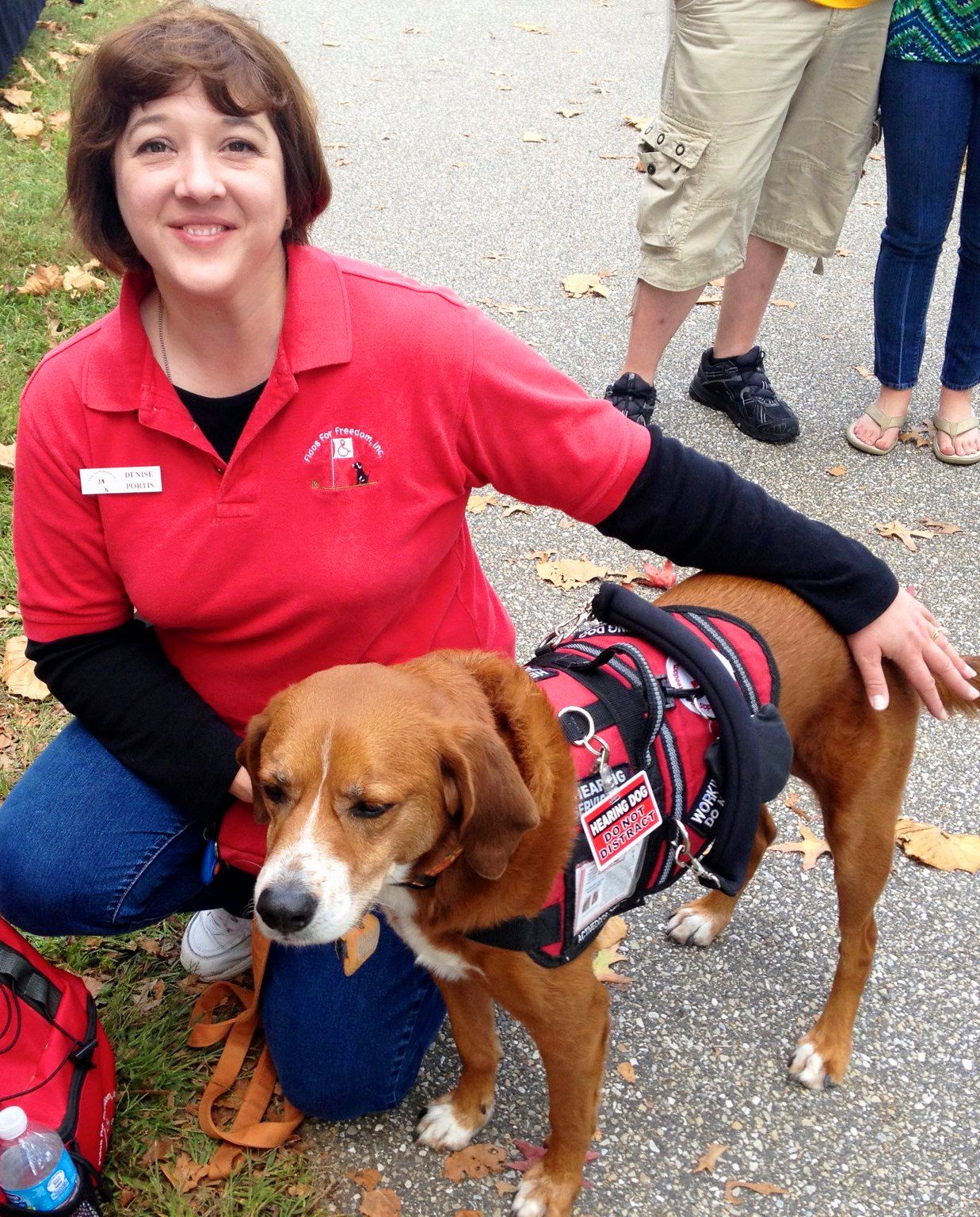
At the October 2012 Stroll 'n Roll Event
At the October 2012 Stroll ‘n Roll Event

Every once in awhile, something happens that really “jerks the rug out from under me” in regards to disability and invisible illness. Hearing Elmo, numerous support and community service groups, and strong connections with others who GET IT, usually keep me cruising along with optimism and a healthy passion for life. However, once in awhile something may happen and I ALLOW it to undermine my confidence and throw me for a loop.

About a month ago I was at church and turned to walk out of a small group study into the foyer. A person I see every single Sunday stuck out their hand and shook mine saying, “Is this your new dog?” Because I have a hearing loss, I default to a specific response when I hear something that I know cannot be right. I’m desperate to clear up what my ears MUST have misunderstood so I am eloquent in my response:

“HUH?” I asked with big eyes.

He repeated, “Is this your new service dog?”

I stammered and was able to eek out, “No, I’ve had Chloe for almost 6 years now” and walked/wobbled away as quickly as I could. I could hear him still talking and looking uncomfortable (I’m sure I looked completely shell-shocked), but I wasn’t going to stand around and “play nice” when I felt truly sucker-punched! I made my way to the car and sat waiting for my husband, trying to make sense of what I’d just heard.

Prior to this I had missed a Sunday. Chloe had been sick one weekend (something that happens as she is in contact with so many things a pet is not) and having been up all night, I skipped church with her. Had this church leader asked this because Terry probably informed him I was gone because of a sick pup and he assumed much more than what was going on? If he sees me each and every Sunday, how do you not recognize the bright, red dog who has been my partner for almost 6 years? How in the world can someone get a specially trained service dog so quickly even if you DID have to suddenly retire another dog? Did he not know it took me 15 months of training to even get matched with Chloe? You don’t slap a vest on a pet dog and call it a service dog. These dogs are tested for temperament, trained for public access, and trained to perform specific tasks. It takes years and thousands of dollars! All these questions whirled through my head.

I’ll be honest with you and admit…

I WAS MAD. After that though I was actually very hurt. A couple of weeks later I finally ‘fessed up to my husband about what happened at church. Small miracle THAT to keep it quiet from him that long – but proof positive how deeply this had affected me.

There are some real perks to being married to a psychologist. Long story – short,  after discussing all the reasons this person must have misunderstood what was going on in my life, we agreed that some people just don’t get it. This doesn’t mean they don’t CARE. They just don’t get it. My response has to be – CUT ‘EM SOME SLACK.

Even though this person is in church leadership and sees me every Sunday, to my knowledge they do not have anyone close to them who lives with disability or invisible/chronic illness. I don’t think they even own a pet dog and I’m probably the only one they know with a service dog. We don’t hang out. I don’t share my life with them. (They don’t read Hearing Elmo – smile).

You are going to have people in your life you simply must, “cut ’em some slack”. Maybe they are a co-worker that you don’t work with very often – maybe only a couple of times a month. Maybe it is a cashier at a grocery store who you occasionally see when you are in her line; or, perhaps a bank teller, physicians assistant at a doctor’s office, or UPS man ringing your doorbell.

Don’t get me wrong. I’m the first one to encourage folks to educate in a proactive and positive way, how best to communicate, or assist (if needed). However, the people you take the time to share how best to interact with you, are folks you have a more intimate relationship with and see frequently. Close co-workers, friends, parents of your KID’S friends, people you see more often and converse with a lot… these are folks you are proactive with and to whom you communicate your needs. They very likely will care enough to ask YOU how best to assist or communicate. This means there are plenty of folks you’ve left out of the loop

on purpose.

They don’t need to know the details. You may have a relationship with them, but it is not a close relationship. I, for example, do not need to let a church leader know how long it took me to get matched with Chloe, nor how often we continue to train at Fidos For Freedom to polish and perfect our skills each month. We make eye contact and smile once a week. We may shake hands one or two times a month. This person does not need to know how badly he erred, nor do I need to take him to task for being clueless about something I’ve not invited him to know about regarding ME.

There are folks at work, church, and whom I interact with often enough that they have learned how best to communicate with me. It may be a friend inviting me over to her very quiet, empty house to catch up! It may be a nurse I see often at my primary care doctor who quickly re-reads the bookmark I asked to be stapled in my chart that reminds her I need her to face me. It reminds her I have Chloe so she helps me make sure Chloe doesn’t have her paws on the scale when I’m weighed (seriously, right?). It may be the lady I see every morning walking her dog who use to act hurt when she struck up a conversation with me and I didn’t hear her at first. Now she stands nearer and faces me and we talk about the weather or our families as we “potty our dogs” before heading out! It may be the friend in small group at church who knows I’m having a really bad balance day. As I sit in the back out of the way, she stops to confirm, “So if you pass out… I keep everyone from calling 9-1-1, and just get Terry, right?” It may be the co-worker I see every day while retrieving my mail from the Arts & Sciences department. Our boxes are next to each other and it stood to reason that I explain I only need her to get my attention first before speaking…

You know who needs to have a more clear idea of “who you are”. But there are plenty of people we need to cut some slack. We just do not see them frequently enough to take the time to give them our life story (smile). You know the difference. I’m not saying it is EASY when misunderstood. I felt mad, then hurt, then filled with righteous indignation, bent on educating someone who really isn’t a part of my life. I had to let it go.

I’m learning a life worth living is all about choosing the battles and knowing when to take a stand. We learn to determine who to take to task and who to cut some slack. We never stop learning!

Denise Portis

© 2013 Personal Hearing Loss Journal
 

We Need Them

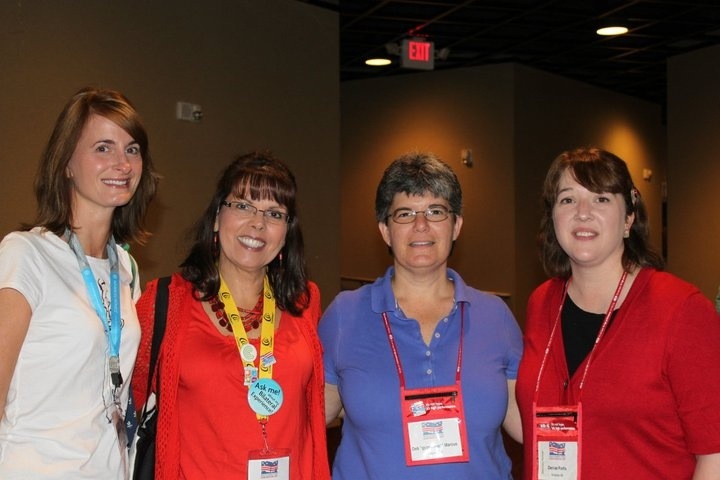
20121223-182709.jpg
With 3 of my 4 “heartstrings”, a group of cochlear implant ladies – some who also have Meniere’s – who connected through our hearing loss.

I am visiting my parents in Florida as I write this. I haven’t seen them in over a year, so with a lot of cajoling, I talked my husband into giving up a week of his vacation time to go see his in-laws. We went to church with them Sunday morning, and I expected a “Christmas Sermon”… not that this is a bad thing. Their pastor, however, mentioned some things that I had never thought about before, and at my age I was surprised about being made to THINK about some new things regarding the Christmas story.

He read from Luke and brought up that Mary, mother of Jesus, went to stay with friend and cousin, Elizabeth. This was right after Gabriel told her, “Guess what? You will become pregnant”. In that time a 14 or 15-year-old betrothed virgin couldn’t very well go tell mom, dad, and fiancé that she was pregnant. Women were stoned for that… not that they would have ever believed her “I’m still a virgin” story anyway. So off she went to see Elizabeth. Gabriel told her that Elizabeth, too, was miraculously pregnant – simply in a different way. Elizabeth was far past child-bearing age. Her pregnancy was also a miracle. Perhaps Gabriel was giving a hint… GO SEE HER. The pastor suggested Mary NEEDED a friend and someone who would understand. God knew this. Gabriel knew this. Mary needed someone who was pregnant that shouldn’t/couldn’t be, and someone visited by an angel. She needed a friend who was going through similar challenges.

Do We Need Friends?

I have friends from my childhood. I have friends at work. I have friends at church. But do you know the friends I depend on the most are those who struggle with invisible illness or disabilities? Like Mary seeking out a friend and confidant who was also miraculously pregnant, I have sought and found friends who are “differently abled”, who face each and every day with challenges others simply do not have.

Abraham Maslow was one of the first psychologists to suggest we need relationships; we need FRIENDS. Cherry (2012) writes of Maslow’s Hierarchy of Needs, “Relationships such as friendships, romantic attachments, and families help fulfill this need for companionship and acceptance, as does involvement in social, community, or religious groups” (para. 6). Many professionals agree, we need friends.

I have friends that are different than me in personality, beliefs, politics, and culture. Despite these differences, they are my friend. When I’m having a really bad “tilt a whirl” kind of day, falling and bruising, and frankly SICK TO DEATH of having to deal with it all, these friends can sympathize. Yet, the friends I seek out to belly-ache, ask for advice, or beg for prayer even, are those who can EMPATHIZE.

“Empathy is the ability to mutually experience the thoughts, emotions, and direct experience of others. It goes beyond sympathy, which is a feeling of care and understanding for the suffering of others. Both words have similar usage but differ in their emotional meaning” (Difference and Comparison, 2012). My closest friends are those who can empathize. They “get it”.

People with invisible illness or disability often fall into a dangerous, self-imposed isolation. Rubinstein (2012) suggests that there is a difference between solitude and isolation. Solitude is healthy, something most of us do not take the time for, missing out on opportunities to meditate and re-charge. However, isolation is different. It is a negative thing… “We don’t feel better by spending time alone, or if we do, it is only that our anxiety about being around people is quelled” (Rubinstein, 2012, para. 2).

When my progressive hearing loss began to cause significant communication issues, I slowly but surely began to isolate myself. It took an “intervention” of sorts to wake me up to what I was doing. We may isolate from friends and family, all the while trying to convince ourselves that by doing so we help others as well.

“When I move to fast and pass out, it only upsets others, which isn’t fair to them.”
“I hate being trouble to anyone. Best I stay home.”
“My disability makes folks uncomfortable. I’m doing everyone a favor by not participating.”

I know some folks with logical reasons and sound argument for why they do not need friends “post-invisible illness or disability”. Have you ever thought, however, that even if you are better off you are robbing another of the gift of your own friendship? There are others dealing with invisible illness. If you do not make yourself available, you may miss opportunities to empathize and connect with others like yourself. Who better to recognize another with invisible or chronic health concerns, than someone who lives the same?

We need friends. Others need the gift of your own friendship. Make yourself available!

Denise Portis

Cherry, Kendra (2012). Hierarchy of Needs: The five levels of Maslow’s Hierarchy of Needs. Retrieved on December 23, 2012, from http://psychology.about.com/od/theoriesofpersonality/a/hierarchyneeds.htm

Difference and Comparison (2012). Empathy and sympathy. Retrieved on December 23, 2012, from http://www.diffen.com/difference/Empathy_vs_Sympathy.

Rubinstein, Noah (2012). Isolation: Issues treated in therapy. Retrieved December 24, 2012 from http://www.goodtherapy.org/therapy-for-isolation.html

Sunshine

sunshine

I was so glad to see the sunshine today. I read the weather forecast last night and tried to tamp down the anticipation and excitement in my heart. We’ve had such rainy, humid weather. I’m just a “mess” for lack of a better word when we have periods of days like that. Meniere’s disease is a burden I do not gladly bear. I’ve yet to be able to “find thanks” for it, though I have learned to do so is the best way to come to a place of full acceptance.

So when I saw the forecast I was optimistic but influenced by the realist within me… you know, the one who has seen the poor forecast predictions for the last week? We don’t get “full sun” today, but I am embracing the “partly cloudy” let me tell you!

Humidity is not really the “friend” of a person with hearing loss without Meniere’s disease as well. Veterans will tell you that faithful use of a desiccant brick (I use “Dry ‘n Store” myself) will prolong and improve the use of hearing technology such as hearing aids, cochlear implants and more!

We’ve no control over the weather. We can try to keep these devices dry, but “weather happens”. I do try to be careful and have an umbrella in every car, near the door, and in my rolling cart that comes into every classroom with me. I faithfully attend to the weather forecast so as to be better prepared for the day ahead.

Sometimes humidity and moisture problems occur in addition to weather-related incidents. Here are some I’ve dealt with myself:

1. Stepping into the shower, “hearing”. You’d think since I cannot hear the shower run anymore as I walk into the bathroom “deaf”, if I can actually hear the water running it would clue me in to the fact that I forgot to remove my “ears”. A couple of times a year I will still step into the shower not quite as “naked” as I should be. Thankfully, realization hits quickly. I shriek, streak to the bedroom, dry them off, tuck them into the Dry ‘n Store, and pray they dry quickly. Bedtime RITUAL is what has helped me avoid any of these wet OOPS lately. Having a routine before doing things like showering may help!

There is a cochlear implant by Advanced Bionics that can be completely submersed in water. My Nucleus Freedom by Cochlear is water resistant. For me this means I can have some of those OOPS episodes and not have to worry about damaging my CI!

2. Sometimes I sweat. Yeah, I know. Not very feminine or attractive. I crack up reading labels in the deodorant aisles at stores. Men’s products claim to control sweat. Women’s products boast of smelling pretty, not leaving white marks, and control perspiration. <snort>

I’ve found a great product though, and highly recommend EAR GEAR. They claim to be hearing instrument ARMOR. I love their products. They have products for BAHA, hearing aids, and cochlear implants. Ear Gear protects our devices from moisture and dirt. They also happen to be very comfortable. I have very small ears and the products actually help my devices “slip” less as well. Click HERE to check them out. They have some cool colors too, which is always a perk in my opinion as I sport my “bling” proudly!

I’m not an athlete, but I know some late-deafened folks who are. There are various companies that sell products that help devices not only stay dry but also help them STAY PUT. Megan at Hearing Sparks discusses seven great products that are of special interest to those who need hearing technology protection that are ACTIVE. You can access this post HERE.

I’m going to cut this post short. I’ve some sunshine to go embrace…

Denise Portis

©2012 Personal Hearing Loss Journal
Hypochondriasis

Aren’t I brave to post my “just out of surgery and anesthesia” picture? I look “high”, don’t I? (GRIN)

Many folks might be surprised that hypchondriasis is an actual psychological diagnosis. Perhaps it is because we misuse the word hypochondriac a great deal! We tease each other, making a big deal about stating we “may be coming down with something“; or, perhaps you know someone who complains about “something” being wrong with them ALL THE TIME. Something always hurts, or they have aches and spasms and feel “poorly”. In writing this, I can think of one or two people I know personally who are like this. I guess since I’m from the South, I mentally categorize them as WHINERS… although that isn’t a very good psychological label.

Hypochondriasis is misused a great deal, however. A whiner is not necessarily a hypochondriac. The diagnostic features of hypochondriasis includes: 1) a fear of having a serious disease based on a misinterpretation of one or more bodily signs or symptoms, 2) an unwarranted fear or idea of having a disease that persists despite medical advice and test results to the contrary, and 3) a preoccupation that greatly influences or impairs other behavior and the ability to function (DSM-IV, p. 462).

So we all know a whiner… but they are not really a hypochondriac. Sure we use this to tease – or discuss someone negatively behind their back. This person is comfortable verbalizing how they really feel… to anyone who will listen! However, the reality is they do not have hypochondriasis.

Invisible Illnesses and unwanted labels

Yup. We’ve established we all know whiners. Some of us work with these folks. Some of us love these folks. Some of us (gulp) are these folks!

However, in recent months a common theme has come up in many of the conversations I’ve had with people who have contacted me through Hearing Elmo. It seems a good number of folks with invisible illness or disability are often accused of being hypochondriacs. Not simply because the word is misused either. People around them honestly believe it is “all in their heads”.

I posted the picture I did for this post because shortly after sharing this picture when I first had my cochlear implant surgery, an individual (whom shall remain unnamed – grin) told me in response to my “how I’m doing” email that they thought it was terrible I had this surgery – permanently changing the way I hear, all because I was pretending I had a hearing loss. You see? This person knew me growing up. They knew me when I could hear. Approximately 4 or 5 months before my CI surgery we talked on the phone. They didn’t know that:

I was using a captioned phone and was READING what they were saying.

The phone was on speaker and my husband was enunciating words I did not understand.

I tell people when they ask me what motivated me to get a cochlear implant was I was TIRED OF FAKING IT. I had reached an all-time low and struggled to communicate despite my numerous coping mechanisms and communication strategies that I had in place. I was exhausted. I dreamed of being able to communicate orally with fewer difficulties.

I didn’t sound deaf (not having been totally without sound long enough to really develop a “deaf accent”).

I was still teaching and working.

I can’t really describe for you how these comments from this person affected me. I was – in a word – devastated. I couldn’t wrap my mind around why someone would seriously believe someone would pretend to not be able to hear, fake their way through all the tests, and undergo surgery that would enable them to hear – but electronically, all for attention or for “show”.

Many invisible illnesses can be difficult to diagnosis. Some test results for diseases like Lymes, may actually come back with false results. Many pain disorders, including fibromyalgia, are difficult to diagnosis. There are still medical practitioners that believe this diagnosis is “a crock” and it can be difficult to find a doctor who takes your symptomology seriously. It doesn’t help that many women are prone to these types of illnesses or disorders, as women are more likely to be accused of being “drama queens”, worriers, and hypochondriacs. The DSM-IV points out that hypchondriasis is equally common in males and in females (p. 464).

What can YOU do?

The problem with invisible illness or disability is that they ARE invisible. You cannot see the problem. People with invisible illness or disability also start to hide what is going on with their own body. Like myself, I actually faked being able to hear better than I actually could. Some may answer “how are you?” with “fine, how are you” out of habit. However some may respond that way out of FEAR to disclose the truth. Many choose to not even tell loved ones how severe symptoms may be that day because they believe their family members are tired of hearing it.

I checked in with a friend this week to let her know I was thinking of and praying for her. She responded to “how is the pain today?” with “pain is a constant friend”. You may not be honest with how you are doing because you believe others are tired of hearing about your “bad days”. Many choose not to disclose how they REALLY are doing as they fear derisive comments, exasperation, or disdain from those around them.

Do you know someone with an invisible illness or disability? If you ask them how they are – and you REALLY care about them – be a “safe” person for them to be truthful with when they respond! Have you blown it and shown your exasperation before? Do better. It’s not like your poor response has to be your normal response. Are you married to, or do you love someone who lives with an invisible illness or disability? It can be hard; but, wouldn’t you want them to love you and encourage you if the “shoe had been on the other foot?” – rather YOUR foot?

What is the Cost?

I believe that the reason many invisible illnesses and disabilities also have a co-morbid diagnosis of depression and even suicidal ideation, is because those around them do not believe them. They live with constant negative feedback when they do open up and honestly share how they are doing with others. Your disbelief can cause them to isolate themselves – dropping out of life. Your misinformed comments could cause them to start internalizing their feelings, making it difficult for them to trust anyone. Don’t be an – erm – DONKEY. One of the best things you can do for someone who lives with invisible illness or disability 24/7 is to simply BELIEVE them.

After I found people I could trust with how things were REALLY going? I was able to actually deal with my bad days in a more proactive way. Just knowing that someone believed me – empowered me. I couldn’t hear. I staggered because my world really DOES revolve all the time. That belief enabled me to refocus my energy in discovering ways to COPE.

Will you be that person to someone this week? Can you listen without skepticism and provide that assurance?

Denise Portis

© 2012 Personal Hearing Loss Journal

American Psychiatric Association. (2000). Diagnostic and statistical
manual of mental disorders
(4th ed., text rev.). Washington, DC: Author.

“You are Getting Sleepier…”

— Oh for a patch of sunshine and an afternoon nap…

“You are getting sleepier…”

I could have handled a little hypnotic suggestion this past Friday. Thursday morning before going to work, my hearing assistance dog did just what she was suppose to do – sort of. I had just placed my breakfast of bacon and eggs on the table when Chloe alerted me to the front door. I went to see who was there to find the UPS man and a delivery for my husband. I should have been suspicious. Chloe normally wags and flirts with whomever is at the door, but she disappeared while I made small talk with the UPS guy.

Meandering back into the kitchen I noticed all three dogs sitting in a row, Chloe closest to the table of course. My plate was empty. As a matter of fact, it had been licked so clean it appeared to have come straight from the dishwasher. I fussed, even though I knew it was my own fault. Well-trained assistance dog – yes. Still a dog? YES.

I could have predicted the outcome, but was sort of hoping if I kept my hypothesis to myself it may not prove to be true. But my sensitive-tummy service dog was sick as a – ERMDOG, by Thursday evening. As a matter of fact she was sick all night long. I was up every 90 minutes to 2 hours with her – for up to 30 minutes at a time. At 3:30 in the morning, I sent out an email to all my students cancelling classes. I was so tired I was hallucinating. Seriously. After taking Chloe out around 3:00 AM I was freaked out by the hundreds of mice running all over the yard – or so I thought since I was seeing things that weren’t there.

Being a person with disability, I require more sleep than an average adult anyway. It wasn’t until hound dog was feeling better Friday night that I finally got a solid nine hours of much needed sleep.

How Much Sleep Do You Need?

According to the National Sleep Foundation, average, healthy adults need 7-9 hours of sleep every night (National Sleep Foundation, 2011). While most of us very likely receive far less than that, the experts agree that this is the amount we should strive for every night. However, people who live with disability or invisible illness may actually require more. At the very least, these folks should make the 7-9 suggested hours a priority.

People with arthritis may need more sleep (Eustice, 2012), as do people with epilepsy (NYU Langone Medical Center, 2012). What can be frustrating, however, that for many living with invisible illness or disability, sleep disorders are often a co-morbid diagnosis. I know people with fibromyalgia, Lymes disease, and other chronic pain conditions that explain sleep is difficult to obtain. Your body may need extra sleep; however, because of the illness itself the person may have difficulty falling asleep or staying asleep.

Training along side of fellow clients at Fidos For Freedom, Inc., I have a new “family” of folks who have various disabilities and illnesses. Some have chronic pain conditions, some have MS, mobility issues, Parkinson’s, and hearing loss. Since getting to know them over the years, I have heard ALL of them explain they simply do not get enough sleep, or have trouble getting a full sleep cycle in each night. As a result, each have stories to tell of “things getting worse” and symptoms causing near accidents or actual falls, bumps, bruises, etc. I recall overhearing a conversation of one of the trainers talking to a newly matched client. They were falling more and having trouble with even cognitive functioning. The (wise) trainer asked them, “How much sleep are you getting?” The client explained that they were so excited about this new chapter in their life that they had trouble sleeping – night after night. They quickly surmised this may be increasing the severity of some of their disease’s symptoms. Sleep matters!

People with hearing loss may actually require more than the average 7-9 hours necessary for most adults. According to Healthy Hearing (2008), because our brain is actually more involved than our ears in communication, a tired brain can impair how well we hear. Even if we are “hearing again” with cochlear implant, BAHA, or hearing aids, sleep deprivation may impair our ability to communicate well and to maximize what we are able to hear.

People with hearing loss often forget how much harder they have to work to communicate effectively. As a result we actually tire out much faster than our normal hearing peers. If you must pay attention and concentrate wholly on a conversation to adequately understand and respond, your brain actually TIRES.

I also have Meniere’s disease, a vestibular and balance disorder. Because I have to pay attention to stepping up, stepping down, avoiding visual vertigo triggers such as ceiling fans, paying attention to my surroundings to avoid snags in carpet, etc., I actually “think my way safely” throughout each and every day. It can take a lot out of me to constantly remain on “high alert” to possible problems to avoid falls.

So Exactly How Do I get More Sleep?

There are NUMEROUS places online from which you can find information about how to get a better night’s rest. Some of these “tips” include:

1. Avoid caffeine 5-6 hours prior to when you plan to go to sleep.

2. Avoid complex carbohydrates such as breads, pasta, and sweets several hours before bed. Some experts suggest avoiding eating ANY large quantity of food before bed.

3. Avoid exercising within several hours of when you plan to go to bed.

4. Limit “light” – especially those created by many types of technology and electronics. Computers, iPads, televisions, etc., all may stimulate your brain activity and make it more difficult for you to sleep.

5. Worried? It can keep you awake. Try writing down things you need to get done the next day so you do not lay in bed worrying about remembering to do them. If you are worried about things you cannot control, try talking to someone. It doesn’t have to be a counselor – even a close friend or family member may work.

6. Try going to bed at the same time every night. Many stay up later on Friday or Saturday nights. This can actually disrupt our sleep schedule. Our bodies like routine – especially when it comes to sleep. Or, you may love sleeping in on Saturday morning. This too, can disrupt our sleep schedule. Try waking up and going to bed at the same time – no matter what day it is.

7. Many people sleep better in a dark, cool room. Do you need to purchase room darkening blinds? Maybe purchase a fan for just the bedroom?

8. Depending on who you read, opinions vary about whether or not taking an over the counter sleep aid like Tylenol PM or even Benedryl can be helpful. There are also medications specifically FOR sleep, though most warn they are not to be taken long-term. There is a new drug to hit the “over the counter” scene called “ZzzzQuil” believe it or not – made by NyQuil. It has been getting fairly positive reviews. Some may find they need a prescription sleep medication. Discuss with your doctors any risks associated with the prescription.

Do you think you are “getting by” on what sleep you are able to get? There are too many articles (written by medical experts) that show links to very serious, even life-threatening health problems for those who are chronically sleep deprived. Check out this great article by Dr. Stephanie Schupska at WebMD: Click here. “Not Enough Sleep: 7 Serious Health Risks”

Please feel free to comment and share how sleep deprivation has posed problems for you; or, ideas about how to get a better night’s rest!

Denise Portis

©2012 Personal Hearing Loss Journal

About.com Arthritis and Joint Conditions (2012). Arthritis patients need more Zzzzzz’s. Retrieved October 22, 2012 from http://arthritis.about.com/cs/betterliving/a/needmorezzzzzs.htm

Healthy Hearing (2008). Sleep your way to better hearing. Retrieved October 22, 2012 from http://www.healthyhearing.com/content/articles/Hearing-loss/Treatments/24201-Sleep-your-way-to

National Sleep Foundation. (2011). How much sleep do we really need? Retrieved October 22, 2012 from http://www.sleepfoundation.org/article/how-sleep-works/how-much-sleep-do-we-really-need

NYU Langone Medical Center. (2012). Sleep and Epilepsy. Retrieved October 22, 2012 from http://epilepsy.med.nyu.edu/living-with-epilepsy/epilepsy-and-lifestyle/sleep-and-epilepsy

What I SHOULD Have Said

I’m not really a history buff like some of my siblings, but I do like to watch the occasional autobiographical movie or read books on real people. I have, however, always been an Abraham Lincoln fan. I’m so excited about the new movie coming out and hope it does not disappoint. (Lincoln – the trailer). Needless to say, I’m also a big fan of President Lincoln’s quotations. Many of them I have memorized from my childhood and throughout my life.

In preparing for this post, a quote of President Lincoln’s came to mind: “I will prepare and some day my chance will come.”

I’m a big fan of using hindsight to our advantage. One of my favorite training exercises at Fidos For Freedom, Inc., is role playing… actually putting ourselves in scenarios where we face incredulous, doubtful strangers, belligerent business owners, or even just curious but nosy bystanders. These exercises have allowed me to practice what I need to say – not IF – but WHEN I need to have the words to explain my need for Chloe. I know I may need to defend my right to mitigate my disability with an assistance dog.

Experience Can Be a Harsh Teacher

Did you ever have something happen that was totally unfair? Feelings of righteous indignation and self-preservation well up and literally choke the words right out of you? I’m one of those poor folks who rarely says what I should have said  at exactly the right moment. Instead, my feelings are hurt; or, I’m madder than a wet hen. Not… that I’ve ever seen a wet hen despite my childhood experiences of owning and caring for chickens, but I digress..

Ever replay a hurtful or confrontational conversation over and Over and OVER again in your head… thinking about what you SHOULD have said? Well I take Abraham Lincoln’s advice to heart. “I will prepare and some day my chance will come.” Now I’m the first to admit that one can perseverate on a past hurt and be much worse off than if you just let it go. I’m a planner though (at times to a fault).

If my feelings are just hurt and it is someone I don’t know well, I just let it go (though I may replay the entire horrible episode to my patient husband). If it is someone I have a relationship with, I may decide to let them know that I didn’t like how the conversation went and came away hurt and would like to discuss it some more. However, most of the things that hurt my feelings or ruffle my – erm – feathers, are comments from total strangers or mere acquaintances.

How many of you have heard these comments? :

But you don’t LOOK sick.

You were just fine yesterday. What’s wrong today?

You are feeling poorly AGAIN?

Are you ever well?

You seemed to hear me fine the other day on the phone.

Don’t you get tired of being so lethargic?

I think you are just low-energy.

You are such a drama queen!

Are you sure it isn’t all in your head?

I love my dog too, but I don’t self-diagnose a disability just so I can be with them all day.

Maybe you should see a counselor…

I knew you the first 20 years of your life. There was nothing wrong with you then!

Is this all for attention?

Don’t you worry how your family will feel having to pick up the slack?

People with invisible disabilities, illness or chronic conditions often LOOK just fine. Being late-deafened, I speak with little or any “deaf accent” or enunciation issues. With a cochlear implant and hearing aid (a bi-modal, hearing again peep with BLING), I often hear voices well unless there is a lot of background noise. If it is a sunny day, I not only may have very little “wobble” in my step, I may actually be able to move fast. So to look at me – well, I look fine! But on rainy days or in environments with tons of LOUD surround sound, vertigo can hit me like a freight train and cause me to walk as if I’m intoxicated. I usually clam up because if I speak I may vomit. (I’m serious…)

I have friends here in Maryland, and cyber friends I have come to know across the nation – many of whom are fellow bloggers. They have fibromyalgia and/or chronic fatigue syndrome. Some have assistance dogs, some do not. Some have been diagnosed with Lymes disease. Have you ever thought about how difficult it must be to have a chronic pain condition? And oh my goodness… talk about your invisible conditions! If you don’t know the person well enough to see the pain-filled eyes or pinched expression, you would never know that every step is excruciating – that even their clothing rubbing against their skin actually hurts.

Prepare – it Empowers

Those of you who live a life described above or know someone who does, my advice is to prepare. Use hindsight to your advantage. Think about an encounter that really hurt you – or made you squawk. Chances are, you will hear it again. (I know – GROAN – right?) Plan and prepare, even practice what you will say in the future should that same thing happen again. This can actually empower you to face that “next time” with a little more certainty and courage.

But Be Careful…

I do have some warnings, however. Even good things can become bad things.

1. Don’t be consumed by the preparation.

If all you think about is being prepared for a calm but meaningful/careful reprimand, you may unleash it with venom or saccharin sweetness. Your intent becomes a premeditated choice to wound. You end up saying the wrong thing or say it unkindly and in an offensive, war-like manner.

It could also become a set-up or scenario of revenge. Trust me. You do NOT want to live that way. (Tried it – not a winner any way you look at it).

Use your time wisely in reflection and preparation, but then let it go. If you are thinking about it constantly it should “wave the red flags” for you that it has become an obsession instead of a tool to develop positive responses.

2. Don’t look for what is not there.

After wobbling into the edge of the stove and spilling my coffee, I heard my husband sigh beside me. I turned (aimed) and yelled, “What? You think I like spilling everything I carry? You think I enjoy getting burned? Do you think I…”

He cut me off with a gentle squeeze of my arm. “Denise. I sighed because someone ate all my Lucky Charms.”

OH.

If you are reading this and KNOW someone who has an invisible condition, may I give you some advice? I know it must be frustrating to not ever really understand HOW to help or WHEN to help. But the best thing you can do? Listen and believe.

Denise Portis

© 2012 Personal Hearing Loss Journal


Invisible Illness Awareness Week

This week marks a very special week for me. I have been a part of Invisible Illness Awareness week for a number of years now. Sept. 10-16 is Invisible Illness Awareness Week.

There are a number of terrific speakers at this year’s virtual conference. You can check out the schedule here:  CLICK

Hearing loss and Meniere’s disease are both invisible. I have struggled both successfully and unsuccessfully through the years in living with these. Those who do so live with a fair amount of frustration and stresses simply because what they deal with IS INVISIBLE. For me, one of the most frustrating things is that my symptoms may vary. To some, this makes me lack credibility at times. For example, I “hear again” with a cochlear implant and BTE hearing aid. I may hear you just fine in a quiet environment and one-on-one. However, if my tinnitus is roaring or we are in a noisy environment, my primary response may be “Huh?“.

I walk, jog, and can even RUN (believe it or not) on sunny days. However, the weather is a real trigger for my own Meniere’s disease. I may be out-walking my assistance dog one day, and the next have her close and wobble like an intoxicated person. For those who do not understand that symptoms may vary, and may fluctuate, it may seem as if I can’t make up my mind as to whether or not I live with a disability.

I have friends who have Fibromyalgia, Lymes, Multiple sclerosis, chronic fatigue syndrome, and other various illness and disabilities. They will tell you that it can be frustrating, even emotionally debilitating, to have folks in their lives choose to scorn, disbelieve, or ignore their own invisible illnesses.

It takes courageous people to live with invisible illness. I hope you will go to IIA (CLICK HERE) and learn more about how you can get involved in helping to raise awareness in your own community. You may not live with invisible illness yourself, but all of us who live with it will tell you that our friends and family that support us are just as influential as we are ourselves – if not more so!

Denise Portis

© 2012 Personal Hearing Loss Journal

Note to Self: :-)

Sometimes I have to actually remind myself to smile. Don’t get me wrong! I have plenty to smile about! I have healthy kids who just happen to be great human beings. I’m married to the love of my life (26 years!). In spite of hearing loss and Meniere’s disease I have what I feel like is a good “game plan”. I have coping skills that work – most of the time. But you know something? I still forget to smile.

Why I Forget…

1. I get too busy

I stay busy to give myself a sense of purpose. A bored Denise, one with too much time on my hands, is a depressed Denise. It’s not that I don’t take the necessary time to decompress, meditate, and think deeply. I do! But there is a “fine line” between taking time to do these things and having too much time to do these things.

Staying busy helps me to feel purposeful and even necessary. I hope to one day get to the point where I can be less busy and still feel purposeful. But heck… even my favorite scripture verses and quotes are ones about being productive and busy! However, I can get SO busy, I forget to actually enjoy the things I am doing. I forget to smile. Happiness is often a CHOICE, but if I get too busy I may forget to make that choice.

2. I’m hanging out with negative people

Sometimes it cannot be helped. You may work with negative people. Geesh. You may LIVE with negative people. It takes a special kind of person for that not to rub off on you eventually. Ever walk into a room extremely content and happy with life and run into a sour puss? Negative vibes may just ooze out of their pores. And darn, but if they didn’t set their sights on you and pin you down to complain. I’ve left the company of folks feeling shell-shocked. It can be hard to be with these people, yet I also believe that I need to take opportunities to minister to them if I can. It may be just listening. It may be that I can let them know I’ll pray for them. Yet, I certainly do not seek these people out to deliberately spend time with them.

Back when letters were still written (instead of email or FaceBook messages), I remember cringing when I would get a letter from a “certain someone”. Their news was never good news. Talk about a wet blanket. It was hard to plow through all the negative lines penned by this very sad person, but I also felt compassion for them as I knew it had to be a hard way to live.

The thing about negativity though is that it is very contagious. It matters not if you’ve recently been vaccinated. Few of us have the antibodies to fight off this contagious infection if we have to be with folks like this. I really do try to limit what time I spend with people like this. It can be hard if you must see them often though. I have a friend who is married to a negative soul. She loves him. But with premeditation, she must find time away from him during the week to spend time with people who are not like he is. He has become “less” negative through the years, but I doubt he’ll ever change completely. To combat being drug down into the same pity parties, she has to find people to insulate her to negative thinking. It works for her.

Why It Can be Hard to Smile, but Necessary

One of my good friends has fibromyalgia. Frankly, it is really difficult for her to smile on days her body is in a full “fibro flare”. She does some things to help during these times as she doesn’t want to go throughout the day ROARING at everyone. She loves eating a Wendy’s Frosty and she only has one when she is having a bad pain day. She has “feel good” music that she listens to in the car if she has to go out. She has a stack of favorite books that she only reads when she has to curl up into a ball of pain and “deal with it”. She has cats and claims they are therapeutic. She has a short list of people she will call when she is sobbing and needs a smile. She has a plan. She knows how important it is to smile through the pain (her words, not mine).

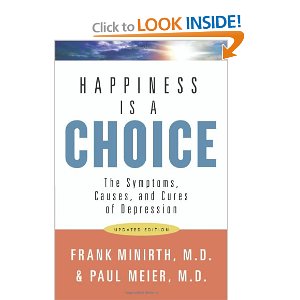
Earlier I said that happiness is a choice. This is actually the title of one of my favorite books by Minirth & Meier. Joy is different than happiness. I believe that joy is a heart emotion. We can be sad at the graveside of a loved one, with tears raining down our faces, yet feel joy. Joy for the life they lived and memories you have with them.  A person can have joy and have just lost their job, their boyfriend, or their goldfish. But happiness? Happiness is a choice. Sometimes we have to choose to be happy EVEN WHEN IT DOESN’T MAKE SENSE.

This doesn’t mean it is fake. A deliberate choice to smile and be happy is simply a proactive way to entice our thinker to change our feeler. It’s not magic. It’s not a secret formula. Nope! I am not saying that we should never belly-ache, cry, scream, or throw things. (Well, perhaps the last we can let go of forever, hmmm?)

Most folks are about as happy as they make up their minds to be.
    Abraham Lincoln
    16th president of US (1809 – 1865)

I don’t know your story. I do not walk in your shoes. I do know that my own shoes are not always comfortable. They can leave blisters. We can get in a habit of thinking negatively and in frowning. I know I have done this myself. I may have to leave myself notes or messages to “smile more”.

I don’t always do this perfectly. Sometimes invisible illness and disability wipe out my happiness savings account. At various times, I have had to seek counseling to really get back on track. Perhaps I’ve let myself go to long without smiling? There’s no shame in having to receive help in remembering HOW and WHY to smile.

Smiling may be like the Red Cross to a person in need. Smiling may make someone’s day. Someone may be having a bigger poopy day than you are. Even my dogs respond to a smile with a tail wag. Frankly? I like to see other folk’s tails wag. Smiling sends a message – a positive one. Maybe I’ve taken too many classes on Cognitive Psychology, but I truly believe how we think can change how we feel. So I believe we have to really work on thinking positively. I try to make my face match my self talk. Smile, Denise… smile! Make it a habit and you may eventually feel the corners of your heart tug up in an answering grin as well.

I’ll leave you with an oldie – but one I think says a great deal about why we should smile. You may even need to make a note to “self”.

Denise Portis

© 2012 Personal Hearing Loss Journal