They May Not Get It

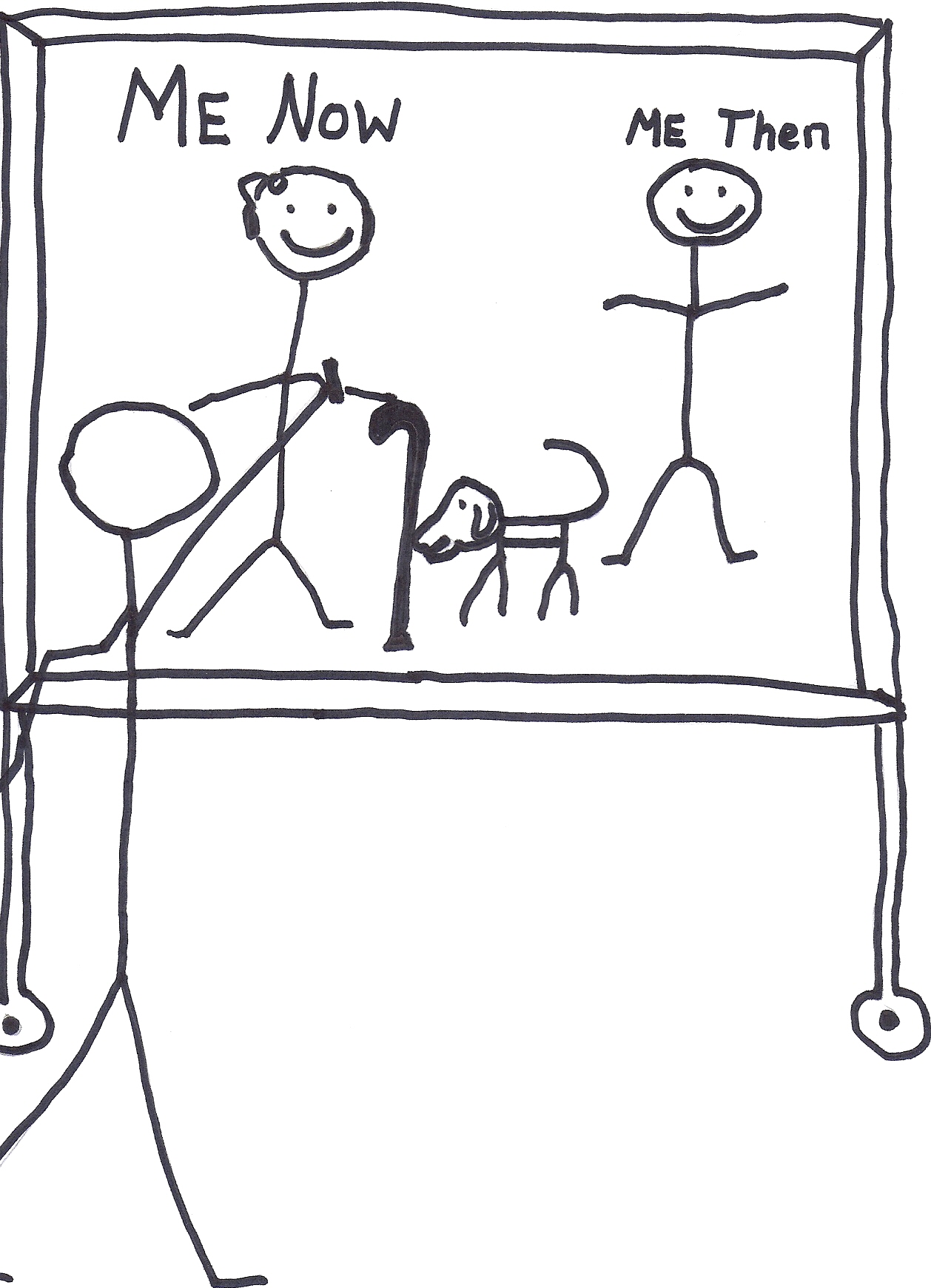
(Hey… I’m not an artist! But have you ever felt this way?)

One of the questions I am asked the most by folks who contact Hearing Elmo, is “Why doesn’t my family accept and understand who I am NOW?”

Before I even begin writing, let me express my hope that many of you will respond and share as I am very aware I do not have all the answers.

Why It Hurts

1. It hurts because the transition from “normal” to where you are was painful.

The school of hard knocks is – well – hard. Acquired disabilities and invisible/chronic illness are not easy to get use to when they first change a person. The journey from diagnosis to acceptance is a hard one. It hopefully has made us “better” and not “bitter”. I can attest to feeling stronger, more confident, and much more in tune with who I really am post-disability. Some of us have progressive symptoms and illnesses. We may adjust, only to have to do so again in a year or so. This too can grow us. But honey? It isn’t easy.

However, BECAUSE it was hard, it is hurtful when folks who knew us WHEN (back before our diagnosis), don’t accept or try to understand who we are NOW. We are still the same people. Our personalities have not changed. Our strengths and weaknesses are all still present – although you may have developed some new strengths because of your life path. So it is difficult when family members may sometimes be the hardest to teach how to talk to us now that we have a hearing loss. Or perhaps you are frustrated because a family reunion at a theme park is not ideal for you because you cannot ride any of the rides. Maybe you are utilizing a wheelchair, walker, or cane. A picnic and hike may not be a good way for you and your siblings to catch up – even if it has been a year since you’ve seen each other.

It’s not like we want recognition for the pain we’ve experienced. We aren’t looking for a medal. However, seeing any eye rolls or hearing frustrated sighs serve only to remind us our family

STILL

DOESN’T

GET

IT.

2. You expect your family members to care enough to accept you.

It’s not wedding vows. “In sickness and in health, for richer or for poorer…” But we have a reasonable expectation that our family members are going to love us and be there for us regardless. It doesn’t matter if we acquire a disability. We are still the same person. If Lymes disease has you aching and feverish a week out of every month, we expect compassion, not disdain. If CFS or MS has you weary, tired, and feeling as energetic as a centenarian, you expect understanding and maybe an offer to run an errand for you. If your eyesight is worsening due to various illness or disorders, you never expect frustrated outbursts when you explain you don’t have a ride to go to your nephew’s graduation.

But friends? Family members can need educating. Advocacy may begin at home. We wish it wasn’t necessary, but it may be very necessary. My kids grew up with me at best, hard-of-hearing. My husband, however, knew me before hearing loss. So I have to be willing to tell (nicely) him what works and what doesn’t. Don’t be surprised if it takes numerous lessons. Some heads are thicker than others.

What to Do

Talk to them. I’d elaborate, but honestly? You need to talk to them. Explain how you feel. Be willing to be vulnerable. Start with phrases that explain specifics and not general accusations. Example:

“When you sigh as I wobble into a shelf at the store it really hurts my feelings. I can’t help it when my world ‘twirls’. It’s hard enough to face the stares and hear the whispered remarks from strangers. I expect better from you. I expect your support.”

They May Never Get it

We can choose our friends, but we don’t choose our family. Blood is blood and it simply cannot be changed. However, you do not have to put up with people who ridicule you or try to injure you with words. You do not have to deliberately spend time with people who only make you feel worse. Sometimes? Sometimes those toxic people are family members. I hate it for you. I hate it for me. But it can be the painful truth.

Sometimes those friends that we choose? They become family. Maybe not by blood. Perhaps not by legal adoption. But folks who encourage us, lift us up, make us better people, understand, lend compassion and energy? They can become like family members. My heart’s desire is that you will find some folks like this if you haven’t already.

I welcome your thoughts on this. Knowing family members may grieve the person they once knew, or have trouble adjusting to the fact you are “differently abled” is important. Be patient. But also put healthy boundaries in place to keep unhealthy people from de-railing your progress with your own adjustments.

Denise Portis

© 2012 Personal Hearing Loss Journal
It’s Not Easy Being Green

I love Kermit. For the record, I loved Kermit before Miss Piggy loved Kermit. In the early 70’s, Kermit first poignantly croaked out that “it’s not easy being green”. Being green was something he could not help. It simply was.

This song has since been associated with people lamenting their own self-identity, yet coming to terms with “it being what it is”. By the end of the song, Kermit admits it’s OK to be green and that it is how he wants to be.

Am I OK Being This Way?

Something I have struggled with in acceptance of acquired disabilities is “the new me”. You see… I wasn’t born green. I can’t even say the transformation was similar to the beautiful miracle and mystery of a caterpillar changing into a butterfly.

And yet… it’s not like I asked to be late-deafened. It’s not like I asked to have a balance disorder like Meniere’s disease. But just like Kermit being green, it is what it is. There is no changing it.

So if this is me now, am I OK with it? Anyone with acquired disabilities ever struggle with that acquisition? If I asked for a show of hands, you’d first notice my own raised palm. I think you’d also notice a great number of hands. You aren’t alone.

Like many of you, I feel good about who I am much of the time. But I’d be lying if I said it’s always easy to be me. It’s not. So what to do?

Acceptance ≠ Resignation

I’ve never heard a person with acquired disability or chronic illness say, “This is easy”. It’s not. Yet do you know what I have discovered? I have this fuzzy, old memory of “life before disability” and IT STILL WASN’T EASY. My friends? Life is not easy. If you haven’t figured that out yet then you are still very young. Or, perhaps you are a frog.

I am discovering that acceptance of where I am (or even where I may end up), does not mean that I give up. Nor does it mean that I am resigned to an unhappy, unfulfilled life with no chance of ever giving back or having a purpose.

I get some “flack” with some of my readers about using the word “disability”. Rest assured, I welcome ALL opinions and discussion about the posts here at Hearing Elmo, as do the guest writers who participate. Some have suggested that using the term disability lowers one’s expectations and influences self-esteem. I understand the argument and point of view by those who believe this. I use the term because it is the terminology used by the ADA which ultimately protects my rights as a person with disability. It is about my freedom as a person who negotiates life a little differently. You may use disabled, differently-abled, special challenges, etc. In the end though it is green; though some may call it lime, olive, or chartreuse.

So today, August, 20, 2012, I am a person with disabilities. It’s not easy. But it isn’t impossible. Bottom line, because of who I am today, I compromise. I’m going to Hershey Park with a big group of couples from our church. I’m the self-designated pocket book holder. I won’t be riding any rides. I cannot. But I anticipate a day of fun and fellowship with other folks my age. I don’t choose not to go. For me, that would be giving up so it is not an option.

I don’t use the phone well, but I can use captioned phones, assistive technology, and my cochlear implant to make do. I use email a lot – and yes, FaceBook too. I walk like the world is in motion – especially on rainy days. Yes, yes, I know. The world IS in motion, but trust me! My earth’s rotation is faster than YOUR earth’s rotation. So I often walk with a cane. I have an assistance dog who counter-balances, and retrieves things I drop. I say, “Whoa!” a lot.

Don’t Pin a Super Hero Cape on Me!

Before you pin a super hero cape on me, please know that I don’t always have good days. I don’t always wake up and believe I can take on the world. I do not always look in the mirror and like what I see. There are times I worry about where I am in terms of what I can and cannot do. What is important, I believe, is what you do after having those very normal feelings. Worried? Totally normal. Depressed? This can be a very normal reaction. Pissed? Believe it not, being angry is a normal response to acquired disability. When you STAY worried, depressed, or pissed it becomes a problem. Don’t be afraid to talk to others. Perhaps you need to see a counselor. Maybe you need to do something just for YOU to work off some of that negative steam.

You will never hear me say it’s easy being green. It’s not. But acceptance of where we are allows us to then LIVE and even to give back – to be productive and have a life of purpose. Just like Kermit croaks, we may not be sparkly and flashy like others. Within each of us is the desire to discover and acknowledge that our being green – is OK. Perhaps even good.

I welcome your thoughts on this!

Denise Portis

© 2012 Personal Hearing Loss Journal

It’s Not Easy Being Green lyrics

It’s not that easy being green
Having to spend each day the color of the leaves.
When I think it could be nicer
being red or yellow or gold
or something much more colorful like that.

It’s not that easy being green.
It seems you blend in with so many other ordinary things.
And people tend to pass you over
’cause you’re not standing out like flashy sparkles in the water
or stars in the sky.

But green’s the color of Spring.
And green can be cool and friendly-like.
And green can be big
like an ocean
or important like a mountain
or tall like a tree.

When green is all there is to be
It could make you wonder why, but why wonder why?
Wonder, I am green and it’ll do fine
it’s beautiful!
And I think it’s what I want to be.

Round and Round She Goes, Where She Stops…

… is USUALLY on her nose.

If you live with invisible disabilities or chronic illness, have you ever stopped and tried to make sense of it all? More often should I choose to do this, I find it simply doesn’t make sense. What can be more difficult, however, is trying to help someone ELSE understand what it is like to be a little “different”.

The words disability is a like a nasty tasting curse word to many. Personally? I’m not afraid of the word because it does currently define my rights under the ADA – something I wish wasn’t necessary but is in order to make sure that those who navigate life differently have the same access and rights as everyone else. I’m not here to today to discuss the WORD, however. I am here to bellyache.

A friend of mine posted a link to a terrific article currently taking up space at Invisible Illness Awareness Week. It detailed why it is important to just LISTEN sometimes. You can access the article HERE.

I belong to a number of online support groups for people with Meniere’s disease. I’ve never met anyone with symptoms exactly like mine. As a matter of fact, Meniere’s disease often frustrates perplexed physicians who are trying to help treat the disease. However, because there is no cure, one can only learn to manage and treat the symptoms. What may help one person, does not help another at all.

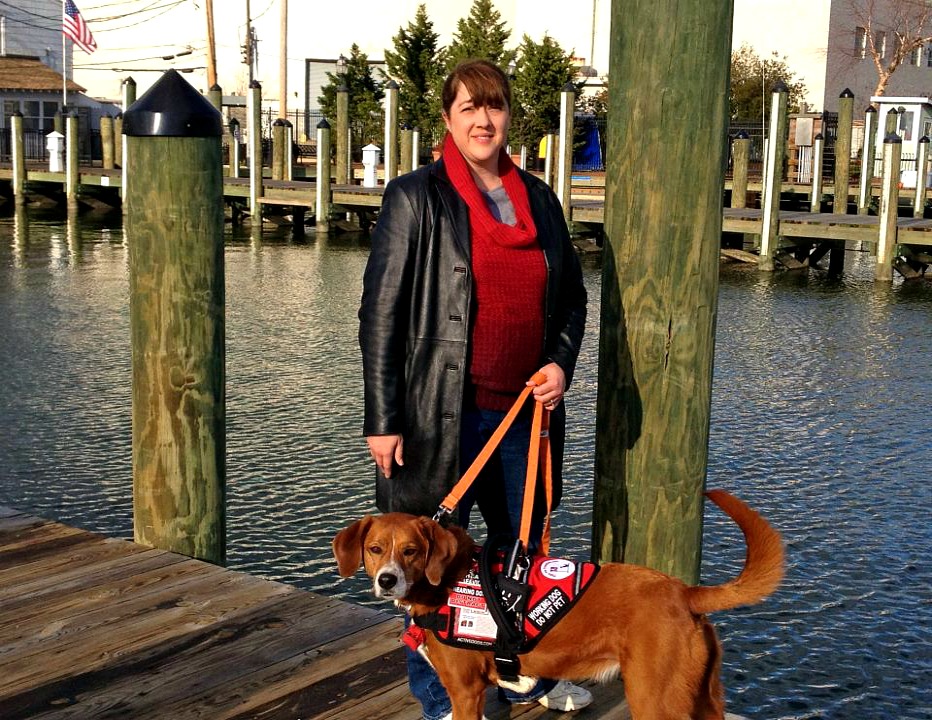
My assistance dog, Chloe, from Fidos For Freedom Inc., is a big blessing. Originally trained to be a hearing dog, she still performs all her hearing alerts with finesse and enthusiasm. As a matter of fact, 7 AM came WAY to early yesterday morning when my alarm went off. I tried to tell her to go back to bed and stop kissing my hand, elbow, and right ear. My husband rolled over and said, “Hello? Your alarm is going off!” Oh.

But Chloe actually helps me with far more balance related tasks each day than she does hearing alerts. I tried to “track it” one day and she performed 17 hearing alerts (alarm, kitchen timer, automatic retrieve of items I’d dropped and hadn’t heard, door knock, and cell phone ringing) and over 40 “other” tasks. (I quit counting after 40). These usually consist of directed retrieves. I drop things. I drop things a lot. Picking them up myself takes time as a bend all the way to the floor often precedes a fall. To avoid that, I simply let her get them for me. She also acts as a steady brace when I stand, sit, or go up/down stairs. She also acts as a brace if I begin to weave in a large cavernous place. The picture I chose for this post reminds me how bad my visual field was on Saturday. I ran into the mall with my husband to pick up something at a favorite store. When sound echoes, I tilt. (Picture Denise, aka Leaning Tower of Portis). Chloe has a large handle on the top of her vest that works perfectly. On my lower left is a solid helper that keeps my world from being quite so off center. I’ve been in JCPenney before and let go of her handle to look at some clothing on a sales rack. I immediately felt “swishy” because of the tall ceilings and lights. I grabbed out to keep from falling and clutched the breast of a nearby mannequin. I don’t make these things up. Thank goodness she/it wasn’t real, right?

Yet there are things Chloe cannot help me with, too. Here are some things about Meniere’s disease that surprise some folks:

1. Scrolling words or moving backgrounds on PowerPoints make me sick.

Our church places the words to songs and notes for the message on the walls in the sanctuary. This is very helpful for anyone with hearing problems… or ADHD (smile). However, sometimes there are moving points of light or star bursts that move behind the words or notes. I’m fine as long as I’M SITTING.

2. I have to sit to brush my teeth.

Yeah. I know, I know! Strange! But there is something about moving a toothbrush around in my mouth while in a standing position. I have to sit, and there are days I actually have to close my eyes on top of that!

3. Stepping down can be problematic.

This one really bugs me. On sunny days (weather is a trigger for me), I love to hike and climb around. I love rocks. Big rocks. I love heights (believe it or not). However, stepping down more than 6 inches is enough change in my altitude that I black out. It may only be for a few seconds, but if both feet are not on the ground, I’ll be picking blades of grass out of my nose hair. Chloe has learned that a “Whoa!” from me means

Move.

NOW.

4. Must… AVOID… looking… at ROTATING things (gasp)

Ceiling fans are not my friend. Neither are signs hung from ceilings when the air conditioner vents blow on them to make them twirl. For me this means heave, deep breath, heave again. I’m serious. 🙂

5. I shower while looking at my feet.

I didn’t realize how difficult it can be to get clean when you can’t look up at the shower head. Raise your eyes to reach up for shampoo or your razor? Honey? Do you want to get up close and personal to the DRAIN? Heaven help the family member who moves my shampoo or washrag from their designated place. I count on where they are so that I can shower safely… while looking at my chipped toenail polish.

6. Watching the effect of the wind can topple me too!

We’ve had some terrific storms lately. Since it has brought much needed rain, I’ve been loathe to complain. I love standing on the deck and watching the wind blowing the towering pines behind our home. Clarification: I like hanging on to the rail of our deck and watching the wind blow the towering pine trees behind our home.

7. Gingery’s Baby Pegasus can be mesmerizing to my detriment.

My daughter’s 12 pound hairless Chinese Crested likes to spin. For fun. Imagine that. It is quite captivating, but it only means CAPSIZING for me. “Look away, Denise, Look AWAY!”

8. I fuss at my son’s stomach.

My son… you know the one who was 7 weeks premature? He is 6 foot 3 inches tall. He’s a terrific kid. However, even at 21-years-old, he still needs the occasional “mama sermon”. I dare not look up, Up, UP into his eyes. One isn’t able to reiterate needed reminders when flat on the floor. Instead I point my finger and give his belly and chest “what for”. The kid laughs at me. LAUGHS. (sigh)

9. Glass elevators have speckled carpet.

I know this because I only see the carpet in glass elevators. Why not solids? Stripes? Only speckles. This confuses me.

10. I remind my doctor that I will NOT hold my breath while he’s listening to my ticker.

Because… well otherwise I’m waking up with nurses, hound dog, and doctor crowded around. (Why crowd someone who has swooned? Can I just ask that?)

Like many people who get up every morning and “manage” their symptoms, I hope perhaps I’ve helped you understand balance disorders a little better. Feel free to share your own “management techniques”.

Denise Portis

© 2012 Personal Hearing Loss Journal

Decisions, Decisions…

For a totally unrelated reason, I was reminded this week that my husband cannot swim. I hate it when a discussion brings up old nightmares about the topic too! Goes to show how much our subconscious is at work… especially when sleeping. Anyway, this conversation about the fact that my husband cannot swim had me dreaming about one of the most terrifying events that led up to my banning him from going into the ocean.

The year was 2001, and my family and I were in Siesta Key, Florida. Terry was taking some classes to finish up his doctorate. Always nice when degree completion requires on-site classes in Sarasota, and you can time it where the whole family can be dragged down with you! Terry wasn’t getting much rest and relaxation. Going to class all day and putting the finishing touches on his dissertation were exhausting. At night he was glad to just catch whatever sunshine was left in the day and rest on the beach while I corralled the kids into a distance I could easily manage their activities.

I’m not sure what prompted a non-swimmer without a life vest to decide to get on an inner tube, launch one’s self into the ocean, and drift off to sleep. He swears up and down he had no idea he’d drift out to sea. After all, when he got past the breakers and could just snooze, the ocean was calm and serene. I’m the one with hearing loss (a fact I’ve made plain on this blog). But exhaustion and FREAKIN’ DISTANCE FROM SHORE will dissipate sound waves and keep someone from hearing shouted warnings; even from hearing ear-drum piercing screamed warnings. That’s right. Picture me on shore with kids, jumping up and down, screaming warnings that a riptide had caught him and he was oblivious to the danger. I remember thinking, “he has the room key around his wrist so I can’t even get into our condo and have one of the kids call my parents to let them know Terry drowned”. Morbid, yes? But I knew Terry could not swim AT ALL. The man cannot even dog paddle (something Chloe has told me since that she’s a little embarrassed about actually).

We may not have been able to attract Terry’s attention, but we did other folk’s. Soon a small crowd of people were whistling and hollering for “Terry!” A man, likely a native, stopped close to me and said something. I could hear the rumble and pitch of his voice. I stopped screaming long enough to sputter, “I have a hearing loss and have to see your face to hear”. So he touched my shoulder to get my attention and said, “He can’t swim? Want me to go after him?” I looked out at my still sleeping husband and agreed immediately. “YES PLEASE!!!!” (At least I’m polite...)

So the man went after my husband. He must have been shouting as he swam, because when he got closer to Terry, I could barely make out that Terry finally woke up. I saw a flail of hands, legs, and arms and prayed he’d hold on to that inner tube! The rescuer had started further up the beach to Terry and I think the tide and his strokes eventually got him safely to Terry’s side. He must have given him instructions to kick, which he did as well along with some steering, and eventually ended up on shore about a mile from where we all started. The small crowd of people had followed the kids and I down the beach. Some kind soul had picked up our things and carried them with us, knowing I wasn’t cognizant enough to even do that.

Drifting Off

A very popular topic for writers who discuss acquired disabilities and chronic illness, is social isolation. Isolation does not happen all at once. It is a gradual process; a series of small decisions and choices that eventually yield a self-perpetuated aloneness. We become “deaf” to the shouted (and well-meaning) warnings of people around us. Can we be rescued? Will we even allow a “strong swimmer” to intervene?

For people with hearing loss, isolation is almost a part of the process of learning to live with it. I know few people who are late-deafened that did not have at least a short period of self-imposed isolation. Why? Well experts have said of the late-deafened, “They no longer felt they belonged in the hearing world, and neither did they belong in the prelingually deaf world. Onset of deafness had left them in a twilight zone between worlds and had robbed them of their identity” (Barlow, Turner, Hammond, & Gailey, 2007, p. 442). Other acquired disabilities can produce the same isolation, however.

Physical difficulties can prevent people with a mobility impairment from creating social networks. Even the weather can keep some folks with mobility issues away from others. If you have a power wheelchair or scooter, you do not want to go out in the pouring rain or blistering heat. Despite the intentions of the ADA, not all places where friends get together are accessible. Whether you are born with some limitations, or acquired them later in life, disabilities or chronic illness may result in feelings of loneliness and isolation, and a lack of access to support information (Matt & Butterfield, 2006).

Not As It Seems

Not all decisions to RSVP to invitations with a “No, thank you” are because of isolation, however. Friends and relatives need to understand and trust that sometimes? Those “no’s” are not a pity party nor decision to pull back. I don’t go to pool parties. I have technology that cannot get wet and a husband who cannot be in the heat because of having one kidney. (And have you picked up yet that THE MAN CAN’T SWIM?) Sometimes there are very legitimate reasons for declining an invitation. A person may not be able to do evening gatherings because they have legitimate needs for an early night. Folks with disabilities and chronic illnesses often require more sleep than the average adult. It is not always possible to nap the afternoon before in order to go to some evening “shin dig”. Some people have to offer late apologies to activities they had planned to go to… but they have a “flare” when it comes time to prepare for an outing of fun and fellowship. The weather gets the final say for some of us. I can agree to go to a “Girl’s Night Out” a week in advance, only to have a weather system move in to where I can barely move in an upright position.

But…

I have also fudged about going to things I really could have had I really wanted to attend. Sometimes we say “no” because that is

EASIER or

HABIT.

We have to learn to police ourselves and ask ourselves some legitimate questions when our first impulse is to decline an invitation.

Social Networks

Nothing gets on this female’s nerves more than when I hear someone ‘pooh-pooh’ social networks like FaceBook, My Space, Blog networks, online support groups, and message boards and forums. I have heard holier-than-thou folks spout that these avenues “aren’t real people” and therefore are not “real relationships”. Drs. Patricia Obst and Jana Stafurik refute this much better than I can. “Online we are all able-bodied“. Online there is a “psychological sense of community and social support found through membership of disability-specific websites” (Obst & Stafurik, 2010, p. 525). These researchers looked at 160 different individuals who had various disabilities or chronic illnesses. “Results indicated that users did receive moral support and personal advice through participating in such online communities. Further, results indicated that online social support and feeling a sense of community online were positively associated with participants’ well-being in the areas of personal relations and personal growth” (Obst & Stafurik, 2010, p. 526).

I am always thrilled to have guest writers here on Hearing Elmo. (Interested? Email me at denise.portis@gmail.com). This forum has provided information and support to individuals “living it” and to family members and friends for information. I have been invited to write in other forums and welcome the opportunity. Ever heard the phrase, “dissemination of information”? The Internet makes us equal. It provides an easy, inexpensive way to find support, learn, advocate, and connect.

It can also serve as an avenue in which a warning comes through loud and clear… even to those of us who are late-deafened.

Are you avoiding outside activities?

Are the reasons you are doing so legitimate?

Are you connecting with others?

Are our decisions prompted by necessity or the result of anxiety, depression, and an attitude of giving up? These are important questions to ask ourselves. Please don’t find yourself adrift on an ocean with the shore out of reach. Ask for help. Discover a hero swimmer on their way to rescue you.

Denise Portis

© 2012 Personal Hearing Loss Journal
Barlow, J., Turner, A., Hammond, C., & Gailey, L. (2007). Living with late deafness: insight from between worlds. International Journal Of Audiology, 46(8), 442-448.

Matt, S. B., & Butterfield, P. (2006). Changing the disability climate: Promoting tolerance in the workplace. American Association of Occupational Health Nurse, 54, 129–134.

Obst, P., & Stafurik, J. (2010). Online we are all able bodied: Online psychological sense of community and social support found through membership of disability-specific websites promotes well-being for people living with a physical disability. Journal Of Community & Applied Social Psychology, 20(6), 525-531. doi:10.1002/casp.1067

Attracting More Flies

Photo by Deborah Marcus, February 22, 2012, North Carolina

I just purchased a book through Amazon, Benjamin Franklin’s “Poor Richard’s Almanack”. I’ve always enjoyed books like these and have seen a number of quotes from this book over the years.

One American proverb from this book that many people have heard has to do with honey.

and vinegar.

and flies.

 Benjamin Franklin, “Tart words make no friends; a spoonful of honey will catch more flies than a gallon of vinegar” (Franklin, 1980).

When I first heard this quote I remember thinking, “Well who in the heck wants to attract FLIES”? Having grown up on a farm in SE Colorado, I can tell you that flies were a problem. The animals hated them, farmers hated them, and children relegated to policing the house with fly swatter and tissue in hand hated them!

However, like many quotes, you have to look past the surface to get at the true meaning. Gee, had I known vinegar would have kept them away I may have started sprinkling it around and dabbing it behind my ears.

Ok. Maybe not.

We don’t need to go raid our friend’s hives for honey, either. This quote has to do with being tactful – on purpose.

You know what I’ve discovered? To be tactful, I DO have to be purposeful about it. It is super simple to be tactless. Especially when angry! I’ve learned that if I’m to be tactful, thereby attracting more attention with my “honey”, I have to set out with very real purpose ahead of time. It seems we were created to have a lot of excess vinegar on hand.

Tart Words

I think a lot of folks do not realize that the quote begins with, “Tart words make no friends”. Last week I received a lot of private responses about the post “A Special Kind of Stupid“. Some things people with disabilities shared with me made me very upset. You just would not believe some of the things that “normal” people say to folks with invisible illnesses or disabilities. Then again, if you follow “Hearing Elmo”, perhaps you would believe it as you likely have some connection to the disability or chronic illness communities.

Though it may be difficult, we really have to remember to put a cap on our – erm – vinegar when responding to some of the stupid things we hear in our day-to-day lives.

No, She Is Really Unhappy

Take an example from last week in “A Day in the Life with a Service Dog”. At Walmart, as per my usual mid-week major errand, Chloe and I ended up attracting some attention. As I outlined in an article for Gale Hannan at “Hearing Health Mattters“, if you don’t like attention then do not mitigate your disability with an assistance dog. You are going to attract attention. It becomes easy to ignore and if you are deaf like I am, you don’t even hear all the exclamations of surprise. However, sometimes I’m stopped. Dog-lovers like Walmart… or so it would seem. Most of the time I am very glad to stop and answer questions. I carry information about hearing dogs and balance-assist dogs with me for opportunities just like these. I’ve discovered, however, that if I stand around TOO LONG, folks begin to unplug their brains before asking questions. There is this “fine line” of how much time is “long enough”, prompting me to move on with my shopping. I evidently have not discovered that important timeframe yet. As I answered this lady’s reasonable questions, a lull occured in our conversation. That should have waved the red flags for me. Heck I’d take explosions in my underclothes if I could learn to pick up these cues.

But nope.

I stuck around too long.

“So does your beautiful service dog ever get to just be a dog? Does she ever get to play?”

Vinegar began pooling under my tongue. Chalk it up to living with a house full of very sarcastic people. I wanted to say, “You know? As a service dog she needs to earn her keep. The vest comes off at night and she is allowed to finally rest. She’s a working dog – not a playing dog. It wouldn’t do me any good for her to go around thinking she could ever play, right?” (said with saccharin sweetness).

Tactful Responses Ultimately Educate

Instead I swallowed the vinegar (grimace) and plastered on my best “WHAT A TERRIFIC QUESTION” face and replied, “Well she is a dog! She is a beloved member of our family. She gets play breaks at work and doesn’t actually wear her vest at home. She still does alerts and helps while at home, but she is off duty more than she is “on”. A healthy service dog is allowed to just be a dog. That is why she loves working for me. I set very realistic boundaries and expectations”.

Being tactful and pleasant is important if I’m to hope that I play even some small part in helping to educate others about hearing loss, balance disorders, and service dogs. If I’m angry and belligerent, I’m not going to “win friends nor influence people”.

And neither will you.

However…

Is It Ever OK to “Let ‘er Rip”?

I have lived with hearing loss and balance issues more than half of my life now. That means I have some experience. That does not mean that I do everything right. Folks ask me from time to time when it is OK to put others in their place.

We can’t exactly take out a megaphone and announce to everyone within earshot, “This person just said something STUPID”.

To demean others is never the right way to go. For one thing, it only makes US look bad. You certainly won’t promote education, compassion, or understanding in others if you deliberately embarrass or fuss at them. Having said that, I do believe that there are times that responding with sweetness and “honey” may not be the right answer. After all, it may be that you no longer WANT to attract that particular person who simply cannot and WILL not treat you like a normal human being. I believe the right time to load your water pistol with vinegar occurs when:

1. You’ve responded the right way over, and OVER again.

Maybe it is a family member that thinks their comments are funny. Maybe it is a co-worker whose remarks border on the unkind. At some point you may discover that the only way to educate someone is to be a little more FRANK – pardon the pun Benjamin Franklin!

Tired of the eye rolls and deliberate condescending response at a dinner table of “I’ll tell you later” after asking for a second repeat of what someone said? Perhaps it is time you gently laid your hand on their arm and said in a normal tone (for they likely do NOT have a hearing loss), “You know? It hurts my feelings when you say that and sigh and roll your eyes. I only want to hear what you said. You never actually remember to tell me later what it was. Don’t blow me off. What was funny? I want to participate in your life. I care about these moments and we will never re-live them or have them as “do overs”. I want to know what you said because I love you”. Others at the table may have grown quiet at this calm announcement. But that can work in your favor too. Sometimes educating others occurs by observing someone else getting educated. You may have let a little vinegar taint what you said. A little “sting” may be necessary to get through to calloused hearts.

2. You respond in defense of others.

Sometimes you may need to put up the honey aside and gear up with vinegar in order to stick up for someone else. I’m much quicker to speak up to a bully when the person being picked on is NOT ME. This has to be done carefully, however, as you do not want to take away an opportunity for someone else to stand up for themselves. When you live with disability, chronic illness, or invisible differences, you need to learn to be as independent as you can. It is healthy. You may need assistance in technology, puppy power, or by swallowing your pride and learning to ask for help.

However, there are times I believe, that we should step up and even figuratively lock arms with another who is being misunderstood to let them know they are not alone, and let a bully know they are being irrational – or STUPID.

We Won’t Always Do it Right

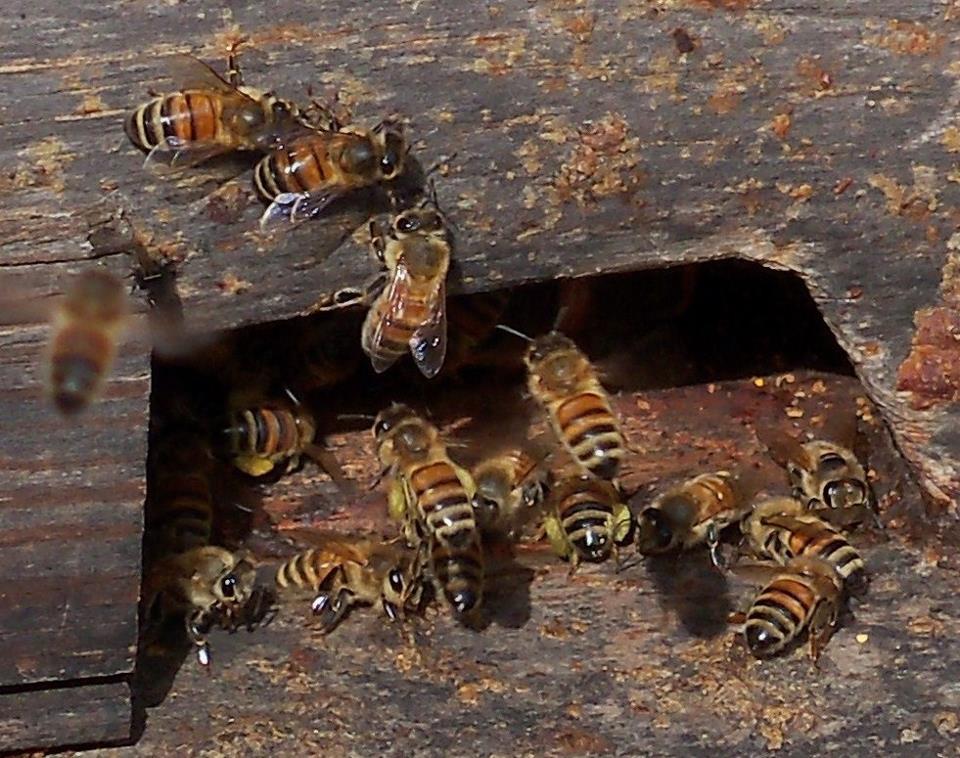
I can be a sour puss. Vinegar is more likely to run through my veins than honey. I’m allergic to bee stings.

Sometimes I blow it. I respond as if I don’t care if someone better understands disability and hearing loss. As a person of faith, I know this dishonors not only me, but also God. I have learned to say “I’m sorry” – and really mean it. Acknowledging that you aren’t feeling well today and mis-spoke or are feeling belligerent and should have kept your mouth shut shows maturity. Did you blow it? Well make it right. You know what to do.

Franklin, B. (2007). “Poor Richard’s Almanack”. Skyhorse Publishing, Inc. New York : New York, p. 44.

Denise Portis

© 2012 Personal Hearing Loss Journal
If Fish Aren’t Stupid…

I love it when I learn something new. Even when that learnin’ means that it contradicts something I previously thought was true. I grew up on a farm/ranch in SE Colorado. The families I knew, including our own, had all kinds of animals. Common critters included horses, cows, pig, sheep, chickens, turkeys, peacocks, ducks, geese, and even a llama or two! Something you didn’t see a lot of in the family rooms of various ranch houses were aquariums. We had some big ol’ goldfish that grew to an astonishing size in the cow tank near our house. What was even more astonishing than their size is that they survived the frozen tank winter after winter. I can’t remember who first told me that fish are stupid. This was long before “Finding Nemo” even came out in theaters, with Dory convincing us all once and for all that

fish.

are.

stupid.

After I went away to college and married a city boy, I actually lived in town big enough to have cable television. I found that I had a lot of years of catching up to do on Animal Planet, the Discovery Channel, and many other educational animal shows. However it wasn’t until my daughter’s boyfriend – the one who happens to know all there is to know about owning a freshwater tank – put up a couple of aquariums in our home on behalf of beloved daughter, that I began to see freshwater fish up close and personal. As a matter of fact a big 30 gallon tank sits behind my desk, so it is pretty hard to miss the freshwater angelfish swimming around the tank. I very soon discovered that my preconceived notion about the stupidity of fish was – well – WRONG. They really do NOT have 30 second memories. They are affectionate, can remember the easiest “trail” through the freshwater plants to circumnavigate the tank, will follow a person around the tank to “beg” for food, they can be aggressive and yet can be tame enough to actually take blood worms from your fingers. They will live in harmony with other types of fish (but not all), and seem to actually play with each other occasionally. Don’t get me wrong. I’m not ready to whip out an IQ test to see how they fare, but I really no longer believe that fish are stupid.

Other Wrongs – Now Corrected

I just turned 46-years-old this week. That is really hard for me to wrap my mind around. I remember when my mother turned 46-years-old, I was a very young and immature 23-years-old. I remember filling out her birthday card to send from my little apartment in Chattanooga to her “home on the ranch” in Colorado and thinking… “Wow. Mom is O.L.D. She is definitely entering her “senior” years now.” I’ve got to tell you now that I’m 46-years-old myself? Well, let’s just say I want to open mouth – insert foot.

I also grew up with very limited experience with any person with chronic illness or invisible disabilities. I did not have very much experience with people with even visible disabilities. Growing up in a small farming community limits one in that way I guess. It wasn’t until I became deaf and developed Meniere’s disease that I first really began meeting people of all kinds who are “differently abled”. Having an acquired disability today is much different than it use to be simply because we have the Internet that connects us to each other and to a wealth of information as well. I grew up believing that people with disabilities were to be pitied. Knowing what I know now about a community of which I am proud to be a part of, pity is the last thing any of us want. I’m constantly amazed by the perseverance and strength that I see in people with all kinds of various “differences”. I hate to even use the word disability, but it is the language present in our current laws that protect the rights of those who have them. A fellow client from Fidos For Freedom, Inc., first introduced me to the term “differently abled”. I find that this phrase much more accurately describes those who live a victorious life despite any physical, mental or emotional differences they may have. Through networks such as the Hearing Loss Association of America, Cochlear Americas, Invisible Disabilities Community and Invisible Illness Awareness Week I have learned that having invisible issues also creates incredible strength and depth to the human soul. I’ve met some wonderful people who have taught me how to navigate life with grace and a “can do” attitude.

I’ve learned that all of us should “check our preconceived notions” at the door. Assumptions are a discriminatory lot. I do have to admit to also enjoying lessons learned from erroneous stereotypes. After all, that means I’m still learning. You can teach an old dog new tricks! After all, I’ve learned that fish aren’t stupid…

Denise Portis

© 2012 Personal Hearing Loss Journal

It Ain’t All Good

George Dawson, “People forget that a picture ain’t made from just one color. Life ain’t all good or all bad. It’s full of everything.”

I didn’t write last Monday. I almost let yesterday (Monday) go without writing as well. My reasoning was “why write when I feel so awful”? Sometimes I feel like I owe my readers and peers the truth… but only if it is pleasant and encouraging. When things are not going so good? Well… I’m less certain about how healthy it is for ME to write about it, and risk losing YOU as “compatriots in the ranks”. Right now, “life ain’t all good”. But because it is also “not all bad” I decided to write anyway.

Some things are changing for me. Not good changes. There are things going on that involve other people, so I cannot discuss it. But there are things going on with “just me” that I DO have the liberty to discuss. So I will. If you tuned in to get a dose of the warm fuzzies – this isn’t the post you want to read.

Tell Tale Signs

I have an incredibly bad habit of ignoring the obvious. Perhaps it is a defense mechanism or a form of denial. When something is scary or unpleasant I will push it down and pretend “it” doesn’t exist. I tell myself what my mother always tells me, “Don’t make a mountain out of a mole hill”. Problem is… sometimes it IS a mountain and not a mole hill.

Life can be hard. I have friends who have lost loved ones recently. I have friends who have been diagnosed with scary-sounding diagnosis, some having a good prognosis and some a dire one. I have friends who have close family members battling major health problems. I have friends who are having financial crisis that will change the course of their life and the life of their families. I have friends with children in trouble. I have friends who have been told to plan their funeral. I have friends who have been betrayed and used.

Makes it sound like I have a lot of friends, doesn’t it? (GRIN) One tremendous PLUS of my now, 9-year-old blog, is that I have met a great number of people “virtually”, and literally as a result of my going public with what it is like to live with hearing loss, invisible disabilities, and an incredible canine partner. I have been blessed with guest writers and friendships that have developed as a result of “Hearing Elmo”. You, the reader, have been a source of encouragement to me, a source of advice, and even a source of constructive criticism when I desperately needed it. I am thankful for the sense of “community” the Internet and blogs have given those with disability and invisible illnesses.

Sometimes I ignore tell tale signs in order to “deal with it”. Yes, I know that isn’t healthy but I’m just tellin’ it like it is. Folks who do not have disabilities still live in a body that ages, changes, and may face both minor and catastrophic health problems. However, people with disabilities, those who have learned to be “differently abled”, also sometimes face these same health problems. I’ve often wondered that if certain disabilities make one more prone to health related problems. For example, if you have arthritis, fibromyalgia, or chronic fatigue syndrome, perhaps you’ve put on some weight because you cannot easily exercise or lack the strength and energy to do so. As a result, diabetes or heart disease are now knocking at your door. If you have paralysis or problems with mobility, perhaps you have also developed circulatory problems. I am late-deafened and have Meniere’s disease. I actually hear voices really well in “prime” listening environments, and even do fairly well in really noisy environments with poor acoustics. I fall a lot though. When I do, I normally hit my head. Usually it is just an “ouch” moment where I rub the sore spot and go on about my business.

However, in the last year I have woken up a couple of times now – sprawled out in a heap with my dogs curled up asleep next to me. One time, a matter of hours had to have passed because it was much darker outside by the time I came to. I discuss these things with my husband and um – sort of with my doctor. I have a feeling that I’ve bumped my noggin’ often enough in my adult life, that there may be consequences to that. Thankfully, I’ve learned what a lot of my triggers are and can identify 95% of the time when I need to sit down,

NOW

no matter where I’m at

or who may be watching

or what I may be sitting in.

My eye prescription has changed 3 times in the last 11 months. Most mornings I wake up and my extremities are numb. On really bad days, I still cannot hardly feel my fingers well enough to type by my afternoon classes. I’m having all kinds of “female issues”. My balance is worse than it ever has been. Much worse. I have tried to tell myself that I am stumbling more because I’m older. I turn 46-years-old this month. I’m very good at justifying things! Don’t we tend to do that when something is “off”? My doctor is working with me. When classes are over in May I will be busy getting a lot of tests. Fun, fun (rolls eyes).

But Gee… It’s Not Fair

I don’t care who you are. The old adage, “when it rains, it pours” is only positive to a farmer. No one likes change. Nobody likes problems. No one embraces tragedy. We may have a “Bad News Not Welcome” here sign on our house door. Heck… it may be tattooed on your forearm. That doesn’t mean that bad things are not going to happen.

Life is just not fair, is it? I mean… we don’t get what we deserve when we’ve done something right. And dang, if we don’t get what we deserve when we do something WRONG.

Oscar Wilde: “Life is never fair, and perhaps it is a good thing for most of us that it is not.”

Bill Gates: “Life is not fair. Get use to it”.

(Unknown): “Expecting the world to be fair to you because you are a good person is like expecting the bull not to charge because you are a vegetarian.”

Matthew 5:45b: “For he makes his sun rise on the evil and on the good, and sends rain on the just and on the unjust.”

Most of you have already learned that life isn’t fair. We deal with it. We have to do so. There are no real alternatives.

We adjust.

We learn.

We fight.

We will lose and we will win. Regardless we DO deal with it. That can mean we do so successfully and with pizzazz. It may mean we do so poorly and like a drowning victim, struggle and pull others down with us. We always have choices. Maybe not about what we get to handle, but HOW we will handle it.

Recently while shopping at the mall with my husband, he said, “Do you realize that in 2007 you trained for a hearing dog because you needed one. Now Chloe performs more balance-related tasks for you than she does hearing alerts. What does that mean?”

Well it means that I’m changing. Thankfully, dogs are smart and so are the trainers at Fidos For Freedom. You really can teach an old dog “new tricks” – or skilled tasks.

More Than You Can Handle

Don’t you hate it when you are going through something hard and someone tells you, “God won’t give you more than you can handle”? Seriously? I mean… for most of us determination, will-power, and a fighting attitude gets us through. For those like myself who consider themselves a person of faith, we rest in the knowledge that He’s got this… and He’s with us. That doesn’t mean He’s gonna bail us out and smooth the way.

My cousin, a breast cancer survivor, blogs a great deal. I always look forward to reading her posts when “Google Reader” lets me know something new has been uploaded. Recently, she wrote “A Hard Place”. She quoted from a book called, “Kisses From Katie” by Katie Davis. I wanted to share that excerpt with you:

“Remember, God will never give you more than you can handle.” People repeat this frequently; I heard it when I was growing up and I hear it now. It is meant to be a source of encouragement, and it would be if I believed it were true. But I don’t. I believe that God totally, absolutely, intentionally gives us more than we can handle. Because this is when we surrender to Him and He takes over, proving Himself by doing the impossible in our lives. I have learned to accept it, even ask for it, this “more than I can handle.” Because in these times, God shows Himself victorious. He reminds me that all of this life requires more of Him and less of me. God does give us more than we can handle. Not maliciously, but intentionally, in love, that His glory may be displayed, that we may have no doubt of who is in control, that people may see His grace and faithfulness shining through our lives. And as I surrender these situations to Him, watch Him take over and do the impossible, I am filled with joy and peace–so much more than I can handle.”

I’m not a brave person. I’m not going to ask God to give me more than I can handle.

I’m a chicken.

a wuss.

a weakling.

You don’t have to ask God for ANYTHING though, and you still are going to get a dose of LIFE. And so I’m back around where I started. Life ain’t all good.

But it is not all bad.

And so we carry on…

Denise Portis

© 2012 Personal Hearing Loss Journal

Kidney Disease and Hearing Loss

Recently, I read a blog that mentioned kidney disease and hearing loss. You can read the post HERE.

My husband, Terry, and I have been married almost 26 years. He was born with only one kidney, and the one he has doesn’t work ideally. Because he has always lived an “alcohol/drug” free life, he is in good health considering!

I have noticed, however, that he has started showing signs of hearing loss. It started with the television. We “TIVO” everything so that we can watch favorite shows when we have time to sit down and watch them together. In recent months, I have noticed that HE is asking me to turn the volume up. I’ll let that sink in for a minute (grin). I’m deaf. Sure I “hear again” with a cochlear implant, but HE is asking ME to turn up the television. He usually has the remote that fast-forwards through the commercials (as I seem incapable due to vertigo in watching the screen and trying to hit buttons). I have the remote that controls the volume.

He is also saying “huh” more. I’ve noticed it at the dinner table and also in restaurants. Granted, both places can be noisy environments, but it has been a bit of an eye-opener for me to be on the other side of that “huh?”

So as we’ve aged, my hearing has gotten better and his – not so much. I can’t say at this point he will need hearing aids, but I’m thinking the probability in the next 10 years is very high.

I want to be the kind of spouse he has been. Terry has been my biggest cheerleader, support, and source of encouragement. It can’t be easy to be married to someone who is late-deafened when you fell in love with someone who could hear. He has shown me that what happens after “I do” doesn’t impact love, commitment, or a shared life. He hasn’t let it phase him that I have a balance disorder. He picks me up if I fall, brushes me off and helps me see the “funny” in it (as long there isn’t any blood). He encouraged and supports my having a hearing assistance/balance assist dog from Fidos For Freedom. He now actually serves on their board.

So if my husband with kidney disease DOES lose his hearing? I’ll be there for him too. In the meantime, I am helping him navigate living with some adjustments regarding VOLUME.

Denise Portis

© 2012 Personal Hearing Loss Journal

Link to story in Wall Street Journal:  Click HERE.


Why I Love Winter – Restoration


Part Three of Four…

February starts this week. This winter has been a mild one in my neck of the woods. Very little snow and mild temperatures make many folks exclaiming “What a terrific winter we’re having!” I don’t begrudge the milder winters to those that enjoy them. I do love my snow though! When we have more than our share of winter weather, I’m happily out in it directly after a snowfall, shoveling and scraping and tossing the “white stuff” around!

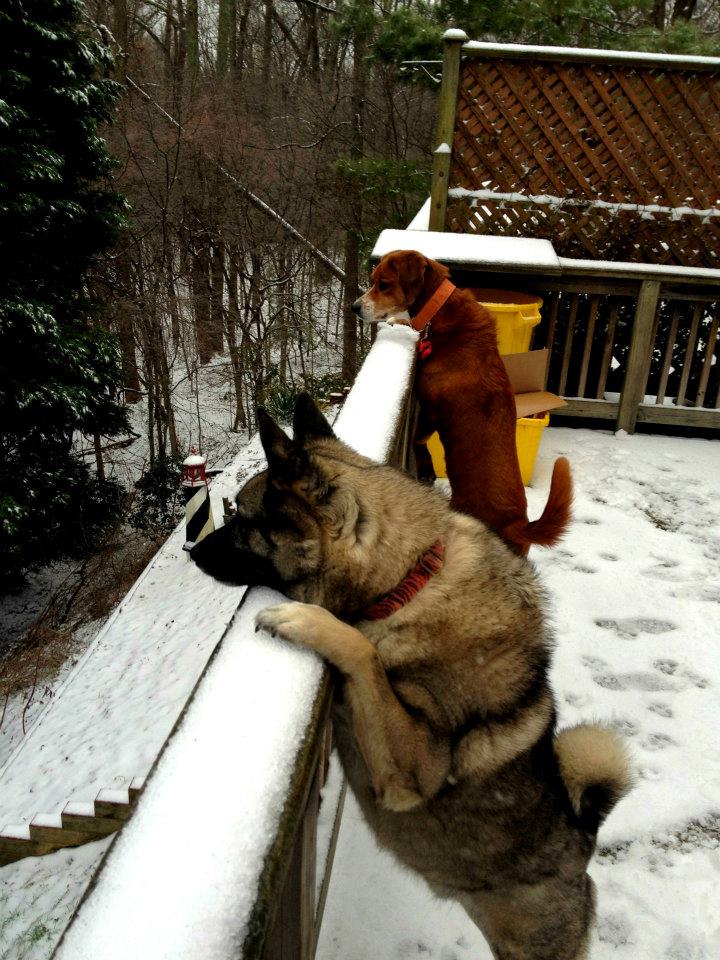
Some of nature goes “dormant” during the winter while other types of plant life may just conduct photosynthesis at a reduced rate. Animals may hibernate, or only move about sparingly to limit calorie burning. Our winter has been so mild the squirrels have been scampering about much like they do in the autumn. I know for a fact the raccoons are out and about for we finally had to break down and purchase “raccoon proof” trashcans. I’ve seen deer near the creek below our home. So have the dogs:

Foxes stare at us from the bushes and shrubs at night when we take the dogs out for the last time. Animals are busy, busy. The trees and perennials are just – C o N f U s E d.

When I think of winter, however, I think about all the restoration that is taking place. Nature may not LOOK alive, but it is. Many types of life are resting, preparing to get very busy producing new growth or replenishing body fat. Growth spurts cannot happen without winter and the dormant phases many types of life experience. This period of restoration actually prepares and allows this growth.

An old, but favored song about the seasons says it much better than I am able to describe:

Every Season

Every evening sky, an invitation
To trace the patterned stars
And early in July, a celebration
For freedom that is ours
And I notice You
In children’s games
In those who watch them from the shade
Every drop of sun is full of fun and wonder
You are summer

And even when the trees have just surrendered
To the harvest time
Forfeiting their leaves in late September
And sending us inside
Still I notice You when change begins
And I am braced for colder winds
I will offer thanks for what has been and was to come
You are autumn

And everything in time and under heaven
Finally falls asleep
Wrapped in blankets white, all creation
Shivers underneath
And still I notice you
When branches crack
And in my breath on frosted glass
Even now in death, You open doors for life to enter
You are winter

And everything that’s new has bravely surfaced
Teaching us to breathe
What was frozen through is newly purposed
Turning all things green
So it is with You
And how You make me new
With every season’s change
And so it will be
As You are re-creating me
Summer, autumn, winter, spring!

Life Restored

In my own life I have periods of “winter”. Frankly and honestly? I have been more dead than alive during specific life seasons. I don’t know if I could even call it “dormant”, but I do know life continued for spring eventually DID come.

Experiencing deafness as an adult and acquiring a balance disorder is never a welcome addition to life. One doesn’t ASK for disability, chronic illness or invisible difficulties. Yet, some of us are asked to walk this road. I wish I could say that I have always accepted what has come with grace, humility, and courage. I cannot.

Depression is an ugly thing. It comes in many forms. Depression also spawns a number of different symptoms and feelings in individuals. For me, it meant I almost lost my life. There were some close calls. Even when I was able to get past the despair, there were days I simply felt numb – going through the motions of being a mother of preteens, working, and barely surviving. It wasn’t until the crisis had passed that I was even able to share with those closest to me what I had gone through and how close I really came to the “end”. Maybe that is why this blog is so important to me and why I open it up to authors of all kinds to tell their story. In 2002, I was reading a lot of things on the Internet. Some of it saved my life.

As I began to learn to cope with everything that was happening and learned to adjust to my worsening hearing and balance, I got a lot of rest. Not even necessarily the poor type of rest that comes with depression. I did begin to slowly heal from the inside out. No (grin). My ears didn’t heal. But I did gain momentum in learning more about HOW to cope with hearing loss and balance issues. I learned to ask questions. I learned what worked for me and what did not. I surrounded myself with people who were ahead of me in the process and along side of me in the journey. Eventually I discovered I could also reach out to those who were still coming to terms themselves with hearing loss. I felt restored.

I want to close this post out with the video (captioned in both English AND Spanish) of “Every Season”. I hope you find as much wisdom in the simple song as I have. If you are experiencing winter as the result of chronic or invisible disability and illness, please write me. I handle all correspondence through this blog confidentially unless you specifically ask me to post your response for some reason. (Please email me at denise.portis@gmail.com    instead of leaving a comment as these DO become public). Despite my hearing loss I am a good listener. (SMILE) I do not claim to have all the answers, but I have a story, too, and we may share many experiences, frustrations, and successes. I hope (and even pray) that your winter is a time of restoration.

Denise Portis

© 2012 Personal Hearing Loss Journal

My Goals? Stop Apologizing…

At City Dock in downtown Annapolis near the U.S. Naval Academy

I find it a little hard to believe it is 2012. Normally, the New Year doesn’t sneak up on me. However, this year it certainly did just that. In the past, I’m almost obsessive-compulsive about planning and organizing my resolutions for the New Year. I suppose that I haven’t allowed myself to obsess about it this year, points to the fact that I continue to change and evolve as I age. I think change is important and hope that I will always grow, mature, and change from one year to the next.

Sometimes though? Sometimes I see things in myself that I need to change because they are negative. In my reflection of 2011, I discovered a real negative that I really want to work on in 2012. Introspection did not really help me discover WHY I have developed this bad habit, but I can make some educated guesses.

I apologize. I apologize a great deal. I apologize for things that are not my fault. Some reasons I may do this?

1. I feel as if it will keep others from feeling the blame or reacting in a defensive way.

2. I default to shouldering the blame for most things.

3. I hope to diffuse any uncomfortable thoughts or reactions by others.

4. I hope to garner apologies and acceptance of responsibility by others by my own example.

5. HABIT

Please don’t misunderstand me. I believe that people should accept responsibility and offer apologies when they are warranted. However, I have developed a habit of apologizing for things that are not my responsibility. Sometimes when I say “I’m sorry”, it is simply a matter of miscommunication. I need to say something… but do so in a way it more accurately communicates my real meaning.

An example: “I’m sorry you misunderstood me”.

A better response would be, “I believe I have been misunderstood. May I clarify my meaning and intent?”

As a person with hearing loss I even respond with a “sorry” when I missed something. Example: “I’m sorry. I didn’t catch that”. It may very well be that it is no one’s FAULT that I missed it. After all… I am a late-deafened adult. Yes, sometimes folks may cover their mouth with their hand, or mumble. When that happens it is better to say, “I didn’t catch that. Could you repeat it please?” – or – “You were covering your mouth and I didn’t catch that. Will you repeat it please?” I’m going to try to stop myself before I respond with a habitual “I’m sorry. I didn’t catch that”.

It’s My Choice to Mitigate My Disabilities with a Service Dog

Recently, I “replied all” to an email in which a group of employees were nailing down details about when to meet for a book group. We are reading “Storm” by George R. Stewart. I actually typed out, “I apologize in advance that I will have my service dog with me as she is with me 24/7”. I sat and looked at that sentence for a minute and thought to myself, “WHAT IN THE WORLD?”

I deleted that sentence and re-typed, “Just a heads up so that no one is startled, I will have my service dog with me as she is with me 24/7”. I re-read and re-thought that sentence for several minutes. I like to give people I’ve never met before heads-up about Chloe, but it isn’t required. However, some people ARE afraid of dogs or have allergies. I like to let people know in advance when I can.

When I interviewed at the local community college, before hanging up the phone I let the person know that I would have my service dog with me at the interview. When I arrived to meet with the panel of people interviewing that day, the director let me know that he was glad I told him about Chloe. He normally has his dog with him at work during the summer, and he didn’t want his dog to interfere with my working dog.

Sometimes it cannot be helped. I arrive and people are surprised (or dismayed) that I have a service dog with me. In the past, I have intercepted looks and stepped forward to apologize that I have Chloe with me. I’m not sure why I felt compelled to do this. I’m NOT sorry I have Chloe. She has given me the independence and confidence I needed to follow my dreams! Yet, I often felt as if I needed to apologize for her presence.

When someone asks if they can pet Chloe, I would automatically say, “I’m sorry. She’s a working dog and cannot be pet while she is in vest”. A better response that I’m trying to remember to say is, “She’s a working dog and cannot be distracted right now. Thank you for asking permission though!”

I realize that many people use the “I’m sorry” phrase without thinking about the ramifications of the meaning. To many it is simply a way to break the ice, or begin communicating a difficult idea. For me, I believe that the overuse of the phrase has only served to weaken my own self-esteem and even development as a confident adult with a disability. Please understand that I am talking about ME – and how being overly zealous with apologizing has inadvertently affected ME in a negative way. You will never hear me correct YOU if you choose to use this phrase.

I believe in giving heartfelt apologies when they are needed. In the right circumstances, it conveys the desire to make right a wrong and to restore a good relationship with another person. One of my favorite books is “The Five Languages of Apology” by Chapman and Thomas. I believe in caring about our fellow man and to learn to apologize in such a way it restores good communication and healthy relationships.

It’s no one’s fault I do not hear well. There is no one to blame that I stumble around on rainy days nor am able to retrieve things from the floor. You may be surprised to learn that I wouldn’t change anything about me. Sure… it’s taken a long time for me to accept who I am and to “like me” just the way I am! I do want to correctly communicate my heart, mind, and intent to others. I believe I apologize in far too many circumstances. I want to accurately relay information without demeaning or demoralizing myself.

You may be thinking “poTAtoes” – “po-TAH-toes”. What is the difference? For me… this is something I choose to work on this year. I want to better communicate with others without taking the blame for things that cannot be helped.

In October I was at a training class at Fidos For Freedom in Laurel, Maryland. One of my least favorite exercises is the “Meet and Greet”. I hate it, yet know it is one of those necessary (evil) tasks that I must learn to accomplish with an assistance dog along side of me. Reality check? I will have to communicate with others in a group when there is background noise. It is very difficult for those of us with hearing loss to do this exercise. I have to remember to turn my t-coil off on both cochlear implant and hearing aid. Thankfully, our training room is looped and I hear the trainer very well when commands are given. However, I have to turn these OFF in order to hear a group of people in the “Meet and Greet”. We introduce ourselves and give a little information about our dogs to new people. To folks we know well we simply “catch up”. Our dogs are suppose to remain in a safe place (sit or stay) and we learn to communicate while also keeping an eye on our partners. When you also speech read, it can be very difficult to watch faces while also keeping an eye on your dog. At this particular training, Chloe was in a down/stay for the inevitable “Meet and Greet”. Some of these dogs Chloe has known for a long time. Some of them are newer puppies recently introduced to the training floor to eventually be matched with a client. I spotted Chloe stretching in her down/stay with tail all a-wag and kisses galore for another dog in a down/stay. I corrected her and then realized I missed what the fellow client said.

“I’m sorry. I missed that”, I said with exasperation.

The other client didn’t hesitate and said, “Don’t be sorry. I don’t apologize for weaving around with both a cane and a dog!”

It hit me that I was implying my inability to hear well in this environment could be changed. It is what it is. I do NOT hear well in “Meet and Greets”. It is not anyone’s fault that I do not. No apologies are necessary. I’m learning to ask for repeats without apologizing.

I wish you success in planning your own New Year’s resolutions and goals. I’m keeping it simple this year. Happy New Year and welcome 2012!

Denise Portis

© 2012 Personal Hearing Loss Journal