Your Thinker and the Trickle Down Effect

squirrel-pin-tree-winter-snow-nature-hd-wallpaper-desktop-free-animals-picture-squirrel-hd-wallpaper

Wednesday, March 19th

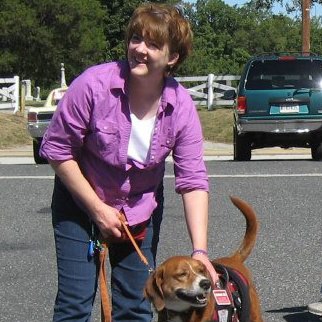
I had a “pep in my step”. I had a whistle on my lips. My heart was glad. I was walking my service dog and most of the snow was gone from the ground.

“What beautiful weather for a walk!” I thought to myself.

But then a squirrel scampered down off a tree trunk merely inches in front of my well-trained service dog’s nose. It all happened so fast.

The first jerk on the leash put my body in motion. You can’t fight the laws of science. I was going to be in motion until something stopped my motion since my brain went on instant vacay. Let me tell you I stuck the landing. Nearby Olympic judges all held up “10” placards. Cheers all around (or at least in my imagination).

I lay there on the pine-needle strewn ground for a minute trying to determine if anything was broken. The world was still spinning. I closed my eyes for a minute and choked back the nausea. Flipping to my back I felt a hound dog kiss on my face.

“Whew. Chloe is still here”, I thought.

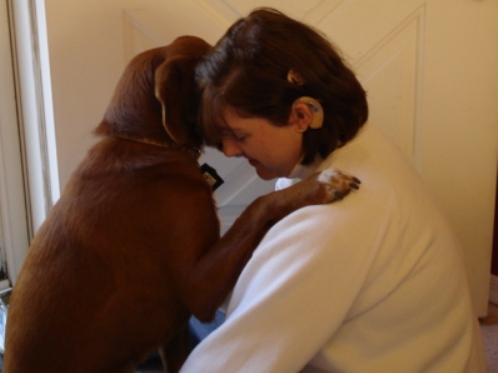
I forced my brain to verify the leash was actually still in my hand. YUP! I opened my eyes and focused for a second. Chloe went into a down/stay on her own and rested her head on my shoulder. The weight of my ding-a-ling service dog’s head was a comfort.

I heard something! Another good sign. My cochlear implant was still attached to my head. I focused on the sound and looked up – Up – UP into the tree boughs above me and spotted that rascal squirrel.

Oh.

My.

Gosh.

He had the impudence to sit up there fussing – at US. I couldn’t help but laugh. He was ticked! I laughed all the way up until he skipped away… jerking the branch he was on and dumping snow on my face and chest from twenty feet up. My laughter stopped immediately. I was choking after all…

I sat up and brushed the snow off and started to giggle again. Chloe wagged her tail in delight. It seems she wasn’t going to get a “Denise sermon” after all. Within 10-15 seconds though I was overcome with a different emotion. I sat there crying. Not just silent tears – nooooooo. This was unladylike, deep sobs with intermittent hiccups!

I sat there bawling my eyes out for five or six minutes, comforted by a hound dog most certainly sorry her instincts caused another “Timber…” moment for me.

Yes. I could see the funny. But fast on the heels of the laughter and positive attitude came an emotion near the surface most days. Self-pity. Sorrow. I hate my life.

Is Happiness a Choice?

One of my favorite books is “Happiness is a Choice” by Minirth and Meier. The premise of the book is that especially for those of us living with depression, happiness is a choice. The book’s number one principle is: “Change the way you talk to yourself”.

I’m on board with that. Really!

I am!

You can change some of the negative aspects of your thinking by challenging the irrational parts and replacing them with more reasonable thoughts” (Martin, 2010, para. 4). Whitbourne (2013) explained these, “inner monologues as “self-talk,” in which you provide opinions and evaluations on what you’re doing as you’re doing it. You can think of self-talk as the inner voice equivalent of sports announcers commenting on a player’s successes or failures on the playing field” (para. 1). I believe in the power of self-talk. I believe our “thinker” really can influence our behavior. My husband is a cognitive psychologist. He and I have a lot of discussions as I work on my own Ph.D. about the best ways to change behavior. He – and other professionals like him – believe that if you can simply change what your thinker is thinking, there will be a trickle down effect. It will influence and possibly change behaviors you wish to change. There is a lot of scholarly research and science to support this.

I believe this! I do! But I will be honest for a moment. There are times I want to just say…

SCREW SCIENCE

That’s right. Just in case you even needed MY – or ANYONE’s permission…

It is OK to be upset about the reality of your life.

Living with acquired disability sucks. Hearing loss sucks. Meniere’s disease sucks. How about you? Fill in the blank:

_____________________ SUCKS.

*Deep Cleansing Breath*

I’ve tried to explain to folks who ask, that living with a chronic condition or acquired disability is – on the best of days – HARD.

I still get the flu.

I have still lost people I love and miss them.

I have lost beloved pets.

I get headaches, body aches, and am growing older.

I get mad at my family sometimes.

I experience car problems.

I hate traffic.

I have unexpected bills.

I still have a period (hey! Jus’ layin’ it all out there! <BIG GRIN>)

All of these things happen to me just like they happen to you. Only folks with chronic illness or acquired disability have those things happen on top of what – for them, is the norm… living with challenges daily.

Yeah, yeah. I know!

I still get the flu   I can be thankful I have medicine to help and a hound dog to cuddle with. See? I can see the positive!

I have still lost people I love and miss them  I can be thankful I will see them again someday based on my personal faith beliefs and worldview.

I have lost beloved pets  I have other furry family members and that makes me happy.

I get headaches, body aches, and am growing older  Beats the alternative. Right? 

I get mad at my family sometimes   But I have a family…

I experience car problems.  But I have a car and this time we could afford the “fix”.

I hate traffic.  I have a job to go to.

I have unexpected bills.  But I’m smart enough to figure out how to pay that bill or arrange payments.

I still have a period Yeah. I got nuthin… (LOL)

So can my forced “change thinking” have a trickle down effect and influence my behavior, feelings, and perceptions? Yes.

And no.

Confused? I don’t mean to be the cause of a “What the heck you talkin’ about, Denise?” thoughts.

However, it is important – at least I think it is – to allow yourself to have moments of self-pity. Feel the sorrow. Rail at God. Write “My Life Can Suck” really big and pin it to a wall and throw darts at it. If it makes you feel better, do it. I think it is healthy to “own your feelings” about the reality of your life. It’s hard. You may feel alone. You may want to give up. It’s OK to feel that way.

But then? (Brace yourself…)

Change your thinker. Allow it to do what studies have shown actually works. The “Trickle Down Effect”. I’m here to tell you though that it isn’t a long-term fix. You may have to “adjust the knobs on your thinker” daily. Maybe on REEEEEALLY bad days – hourly!

Do you know what thoughts help me the most?

Keep on keeping on.

I can make a difference in the life of another.

Tomorrow is a new day.

Mean People Suck. (Sorry. That’s my favorite bumper sticker and I *had* to throw it in there).

Yup. They are platitudes. “Feel good self-talk”. But ya know something? It works for me because I also allow myself the freedom to sit in the pine-needles with snow covering my shoulders and bawl my eyes out.

So strive to improve your self-talk. But feel free to wail.

{{{{{{{{{CYBER HUG}}}}}}}}}}}} from me to you!

Denise Portis

©2014 Personal Hearing Loss Journal

Martin, B. (2010). Challenging Negative Self-Talk. Psych Central. Retrieved on March 21, 2014, from http://psychcentral.com/lib/challenging-negative-self-talk/0003196

Whitbourne, S. K. (2013). Make Your Self-Talk Work for You. Psychology Today. Retrieved on March 21, 2014, from http://www.psychologytoday.com/blog/fulfillment-any-age/201309/make-your-self-talk-work-you

Post-traumatic Growth (Part 1)

team chatter 2

Nope.

That isn’t a typo. You have probably read articles or news stories about post-traumatic STRESS (or PTSD), but did you know that post-traumatic growth is a related and now often studied psychological topic? There is even a new field called psychotraumatology. Try saying that 5 times really fast…

At Hearing Elmo, I do my best to present topics related to invisible illness, disability, or chronic conditions. Guest writers are encouraged to have some connection to one of those topics.

*SIDE NOTE* Hearing Elmo welcomes guest writers any time! Email me for more information at denise.portis@gmail.com with “Hearing Elmo” in the subject line.

Chloe after 2013 re-certification

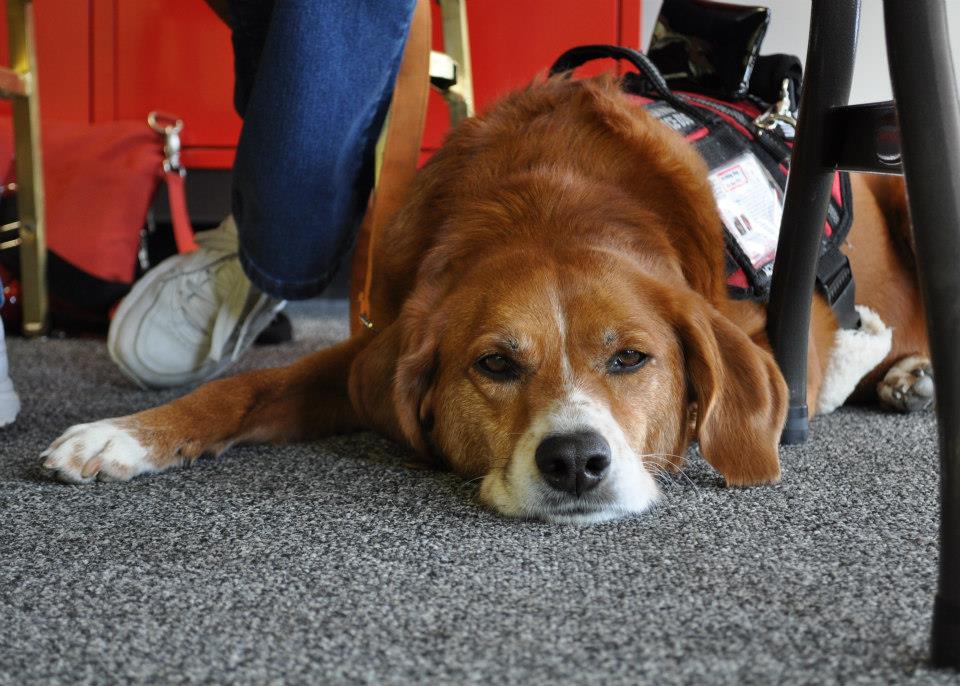
As you know, Fidos For Freedom, Inc. (FFF), is a big part of my life. My service dog, Chloe, comes from FFF but I also stay connected through weekly trainings and volunteering for various jobs each year. The people there have become “family” to me and I have learned so much about the disability community through my connections at this wonderful organization. Something I have observed, is that even if you’ve taken the step to train and be matched with a service dog to mitigate your disability or illness – something that can take “guts” as it can make the invisible, very visible – not everyone responds to “bad things” the same way. Many times it is simply because the person has not adjusted yet.

As my dissertation looms in my very near future, I am already thinkin’ about…

What am I gonna do? (No worries. I *can* use a scholarly voice when the environment calls for it <big grin>)

But back to my original topic! How do people come out on the other side of something traumatic, and find that they’ve grown? Do they have something in common or is the outcome as individual as the process? How do you survive and be BETTER and not BITTER?

These questions are on my mind. A LOT.

I receive hundreds of emails from readers each year and try to respond to each personally. I’m always tickled that a common question seems to be, “How do you have your ‘stuff’ all together so well? I’m floundering here!” I am always quick to respond with an honest evaluation about my own life “after disability”. Folks are surprised. I don’t try to sugar-coat how I’m doing in my own life. I deal with the same things you do:

Depression

Anxiety

Suicidal ideation

Pessimism

The trick is not to stay there. Sometimes it can be worked through on your own. Sometimes it cannot. Sometimes we need help. So how do some people come out on the other side of something traumatic – better? How do people grow in spite of experiencing something devastating?

This is going to be a “two-fer” post. Meaning: I can’t address everything I want to cover in one post (smile). For this first part I want to cover what kinds of things can cause PTG (post-traumatic growth), and clearly define what it is. Next week we’ll look at some other related issues.

What causes Post-Traumatic Growth?

Traumatic experiences.

Kinda anti-climatic, huh?

But for OUR population – those who live with disability, invisible illness, or chronic health conditions – what is a traumatic experience? It can include:

disability

invisible illness

chronic physical or mental health conditions

devastating diagnosis

sexual abuse

violence and victimization

divorce or loss of an intimate relationship

death of a loved one

war

poverty

Basically – anything that can cause stress. Not the run-of-the-mill kind of stress. You know the kinds of stress like, a “bad hair day”, my cat threw-up in my favorite shoes, I locked myself out of the house, or I ate bad sushi. We’re talkin’ the kind of stress that produces trauma. It may be specific to YOU. For example, I have met people who have heard me speak on various topics and have come up and shared that they “don’t get why hearing loss would be a reason to develop depression“. They have hearing loss and they have coped just fine. Variables, my friends… variables. Personality, background, resilience, support, worldview, gender, economics – the list goes on an on. You may respond to a life event completely different than someone else. That’s OK. This is why you hear me encourage folks to reach out and SHARE. Your experiences may help another. You won’t know if you don’t talk about it.

What is Post-Traumatic Growth?

PTG is actually something that came from a branch of Psychology called – Positive Psychology. There are scales and inventories available to see where you rate in PTG. I first started reading about it back when my cochlear implant was first activated. “Hearing again” was a tough journey. I stumbled across the term coined by Drs. Calhoun and Tedeschi. According to them,

What is posttraumatic growth? It is positive change experienced as a result of the struggle with a major life crisis or a traumatic event” (Posttraumatic Growth Research Group, 2014, para. 1).

Their research centers around 5 changes that occur in an individual, post-trauma. These include:

1. New opportunities

2. Change in relationships

3. Increased sense of one’s own strength

4. Greater appreciation for life in general

5. Spiritual or religious domain (Posttraumatic Growth Research Group, 2014)

Have you been diagnosed with a super scary, perhaps life-changing diagnosis?

Have you acquired a disability?

Were you injured, permanently changing the way you live life?

Have you experienced something that left scars (physical, mental, emotional)?

You can experience growth. It may not happen overnight. It may mean that you experience tremendous loss, fear, and grief at first. You may blow it. A LOT. However, I don’t know about you, but I experience a sense of hope knowing that something good can “come of this”.

Comment here or send me a confidential email. I’d like to know how you’ve experienced GROWTH. There is no prerequisite measure. Maybe it wasn’t a lot of growth. Maybe you experienced “three steps forward – two steps back” throughout the process. I’d love to hear from you!

Denise Portis

© 2014 Personal Hearing Loss Journal

Posttraumatic Growth Research Group. (2014). What is PTG? Retrieved January 2, 2014, from http://ptgi.uncc.edu/what-is-ptg/

Twinkle Lights that Don’t Twinkle

twinkle lights

I discovered something by accident last year. I don’t like for twinkle lights to twinkle. I mean… I want the lights to be ON and to actually light up, but I don’t want them to blink. Part of living with an acquired disability is learning to make adjustments. Having Meniere’s disease may mean that you learn what may be specific triggers for you and do what you can to avoid those triggers. I have problems with lights. This is part of the reason I don’t drive at night anymore. I don’t have night blindness, but oncoming traffic light triggers extreme vertigo. So I don’t drive at night. It’s a pain, but a necessary change in my life.

Other kinds of lights bother me. I discovered that Christmas tree twinkle lights make me feel as if the room is rotating. Quickly. So I am making adjustments that include a delay in decorating the family Christmas tree until I can get to the store to buy more twinkle lights – ones that don’t twinkle. So – picture with me plugging in our Christmas tree every evening and BAM. LIGHT everywhere. But it won’t twinkle… which means I can hang out in the same room as the tree is in without heaving all over the nearest family member.

Making Adjustments

One of the wonderful things about having a blog with numerous guest authors is that I have learned a bunch of things about other disabilities. Being a client at Fidos For Freedom, Inc., has also helped because I have been able to personally get to know people who live with other kinds of disabilities and chronic illnesses. Through the years I have learned about some of the adjustments that folks use to navigate life:

1. Get more rest

According to the National Sleep Foundation, average, healthy adults need 7-9 hours of sleep every night (National Sleep Foundation, 2011). While most of us very likely receive far less than that, the experts agree that this is the amount we should strive for every night. However, people who live with disability or invisible illness may actually require more. At the very least, these folks should make the 7-9 suggested hours a priority.

I now know that people with MS, fibromyalgia, chronic fatigue syndrome, and various neurological disorders may not only need a good night’s rest, they may also need a daily nap. Doing so may mean that they can continue their day performing at their best. Not taking one may mean they are more at risk for an accident, “brain fog”, etc. One of my friends actually said her doctor told her, “If I need to write you a prescription to take a nap everyday so that you can get the rest you need, I’ll write you one!” That’s what I need. A prescription for a nap! 🙂

2. Leave Home Prepared

People with acquired disability likely learned the hard way to leave home prepared. That may mean making sure you have extra cochlear implant batteries. It may mean that you have an extra cane in the car. Maybe it means that you make sure you have an extra meal or snack if you are diabetic. You may have a medical pack that holds injections, emergency contact information, medicines, etc. If you have a service dog it requires that you walk out the door with water, an extra meal (in case caught away from home during mealtimes), clean up bags, vest and I.D. Spontaneously running out the door while only grabbing your keys is something you just can’t do anymore. But that’s OK. Learning to leave home prepared really takes very little time and in the long run can only help you.

3. Medic Alert Identification

Whether you wear a medic alert necklace, bracelet, or carry a card, you probably have some way of letting emergency response personnel know about special medical information that may just save your life. My own bracelet was so old, the engraving was barely discernible after years of scratches and wear-and-tear. For less than $30 I replaced it. When I told my husband he’d see a charge for it on the credit card bill he said, “You know? I don’t even know where mine is. I probably should replace mine as well”. I sat there stunned for a minute – looking at my significant other who happens to only have one kidney and gave him a “Denise sermon” that was probably not only LOUD, but unforgettable. Did you know…

  • More than 95 percent of respondents look for a medical ID during emergencies.
  • More than 75 percent look for a medical ID immediately upon assessing a patient.
  • 95 percent look at the patient’s wrist to find a medical ID, and 68 percent look for an ID on the patient’s neck.

Some of the stuff out there is very attractive for those who turn up their noses at traditional looking medical alert jewelry. However, I must caution you that there has been an alarming trend suggesting these new options may not be identified during an emergency. Yes, the sterling silver band around my wrist may not be the prettiest thing in the world, but I’m confident that in the event of an emergency it will be recognized for what it is. I’m perfectly happy being “smart” if not fashionable.

4. Check the forecast

Meteorology is NOT an exact science. I always check the forecast. I may not be able to call in sick to work when it is raining and a Meniere’s flare kicks my butt, but just knowing in advance the weather is going to be bad can at least help me mentally prepare. I can make sure I grab that cane in the car and remember to hold Chloe’s vest handle instead of just her leash. People who have mobility challenges may have to make schedule adjustments if they cannot easily or safely navigate away from home if the weather is bad.

5. Charge your cell phone

Even though I have a hearing loss, with today’s technology advances I can use and carry a cell phone with t-coil settings, text, access the Internet, and much more from a mobile phone. The only problem I ever run into is when I carry around a phone that doesn’t have a charged battery. I’ve done this enough that I think I’ve finally instilled a good habit of always charging my phone at night, and making sure each vehicle has a charger that can be used with the cigarette lighter. I even carry a small charger that I can plug into a computer at work if needed.

6. Other:

Honestly? One could write a book on the number of adjustments one makes when living with a disability or chronic illness. Some of the things YOU do may not even be things someone who shares your diagnosis must do. Don’t fret about Christmas tree lights that don’t twinkle. Even people without disability make adjustments as they go through life. Folks get reading glasses, stop eating spicy food, and walk instead of run for exercise. We do this because we are smart (grin) and malleable. We do what we must. My Christmas tree may not twinkle from now on, but it is still BEAUTIFUL.

Denise Portis

© 2013 Personal Hearing Loss Journal

National Sleep Foundation. (2011). How much sleep do we really need? Retrieved October 22, 2012 from http://www.sleepfoundation.org/article/how-sleep-works/how-much-sleep-do-we-really-need

♫♪ Running on Empty… ♪♫

hferry 013

I’m constantly getting my English idioms and colloquial expressions mixed up – much to my husband’s delight. He teases me about it constantly. So you’d think I’d stop using them, right?

No. Not so much.

Just the other day I said, “I feel like I’m waiting for that ‘feather that broke the camel’s neck‘ to drop!

My husband struggled to choke back his laughter and managed to wheeze out, “Honey, I think that is ‘straw that broke the camel’s back‘ and ‘waiting for the other shoe to drop‘. Honestly, it’s a wonder I ever know what you mean!

Yes, dear. Shut up.

But he’s a good listener so without any further colloquial expressions, I tried to explain why I’m “running on empty“, “circling the drain“, … See? I CAN’T FREAKING HELP MYSELF! 🙂

Running on Empty

I was born in the mid-60’s, which means I’m a child of the 70’s. Do you remember Jackson Browne’s song, “Running on Empty”? If you need a reminder:

I have to tell you, I’m there. You don’t have to have invisible disabilities, or chronic illness to find yourself SPENT.

Used up.

Drained.

EMPTY.

Some of us take on more than we should. It can be hard to say, “No“. Really we need to learn to say that. It’s a little word. Why is it so hard to say? Perhaps we don’t want to disappoint people. Maybe we strive too hard to be indispensable, needed, and purposeful.

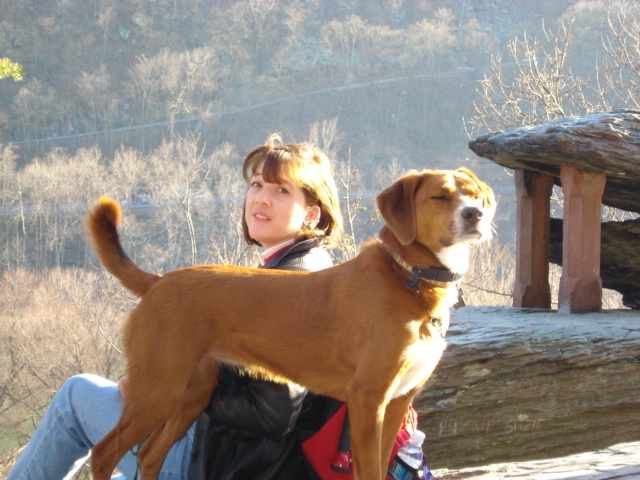
The picture at the top of this post is one of my favorite places: Harper’s Ferry, West Virginia. I like to go during the off-season because frankly? Large groups of school-aged children on field trips is not my idea of a good day. I love the quiet. I love the sounds of nature amidst what you think at first is – quiet. I’m yearning for some reflection time at Harper’s Ferry. I asked Siri if I had any time in my calendar.

First time I’ve ever heard her laugh.

Re-fuel

Selye’s General Adaptation Syndrome explains how we may respond to life stresses. The first stage is ALARM and in it we are motivated to action. Men may experience “fight or flight”. Women default to “tend and befriend” (we reach out). For me, this meant getting help.

The second stage is RESISTANCE in which we cope as best we can. We may actually do OK for awhile too. If the stress doesn’t dissipate, however, we enter the last stage. EXHAUSTION. It can be really hard to bounce back from this stage. It is more than catching up on sleep.

The key is to recognize the stages while you are going through them and experiencing stress. Stress isn’t going to stop. I’ve looked for the stress stop button and it doesn’t exist. But… you click on the HELP button. Help may come in the form of friends or significant others. It may come in the form of faith. At times, for ME it comes in the form of getting alone and refueling. I know…

The price of gas is so high. Who can afford to refuel?

Maybe the better question is “Who can afford to NOT stop and refuel?

Think about that. Deciding when you’ve had enough and something has to give can only be determined by YOU.

Disability and Independence

I work so hard to be independent. But being independent doesn’t mean you refuse to ask for help. I grudgingly accept help from others who extend it without my asking for it. I’m trying to get better about graciously accepting it. I’m discovering that I can be independent and still need help. That sounds contradictory, doesn’t it?

I can do all I can to work independently, interact with others independently, and take care of my needs independently. However, when I dropped a baggie of paper clips on the floor in my classroom, far away from any desk, wall or chair that I could use for support, I had to ask for help. My service dog, Chloe, can pick up small things but should she swallow one in her exuberance to help, I consider the potential consequences too high.

So I asked for help. Within 30 seconds every paperclip was picked up and “paper clip picker-uppers” all thanked. It was painless. By doing so I did not undermine my efforts to be independent.

One of the lines of Browne’s song is, “Trying not to confuse it with what you do to survive”. Don’t confuse the need to ask for help with losing your independence. We all need help. It is how we survive. Are you running on empty?

Refuel. That means different things for different folks. You have to do so! Your trip isn’t over…

Denise Portis

© 2013 Personal Hearing Loss Journal

Invisible Disabilities and Relationships

hidden disabilities

Hearing Elmo welcomes Dr. Terry D. Portis as a guest author this week. Terry has worked with the disability community since 1990 with The Brain Injury Association of NC, and then the Hearing Loss Association of America. He now works as the director of the Center on Aging and LifeStages at AACC. He supervises more than 220 faculty who teach more than 1,600 course sections each year, making it the largest program of its kind in the country.

In the September 21, 2013, edition of the New York Times, Katherine Bouton wrote an excellent article on the quandary of hidden disabilities. In the article she talked a lot about workplace issues, and whether or not a person should reveal their hidden disability. It is an excellent article, and I recommend it.

While the Bouton article focuses on the workplace, or potential workplace, what about issues with hidden disabilities with family and friends? Here are three things that happen in relationships where a disability is a factor. 

I’m used to it, and don’t think about it anymore.

Often a person who is facing the challenge of a disability thinks about it frequently. They have to. They have to think about ordinary tasks differently, like going to the grocery store, or sitting in a concert. To their family and friends, it is just “Sue” or “Tim”. Family and friends are used to the disability and might even forget about it. The psychological term is “habituation.”

As family members and friends, we might want to remind ourselves the challenge that the person faces living on a daily basis with a disability or chronic illness. It might have taken all the courage they could muster just to go to work today.

For the person with disability, don’t let this forgetfulness hurt your feelings! How could they forget? Well, you want them to forget. You want people to see you for you, not you, the disability.

Good days, bad days… how bad is it?

With many disabilities, the person will have good days and bad days (like all of us). Numerous factors such as the weather, fatigue, stress, or even diet can have a significant impact. If those issues are managed or under control, then the person’s disability might not manifest itself as prominently. Change one of those factors, and the person might struggle with tasks today that they seemed to handle quite well yesterday. A personal example would be that two days ago my wife,  who lives with a balance disorder, could walk across the room without any difficulty. A major weather system is now coming into our area which means that yesterday I had to grab her elbow to correct her balance a number of times just to talk to her.

For the friends and family members, don’t let this uneven performance cause you to doubt that the person is struggling as much as they really are.  They aren’t “faking” on the bad days, even though to the casual observer it may appear that way.

For the person with the disability, celebrate the good days, and don’t let the bad days cause too much frustration. Realize that the people around you don’t intuitively know whether you are having a good day, a bad day, or something in between. People also do not have your level of understanding of what having a good day or bad day means. They work and live with you; however, you live with the disability.

You’re healed!

With advances in prescription medicines and medical technologies, people often find some relief or remediation for their disability. New hearing technology? Well, glad you can hear now. New medicine for your seizure disorder? Glad that’s over. The truth is, it is not quite that miraculous.

For both friends, family members, and the person with the disability, realize that new medicines and technologies will probably not take away all the challenges created by the hidden disability. In many ways, they are miraculous, and we should be thankful for the day and time in which we live. On the other hand, let’s not allow unrealistic expectations dampen our enthusiasm for the better life that people with disabilities can lead.

Hidden disabilities create challenges in a person’s life, and in their relationships. Relationships are always “messy,” and often unpredictable. Taking a few minutes to remind ourselves of other people’s perspectives strengthens those relationships. In turn, our lives are enriched and we find deeper meaning in everyday life and work.

If you would like to contact Dr. Portis you may contact him at Lightkeeper’s Journal.

Hearing Elmo welcomes guest authors! Interested? Contact Denise at denise.portis@gmail.com

Denise Portis

© 2013 Personal Hearing Loss Journal

A Pocketknife to Clean Your Nails

pocketknife

ABOVE… My dad in 2011 when he visited Gettysburg with us.

Do you know every time I retrieve a nail file to smooth, clean, or file my nails I think of my dad? Isn’t it funny the kinds of things that will recall a memory for us? Not the kind of recall that triggers our sympathetic nervous system and launches a flashback in folks who suffer from PTSD. Instead, the kind of recall that knocks on the door of our heart with a “feel good” memory. The memory replays a specific conversation or event. For me, when I use a nail file I vividly recall how my dad would clean his nails with a pocketknife.

I couldn’t have been more than 7 or 8-years-old, for we had not yet returned to the family farm. My dad still worked for International Harvester at the time. One day I sat watching him clean his nails with a pocketknife.

“Why do you use your knife to clean your nails?”

Dad continued to clean his nails and thought about his reply. The man never just “spoke off the cuff”. He responded after a bit, “It does the job”.

“Well, will you clean MY nails?”

With less thought he replied, “I can’t. I can’t tell where your nail stops and your finger starts”. He scooted closer to allow me to see from a different angle how he was using his knife to clean up under the nail. I may have been young, but I immediately grasped why he couldn’t clean MY nails with this unconventional method.

Although I never could bring myself to clean my own nails with a pocketknife, I learned over the years that one can do things just as well by means of unconventional tools and methods. I would not have understood if someone had tried to tell me that I would eventually become deaf and develop Meniere’s disease – a balance disorder, and that by doing so I would have to adopt some new means to navigate my world safely.

Works For Me – But Maybe Not for you

I suppose one of my biggest pet peeves is when folks start dictating to someone who shares a diagnosis how they MUST go about treating that disease or disorder. Just because something works well for YOU, does not mean it will work well for someone else. This doesn’t mean we shouldn’t be willing to tell our story and share what works for us. Peer networks and support groups are invaluable in my opinion. However if I chose to use a nail file to clean my nails, and you choose a pocketknife, all that should be celebrated is that the end result yields positive benefits for us both. Clean nails are clean nails no matter how they got that way.

That doesn’t mean the process to clean nails is always easy. I have to sit to brush my teeth. That toothbrush swishing around in my head will make me pass out if I do not do so from a seated position. I never could sit on the lid of the commode to brush my TEETH. So I step into the bedroom and sit on the hope chest to brush my teeth. I have to be sure to keep my mouth closed so that there is no splatter. Ewww, right? This last week as I was sitting there brushing my teeth, it just hit me wrong. Here I was 47 years old and unable to brush my freakin’ teeth over a freakin’ sink like a normal – erm – FREAK! So…

I started crying.

My husband stepped into the bedroom. I can’t imagine what he saw. Here is the wife sitting and brushing her teeth, sobbing her eyeballs out, toothpaste now EVERYWHERE, including dribbling down her quivering chin. He calmly said, “You OK?”

Did I look OK? Alright, yuppers… I didn’t actually WANT his help. I just wanted to finish brushing my teeth. Those FREAKIN’ ones…

When a person with disability or chronic illness finds a way that works for THEM, it doesn’t mean it is easy. But this is why we are not disABLED. We are differently-abled. It is quite a cognitive and emotional boost to discover you can still enjoy something you did before – only in a new way. It may look strange, novel, or genius… but the reality is “it gets it done”. Yet what I find works for me, may not work for someone else with Meniere’s disease. I cannot safely clean their nails with my pocketknife.

Celebrate the Day

Gee, we live in a wonderful age of technology! When I think about the miracle in that I’m hearing again bionically, and all the cool tools available to me through simple apps on my iPhone, or special assistive technology, I get goosebumps! I live in a country where service dogs OTHER THAN guide dogs are fairly common. Email and texting – two communication devices I utilize frequently, are favored among the NORMAL hearing population. This makes my life so much easier!

Folks with mobility issues, learning challenges, hearing loss, chronic illness, and various disorders have options available here in the U.S. that we did not have 30 years ago – or even 10 years ago! Yet some of the things we learn to do are through our own ingenuity! I have quite literally patted myself on the back and mentally “high 5’d” myself when I discover a new way of doing things. To you being able to do the laundry without actually having to change the altitude of your head is not very impressive. But to me? This is a “WOO-HOO” discovery. But the proper lean formation, use of step-stool and service dog work for me. They may not work for you if you, too, have Meniere’s disease. But be willing to share ideas with each other without dictating proper protocol. The end goal is clean nails after all.

Denise Portis

©2013 Personal Hearing Loss Journal

You’re So Vain…

chloe hug

I love my local grocery store. Not so much that I was pleased I had to go twice this week after forgetting a few items, but the aisles are spacious, the employees know me (and Chloe) by name, and I save a lot of money in both sale items and even gas points. My unexpected impromptu second visit this week was disastrous, at least from an emotional standpoint. I came down the aisle looking for those elusive cotton balls that I failed to remember on my first trip and met a lady only slightly older than me with two canes. We stopped to chat for a minute and thought I had met another who understood when she surprised me by saying, “I just couldn’t work with a dog. It seems so vain because so much attention is brought on by being with one“.

I could feel the heat creep up in my face and I blinked back tears as I stuttered out, “Well different strokes for different folks I suppose“. (I’m always so proud of how eloquent I am in a pinch *rolls eyes*).

I really had very little left to say so quickly cut it short and moved on to find those STUPID cotton balls. Because ya know? Now I was MAD after that initial “kick in the gut” feeling so I determined then and there those cotton balls were stupid. Made me feel better anyway.

My husband and I kid around about how vain Chloe is. Her biggest fault as a service dog is that she is too friendly. She’s a flirt. She gets gently reprimanded on days my balance is really off if I put her in a sit/stay while talking, but then she wags and flirts and stretches for a kiss. Heaven forbid someone actually switch their attention to HER! Then she is like, “You love me. Denise loves me. We all love me. I love me.” She’s so vain! (♫♪ Chloe, you probably think this post is about you! Don’t you? Don’t you?♪♫)

Many people with invisible disabilities are not in favor of mitigating their disabilities with a service dog because it DOES bring attention to you. As a matter of fact, I know of cases where folks drop out of training programs when they discover that this service dog will bring unwanted attention to them. That isn’t worth it in their opinion. And… that’s OK. I have Meniere’s disease (a balance disorder) and am hearing again with cochlear implant technology. I HAVE chosen to mitigate those invisible disabilities with a service dog. I wear bling-bling on my cochlear implant processor. On days my balance is REALLY bad, I use a bright purple, metallic cane. This works for ME. It doesn’t mean it will work for YOU.

could’ve should’ve would’ve

If I could’ve… if I shoud’ve.. or if I would’ve – I suppose if I hadn’t been on the verge of tears I would have told this woman:

Do you know that before Chloe, I spent 20-30 minutes before work each day changing outfits trying to find one that hid all the bruises from my falls?

Do you know that when the elevator was temporarily out of service this week I didn’t have to cancel class because Chloe was able to counter-balance for me on the stairs?

Do you know this cochlear implant bling-bling helps people remember to face me when they speak if it is obvious I’m not hearing well?

Do you know all these patches and certification tags on Chloe’s vest legitimize her role as a service dog so that I have less access issues?

Do you know it takes me 45 minutes to get groceries each week now because Chloe picks up the things I accidentally drop compared to the 2 1/2 hour trips I use to have?

Do you know I never have to ask a stranger to pick up something for me now?

Do you know I’m working again because I don’t have to worry about putting students out to pick up pens, erasers, markers, or papers for me in the classroom?

Do you know I never have to worry about missing a phone call now?

Do you know I have the sweetest, “kiss me awake” alarm clock in the whole, wide world?

DO YOU KNOW I THINK YOU NEED A DOG BECAUSE YOU OBVIOUSLY DON’T HAVE ENOUGH LOVE IN YOUR LIFE?

Ok… maybe that last one is unnecessary.

But the reality?

weather vane

People with invisible disabilities or chronic illness are more likely to deal with VANES instead of vanity each and every day. We have things we pay attention to so that we stay SAFE, red flags that remind us we are pushing our limits. Boundaries in place to keep us from over-doing things. I know my body better than anyone… even my doctors. This past week we had torrential rains on Thursday. On Wednesday, I was in “full disability regalia“. Chloe, cane, and fresh batteries in the “ears” and still I wobbled and fumbled my way through the day because there was a system coming into our area! A student said, “Wow your balance is really off today!

I replied, “Yes! I’m a human barometer and much more accurate than the Weather Channel!

A thoughtful pause and then, “Is there an app for that?” (snicker… I love my students).

Like a weather vane that helps farmers or meteorologists know which way the wind is blowing, people with disabilities have things in place that allow them to “take their pulse” each day to see how to safely navigate the world around them.

I’ve met a good number of people who have a service dog. I’ve never met anyone that I suspected of choosing to do so because they wanted the attention. And so please understand that the only one who is vain in my partnership is CHLOE.

♫ You’re so vain
You probably think this POST is about you
You’re so vain
I’ll bet you think this POST is about you
Don’t you? Don’t you? ♫

That’s OK. If Chloe’s weakness is that she is warm and friendly… I can live with that.

Denise Portis

© 2013 Personal Hearing Loss Journal

Intimacy and Invisible Illness

sexy

I had numerous emails come in just during the last week, asking me to reconsider letting readers share their own personal stories about intimacy. We have enough, I think it makes a “good read”. Why I think it is really special though, is because it is a topic that is important, yet one that can be difficult to talk about with others. As always, I invite you to write for Hearing Elmo if you have issues, topics, or concerns that mean something to YOU. A person who lives with invisible or chronic illness, or love someone who does. Just email me at denise.portis@gmail.com to find out how. I don’t want to take away from the message and influence of this post. So I’ll shut up now. BIG GRIN! Here are a few of your stories – in your own words. I’ve made only minor spelling corrections and omitted only minor sections (with notice to the writer) for things that were maybe a little too detailed. 🙂

Intimacy and “Me”

Life happens with or without a hearing loss. Most intimacy doesn’t have anything to do with our hearing loss, but yes, hearing loss can impact how we interact with others.

I longed to have more close friends when I was in junior high and high school. The deal breaker was not that I giggled a little too much, or was a little shy at times. The deal breaker was that I was the odd girl out. I didn’t get included because I couldn’t hear well enough to be like everyone else. I didn’t get the printed memo on social activities. Maybe I was blissfully ignorant, because I ended up with a close dedicated relationship with someone I truly love, and who loves me for who I am.

I do have a few intimate friendships (non-sexual) with just a few friends. I get support that I need from a few individuals, and then I have a lot of acquaintances that I can talk to. And, more importantly, I do get out and participate in activities that I’m interested in, and I am connected to other people.

What I really miss? Is that I don’t have a close friend to call up and do something with on the spur of the moment. I don’t have a girlfriend that I talk to every day, and that asks if I want to grab lunch, or go shopping. I don’t get invited to parties, and I’m not asked over to the neighbor’s house have a drink or sit and chat. I missed out somehow, and I’m not quite sure how to correct that. Is it hearing loss? Or is it personality?

Maybe it’s confidence. I’ve gained confidence in some areas, but maybe I’m still hesitant when I should be reaching out to others. Is it hearing loss? Am I afraid of what others will think of me? Or should I embrace that perhaps it’s a little bit of hearing loss, and a lot of who I am as a person?

One thing I do know, is that I have to make things happen for myself, I can’t wait for the world to come and get me. Hearing Loss or not.

—————————————

Intimacy is affected in my relationship because I’m always fatigued and in the bed resting a lot. My illness also causes pain which comes and goes. Since I’m fatigued and in pain a lot, there are many times that I don’t feel like being intimate. My partner lets me rest and after enough times being told no, he stopped along. This quickly turned into almost no intimacy at all.

—————————————-

My partner and I are intimate despite her disabilities. I guess if we have problems it is that both of us wish we could be more spontaneous, but it just isn’t possible. Because of the issues she deals with, I know it has to be a “good day” in addition to it needing to be a low stress day. She is fast getting to where she will need to stop working full-time. We can’t afford for her to go through the lengthy process of SSDI but working part-time would be in her best interests. I think maybe things can be more spontaneous after she is able to rest more. A 40 hour a week job for some kinds of disabilities is really difficult. It makes all other parts of life shift way down the list of priorities. I love her. If the shoe were on the other foot I know she would be just as supportive. So the spontaneity I do miss, but one does what one must to make sure both are getting their needs met. There is so much more to love than the physical anyway. At least that is what we believe.

——————————————–

As two adults with hearing loss, my husband and I are used to intimate relations with limited sound. That never deterred us; I would say we have a very close, loving relationship. Hearing loss has never affected us much in that area, except that there’s not a lot of ‘giving directions’ happening in our lovemaking since neither of us would hear it! We rely more on observing each other physically than listening for sounds of pleasure, for instance.

For me, the hardest thing was going completely deaf. Lovemaking feels more isolated to me now, especially since we are ‘bedtime, after lights-out’ people. I’m extremely nearsighted and, of course, don’t wear my cochlear implants to bed. Without them, I’m 100% profoundly deaf. So in the dark of night, I can’t hear (or lip read) and I can barely see. The absence of sound is very pronounced to me in that circumstance; even though I didn’t have much hearing before, I had enough to make me feel more connected during lovemaking and less isolated. This bothers me more than I realized it would, but unless we get busy with all the lights on (not happening!) or only if I have my CIs on (very, very rare) then it’s just something I have to get used to.

I miss the closeness of lying in bed, at bedtime, and chatting with my husband. There is no casual conversation for us – I have to actively face him and lip read, and make sure the lights are bright. So now we lie next to each other and read in silence. It’s frustrating to me that I can’t just make casual comments to him like I used to, and have that ease of conversation. It’s now a huge chore because of my deafness.

————————————

I became deaf later in life, I am now 21 but I also have Chronic Regional Pain Syndrome. Intimacy and relationships are difficult regardless of ability sometimes however illness or invisible disabilities further complicate matters. My boyfriend has been wonderful, from learning signed English (ASL confused the poor man) to supporting my decision for a hearing/service dog, but we have our problems too. He sometimes forgets that I cannot hear him and will get exasperated at having to repeat himself, or he may become slightly terse when reiterating what others have said. At the end of the day it’s our open and honest communication that allows us to continue the relationship. Sometimes the little things he says maybe helping me answer the phone or telling me I’m beautiful no matter what, and the not so little things like our date nights or the days I cannot walk, where he me to my wheelchair or through the house, to reminding people at church that I cannot hear and that at certain times even small touches are excruciatingly painful. Our lives are not perfect but no ones is, we each have our faults, but our love lets us see beyond them.

——————————-

I have multiple disabilities and have been married for over 25 years. My husband and I are no longer intimate. Some of it is his fault (high blood pressure meds and failure to discuss options with the doctor), and some of it is mine. I know you, Hearing Elmo, from a Meniere’s forum. For many of us even laying flat is impossible. Being held, or other things that lead up to intimacy is just impossible without passing out or feeling so disoriented you want to throw up. That isn’t exactly helpful to a male ego. I’ve said “not now” so often it is “not ever”. We love each other. We just aren’t loving in that way now. We seem to have reached a point where there is an unspoken agreement that this is the way it is. I’m sure it isn’t healthy on our relationship, but it is where we are right now.

———————————

First a little about my chronic illnesses:

Like you I have bilateral Meniere’s, I have a cochlear implant, and will be getting a second next month. I have pretty much constant disequilibrium and use a walker to get around. I also have chronic migraines (most days I have a headache on the scale of 5 or above). I have asthma that has gotten out of control, so we are working to get that better. I have Idiopathic Intracranial Hypertension (high cerebral spinal fluid), this can cause severe headaches when exercising. But the two things that often inhibit physical intimacy the most is chronic hip and pelvic pain.

My husband and I used to have a very hard time showing intimacy. Mostly this was my fault, I was paralyzed by fear of pain. He was trying hard not to make me feel that I needed to do more than I was comfortable with so he would not flirt or do anything like that. This made me feel more uncomfortable.

After we started going to therapy because I was having a hard time dealing with the loss of my independence, we started communicating better. We’ve always communicated well, but when I started feeling like I was a burden it was hard to hear what was being said….I hope that makes sense. And my husband was having a hard time knowing how to voice things he was feeling. We did not show our intimacy for fear of hurting each other, or for fear things would get started and I would end up having to stop things because of pain or dizziness.

We began getting even closer than before, (we’ve had a great marriage, so it amazed me when things started to get even better.) We talked about everything. Communication that is understood has been so important to our marriage. We’ve always communicated, but we didn’t always make sure the other understood what was being said, we simply assumed it was.

We are now very intimate. Not always sexual, but always loving. It was important for my husband to know that I still wanted a sexual relationship with him, I was just scared. It was important for us to understand that if something happened because of my illnesses that caused us not to be able to follow through, it didn’t mean I was less of a woman, or he wasn’t doing something wrong. It was also important for me to know that he still found me sexually attractive, even at those times when I couldn’t possibly think of doing more than cuddling. Every day we say little sexy things to each other. Like when he’s getting dressed I’ll make little remarks to let him know how sexy he is. He tells me these things all the time, or we reach out and touch each other suggestively. We’ll joke telling the other they are a tease, then answer with, “No it’s a promise”. It’s so important to know that even though our sexual relationship has changed we still find each other as sexy as we ever have. A little flirting here, a little touch there….it all means so much.

When my husband looks and me and tells me that it amazes him that he is still so attracted to me even after all these years, it makes my heart swell…and I know that he is not thinking of my illnesses, or the weight I’ve gained because of the medication, he doesn’t see that, he sees me…and I love his so much for it, and it makes me want to try to have sexual relations more often. Our actual sexual intimacy doesn’t happen as often as either of us would like, but we both make each other feel desired every day, and that has kept our marriage fresh, and sexy.

———————————-

I served USArmy and was discharged in 2010. I am 26 and do not believe I will ever be in a relationship again. I have scars, both inside and out. This subject is important so I’m glad we have a chance to talk about it. PTSD rules my life. Sometimes the scars on the inside are worse than outside scars. I cannot imagine being intimate with someone. Doctors tell me I need more time. I don’t know how time can help since I even have anxiety even in my sleep. I look in the mirror and can’t love myself. How could I hope for someone else to love me? For now I am working on relationships – the friendship kind. Even that is hard. There is so much broken. Maybe for some of us intimacy is hoping for too much.

———————————-

I have a hearing loss and am 23 years old. My hearing loss has become a lot worse in the last 5 years. I don’t date. I’m reasonably attractive and work out to try and stay in shape. I work full-time and have about 4 semesters of school left. So I am in a position that I see a lot of people some of who I’m attracted too. Some are attracted to me too, but once they learn how hard it is to talk to me they stop trying to get to know me that way. At work, I’m able to speech read and write notes to clarify. I follow-up with email a lot after our team meets. I guess it is too many hurdles to jump over to date me. Right now I’m content with finishing school and then seeing if I can get into grad school fairly quickly. My goals keep me going right now. But someday I want to have a family. I would make a great mom. I cannot imagine being intimate with someone. I can’t even communicate on a date in a dark theater! So for now I just keep plugging away reaching personal goals. I do worry that a goal of being a wife and mother may never happen, however. Hopefully I can meet someone who can see past the hearing loss. I’m not contagious!

————————————-

I have MS and I am a male. I always liked to be the odd ball. My wife left me about two years after my diagnosis. I work from home right now and have a service dog. I have my routine but don’t actually get out there and mingle much if you know what I mean. I think maybe I should go back to church. I stopped after my wife left me because I was pretty peeved at God. My brothers tell me I would probably be more likely to meet people at church to look past the MS and be willing to be my friend. Why does that make me sad?

————————————-

I am in my 30’s and have a great sex life I suppose. I date a lot and enjoy the company of others. My friends and family tell me I pick real losers though when it comes to intimate relationships. Some question if I think I cannot get anyone better, someone who will treat me right. I have friends who don’t have neurological disorders who choose losers to be with too though. So it isn’t because of my own invisible illnesses. I guess I just have poor judgment. I’m willing to accept I might lack the self-esteem to try for better though.

————————————-

I am a TBI survivor – motor vehicle accident. I’ve been in a chair for six years and have had no intimate contact since the accident. I don’t speak well. I don’t move well. I’m still here though. I have hopes, dreams, desires, and goals just like everyone else. Do me a favor and don’t tell people like me the right person will come along. Or that someone will love me enough to look past all of this. Love starts with friendships right. So just be my friend. Don’t be afraid of people in a chair. Just be our friend. We aren’t asking for a commitment of more than that. People are afraid of wheelchairs. My left arm moves funny and people either look at me like I’m weird or like they want to help. I hate both of the looks. I have to think a long time before I speak. People come up and talk and then continue to talk even when I’m trying to think about what I want to say. They walk away after they stood there doing all the talking. I want to scream at them. My dad says that people are not comfortable with silence. They don’t understand I’m trying to respond. I would love to have people that would just sit with me and enjoy the scenery. If I could sit without having to listen I can say what I want to say. I have a lot to say.


♫♪ Do You Think I’m Sexy, Do You Want My Body? ♪♫

sexy

Did I get your attention?

If you’ve followed Hearing Elmo for any time at all, you know we don’t shy away from tough subjects.

I want to hear from you

Sexuality and intimate relationships can be and are impacted by invisible (or visible) disability, chronic illness, or invisible illness. My heart’s desire is that through a post earmarked for the first week of September 2013, WE can explain what it is like to struggle successfully or unsuccessfully in our intimate relationships. I believe this information will even help OUR community as we learn that we are not alone.

How This Will Work

1. Email me your feelings or experiences about intimate relationships and love by August 30, 2013. Do not make this explicit. This should be for all audiences. Email to: denise.portis@gmail.com 

Please put in the subject line of your email: Do You Think I’m Sexy?

DO NOT COMMENT ON THIS POST WITH YOUR SUBMISSION!!!!

2. Try to keep it at 300 words or less; although, I won’t cut you off if you are a sentence or two over.

3. You must be connected to the community. (Disability, Invisible or Visible Illness, Chronic Illness).

This may include:

A) 1st person experience

B) LOVING someone who lives this. You are the partner, significant other, or spouse of someone with disability, invisible or visible illness, or chronic illness.

C) You are the parent or caregiver of someone with special needs and as a result your intimate relationship is impacted.

4. No names. This is anonymous. Please do not use clearly identifying descriptors either. My promise to you in order to keep this anonymous is that when you send me your submission, it will be saved along with other comments in a WORD document. I will then permanently delete your email. Even I will not have a record of “who said what”.

5. Another promise – I will not change your wording, grammar, or spelling. I will not morph your words into something *I* think works better.

Denise Portis

© 2013 Personal Hearing Loss Journal

There’s a Goldfish in Mine!

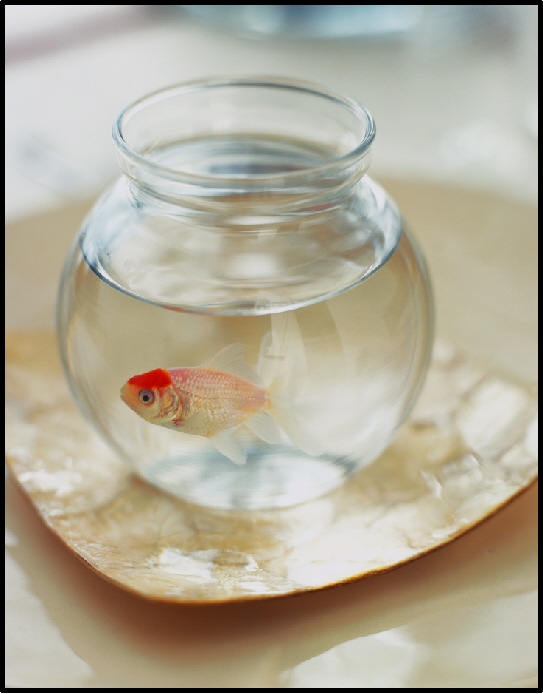
Half empty, or half full? Well MINE has a goldfish in it.

I was in line at my local grocery store recently and overheard two women talking behind me. They were there to purchase their lunch evidently as they had salads and drinks only. Normally, I let people with just a few items go in front of me. For once, however, I was actually only there to pick up a couple of things I had forgotten in a previous trip. Besides… I was having too much fun eavesdropping.

Evidently one of the women had recently been dumped. Her friend and co-worker was trying to give her a pep talk using the old analogy of a “glass half full or glass half empty”. I continued to listen in, partly because I was thrilled I could do so <BIG GRIN> but also because I was really fascinated by the arguments she put forth about an issue that to her, was black and white. It was either a great thing you got dumped, or a really awful thing.

Lines were moving pretty quickly, so before I knew it I was headed out the door with my bag and faithful hound dog in heel. I continued to think about the analogy. The original intent was meant to convey, “Are you a pessimist or an optimist?” We all have relatively fixed personalities, but they can be adjusted. Cognitive behavioral psychology capitalizes on that truth to help people change negative thoughts and behaviors.

I really believe most of us do not respond to everything in a “half full” or “half empty” way, however. The more I thought about my own responses to life as it happens, I realized it certainly isn’t a “half full” or “half empty” option for me at least. My glass has a goldfish in it.

My Goldfish

I think folks who live with disability or chronic illness, cannot react to life in a concrete, optimistic or pessimistic way. For me, hearing again with a cochlear implant and navigating life with a balance disorder means that I react to life in a different way just because those two things are a part of who I am. I don’t just have a glass of water. Mine has a goldfish in it. I’ve learned how to take care of my goldfish. I wouldn’t be who I am without my goldfish.

I have some friends in a Meniere’s disease support group who have said that because their “glass is half full” (or half empty depending on their personality), things normal people deal with are just different for them. If they have a headache, are diagnosed with cancer, or lose someone close to them it is compounded by the fact they also live with an invisible or chronic illness. I get where they are coming from and understand what they are trying to say. They believe that experiencing normal life things (diagnosis, loss, etc) are different for them because they do so from a body that is already dealing with something else.

We all know each other pretty well in this group so when I bring psychology into it, they all roll their eyes at me. I truly believe that living with a chronic illness is all about perspective – but not in a “half full” or “half empty” kind of way. When I mentor someone, I try to help them get to a point of acceptance as soon as possible. Acceptance is not an attitude of “I give up. I’m not fighting anymore”. It is a recognition of the “new you” and learning to understand your new normal. That “normal” may even change if you have an illness that fluctuates or is a degenerative disease. For me, it was important to acknowledge this goldfish. I can’t change it and I don’t get a new glass. This is me… and I have a goldfish.

Just accepting that, has allowed me to be the best ME I can be. Psychologist Jennifer Kunst said, “The good news is that when relative changes can be made in one‘s basic approach to life, it makes a big difference. A modest change in your filter doesn’t change who you are at the fiber of your being. It helps you become a better version of yourself” (Kunst, 2012, para. 4).

For me, the hardest thing wasn’t that goldfish or learning how to take care of it. The tough thing was being around a whole lot of other people with only water in their glass.

“Sure, I’ll meet you up in the classroom, but I’m taking the elevator at the end of the hallway. See you in a few…”

“The dishwasher is running so I need you to come in here if you are going to ask me questions.”

“I hate to interrupt you, but I need to go up these stairs and I have to actually concentrate. Hold that thought…”

Family, friends at church, co-workers, and neighbors, are so accustomed to my goldfish they don’t really even see it anymore sloshing around in my glass. No one knows me better than my husband, Terry, I suppose. Yet, I even have to remind him that although I can talk to him in a restaurant that is almost empty without looking at him, I really need him to put his coffee cup down if the restaurant is full so that I can read his lips. It is my responsibility to feed my goldfish. Not his. I may have explained to him twenty different times that there are atmospheres I will hear “near normal”, and environments in which I’ll need his lips plastered to my forward microphone. However, it is my responsibility to communicate this to him.

We have very narrow staircases at home. On “good” days, I can jog up and down the stairs. Terry isn’t surprised anymore if I ask him to carry the laundry downstairs before he leaves, when I may have been “jogging” earlier. He isn’t shocked if I tell him to “go on up” at the end of the night, knowing I’m going to need to go up on all fours and take the time to do so. He knows I will communicate what I need. This goldfish is mine.

There is a terrific list of “acceptance rules” that the University of Washington put out. You can access it here. Two of my favorite “acceptance of the goldfish” quotes are:

Do not make people feel sorry for you or pity you. Get people to view you as an able person who is capable of anything within your reach if the doors of opportunity are open. (graduate student with a hearing impairment)

We should focus on the ABILITY in disability more than the DIS. If we can do that, then we are more apt to succeed. Also, know your limits. If you don’t know what you can or can’t do, how do you expect other people to know? Plan for success by using more of the cans than the can’ts. (college student with mobility impairments)

(University of Washington, 2013)

Don’t be aggravated about the goldfish. Honestly? Everyone has something in their glass besides water. If we were all just glasses of water, we’d all look alike. We are unique individuals. We all have something else in our glass. My opinion is that we accept that. I’m not this person that has a goldfish temporarily. The goldfish isn’t visiting and it isn’t something I can scoop out. This glass with a goldfish IS me. And I’m OK with that. I love what Karen Hall, Ph.D., said in her article “Radical Acceptance”. She said, “Radical acceptance is about accepting of life on life’s terms and not resisting what you cannot or choose not to change. Radical Acceptance is about saying yes to life, just as it is” (Hall, 2012, para. 1).

Denise Portis

© 2013 Personal Hearing Loss Journal

Hall, K. (2012). Radical Acceptance. Psychology Today. Retrieved June 12, 2013, from http://www.psychologytoday.com/blog/headshrinkers-guide-the-galaxy/201203/is-your-glass-half-empty-or-half-full

Kunst, J. (2013). Is your glass half empty, or half full? Psychology Today. Retrieved June 12, 2013, from http://www.psychologytoday.com/blog/pieces-mind/201207/radical-acceptance

University of Washington (2013). Mentor tip: Acceptance of disability. Retrieved on June 12, 2013, from http://www.washington.edu/doit/Mentor/mt_acceptance.html