Through the Eyes of a Newbie

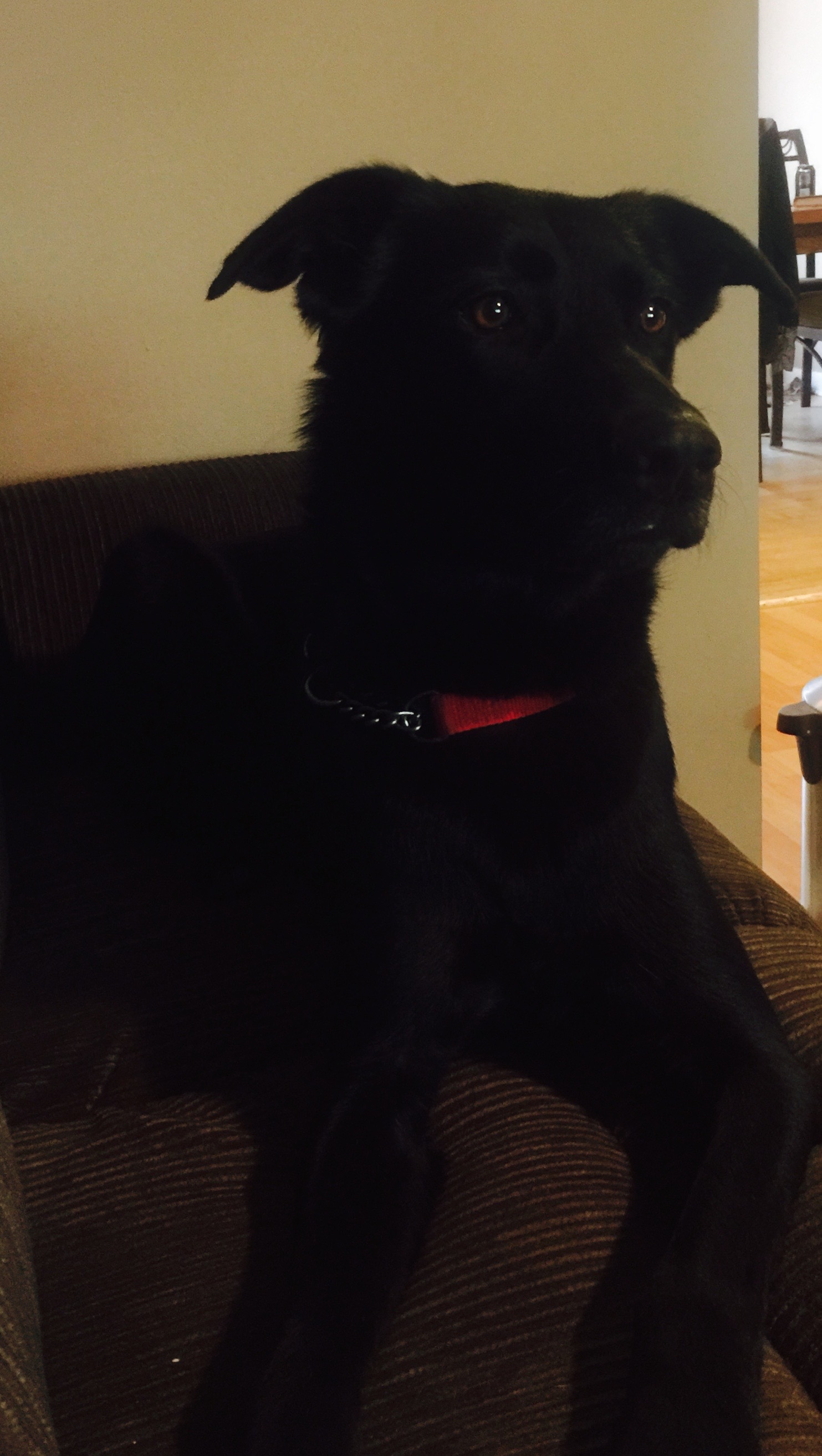
Milo Cade - Fidos For Freedom, Inc., Service Dog.
Milo Cade – Fidos For Freedom, Inc., Service Dog.

Many of Hearing Elmo’s readers know that I retired my service dog, Chloe, this year. Since May 1st, she is enjoying retirement and still does some hearing alerts at home. She is happy, spoiled, and we believe well-deserving of all the naps and belly rubs she is currently receiving. I was recently matched with Milo, from Fidos For Freedom, Inc. Milo is a shepherd/lab mix and I am enjoying the process of being partnered with a mobility/balance service dog versus a hearing/balance assistance dog. We determined my primary needs are mitigating issues with Meniere’s disease and not hearing alerts. I love my cochlear implant, and feel like I have adjusted to the world of “hearing again” very well. My balance is, and will continue to be, a major issue. I suppose in a way, this is an introduction of my new partner, Milo.

One thing I have enjoyed is experiencing MY world (work, church, walks, etc.) through the eyes of a newbie. For Milo, everything in MY world is new. He looks at everything in awe. If he isn’t looking in awe, he is sometimes in “investigation mode”.

Is it scary?

Is it freaky?

Is it edible?

Is it alive?

What does Denise think?

At a training session with my trainer a week or so ago, I brought Milo to one of my classes. I had allowed enough time to exit the service dog safely from my car. I had allowed time for a short potty break. (Honestly, Chloe hasn’t been at home long enough for me to get out of the habit of some of these things. I found myself at a potty area recently and realized I didn’t have a dog by my side!). I allowed enough time. Not.

I did not allow time for all the new things my newbie partner was seeing. The grassy area was new. The trees and picnic bench were new. The ramp into the building was new. The automatic door push-button was new. At least… it was new to MILO. For just a brief second, I was mildly annoyed. I had not allowed time for appraising all of these new environments. That was MY bad, not Milo’s. I want my dog to be confident and aware of his surroundings. I was almost late to class, but the time I took “extra” was time worth taking. Newbies need some extra patience from those of us who are veterans to the schedule and environment. We owe it to them. But you know something?

Blowing It BIG!

I really know how to blow it. I mean, I don’t do anything half-way. This isn’t always a good thing. I recently became extremely exasperated with someone relatively new to “hearing again”. I try hard to be a positive advocate for people with disabilities, and chronic and/or invisible illnesses. This blog is, in part, a way that I try to raise awareness and encourage people to talk about tough subjects.

I see this lady about 3 times a month at the grocery store. Over a year ago she saw my CI, asked about it, and eventually had surgery herself. This individual was relatively new to hearing loss. She was still struggling to help the people important to her understand that the CI did not “FIX” her hearing. Instead it was restored to a type of hearing (bionically) and  she would still be in environments occasionally where she would need others to understand that she needed to 1) see their face, 2) slow them down, and 3) find a quieter spot. After listening to her for about ten minutes – really distraught about not feeling accepted –  I felt myself becoming impatient. We had this conversation before and I felt as if we were “beating a dead horse”. Remorse and shame immediately washed over me. I stuck my finger in my own face and preached, “Really, Denise? Really?” (Y’all are trying to figure out how you stick your own finger in your face, aren’t you?)

As I had (thankfully) kept my mouth shut, I continued to listen and realized she was now apologizing… “I’m sorry I keep bringing this up. I just can’t seem to help them understand that the CI was not a CURE. I’m so frustrated!”

I realized then and there that I needed to put myself in newbie shoes more often and remember how difficult those early years were. Advocating and educating take time. Families and friends do not just wake up overnight and suddenly “get it”.

I told her that I often forget how hard those early years were, and that she had to keep at it… eventually some of it would start to sink in for her family members.

As a person of faith, I believe everything happens for a reason. We may not always like the purpose behind God allowing something to happen, but there is always a reason. I’m also (gulp) old enough now to know that we may not EVER completely understand why something happened this side of Heaven. I have ALWAYS felt like that the acquired disabilities I have were allowed so that I could help others… or at least try to do so. I blow it. I blow it BIG. However, I think those of us that have lived the life a few years, owe it to the newbies in our lives, to lovingly coach, encourage, cheerlead, advise, and HUG often.

You are going to have newbies in YOUR life. Unless you are isolating yourself, you will have folks new to whatever “ails ya”. People will look to you for understanding and advice. You will be able to empathize much better than their doctor, their families, and their co-workers. Of all people – YOU get it.

Are you looking for a way to invest your life in someone with similar challenges? There are opportunities everywhere. You simply need to know where to look. Urban areas often have face-to-face support groups for various illnesses and disabilities. There are numerous online support networks, discussion forums, and peer supports. Many doctor’s offices and rehabilitation specialists have contacts to support personnel. Invest yourself in the life of a newbie. Remind yourself while investing how difficult those first years were! It shouldn’t surprise you to discover, sometimes by accident, the student becomes the teacher. Always, always be teachable.

Denise Portis

© 2015 Personal Hearing Loss Journal
How Can I Redefine Me?

redefine

I stopped looking at myself as “disabled” a long time ago. I am, however, quite comfortable with being a person with disabilities. A friend, fellow-client at Fidos For Freedom, Inc., and blogger, was the first person I ever heard use the words, “differently abled”.

I have to tell you that sometimes I’m really feeling my disabilities. It can make me discouraged and frustrated. So many of us who live with disabilities or chronic illnesses often gripe, “I’d like just ONE DAY of feeling normal”. 

I’ve become very comfortable with being a “hearing again”, cochlear implant recipient and “late-deafened” (without my technology). I’ve even grown accustomed to having a vestibular disorder (Meniere’s disease). I use a cane, have a service dog, and bedazzle my cochlear implant with some amount of pride and transparency.

One thing I’m not OK with is concussions. I’ve had a lot. I was even told I had “post-concussive syndrome” after a moderate concussion in 2013. “You know… like football players have.” But…

I don’t play football.

My neurologist had me do ten weeks of vestibular rehab. This was actually a fantastic experience and I learned all kinds of tricks, most importantly how to fall safely – cuz I’m going to fall. Sure, I learned all the great things to minimize the possibility of falling, but I will take some tumbles. So I learned how to unlock my knees and SIT (albeit without any grace) to avoid falls. In spite of this, stuff just happens. And you know what? I get mad.

March 8

Take March 8th for example. There was some ice and lingering snow everywhere. I prepared to walk – which means I had my no-slip boots on, my tripod cane, and service dog (who is off vest but heels like the pro she is). I bundled up and made sure my charged cell phone is in a buttoned down pocket. I don’t use my cell phone while walking. No ear buds or attachments either – No listening to music. I pay attention when I walk. (Well, I also talk to my dog but that was the topic of another post).

So when I crossed a street and fell backwards on the ice I actually felt MAD on the way down. I had taken all these precautions! The back of my head actually BOUNCED on the road. Right before I blacked out I thought…

THIS SUCKS. 

I wasn’t out very long (I rarely am). I suffered with a headache for 4 days and made an appointment with my neurologist. (Follow up in May)

I remember thinking after texting my husband and making my way the rest of the way home, that I do not like being this person. I don’t like being the fall guy (get it?). By the time I walked the 2 blocks towards home, Terry met me and I sat on the porch for a good cry. After eliminating some of that tension (and freaking my husband out), I sat there to think (and yes, hold ice on my head). I kept thinking, “This isn’t who I am. I am not the walking, talking concussion waiting to happen. I have GOT to get a handle on this.” I needed to redefine myself. I’m NOT a fall guy. I’m a very careful person who sometimes sits quickly. I sit when I’m lucky… and when I’m not that’s OK. I have plan for that, too. I’m thinking a hockey helmet when the roads and walks are bad. Imagine how I can bedazzle THAT.

Your Thoughts Matter

Two hours before my fall, the pastor of my church (Weem’s Creek) spoke about courageous faith. Do you know that people with disabilities and chronic illness are some of the most courageous people I know? Here are some of his main points. If you aren’t a person of faith, read on anyway. This can easily pertain to anyone. If you are a person of faith you may be like me and think, “Well why have I never seen this before?”

1. To live a courageous faith, we must cultivate a habit of thinking thoughts that are from God. Instead of focusing on not thinking wrong thoughts, we need to focus on thinking right thoughts.

2. We can’t always control the thoughts we have, but we can control the thoughts we hold. We need to learn to hold the thoughts that are true, noble and excellent… those from God.

3. Meditate on God’s Word, not on our misery.

I think ATTITUDE is the real disability. If you can change your attitude, you will never feel disabled. Change your attitude – and that new attitude will CHANGE YOU.

I think of it as redefining me – redefining what having a disability means. My focus is on what I can do. I pour energy into discovering how to do things that I want to do – perhaps differently (using canine, technology, or assistance). This keeps our disabilities from defining US.

Be careful to acknowledge that everyone has a personal “definition”. Just because you may have a hearing loss too, doesn’t mean we define who we are the same. Being in control of our own definition (even if we need a necessary “redefine”), also helps others see us how we see ourselves.

It may take some work. I have a colleague at work who constantly tries to “help”. I finally told her one day, “watch how I do things WITHOUT your assistance”. That shut her up, made her watch… and don’t you know she learned so much? She told me later she just assumed I needed help. Having a disability does not mean you are “not able”. Most of us find very unique ways to be VERY abled.

Are you at a point in your life where you need a little redefining? Perhaps you have believed some of the “hype” about what you cannot do because of your diagnosis. Redefine yourself and hopefully change both your attitude and how others see you.

redefine4


L. Denise Portis

© 2015 Personal Hearing Loss Journal
 

Cognoscente, Aficionado, and Cutting the Crap

The bunny is currently resting...
The bunny is currently resting…

It may or may not be news to you that I am in grad school. Part of the program I am in requires academic residencies. I just completed another one on Dec. 27-30th and there are few things I despise more.

It isn’t because I don’t enjoy the workshops and expert speakers. I do.

It isn’t because I hate the schedule. It’s hard, but I can do it.

It isn’t because I am not learning anything. I am.

Academic residencies are very tough for me because a lot of blow-hards attend and I consider myself lucky to exit the residencies having met one or two people who ARE NOT.

I’ll admit it. I am a bit of a loner. It isn’t that I don’t LIKE people. I do. As a matter of fact, I love people. However, if I have 30 minutes to eat lunch, I’m not going to go to a crowded restaurant, nor stand in line for a turkey sandwich that costs $11.00 plus tax. I’m going to pack my own lunch, sit in a nearly deserted room at the next location of a required workshop, and work on my homework while I regenerate. (Did I explain I was part Borg?)

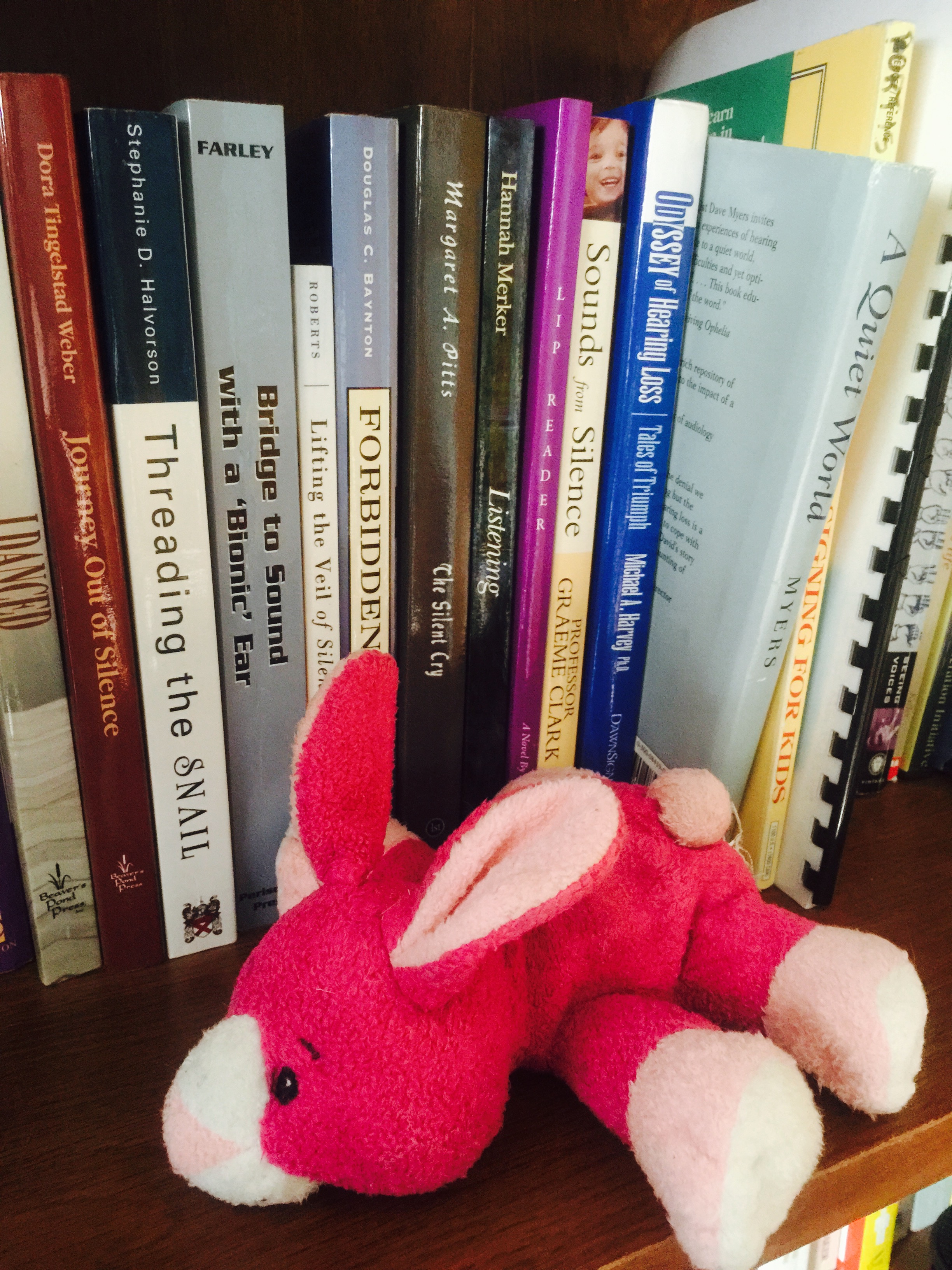
On Sunday, a longer residency day for me, I was holed up in a large room eating my lunch and tossing Chloe’s pink bunny while completing an essay on boolean phrases (aren’t I talented?) Unfortunately, by day two, other people are also figuring out these empty workshop rooms are great places to eat lunch. Some of these people are talkers. *grimace*

I suppose an “off vest” service dog playing with her toy, wagging her tail like crazy,  and huffing quietly to me so I’ll throw it again, invites spectators and conversationalists. Sometimes I really want to PLAY DEAF. I cannot, however, for I feel a certain responsibility to be a good testimony and example of a “hearing again” person. So darn it. I am pulled into conversations.

“Oh this is great that you allow your service dog an opportunity to unwind. That is a great stress diversion instrument!” said a very well-meaning (I’m sure) observer.

I know I looked at her funny. I’m pretty sure an eyebrow went up. Unfortunately, funny looks and raised eyebrows invite further conversation.

“Will your dissertation be about the place of service animals in the lives of persons with disabilities since you are a cognoscente in this area? I know many of us who are scholar-practitioners are aficionados in our area of interest”, said the now expectant observer.

I may love people, but sometimes? Sometimes I’m not very good with people.

I snorted.

That’s right. It’s a good thing my sinus were clear because lord knows what would have flown out.

I pointed to Chloe who was currently rolling around “scenting” her pink bunny and said, “You know that is a slobbery toy? It’s not an INSTRUMENT. I am doing my dissertation on something I believe in and yes, know well because I live it. But let’s cut the crap on the big talk. It’s lunchtime and I’m relaxing so you don’t have to impress me. Heck. I hardly even know what you are saying!”

Are you as horrified as I was? I wanted to slap my hand over my mouth and then immediately apologize. What happened next had me exchanging emails and finding a new friend.

“Oh thank God. My partner tells me to cut the crap all the time. Don’t you hate feeling like you have to ‘play doctoral program’ when you are here? I mean we are all just trying to get done, doing our best to reach goals. Holy realist, Batman. Can I eat lunch with you tomorrow?”

(In case you are wondering if that is her quote, I can’t make this stuff up. I even emailed her later and asked to “quote her” in an upcoming post).

I howled with laughter. I mean, I had tears rolling out of the corners of my eyes. Chloe was a bit concerned but continued to take advantage of her off-vest playtime.

Stop Trying So Hard

In the years I have chosen to identify as a person who is “differently abled”, I have met two kinds of kin.

One group of folks I feel a certain amount of kinship with since they, too, live with a chronic condition, disability, or invisible illness, are commitment-aholics. They choose to be involved in everything – just to prove they can. (A friend wrote an excellent post about this – click here to read it). They work so hard at making sure they are independent, they smack the back of the helping hand reaching towards them.

They work so hard at proving themselves at work, they are over-committed to volunteer committees and focus groups. They strive so hard to show the world (and themselves) that they CAN, they do very little well. They bust their butts to impress us. The reality is they walk around with – erm… – busted butts.

My other “cousins” are people who refuse to participate in much of anything for fear of letting others down. Instead of learning what their own physical, emotional, and mental limitations are and living an abundant life within those boundaries, they isolate themselves and refuse to put themselves in a position that they may blow it. They get around making poor choices by choosing not to make any choices at all. Their souls are withering and they don’t even know it.

Use Your Talents and Skills. Just STAY REAL

We all have talents. These are gifts we are born with while a skill, on the other hand, is something we are good at because we’ve worked hard at being good at it. We can even take natural born talents, work hard, become skilled, and use these abilities in our personal and professional lives.

It is very important to use what is available (talents) and work hard (become skilled) so that each of us can make a difference (with our abilities). Yet, too many times we get side-tracked by making sure folks recognize what we are good at doing. Cut the crap. Be real, but be nice. Be who you are – which means at times you are wearing a cape, and other times you are asking for assistance. Share who you are (why keep abilities to yourself?) but be a humble expert in who you are. Don’t be an over-achiever. Don’t be an under-achiever. Just be real!

Denise Portis

© 2015 Personal Hearing Loss Journal
 

Accepting Help ≠ Dependence

This service dog took full advantage of a holiday vacation in Florida.

My Christmas holiday was a blur. They can be that way sometimes. I flew to Florida with my husband to be with my parents for Christmas, but I had a TON of homework. Chloe, faithful service dog, at least got the opportunity to really chill out. When I got home, I headed to an academic residency for 4 days.

Even being super busy, I still learned a few things. I learned some things about myself, about other people, and about acceptance. I began to lose my hearing and balance at the age of 25. Now that I am 48-years-old, you would think I have learned all that one can learn after living with hearing loss and a vestibular disorder for 2+ decades!

Ungracious Acceptance

Acceptance of my life as it is, seems to be an ever-evolving concept. Sometimes I take things in stride. Progression of the toll my diagnoses have, a new “timber – down goes Denise – fall”, having to switch out cochlear implant batteries mid-conversation, taking the elevator instead of escalator or stairs, and having to wait for an empty handicap stall in public bathrooms so that my dog and I BOTH fit, is really second nature for me now.

But sometimes? Sometimes I am WITCHY about it. (Feel free to put another first letter there as it probably fits from time to time). Maybe it’s hormones? Perhaps it is a lack of sleep? It may be I just had an unpleasant encounter with someone who was condescending towards me when my being differently-abled became apparent. For whatever reason, at times when someone asks if they can assist I must look…

S c A r Y

I assume this because their eyes get big, they throw up their hands in an “I surrender!” pose, and they take two full steps back. I don’t MEAN to put off that vibe, but I know there are times I must do so. I work SO hard at being independent. I love the color purple, but that isn’t why I carry a bright purple cane. I love dogs, but that isn’t why my 24/7 partner is a service dog from Fidos For Freedom, Inc. I love dangly earrings, but I don’t wear “bling-bling” on my cochlear implant because I’m a drama queen.

(OK, OKAY! I’m a drama queen, but in THIS instance it is not why I have bling-bling on my cochlear implant! Yeesh!)

I do all of these things to be independent. I yearn for independence and inner strength. I forget sometimes that the latter is the result of a “thinker” and “feeler” in sync in the body of a person who is differently-abled. Part of it, I actually HAVE caught the exasperated looks on faces when I do ask for help with something. It can be fleeting, but it’s there. I’m deaf, not blind. (We can debate if differently-abled people are far too sensitive about this and see things that are not there later).

Yeah, so? Let’s Go!

While in Florida, amidst homework and research, I did insist on going out to eat every day. I did a little bit of shopping at a place we don’t have in Maryland. Bealls was a very cool place! We also do not have a Belk. So yup. I did a little shopping.

When we went out on the town to do these things, we had to borrow my parent’s car. It is a big ol’ SUV and Chloe had to sit in the back compartment. It gave her plenty of room to stretch out and seemed like a great option for four people plus one service dog. The problem was that my parent’s SUV sits very high. Chloe is 10+ years old. She is retiring in May of 2015 (unless she lets me know it needs to be before then). The first couple of times I gave the “Chloe… OUT” command, she jumped from the back, only to have her front legs collapse and do a hound face plant in the parking lot. The first time it happened, I gasped. The second time it happened, I’m pretty sure I yelled. OK, yeah. I don’t yell. I have a hearing loss. I SCREECH. Ask me to demonstrate sometime, but bring the ear plugs.

Because my husband, Terry, didn’t want to see what a third time would trigger, he suggested, “Let me lift her out of the back and set her on the ground!

I said, “Ok, but do it in a way you don’t embarrass her. Make it quick and don’t make a big deal about it.

Perhaps I should explain that I disagree with those who say that dogs don’t exhibit or feel some of the same things humans do. I have seen dogs excited. I have seen them pissed. I have seen dogs pouting (do I have some stories about my grand-dog, Pegasus, or what?). I have seen dogs embarrassed. Point & laugh and dogs will duck their heads in shame/embarrassment.

Chloe’s weight ranges from 59-62 pounds. Needless to say, we don’t carry her around. I wasn’t sure how she would respond to being lifted from the back and set on all fours on the pavement; nor, did I know how she would respond to being lifted up into the back of the SUV.

The first time we opted to lift the service hound out, I held my breath. Terry reached into the back, hooked his arms under her and locked his hands over her spine, and carefully picked her up and set her on all fours.

PUH.

I exhaled rather noisily, and watched as she wagged her tail and moved to heel position, looking up at me as if, “Yeah, so? Let’s go!

I was stunned. I had a treat in my hand to cajole her back into a good mood. Instead I went into the store as if nothing out of the ordinary had happened. I watched Chloe from the corner of my eye. (Ummm… explain to me how oval shaped things like eyeballs have corners?) I digress…

I fully expected Chloe to act, I don’t know… WEIRD for awhile. However, she took it all in stride. She needed the help, being rather fond of her own face, and didn’t even miss a step in going on about her job after accepting assistance.

Do you know where I’m going with this?

WHY???????

Why do we act so weird when we need help? Maybe it is just a little help.

… like picking up the dropped blue tooth device I spotted in a hallway that I could not bend to get, and didn’t want Chloe to destroy by enthusiastic fetching.

Maybe it was a lot of help.

… like helping me dislodge my wedged rolling briefcase from the elevator door as it was stuck solid. I struggled with my butt holding the door, cane braced, and dog freaking out as I tugged on a very STUCK wheel.

Sometimes? Sometimes, we just need a little help to continue doing our thing. We need a helping hand. We aren’t signing an I.O.U. If we truly want the world to be a kinder place, then why are we prickly when someone asks if they can help? By accepting help we are not sticking a “I’m WEAK” note on our forehead. We can accept help and still be independent. We aren’t waving all rights to an independent life should we accept help once in awhile. For most people, helping another is done so with no strings attached. They don’t even think twice about it. They may never think about it again, while WE sit there perseverating on it and making a huge deal about it. Why can’t we just say, “thank you!” and our attitude be, “Yeah, so? Let’s go!

PRIDE.

Pride can be a good thing. There are good types of pride, and crippling types of pride. Learn the difference. Learn to accept help. It doesn’t mean you are signing on to a life of dependence. It means that you are SMART. You know your limitations and are making wise choices to do what is best for YOU. Face plants on the pavement aren’t fun. All you will have for that type of stubbornness is a skinned chin. (Ask Chloe…)

Denise Portis

© 2015 Personal Hearing Loss Journal


But, Butt, Buttocks and Butte

Isn’t the English language crazy sometimes? Did you know that it is actually one of the hardest languages to learn? (Oxford Royal Academy, 2014). Since most who are reading this likely know and use English as their first language, that may come as a surprise to you. We bellyache about how difficult it is to learn Spanish, French, German, etc., because most of us were born into English speaking households. Yet, many scholars argue that English is quite difficult to learn.

Take homophones for example. “Butt” can mean to “be adjacent to” or it can be your hiney, your buttocks, your butt, your behind, your gluteus maximus, your CABOOSE. Talk about confusing! You have to look at words in context to figure out the meaning. Then… we have acceptable shortened versions of words. For example BUTT is an acceptable, widely used word in the place of BUTTOCKS. However, BUT is not short for BUTocks. As a matter of fact, that isn’t a word! Add an “e” to BUTT and it even changes the pronunciation of the word. Now it is BUTTE (pronounced \ˈbyüt\). However, you don’t ever add an “e” to BUT. The word BUTE is not a word (unless you mean the derivative of the medical word phenylbutazone). You just ran screaming from the room, didn’t you?

Get it Right

But ya know something? Sometimes we use words and think we know what they mean when we do not. It is my opinion, that those of us who live with disability, chronic illness, or invisible diagnosis, should know our own SELF very well. I have Meniere’s disease and am late-deafened. I sought to learn everything I could about both conditions. When I later developed extremity peripheral neuropathy, I learned all I could about this condition as well. However…

I cannot expect everyone I meet to be experts on what is wrong with ME.

Aren’t we guilty of that sometimes? Heck, even with our loved ones we really can expect too much from them. So we have to be careful about our expectations. If I tell a colleague that I’m late-deafened and they respond with, “Oh… OH! I know some sign language!” (and they start to slowly and painfully finger spell their name)… don’t have a COW. (Besides… that is just MESSY!) Not everyone knows that the vast majority of people with hearing loss are late-deafened and do not use ASL. Try gently educating instead.

I told a student who was walking down the hallway and then into an elevator with me, all the things Chloe does for me. She asked about my condition, so I tried to explain Meniere’s disease in layman’s terms. When we exited the elevator, she helpfully took my elbow, and said, “Here… let me help you“. I stopped (after making sure hound dog and my bags were on the right side of the closing elevator door) and dug in my heels. I looked at her in astonishment. I had just walked down a hallway with her, wheeling my bags behind me and juggling leash of faithful service dog not five minutes before! After helpfully disclosing and explaining Meniere’s disease now I’m incapable of walking on my own? Because I knew she meant well, I didn’t scream, spit, or throw a hissy fit (*pats self on back for rhyming so nicely right there*).

I said, “I can walk on my own. Chloe helps me“. She stared and then said, “But… But you are WOBBLING“.

I cheerfully retorted, “Yup. Welcome to my life!” and walked off.

Everyone’s an Expert!

Another problem you may encounter if you have a long-term or permanent diagnosis, is that helpful folks sometimes act “the expert”. I’ve tried to explain that I am late-deafened and hear again with a cochlear implant, only to be interrupted by the person exclaiming, “Oh yeah. I have to turn the volume up now that I’m in my 40’s!” (I’m like… whaaaaaa…?)

I told an employee of my favorite grocery store a little bit about Meniere’s disease. Chloe and I always meet him stocking bread in the same aisle almost every week. After hearing my brief explanation of Meniere’s, he said, “Oh yeah, I walk into things after I’ve been drinking even just one beer!” I stood there trying to determine if my brain heard what I thought it heard. Ever been taken by surprise before and your mouth just blurted out what you were thinking before you had a chance to filter it through your state-of-the-art “Maturity Meter”?

I said, “That’s the dumbest thing I have ever heard“. He stared and then stomped off. We only see the tail end of him leaving the bread aisle when we go to the store now.

All my buddies who are late-deafened joke about this response after telling someone that they are late-deafened: “Oh yeah, I have an aunt who is death“.

Rest in peace, auntie.

Cut ‘EM Some Slack

Just as our English language can be confusing, so can your explanations of who you are to others. Even invisible conditions such as mental illness are so misunderstood. Many folks who try to explain a mental illness diagnosis are then treated like:

1. Fragile porcelain that may break under pressure

2. They are suddenly contagious

3. They are more dangerous than Freddy Krueger

All we can do, is do our BEST. In the end, we need to work hard at trying to understand that others – even those who may care about us the most – may not completely understand your new normal. That’s OK. A healthy acceptance and ability to BE GOOD TO OURSELVES is not dependent on the understanding of others.

Denise Portis

©2014 Personal Hearing Loss Journal
Oxford Royale Academy (2014). Why is English so hard to learn? Retrieved on October 27, 2014, from http://www.oxford-royale.co.uk/articles/learning-english-hard.html

By Association…

by association

You’re gonna think this is off topic. Hang with me, I promise this is a “typical Hearing Elmo” post.

I’m turning in my “Christian” card. 

I’ve been so aggravated with “Christians” over the past month, that I decided to shred my “card”. Being a “card carrying Christian” doesn’t mean anything anyway.

It matters how you live and Who you put your faith in… at least that is what I believe. Sometimes I get extremely annoyed on FaceBook. But…

I stay because the disABILITY community is alive and well, thriving and connecting on FaceBook. In the last month, however, I have seen folks post a couple of things in the name of God, that made me shred my card. Carrying a card doesn’t mean squat. I’m going to live what I believe and ignore some folks that choose to make the “real deal” look bad.

1. The suicide/death of Robin Williams

Some things I actually saw posted:

“Shame on Robin Williams for causing such grief and forcing his family to shoulder this for the rest of their lives. No way is he in Heaven”.

“A Christian cannot commit suicide. It keeps them from Heaven. Guess we know where Robin Williams is”

“It’s is so sad he (Robin Williams) didn’t get help for his depression. Had he known God, that would have helped”

“Disgusts me! Suck it up and be a man. Seriously, the coward’s way out”.

All these from folks who regularly post things making it clear their faith-based beliefs. Yet this erases all of that in my opinion. They only show their stupidity (I mean… try doing some real research on what clinical depression is, would ya?) and judgmental attitudes. Yeah. That will win others to Christ.

2. The ALS Ice Bucket Challenge

Some people who have made it clear what “card” they carry when it comes to personal beliefs and faith, reported that they could not accept the challenge because ALS research conducts stem-cell research. It doesn’t seem to matter that stem-cells can be harvested from a number of different procedures – only one that is from embryos. Couples with frozen embryos can:

  • simply discard the embryos
  • can store the embryos indefinitely at their own expense
  • can give the embryos to other infertile couples. (More information about that option is available through the RESOLVE: The National Infertility Association)
  • can donate the embryos to general research or stem cell research (CIRM, 2014).

Stem cells can also come from adults, however, and umbilical cords of newborns. Scientists and researchers have even learned to induce pluripotent stem cells – alter adult stem cells to have the properties of embryonic stem cells (Mayo, 2014). But wait, let me guess. You have issues with genetic research, too?

Let’s say stem cell research goes against your personal beliefs and world views. So you do not support infertile couples seeking help in order to conceive? So if stem cell research is done and embryos are used… and a cure or viable treatment is found for diagnosis such as: spinal cord injuries, type 1 diabetes, Parkinson’s disease, Alzheimer’s disease, heart disease, stroke, burns, cancer, osteoarthritis, and ALS (Mayo, 2014), you would not participate in this treatment or cure if diagnosed with one of these, right? Or, if someone you love is diagnosed with one of these debilitating diseases you will let them suffer? Do you know how many relatives I have that would not be alive if not for diabetes/insulin research?

OKAY!

Ok.

ok… I will calm down. After all, you are allowed your opinions and biases. This IS (still) a free country. But I don’t have to buy into that, nor drink your proffered kool-aid. I read some posts about rejecting the ALS Ice Bucket challenge that made me weep.

I mean I cried buckets (though not ice buckets).

Because people who have this disease or love someone who does may have seen your post. And heard your excuses.

Hey. Most of us have limited incomes and must choose what we do with our discretionary monies. There are only a handful of places I give to each year because they are causes and non-profits that I am passionate and convicted about. If you choose not to accept the “challenge” that is your choice. Maybe say, “sorry, I give to other foundations/charities but I salute those of you who are giving to ALS”. Just please don’t make excuses about why you aren’t going to give to the ALS foundation and say it is because of the “card” you carry. Worse… explain that you are going to give your donation directly to a patient with ALS instead of the evil foundation. Because that person wants your money and not a cure.

Who Am I – by Association?

So all of this has made me think. (Can ya tell? LOL) Some of my associations I am very proud of and gain physical, emotional, psychological, and spiritual benefit from participating. Others make me keep my distance though. I may even shred my “card”. It doesn’t change who I am – merely my associations. I am a person of faith, but I want to be transparent, compassionate, and a friend who makes a difference.

What are your associations? (Other than those that are faith-based)

I am associated with groups who have bionic hearing. I have a cochlear implant. Sometimes we disagree on “best company” or hearing health strategies, but we don’t judge or behave holier-than-thou. We agree to disagree when needed.

I am associated with groups with vestibular disorders. There are SO MANY different specific diagnosis that are vestibular disorders. Meniere’s disease is a fickle pickle. Few have exactly the same symptoms and triggers, and what program works for one may not do anything for another. However, we work hard to accept that “whatever works” for each sufferer.

I am associated with groups who advocate for the rights of those with service animals. Fidos For Freedom, Inc., radically changed the course of my life. I don’t agree with all training practices and at times am rubbed wrong by certain personalities. However, I proudly wear the mantle of service dog “mom”.

Yet at some point in my life I had to dis-associate with the culturally Deaf. My reasons are a long story, but it is my story and I shoulder the responsibility of that choice.

I chose to dis-associate with my undergrad alumni. Again a long story, but one I stand by.

I chose to dis-associate with people who don’t like Greek yogurt. They can’t be trusted.

These are my choices, and YES. I “get” that you have the choice to “dis” Robin Williams, individuals who took their own life, and depressed people who have lost hope. I respect your choice. Doesn’t mean I can and will choose to associate with you. I understand that your conscious will not let you give (one time or regularly) or support (by posting a video and challenging others) the ALS Foundation. But if you choose to voice that opinion and choice in such a way that it harms others, I don’t have to associate with you.

There are numerous organizations in our great country that I do NOT support because of ethical concerns and personal choice. But you will never see me posting things in a public venue something that may cause harm to someone else – even peripherally. I have the freedom to express my opinion one-on-one to close friends and my husband. Believe me… I do this regularly when my ability to cope with those who hate Greek yogurt overwhelms me.

Y’all? Go be nice to others. 🙂

Denise Portis

© 2014 Personal Hearing Loss Journal

CIRM. (2014). Myths and misconceptions about stem cell research. Retrieved September 2, 2014, from http://www.cirm.ca.gov/our-progress/myths-and-misconceptions-about-stem-cell-research

Mayo Clinic. (2014). Stem cells: What they are and what they do. Retrieved September 2, 2014, from http://www.mayoclinic.org/tests-procedures/stem-cell-transplant/in-depth/stem-cells/art-20048117


Turn On Date

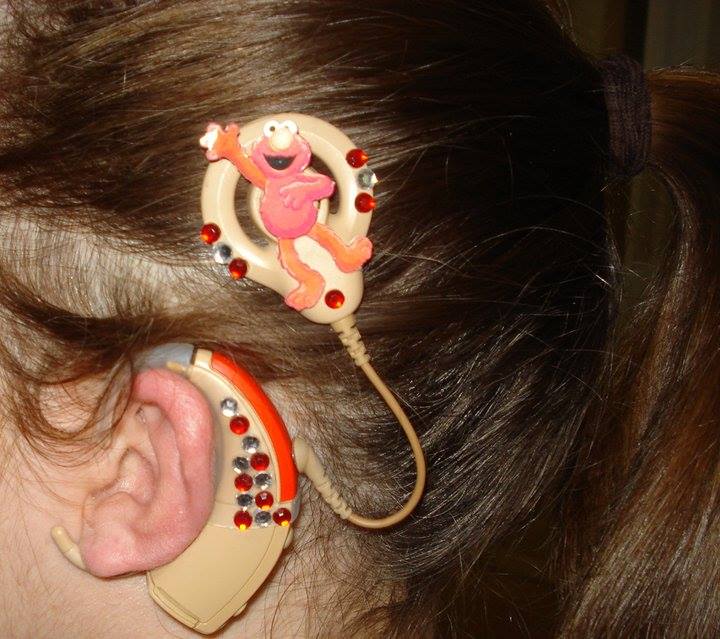
Elmo bling

One of my favorite discussions to have with people who have chronic illness, invisible or visible disabilities, or living a “new normal”, is sharing stories of how their adopted vernacular throws others they communicate with for a loop. We probably all have stories to tell. If your life is different because of a surgery, technology, or diagnosis, you may be using words and phrases that confuse and irritate folks who don’t live a similar life. I try to be careful and take a quick look around at WHO I’m talking to when having a conversation, but that is after really screwing up a lot in the early years. Here are some of my more memorable screw ups:

Your Turn On Date

Johns Hopkins sends folks my way when they are considering a cochlear implant, especially if they have Meniere’s disease as well. I have learned that when talking to someone new to the idea of cochlear implants, you cannot talk to them like someone who has already had the surgery. Cochlear implant peeps throw around terms that make perfect sense to US, but not so much to others. Case in point: I met with a lady with Meniere’s at a library who was investigating cochlear implants. At some point in the conversation I said, “Now the date you are turned on, you need to have a designated driver if possible. Everything will be so strange and you may not be able to drive safely if you don’t have someone to drive for you after you are turned on“.

Her eyes got big and she paled. She stuttered out, “Wha…wha… WHAT!?!?” I’m savvy enough to figure out by the way she answered that she didn’t understand my terminology. I thought I’d clear it up but succeeded in only making it worse…

Yes, when you go to the audiologist and they turn you on…” I stopped. Seeing her dropped jaw will silence me. I backed up and tried again, using “activation date” instead of “turn on date”. Do you know something? Unlike others who meet with me, she never followed up with post-surgery emails or meetings! <BIG GRIN>

I Lost My Ears

I had only been activated 8 months when I lost my ears. Now for CI folks, they get that when we talk about our “ears” we are talking about the external technology… not about our “listening appendages”. I was in a super Walmart, looking for a very specific jar of dill pickles (because yes… I’m that picky), when my cochlear implant – which has a magnetic coil to keep it on my head – flew off my ear and into the pickles.

Had I stayed still and searched the immediate jars I would have found it right off. As it was, being new to “hearing again”, I immediately stood up and screeched because my world had suddenly and completely gone SILENT. An older lady shopping amongst the same shelved pickles looked at me strange. I nervously picked up jars of pickles looking for my “ear”. The lady came closer and joked, “Are you pregnant?“. I turned to her with big tears in my eyes which made her come closer and immediately quit teasing me.

Are you OK?” she asked kindly. I looked at her and wailed, “I lost my ear! I can’t find it!

She looked at me bug-eyed and walked away. Quickly.

Thankfully I found my CI attached to the metal lid of some nearby olives. No wonder I couldn’t find it amongst the pickles.

I’m Not Turned On

When we lived in another part of Maryland, we use to have to drive a long way to go to church on Sunday. We actually went into another county to do so. Normally my family doesn’t listen to the car radio because they know that I’m totally incapable of tuning out the radio and hearing just the conversation. However, on longer trips, I often say, “I’m turning my ears off” so that they can listen to the radio and they know if they need me they only need to tap my shoulder. In truth, it is nice being able to sit in “total silence” from time to time. It is certainly conducive to “deep thinking”.

So one Sunday on our way to church, I gave the family heads up that I was going silent on purpose. I must have moved from “deep thinking” to day dreaming. We got to church, got our stuff out of the car, and Terry and I waved goodbye to the kids as we headed over to the building where we had small group Bible study. I’m still deaf at this point and I couldn’t tell ya if Terry was talking to me. I know my mind was somewhere else – that’s for sure! We went into the classroom and sat down at the big table. Some other couples were already there. One of the ladies leaned up so that she could see around Terry and said something. It was then I realized I still hadn’t turned my cochlear implant back on. “Oh! Wait, I’m not turned on!

I reached up and punched the correct button and looked around at a bunch of stunned faces. Terry was actually embarrassed. (If you know Terry, you know he rarely gets flustered). A few who caught on a little late began to snicker. Me? Well I thought it was just HYSTERICAL. So I managed to get out in between laughs, “Oooops. I need to find a better way to say I don’t have my CI on“. Terry quickly said, “Yes Denise. Yes you do!“. It took a number of months for me to live that one down.

Remember Your Audience

Do you live with a chronic condition or acquired disability? Have you become an expert in navigating your “new normal”? Can you “talk shop” with the rest of your population?

It’s hard to remember that just because WE understand what we mean, others may not. We tend to use words and phrases that become a part of our vocabulary. Try to pay attention to your audience. A good advocate learns to do that. You may have to deliberately choose to use a different word or phrase if no one really connects with it but you. For example, I had to stop referring to my bright purple cane as “my third leg”. I’m fairly naive and had no idea the shocked looks were from folks who had heard that phrase in a completely different context.

In order to really educate and advocate, you need to use terminology that the general public will understand. You may think a word or phrase is very obvious, but others may not ever hear that word in conversation. I was trained at Fidos For Freedom, Inc., to know how to advocate for accessibility with my service dog. The trainers didn’t tell us, however, that not everyone in the general public knows what the ADA is! (Thankfully, they also equipped us with great little brochures and handouts with the law explained on them).

Fibro fog” may only mean something to other folks with fibromyalgia. “CFS zombie” may only be a phrase others with chronic fatigue syndrome use. HoHearies can be figured out by most of the population, but is only self-identified by those who are hard of hearing. The general public may even make incorrect associations just because they don’t understand your chosen words. I had no idea anyone would ever think “tinnitus” was something caused by a cut from a dirty tin can.

You are a more effective advocate when you “consider your audience” and appropriately explain symptoms, treatment, and diagnosis. The goal is to educate after all. If you only succeed in confusing those around you, you haven’t really helped to educate.

What’s REALLY fun is when those closest to you start to confuse others as well. Terry often asks if I “have my ears on” now.

Denise Portis

© 2014 Personal Hearing Loss Journal

Folding Fitted Sheets and “Good ‘Nuff”

fitted sheet2

My newlywed daughter bragged to me recently that her husband can fold a fitted sheet. Pressing for details I found out that he evidently can fold them where they are laying flat.

… like they just came out of the package.

… making Martha Stewart proud.

I think I hate him (just kidding…)

I’ve seen various videos, blog posts, articles and pictures explaining how to fold a fitted sheet. I once saw a 5 step-by-step diagram of how to fold a fitted sheet on a beautifully laminated bookmark.

Because evidently we worry about that while reading…

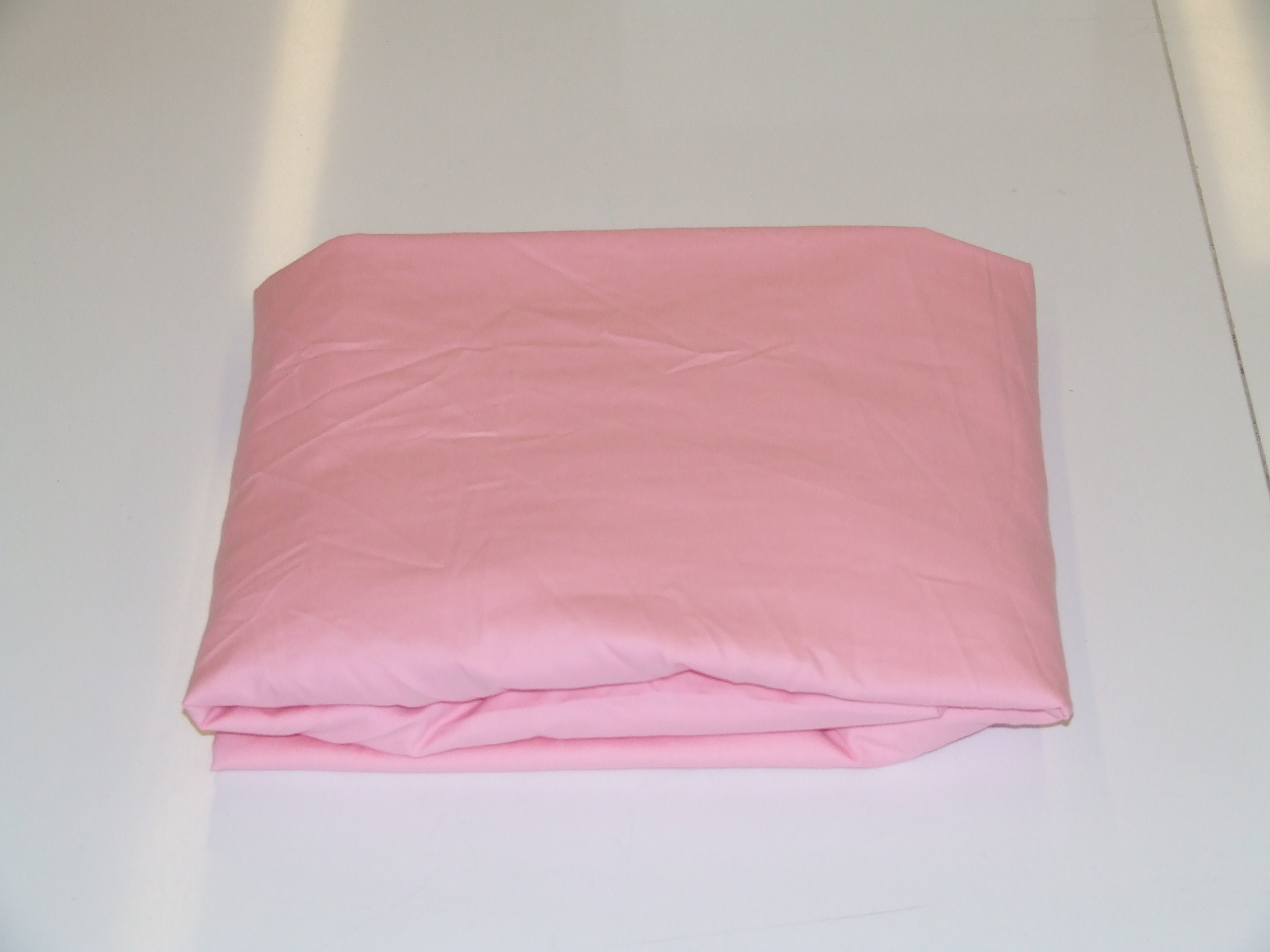
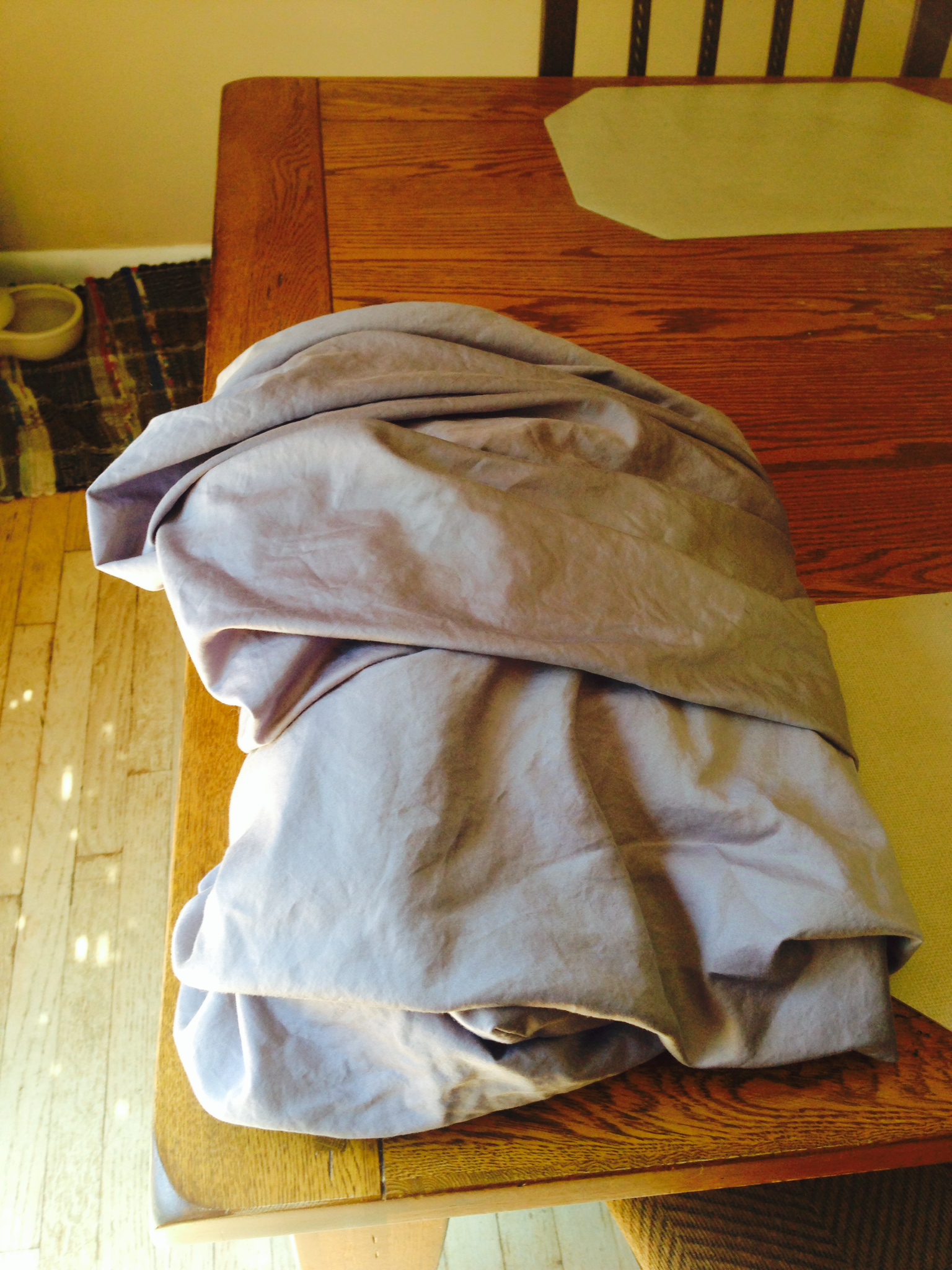
Evidently a newly laundered fitted sheet can look like this after folding...
Evidently a newly laundered fitted sheet can look like this after folding…

As a student and professor of psychology, it is fun to “look back”. Although I didn’t know it at the time, I definitely had OCD (Obsessive-Compulsive Disorder) as a kid. I’ve given some examples of things I would do to help me feel like I was coping and controlling in class before that made jaws drop. OCD can look different lived out in different people. For me, it meant ordering, organizing, labeling, etc. I had a full-size bed growing up with bright yellow “sunshiny” sheets. I’ve often wondered how that young, OCD Denise dealt with folding fitted sheets. Because you see? I can’t. 

Fold fitted sheets I mean. I must have gotten around that by only having one pair of sheets. When laundered, they went right back on the bed.

I’ve come a long way from that OCD Denise. Now some of you who know me WELL are saying to yourselves, “Honey? You’ve still got a long ways to go!”

But to give you an idea about how far I’ve come, look at the fitted sheet I folded this morning straight out of the dryer. As a matter of fact, I have my very own 5 step-by-step instruction guide:

photo-3


1. Remove from dryer and hold up high to avoid pet fur.

2. Shake to allow dryer sheets to fall to the floor.

3. While holding up high, match corner to corner.

4. Fold.

5. Admire work. It ain’t purty. But it’s GOOD ‘NUFF.

Stacked in a linen closet, it does not take up anymore space than one folded perfectly. At least… that’s what I tell myself. You see? I had to learn something. Sometimes you pat yourself on the back, murmur, “Good job!” and go on to something else. It’s “good ’nuff“. The sheets are clean, stacked neatly and await being put in use for the next time I change the sheets out.

Allowing a Fitted Sheet to Rock Your Boat

So when do you determine by reviewing your priorities, when to keep at that “fitted sheet” or when to determine it’s “good ’nuff”? Only YOU can decide.

I’m pursuing a Ph.D. in Psychology. I’m over half-way through and doing well. However, now I’ve reached the detailed statistics phase. And folks? I haven’t had statistics since the 80’s and long before the sophisticated analysis softwares were available. This past week I hit a wall. I mean that both literally and hypothetically. I have been staying up really late reviewing videos and media, reading, Reading and doing more READING, learning SPSS and writing like crazy. As a person who lives with invisible disabilities that include post-concusive syndrome, hearing loss, and Meniere’s disease, I require 8-10 hours of sleep each night just to live a “normal for me” day. I’ve not been getting that. I’m almost cross-eyed with fatigue. So this past week, falling more than usual as a result of that fatigue, I walked into my husband’s home office, showed him a new bruise from hugging a wall with ridiculous and unbridled passion, collapsed on the floor and bawled my eyes out. Do you know what my very wise husband reminded me? “You may not be understanding all of this. Just keep plugging away. By the time your dissertation is complete you will look back on this and realize you are very knowledgeable about your research and understand it well. For now you are doing ‘good enough’ and passing. You don’t need perfection at this stage“. Sometimes we have to “let go” of needing something to be perfect and accept that it is “good ’nuff”.

This past week a lady who has admired Chloe several times sat behind us in church. She leaned up and said something and honestly? I caught about 10% of what she was saying. (In case that doesn’t sink in, I was missing 90% of it <big grin>) I already had my cochlear implant on a special program to utilize the hearing loop in our auditorium. I’m one of the first people to tell folks new to hearing loss, “Don’t fake your way through a conversation“. However, it was obvious she was just saying something about Chloe again. She had a smile on her face, and I was set up to hear through the loop, not someone sitting on my “non CI” side and behind me. So I smiled and nodded my head and turned back to the front. Yup. Poor form on my part. But…

I have learned that if it is important and I responded with a smile inappropriately, someone will respond with a shocked or hurt look, confusion, etc., and I can hasten to explain I wasn’t hearing well. I didn’t see any of that on this lady’s face. She smiled, I smiled, and I determined then and there this “fitted sheet didn’t need to be folded perfectly”. For a few minutes I sat there thinking, “I have no idea what she just said!” I re-analyzed what I saw on her face, her indication of Chloe in a perfect down/stay and sleeping at my feet, a returned smile and decided, “You know? This fitted sheet (conversation) is not folded properly, but it is good ’nuff“! I brought my attention back to the service and felt OK about my decision.

This past Saturday, a fellow client from Fidos For Freedom rolled up to me in her scooter with service dog at her side. She has been with Fidos longer than I have and I consider her a friend and mentor. Another friend of mine and fellow client, Cara, is taking ASL (American Sign Language). She has been practicing her ASL with me during trainings. She is doing great (You rock, girl!). Cara noticed that I was talking to this other client who at times is hard to understand – especially when you have a hearing loss. Cara stopped behind the lady I was talking to and I know she was hesitating to see if she could interpret for me. I wanted this fitted sheet folded perfectly. I said, “I’m not catching what you are saying“. No faking nor presumptions on my part. This fitted sheet needed folded the right way because it was important to me. I love this lady and wanted to “hear” what she was saying. So she got out her little electronic board and began writing. It was what I needed to “hear” too. Cara waited long enough to see if I was “getting it” and then went on her way. I continued to communicate with this lady and left that conversation encouraged and with some great advice. I needed to hear her. I worked to hear her. She worked to communicate with me. Good ’nuff, wasn’t good enough. I needed to communicate 100% effectively with her. So… I did.

Living with invisible disabilities or chronic illness means that YOU have to decide what your priorities are and when to determine a task is “good ’nuff”. Only YOU can determine when you need to make sure something is accomplished to your satisfaction – to your personal standards. There are things you will decide to do that require work. It may mean you use up all of your reserves for the day. If you are into the “spoon theory“, you use every single one of your spoons. There are other things that happen during the day that result in the decision that, “this is good enough”. The worst thing you can do is stubbornly work at folding a fitted sheet that belongs to someone else. Worse, you allow someone else to bully you into re-folding one that you already decided was “good ’nuff”.

Are you one of those (annoying) people who can fold a fitted sheet perfectly? Well:

If-you-can-fold-a-fitted-sheet


Denise Portis

© 2014 Personal Hearing Loss Journal
Beaver – Destructive or Discerning?

swimming-beaver-344367-m

We have beaver. Actually, we’ve had beaver for about 16 months now, however this summer it is really evident WE HAVE BEAVER.

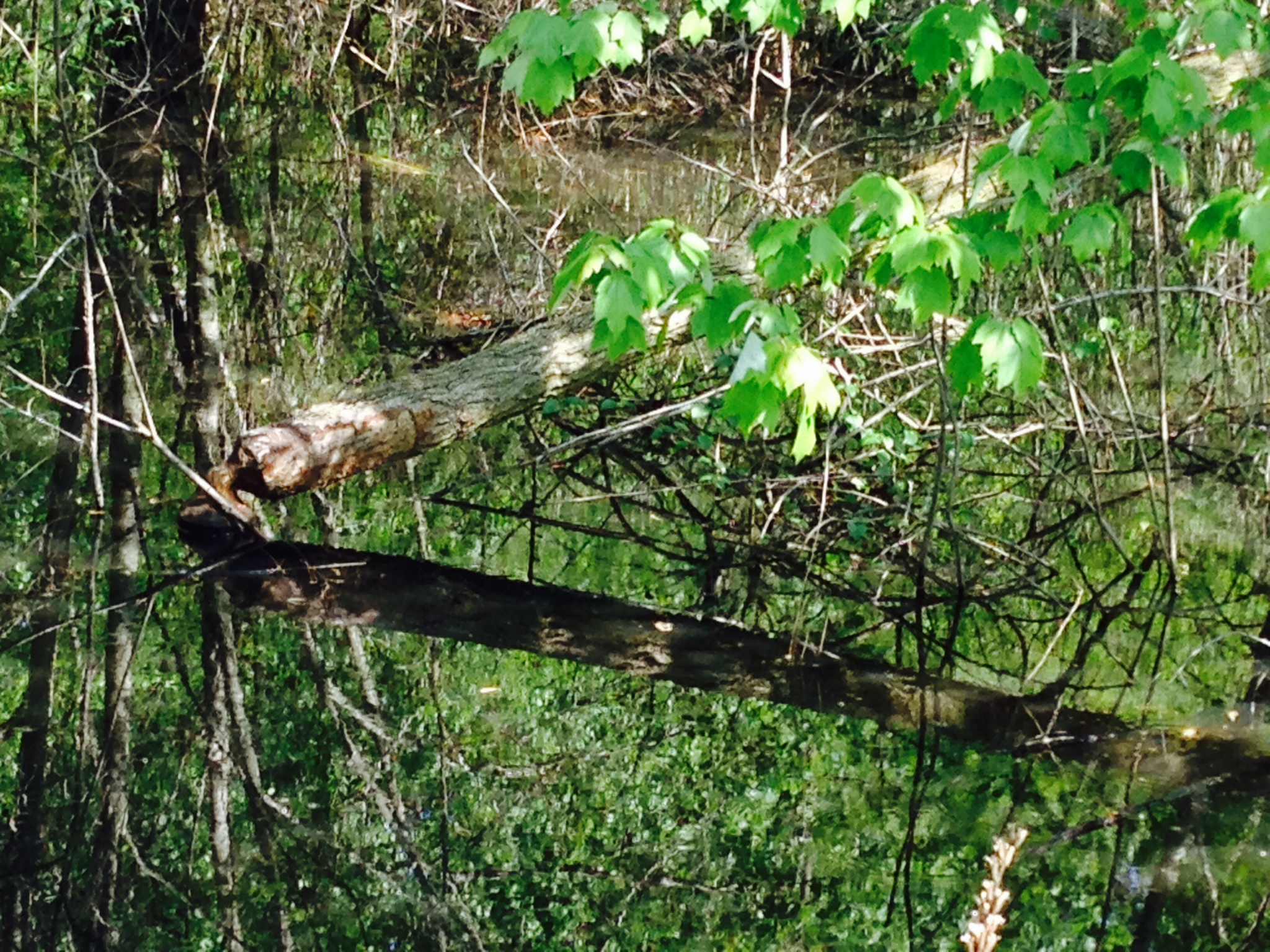
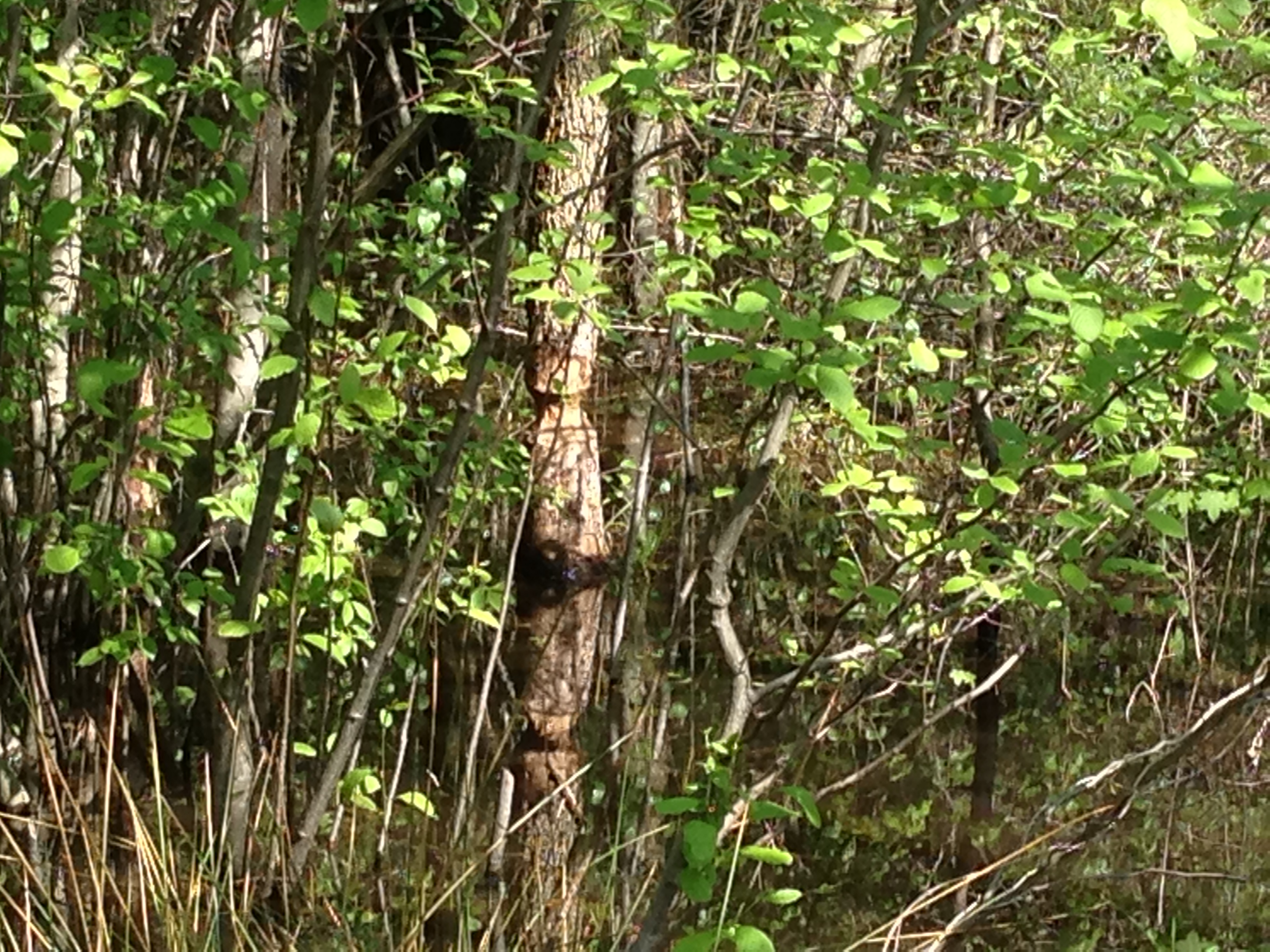
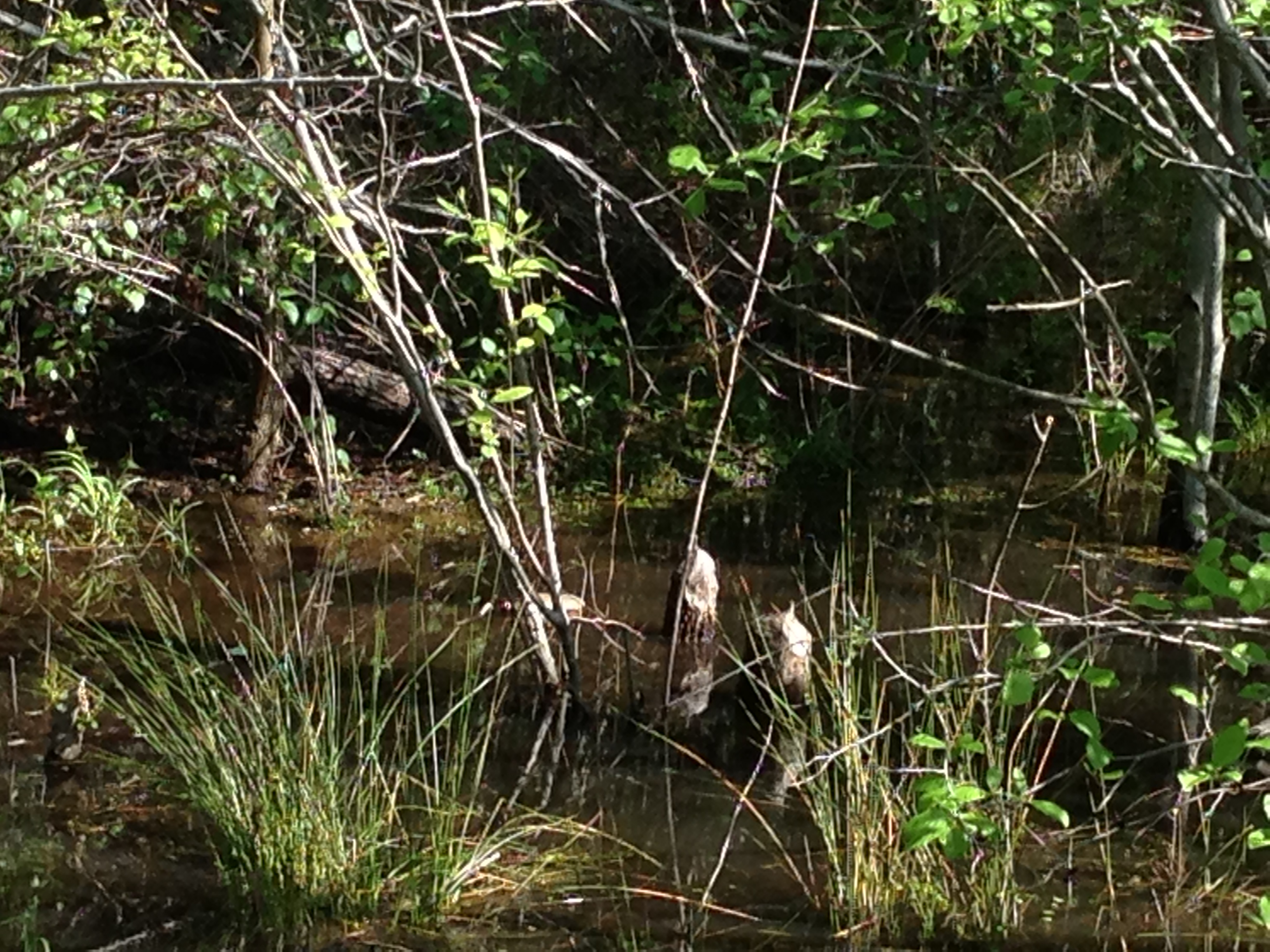
Our townhouse community sits up at the top of a hill. It is a closed cul-de-sac community, so it is great that “through traffic” is not an issue here. A brand-new walking path is now within footsteps of my front door. It will eventually connect to other walking paths, but for now it is about 1.5 miles round trip. At the bottom of our “hill” the path takes us by both a busy road, and what was once a small creek. In the Spring, I use to get a kick out of “hearing” the water sounds, especially after heavy rains. Last Spring those water sounds disappeared. However, I spotted this:

beaver10

… and then this:

beaver11

The creek quickly turned into a pond. And this year? Well let’s just say there is a new ecosystem near my house.

I came across a huddled group of homeowners about 3 weeks ago, whispering and gesturing towards the pond with banks now within 60 feet of our back doors. I stopped to see what was going on, and because it was early enough in the morning with few traffic sounds, I could actually hear their whispers.

“Will the water level rise much more?”

“What do you think they are up to?”

“Do they bite?”

Now my first thought was, “FOLKS. Beaver do not understand human language and to my knowledge they don’t have bionic hearing like I do. Why the HECK are you whispering?”

I didn’t voice those thoughts. Instead I said, “Ummm” (I’m ever so eloquent…)

Yeah, but have y’all been down to the pond area where the walking path is? Have y’all seen what has happened down there?

Blank looks. I discovered they don’t comprehend SOUTHERN. I tried to speak a little more cultured…

Yes, you should walk down there. There are 2 HUGE culverts about 8 feet in diameter. That water level will never get any higher unless those culverts become dammed up as well. If that happens, the city will just unplug them. After all, that road will flood before our homes will“.

Blank looks. See what a lack of exercise will do? Go walking folks, go walking. Check out what the beaver have done up close. Geesh. I think they were miffed I was talking in a normal tone of voice. After all… *sneaky whisper* … the beaver probably HEARD ME.

Beaver have made a comeback in Maryland. I pulled this from a neighboring county’s website:

“Beaver can be among the most beneficial of the county’s wildlife. They create favorable habitat for a variety of wildlife species including fish, birds, amphibians, reptiles, and mammals. This variety of wildlife is in turn valued for recreational, scientific, educational and aesthetic purposes. Beaver activity is also helpful in retaining storm water runoff and improves water quality by trapping sediment, nutrients, and pollutants. Beaver activity can also cause flooding of roads, trails, forest land. They also consume trees and shrubs. Their impacts often occur suddenly and dramatically.

These benefits and detriments often occur simultaneously at a single location. Because of the varying degrees of tolerance levels among people to beaver activity, there are bound to be disagreements on how best to “deal” with beaver conflicts.” (Howard County Parks and Recreation, 2014).

Living side-by-side with these amazing creatures is fairly simple. I’ve been thinking a lot about this family of beaver.

beaver3

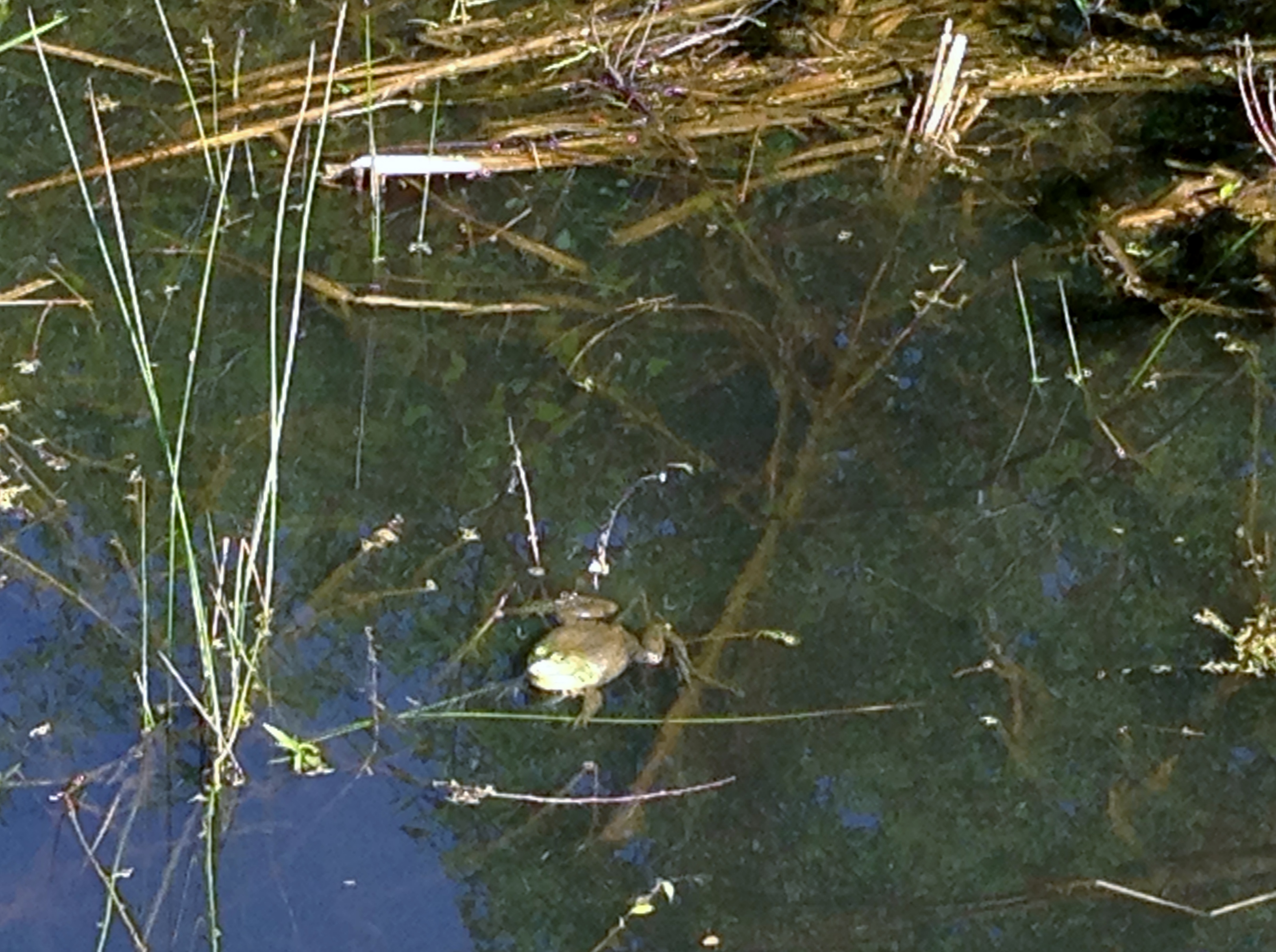
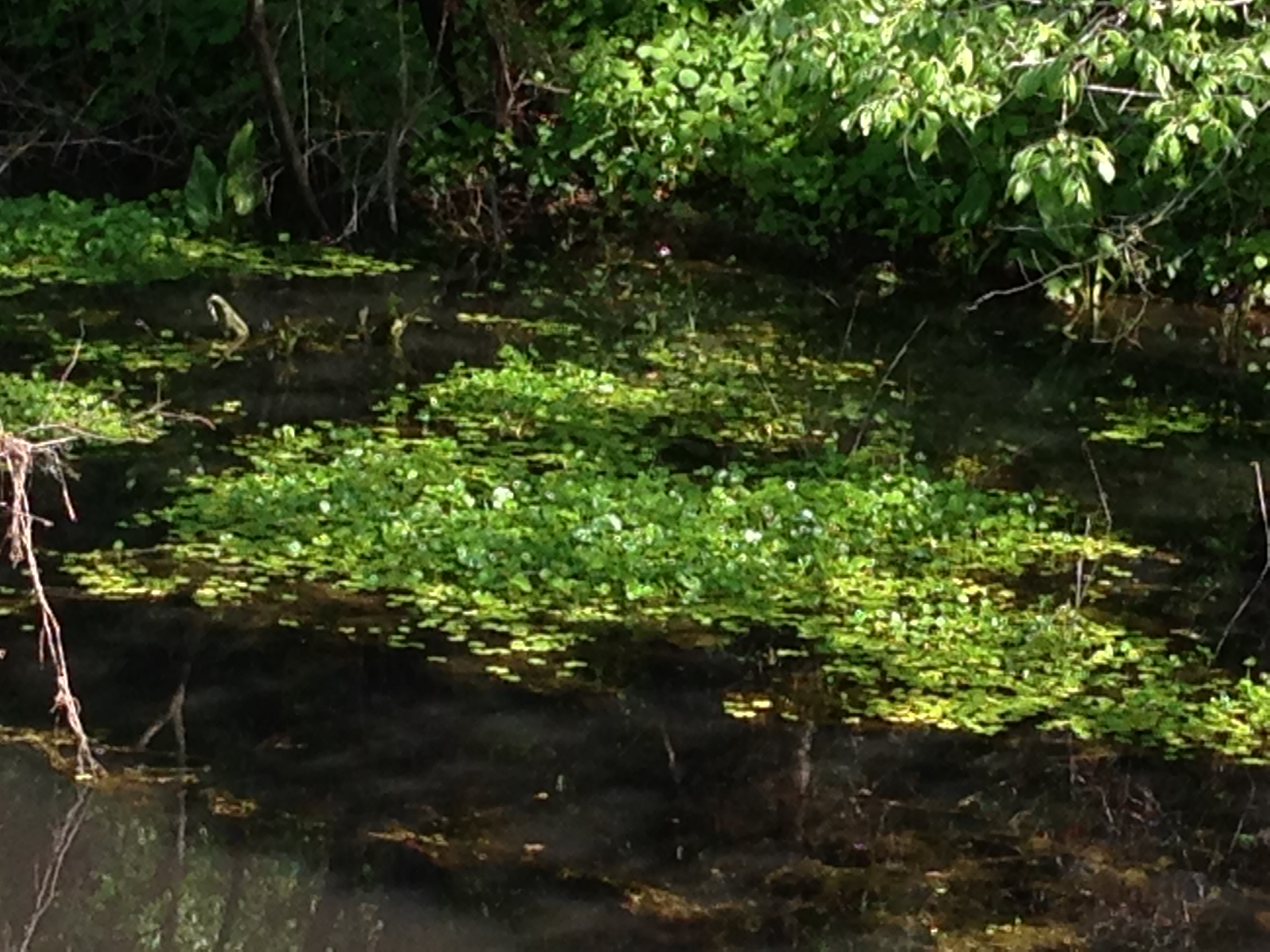
They migrated to this area near the bay bridge and did what came naturally to them. Not with destruction in mind… but cunning and incredibly discerning architects, this family of beaver have created a whole new ecosystem. We’ve always had tree frogs (although it took Chloe’s trainer to clue me in to what I was hearing each year). But now we have:

Beaver8

… bullfrogs. You should have seen Chloe’s head and ears the first time she heard THEM! These fellas stretch about two feet, nose to tip of hind legs. I know this, because I’m the crazy neighbor lady screeching to the neighborhood boys who have caught them and held them up to “Return them to the pond when you are done!”  There are also numerous plants I have never seen before in this area when all we once had was a creek…

Beaver7

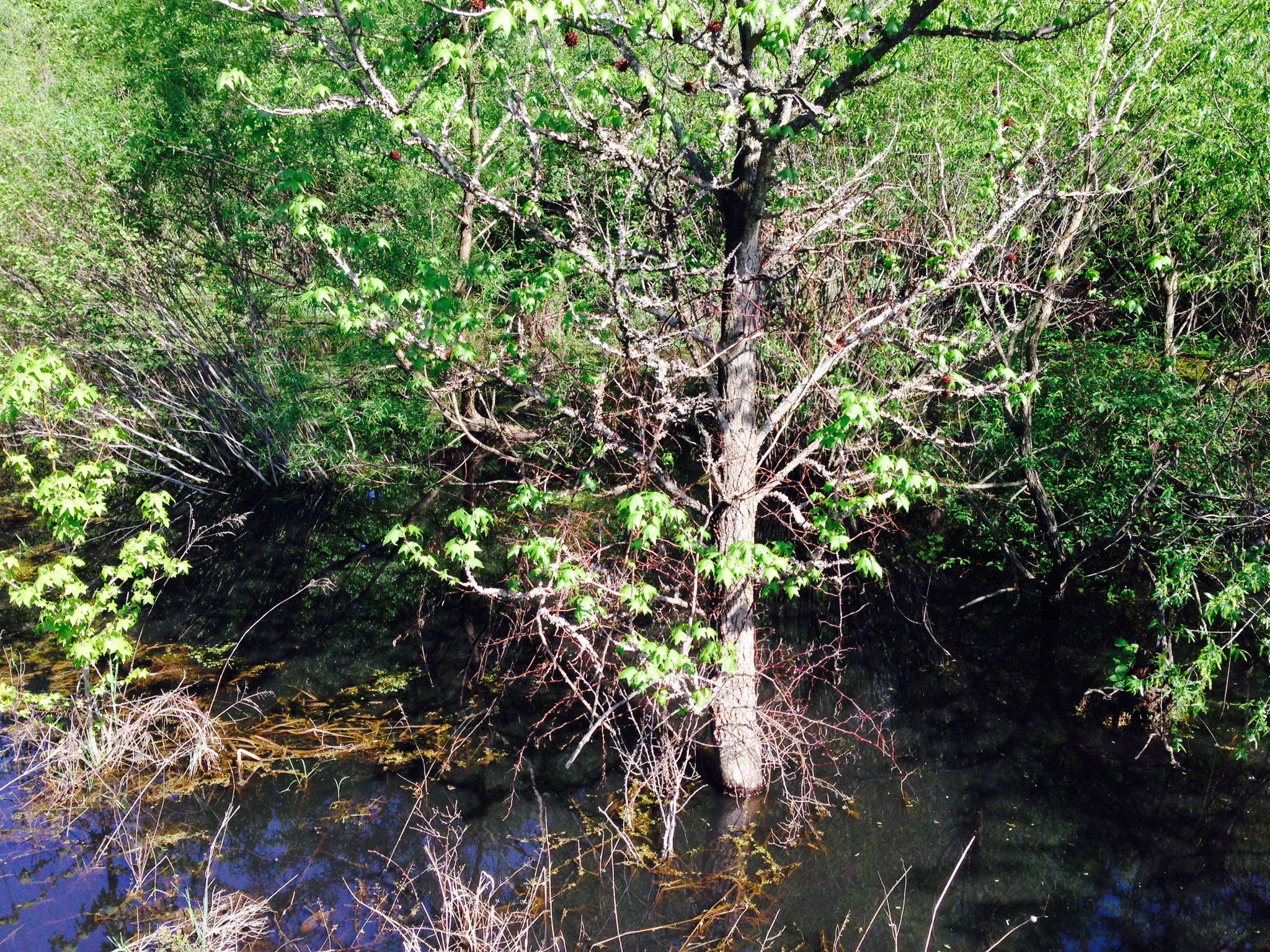
and the trees are flourishing…

beaver1

I counted 4 different families of mallard duck one evening, with little ones thriving in this secluded and protected environment. Turtles are sunbathing on any log or rock that breaches the surface of the water. The fox are back (having been gone for at least two summers). There are enough deer in our area now to make my poor hound dogs hoarse for all the barking alerts they insist on for me.

I cannot help but be amazed. The beaver strengthened and created a home just right for them, and in the process created a place to thrive for other species. Folks? I want to be a beaver.

I didn’t ask for disabilities. I never once thought, “When I grow up… I want to be DEAF and have a significant BALANCE DISORDER”. However, in my own process of adapting and making my environment safe and liveable for ME (cochlear implant surgery, service dog from Fidos For Freedom, be-dazzled canes, no-slip shoes, discovering where all the elevators are on campus, practicing all I learned in vestibular rehab.), I have created a new ecosystem.

I want MY WORLD to intersect with the REAL WORLD and help folks recognize the importance of inclusion. I work to make sure that my new life, teaches and advocates in accepting differences. I want others to recognize abilities rather than disabilities. I want my invisible disabilities to be visible and “pond-like“. I want my life to inspire others to choose to live equally purposeful lives. In my own small way I do this by working with my campus disability office. I openly talk about being “differently-abled” in class. I “plug” what I know whenever I can to whomever will listen… cochlear implants and service dogs, depression and coping skills. I have discovered my environment changing. People are coming out of the woodwork… or umm… newly created POND, and sharing with me that they have a mental illness, invisible challenge or diagnosis such as fibromyalgia, chronic fatigue syndrome, or Lyme’s disease.

Yes. Having an attitude of gratitude and focus on education and advocacy, has me walking by concerned citizens from time to time, whispering about a beaver conspiracy. But just as I’ve learned that being transparent is contagious, these folks will eventually HEAR and go walking to discover other new ecosystems. At least… I hope they will.

Do you live with disability? Are you struggling with an invisible illness? Do you have a chronic condition that folks do not seem to understand, nor comprehend how it affects you? Hearing Elmo is not just a place to “hear”. My desire is that numerous authors, both named and anonymous, begin to disseminate the kind of information that changes our environments. In the end, the beaver aren’t the sole beneficiaries. We all benefit. Would you like to write for Hearing Elmo? Contact me at denise.portis@gmail.com and type “Hearing Elmo” in the subject line. Building dams is pretty fun. It is unexpected. It is worthwhile. We can all make a difference!

Denise Portis

©2014 Personal Hearing Loss Journal
Howard County Parks and Recreation. (2014). Beavers. Retrieved May 16, 2014, from http://howardcountymd.us/DisplayPrimary.aspx?id=2396

When Lightening Strikes TWICE

Wendi, husband Dave, and daughter Paige at a Hearing Loss Association Convention

Hearing Elmo welcomes, Wendi Tirabassi Kast, fellow blogger and cochlear implant buddy. Wendi writes at “Sudden Silence” (http://suddensilence.wordpress.com/). I have been a big fan of Wendi for years now. She writes about LIFE – life with hearing loss and cochlear implants. Life with other kinds of struggles – but her posts remind me that this is LIFE. Her positive attitude and quirky sense of humor connects with me – and I think will with you! You should check out her blog – she frequently updates and every read is worth the time to check in!

In 1993, when I was 28 years old, I lost all of the hearing in my right ear.

 I grew up with a hearing loss that was discovered when I was four years old.  I never expected to lose more hearing; nobody knew why I lost some of my hearing to begin with, but a high fever from roseola was what we suspected.  (Knowing what I know now, I would also suspect the antibiotics used to treat it back in the mid-1960s.)  I always thought my hearing would stay the same; in fact, I never really gave my hearing (or lack thereof) much thought at all.  I treated my hearing aid like I did my glasses … just an aid to help me with one of my senses.  I certainly never thought I might lose all of my sight some day, so why would I think I might lose all of my hearing?

 Finding out that all of my hearing had vanished virtually overnight, for no known reason, rocked me to my core.  I was absolutely devastated and terrified.  Suddenly a whole host of worries was presented to me, including the possibility of going completely deaf someday.  I woke up terrified every morning, wondering if I would lose the rest of my hearing that day.  I lived in the hearing world, not the Deaf world.  I didn’t know sign language; none of my family or friends knew it.

I spent two weeks without my hearing aid, because I wore the aid in my right ear and it was suddenly unaidable.  They made an ear mold for my left ear and ordered analog bi-CROS hearing aids for me.  While I waited the two weeks for my left ear mold to be completed, I had to navigate my hearing world using nothing but the hearing that remained in my left ear.  I did word processing for an industrial parts supply company; I could still type and do my job, but communicating with my coworkers was very, very difficult.

When my new ear mold and hearing aids were fitted, I was weak with relief.  Things sounded normal again.  The bi-CROS aids picked up sounds from my now-deaf right side and transmitted them to the left.  My hearing remained stable; I slowly began to stop worrying and started taking my new level of hearing for granted again.  I mean, this couldn’t happen to the same person twice, right?

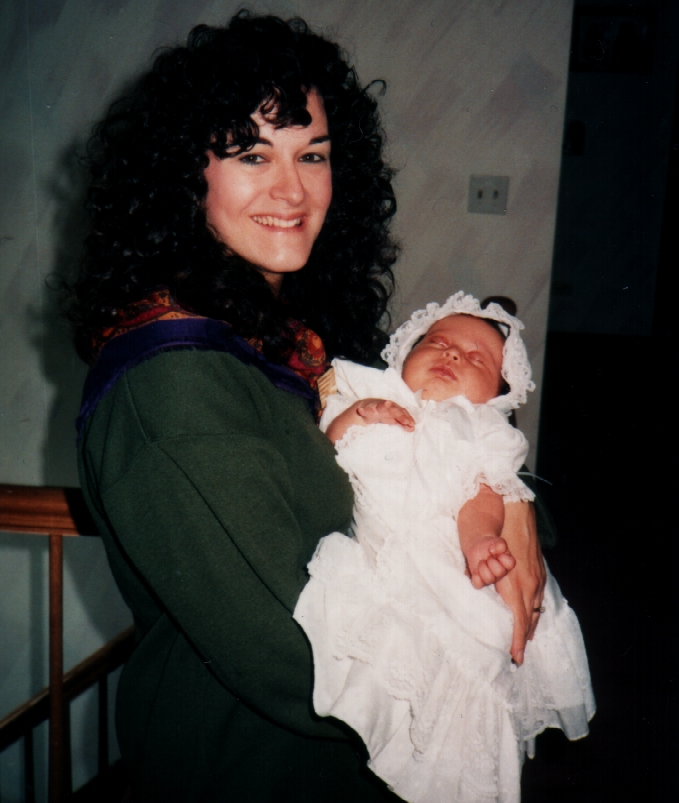
Wendi with daughter Paige at her baptism in 1994 after she lost her hearing.

When I realized the hearing in my left ear was getting a little strange, in early April 2008, I chalked it up to an illness.  It was that same kind of faint ‘hearing things from the bottom of a tunnel’ type of hearing that I get when I’m fighting a fever or virus of some kind.  I wasn’t sick but still assumed I was on the verge of something.  Well, I was … but I was on the verge of total, profound deafness, not a virus.

My husband scheduled an appointment with my otolaryngologist.  The day before my appointment, I woke up and realized I was completely deaf.  I could not hear anything.  My teenage children were leaving for school and I tried to keep it together until they left, but I was so scared.  I burst into tears in front of them, wailing to my husband, “I don’t want to be deaf!  I can’t believe I’ll never hear you guys talking to me again!”  I was completely hysterical.

Well, I gave in and let myself grieve.  It was only a few days before I realized I could only do so much crying and feeling sorry for myself.  I was still sad and scared, and I used my blog to express my feelings during this time.  But I also decided I had to move on and decide how I was going to live my life as a deaf woman.

My first concern was communicating with my family.  I had remarried in 2002 and my husband knew some sign language, so he began teaching signs to me and the kids.  We rented DVDs, bought books, and learned to fingerspell the alphabet.  We never did learn ASL but we learned enough signs to communicate and get the message across.  My speech reading skills kicked into high gear, and these really saved me.  My family was very, very patient – they made sure to face me, to speak at a rate that was easy for me to lip read, and would repeat words or fingerspell until I got it all.  They never said, “Oh never mind” or “It’s not important.”  They knew I wanted to be part of the conversation, important or not.

After a few big scares, my husband put up mirrors around my desk so I could see if someone was approaching from behind.  (It’s pretty terrifying to suddenly feel a hand on your shoulder when you aren’t expecting it!)  We ordered a free TTY from the state and got a flashing light for the phone.  I used online relay for phone calls as well.  I already had a bed shaker alarm clock and, of course, we were already using captions on the TV.  (My husband has a hearing loss as well so we both use these accommodations.)

I found out that I qualified for cochlear implants, and began the process of testing and insurance approval.  My hearing tests were easy; I sat in the soundproof booth, listening to nothing, until they opened the doors and said I was done.  I asked if I could get a cochlear implant in each ear at the same surgery.  Although it wasn’t done very often, they said it was no problem as long as my insurance approved it … which they did.  The whole process was quick:  I had my testing in May, my insurance approval in early June, and my simultaneous bilateral surgery was on July 22, 2008.

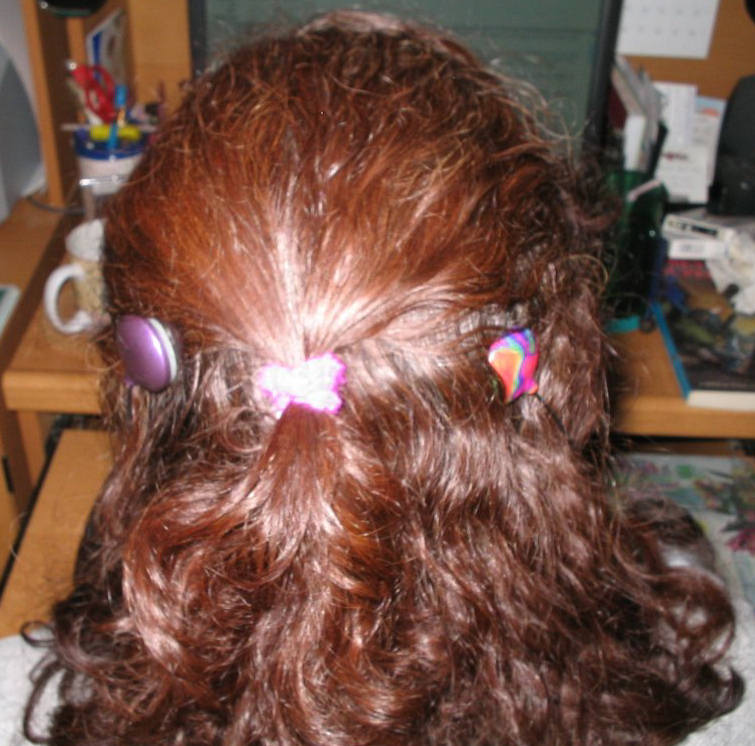
Wendi's cochlear implants from the back
Wendi’s cochlear implants from the back

On August 20, 2008, the hearing world came back to me.  The sounds that came into my brain that day were nothing like anything I’d ever heard before … but it was sound and I was speechless with delight.  If someone had told me back in 1993 that someday I would have little computers in my head, and I would hear sound again in an ear that hadn’t worked since before 1968, I would’ve just laughed.

As my brain learned how to hear with my new cochlear implants, my tinnitus faded away to nothing.  Every day, I asked my family to help me identify what I was hearing until finally I could identify sounds on my own.  With each mapping, things sounded more and more the way I remembered them.  I heard the voices of my husband and children, music, my cats meowing and my dog barking.  One day, as I was leaving the audiologist’s office, somebody asked me for directions.  They were behind me, and I heard them clearly without lip reading!

It’s been over five years now and I never, ever take what I hear for granted.  It’s been gratifying to know that I can deal with my deafness even if something happens to my CIs someday.  But every day that I wake up, put on my processors and hear the rush of sounds once again, I am thankful, amazed and humbled.