I can do anything I set my mind to! OK, not really…

Trying to come up with a topic for this post, I started with, “ How many woodchucks could chuck wood, if a woodchuck could chuck wood?”

Then I started doing some research. Woodchucks are also known as groundhogs. I do not think in all my years of repeating this silly little tongue-twister, I ever pictured a groundhog. My mental image was more of a beaver or large, strong rodent that could, erm… chuck wood.

Then there is the problem of “chucking”. As in, tossing? It isn’t chuckling. Maybe heaving and vomiting? I ended up with so many questions and rabbit trails to research, I decided to simplify. Woodchucks (erm, groundhogs) do not chuck wood. Sorry to burst your bubble. I’m sure they can do many, MANY things, including determining how many weeks of winter is left, but they can’t chuck wood. I’m not gonna tell a woodchuck she can do something when she can’t.

Those who advocate, support, befriend and serve the DisABILITY community, may enthusiastically encourage and remind us that we can do anything we’ve set our minds to do. In my opinion, this is not realistic, nor helpful. Frankly, even able-bodied people cannot do everything they set their minds to do. We are limited by our physical make up, genetics, and access to resources.

I much prefer encouraging people with disABILITY and chronic illness to identify what brings them happiness and peace, and then discover by what means they can achieve those goals and activities. I love to write, yet it is not at all easy for me to do now. I am grateful for access to electronic tools and apps that allow me to write even with low vision, but it is hard and it takes a lot for me to do so. I also love to read! Again, I am very grateful to be living in a time that books can be electronically delivered and a super large font used to read. Just because I can still write and read, doesn’t mean I SHOULD. For example, the energy it may take might leave me useless the rest of the day. I have to weigh how important it is for me to do something with a high cost.

I had another small stroke in May and in the weeks recovering from this, I was reminded that a person’s WILL and desire to accomplish something is not always enough. For example, I wanted to go get my mail last week. The mailbox is across the street. I have a cane and a walker, but 100 feet is 100 feet. Also, the curb cut adds about 50 feet to my trek. As I was super wobbly that day, the mailbox was not something I could accomplish even with accessibility tools. Last Monday, I determined I was steady enough on my feet to cross the busy one-way street and get the mail. I forgot my sunglasses! Completely blinded, I sat at the end of the driveway and texted my husband to come walk me back. Thankfully, he was working from home that day. I can’t really go get the mail anymore y’all! At least not safely.

So why do we tell people with disability or chronic illness that they can do anything?

Better to discover what those in your life with disability, want to do and hope to do and then help them discover how to accomplish it! I wouldn’t dream of guessing at the number of woodchucks that could chuck wood because…

… they can’t y’all.

I was talking to my psychiatrist this week and explained that those who love me are learning that it is hard for me to make plans because I never know what my energy levels will be. “They’ve learned I may text and tell them I can’t be picked up to go to a movie”. He asked, “So what is plan B?”

cRiCkEtS

“You need to connect, so if a movie is OUT, what is IN?”

Maybe I could have watched a movie on Netflix over zoom with that friend.

I’ve had friends ask to meet me for coffee. I can’t drive. You could pick me up though! I can’t talk on a voice phone. I text like a champ, however. So I’m learning to offer other options, though a plan B for the day is a new one I need to wrap my head around. Just don’t ask me to chuck wood.

L. Denise Portis, Ph.D.

“If you’re lost, we’re all a little lost and it’s alright”

I first heard Nightbirde’s song, “It’s OK” the night after her America’s Got Talent audition and subsequent Golden Buzzer by Simon Cowell. If you followed her story, she was unable to continue in the competition because of the cancer that ravaged her body. She passed away in February of 2022, just three weeks before my Mom died of ALS. Nightbirde, Jane Marczewski, left a lasting legacy, however. I hope you will check out her amazing life, music, and story at the link above or at Nightbirde.

I had chosen to let Hearing Elmo languish and sit unused on April 8, 2024. Mentally and emotionally immobilized by the adjustment of yet, one MORE progressive disability (vision loss), I had pretty much “tossed in the towel”. Because I am unable to teach now, I felt pretty much like I had no meaning and nothing to convey that would mean anything to anyone. Slowly, I recognized how lost I was in my thinking. Having lived with hearing loss and deafness, Ménière’s disease, MS, and now vision loss, I was unwilling to adapt and learn new ways to do something as simple as WRITE as it meant learning new technology and being kind to myself when writing took 5x longer than it used to create a blog post. I was struggling with mattering, a psychological construct defined by Flett as “a person’s need to feel significant in the eyes of other people” (Flett, 2018, p. 31). Busy (arguably TOO busy) being a teacher, advisor, mentor, disability advocate, and speaker, I found that pouring myself into others with chronic illness and disability was rewarding and fulfilling. Prilleltensky (2020) explained that mattering was more than being of value to others; that it was also GIVING value to others. Once a stroke and glaucoma impacted my vision to the point that it was a disabling condition, I felt like my purpose and ability to MATTER to others was gone.

It took a great deal of introspection, therapeutic counseling, praying and self-determination to discover that it was enough to “matter” to me; that I could see the value of my life… past, present, and future. I have to be honest and admit I hit an ALL TIME LOW before discovering this. I clawed and fought my way back out of the hole I threw myself into by seeing and believing I mattered to myself. I am still learning that this is ENOUGH.

Are You Lost?

If you are a person with disability or chronic illness/conditions, you may feel lost. It really IS ok, for we all are a little lost sometimes! I love what Rick Warren (2012) said about experience in his book, A Purpose Driven Life. Experience is not what happens to you but rather what you do with what happens to you. Choose not to stay lost. Warren goes on to encourage us to use the pain of our loss, our disability, our chronic and perhaps debilitating condition, to help others (Warren, 2012).

A quick search using generative AI, I found a great list of ideas if you are stuck at being “lost”. Please comment and share other ways in which you have MATTERED.

  1. Volunteering
  2. Advocacy and Leadership
  3. Employment and Skill Sharing
  4. Creative and Artistic Expression
  5. Contributing to Faith (or other non-profit) communities

Flett, G. (2018). The psychology of mattering: Understanding the human need to be significant. Elsivier Inc., Academic Press. https://doi.org/10.1016/B978-0-12-809415-0.00003-7

Prilleltensky, I. (2020). Mattering at the intersection of psychology, philosophy, and politics. American Journal of Community Psychology, 65(1–2), 16–34. https://doi.org/10.1002/ajcp.12368

Warren, R. ( 2012). The purpose driven life: What on Earth am I here for? Zondervan.

L. Denise Portis, Ph.D.

©2025 Personal Hearing Loss Journal

DisAbility Etiquette (part ONE)

DisAbility Etiquette (Part ONE)

You cannot know how long I struggled with what to TITLE this piece! Having recently left a nearly 3-decades-long career in teaching (Psychology and ASL), I know how preoccupied folks are with being “inclusive” and equitable. Some even fully embrace being <GASP> WOKE. Folks who do not identify with any marginalized person group have shared with me (at least in the field of education and higher learning) that workshops, required certifications, and mandatory inclusive components more and more feel like “hoops to jump through”. 

I can tell you that as a person with disabilities, the last thing I want abled people to feel about inclusive practices is relief at having a checkmark on their HR records. I love the way Emily Ladau (2021) simplifies best practices with an easy to incorporate “rule” in interacting with those who are differently-abled. “The Golden Rule” is simple and easy to live out with true authenticity. Treat others in the same way you would want to be treated. “You don’t need to start overthinking everything you say or do. That just makes things weird. Disability etiquette isn’t about tiptoeing around us and treating us like strange, delicate flowers (in fact, that’s pretty ableist in and of itself.) It’s about treating us like full and equal human beings” (Ladau, 2021, p. 89). 

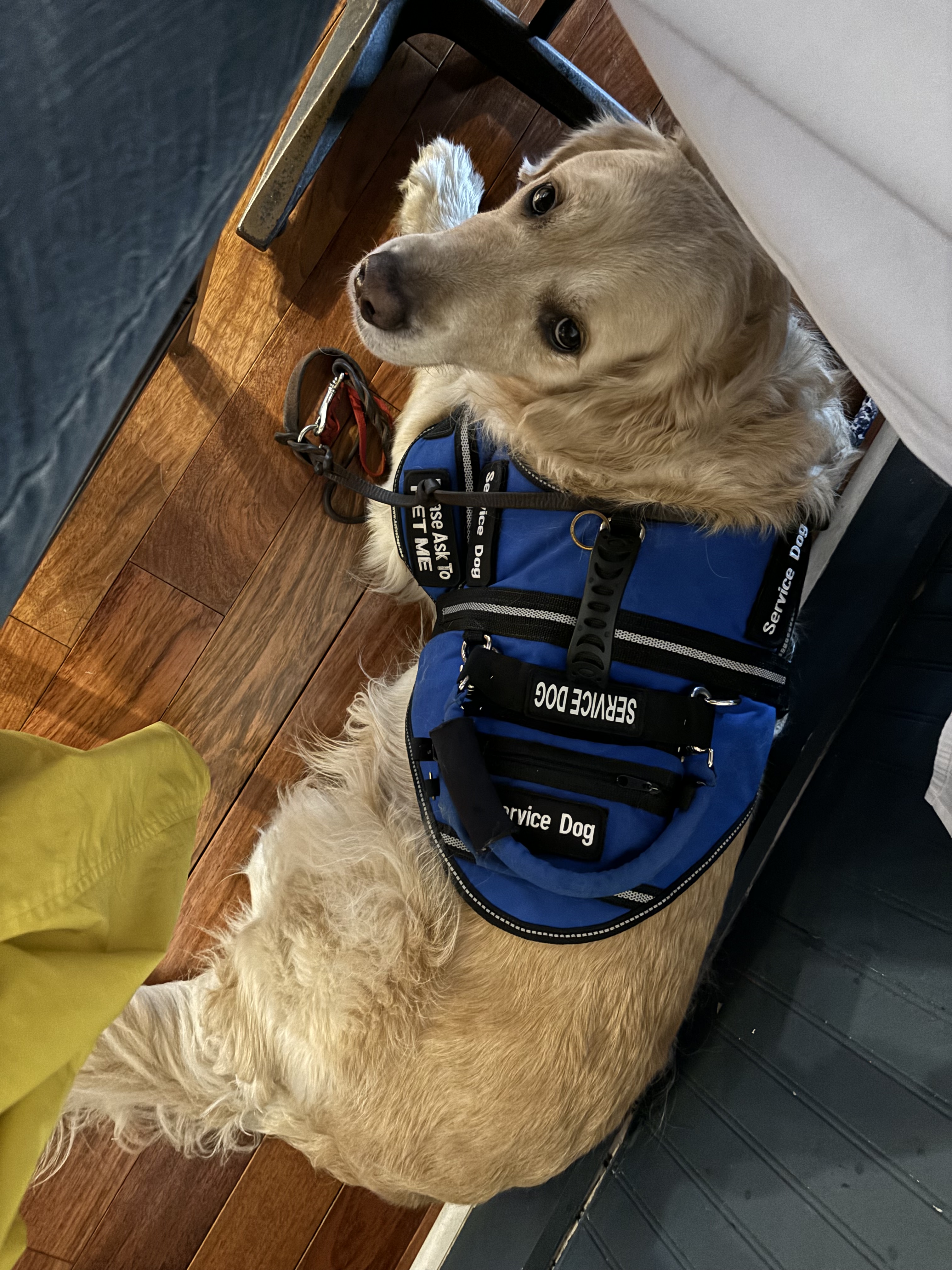
I truly believe (most) people mean well. Sometimes well-meaning intentions go awry, however. Yesterday, my husband and I went out to eat at a restaurant. My husband knows not to linger and hover over me as my service dog, Finn, gets me from “point A” to “point B” safely. Besides, he needed to make a “pit stop” so I walked out alone. As I navigated the last section near the door, I passed a booth with a family who had young children in it. Having lived the majority of my life with profound hearing loss, I do speech read fairly well. I saw one of the dads say to those at the table, “there’s a dog coming with a disabled person… don’t look, don’t stare, DON’T STARE”. Two of the three children (with age-appropriate ability to fully comply), dived under the table with one screeching, “I’m not looking at the dog! I’m not looking at the woman!” 

I tell you what, I was so cracked up I had to stop and lean against my cane for a second before giggling my way to the door. As I passed the booth one dad was doing a classic “face palm” while the other mouthed, “SORRY” as I hobbled by. When I got outside, I had to do a “cane lean” again as I seriously nearly fell over laughing. Those dads didn’t need to warn the kids about my coming by. Finn is gorgeous, smart, and talented. I don’t mind the “look at the dog!” comments. I know the dad’s comments were meant in respect, but please… just treat me like a normal person. I have bling on my cane, cochlear implant, and hearing aid. My dog is an 85-pound, solid Golden Retriever. I’m not invisible nor do I care to be. If someone says, “What a pretty dog” as I walk by, I simply smile and say, “Thank you! He’s amazing”. I don’t consider noticing something that is VERY noticeable as being rude.

Photo description: Large Golden Retriever with royal blue service dog vest under a table at a restaurant. 

To close out this two-part series on “DisAbility Etiquette”, I wanted to share some do’s and don’ts of two disabilities I have. [CHALLENGE: If you have other disabilities and would like to write for “Hearing Elmo” and share your own “do’s and don’ts” please contact me at denise.portis@gmail.com. I love having guest writers!]

In part two, I want to discuss some do’s and don’ts for people who use canes and service dogs for mobility challenges. In part one, I’d like to share some tips for interacting with people who have hearing loss. NOTE: I do “hear again” with a cochlear implant but these tips work for anyone with any degree of hearing loss, even those who are culturally Deaf.

DO:

  1. The Golden Rule (I won’t reiterate it again – smile)
  2. If you know someone has a hearing loss and you are hosting a workshop, meeting, or get-together, send an email or text to the person and ask what you could do to make the venue more accessible.
  3. Follow-up (especially work-related) meetings with an email to ask if they have any questions or missed any topics. (Careful with this one… don’t be condescending).
  4. If possible, secure captioning (transcription) for the meeting. Transcripts can be emailed to EVERYONE which only helps all present.
  5. Avoid small group activities where everyone is talking in small groups at the same time.
  6. If a person uses ASL, please provide an interpreter.
  7. Flicker the lights to bring the meeting to order. Yelling or wildly gesturing is rude.
  8. If there is a microphone present, USE IT. Don’t say, “my voice carries” or “I think everyone can hear me”. 
  9. Insist others use a microphone from the audience, or repeat any questions asked. 
  10. Write out on a white board or include a slide in a presentation if you are going to do any type of ice-breaker question, detailing what is being asked of participants. 

DON’T

  1. Announce or otherwise bring attention to any one individual who may have trouble hearing.
  2. Raise your voice to a near shout. 
  3. Turn your back to the audience to point to or gesture towards a screen or whiteboard.
  4. Talk to the interpreter of a culturally Deaf person, instead of talking to the person themselves. 
  5. Play music or “theme songs” in between speakers.
  6. Use videos without captioning turned on
  7. Talk at the same time someone else is.
  8. Over enunciate speech
  9. Chew gum or have other items in your mouth when speaking.
  10. Hesitate to ask the person with disabilities if you are not sure how to proceed.

Ladau, E. (2021). Demystifying disability: What to know, what to say, and how to be an ally. New York: Ten Speed Press

L. Denise Portis, Ph.D.

© 2023 Personal Hearing Loss Journal

What if… ?

My husband teases me because my favorite movie genre is apocalyptic themes. My favorite book as a kid was “The Long Winter” in the Little House series because the circumstance and outlook was so dire! I’m a pessimist and very, VERY hard on myself. Even though I’m 57 and had decades of practice of “doom, despair, and agony on me” (let’s see if any of you catch that reference jingle), I have learned to change my “what if…” inner dialogue to promote happiness and health.

Persons with disability often worry, fret and are anxious about many “what if” scenarios. Things like:

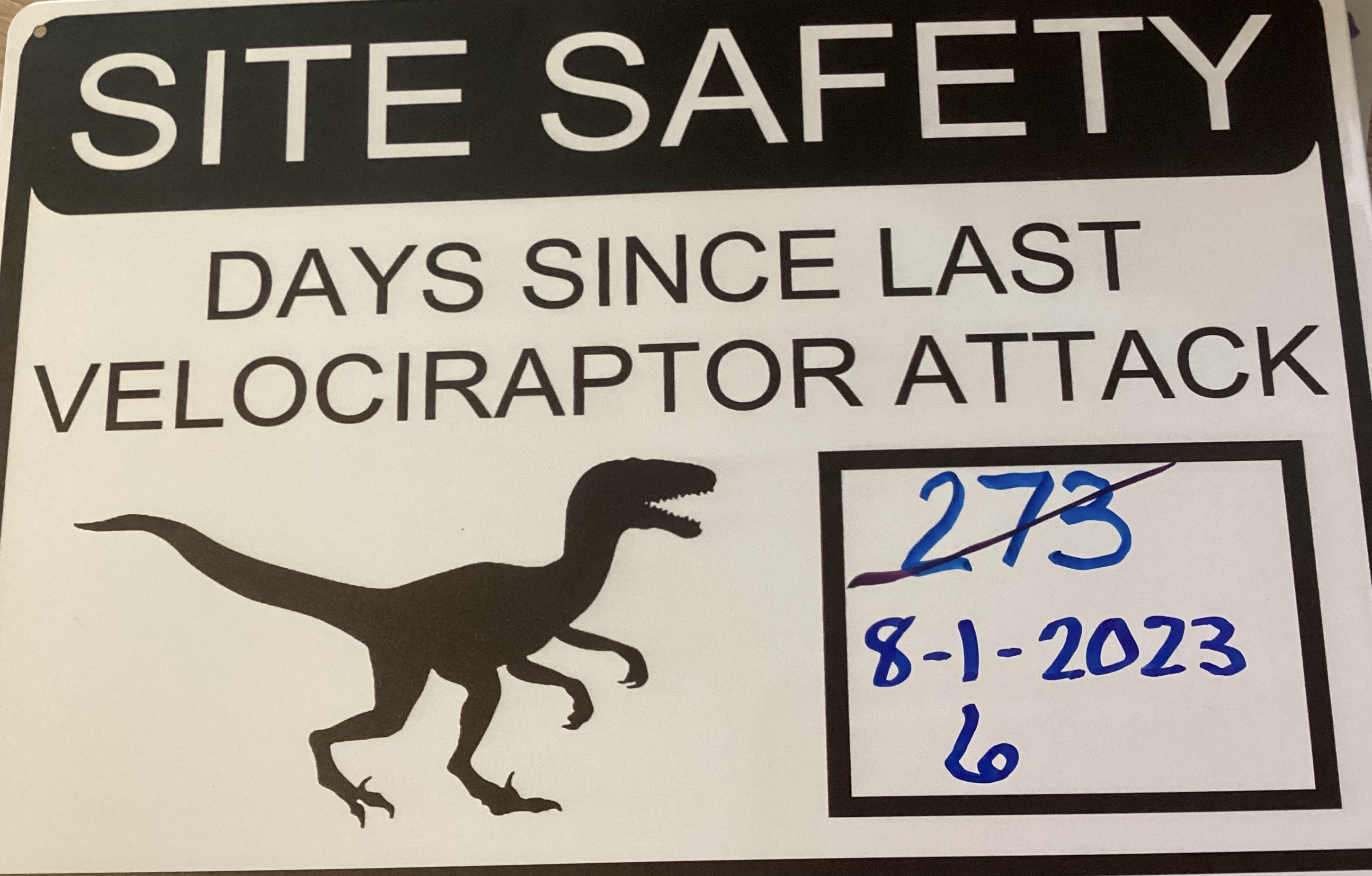
What if I suffer another concussion? (I was so aggravated at myself to have to update my sign a week ago):

What if I become legally blind?

What if I have to have my cochlear implant removed to get an MRI and accurate MS diagnosis?

What if I get ALS like my Mother?

What if… ?

I mean seriously it could go on and on! I’m grateful my interests and subsequent training and education meant I pursued psychology. Yes, yes, occasionally I grieve being rejected by Hogwarts, but psychology likely saved me! Seriously! I use snippets of cognitive behavioral therapy (CBT) every SINGLE DAY! I know that I’m prone to cathastrophizing my life. I know this bad habit is detrimental to my emotion self and mental health. It also takes a toll on my physical health.

When I find myself perseverating on negative “what if’s…?” I have to deliberately pause and choose to say the opposite.

What if I go another year without any new concussions? I’m taking great pains to walk safely, work around the house safely, etc. That last concussion may have been my last!

What if the meds I am taking save my eyesight?

What if the MRI (after surgical removal of my CI magnet) shows a definitive MS diagnosis? Then I can find proper treatment!

What if I live as long as my Mom did (78) and die from “old age” and not ALS?

In CBT, you have to start with your thinker. If you can change your thinker, it will aid in changing your feeler (heart) and in turn change your behavior (anxious thoughts, depression, self-harm, etc.) Change your THINKER to change your FEELER to change your BEHAVIOR.

So there isn’t anything wrong with “what if…?” thinking. Just make sure most of your “what if’s…?” are positive thoughts and affirmations. It’s hard enough being a person with disabilities and invisible or chronic illness. Don’t become your own worse enemy. Cue the music and summon your Mission: Impossible chi and see if this CBT tool can at the very least improve your mental health and personal regard.

L. Denise Portis, Ph.D.

© 2023 Personal Hearing Loss Journal

You can do ANYTHING!  Well… MOST THINGS!

I anticipate that what I write this week will upset some folks who live with disABILITY or chronic conditions. If you would, “hear me out” until the end of the post. If you still disagree, I can easily “agree to disagree” and even concede that the power of optimism is often the key to overcoming real obstacles.

My main point? Do not tell a person with disABILITY that: YOU CAN DO ANYTHING!

This standard platform statement is normally accompanied by volume and higher pitch, with a pom-pom smacked to the face of anyone not paying attention. Educators like myself sometimes misuse this encouraging statement. Administrators may assume the statement is standard for any mandatory attendance meeting, certain to help liberate the doubtful and unify the group, lighting them on fire with enthusiasm. 

Last semester I sat and cried with a student having to drop my class. Like me, she is a TBI survivor. Her dream job was to work in a big hospital and oversee support groups for individuals and families who are experiencing life with traumatic brain injury. She wants the “shingle”, the Ph.D., the training to really make a difference. I believe she will reach her goal. She will reach her goal after a longer road than most. There will be setbacks. There will be obstacles. I shared with her that it took me 16 years and a lot of outright stubbornness to finish school. Accommodations made the attempt more equitable but honestly, I shared, “it took not giving up and recognizing my pathway to goal was a longer one”. 

I have had short-term mentors tell me YOU CAN DO ANYTHING! (My long-term mentors had a more realistic approach). However, pom-poms, enthusiasm, and genuine hopefulness will never:

… allow me to hear normally.

… walk without a limp.

… have vertigo-free days.

… help me be as sharp at the end of the day as I am at the first.

… keep me from needing more sleep than others.

… prevent me from ever falling again.

… alleviate my communication challenges.

… prevent me from feeling isolated and left out occasionally.

… stop the loss of vision in my right eye brought about by 11 concussions.

… interrupt every single panic attack.

… defeat persistent depressive disorder.

… keep me from missing my Mom, the primary REALIST in my life.

Frankly, there are some things I CANNOT do. Any successes or “wins” are the result of stubborn persistence. Any recognitions or awards are from finding a different way to accomplish the same tasks. Many “end results” were not something originally targeted. There are things I CANNOT do and tasks I will NEVER be able to do. Instead, I have learned to set my sights on something obtainable. I have learned to align my goals with things that are possible. I have even learned to dream and “pin my hopes on” goals that are doable for even one such as I. In the end, most of us aspire to make a difference. If you find yourself looking around at the place your training, hard work, and experience have landed you thinking, “Well gee. This was a major detour but gosh darn it! I’m happy and I’m making a difference!” 

Perhaps the big DIFFERENCE we make was something outside our imagination originally. Reality redirected our purpose with an unexpected detour. Yet here you are, thriving…influencing… and KILLIN’ IT! Having a sense of real purpose looks good on EVERYONE. 

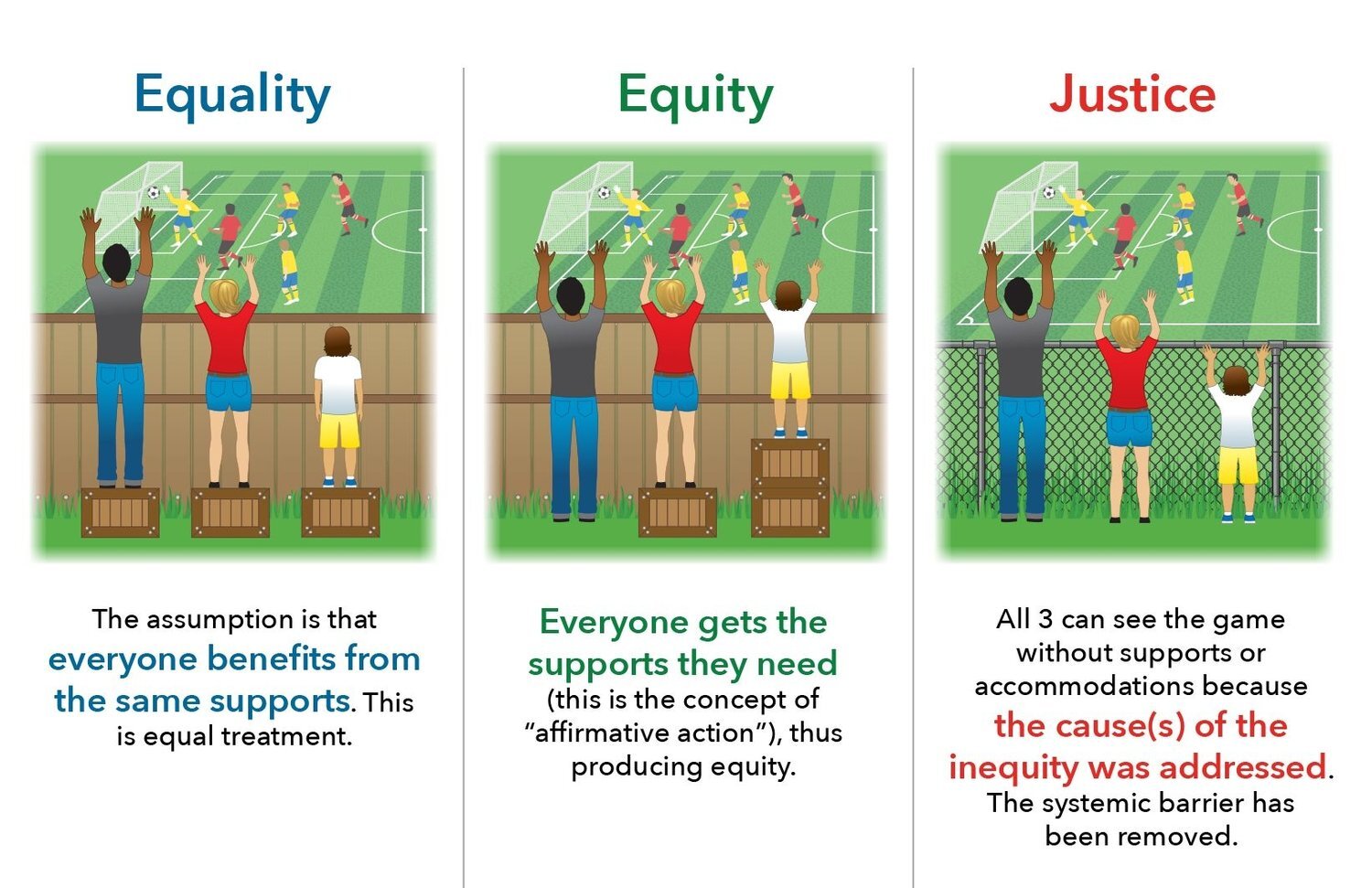
I have talked with students and colleagues hesitant to ask for some extra time or an equitable accommodation because they fear being judged that their performance is only possible through props others do not need. Y’all? There is a heck of a lot of difference between equitable accommodations and “hand holding”. This photo says it all:

I received an email from a follower of Hearing Elmo around Christmas. They are on disability, with limited transportation and even more limited opportunities. They shared that at times they are discouraged because they feel limited in what they can do. But folks? The opportunities this reader has are golden, the lives they touch are valuable. They consider their purpose and mission to advocate, educate, and touch just one life at a time. They support and encourage LGBTQ+ young adults with disability and act as a sounding board, a shoulder to cry on, and are a stout champion to a truly marginalized group. 

Are you an abled administrator, director, co-worker, or friend? I encourage you to use realistic encouragement and language as you lovingly support the folks in your life who have special challenges to overcome. Having YOU helps them overcome. Be careful not to balk at a seemingly unrealistic goal. If people with disability are anything y’all, they are realists! If you are blessed with an invitation to chart a path alongside someone who is determined, then LISTEN, research, encourage, and advocate on their behalf. 

A well-meaning friend and I had our behinds parked on a bench on campus catching up with each other. Some geese flew overhead, flying in a perfect “V” and heading South for the winter. My friend said, “Wow, what a racket!”

I grinned at her and said, “Well I don’t hear anything!”

Abashed, she said, “Well at least you can see them, right?”

I said, “Sure! And I do LISTEN with my EYES sometimes!”

However, unless a big ol’ goose comes waddling up to my side and honks right in the direction of my cochlear implant, I’m not gonna hear it’s unique sound y’all. This doesn’t mean that I do not have a purpose since I cannot hear a goose honk from high above while flying in formation. My disAbilities make me uniquely qualified and effective to make a difference in the lives of those in Denise Portis’ sphere of influence. Y’all have a sphere too. Manage it. Own it. Thrive. Because all of us are pretty…

FABULOUS.

L. Denise Portis, Ph.D.

2023 Hearing Loss Journal

Happy Trails to You

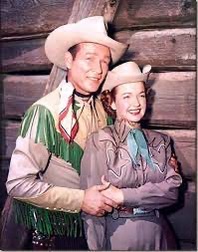
Dale Evans and Roy Rogers

After someone you love dies, you may discover some things about the person that you didn’t know. My Mom loved to sing. Because her generation (the “Silent Generation” 1928-1945) was different than mine (“Generation X” 1965-1980), the songs she would sing at breakfast (a normal occurrence) and in the evening were oldies. Breakfast was usually “Mockingbird Hill” (When the sun in the morning, peeks over the hill…).

When Mom was diagnosed in July of 2021, my siblings and I began to hear from her former students on FaceBook. As the ALS progressed and began to take away basic functions, we would read to her what her former students were saying. It was all good and brought many smiles and happy tears. While she could still talk, she would relay some story about the student that posted and it was as if she took us by the hand and walked us back to her teaching days. Mom was defined by what she did, a teacher. It was her real joy and privilege to teach for over thirty years.

One recurring theme from former students was that she would sing the first few stanzas of “Happy Trails” as they left class at the bell. Though knowing this song was a favored one, we were still shocked to learn she sang in public too!

I have been teaching now for 28 years. I have taught middle school, high school, and college-aged students. Having heard from so many of Mom’s former students since her diagnosis and subsequent death, it got me to ponderin’ — “what would my students have to say about me?” “Would they even remember me?” (Mom had been retired for 16 years at her passing).

Yesterday was the first in-person convocation we have had at Anne Arundel Community College since 2019. A recurring theme of the various administrators was to remember that the smallest things could make a difference. Even a taped message from the incoming SGA (Student Government Association) president reminded us that the “small things matter”.

I am a big believer in the difference “small things” make. For you see? It has been small things each and every day that have encouraged me to continue hiking that trail. My trail is not always happy, but it is a scenic and worthwhile hike.

People with disAbilities often express their concern that they do not matter anymore. Or perhaps they feel that with their disability, they can no longer make a difference. Many of you already know these things about me, but let me summarize some of my own challenges:

  1. Late-deafened (25 years on)
  2. Post Concussive syndrome (TBI as a kiddo and 11 concussions since)
  3. Meniere’s disease
  4. Vestibular disorder
  5. Mental health diagnoses (Panic Disorder and PDD)
  6. 65% blind in my right eye (concussions)

If I had a dollar for every time I considered giving up, I could retire now! I’m no super hero. I’m not anything special. What I am is persistent and determined. Stubbornly resolved to connect at least one time each day with someone who needs encouraged, loved, high-5’d, heard, or acknowledged. Notice that none of these things require being an abled person! I know that many of my readers are people with disability or chronic illness. MANY have expressed to me the dismay they feel in being disabled, by NOT being able to make a difference. Their physical or mental health diagnoses have meant they have learned coping skills or learned a new way to do things. However, many still FEEL disabled because they feel as if these diagnoses take away opportunities for them to MATTER.

My friends? Please do not ever discount the difference it makes for you to be kind to the cashier at the grocery store. Smiling and saying a kind thing or two to the delivery person may completely turn their day around. Being kind and friendly to that young wait staff person can make a day that is crushing them seem not so burdensome. Send an encouraging email or message to someone you know is struggling. It can be life-changing for them. Make a phone call to someone you know who feels isolated. Take advantage of the way social media platforms “level the playing field” for those with disabilities through CONNECTING them with others. One small comment can make a difference.

I know this for a fact! I know because the

Deborah’s, Wendy’s, Kellie’s, Lisa’s, Candice’s, Sara’s, Stephanie’s, Kyersten’s, Felicia’s, Kimberly’s, and SO MANY more have taken 15 seconds to type me a message that encouraged me and rekindled my desire to keep on keepin’ on. I’m not saying it is EASY. For some, it may mean real “spoons” are used up (The Spoon Theory).

ALS is a horrible, terminal disease. My Mom suffered and died a terrible death. I’m still dealing with the fall out and likely will for the remainder of my own life. But do you know at the end, Mom could only roll her eyes, grin, and wink, but she did that as her hovering children did their best to love and care for her? She could speak some, but it was a real chore to understand, even with picture, word, and alphabet cards to assist while she could still point. Yes. There were days with tears and “why God?” conversations. Yet while DYING she continued to make a difference. These past 12 months cemented an already steadfast “heart beat” for me. NO MATTER WHAT, I can make a difference to someone. In my work as a suicide prevention and awareness advocate, one of my favorite sayings is “Your voice is your power”. Use it.

Choose to sing “Happy Trails” to someone upon departure. Choose to smile and say, “I truly hope you have a great day!” Sign to someone “happiness is a choice”. Send that email to a struggling soul, “I’m thinking of you today”. You have a purpose. It doesn’t matter how many disabilities or challenges you have. You still have the power to make a difference. This is your super power. Use it. It matters. Happy trails to you…

L. Denise Portis, Ph.D.

  1. Deb Marcus Tilevitz's avatar
  2. hearingelmo's avatar
  3. Janet McGettrick's avatar

    I love this article. You mentioned that you’re a former teacher. Have you retired?

  4. hearingelmo's avatar
  5. Laurie's avatar

    Did you know that the word ASSUME means an “ASS out of U (you) and ME? I really appreciate this…

L. Denise Portis, Ph.D.

2

Deaf Ears Hearing in the Middle of the Night

Deaf Ears Hearing in the Middle of the Night

I gasp and sit straight up in bed.

What is that noise? 

I grab both sides of my head and curl my fingers behind my ears.

……………………………..

No. My bionics are asleep in that little gray box.

What is that noise?

I clutch at my chest and listen closely, breathing in and breathing out.

…………………………….

My eyes leak; tears running down my face and soaking my nightshirt.

What is that noise?

A sob chokes at my throat and I gasp, fisting my hands under my chin.

…………………………….

I stretch, clutch and fumble for my phone, almost out of reach.

What is that noise?

No messages, no texts, I search in a panic, swiping through every screen.

…………………………….

I feel my faithful service dog flop his tail; fluffy, golden feather brushing my leg.

What is that noise?

I collapse back down on my waiting pillow, peering into the darkness.

…………………………….

My eyes adjust, I turn my head just so and find the florescent numbers on the clock.

What is that noise?

I cannot hear anything. I’m very deaf, truly, and completely in this moment.

…………………………….

What if… what if I woke to my mother’s goodbye?

Was THAT the noise?

My heart pounds, the tears leak, a tail flops against my side.

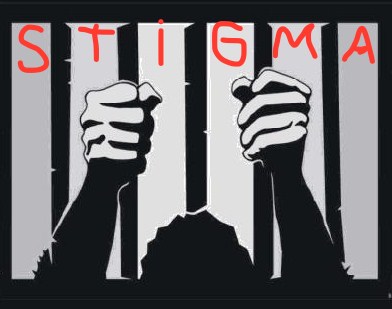
A Prisoner of STIGMA

Tonight (4/19/17) is the 2nd annual d.A.M.N. event (disABILITY Memoirs and Notes) at Anne Arundel Community College. I was asked to share my presentation on Hearing Elmo.

PowerPoint: https://app.box.com/s/qkdo19k20djznhlpeezo7js24ik5f0mn

Presentation:

My name is Denise Portis and I teach Psychology courses here at AACC.


Thank you for coming to our 2nd annual d.A.M.N. event.


Today I want to talk to you about being a prisoner of STIGMA. I have been a disABILITY advocate for 25 years. It was not very difficult for me to reveal hearing loss and Meniere’s disease. However, the disability that had the greatest impact on me was mental illness, and THAT I chose to hide from everyone outside my immediate family.


SLIDE 2


What is a stigma? A stigma has SHAME attached to it. One source defines it as a mark of disgrace associated with a particular circumstance. If anything is well known for having a stigma associated with it, it is mental illness. I didn’t want my friends to know, my co-workers to know, my parents or siblings to know, or even my children to know until they were much older. I had become a prisoner of the stigma attached to mental illness without ever going to trial. Yet, I was as incarcerated as any person charged and tried.


SLIDE 3


I have struggled with depression and anxiety most of my adult life. I tried to hide it and even get help for it quietly, being careful not to reveal my diagnosis to anyone but those closest to me. I had heard that publicly owning it would follow me in my medical records. People would think I was unstable, unreliable, and needy. I had heard a number of accusatory and negative comments once I began choosing who I would disclose this to. I’m still surprised I didn’t allow early comments to zip my lips and go back into my jail cell, remaining a prisoner to the stigma. However, I began to experience real freedom in acknowledging what was wrong with me. That acknowledgment changed the wrong to right. For the first time I was able to understand what my diagnosis were. Mental illness is an illness. It isn’t chosen, it can be treated, and a victorious life could be mine, So I began to tell EVERYONE. It became a very real part of how I chose to be an advocate. For me, transparency worked.


SLIDE 4


And yet, throughout my determination to live free, I saw people who were given a death sentence because of their mental illness. Amy is one of my heroes. If you’ve heard of Project Semicolon, you’ve heard of the movement she began. Amy said about Project Semicolon, “In literature an author uses a semicolon to NOT end a sentence but to continue on. We see it as you are the author and your life is the sentence. You’re choosing to keep going”. Amy took her own life last month.


SLIDE 5


Luis Montalvan came to speak at AACC in 2015. Many of us in the SODA club even had our picture taken with him. Luis was a national and renowned speaker about PTSD and travelled with his service dog, Tuesday. Luis took his own life in December.


These two individuals were very open about their mental health disorders. Being open made a difference. Both actually found doors of opportunity available to them because of their openness. I have to tell you when I first heard about both of their deaths, I cried. I shed tears because I know what it is like to get really tired of facing a new day with mental illness. It is hard. Even though I have chosen to surround myself with people who accept me exactly as I am, even though I am open and honest about my disabilities and refuse to be a prisoner of stigma, I totally GET what it feels like to WANT to give up.


Are Amy and Luis cowards? Do I have something they do not? No, and NO. Their lives and their deaths simply act as a reminder to all of us that mental illness is HARD. The way I combat the hopelessness and the aloneness is by being open. I present my story and my choice simply as a way for you to examine if this will work for you. If stigma is crippling you and making you feel like a prisoner, you may want to consider a jailbreak.


SLIDE 6


Be vocal. Fight in the open. Insist on acceptance and understanding. You may not find it in your current group of friends and family. I’m not telling you that you should walk away from THEM. I am asking you to look for revealers. Look for people who do not shy away from the diagnosis, who have learned not to be ashamed nor captive to their illness. They are out there. They can be found.


SLIDE 7


At AACC the SODA club makes it easy. The group is committed to being assumption destroyers and helping to erase the stigma associated with all types of disabilities. Those that are visible and easily seen, and those that are invisible and are only known upon “reveal”. We call our group superheroes. Their super powers are different. Each have strengths and each work hard to make a difference in a superhero kind of way. If you are looking for a place to make a difference on campus and within your community, we invite you to be a part of SODA.


L. Denise Portis

© 2017 Personal Hearing Loss Journal

Pretzels Baby…

Snyder's of Hanover Pretzels commercial 2016
Snyder’s of Hanover Pretzels commercial 2016

We do not have the opportunity to watch much live television in my house. My husband and I tape our favorite shows and then watch them together the couple of nights a week we are both home in the evenings. It worked out this summer, that I did not have a class to teach during the first session of the summer semester. The timing is terrific since I completed my doctoral coursework, and have now started the dissertation. There is a great deal of reading and writing involved at the beginning, so not having a class to teach until 7/1 is a “plus”.

In spite of all the groundwork needed to start the dissertation right, I have had some down time as well. Trying to catch up on my HGTV favorites before I’m back to teaching, I have been surprised by new commercials as Terry nor I watch commercials. The new Synder’s of Hanover pretzel commercial is unique. Well… it’s kind of scary too, but I’ll get to that.

Laura Wernette is the new “smoky-voiced pitchwoman”. I think she’s just scary. She has this intense, no-nonsense stare that reminds me of a grown-up Wednesday Addams.

Christina Ricci in Addams Family Values

I think what bothers me about the commercial (besides the fact they are not captioned – ahem) is that the woman in the advertisement has a facial expression that says one thing (I want to kill and maim you) while her voice is saying another (Synder’s pretzels are the best). From things I have read, the advertisement is popular and folks think the pretzel woman is pretty funny. I cannot justify what I see in her face to what I hear coming out of her mouth. I spend far too long thinking about it, believe me! It made me think about all the times I misunderstand someone’s mood when I choose to only look at their face.

My poor husband has a perpetual eyebrow grimace.

IMG_2843 IMG_2835

Even when he is smiling and relaxed, his eyes seem almost angry-looking if one didn’t know him better. When he speaks, he has this laid-back, southern charm and friendliness that (in my opinion) doesn’t “jive” with his facial expression. I tease him about it all the time. (Aren’t I sweet?)

I think one of the things that is most difficult for someone new to hearing loss, is learning to look at the whole picture before jumping to conclusions. It can be hard to try to make sense of what you can actually hear, and match it up with what you think you are seeing on a person’s face or in their body language. (It’s impossible to do when you know and love someone who is fluent is the language of SARCASM, and the voice and pitch deliberately DO NOT match what is on the person’s face).

My best practice is to simply to ask for clarification when needed. If someone’s voice (as heard with my bionic ear, with some limitations on inflection, pitch, and tone) does not match up with what I see on the person’s face, I just ASK.

“Could you clarify for me what you are trying to say? You seem upset, but I don’t want to jump to conclusions”

“You seem really calm, but you practically growled that out to me. Is everything OK?”

I was at a residency this past March and the weather was beautiful. I spent every spare moment outside walking Milo (along with everyone else on break in between workshops). One afternoon, I stopped to answer some questions about Milo to a group of ladies I had been with in several workshops. I noticed the three women all scowling. I tried to pay attention to what they were saying, and occasionally they laughed as well. I had trouble concentrating on their WORDS because their faces were scowling – and looked angry. After a few minutes trying to figure out why their facial expressions were not matching what I was hearing, I realized the sun was in their eyes! With that epiphany, I quickly changed my body position with the comment… “Here. Let me move so the sun isn’t in y’all’s eyes”.

I could have silently freaked out wondering what in the world their problem was. It took me a few minutes, but I finally realized why I was having trouble understanding their mood when their faces were all sun-squinty angry. Small wonder that hearing loss is considered a communication disorder! Especially if you have an acquired hearing loss, learning to communicate without one of the major cues (hearing), can be difficult.

My proximity to Johns Hopkins University Hospital, allows me to mentor folks who are seeking cochlear implantation to restore hearing. One of the questions I am always asked during these meetings is, “What has been the hardest thing for YOU about acquiring hearing loss later in life?” I’m guessing the frequency of the question points to the desire most people have to see similarities in their own struggles. When I explain that having to ask for clarification was a necessary, but difficult thing to learn to do, the people I am meeting with seem so relieved. Some even say, “Oh gosh, it is so good to hear someone else say that! Does it ever get easier?”

It does. That always seems to give them some hope as well.

You are still going to have frustrating moments of confusion. I am 11 years post-op and I believe “hear again” with some level of confidence. I still make mistakes. I may misinterpret tone and intentions, or I may not catch that there has been a complete subject change in the conversation (something I’m rather famous for, if I do say so myself!). As with any acquired disability or life change, in time and with lots of practice, YOU WILL ADAPT. Part of that adaptation will be in recognizing that at times you are going to blow it, but it does not de-rail all the progress you’ve made to date. We can be extremely hard on ourselves! Everyone makes mistakes – even people without acquired disability or challenges.

Denise Portis

© 2016 Personal Hearing Loss Journal


Misinterpreting

Misinterpreting

I haven’t had a chance to talk about Chloe, my retired service dog, much lately. The sweet ol’ lady has been retired full-time since May 2015. Chloe has not had a good year. Being together 9 1/2 years, means she was pretty set in her ways as to being with Denise 24/7. So if you take a loyal, hard-working hound dog who has done the same thing for almost a decade, retire her, bring a new dog into the pack who is now Denise’s partner, move to a new house, and have only a few things to do around the house for hearing alerts, a dog can just go a little nuts… which is what Chloe has done. Chloe is on arthritis medicine, which helps her arthritis a great deal. Being able to get around more comfortably means she is looking for stuff to do around the house. Chloe has developed an anxiety disorder, which could be the result of a number of things including age. She obsesses over things she decides is her job and continues until collapse.

We moved into a wonderful, older home, with NO STEPS! I fall once a week now instead of 2-3 times a day. Even for our two older dogs, Chloe and family dog, Tyco, the fact that we have no stairs is a plus as well! Our older home makes noises that our other home did not. We have an older HVAC system, gas heat and stove, a wood-pellet stove, and older wood floors. Chloe, retired hearing dog, believes every new sound she hears now is her JOB. So she will stand over heating vents and guard because there are strange noises coming from them. (We have checked for critter invasion, had the home inspected, etc., and this is truly just mechanical noises. The other dogs ignore the sounds completely). Chloe will stand “working” until her legs shake and she collapses. We were having trouble getting her to eat. A major vet appointment that included blood-work, scans, and over-all senior check-up, revealed nothing that would make us worry that this is anything other than an anxiety disorder. Chloe is OCD. She misinterprets what she is hearing and together with her other keen senses (like smell), seeks out the origin of the strange sound and does a perfect hunting dog “point”,  standing guard until she collapses.

Chloe is on meds and is doing better. She still guards shadows and obsesses over household noises. We are making it a priority for her to get out of the house more and “do things for mom and dad”. My husband and I discuss hound dog a great deal. She really means a lot to both of us. We know and understand the difficult changes she has had to shoulder, but also understand that she is hearing things well (she is a DOG and was trained as a hearing assistance dog)… only Chloe is misinterpreting what she hears.

The sounds are not important – but Chloe is escalating the sounds as a priority.

The sounds are harmless – but Chloe considers some of them a threat.

The sounds are minor “blips on the radar” – but Chloe equates them with cardiac arrest.

Misinterpreting

Have you ever completely misunderstood what someone said or misunderstood the behavior of someone?

WHAT? You mean you always assume correctly? Ok. Well you can quit reading. The rest of you feel free to continue…

As a person with hearing loss, I often misunderstand what people say. I work hard to consider the context, facial expression, and body language of someone speaking and I still BLOW IT sometimes.

Someone can yawn and cover their mouth and I will completely lose track of what they were saying.

My cochlear implant can pick up some random, ambient noise and I will miss what someone said.

I’ve even stood in the sunshine with someone while they squinted and wrinkled their eyebrows at the bright light, and missed that they were being sarcastic about something because their face looked MEAN.

I use email a great deal. If I have my phone out, it is to TEXT, not to talk earlobe to earlobe with someone. Because I do a great deal of writing, when I am misunderstood or misinterpreted in an email, it really hurts. I work hard at making what I write sound like what I SAY. That’s why y’all have to muddle through my exclamations and grammatical errors that emphasize how I would SPEAK something. (So thanks for that – <wink>).

Basically in misinterpreting… there are two scenarios. Either WE are being misinterpreted, or we are the one over-reacting and obsessing over unimportant cues. So what’s a person to do?

  1. You are being misinterpreted.

If you are being constantly misinterpreted, is it your problem or their problem? Really the responsibility goes both ways. If you are constantly being misunderstood, however, take a good hard look at the who, what, when and where.

Who: Do the same people always misunderstand? Maybe they are extra sensitive. Maybe they haven’t learned to see past the obvious to what you really meant. Are you sarcastic? Do you know some people just don’t GET sarcasm? They don’t appreciate it, don’t use it, and are constantly hurt by it.

My husband, son, and daughter speak fluent sarcasm. As a person with hearing loss, I had come to count on what I SAW when communicating. I finally had to explain, “Look y’all! Give me a smirk, eye roll, or something! If you don’t, you are gonna get smacked up ‘side the head!” I just don’t connect with sarcasm.

What is being misunderstood? Is it a subject others are passionate about? Is it a subject that is highly debated? (Is it an election year? <groan>) Are you being clear?

When are you being misunderstood? Is everyone tired? Are you being misinterpreted when everyone is rushed? Late?

Where are you being misunderstood? A friend told me once that she has learned not to talk about serious things during happy hour at a local bar. <grin>

Figuring these things out can be helpful and allow you to determine how you can be misinterpreted LESS.

2. You misinterpret others.

Especially because one of my “differently-abled” quirks is hearing loss, if I misunderstand someone I become rude. Not rude-rude, but interrupting rude. I stop whomever is speaking and ask for clarification. I may say:

A) I’m sorry, could you repeat that?

B) Excuse me… I thought I heard you say…     …  could you repeat that part?

These “rude” but necessary interruptions help me misunderstand and misinterpret LESS. If I wait to ask for clarification I may forget (but stay mad), or the person themselves may forget what they said.

What about if you are angered or hurt by something that someone WROTE? I still ask for clarification. Maybe even though I am searching the context or doing my best to “read between the lines”, I’m still missing something. There is nothing wrong with responding (better done in a private manner and not in a public venue) and asking for clarification. I don’t know about you, but I’ve written things before that were taken wrong and it wasn’t until someone asked for clarification that I realized how harsh something I wrote seemed to the people who were reading it.

texting

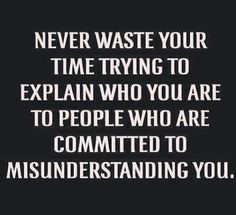
Sometimes? Sometimes people are just going to try really hard to misunderstand what you wrote too. It happens. I’ve learned to pick my battles. You cannot always expect someone to look for the best in you. Some folks look for the bad. Just drop it and go on.
being misunderstood

Change really isn’t hard

One of my offspring is a debater. The kid can argue the paint off a wall. It use to really bother me, but I never wanted to say “shut up, already”! I never wanted to act as if their opinion held no merit. I had to learn to LISTEN. Do you know my kid actually has a lot of really wonderful ideas, points, and opinions about the world? I drove him to lunch the other day and because we were each other’s “captive audience”, I got him all to myself for 20 minutes. My kid is more informed about politics than I am. If I LISTEN I have discovered he has a lot to say.

I use to misinterpret what he said all the time. I had to change. I couldn’t take sound bite snippets and judge him for being a ninny-hammer based on one comment. I had to learn to listen “in context” and wait until he had finished speaking before agreeing, or agreeing to disagree.

Some of you may be thinking… “why should *I* have to change the way I communicate?” Communication is the glue that holds all relationships together. No one communicates perfectly. We can all brush up on better communication skills.

Last week I was asking some questions about a video we watched and trying to get the students to “think like a scientist”. I saw a student grimace and shake their head. I stopped and said, “It’s fine if you don’t agree! I welcome everyone’s opinion and think it is important to express various views! Do you have another opinion about what we saw?”

They looked startled for a minute and sheepishly admitted, “No. I was making a face because someone farted”.

Oh.

You aren’t always going to understand perfectly. You are going to misunderstand facial expressions and other nonverbal cues. You, yourself, are going to contradict what you are saying by how you look or how you are saying it once in awhile.

My encouragement to all of us is simply to work harder. We can all learn to communicate clearly, hopefully creating less chance of being misunderstood. Communication matters because people matter. If you are a person with a disability or chronic illness, work hard at communicating your needs – and what you don’t need. It is much easier to “do your part” and then walk away in the face of persistent misunderstanding, than it is to share the blame for not having tried at all.

Denise Portis

© 2016 Personal Hearing Loss Journal