Embracing Freedom

Hearing Elmo welcomes Ruth Ilean Fox as guest writer for this week’s post. I was trying to remember the first time I met Ruth – most likely at a HLAA convention, but we’ve also touched base from time to time via email and now FaceBook. Ruth has always been an encouragement to me, so I was thrilled when she agreed to write for Hearing Elmo. Her reminders about embracing the freedoms we have is something we should all remember – and share.

Accommodations for disabilities equal freedom of functionality.  Yet how often, instead of embracing freedom, have we turned down accessibility options because of personal discomfort.

Everyone has challenges, some slight and some difficult, which hinder the achievement of a particular goal.  There are all sorts of tools and techniques that help to bridge these barriers to functionality.  Glasses help some vision impairments; hearing aids and cochlear implants assist some hearing losses; sign language and cued speech provide alternative communication; canes, Seeing Eye dogs provide guidance for those with limited or no sight; wheel chairs, walkers, and service dogs assist with mobility challenges.  Then there are ramps that provide building access, assistive listening devices that shorten the distance between the sound source and the listener; and captioned TV, phones, and movies enhance understanding.  This is just a tiny fraction of hundreds of forms of assistance that is available to people with challenges.  The list grows daily as new ideas are invented and accessibility laws are enforced.  Most of these things were not even in the dreams of inventors as recently as 30 years ago.  The ADA became law just over 20 years ago.  It is exciting time for people with disability; challenges are being turned from absolute barriers to varying degrees of freedom.

Usage – Not Access Provides Freedom

Access to accommodation alone doesn’t provide freedom; it has to be used.  Various situations cause people to reject available accommodations.  Many people are apprehensive of publicizing the presence of their impairments. It is possible that they don’t like the way the accommodations changes their “average person” appearance causing stares and comments from other people.  They may feel awkward with the use of an accommodation because it is new to them.  Their patience may be stressed because accommodations don’t always work the way they expect.

As a person with multi-disabilities, who doesn’t want to miss the fullness that life has to offer, I have had a lot of experience with “seeking freedom through accommodations”.    I have had the joy of watching the world develop from a time where you provide your own accommodations; develop your own accommodations; or patiently accept a significantly poorer participation in an activity where accommodations did not exist, to a world where accommodations are appearing in many places.   Accommodations are appearing as public services, insurance companies are slowly accepting accommodations as reasonable coverage options, the market place is overlapping accommodation needs with features for the average person, and manufacturers are making accommodations more attractive as well as improving their capabilities.

Still even with this greater access to accommodation, it sometimes takes nerves of steel to venture out in public the first time with a new accommodation.  My first accommodation experience was glasses at a time that “four eyes” was a favorite taunt of my eight year old peers.  I would leave them at home, losing the freedom of sight. A hearing aid was the next accommodation, with which I experienced much anxiety trying to hide it and my hearing loss, instead of embracing the new found freedom of hearing. I did a bit better with the cochlear implant, as the novelty of it was interesting to most people. Then crutches, a walker, a mobility scooter, and a wheelchair became necessary accommodations for me.  Each one of them caused extreme anxiety as I first used them in public.   Their use provided freedom of mobility, but my focus was on how different they made me and I was sure that everyone was staring at me and my disability.

Hiding and Denying a Disability Does Not Make it Go Away

The one thing I did learn from my youthful response to glasses was to be persistent.  Hiding and denying a disability never made it go away.   I have find that even if my heart double beats; my face turns red; and my hands shake and sweat, I was where I wanted to be in the community. The discomfort was fleeting and I relax in the knowledge that most people around me respond more to my smiles and communication, than all my paraphernalia.

My wish for everyone struggling with the effects of disability, regardless of its degree or kind, is to explore accommodations; patiently work through the initial anxiety; and embrace the freedom.

– Ruth Ilean Fox

Hypochondriasis

Aren’t I brave to post my “just out of surgery and anesthesia” picture? I look “high”, don’t I? (GRIN)

Many folks might be surprised that hypchondriasis is an actual psychological diagnosis. Perhaps it is because we misuse the word hypochondriac a great deal! We tease each other, making a big deal about stating we “may be coming down with something“; or, perhaps you know someone who complains about “something” being wrong with them ALL THE TIME. Something always hurts, or they have aches and spasms and feel “poorly”. In writing this, I can think of one or two people I know personally who are like this. I guess since I’m from the South, I mentally categorize them as WHINERS… although that isn’t a very good psychological label.

Hypochondriasis is misused a great deal, however. A whiner is not necessarily a hypochondriac. The diagnostic features of hypochondriasis includes: 1) a fear of having a serious disease based on a misinterpretation of one or more bodily signs or symptoms, 2) an unwarranted fear or idea of having a disease that persists despite medical advice and test results to the contrary, and 3) a preoccupation that greatly influences or impairs other behavior and the ability to function (DSM-IV, p. 462).

So we all know a whiner… but they are not really a hypochondriac. Sure we use this to tease – or discuss someone negatively behind their back. This person is comfortable verbalizing how they really feel… to anyone who will listen! However, the reality is they do not have hypochondriasis.

Invisible Illnesses and unwanted labels

Yup. We’ve established we all know whiners. Some of us work with these folks. Some of us love these folks. Some of us (gulp) are these folks!

However, in recent months a common theme has come up in many of the conversations I’ve had with people who have contacted me through Hearing Elmo. It seems a good number of folks with invisible illness or disability are often accused of being hypochondriacs. Not simply because the word is misused either. People around them honestly believe it is “all in their heads”.

I posted the picture I did for this post because shortly after sharing this picture when I first had my cochlear implant surgery, an individual (whom shall remain unnamed – grin) told me in response to my “how I’m doing” email that they thought it was terrible I had this surgery – permanently changing the way I hear, all because I was pretending I had a hearing loss. You see? This person knew me growing up. They knew me when I could hear. Approximately 4 or 5 months before my CI surgery we talked on the phone. They didn’t know that:

I was using a captioned phone and was READING what they were saying.

The phone was on speaker and my husband was enunciating words I did not understand.

I tell people when they ask me what motivated me to get a cochlear implant was I was TIRED OF FAKING IT. I had reached an all-time low and struggled to communicate despite my numerous coping mechanisms and communication strategies that I had in place. I was exhausted. I dreamed of being able to communicate orally with fewer difficulties.

I didn’t sound deaf (not having been totally without sound long enough to really develop a “deaf accent”).

I was still teaching and working.

I can’t really describe for you how these comments from this person affected me. I was – in a word – devastated. I couldn’t wrap my mind around why someone would seriously believe someone would pretend to not be able to hear, fake their way through all the tests, and undergo surgery that would enable them to hear – but electronically, all for attention or for “show”.

Many invisible illnesses can be difficult to diagnosis. Some test results for diseases like Lymes, may actually come back with false results. Many pain disorders, including fibromyalgia, are difficult to diagnosis. There are still medical practitioners that believe this diagnosis is “a crock” and it can be difficult to find a doctor who takes your symptomology seriously. It doesn’t help that many women are prone to these types of illnesses or disorders, as women are more likely to be accused of being “drama queens”, worriers, and hypochondriacs. The DSM-IV points out that hypchondriasis is equally common in males and in females (p. 464).

What can YOU do?

The problem with invisible illness or disability is that they ARE invisible. You cannot see the problem. People with invisible illness or disability also start to hide what is going on with their own body. Like myself, I actually faked being able to hear better than I actually could. Some may answer “how are you?” with “fine, how are you” out of habit. However some may respond that way out of FEAR to disclose the truth. Many choose to not even tell loved ones how severe symptoms may be that day because they believe their family members are tired of hearing it.

I checked in with a friend this week to let her know I was thinking of and praying for her. She responded to “how is the pain today?” with “pain is a constant friend”. You may not be honest with how you are doing because you believe others are tired of hearing about your “bad days”. Many choose not to disclose how they REALLY are doing as they fear derisive comments, exasperation, or disdain from those around them.

Do you know someone with an invisible illness or disability? If you ask them how they are – and you REALLY care about them – be a “safe” person for them to be truthful with when they respond! Have you blown it and shown your exasperation before? Do better. It’s not like your poor response has to be your normal response. Are you married to, or do you love someone who lives with an invisible illness or disability? It can be hard; but, wouldn’t you want them to love you and encourage you if the “shoe had been on the other foot?” – rather YOUR foot?

What is the Cost?

I believe that the reason many invisible illnesses and disabilities also have a co-morbid diagnosis of depression and even suicidal ideation, is because those around them do not believe them. They live with constant negative feedback when they do open up and honestly share how they are doing with others. Your disbelief can cause them to isolate themselves – dropping out of life. Your misinformed comments could cause them to start internalizing their feelings, making it difficult for them to trust anyone. Don’t be an – erm – DONKEY. One of the best things you can do for someone who lives with invisible illness or disability 24/7 is to simply BELIEVE them.

After I found people I could trust with how things were REALLY going? I was able to actually deal with my bad days in a more proactive way. Just knowing that someone believed me – empowered me. I couldn’t hear. I staggered because my world really DOES revolve all the time. That belief enabled me to refocus my energy in discovering ways to COPE.

Will you be that person to someone this week? Can you listen without skepticism and provide that assurance?

Denise Portis

© 2012 Personal Hearing Loss Journal

American Psychiatric Association. (2000). Diagnostic and statistical
manual of mental disorders
(4th ed., text rev.). Washington, DC: Author.

“You are Getting Sleepier…”

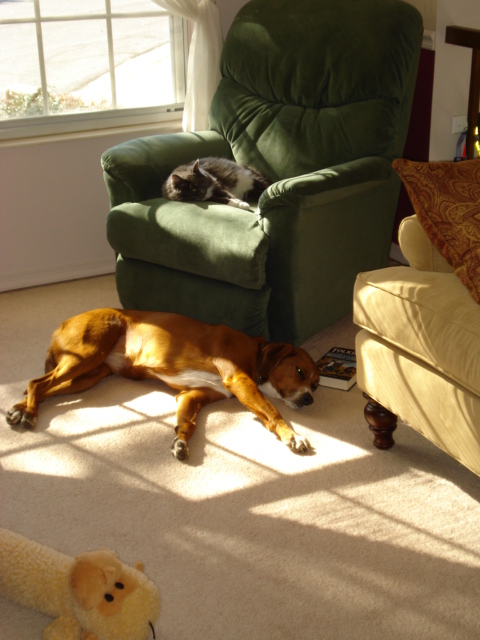
— Oh for a patch of sunshine and an afternoon nap…

“You are getting sleepier…”

I could have handled a little hypnotic suggestion this past Friday. Thursday morning before going to work, my hearing assistance dog did just what she was suppose to do – sort of. I had just placed my breakfast of bacon and eggs on the table when Chloe alerted me to the front door. I went to see who was there to find the UPS man and a delivery for my husband. I should have been suspicious. Chloe normally wags and flirts with whomever is at the door, but she disappeared while I made small talk with the UPS guy.

Meandering back into the kitchen I noticed all three dogs sitting in a row, Chloe closest to the table of course. My plate was empty. As a matter of fact, it had been licked so clean it appeared to have come straight from the dishwasher. I fussed, even though I knew it was my own fault. Well-trained assistance dog – yes. Still a dog? YES.

I could have predicted the outcome, but was sort of hoping if I kept my hypothesis to myself it may not prove to be true. But my sensitive-tummy service dog was sick as a – ERMDOG, by Thursday evening. As a matter of fact she was sick all night long. I was up every 90 minutes to 2 hours with her – for up to 30 minutes at a time. At 3:30 in the morning, I sent out an email to all my students cancelling classes. I was so tired I was hallucinating. Seriously. After taking Chloe out around 3:00 AM I was freaked out by the hundreds of mice running all over the yard – or so I thought since I was seeing things that weren’t there.

Being a person with disability, I require more sleep than an average adult anyway. It wasn’t until hound dog was feeling better Friday night that I finally got a solid nine hours of much needed sleep.

How Much Sleep Do You Need?

According to the National Sleep Foundation, average, healthy adults need 7-9 hours of sleep every night (National Sleep Foundation, 2011). While most of us very likely receive far less than that, the experts agree that this is the amount we should strive for every night. However, people who live with disability or invisible illness may actually require more. At the very least, these folks should make the 7-9 suggested hours a priority.

People with arthritis may need more sleep (Eustice, 2012), as do people with epilepsy (NYU Langone Medical Center, 2012). What can be frustrating, however, that for many living with invisible illness or disability, sleep disorders are often a co-morbid diagnosis. I know people with fibromyalgia, Lymes disease, and other chronic pain conditions that explain sleep is difficult to obtain. Your body may need extra sleep; however, because of the illness itself the person may have difficulty falling asleep or staying asleep.

Training along side of fellow clients at Fidos For Freedom, Inc., I have a new “family” of folks who have various disabilities and illnesses. Some have chronic pain conditions, some have MS, mobility issues, Parkinson’s, and hearing loss. Since getting to know them over the years, I have heard ALL of them explain they simply do not get enough sleep, or have trouble getting a full sleep cycle in each night. As a result, each have stories to tell of “things getting worse” and symptoms causing near accidents or actual falls, bumps, bruises, etc. I recall overhearing a conversation of one of the trainers talking to a newly matched client. They were falling more and having trouble with even cognitive functioning. The (wise) trainer asked them, “How much sleep are you getting?” The client explained that they were so excited about this new chapter in their life that they had trouble sleeping – night after night. They quickly surmised this may be increasing the severity of some of their disease’s symptoms. Sleep matters!

People with hearing loss may actually require more than the average 7-9 hours necessary for most adults. According to Healthy Hearing (2008), because our brain is actually more involved than our ears in communication, a tired brain can impair how well we hear. Even if we are “hearing again” with cochlear implant, BAHA, or hearing aids, sleep deprivation may impair our ability to communicate well and to maximize what we are able to hear.

People with hearing loss often forget how much harder they have to work to communicate effectively. As a result we actually tire out much faster than our normal hearing peers. If you must pay attention and concentrate wholly on a conversation to adequately understand and respond, your brain actually TIRES.

I also have Meniere’s disease, a vestibular and balance disorder. Because I have to pay attention to stepping up, stepping down, avoiding visual vertigo triggers such as ceiling fans, paying attention to my surroundings to avoid snags in carpet, etc., I actually “think my way safely” throughout each and every day. It can take a lot out of me to constantly remain on “high alert” to possible problems to avoid falls.

So Exactly How Do I get More Sleep?

There are NUMEROUS places online from which you can find information about how to get a better night’s rest. Some of these “tips” include:

1. Avoid caffeine 5-6 hours prior to when you plan to go to sleep.

2. Avoid complex carbohydrates such as breads, pasta, and sweets several hours before bed. Some experts suggest avoiding eating ANY large quantity of food before bed.

3. Avoid exercising within several hours of when you plan to go to bed.

4. Limit “light” – especially those created by many types of technology and electronics. Computers, iPads, televisions, etc., all may stimulate your brain activity and make it more difficult for you to sleep.

5. Worried? It can keep you awake. Try writing down things you need to get done the next day so you do not lay in bed worrying about remembering to do them. If you are worried about things you cannot control, try talking to someone. It doesn’t have to be a counselor – even a close friend or family member may work.

6. Try going to bed at the same time every night. Many stay up later on Friday or Saturday nights. This can actually disrupt our sleep schedule. Our bodies like routine – especially when it comes to sleep. Or, you may love sleeping in on Saturday morning. This too, can disrupt our sleep schedule. Try waking up and going to bed at the same time – no matter what day it is.

7. Many people sleep better in a dark, cool room. Do you need to purchase room darkening blinds? Maybe purchase a fan for just the bedroom?

8. Depending on who you read, opinions vary about whether or not taking an over the counter sleep aid like Tylenol PM or even Benedryl can be helpful. There are also medications specifically FOR sleep, though most warn they are not to be taken long-term. There is a new drug to hit the “over the counter” scene called “ZzzzQuil” believe it or not – made by NyQuil. It has been getting fairly positive reviews. Some may find they need a prescription sleep medication. Discuss with your doctors any risks associated with the prescription.

Do you think you are “getting by” on what sleep you are able to get? There are too many articles (written by medical experts) that show links to very serious, even life-threatening health problems for those who are chronically sleep deprived. Check out this great article by Dr. Stephanie Schupska at WebMD: Click here. “Not Enough Sleep: 7 Serious Health Risks”

Please feel free to comment and share how sleep deprivation has posed problems for you; or, ideas about how to get a better night’s rest!

Denise Portis

©2012 Personal Hearing Loss Journal

About.com Arthritis and Joint Conditions (2012). Arthritis patients need more Zzzzzz’s. Retrieved October 22, 2012 from http://arthritis.about.com/cs/betterliving/a/needmorezzzzzs.htm

Healthy Hearing (2008). Sleep your way to better hearing. Retrieved October 22, 2012 from http://www.healthyhearing.com/content/articles/Hearing-loss/Treatments/24201-Sleep-your-way-to

National Sleep Foundation. (2011). How much sleep do we really need? Retrieved October 22, 2012 from http://www.sleepfoundation.org/article/how-sleep-works/how-much-sleep-do-we-really-need

NYU Langone Medical Center. (2012). Sleep and Epilepsy. Retrieved October 22, 2012 from http://epilepsy.med.nyu.edu/living-with-epilepsy/epilepsy-and-lifestyle/sleep-and-epilepsy

The Road to Rescue

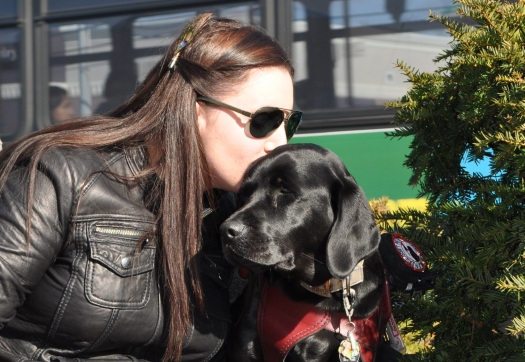
Hunter with service dog, Raven.

A young woman I have come to admire, Hunter Lia Zager, received her service dog from Fidos For Freedom, Inc. where I train with Chloe. Hunter has a rare and unusual disease that even leaves her doctors stumped at times. She desperately needs the funds to get her vehicle modified for accessibility. The state is helping with a big chunk, but she still needs to raise over $12,000 herself. Hunter is only 25 years old and currently relies on (often unreliable) public transportation to go to work, doctor appointments, and much more. Imagine being limited to your home many times, simply because you lack a vehicle that can carry wheelchair, service dog, etc. Minimum donations are only $1.00 and you can donate using PayPal, or debit or credit card. If you would do two things?
1) Share this need with others on your own BLOGS.
2) Consider donating – even SMALL amounts add up.

I know times are hard for many people. However, I want to help this courageous, wonderful young woman reach her goal so that she can have reliable, accessible transportation. Please help. Please share! Thank you!

TO DONATE

Hunter’s story:

My name is Hunter Lia and for the first time in never I’m asking for help. At 25 years old I am terminal, but I have never held my arms up and said I was willing to stop my fight. 5.5 years ago I became ill with a very rare neurological disease, Complex Regional Pain Syndrome (CRPS), the most excruciating disease known to modern medicine. The road has been hard, but I am so terribly blessed to have such wonderful people and a wonderful service dog in my life who have helped carry me through the toughest of times.

This disease has consumed my entire body and caused me to reach deep stage 4. CRPS didn’t stop there, it turned my body into melting pot of other diseases. It has paralyzed areas of my body such as my intestines, which are incapable of processing food (Gastroparesis), created a neuro-cardio disease, Postural Orthostatic Tachycardic Syndrome, a neuro-pulmonary disease, Respiratory Dystonia of the Chest Wall, Spinal Stenosis, and countless other conditions and diseases. It is also now believed that on top of all this, Multiple Sclerosis (MS) might be one of my latest additions. Having every aspect of your body fail you is a tremendous burden for one to carry, especially when you’re just 25. Most 25 year olds are able to go out at night, travel, make plans for the future…for me, just the thought of that takes up all my energy. I wear devices for low hearing and low vision, but outside of attempting to take my wheelchair and service dog everywhere, it’s difficult to make my life easier and manage with a disintegrating spine, excruciating pain, and countless other symptoms and challenges.

One reason I’ve struggled so much is that my vehicle is not accessible. I traded in a SUV for a minivan in the hopes I could outfit it to all my body’s needs. I never realized the costs would be over $45,000 to adapt the vehicle. I am getting state assistance, but the last 25% is my responsibility. With all the other medical expenses I’ve had to incur, I don’t have even a fraction of the money to pay the company responsible for outfitting the car. I need your help. I am trying to raise over $12,000 to make my vehicle accessible. If I could do this, I would no longer have to worry I wouldn’t be able to keep my job and health insurance due to transportation challenges, worry about not having a vehicle in an emergency, reach doctors and specialists, and really just live life to the fullest. I know this economy is difficult, but every penny will help me reach my goal. And if that’s too difficult, passing this on would mean the world to me. Thank you for taking a moment to ready my story.

TO DONATE

Invisible Illness Awareness Week

This week marks a very special week for me. I have been a part of Invisible Illness Awareness week for a number of years now. Sept. 10-16 is Invisible Illness Awareness Week.

There are a number of terrific speakers at this year’s virtual conference. You can check out the schedule here:  CLICK

Hearing loss and Meniere’s disease are both invisible. I have struggled both successfully and unsuccessfully through the years in living with these. Those who do so live with a fair amount of frustration and stresses simply because what they deal with IS INVISIBLE. For me, one of the most frustrating things is that my symptoms may vary. To some, this makes me lack credibility at times. For example, I “hear again” with a cochlear implant and BTE hearing aid. I may hear you just fine in a quiet environment and one-on-one. However, if my tinnitus is roaring or we are in a noisy environment, my primary response may be “Huh?“.

I walk, jog, and can even RUN (believe it or not) on sunny days. However, the weather is a real trigger for my own Meniere’s disease. I may be out-walking my assistance dog one day, and the next have her close and wobble like an intoxicated person. For those who do not understand that symptoms may vary, and may fluctuate, it may seem as if I can’t make up my mind as to whether or not I live with a disability.

I have friends who have Fibromyalgia, Lymes, Multiple sclerosis, chronic fatigue syndrome, and other various illness and disabilities. They will tell you that it can be frustrating, even emotionally debilitating, to have folks in their lives choose to scorn, disbelieve, or ignore their own invisible illnesses.

It takes courageous people to live with invisible illness. I hope you will go to IIA (CLICK HERE) and learn more about how you can get involved in helping to raise awareness in your own community. You may not live with invisible illness yourself, but all of us who live with it will tell you that our friends and family that support us are just as influential as we are ourselves – if not more so!

Denise Portis

© 2012 Personal Hearing Loss Journal

They May Not Get It

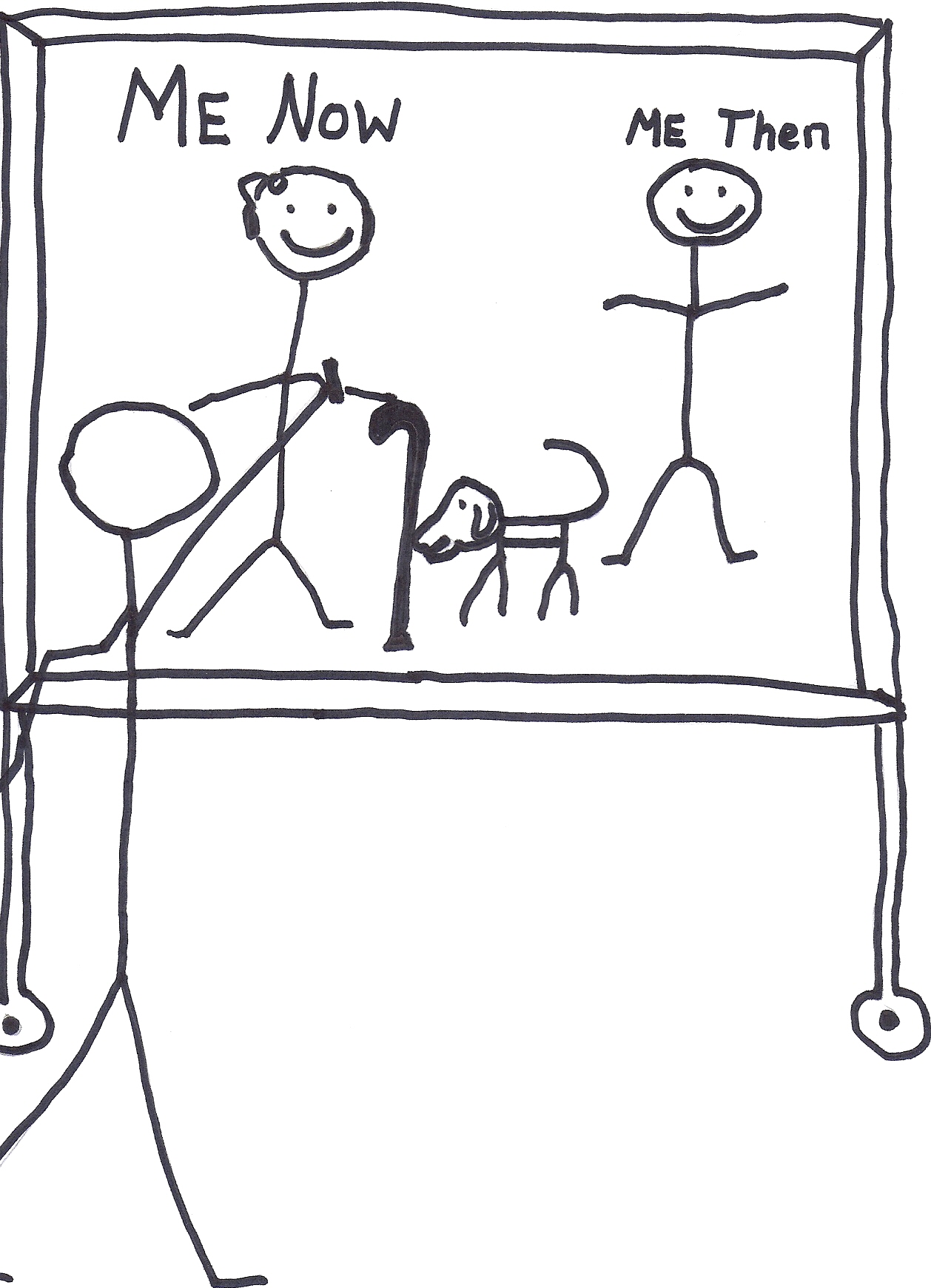
(Hey… I’m not an artist! But have you ever felt this way?)

One of the questions I am asked the most by folks who contact Hearing Elmo, is “Why doesn’t my family accept and understand who I am NOW?”

Before I even begin writing, let me express my hope that many of you will respond and share as I am very aware I do not have all the answers.

Why It Hurts

1. It hurts because the transition from “normal” to where you are was painful.

The school of hard knocks is – well – hard. Acquired disabilities and invisible/chronic illness are not easy to get use to when they first change a person. The journey from diagnosis to acceptance is a hard one. It hopefully has made us “better” and not “bitter”. I can attest to feeling stronger, more confident, and much more in tune with who I really am post-disability. Some of us have progressive symptoms and illnesses. We may adjust, only to have to do so again in a year or so. This too can grow us. But honey? It isn’t easy.

However, BECAUSE it was hard, it is hurtful when folks who knew us WHEN (back before our diagnosis), don’t accept or try to understand who we are NOW. We are still the same people. Our personalities have not changed. Our strengths and weaknesses are all still present – although you may have developed some new strengths because of your life path. So it is difficult when family members may sometimes be the hardest to teach how to talk to us now that we have a hearing loss. Or perhaps you are frustrated because a family reunion at a theme park is not ideal for you because you cannot ride any of the rides. Maybe you are utilizing a wheelchair, walker, or cane. A picnic and hike may not be a good way for you and your siblings to catch up – even if it has been a year since you’ve seen each other.

It’s not like we want recognition for the pain we’ve experienced. We aren’t looking for a medal. However, seeing any eye rolls or hearing frustrated sighs serve only to remind us our family

STILL

DOESN’T

GET

IT.

2. You expect your family members to care enough to accept you.

It’s not wedding vows. “In sickness and in health, for richer or for poorer…” But we have a reasonable expectation that our family members are going to love us and be there for us regardless. It doesn’t matter if we acquire a disability. We are still the same person. If Lymes disease has you aching and feverish a week out of every month, we expect compassion, not disdain. If CFS or MS has you weary, tired, and feeling as energetic as a centenarian, you expect understanding and maybe an offer to run an errand for you. If your eyesight is worsening due to various illness or disorders, you never expect frustrated outbursts when you explain you don’t have a ride to go to your nephew’s graduation.

But friends? Family members can need educating. Advocacy may begin at home. We wish it wasn’t necessary, but it may be very necessary. My kids grew up with me at best, hard-of-hearing. My husband, however, knew me before hearing loss. So I have to be willing to tell (nicely) him what works and what doesn’t. Don’t be surprised if it takes numerous lessons. Some heads are thicker than others.

What to Do

Talk to them. I’d elaborate, but honestly? You need to talk to them. Explain how you feel. Be willing to be vulnerable. Start with phrases that explain specifics and not general accusations. Example:

“When you sigh as I wobble into a shelf at the store it really hurts my feelings. I can’t help it when my world ‘twirls’. It’s hard enough to face the stares and hear the whispered remarks from strangers. I expect better from you. I expect your support.”

They May Never Get it

We can choose our friends, but we don’t choose our family. Blood is blood and it simply cannot be changed. However, you do not have to put up with people who ridicule you or try to injure you with words. You do not have to deliberately spend time with people who only make you feel worse. Sometimes? Sometimes those toxic people are family members. I hate it for you. I hate it for me. But it can be the painful truth.

Sometimes those friends that we choose? They become family. Maybe not by blood. Perhaps not by legal adoption. But folks who encourage us, lift us up, make us better people, understand, lend compassion and energy? They can become like family members. My heart’s desire is that you will find some folks like this if you haven’t already.

I welcome your thoughts on this. Knowing family members may grieve the person they once knew, or have trouble adjusting to the fact you are “differently abled” is important. Be patient. But also put healthy boundaries in place to keep unhealthy people from de-railing your progress with your own adjustments.

Denise Portis

© 2012 Personal Hearing Loss Journal

A Whispered Thank You

Praying Mantis calisthenics – photograph by Deborah Marcus (NC), friend and nature photographer

Not long ago while visiting in NC, I spent an afternoon with my friend, Deb, at the North Carolina Zoo. Deb takes pictures of life in nature; everything from plant life to animal life (and everything in between). She sees things that most folks miss and often stopped and pointed out things I would have just walked right by as my “notice-er” is out of practice. When Deb takes a picture she always whispers, “thank you”. When I first caught her doing it we were just thrilled and tickled that I was actually hearing her whisper of thanks! Cochlear implant sisters-in-arms, we always celebrate those moments.

However, since my visit I have given her habitual murmured thanks a lot more thought. When I tend to think on somethin’, I ponder, speculate, question, and soul-search. Eventually I write about it – even if it takes me almost 15 months to get around to it!

Like a Dangling Spider Cares?

I have to admit, when I first heard her thank a lily-pad, skimming dragonfly, I thought, “Umm. This critter does NOT care if she thanks it for the Kodak moment or not”. But it’s deeper than that. An attitude of gratitude and respect is cultivated. We certainly aren’t born with it. I remember teaching my toddlers “please” and “thank you”. Sure… some of that can be a learned behavior from appropriate modeled examples. Some folks are just naturally friendly and easy-going. Some walk around like a sour puss (I’ll not mention any names) and thanks is a foreign language. Most of us fall somewhere in between, our emotional health dependent on life circumstances. This is why an attitude of gratitude must be created and exercised faithfully to instill a HABIT.

It starts with the small things. Walking out underneath my porch to dispose of an empty plastic container, I thank the spider who just snagged that mosquito. (No. I haven’t found it in my soul yet to thank any skeeters). I try to thank my family members for doing things – EVEN IF IT IS THEIR JOB TO DO SO. I thank my students for turning their work in on time; or, if late, for eventually turning it into me! I thank the very pregnant, adjunct coordinator for my department, as she certainly has better things to do (like nesting) than to email all of us our reminders for the semester. I thank the person in training at the U.S. Post Office for waiting on me – which they stuttered out a very surprised “Your welcome!”. (Doin’ everything I can to assist in a decrease of “goin’ postal”). I thank the cashiers at the grocery store, Wal-mart, and CVS. (I thank the produce department workers, which is only funny to you if you know me well). I thank my waiter/waitress every time they do the smallest thing for me at a restaurant… even though it is their job. I thank “hound dog” for every task she does for me, which only increases the tempo of her wag. Do you see how far this attitude of gratitude can go?

Sitting with a friend waiting for small group to start one Sunday morning, I startled her by saying, “thank you for being my friend”. She sat there with her mouth hanging open waiting for “more” or for “the other shoe to drop” (like… would you DO THIS FOR ME?) She said, “That’s it? Well gee. I’ve not received a thanks like that in awhile!” I grinned at her but thought, ►well why not?◄  Why do we not thank the folks in our life even when there is no real reason? Keeping it to ourselves doesn’t bless anyone.

“Silent gratitude isn’t much use to anyone.”

~ Gladys B. Stern

Expressing our thanks must be EXPRESSED. William Ward said, “”Feeling gratitude and not expressing it is like wrapping a present and not giving it.” According to “Happy Life U” (you should check it out!) expressing thanks can actually improve emotional happiness.

New research shows that practicing gratitude may be the fastest single pathway to happiness, health, long life, and prosperity. In a remarkable study performed by Dr. Emmons, people who kept a gratitude journal for just 3 weeks measured 25% higher on life satisfaction after wards. They exercised more, drank alcohol less, and their families and friends noticed that they were nicer to be around. And the effects lasted for several months beyond the initial 3 week study. Other studies on gratitude are confirming these results. People who take the time to notice and appreciate the good things that come their way through grace, or luck, or the goodness of others are happier and more peaceful. They do better on cognitive tests and tests of problem solving skills. They practice healthier habits, have better relationships, are more optimistic and live longer. Gratitude is one powerful emotion (Happy Life U, 2011-2012, para. 5).
 

So What Has This Taught Me?

I already explained I’ve been thinkin’ on this topic for better than 15 months. I’ve even followed up with a conversation or two with my friend, Deb, about this which likely has her wondering why this is so important to me. I write a great deal about invisible and chronic illness, acquired disabilities, and living victorious lives in the bodies in which we find ourselves living.

Naturally, I had to research if being thankful could help folks in the community of souls of which I self-identify. Wood, Joseph, and Linley (2007), suggest that gratitude can be a powerful social support tool that folks with disabilities can use to help them. They asked 236 folks with various burdens (disabilities, chronic and terminal illnesses, addictions, etc.) to participate in a study that asked them to keep a gratitude journal. Folks discovered their written “thanks” eventually jumped off their pages and out of their mouths. “Gratitude correlated positively with seeking both emotional and instrumental social support, positive reinterpretation and growth, active coping, and planning” (Wood, Joseph, & Linley, 2007, p. 1076).

Allison Shadday has MS. She believes we need to shift our attention. “Sometimes we all have to slow down intentionally before we’re able to genuinely appreciate the many positive aspects of our lives. If you find yourself feeling critical or negative during the day, take a deep breath and redirect your attention to something for which you’re grateful. Notice if your body becomes more relaxed and your breathing more steady. Tune in to how your attitude shifts when you focus on the sweetness in life. This is living consciously” (Shadday, 2006, p. 51).

It seems… being thankful makes us healthy. More than that… it can make us HAPPY. The recipient of our thanks may not deserve it. They may not look like they need it.

Do

It

Anyway.

I think you will find it can change YOUR life, for the better.

Denise Portis

© 2012 Personal Hearing Loss Journal

Note:  You can “see” and “hear” more from Deb at http://visionsofsong.wordpress.com/

Happy Life U. (2011-2012). New Science of Happiness. Retrieved August, 12, 2012, from http://www.happylifeu.com/Attitude-of-Gratitude.html

Shadday, A. (2006). Embracing an attitude of gratitude. Inside MS, 24(6), 50-51.

Wood, A. M., Joseph, S., & Linley, P. (2007). Coping style as a psychological resource of grateful people. Journal Of Social & Clinical Psychology, 26(9), 1076-1093.

How Important is it to Prepare?

With family in Colorado dealing with the fires, and our own area’s recent experience with widespread power outages after a “land hurricane”, disaster preparedness has been on my mind lately.

Isn’t it crazy that we don’t think to plan for something until it actually happens? Then we get some things together for the next time, only for a decade to go by before it repeats itself. By that time batteries are dead, water is stale and evaporated, and extra dog food has turned to powder.

Preparing can be expensive too; something most of us have difficulty budgeting for should a disaster occur. Yet, little by little we CAN get together some essentials. Purchased over time, these items may be less of a punch to our weekly budget for food and other essentials. If you dislike gathering things together for a price, disaster preparedness kits can be purchased at stores or online.

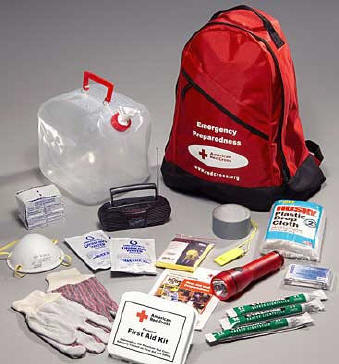
What to Put in a “Kit”

You can find numerous resources online with information about what to put in a disaster preparedness kit. You may have to prepare with numerous people in mind, or even numerous pets. According to the experts it is best to have a kit on hand that can be picked up and taken with you in the event of an emergency – fire, hurricane, or flooding… things that can be predicted to some degree as the result of early warning systems in the area.

With power outages, however, you may need a bigger “kit” for numerous days. Power outages can be planned as the result of city construction or tree removal. Most of the time though? Power outages are an unpleasant surprise. Causes can range from results of mother nature at work, or a hubby at work with a shovel and a poor attention span.

72Hours.org has some terrific ideas in what to put in a disaster kit. You can access the site HERE. FEMA and Ready.Gov has some additional plans and ideas at their site. These include how to let friends and loved ones know where you are and how you are doing. You can access these plans HERE. The ASPCA has some wonderful ideas and plans for those of us who may have service animals and other family pets. You can access that information HERE.  The Red Cross has some additional ideas for pet owners HERE.

The key is to BE PREPARED. When my family and I experienced 36 hours of no power in 95 degree heat, it isn’t something we decided to do for FUN. It was an unexpected and unpleasant surprise. We had plenty of water and gas in our cars, but could not even leave the house at night in sweltering heat because of numerous pets that needed attention, supervision, and assurance. We holed up in the basement and did our best to keep everyone calm and as cool as possible. Because I shop at Costco, when I buy batteries, I buy A LOT. But I wasn’t keeping close tabs on what sizes we had, and our flashlights and lanterns were scattered all over the place. (The power outage began late at night after the sun had gone down). I discovered after doing a little investigating after the power returned, that generators are expensive. They can also be dangerous to operate if you do not know what you are doing. Yet after our experience, I started a “generator piggy bank”. It may take us YEARS to have enough to actually buy one, but imagine being able to run some fans and keep the refrigerator running during a long-term power outage?

I welcome additional ideas our websites that may help folks prepare.

Disabilities or Health Issues?

As a person with disabilities I was prepared BY ACCIDENT. I purchase cochlear implant batteries in bulk once or twice a year. Thankfully, my cochlear implant is NOT the type that uses rechargeable batteries or I may have been deaf as well as sweaty! I noticed that because of the excessive heat, my balance was worse than usual. I was unprepared for a SUNNY day to be staggering around as if it were a rainy, overcast day. My husband who only has one kidney, was especially fatigued and weak because of the heat. I had friends that were unable to power their scooters that they use for mobility purposes, but their manual wheelchairs were in storage! These kinds of things can make a difficult situation much worse.

If you have special needs of ANY kind, be sure to take these into consideration when you do your planning. Because we are all aware of how important that planning is, right? (GRIN)

Denise Portis

© 2012 Personal Hearing Loss Journal

Life With Someone Else’s Service Dog

Dr. Terry Portis is director of the Center on Aging at Anne Arundel Community College (AACC) and teaches in the psychology department. He supervises 205 faculty and staff who serve 4,100 students each year. Dr. Portis  has presented dozens of workshops and written numerous articles on marketing, program design, psychology of disability and health, personal development and technology. Prior to coming to AACC, Dr. Portis was executive director of the Hearing Loss Association of America.

Terry’s wife Denise has been a client at Fidos for Freedom since 2006.  Terry has served on the Board of Directors at Fidos For Freedom since 2011.

When a person is matched with a service dog they have to make adjustments in their life, and so do the people who are around them. This is especially true for the spouse or significant other who spends a lot of time with the person matched with the dog. You may think the service dog will only change the life of the person you love. However, there are changes you should try to anticipate as well.

Be prepared

There are a few negative issues that one has to deal with when a service dog enters your life. First, service dogs are very noticeable wherever you go. Most places we go I find people to be open and accepting. However, there are small, bitter people in the world who enjoy confrontation and have a “know it all” attitude. They may think they know the law because their third cousin has taken some classes in college. Having to occasionally deal with these unpleasant people in public can be very frustrating. It may also be difficult for you to let the person you love deal with these issues by themselves. Denise spent a lot of time in training and I suspect because of decades of advocacy work, it does not bother her to have to carefully explain the law to someone trying to deny access. At Fidos For Freedom, they spend a lot of time making sure the clients are prepared for these scenarios. Even though service dogs are not as unusual as they use to be, Denise will still occasionally enter an establishment that has never seen a service dog for hearing alerts and balance assist. Because I’m her husband, sometimes it is hard to stand by and let her stand up for herself. It certainly doesn’t hurt to make sure that family members are aware of the ADA allowances for people who mitigate their disability with a service dog. There have been times that Denise has been oblivious to someone trying to get her attention to ask her to leave the store with the dog. If I’m in the vicinity, I have spoken up and explained that Chloe is a service dog and can accompany Denise.

Another thing to be prepared for is the planning needed to make even small local trips. In the summer avoiding hot asphalt is always a consideration. Looking for parking spaces near grass is a challenge. We also think about which restaurants have the best seating for us. All of these things become second nature, and I find myself thinking about these things even when I am by myself.

Enjoy the experience

These few inconveniences though, are worth it for the value that a service dog brings into a person’s life. It is reassuring to have another set of eyes and ears to help protect and alert the person you love. Service dogs build confidence and help reduce feelings of isolation that people with disabilities often experience. If I know Denise is away from home teaching or running errands, I know I can call her phone and Chloe will let her know the phone is ringing. I know if she falls or drops things, Chloe is there to assist. I actually worry about Denise far less now that Chloe is a part of her life. According to Rintala, Matamoros, and Seitz (2008), service and hearing dog recipients reduced their dependence on other persons. As Denise became more independent, I worried less and also knew she was less dependent on me. As I knew how much she valued her independence, I fully supported her training and match with Chloe.

A service dog can be a very positive experience for everyone. You also have the opportunity to be an advocate, to tell people firsthand what you have experienced and learned. Dogs that have the intelligence and temperament to be service dogs are special, and the kind of dog most of us have never seen before.

Finally, a service dog becomes a part of the family. Chloe is like an extension of Denise, so she is around all the time. As a result, I’ve become her buddy as well. She is pretty excited about my coming home from work each night. It reminds me of when my children were little and were excited that “Daddy is home!” Having Chloe in our lives has been an easy adjustment for me. Chloe has fit seamlessly into our schedule and the peace of mind I have knowing how much she watches out for Denise is really worth the wet doggie kisses she gives when our alarms go off in the morning.

Rintala, D. H., Matamoros, R., & Seitz, L. L. (2008). Effects of assistance dogs on persons with mobility or hearing impairments: A pilot study. Journal Of Rehabilitation Research & Development, 45(4), 489-503.

Denise Portis

© 2012 Personal Hearing Loss Journal

Dissension in the Ranks?

We get along great – thank you very much!

One of the big arenas in which I connect with others struggling with some of the same issues as I do, is Facebook. It never ceases to amaze me some of the criticisms I read among not only the hearing loss community, but the disability community as a whole.

Take the word “disability” itself. Some people have a good ol’ fashioned hissy fit if someone uses the “D” word.

Others may get uptight if someone brags on the brand of hearing aid or cochlear implant they use. Some folks may get up in arms about who did the right thing by whether or not they owner trained an assistance dog, or trained for a “program” service dog. I actually saw a conversation about whether or not people who lose their hearing should – or should not – use ASL (American Sign Language).

At times I just want to throw up my hands and whine loudly, “Can’t we all just get along?”

Nothing Wrong with Being Proud

Pride is often vilified. The phrase “Pride goeth before a fall” is used frequently to remind us that a prideful (almost disdainful) attitude not only turns others off, but ultimately may cause a person to fail or not achieve their goals. Pride is often categorized as a negative trait. However, pride may also be a GOOD thing. We can be proud of our kids, our skills/talents, or of our affiliation with a group or organization. It may instill a sense of identity. Zia and Katzenbach (2010), suggest that a healthy sense of pride can potentially motivate an individual to doing good work for others; to serve, inspire, and ignite a passion to do your very best.

Sometimes I “rag on” my husband about being prideful. It is usually with an eye roll while inferring “we all know how you can be”. Men are often accused of being susceptible to a negative kind of pride and ego. But ya know something? One of the things I love most about my husband is his healthy sense of pride. He knows what he is good at and in that knowledge comes a sense of urgency to share those things. He recognizes his gifts, talents, and skills, and uses them to assist others. I’m reminded when I choose to give him a hard time about being cocky occasionally, that many of the things I love about him actually stem from his sense of pride.

Part of embracing who you are “now” may mean you begin to associate with a group or community of people. Chandler (2009) believes that people with chronic illness or visible and invisible disabilities should use disability pride to their advantage. This doesn’t mean we become our disability, but rather we embrace who we are despite our disability. “Fundamentally, Disability Pride represents a rejection of the notion that our difference from the non-disabled community is wrong or bad in any way and is a statement of our self-acceptance, dignity and pride. It signifies that we are coming out of the closet and are claiming our legitimate identity. It’s a public expression of our belief that our disability and identity are normal, healthy and right for us and is a validation of our experience” (Triano, 2009).

So Why Do We Criticize Others?

If you follow Hearing Elmo, you know that I get really excited about guest authors. (If you are interested in writing for Hearing Elmo, shoot me an email at denise.portis@gmail.com). I know there are experiences within the community that I do not understand because I do not live it. It is good to get other’s perspectives and thoughts about issues that relate to our community.

Being diagnosed with hearing loss can frustrate patient, family, audiologist, and doctors. It is not “one size fits all”. Causes, degrees, implications, and symptoms may be extremely varied. Having balance problems does not mean that we have similar experiences, or erm… all FALL THE SAME WAY. My life with hearing loss and the balance problems I have, may be completely different from someone who shares the same diagnosis. We are still individuals.

So why do people within our community argue, posture, and belittle someone else who chooses a different path? Through the Hearing Loss Association of America, I have heard the motto “whatever works”. This means that whatever a person chooses to mitigate their own challenges is supported by the community as a whole. Have a hearing loss but do not want to learn ASL? No problem. But don’t blast those who chose to embrace the Deaf community and use ASL as their primary means to communicate. Don’t criticize those who choose to use the language (or variations of) when batteries die, or environments are not conducive to communication. Love your hearing aid? I’m happy for you! But if someone else chooses not to use them or horror of horrors… chooses another brand, don’t verbally bash them!

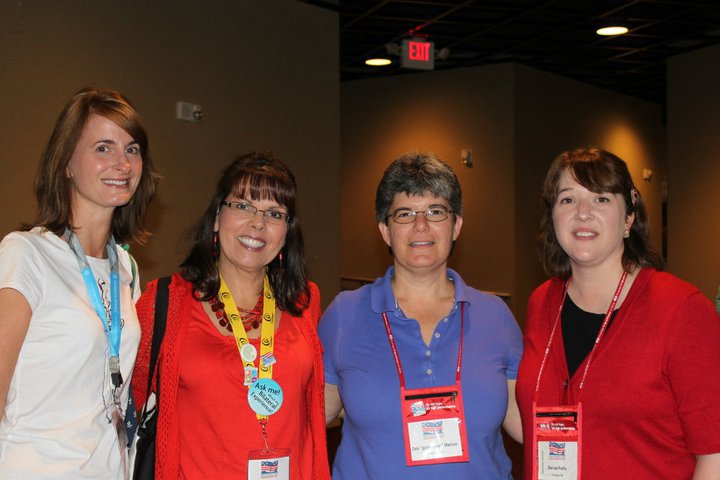
The picture at the top of this post is a photo of some of my dear friends who I met as a result of my own hearing loss. Our hearing loss is as different as our appearances – and ACCENTS (grin). We struggle with different things and may have chosen various coping skills by which to live a victorious life despite our challenges. Yet, we celebrate our SAMENESS. (Hey! That is a word – – look it up!). Is it not hard enough to keep a positive attitude and strive to make a difference without cutting down those who have challenges of their own?

Does this mean we aren’t entitled to our own opinion? Of course not. However, there is a big difference between having an opinion and expressing your opinion. To do so and deliberately criticize or demean another is never the right thing to do. As a matter of fact, to insist “it is my way or the highway” makes you disabled instead of a person who happens to have a disability. ‘Course… that is just my opinion as well!

Denise Portis

© 2012 Personal Hearing Loss Journal

Chandler, E. (2009). Pride and shame: Orienting towards a temporality of disability pride. Radical Psychology: A Journal Of Psychology, Politics & Radicalism, 8(1), 2.

Triano, S. (2009). What is disability pride? Retrieved June 30, 2009, from https://www.disabledandproud.com/power.htm    

Zia, K., & Katzenbach, J. (2010). Getting back on the fast track with pride. Leader To Leader, 2010(58), 33-38.