B.A.R.C.

logo

Saturday, Chloe and I headed to the training center at Fidos For Freedom in Laurel, MD. Kyersten came with us which was a real treat as she normally has a ton of schoolwork to do, or has to work.

Fidos For Freedom is blessed with a great variety of personalities and people who volunteer in the training department. Kim, an apprentice trainer,  is one of the newer faces in the training department. She co-led the client chat with Tracy on Saturday. Saturday consists of 1 hour of training, and then a 1/2 hour “client chat”. The “chat” is usually a topic discussing problems/issues of an event coming up, or perhaps a client has had access issues, or other problem that week that the group as a whole can discuss. I always get a lot out of the “chats”.

Kim is a trainer, who just so happens to have a disability herself. She shared with us that as people with a disability, it is important to know what your own personal limits are. If you don’t know your limits, you can quickly get to the point where you aren’t able to take care of yourself or your valuable partner. Many disabilities are invisible. Other people often are not able to tell when you’ve reached a limit. She graciously gave me permission to share her list with you:

Basic Awareness Reality Check (B.A.R.C.)

1. Check in with yourself, physically and mentally – What are your early warning signs? Identify early warning signs that signal you are reaching your physical and/or mental limits.

2. Make a list, put it where you can see it, to have available for those times when it’s hard to remember.

3. What might cause you to not listen to your “body”/”mind”?  Ignoring those early warning signs? (i.e., feeling guilty, feeling that you “should” do something, wanting to “not give in to the disability”… etc., worrying about what other people will think?, not wanting to let someone down or disappoint them.)

4. List at least 3 things you do to take care of yourself. (Things that help you mentally or physically.) Make it a point to do at least 1 of the 3 daily.

5. It’s reasonable to remember that the list can change over time… as bodies age, or disabilities wax or wane… during times of illness… remember to check in with yourself, and update/change the list as needed.

6. Ask for feedback, from family members, friends, for things you might not recognize.

7. Practice letting people know, when you are having a harder time, rather than “hiding or covering up” your disability/illness, and how it’s effecting you.

8. Practice what you would need to say, during times when you are feeling better, just to get in some practice, before you actually really NEED to do it.

9. Ask yourself:  Are you taking as good care of yourself as you do of your dog? Clients, trainers, people, deserve the same kind of attention, and recognition of limits, as they give to their dogs. Remember, You cannot take care of your dog, if you do not take care of yourself.

Denise Portis

© 2009 Hearing Loss Journal

What Came First?

new-cane-008

The Chicken or the Egg?

What came first, the chicken or the egg?  That phrase brings a smile to my face every time I come across it.  It has been the cause of many a debate from both my childhood and my present.  I suppose I’ve always been surrounded by people who love to argue a point.  Everyone knows the chicken came first.  If you disagree with that… well, you’ll need to write your own post!

In life there are many cause and effect changes.  These are either passionately discussed because of more serious consequences that can occur, or worse – not discussed at all due to what many may view as a “taboo” subject.

I’ve always been a “worrier”.  I can remember hearing from my mother at a very young age, “Denise… don’t make mountains out of mole hills”. I was also told that if I didn’t have something to worry about, I’d work hard until I had found something to worry over.  As an adult, I prefer to look at my “worryin’ over things” as my way of preparing, planning, and anticipating outcomes.  Believe it or not, “worrying” calms me down.

But I am not misguided in believing that worry is the same thing as anxiety.  I don’t remember being an anxious kid.  “Worrier” – yes, anxious – no.  I do know that I have had anxious periods in my life.  I have a new “friend” who is a phenomenal writer.  I’ve been pushing Lisa to investigate writing a book and hope I have finally twisted her arm in doing so.  Having benefited from her wisdom and straight-forward speculations, I’ll be one of the first in line to buy several copies.   She has been blogging about “anxiety” quite a bit lately. (If you have had problems with anxiety, I encourage you to begin reading her posts beginning here).

I have met many people with different types of disabilities.  I have also met many “anxious” people.  Often, those people are “one and the same”.  What came first?  The disability or the anxiety?

We Can Make Ourselves Sick

One doesn’t have to “google” stress and anxiety very long before they begin to find out these feelings can affect our physical health.  Our body’s immune systems can even be weakened when exposed to stress for prolonged periods of time.  Although “thinking happy thoughts” does not necessarily cure every ailment, being stressed, worried, anxious and pessimistic can certainly hinder our getting well.

Many physicians who specialize in critical care fields have long been taught how important it is to treat the patient’s mental and emotional state as well as their bodies.  Even a patient’s spiritual beliefs can aid in recovery.  Discovering (or re-discovering) hope and belief in God, can greatly benefit a patient who has experienced an injury or life-changing illness.  My husband wrote his dissertation along these lines.  His book is NOT easy reading – smile. Effects of Religiosity on Life Satisfaction Among Survivors of Brain Injury, was written after having seen the direct results of faith on patients with a TBI over a number of years. Terry researched whether or not people with brain injury have higher life satisfaction if they are involved in religious practices. People with brain injury traditionally have one of the lowest life satisfaction scores of any population. They have similar scores to people in prison!  In contrast, if someone with a TBI has no faith – no belief system, they tend to have very low expectations and life satisfaction.

Disability or Anxiety?

So… which came first?  Anxiety can certainly be triggered by “life events”, but it can also be a chemical imbalance in an individual.  Anxiety disorders are serious.  Feeling anxiety – an “anxiousness” – from time to time is not uncommon and even expected in this thing we live called LIFE.  Can a disability, especially an acquired disability, cause us to feel anxious?  Can that anxiety, ignored and untreated, lead to a disorder? Yes… and yes.  However, one can have a disability and learn to “cope”.  Learning to cope, and developing new interests, skills and networks, makes a disability more of a discovery!  One learns how to acquire new ABILITIES.

Being disabled does not mean one is not “able”.  Certainly being deaf and having Meniere’s disease, places me in a disability group, or category.  I don’t consider myself disabled as long as I work hard at being “able”.  A cochlear implant, support group, a service dog and advocating in a positive way, have allowed me to create a way to cope… to live in a normal way.  I’m living a “new normal”. These activities keep me from feeling anxious.

Does that mean I never worry?  Heck no!  But worrying is not anxiety.  If I begin to see a set pattern of anxiousness, I treat that very seriously.  Why am I anxious?  Has something triggered it?  Am I eating right, sleeping well, and taking care of myself?  However, WORRY is different than anxiety.  I have plenty of daily worries that actually allow me to process things and plan my day.

Am I worried when I stand at the top of a stairwell with Chloe in heel, people milling all around me, and the room spinning counter-clockwise as I desperately try to adjust my eyes to the depth of the stairs below?  Well YES!  But that worry has allowed me to take steps (pardon the pun) in making it possible for me to traverse stairs safely. Chloe acts as a counter-balance, I instruct students around me that I’m not listening or talking until I get to the bottom… so don’t bother me, I breathe evenly and fix my eyes on no more than two steps at a time, and before I know it… I’m kissing the floor in relief at the bottom!  (OK, that’s an exaggeration, but I certainly do feel euphoric!)

Do I feel anxious when my cochlear implant batteries go dead?  (DUH)  Of course I do!  But my worrying about it happening at an inopportune moment, has led to a very real plan of action.  I have batteries EVERYWHERE.  They are in Chloe’s working vest, my pocketbook, the van, at home, and in my office. My CI is set up to give me a 20 minute warning beep.  When I hear it, I continue with what I’m doing but I include a few moments to secure new batteries.  I’m an expert at slipping out the battery compartment, punching out the three #675 batteries, and replacing them with finesse and speed.  I’m never “deaf” for very long.

I plan in advance to get 8 to 10 hours of sleep each night.  (Yes, you read that right).  My sleeping a great deal is not a warning sign that I am depressed.  I plan to sleep 8 to 10 hours a night!  I make it a priority, and I’m often the first Portis in bed each night.  I get a great deal of sleep because I’ve discovered that I “hear better” when I do.  It takes a lot out of a person to hear through a cochlear implant.  Lip reading is not easy.  Making sense of the noise in my world takes concentration.  I need sleep to function well.

Because of my Meniere’s disease, I consume less salt and caffeine. I take Manganese and working hard at trying to exercise regularly.  (My sister and I have a New Year’s challenge to each other to do better at this!)

At the beginning of this school year, I worried like crazy about some of the things I’m required to go to as a teacher that are at night.  Meniere’s has made driving at night difficult, as headlights from oncoming traffic trigger vertigo and make it difficult to see.  The light acts as a “beacon” if you will, and my eyes are drawn to the counter-clockwise beams around me instead of the road ahead. I worried about how to tell my director that I couldn’t do things at night. But that “worrying” allowed me to plan how I would present my reasons and requests. She listened, and approved my request to not attend meetings after dark.

new-cane-016

To some people, all the things I do each day to be safe, hear well, and live a full and productive life may seem tedious and strange.  But these things are “my normal”. These plans and daily preparations are not tedious and strange for ME.  Santa Kyersten (my daughter) gave me a cane for Christmas.  It was something on my wish list and for me, a necessary tool to live “my normal” on rainy days when my Meniere’s disease makes my balance much worse.

Disability, not Inability

Being disabled means one must find a way to do the things you want to do in a new way.  My deaf/blind friends enjoy communicating with friends and relatives by utilizing both cochlear implants and JAWS (a screen reader program for those with visual challenges and impairments). My friends who have mobility challenges, use service dogs, walkers, canes or power scooters. Late-deafened people learn to speech read, use hearing aids, cochlear implants and assistive listening devices.  I have chosen to have a partner to help of the canine variety!  Chloe gives me independence and confidence.

I’m not trying to suggest that there are not things that every disability group are simply not able to do. I’m deaf.  I’m not able to have a job that relies heavily on communication by phone. There are jobs I could never do that require being able to hear well.  I’m afraid I’ll never be an Air Traffic Controller!  However, the most empowering thing an individual with a disability can do is learn what they CAN do.  We live in a wonderful day of technology and gadgets.  I can do many things that I would not have been able to do had I become deaf even 20 years ago. When new people come to our local hearing loss support group, we work hard at helping them find ways to continue doing what they want to do at both work and home.  There are times an impasse is reached, and we encourage finding NEW things that bring just as much joy and satisfaction as a past job or hobby.

One is only truly no longer “able”, when they give up and resign themselves to isolation and feelings of worthlessness. Yes… there are things I can no longer do that I once enjoyed. But people who cared “booted me in the backside” and encouraged me to find new things I could do!  I have a disability, but I live a rich and full life.  I feel productive and satisfied with my life.

I’m sure that being a person of faith, has made this transition to a “new normal” easier for me. My life can change, and my abilities may “morph”. God never changes, nor deviates from being my Anchor that HOLDS.  The reality is… HE came “first“, and I work hard at keeping Him there in my life.

Denise Portis

© 2009 Hearing Loss Journal

A Disability May Keep You From WANTING to Come… but I NEED YOU TO COME!

Kyersten (18-years-old) is a contributor to Hearing Elmo. She has only known her mother as a person with hearing loss. Recognizing, supporting, and loving a parent with hearing loss and balance problems, does not mean that sometimes it is acknowledged that the disability GETS IN THE WAY.

senior7

On October 25th, 2008, my Dad, Mom, and I woke up at “4 something” in the morning. The horror! The earli-ness! With bleary eyes and a lot of yawns, we stumbled to the car in order to drive about three hours to visit Waynesburg University.  Waynesburg is the first on my list of colleges to visit. I am currently trying to decide where to transfer, and my parents are supporting me in my quest for the Perfect Fit.

benedumnew

The trip was uneventful, but rainy and foggy. We were rather glad to finally arrive.

We arrived a bit later than we had hoped, so Dad dropped mom and I off and went to park. Mom and I stood patiently (okay… impatiently) urging Chloe to “hurry up” (go to the bathroom). It was very wet and she was stubborn, so we went inside.  We were greeted by a very sweet “student ambassador” and I was given a packet of information.

Mom and I then went to “hurry up” ourselves.  Next, we walked into the main room, with Dad, who had arrived rather “wet”. A lady gestured us toward some seats and we sat down, only to stand up ten minutes later (having missed most of the introduction remarks).

Mom went outside to encourage Chloe to “hurry up”, as she still had not yet gone. She went ahead of us, so Dad and I lost track of where she was. I told Dad to go look for her, and continued on with the group. I felt a little awkward being the only student in the tour group without parents, but, I told myself I was learning to be independent.

Dad texted me and soon found me with the group. He was by himself. Mom had stayed in the van with Chloe.

So, Dad and I continued on the tour. I got a text from my mom. Her texts always make me smile; they are full of the shortened words associated with someone wanting to get a message to someone in as little time as possible, “Do not worry about me. chloe and me r hangn at van. tell dad 2 stay with u. am dizzy nyway!” I didn’t know until later that she had cried for a good twenty minutes as she texted that.

Dad and I continued the tour, which was very interesting. I really loved the small, yet beautiful, friendly college. Despite the rain, you could see the beauty of the architecture of the buildings, as well as the small-town charm of the city surrounding it.

After the tour, my Dad and I walked quickly back to the van to fetch Mom. She was surprised to see us and a little hesitant, but she “dressed” Chloe in her vest and accompanied us as the rain had stopped. We went to find the classroom where our meeting with a psychology professor was being held.  (My chosen major is psychology). The building was at the bottom of a flight of stairs. Mom wasn’t sure she could make it, and hesitated. A helpful woman saw us and showed us to another floor, from where we took the elevator down to the floor where our meeting was located. After that meeting, we made our way to the bookstore.

Mom and I had a small argument about colleges on our way to the bookstore. Frustrated, I went to search for a sweatshirt. Mom came into the store.

“Hey, want to help me find a good color?” I asked.

“I’m really dizzy, I am going to stand here,” she answered. I clenched my teeth and continued shopping. I felt selfish for being aggravated at mom for not coming to help me.

We then made our way to the cafeteria, everyone’s tempers now on edge. A woman stopped us as we tried to go into the cafeteria.

“Is that a seeing eye dog?” she asked suspiciously.

Mom looked surprised and offended, “I am not blind,” she said quickly. She then launched into her speech about what Chloe did and the law that allows Chloe to accompany Mom anywhere. Mom then offered to give the lady literature. The woman refused, saying she”just hadn’t seen something like Chloe before”.

We went to find a table. Dad went to go get his and mom’s food as it was a buffet-type of cafeteria.  Handling an assistance dog at a buffet is NOT easy business!

“Do you think I should give the lady literature about assistance dogs on our way out?” Mom asked.

“No, she said she didn’t want it,” I answered.

Mom and I are A LOT alike in many areas, but when it comes to conflict, we handle it differently. Admittedly, mine is probably a worse way to handle it. I withdraw and avoid conflict. Mom isn’t scared of it, and wanted to make sure the woman didn’t bother other assistance teams in the future.

She said as much.

“I just shouldn’t have come; I’m obviously not doing any good. I wish to God y’all had left me in the car,” Mom said.

I started crying.

Now ANYONE who knows me knows that… a) I am not a crier  b) I dislike crying, and c) I never, EVER cry in public.

The meal went downhill from there. I refused to eat, so Mom refused to eat. Dad had a concerned look on his face, but it didn’t stop him from eating his plate of food and Mom’s. Such a man.

I went to the car to get away from everything, Mom following behind, Dad finishing the meal and then coming after us.

We worked it out. That’s what a family does after all; you HAVE to live with each other, so HAVE to resolve issues.

Mom was upset because she felt like I was purposefully disagreeing with everything she said.

I was upset because I felt like she didn’t want to be involved anymore.

I know my mom has a disability, two actually, if you count her balance. I know that there are some things she can’t do. Dad and I mentioned a couple of times on the tour that it was good she didn’t come. With the slippery sidewalks, lots of stairs, and a tour guide he and I couldn’t even hear sometimes, she would not have enjoyed it. However, I want her to be as involved in my hunt for the Perfect Fit as much as she can. She’s my mom.

She and I are a lot alike. And she knows me better than anyone. Dad’s advice I greatly appreciate and value. However, he has more of a Type A, competitive personality, whereas I have a quieter personality. His idea of the Perfect Fit would probably not be the same as mine.

To me, this is one of the last things in my life that I will need my parent’s involvement. It’s a huge step into the world of adulthood and responsibility.

I don’t want Mom to let her disability keep her from being my Mom. I realize she may not be able to do everything or may have to have special accommodations to be able to do some things. But the extra work to allow her to come along is worth it, because she is my mom. I need her… just the way she is.

Kyersten Portis

—————-

Denise Portis

© 2008 Hearing Loss Journal

Hound & Determined

Chloe and I will be participating in Fidos For Freedom’s 10th annual Stroll ‘n Roll on November 8th. We need people to volunteer to be on our team, and also are looking for donations to reach our goal.

I started training at Fidos For Freedom in Laurel, Maryland on April Fool’s Day in 2006. It was a long thirteen months, but months I needed to learn how my assistance dog would help me to be more independent and confident. Fidos matches dogs with clients “free of charge”, with on site training and follow-up, offering everything a client needs to succeed with a service dog. They match dogs for people with hearing loss like myself, as well as clients with mobility challenges. Every “match” is a life changed.

Chloe and I are looking for local volunteers to walk with us on Nov. 8th, but team members do not even have to participate the day of the walk. You can still join our team and help us reach our goal by simply contacting people you know who might help. I hope you will prayerfully consider supporting us in this way.

We also are looking for people who feel led to provide a small donation to help us reach our goal. Fidos For Freedom serves our community with specially trained dogs from professional trainers FREE to people with disabilities. They can only do that because of the donations of people like you! No amount is “too small”. Every dollar brings us that much closer to making sure another person with a disability is “matched” with a Fidos For Freedom dog. I hope you will stop by our page and join our team, or support us with a small donation today! Thank you in advance!

Hugs and slobbery kisses,
Denise and Chloe

The “Folly” of Allowing “Deaf” to Define You

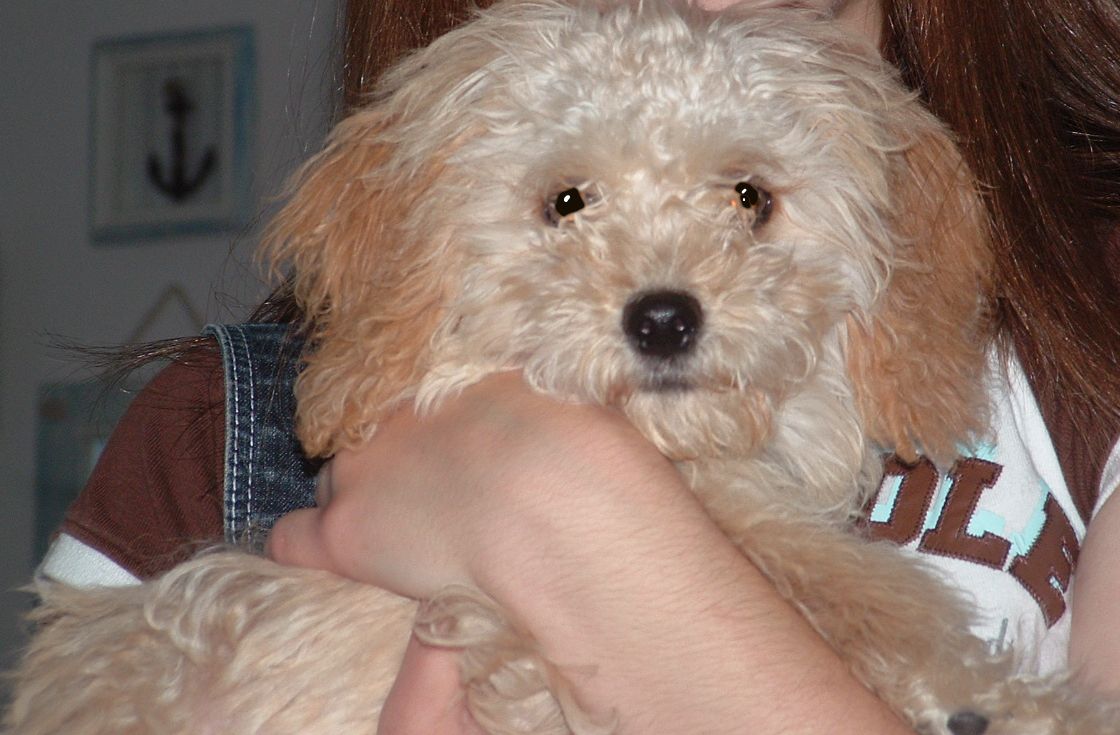
Simba (My parent’s pooch!  He’s the smartest little thing and has made a great addition to their retired life in Florida!  He’s a Cock-a-Poo, and doesn’t look like ANY canine movie star!)

The Folly of Hollywood’s Influence

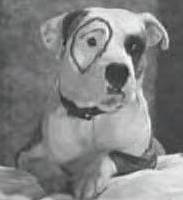
I love my mother.  Mom is one of my best friends.  But being a mom myself now, I can clearly see that my mother was extremely influenced by the canine stars she saw on television as she was growing up.  I can make this assumption with a great deal of confidence, based on the fact that she has had two “look-alike” dogs of her own through the years.  Prior to retiring to Florida, she talked my Dad into buying a boxer that bore an resemblance to “Pete” on “Little Rascals“.  I don’t see the resemblance.  After all, it is fairly obvious the circle around his eye was PAINTED on, and Mom’s boxer had no make-up whatsoever!  But “Pete” was in black & white!  So… who knows?

“Jingles” did not last very long as she was not a well-trained, super-star dog.  On the contrary, she was a rather destructive and ill-mannered dog.  She found a new home on a new farm with a family who had a little more patience.

Prior to “Jingles”, while I was still living at home on the ranch in Colorado, Mom talked Dad into buying a collie.  I guess Mom had a thing for “Lassie“.  I didn’t mind at all, as I thoroughly enjoyed watching not only the current “Lassie” series, but never missed a black and white re-run of the episodes Mom watched as a child.  Mom may have insisted on a pedigreed collie, but Dad insisted on the name.  “Jean’s Folly” was our … erm… COLLIE!  We called her “Folly” for short.  I wish I had a picture of Folly.  She was actually much prettier than Lassie!  She was the most beautiful collie I have EVER seen.

Living up to a Name

It turns out that Folly was aptly named.  It seemed she was incredibly stupid.  At least that is what we thought in the beginning…

In 1982, Folly was accidentally left outside when there were some stray dogs from neighboring ranches running around.  These dogs thought Folly was really beautiful too… at least that’s what I told myself because she ended up pregnant.  Folly was an outside dog; a different type of working dog than the one I have now.  Folly’s job was to keep the on-site livestock safe, keep coyotes from killing our cats, and made sure that snakes stayed out of the yard.  We didn’t interact with Folly as much as we should have.  Had we done so, we would have noticed that she was pregnant PRIOR to her having puppies.  It was at the birth of her puppies that I first began to suspect that Folly wasn’t as dumb as we first thought.  It was October, and we had our first snowfall on the ground.

Folly went under our picnic table which was next to the house, pulled out most of her own hair, and had puppies on the cold, hard ground.  (Pretty pitiful, huh?)  On the insistence of my three siblings and myself, we brought poor Folly and her puppies inside.  Their new make-shift quarters were under the rarely-used pool table downstairs in the game room.  Folly and the puppies did really well for a couple of weeks.

During those weeks, I had the opportunity to really get to know Folly better.  She would look at me with bright, inquisitive eyes, and watched everything I did with intelligence and attentiveness.  She loved for me to “visit” her under the table with she and her puppies.  (It’s fairly difficult for a teenage girl to fit under a pool table with a large collie and a litter of pups!  But I’m talented!)  I dutifully took her outside “when nature called”, and brought her back inside so that she could be with her puppies.  However, the cold snap lifted and the weather warmed up enough, that my Dad said Folly and her pups had to be moved to the barn.

I fixed one of the rooms in the barn up with plywood and bales of hay.  It was cozy and warm.  The first couple of days I locked Folly into the barn with the pups.  I think part of me was beginning to suspect something about Folly.  I started doing “tests” of my own to see if my “feeling” could produce enough evidence to allow me to verbalize my fears.

Not Dumb… Just Deaf

I would sneak up on Folly when she was asleep, and as long as I took the time to move slowly enough that no vibrations were caused by my boots on the ground, I was able to “scare the daylights out of her” 9 out of 10 times!  I would watch her looking out over the alfalfa field directly south of our home.  She seemed eager to continue her vigilance in keeping the coyotes away.  When I was ready to lock her back into the barn, I would call her… nearly screaming her name and she would continue her guard of the yard.  I found, however, that if I walked into her line of sight and called her name with a smile and a pat on my thigh… she would come running with the unadulterated joy of a dog when seeing someone in their family.

My conclusion?  Folly was deaf.  I mentioned it to my dad.  Dad is a quiet man who is at first pessimistic of others viewpoints until he acquires enough evidence to conclude that they may be right.  He would have made a great debater.  At supper several nights later, he announced in a matter-of-fact way that he thought Folly was deaf too.  To this day, I have no idea what kinds of “tests” he ran himself to come to that conclusion.

As we felt Folly was now comfortable in the barn with her puppies, we left the door open for her so that she could come and go as she pleased.  The puppies’ eyes were just beginning to open, and I couldn’t wait to get home from school each day to go visit them in the barn.  It’s a shame we didn’t leave that door open for the first time over a weekend.  I’m certain I would have noticed that the puppies were failing had I been able to spend more time with them.  But as it was, one evening a few days later, I went to visit them and found them all dead.  Every single one of them.  My parents were at work, so I called my grandfather on the phone in near hysterics.  He and my grandmother lived on the ranch a couple of miles east of us.  I don’t know that he completely understood what was wrong, but he certainly arrived quickly!

He determined that the puppies had not been fed.  He could tell that they hadn’t been cared for in a couple of days.  He asked me questions about what kind of mom Folly had been.  I explained to him how great she was with the puppies when inside the house, and that everything was fine when she was locked up in the barn with them.

My dad must have shared with him that she was deaf.  He concluded that if she couldn’t hear them she didn’t know they were hungry.  I was furious and shouted at both my grandfather and Folly.  How could she not know they needed fed? How could something so IMPORTANT escape her notice?  Did hearing the pups trigger true maternal love?  She couldn’t be deaf AND care for the puppies?  My grandfather insisted I was trying to make her out to be more than a dog.  Instincts only went so far.  Sometimes competing instincts were even more dangerous.  Folly’s instinct to be on guard of our yard and farm overrode her maternal instincts.  She was conditioned to SEE what needed done, not HEAR what needed done.  None of this made sense to me.  I’m ashamed to admit that all I felt for Folly after the day her puppies died was HATE.

To me, Folly was back to being “dumb”.  I looked at everything she did after that with the irrational thinking that mistakes she made were just plain stupid.  I conveniently seemed to forget that she was deaf – that she had a disability that for a DOG was almost catastrophic!  I ignored the impact her deafness would mean on how she was measured in value as a working dog on a ranch.  I ignored it all the way up until the day she walked right out in front of a pick-up truck she couldn’t hear, driven by a distraught neighbor who had no chance of stopping in time.

I grieved for Folly for a very long time.  Quiet, yet bitter tears drenched my pillow at night for several weeks.  I remember thinking, that of every bad thing that could possibly happen to someone or something, deafness had to be the equivalent to a death sentence.  It was for Folly’s puppies.  It was for Folly.

Life’s Little Ironies

My husband and I first began to realize I was losing my hearing when I was twenty-five years old.  My… ermm… puppies, were 2 months old and 13 months old.  I have probably thought about Folly every week since that first audiological appointment in 1991.

For me, my deafness does not define me.  It is simply who I am.  A cochlear implant does not negate my deafness.  Certainly, I am indeed “hearing again”, but it is not perfect hearing.  I will never have perfect hearing again this side of Heaven.

To “hear” and communicate well, I take advantage of the latest technology.  I try to eat right and get plenty of sleep.  I attend support groups with other late-deafened individuals.  When I can, I go to workshops and conferences for people with hearing loss in order to educate myself.  Folks?  I try really hard.  But at the end of the day, I’m still a deaf person!  Actually… at the end of the day when I take my cochlear implant off, I am literally a deaf person!  Smile!

And yet, I’m OK with that.  Learning to communicate differently has made communication BETTER for me.  I drop EVERYTHING to talk to people.  I look them in the eye; I process what they are saying.  I acknowledge when I’m not hearing well, nor understanding well.  There is nothing else on my mind when I talk to someone, other than what it is they are saying.  If anything else is on my mind, I immediately stop understanding.  I truly give people my undivided attention!

I realize that Folly was just a dog.  But I recognize the difference having a loving supportive family has meant.  I recognize that God has brought specific individuals, message boards, writers and speakers into my life to “grow me”.  I wish I had thought of ways that Folly could have lived her life in safety.  I wish I had not equated her disability with her intelligence.  It’s actually a surprise she lived as long as she did, when one considers the enormous number of dangerous possibilities for her demise on a working ranch.

I have thought of Folly more than I have any other dog I have ever owned.  It will likely surprise my family to even read this, for my thoughts were private up until now.  Perhaps I am finally coming to terms with what it means to have a disability and still have a productive and meaningful life.

I raised “puppies”, I teach wonderful, eager students, I have friends who are hearing and friends who are culturally Deaf.  I work hard to minister to a group of peers that are late-deafened.  My deafness does not “define” me.  My deafness is a blessing, and enriches my life.  I didn’t discover this quickly.  I had to become an “old dog” first!

Denise Portis

© 2008 Hearing Loss Journal
But I’m afraid…

But I’m afraid…

This morning my assistance dog, Chloe, was out on the porch barking her head off.  I’ve never appreciated how she looks without a head, so I found myself hustling outside to see what all the fuss was about.  At first, I couldn’t figure out what she was barking at, but it was very clear that Chloe was afraid.  Each muscle in her 4 legs were trembling with fear and tension, her forehead was wrinkled, and she whined in between high pitch barks!  I had to step closer in order to finally see what she was fixated on… a tiny bird feather.

Now I’m the first to brag that my working dog is a very smart canine!  She loves to learn, loves to work, and loves to train!  But sometimes… her fear keeps her from putting all the pieces together.  Sometimes… she needs help to look past her fear and approach things a little more logically.  I continued to reassure her that everything was fine.  I wanted her to investigate it a little closer with a little more, erm… backbone!  Grin!

Me: “Chloe… it’s OK girl!  It’s just a feather, and it won’t hurt you.  Show me!  What is it?”

Chloe: (Looks at me like, “Don’t you SEE?  Oh my gosh!  LOOK!  Show you?  But I’m afraid…“)

It seems that feathers have a smell… at least they do if you are a dog.  Chloe could smell a recent “alive kind of smell“.  When she would get close enough to sniff the feather, her sniff would MOVE the feather… and much to her dismay TOWARDS HER!!  Therefore, Chloe was convinced it was alive!  What does a hound dog do when they think something is alive?  They bark!  When Chloe would bark at the feather, it would move even MORE, but away from her!  Feathers are so light that they tend to want to follow the natural rules that feathers follow when applying physics… a hound dog’s hot air.

Even holding the feather in my hand, had her cowering in fear!  I sat on the porch and talked to her, all the while holding the feather out towards her.  Finally, she crept up behind me and with head on my shoulder sniffed and huffed at the feather in my hand.  I could feel her trembling, with her fearful “self” pressed up behind me!  Eventually a good, stiff, Maryland-September breeze picked the feather up and flew it up over the railing and out into the yard.

Chloe cocked her head to the side and looked at me like, “Well! What did you do THAT for?”

She was afraid of the feather, but wanted the feather.

But I’m afraid…

Last night I attended our school’s kick-off meeting.  All the teachers were present, and I knew I would face supper, entertainment, games, dessert, announcements and fellowship.  I have to admit it was something I had to make myself attend.  The night before I had even cried all over my husband, trying to find a way to get out of having to go!

When you have a hearing loss, there is just something incredibly intimidating about going to a group function that reverberates with the background noise of a large number of excited and “pumped” teachers!  I planned in advance, and made sure my cochlear implant batteries were fresh so that I wouldn’t “go dead” in the middle of a conversation.  I brought some assistive listening devices that work in conjunction with my t-coils on both my CI and my hearing aid.  Due to some recent rains, I knew I was wobbly enough to need Chloe’s special collar.  I was prepared.  I wanted to go.  I needed to go.  But I was afraid…

I talked to my director via email prior to going.  I’ll admit that I was trying to see if it was something I did indeed have to attend.  I did… and my director knew I needed to for more than the information we received as teachers.  She knew I needed to go in order face my fear.

My fellow teachers are very nice people.  I WANT to get to know them better… to even gain the treasure of a friend or two.  But in year’s past I’ve seen the look of panic when I put a microphone nearer their face in order to hear them better in a crowd.  I’ve seen their faces as they inwardly castigate themselves as they said something behind their napkin and I had to ask, “Pardon?”  (I’m a transplanted Southern gal, what can I say?)  I’m 100% sure that if these teachers knew how afraid I was of them, they would be devastated!

In my HEAD, I know that I have nothing to fear.  And yet, when I go to these things I find myself saying, “But I’m afraid… ”

My consolation, is that it is getting better.  The more functions I attend like this, the more comfortable I become.  The “feather moves”, and I’m a little jumpy about it; however, I’m learning it’s just a “feather”.

I’m thankful I do not seem to have the same illogical fears towards my students.  Young people seem so incredibly natural towards me.  If I have to ask a student for a repeat… seven different times… they cheerfully do so without any visible qualms at all.  Perhaps it’s because my classes are “electives”, (although many take them as alternative foreign language).  I know they CHOOSE to be there, and it doesn’t bother them that their teacher has a hearing loss.  I do not feel disabled around them.

With my peers it is different.  I hope it isn’t always so.

I want to attend meetings like these, but am afraid of meetings like these.

At least with fellow teachers, I am becoming stronger and more confident.  Perhaps I need a good, stiff, Maryland-September breeze to convince myself I’m in a “safe place”.  At least with every one I go to, I’m less “trembly”… and heck!  I quit barking months ago!

Denise Portis

© 2008 Hearing Loss Journal
Psalm 56:3: “But when I am afraid, I will put my trust in You.