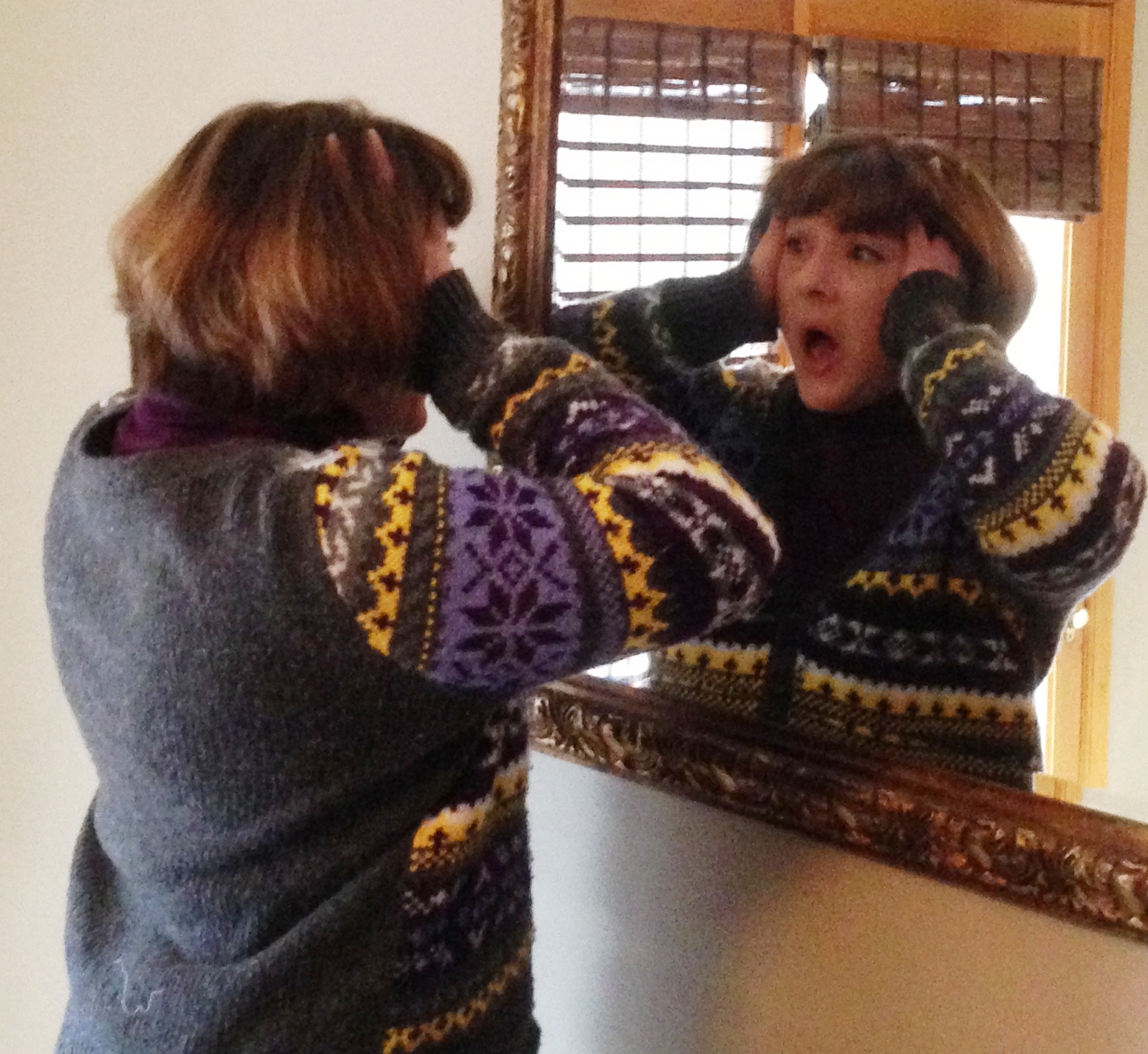
Watch Me

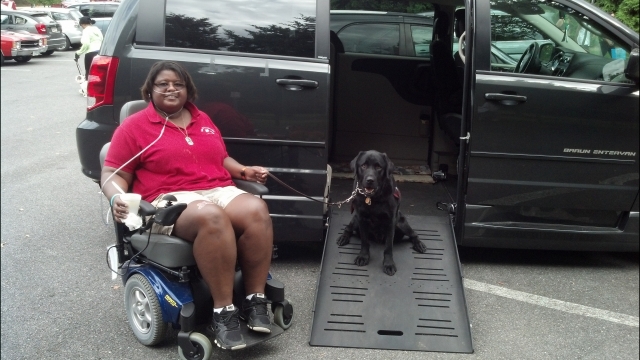
Chloe and Lewis

Want to get on my last nerve? Enjoy listening to me Sputter as I desperately try to spit out a response? Want to see this kitty’s claws?

this puppy’s teeth?

this chicky’s – erm – umm – BEAK?

Then tell me I can’t do something. Heck, I’m not even the “first born” in my family! The birth order norm fairy forgot to send the memo when I was born – “2 of 4”. I can be a stubborn behind. Sometimes this is very, very BAD. But sometimes? Sometimes this is very, very GOOD.

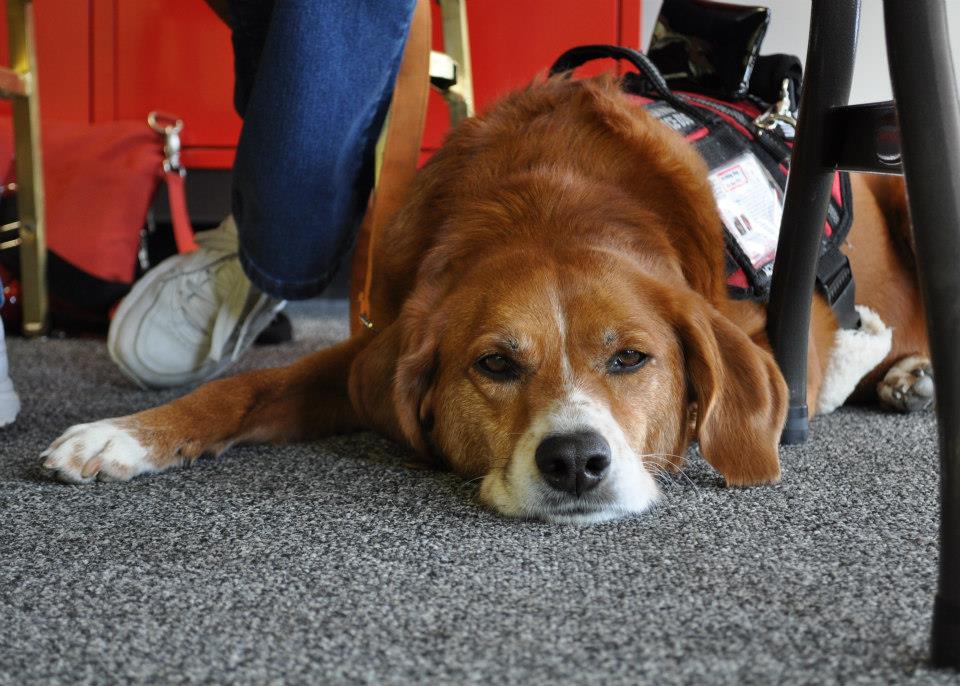
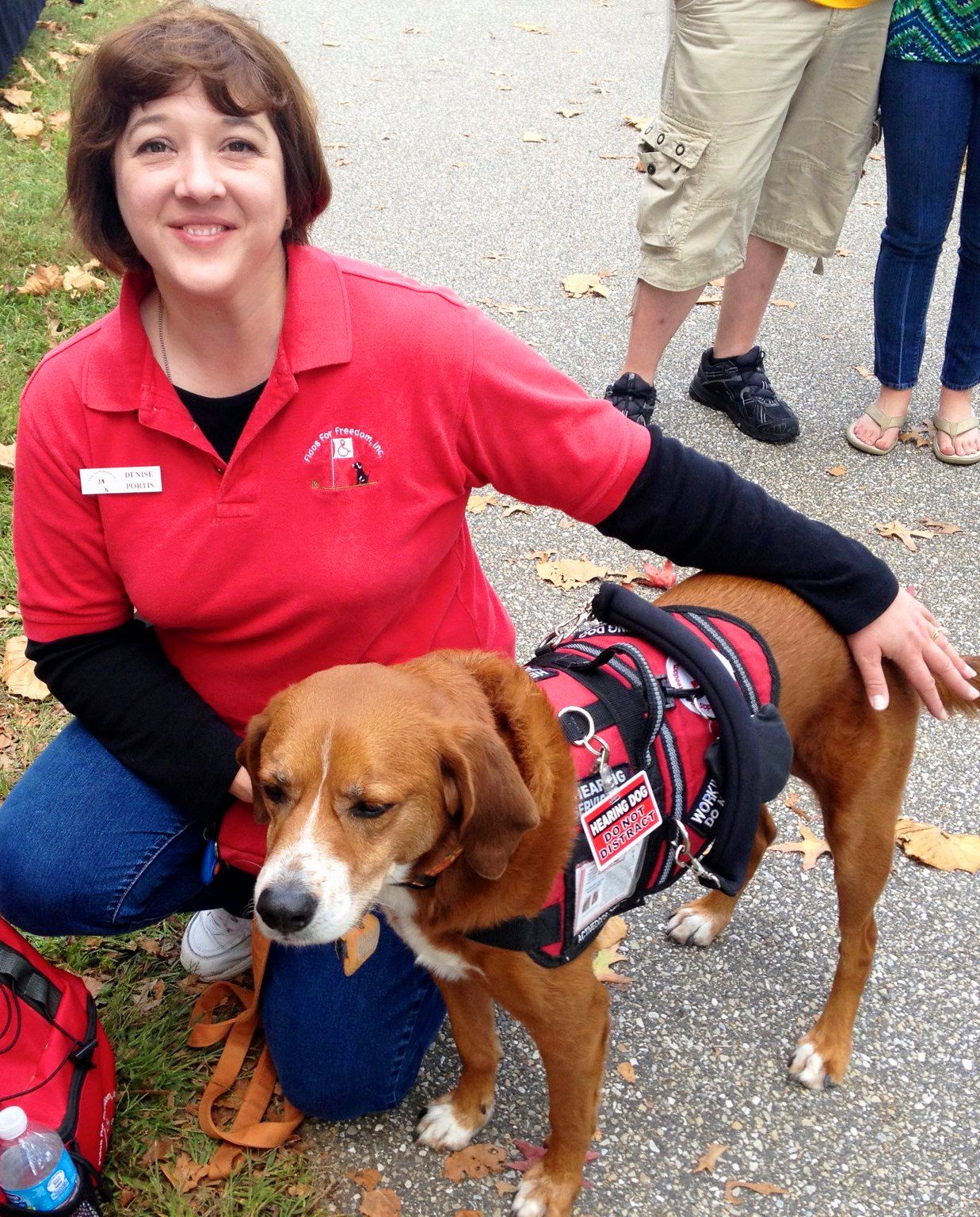
Do you know that I credit my “can do” attitude to my hound dog? The fact that I can say, “Watch me!” can be attributed to the fact that I am partnered with an assistance dog from Fidos For Freedom, Inc.

Yes. Perhaps I would have found my courage without her. I may have discovered I am resilient on my own. I may have responded to a “Hey! You can’t do that!” with the response of “Oh yeah? WATCH ME!” by simply growing and maturing. However, I can exactly pin point the moment in time when I grew self-esteem muscles.
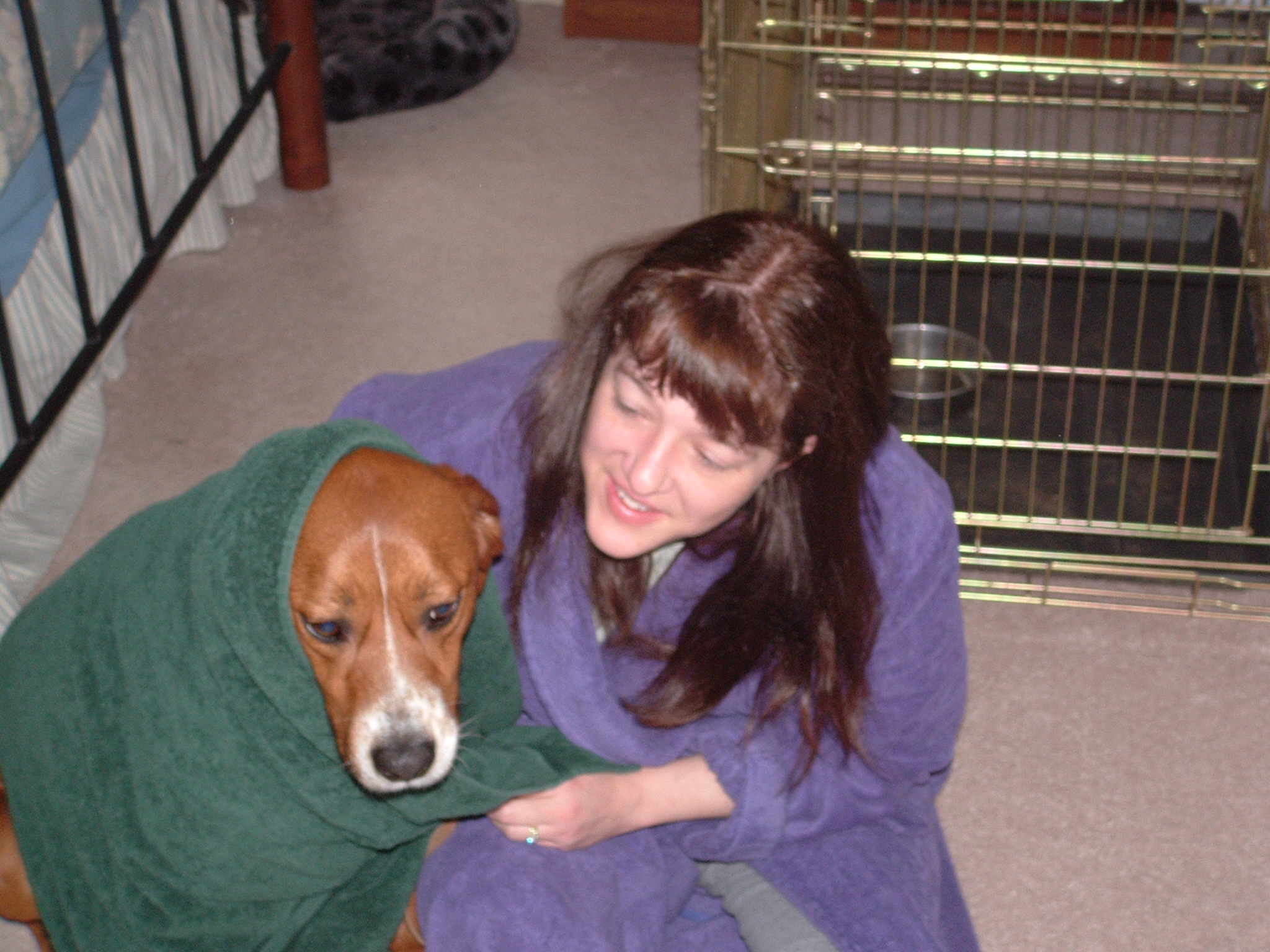
Chloe jumped into my bubble bath with me when my phone rang. Her hearing alert was so ingrained, she was oblivious to the water and naked partner.

I was matched with Chloe in May of 2007. Shortly after that, Chloe came home to live with me and to do what she’d been trained to do. Alert me to sounds I could not hear. (Eventually she received additional training and skills to help me with my balance). I use to really enjoy bubble baths. This was before numerous concussions and worsening Meniere’s disease made the risk of drowning to real. Chloe was parked on the bath mat while I enjoyed that lazy bubble bath. I can’t tell you how startled I was to suddenly find my dog IN the bathtub with me and licking my face. My husband popped his head in the door and said, “Your phone was ring… ing. Ummm. Why is Chloe in the bathtub with you?

From that moment on, I knew I’d never miss a phone call.

… or alarm clock, or not be able to pick up something I’d dropped, or climb stairs safely, or know if someone was behind me in a store, and friends? The list goes on…

Watch Me

One of the early commands I learned was “Chloe – WATCH me“. Because I talk to my dog and would often say, “Chloe – look-it that squirrel, – or – look-it that bunny”, I learned NOT to say, “Chloe LOOK”. It would make her eagerly look around at whatever CRITTER I had seen before her! However, if I say, “WATCH me“, she looks right at me. She may cock her head and obviously listen for a command; much more than just meeting my brown eyes. However, she knows that “WATCH me” means “make eye contact – pay attention”.

Chloe actually tells me “WATCH me” as well. Chloe does it with her ears and head. When her head swings in a specific direction and her ears go up, I :  1) look at her and pin point where she is looking/listening, 2) turn to look myself. It may mean I need to step out of the way of something or someone.

Not LITERALLY

“WATCH me” doesn’t always mean literally, however. I was so cracked up at a meeting I attended recently. I was seated next to a person with low vision. We were in between speakers and were visiting while we waited for the next session to start. About 10 yards away, I noticed this man and lady plug up a power strip and run an extension cord over to their row in the auditorium. I interrupted my friend and said, “Hang on – they can’t do that! I’ll be right back. Watch me!

I stood up and walked over to the couple now fussin’ with how the cord should lay across the aisle. I put Chloe in a sit/stay and said, “Oh I’m sorry. You can’t put that cord there as there are a bunch of us in this area who cannot navigate safely with it stretched across the aisle“. They looked at me with a startled eyes and then around me to the section I was sitting in. I could tell by the dawning comprehension on their faces, that they spotted the service dogs, walkers, scooters, and canes.

Ooops. Sorry about that!” and they worked together to pick it up and roll it back into a nice handful of cords and plugs.

I casually walked back to my group and my friend said, “I saw that! Fist bump!” and she held up her fist for a “you go girl” moment.

Then it hit me. When I walked away I had told my friend with low vision, “WATCH me“. When I returned she said, “I saw that!” I started laughing. Not the kind of southern girl lady-like giggle. Oh no. I was hee-hawing. I managed to snicker out loud in between SNORTS what I had said – and what she had said. I nearly laughed myself into the floor. Yup. The kind of laugh where I had tears of mirth running down my cheeks and very unladylike hiccoughs to boot. My friend was laughing just as hard. She said, “We’re a pair, aren’t we?

You “see”, my friend? You don’t have to have 20/20 vision to be able to WATCH ME. You can pay attention with your eyes, your ears, or your hands. You can pay attention with your heart. You can pay attention – by PAYING ATTENTION.

It’s a focus.

It’s an attitude.

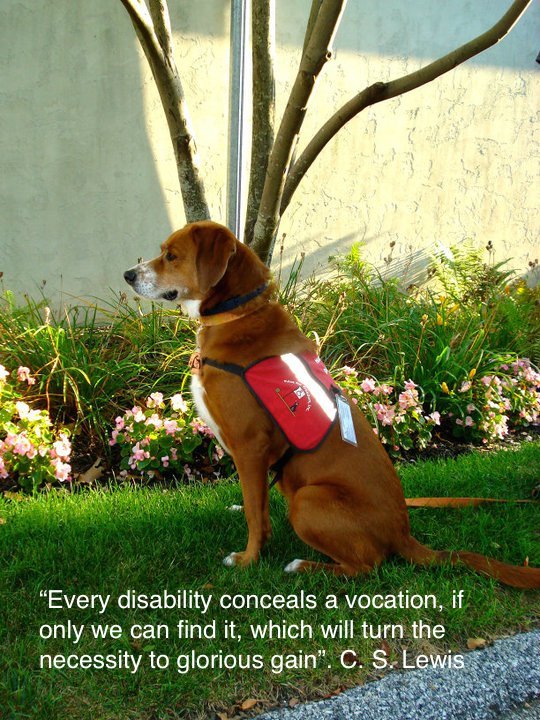
One of my favorite quotes (in the opening picture above) is by C.S. Lewis: “Every disability conceals a vocation, if only we can find it, which will turn the necessity to glorious gain”.

I recently had someone take me to task for self-identifying as a person with disABILITY. She argued that I was basically admitting I was unable to do something. I thought, “Well how wrong is THAT?”

Every person I know who lives with disability is actually someone who has learned how to do something IN SPITE OF challenges. You find a new way to do something. You learn how to do things safely even though it may not be the way a task is done by most folks. Perhaps you have assistance because of a device, service dog, or have simply learned to ask for help.

Yesterday while on campus, I needed to drop something off at the Disability Support Services office. My balance was “good” yesterday, so I exited a door that actually opened into a courtyard that had stairs bordering the perimeter. I felt confident to go up the 20 some odd stairs with Chloe. When I reached the top, an employee was standing there with big eyes, having seen me take a slow but steady climb to the top.

Hey!” I said cheerfully, and stepped around her. I looked up and was startled by a mass of people coming out of the gymnasium towards me on a very narrow sidewalk. I looked for an alternative path and spotted a way around through the mulch and picnic area.

Sensing what I was about to do, the lady beside me said, “Maybe you should wait“. I know she meant well. I felt no criticism, nor did I feel she was talking down to me. But… I was in a hurry, and I was having a good balance day. I had my service dog right beside me.

So I responded, “Oh, I’m ‘good’, no worries…” and proceeded to carefully pick my way around tree roots, pine cones, mulch and twigs. I didn’t retort, “WATCH me“, but if one could interpret the courage and attitude from my squared shoulders and confident stride, you would have “read that” in my departure.

Chloe and Fidos For Freedom were the “shot in the arm” I needed to become confident and independent. You may have found your own way to adapt. Having a disability does NOT mean you cannot do something. As a matter of fact, chances are if you tell someone who is differently-abled they cannot do something, you may discover by the set of their jaw, the determined look, and confident square of their shoulders that they most certainly CAN. Their body language screams,

WATCH me“.

Denise Portis

© 2014 Personal Hearing Loss Journal
Post-traumatic Growth (Part 1)

team chatter 2

Nope.

That isn’t a typo. You have probably read articles or news stories about post-traumatic STRESS (or PTSD), but did you know that post-traumatic growth is a related and now often studied psychological topic? There is even a new field called psychotraumatology. Try saying that 5 times really fast…

At Hearing Elmo, I do my best to present topics related to invisible illness, disability, or chronic conditions. Guest writers are encouraged to have some connection to one of those topics.

*SIDE NOTE* Hearing Elmo welcomes guest writers any time! Email me for more information at denise.portis@gmail.com with “Hearing Elmo” in the subject line.

Chloe after 2013 re-certification

As you know, Fidos For Freedom, Inc. (FFF), is a big part of my life. My service dog, Chloe, comes from FFF but I also stay connected through weekly trainings and volunteering for various jobs each year. The people there have become “family” to me and I have learned so much about the disability community through my connections at this wonderful organization. Something I have observed, is that even if you’ve taken the step to train and be matched with a service dog to mitigate your disability or illness – something that can take “guts” as it can make the invisible, very visible – not everyone responds to “bad things” the same way. Many times it is simply because the person has not adjusted yet.

As my dissertation looms in my very near future, I am already thinkin’ about…

What am I gonna do? (No worries. I *can* use a scholarly voice when the environment calls for it <big grin>)

But back to my original topic! How do people come out on the other side of something traumatic, and find that they’ve grown? Do they have something in common or is the outcome as individual as the process? How do you survive and be BETTER and not BITTER?

These questions are on my mind. A LOT.

I receive hundreds of emails from readers each year and try to respond to each personally. I’m always tickled that a common question seems to be, “How do you have your ‘stuff’ all together so well? I’m floundering here!” I am always quick to respond with an honest evaluation about my own life “after disability”. Folks are surprised. I don’t try to sugar-coat how I’m doing in my own life. I deal with the same things you do:

Depression

Anxiety

Suicidal ideation

Pessimism

The trick is not to stay there. Sometimes it can be worked through on your own. Sometimes it cannot. Sometimes we need help. So how do some people come out on the other side of something traumatic – better? How do people grow in spite of experiencing something devastating?

This is going to be a “two-fer” post. Meaning: I can’t address everything I want to cover in one post (smile). For this first part I want to cover what kinds of things can cause PTG (post-traumatic growth), and clearly define what it is. Next week we’ll look at some other related issues.

What causes Post-Traumatic Growth?

Traumatic experiences.

Kinda anti-climatic, huh?

But for OUR population – those who live with disability, invisible illness, or chronic health conditions – what is a traumatic experience? It can include:

disability

invisible illness

chronic physical or mental health conditions

devastating diagnosis

sexual abuse

violence and victimization

divorce or loss of an intimate relationship

death of a loved one

war

poverty

Basically – anything that can cause stress. Not the run-of-the-mill kind of stress. You know the kinds of stress like, a “bad hair day”, my cat threw-up in my favorite shoes, I locked myself out of the house, or I ate bad sushi. We’re talkin’ the kind of stress that produces trauma. It may be specific to YOU. For example, I have met people who have heard me speak on various topics and have come up and shared that they “don’t get why hearing loss would be a reason to develop depression“. They have hearing loss and they have coped just fine. Variables, my friends… variables. Personality, background, resilience, support, worldview, gender, economics – the list goes on an on. You may respond to a life event completely different than someone else. That’s OK. This is why you hear me encourage folks to reach out and SHARE. Your experiences may help another. You won’t know if you don’t talk about it.

What is Post-Traumatic Growth?

PTG is actually something that came from a branch of Psychology called – Positive Psychology. There are scales and inventories available to see where you rate in PTG. I first started reading about it back when my cochlear implant was first activated. “Hearing again” was a tough journey. I stumbled across the term coined by Drs. Calhoun and Tedeschi. According to them,

What is posttraumatic growth? It is positive change experienced as a result of the struggle with a major life crisis or a traumatic event” (Posttraumatic Growth Research Group, 2014, para. 1).

Their research centers around 5 changes that occur in an individual, post-trauma. These include:

1. New opportunities

2. Change in relationships

3. Increased sense of one’s own strength

4. Greater appreciation for life in general

5. Spiritual or religious domain (Posttraumatic Growth Research Group, 2014)

Have you been diagnosed with a super scary, perhaps life-changing diagnosis?

Have you acquired a disability?

Were you injured, permanently changing the way you live life?

Have you experienced something that left scars (physical, mental, emotional)?

You can experience growth. It may not happen overnight. It may mean that you experience tremendous loss, fear, and grief at first. You may blow it. A LOT. However, I don’t know about you, but I experience a sense of hope knowing that something good can “come of this”.

Comment here or send me a confidential email. I’d like to know how you’ve experienced GROWTH. There is no prerequisite measure. Maybe it wasn’t a lot of growth. Maybe you experienced “three steps forward – two steps back” throughout the process. I’d love to hear from you!

Denise Portis

© 2014 Personal Hearing Loss Journal
Posttraumatic Growth Research Group. (2014). What is PTG? Retrieved January 2, 2014, from http://ptgi.uncc.edu/what-is-ptg/

Purposeful Down Time

24486_1390844928154_3468044_n

I’m back in school. I never thought I’d return to school to be honest. All that changed when I realized that I may not ever land a full-time faculty position if I am constantly going to be applying for the same jobs as those with doctorates. Here I am – back in school.

I manage my time very effectively, almost obsessively. I am a very organized and detailed person. Something I have learned to do, however is to be very purposeful in my down time. For some reason, even though I found that it was fairly easy for me to be organized and to schedule my day, I was unable to enjoy any free time I might have. When I was “off”, I wasn’t really enjoying the time. I even recall telling my mother that if I didn’t have plenty to do, I was convinced it would contribute to my feeling depressed. “Be so busy you don’t have time to feel blue” was my motto, I guess.

The truth of the matter, this is dangerous. Some folks think their time is too valuable to be spent in frivolous activities. Some believe that there is too much to do to waste time doing nothing at all. I argue that not taking the time to simply “be” is deadly. You don’t have to search very long to find reports of Americans who are stressed. We seem to be over-worked, over-scheduled, and over-committed. I have family members who don’t take vacation time because their company will pay them back for it at the end of the year if they don’t use it. My response is, “Whaaaa…?”

(I’m very eloquent).

I’ve been reading “Essential Guide to Online Learning” as many of the classes I am taking to finish up my doctorate are in an asynchronous classroom. The author of the book explained that we need to “be present in your downtime” (Laureate Education, Inc., 2013, p. 27). In order to make time for school, work, family, errands, and all the “other stuff” we squeeze into our schedules, I employ the use of Google calendar. Every task has a specific color. As detailed as I am, however, every day has blank time slots open. FREE TIME!

“Let’s Par-teeeeeey!” Or not.

I try to be purposeful with my free time. If I choose to use my free time to read a good book, groom my dog, or take a walk, I mindfully do those things. So often, folks spend their free time worrying about what they have to do next in their schedule! How is that enjoying your free time? How does one reap any benefit from having some time to yourself?

The first time I realized I had trouble with this was when I realized I couldn’t even go to sleep at night. Here I was, drop-dead tired and weary, exhausted from having to “hear” all day and needing a good eight hours of sleep. Instead, I would lay in bed worrying about what I had to do tomorrow – often things that I had little control over. I was losing sleep over losing sleep. Oh the irony…

I realized that I was going to have to get serious about fun and relaxation. There are things I do each week for just me. There are things I do each DAY – although some days I have more time than others. If I have the time every single day to walk my service dog, Chloe, then by gosh when I’m walking her I will do nothing but walk her and enjoy the moment. I run into folks who are walking their dogs too. By run into, I mean that quite literally. Their attention is on their cell phone instead of the dog at the end of the leash. They are not looking up and around, which means they may not be aware of their surroundings, who is in their vicinity, or what *blech* they are getting ready to step in with their brand new walking shoes. I breathe deeply, look around, talk to my dog, and intentionally notice the world around me.

If I have 30-45 minutes to read before bed in order to decompress and unwind, you can be sure I am not reading a required text. I will be reading something for me… something that “feeds my soul” or “fires my imagination”.

This morning I had two hours to put up my family’s Christmas tree. The house was quiet, with hubby already gone to work and kiddos sleeping in since their work schedules were later. I mindfully put up my Christmas tree. I didn’t think about the assignment I had due by 3 PM. I reminisced as I hung old ornaments and strung lights. I arranged and re-arranged. I asked the dogs if things looked “purtee”. Then I turned off all the lights in the room, pulled the blinds down, and turned on the twinkle lights. I listened to Christmas music. I rubbed my dogs’ bellies. At 11 AM, however, I had research that I had scheduled to do in advance. However, I deliberately refused to think about it prior to my free time being “up”.

Do you need to be more purposeful with your down time? Do you need to reduce stress and schedule “me time”? Please feel free to share tips and favorite “purposeful me time” moments in the comments.

Denise Portis

©2013 Personal Hearing Loss Journal
Laureate Education, Inc. (2013). Essential guide to online learning. Baltimore: Laureate International Universities Publishing, Inc.

Reliable Transportation for Cara and her Tanks

cara

I have met so many special people in my life. One of those special people is someone who has become one of my closest friends. Cara is a fellow client at Fidos For Freedom, Inc., where I trained and received my own assistance dog, Chloe. I rarely promote fundraisers on here so I hope you understand that when I do choose to share a story it is because it is for a very unique and special reason.

Cara first joined the Fidos For Freedom, Inc., family to train and be matched with a service dog to mitigate a chronic illness – Multiple Sclerosis. Since that match with her beloved, Tank, she has also been diagnosed with additional life-threatening illnesses. Cara doesn’t let “life” get in her way. She continues to volunteer for Special Olympics as her son enjoyed the activities. Justin (her son) passed away a couple of years ago, but she continues to stay active giving of her time and energy to this wonderful organization. Cara also often provides leadership in various roles at Fidos For Freedom, Inc., and encourages new clients as well as “veterans” like myself.

Cara’s current transportation is “beyond any mechanic’s ability to fix” and she is fast coming to the point where she will no longer be able to attend Special Olympics activities, or Fidos For Freedom activities and trainings. Cara is trying to raise money for the conversion of a used van to make it accessible for her use. Please read her story below and click on the links provided to read an in-depth biography of this incredible lady – as well as information about why she is raising money.

Imagine not being able to go out and hop in a car, call a taxi, etc., because you do not have transportation that can carry you, your wheelchair, service dog, and oxygen tanks. You become house bound and lose the ability to be involved with others and with life. Help us not let this happen to my friend, Cara.

This is not a scam. Would you consider donating even a small amount? More importantly, will you share this post with others and encourage them to donate small amounts as well? In a short time, people networking with other people, folks who CARE about others and reach out to help, will help Cara meet her goal to have reliable transportation so that she may continue the quality of life she enjoys. I hope you will consider helping – and sharing!

===================================

Today I’m launching a fundraiser at http://tinyurl.com/AVanForCaraAndHerTanks. I usually don’t like asking for help, but find myself in the humbling position of needing to do that.

Due to my failing health, I am using my wheelchair a lot more often lately. The lift in my van is labor intensive and is becoming more difficult for me to use. In addition, my van is old and I’m concerned about it’s safety on the road. I drive myself to the hospital and to several specialists, almost once a week.

I am asking for your help in raising the funds I need to modify a used van with an automatic ramp, lower the floor, put in a kneeling system, etc. This will allow me to transfer to my chair safely from inside the van. I’ll be out of the elements, away from strangers, and out of the way of traffic.

Please visit my fundraising page at http://tinyurl.com/AVanForCaraAndHerTanks where I share my story and to find out how you can help. If you would also share this with your friends and family, it would help me greatly!

Thanks in advance for taking a look and helping if you can! Cara, service dog Tank, and O2 Tank, Jr  🙂

Denise Portis

© 2013 Personal Hearing Loss Journal

If I’ve Said it Once…

If I've said it once

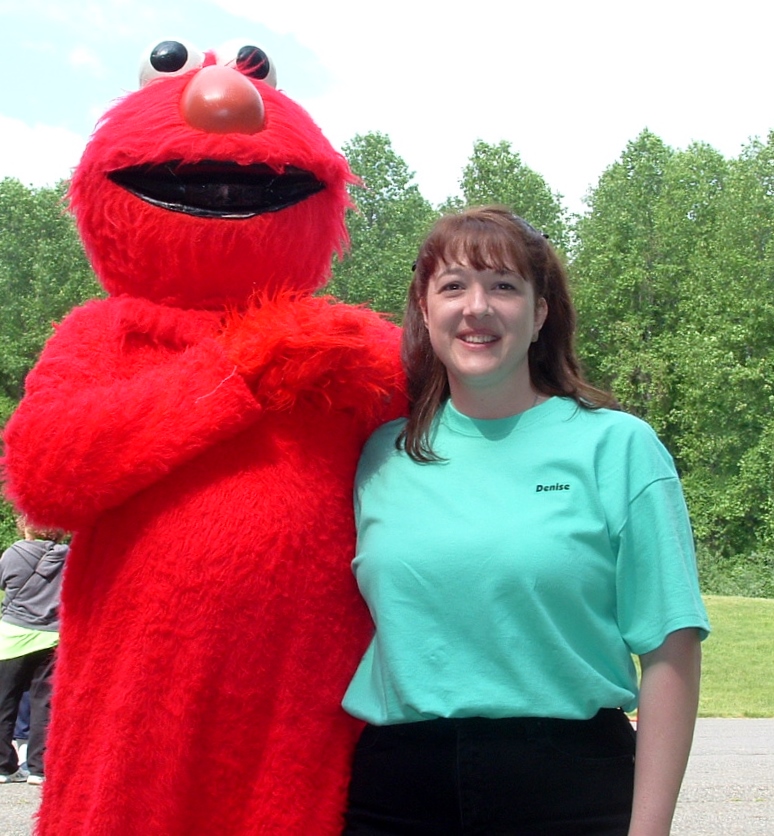
The photo above was taken at the 2006 Walk4Hearing in Pennsylvania. It was completely coincidental that the Walk coordinators invited “Elmo” to interact with the children on site that day. Poor Elmo had no idea what hit him as I squealed and came flying across the parking lot to hug his neck! Children he was expecting. A grown woman – not so much. However, Elmo encapsulated my reemergence to the hearing world – the first toy I heard months following my cochlear implant activation. Elmo’s voice (emanating from the “Tickle-me-Elmo” toy I found on the shelves of a local store) was the first CHILDHOOD voice I recognized after having been tweaked and re-programmed numerous times following my activation. It was an epiphany for me. From that moment on, I knew I was going to be OK. I could hear again – and more importantly RECOGNIZE voices. So to find Elmo that beautiful August day, 7 years ago, was thrilling for me!

I stepped back to introduce myself and explain “why the exuberant hug“. Elmo interrupted me and mumbled something. I said something to the effect of “HUH?” (I’ve always been particularly good with words).

Elmo spoke up. “I CAN’T HEAR A THING INSIDE THIS SUIT“. I stared blankly at Elmo for a moment and then broke into peals of laughter. Elmo put his hands on his hips and looked as exasperated as a character was able while inside a red furry suit! I apologized. Profusely. Welcome to my world!

Welcome to My World

Something numerous readers email me about is their frustration at trying to explain what is working – or not working, to closest friends and family members. I was at an ADI (Assistance Dogs International) conference in Baltimore several years ago and just happened to be in the right place at the right time; relaxing against a wall in the hallway outside a conference room. Because of my position, I was in the perfect place to see and hear a lady take her husband by the elbow and drag him over to the side (near me) to fuss.

She whispered (loud enough for even ME to hear), “If I’ve said it once, I’ve said it a thousand times… I cannot climb over your bag when you put it in the aisle. Do you want me to fall in front of everyone?”

Readers constantly tell me how frustrated they are to have to repeat “how to’s” to those closest to them. Folks they don’t interact with much they expect to remind about what works well for them and what doesn’t work. However, people think that if they are closely acquainted with someone they don’t ever need to be reminded of what they can do to communicate better, or to assist if needed.

A close friend of mine and follower of Hearing Elmo has MS and deals with fatigue frequently as a result. She was out to eat with her mother recently at which point her body just shut down. Although they were not finished eating, she needed to leave and needed to do so right away. She stood up and wobbled, and ended up asking her mother for assistance. Her mother did so but was very quiet on the walk out to the car. It was there her mom let her exasperation get the best of her.

“I don’t understand how you can be out on the field to oversee your son’s soccer team one day, and need help to the car the next. I don’t know how things can turn on a dime like that with you!”

My friend was shocked – and grieved that her mom, someone as close to her as anyone, failed to recognize what to her was obvious. One cannot pick and choose when fatigue and weakness will hit. My friend thought she had explained this to her mom (and very likely HAD). But her mom needed a refresher course in how symptoms of MS manifest themselves to my friend – a unique individual.

When my frustrated friend relayed what happened to me I thought, “Well welcome to my world”. Don’t all of us who live with invisible illness, disability, or chronic conditions deal with the same thing? We have to repeat ourselves – often.

Learning to communicate

It cracks me up to be on the training floor at Fidos For Freedom, Inc. sometimes. Clients and volunteers are asked to “Meet and Greet”. I hate these exercises. I’m not gonna lie. You pair off in groups of 2 or 3 and shake hands, talk, and introduce yourself. This is very “real life”. It is something we do in the “real world”. But I have to tell you there are few things I dread more. For one thing, that wonderful “voice in my head” via the training room floor’s hearing loop system is gone. Instead there is a BUZZ of voices overlapping and rising in volume all around me. I struggle and ask for repeats the entire time – all the while making sure my dog is in a proper down/stay and not flirting with nearby dogs. If more than one of us in the group have hearing loss, we juggle for position trying to put everyone on our “best hearing side”. If you look around the room there are plenty of people with cocked heads leaning close, or others who have definitely invaded the personal space of someone in their group. I’ve been in groups of people who did not have hearing loss who ask, “Now remind me which is your good side?”

My balance disorder allows me to move just fine. Standing still? Not so much. I wobble when standing still. Especially when standing in a large room with low ceilings and ceiling fans. I’m not the only one to be wobbling though. I giggled out loud one day when I lost my balance and a fellow client who uses a walker reached out to steady me and almost lost her own balance. She giggled right back in response and said, “I forgot you can’t hold still!” It was comical actually. Yes, we may both have balance problems, but we could help each other. We learn to laugh at ourselves if needed. We learn to accept help. We learn to communicate what it is we need.

Significant others and Spouses are “Just PEOPLE”

Do you get frustrated with the people in your life who should “know better”? “If I’ve said it once, I’ve said it a thousand times…”!

Even those we love the most are NOT mind readers. They may know how best to communicate with you if you have hearing loss. They may know that certain things like weather or temperature influence how you feel. They may know how certain medications may help – or hinder you. If I’m honest with you, however, I will admit that even *I* do not know how I will feel from one day to the next. Maybe even from one HOUR to the next. It is my responsibility to communicate my needs. It is my responsibility to give gentle reminders. I am responsible to explain 1001 times if needed.

We need to remember that those who love us? They’re just people. They do the best they can – and 9 times out of 10? They are not being a butt-head on purpose. My own spouse doesn’t even blink when I ask him to take my elbow one day, and maneuver my way around a crowded mall without assistance the next. If I’m telling him once AGAIN that I cannot take a call in a crowded store and to please answer my phone? He simply says, “Oh yeah!” (He’s cute that way)

Someone recently belly-ached to me, “At what point do I assume they will never get it? When do I give up?” Who said anything about giving up? There is no “end game” here. It’s a journey.

Let’s all be willing to communicate – again – what we need.

Denise Portis

© 2013 Personal Hearing Loss Journal

Team Chatter

In public, I talk to Chloe constantly. May 4th I learned what this is called...
In public, I talk to Chloe constantly. May 4th I learned what this is called…

Photo by Julie Wu, volunteer and therapy dog handler for Fidos For Freedom, Inc.

A trainer exited Pi’s Deli behind me and said, “Great team chatter”.

I’m always so eloquent. I responded, “Ummmmm”, with a questioning look that spoke volumes.

Fidos For Freedom’s trainers have had a LOT of practice and experience with people with hearing loss. She rephrased. “Good communication with your dog”.

Oh.

When I hear a “new for me” phrase, I am often scrambling to catch up to the conversation as I work to interpret the meaning. Having been partnered with Chloe since 2007, I think I can safely say I’m a veteran team. That doesn’t mean that I don’t still learn new things, however. Phrases like “team chatter” may be heard, but not understood until I spend a few minutes pondering it.

What does it mean?

Team chatter is important in a service dog team for two primary reasons. Team chatter keeps your dog’s attention on YOU if you use their name a great deal and talk to them. A second reason, however, is that service dogs need to know when they are doing something right! The tone and certain words connect with them.

This trainer may not have put two and two together like I did when preparing for this post. But the trainers use team chatter as well. When I did something right, this trainer told me so. If something needed polishing, she would tell me. She gave feedback throughout the certification segment we were doing that morning. She is a trainer and I am a client. However, we too, are a team. We are co-volunteers – even teammates in an organization we both love. Fidos For Freedom, Inc. (see http://www.fidosforfreedom.org/ for more information).

Why People with Invisible Disabilities Need Team Chatter

In psychology we use the phrase, words of affirmation, to explain the inherent need we have to receive “high 5’s” literally and figuratively.

Paul Hulijich explains, “The mind is very powerful, and it needs to be spoken to. We are all aware of the power of being told, for example, that we look well; it often immediately evokes the feeling of being well. We are influenced by what people say to us” (Hulijich, 2012, para. 3). Since I have had to learn to do a great number of things “differently”, it means a lot to me when a trainer, friend, or family member tell me that I handled something well.

At my daughter's college graduation, May 11, 2013.
At my daughter’s college graduation, May 11, 2013.

My husband praised me for how I chose to ascend and descend a number of steps in various arenas this last weekend. Even with Chloe in a close “heel”, I’m just not safe on steps in large cavernous – or open air – places. I didn’t make a big deal about it, only reminding Terry, my husband to either stand immediately in front of me, or behind me. Placing a hand on his shoulder is all I need to keep from falling when going down steps. Going up is a little trickier, but we still have a well-rehearsed plan. He told me, “You use steps with a lot more confidence now. You don’t even miss a beat”.

I don’t know about YOU, but it means a lot when someone notices what was once trial and error, becomes a well-polished, good habit. I need affirmation when I’m told that I pick up cues about my volume better. It means a lot when someone notices that I grin and advocate when having a near miss in a crowded hallway, and make it a learning opportunity.

One day last week, Chloe did not accompany me to work as she wasn’t feeling well. (She has chronic early morning acid reflux). I only had two classes that day and so opted to let her stay home with my husband since he was off. Just like any normal day, I dropped a number of things in the classroom. One student watched with wide eyes as I braced myself against a desk and used my foot to pick up a stack of quiz sheets with a rubber-band around them. “Oh my gosh, you do that without even thinking about it! You live YOU very well!”

I blushed but also BEAMED at the impromptu praise. What Greg said, echoed the beat of my heart. This is what I want – to live ME very well.

We Can Use Team Chatter too!

Do you have a hearing loss? Do you live with a balance disorder? Have you learned to navigate life with low vision? Do you have a chronic or invisible illness? Whether you are new to “the new you”, or a veteran, there are people around you who could use some team chatter.

I know, I know! It may not always seem as if they are ON YOUR TEAM, but there are still co-workers, friends, and family members who could benefit from being told when they are doing something RIGHT.

Sarah, a person with low vision, once asked me where her husband was. I pointed and said, “He’s right over there”. She reached up and grabbed my pointing arm and followed it with her hand in the direction I was pointing. Off she went in the RIGHT direction, leaving me pondering my own OOPS. After that, I did much better about responding with phrases like, “at your 9′ o’clock”; or, “over your left shoulder about 25 feet away”.

She noticed. “Denise, you do a great job at giving me directional assistance. It really helps!” I’ve tried to remember to do the same for the folks in my life.

“Thanks for re-phrasing that. I understood it perfectly the second time. You don’t even have to think about doing that for me now. Thanks!”

“I appreciate you habitually moving to allow me to stand next to the side when we get on the elevator. It really helps to have something to lean against”.

“Thanks for ignoring Chloe when we talk in the office. I know you love dogs, and because she knows you it can be hard to ignore that wag! It really helps me though, so thank you!”

As a person with both Meniere’s disease and hearing loss, I do a lot of reminding about what works well to assist me, and what does not. (This can be tricky because we don’t want to embarrass or offend someone!) Sometimes I feel like I’m constantly in “education mode”. Yet, we need to remember to tell folks around us when they get it right! It affirms what they do or say in interacting with us. Perhaps they even just need to hear that they “leave us be” in a healthy way! “Thank you for not assuming I needed help with that and waiting to see if I ASKED for help”.

I hope you will work to incorporate team chatter into your own relationships. Words of affirmation and open communication can be so important. Don’t assume others know when they are doing a good job. Let them know!

Hulijich, P. (2012). Affirmations. Psychology Today. Retrieved, May 12, 2012 from http://www.psychologytoday.com/blog/mind-wellness-awareness/201211/affirmations

Denise Portis

© 2013 Personal Hearing Loss Journal

Overkill?

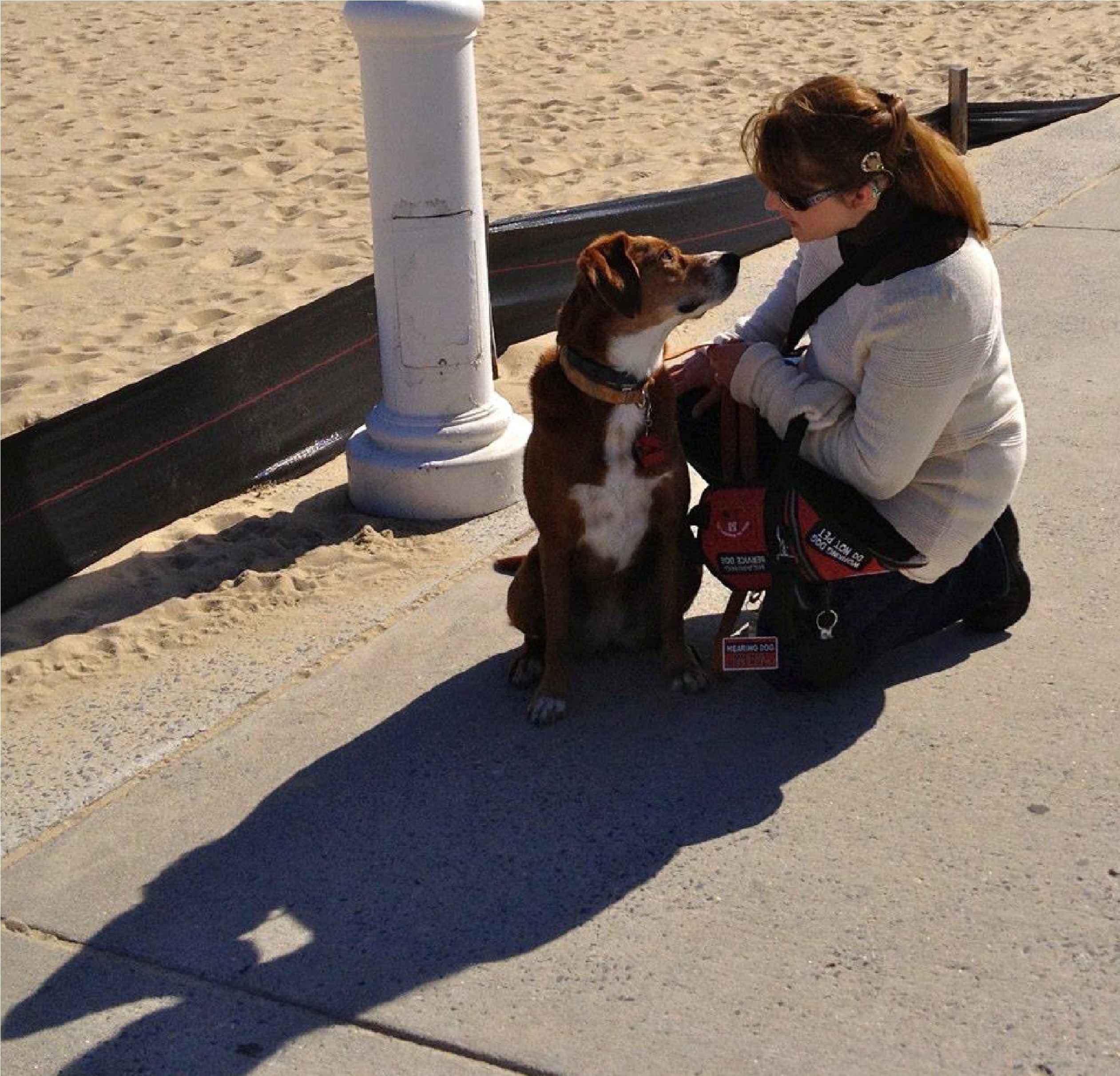
At the beach in Ocean City with cochlear implant, hearing aid, and hearing assistance dog

1. I’ve had people with cochlear implants before ask me why I don’t just use a cochlear implant. One (or two) works for them after all!

2. I’ve had people with hearing aids ask me why I choose to get a cochlear implant in my “worse” ear.

3. I’ve had folks with CI’s and HA’s ask me why I use assistive devices in the classroom if I am “hearing again” so well.

4. I’ve had people with cochlear implants ask me why I need a hearing assistance dog if I’m hearing so well now.

5. I’ve had people who were culturally Deaf ask me why I don’t just use ASL since I am proficient in the language.

6. I’ve had people who were late-deafened ask me why I do not just continue to speech read. Why embrace technology?

Overkill?

These are all legitimate questions. I will do my best to answer them.

1. I’ve had people with cochlear implants before ask me why I don’t just use a cochlear implant. One (or two) works for them after all!  Not everyone who qualifies for a cochlear implant can go bilateral. I have Meniere’s disease and I barely squeaked by in pre-surgical balance testing to be a unilateral candidate. I use a hearing aid in the opposite ear because – well, because my audiologist told me too! My audiograms and testing each year astonish my audiologist at Johns Hopkins. Who would have thought I could hear this well? However, the proof is clear. I gain an extra 3-7% when I use a hearing aid in my unimplanted ear.

2. I’ve had people with hearing aids ask me why I choose to get a cochlear implant in my “worse” ear. I chose to get a cochlear implant because with the best BTE hearing aids available, I could no longer hear well enough to carry on a normal conversation. I learned all I could about cochlear implants and took the “plunge” in April of 2005. I’ve never regretted it. A comparison of my audiograms can be found at this post: CLICK HERE.

3. I’ve had folks with CI’s and HA’s ask me why I use assistive devices in the classroom if I am “hearing again” so well.  I hear great in “most” indoor environments. I even hear outside fairly well if there is not a lot of competing noise. But let’s face it. Listening environments are not the same. Some rooms are huge with cathedral ceilings. Some have all hard surfaces. I use assistive devices because it helps to eliminate one of my greatest enemies. NOISE. Isn’t it funny that as a “hearing again” person, noise interferes with my hearing well? My favorite device as a teacher is my clipboard. You can read about it at this post: CLICK HERE.

4. I’ve had people with cochlear implants ask me why I need a hearing assistance dog if I’m hearing so well now.  This is probably the number one question I receive in person, from readers on Hearing Elmo, through FaceBook, and through email. My hearing assistance dog from Fidos For Freedom gives me something that my cochlear implant and hearing aid do not. Independence. When I trained to be matched with a service dog, I was not only learning the commands, but also learning to watch my dog – and to trust my dog. I needed that training! I am confident in knowing that if I do not hear something, my hearing assistance dog will let me know. This may mean becoming aware that a car is coming up behind me in the parking lot. It may mean that I will know before rounding the end cap, that there is a noisy family on the next aisle. I know if I drop things. I know if intercoms are giving announcements. I know about alarms going off. I know when people are saying “excuse me” so that they can get past, and much, much more. I feel safe. I feel confident. I am independent. I didn’t feel those same things when only utilizing a CI and HA. (Besides with my balance issues, Chloe has become just as necessary to me because of her balance work).

5. I’ve had people who were culturally Deaf ask me why I don’t just use ASL since I am proficient in the language. Bottom line? I am not culturally Deaf. I was not born with hearing loss. Everyone close to me has normal hearing. Don’t misunderstand. I love ASL and have been teaching the language for over twelve years. I actually rely on sign at home if I’ve taken my ears out (as well as speech reading). However, I was born into this world with ears that hear. It made sense (to me) that when I began losing my hearing that I fight to regain as much of that as I was able to do. I do not criticize those who embrace their deafness. I love the culturally Deaf and have learned how to advocate in a positive way from Deaf friends. But… I’m not Deaf. I am a person with hearing loss who is “hearing again”.

6. I’ve had people who were late-deafened ask me why I do not just continue to speech read. Why embrace technology? Speech reading (or lip reading) is not an exact science. Don’t believe me? Try it sometime. Get a friend or family member to voice some simple sentences with their volume “OFF”. Can you accurately pick up what they are saying?

According to the CDC (2012), a good speech reader will be accurate 4 to 5 words in a sentence of 12 or more words. I have news for you. 33-50% by the BEST, means they are not communicating well. Even for those who are terrific at understanding “in context”, will still be asking for repeats or clarification (or sit there “lost”). I still speech read some. It is only an additional tool to help me communicate at my best, however.

Use It All!

So. Is the way I’ve chosen to stay connected, to communicate, and to hear the world around me overkill? Perhaps to some it is. However, these choices have helped me to cope, to interact, and to be a confident “hearing again” adult responsible for my own communication. If you are a person with hearing loss, you have chosen your own path, too. I respect that! I am grateful to be living in an age where so many options are available to people with hearing loss. Decide how you want to engage the world around you – and then OWN IT.

Do you use additional things to hear at your very best? Please feel free to share those options by commenting on this post.

Happy hearing!

Denise Portis

© 2013 Personal Hearing Loss Journal

Center for Disease Control. (2012). Hearing loss in children: Learning language. Retrieved April 20, 2012, from http://www.cdc.gov/ncbddd/hearingloss/language.html

Monkey See, Monkey Do

I've always been an "expressive mime" and mirror people's facial expressions!
I’ve always been an “expressive mime” and mirror people’s facial expressions!

My kids were the first to ever mention it to me. However, since that revelation a number of people have told me, “Denise? You mimic every facial expression I have!”  Some said so with exasperation, and some with amusement. My daughter, age approximately ten-years-old, interrupted herself describing something funny that happened in a class to exclaim, “Mom! You crack me up! You make the same faces I do when I talk!”

Sort of like “monkey see, monkey do” I suppose… but not because I was learning through observational learning or imitation. Instead, as a person with hearing loss, I carefully watched the facial expressions to better speech read and pick up more than I could by simply hearing pieces of words.

It’s different than being empathetic. I know because I’m one of those folks who will laugh with you and cry with you. Yup. Literal tears and equal sobs and hiccups. Don’t get me wrong! I’m sincere! I just get very emotionally involved in communicating and have been known to laugh, cry, or “blow my top” just in commiseration!

I “hear again” fairly well now. I’m bi-modal – meaning I have one cochlear implant, one hearing aid, but AIDED in both ears to better hear. Ideal environments are one-on-one in quiet places. I hear well with only some necessary clarification even in noisier environments. However, despite hearing better, I still have the habit of mirroring people’s emotions and facial expressions.

I learned ASL long before I lost my own hearing. I had some friends in college who were culturally deaf… and this motor-mouth wanted to talk to them. Most people who are late-deafened never learn ASL. (Why? They were born hearing and likely most of the people they know are verbal communicators). However, ASL is actually made up of three things: sign, facial expression, and body language.

So perhaps that is why I mirror facial expressions. More likely? My best guess is that people with hearing loss have a need to really focus, really TUNE IN when communicating. Sure, we speech read to a degree, but we watch people’s faces too. Are they smiling, scowling, surprised or crying? These facial expressions matched with what we CAN hear, help us to determine the overall content of what a person is communicating. So guess what? If you know someone with hearing loss, it can greatly benefit that person for your face to match your mouth.

Sarcasm is a Problem

How do I know this can be a problem? I have a sarcastic son. As a matter of fact, my daughter has been described as having a dry wit. My husband? KING OF SARCASM. It can be really hard to communicate if their face is saying one thing (or nothing at all…) and their mouths are saying something else. Even “hearing again” as well as I do I was taken aback by a conversation I had on the training floor at Fidos For Freedom recently.

Steve (name changed), a fellow client and new buddy of mine, came up to me in his scooter with this big signature smile on his face. “HEY! (What can I say… I’m exuberant!) How has your week been!?”

With huge smile and sporting numerous dimples he responded, “Hi, Denise. Hi Chloe. I had a really bad week!”

I paused a moment. Then a second moment went by. I was confused. In this big cavernous training room with numerous sounds competing with what was coming out of his mouth, his face did not match what I thought I heard.

“Ummmm.” (Yeah. I’m eloquent).

Thankfully, he took my pause as permission to elaborate. It only took another sentence or two for me to realize – yes. He HAD indeed had a bad week, but ever optimistic, positive-thinking young man that he is, wasn’t going to let that stop him from smiling and enjoying his training and friends at Fidos For Freedom.

Another example of mixed signals:

In class today a student rushed into class a few minutes late, causing me to skitter out of the way before I was knocked flat. Big smile on her face, she stopped with big eyes and eager expression to spout, “Crap. Crap, crap, crap. I could kill myself!”

Again, tempered with years of experience I intelligently responded…

“Ummmm.”

“We have a quiz today, don’t we? Crap! I forgot!”

Thankfully people do tend to continue, helping to CLEAR UP that initial confusion. It is a much tougher situation when you get mixed signals and then they pause waiting for a response. You know that terrifying look? Shoulders turned slightly towards you with eyebrows raised and expectant look? (When I see it the blood rushes right out of my face!) Then I have to ask for clarification, “Could you repeat that?”

Many times mirroring another’s expression can be very helpful. If they look concerned and you mirror that concern, it may clue them in you are taking something they are saying seriously – when perhaps it is NOT. I’ve had friends pat my shoulder and say, “Relax. I’m kidding”

Being willing to ask for clarification is key. People with hearing loss cannot be afraid to admit you did NOT get it. You don’t need to complain. You don’t need to “ticket” repeat offenders. No need to point and loudly exclaim, “Everyone look at this person! They are expressively dyslexic!” (Ok, yeah, I made that phrase up).

Instead, just say, “Oh wow. You know what? I didn’t hear that right because your expression doesn’t match what I thought I heard”. That’s enough! In the end… you just may assist helping others become more expressive, genuine communicators. Hey… we can dream, right?

Denise Portis

© 2013 Personal Hearing Loss Journal


Cut ‘Em Some Slack

At the October 2012 Stroll 'n Roll Event
At the October 2012 Stroll ‘n Roll Event

Every once in awhile, something happens that really “jerks the rug out from under me” in regards to disability and invisible illness. Hearing Elmo, numerous support and community service groups, and strong connections with others who GET IT, usually keep me cruising along with optimism and a healthy passion for life. However, once in awhile something may happen and I ALLOW it to undermine my confidence and throw me for a loop.

About a month ago I was at church and turned to walk out of a small group study into the foyer. A person I see every single Sunday stuck out their hand and shook mine saying, “Is this your new dog?” Because I have a hearing loss, I default to a specific response when I hear something that I know cannot be right. I’m desperate to clear up what my ears MUST have misunderstood so I am eloquent in my response:

“HUH?” I asked with big eyes.

He repeated, “Is this your new service dog?”

I stammered and was able to eek out, “No, I’ve had Chloe for almost 6 years now” and walked/wobbled away as quickly as I could. I could hear him still talking and looking uncomfortable (I’m sure I looked completely shell-shocked), but I wasn’t going to stand around and “play nice” when I felt truly sucker-punched! I made my way to the car and sat waiting for my husband, trying to make sense of what I’d just heard.

Prior to this I had missed a Sunday. Chloe had been sick one weekend (something that happens as she is in contact with so many things a pet is not) and having been up all night, I skipped church with her. Had this church leader asked this because Terry probably informed him I was gone because of a sick pup and he assumed much more than what was going on? If he sees me each and every Sunday, how do you not recognize the bright, red dog who has been my partner for almost 6 years? How in the world can someone get a specially trained service dog so quickly even if you DID have to suddenly retire another dog? Did he not know it took me 15 months of training to even get matched with Chloe? You don’t slap a vest on a pet dog and call it a service dog. These dogs are tested for temperament, trained for public access, and trained to perform specific tasks. It takes years and thousands of dollars! All these questions whirled through my head.

I’ll be honest with you and admit…

I WAS MAD. After that though I was actually very hurt. A couple of weeks later I finally ‘fessed up to my husband about what happened at church. Small miracle THAT to keep it quiet from him that long – but proof positive how deeply this had affected me.

There are some real perks to being married to a psychologist. Long story – short,  after discussing all the reasons this person must have misunderstood what was going on in my life, we agreed that some people just don’t get it. This doesn’t mean they don’t CARE. They just don’t get it. My response has to be – CUT ‘EM SOME SLACK.

Even though this person is in church leadership and sees me every Sunday, to my knowledge they do not have anyone close to them who lives with disability or invisible/chronic illness. I don’t think they even own a pet dog and I’m probably the only one they know with a service dog. We don’t hang out. I don’t share my life with them. (They don’t read Hearing Elmo – smile).

You are going to have people in your life you simply must, “cut ’em some slack”. Maybe they are a co-worker that you don’t work with very often – maybe only a couple of times a month. Maybe it is a cashier at a grocery store who you occasionally see when you are in her line; or, perhaps a bank teller, physicians assistant at a doctor’s office, or UPS man ringing your doorbell.

Don’t get me wrong. I’m the first one to encourage folks to educate in a proactive and positive way, how best to communicate, or assist (if needed). However, the people you take the time to share how best to interact with you, are folks you have a more intimate relationship with and see frequently. Close co-workers, friends, parents of your KID’S friends, people you see more often and converse with a lot… these are folks you are proactive with and to whom you communicate your needs. They very likely will care enough to ask YOU how best to assist or communicate. This means there are plenty of folks you’ve left out of the loop

on purpose.

They don’t need to know the details. You may have a relationship with them, but it is not a close relationship. I, for example, do not need to let a church leader know how long it took me to get matched with Chloe, nor how often we continue to train at Fidos For Freedom to polish and perfect our skills each month. We make eye contact and smile once a week. We may shake hands one or two times a month. This person does not need to know how badly he erred, nor do I need to take him to task for being clueless about something I’ve not invited him to know about regarding ME.

There are folks at work, church, and whom I interact with often enough that they have learned how best to communicate with me. It may be a friend inviting me over to her very quiet, empty house to catch up! It may be a nurse I see often at my primary care doctor who quickly re-reads the bookmark I asked to be stapled in my chart that reminds her I need her to face me. It reminds her I have Chloe so she helps me make sure Chloe doesn’t have her paws on the scale when I’m weighed (seriously, right?). It may be the lady I see every morning walking her dog who use to act hurt when she struck up a conversation with me and I didn’t hear her at first. Now she stands nearer and faces me and we talk about the weather or our families as we “potty our dogs” before heading out! It may be the friend in small group at church who knows I’m having a really bad balance day. As I sit in the back out of the way, she stops to confirm, “So if you pass out… I keep everyone from calling 9-1-1, and just get Terry, right?” It may be the co-worker I see every day while retrieving my mail from the Arts & Sciences department. Our boxes are next to each other and it stood to reason that I explain I only need her to get my attention first before speaking…

You know who needs to have a more clear idea of “who you are”. But there are plenty of people we need to cut some slack. We just do not see them frequently enough to take the time to give them our life story (smile). You know the difference. I’m not saying it is EASY when misunderstood. I felt mad, then hurt, then filled with righteous indignation, bent on educating someone who really isn’t a part of my life. I had to let it go.

I’m learning a life worth living is all about choosing the battles and knowing when to take a stand. We learn to determine who to take to task and who to cut some slack. We never stop learning!

Denise Portis

© 2013 Personal Hearing Loss Journal