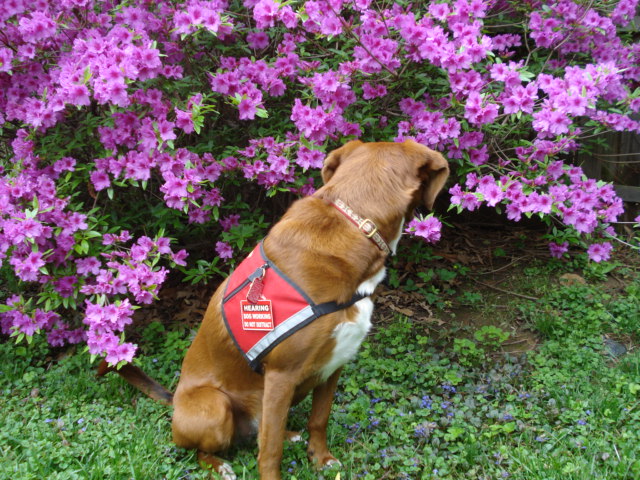
Get Their Attention

I recently attended the annual national convention of the Hearing Loss Association of America because it was actually held in my area this year. At one point, I was in the crowded convention hall perusing the numerous hearing loss vendors and booths. At a distance, I saw an old acquaintance scoot by in their scooter. I tried to wave them down but I was not in their peripheral so they did not see me. After they quickly rolled out of my sight, it hit me! I could have raised my voice and said, “Hey Bob!” This friend did not have a hearing loss, but attended these conventions alongside of his wife who WAS deaf and hearing again with two cochlear implants. I had to smile at my mistake, because I forget that people with normal hearing do not have to have a visual cue in order to get their attention. (Thankfully we ran into each other later…)

I see this all the time in my kids. Kyersten and Chris (now 21 and 20-years-old) attend college but live at home. They really have no memories of my not having a hearing loss. Even though I had a progressive loss, it took twelve years before my hearing was completely gone. They have both told me that they don’t remember my ever hearing well. They are so accustomed to speaking with someone who has a hearing loss, they automatically do things that are more difficult for someone who isn’t in constant contact with someone who is deaf. They always come into the same room that I am in, and rarely try to have a conversation from another room with ANY family member… even those with normal hearing. Recently my son came all the way into the family room to ask my husband a question. It was a simple question that could have easily been asked from the kitchen. The television wasn’t on, and the area was fairly quiet. However, he is so accustomed to facing the person he is talking to, it is difficult to remember that he can do some communicating from another room when it comes to his dad. My daughter is often told that even as shy as she is, she has “uncanny eye contact” when communicating with someone.

Teaching Them Early

When my kids were about 2-3 years old, they were already “old hats” at communicating with a person who had hearing loss. They cannot remember watching television without captions. Even “Barney, the Dinosaur” had captions, as did “Sesame Street” and “Thomas the Tank Engine”. I believe it helped them learn to read as early as they did!

If I needed to tell my kids something, I would walk over to them and get down on their level. I would put my hands on each side of their face and say, “I’ve got my GUESS WHAT FACE ON!” I’d then (almost nose to nose) tell them what I wanted to tell them, or simply say “I love you”.

If they came to talk to me, I could hear that they were talking, but not understand what they were saying. So I’d lean down and put my palms on each side of their face and ask, “Wow! Do you have your GUESS WHAT FACE ON?” It didn’t take long for them to begin putting their own palms on the sides of my face when talking to me.  As they grew older, we dropped putting our hands on the face of the other, but they would come and tell me with direct eye contact…  “Mom, I’ve got my GUESS WHAT FACE ON…” and then tell me what they were going to say.

By the time my kids were 5 and 6-years-old, it had become habit. I was eventually able to afford a refurbished hearing aid that gave me some help in hearing for several years. I recall my daughter (from the next room) telling my son, “Wait a minute. Let me put my GUESS WHAT FACE ON and ask Mom!” As they continued to age and mature, what “stuck” was direct eye contact and face-to-face conversations. It was actually a wonderful gift to help nurture in them, for all of us do very well to give the other person the attention they need and deserve when communicating. No competing with electronic games, closed captioning on television, or computers when we talk. We put everything down and LOOK at the other person.

How to Get a Deaf Person’s Attention

Here are some great tips in how to get the attention of a person with hearing loss.

1. Wave your hand in their line of sight.

2. Touch their shoulder or hand before speaking.

3. Move into their line of sight with your body to gain their attention.

4. Turn the lights off and on (this is especially helpful in a room that may have more than one person with hearing loss and you need EVERY person’s attention).

5. If sitting at a table with the person, gently knock on the top to get their attention through vibrations.

Can you think of any others? I welcome your input!

How Service Dogs Get Attention

Hearing assistance dogs are taught to get their partner’s attention by gently bumping them with their nose or touching them with a paw. As I have a balance disorder, Chloe tries to garner my attention by standing and staring and WAGGING LIKE MAD. She only places a paw on me or bumps me with her nose if her 1st efforts have failed. Smaller assistance dogs, may get their partner’s attention by actually jumping up on them.

Even though hearing assistance dogs are trained how to get the attention of their partner to alert them to sounds, the human partner has to be responsible as well. Shortly after being matched with Chloe my trainer, Pat, took me to many different types of public places to train ME. Chloe was already trained. She drilled into me, two important things:

1. WATCH YOUR DOG

2. TRUST YOUR DOG

I quickly learned to pay attention to what has Chloe’s attention. Her hearing is not only much keener than my own, it is more sensitive than people with normal hearing. I can now even recognize when she hears something if she is standing in front of me (with my only seeing the back of her head). Chloe has a modified “heel”. “Heel” position is when the dog’s shoulders are parallel to their partner’s left leg. However, I do not have peripheral vision on my lower left. So we taught Chloe a modified “heel” that is slightly forward of a true “heel”. I had to learn how to observe the BACK of her head. Thankfully she has these wonderful hound ears that perk up and she “points with her nose” in the direction from which a sound is coming. She will even cock her head to the side to really tune in.

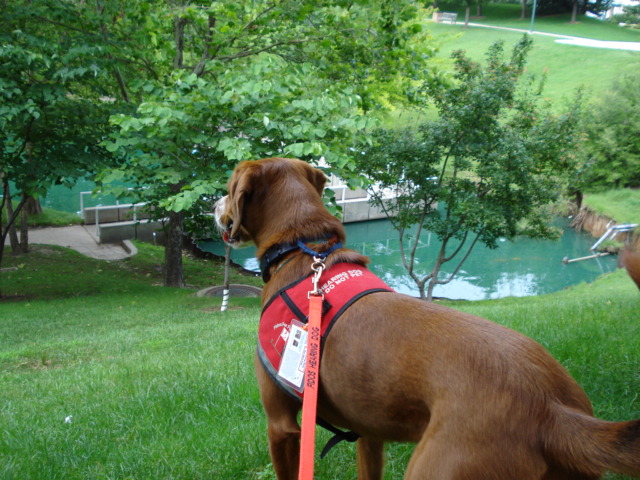
Look the neighbor came out...
Look at that family over there...
something is in the bushes...

If the sound is something she thinks I should hear, she’ll come and get me – phone ringing, door bell, someone calling my name, kitchen timer, etc. These are all trained alerts. However, I have been in situations where I could tell a sound had completely distracted her yet I could not hear or place what it was. When this happens, I ask “Chloe… what is it? Show me!”

Chloe will start to wag and TAKE me to what is making the sound. I have to be careful about this. I don’t want her to take me to every single sound she hears. She may hear the kid’s arguing and cock her head as she listens. I do NOT want her to take me to where they are arguing because they are old enough to work out their own problems! She seems to understand when it is a sound that I need to pay attention to – such as a cat locked in the laundry room, the low-battery sound on the phone in the bottom of my purse, or “Daddy” hollering from the bathroom because there isn’t any toilet paper!

A Word of Caution

I believe that individual’s with hearing loss should get the attention of every person they wish to speak to – even if that person has normal hearing. Do you know how many conversations I have interrupted because I walked up to someone and started talking without hearing that they were talking to someone else? I try to make it a habit (and still sometimes fail) to make sure I have the attention of someone before I begin speaking. This eliminates the likelihood of my talking over someone already talking.

I suspect all of us can improve our communication skills. If you have someone in your life who has a hearing loss, I encourage you to sit them down and ask them in what ways you may better communicate with them. If you have a hearing loss (whether a veteran of deafness or a “rookie” – new to coping with hearing loss), try to sit folks down and have a “heart to heart” about ways they might better communicate with you. This may include family members, co-workers, or even supervisors. Don’t think, however, that once you share with them how to better communicate with you that they will always do “right” from that point forward. I have learned that the people in my life need occasional (positive) reminders.

“Could you put your hand down please? You are covering your mouth”.

“Do you mind looking my direction when you speak?”

“Could you get my attention before you begin speaking? I’m afraid I missed all that you said prior to my looking up and seeing you standing there!”

Stay positive. Few people will put any genuine effort into communicating with you if you belly-ache and whine about it. If you get angry, it may cause resentment and defensiveness. Keep your cool! Smile… be positive! In the end, you are actually helping them better communicate with ALL!

Denise Portis

© 2011 Personal Hearing Loss Journal

“Family”

Approximately 1 in every 8 Americans experience some degree of hearing loss (Binder, 2011). This is approximately 36 million people – just in the United States. While to some, this number may seem overwhelming or unfortunate. For me? I have to admit to a small “thrill” – for you see… I’m a part of this “family”. I am one of those “1 in 8”.

What is “family”? The obvious definition includes those to whom you are related. I’m very grateful for my immediate family, for in many ways they fall into the “family” of which I am writing today as well. For the purpose of this post, “family” consists of individuals who understand by direct or indirect experience, a life that may be different as the result of disability – whether it be congenital or adventitious.

Hearing Loss Association of America

I recently had a couple of wonderful weekends that helped solidify this feeling of “family” for me. The first was when I went to one day of the 4 day national convention for the Hearing Loss Association of America. This year it was in my area, so I could not pass up trying to go at least one day. I was able to attend a number of workshops, all of which had CART. The rooms had terrific amplification, so I was able to hear the speakers of each workshop very well thanks to my cochlear implant. However, there were a number of people in each workshop who used the CART. On a large screen next to the speaker, every word spoken was also typed by a trained captionist. Those who had never experienced CART before, and therefore had never experienced workshops such as these that were truly accessible, hung on every typed word! As I looked around, nearly every ear had a hearing aid or cochlear implant – sometimes BOTH. I counted six hearing assistance dogs in attendance at the convention on Saturday. I was surrounded by “family”. Even those without hearing loss knew someone who did, were family members, or professionals that worked with our population. Between workshops old friends and new friends often crowded around talking. I couldn’t get over feeling like I knew these people. There were no snide comments or competition over who had the better cochlear implant or hearing aid. We were all “family” – with an intimate knowledge of what it means to live with hearing loss.

I attend a local chapter of HLAA, but being at a national event has no equal. The Internet has allowed people with similar disabilities to contact, share information, and get to know each other in a supportive environment. Some of the people I met I had only known online. However, these national conventions allow us to meet face-to-face! What a treat to literally hug the neck of some of my “family”!

This past weekend, I was able to hang out with a wonderful friend who has bilateral Nucleus Freedoms. She lives in North Carolina and since my husband and I were going down to visit his mom and dad, I took the opportunity to spend the morning with her. She took me to one of her favorite places – the North Carolina Zoo. I hadn’t seen the zoo in at least nine years – not since I had moved away from the area in 2002. We have so much in common in addition to hearing loss. No – we do not have similar backgrounds or childhood experiences. But we both are advocates and do all we can in our own small realm of influence to make a DIFFERENCE. She is a sensitive soul who sees much more than a normal set of eyes can see. It shows up in her photography and in the simple things she points out. A whispered, “L o o k“, usually yields a treat of catching LIFE in an unexpected way. I consider her “family” although we are not related.

Fidos For Freedom, Inc.

At Fidos For Freedom, clients include those with mobility issues caused by numerous types of disability or illness, and people with hearing loss. I cannot count the number of different types of disease, invisible illness, and disabilities present in our “family” at Fidos. The fact we are there for the same reason makes us “family”. Whether client, trainer, puppy raiser, volunteer, or DOG… we find a bond and sense of “family” that cannot be found in other groups in our lives.

I am thrilled to share information and get to know people all across the U.S. who are partnered with assistance dogs. Our disability or invisible illness may be different… but we are the same. Some have partners from organizations like Fidos and some are owner-trained teams. Regardless, we are “family” and I feel a loyalty towards these teams that defines the kind of “family” we are.

Sometimes FAMILY are not “Family”

My readers share with me sometimes that trying to get family to understand what it is like to live life in “their shoes” is quite difficult. For those who acquired disability or invisible illness later in life it may make more sense that family members such as parents and siblings seem incapable of grasping who you are now. However, there are others who have shared that even though their own challenges began at birth, family members are unable to fully understand (or perhaps cope?) what it is like to experience life with additional challenges. I truly believe that people with disability and invisible illness are more capable than those who are “normal”. Learning to adapt, and seeking support, information, and techniques create a malleable, strong individual. Oh sure! There are times we flounder. Change is never easy. But the end result yields a person who is extremely ABLE – not disabled. It is unfortunate that many people to whom we are related are unable to really connect with us once change takes place. Perhaps our peers often become “family” to us because they help us stay connected to life in a more positive way. They understand. Relatives often lose contact with us or only see us once in a great while. These individuals who offer daily support, information, and “family” literally evolve into a close knit community and family. I have had some readers share that they are closer to those in their peer group (disability group) than they are to siblings, parents, and other relatives. They have shared that not only do these “real” family members not understand – they don’t want to understand. I was recently reminded that my own siblings do not really know who I am anymore. After something rather tragic occurred in a relationship I find now broken, I wailed to my mother on the phone how terrible it all was. I shared some things with her that I had never shared before… and she responded, “You never shared these things with me when you were going through this”. So I am (painfully) aware that sometimes our family members are unaware and out of touch because we withdraw.

I am blessed to have family who are also “family”. My immediate family have been a safe haven of support throughout all of my adult life. My children have never known me without hearing loss. Mom’s favorite word growing up has always been “huh?” My husband held my hand both literally and figuratively throughout the process of losing my hearing over 12 years. When I became profoundly deaf, he was my biggest cheerleader in seeking other technology that would help me hear again. My family willingly sacrificed so that I could attend trainings and eventually receive an assistance dog so that I could be more independent. My immediate family members advocate for those who have any type of special challenge. They have participated in TBI (traumatic brain injury) camps, hearing loss conventions, local HLAA chapters, Walks for Hearing, cancer awareness walks, and much more. They know and realize that  disability or invisible illness does not define the person. They have always seen the PERSON first. Because they understand what it means to live with disability or invisible illness simply because they LOVE someone who does have challenges, they are “family” as well as family. I hope that many of you have family members that are also “family”. People who support you without hindering you. People who cheer you on and look forward to your eventual success.

Look for – and BE – “Family”

If you are currently adjusting to acquired disability or invisible illness – please know you are not alone. Find a computer and Internet access. It won’t take you long to discover you are not walking this road alone. As you reach out, look for ways to connect and be “family”. I promise you that there is no other feeling like finally… belonging.

Binder, M. (2011). Hearing. The Ear Man: Hearing Aid Service. Retrieved June 28, 2011, from http://www.theearman.com/hearing.html

Denise Portis

© 2011 Personal Hearing Loss Journal
 

“Tag” You’re IT

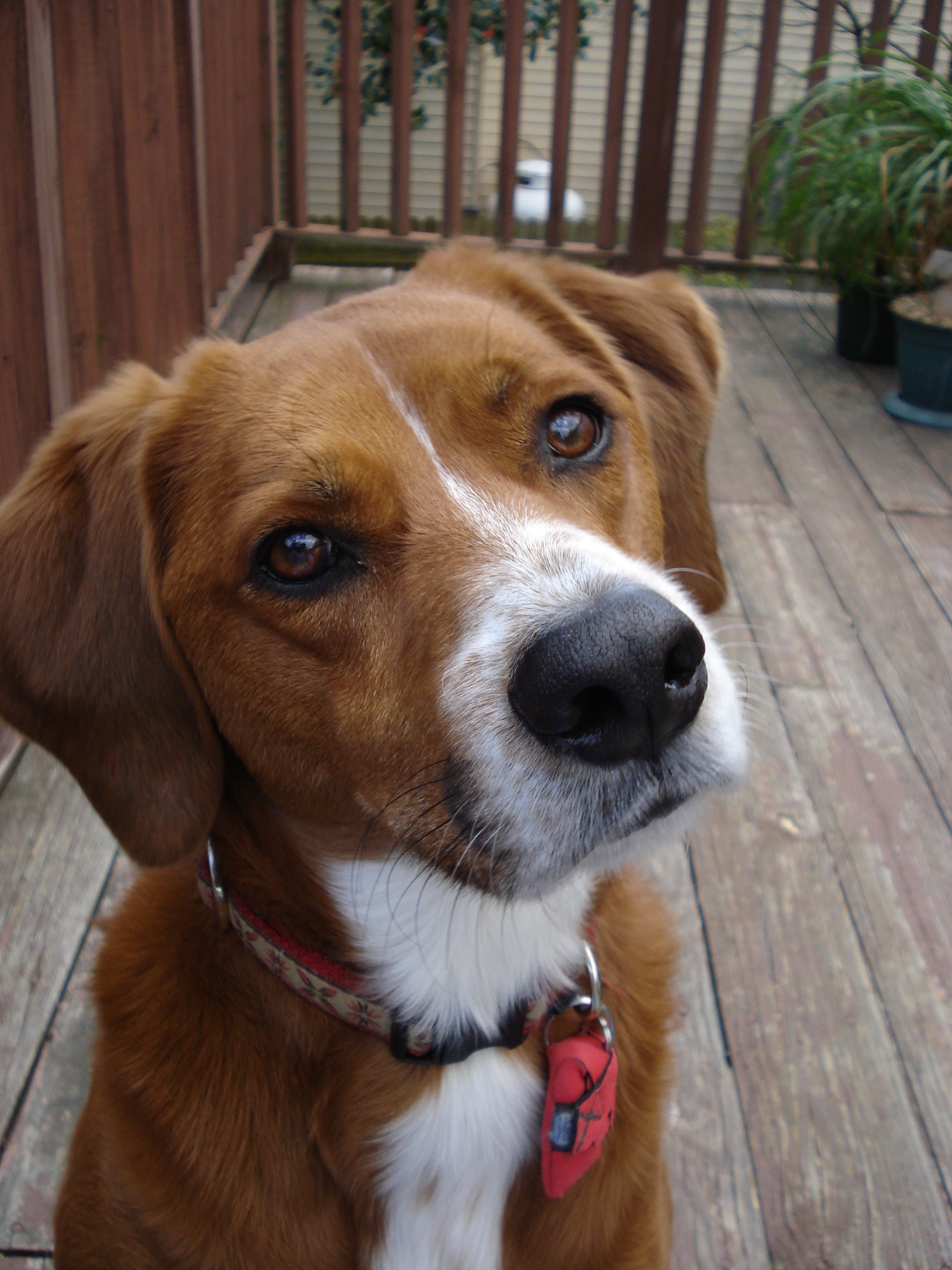
Chloe and I were recently in a Wal-mart shopping. In the household cleaning section, one doesn’t expect to run into a child. Among the 4 or 5 other shoppers and carts stood a 5 or 6-year-old little girl. I don’t know how she ditched mom, but she was obviously unsupervised. She was about 20 feet away when she first caught sight of us and slowly made her way down the isle towards us. Inwardly I cringed… for I didn’t really feel like asking her not to pet Chloe. Instead she got close enough and looked at Chloe’s vest (although I’m not sure she could even read), and then at the side of my head where my cochlear implant and BLING sparkle for all the world to see!

She smiled at me and said, “This is a WORKING DOG”.

I replied (with some surprise), “You are EXACTLY right! Chloe is a working dog”.

Unsure of what communication might follow that exchange, she smiled impishly up at me… reached over with her index finger an POKED me while exclaiming, “TAG! You’re IT”. With a squeal she was gone and around the corner with pony-tails flying behind her.

Service Dogs and Play

Chloe’s tail started wagging and she looked up at me with an expectant, “Yeah! Let’s go!”

I just grinned at her and caught sight of a lady about 3 yards from us just grinning from ear-to-ear, having seen the whole thing. I smiled back, calmly walked by her and just as I was passing her – reached out and poked her while saying, “Now YOU’RE it…”  She burst out laughing and we went on our way.

I am asked occasionally if Chloe is ever allowed to play. Most recently this came up at a DEMO we did for the Department of Disabilities for the state of Maryland. I think people love the idea of working dogs, but often wonder if the dog is ever allowed to be “just a dog”. We always assure people that our dogs have plenty of opportunities to rest, play, and just be a dog. They are frequently rewarded throughout the day with treats, praise, and physical touch. Walmart is not the BEST place to induce Chloe to play, so I opted out of the game of “tag”… but I can assure you that Chloe is allowed to play with our family dog, and with family members very often.

All Work and No Play

Just like people, dogs need down time. Especially working dogs IMHO. But we could learn a few things from our furry partners. Chloe often naps when waiting in line at a busy cash register, or if we are traveling by Metro, airplane, or even the family car. She knows when to rest and get some shut eye. She also knows when to play and enjoy a major tail-wagging romp! I try to remember to take “5” and rest when I can. I try to get 8 solid hours of sleep each night because I actually hear better, and walk more steady if I make sure a good night’s rest is priority.

Perhaps we should all play tag from time to time. Hey! It is good exercise, and I’ve not met anyone yet who didn’t smile after being tagged!

Denise Portis

© 2011 Personal Hearing Loss Journal
When Family Can’t Forget

For the sake of this post, I’m brave enough to admit my age. I’m 45-years-old. I remember thinking that 45 seemed really old when I saw my parents celebrate that birthday. Now that I’m 45 myself, it doesn’t seem very old at all. As a matter of fact, I spend a lot of my time wondering when I will grow up.

Are you who you were at 10-years-old? (Can you remember back that far?)

Are you who you were at 16-years-old?

How about 20-years-old? Are you the same person you were then?

I think about who I was at these *mile stone* birthdays and realize how much I’ve changed over the years. Oh sure, our personalities, quirks, and even some habits remained ingrained in our make-up even decades later. But something happens to an individual growing older.

Life.

And you know what? Life can be hard. Oh yes – I know! Life can be very good. However, in my own life the more positive changes in who I am, occurred as the result of crisis and difficulties. One of the more frustrating things about “growing up”, however, is that our families won’t let go of who we were.

Think about it for a second. I left home at the age of 18-years-old. Many of you did the same, or perhaps even younger. Our parents, siblings, and close relatives who sat in the same pew as we did at church and attended the same high school football games, very likely have had very little participation in your growing up since that time. That’s what leaving home is all about. We make our own lives, invest ourselves in our own families, make mistakes, and grow. All this happens with very little influence of the people that were ONCE a major influence!

It’s very frustrating to me, however, to not be seen as who I AM around my family as they think I’m still who I WAS. I wasn’t the best big sister in the world. Having dealt with a number of emotional issues in my late teens, I can admit I wasn’t the best daughter in the world either. Now that I’m 45-years-old I don’t get to see my family nearly as often as I prefer. I have seen my sister 5 times since 1986. I have seen my brothers one time in the last 9 years. We all live in different states – spread out all across the U.S. I am able to see my parents at least once a year. However, I haven’t seen my grandparents since 1999 – which grieves me to no end bein’ they had such a major influence on my life in my developmental years. (Colorado is a long way off from Maryland). I was getting a bit aggravated when family members would make comments about me – even in a teasing fashion -as if I’m still the same person that I was. But then it hit me! How could they know who I AM, since they have not been involved in my life on a daily basis for the last 2 decades? The answer to that is that – they cannot!

As a result of this “middle of the night” epiphany, I began to ease out of feeling frustrated at not being able to leave my past – in the past – around my family. Worse? Try evolving into a person with an acquired disability when your family can only remember you “disability free”. I feel for them! It can be very hard to understand exactly what it may mean for you to live life on a daily basis – different now- solely because of an invisible disability or acquired chronic illness. For my immediate family members the process was gradual and progressive. They would be unable to pinpoint a point in time when I began to be who I AM. But for other friends and family members it can be very difficult to understand who you are now that acquired disability or invisible illness has changed you.

A young woman with fibromyalgia said: “I guess, where i’m very frustrated today, is, i’m having a fibro flareup, no doubt due to stress, i work at a bank, and we’re getting audited tomorrow, so checking, double checking, to make sure everything is just right, and i am so tight, and sore today, and NO ONE gets it, to look at me,i might look tired, but they just assume i’m ok, well, i’m NOT. It’s one of those diseases that no one can see that you have it, they have no idea how much pain we’re in, and they just assume everything is ok, and they don’t understand why I’m being so quiet, and they think i’m mad, and it is not that, i just feel like dirt” (Dannape, 2011).

Invisible illness with invisible symptoms are difficult to explain or even complain about. You LOOK fine.

On a hearing loss forum, 16-year-old Xatego explained:  “How do I deal with my family who claim they completely understand my hearing loss? I appreciate the fact that they were supportive and gave some of their time to look after me. But it annoys me when they like to think that they understand my hearing loss and the implications it has on my day to day life. I basically have a 90% loss of hearing. For example, my parents question my need to have subtitles when I’m watching TV. They say if only I watch TV without subtitles, it would reduce my need for it. I explained to them why, they didn’t listen. My cousin and I are basically the odd ones out of our whole family. He has severe autism and behind his back he is labeled by other relatives as the “crazy” one. I wonder what they call me since they treat me like an idiot. One of them even asked me if I was ‘still’ deaf. My sister and my mother gets irritated when I ask them to repeat their words. I get so frustrated; it’s not like I like having to ask them to repeat what they’re saying continually. When they say they understand.. They don’t. If you don’t have a hearing loss you don’t understand the way it cuts you off from people” (Xatego, 2011).

It can be really hard to explain what life is like for you when you are only beginning to understand it yourself.

Trying to Leave your Past – in the Past

Have you ever lived with someone who was losing weight? Someone with a great deal of weight to lose has learned that in order to keep it off, weight loss should be gradual with numerous lifestyle changes. The people who live with you may not SEE a lot of weight dropping off of you. But if a friend or family member came to visit who has not seen you in a long time, they are astonished at how different you look! I think it is the same for family members who spend time with me that have not seen me in a really long time. They are taken aback by the cochlear implant, hearing aid, and assistance dog. They remember who I WAS.

Earlier I asked if you were the same person you were when you were 10, 16, and 20-years-old. As for me? I didn’t really like who I was at any of those ages. Did you make stupid mistakes when you were younger? Did you ever make a decision that left long-term consequences? Ever feel as if you are wearing “scars” as the result of some past experience? I think some of the most crucial, vulnerable moments are in the weeks, months and years immediately following a firm decision to be DIFFERENT. An alcoholic may remember the day and time of their last drink – even if it was decades ago. But they will be the first to tell you that family and friends hurt by their alcoholism had a hard time believing “this time” was for real.

The ex-con will tell you that when they made 180 degree turn and CHANGED, their skeptical family and friends had a hard time believing it was for real!

The drug addict who is now free from the poisons they once put into their body will tell you that family and friends who had “seen it all” – wait around waiting for the other shoe to drop! For a significant amount of time everyone’s expectation is that the person will go back to being who they WERE.

Why do we long for people we love to break bad habits, yet make it hard for them to really do so? Why do we believe they will only fail again? In spite of testimonies of people who have gone on to serve in their communities and churches, raise families of their own, and be contributing, POSITIVE influences in their homes and workplaces, we who knew them “when” expect more of the same. Shame on us! I have seen God use people who were once drug addicts, alcoholics, and criminals in ways He could never use people who look perfect.

At some point in time these changed people made a choice.

and they never turned back.

Victor Frankl said, “When we are no longer able to change a situation, we are challenged to change ourselves”. God uses hardship to change us. But our biggest skeptics may be those who love us best. We may be misunderstood and even spurned. You may feel as if your family cannot let go of who you were. But I’ll never be that needy, selfish, emotional basket-case of young womanhood again. My trials have made me strong. Angela Barron McBride once said, “Full maturity is achieved by realizing that you have choices to make”. I made choices. You’ve made choices. Hopefully we are ALL continuing to reach towards what being mature is all about! For the Christian, it is becoming more like Christ. We’ll never “get there” – but our goal should be to become more like Him day by day.

Because I’m not who I was 2 decades ago, I long to be the kind of person who believes that people who hurt me years ago are not who they were either. That sister-in-law you couldn’t stand? Twenty years may have changed her into someone you can now not only like – but love. That brother who was in and out of rehab and managed to drag the family through the disaster of three failed marriages may not be who he was. At what point do we believe the BEST of people? If God can change ME, He can change anyone. I’m not perfect… and I have not “arrived”. But I do like who I am. I wouldn’t change a thing. The process was (and IS) painful, but worth who I see in the mirror each day.

Try not to be aggravated when family members have trouble letting go of who you were. Time will tell – and if you are lucky? You may live to hear one of them say, “You aren’t who you were… you’ve changed!”

Dannape (2011, April 27). Fibromyalgia General Discussion. Message posted to “The Pain No One Sees”. Retrieved May 25, 2011, from http://www.fibromyalgia-symptoms.org/forums/Fibromyalgia_General_Discussion/The_pain_no_one_sees/
Xatego (2011, April). Yahoo Answers: People with disabilities. Message posted to “How do I deal with my family who claim they completely understand my hearing loss?” Retrieved May 25, 2011, from http://answers.yahoo.com/question/index?qid=20110424135942AA52fMB

Denise Portis

© 2011 Personal Hearing Loss Journal

Idiot Lights

Don’t you love “idiot lights”? And if you know me, you know that I pay attention to them. (Gulp. Does that make me an idiot?)

I’m one of those people who drives 64 MPH in a 65 MPH zone. I always stop on red even if it is 2 A.M. and no one is around.

Needless to say since one of our car’s “idiot lights” has been telling us for 3 months that the oil needed changed, I’ve been bugging my husband to take the car to get the oil changed. The fact that the “Jiffy Lube” sticker on the windshield ALSO said the oil should have been changed at the end of MARCH, only further compelled me to NAG. His insistence that the manufacturer’s guidelines and the lube center’s guidelines differ, does not instill a lot of confidence in me. After all… the car’s “idiot lights” told me the oil needed changed as much as that sticker on the windshield! You see? My husband is PURE GENIUS when it comes to computers. He can do a number of “handy man” things around the house thanks to having worked at Home Depot while in college. But cars? Nope. I’ll just reiterate that his stating “not needed” – failed to inspire confidence in me!

According to him, the sticker always indicated changing the oil much sooner than needed. Instead, follow the manufacturer’s guidelines. How about those “idiot lights” though?

“Everyone knows those things rarely work right. You have to get them reset after getting your oil changed AT the car dealership. I don’t ever go there for oil changes!” he replied.

Evidently (according to hubby) “LOW FUEL” actually means you can drive another 100 miles. “CHECK  ENGINE” may very well be an irregularity that has to be re-set occasionally and is often reported as a problem with the model. “LOW TIRE” means you are parked at an incline and the car “thinks” it has a low tire. Sigh.

If People Had Idiot Lights

Wouldn’t it be grand if PEOPLE had idiot lights? You could meet someone for the first time and know some things without any words exchanged. You’d see a flashing:

Needs Work

Snores Loudly

Back Stabber

Yup… it would make life a little easier. We would know what to expect of a person before ever expending any emotional energy to get to know them! EXCEPT… my husband insists those idiot lights aren’t accurate. So that could mean that the little warnings we get about people we meet may be false.

The reality may be:

Works WELL

SINGS loudly

And Back SCRATCHER

If Dogs Had Idiot Lights

How about if working dogs in training had idiot lights? It might help trainers determine who would be best matched with particular dogs. It might help puppy raisers find out about the personality of the puppy they are raising to be a working dog. Perhaps a dog in training would have idiot lights such as:

Stays Calm

Very Instinctive

Easily Potty-trained

And Chloe’s may have been:

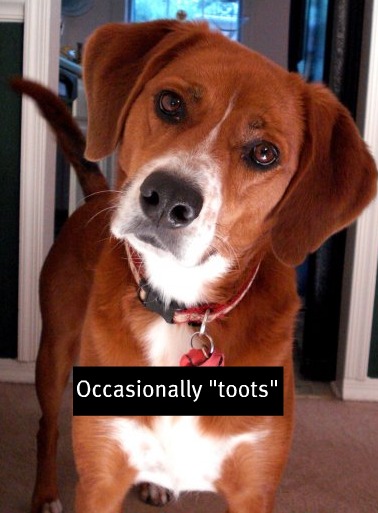
Ah… but remember? The idiot lights are not accurate. After all, trainers tell me Chloe was an incorrigible “hard-to-train” pup. But she is a hard-working, completely engaged, working adult dog. Thankfully, I can manage the occasional unfeminine “toots”.

Idiot Lights and First Impressions

Just as idiot lights for vehicles seem to be more bother than help, rarely providing accurate feedback, so too may “first impressions” fail us. People who come across as prideful, pompous, and bossy may actually be insecure. Controlling people may get on your nerves, but they often are the ones who can easily make decisions and get things done. I’m not saying this can’t go wrong. We would not see abusive relationships if it never went wrong.

What I am beginning to realize in this game of “life”, is that first impressions are often wrong. A quiet, reserved individual may actually make a warm, loyal friend if you work a little harder to get to know them. A loud and obnoxious know-it-all may actually have some insecurities and may thrive in a relationship that allows them to not have to work so hard at being perfect.

I’m all for boundaries. One of my favorite books is “Safe People: How to Find Relationships that are Good for You and Avoid Those that Aren’t” by Henry Cloud and John Townsend. However, we cannot allow our first impressions to “warn us off” people permanently. I think boundaries are set up AFTER we really get to know someone and identify they are not a “safe” friend or family member. But first impressions? Leave your brick and mortar at the door when you first begin to get to know someone. Sure, you may get some vibes that have you treading carefully as you work with a person or attend small group with a person. But how many of our relationships would we NOT have if people relied solely on first impressions? I think of the first impression others may see in my own life:

“I thought you were so stuck up when I first met you but eventually learned you could not hear in crowds”.

“Because of your BLING and service dog it was obvious you had some disability of some sort. In getting to know you, I often forget you are deaf. You are as normal as anyone else!”

“When you first asked for the main points of the meeting to be emailed to you I thought that you were basically asking for special privileges. Little did I know after receiving the “recap email” sent to the entire department that I missed a lot of important notes from the meeting too. This step helps ALL of us.”

If first impressions are a type of “idiot light”, we should remember that they are often wrong. Extend the benefit of the doubt to people who rub you the wrong way when you first meet them. In time you will discover if you had good intuition and need to erect some safe boundaries to interact with someone. However, you may learn that it was really a smoke screen that hid a wonderful person who simply had trouble letting the real “soul” show.

—————

I was so thrilled when my husband brought the car back this past week and said all the fluid levels were checked, oil changed, filters changed, and tire pressure checked. However, as I Headed to work on Thursday I happened to look down at the dash and lights. I grimaced as I saw the “CHANGE OIL” scroll across the bottom of the display. I tore my gaze back up to the road and mirrors and began to chant, “Idiot lights are inaccurate. Idiot lights are inaccurate…”

Denise Portis

© 2011 Personal Hearing Loss Journal
A Very Windy Birthday

We celebrated my birthday early this year since no one was going to be home EXCEPT me. The timing worked out well because my college-aged daughter was home for the weekend too.

I expected my birthday to come and go without incident. I spent the day at home preparing for classes – alone, save our furry family members. However, the evening ended up being an exciting adventure in spite of the lack of presents, cake and family. April 27, 2011, was a very windy day here in Maryland. As a matter of fact it was windy and stormy across much of the eastern seaboard. In Maryland we had four tornadoes touch down according to local news and radar.

It’s nice to be living in a day of technology. All evening I received tornado warnings via text on my Blackberry, and the television had constant program interruptions with late-breaking news on area damage and warnings. I spent a great deal of time looking out my front glass door. The trees were bending and swaying. The noise was really something! I guess wind by itself doesn’t make a noise. It isn’t until it comes into contact with other things that sound is created.

I stood, at times, open-mouthed at the major wind storm in our area. I was very vigilant about checking the alerts and listening as closely as I could. On a whim, I removed the coil of my cochlear implant to get an impression of the storm WITHOUT SOUND. It is very different to rely on visual stimuli to notice important things like possible tornadoes. As I stood there “deaf” for a moment or two, I noticed something right away. My hound dog was at the BACK door while I stood at the front. Since she is hardly ever more than a room away from me… I walked to the back door where she stood trembling. I was astonished to see a fallen tree behind our home! When did that come down? I stuck my coil back on my head in order to pick up more cues about what was going on. How did I miss the sound of that tree coming down? Thankfully, it missed the townhouse. I enlisted the “muscle” of my 20-year-old son to get the tree down the hill and into the ravine the next day.

I suppose it was because my focus was on what was going on out front that I missed what was going on out BACK.  Although I hear very well with my cochlear implant now, I still rely on other cues to get the “whole picture”. Because I was using my eyes and ears together, the sounds I heard were focused on what was happening out front. The sound that accompanied the toppled tree in the back had to be very loud. The trembling hound dog was evidence enough of that! Yet, I didn’t hear it.

Emergencies and Hearing Loss

I believe the key to coping with and surviving any emergency is preparedness. Below is a number of wonderful resources for people with hearing loss in the event of an emergency. These resources are terrific – but having a PLAN is still a necessary component of being prepared when emergencies occur.

1. The Michigan Deaf and Hard of Hearing People have put together a wonderful resource of how to prepare and special links. You can check it out here.

2. Jenilee Perlas put together a terrific PDF file that covers hearing loss in an emergency. Check it out here.

3. One of my favorite online resources for “anything hearing loss” with an excellent series of articles that are updated frequently (the latest being April of 2011), is Hearing Loss Web. You can access it here.

4. A great list of tips from the American Red Cross for people with hearing loss in preparing for emergencies may be accessed here.

5. A great resource from the U.S. Fire Association that provides tips in how people with hearing loss can be safe before, during and after a fire may be downloaded here.

6. A fact sheet in surviving an earthquake from the Independent Resource Center of San Francisco may be viewed here.

7. Finally, NOAA has a wonderful resource in how to access weather-related emergency information through a weather radio. You can access this information here.

Whether you live alone or with others, it is important to be prepared in the event of an emergency. Preparedness should include the chance that you will be alone even if you live with others. I experienced a very windy birthday without the company of the people I normally live with on any other given day! Do you have any other tips or resources you’d like to share? Feel free to leave them in the comment section. Information and shared resources can only help all of us as the likelihood is not IF we experience an emergency – rather WHEN.

Denise Portis

© 2011 Personal Hearing Loss Journal

Soul Surfer

My daughter was home for Easter weekend so the family enjoyed a rare night out to the movies. The movie “Soul Surfer” had been recommended to us so we chose to attend on Sunday afternoon. I was in a bit of a huff when I arrived due to some family conflict, missing the first part of the movie while I sat and fumed. (Yup… I definitely need to learn to fume a little quicker).

Once I started paying attention, however, I really enjoyed the movie. When you “hear again” with a cochlear implant, you really do have to make the concentrated effort to PAY ATTENTION as listening is no longer a passive exercise – rather an active effort. On occasion, I’m lucky to snag a movie we are attending that is open captioned. I do not have to focus with nearly the same concentrated effort when the movie is open captioned. As it was, I finally TUNED IN and really enjoyed the movie. I won’t spoil it for you in case you haven’t seen it, but basically a teenager learns to live life differently due to circumstances that were neither predicted nor expected. She learned that “in spite of” she can continue to make a difference in the lives of others… to touch souls.

Individuals with acquired disabilities of any kind have to do the same, don’t they? I mean the alternative is isolating yourself and giving up. That isn’t a life I’d wish on anyone. (Believe me I know, because I tried it for a short time!) It takes a lot of courage to persevere and learn to do some things differently when life throws you a curve ball. I’ve always been a lousy “catch”, so wouldn’t you know when my own disabilities took hold and changed my life that I was totally unprepared?

I was at a Fidos For Freedom training with my assistance dog one Saturday and a fellow client that I have come to know quite well wasn’t at all surprised by a blunt question. We had learned to be “straight” with each other early on because we discovered that by doing so we could learn from each other. She is a client who has been matched with a service dog trained to assist her with mobility tasks. Having experienced a recent “wet week” due to spring showers in our area, I asked her how she found the wherewithal to come to trainings after having a “bad week”. She has had to learn to do things differently because of her disability and must prepare well in advance when attending trainings that other people may be able to spontaneously decide to attend! She said, “I simply remember that by coming I have opportunities to encourage someone else. I don’t want to miss those opportunities so I get my butt out of bed!”

I’ve never met anyone that was not able to MAKE A DIFFERENCE in the life of another. I don’t care who you are or what your circumstances are. The only necessary ingredient to successfully touching the life of another is BEING WILLING. If you aren’t willing, it will never happen. People with acquired disabilities have learned to maximize technology. We have learned to perhaps do something DIFFERENTLY in order to accomplish a task. We have also learned when to cut ourselves some slack. People with acquired disabilities have learned to ask for help at times. We are malleable, persistent, and BRAVE. No worries. I’m not “tooting my own horn” here, I’m simply pointing out the obvious having met numerous people with acquired disabilities.

Surfing for Souls

There are numerous ways individuals can make a difference. My “short list” is below. Feel free to leave comments and add to this!

1. Join online support groups and be active in the group. Reach out to others who are perhaps struggling with a new acquired disability.

2. If possible, participate in local support groups or chapters that meet physically each month. Go prepared to learn, but look for opportunities to serve.

3. Be open and honest. Don’t hide the fact on your Facebook. Don’t make your disability invisible. Visibility allows others to see you active in your community, doing things others do without thought. Shopping, church, or GOING TO THE MOVIES are all activities we can still accomplish. Welcome questions and be prepared to be a positive advocate.

4. Have business-card sized cards available to give to people who stop to ask questions about the: Cochlear implant bling, service animal, hearing aids, wheel chair, walker or bright purple cane! In this way they can contact you at a later date and ask questions in a more controlled, confidential way. They may need the information for themselves, or for someone they care about who struggles with their own acquired disability.

5. Don’t apologize for being different. Celebrate it!

6. Advocate, advocate, advocate! When the support groups and organizations to which you belong do annual fundraisers, DEMOS, or community service appearances, do not hesitate to get involved and advocate! At times you will be called upon to write local or state government officials. Take the time to do this!

I remind myself as I encourage you to do the same. I need to be be aware on a DAILY basis. I can surf for souls to touch. I can make a difference!

Denise Portis

© 2011 Personal Hearing Loss Journal

Disabled (Grimace)

Denise and Chloe at a dAP for HLAA-Frederick County in 2009

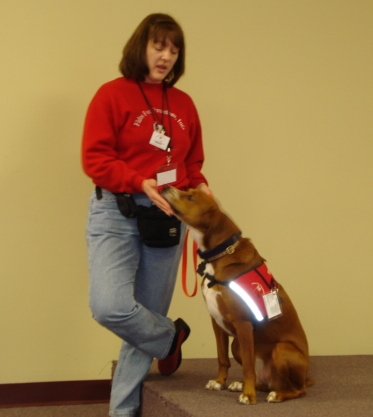
Disability (grimace). There is a small part of me that cringes when I hear that word, for often it is heard with real (or imagined) inflection that denotes a negative meaning. Occasionally, I get some “flack” from some of my readers about using the term “disability” so freely. Some folks hate the word and avoid it all costs. Others embrace it freely, caring not what the “label” may be since they are struggling to simply cope with WHAT IS. Recently, a fellow client at Fidos For Freedom used the term “differently abled”. I like that! That is the first time I’ve heard that particular variation. At Fidos For Freedom (where my hearing assistance/balance assist partner comes from), numerous programs are designed to carry the maximum “punch” in creating awareness in our community. One program is the dAP (disABILITY Awareness Program). Demonstrations are given at schools, churches, community groups, fairs, and much more to inform and teach the public about the different types of assistance dogs available, partnered with people with various disabilities. The program focuses on the abilities of all people and how an assistance dog can provide independence to people who do things “differently” as a result of chronic disease, invisible disabilities, hearing loss, mobility challenges, and much more.

Personally, I use the word ‘disabled’ freely for it is the wording in the Federal law that protects my rights as an individual who happens to have disabilities. As long as the law uses the term, I will continue to use it in order to identify with my freedoms – not my actual disability. I’m all for changing the term “disability” to something less negative, but until that happens on the federal level – I’m sticking with the term that protects my rights. Labels are awful aren’t they? I actually prefer “person with disabilities” for it identifies me as a person FIRST, and the disability second – as a descriptor, not a noun. I’ve been a member of the American Association for People with Disabilities for a number of years. They have done a lot of terrific work in laying the foundation for future laws that protect Americans who happen to be “differently abled”. Do I hope the word is eventually abolished and changed to something more politically correct? Well sure I do… but in the meantime I will continue to use a word that represents my freedom as an individual with disabilities.

Why is the Word So Negative?

Many people who hate the word “disabled” explain that it reminds them they are different. Yet we are. Acceptance of that is key IMHO to truly becoming independent in spite of a “disability”. One reader explained, “the word makes it sound as if I’m broken, or flawed”. It’s a shame society (and sometimes our peer groups) create this false picture of what a disability is. Often these negative connotations are the result of interactions with people who do not live with physical, mental, or emotional limitations that require a “new way”. People can be uncaring and mean (and you don’t have to be in junior high to experience this!). Sometimes the most hurtful things are said by people who actually care about us and are struggling to understand. Ignorance (not stupidity) is often to blame. It’s very difficult – but when you have the opportunity to correct and inform someone who doesn’t get it, do so in a proactive (not reactive) way. I try to remember that what I say may influence how this person interacts with someone else who has a disability in the future.

I believe that those who are born with a disability have the hardest time accepting the term. For example, I have met culturally Deaf people who really despise the word. (The culturally Deaf are identified with a capital “D” to identify a group of individuals who use ASL as their primary means of communication). I’ve often wondered if deaf people (lowercase “d” to identify adventitious deafness) are more accepting of the word because they experienced “normal hearing” for a time and now understand the difference because they are living WITHOUT a sense they once had? I had a Deaf friend at CSD complain that the word “slapped them with a label that meant they couldn’t do something”. I have struggled to understand that. Deaf (and many deaf) people cannot hear. What is wrong with that? Perhaps their thinking is that by accepting that label it requires the adoption of a number of other labels such as “slow”, “dumb”, “broken”, “reject”, “mistake”, and “different”. People who cannot see well without corrective lenses don’t fear being labeled with other words! Why do people with hearing loss fear that? I don’t hear in a normal way. So what?

I’ve heard others mention that the word makes them remember there are things they cannot do. I recently watched a YouTube video of a young Deaf lady who was “going off” on the fact that the only thing she cannot do is HEAR. Anything else she wanted to do she could, and she was not “disabled”. Yet the ADA protects her rights as a Deaf person to insure she has equal access to public events, education, doctor visits, and much more by requiring ASL interpretation so that she may interact on equal footing with those who use their voices to communicate. I suppose I’m a realist. I don’t understand the problem with being aware of what I cannot do. I understand that as a result of Meniere’s disease and hearing with a cochlear implant I will never:

  1. Be a rollercoaster tester.
  2. Wash windows on skyscrapers.
  3. Be a DJ
  4. Be a judge on American Idol
  5. Swing on a swing set (until they come up with an adult size seat similar to the protective seats for toddlers!)
  6. Tune pianos
  7. HEAR without the assistance of my CI

So what? I don’t center my life around this knowledge, nor do I attach any value to “being able to” as opposed to “not being able to”. I chose to enjoy OTHER things. 1) When I go to amusement parks I’m the official photographer. I ride a great number of rides that do not go “around and around”. I can throw a dart that insures I come home with large, ridiculous stuffed gorillas. 2) I can wash windows on lower levels. 3) I can listen to music and “ad lib” as best I can, but if it is a new song I’m lost. 4) I can be a judge on other types of panels. 5) I can climb on jungle gyms. 6) I can PLAY the piano (took 8 years of lessons!). 7) I can hear SO MUCH now as a result of my wonderful CI!

I believe that problem is that OTHERS often attach other meanings to the word “disability”. When they choose to do that, it fosters an attitude of treating a person with disability differently, or of having different expectations of them. Is this where the word “goes wrong”? I welcome your feedback and comments. As long as you don’t swear at me – I’ll post anything even if it disagrees with my own personal opinion. After all, if my desire is that you respect my opinion I can only promise to do the same. So many of you write me to give me “thumbs up”, or “thumbs down” in response to a post. I still welcome feedback privately as well! However, this is a topic I really welcome your feedback for I really am trying to understand everyone’s opinion about this word. I believe voicing opinions about this may help others! So “voice yourself”!

Denise Portis

© 2011 Personal Hearing Loss Journal
We Are All Ambassadors

We are all ambassadors… of SOMETHING.

We are a living, breathing, advertisement of “something”. How you choose to live your life, and how that choice is reflected in your daily interactions with others is so important. We don’t realize when someone is watching, listening, or studying how we live. I think it is so important that people with invisible and visible disabilities live their lives in a way that reflects how their disability doesn’t overshadow their abilities. I suppose being a mother I have always been cognizant of “who is watching”. But now that my kids are grown and in college, they rarely study mom and her life anymore. Others are watching, however.

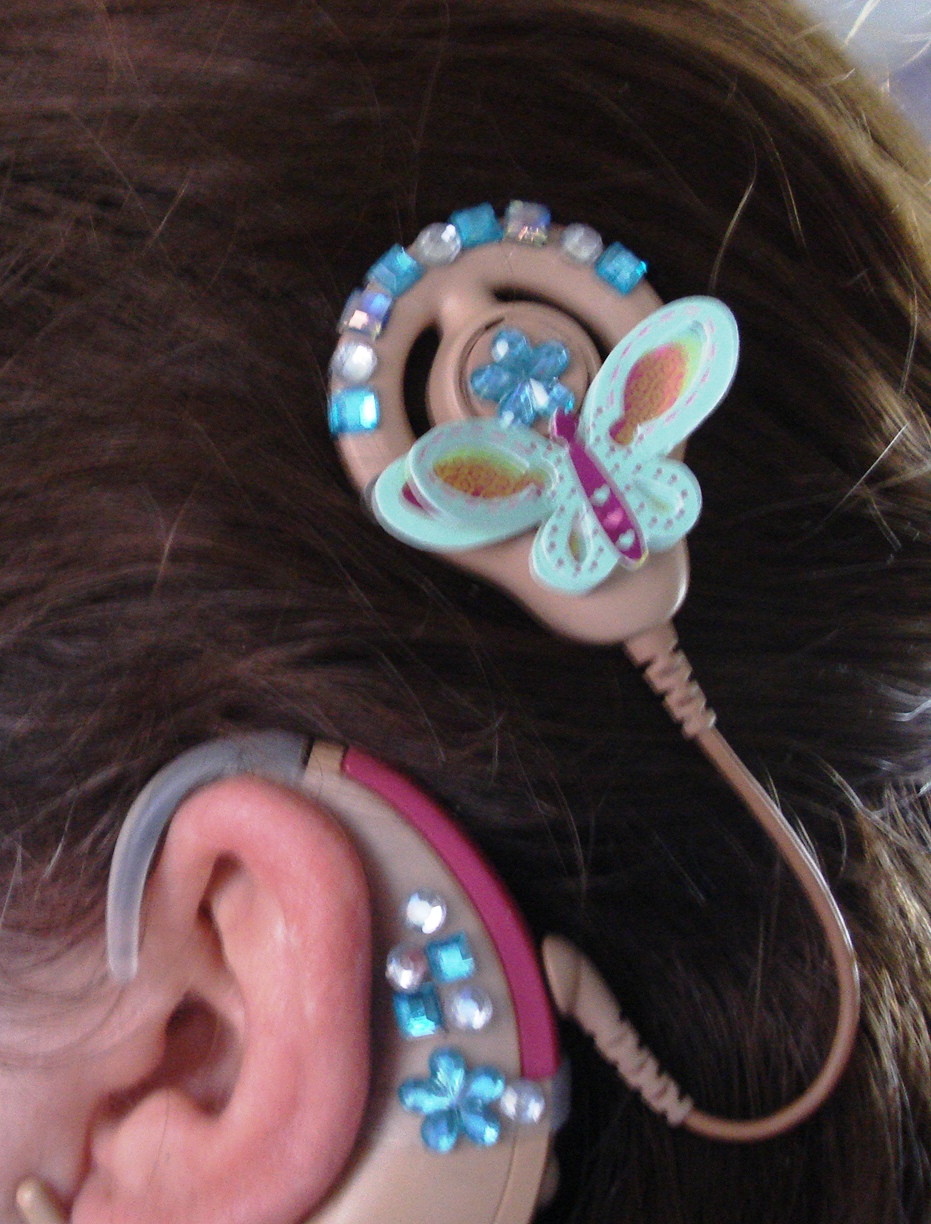
I shouldn’t be surprised when people stop me to ask questions or make an observation. In spite of having invisible disabilities (“hearing again” with a cochlear implant, and Meniere’s disease), I try to make them visible so that I’m not taken by surprise by not hearing something or getting bumped by “I’m in a hurry” people. I wear “bling” on my cochlear implant to draw attention to the fact that I hear differently than folks with normal hearing. I am with the constant companion of my hearing assistance dog, Chloe. Let’s face it. Nothing draws attention to “something is different about me” more quickly than entering places of business with a service dog. But in spite of my own mom’s occasional teasing of “you’re such a drama queen”, the biggest reason I am visible about who I am is because I’m not ashamed of it. I welcome questions and curious people. Hearing loss is so misunderstood. People seem to understand the culturally Deaf. People born deaf and then choose to embrace American Sign Language as their primary means of communication seem to be understood better than those who are adventitiously deaf and choose technology, surgery, speech reading, and spoken language.

Baby boomers were recently cited as a fast growing “hearing loss” crowd. (Story can be accessed here). Yet young people are part of a new (and alarming) growing crowd of individuals with hearing loss as the result of iPods, concerts, and environmental noises. (Story can be accessed here). I am proud of my cochlear implant and proud that I am now independent thanks to the assistance of my service dog. I don’t have to worry about what I am not hearing thanks to her alerts, and I know if I drop something she will be right there to pick it up for me. I like being an ambassador.

It’s not always easy. Sometimes I’m in a hurry and do not really want to stop to answer questions. That’s why I try to carry my card with me so that people can contact me through email. I also carry information about my cochlear implant and information about Fidos For Freedom. (We discussed how to handle questions when in a hurry at a recent client chat at Fidos For Freedom!) In this way, even when I am in a hurry I can still be a good ambassador for people with hearing loss and people with service dogs. Am I always a good ambassador?

No. No one is perfect. You are going to have “bad days”.

In spite of those bad days, however, I encourage you to remember that people watch you. Some are people who know about your invisible or visible disabilities. Others may be folks who know nothing about you. I love meeting other “great ambassadors”. If we ever “meet up” in public, don’t be surprised by a HIGH 5 from me!

Denise Portis

© 2011 Personal Hearing Loss Journal
On the Level

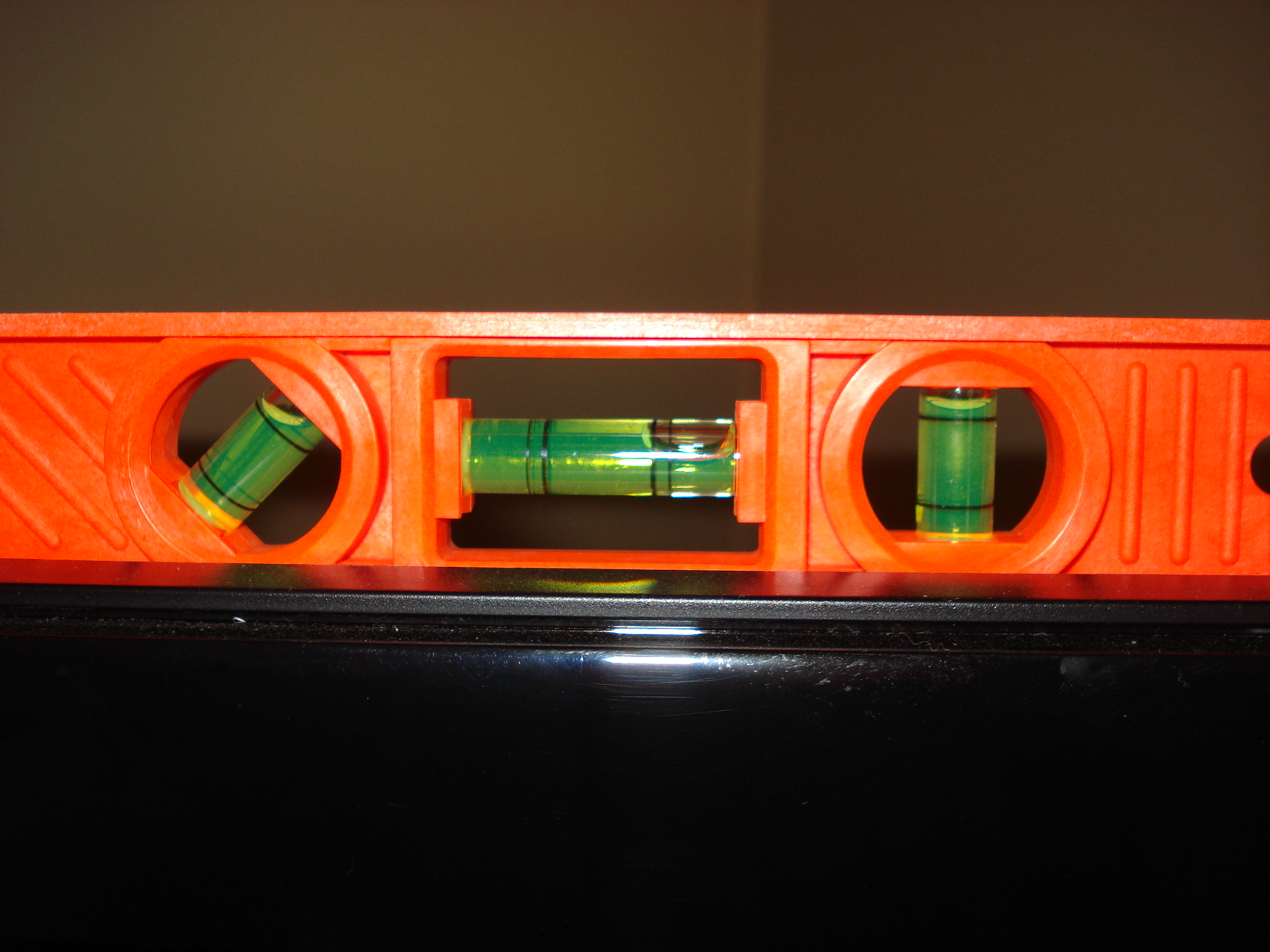
The “cheap” level I purchased this weekend.

We recently moved to reduce my husband’s daily commute from 3 hours to 10 minutes. In moving, things are often “lost”. A phrase often heard in our house lately has been “It’ll turn up!” Although cheerfully voiced and repeated with conviction, over the last 6 weeks there have been some items that have not turned up. One such item was the “level”. It was a really nice level too – approximately 18 inches long and very well made. I know that Home Depot advertises these digital gadgets that use an infra-red beam to determine – “level” – but I want something I can wrap my arms around and move around as if I need a hard hat and knowledge of construction! I have neither… but I like the illusion!

Anyway – I digress…

In the move, my husband and 20-year-old son put together a new T.V. stand for our 42-inch flat screen. The first time I sat down to watch a taped “favorite” I knew something was wrong.

“Umm… honey? The screen is crooked” I announced with confidence.

Terry did get up to stand in front of the T.V. with a critical eye, but explained with some assurance in tone and stance that, “It isn’t crooked. It’s fine!”

I gave him one of THOSE looks. You know the kind where you don’t actually SAY anything, but yet SAID a lot?

“Besides”, he teased, “how can YOU say whether or not anything is crooked or straight?”

“My world may revolve, but it isn’t skewed,” I retorted.

Over the next 3 weeks I continued to insist the screen was crooked. I watch very little television and what I watch is usually a taped show. When I sat to watch a taped cooking show or “Bones”, I didn’t want to have to turn my head to watch it “straight”. I was starting to let my frustration show that I seemed to be the only one who noticed the screen was crooked. Determined to prove my own “sense of level”, I went in search of our – erm – level.

It’s very frustrating to go through every nook and cranny of a new home looking for something you clearly remember packing and not finding the item! While picking up a few things at Wal-mart this weekend I got my husband’s attention as I headed for the hardware section. “I’m getting a cheap level,” I announced with NO ROOM for argument. He rolled his eyes but followed Chloe and I to the hardware department.

Ignorance is Bliss

When we got home, Terry and I unpacked the Wal-mart bags. I was busy in the kitchen when I caught sight of him in the family room standing in front of the T.V. He was putting the level on the television stand and then the T.V., all the while looking very thoughtful. I walked over to see if my sense of “level” could be trusted.

“It’s crooked,” he admitted with some surprise.

I tried very hard not to crow, for I’ve never done “chicken” very well. “Yes, honey. Do you think you can fix it? It is driving me bananas!”

“Oh sure I can fix it, but I’ll need Chris’s help. I’ll get it done this week,” he promised.

Do you know that over the last 2 days I have caught Terry standing in front of the T.V. numerous times with his head tilted? Ignorance is bliss. Now that he KNEW it was crooked, it seemed to exasperate him as well. The T.V. hasn’t MOVED or been ADJUSTED, yet now it seemed to really distract Terry too.

What “Bugs” Me, May Not “Bug” You

If you follow this blog because you have an invisible disability or service dog you will recognize a theme that often shows up here. No two disabilities are the same. Even folks with hearing loss have differences that make their hearing loss – or “hearing again” unique. I have become “pen pals” of a sort with numerous people who have Meniere’s disease. Yet I have never discovered any one individual who has exactly the same triggers as I. Through Fidos For Freedom, I have met a number of individuals with Multiple Sclerosis, mobility issues, deaf or hard-of-hearing, suffer from fibromyalgia, or other invisible “enemies”. I have learned that what may “bug” me may have no influence on someone else who may have a similar disability.We are as unique as our disability and abilities. I for one, like it that way. Something may look “crooked” to me and in need of straightening, but it may actually be fine to someone else.

I think we have to be very careful about assuming that every individual with a similar disability lives life the same way – experiencing the same frustrations and triumphs. The late-deafened crowd can be very bad about this as hearing loss is not “one size fits all”. Frequency, pitch, and decibel levels are all experienced differently by folks with hearing loss. Those of us who use cochlear implants and/or hearing aids may not experience the same benefit as another whose audiogram may look very similar. A listening environment may be very difficult for me because of the level of background noise, but you may be able to tune out things very easily with a specific “map” of your own CI.

Yesterday in church I experienced a painful reminder that what is “level” for one person may not be “level” at all for me. After church, the organist plays a piece of music as everyone leaves. People do a quick “catch up” with those around them or greet newcomers. Can I be honest a moment and say that it is all I can do not to wince when the organist begins to play? I try hard to control my expression, but I found myself gripping my hands together as I tried to make out the voices around me while my CI picked up the organ music loud and clear and deciphered the sound as best it could. I felt the hair on my neck stand up and …

I didn’t even know I had hair on my neck!

A plan of action is needed… I’m going to turn my CI off immediately after the service and just read lips.

If I tried to explain to someone else with hearing loss, they may not understand what the problem is and do just fine in that listening environment. As a matter of fact, I have noted a number of hearing aids in ears around me in the auditorium. They aren’t snatching the technology off from behind their ears and running from the auditorium screaming like a maniac. As I inwardly “shackled” my own maniac I couldn’t help but wonder how they did it. How can this surround-sound, swelling noise be ignored while they focused on actual voices around them?

Easy.

What was “crooked” to me was “on the level” for them. No adjustment necessary! We really have to remember that. I think it all boils down to:

1. Learn to communicate your needs clearly so others may adjust to best help.

2. Respect another individual’s choices and decisions made to find true accessibility.

Sometimes not much can be done to “straighten” what is crooked. Then our responsibility changes. I hope I can be gracious and accepting about things that cannot be “fixed” or “changed” to best meet my hearing and balance needs.

Denise Portis

© 2011 Personal Hearing Loss Journal