Markers

Sunday I had the rare treat of hearing my husband, Terry speak. In the past I was able to attend and listen to numerous speaking opportunities that he had, but our lives do not “intersect” outside of HOME as often as they once did. So the opportunity to hear him speak on Sunday when our pastor invited him to “fill the pulpit” while he was gone was pretty special. Our church is beginning a study on the book of Ezekiel.

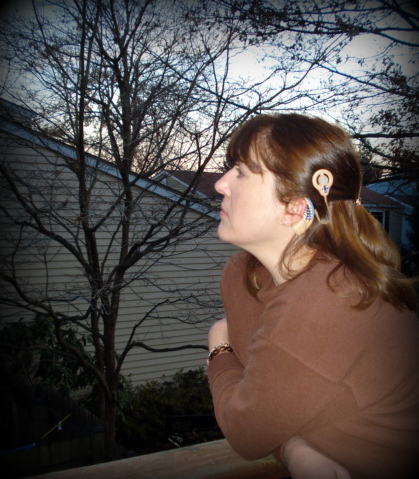
We don’t have a “deaf ministry” in our church. We also do not have a loop system. Our church family is a pretty small group – but we love it! There are two of us with cochlear implants. Myself and a young teenage boy are the “hearing again” crowd in our church family. When you hear with a CI, there is a teeny, tiny delay in processing what you hear until you understand what it is you hear. Most of the time I do not notice the delay at all. However, in large cavernous place like the auditorium in which we meet, plus the fact I have all this noise around me which includes children, rustling of papers, sneezes, adjusting body weight in chairs, etc., I’m a little more distracted by what I’m hearing! It’s also strange to focus your attention on a speaker, but the sound of their voice is coming from another place. I suppose since I was without sound completely for almost two years, I still habitually speech read. Looking at Terry, I “understand” much of what is enunciated on his lips. However, Terry’s voice was coming from the two large speakers from the side. Since we aren’t “looped” for hearing assistive technology, what I heard was what everyone else heard… coming from the speakers. (BIG GRIN). It’s hard to explain… but trust me when I say it can be difficult when you hear with a CI!

Anyway, Terry began by talking about his past work with BIANC (Brain Injury Association of North Carolina). He brought up examples of people talking about markers in their life. As I’m playing a constant game of “catch up” throughout the study… when he said this the first thing that came to mind was Crayola Markers. After I understood what he meant, I was pretty cracked up. Some examples he gave:

“Well before my brain injury, I ….”

“After I lost my hearing, I…”

“Before I got married, I…”

“After we had kids…”

We all have these markers in our life. At some point – LIFE HAPPENS. And when it does, you are left with a permanent “marker” in your life. Things at THAT POINT changed and your life would forever be different. These markers are not always a BAD thing… they can be a good thing too! These markers in our life indicate a point in time where our focus changed. They indicate where we ‘chose a new road’, or embraced a new calling or mission. The markers can also indicate a point in time where the “bottom dropped out” of the world as we knew it. Tragedy, loss, and heartache have a way of searing a painful scar on our hearts and minds, leaving a point in time where we recognize our lives changed.

Terry had some main points from Ezekiel chapters 1-4. Ezekiel’s marker was an encounter with God. Before this “marker” in Ezekiel’s life:

BEFORE

He was entering a new season of life.

He was with people who were dealing with problems.

He was looking for opportunities from God.

Then during the “great moment in time” that would forever change Ezekiel’s life:

DURING

It was impossible to ignore.

Impossible to explain

and Impossible to get over.

After the encounter, Ezekiel found that:

AFTER

What defined him would be different.

What discouraged him would be different.

What satisfied him would be different.

I think all of us can say that these points hold true to any “marker” we have in our own lives. Invisible disabilities may define individuals in different ways but there is one thing we have in common. Our lives will never be the same. That isn’t always a bad thing… for even in “losing something” we often gain so much. It may be hard to recognize at first, but the ‘gain’ is there if you really look for it. I think of my own life and the marker of “After I lost my hearing…” What now defines me and discourages me is different than before the marker. What SATISFIES me is different. My goals, desires, and passions are much different than they were. I have a friend who deals with numerous invisible disabilities. I love her. She has ministered to me in ways she does not understand. She once wrote about her new satisfaction about what a friend was. Allow me to share…

“Several years ago I fell ill, unable to continue a life that was full of people. They were genial folks, kindhearted and interesting. As they faded away when I was no longer able to do things with them and for them, I discovered the difference between a friend and a friendly acquaintance… A good friend changed from something I was owed to a breathtakingly beautiful gift. The sorrow and grief made that change possible, leaving behind it a bit of wisdom. There have been many an acquaintance made after I lost my pre-illness social circle, but now they are held rather lightly. I enjoy them, but resist having expectations of them. Often I will find myself sensing when a relationship feels more like a requirement, or when I seem to be taking more than I give back. Not in IOU or UOME terms, but in an awareness of balance.”

She goes on to explain that really the only ONE who can meet our needs is God.

I am reminded of an Ebenezer. To some of my readers, you may recognize that word from a VERY old hymn, rarely sung in churches today. “Come Thou Fount of Every Blessing” is not widely known in today’s churches. I had a grandmother who was not only fond of old hymns, but also of explaining what words meant. Ebenezer comes from two Hebrew words Even and Haazer. It looks like this:

It means “stone of help” and represents a memorial stone set up specifically to TESTIFY and REMEMBER.

These markers in our life are indelible, permanent fixtures on our own hearts and minds. For some things, however, I like to have a literal Ebenezer. Something tangible, something I can hold, and something that forces me to remember.

You are going to think I’m crazy… but check out this Ebenezer:
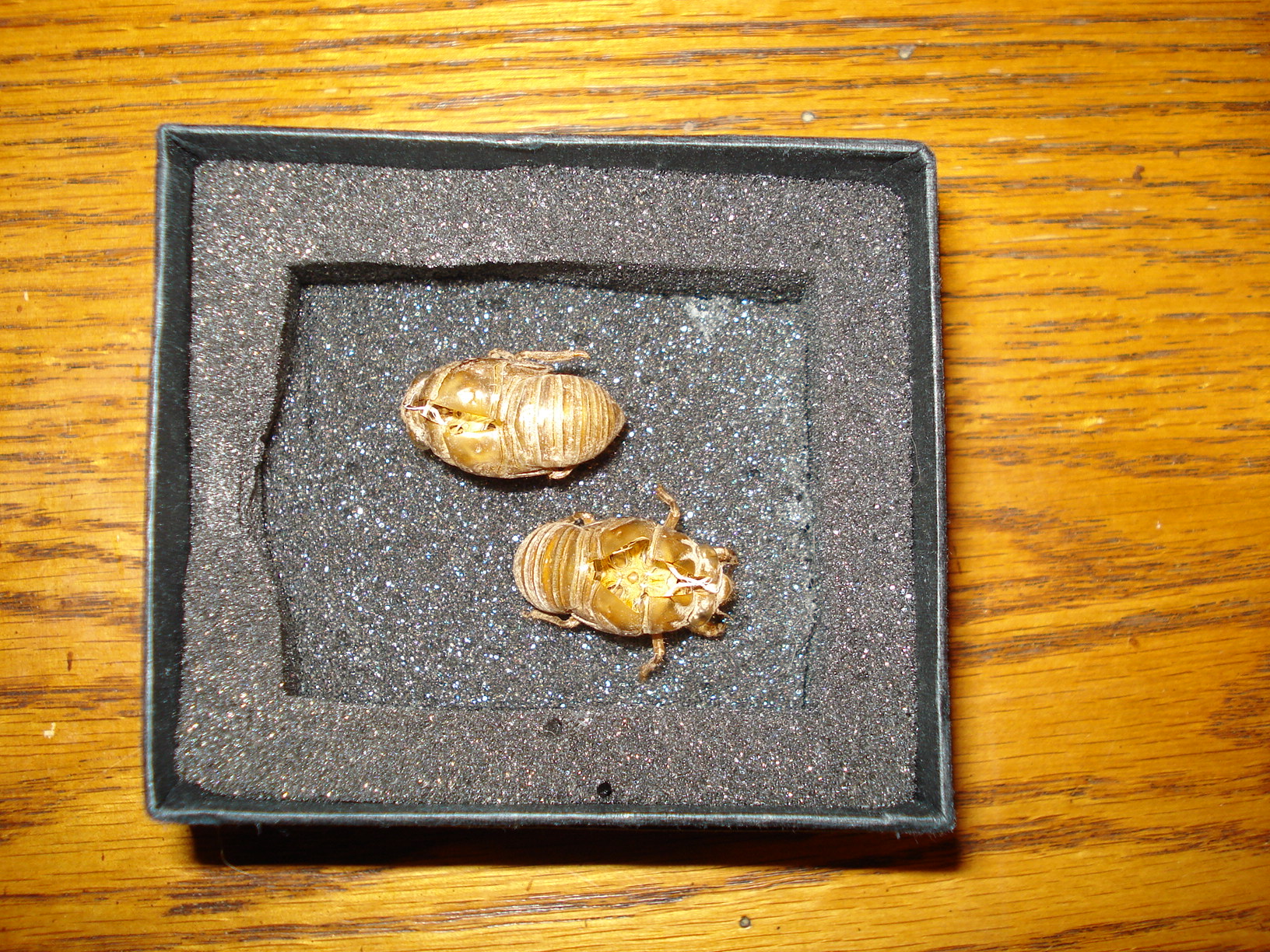
Nope! Your eyes do not deceive you. These are two shed cicada skins. Before you think I’ve lost it and am “gruesome beyond belief”, read the LID of the box:
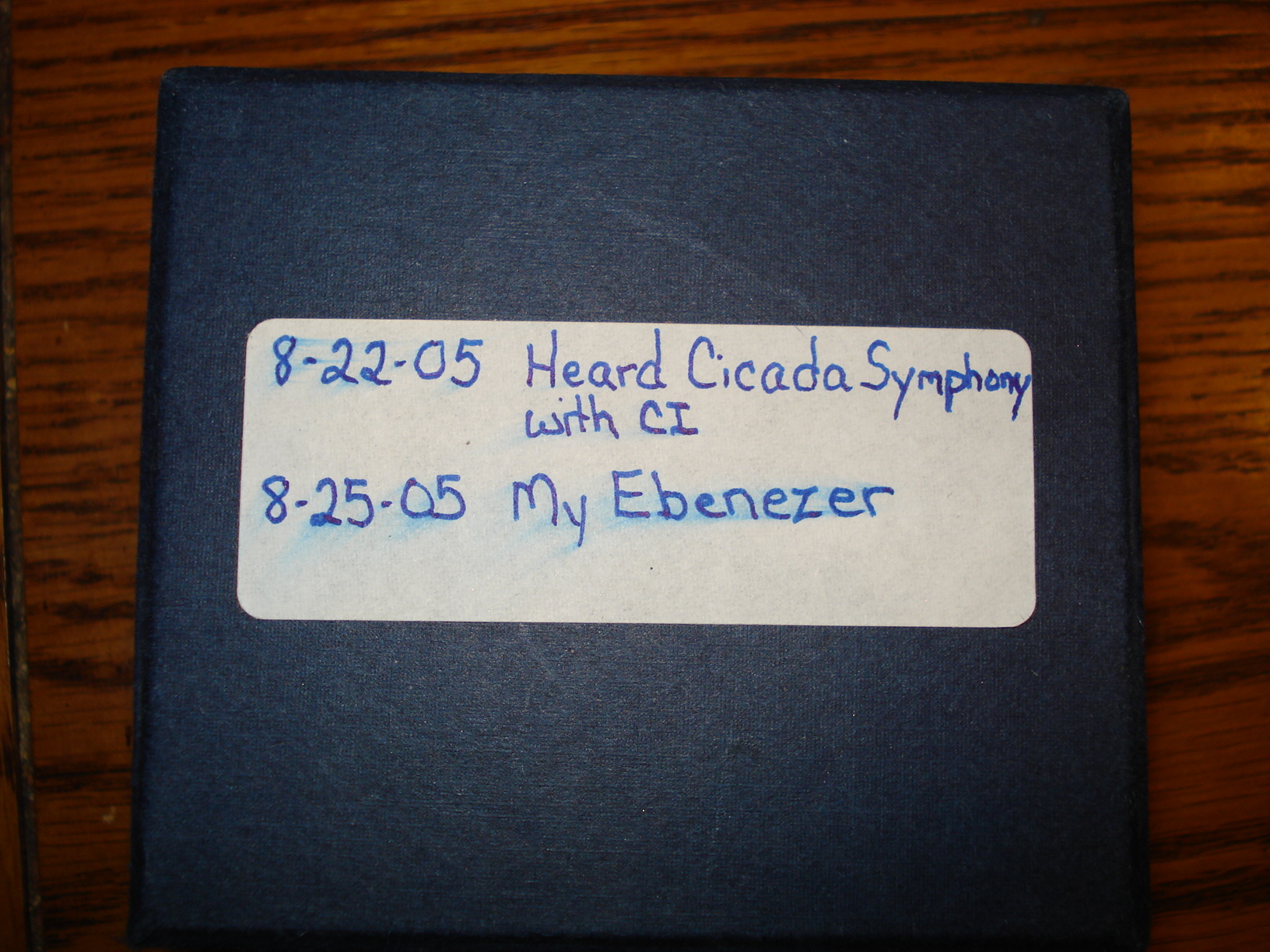
Unless you’ve lost your hearing… only to regain it through a cochlear implant, you cannot understand what it means to hear and recognize a sound from your past.

You cannot understand what it means to bend and pick up something unless you live with arthritis.

You cannot understand what it means to see again unless you’ve lived with cataracts and then had them removed.

You cannot understand what it means to stretch for a glass from your cubboard and realize you feel no pain today, unless you live with fibromyalgia.

You cannot understand what it means to have independence because of an assistance dog, unless you live with mobility issues and difficulties.

You cannot understand what it means to look forward to “today”, unless you live with mental illness.

Life challenges bring a new appreciation… a new satisfaction for what once were mundane tasks. If you haven’t yet identified markers in your life, well my friend? It’s one of two things… you either aren’t living life, or you haven’t lived enough of it YET.

One of the hardest things about being a parent is seeing my young adult children identify and experience things that etch permanent markers in their own lives. Perhaps you aren’t a parent, but you know someone who is experiencing a first “marker”. Do your best to encourage them. Be a living testimony of someone whose own life markers made them “better”. Make a difference…

Denise Portis

© 2010 Personal Hearing Loss Journal

Not Taken For Granted

October 2000 - September 20, 2010

It’s the little things that make a difference when you are “hearing again”.

This morning we had to put my daughter’s cat, Mandie to sleep. Kyersten is a junior at Liberty University in Lynchburg, VA. She doesn’t have a car and yet through friends was able to get home. (We currently only have one car and couldn’t do it).

It was a series of phone calls – some in a panic, to get all the plans just right so that she could get home in time. The cat could not wait. I’m just amazed at what a difference being able to hear on the phone means even in the midst of a small family crisis.

Not only could I hear to communicate plans, etc., but when we went to the vet I could hear whispered voices as the technicians tried to remain sensitive to the reason we were there. WHISPERED VOICES.

I am so thankful for cochlear implant technology and for being able to “hear again”. I’m certain that if I had not been able to have CI surgery, we would have still found a way through family crisis without my hearing. However… it just makes the biggest difference. You just really can’t imagine what it means unless you’ve lost your hearing and regained it through cochlear implants.

I do not take it for granted.

Denise Portis

© 2010 Personal Hearing Loss Journal

Who Is That Person?

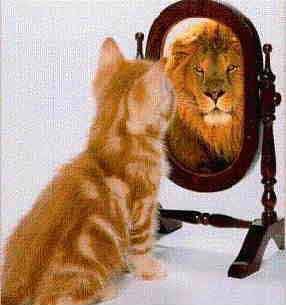
The bathroom downstairs is decorated with cats. Lots of them. (Yes I know… decorating a bathroom with “cat stuff” is unusual, but it is what my cat-loving children picked out!). The above picture hangs in the bathroom near the sink. As a result, I’ve given a lot of thought to this painting!

Who IS that?

This morning I was getting ready and caught sight of myself in the mirror. I had already fixed my hair, put on my make-up and “made pretty”. Yet, I was taken by surprise at what I saw in my reflection.

It’s raining today. We really need it too. Yet… I really dread rainy days. I usually know it’s raining even before I roll out of bed in the morning. I get this “sense” that all is not right. Weather systems do a number on my balance and I walk like a drunken sailor if bad weather prevails for more than a day or two. Looking at my reflection I could see IT on my face. Fatigue, dread, worry, and acceptance of the unavoidable. There it was in the reflection in the mirror. You would have to really know me to notice. Something in the eyes… tension in the facial muscles. Since I know myself pretty well (grin)… I could spot it right away.

Am I Defined or REFINED by Acquired Disability

The people I find most difficult to be around are those who “knew me when”. Folks who grew up with me – my parents, siblings, and family members – have a hard time being around me I think. I’m not who I was. My family are spread out all over the United States. We are currently in four different states, and unfortunately this necessitates rather infrequent visits. (Thank goodness for Facebook, email and SKYPE so that we can at least touch base virtually). My immediate family (husband and children) transitioned along with me as my life gradually changed from “what was” to “what is”. It seemed less like CHANGE to them, for life changes gradually grew who they were as well. However, when you haven’t seen someone in a very long time and then have the opportunity to be with them, changes are not only obvious they can be surprising!

I’ll never forget shortly after receiving my bionics and cochlear implant, I was visiting my sister while I was in Texas on business. I reached up to remove my CI to hand it to her so she could look at it because she seemed a trifle intimidated by it. She screeched, and said, “No, NO! Don’t take it off!” I got the impression she thought I was going to remove it from my brain or something! As if removing it meant you could peer down into the cavity of my skull! Her grimace and horror at what I was trying to do really threw me off! At first I was REALLY hurt (I’ll just be honest here). I couldn’t believe that in something so life changing for ME, that someone this close to me had done so little investigation themselves about what my having a cochlear implant would mean. But honestly? Researching and finding out more information about the CI that would change MY life is not HER job. I should continue to be the best DENISE I can be, using whatever means necessary to “do a good job” at that. It isn’t her job to completely understand what that transition will look like nor to completely understand the technologies I use to cope and HOPE.

Adaptation is “A change by which an organism or species becomes better suited to its environment” . My family and I have made adaptations. I don’t believe my disability DEFINES me, but it’s ridiculous to pretend it isn’t part of who I am now. I do believe it REFINES me. This isn’t a NEGATIVE thing. I’m still me… but a BETTER me because of the things I’ve adapted to as the result of having an acquired disability.

But sometimes… like this morning… I do a double-take when I see IT in the reflection of the mirror. I suppose it’s because there are days – thankfully few and far between – where my hearing loss and Meniere’s disease get the best of me. It would be so easy to just turn around and crawl back into bed. Heck! Honestly? There are days that would be the WISEST thing to do! I think of the people I know who are living with Lyme disease, Chronic Fatigue Syndrome, Fibromyalgia, MS, HIV, or cancer. Invisible disabilities and chronic illness that, unless you knew the background and testimony of the person standing in front of you, one would never know the courage it takes to live life each and every day with some semblance of normalcy.

Standing and looking in the mirror – you may notice a little bit of IT peeking out at you from time to time. I walked away from the mirror this morning totally OK with the fact that the stress of my life was showing a bit in my reflection. I don’t have to let how I FEEL influence the way I BEHAVE. Frankly? I think every person has days they have to try a little harder to PUT ON A HAPPY FACE. They don’t have to be people who live with invisible disabilities. It’s normal to have bad days. And normal? Well… that’s just exactly how I want to be.

I’ll leave you with a super song that I discovered long ago when that animated movie “Mulan” first came out in 1998. It wasn’t until I saw the lyrics for the first time that it was really driven home – the truths of reflection for every woman, every person, every individual living with invisible disabilities or chronic disease. When will my reflection show, who I am inside?

Truthfully it shows every single day. You just have to look harder on some days than on others. I don’t ever stop being ME though. I usually walk away from the mirror pretty satisfied with the evidence of things not seen on the surface. May we all be great reflections of who we are INSIDE

Denise Portis

© 2010 Personal Hearing Loss Journal
People are like stained-glass windows. They sparkle and shine when the sun is out, but when the darkness sets in, their true beauty is revealed only if there is a light from within.”(Elisabeth Kubler-Ross)

Prepared For It?

We simply do not take ANY chances

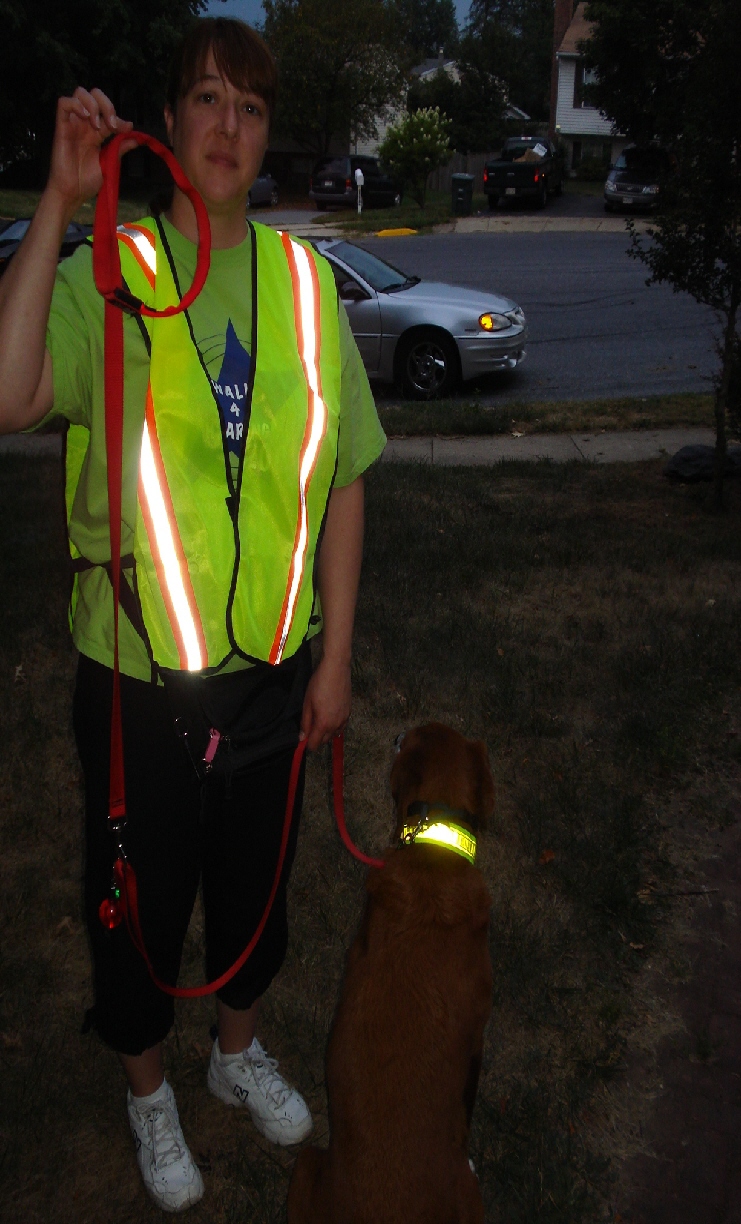
“The dog days of summer”… whew! Has it ever been hot here in my home state! I could take a repeat of last winter’s snows, believe me! I’ve always preferred 3 feet of snow to 3 weeks of 95 + temperatures! Because of the heat, Chloe and I have been forced to walk pretty late at night. At “twilight” it is dark enough that it isn’t safe to be walking. At least not in my neighborhood where people go 40 mph in a 15 mph zone.

To placate my husband, I make sure Chloe and I are decked out in a number of things that are reflective. I wear a reflective vest, and Chloe a reflective collar. The leash I carry actually lights up near the handle end, and it also sports “lighted bling” of various kinds. I’m sure from a distance we must look like Santa and his team of reindeer! Small price to pay … this GLOW IN THE DARK preparation — for a safe walk! I didn’t anticipate having to walk so late at night, yet preparation has made all the difference.

I’m safe.

It is cooler.

We walk faster.

No… really! Not sure why that is, but the big “loop” we walk is usually 7-8 minutes faster than if we walk when there is more light. Perhaps because we aren’t having to stop to get Chloe re-collected after startling a bunny? Either the bunnies have an early bedtime, or they simply are not seen as easily.

Just Because it Wasn’t Planned, Doesn’t Mean You Don’t PREPARE

I know of very few people who planned to acquire a disability or to be diagnosed with chronic illness. I have become acquainted with people who have progressive hearing loss or are deaf, people who have lost their eyesight due to Usher’s Syndrome, people with MS, Parkinson’s, Meniere’s disease, and Chronic Fatigue Syndrome, people with fibromyalgia and many others who find that they are living a life they didn’t exactly “sign up for”.

So what do you do?

Give up? Try to get a refund? Sue?

Well… most of the people I know “deal with it”. They do so in their own way, and for some it may mean working through it. Working through it for some people may mean that they have a pretty long period of time either denying the problem or grieving the problem. Each of us do this, but some spend more time on these steps than others. That’s OK. I get really aggravated when I hear someone tell a person learning to live with changes that affect their life that they need to “get over it” and “get on with life”. I guess I’m aggravated because the person saying that usually does not have the same diagnosis as the person they are preaching at! However, I do sometimes see someone who DOES share the diagnosis “preach” the same. Just because YOU did not grieve your hearing loss — or whatever it may be that you are dealing with — doesn’t mean that other people deal with the loss the same way.

Once you do work through that process, however, you can start to prepare. Preparation is key. For me preparation looks like this:

1. I always have #13 hearing aid/cochlear implant batteries. I carry some in Chloe’s vest, the car, my pocket book, and Chloe’s treat bag. I have them in my bedroom and my office.

2. My cane is right by the front door. If it is rainy or if there has been a pressure system come into the area, having my cane “handy” insures I actually take it with me out the door. No one “messes” with where I put my cane. If you move it, you risk life and limb (grin).

3. I leave early to arrive early. Let’s face it. It takes me longer to get to where I’m going. For one thing I travel with an assistance dog, and I have to spend a couple of minutes allowing her to “do her thing” before going into a public place. I have to load her up safely in the car. I have poor peripheral vision on one side so I drive the speed limit in a world where no one else does. I allow extra time to get to places ON TIME. Sure! I’m early sometimes, but I am rarely late.

4. I never walk out the door without my cell phone… and I am ZEALOUS about making sure my phone has a full charge. As a matter of fact… I have my cell phone on my person almost every waking moment. (Perhaps something to do with having a kid in college in another state now?)

5. I make it a PRIORITY to get eight hours of sleep. This is so important, I schedule myself to get at least eight hours. Heck! I’ll be honest… I actually do better with nine, so if I can schedule that I do! Having a cochlear implant is terrific! I love being able to communicate without having to actually be in the same room with someone. I’m fairly certain it’s not AGE… it simply takes a LOT of brain power to communicate now! Who’d have “thunk” that communicating with a hearing loss could be so exhausting. It doesn’t seem fair that no calories are burned! It is mentally (and sometimes emotionally) exhausting to communicate with hearing loss. If I get less than eight hours of sleep, it is very noticeable that I do not communicate as well. Fatigue will do that.

6. I make sure I travel with information about service/assistance dogs. You never know when you may have access issues. As a matter of act this has been a pretty prevalent part of our lives lately. (See the links here (with a video too!), here and here).

7. I avoid sodium, limit caffeine (something I find nearly impossible), and take Manganese! These three things I have found to be very helpful in limiting the effect Meniere’s disease has on my own life. Manganese is hard to find too! (Magnesium is plentiful… Manganese not so much). Remembering to make these “BIG 3” a priority, really makes a big difference in how severe my symptoms may be when an episode hits.

8. I memorize and use lines that best describe my communication issues and how I can solicit positive responses. These include:

A. You speak wonderful English! However, I have a hearing loss so I have trouble with accents. Could you repeat that a little slower please?

B. I have trouble understanding in background noise. If you would face me when you talk, I should be able to speech read and hear with my CI (point to it) and hear you much better!

C. I missed what you said. What I heard was (and I repeat the parts I heard). Could you repeat what I missed? (This way folks aren’t having to repeat EVERYTHING).

D. It’s so noisy in here that I am having trouble pulling your voice from “all this chaos”. Can we step over there (points) to a quieter spot? I really want to hear what you are saying.

E. Do you mind if we sit down? My balance is “off” today and if we sit it will give me one less thing I have to deal with!

F. Let’s step over here to talk so that I can put Chloe in a “safe place” so she won’t get stepped on.

There are many more… but it pays to rehearse and have specific examples to communicate to others your attempt at being proactive to help yourself. I have never… not even one time… had someone respond to these types of explanations in a negative way. Preparing explanations like this keep me from slipping and offending someone by spouting off:

A. Geesh, your accent is killing me! I can’t hardly understand what you are saying!

B. Would you quit mumbling and speak slower please? Gee whilackers!

C. HUH?

D. WHAT DID YOU SAY? (In a super loud voice trying to drown out all the noise. Now ever eye is on you and the person who was trying to talk to you).

E. (Denise is bumped and falls to the floor in a tangle of arms and legs… including doggie legs).

F. STOP STEPPING ON MY DOG!

Preparation = Ownership

In preparing and planning, a person with an acquired disability or chronic illness in essence choose to take ownership of their own life. It isn’t another person’s responsibility. It is ours. What ways do you prepare and “own” your life to better live with a disability or chronic illness?

Denise Portis

© 2010 Personal Hearing Loss Journal

A Common Dust Speck

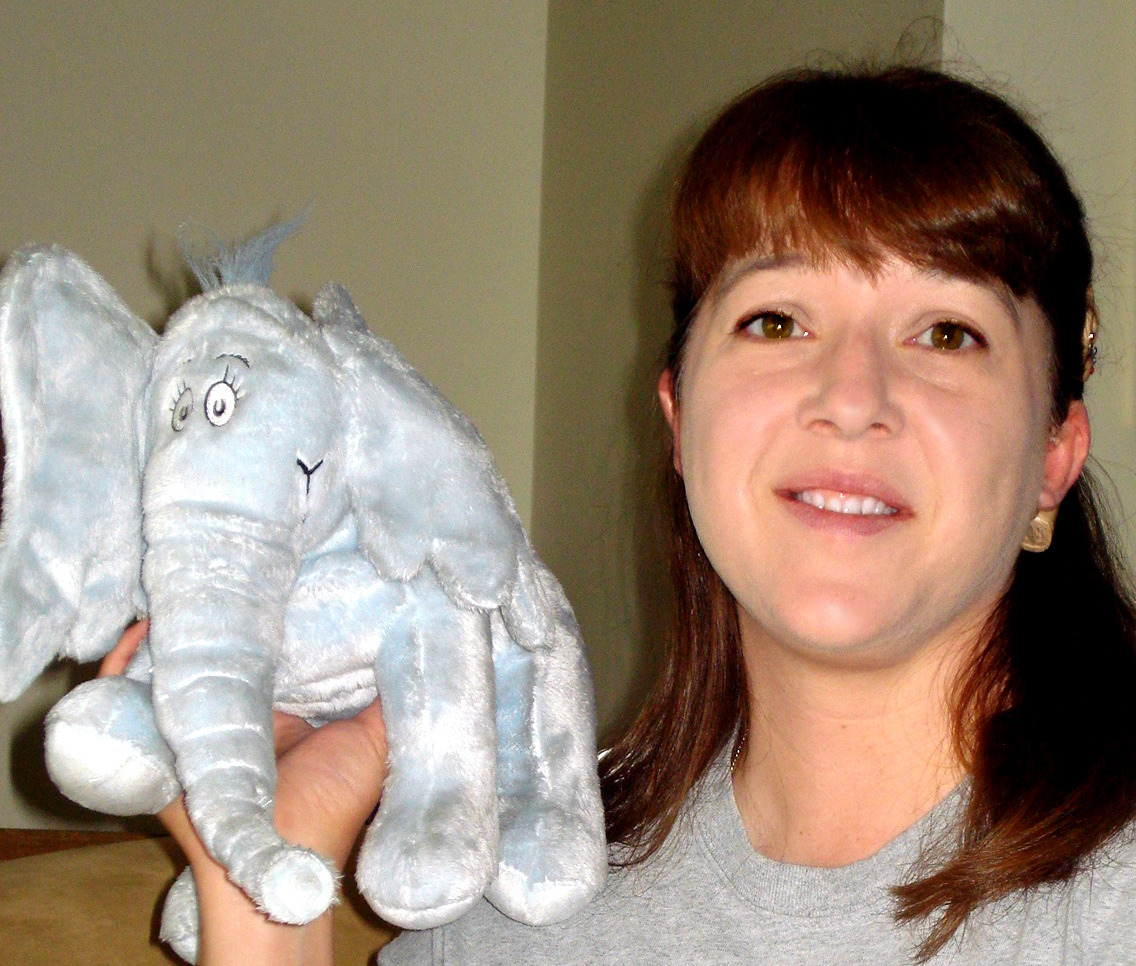
To others it was just a common dust speck. To Horton, it housed an entire world in need of assistance, with hundreds of lives at stake on the brink of being (gulp) boiled. “Common” is subjective, for what is commonplace and boring to one individual may be exactly opposite to another.

Losing to Learn to Appreciate

Having an acquired disability like hearing loss and a balance disorder often teaches me to be appreciative of things I once took for granted. Activated merely eight days before, what blended into the background as a normal, ordinary, and mediocre sound to my husband, was the astonishing, spine-tingling gurgle of sound to me! It took me 15 minutes to finally pinpoint the sound of the electric coffee-maker in his office.

“How could you not hear THAT! What a wonderful sound! It is so distracting! It fills the entire room!” I exclaimed.

“Honey, it is such a commonplace sound it doesn’t even register for me!” he replied.

I was stumped! This gurgle-burp, sigh of steam… commonplace? Doesn’t register? No way!

Subtle cues

If you’ve never had any experience with a hearing assistance/balance assist dog, there are cues that are subtle… even invisible to someone other than their partner. My husband is constantly amazed that I am able to scoot the cart out of the way of a “mother of two in a hurry” at a store when I only have one cochlear implant. Finding the direction of sound is quite a challenge. However, Terry isn’t watching what I’m paying attention to while we shop. If Chloe turns her head and pricks her ears up, I automatically look in the direction her nose is pointing. To me this subtle cue shouts, “Well! Would you look at THAT, Denise!”

When air pressure and bad weather create a vestibular nightmare for me, it is the subtle cues that Chloe and I communicate most effectively. On a “normal day”, I’ll drop something and can slowly bend to retrieve the object. However, on a “bad day”, I only need to look at the object I dropped and intercept Chloe’s gaze… for she has most certainly already noticed the dropped item too. Sometimes I only smile and she cheerfully retrieves the object! Other times I may point and ask her to specifically fetch something. (You don’t ALWAYS want your dog to retrieve dropped items. For example, my husband Terry dropped a large candle from the top of the closet this weekend. I did not want Chloe to retrieve any of the glass scattered over the carpet and had to “shoo” her away!)

Chloe may go through a day and only alert me to the kitchen timer a couple of times, my cell phone, and retrieve my garden gloves from the yard. Those tasks may seem very ordinary and commonplace. Yet without those alerts, my tea kettle would have boiled empty and the chicken defrosting in the microwave may have sat in there all day! I would have missed the call from my husband reminding me that he was working late. I would have had to retrieve those garden gloves myself in the middle of a yard with nothing nearby with which to pull myself back up! So common and subtle cues are subjective. They may be very important alerts that enable me to live more independently.

Just Help

I know people who do things to help others who are never noticed. They don’t want the attention. It can be something as simple as paying a military person’s meal for them when you see them in a restaurant.

Perhaps you help a mother get her stroller up on the curb, or take a shopping cart to the “cart corral” for a customer in a hurry.

Don’t ever underestimate any help you are prompted to give. We are called to serve… to make a difference. Even people with disabilities can help others. I know someone who is blind and deaf who emails “10 Blessings” a day to various people. As I’m the occasional recipient, I can tell you those blessings come on days I need them most.

You don’t have to have money to help. Most acts of service are free.

You don’t have to have a lot of time to help. Most opportunities take seconds.

Don’t ever look at a day as a “common” one. If you really set out to do so, you can make a difference in someone’s life.

If you listen really carefully, you may even hear…

“We are here, we are Here, we are HERE”

Denise Portis

© 2010 Personal Hearing Loss Journal

For Our Own Good

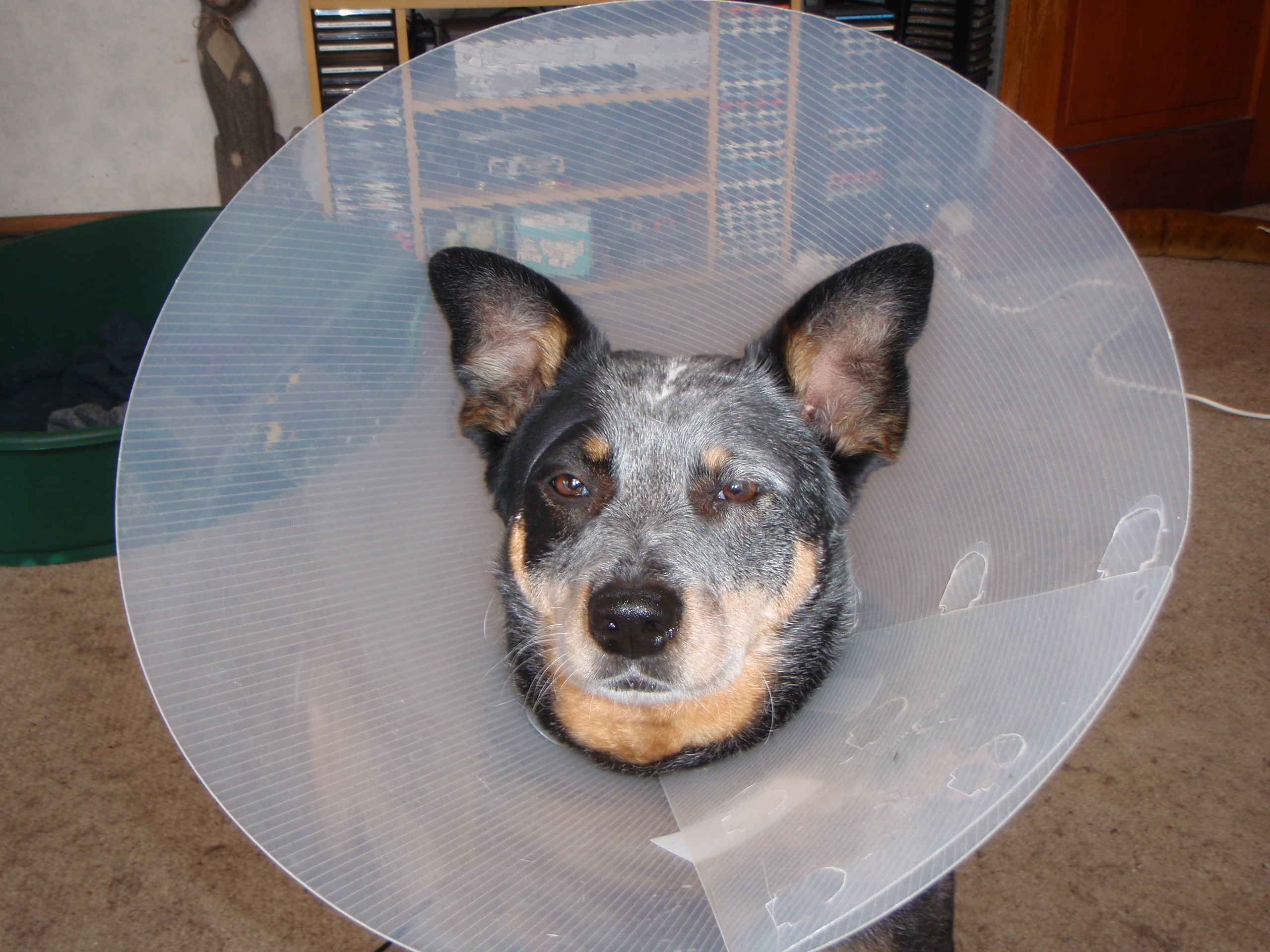
A dog with a cone that is not FREAKING OUT

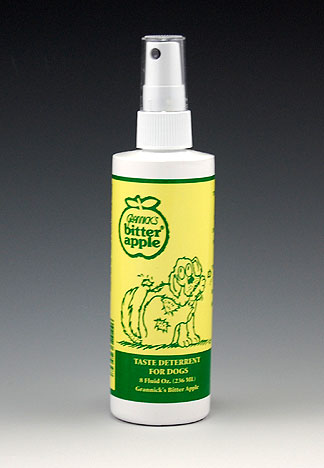
Chloe was injured on May 9th and it has been a LONG road to recovery. She had surgery following the accident to save a toe, lost 4 toenails… and it has been “3 steps forward and 2 steps back” ever since! Our biggest problem was getting her to leave the surgical site alone. Chloe is very smart. Chloe has been trained by the best. Chloe attends Fidos For Freedom for follow-up training and polishing. But Chloe? Well… she’s still a DOG. We were given a very nice cone similar to the one in the picture above. The only problem was that Chloe would go BERSERK when I put it on her. During the day, I could simply keep an eye on her while I was working at my desk. However, at night I needed a little assistance. The CONE was suppose to be my assistance. Every time we put the “cone of shame” (a line from the animated movie UP!), she went crazy… running into walls, dashing her head around, and inevitably breaking open the cauterizations and stitches on her foot. We ended up having to use “Bitter Apple” instead.

This saved my life actually! I wasn’t getting a “wink” of sleep and was seriously near a nervous breakdown from fatigue. One of my daughter’s friends at work recommended “Bitter Apple”, and it only took a few sprays for Chloe to LEAVE her FOOT ALONE! All night! (Thank you GOD… quite literally!).

I think part of the cone’s drawback was that it wasn’t transparent. Chloe couldn’t see to the right or left… all she could see was what was directly in front of her. It made her panic – the NOT knowing what was around and about. She could hear our voices, but her world had suddenly become very small. It was only as big as what she could see out the end of the cone.

You can’t very well explain to a DOG why they need a cone on their head. If you could explain that… well GEE! You could probably reason with them about why they should leave a surgical site alone! We could not explain to Chloe that the cone was for her own good.

For OUR Own Good

Isn’t that just like us? How often do we fight against what is only there to protect us? Some things that come to mind:

1. The speed limit. It’s not there to challenge you to see if you’ll get caught speeding. It’s there to protect you and others.

2. Exercise and eating right. How many thousands of Americans re-commit each January to make this change? It’s not because getting sweaty, pumping “iron” and eating fruits and vegetables are a lot of FUN. But we’ll live longer… and probably feel better too.

3. The 10 Commandments. Yeah, I know… it’s OLD TESTAMENT. But aren’t these things we should all continue to strive for even as “New Testament” believers? If you are a person of faith it normally means there is something different about you. If you covet, steal, murder, and hate, it is YOU who is scarred and broken in the end. Those “commandments” are for your good.

4. Taking medicine. Blech. But if you are sick, do you not take medicine when it may be what stands between you and good health… or life?

All 3 dogs were very concerned about my donning the "Cone of Shame"

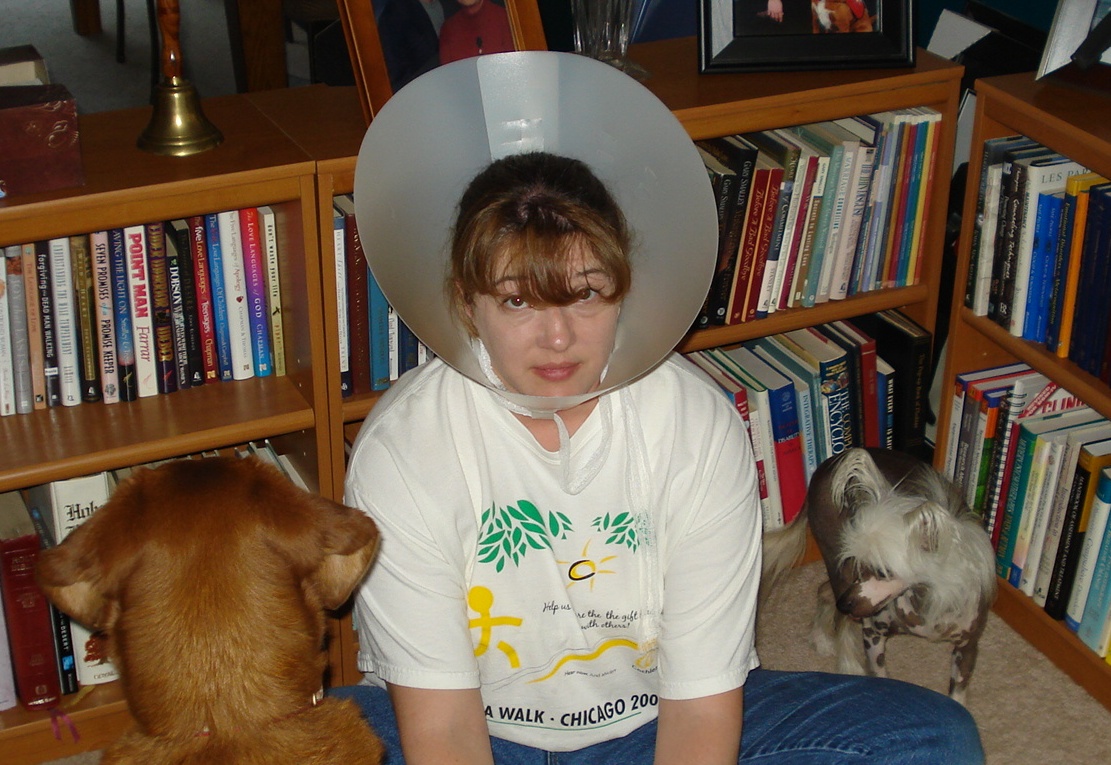
I tried on the “Cone of Shame”. (Does that make me “game” or nutty?) The dogs were very concerned as you can see. All 3 sat in front of me and Chloe whined and breathed hard in my face every time I turned her way. It was very disconcerting to not be able to see around.

I believe that a “cone” is a good representation of how difficult it is to put your faith and trust in something or Someone that you can’t see. I have never seen God, yet He’s as real to me as anything I have ever experienced. I see Him in His creation. I see Him in the service and love of others. I see Him in answered prayer… even when He says “no”. Yet, I’ll admit to a major frustration in my faith walk. It is really hard not knowing what tomorrow may bring.

It can be very disconcerting to have a disability that may be progressive. It can be frightening to have an invisible disease like fibromyalgia, Meniere’s disease, or hearing loss. Have you ever been told “you’ll only get worse”? That knowledge can make it really difficult to have dreams and hope to see beyond “today”. We have to trust that what we have access too is enough for now. We should reach out to others and form strong relationships. We should research, prepare and educate ourselves. We don’t have to run around in a panic with this “cone” we didn’t ask for! Can you calmly and in faith, believe the “cone” is for your own good?

I have a “short-term” goal and a “long-term goal”. I strive hard to make every minute in pursuing both worthwhile. I know God has a plan for me that is not fulfilled as of yet. I know this because I am still here. It can be very frustrating sitting around with a “cone on my head and heart” — not able to see the big picture that God has access to  — since He PAINTED IT. I know keeping my eye on the short-term goals are important. It’s good for me. It keeps me focused, on track, and “real”. Yet I really want to be able to see 360°. I realize GOD can see the big picture… that’s what “omniscient” means… all knowing. I have to have FAITH that what I’m allowed to see and make sense of RIGHT NOW is enough. Having that “cone” on is for my own good.

It may not be very comfortable, but we have to believe that God has our best in mind.

Proverbs 3:5-6

Trust in the Lord with all your heart,
and do not lean on your own understanding.
In all your ways acknowledge him,
and he will make straight your paths.

At some point… I’m going to see beyond the cone.

Denise Portis

© 2010 Personal Hearing Loss Journal
Let Go – Let God

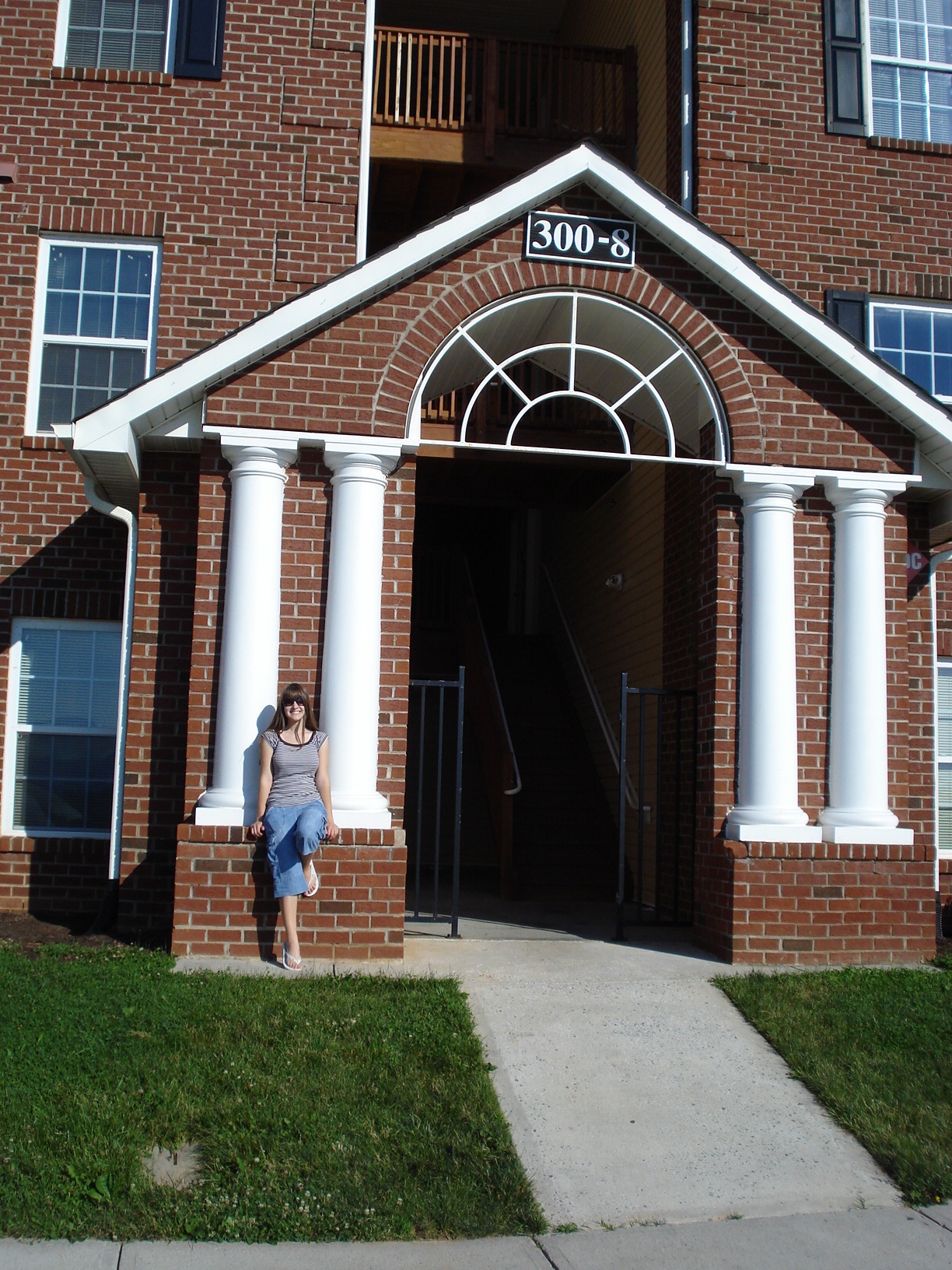
Kyersten standing in front of her new dorm at Liberty University.

This past weekend my husband, firstborn and I headed to “Summer Orientation” at the college my daughter is transferring to this fall. She will be transferring in as a junior and we came to complete the remainder of her check-in requirements and participate in some on-campus meetings.

I’ve been deliberately and methodically choosing not to think about this fall and the impending separation from my firstborn. I’ve always been pretty good at that and it keeps me from perseverating about unpleasant events. However, attending meetings about “how to let go” and how to encourage independence, forces the issue to the front of my mind.

Because of the forced concentration on this coming fall, I came to a startling discovery. I’m actually going to be OK! Kyersten is confident and excited. She received fantastic scholarships and is lined up for Work Study. One of Kyersten’s roommates is a young lady who graduated high school with her. Elise will be transferring in as a junior as well. I have easy access to email, SKYPE, Facebook, cell phone, and texting. I may shed a few tears after dropping her off this fall, but truthfully I am more excited than devastated about our family beginning a new chapter. We’ve prepared for this and we are ready. I have faith that God will keep her in the palm of His hand. I can let go – and let God.

Kyersten overlooking her "new city", Lynchburg, VA

I’m not as good at that about all things, however. Some things I find it more difficult to…  “let God”?

1. Finances: My husband works full-time and also works part-time as an adjunct professor. I work “very” part-time as a teacher at a private school. I currently only work one day a week, and only during the school year. I will not be finished with my Master’s degree until the end of this year, and even then I will probably have to wait until the following school year to work a truly “part-time” schedule. This means that things are tight financially. Really tight! I try not to complain or worry because I know so many who are unemployed or struggling with more difficult financial issues than we are. Our car needs fixed. We have debt. It’s really hard for me to release some of these worries to God. I want to “fix” things… stay in control. I believe God equips us to make decisions to work through financial problems, but at some point you have to have faith too! I struggle with having that faith…

2. Hearing: I am truly blessed to have bionic hearing and experience daily the miracle of “hearing again”. Each morning when I slip my coil magnet into place, I am reminded of the miracle of hearing again. A confession? I always fear “how long will this last”. Perhaps it’s because I experienced profound deafness for a couple of years prior to implantation. I know what it means to not be able to hear and communicate well. It had such a devastating effect, it left invisible scars on my heart and mind. I am implanted with the “most reliable” cochlear implant on the market. Yet because of FEAR, I always get a hitch in my breath right before I connect the magnet each morning. I have trouble letting go of this fear… and letting God give me the confidence that He is in control.

Do you have trouble letting go – and letting God? I believe it is because there is a small part of us that wants to control our own destiny. In some ways, if we are the only ones in charge of our destiny then we are the only one responsible for the outcome. But is that true?

Reality check: Decisions OTHER PEOPLE make often impact our lives and our future. Natural disasters can have an influence. A devastating health diagnosis can impact our future – our very life. Stock markets crash, wars continue, the housing market may plummet. Someone we love may be killed by a drunk driver. People may be robbed, raped or murdered. Nothing like painting a rosy picture for you, huh? GRIN.

The good news? God is in control. John Ortberg said, “Peace doesn’t come from finding a lake with no storms. It comes from having Jesus in the boat”. I don’t think we can truly “let go – and let God”, if we aren’t in the habit of daily interacting with the God who loves us. You cannot think about God part-time and expect His peace full-time.

I love studying and using the names of God in my daily interactions with Him.

Jehovah-Rophe or Jehovah-Rapha: The Lord God heals

Jehovah-Sabaoth: The Commander to the Angelic Host and the Armies of God

Jehovah-Jireh: The Lord will provide

El Shaddai: God all sufficient

Jehovah-Shalom: The Lord our Peace

The names of God remind us of all the things He IS. These reminders make it possible for us to “let go – and let God” with confidence.

I encourage you to make a list of things you have trouble letting go of and discussing them with the One who really cares. I still have two big issues that I have trouble letting go of… yet learning to release these worries daily create a confidence that I can feel is growing. My hope is that I will one day realize I have truly “let go”.

Denise Portis

© 2010 Personal Hearing Loss Journal
“Play Your Own Hand”

My Mother at Harper's Ferry, WV, in June of 2010.

My parents came to visit last week as they wanted to attend my son’s graduation. They live in Florida, so it was great they could stay awhile after Chris’s ceremony as we don’t get to see them that often. Mom and Dad live in a gated community in Florida. They play cards there… a LOT of cards. When they come, they often teach us a new game. That may seem pretty “ho-hum” to most of you, but I grew up in a household that played ROOK and Gin-Rummy. That Mom and Dad come and teach us brand new games with elaborate sounding names like Shang-hai Rummy, we are pretty thrilled. It gives us a chance to sit around the table and visit while playing cards each night.

They brought a new game with them this time called “Bohemian Poker”. It was really fun, and the hands are relatively short so that those of us with short-attention spans can concentrate. Without going into the details of how the game is played, mom reminded us all through the game (usually after a mistake was made) to “play your own hand”. Eventually I was able to do just that, but it did take quite a bit of repetitious reminding on her part.

The opposite of “playing your own hand”, would be to look ahead at the person or persons after you and intentionally play in such a way that they do not benefit from your play. Some players go so far as to collect more points in their OWN hand to keep others from benefiting from their play. (The object of Bohemian Poker is to have the FEWEST points). Mom reminded the novice players at the table to concentrate on what would benefit them the most… to not look at other’s hands, and concentrate on your own. I suppose another way of putting it would be to “mind your own business”!

So freshly ingrained is this new phrase, I have been thinking about how that applies to so much in our life. With her permission (and blessing) I decided to blog my thoughts on the idea!

What It Is NOT

“Play Your Own Hand” does not mean that you intentionally live an isolated, segregated life. It does not mean that you ignore the needs and problems of others and concentrate on taking care of your “own” exclusively. It does not mean that when we see an opportunity to serve or minister in our community or circle of friends, that we do not reach out to those we see in need.

“Play Your Own Hand” does not mean that you do not make short-term and long-term goals, for in truth, both are wise practices in the life of any adult. Sometimes those goals include relationships with others, and so we must determine how our goals affect those who are in our circle of influence.

What It DOES Mean

I believe that “Play Your Own Hand” teaches the following lessons:

1. Pay attention to what God has given you to do. Don’t worry about what others are doing as it is not your responsibility. Your choices, decisions, and planning ultimately affect YOUR life.

2. Don’t live defensively, countering wise decision for your life in order to keep someone else from benefiting.

3. There are gambles in life. They can be both exciting and nerve-wracking. May the chances you take only influence you, unless some benefit or blessing is passed on to another.

4. If someone you care about is ruining their life, try to be a good influence… pray for them… encourage them. But don’t allow their problems to become your problems. They may have some hard lessons that need to be learned through reaping the consequences of their own decisions.

Hearing Loss – So Much Variety!

I have met a great number of people with hearing loss through the years. Through speaking engagements, conventions, online support groups, HLAA and other hearing loss venues, I have discovered that hearing loss is not “one size fits all”. I have Meniere’s disease as well, and am amazed at the variety of symptoms and triggers individuals who struggle with this disease exhibit.

I have also seen people with hearing loss criticize decisions others have made to best cope with their hearing loss. Those who are pro-ASL, often butt heads with those who are anti-ASL. In my opinion, it makes both crowds… BUTT HEADS. Some people choose to use technology, or to be surgically implanted with a cochlear implant. There are three cochlear implant manufacturers. I have seen “CI Wars” both in forums on the Internet, and also face-to-face. Cochlear Americas, Advanced Bionics, and Med-El seem to have enthusiastic and loyal recipients. Is it not best to celebrate “hearing again”? Why does it matter what implant an individual chooses in order to best hear again? Sure – some companies have different perks, low “fail” rates, etc., but being negative or belligerent to an individual sporting a different brand is stupid and immature. (Not really pulling any punches am I, grin!)

“Play Your Own Hand” and do whatever it takes for YOU to hear best. To do so, insures you may communicate as best you can and to practice independence towards hearing all you can with the ears you have. Celebrate when others are learning to be proactive about their own hearing loss. Always be willing to try something new… you may learn a thing or two about your hearing loss even decades after you began living with these communication issues.

Denise Portis

© 2010 Personal Hearing Loss Journal

Misconceptions

I’m always so tickled when one of Hearing Elmo’s guest writers offer to post something! This one was really “timely” for me and I needed the reminders about what some common misconceptions are! Thank you to Tywanna, one of Hearing Elmo’s guest writers!

MISCONCEPTIONS

Guest writer: Tywanna

The American Heritage Dictionary defines misconception as “A mistaken thought, idea, or notion; a misunderstanding.”

Prior to the decline of my hearing, I could not explain what it was like to live with a hearing loss. I was incapable of completely explaining something I’ve never experienced. If I had tried to do so, my words would have been awkward, confusing, incorrect, or ignorant.

I’ve cross across some people with “normal” hearing who feel as though they understand but their reality is often a misconception.

Here’s a list of the top misconceptions I’ve heard and experienced throughout my hearing loss journey.

1. All people with hearing loss use American Sign Language

According to Wikipedia, while there has been no reliable survey of the number of people who use ASL as their primary language, estimates range from 500,000 to 2 million in the United States. As of 2009, the United States population was estimated at $307 million people. If these statistics are close to the actual numbers, ASL users are in the minority.

In 2006, Gallaudet University published a study which indicated the estimates need updating.

2. Yelling will make the person with hearing loss hear better

Imagine speaking with someone and hearing but not fully understanding what’s being said. To a person with hearing loss this is a regular encounter. Sometimes we often nod, smile or shake our head out of politeness or because we don’t want to interrupt the speaker with “what” or “can you please repeat that.”

Sometimes when people with a hearing loss find the right moment to intervene with a polite “can you repeat that”, we’re faced with someone yelling so loud that their words become distorted.

I often feel compelled to ask, “will yelling make me hear or understand you?”

3. People with “normal” hearing may not talk with someone who has a hearing loss

A manager at work explained to me that she knows I’m smart but she was afraid people would not talk to me because I could not hear them. Is this the way my co-workers feel or the way she feels? I’m inclined to believe it’s the later due to her ignorance about hearing loss and her lack of being comfortable around someone who is slightly different than herself.

What does being smart have to do with hearing loss? How are the two related?

4. The word “impaired” sounds nicer than hearing loss or deaf

While taking an ASL class for the first time I used the word impaired with our instructor who was born deaf. She politely explained to me impaired means broken. After that experience I looked up the word in the dictionary. Impaired is a synonym for broken, ruined or messed up. Wow, did God make me broken? – of course not. He made me exactly the way he intended. He made me to be unique, different and one of a kind. Since finding out the true definition of the word impaired, I have eliminated the word from my vocabulary when referring to others with hearing loss or myself.

The terms dumb, mute, and handicapped and several others are no longer acceptable. Let’s band together to eliminate the words that may be offensive or degrading to certain members of the population.

Let’s ask people what they would prefer to be called and honor their wishes.

5. All people with hearing loss want to be “fixed”

Have you ever come across people who feel as though they have the answer to everything? Every time a new product or infomercial comes on television, they feel compelled to let you know.  “Oh my, I’ve seen this wonderful new head phone set that will enable you to watch television without using closed captions.” Well, I’m wearing a BTE hearing aid that costs $3000 and you’re telling me a product for $19.99 will enable me to understand the television?

“You’ll never guess what, “I’ve seen a new hearing aid that is suppose to fix all types of hearing loss.” Who told these people there is a cure for deafness?

Who also said deaf people want to be fixed? As a whole, the hearing loss and Deaf community are proud of who they are.

6. Deaf means “No Sound”

Wrong! The term deaf does not mean without sound. According to the Center for Disease Control, deaf is the inability to rely on your hearing to understand and process information without the use of visual cues.

7. Deaf people want sympathy

Recently while interacting with my supervisor at work, I explained to her I would prefer written instructions because I was going deaf. Her reply was “I’m sorry”. I quickly explained there is nothing to be sorry about. People who are Deaf, deaf or hard of hearing want empathy not sympathy. I don’t want people to pity me or feel sorry for me. That’s not the way I see myself. I’m using my hearing loss as a way to help others.

My cousin recently sent me an e-mail with the following quote:

“Nothing in all the world is more dangerous than sincere ignorance and conscientious stupidity.”

–Rev. Dr. Martin Luther King, Jr.

People with “normal” hearing, may never be able to fully understand our journey. Often times true understanding comes from experience. We do not have to live in continued ignorance. There are so many libraries, books, television programs and Internet websites. Let’s educate people one at a time. Let’s band together to wipe out the misconceptions. Let’s continue to share our experiences to help others.

Have a Great Imagination?

Chloe and Denise at an old Rock Quarry April 2010

So do you have a great imagination? Unfortunately, I did not have my camera when the incident occurred that I’m about to explain. Even had I located a camera at the time, I certainly would not have had time to “snap” pictures! (You’ll understand in a moment).

So allow me to try to explain with words what happened at work yesterday. Perhaps it is just “one of those things” that happens to people with assistance dogs. This had never happened to me, however, and so I was totally taken by surprise!

I tread carefully in the tellin’ for it took place in the bathroom of all places! Ever wonder what a person with an assistance dog does when they have to go to the bathroom? It’s not like you can hitch your dog up at the post while you go in and “do your business”. You do not want your assistance dog sitting or laying on the floor. I mean… we are in the BATHROOM, folks! A “stand” and “stay” is the perfect obedience command for this environment.

If the handicapped stall is free, I always head for that one. The extra space is nice when accompanied by a furry partner. Sometimes the handicapped stall is NOT free, so then we have to make do with the smaller area. Yesterday the handicapped stall was free, however, so Chloe and I went into that space.

I put Chloe in a “stand” and “stay” first. She rarely moves, however she will sometimes duck her head to peek into the next stall. I try to watch for this because honestly? What would you do if a furry, friendly head looked under to say “boo”? (I’ve heard screeches and even SPLASHES before… so yeah. I try to keep her from doing this!)

Now yesterday was a sunny day. For those readers who may not know me very well, for ME this means that my balance was pretty good. My Meniere’s disease is at its worst when it is rainy outside. Mine seems to be triggered by the weather. So on a sunny day, I … like most grown women… have the ability to erm… HOVER. It’s very handy. (Men just have it made in this regard, don’t they?) On rainy days I have to make sure I can locate a seat protector, or take the time to lay toilet paper down to cover the seat. On sunny days, I can get right down to business and out of there fairly quickly.

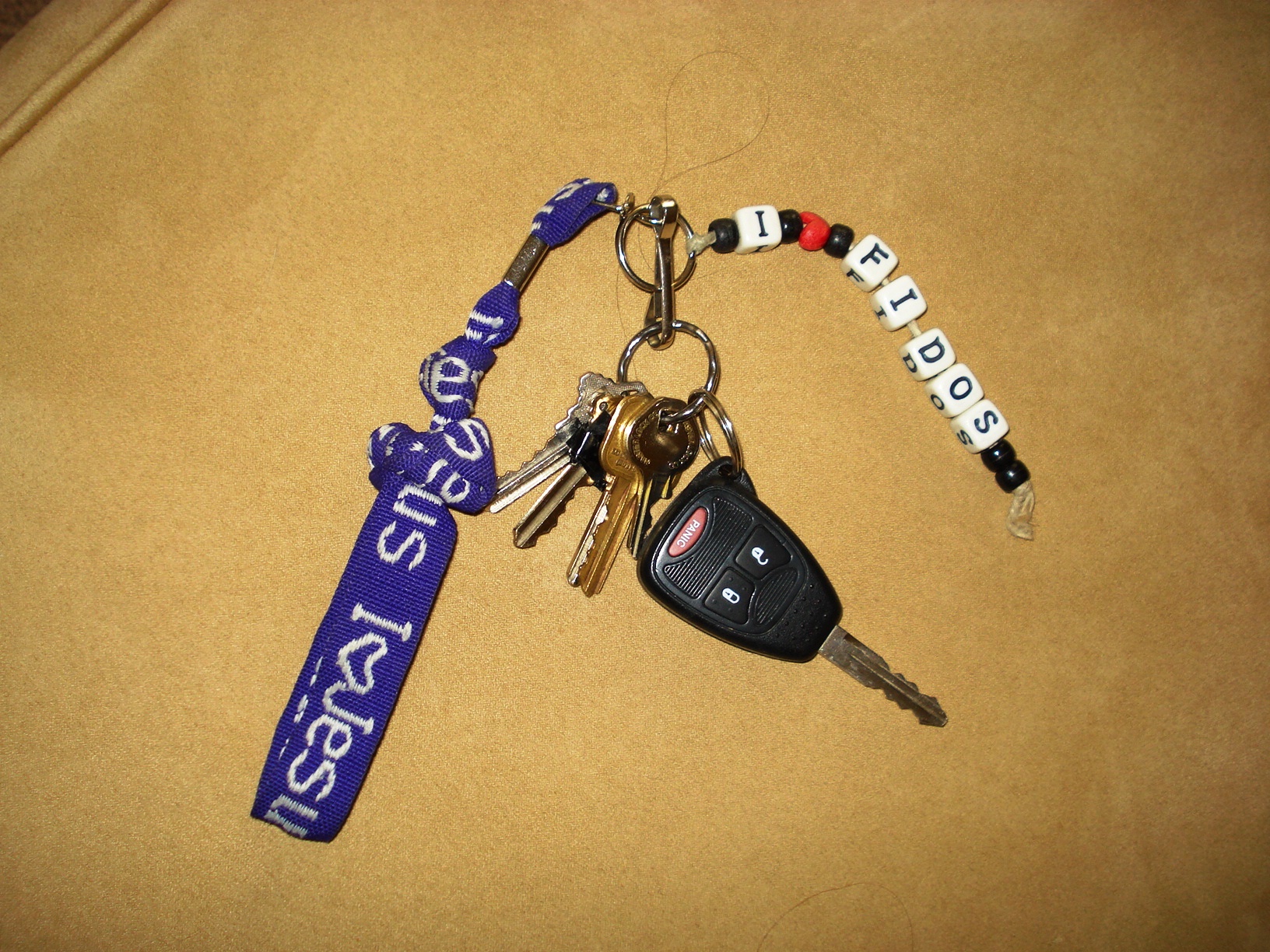
My restroom “OH MY GOSH I’LL HAVE TO WRITE ABOUT THIS” escapade was one of the last things I accomplished at school yesterday. I already had my car packed up, and only took my keys and Chloe to the restroom. Because it was sunny, I was able to HOVER, but I needed to be able to put my keys somewhere. They have a long purple strap on them so that Chloe can pick them up easier on my “bad days” should I drop them. I put the purple strap in my TEETH, hovered … and took care of business in 10 seconds.

Without going into a lot of detail about what happens immediately following the “hover” (use your imagination), I still had my keys in my teeth. Chloe was still in a dutiful “stand” and “stay”. Remember that this was a “good balance day”? I never flush the toilet with my hands on a day I can stand on one foot and accomplish the task with my other foot. It’s the germs ya know? So I did a “karate kid” immitation, and used my left foot to flush the commode.

Chloe decided to side step out of the way. (She’s seen this WEEBLE wobble and FALL DOWN so many times, she evidently wanted to make sure she had space to move if needed). I saw her out of the corner of my eye getting ready to move, so I said, “Ach… wrong”.

Funny thing about holding something in your teeth and deciding to talk at the same time? Yeah. The natural law of gravity will never let a person down. My keys tumbled and bounced off my extended “flushing” knee and right into the toilet!

I screeched. I’m pretty sure it wasn’t quietly.

Chloe retrieves objects that I drop in what the trainers call an “automatic retrieve” for partners with hearing loss. So she scooted around me and looked down into the disappearing water in the commode at my keys in the bottom of the bowl.

I screeched. I’m pretty sure it wasn’t quietly. (This isn’t a typo… it simply happened twice).

I was scrambling… what to DO? I didn’t TRAIN FOR THIS. Chloe put her paws up on the toilet seat to better lean down into the bowl so I reached for my treat bag, and my hand connected to my clicker. Now… I was running on adrenaline at this point. When my hand came into contact with the training clicker, I did an automatic “click”. (Erin would be so proud…) So now Chloe thinks that what she is doing is what she is SUPPOSE TO BE DOING! I clicked … which indicates to HER… “YUP, you got it right”! She now has her head down in the toilet bowl and is bobbing for apples my keys.

I screeched. I’m pretty sure is wasn’t quietly. (yeah… you get the picture!)

I pushed her wagging body out of the way and quickly reached in to pluck my keys from the toilet bowl. It now had completely filled back up with water. Chloe stood there expectantly … eyes on the keys… waiting for me to drop them again. Cuz, ya know? This was a TERRIFIC GAME!

There I stood in the bathroom of Chieftain Institute on the campus of Gaithersburg Church of the Nazarene with dripping keys in one hand, while looking into the dripping face of my assistance dog. I had two choices. I could laugh – or cry. So I…

screeched… I’m pretty sure is wasn’t quietly. (There was a 3rd choice).

I exited the stall with as much grace as I could muster. I washed my hands well, and my keys. I tried to avoid getting soap and water in the electronic key to my car, but honestly? Did it matter at this point?

I walked forlornly to my car with a very happy assistance dog in heel, my head bowed in defeat. As I neared my car I tried to unlock my car with the very wet key… which of course didn’t work. I went around to the driver’s side of the car and looked for the “unlock” key hole which I had NEVER HAD TO USE BEFORE. After loading Chloe up and getting her settled, I climbed into the car and adjusted my mirrors. I caught sight of Chloe’s wet head and finally saw the funny. (You really DO have to laugh to keep from crying sometimes!)

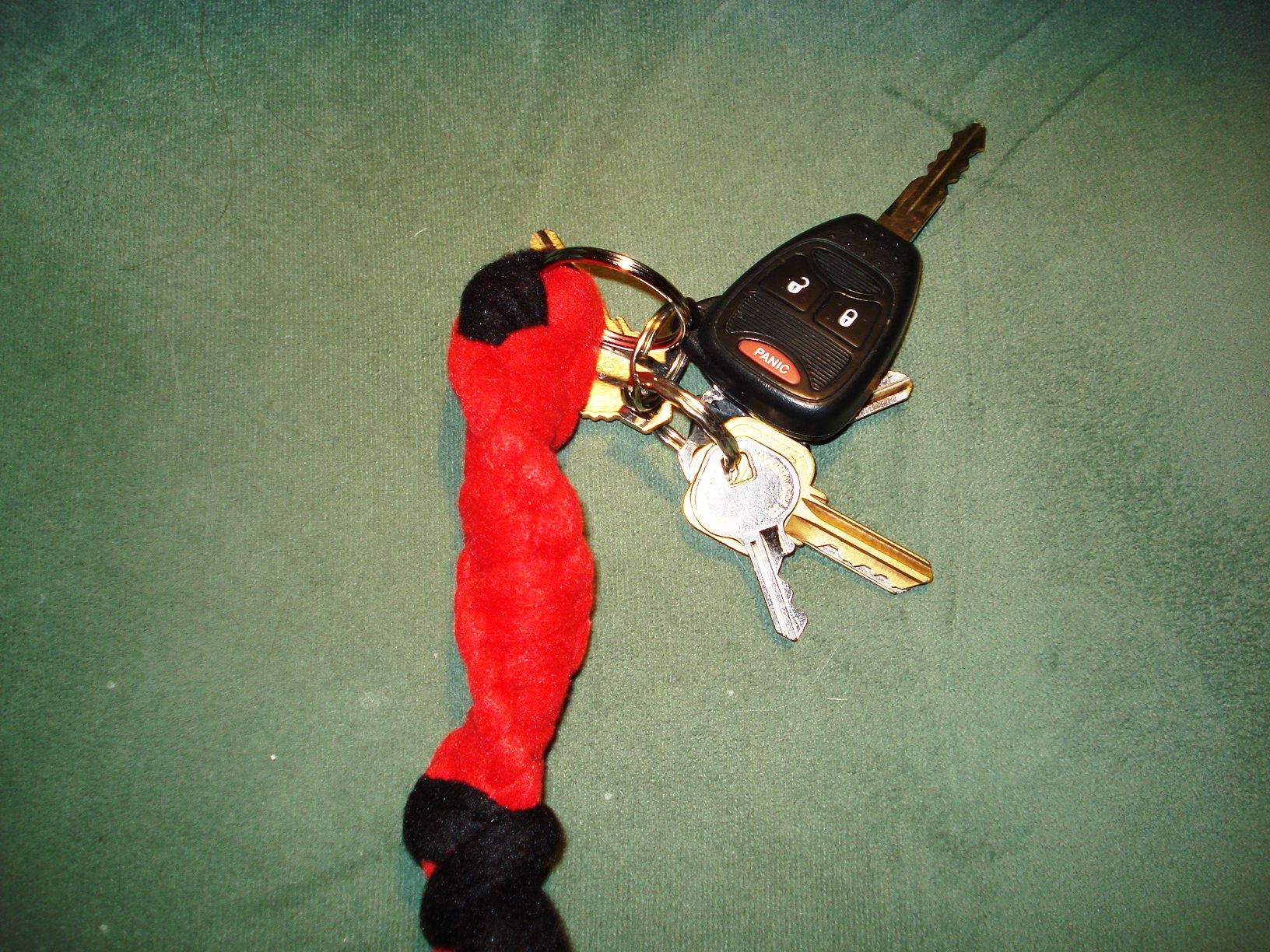
When I pulled into my driveway about 45 minutes later, the first thing I did was use a hair dryer on my key. (Yes… no worries! Chloe got a bath too!) Would you believe the key is working this morning? It will lock and unlock my car just as if I hadn’t given it a “swirly”! I DID have to give it a new attachment though! I carefully washed my other keys and rings, and used a macrame stitch to create a new “bob” for Chloe to be able to pick up.

On the bright side of things, at least it matches Chloe’s vest now!

Denise Portis

© 2010 Personal Hearing Loss Journal