How Can I Redefine Me?

redefine

I stopped looking at myself as “disabled” a long time ago. I am, however, quite comfortable with being a person with disabilities. A friend, fellow-client at Fidos For Freedom, Inc., and blogger, was the first person I ever heard use the words, “differently abled”.

I have to tell you that sometimes I’m really feeling my disabilities. It can make me discouraged and frustrated. So many of us who live with disabilities or chronic illnesses often gripe, “I’d like just ONE DAY of feeling normal”. 

I’ve become very comfortable with being a “hearing again”, cochlear implant recipient and “late-deafened” (without my technology). I’ve even grown accustomed to having a vestibular disorder (Meniere’s disease). I use a cane, have a service dog, and bedazzle my cochlear implant with some amount of pride and transparency.

One thing I’m not OK with is concussions. I’ve had a lot. I was even told I had “post-concussive syndrome” after a moderate concussion in 2013. “You know… like football players have.” But…

I don’t play football.

My neurologist had me do ten weeks of vestibular rehab. This was actually a fantastic experience and I learned all kinds of tricks, most importantly how to fall safely – cuz I’m going to fall. Sure, I learned all the great things to minimize the possibility of falling, but I will take some tumbles. So I learned how to unlock my knees and SIT (albeit without any grace) to avoid falls. In spite of this, stuff just happens. And you know what? I get mad.

March 8

Take March 8th for example. There was some ice and lingering snow everywhere. I prepared to walk – which means I had my no-slip boots on, my tripod cane, and service dog (who is off vest but heels like the pro she is). I bundled up and made sure my charged cell phone is in a buttoned down pocket. I don’t use my cell phone while walking. No ear buds or attachments either – No listening to music. I pay attention when I walk. (Well, I also talk to my dog but that was the topic of another post).

So when I crossed a street and fell backwards on the ice I actually felt MAD on the way down. I had taken all these precautions! The back of my head actually BOUNCED on the road. Right before I blacked out I thought…

THIS SUCKS. 

I wasn’t out very long (I rarely am). I suffered with a headache for 4 days and made an appointment with my neurologist. (Follow up in May)

I remember thinking after texting my husband and making my way the rest of the way home, that I do not like being this person. I don’t like being the fall guy (get it?). By the time I walked the 2 blocks towards home, Terry met me and I sat on the porch for a good cry. After eliminating some of that tension (and freaking my husband out), I sat there to think (and yes, hold ice on my head). I kept thinking, “This isn’t who I am. I am not the walking, talking concussion waiting to happen. I have GOT to get a handle on this.” I needed to redefine myself. I’m NOT a fall guy. I’m a very careful person who sometimes sits quickly. I sit when I’m lucky… and when I’m not that’s OK. I have plan for that, too. I’m thinking a hockey helmet when the roads and walks are bad. Imagine how I can bedazzle THAT.

Your Thoughts Matter

Two hours before my fall, the pastor of my church (Weem’s Creek) spoke about courageous faith. Do you know that people with disabilities and chronic illness are some of the most courageous people I know? Here are some of his main points. If you aren’t a person of faith, read on anyway. This can easily pertain to anyone. If you are a person of faith you may be like me and think, “Well why have I never seen this before?”

1. To live a courageous faith, we must cultivate a habit of thinking thoughts that are from God. Instead of focusing on not thinking wrong thoughts, we need to focus on thinking right thoughts.

2. We can’t always control the thoughts we have, but we can control the thoughts we hold. We need to learn to hold the thoughts that are true, noble and excellent… those from God.

3. Meditate on God’s Word, not on our misery.

I think ATTITUDE is the real disability. If you can change your attitude, you will never feel disabled. Change your attitude – and that new attitude will CHANGE YOU.

I think of it as redefining me – redefining what having a disability means. My focus is on what I can do. I pour energy into discovering how to do things that I want to do – perhaps differently (using canine, technology, or assistance). This keeps our disabilities from defining US.

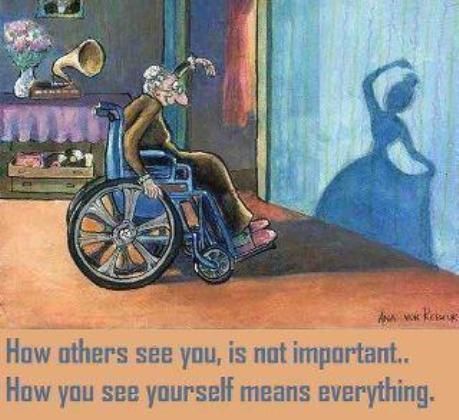
Be careful to acknowledge that everyone has a personal “definition”. Just because you may have a hearing loss too, doesn’t mean we define who we are the same. Being in control of our own definition (even if we need a necessary “redefine”), also helps others see us how we see ourselves.

It may take some work. I have a colleague at work who constantly tries to “help”. I finally told her one day, “watch how I do things WITHOUT your assistance”. That shut her up, made her watch… and don’t you know she learned so much? She told me later she just assumed I needed help. Having a disability does not mean you are “not able”. Most of us find very unique ways to be VERY abled.

Are you at a point in your life where you need a little redefining? Perhaps you have believed some of the “hype” about what you cannot do because of your diagnosis. Redefine yourself and hopefully change both your attitude and how others see you.
redefine4


L. Denise Portis

© 2015 Personal Hearing Loss Journal
 

As You Wish…

blog as you wish

I’m a HUGE “Princess Bride” fan. Perhaps I’m even classified as being an “annoying Princess Bride fan“. I know so many of the lines by heart and they tend to slip out in both opportune and inopportune moments. If you’ve never seen the movie – for shame. Seriously, it is one of those ridiculous movies that everyone needs to see at least once. You will be talking about it for the rest of your life. I promise.

One of the best known (and faithfully repeated) lines of the movie is that of our hero, Westley. He says, “As you wish…” to his beloved, Buttercup, (hey… I can’t make this up) to genteelly and sweetly acquiescence to her every request. Yup. This makes him a bit of a sap. But he does become the “Dread Pirate Roberts” later and reveals to Buttercup, that he is still her “Westley” in this dramatic (and hysterical scene):

In the end, we learn that “trewww lub” (true love) is worth fighting for and that we should be careful about agreeing for the sake of keeping the peace. Well… at least that is ONE “moral of the story” I got out of this favorite! 🙂

When People with Disabilities Keep the Peace

We’ve all heard how important it is to have the right attitude when you are advocating for your own rights or needs, or on behalf of another. “You can catch more flies with honey than vinegar“.

Trust me.

I know how hard this can be at times. Having had it drilled into my head, I am fully aware that how the public interacts with ME, may influence how they interact with another who has hearing loss, balance disorders, or a service dog in the future. That “burden” keeps my mouth shut when I strive to bite my tongue. But ya know something?

Sometimes when my attitude says, “As you wish…“, I’m really only hurting myself AND others.

About a month ago, I was walking with a colleague to a meeting in another building. We had to walk through the Student Union bldg., and then go to the second floor. We were talking as we walked. My colleague turned to go up a 20-step flight of stairs… still talking.

I hesitated and said, “the elevator is up the hallway…” and my friend interrupted and said, “Come on! We need the exercise!” She continued up the stairs and was still talking.

I put Chloe is a close heel, looped my cane over my wrist, grabbed the handrail and took one careful step at a time, all the while with a death grip on Chloe’s handle attached to her vest. By silently agreeing, I practically shouted, “As you wish…

I can’t talk and climb stairs, so I quietly made my way up the stairs one careful step at a time. When I got to the top of the stairs, I exhaled heavily (for it seems I was holding my breath), and looked up with a triumphant grin. My smile immediately faded because my friend stood there with big tears in her eyes. My brain started processing sound again (for it had been wholly fixed on arriving ALIVE at the top of the stairs), and I belatedly picked up some of her words…

For heaven’s sake, why didn’t you remind me you can’t do stairs? All you had to do was remind me!

I was struck dumb (silent – not mentally – grin) for a second and said, “Well I was just keeping the peace!

She said, “You keep the peace by reminding me what your needs are. That’s not keeping the peace, that’s being a martyr. Just tell me!

I apologized (profusely).

We can remind people what we can, and cannot do safely without sounding as if we are complaining. We need to learn to be pro-active in a positive, upbeat way. Don’t apologize for who you are or for what your needs are. However, be careful not to agree to something foolhardy like climbing a set of stairs when there is an elevator right up the hallway. My attitude of “As you wish…” could have set the scene for a disaster that day. Thankfully, it did not.

“Shove it up your… “

There are times when people with disabilities need to actually be a little more firm when they are educating or advocating. I don’t always do this well. I try to even interrupt my rising temper by reminding myself that I represent “Fidos For Freedom, Inc.“, and “Anne Arundel County’s Commission on Disabilities“. I chant in my head, “Bite your tongue, bite your tongue”. It doesn’t always work. The phrase, “shove it up your… NOSE” (scared ya a minute, didn’t I – wink), reverberates in my head.

Monday, I stopped at the U.S. Post Office to purchase some stamps for Christmas cards. (Yes, I’m aware I’m late to this “party”). I saw a man leaning against the building, smoking. I sort of register this in order to use the door farthest from him because I cannot stand the smell of cigarette smoke. As I exited my car, I reached in and got my cane, closed the door… opened the back door to unload Chloe, adjusted her vest and leash, closed HER door and then turned to walk into the building.

It seems we had an audience.

The man leaning against the building said, “What a beautiful guide dog! My mother is almost blind now. Where did you get your dog?

I was so startled I stutter-stepped and screeched to a stop. I know my mouth was hanging open. I looked over my shoulder at my car. I pointedly looked at the car keys in my hands. I looked at Chloe and her visible vest that said “Service Dog” with tags that said, “Hearing Dog. Do not Distract”.

Then I made a mistake. I blurted. Nothing ever goes well when I blurt.

Is that nicotine or weed you are smoking?

His eyes got big. He stomped out his cigarette and stomped into the building. Then this little convo/prayer went through my head:

Ok God. I blew that. If I find that man in the building please give me the opportunity to apologize and make that right. But… please don’t let me find him because I swear he’s stupid and higher than a kite!

Yeah. It seems I can’t pray with the right attitude right after a ridiculous encounter either.

But ya know something? There ARE times when it is ok to put someone in their place. Especially if someone repeatedly makes the same comment or observation about you or people with disabilities. You can be firm and be kind.

I didn’t tell the “smoker”, “As you wish…” with an attitude that what he said made perfect sense. However, I could have reminded him that a person with vision loss would not have just pulled into the parking lot and got out of the vehicle. I could have educated him quickly and politely that there are numerous types of service dogs and canes. Instead, I was a smart aleck. Justified? Perhaps. However, in the end, I didn’t promote any “cause” or advocate in a positive way.

So Where is the HAPPY MEDIUM?

If you have lived with invisible illness or disability long enough, you DO eventually learn how to balance all of this. You learn how to remind those who have known you long enough that they may have forgotten some of your limitations. You speak up for yourself. You also learn when to firmly, but kindly, put someone in their place. There is a time for that as well.

You are going to make mistakes. Your attitude will scream, “As you wish…” at times when you simply need to say, “I can’t and won’t attempt that“. You are also going to learn to not label someone a pothead, and instead take 60 seconds to educated them in a positive way. It’s a balance we all eventually learn.

If you haven’t seen, “Princess Bride” – you are missing a treat. 🙂 I hope all of us who are differently-abled, learn to balance how to advocate and educate others.

Denise Portis

© 2014 Personal Hearing Loss Journal
Time Lapse

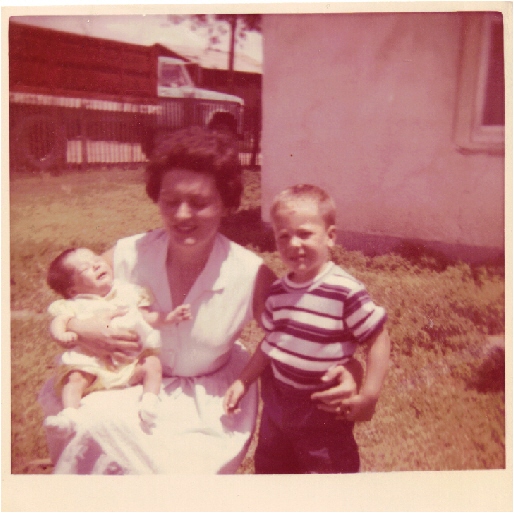
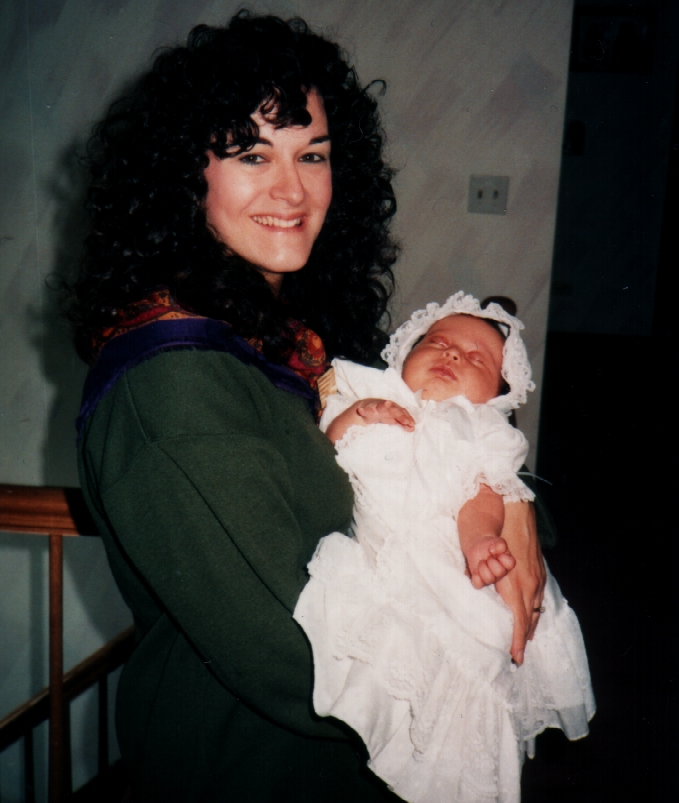
One of my first photos, 1966 with my mother and older brother, Lee.
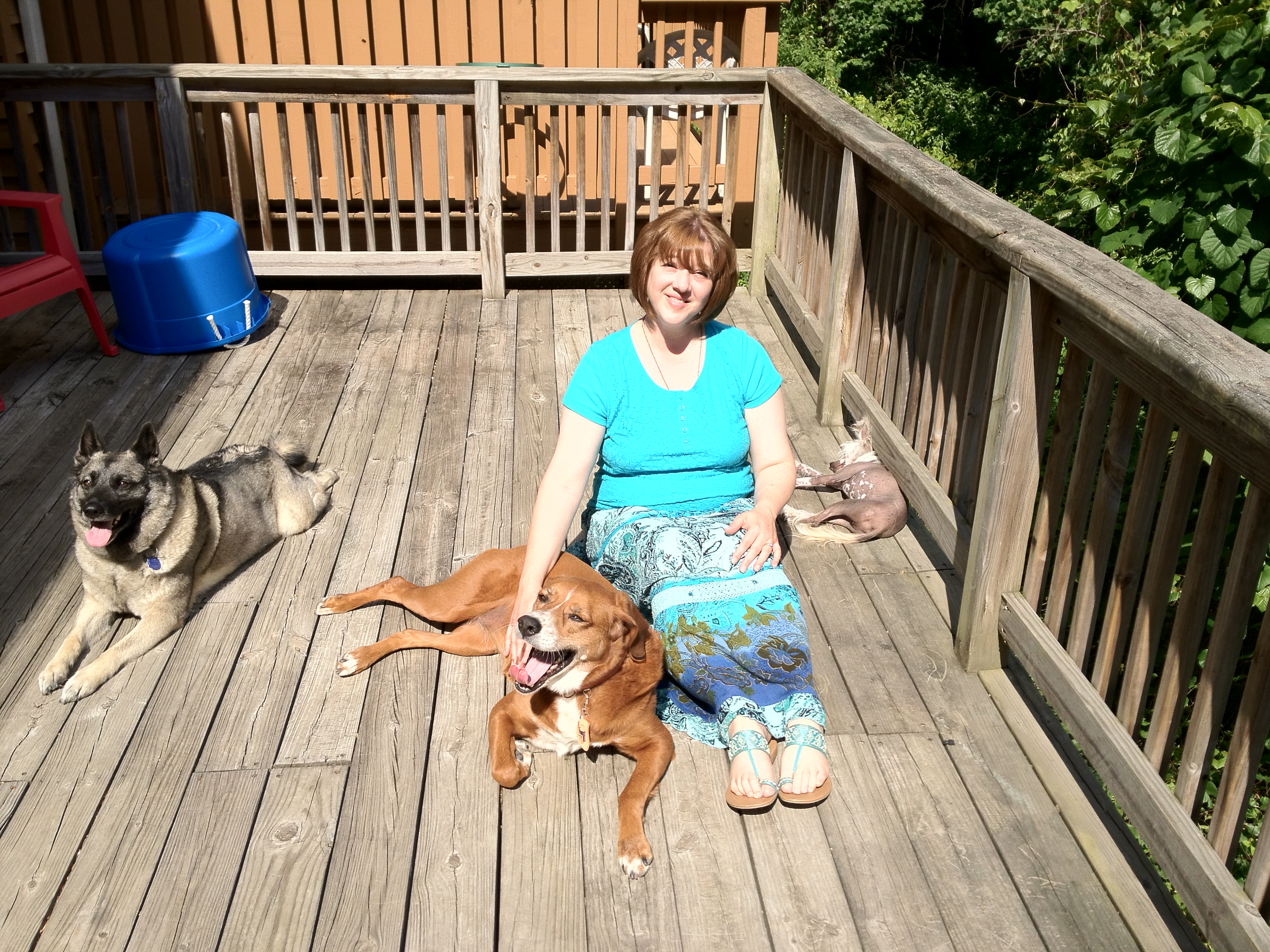
My life today...
My life today…

Oh to be able to see a time lapse of your life! Recently, someone I knew from “my old hometown”, posted a video of a rose blooming in a time-lapse segment. Just a little over a minute long, I sat spell-bound as I watched. Here… lemme share a little spell-binding:

So consider yourself bound by a spell!

Erm…

Moving on…

When I think back over my life, I know that at no point did I foresee who I would be in 2014. I had no plans for a traumatic brain injury at the age of 6. I didn’t put down “late-deafened adult at 25” as a life goal. I never had a hint that I would deal with Meniere’s disease on a daily basis.

There are few things I desire in life. I feel blessed in what I have. However, if I had to explain a “main theme” on my “Bucket List”, I would have to say my heart’s desire is a slow build to real beauty. Just like the rose bush above in that my imagination could not capture what was to come AFTER TIME.

What I think is beautiful today is not at all what I thought was beautiful at 6 years old, 16 years old, or 46 years old. Outer beauty is fleeting and temporary. Outer beauty needs a number of “props” just to pass as beautiful. Things like make-up, proper lighting, staging, and other “props” that are not really a part of the person. Now that I’m 48, beauty is truly an inner kind of spark.

A friend of mine, Deborah, celebrates a birthday today. She is one of those “slow build to beauty” kind of people. The longer I know her, the more her beauty is revealed to me. She has a heart for people and a passion for making a difference.

Just Because You have Broken Parts, Doesn’t Mean You are BROKEN

Years ago when I decided to embrace who I was, life became easier. I stopped trying to hide how I dealt with challenges and decided that being REAL was much more nurturing for my inner Denise.

My ears don’t work without the aid of bionics. My balance causes me to fall – a lot. My most “frequent” view is staring at the sky while I “get a grip”. (Hey! At least this means I get outside a great deal!). I may have broken parts as a person with disabilities, but I am not broken.

Neither are you. Do you live with disability, chronic illness, or life-changing diagnosis? You may have broken parts but you are not broken. Some of the most courageous people I know are folks who live with challenges. If we could look at a time lapse of your life, what would it show?

Sure. We would get some indication of dealing with tough times. We would see wounds. We would also see numerous victories. I’m fairly certain we would see a slow build to beauty, however. It helps to take a step back and look at the big picture from time to time. After all, living with challenges can cause a person to get bogged down in “today” and just surviving. May each of us remember to review our time-lapse life and celebrate the beauty.

Denise Portis

© 2014 Personal Hearing Loss Journal

Folding Fitted Sheets and “Good ‘Nuff”

fitted sheet2

My newlywed daughter bragged to me recently that her husband can fold a fitted sheet. Pressing for details I found out that he evidently can fold them where they are laying flat.

… like they just came out of the package.

… making Martha Stewart proud.

I think I hate him (just kidding…)

I’ve seen various videos, blog posts, articles and pictures explaining how to fold a fitted sheet. I once saw a 5 step-by-step diagram of how to fold a fitted sheet on a beautifully laminated bookmark.

Because evidently we worry about that while reading…

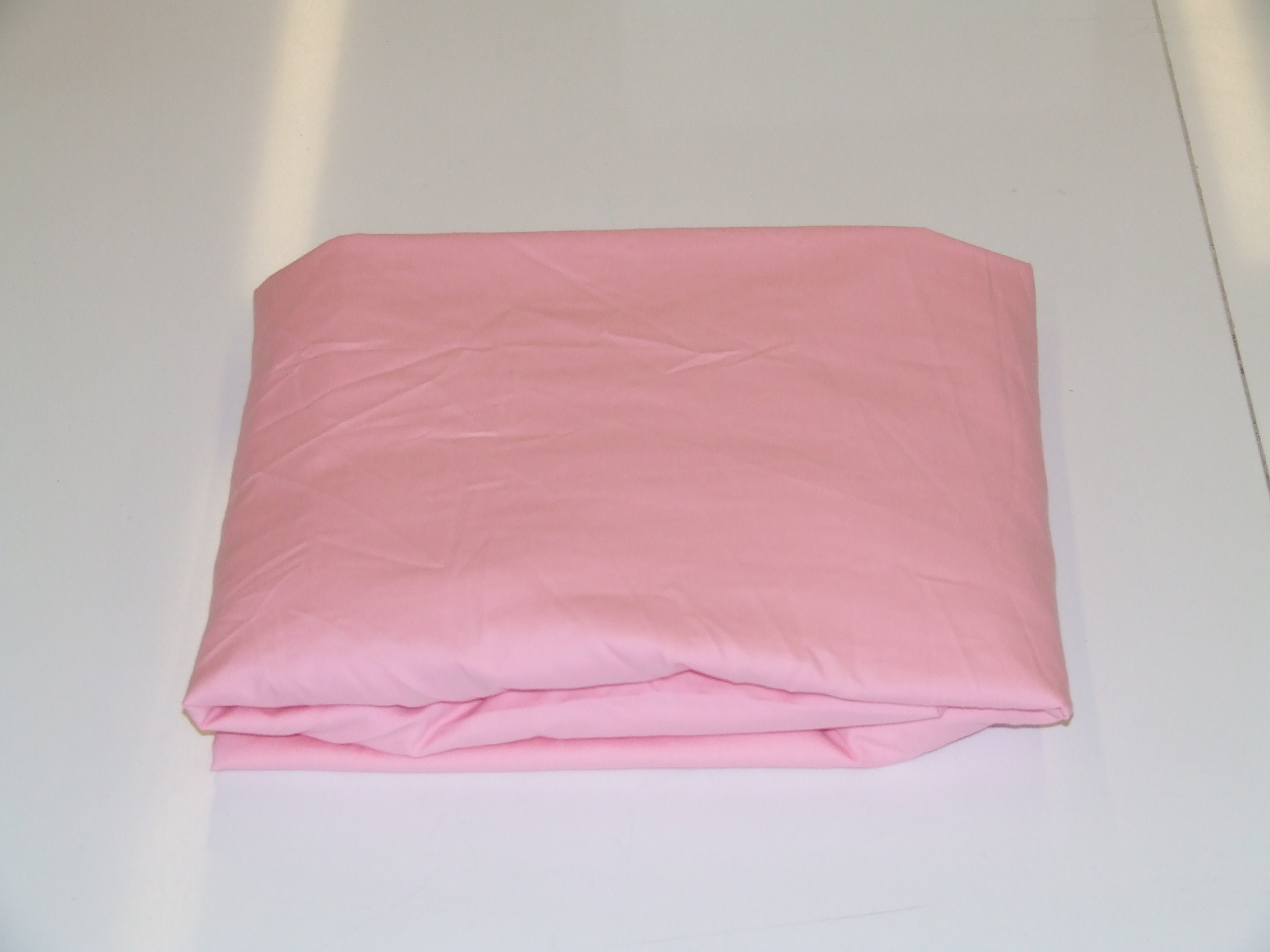
Evidently a newly laundered fitted sheet can look like this after folding...
Evidently a newly laundered fitted sheet can look like this after folding…

As a student and professor of psychology, it is fun to “look back”. Although I didn’t know it at the time, I definitely had OCD (Obsessive-Compulsive Disorder) as a kid. I’ve given some examples of things I would do to help me feel like I was coping and controlling in class before that made jaws drop. OCD can look different lived out in different people. For me, it meant ordering, organizing, labeling, etc. I had a full-size bed growing up with bright yellow “sunshiny” sheets. I’ve often wondered how that young, OCD Denise dealt with folding fitted sheets. Because you see? I can’t. 

Fold fitted sheets I mean. I must have gotten around that by only having one pair of sheets. When laundered, they went right back on the bed.

I’ve come a long way from that OCD Denise. Now some of you who know me WELL are saying to yourselves, “Honey? You’ve still got a long ways to go!”

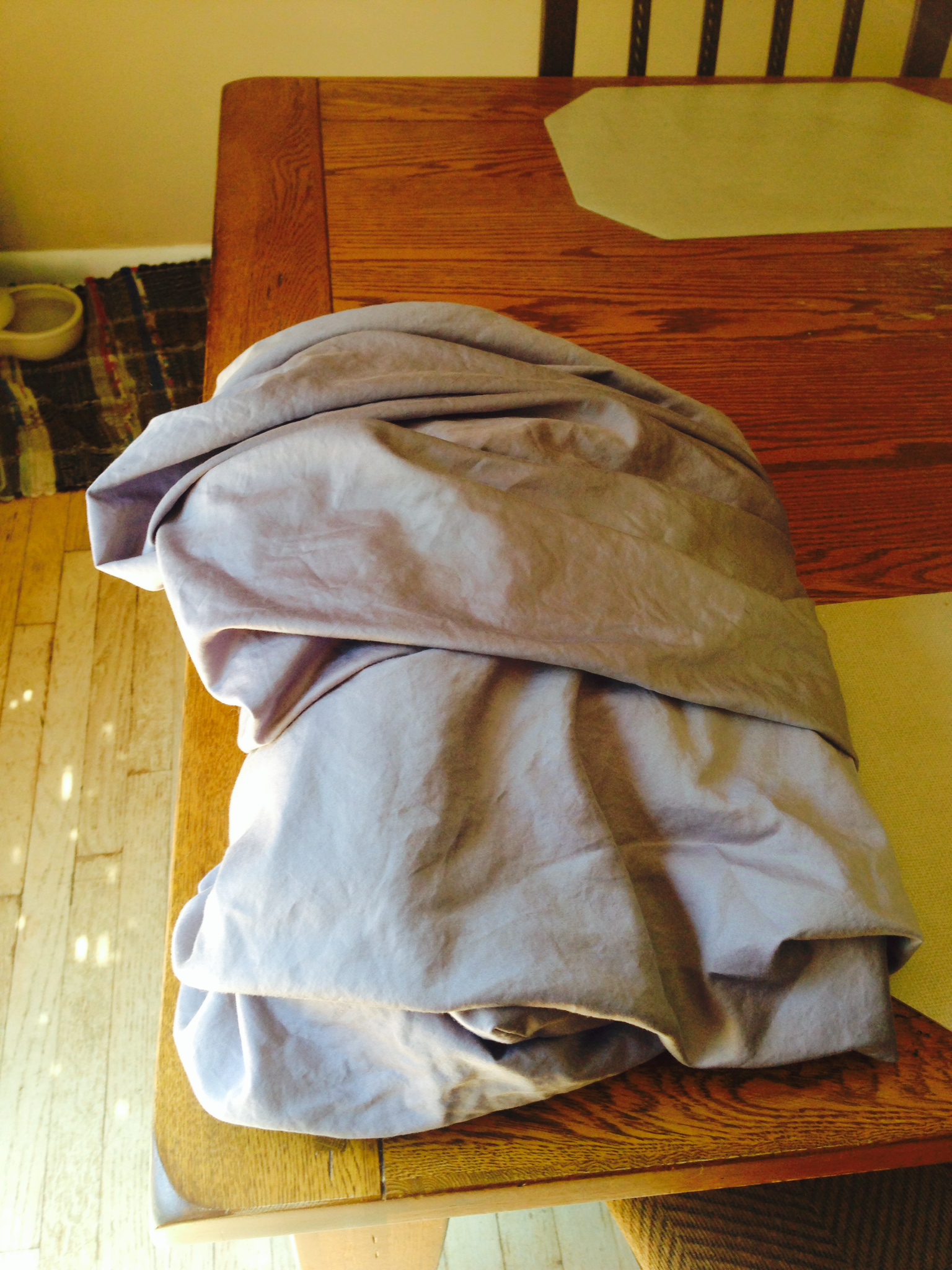
But to give you an idea about how far I’ve come, look at the fitted sheet I folded this morning straight out of the dryer. As a matter of fact, I have my very own 5 step-by-step instruction guide:

photo-3


1. Remove from dryer and hold up high to avoid pet fur.

2. Shake to allow dryer sheets to fall to the floor.

3. While holding up high, match corner to corner.

4. Fold.

5. Admire work. It ain’t purty. But it’s GOOD ‘NUFF.

Stacked in a linen closet, it does not take up anymore space than one folded perfectly. At least… that’s what I tell myself. You see? I had to learn something. Sometimes you pat yourself on the back, murmur, “Good job!” and go on to something else. It’s “good ’nuff“. The sheets are clean, stacked neatly and await being put in use for the next time I change the sheets out.

Allowing a Fitted Sheet to Rock Your Boat

So when do you determine by reviewing your priorities, when to keep at that “fitted sheet” or when to determine it’s “good ’nuff”? Only YOU can decide.

I’m pursuing a Ph.D. in Psychology. I’m over half-way through and doing well. However, now I’ve reached the detailed statistics phase. And folks? I haven’t had statistics since the 80’s and long before the sophisticated analysis softwares were available. This past week I hit a wall. I mean that both literally and hypothetically. I have been staying up really late reviewing videos and media, reading, Reading and doing more READING, learning SPSS and writing like crazy. As a person who lives with invisible disabilities that include post-concusive syndrome, hearing loss, and Meniere’s disease, I require 8-10 hours of sleep each night just to live a “normal for me” day. I’ve not been getting that. I’m almost cross-eyed with fatigue. So this past week, falling more than usual as a result of that fatigue, I walked into my husband’s home office, showed him a new bruise from hugging a wall with ridiculous and unbridled passion, collapsed on the floor and bawled my eyes out. Do you know what my very wise husband reminded me? “You may not be understanding all of this. Just keep plugging away. By the time your dissertation is complete you will look back on this and realize you are very knowledgeable about your research and understand it well. For now you are doing ‘good enough’ and passing. You don’t need perfection at this stage“. Sometimes we have to “let go” of needing something to be perfect and accept that it is “good ’nuff”.

This past week a lady who has admired Chloe several times sat behind us in church. She leaned up and said something and honestly? I caught about 10% of what she was saying. (In case that doesn’t sink in, I was missing 90% of it <big grin>) I already had my cochlear implant on a special program to utilize the hearing loop in our auditorium. I’m one of the first people to tell folks new to hearing loss, “Don’t fake your way through a conversation“. However, it was obvious she was just saying something about Chloe again. She had a smile on her face, and I was set up to hear through the loop, not someone sitting on my “non CI” side and behind me. So I smiled and nodded my head and turned back to the front. Yup. Poor form on my part. But…

I have learned that if it is important and I responded with a smile inappropriately, someone will respond with a shocked or hurt look, confusion, etc., and I can hasten to explain I wasn’t hearing well. I didn’t see any of that on this lady’s face. She smiled, I smiled, and I determined then and there this “fitted sheet didn’t need to be folded perfectly”. For a few minutes I sat there thinking, “I have no idea what she just said!” I re-analyzed what I saw on her face, her indication of Chloe in a perfect down/stay and sleeping at my feet, a returned smile and decided, “You know? This fitted sheet (conversation) is not folded properly, but it is good ’nuff“! I brought my attention back to the service and felt OK about my decision.

This past Saturday, a fellow client from Fidos For Freedom rolled up to me in her scooter with service dog at her side. She has been with Fidos longer than I have and I consider her a friend and mentor. Another friend of mine and fellow client, Cara, is taking ASL (American Sign Language). She has been practicing her ASL with me during trainings. She is doing great (You rock, girl!). Cara noticed that I was talking to this other client who at times is hard to understand – especially when you have a hearing loss. Cara stopped behind the lady I was talking to and I know she was hesitating to see if she could interpret for me. I wanted this fitted sheet folded perfectly. I said, “I’m not catching what you are saying“. No faking nor presumptions on my part. This fitted sheet needed folded the right way because it was important to me. I love this lady and wanted to “hear” what she was saying. So she got out her little electronic board and began writing. It was what I needed to “hear” too. Cara waited long enough to see if I was “getting it” and then went on her way. I continued to communicate with this lady and left that conversation encouraged and with some great advice. I needed to hear her. I worked to hear her. She worked to communicate with me. Good ’nuff, wasn’t good enough. I needed to communicate 100% effectively with her. So… I did.

Living with invisible disabilities or chronic illness means that YOU have to decide what your priorities are and when to determine a task is “good ’nuff”. Only YOU can determine when you need to make sure something is accomplished to your satisfaction – to your personal standards. There are things you will decide to do that require work. It may mean you use up all of your reserves for the day. If you are into the “spoon theory“, you use every single one of your spoons. There are other things that happen during the day that result in the decision that, “this is good enough”. The worst thing you can do is stubbornly work at folding a fitted sheet that belongs to someone else. Worse, you allow someone else to bully you into re-folding one that you already decided was “good ’nuff”.

Are you one of those (annoying) people who can fold a fitted sheet perfectly? Well:

If-you-can-fold-a-fitted-sheet


Denise Portis

© 2014 Personal Hearing Loss Journal
False Coping Skills and Elephants

IMG_1238
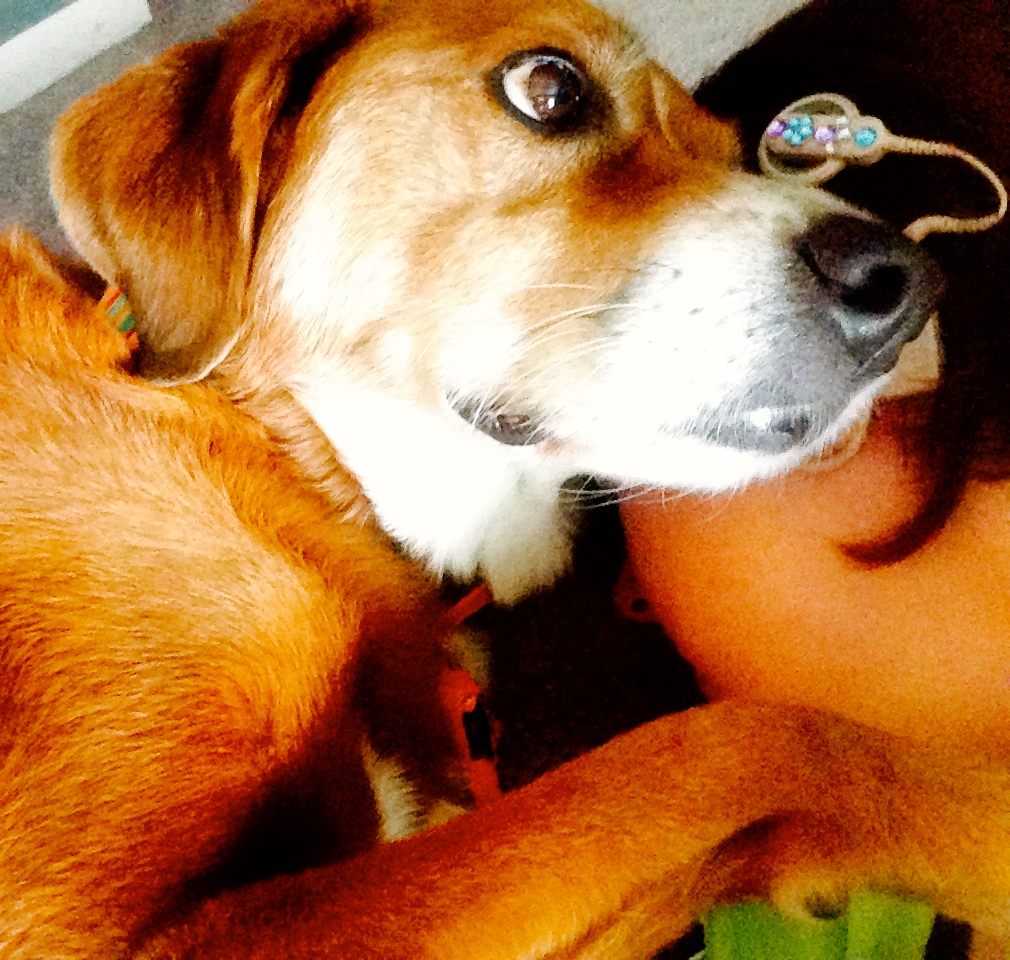
Hound dog knows when I’m “finished”

Ever wake up just feeling completely whipped?

I feel like I’ve developed GREAT coping skills. After all, you either learn to cope or you’re “done”. So the options are pretty clear cut IMHO. Two coping skills I learned early on in adjusting to my “new normal” as a person who is “differently abled”, include:

1. Start each day new. Yesterday is gone. Tomorrow will come without my worrying about it now. Handle today and today only.

2. Stay busy. Staying busy helps to keep your mind off your troubles and focus on the here and now. It can be busy-ness towards important things, or even the mundane.

The second one I use a great deal, but I’ll be honest. It isn’t exactly a HEALTHY coping mechanism. I don’t do well with a lot of down time. A perfect day for me is getting up (safely – believe me, it can be hard when you have a balance disorder and go VERTICAL for the first time that day), taking my dog for a walk while planning my day, re-enter the house in high gear without stopping until bedtime.

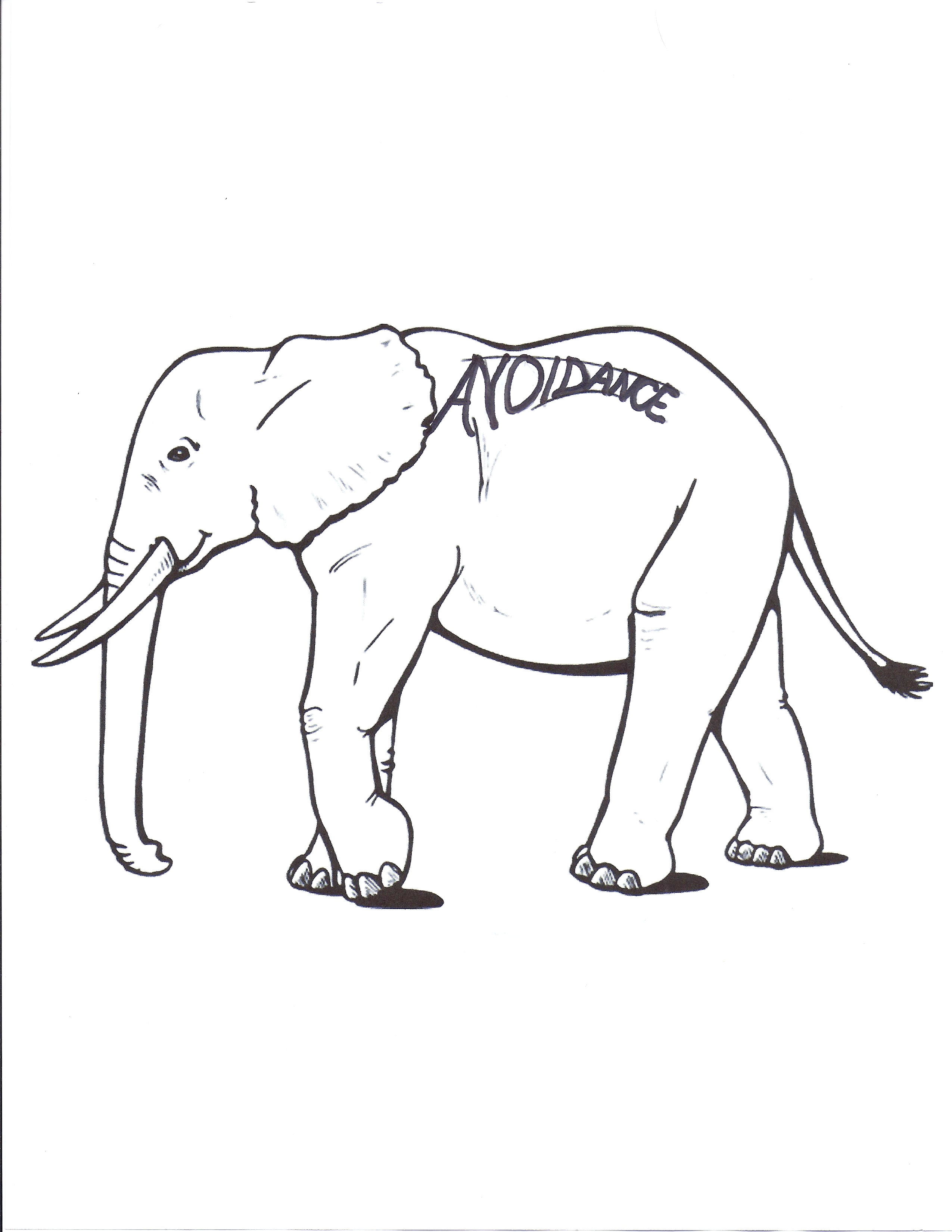
Yeah. Not always healthy. The problem with staying BUSY in order to cope is that it is a false kind of coping. This type of coping skill isn’t actually a coping skill at all. It is called avoidance. And friends? I do this really well. Some of you do too. (You know who you are…)

Staying Busy to Avoid

Do you “do busy” really well? It may be time to stop to discover WHY you stay so busy. Do you strive to remain busy to avoid unpleasant thoughts, actions, environments, even people? Don’t confuse healthy boundaries with avoidance. One is – well… HEALTHY. The other? Not so much. As a matter of fact, avoidance can lead to a number of physical and emotional problems. Psychologists have recognized avoidance for what it is for decades now. Yes, in the right context it can be healthy. But it is easy to AVOID to the point of harm. Spira, Zvolensky, Eifer, and Feldner (2004) explain that being busy to avoid our problems is actually a predictor of panic disorders. You see? The problem with staying busy to avoid something is that eventually you really will run out of things to do. Worse? Your body physically screams, “ENOUGH ALREADY!” and shuts down.

I am finishing up the last of numerous classes in my doctoral work and have already begun the very long process of dissertation study. This work keeps me really busy and it is work I actually enjoy because psychology is what I “do”. I work part-time as an adjunct professor and this helps to keep me busy. I love my work, love my students, and love to teach. The problem with working as part-time faculty at a community college is that it is impossible to predict how many courses you will be teaching semester to semester. For example, I taught the first summer school section, but not the second. I used the extra time in the beginning to catch up on some of my own school work and to do some “Spring cleaning” that had been long delayed… seeing as how it is SUMMER. These past few days though I’ve found I have had some down time. *grimace*

Forced Mindfulness

When I am forced to the point of literally running out of things to do… even for just a day or so, I find it debilitating.

Scan 3

Whoosh.

(Hear that? That was the air being sucked out of my lungs when the elephant in the room finally sat. On. My. Chest.)

I don’t do “mindfulness” well. I’m learning though.

Brown and Ryan (2003) explain mindfulness as being AWARE and ATTENTIVE. Let me explain on a more personal level and maybe you can “see” yourself somewhere in this:

Avoidance:

My new normal of hearing with a cochlear implant and living with a balance disorder is not easy. I’ve adjusted. Only to have to re-adjust. That’s OK. I’m flexible. Most of the time.

I work at a job I love and navigate life safely with a service dogMost of the time.

I am optimistic, cheerful, can poke fun at myself and enjoy busting my butt to help others. Most of the time.

I’m very busy and drop exhausted into bed each night and sleep well. Most of the time.

I have taken control of chronic depression and don’t let it control me. Most of the time.

I don’t feel sorry for myself. I like me. I recognize that I am doing well. Most of the time.

Truthfulness:

My new normal of hearing with a cochlear implant and living with a balance disorder is not easy. I’ve adjusted. Only to have to re-adjust. That’s OK. I’m flexible. Most of the time. 

Some days having a CI and Meniere’s disease sucks. I don’t hear perfectly. I feel left out. I’m tired of falling. I’m tired of running into things. I hate long-sleeves and high collars since they only hide bruises. I’m tired of adjusting. I’m going to cry. I’m going to scream. I may swear. 

I work at a job I love and navigate life safely with a service dog. Most of the time.

I love my job but it is really hard when the hallways are crowded. It can be overwhelming to have to rush from one side of campus to another. Crap. It’s raining? Really? *waves white flag*

I am optimistic, cheerful, can poke fun at myself and enjoy busting my butt to help others. Most of the time.

Sometimes I want to change my “… I’m fine, how are you?” to “I’m having a sucky day. And frankly? I don’t care how you are doing if you want to know the truth!!!!”. I’m going to have to ask for help. After all, Chloe cannot 1) retrieve a bag of dropped potatoes in the grocery store, 2) pick up that tiny paperclip without risk of swallowing it, 3) get the umbrella I dropped in a puddle without getting really muddy, 4) tell me EVERYTHING WILL BE OK.

I’m very busy and drop exhausted into bed each night and sleep well. Most of the time.

I can lay in bed and worry. 

I have taken control of chronic depression and don’t let it control me. Most of the time.

It’s hard when I have to “own” the knowledge that I will always “deal” with depression. 

I don’t feel sorry for myself. I like me. I recognize that I am doing well. Most of the time.

uh-huh. Ri -i -i -i -i -i…ght.

So yeah, sometimes I’m forced to pay attention and be aware. How is that helpful? Well, for starters attentive awareness facilitates choices of behaviors that are consistent with my needs, values, and interests (Brown & Ryan, 2003). It is healthy to really navigate personal feelings, thoughts, and even pain. David Cain wrote about mindfulness in a way that really “stuck” with me. It changed the way I view “forced attentive awareness”. Check out this great article, “How to Make Mindfulness a Habit With Only a Tiny Commitment“.

For me, mindfulness means being truthful with ME. I am learning to be mindful even when I am super busy. I do this because there will be days I am NOT busy and I want mindfulness to be an invited friend instead of unexpected guest. As a person of faith, it is also super helpful to be frank with God. In doing so, I am actually able to recognize false coping skills that in the long run are not healthy for me.

I’ve heard some folks say, “Oh golly. I can’t go there and allow myself to FEEL. You don’t know what I’ve been through“.

No. No I don’t. But I do know that pretending those feelings don’t exist do not change the fact that the elephant is THERE. At some point in time it’s gonna sit. On your chest. You won’t be able to breathe.

Be Mindful of Your Pachyderm

It is healthy to habitually and mindfully pay attention and be aware of what and who you really are. What are your struggles and successes? Where have you been, where are you now, and where are you going? Who is helping you get there?

What is really hard for you? What have you learned to do well? What do you need to change?

WHO ARE YOU? 

Don’t pretend that being mindful is the same thing as having your mind full. The latter is just another form of busy-ness on the cognitive level. Be attentive. Be aware. Do this with enough frequency that you can be mindful each and every day – for even just a few moments. I make it a priority to be mindful for a longer period of time – like a whole DAY, at least once a year.

But the elephant “sat” without invitation for me this past week. It took me by surprise. That is going to happen. However, if you’ve practiced mindfulness, you are going to discover…

YOU CAN BENCH PRESS AN ELEPHANT.

Denise Portis

© 2014 Personal Hearing Loss Journal
Brown, K., & Ryan, R. M. (2003). The benefits of being present: Mindfulness and its role in psychological well-being. Journal Of Personality And Social Psychology84(4), 822-848. doi:10.1037/0022-3514.84.4.822

Cain, D. (2013). How to make mindfulness a habit with only a tiny commitment. Rapitude.com. Retrieved July 20, 2014, from http://www.raptitude.com/2010/03/how-to-make-mindfulness-a-habit-with-only-a-tiny-commitment/

Spira, A. P., Zvolensky, M. J., Eifert, G. H., & Feldner, M. T. (2004). Avoidance-oriented coping as a predictor of panic-related distress. Journal of Anxiety Disorders, 18(3), 309-323. dii: 10.1016/S0887-6185(02)00249-9

Everything you ever wanted your audiologist to know…

10359013_10204485423482111_8593672202503336088_o

Hearing Elmo always welcomes guest authors. Although this site is a place of information and support for all types of disabilities and invisible illnesses, once in awhile an author has a very specific “hearing” topic. I know few individuals with more consumer experience with hearing loss advocacy and support than Judy Martin. She is my friend as well and fellow “heartstring” (a long story). If you have a good working relationship with your audiologist, this is a great article to pass along! 

Everything you ever wanted your audiologist to know . . .

Late last year, the Florida Academy of Audiologists (FLAA) and the Hearing Loss Association of Florida (HLA-FL) formally agreed to a partnership to encourage a fuller understanding of each other. Articles are planned for each other’s newsletters; Noel Crosby, my counterpart in FLAA, suggested my topic describe what consumers would like their audiologists to know.

– Judy G. Martin, Immediate Past President)

As I stand in front of my imaginary class, I’m aware that all the people in attendance have some degree of hearing loss. Some use hearing aids, cochlear implants or assistive listening devices. Many proudly display their multi-colored devices while others are more discreet – each according to their needs, wishes, or personality. We are brought together by one commonality, though, the desire to hear better. For some, it is an old journey, and for others a newly-begun one.

This class may be the figment of my imagination, but it is filled with real people from around the country. Inspired by one person’s remark of what the perfect audiologist would be like (thank you, Paul), I ask “students” to discuss how their provider could be the most helpful as far as their hearing loss is concerned. (Of course, we would be willing to know how we can be the perfect consumer, a subject for another time.)

Paul, from Michigan, speaks up first and says his idea of perfection would be the audi who is knowledgeable about Hearing Assistance Technology (HAT); about the t-coil and the ways it can be used; and at least some familiarity with Bluetooth and FM; and where to find products to assist with telephone, cell phones, TV, meetings and communication. If a hearing loop is set up in the office, he would be able to hear the receptionist. If not a loop, then a willingness to let him make and confirm appointments via e-mail. This perfect person would be compassionate and willing to share information about the ADA, hearing loss groups, and hearing loss counselors. Many first-time hearing aid users are at the beginning of a scary learning curve and in a vulnerable position. And finally, he or she could be proactive in helping him to understand the fitting and adjustment process.

Jimm, who lives in New York, has a short and sweet idea: his audiologist would make the perfect earmold!

Having a receptionist who doesn’t whisper is the fond wish of Betty, from Delaware. Soft- spoken office workers, or those who don’t face the patient, strike terror in the hearts of those with hearing loss. Hearing loss-related news and magazines (especially, ahem, the HLAA Hearing Loss Magazine) would be quite beneficial when placed in the offices of audiologists and ENTs.

Sarah, Illinois, agrees that hearing loss information and magazines are so important in addition to helping find outside support groups. She also wishes that audiologists were affiliated with HLAA or a local chapter. Sarah suggests that attendance at an HLAA Convention would be beneficial as it is totally patient-oriented, in that everything is seen from the viewpoint of the consumer. She believes a little more explanation of what to expect when purchasing a hearing aid is something that would be helpful to her or knowing the importance of adjustments. (A journal kept by the consumer would be helpful here, making notes on what noises are bothersome, which need to have volume increased or decreased.)

Making sure that every hearing aid, unless it’s too small, leaves the audi’s office with a manual t-coil included. Since the t-coil can at least double the benefits of the aid, Germaine, a resident of Florida, says it’s important it have a volume control. Automatic volume control works well in many cases, but too often the experienced user wants and needs to override the control – a combination of both would be good. All that said, since t-coils are used with phones, both landline and cell, looping technology, FM, Bluetooth and other assistive listening technology, no self-respecting hearing aid should leave home without it. She hopes that the hearing instrument provider’s office will have copies of HLAA’s consumer checklist for purchasing hearing aids.

Laura, in New Jersey, agrees and also wishes that the importance of manual t-coils be uppermost in everyone’s mind.

Jennifer, from Pennsylvania, wishes the idea of hiding hearing aids was not promoted because it adds to the perceived stigma. Advertising which promises invisible hearing aids works at cross-purposes with HLAA’s mission to provide awareness of our invisible disability. She also thinks that more familiarity with the BAHA device for persons with single-sided deafness will guide those for whom the traditional aids won’t work.

Richard, who resides in Florida, believes a high number of hearing aid consumers are not conversant in discussing or understanding their own audiograms. Much of the relevant information available is written on a level beyond the comprehension of some consumers. Perhaps a brochure or flyer could be created to explain to all so they would understand their own degree of hearing loss and become audiogram literate!

From Montana, Tamie seconds the motion that professionals be educated about the importance of t-coils. She reached that conclusion when a new audi in town donated headphones for those with hearing loss to a local live theater. They were the kind which required the removal of one’s hearing aids.

Audiologists provide an invaluable service in the treatment of hearing loss, says Ed from Florida, but he wishes there was more proactivity in the education and advocacy process. It would be so helpful for the audiologist to initiate a discussion about hearing loops, captioning, cell phone usage or the Hearing Loss Association of America. Suggesting to new patients, who obviously need support, that they try a local HLAA chapter would help eliminate much bewilderment. It would be desirable for audiologists to take the lead on important advocacy missions such as being the first to install a loop in their offices. He goes on to say that since so much of his support comes from HLAA and other outside sources, he wishes treatment could be seen as a team sport because so much support is needed.

Also from Florida, Joan thinks audiologists could tell patients they need an aid large enough to accommodate t-coils even though the user may think differently. Spending time explaining why this tiny device is so important and how some of the applications of the t-coil will benefit the user is greatly needed. Hearing in noise and recruitment are two major problems professionals can explain in laymen’s terms even before the patient is troubled by them. If audis sell equipment such as FM and Bluetooth systems, it is imperative they be able to instruct patients in their effective use. Finally, Joan wishes that professionals would tell users about HLAA and the availability of a local chapter. She doesn’t believe that any audiologist today is unaware of the value of support groups for their patients.

Judy from Ohio said her ideal audiologist would keep current with the latest news and devices. She suggests joining a consumer online forum to learn what’s on the mind of people who have hearing loss. Judy sent her hubby (a newbie) off to have his hearing tested and when he inquired about t-coils at her behest, he was told that “they are not being used much any more because people are getting away from that.”

Cheryl, who lives in Florida, takes a different tack and says consumers should realize it takes patience and perseverance to use a hearing aid and a good result comes from numerous adjustments. Hearing aid users should not put their aids on the shelf or in a drawer as they need to be used daily. She also believes the consumer should know about the t-coil, how it works and where it works.

California resident, Cindy, hopes the high cost of her devices would include minor technical service, adjustments and guidance for a specific period of time. She would appreciate the audis being knowledgeable about the products they sell and being able offer instructions about warranties. She’d like it if the professional would listen to her, ask her questions and know that, in her eyes, they are as important in her life as her primary care physician or her eye doctor. After being successfully fitted, Cindy would like repairs to be made as quickly as possible even if returning them to the manufacturer is required.

Programming aids according to the user’s needs and real world feedback, not factory- recommended settings, is the wish of Tamara, who lives in Texas. She hopes they will take the time to share their knowledge about t-coils and the less expensive non-proprietary assistive listening technology. Further, she would like to be instructed about financial assistance, payment/ financing options and government assistance programs. To her, it would be extremely beneficial to offer listening therapy, living-with-hearing-loss classes, education for spouses and family members in addition to giving advice on support groups which would address the social and emotional factors.

My imaginary class ends on a high note with everyone agreeing that hearing loss professionals cannot be all things to all people. They believe that most audiologists are already well-rounded in their knowledge and possess a willingness to help. These suggestions are offered in hope that they might help fill in the gaps.

by: Judy Schefcick Martin


Beaver – Destructive or Discerning?

swimming-beaver-344367-m

We have beaver. Actually, we’ve had beaver for about 16 months now, however this summer it is really evident WE HAVE BEAVER.

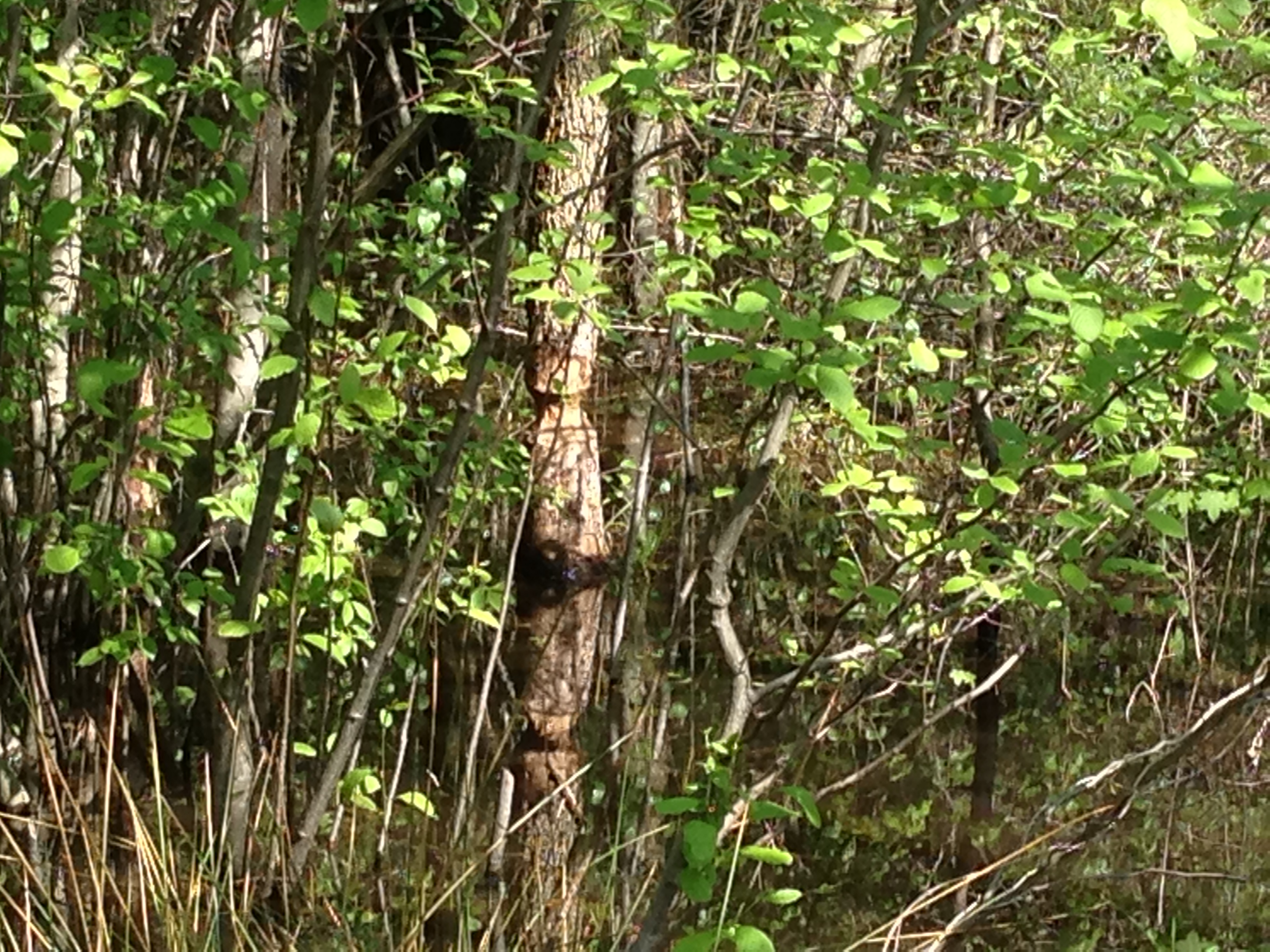
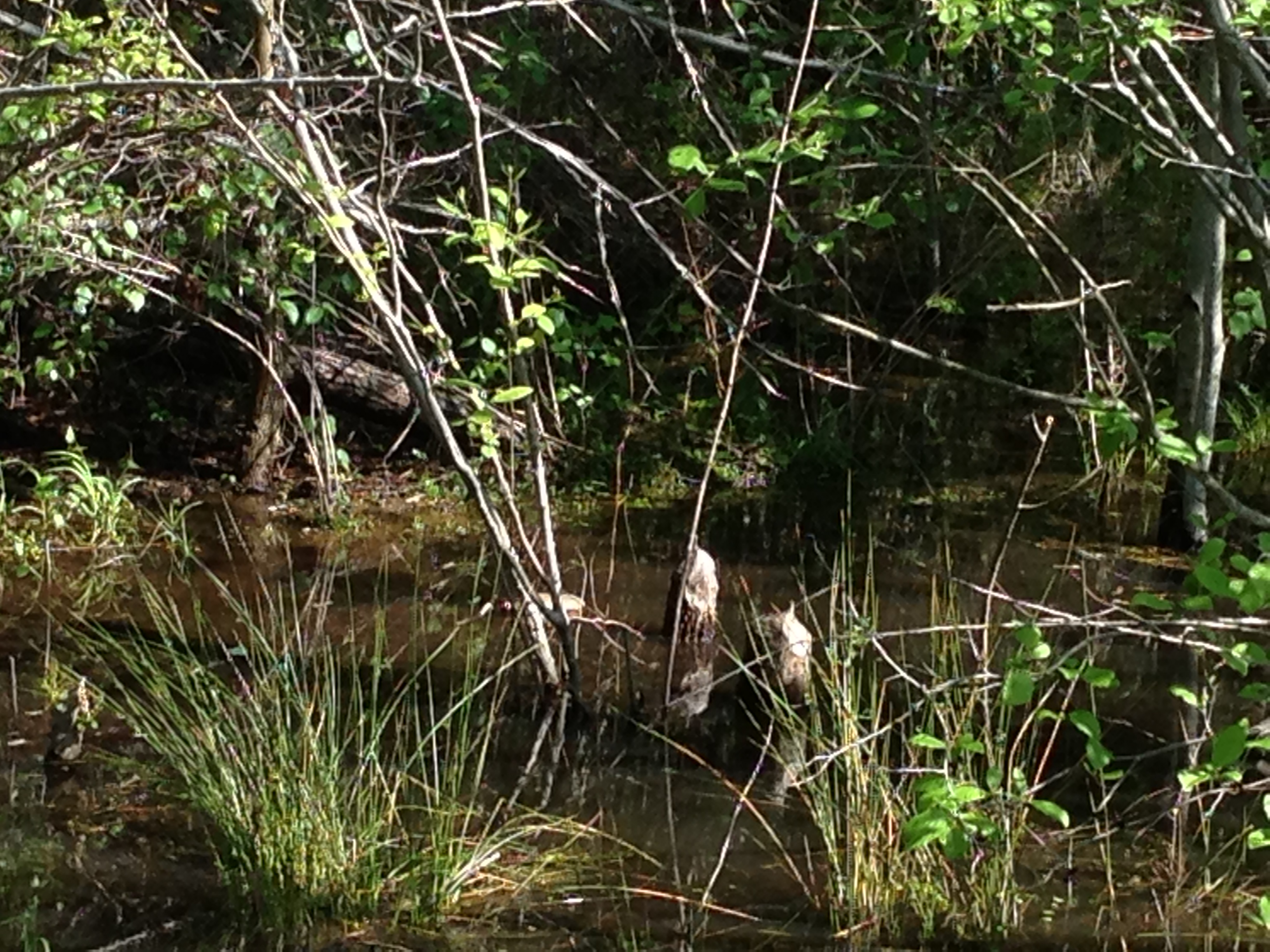
Our townhouse community sits up at the top of a hill. It is a closed cul-de-sac community, so it is great that “through traffic” is not an issue here. A brand-new walking path is now within footsteps of my front door. It will eventually connect to other walking paths, but for now it is about 1.5 miles round trip. At the bottom of our “hill” the path takes us by both a busy road, and what was once a small creek. In the Spring, I use to get a kick out of “hearing” the water sounds, especially after heavy rains. Last Spring those water sounds disappeared. However, I spotted this:

beaver10

… and then this:

beaver11

The creek quickly turned into a pond. And this year? Well let’s just say there is a new ecosystem near my house.

I came across a huddled group of homeowners about 3 weeks ago, whispering and gesturing towards the pond with banks now within 60 feet of our back doors. I stopped to see what was going on, and because it was early enough in the morning with few traffic sounds, I could actually hear their whispers.

“Will the water level rise much more?”

“What do you think they are up to?”

“Do they bite?”

Now my first thought was, “FOLKS. Beaver do not understand human language and to my knowledge they don’t have bionic hearing like I do. Why the HECK are you whispering?”

I didn’t voice those thoughts. Instead I said, “Ummm” (I’m ever so eloquent…)

Yeah, but have y’all been down to the pond area where the walking path is? Have y’all seen what has happened down there?

Blank looks. I discovered they don’t comprehend SOUTHERN. I tried to speak a little more cultured…

Yes, you should walk down there. There are 2 HUGE culverts about 8 feet in diameter. That water level will never get any higher unless those culverts become dammed up as well. If that happens, the city will just unplug them. After all, that road will flood before our homes will“.

Blank looks. See what a lack of exercise will do? Go walking folks, go walking. Check out what the beaver have done up close. Geesh. I think they were miffed I was talking in a normal tone of voice. After all… *sneaky whisper* … the beaver probably HEARD ME.

Beaver have made a comeback in Maryland. I pulled this from a neighboring county’s website:

“Beaver can be among the most beneficial of the county’s wildlife. They create favorable habitat for a variety of wildlife species including fish, birds, amphibians, reptiles, and mammals. This variety of wildlife is in turn valued for recreational, scientific, educational and aesthetic purposes. Beaver activity is also helpful in retaining storm water runoff and improves water quality by trapping sediment, nutrients, and pollutants. Beaver activity can also cause flooding of roads, trails, forest land. They also consume trees and shrubs. Their impacts often occur suddenly and dramatically.

These benefits and detriments often occur simultaneously at a single location. Because of the varying degrees of tolerance levels among people to beaver activity, there are bound to be disagreements on how best to “deal” with beaver conflicts.” (Howard County Parks and Recreation, 2014).

Living side-by-side with these amazing creatures is fairly simple. I’ve been thinking a lot about this family of beaver.

beaver3

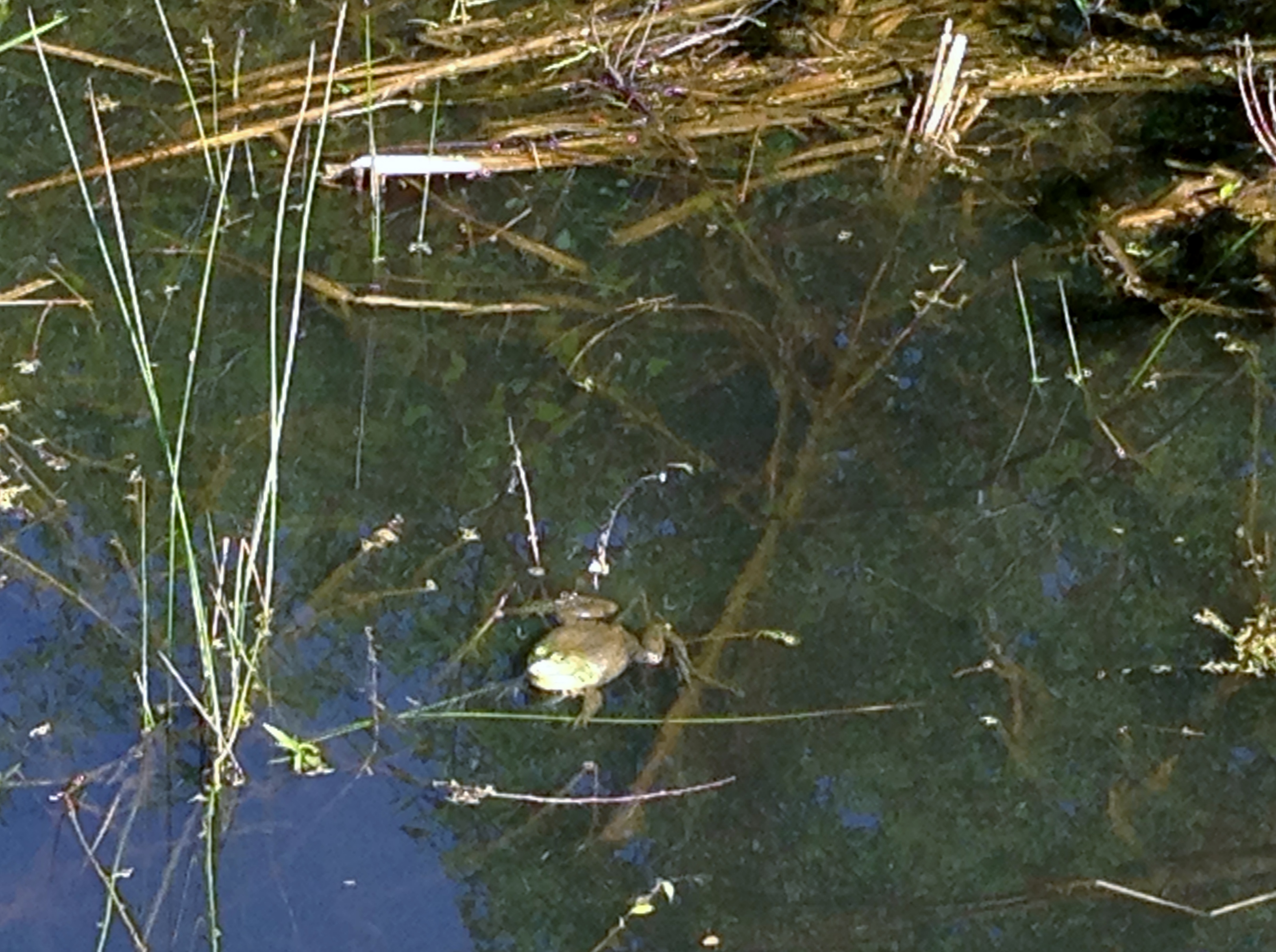
They migrated to this area near the bay bridge and did what came naturally to them. Not with destruction in mind… but cunning and incredibly discerning architects, this family of beaver have created a whole new ecosystem. We’ve always had tree frogs (although it took Chloe’s trainer to clue me in to what I was hearing each year). But now we have:

Beaver8

… bullfrogs. You should have seen Chloe’s head and ears the first time she heard THEM! These fellas stretch about two feet, nose to tip of hind legs. I know this, because I’m the crazy neighbor lady screeching to the neighborhood boys who have caught them and held them up to “Return them to the pond when you are done!”  There are also numerous plants I have never seen before in this area when all we once had was a creek…

Beaver7

and the trees are flourishing…

beaver1

I counted 4 different families of mallard duck one evening, with little ones thriving in this secluded and protected environment. Turtles are sunbathing on any log or rock that breaches the surface of the water. The fox are back (having been gone for at least two summers). There are enough deer in our area now to make my poor hound dogs hoarse for all the barking alerts they insist on for me.

I cannot help but be amazed. The beaver strengthened and created a home just right for them, and in the process created a place to thrive for other species. Folks? I want to be a beaver.

I didn’t ask for disabilities. I never once thought, “When I grow up… I want to be DEAF and have a significant BALANCE DISORDER”. However, in my own process of adapting and making my environment safe and liveable for ME (cochlear implant surgery, service dog from Fidos For Freedom, be-dazzled canes, no-slip shoes, discovering where all the elevators are on campus, practicing all I learned in vestibular rehab.), I have created a new ecosystem.

I want MY WORLD to intersect with the REAL WORLD and help folks recognize the importance of inclusion. I work to make sure that my new life, teaches and advocates in accepting differences. I want others to recognize abilities rather than disabilities. I want my invisible disabilities to be visible and “pond-like“. I want my life to inspire others to choose to live equally purposeful lives. In my own small way I do this by working with my campus disability office. I openly talk about being “differently-abled” in class. I “plug” what I know whenever I can to whomever will listen… cochlear implants and service dogs, depression and coping skills. I have discovered my environment changing. People are coming out of the woodwork… or umm… newly created POND, and sharing with me that they have a mental illness, invisible challenge or diagnosis such as fibromyalgia, chronic fatigue syndrome, or Lyme’s disease.

Yes. Having an attitude of gratitude and focus on education and advocacy, has me walking by concerned citizens from time to time, whispering about a beaver conspiracy. But just as I’ve learned that being transparent is contagious, these folks will eventually HEAR and go walking to discover other new ecosystems. At least… I hope they will.

Do you live with disability? Are you struggling with an invisible illness? Do you have a chronic condition that folks do not seem to understand, nor comprehend how it affects you? Hearing Elmo is not just a place to “hear”. My desire is that numerous authors, both named and anonymous, begin to disseminate the kind of information that changes our environments. In the end, the beaver aren’t the sole beneficiaries. We all benefit. Would you like to write for Hearing Elmo? Contact me at denise.portis@gmail.com and type “Hearing Elmo” in the subject line. Building dams is pretty fun. It is unexpected. It is worthwhile. We can all make a difference!

Denise Portis

©2014 Personal Hearing Loss Journal

Howard County Parks and Recreation. (2014). Beavers. Retrieved May 16, 2014, from http://howardcountymd.us/DisplayPrimary.aspx?id=2396

Hearing Loops Come to Oshkosh

Juliette Sterkens
Juliette Sterkens

Hearing Elmo welcomes guest author, Juliette Sterkens. Juliette Sterkens, AuD is a Wisconsin audiologist with 30+ years of experience in the field of audiology and hearing instrument fittings.  Dr. Sterkens is currently on a sabbatical from her audiology practice to speak around the country to consumers and hearing care professionals on the use of hearing loops in behalf of the Hearing Loss Association of America.  Her efforts have leveraged nearly 300 hearing loop installations in the Fox Valley and Wisconsin and many more beyond. She is the creator of the www.loopwisconsin.com website and her blog at http://loopwisconsin.wordpress.com .  She has received the Wisconsin Audiologist of the Year, the American Academy of Audiology Presidential Award and the Humanitarian of the Year Award from Arizona School of Health Sciences for her work on a local, state and national level.

Chris Prust of Oshkosh is one of 36 million Americans with a significant hearing loss.  Although she wears a hearing aid and a cochlear implant, it is still difficult for her to clearly hear and understand amplified speech in churches, auditoriums, or meeting rooms.  As a member of the Algoma Boulevard United Methodist Church in Oshkosh, she was delighted at the results the first Sunday the church turned on its new hearing loop system.  “I’m home now and can’t stop smiling.  The system went way beyond meeting my expectations.   I was in awe.  I thought I would never again be able to experience a church service where I could hear every world and be able to follow along with the music knowing I was singing the correct and note and verse,” Chris said.

A hearing loop takes a signal from a sound source — a television or a public-address system, for example — and transmits it through an amplifier to a wire that surrounds (“loops”) the audience. That wire sends a magnetic signal to a person’s hearing aid, which has a telecoil, a type of sensor. The hearing aid wearer then gets a direct, clear signal, one without interference from reverberation and crowd noise.

Hearing loops are most commonly found in auditoriums, concert halls, places of worship and lecture halls but  new applications make it useful for ticket booths, taxis, tour buses, service desks and airport gates. While public installations require a trained installer, a TV or computer can be self-installed by a handy individual. Hearing loops have been in widespread use in public venues in England and the Scandinavian countries for some time, and are now starting to catch on in the United States. (See www.hearingloop.org)

Jim and Vicki Denzin, parents of three daughters, two of whom use hearing aids, are grateful that St Raphael Catholic Church in Oshkosh has installed a hearing loop. “Our girls are now able to understand Fr. Doug so much better” they commented. So pleased were they with the hearing loop technology they also installed a system in their Neenah home. Jim commented installation only took an hour and was not hard to do. Vicki reports her girls love using the loop in the TV room but is also quick to point out that it makes it easier for the girls to ignore their mother when they are watching TV. The loop has one other downside Vicki laughs, “The loop broadcasts to other areas of the house including the upstairs which meant we quickly learned to turn the loop amplifier off when it is bedtime, otherwise they pick up the TV’s audio while in their bedrooms!”

Hearing loops make public facilities accessible for people with hearing loss and brings them in compliance with the Americans with Disabilities Act. In the Fox Valley many libraries, nearly a hundred large churches, the Fox Cities Performing Arts Center, the Oshkosh Convention Center, funeral homes, the Grand Opera House and several retirement communities and senior centers all have taken the initiative to install hearing loops to better serve people with hearing loss.  A list of loops of loops around the country  can be found at www.aldlocator.com

“It is not because the sound is not loud enough, that people who have hearing loss complain that they can’t hear” said audiologist Dr. Juliette Sterkens, an Oshkosh audiologist at Fox Valley Hearing Center, who is on a sabbatical from her practice to
serve as the Hearing Loss Association of America’s hearing loop advocate, “it is because the reverberation and background noise in large rooms and churches make understanding very difficult for persons who use hearing aids. A hearing loop helps to overcome this problem”

Sterkens started a Hearing Loop Initiative in early 2009, similar to an initiative in Michigan (see www.loopwisconsin.info) and today nearly 300 hearing loops can be found around the state.  Sterkens continued “Hearing loops can profoundly affect people who use hearing aids.  When Chris Prust told me that the day the hearing loop was turned on at her church, was one of the most memorable moments in her life because it made her feel “normal’, we both cried a few tears.”

– Juliette Sterkens, AuD

———


Purposeful Down Time

24486_1390844928154_3468044_n

I’m back in school. I never thought I’d return to school to be honest. All that changed when I realized that I may not ever land a full-time faculty position if I am constantly going to be applying for the same jobs as those with doctorates. Here I am – back in school.

I manage my time very effectively, almost obsessively. I am a very organized and detailed person. Something I have learned to do, however is to be very purposeful in my down time. For some reason, even though I found that it was fairly easy for me to be organized and to schedule my day, I was unable to enjoy any free time I might have. When I was “off”, I wasn’t really enjoying the time. I even recall telling my mother that if I didn’t have plenty to do, I was convinced it would contribute to my feeling depressed. “Be so busy you don’t have time to feel blue” was my motto, I guess.

The truth of the matter, this is dangerous. Some folks think their time is too valuable to be spent in frivolous activities. Some believe that there is too much to do to waste time doing nothing at all. I argue that not taking the time to simply “be” is deadly. You don’t have to search very long to find reports of Americans who are stressed. We seem to be over-worked, over-scheduled, and over-committed. I have family members who don’t take vacation time because their company will pay them back for it at the end of the year if they don’t use it. My response is, “Whaaaa…?”

(I’m very eloquent).

I’ve been reading “Essential Guide to Online Learning” as many of the classes I am taking to finish up my doctorate are in an asynchronous classroom. The author of the book explained that we need to “be present in your downtime” (Laureate Education, Inc., 2013, p. 27). In order to make time for school, work, family, errands, and all the “other stuff” we squeeze into our schedules, I employ the use of Google calendar. Every task has a specific color. As detailed as I am, however, every day has blank time slots open. FREE TIME!

“Let’s Par-teeeeeey!” Or not.

I try to be purposeful with my free time. If I choose to use my free time to read a good book, groom my dog, or take a walk, I mindfully do those things. So often, folks spend their free time worrying about what they have to do next in their schedule! How is that enjoying your free time? How does one reap any benefit from having some time to yourself?

The first time I realized I had trouble with this was when I realized I couldn’t even go to sleep at night. Here I was, drop-dead tired and weary, exhausted from having to “hear” all day and needing a good eight hours of sleep. Instead, I would lay in bed worrying about what I had to do tomorrow – often things that I had little control over. I was losing sleep over losing sleep. Oh the irony…

I realized that I was going to have to get serious about fun and relaxation. There are things I do each week for just me. There are things I do each DAY – although some days I have more time than others. If I have the time every single day to walk my service dog, Chloe, then by gosh when I’m walking her I will do nothing but walk her and enjoy the moment. I run into folks who are walking their dogs too. By run into, I mean that quite literally. Their attention is on their cell phone instead of the dog at the end of the leash. They are not looking up and around, which means they may not be aware of their surroundings, who is in their vicinity, or what *blech* they are getting ready to step in with their brand new walking shoes. I breathe deeply, look around, talk to my dog, and intentionally notice the world around me.

If I have 30-45 minutes to read before bed in order to decompress and unwind, you can be sure I am not reading a required text. I will be reading something for me… something that “feeds my soul” or “fires my imagination”.

This morning I had two hours to put up my family’s Christmas tree. The house was quiet, with hubby already gone to work and kiddos sleeping in since their work schedules were later. I mindfully put up my Christmas tree. I didn’t think about the assignment I had due by 3 PM. I reminisced as I hung old ornaments and strung lights. I arranged and re-arranged. I asked the dogs if things looked “purtee”. Then I turned off all the lights in the room, pulled the blinds down, and turned on the twinkle lights. I listened to Christmas music. I rubbed my dogs’ bellies. At 11 AM, however, I had research that I had scheduled to do in advance. However, I deliberately refused to think about it prior to my free time being “up”.

Do you need to be more purposeful with your down time? Do you need to reduce stress and schedule “me time”? Please feel free to share tips and favorite “purposeful me time” moments in the comments.

Denise Portis

©2013 Personal Hearing Loss Journal
Laureate Education, Inc. (2013). Essential guide to online learning. Baltimore: Laureate International Universities Publishing, Inc.

When Lightening Strikes TWICE

Wendi, husband Dave, and daughter Paige at a Hearing Loss Association Convention

Hearing Elmo welcomes, Wendi Tirabassi Kast, fellow blogger and cochlear implant buddy. Wendi writes at “Sudden Silence” (http://suddensilence.wordpress.com/). I have been a big fan of Wendi for years now. She writes about LIFE – life with hearing loss and cochlear implants. Life with other kinds of struggles – but her posts remind me that this is LIFE. Her positive attitude and quirky sense of humor connects with me – and I think will with you! You should check out her blog – she frequently updates and every read is worth the time to check in!

In 1993, when I was 28 years old, I lost all of the hearing in my right ear.

 I grew up with a hearing loss that was discovered when I was four years old.  I never expected to lose more hearing; nobody knew why I lost some of my hearing to begin with, but a high fever from roseola was what we suspected.  (Knowing what I know now, I would also suspect the antibiotics used to treat it back in the mid-1960s.)  I always thought my hearing would stay the same; in fact, I never really gave my hearing (or lack thereof) much thought at all.  I treated my hearing aid like I did my glasses … just an aid to help me with one of my senses.  I certainly never thought I might lose all of my sight some day, so why would I think I might lose all of my hearing?

 Finding out that all of my hearing had vanished virtually overnight, for no known reason, rocked me to my core.  I was absolutely devastated and terrified.  Suddenly a whole host of worries was presented to me, including the possibility of going completely deaf someday.  I woke up terrified every morning, wondering if I would lose the rest of my hearing that day.  I lived in the hearing world, not the Deaf world.  I didn’t know sign language; none of my family or friends knew it.

I spent two weeks without my hearing aid, because I wore the aid in my right ear and it was suddenly unaidable.  They made an ear mold for my left ear and ordered analog bi-CROS hearing aids for me.  While I waited the two weeks for my left ear mold to be completed, I had to navigate my hearing world using nothing but the hearing that remained in my left ear.  I did word processing for an industrial parts supply company; I could still type and do my job, but communicating with my coworkers was very, very difficult.

When my new ear mold and hearing aids were fitted, I was weak with relief.  Things sounded normal again.  The bi-CROS aids picked up sounds from my now-deaf right side and transmitted them to the left.  My hearing remained stable; I slowly began to stop worrying and started taking my new level of hearing for granted again.  I mean, this couldn’t happen to the same person twice, right?

Wendi with daughter Paige at her baptism in 1994 after she lost her hearing.

When I realized the hearing in my left ear was getting a little strange, in early April 2008, I chalked it up to an illness.  It was that same kind of faint ‘hearing things from the bottom of a tunnel’ type of hearing that I get when I’m fighting a fever or virus of some kind.  I wasn’t sick but still assumed I was on the verge of something.  Well, I was … but I was on the verge of total, profound deafness, not a virus.

My husband scheduled an appointment with my otolaryngologist.  The day before my appointment, I woke up and realized I was completely deaf.  I could not hear anything.  My teenage children were leaving for school and I tried to keep it together until they left, but I was so scared.  I burst into tears in front of them, wailing to my husband, “I don’t want to be deaf!  I can’t believe I’ll never hear you guys talking to me again!”  I was completely hysterical.

Well, I gave in and let myself grieve.  It was only a few days before I realized I could only do so much crying and feeling sorry for myself.  I was still sad and scared, and I used my blog to express my feelings during this time.  But I also decided I had to move on and decide how I was going to live my life as a deaf woman.

My first concern was communicating with my family.  I had remarried in 2002 and my husband knew some sign language, so he began teaching signs to me and the kids.  We rented DVDs, bought books, and learned to fingerspell the alphabet.  We never did learn ASL but we learned enough signs to communicate and get the message across.  My speech reading skills kicked into high gear, and these really saved me.  My family was very, very patient – they made sure to face me, to speak at a rate that was easy for me to lip read, and would repeat words or fingerspell until I got it all.  They never said, “Oh never mind” or “It’s not important.”  They knew I wanted to be part of the conversation, important or not.

After a few big scares, my husband put up mirrors around my desk so I could see if someone was approaching from behind.  (It’s pretty terrifying to suddenly feel a hand on your shoulder when you aren’t expecting it!)  We ordered a free TTY from the state and got a flashing light for the phone.  I used online relay for phone calls as well.  I already had a bed shaker alarm clock and, of course, we were already using captions on the TV.  (My husband has a hearing loss as well so we both use these accommodations.)

I found out that I qualified for cochlear implants, and began the process of testing and insurance approval.  My hearing tests were easy; I sat in the soundproof booth, listening to nothing, until they opened the doors and said I was done.  I asked if I could get a cochlear implant in each ear at the same surgery.  Although it wasn’t done very often, they said it was no problem as long as my insurance approved it … which they did.  The whole process was quick:  I had my testing in May, my insurance approval in early June, and my simultaneous bilateral surgery was on July 22, 2008.

Wendi's cochlear implants from the back
Wendi’s cochlear implants from the back

On August 20, 2008, the hearing world came back to me.  The sounds that came into my brain that day were nothing like anything I’d ever heard before … but it was sound and I was speechless with delight.  If someone had told me back in 1993 that someday I would have little computers in my head, and I would hear sound again in an ear that hadn’t worked since before 1968, I would’ve just laughed.

As my brain learned how to hear with my new cochlear implants, my tinnitus faded away to nothing.  Every day, I asked my family to help me identify what I was hearing until finally I could identify sounds on my own.  With each mapping, things sounded more and more the way I remembered them.  I heard the voices of my husband and children, music, my cats meowing and my dog barking.  One day, as I was leaving the audiologist’s office, somebody asked me for directions.  They were behind me, and I heard them clearly without lip reading!

It’s been over five years now and I never, ever take what I hear for granted.  It’s been gratifying to know that I can deal with my deafness even if something happens to my CIs someday.  But every day that I wake up, put on my processors and hear the rush of sounds once again, I am thankful, amazed and humbled.