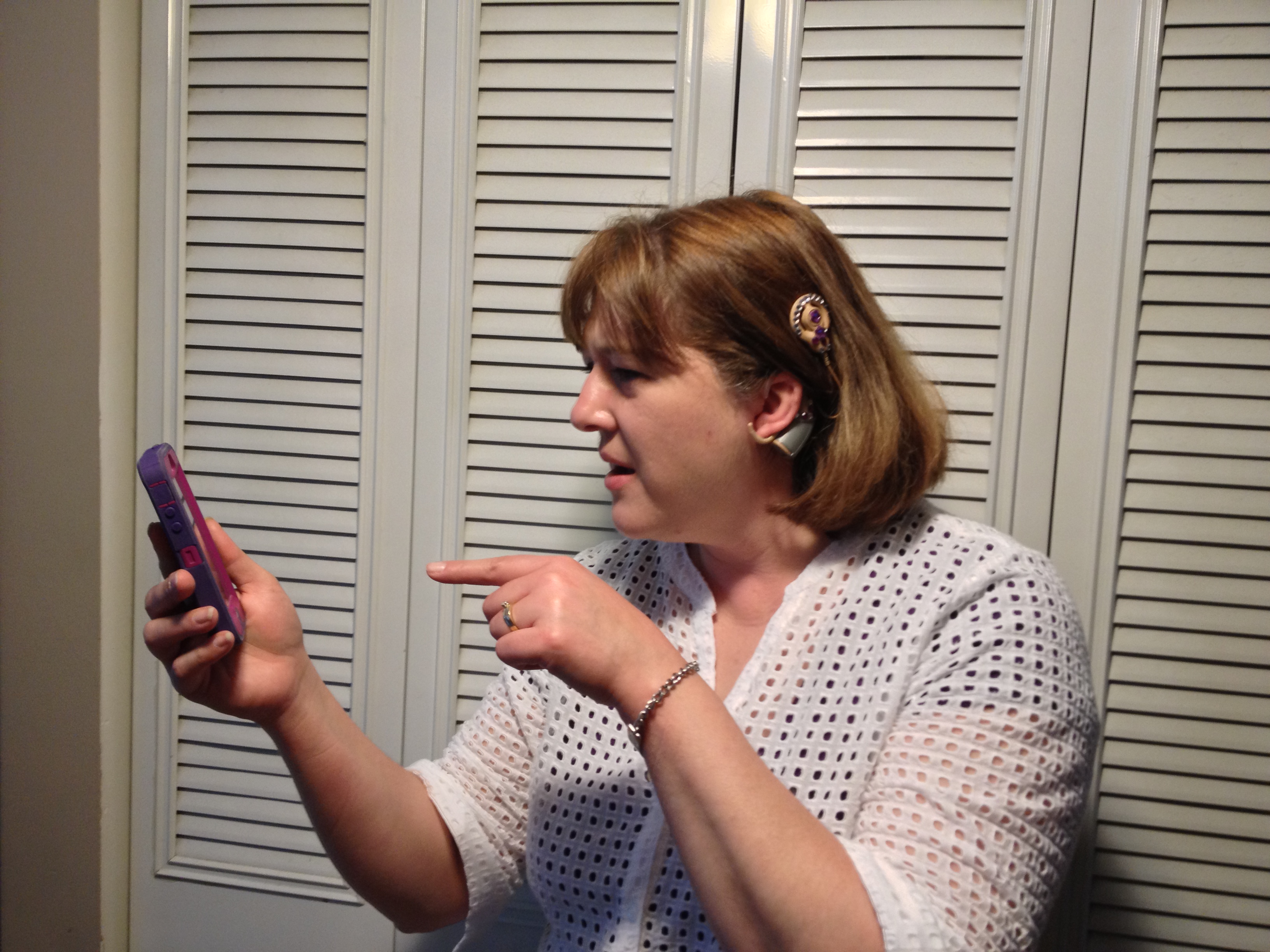
I Stare at my Phone and LAUGH!

If I'm not married to you or if I didn't birth you... I'm just not going to talk to you on the phone! :-)
If I’m not married to you or if I didn’t birth you… I’m just not going to talk to you on the phone! 🙂

Last week after a meeting with Anne Arundel County Commission on Disabilities, I received a follow-up phone call about changes in a training that I would be participating in for the Public Safety committee. There are five of us on the committee, two of which (including myself) have hearing loss. I never give out my cell phone number, but do have a number that we use as our “home phone” through Google Voice. The reality is that Google Voice isn’t a phone at all. It transcribes messages from a messaging service when people call the number and leave a message. I receive both a written transcription and the taped message.

So I received the message with changes about our training and read/heard at the end: “Call me to let me know you received this”.

I laughed.

Out loud.

Twice.

I don’t use the phone. On rare occasions I will speak to my husband or grown kids on my cell phone. However, I know their voices VERY well. Sometimes I will talk to my mother but only long enough to ask her to switch to FaceTime. (Always helps to see the face to pick up more of the conversation). With all other people, however, I do not use the phone.

It isn’t that I cannot use the phone. It simply isn’t my first choice (or second, or third choice). If I want to talk on the phone I have to stop everything. No multi-tasking such as continuing what I’m doing on my computer, or folding laundry, or working in the kitchen. I have to sit (that’s right… I can’t stand!) switch to t-coil on my cochlear implant and hearing aid, close my eyes (I’m not kidding), and concentrate. How often would YOU be able to talk on the phone if this were the parameters for you to do so? <BIG GRIN>

Email is a Great Choice

email

Email is a great choice for people with disabilities or chronic illness. In my opinion, it is actually a great choice for everyone. Why?

1. Email gives a written record of exactly what was said.

It doesn’t really matter if the conversation is personal or business. A written record of what was actually said can help us better remember dates, times, and other important information.

2. Email fits into our schedule.

You can check email on many phones now. You can check email on devices such as iPods and iPads, and Kindle Fire. Many types of technology allow you to read and respond to emails no matter where you are.

When we need to respond to emails from our desks, something business related or important, we can do so on OUR schedule. No playing telephone tag. Instead you can read and respond at a time that is convenient.

3. Email can eliminate communication problems.

Have a habit of interrupting someone mid-sentence? Do you have attention-deficit disorder and are easily distracted by what is going on around you? Is the person you need to communicate with hard to talk to – angers easily, defensive, mumbles, etc? Email eliminates those kinds of problems.

4. Email is free.

Most of us have a computer at home now. If you do not, you likely have a way to access email through mobile devices or at least have a library nearby where you can access the Internet. There are numerous free email options. I personally use Google’s gmail for my email account. However, there are numerous free email options discussed at About.com. You can access that HERE.

Email can also be a great choice for people with disabilities or chronic illness. I am late-deafened and hear again with a cochlear implant. For me, email eliminates the pressure to HEAR. When folks get a hold of my cell phone number for some reason and call, I really do stare at my phone and laugh. Email can be read by special programs such as JAWS (a Microsoft computer screen reader) and written with Braille displays for folks with low-vision or people who are blind. Email font can be enlarged to assist those with problems seeing smaller type. Email can be a great communication device (along with various social media) for people who have difficulty expressing themselves and using their voice. Email may be easily accessed with various tools for people who have mobility issues. Email is available when you are ready to read/send communications… something that may be important to people who have Chronic Fatigue Syndrome, Fibromyalgia, Lymes disease, or other disorder where fatigue and pain are a factor. Can you tell I’m a big fan of email?

Some of you are thinking, “But I just want to hear your voice!” I totally understand that. Even as a person with hearing loss, I understand how important inflection, emotion, and accents may be in communication. We do need to be sensitive to the fact that there are a great number of people who do not feel the same way. Just because you like to hear someone’s voice with a phone tucked under your ear, doesn’t mean that others are able to have a hands-free, low-anxiety audible communication with you. Perhaps Skype would be a good choice for you – free to anyone with a computer or modern cell phone. FaceTime is rising in popularity with people who have Apple products. These communication devices allow people to both hear and see when communicating. You can even have conference calling!

I think the only thing I love more than email is texting! Unless, you want to discuss a major problem called autocorrect… but hey! That’s a topic for another post!

Denise Portis

© 2013 Personal Hearing Loss Journal

Deaf Children: Coping with Hearing Loss

Hearing Elmo welcomes guest blogger, John O’Connor. John shares that hearing loss has been an important topic as his own father has hearing loss. He explains, “I feel that there is a general lack of understanding around the issue of hearing loss and it is our job, or my job as someone who is close to the issue, to try and spread awareness when possible. Many people think that hearing loss only affects adults or elders. Since it is Better Hearing and Speech Month I thought it would be fitting to inform people on how hearing loss can affect anyone, even children.”

Hearing is essential for learning and communicating with others. Statistics show that two out of every 100 children have some degree of hearing loss. If kids cannot hear the world around them, they may experience delayed speech, language, academic and social development. What causes hearing loss, and how can deaf children overcome this obstacle?

Causes and Treatments

Early detection is the most important aspect of hearing loss treatment. Babies who are diagnosed with deafness before six months of age have a chance for better speech-language development. Older children who have a risk of hearing loss should be screened regularly. The earlier treatment begins; the sooner children can reach their full potential.

Most deaf children lose their hearing due to infections, genetic conditions, injuries or noise exposure amongst other reasons. Doctors use various diagnostic tools to test hearing in children. They often use behavior techniques to determine the type and degree of impairment.

Medicine or surgery can treat some types of hearing loss. Other types are best treated with hearing aids and speech-language devices. Children with profound deafness may benefit from cochlear implants.

Hearing Loss and Bullying

Some people consider children with hearing loss to be different in some way. Hearing aids and cochlear implants add to this perception. According to a “Boston Globe” report, a Swedish study found that one in five deaf children are victims of bullying. Those who are bullied often suffer from low self-confidence and self-esteem.

It is important for parents and school systems to support and protect hearing impaired children. These children need to know that there is nothing wrong with them. While their deafness poses definite challenges, it also presents an opportunity to overcome the challenges and succeed in their efforts to reach their goals and dreams.

Influential Deaf People

Deaf children have hopes and dreams just like all children. It is not impossible to make those dreams a reality. Just ask Nick Hamilton and Marlee Matlin.

Nick Hamilton did not let his hearing loss get in the way of his baseball career. Deaf since the age of three, Hamilton has turned to surgeries and hearing aids to help him cope with his deafness. In college, he became a star baseball player for Kent State. He now plays ball for the Cleveland Indians. He wears hearing aids on and off the field.

Marlee Matlin was almost completely deaf before her second birthday. The award-winning actress never let her disability interfere with her acting career. With the support of her family, she overcame her hearing loss challenges to become a well-known, working actress. In 1986, she won an Academy Award for her role in “Children of a Lesser God.”

Hearing loss can be a tough situation to deal with, but with the love and support of family and friends and a little belief anything is possible.  Many people famous or not have taken it amongst themselves to beat hearing loss and have gone on to pursue their passions in life.  Don’t let hearing loss stop you!

Hi my name is John O’Connor, I am a father, outdoorsman, sports enthusiast and passionate about living a healthy lifestyle.  Check out my new blog at bloggingwjohno.blogspot.com!

Team Chatter

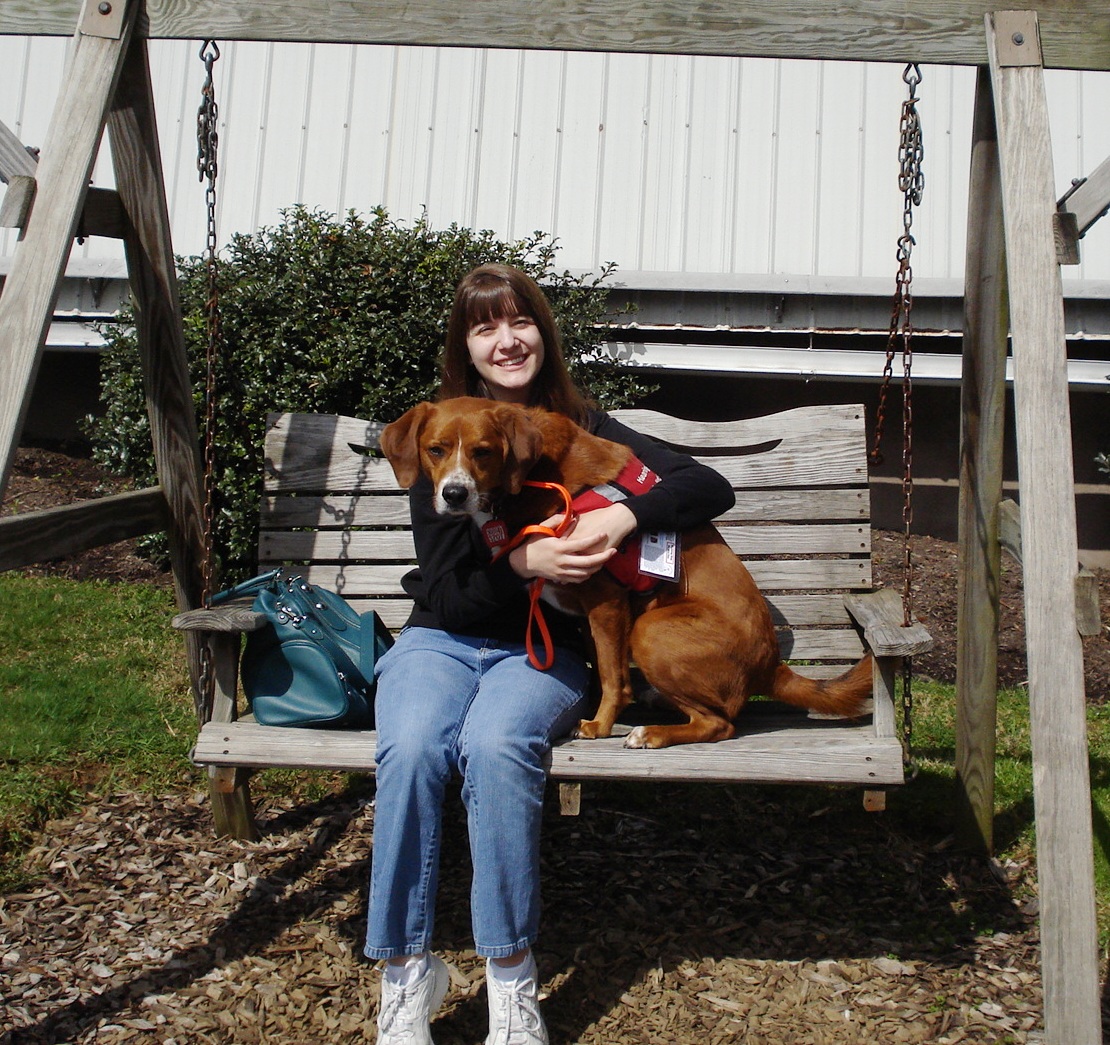
In public, I talk to Chloe constantly. May 4th I learned what this is called...
In public, I talk to Chloe constantly. May 4th I learned what this is called…

Photo by Julie Wu, volunteer and therapy dog handler for Fidos For Freedom, Inc.

A trainer exited Pi’s Deli behind me and said, “Great team chatter”.

I’m always so eloquent. I responded, “Ummmmm”, with a questioning look that spoke volumes.

Fidos For Freedom’s trainers have had a LOT of practice and experience with people with hearing loss. She rephrased. “Good communication with your dog”.

Oh.

When I hear a “new for me” phrase, I am often scrambling to catch up to the conversation as I work to interpret the meaning. Having been partnered with Chloe since 2007, I think I can safely say I’m a veteran team. That doesn’t mean that I don’t still learn new things, however. Phrases like “team chatter” may be heard, but not understood until I spend a few minutes pondering it.

What does it mean?

Team chatter is important in a service dog team for two primary reasons. Team chatter keeps your dog’s attention on YOU if you use their name a great deal and talk to them. A second reason, however, is that service dogs need to know when they are doing something right! The tone and certain words connect with them.

This trainer may not have put two and two together like I did when preparing for this post. But the trainers use team chatter as well. When I did something right, this trainer told me so. If something needed polishing, she would tell me. She gave feedback throughout the certification segment we were doing that morning. She is a trainer and I am a client. However, we too, are a team. We are co-volunteers – even teammates in an organization we both love. Fidos For Freedom, Inc. (see http://www.fidosforfreedom.org/ for more information).

Why People with Invisible Disabilities Need Team Chatter

In psychology we use the phrase, words of affirmation, to explain the inherent need we have to receive “high 5’s” literally and figuratively.

Paul Hulijich explains, “The mind is very powerful, and it needs to be spoken to. We are all aware of the power of being told, for example, that we look well; it often immediately evokes the feeling of being well. We are influenced by what people say to us” (Hulijich, 2012, para. 3). Since I have had to learn to do a great number of things “differently”, it means a lot to me when a trainer, friend, or family member tell me that I handled something well.

At my daughter's college graduation, May 11, 2013.
At my daughter’s college graduation, May 11, 2013.

My husband praised me for how I chose to ascend and descend a number of steps in various arenas this last weekend. Even with Chloe in a close “heel”, I’m just not safe on steps in large cavernous – or open air – places. I didn’t make a big deal about it, only reminding Terry, my husband to either stand immediately in front of me, or behind me. Placing a hand on his shoulder is all I need to keep from falling when going down steps. Going up is a little trickier, but we still have a well-rehearsed plan. He told me, “You use steps with a lot more confidence now. You don’t even miss a beat”.

I don’t know about YOU, but it means a lot when someone notices what was once trial and error, becomes a well-polished, good habit. I need affirmation when I’m told that I pick up cues about my volume better. It means a lot when someone notices that I grin and advocate when having a near miss in a crowded hallway, and make it a learning opportunity.

One day last week, Chloe did not accompany me to work as she wasn’t feeling well. (She has chronic early morning acid reflux). I only had two classes that day and so opted to let her stay home with my husband since he was off. Just like any normal day, I dropped a number of things in the classroom. One student watched with wide eyes as I braced myself against a desk and used my foot to pick up a stack of quiz sheets with a rubber-band around them. “Oh my gosh, you do that without even thinking about it! You live YOU very well!”

I blushed but also BEAMED at the impromptu praise. What Greg said, echoed the beat of my heart. This is what I want – to live ME very well.

We Can Use Team Chatter too!

Do you have a hearing loss? Do you live with a balance disorder? Have you learned to navigate life with low vision? Do you have a chronic or invisible illness? Whether you are new to “the new you”, or a veteran, there are people around you who could use some team chatter.

I know, I know! It may not always seem as if they are ON YOUR TEAM, but there are still co-workers, friends, and family members who could benefit from being told when they are doing something RIGHT.

Sarah, a person with low vision, once asked me where her husband was. I pointed and said, “He’s right over there”. She reached up and grabbed my pointing arm and followed it with her hand in the direction I was pointing. Off she went in the RIGHT direction, leaving me pondering my own OOPS. After that, I did much better about responding with phrases like, “at your 9′ o’clock”; or, “over your left shoulder about 25 feet away”.

She noticed. “Denise, you do a great job at giving me directional assistance. It really helps!” I’ve tried to remember to do the same for the folks in my life.

“Thanks for re-phrasing that. I understood it perfectly the second time. You don’t even have to think about doing that for me now. Thanks!”

“I appreciate you habitually moving to allow me to stand next to the side when we get on the elevator. It really helps to have something to lean against”.

“Thanks for ignoring Chloe when we talk in the office. I know you love dogs, and because she knows you it can be hard to ignore that wag! It really helps me though, so thank you!”

As a person with both Meniere’s disease and hearing loss, I do a lot of reminding about what works well to assist me, and what does not. (This can be tricky because we don’t want to embarrass or offend someone!) Sometimes I feel like I’m constantly in “education mode”. Yet, we need to remember to tell folks around us when they get it right! It affirms what they do or say in interacting with us. Perhaps they even just need to hear that they “leave us be” in a healthy way! “Thank you for not assuming I needed help with that and waiting to see if I ASKED for help”.

I hope you will work to incorporate team chatter into your own relationships. Words of affirmation and open communication can be so important. Don’t assume others know when they are doing a good job. Let them know!

Hulijich, P. (2012). Affirmations. Psychology Today. Retrieved, May 12, 2012 from http://www.psychologytoday.com/blog/mind-wellness-awareness/201211/affirmations

Denise Portis

© 2013 Personal Hearing Loss Journal

Square Plates

Exactly what I want at Target!

Square plates. I WANT THEM.

Why are plates ROUND after all? Squares have such nice neat corners. It isn’t as if round plates hold more! Round plates are not any better at preventing food from escaping if you are an – erm – especially aggressive eater. Or, perhaps TWO-years-old!

I really want square plates. They are different. They accomplish the same purpose. Am I rebel? No, no… you see, my friends?

I’m a SQUARE. That’s right, you heard it first here at Hearing Elmo. (smile)

We May be the Same – But We’re NOT

I have met a lot of people with hearing loss and cochlear implants. We may all have hearing loss, but we are not the same. That is why our hearing aids and cochlear implants are programmed especially for our hearing health profile.

I have met many with Meniere’s disease. I may have the same diagnosis as you do of Meniere’s disease. That does not mean that we share the same triggers. It does not mean that what works to alleviate the severity of symptoms for YOU, will work the same for me.

Unfortunately, even though we may belong to the same community of people – those who live with some sort of invisible or chronic illness, those who are differently-abled, we forget that we are individuals. What works for one will not work as well for another.

There are three cochlear implant manufacturers. I love my cochlear implant. Neither I, nor my audiologist at Johns Hopkins, ever thought I would be hearing this well. My cochlear implant is not “better” than someone who chose another manufacturer, however. Consumers – the patients – have a responsibility to thoroughly investigate all the details about all of the brands available. We pick what we believe will work best for US.

Round plates and square plates do the same thing. They hold food. But some of us like round plates – and some of us are SQUARES.

It always grieves me when I see posts at various online support groups where one member bashes the ideas of another. Or perhaps they are insistent that everyone try their extremely low-salt diet (which happened on a Meniere’s group of which I am a member). It didn’t matter that several of us explained we had tried low sodium a number of times and had found it made little difference.

We need to respect other people’s choice to use round plates – or square ones. In the hearing loss community, our mantra should be “whatever works”. In groups that formed to support those living with Meniere’s disease, we should work on actually BEING supportive. If WE aren’t supportive of each other, how can we ever expect the community at large to be?

Are you a member of a support group for your own illness or disability? Encourage others to be supportive and open to new ideas. Everyone just might learn something! Regardless, we need the non-judgmental atmosphere of a friendly, empathetic community. Respect each other. Before you know it you just might start seeing :

by 10 Strawberry Street

… TRIANGLE dinner plates.

Denise Portis

© 2013 Personal Hearing Loss Journal


Overkill?

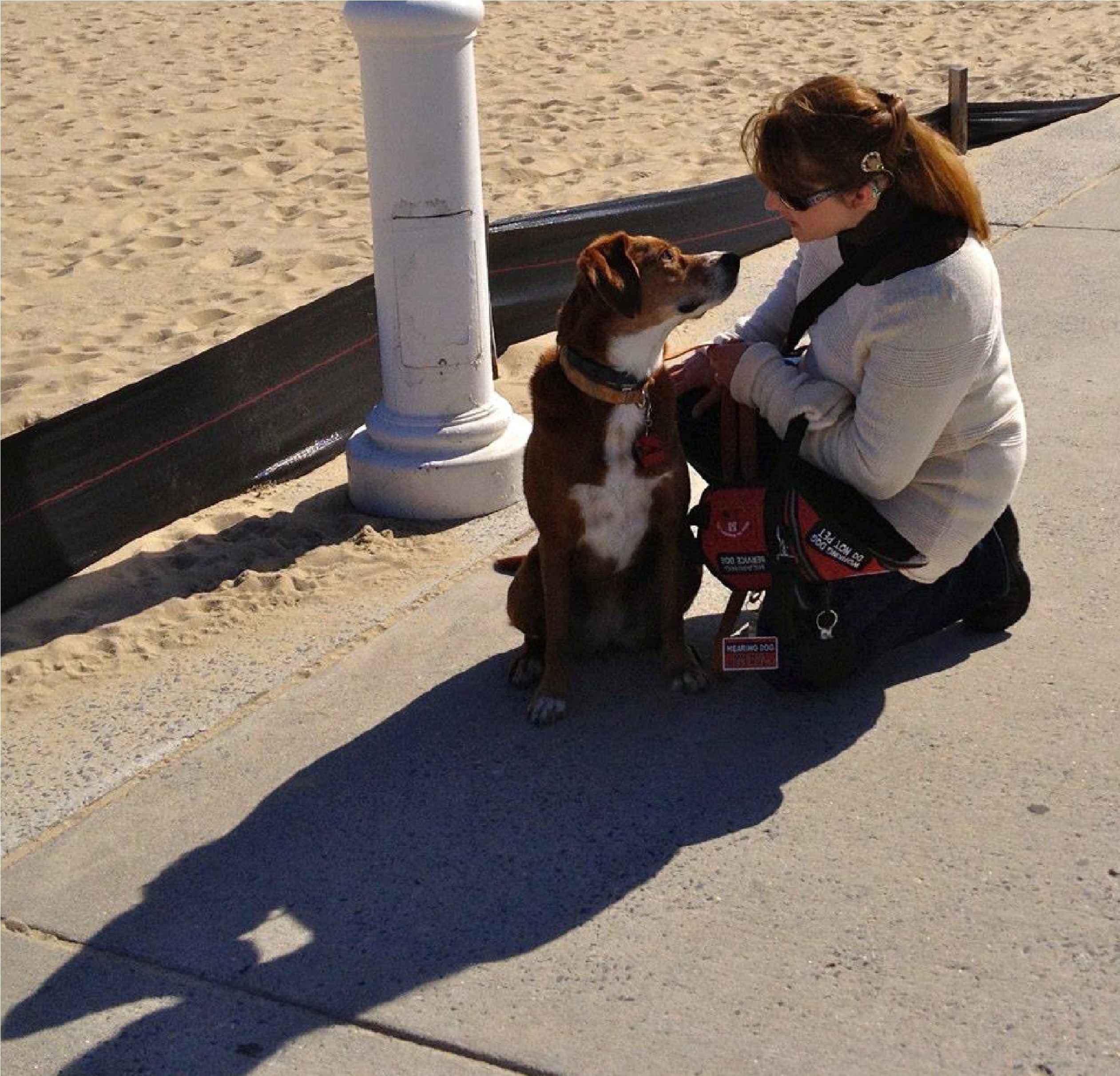
At the beach in Ocean City with cochlear implant, hearing aid, and hearing assistance dog

1. I’ve had people with cochlear implants before ask me why I don’t just use a cochlear implant. One (or two) works for them after all!

2. I’ve had people with hearing aids ask me why I choose to get a cochlear implant in my “worse” ear.

3. I’ve had folks with CI’s and HA’s ask me why I use assistive devices in the classroom if I am “hearing again” so well.

4. I’ve had people with cochlear implants ask me why I need a hearing assistance dog if I’m hearing so well now.

5. I’ve had people who were culturally Deaf ask me why I don’t just use ASL since I am proficient in the language.

6. I’ve had people who were late-deafened ask me why I do not just continue to speech read. Why embrace technology?

Overkill?

These are all legitimate questions. I will do my best to answer them.

1. I’ve had people with cochlear implants before ask me why I don’t just use a cochlear implant. One (or two) works for them after all!  Not everyone who qualifies for a cochlear implant can go bilateral. I have Meniere’s disease and I barely squeaked by in pre-surgical balance testing to be a unilateral candidate. I use a hearing aid in the opposite ear because – well, because my audiologist told me too! My audiograms and testing each year astonish my audiologist at Johns Hopkins. Who would have thought I could hear this well? However, the proof is clear. I gain an extra 3-7% when I use a hearing aid in my unimplanted ear.

2. I’ve had people with hearing aids ask me why I choose to get a cochlear implant in my “worse” ear. I chose to get a cochlear implant because with the best BTE hearing aids available, I could no longer hear well enough to carry on a normal conversation. I learned all I could about cochlear implants and took the “plunge” in April of 2005. I’ve never regretted it. A comparison of my audiograms can be found at this post: CLICK HERE.

3. I’ve had folks with CI’s and HA’s ask me why I use assistive devices in the classroom if I am “hearing again” so well.  I hear great in “most” indoor environments. I even hear outside fairly well if there is not a lot of competing noise. But let’s face it. Listening environments are not the same. Some rooms are huge with cathedral ceilings. Some have all hard surfaces. I use assistive devices because it helps to eliminate one of my greatest enemies. NOISE. Isn’t it funny that as a “hearing again” person, noise interferes with my hearing well? My favorite device as a teacher is my clipboard. You can read about it at this post: CLICK HERE.

4. I’ve had people with cochlear implants ask me why I need a hearing assistance dog if I’m hearing so well now.  This is probably the number one question I receive in person, from readers on Hearing Elmo, through FaceBook, and through email. My hearing assistance dog from Fidos For Freedom gives me something that my cochlear implant and hearing aid do not. Independence. When I trained to be matched with a service dog, I was not only learning the commands, but also learning to watch my dog – and to trust my dog. I needed that training! I am confident in knowing that if I do not hear something, my hearing assistance dog will let me know. This may mean becoming aware that a car is coming up behind me in the parking lot. It may mean that I will know before rounding the end cap, that there is a noisy family on the next aisle. I know if I drop things. I know if intercoms are giving announcements. I know about alarms going off. I know when people are saying “excuse me” so that they can get past, and much, much more. I feel safe. I feel confident. I am independent. I didn’t feel those same things when only utilizing a CI and HA. (Besides with my balance issues, Chloe has become just as necessary to me because of her balance work).

5. I’ve had people who were culturally Deaf ask me why I don’t just use ASL since I am proficient in the language. Bottom line? I am not culturally Deaf. I was not born with hearing loss. Everyone close to me has normal hearing. Don’t misunderstand. I love ASL and have been teaching the language for over twelve years. I actually rely on sign at home if I’ve taken my ears out (as well as speech reading). However, I was born into this world with ears that hear. It made sense (to me) that when I began losing my hearing that I fight to regain as much of that as I was able to do. I do not criticize those who embrace their deafness. I love the culturally Deaf and have learned how to advocate in a positive way from Deaf friends. But… I’m not Deaf. I am a person with hearing loss who is “hearing again”.

6. I’ve had people who were late-deafened ask me why I do not just continue to speech read. Why embrace technology? Speech reading (or lip reading) is not an exact science. Don’t believe me? Try it sometime. Get a friend or family member to voice some simple sentences with their volume “OFF”. Can you accurately pick up what they are saying?

According to the CDC (2012), a good speech reader will be accurate 4 to 5 words in a sentence of 12 or more words. I have news for you. 33-50% by the BEST, means they are not communicating well. Even for those who are terrific at understanding “in context”, will still be asking for repeats or clarification (or sit there “lost”). I still speech read some. It is only an additional tool to help me communicate at my best, however.

Use It All!

So. Is the way I’ve chosen to stay connected, to communicate, and to hear the world around me overkill? Perhaps to some it is. However, these choices have helped me to cope, to interact, and to be a confident “hearing again” adult responsible for my own communication. If you are a person with hearing loss, you have chosen your own path, too. I respect that! I am grateful to be living in an age where so many options are available to people with hearing loss. Decide how you want to engage the world around you – and then OWN IT.

Do you use additional things to hear at your very best? Please feel free to share those options by commenting on this post.

Happy hearing!

Denise Portis

© 2013 Personal Hearing Loss Journal

Center for Disease Control. (2012). Hearing loss in children: Learning language. Retrieved April 20, 2012, from http://www.cdc.gov/ncbddd/hearingloss/language.html

Obtuse on Purpose

Chloe enjoys some downtime in between classes.

Sometimes, someone just rubs me wrong. I try to practice what I preach here at Hearing Elmo. I know that my interactions with another person can influence their opinion about – for example, all people who have a service dog, or all people who have a balance disorder. Yet sometimes… someone just rubs me wrong and I respond inappropriately.

In the early days, if someone made a comment about my service dog, cochlear implant, or wobbly gait, I’d put my hands on my hip and “give them what for”. It was pointed out to me by friends and family that I needed to work on that. It was hard for me not to have a knee-jerk reaction to what I viewed as rudeness.

Today, I do better. Yet sometimes… someone rubs me wrong. I had a day like that this week.

I went to the copy center to copy an exam I was getting ready to give to eager Introduction to Psychology students. *snort*  The copiers are jamming up and not wanting to “do staples” right now, so I brought my exam to the front desk and asked for assistance. As I waited for it to be printed, another professor came into the copy center.

“Oh what a beautiful dog! I just think it is terrific what you do. But I don’t know how you give them up, honestly!”

I was obtuse on purpose.

“Oh, I’m keeping her. I’m not going to give her up“, I replied.

L   O   N   G          P   A   U   S   E

“I’m sorry?” she asked, clearly confused.

“I’m not going to give her up. I’m keeping her”, I repeated.

L   O   N   G          P   A   U   S   E

“But… but don’t you have to give them back?” she asked.

“She’s my service dog. We’ve been together almost 6 years now”, I replied with saccharin sweetness.

L   O   N   G          P   A   U   S   E

“You mean a therapy dog?” she asked, still clearly confused.

“Oh no. She is an assistance dog. I really couldn’t do my job without her. She’s essential to my even being here”, I admitted.

L   O   N   G          P   A   U   S   E

“But… WHY do you need her?”, she asked as she leaned closer to finally read all the details on Chloe’s vest. Her eyes got big and she murmured… “Oh…”

Then she looked at me. She actually took a step to the side to look me up and down. I was incredulous! I shouldn’t have been surprised when she said, “You don’t look deaf or talk like you’re deaf”.

With a huge, sweet smile I exclaimed, “Well thank you!” (refusing to even go there). I inwardly chanted my motto… “EDUCATE ONE PERSON AT AT TIME”.

She continued to wait in line and watch me. Finally, my copies were done and I allowed Chloe to do “paws up” to say hello to one of her friends behind the desk. He patted her once and said, “Now you take care of your mom, Chloe! Don’t let her fall today!” Chloe wagged her tail and turned to see me out the door.

I noticed this other professor’s eyes get even bigger as she stared at us while I gathered my things to prepare to leave. I’m talking, openly staring, not even pretending to be sly about it. As I turned to push open the door, I turned, looked her in the eye, and said, “You know? You don’t look like a hearing person!”

I was obtuse on purpose. And perhaps – a little mean. I’m pretty confident, however, that in this one instance – it may have helped open her eyes at her own behavior. One can hope, right?

Invisible illness and disability are invisible. Duh, right? The very nature of what these disorders, illnesses, and disabilities are mean that at first glance, you cannot see them. It may not be until someone bends, or walks, or speaks, or sits that you notice what is really going on with them. Please respect them enough to not ask impertinent questions.

Making a Difference

At a Giant grocery store several weeks ago, I came in the door right behind another lady. She sat in the nearest motorized shopping cart and proceeded to pull out carefully. To keep Chloe’s paws and my clumsy feet out of her way, I stepped to the side for a moment and smiled while waiting for her to go by me. A woman turned from the produce section with a bag of lemons in her hand (appropriate – believe me) and said to this lady, “Oh wow, you should leave those for handicapped people. That is why they are there!”

The lady sat there a minute stunned. I felt like leaning over and whispering, “Gun it dearie. You are aimed right at her!”. Instead I put a hand on her shoulder (which made her jump) and said, “Some people don’t realize that some disabilities are invisible. Ignore her”.

Her eyes filled with tears and she seemed disconcerted by both this woman’s comment and my own intervention. To not bring any more attention to the situation, I patted her shoulder one more time and walked towards the vegetables.

Whether you have an invisible condition yourself, or know someone who does, you can EDUCATE ONE PERSON AT A TIME. Perhaps being obtuse on purpose is not the best way. However, you CAN find a way to make a difference! Look for opportunities to do so!

Denise Portis

© 2013 Personal Hearing Loss Journal

Reverse Discrimination

Kyersten and Chloe at the "Candle Barn" in Bird-in-Hand, PA
Kyersten and Chloe at the “Candle Barn” in Bird-in-Hand, PA

Discrimination. Pronounced, the word even “sounds” ugly. According to the United States E.E.O.C, discrimination can fall into the following cateogries: age, disability, equal pay/compensation, genetic information, national origin, pregnancy, race/color, religion, retaliation, sex, and sexual harassment (U.S. EEOC, 2013).

For those of us with any kind of disability, the Office of Civil Rights enforces Section 504 of the Rehabilitation Act of 1973, Section 408 of the Rehabilitation Act of 1973, and Title II of the Americans with Disabilities Act of 1990. As I mitigate my own disabilities with a service dog, I was thrilled to see the ADA clarify specifics for folks like myself (See ADA 2010 Revised Requirements).

One of the more troubling truths about discrimination, however, is how quickly the “tables can turn”. Those who are often discriminated against can very easily become those who discriminate. It sneaks up on you.

Teaching the Teacher

The photo above is of my daughter, age twenty-three, and taken at one of our favorite “day trip” areas. Bird-in-Hand, Pennsylvania, is a quaint little village in Lancaster county that makes you feel as if you’ve stepped back in time. Kyersten is a young adult now and I’m pleased we are friends. She has taught me many things through the years as she usually presents tough topics with the poise and thoughtfulness someone twice her age would do.

I always welcome one-on-one talks with her, but in early 2010 I initially was NOT pleased when she informed me that I was discriminatory towards people who had normal hearing.

I sputtered, “Wha…?”

Like she tends to do she began to systematically present the proof. “For one thing, when you are exasperated with a communication problem, you call us ‘hearing people’. Makes me feel like a different species!”

She continued her argument by explaining that I often forget that people without disabilities can be just as big a champion for folks with disabilities as the individual themselves. This may be especially true of those who care for someone with disabilities.

Later, a discussion with my husband had me really feeling sheepish about my own apparent hypocrisy. “It’s perfectly natural to seek out people who struggle with the same things you do, but when is the last time you befriended someone without disabilities? You have OTHER things in common with people. For example, your faith, your background, and your profession… all put you in specific environments where you can get to know people and enjoy the reciprocal benefits of friendship.”

OUCH.

“License to Kill”

To “self-identify” is a topic discussed in many forums. Many believe that to do so goes hand-in-hand with acceptance and self-respect. One of my favorite “women of courage” buddies is a young woman by the name of Hunter. She and I both received our assistance dogs from Fidos For Freedom, Inc. Hunter was the first person I heard use the term “differently abled” instead of disabled.

I totally “get” choosing a more positive spin on a word many of us hate at times. However, I’ve also learned that because this is STILL the way the law identifies us (and protects us), I’m OK with being a person with disabilities. (Though like Hunter, I will quickly point out exactly how I simply do things differently…)

Labels – even those we pin on ourselves – can go SO WRONG, however. Once we start behaving as if our status “sets us apart” and in some way elevates us over another, we’ve really lost our purpose. Our goal is equality after all, correct? Many blogs I follow written by people with disabilities or who live with invisible illness, simply want to be accepted and treated normally.

I’m disabled and YOU are not… therefore I’m entitled to this, and This, and THIS. Obviously, a person who does this has missed the point. Yet, just as we may inadvertently reverse discriminate against those who live WITHOUT disability or invisible illness, we may choose to wear our “badge” as if it gives us free reign to disrespect others.

Guard your Tongue

Are you a person with a disability? Do you live with invisible illness? Does a chronic medical condition shape who you are? Do you have a service animal?

YOU are a person of influence.

Recently, I went to get a new contact prescription. I’m having to do so every 4-6 months unfortunately. As a result, I’m getting to know my eye care professional very well. At my last appointment with her encouragement for me to “see a specialist” ringing in my ears, she rolled her chair closer to me and said, “Can I share something with you?”

Immediately wary of the WAY she said it, I hesitated but said, “Sure! What’s up?”

She shared, “Until I started seeing you, I hated knowing a hard-of-hearing patient was waiting for me in the examination room. In the past, hard-of-hearing patients seem to be defensive, argumentative, and easily frustrated. I understand it can be hard to look through corrective lens with the Phoroptor as it means you cannot see my face to hear, but you are the first to not act as if it is my fault”.

I was stunned. I’ve always used humor to try and alleviate any discomfort others may feel as I enter an establishment with service dog and blinged-out cochlear implant. Yet later, I found myself wondering if I had ever treated someone poorly simply because I was frustrated.

Hopefully, my ability to laugh at my own fax pas and miscommunications will compensate for some of the bad experiences my optometrist had with people who have hearing loss. With regret, however, I could remember many times where I “blew it” and had a negative influence.

One rainy day, I entered a new building on another campus for a class and stopped at the security desk for directions. Before I could state the problem, the campus officer asked, “Why is that dog in here?”

Yeah. She could have stated it a little more diplomatically, but I became immediately defensive. I blurted out all the ADA information I knew about service dogs and then said with exasperation, “Where are the elevators for the classrooms above?” Several weeks later after classes were finally routine for me, I had to stop and apologize to her. I was out of line.

Every encounter you have with people at work, stores, places of business, and even church are an opportunity for you to be a GOOD influence. You set the stage for future encounters for these folks. We can be a good influence or a bad one. We shape future encounters for people just like us. Remembering that has helped me be a little more patient.

Bottom line, my point? Let’s practice what we preach…

Denise Portis

© 2013 Personal Hearing Loss Journal

United States Equal Employment Opportunity Commission (2013). Discrimination by type. Retrieved March 25, 2013, from http://www.eeoc.gov/laws/types/

Active Listening

Having learned early on in my hearing loss journey to "actively listen", by 2005 I was a near expert - but only because of necessity!
Having learned early on in my hearing loss journey to “actively listen”, by 2005 I was a near expert – but only because of necessity!

In a recent PSY-215 (Psychology of Relationships) class, I went over some details in regards to communication. We were studying “active listening” and how it can benefit people when communicating.

Communication is more than being able to articulate your ideas and feelings. We have a responsibility to be the best communicators that we can. We owe it to ourselves to learn to write well, speak well, and convey our thoughts AND emotions in a positive way that will be well received. However, part of communication is on the receiving end. After all, if you are talking or writing and no one is there to listen, that isn’t really communication. According to Miller (2011), there are two important tasks as “receiver” in a conversation. “The first is to accurately understand what our partners are trying to say, and the second is to communicate that attention and comprehension to our partners so that they know we care about what they’ve said” (Miller, 2011, p. 170).

We can do this by paraphrasing – repeating in our own words what we heard to give the other the opportunity to correct anything we were mistaken about in listening. As a person with hearing loss, I learned early on how valuable paraphrasing was to communication. It was more than a matter of understanding the true intent of what was being said… at times I wasn’t HEARING all that was being said. Paraphrasing allowed me to – in my own words – repeat what I thought was said. If I misunderstood both words or meaning, the other person was able to correct anything.

Paraphrasing is a great tool if you know someone with a communication disorder or hearing loss too! I would often frustrate family members by saying, “HUH?” after they said something. I later learned to repeat all that I heard and to be more specific about what I didn’t. This allowed them to fill-in-the-blank for me, or to paraphrase what they said so that I might hear more if it was put a different way. Example:

Terry: “I think we should go to The Point tonight because it won’t be crowded. We need to fill your car up with gas first so let’s take your car.

Denise: “I heard we should go to The Point but then I only heard something about my car…”

Terry: “Oh… I said your car needs gas. I noticed the last time I was in it, so let’s swing by the gas station first and fill it up!”

When communicating with a person with hearing loss, words – or even just PIECES of words (prefixes or suffixes) may be lost. Paraphrasing may put what you had intended to say in a different pattern, or using a different choice of words that the person with hearing loss DOES pick up.

Another valuable listening skill is perception checking. Perception checking is when “people assess the accuracy of their inferences about a partner’s feelings by asking the partner for clarification” (Miller, 2011, p. 170). Example:

Daughter: “I can’t believe you said that  — —–  , (wails) I’ll never be able to go there again!”

Me: “I missed what you explained that *I said*, but I can tell you are very upset – perhaps embarrassed. Is that right?”

Using active listening tools allows us to be RESPONSIVE. That can only be a good thing! You don’t have to be tucked away in a quiet nook of the kitchen like the picture above either. Once you become a skilled active listener, you will use these tools automatically when communicating. It can be done with environmental noises competing. Active listening can be done when in a hurry, with only a moment or two to communicate before you rush out the door.

Something Miller fails to mention in his review of active listening is eye contact. Yes, I believe we can practice active listening without eye contact (though maybe not if you have hearing loss). However, I believe to truly engage the other person, to acknowledge that we are listening and working to listen, requires eye contact. This can be done even when we are in a hurry. Trying to get out the door while someone is explaining they’ll need picked up from work? Put the cell phone up as you reach for the door handle, take a deep breath and make eye contact. Listen. Actively. (smile)

Denise Portis

© 2013 Personal Hearing Loss Journal


Are Doctor’s Offices Truly Accessible?

doctorI recently returned to my doctor for a check-up as I’m on a number of blood pressure medications. I have been on blood pressure medicines since the age of 20. My genetics guaranteed I would have blood pressure related issues.

I grimace and swallow my meds every morning and think with tongue in cheek, “Thanks, Dad!” 

I hate going to the doctor even for something as routine as a blood pressure check and to request refills for my medications. I’m not afraid of doctors. I actually LOVE my primary care. His personality and method of “doctoring” suits my personality very well. He’s very business-like and professional, but also has a level of genuine compassion lacking in many who have been in the medical field perhaps too long. His staff is fantastic. The office is close to my home and to my work, so it is very convenient.

But I hate going.

My doctor’s office is not accessible. Oh sure they have properly marked handicapped spaces in their parking lot and curb cuts for those with mobility challenges. Their waiting area is spacious and the hallways are easily navigable. My doctor’s office is very high tech. Written charts? Pffflllttttt. Thing of the past. My doctor and staff use iPads, notebooks, and stylus.

But I hate going.

Again… my doctor’s office is not accessible. At least not for me. Just in case you are new to Hearing Elmo I am a late-deafened adult, “hearing again” with a cochlear implant. I also have Meniere’s disease, a balance and vestibular disorder. I mitigate my challenges with a service dog as well.

Do you know how hard it is to step on a scale when you have a balance disorder? The platform is about 12″ x 9″. Scales are usually against a flat wall, with nary a thing in sight to grab to hold still. It isn’t like I can grab Chloe’s harness when being weighed. I don’t need her extra 62 pounds on the scale – believe me! So I grab the wall and do my best to keep from tilting. I very likely look as if I getting frisked. After some close calls I HAVE noticed that there are TWO nurses with me now when I am weighed in each time. Someone has put a note in my chart I think! I’ve tried to sneak a peek at this electronic chart. “Tilt-a Whirl Queen” or “Weebles Wobble” must be tagged somehow, I’ve just yet to actually see it in writing! (grin)

After getting weighed we head to an examination room. I sit in a chair while the nurse takes my blood pressure. It is always high, but not because of ineffective medications. It is not because I’m afraid of doctors. I’m convinced my blood pressure is high because I know what is coming. In breezes the doctor, with a smile and a firm handshake.

“Let’s hop up on the table. How have you been? Everything going OK?”

I only see the man twice a year so I can’t expect him to remember. The guy is popular with – “Best in Annapolis” kind of awards all over the wall. No way in the world he could remember. **But would it kill you to read my chart?**, I think to myself.

“I don’t hop anywhere. Sorry. As a matter of fact the table is too high for Chloe to help me so I need you to hold your arm like this…” (and I demonstrate with my elbow bent and arm horizontal to the floor). I repeat what I’ve said every time I go there, “It would be nice if these examination tables had rails or something!”

My doc is good-natured and sticks out his arm. I grab it and clamber up onto the examination table. As per usual, when I turn to sit the room tilts and I struggle to stay conscious.

“Wow, Denise. Your eyes! You have positional vertigo.” Yeah. Ya think? He sits on his stool and rolls over closer to me – unknowingly causing another bout of vertigo. I just sit there and hang on for dear life as he uses his finger to “flit” from screen to screen, reading up on my medical history.

“Well your blood pressure is pretty high. Let’s take it again.” he states while reaching for the blood pressure cuff.

I don’t say a word as I’m too busy hanging on for dear life.

After taking it he turns to me and says, “It’s high. Do you take it at home? Is it perhaps high because you are here? Many people have elevated blood pressure at the doctor’s office.”

“I take it at home and it is well within the normal range every single day.” I indicate with my eyes the paper sticking out of my bag – WayOverThere. He grabs it and scans the paper. “Wow, these numbers look great! It must just be high today because you are here”.

“Doc,” I patiently explain despite having repeated this conversation every 6 months for the past three years, “my blood pressure is high because

I’m

sitting

UP

HERE.”

Again with my eyes, I indicate the death grip I have on the edge of the thin mattress.

He looked thoughtful for a moment, flicked to some more screens on the iPad and turned to grin at me. “We’ve had this conversation before, haven’t we?” Yup. I love my doctor.

So What Can Doctor’s Offices Do?

For people with hearing loss:

1. Sound baffling

Doctor’s offices are full of flat surfaces and medical equipment. It can greatly improve communication to have some type of textured wallpaper, 3-diminsional cloth artwork, or even flat art-deco carpet squares on the walls. Not much can be done for cabinets, medical receptacles, and sinks. These have to be easy to clean and disinfect. I get that.

If possible, a room or two with lower ceilings and foam ceiling tiles can greatly assist in eliminating the bounce and echo of sound.

2. Face the person

Even if you have to look down to write in a chart, or type on an iPad, turn your chair so that you are facing the person. Do this EVEN IF YOU AREN’T SPEAKING. Do you know how often people with hearing loss strain to determine if someone is even speaking?

Checking ears? Looking in eyes? Listening to their thumper? It only takes a second to look the person in the face – FIRST – and explain what you are going to do next. If you want the person to hold their breath for a second, don’t ask behind their back. Actually… what is WORSE is telling them to “OK, breathe normally” behind their back! (Grin)

3. Write everything important down

New prescriptions? Re-check in six weeks? Instructions to check things like blood pressure or blood sugar at home? Write these instructions down.

4. Take their picture

Whether you save a small digital picture to their electronic file, or staple a Polaroid into the manilla folder and chart of their medical history, know what your patient looks like. When the door opens to that waiting room and the nurse calls the name of who is to be seen next, it helps to lock eyes with that person with hearing loss when you say their name. Take my word for it. Another blood pressure spike occurs for anyone with hearing loss sitting and worrying they will miss their name being called. Chloe’s head pops up and looks at anyone saying “Denise”. However, most people with hearing loss do NOT have a service dog alongside them.

If a nurse calls the next patient and every individual still has their head buried in the eight-month-old “Good Housekeeping” magazine, chances are the person didn’t hear you. It may not help to even say the name much louder. Besides… that is embarrassing. Know what your patient looks like.

5. Don’t say, “Call me”

Even though there are many wonderful options for people with hearing loss to use the telephone, it isn’t a good idea to say, “call me”. Email should be an option available to anyone who is more comfortable making contact in written form. If the patient is waiting for test results, email them. If a refill cannot be prescribed until an appointment is made, email them. If the patient contacts your office through email, don’t respond by trying to call the number on file. Email them back. People with hearing loss are on a level playing field with email. Plus, having a written confirmation only insures there are no misunderstandings.

If a patient DOES utilize various technologies and captioned phones, be aware that the patient may ask for repeats. Or, there may be a slight delay as the patient reads what the captions display. Doctor’s offices are busy places. Be aware that another minute or two may be needed to properly and fairly communicate with a patient who has hearing loss.

6. Don’t talk when they’ve removed their assistive devices

Checking the ears of a patient must be standard procedure in medical offices. However, someone with hearing loss will:

1) need a moment to remove hearing aids and/or cochlear implants

2) need something to put them in while you check those lovely ear canals

3) need a moment to re-insert the assistive devices after the quick check

7. Be willing to repeat

You know they have a hearing loss. They know you have a busy medical practice and other patients to see. However, if they ask for a repeat, please just do it? Don’t sigh or begin talking like you are now speaking to a toddler. They aren’t stupid, they simply didn’t hear you. (People with hearing loss should learn to ask for repeats of only the parts they actually didn’t hear. In this way, others aren’t forced to repeat something completely, when perhaps only a section of what you said was actually missed).

8. Ditch the gum

I love fresh breath.

I feel for someone trying to stop smoking.

However, please refrain from chewing gum or sucking on mints when you go into the examination room of someone who probably speech reads.

For people with balance disorders:

1. Understand that heights – even small ones – can be a problem

Offer an arm or grab an elbow when people with balance disorders climb up on scales or examination tables.

Don’t finish up and say, “Meet me up front” to a half-naked patient sitting up on an examination table with a death grip on the mattress. Offer assistance to help them down. (I actually fell from an examination table getting myself down and landed on a stool which rolled and crashed into the cabinet – creating a terrible racket. The nurse ran back into the room clutching her chest and exclaimed, “You scared me to death!” Laying on the floor and looking up at her I sarcastically spit out, “Well gee. How sorry am I?” Note: My good manners fly out the door when I have to respond from the floor).

2. Move slowly

People with balance disorders often have problems with vertigo and focus when others move fast. Love that stool on rollers? Move slowly please. This isn’t a medical office Grand Prix.

3. Follow the light with your eyes…

… is easier said than done. Seriously, you have no idea how hard this can be if you have something like Meniere’s disease.

4. Sit still

Most examination rooms have stools on rollers. Many people fidget and don’t even realize they are. If you are sitting on a medical office stool, chances are this means you can swing from side to side as you talk to the patient. I’m not saying pretend you’re a statue. But bouncing knees, swinging from side-to-side, or rolling quickly from one side of the room to another can really do a number on a patient with a balance disorder.

 Patient responsibility

Ultimately, it is the patient’s responsibility to remind medical personnel what you may need to communicate effectively and navigate safely. However, some small and inexpensive adjustments can be made to make doctor’s offices more accessible.

Denise Portis

© 2013 Personal Hearing Loss Journal

Monkey See, Monkey Do

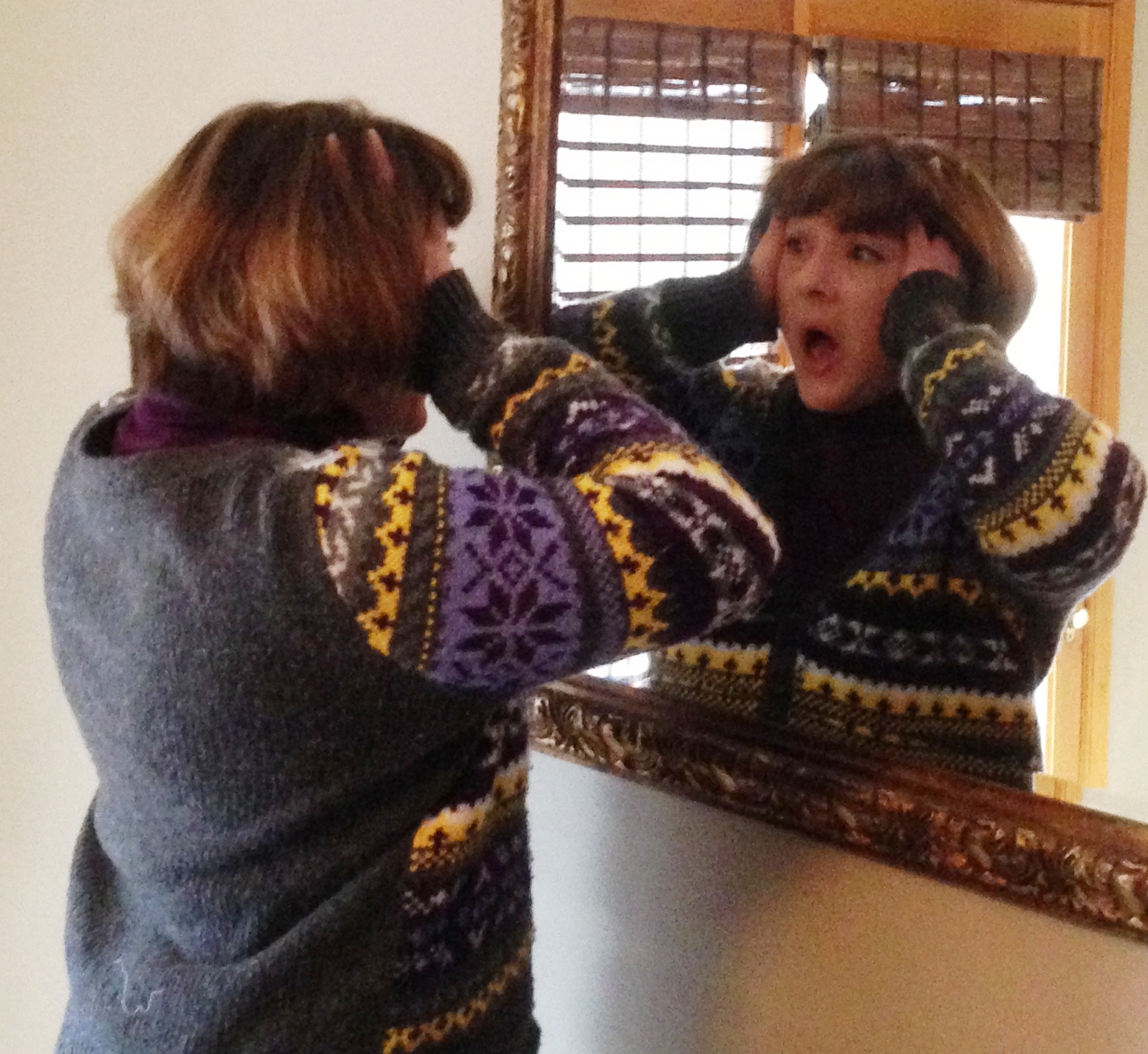
I've always been an "expressive mime" and mirror people's facial expressions!
I’ve always been an “expressive mime” and mirror people’s facial expressions!

My kids were the first to ever mention it to me. However, since that revelation a number of people have told me, “Denise? You mimic every facial expression I have!”  Some said so with exasperation, and some with amusement. My daughter, age approximately ten-years-old, interrupted herself describing something funny that happened in a class to exclaim, “Mom! You crack me up! You make the same faces I do when I talk!”

Sort of like “monkey see, monkey do” I suppose… but not because I was learning through observational learning or imitation. Instead, as a person with hearing loss, I carefully watched the facial expressions to better speech read and pick up more than I could by simply hearing pieces of words.

It’s different than being empathetic. I know because I’m one of those folks who will laugh with you and cry with you. Yup. Literal tears and equal sobs and hiccups. Don’t get me wrong! I’m sincere! I just get very emotionally involved in communicating and have been known to laugh, cry, or “blow my top” just in commiseration!

I “hear again” fairly well now. I’m bi-modal – meaning I have one cochlear implant, one hearing aid, but AIDED in both ears to better hear. Ideal environments are one-on-one in quiet places. I hear well with only some necessary clarification even in noisier environments. However, despite hearing better, I still have the habit of mirroring people’s emotions and facial expressions.

I learned ASL long before I lost my own hearing. I had some friends in college who were culturally deaf… and this motor-mouth wanted to talk to them. Most people who are late-deafened never learn ASL. (Why? They were born hearing and likely most of the people they know are verbal communicators). However, ASL is actually made up of three things: sign, facial expression, and body language.

So perhaps that is why I mirror facial expressions. More likely? My best guess is that people with hearing loss have a need to really focus, really TUNE IN when communicating. Sure, we speech read to a degree, but we watch people’s faces too. Are they smiling, scowling, surprised or crying? These facial expressions matched with what we CAN hear, help us to determine the overall content of what a person is communicating. So guess what? If you know someone with hearing loss, it can greatly benefit that person for your face to match your mouth.

Sarcasm is a Problem

How do I know this can be a problem? I have a sarcastic son. As a matter of fact, my daughter has been described as having a dry wit. My husband? KING OF SARCASM. It can be really hard to communicate if their face is saying one thing (or nothing at all…) and their mouths are saying something else. Even “hearing again” as well as I do I was taken aback by a conversation I had on the training floor at Fidos For Freedom recently.

Steve (name changed), a fellow client and new buddy of mine, came up to me in his scooter with this big signature smile on his face. “HEY! (What can I say… I’m exuberant!) How has your week been!?”

With huge smile and sporting numerous dimples he responded, “Hi, Denise. Hi Chloe. I had a really bad week!”

I paused a moment. Then a second moment went by. I was confused. In this big cavernous training room with numerous sounds competing with what was coming out of his mouth, his face did not match what I thought I heard.

“Ummmm.” (Yeah. I’m eloquent).

Thankfully, he took my pause as permission to elaborate. It only took another sentence or two for me to realize – yes. He HAD indeed had a bad week, but ever optimistic, positive-thinking young man that he is, wasn’t going to let that stop him from smiling and enjoying his training and friends at Fidos For Freedom.

Another example of mixed signals:

In class today a student rushed into class a few minutes late, causing me to skitter out of the way before I was knocked flat. Big smile on her face, she stopped with big eyes and eager expression to spout, “Crap. Crap, crap, crap. I could kill myself!”

Again, tempered with years of experience I intelligently responded…

“Ummmm.”

“We have a quiz today, don’t we? Crap! I forgot!”

Thankfully people do tend to continue, helping to CLEAR UP that initial confusion. It is a much tougher situation when you get mixed signals and then they pause waiting for a response. You know that terrifying look? Shoulders turned slightly towards you with eyebrows raised and expectant look? (When I see it the blood rushes right out of my face!) Then I have to ask for clarification, “Could you repeat that?”

Many times mirroring another’s expression can be very helpful. If they look concerned and you mirror that concern, it may clue them in you are taking something they are saying seriously – when perhaps it is NOT. I’ve had friends pat my shoulder and say, “Relax. I’m kidding”

Being willing to ask for clarification is key. People with hearing loss cannot be afraid to admit you did NOT get it. You don’t need to complain. You don’t need to “ticket” repeat offenders. No need to point and loudly exclaim, “Everyone look at this person! They are expressively dyslexic!” (Ok, yeah, I made that phrase up).

Instead, just say, “Oh wow. You know what? I didn’t hear that right because your expression doesn’t match what I thought I heard”. That’s enough! In the end… you just may assist helping others become more expressive, genuine communicators. Hey… we can dream, right?

Denise Portis

© 2013 Personal Hearing Loss Journal