Unplug…

unplug

In today’s world of media overload, with technology and electronics in every household, the word “unplug” usually means when an individual deliberately steps away from these items to recharge.

For many with chronic illness or invisible disability, to unplug might mean something different. Saturday night my small living room was seething with emotions. There were five adults, including myself, parked around a television watching the Ravens beat the Broncos. We had hoped. We had prayed. But all the experts had convinced us the Ravens didn’t stand a chance. To watch the game unfold and the Ravens take the win in double overtime, my senses were in crippling overload. Long ago I conceded using closed captions during a NFL football game. I admire and appreciate the hard work of those who work for the captioning organizations, but the captions really do interfere with watching sports as there is no “perfect” place to put the captions and not cover up a play or stats. So I was watching the game by only utilizing my cochlear implant and hearing aid.

I watched five minutes of the post-game show and quietly headed upstairs. Once in my bedroom, I flipped on the light and opened my Dry ‘n Store in one practiced motion. Off came my “ears”, off came my shoes, and I threw myself onto the bed with all the grace of a wet noodle. Chloe hopped up and snuggled close, perfectly content to escape all that testosterone downstairs. I think I laid there with my eyes closed for an hour – not napping – just coping. I needed the quiet. I love my bionic hearing, but there are times I literally suffer from sensory overload. My eyes, ears, brain, and yes VOICE were worn out. I needed to unplug.

There have been times I have pushed through that feeling of “I need to unplug” and only regretted my choice to do so. I am more prone to fall when worn out. I miss things when communicating. My speech actually deteriorates when I reach the breaking point. Hearing takes work – at least for me it does. You might not be able to tell by looking at me that I need a “senses” break because hearing loss and Meniere’s disease are both invisible. Goodwin and Morgan (2012) explain that, “many chronic illnesses have highly variable symptoms that are largely invisible to others. The symptoms can cause fatigue and pain, affect cognitive function, create sudden emotional shifts, and even impair speech (para. 6). It is in my best interest to know when I need to unplug.

I know many people with hearing loss who unplug in their own way. One bilateral friend takes long walks with just her camera. She has a real knack for connecting with nature and sharing that connection through her camera lens. I suspect it is her way of unplugging. She may have her “ears on” still, but nature’s melody is a distinctly different sound than what one hears in a crowded cafe or work environment. Another friend with bilateral cochlear implants actually takes yearly retreats. She not only unplugs, she truly isolates herself in order to fully rejuvenate and refresh her soul. Many with hearing loss, however, simply go to bed early. It doesn’t bother me at all that my family teases I’m the first one in bed every night. I require a full eight hours of sleep – hard to do in the day and age in which we live!

Use a Calendar

My calendar is very important to me. However, it is not because I forget appointments if I don’t schedule things carefully. My calendar is actually a tool I use to help me know when to unplug! By carefully tracking what I do in addition to just a normal workday, I can avoid serious physical and mental fatigue. Having Meniere’s disease means that I have to be responsible for how tired I allow myself to become. If I’m seriously fatigued and weak, I am more susceptible to falls and injury. With my doctor’s recent warning ringing in my ears about doing everything in my power to avoid anymore head injuries, I carefully plan each and every week. Many people with various disability or invisible illness must do the same. The Multiple Sclerosis Foundation Medical Advisory Board encourages us to be careful planners. “Conduct an energy audit. Ask yourself how much energy do I have? What time of day do I have the most energy? What time of day do I have the least energy? What do I want to do? What must be done? What can wait? Keep a journal and record your daily activities along with the times that you do them. This will enable you to recognize your patterns of fatigue more readily. Monitor these patterns and plan your day accordingly” (MS Foundation, 2009, para. 14).

When I see that a day is as full as I dare allow it to become, I block off any other available times. I know I will need the latitude to unplug if needed. I may even have to turn down opportunities to visit with a good friend, or going to something I would really like to do. My calendar enables me track what I know I’m capable of doing in any given day.

Using a calendar can also help people with invisible disability or chronic illness to determine what is really important. I have become an expert on running errands… making sure to do things all in the same area of town so that I do not have to make any special trips – which are time thieves. Having to do spur-of-the-moment errands may mean I do not get to do things that are really important to my mental, emotional and spiritual health. Morgenstern (2008) is adamant about controlling your schedule, and failure to do so creates a life that not only runs you ragged, but regularly throws you curve balls and prevents you from focusing on the things that matter most. For those of us who live with disability or invisible illness, this may mean we set ourselves up for injury, debilitating fatigue, mistakes, or relapse. Getting control of your schedule can only benefit you.

I hope you have learned to unplug when needed. One doesn’t need to lay in the dark, isolated from all sense-sapping triggers. You can relax on the deck with a cup of coffee. Take a bubble bath! Read a good book. Immerse yourself in a hobby. All of these things can help you unplug and recharge!

Denise Portis

© 2013 Personal Hearing Loss Journal

Goodwin, Stephanie A. and Morgan, Susanne (2012). Chronic Illness and the Academic Career. American Association of University Professors, May-June. Retrieved January 12, 2013 from http://www.aaup.org/article/chronic-illness-and-academic-career#.UPQg_mdyHTo

Morgenstern, Julie (2008). SHED your Stuff, Change Your Life. Fireside Publishers, New York.

Multiple Sclerosis Foundation (2009). Fighting Fatigue. Coping with Multiple Sclerosis, July issue. Retrieved January 14, 2013 from http://www.msfocus.org/article-details.aspx?articleID=48
Cut ‘Em Some Slack

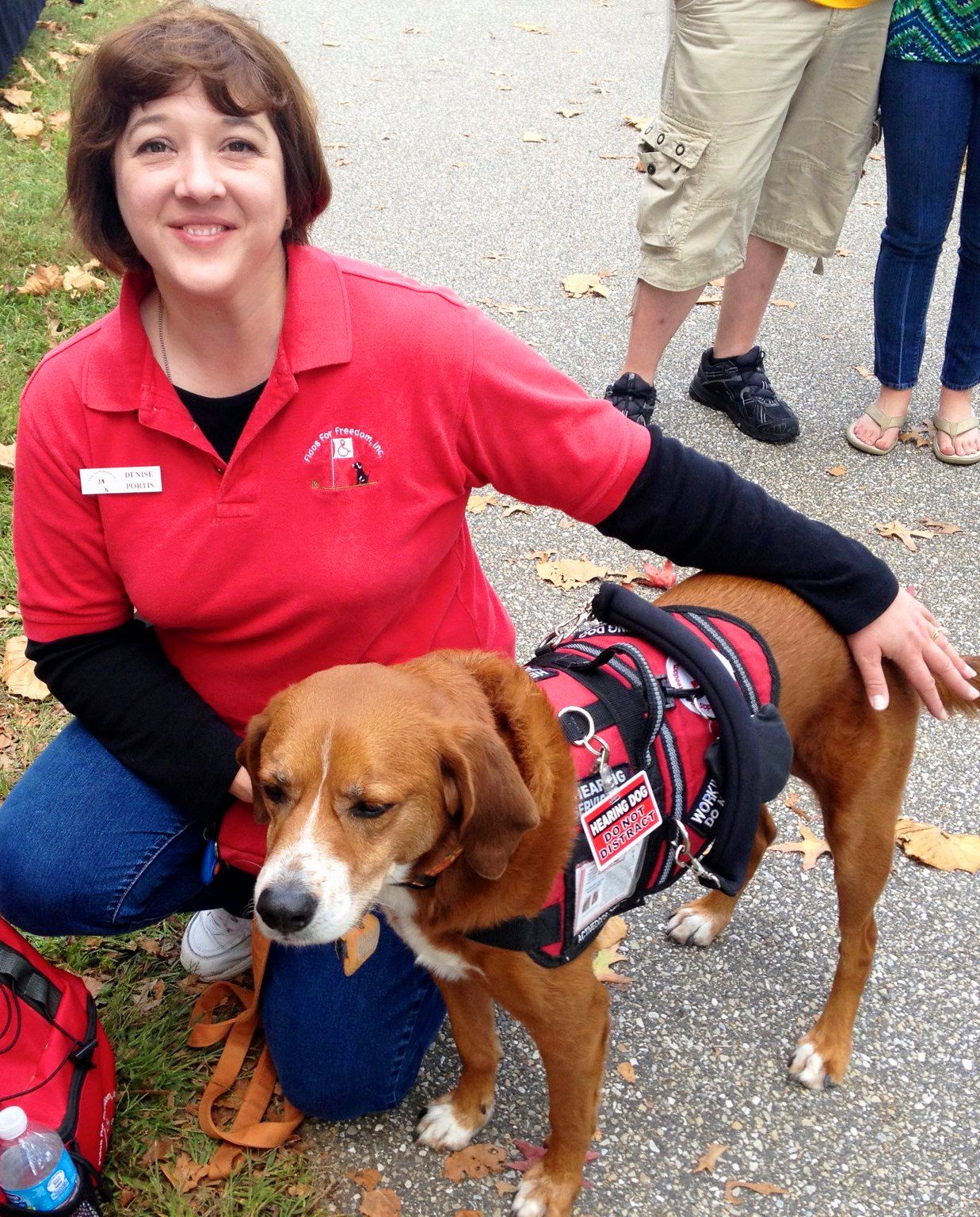
At the October 2012 Stroll 'n Roll Event
At the October 2012 Stroll ‘n Roll Event

Every once in awhile, something happens that really “jerks the rug out from under me” in regards to disability and invisible illness. Hearing Elmo, numerous support and community service groups, and strong connections with others who GET IT, usually keep me cruising along with optimism and a healthy passion for life. However, once in awhile something may happen and I ALLOW it to undermine my confidence and throw me for a loop.

About a month ago I was at church and turned to walk out of a small group study into the foyer. A person I see every single Sunday stuck out their hand and shook mine saying, “Is this your new dog?” Because I have a hearing loss, I default to a specific response when I hear something that I know cannot be right. I’m desperate to clear up what my ears MUST have misunderstood so I am eloquent in my response:

“HUH?” I asked with big eyes.

He repeated, “Is this your new service dog?”

I stammered and was able to eek out, “No, I’ve had Chloe for almost 6 years now” and walked/wobbled away as quickly as I could. I could hear him still talking and looking uncomfortable (I’m sure I looked completely shell-shocked), but I wasn’t going to stand around and “play nice” when I felt truly sucker-punched! I made my way to the car and sat waiting for my husband, trying to make sense of what I’d just heard.

Prior to this I had missed a Sunday. Chloe had been sick one weekend (something that happens as she is in contact with so many things a pet is not) and having been up all night, I skipped church with her. Had this church leader asked this because Terry probably informed him I was gone because of a sick pup and he assumed much more than what was going on? If he sees me each and every Sunday, how do you not recognize the bright, red dog who has been my partner for almost 6 years? How in the world can someone get a specially trained service dog so quickly even if you DID have to suddenly retire another dog? Did he not know it took me 15 months of training to even get matched with Chloe? You don’t slap a vest on a pet dog and call it a service dog. These dogs are tested for temperament, trained for public access, and trained to perform specific tasks. It takes years and thousands of dollars! All these questions whirled through my head.

I’ll be honest with you and admit…

I WAS MAD. After that though I was actually very hurt. A couple of weeks later I finally ‘fessed up to my husband about what happened at church. Small miracle THAT to keep it quiet from him that long – but proof positive how deeply this had affected me.

There are some real perks to being married to a psychologist. Long story – short,  after discussing all the reasons this person must have misunderstood what was going on in my life, we agreed that some people just don’t get it. This doesn’t mean they don’t CARE. They just don’t get it. My response has to be – CUT ‘EM SOME SLACK.

Even though this person is in church leadership and sees me every Sunday, to my knowledge they do not have anyone close to them who lives with disability or invisible/chronic illness. I don’t think they even own a pet dog and I’m probably the only one they know with a service dog. We don’t hang out. I don’t share my life with them. (They don’t read Hearing Elmo – smile).

You are going to have people in your life you simply must, “cut ’em some slack”. Maybe they are a co-worker that you don’t work with very often – maybe only a couple of times a month. Maybe it is a cashier at a grocery store who you occasionally see when you are in her line; or, perhaps a bank teller, physicians assistant at a doctor’s office, or UPS man ringing your doorbell.

Don’t get me wrong. I’m the first one to encourage folks to educate in a proactive and positive way, how best to communicate, or assist (if needed). However, the people you take the time to share how best to interact with you, are folks you have a more intimate relationship with and see frequently. Close co-workers, friends, parents of your KID’S friends, people you see more often and converse with a lot… these are folks you are proactive with and to whom you communicate your needs. They very likely will care enough to ask YOU how best to assist or communicate. This means there are plenty of folks you’ve left out of the loop

on purpose.

They don’t need to know the details. You may have a relationship with them, but it is not a close relationship. I, for example, do not need to let a church leader know how long it took me to get matched with Chloe, nor how often we continue to train at Fidos For Freedom to polish and perfect our skills each month. We make eye contact and smile once a week. We may shake hands one or two times a month. This person does not need to know how badly he erred, nor do I need to take him to task for being clueless about something I’ve not invited him to know about regarding ME.

There are folks at work, church, and whom I interact with often enough that they have learned how best to communicate with me. It may be a friend inviting me over to her very quiet, empty house to catch up! It may be a nurse I see often at my primary care doctor who quickly re-reads the bookmark I asked to be stapled in my chart that reminds her I need her to face me. It reminds her I have Chloe so she helps me make sure Chloe doesn’t have her paws on the scale when I’m weighed (seriously, right?). It may be the lady I see every morning walking her dog who use to act hurt when she struck up a conversation with me and I didn’t hear her at first. Now she stands nearer and faces me and we talk about the weather or our families as we “potty our dogs” before heading out! It may be the friend in small group at church who knows I’m having a really bad balance day. As I sit in the back out of the way, she stops to confirm, “So if you pass out… I keep everyone from calling 9-1-1, and just get Terry, right?” It may be the co-worker I see every day while retrieving my mail from the Arts & Sciences department. Our boxes are next to each other and it stood to reason that I explain I only need her to get my attention first before speaking…

You know who needs to have a more clear idea of “who you are”. But there are plenty of people we need to cut some slack. We just do not see them frequently enough to take the time to give them our life story (smile). You know the difference. I’m not saying it is EASY when misunderstood. I felt mad, then hurt, then filled with righteous indignation, bent on educating someone who really isn’t a part of my life. I had to let it go.

I’m learning a life worth living is all about choosing the battles and knowing when to take a stand. We learn to determine who to take to task and who to cut some slack. We never stop learning!

Denise Portis

© 2013 Personal Hearing Loss Journal


We Need Them

20121223-182709.jpg
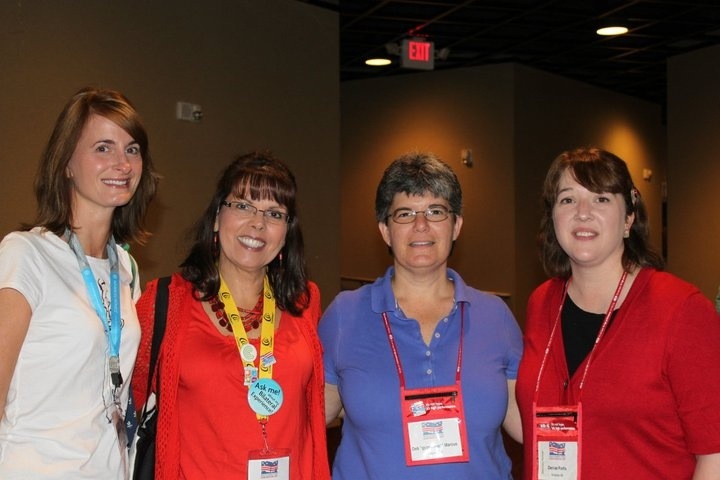
With 3 of my 4 “heartstrings”, a group of cochlear implant ladies – some who also have Meniere’s – who connected through our hearing loss.

I am visiting my parents in Florida as I write this. I haven’t seen them in over a year, so with a lot of cajoling, I talked my husband into giving up a week of his vacation time to go see his in-laws. We went to church with them Sunday morning, and I expected a “Christmas Sermon”… not that this is a bad thing. Their pastor, however, mentioned some things that I had never thought about before, and at my age I was surprised about being made to THINK about some new things regarding the Christmas story.

He read from Luke and brought up that Mary, mother of Jesus, went to stay with friend and cousin, Elizabeth. This was right after Gabriel told her, “Guess what? You will become pregnant”. In that time a 14 or 15-year-old betrothed virgin couldn’t very well go tell mom, dad, and fiancé that she was pregnant. Women were stoned for that… not that they would have ever believed her “I’m still a virgin” story anyway. So off she went to see Elizabeth. Gabriel told her that Elizabeth, too, was miraculously pregnant – simply in a different way. Elizabeth was far past child-bearing age. Her pregnancy was also a miracle. Perhaps Gabriel was giving a hint… GO SEE HER. The pastor suggested Mary NEEDED a friend and someone who would understand. God knew this. Gabriel knew this. Mary needed someone who was pregnant that shouldn’t/couldn’t be, and someone visited by an angel. She needed a friend who was going through similar challenges.

Do We Need Friends?

I have friends from my childhood. I have friends at work. I have friends at church. But do you know the friends I depend on the most are those who struggle with invisible illness or disabilities? Like Mary seeking out a friend and confidant who was also miraculously pregnant, I have sought and found friends who are “differently abled”, who face each and every day with challenges others simply do not have.

Abraham Maslow was one of the first psychologists to suggest we need relationships; we need FRIENDS. Cherry (2012) writes of Maslow’s Hierarchy of Needs, “Relationships such as friendships, romantic attachments, and families help fulfill this need for companionship and acceptance, as does involvement in social, community, or religious groups” (para. 6). Many professionals agree, we need friends.

I have friends that are different than me in personality, beliefs, politics, and culture. Despite these differences, they are my friend. When I’m having a really bad “tilt a whirl” kind of day, falling and bruising, and frankly SICK TO DEATH of having to deal with it all, these friends can sympathize. Yet, the friends I seek out to belly-ache, ask for advice, or beg for prayer even, are those who can EMPATHIZE.

“Empathy is the ability to mutually experience the thoughts, emotions, and direct experience of others. It goes beyond sympathy, which is a feeling of care and understanding for the suffering of others. Both words have similar usage but differ in their emotional meaning” (Difference and Comparison, 2012). My closest friends are those who can empathize. They “get it”.

People with invisible illness or disability often fall into a dangerous, self-imposed isolation. Rubinstein (2012) suggests that there is a difference between solitude and isolation. Solitude is healthy, something most of us do not take the time for, missing out on opportunities to meditate and re-charge. However, isolation is different. It is a negative thing… “We don’t feel better by spending time alone, or if we do, it is only that our anxiety about being around people is quelled” (Rubinstein, 2012, para. 2).

When my progressive hearing loss began to cause significant communication issues, I slowly but surely began to isolate myself. It took an “intervention” of sorts to wake me up to what I was doing. We may isolate from friends and family, all the while trying to convince ourselves that by doing so we help others as well.

“When I move to fast and pass out, it only upsets others, which isn’t fair to them.”
“I hate being trouble to anyone. Best I stay home.”
“My disability makes folks uncomfortable. I’m doing everyone a favor by not participating.”

I know some folks with logical reasons and sound argument for why they do not need friends “post-invisible illness or disability”. Have you ever thought, however, that even if you are better off you are robbing another of the gift of your own friendship? There are others dealing with invisible illness. If you do not make yourself available, you may miss opportunities to empathize and connect with others like yourself. Who better to recognize another with invisible or chronic health concerns, than someone who lives the same?

We need friends. Others need the gift of your own friendship. Make yourself available!

Denise Portis

Cherry, Kendra (2012). Hierarchy of Needs: The five levels of Maslow’s Hierarchy of Needs. Retrieved on December 23, 2012, from http://psychology.about.com/od/theoriesofpersonality/a/hierarchyneeds.htm

Difference and Comparison (2012). Empathy and sympathy. Retrieved on December 23, 2012, from http://www.diffen.com/difference/Empathy_vs_Sympathy.

Rubinstein, Noah (2012). Isolation: Issues treated in therapy. Retrieved December 24, 2012 from http://www.goodtherapy.org/therapy-for-isolation.html

Confrontation and Hearing Loss

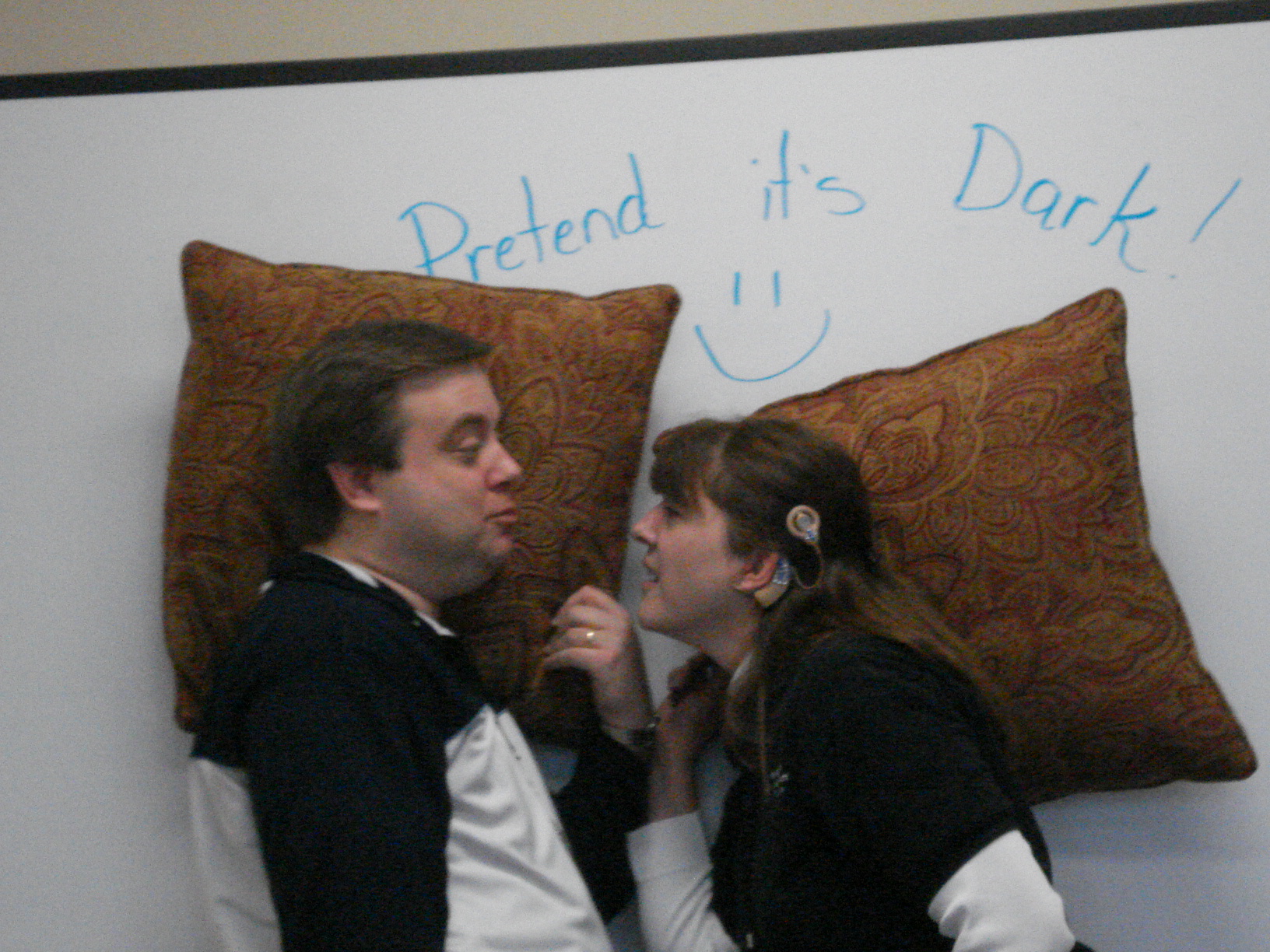
Acting out a conversation gone WRONG…

I hate debate. Perhaps it is because it is too much like arguing. When my now, 21-year-old son was still in high school, he wanted to take debate. We thought it was an excellent idea as he could argue the paint off a wall. We figured, “Why not channel that?” I was dismayed to discover it made his default to arguing even stronger! I’m just not a big fan of arguing. Now don’t get me wrong… it’s not because I do NOT argue. Heavens! My family will tell you that is not the case! What I do not care for is having to confront someone, or argue a point now that I have hearing loss.

Volume

I’ve had a hearing loss longer than I lived my life without hearing loss. Frankly? I can’t remember if I was loud prior to eventually losing my hearing. Trust me. I recall arguing growing up. I have two brothers and one sister. We argued.

Since becoming deaf, however, I was oblivious to the fact that my family would wince as I proceeded to give my point of view in the midst of an argument. I’m ashamed to admit that the first thing that clued me in to the fact that I was WAY TOO LOUD, was that I often had a sore throat after an argument! Perhaps my family members didn’t say anything to me because they figured… “She’s deaf. Of course she’s loud…”

We can learn (with practice) to lower the volume in our voices when having to confront someone, or when arguing a point. What I have found to be an occasional problem with doing this, is that the other person may lower their voice too! People often vocally mirror what they are hearing. When I’ve deliberately lowered my voice in an effort to be aware of my volume, the other person often lowers their voice as well!

I have a friend here in Maryland that I met at a hearing loss support group. She is bilaterally implanted and hears very well with her two Nucleus Freedoms. However, she was very loud when she communicated with others. I took her aside once and asked her if she realized her voice was raised. I was surprised by her answer!

“Of course I know I’m loud! It’s the only way I can get people to consistently speak up enough for ME to hear. If I talk loud, they do too!”

I secretly set out to prove her wrong, hoping to garner a little more ammunition to argue my own point of view about her volume. But do you know something? She was right! As I eavesdropped and observed some of her interactions, people would increase their volume when turning to talk to her because she was very exuberant and loud. They may have been talking to someone else right before addressing her and would be speaking in a normal tone and volume. After they turned to speak to her, their volume would dramatically increase. I had to go to her and tell her that she was right!

To offset this unfortunate conundrum, she and I set about trying to educate others around us that volume wasn’t as helpful as enunciating properly and making sure they were facing us when speaking to us. Eventually, she (and I) did learn to communicate without quite so much… VOLUME.

Proximity

I have young adult kids living at home. As long as they work, go to school, and do their fair share around the house, they actually live here free of charge. However, living with two independent thinking young adults also means that I occasionally have to confront them about something – usually about keeping up with their end of our “bargain”.

My kids have only known me as a person with hearing loss as they are only 11 months apart, and my hearing loss began after the birth of my youngest – my son. So they are very accustomed to my “getting up in their grill” when we argue about something because they know proximity helps me hear better and see better. A secondary benefit is that I’m close enough to grab, kiss, or hug them when needed to dispel some of the tension.

Other people do not really appreciate close encounters with the “deaf” kind. I’ve had confrontations with students about fulfilling their responsibilities about an assignment. I have to be careful about following my first inclination to step closer to get my point across. Professors are to maintain a professional distance for obvious reasons.

If those of us with hearing loss get into the bad habit of stepping closer to someone in an argument, things can really “heat up”. It is a natural reaction to feel defensive if someone gets up in your personal space. What was only a verbal confrontation could quickly escalate into a physical altercation. It is a natural reaction to want to “push off” someone who is WAY to close for comfort! Even if people understand you are closer because of hearing loss, they may not be able to control their feelings of unease, need to protect, or urge to step away. We should be careful about how close we get to others even when arguing.

Crying

I rarely have to confront anyone who is not an immediate family member. If I have to confront a student, friend, colleague, or acquaintance, it is done through email. This has added benefits:

1. I can think about what I want to say and edit at leisure.

2. I have a written record of what was said.

3. It allows them to respond in kind, allowing me equal access in the conversation as I can read their own response.

My family members do see the “confrontational Denise” at times. I’m mom, wife, and FEMALE. I’m a crier though! If I’m happy, I may cry. If I’m sad, I most certainly will cry. If I’m mad – yup, you guessed it. I’m prone to crying.

I have been arguing with my husband about “this or that” before and had to wave my hands and say, “Wait. WAIT! I can’t hear you anymore!”

It’s rather difficult to hear when I’m hiccuping, sniffling, blowing my nose, and flat out WAILING. Sometimes I reach up and even disconnect my cochlear implant! I sound raucous and noisy even to myself! I take a few, deep, steadying breaths, reconnect “my ears”, and continue the conversation.

If confrontation causes you to burst into tears, I definitely recommend taking a break and “getting a grip” before trying to continue the conversation. You will only miss 1/2 of what you are hearing anyway! Better to calm down and try again after you are able to communicate effectively again.

Misunderstandings

Let’s face it… when we are arguing or are having to confront someone, chances are we are not communicating well. Tensions are high, everyone is on edge, and misunderstandings are bound to happen. I’ve noticed when my husband and I are fussing (usually about those young adult kids I mentioned), I’ve noticed I have to ask for repeats much more often. He has noticed this as well. “Repeat that please?” or “Say again?” are much more frequently said when we are discussing something rather heatedly.

If nothing else provides incentive to CALM YOURSELF… do so because you will actually understand what is being said much better.

Early on in my hearing loss, I learned to repeat what I THOUGHT I heard if it sounded strange or if I realized there is NO WAY that is what the other person actually said. My husband has CRACKED UP before – mid argument – because I repeated what I thought I heard when communication broke down.

SIX TIMES, Denise… not SEXY SHINE” he’d carefully explain with a huge smile on his face.

Hey. At least the ridiculous misunderstandings serve to diffuse some of that tension!

Denise Portis

© 2012 Personal Hearing Loss Journal