Entitlement

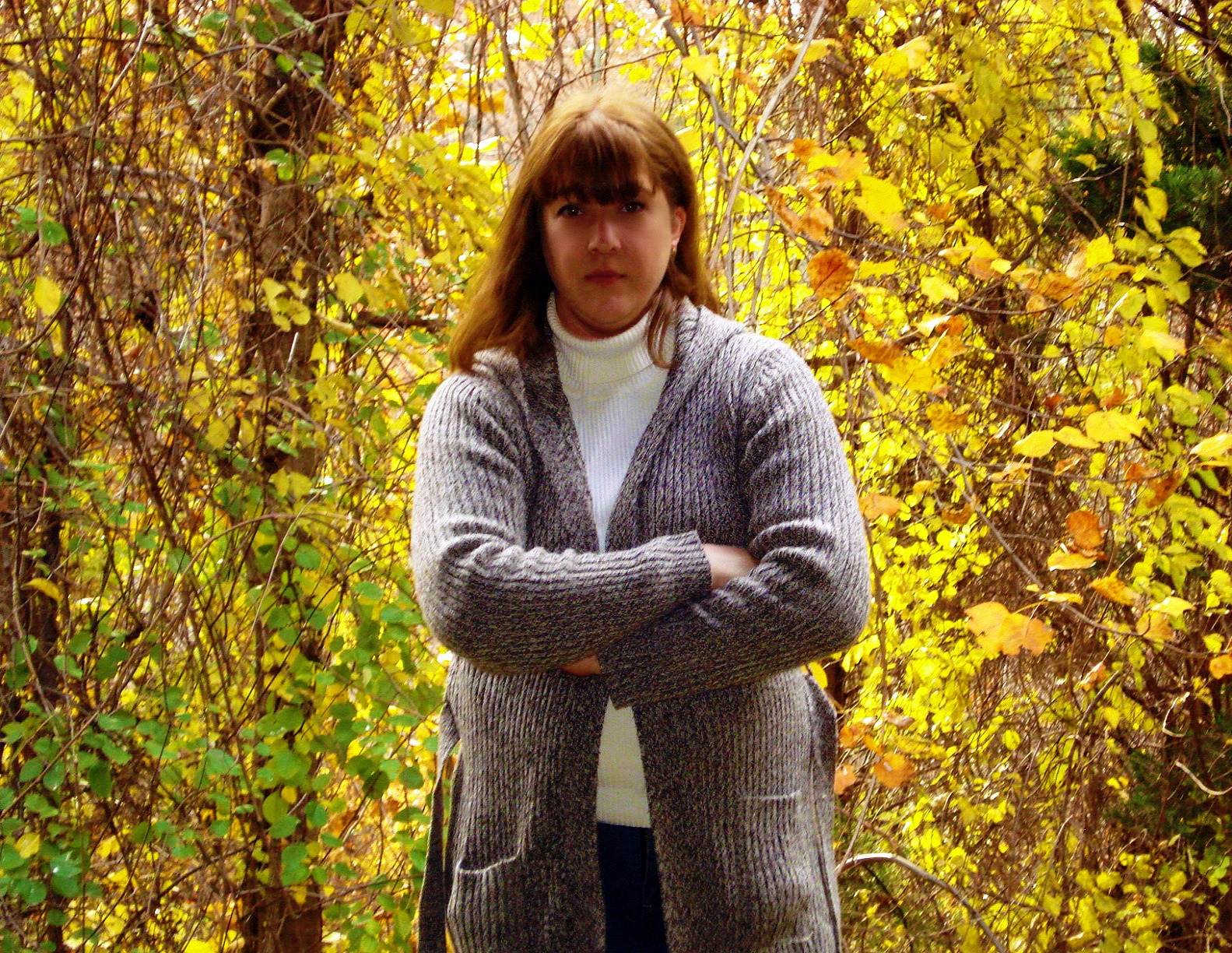
When you think of “entitlement”, do you picture someone with their arms crossed and a demanding attitude? Do you associate  negative thoughts with the word? I have heard the word “entitlement” discussed at length in various groups lately. Parents may bemoan the fact that “kids today have a sense of entitlement that promotes a feeling of justification for all they do and all they DESERVE“. My husband and I even “shake our heads” at our own kids from time to time. Don’t get me wrong… our kids are TERRIFIC. They are well-adjusted, do not use drugs or drink alcohol, their language is acceptable, they make good grades, they are responsible and willingly reach out to others. But sometimes? Sometimes they act as if they deserve certain things even before earning the right to have that luxury, trust, or understanding. Thankfully, we can simply remind them about the blessings they have and use a comparison or two between their own lives and the lives of some of their peers and they are quick to apologize for their previous attitude.

Teachers  confess that students in classrooms across the country are morphing into groups of individuals who demand respect and favors they have not earned. Elayne Clift (2011) said, “Whether it’s rude behavior, lack of intellectual rigor, or both, we are all struggling with the same frightening decline in student performance and academic standards at institutions of higher learning (para. 6)… when teachers refuse to lower standards, those students seem to resort to a new code of conduct that includes acted-out rage, lack of respect, and blame”(para. 8). From what I understand, this attitude is reaching epidemic proportions in classrooms. Thankfully, I have not experienced this in my own classrooms yet. I do, however, believe it CAN be a problem and is certainly happening in many schools. Parents and caregivers may unintentionally (or with very real intent) foster and promote this attitude in their children.

What about “Occupy… ” a city near you movement? I’ve listened to some of my peers argue that those camping out and “occupying” locations in cities across America, are individuals trying to make a point about those in power and wealth, yet harbor a sense of entitlement.

I’m not here to debate any of these issues. Instead, I wanted to point out that a sense of entitlement is alive and well in the disABILITY community. I support being a positive advocate and for educating individuals as to what their rights are under the ADA. I’m not here to debate these issues, however, and recognize that there are plenty of examples of people with disabilities being misrepresented, mistreated, and unfairly judged.

What is ENTITLEMENT?

Webster’s defines “entitlement” as:

1. a : the state or condition of being entitled : right b : a right to benefits specified especially by law or contract
2.: a government program providing benefits to members of a specified group; also : funds supporting or distributed by such a program
3.: belief that one is deserving of or entitled to certain privileges

When I first began losing my hearing at the age of 25-years-old, I knew next to nothing about hearing loss and how it can impact a life. I spent the first decade of progressive hearing loss learning about hearing loss in general. I sought support and information about how to better communicate and how to deal with the emotional consequences of an acquired disABILITY. When I developed Meniere’s disease as well, I challenged myself to learn all there is to know about a disease with no cure. As a result, I’ve learned what my own triggers are, what steps I can take to lesson the symptoms experienced, and reduce the severity of flare-ups. I’ve become an advocate for those with hearing loss… especially those who are late-deafened. I support and advocate on behalf of those who use service dogs to mitigate their disABILITY.

I’ve met PLENTY of folks who do the same. This does not mean, however, that I have not met people with hearing loss, Meniere’s disease (or other balance disorder), and people with service dogs who exhibit an attitude of entitlement. Many have taken laws that protect their rights and use them as a weapon of mass destruction. Instead of resting on the assurances these laws were meant to produce in the lives of individuals with disABILITIES, these laws are used to insist on more than what is deserved and intended. Don’t get me wrong! Companies and local and federal government should be compliant with specific criteria the ADA outlines and determines as provisions for equal access. A person with disability should be given any available means and technology at work so as to do their job in such a way they are on equal footing with another who does not have a disABILITY for promotions, raises, and opportunities. My “beef” with people with disABILITIES begins where folks insist everyone else in their life adjust their attitudes to satisfy their fragile egos.

Respect is earned…

Whether you have a disABILITY or NOT… respect is earned. We are not entitled to respect by our fellow man. Let’s face it. There are mean people out there… and mean people SUCK. But we as individuals who live with disABILITIES are going to get a whole lot further if we treat even mean people with – respect.

In the service dog industry mean people can “bring out the mean” in others. I’ve seen it happen time and again, and frankly? It’s happened to ME. Some wise-guy person in “charge” will barrel up into my personal space, put out a hand to physically stop me from entering an establishment with chest puffed out, hand on a hip and a look on their face as if to say, “over my DEAD, lifeless body“. My first reaction? “That can be arranged…

Nothing gets my back up quicker than a cocky, insolent ignoramus who chooses to invade my personal space as well! Especially since the latter may mean I over-compensate and “fall down go boom“. I know my rights. I have copies of the law. I’ve been trained (thanks to Fidos For Freedom). But I have learned that fighting “fire with fire” only leaves me with singed body parts. Sure, I may gain access, but at what cost?

One of my favorite Bible verses is Proverbs 15:1. I just love Proverbs! You could read one verse a day… strive to learn and apply something from it and be busy a very long time… or close to three years since there are 915 verses to be exact, but I digress (grin). Proverbs 15:1 (ESV) says, “A soft answer turns away wrath, but a harsh word stirs up anger.” Pardon my grammar… but AIN’T THAT THE TRUTH? Nothing takes the “wind out of the sails” of an angry store associate quicker than to be gently confronted with the truth of the law. The law is on our side, after all. Some folks are “deaf” to the truth though and because of preconceived ideas will thumb their nose at the law and insist persons with service dogs STAY OUT. Even if you need to call the police to file a report and insist on your right of entry and service, staying poised and in control should be paramount. When we lose control, it only exacerbates the situation. Worse? It sets up the next person with a service dog to encounter this same store associate with an even BIGGER chip on their shoulder.

Tired of paying the same ticket price as person’s with normal hearing at a theater, only to hear VERY LITTLE? If you want to promote open captioning or rear-window captioning… do so with a positive attitude armed with information about who uses it, what the law says, etc. Marching up to a theater manager with both guns a-blazing… accomplishes very little. When theaters do provide these services and use this available technology, be sure to thank the management. I’ve heard some HoHearies say, “why should I? Folks with normal hearing don’t have to thank the management for being able to hear a movie they paid for!” But is that the point? We are trying to raise awareness and help companies like movie theaters to provide these things so that we all benefit. (Hearing Loop.org has a great article here). We need to earn their respect. Thanking management does a number of things:

1) it reminds them who we are… real people who enjoy attending things like movies.

2) it helps them keep the numbers in perspective… many people use and enjoy captions. These “thank you’s” equal number of tickets sold and helps them remember the big picture…

3) it helps them see we ARE appreciative… not demanding snobs or spoiled people with a sense of entitlement.

A great blog post by Shanna Bartlett Groves on this issue can be viewed here and here.

Are you trying to get your church on board with providing an induction loop for people who use hearing aids and cochlear implants? Is the task difficult because there are not very many this would effect… or perhaps there is ONLY you? You will have an attentive audience and lay the groundwork for actually achieving this freedom to hear in church if you handle it the right way. Do not march up to the deacon board with a self-righteous sense of entitlement. Should they care that ALL may hear and participate in church? Well duh – of course they should! But we need to ask in the right way… with the right attitude. Non-profits have more freedom to say “no”. However, we can help them understand what this may mean for those who utilize t-coils in a way that our churches are eager to spend that little bit of money necessary to put in a virtually hassle-free technology that allows us to hear. If you hurl accusations about their lack of “Christian love” and belittle and chastise them… you will only insure they begin to believe that people with disabilities are demanding folks with a sense of entitlement. You may even need to show them how much you care about this issue. Offer to head up fund-raising for this technology. For many smaller churches, funds may be very limited in what they can provide even if they WANT to do so. (Hearing Loop.org addresses this issue here). I have a friend in another part of the country that finally talked her church into purchasing an induction loop system. She then went straight to the local newspapers and pushed for a story to be done on what this small church was doing to provide equal access for those with hearing loss. Her church ended up getting a great deal of positive publicity… reminding all in the community what churches are suppose to be doing in the first place. (A great blog post by fellow HoHearie, Shanna Bartlett Groves can be viewed here).

Yes. I think knowing our rights and standing up for equality is important. It is the “how” that concerns me. Heaven forbid that the way I handle something negatively influence the NEXT person who has a specific life challenge! We influence the thinking of those in the general public as well…

Several weeks ago I was at Costco picking up bulk items that we insist on purchasing in case the world should end. The carts there are ginormous (hey… it’s a word!), if only to hold the huge packages of paper towels, toilet paper, and bottled water we purchase to save a little money. In the pharmacy section I was busy searching for generic antihistamine. An older couple noticed me, first by spotting Chloe and then by noticing the cochlear implant (after reading her vest). They sidled closer with genuine interest on their faces. The lady said, “That’s one of those bionic things that people use to hear better with, right?

Yes,” I replied with no small amusement. Noticing the hearing aids in the ears of the gentleman I added, “I have no regrets about getting one either!” I had to repeat this actually, for he didn’t hear me very well the first time! I started to share a little information about my own hearing loss when the man piped up and said, “Well if God wanted me to hear better than I do now, He wouldn’t have allowed me to lose my hearing.

Now I could have gotten all feisty about someone questioning my own acceptance of what God has allowed in my life. I felt a little “twinge” even – to set this man straight. But I knew this would help very little where as a gentle response would accomplish much more in the long run. “Really? I look at my cochlear implant as using technology available that HE allowed as a blessing in this day and age in which we live!” The man looked confused as he had not heard me very well, but the woman said, “Honey never mind him. He can’t HEAR. You hear so much better than he does! Where did you get your implant?” … and with that I had the opportunity to plant a seed of hope and to share information that may one day provide better hearing for this (ornery) man. It is, after all, all in the attitude!

What is your attitude as a person with disABILITY? Do you at times behave as if you are entitled? Learn to gauge the reactions of those around you as you share what could be done to help you communicate more effectively. Ask for evaluations of how you handle these situations from people who are close to you. Respect is earned. May I never behave or respond in such a way that another person with disABILITY is judged at the onset to be a person with a sense of entitlement.

Denise Portis

© 2011 Personal Hearing Loss Journal

Clift, E. (March 27, 2011). From Students, a Misplaced Sense of Entitlement. The Chronicle of Higher Education. Retrieved November 14, 2011, from http://chronicle.com/article/Students-Should-Check-Their/126890/

My Clipboard

Vivid Acoustics

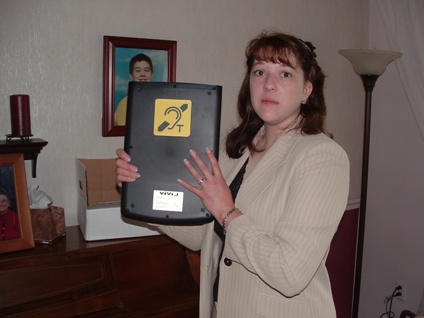
Can I just say that I LOVE, LOOOOOOOOOOOve, this product? I got mine for Mother’s Day in 2006 and I have used this thing to death! Because I do not have to attach anything to the boot of my CI (like a lapel mic, etc), AND because I don’t have to wear a neck loop, I have found the ease of this portable device is 2nd to none. I simply press a button and wa-lah! (hey… it’s a word! Look it up!) I have an immediate 5 foot radius induction loop around me. The clipboard allows me to take notes and to jot down reminders as I’m talking to students or “others”. The back of the clipboard has a “can’t miss” symbol that reminds everyone that they do need to speak “towards me”.
I don’t usually brag on one particular product, but this is one that should anything ever happen to it? I’d purchase one again the very next day. It is simply a “must have” for me! 🙂

You can visit Vivid Acoustics at:  http://www.vivid-acoustics.com/portable.html

Denise Portis

© 2011 Personal Hearing Loss Journal

Imagine!

Emmanuel Kelly The X Factor 2011 Auditions.

Click on above link for short performance!

I’m not a huge YouTube fan, because captions on music and video are not “perfect”. It’s better than it use to be, but it isn’t good enough that I could say I really enjoy it.

However, this past year I discovered “The X Factor”. It is now in the U.S. and the FOX network is underway on season one. I still like watching the shows in other countries as well. I came across this very special one this past week.

I was so impressed with Emmanuel Kelly’s performance. I think he and his brother’s adoption story and courage can teach so much. Bravery, courage, and “spunk” are not narrowly defined by a body that wields these attributes. Imagine what our world would be like if everyone saw with filtered eyes what Emmanuel’s mother did. Imagine what it would be like if everyone had someone in their corner during developmental years to mold and shape phenomenal human beings. Imagine if every individual with bodies that are broken, damaged, disABLED, or diseased learned to refine and use their gifts.

Learning to live with an acquired disability can be hard. There are always harsh lessons. Yet… acquired disability is not the end of life. We all have talents, skills, and gifts that are not affected by any changes you may find that define “the new me”. Sure… you may lose a few opportunities. I use to sing in choirs. (SMILE). Yet, I still choose to discover, refine, and eventually use the gifts that I DO have. You can do the same. May we all learn to look past first impressions and appearances… learning to IMAGINE.

Imagine there’s no Heaven
It’s easy if you try
No hell below us
Above us only sky
Imagine all the people
Living for today

Imagine there’s no countries
It isn’t hard to do
Nothing to kill or die for
And no religion too
Imagine all the people
Living life in peace

You may say that I’m a dreamer
But I’m not the only one
I hope someday you’ll join us
And the world will be as one

Imagine no possessions
I wonder if you can
No need for greed or hunger
A brotherhood of man
Imagine all the people
Sharing all the world

You may say that I’m a dreamer
But I’m not the only one
I hope someday you’ll join us
And the world will live as one

Denise Portis

© 2011 Personal Hearing Loss Journal

I Have Meniere’s Disease – Harsh Reminder

I have Meniere’s Disease. It is easy for folks to forget that as the disease is “invisible”. Amazingly, I sometimes forget I have it myself. So that is just embarrassing! GRIN. Meniere’s disease manifests itself in individuals in a variety of ways. The disease lacks specific symptoms and triggers that are true of everyone. The disease varies person to person. For myself, the weather tends to be a very specific trigger for me. If pressure systems come into the area that include heavy rains or even high humidity, I know that I will have a “bad balance day”. If that day is simply the beginning of a string of similar weather days, I can be so off-balance by day 3 or 4, that I practically have to CRAWL up and down steps. It’s rather embarrassing to crawl when you are 45 – believe me!

Here in Maryland, we have had a significant amount of sunny, low-humidity days. As a result, my balance has been pretty good. Yesterday, I did laundry and actually jogged up and down the steps WITH a laundry basket. Yet I forget sometimes that in spite of my having few visible symptoms, I still HAVE Meniere’s disease even on bright sunny days.

Chloe does a number of things for me, only some of which are hearing alerts (what she was originally trained for at Fidos For Freedom). Chloe has also been trained to help me with a number of “balance assist” tasks which are very helpful on days I am experiencing Meniere’s disease symptoms. As a matter of fact, there are weeks that Chloe actually does more balance work for me than she does hearing alerts. One thing we have taught her to do is to “roll” her own blanket. I carry a blanket that is HERS. The blanket goes to every place I teach. It smells like her and she knows it is her “safe place” to be unless I ask her to do something for me. I usually put it out of the way in the classroom, but where she can easily see me. The blanket and Chloe are usually within 4-5 feet of me at all times. Below is a video of Chloe “rolling” her blanket — she adjusts the carpet square to be high enough that I can easily reach it without having to bend past my limitations.

Harsh Reminders

I get aggravated at family and close friends sometimes when they make suggestions for me to do something or try something that they KNOW I cannot do. It’s easy to forget certain things I cannot do because I don’t walk around with a sign on my shirt that says, “Beware of fall when bending!” You know what? Sometimes the person who forgets what I can and cannot do is – ME. You’d think I’d always be aware of the fact that I cannot bend to get something off the floor without paying the price. For me… bending far enough to retrieve something off the floor means that I lose consciousness for just a few seconds. Everything goes “black” in my vision, and my “hearing” (even with a cochlear implant) turns off. As soon as I stand back up, everything snaps back into focus. If I bend quickly, (for example to try and catch something as it is falling), I usually “join” the item on the floor… only I am sprawled out looking ungainly and mystified as to how I got there.

We’ve had beautiful weather here in Maryland lately. I need to remind myself on days like these that I still HAVE Meniere’s disease. In class this morning, I began gathering my things up to pack into my bag and exit the room. I dropped my roll sheet, so Chloe went over to pick it up and bring it to me (an automatic retrieve). As I was standing next to her pink blanket, I decided to save myself time and reached down to pick up her blanket. I lost my balance and my forehead crashed into the podium. After connecting with a wicked CRACK, the impact popped me back on my caboose. Thankfully, I didn’t lose consciousness. Chloe trotted over to me with the roll sheet and dropped it into my lap. She wagged her tail at me, nose 3 inches from my face.

“Hey Denise! Umm… why are you on the floor?” (Yup. I can read my assistance dog’s mind. Scary, huh?)

“Guess I should have had you roll your blanket, huh Chloe?”

Upon hearing “roll blanket”, she calmly rolled the end of the blanket and then tugged it over closer to where I sat.

I heard a student over my shoulder ask, “Ummm. Mrs. Portis? Are you OK? Was that your HEAD?”

I tried to chirp out in a manner that was convincing, “Oh sure! I’m fine, no problem!”

As I used Chloe in a stand/stay to get off the floor… I thought to myself one word – over and over again.

stupid

Stupid

STUPID!

Harsh reminders are needed from time to time, if not for any other reason than to remind us of the consequences of forgetting our own limitations.

We need to remember our own limitations. As a person with hearing loss, it helps me to remember that I cannot hear well in really noisy, crowded areas. If I need to have a conversation with someone, it is better to ask them to step over to the side out of the “hub-bub” of noise if I need to talk to them. Failure to acknowledge what I cannot do well (hearing in noise) only results in that I will be frustrated and angry at my inability to understand the conversation. If I want to play with my dogs, I need to remember to sit on the floor in order to tug on toys, throw balls, and squeak stuffed animals at them. If I try to “play” standing, I am sure to take an unplanned nosedive.

Have you had some harsh reminders about your own invisible illness or disability? Some lessons are hard to learn!

Denise Portis

© 2011 Personal Hearing Loss Journal

Untreated Hearing Loss

An initiative by Phonak – http://www.hear-the-world.com/

I just loved the movie UP! Not just because it had main characters that were dogs – and ones that could talk at that! Carl, a 70’s something animated actor sported hearing aids and spunk. Mostly the latter…

I recently ran into a 70’s something gentleman at the gas pump. I was leaning against the car waiting for my tank to fill, trying desperately to avoid looking at the high numbers scrolling across the screen as my 12 gallon tank drained my bank account. It was a pretty fall day, so I had the car windows down and was talking to Chloe. She could really care less about the price of unleaded, but she does like to flirt with other people nearby. I caught sight of a low tire, and changed positions so as to look at it better. This gentleman caught my eye and said, “I noticed that too… you need air in that tire”.

With some apprehension I looked around the station and could not see an air pump. I responded, “Oh dear, I don’t see an air pump!”

The gentleman cupped his ear and said, “teardrops and dare what?”

I think my eyes popped wide. Another person with hearing loss! I just beamed at him and turned to face him while repeating, “I don’t see an air pump, do you?”

He dropped his cupped hand and turned in a circle looking around the islands of pumps at the station. “Nope! I don’t see one either. You may have to go to another station and get some air in that tire!”

I pointed to my head and said, “I have a hearing loss too…”

He looked at me quizzically and moved to see the side of my head. “Oh! I thought that was one of those new-fangled gadgets people use to talk into. Is that a hearing aid?”

I beamed again, always excited to share and said, “No. It’s a cochlear implant.” I pointed to my other ear,… “but I have a hearing aid in this ear even though it doesn’t do me much good”.

He shook his head sadly and said, “Yes, I tried them for awhile but all I got was squeals and whistles. I never could hear better.”

Pointing to my CI again I said, “You should go to your audiologist and get evaluated for a cochlear implant. I hear much better than I ever did with just a hearing aid.”

He moved closer to me, still occasionally cupping his ear. I couldn’t tell if he was understanding all I was saying, so I really concentrated on speaking at a moderate pace and clearly. At least as clear as a pronounced southern accent would let me.

He stood within a yard from me and looked longingly at my CI. “If I were young again, I’d get that surgery!”

I put my hand on his arm and said, “Oh! You shouldn’t let age stand in your way. I know plenty of folks who are older who get the CI. They do very well!”

“No… no. I’m too old. It’s too late for me”, he said sadly. His eyes glistened and his chin dropped. It was all I could do not to throw my arms around him and hug him tight. Demonstrations of physical affection and empathetic squeezes were not likely to be accepted by a total stranger. So I restrained my impulses and instead said clearly, “You should think about that some more. It’s the quality of life that matters.”

My tank was full, as was his and cars were in line. I gave him my card and told him to email me. I hope he does.

Untreated Hearing Loss

Untreated hearing loss may result in depression, anxiety, little to no social activity, and insecurity (cited by Zounds). Helen Keller, who was both blind and deaf, said that deafness cuts one off from people, whereas blindness cuts one off from things. Even those who have received treatment for hearing loss may experience some of these same results, but in different degrees.

I recently went to a small group Bible study and had trouble hearing when I first came in since everyone was talking at the same time. Someone addressed me and I didn’t hear them. They ended up reacting negatively to that and I sat in shock at having been misunderstood and unfairly judged – and “I’m a veteran!” I thought to myself. But I think as a result of taking concrete steps towards hearing better, those of us who have made an effort to communicate with assistive listening devices and technology have also developed coping skills towards dealing with bouts of depression, anxiety, and insecurities. We have very likely also made great strides in being more socially active. In my case, having a negative experience at least meant I could email my peers and belly-ache about it and get some great advice!

But what if your hearing loss is untreated? If your hearing loss began as an adult, do you remember those early days of not hearing well? I sure do. I can tell you they aren’t GOOD memories either. Slowly, but surely I dropped out of nearly everything. When Terry and I first got married we vowed to continue to date. So even after the kids were born, we’d swap baby-sitting favors and go out on dates. After I began losing my hearing (when our 2nd child was born), those dates dwindled away and eventually stopped. I’d have hubby “order in” so that I could eat something I didn’t have to fix but would not have to face the noise of a restaurant. Now that I have a CI, I’m enjoying dining out again.

If you are still a working adult when hearing loss occurs, it can greatly impact your ability to do your job. You can only “fake it” so long. Hearing loss can be treated discreetly and privately. I have met some people at work, church, or in public who I didn’t realize had a hearing loss until they noticed my own “bling” (or hearing assistance dog) and mentioned it to me. For many, disclosing hearing loss is a choice you can make, whether you are at work or another place you often hang out (ballgames, church, community events, etc).

If you know of someone who may have a hearing loss, you may discover they can be stubborn about agreeing to go get evaluated by an audiologist. Encourage them to do so! Many times audiologists will do a hearing test for free. Even if you do not yet need a hearing aid or other technology in order to maximize hearing, it is good to get a baseline audiogram to chart where your hearing is “going”. Not all types of hearing loss are progressive – but then again there are many that ARE. Having a real way to chart what is happening to your hearing is important.

We use to get our hearing checked regularly in school. Because of budget cuts few schools do hearing tests anymore. Parents should be diligent about periodic hearing tests for their children. Especially those who had tubes put in when young, or suffered from numerous ear infections. If hearing loss runs in the family, it is even more important to religiously set up audiograms for members of the family.

Don’t Chalk it Up to “Age”

I have heard many say that they expected some hearing loss when they reached their late 60’s or 70’s. Age-related hearing loss is not uncommon. However, many choose not to do anything about it. Hearing aids have “come a long way baby”. They come in all sizes, shapes, and COLORS. (Yeah, of course I would mention THAT!) They can be worn discreetly or worn all “be-dazzled”. You may find that you hear fine in “most” situations, but perhaps you have trouble understanding and hearing in noisy places. Hearing aids are also able to isolate voices close and zero in on direction of the listener. You’ll never know what is available until you go see an audiologist and talk to them about your options!

If you tried hearing aids and hated them, but know your hearing loss has worsened – please don’t discount cochlear implants without sitting down and talking to recipients. All three cochlear implant manufacturers have message boards and forums in which you can ask questions and discover answers from actual cochlear implant recipients. Age doesn’t matter either – the oldest person I personally knew who was implanted was 87-years-old. I have read stories of others who are even older. A person does need to be healthy enough to undergo outpatient surgery and anesthesia, but age doesn’t disqualify anyone!

The American Academy of Audiology reported the findings of a study done by the National Council on the Aging. Over 2,300 individuals participated in the study, and 2,090 hearing family members were also surveyed. The results of the study can be viewed here. The study noted that, “Hearing loss is one of the most prevalent chronic conditions in the United States, affecting more than nine million Americans over the age of 65 and 10 million Americans age 45 to 64. But about three out of five older Americans with hearing loss and six out of seven middle-aged Americans with hearing loss do not use hearing aids”.

If you or someone you know has a hearing loss, go get an audiogram and information about your hearing loss. What have you got to lose?

Denise Portis

© 2011 Personal Hearing Loss Journal

Reflections on National Invisible Illness Awareness Week

According to the Invisible Illness Awareness website, the following statistics are true:

  • Over 100 million people in the U.S. have a chronic illness;
  • 20.6 percent of the population, about 54 million people, have some level of disability;
  • 9.9 percent or 26 million people had a severe disability
  • 1.8 million used a wheelchair
  • 5.2 million used a cane, crutches, or a walker
  • So that is less than 6% who have a visible illness.
  • There are many illnesses that start out being invisible and as the disease progresses it becomes more visible.

Also note that:

  • 26 million persons were considered to have a severe disability;
  • yet, only 7 million persons used a visible device for mobility.
  • Thus, 19 million of the people who were defined as severely disabled, did not use a wheelchair, cane, crutches or walkers.
  • In other words, 73% of Americans with severe disabilities do not use such devices.
  • Therefore, a disability cannot be determined solely on whether or not a person uses visible assistive equipment.

U.S. Department of Commerce (1994). Bureau of the Census, Statistical Brief: Americans With Disabilities. (Publication SB/94-1).U.S. Department of Commerce (1997). Bureau of the Census, Census Brief: Disabilities Affect One-Fifth of All Americans. (Publication CENBR/97-5).

Why Do I “Plug” Invisible Illness Awareness Week?

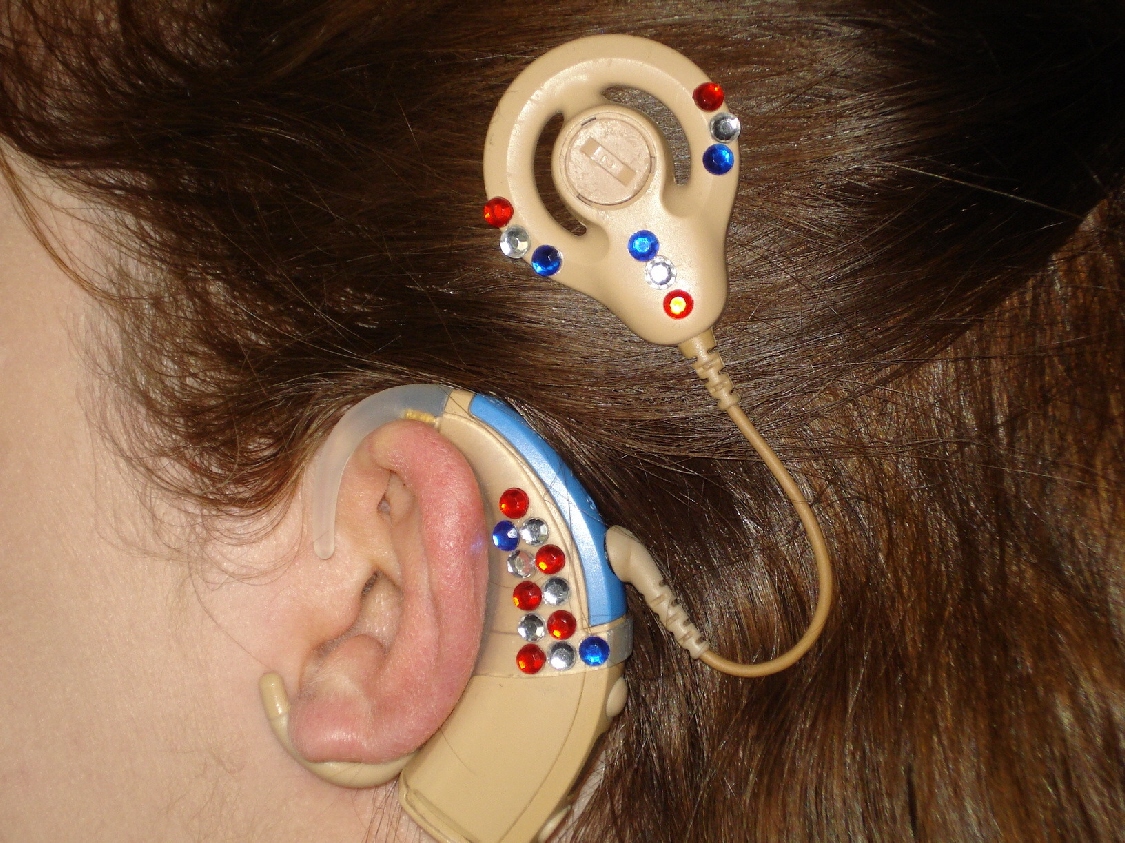
I have been trying to raise awareness about this week for three years now. This year, a friend noticed my “don’t miss” posting on Facebook and couldn’t resist teasing me about it. After all, I don’t exactly allow my challenges to be INVISIBLE. I wear a bright red ear mold on the hearing aid in my “deaf” ear. I wear sparkly “bling” on the cochlear implant on my “hearing again” ear. I go about my life accompanied by a hearing assistance/balance assist dog 24/7. I learned long ago that it was in my best interests to make an invisible disability – VISIBLE. It kept me from being knocked out of the way, and helped people realize that something about me is different. I can still work, shop, go to movies, hike, and dance… yeah. OK, maybe not that last part…

I just don’t hear well… especially in big, cavernous places, or busy, buzzing atmospheres. Once you get my attention and I know you are talking to me, I can actually hear you great! I may have to ask for a very occasional repeat, but for the most part I do really well. I’m proud of how far I’ve come in my hearing. Despite all my visible reminders and “kissing sidekick”, Chloe, people who know me well (friends, co-workers, and family members) will forget that I may have trouble if you don’t get my attention first and that I can’t move FASTever. Heck… sometimes even *I* forget that I cannot move fast. Nothing reminds me quicker than when I

fall

down

and

go

BOOM!

Through the years I’ve been able to meet some wonderful people. Some examples include:

1) Folks through the training center at Fidos For Freedom.

2) People at Hearing Loss Association of America conventions or conferences

3) “Hearing Again” recipients at Cochlear America conferences

4) Individuals in support groups for tinnitus, Meniere’s disease, hearing loss, and assistance dogs users (both face-to-face and in virtual environments online).

Not every disability can be made visible. Not every person chooses to even try and make something invisible – visible. They have their reasons and it is an individual’s choice how they want to disclose or keep hidden any disabilities they may have. It could influence their work environment, relationships, and even self-esteem. I choose to support ALL individuals who live with chronic illness, invisible illness, or disability. Recognizing these illnesses once a year in a push for national awareness, I hope will eventually dispel erroneous ideas and information about these very populations. This is one of the reasons I “blog”, and invite guest authors to write for “Hearing Elmo” as well. Raising awareness makes a difference… one person at a time.

I read some incredible stories of courage, faith, and perseverance this week at the national website for invisible illnesses. You can check out some of them here. I’m proud to be a part of a community of people who choose to live a victorious life  – “in spite of”.

Take some time this week if you can to recognize the courageous people that you know who live with invisible illness and the choices they have made in order to live life to its fullest!

Denise Portis

© Personal Hearing Loss Journal

10 Year Anniversary of 9-11

Patriotic Cochlear Implant "Bling"

It is hard to believe we’ve seen the 10 Year Anniversary of “9-11” come and go already. It really put it into perspective for me when my 21-year-old daughter relayed an amusing anecdote to me. She had gone to Union Station to pick up “the boyfriend“. They walked around a bit before getting on the METRO and she spied a police car outside with “9-1-1” on the side. Because of the anniversary of 9-11, and a result of what I think those numbers MEAN to someone of her generation, she pointed at the car and said, “Oh look! I guess that is on there to commemorate the 10 year anniversary!”  I think “the boyfriend” was hard pressed not to laugh.

Hers is a generation that grew up without William Shatner and his “Rescue: 9-1-1” television show. Although 9-1-1 was covered in school, for her it left a permanent link to a different meaning other than how to call in the event of an emergency. For her, those 3 numbers meant something far different. She was old enough to understand that the world had changed for those here in the U.S.A., but young enough to experience different kinds of fear, anxiety, and apprehension experienced by parents and their peers.

On 9-11 I was “only” hard-of-hearing at the time. The progressive loss and downward spiral of my own hearing had not left its life-changing mark as yet. However, even with my first hearing aid, I still relied on closed captioning. I think if I had to put my finger on ONE memory of 9-11, it would be being afraid and confused about what was happening because those professionals who did closed captioning were FREAKING OUT. At times, the closed captioning was just gibberish, and there was a great deal more of instantaneous corrections being made for “Live” television. When the first tower came down I remember sitting – quicklySTUNNED.

Ten years later I am a different person. Hopefully, all of us can say we are “different” after a decade of life. Our goal should be to mature, learn, and even blossom. I am completely deaf now, but “hear again” through cochlear implant technology. Who I count as friends are peers who also live with hearing loss, live with invisible disability/illness, or work with those populations. Sometimes we live victoriously and sometimes there are setbacks. I have found a “community”, however, and they have become family and friends to me. I watched a number of specials about 9-11 and still used closed captioning. However, it was with some confidence that I also HEARD the commentary and watched the speeches at various memorials. I am grateful for my cochlear implant and for the privilege of living in America.

We will never forget…

Denise Portis

© 2011 Personal Hearing Loss Journal

30 Things

From Invisible Illness Week

30 Things About My Invisible Illness You May Not Know:

1. The illness I live with is:

Invisible if I want it to be, but I wear bling and use a service dog so that it is not.
2. I was diagnosed with it in the year:

1993
3. But I had symptoms since:
I was 6 years old after a car accident.

4. The biggest adjustment I’ve had to make is:
Learning to hear with a cochlear implant and learning how to adjust on days my Meniere’s disease symptoms have me wobbling around with poor balance.

5. Most people assume:
My cochlear implant has “fixed me”.

6. The hardest part about mornings are:
Not being able to hit “snooze” on my alarm clock since that happens to be my service dog, Chloe. When the alarm goes off, she kisses me awake and there is no going back to sleep. The dog is definitely a “morning dog”.

7. My favorite medical TV show is:
Not really a medical show but I do like Dr. Phil. He’s a “reality therapist” and I think everyone who has an invisible illness needs to have a healthy dose of reality!

8. A gadget I couldn’t live without is:
FM Clipboard for classes.

9. The hardest part about nights are:
Trying to ignore the tinnitus that comes roaring into play after removing my cochlear implant.

10. Each day I take __ pills & vitamins. (No comments, please)
1 prescription (blood pressure) and 9 different vitamins – one of which is Manganese. Studies have shown that people with Meniere’s disease may have a Manganese deficiency.

11. Regarding alternative treatments I:
Have tried numerous ones including acupuncture, chiropractor, and vitamins.

12. If I had to choose between an invisible illness or visible I would choose:
Visible – no question. This is why I try to make my invisible illness – VISIBLE.

13. Regarding working and career:
I am proud that I am able to work having made a number of adjustments and having chosen to be partnered with an assistance dog.

14. People would be surprised to know:
That I dread group activities because I don’t hear as well as they think I do.

15. The hardest thing to accept about my new reality has been:
That I must sometimes choose not to do things I once enjoyed because of my symptoms. For example: If there is a movie I wanted to see that is coming out, but the weather is bad and my Meniere’s disease has flared up, I cannot go and have to put it off.

16. Something I never thought I could do with my illness that I did was:
Go back to school and finish my MS.

17. The commercials about my illness:
There are none. I’ve never seen a late-deafened/cochlear implant commercial, nor a commercial about Meniere’s disease.

18. Something I really miss doing since I was diagnosed is:
Listening to music.

19. It was really hard to have to give up:
Friends who couldn’t cope with the new me accompanied by a service dog.

20. A new hobby I have taken up since my diagnosis is:
Blogging/writing

21. If I could have one day of feeling normal again I would:
Go to an amusement park and ride every roller coaster there!

22. My illness has taught me:
That the disability community is live and well and fully utilize the Internet to connect, support, share information and to be proactive.

23. Want to know a secret? One thing people say that gets under my skin is:
“Nevermind”. If you aren’t willing to repeat it for someone who hears differently are you not behaving as if it doesn’t matter to THEM?

24. But I love it when people:
Include me.

25. My favorite motto, scripture, quote that gets me through tough times is:
Helen Keller:  “Blindness separates us from things but deafness separates us from people. “

26. When someone is diagnosed I’d like to tell them:
Email me. Ask questions. I want to help!

27. Something that has surprised me about living with an illness is:
How family members who once knew you “when” are not willing to learn about the new you.

28. The nicest thing someone did for me when I wasn’t feeling well was:
Email me and ask how I was doing.

29. I’m involved with Invisible Illness Week because:
Many illnesses and disabilities are invisible. I want to raise awareness.

30. The fact that you read this list makes me feel:

Appreciative that you care enough to learn more!

Denise Portis

© 2011 Personal Hearing Loss Journal

“It’s Just Lack of Sleep…”


When I was in college I adopted horrendous study habits that included “all nighters” and cramming. I also began to nap. I needed them. Between work study at the campus library and going to school full-time, naps were a coveted, hard-earned prize. I felt better after a nap. I could think better, got along better with my roommates, and could better survive the next long night of studying.

My children are 11 months a part. (No… it was not planned that way!) I did various “odd jobs” throughout their childhood so that I could stay home with them when they were babies, toddlers, and pre-schoolers. Thankfully, this meant I could nap at the same time they did. Let me tell you nap time may have been a thing of dread for a precocious three-year-old, but they were a luxury I enjoyed! I used a baby monitor even after my kids were not babies so that I could sleep with my good ear on it in order to make sure they stayed in their beds for their naps.

Darn it. My kids grew up and my part-time jobs began insuring I would no longer have a nap. I miss them still. I may not get a nap anymore, but I do make it a priority to get a good night’s rest. There is no magic number for hours of sleep necessary for an adult to function optimally. According to the National Sleep Foundation, sleep needs are individual; however, experts agree that healthy adults need 7 to 8 hours every night without risking accumulation of sleep debt (National Sleep Foundation, 2010). You may be slack-jawed having just read that. What adult consistently gets 7-8 hours of sleep every night? Few do.

According to the 2008 Morbidity and Mortality Report, 29% of all American adults report sleeping less than seven hours a night habitually. The report clearly stated that, “The importance of chronic sleep insufficiency is under-recognized as a public health problem, despite being associated with numerous physical and mental health problems, injury, loss of productivity, and mortality” (MMWR, 2008, p. 1175). So if we know we need more sleep, but don’t make it a priority… what is really at risk? Actually… a lot. Depression, heart disease, injury at work or when driving, and risk of DEATH may result from habitually losing sleep.

Factor in Invisible Illness or Disability

Let’s say you have an invisible illness or disability. You may argue (albeit weakly) that you get as much rest as other adults you know. I heard a mother with severe hearing loss complain of rarely getting a good night’s rest, “… in spite of being completely deaf at night without the hearing aids. It’s a matter of getting to bed and going to sleep. So much to do!” You may not realize that if you are operating with an invisible illness or disability you actually need more sleep. Don’t take my word for it. Lack of sleep may seriously impact the quality of life of a person with hearing loss (Preminger & Meeks, 2010). I have met people with Fibromyalgia, Chronic Fatigue Syndrome, MS, brain injury, PTSD, hearing loss, balance disorders, and paralysis who have all shared that they do not get as much sleep as they really need to live their best life.

For some, it may be that they are trying but chronic pain or discomfort may limit how much sleep they are able to get each night. For MANY, however, they simply do not take into account that they need more sleep than the average adult. Why do we make excuses for not making sleep a priority? If a doctor told you that you will feel better and perform better if you could make it a priority to get 2 to 3 more hours of sleep each night, would you do it? “Doctor’s orders”? If research and word-of-mouth testimonies give two thumbs up to getting more sleep, why do we ignore this?

I get 8 hours of sleep every single night – and sometimes I get nine! I’m no saint, but honey? Let me tell you I am ALL DEVIL if I do not get enough rest. It is beyond being grouchy too. I’m more insecure because I don’t hear as well. I fall more and sport pretty, but painful bruises. I don’t make time to exercise if I’m tired. My heart needs to exercise. I have a propensity towards depression when I don’t get regular aerobic exercise. My tinnitus is worse. I say “HUH?” more. (Honestly, I do!) Those who know me well… know how poorly I function when I do not get enough sleep. I lack the finesse of it being a cumulative effect too. Instead it shows up immediately. One of the most unselfish, “good for me” things that I do for myself is make 8 hours of sleep a night a priority. It’s a MUST in my daily schedule.

How about you? Do you get enough sleep? I have never met anyone that couldn’t re-arrange LIFE in order to prioritize sleep if they really chose to do so. It is a little embarassing the things we cut out of our life in order to make a good night’s rest a priority. You may cut out things like less time on FaceBook, or surfing the net, or channel surfing on television. If you live with an invisible illness or disability, how about trying a little test. For one month, really strive to get at least 8 hours of sleep each night. Journal about how you feel and about the steps you took in order to make sleep a priority. Ask others if they notice any changes in behavior, over all mood, and performance. You just may be surprised how important sleep is to even YOU.

Do you know you need more sleep but simply cannot find those hours? Talk to your doctor about whether or not you have a comorbid sleep disorder in conjunction with your illness/disability diagnosis. It is not uncommon to have difficulties going to sleep and STAYING asleep when you struggle with other issues.

I’m interested in your feedback! Have you found getting more (or less) sleep impacts your disability?

Denise Portis

© 2011 Personal Hearing Loss Journal

————–

Are sleepy workers a threat to safety, productivity?. (2009). Occupational Health Management, 19(2), 20-21. Retrieved from EBSCOhost.

National Sleep Foundation (2010). How much sleep do we really need? Retrieved August 22, 2011, from http://www.sleepfoundation.org/article/how-sleep-works/how-much-sleep-do-we-really-need

Perceived insufficient rest or sleep among adults — United States, 2008. (2009). MMWR: Morbidity & Mortality Weekly Report, 58(42), 1175-1179. Retrieved from EBSCOhost.

Preminger, J., & Meeks, S. (2010). The influence of mood on the perception of hearing-loss related quality of life in people with hearing loss and their significant others. International Journal of Audiology, 49(4), 263-271. doi:10.3109/14992020903311396

Sometimes? There’s Not a Great Solution…

Chloe doesn't know Spanish...

Sometimes? There is not a great solution available for positive advocacy.

This past Friday, my 21-year-old daughter asked me to go shopping with her. I’m always thrilled when she CHOOSES to spend time with me, so I agreed so long as it was the morning so that we could “beat the heat”. She agreed. She wanted to shop for new “under things” and I knew JCPenny was having a sale on these items. Kyersten, Chloe and I headed for Annapolis Mall to shop.

The bad thing about shopping in the “intimates” department is that there is not much room to maneuver. I was having some difficulty with my balance as well so I was just being extra careful about how much moving I had to do. Chloe does great even in confined spaces with the exception of that tail. I talk to her a great deal while we are out because it helps to keep her attention on me. Kyersten was busy looking at different styles available.  My main job was to offer the occasional opinion and situate Chloe so that her tail didn’t knock things off with her loving “wag”. Chloe may not understand all that I say to her, but she does know her name and will wag as if she is paying attention to everything else I’m saying. Because my attention was on HER, and as we were in “tight quarters”, I was taken by surprise by two little girls who ran up and threw their arms around Chloe’s neck.

One little girl was about 4-years-old, and the other (obviously big sister) was probably 9 or 10-years-old. I stuttered out, “Oh! I’m sorry. She’s a working dog and cannot be petted right now”. The girls continued to squeeze and talk excitedly.

I tried to tune in a bit better and realized they were talking in Spanish. With my heart plummeting to my stomach, I held up my hand and shook my head NO saying, “Please don’t pet her. She is a working dog”.

The older girl stopped and tried to talk to me in English, and I understood “She’s a pretty dog”. At this point Chloe broke her sit/stay in order to break the choke hold. I was unprepared and went to my knees and caught myself on a rack.

With bras, panties, and tiny hangers attached to various body parts, I again held up my hand, shook my head no and said, “No please!” in a very firm voice. As I was still wobbling, I sat on my caboose to get my bearings.

The older girl said, “Oh … sorry” with some other words that I could not make out because of the accent. I did understand that she understood that Chloe was NOT to be petted. In Spanish she (I think) explained to her younger sister about Chloe. I think she realized something was amiss because I was now sitting on the floor with lingerie scattered around me. She left quickly with her little sister in tow.

I had Chloe brace so that I could get up, and asked my daughter to pick up some scattered articles. (Chloe could have, but I didn’t figure anyone else would want dog saliva on merchandise). Right as I was on one knee about to stand, the youngest came zooming around the corner with a squeal to squeeze Chloe again (who was now in a stand/stay and “brace”). I held up my hand and intercepted the young lady and my hand blocked her at the chest. Although I did not PUSH, it did stop her in her tracks. I said firmly with a head shake, “NO!” She turned and ran away.

I did NOT want to place my hands on someone else – let alone a child. I didn’t injure her, but I really felt out of options. I was “rattled” the remainder of the day. I was very upset with MYSELF that the resolution to this problem ended up playing out like it did.

When All Else Fails… Be Firm

I did look around for the youngster and never did see her or her older sister during the remainder of our shopping trip. When something doesn’t go according to plan I tend to beat myself up about it I’m afraid! I kept thinking about other options I may have had, and tried to think of what I might do should this happen again. (I’m open to suggestions – grin).

Sometimes we can try to advocate in a positive way – and the situation may just fall apart. Sometimes? You just have to be firm and resolute. We should always try to be positive and upbeat at the beginning…

“It would assist me in staff meetings if everyone would just pop a hand up before speaking so I can locate who is talking”.

“I can easily do my share of answering the phone if I had access to a captioned telephone that would provide understanding for when I don’t hear everything”.

“She’s not a pet. She’s a service dog and she can come into the store with me”.

Yet there are times we may have exhausted other options and have to stand firm.

“I need everyone to simply pop your hand up with a small wave before you speak. Thanks in advance”.

“I will require a captioned telephone so that I can do my job and share the task of answering the phone”.

“Here is a flier about what the ADA says about my rights. I’ll be over there shopping should you have any additional questions”.

I don’t think ANY of us welcome having to be firm and insistent, but there is a time and place for being firm. I try to always remember that there will be others who come after me that may also have accessibility issues. How I handle a situation may condition someone with normal hearing to respond to the next person they interact with who has a disability. There are times, however, when all pleasant and positive avenues have been closed to you. Even in your firmness… keep your cool. Keep it short and stick to the facts. My husband grins and tells me, “Denise! TMI. Keep it short! They don’t care about your background or care to hear your story”!

Accents, Foreign Languages, and Hearing Loss

The great thing about our country is the diversity. Because of where I live there are a large number of minority populations who speak English as their SECOND language. I do not speak an oral foreign language so I’m a little jealous of those who can! My mother taught high school Spanish for over twenty years, but her children never learned (much to her dismay). I have a lot of respect for people who speak English as their 2nd language. It is difficult, however, to understand language when an accent distorts the way a cochlear implant and/or hearing aid pick up the words. I have trouble understanding people with thick accents that may speak PERFECT English. I even have problems with American accents such as folks from Boston, Texas, etc. (I understand “Southern” as I lived there for so long!)

However, the fact that I have difficulty with accents, is MY problem. People with hearing loss should have patience with those who speak other languages as their primary language. I have heard late-deafened folks demean and criticize those who speak other languages. I always think to myself, “Really?” It is far more productive to explain that you have a hearing loss and have trouble understanding when an accent is present. Let them know that you are aware it is your problem, and pleasantly ask if they can perhaps speak slower and face you when they speak. I’ve overheard HoHearies blast people with heavy accents – as if it is THEIR fault! Always – ALWAYS – remember you are an advocate for others with hearing loss whether you signed up for it or not! If you are negative, critical and defensive, you are having a negative influence on how the rest of us are treated in the future. Yes, it can be frustrating and even embarrassing to have to ask someone with a heavy accent to repeat themselves again and again. But “own” the problem as yours – it isn’t their problem. It’s a big thing to be fluent in more than one language, so treat them with the respect they deserve.

Denise Portis

© 2011 Personal Hearing Loss Journal