Trying to come up with a topic for this post, I started with, “ How many woodchucks could chuck wood, if a woodchuck could chuck wood?”
Then I started doing some research. Woodchucks are also known as groundhogs. I do not think in all my years of repeating this silly little tongue-twister, I ever pictured a groundhog. My mental image was more of a beaver or large, strong rodent that could, erm… chuck wood.
Then there is the problem of “chucking”. As in, tossing? It isn’t chuckling. Maybe heaving and vomiting? I ended up with so many questions and rabbit trails to research, I decided to simplify. Woodchucks (erm, groundhogs) do not chuck wood. Sorry to burst your bubble. I’m sure they can do many, MANY things, including determining how many weeks of winter is left, but they can’t chuck wood. I’m not gonna tell a woodchuck she can do something when she can’t.
Those who advocate, support, befriend and serve the DisABILITY community, may enthusiastically encourage and remind us that we can do anything we’ve set our minds to do. In my opinion, this is not realistic, nor helpful. Frankly, even able-bodied people cannot do everything they set their minds to do. We are limited by our physical make up, genetics, and access to resources.
I much prefer encouraging people with disABILITY and chronic illness to identify what brings them happiness and peace, and then discover by what means they can achieve those goals and activities. I love to write, yet it is not at all easy for me to do now. I am grateful for access to electronic tools and apps that allow me to write even with low vision, but it is hard and it takes a lot for me to do so. I also love to read! Again, I am very grateful to be living in a time that books can be electronically delivered and a super large font used to read. Just because I can still write and read, doesn’t mean I SHOULD. For example, the energy it may take might leave me useless the rest of the day. I have to weigh how important it is for me to do something with a high cost.
I had another small stroke in May and in the weeks recovering from this, I was reminded that a person’s WILL and desire to accomplish something is not always enough. For example, I wanted to go get my mail last week. The mailbox is across the street. I have a cane and a walker, but 100 feet is 100 feet. Also, the curb cut adds about 50 feet to my trek. As I was super wobbly that day, the mailbox was not something I could accomplish even with accessibility tools. Last Monday, I determined I was steady enough on my feet to cross the busy one-way street and get the mail. I forgot my sunglasses! Completely blinded, I sat at the end of the driveway and texted my husband to come walk me back. Thankfully, he was working from home that day. I can’t really go get the mail anymore y’all! At least not safely.
So why do we tell people with disability or chronic illness that they can do anything?
Better to discover what those in your life with disability, want to do and hope to do and then help them discover how to accomplish it! I wouldn’t dream of guessing at the number of woodchucks that could chuck wood because…
… they can’t y’all.
I was talking to my psychiatrist this week and explained that those who love me are learning that it is hard for me to make plans because I never know what my energy levels will be. “They’ve learned I may text and tell them I can’t be picked up to go to a movie”. He asked, “So what is plan B?”
cRiCkEtS
“You need to connect, so if a movie is OUT, what is IN?”
Maybe I could have watched a movie on Netflix over zoom with that friend.
I’ve had friends ask to meet me for coffee. I can’t drive. You could pick me up though! I can’t talk on a voice phone. I text like a champ, however. So I’m learning to offer other options, though a plan B for the day is a new one I need to wrap my head around. Just don’t ask me to chuck wood.
I first heard Nightbirde’s song, “It’s OK” the night after her America’s Got Talent audition and subsequent Golden Buzzer by Simon Cowell. If you followed her story, she was unable to continue in the competition because of the cancer that ravaged her body. She passed away in February of 2022, just three weeks before my Mom died of ALS. Nightbirde, Jane Marczewski, left a lasting legacy, however. I hope you will check out her amazing life, music, and story at the link above or at Nightbirde.
I had chosen to let Hearing Elmo languish and sit unused on April 8, 2024. Mentally and emotionally immobilized by the adjustment of yet, one MORE progressive disability (vision loss), I had pretty much “tossed in the towel”. Because I am unable to teach now, I felt pretty much like I had no meaning and nothing to convey that would mean anything to anyone. Slowly, I recognized how lost I was in my thinking. Having lived with hearing loss and deafness, Ménière’s disease, MS, and now vision loss, I was unwilling to adapt and learn new ways to do something as simple as WRITE as it meant learning new technology and being kind to myself when writing took 5x longer than it used to create a blog post. I was struggling with mattering, a psychological construct defined by Flett as “a person’s need to feel significant in the eyes of other people” (Flett, 2018, p. 31). Busy (arguably TOO busy) being a teacher, advisor, mentor, disability advocate, and speaker, I found that pouring myself into others with chronic illness and disability was rewarding and fulfilling. Prilleltensky (2020) explained that mattering was more than being of value to others; that it was also GIVING value to others. Once a stroke and glaucoma impacted my vision to the point that it was a disabling condition, I felt like my purpose and ability to MATTER to others was gone.
It took a great deal of introspection, therapeutic counseling, praying and self-determination to discover that it was enough to “matter” to me; that I could see the value of my life… past, present, and future. I have to be honest and admit I hit an ALL TIME LOW before discovering this. I clawed and fought my way back out of the hole I threw myself into by seeing and believing I mattered to myself. I am still learning that this is ENOUGH.
Are You Lost?
If you are a person with disability or chronic illness/conditions, you may feel lost. It really IS ok, for we all are a little lost sometimes! I love what Rick Warren (2012) said about experience in his book, A Purpose Driven Life. Experience is not what happens to you but rather what you do with what happens to you. Choose not to stay lost. Warren goes on to encourage us to use the pain of our loss, our disability, our chronic and perhaps debilitating condition, to help others (Warren, 2012).
A quick search using generative AI, I found a great list of ideas if you are stuck at being “lost”. Please comment and share other ways in which you have MATTERED.
Volunteering
Advocacy and Leadership
Employment and Skill Sharing
Creative and Artistic Expression
Contributing to Faith (or other non-profit) communities
Prilleltensky, I. (2020). Mattering at the intersection of psychology, philosophy, and politics. American Journal of Community Psychology, 65(1–2), 16–34. https://doi.org/10.1002/ajcp.12368
Warren, R. ( 2012). The purpose driven life: What on Earth am I here for? Zondervan.
You cannot know how long I struggled with what to TITLE this piece! Having recently left a nearly 3-decades-long career in teaching (Psychology and ASL), I know how preoccupied folks are with being “inclusive” and equitable. Some even fully embrace being <GASP> WOKE. Folks who do not identify with any marginalized person group have shared with me (at least in the field of education and higher learning) that workshops, required certifications, and mandatory inclusive components more and more feel like “hoops to jump through”.
I can tell you that as a person with disabilities, the last thing I want abled people to feel about inclusive practices is relief at having a checkmark on their HR records. I love the way Emily Ladau (2021) simplifies best practices with an easy to incorporate “rule” in interacting with those who are differently-abled. “The Golden Rule” is simple and easy to live out with true authenticity. Treat others in the same way you would want to be treated. “You don’t need to start overthinking everything you say or do. That just makes things weird. Disability etiquette isn’t about tiptoeing around us and treating us like strange, delicate flowers (in fact, that’s pretty ableist in and of itself.) It’s about treating us like full and equal human beings” (Ladau, 2021, p. 89).
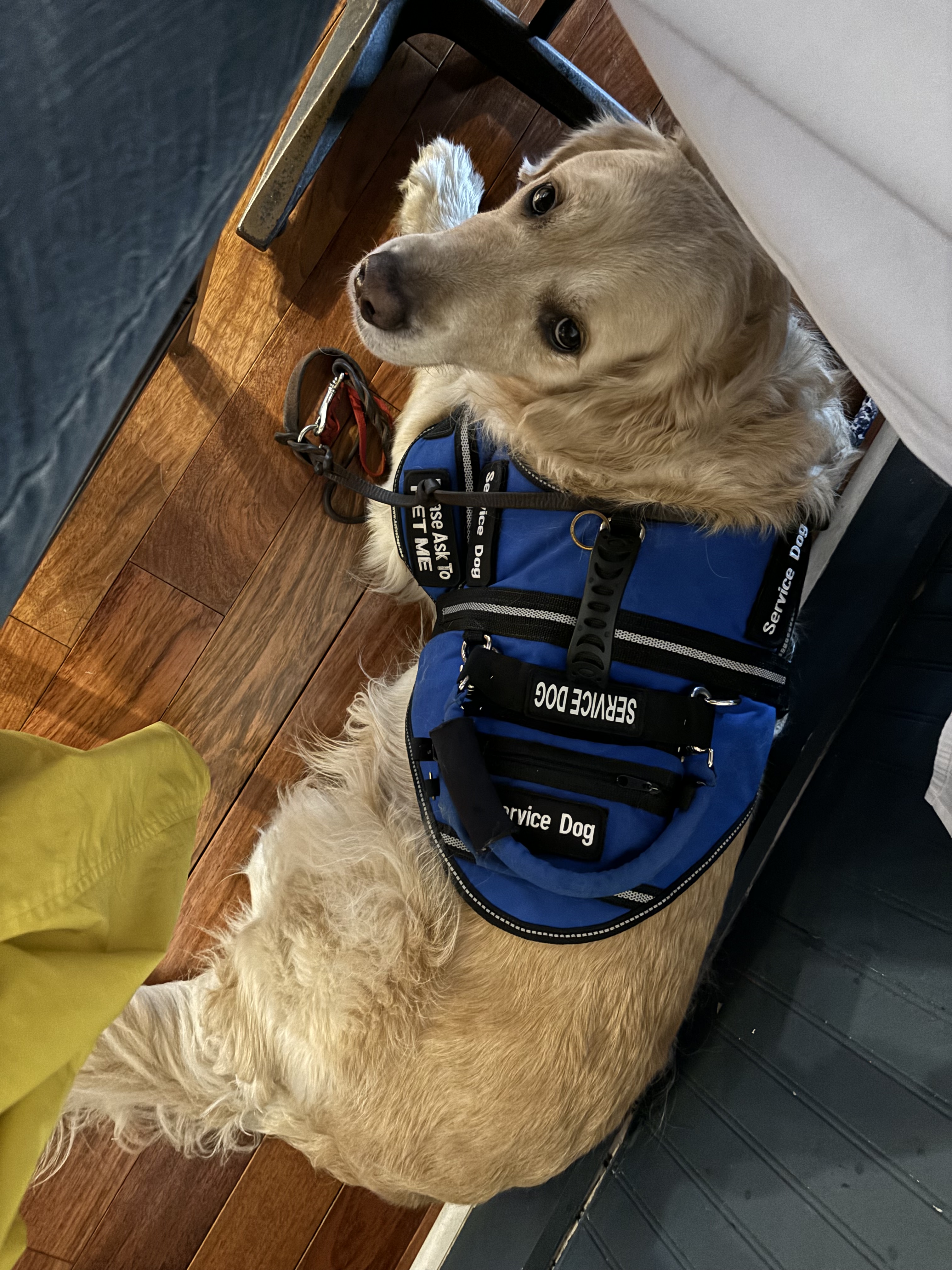
I truly believe (most) people mean well. Sometimes well-meaning intentions go awry, however. Yesterday, my husband and I went out to eat at a restaurant. My husband knows not to linger and hover over me as my service dog, Finn, gets me from “point A” to “point B” safely. Besides, he needed to make a “pit stop” so I walked out alone. As I navigated the last section near the door, I passed a booth with a family who had young children in it. Having lived the majority of my life with profound hearing loss, I do speech read fairly well. I saw one of the dads say to those at the table, “there’s a dog coming with a disabled person… don’t look, don’t stare, DON’T STARE”. Two of the three children (with age-appropriate ability to fully comply), dived under the table with one screeching, “I’m not looking at the dog! I’m not looking at the woman!”
I tell you what, I was so cracked up I had to stop and lean against my cane for a second before giggling my way to the door. As I passed the booth one dad was doing a classic “face palm” while the other mouthed, “SORRY” as I hobbled by. When I got outside, I had to do a “cane lean” again as I seriously nearly fell over laughing. Those dads didn’t need to warn the kids about my coming by. Finn is gorgeous, smart, and talented. I don’t mind the “look at the dog!” comments. I know the dad’s comments were meant in respect, but please… just treat me like a normal person. I have bling on my cane, cochlear implant, and hearing aid. My dog is an 85-pound, solid Golden Retriever. I’m not invisible nor do I care to be. If someone says, “What a pretty dog” as I walk by, I simply smile and say, “Thank you! He’s amazing”. I don’t consider noticing something that is VERY noticeable as being rude.
Photo description: Large Golden Retriever with royal blue service dog vest under a table at a restaurant.
To close out this two-part series on “DisAbility Etiquette”, I wanted to share some do’s and don’ts of two disabilities I have. [CHALLENGE: If you have other disabilities and would like to write for “Hearing Elmo” and share your own “do’s and don’ts” please contact me at denise.portis@gmail.com. I love having guest writers!]
In part two, I want to discuss some do’s and don’ts for people who use canes and service dogs for mobility challenges. In part one, I’d like to share some tips for interacting with people who have hearing loss. NOTE: I do “hear again” with a cochlear implant but these tips work for anyone with any degree of hearing loss, even those who are culturally Deaf.
DO:
The Golden Rule (I won’t reiterate it again – smile)
If you know someone has a hearing loss and you are hosting a workshop, meeting, or get-together, send an email or text to the person and ask what you could do to make the venue more accessible.
Follow-up (especially work-related) meetings with an email to ask if they have any questions or missed any topics. (Careful with this one… don’t be condescending).
If possible, secure captioning (transcription) for the meeting. Transcripts can be emailed to EVERYONE which only helps all present.
Avoid small group activities where everyone is talking in small groups at the same time.
If a person uses ASL, please provide an interpreter.
Flicker the lights to bring the meeting to order. Yelling or wildly gesturing is rude.
If there is a microphone present, USE IT. Don’t say, “my voice carries” or “I think everyone can hear me”.
Insist others use a microphone from the audience, or repeat any questions asked.
Write out on a white board or include a slide in a presentation if you are going to do any type of ice-breaker question, detailing what is being asked of participants.
DON’T
Announce or otherwise bring attention to any one individual who may have trouble hearing.
Raise your voice to a near shout.
Turn your back to the audience to point to or gesture towards a screen or whiteboard.
Talk to the interpreter of a culturally Deaf person, instead of talking to the person themselves.
Play music or “theme songs” in between speakers.
Use videos without captioning turned on
Talk at the same time someone else is.
Over enunciate speech
Chew gum or have other items in your mouth when speaking.
Hesitate to ask the person with disabilities if you are not sure how to proceed.
Ladau, E. (2021). Demystifying disability: What to know, what to say, and how to be an ally. New York: Ten Speed Press
As a disAbility advocate, I have blogged about the challenges of invisible conditions or diagnosis as well as those that may be very apparent (to even a total stranger). One that I don’t often write about is mental health diagnoses, surprising since I am a psychologist.
Life is hard. It doesn’t matter who you are, we all have a tough time at some point in our lives. All of us, to a person, also worry about things. These can be big things or small things. These can be small things you’ve made into BIG things. My Mom used to tell me, “Denise, you can make a mountain out of a mole hill!” When I was very young (8-10 years old) I thought it was a complement about achieving MUCH. It wasn’t until I was a teenager, seriously struggling with “worry over little things” that I understood the true meaning.
Worry is a normal part of life. We worry because we care. We can also have short periods of time where we experience true anxiety and that too, is normal. As a psychologist, I adhere to many APA (American Psychological Association) definitions and will provide that here for you. However, even these “textbook” definitions seem to lack something and want some fine tuning. I asked for definitions of WORRY and ANXIETY from one of my social media sites and found the “fine tuning” of these words very interesting. Let me provide those here (with permission):
“I feel as though worry can be a protective reaction meant to protect and caution beings. Whereas anxiety is an all-consuming concern that renders you unable to make rational determinations and hinders the decision making process”.
“To me worry has a specific target and is low intensity. I’m worried about my family driving in bad weather when they leave my house tonight. It’s a passing thought. I ask them to check in when they get home.
Anxiety doesn’t start with a target it’s an intense physical feeling of dread and fear that I will then attach to everything. Everything becomes the target. Disaster planning starts for every possible thing that could happen and what resources I have to overcome those disasters.”
“Worry feels thought driven. Though anxiety can be, for me it tends to sort of happen. Like I feel a coursing of chemicals in my body rush through and a step behind that, I think and process.
“I think anxiety occurs naturally for everyone and can be addressed more readily. Whereas I think worry is more deliberate – choosing to ruminate.”
“For me, worry is usually specific to something, and anxiety is free-floating and more irrational. Anxiety is usually more long-lasting, and I feel more out of control; worry can sometimes be alleviated by coming up with a plan B or something similar to that.”
“Worry to me is over thinking negative outcomes which may or may not be real. anxiety to me is a negative emotional response to a known or unknown stimulus that’s results in body changes such as elevated blood pressure, significant increases in heart rate and breathing, nausea, trembling, inability to rationalize reality, etc.”
“Worry to me is specific and directed toward one specific task or interpersonal relationship. Anxiety is a general feeling of apprehension, fear, or regret about multiple life events.”
“For me also, worry is specific and anxiety is a pervasive feeling of dread. It’s a fight or flight response chemically but there’s no immediate threat I need to escape from or fight off. One time I had a severe anxiety reaction while sitting at my desk, and there was nothing happening of concern. I will say that when there are a lot of different things that I’m worried about, It can bring on a more pervasive anxious state.”
“Worry are the waves and anxiety is the current. Those are the things I see and unseen issues sometimes randomly driving and daunting my soul.”
I was very impressed with the numerous responses.
The APA (APA, 2023) defines both as the following:
Worry: A temporary chain of thought that is a negative form of thinking and promotes distress.
Anxiety: n. an emotion characterized by apprehension and somatic symptoms of tension in which an individual anticipates impending danger, catastrophe, or misfortune. The body often mobilizes itself to meet the perceived threat: Muscles become tense, breathing is faster, and the heart beats more rapidly. Anxiety may be distinguished from fear both conceptually and physiologically, although the two terms are often used interchangeably. Anxiety is considered a future-oriented, long-acting response broadly focused on a diffuse threat, whereas fear is an appropriate, present-oriented, and short-lived response to a clearly identifiable and specific threat. —anxiousadj.
At this point you may be asking, “Why are you detailing the difference between WORRY and ANXIETY”? Anxiety that continues and impairs your ability to live your “best life” is a mental health disorder and often needs help to improve. This help can come in the form of:
Self-help books or support groups
Licensed therapy/counseling
Anti-anxiety medications
“Natural” or “herbal” plant-based remedies
Again, short-term anxiety and worry is normal. It can even improve outcomes and produce positive change. For example, maybe you are worried about an exam so you study more thereby receiving a better grade. You temporarily feel anxious about a birthday party you are planning for your sister. Until the party is over, you may be anxious about everything going well because you care about her and want it to be a “hit”.
When anxiety begins to impair your ability to function normally (what is “normal” for YOU), you may need to seek the help of a counselor, therapist, or psychiatrist.
Living with disabilities, visible/invisible conditions, or chronic challenges are hard enough without trying to do so when you are also anxious. The National Alliance on Mental Illness (NAMI, 2023) states that anxiety disorders are the MOST COMMON HEALTH CONCERN in the United States. Note that they do not designate the diagnosis as a mental health diagnosis. This is because anxiety disorders impact us physically, emotionally, and spiritually. There is likely no other disorder with the power to do more harm—should we allow it to continue without seeking help.
I know that as a person living with numerous disabilities, I often focus on managing and treating my physical symptoms. However, I have learned that failure to manage/treat my mental health ultimately means that my overall health worsens. This is part of the reason I advocate so strongly for people to take their mental health seriously. If I were not managing/treating my anxiety and depression, ALL other symptoms and conditions would worsen.
Mental health disorders carry a lot of stigma and negative stereotypes. Let’s do our part by talking about and treating “mental health” as an important part of our overall health. This is the only way we can normalize mental health issues and promote taking care of ALL of who we are.
Social media and access to information at large is a “game changer” for people with disabilities and/or chronic illness. Here are just a few reasons why I believe this is true:
Connects you to information and resources about “what ails ya”. This yields truth to the “knowledge is power” phrase.
Provides the means to share and connect with others struggling with similar issues.
Provides a platform for advocacy and change.
Alleviates feelings of isolation and loneliness.
Enables individuals to stay connected to local, national, and world news, often with unmatched accessibility to this information.
Allows differently-abled people to shop, pay bills, etc., in an accessible, safe space (home).
Allows everyone access to education and learning knew skills – some of it free!
I also know that social media provides an outlet for connection, fun and entertainment, and can fill some hours when sleep seems unavailable to me. Like anything, however, social media platforms can be negative and challenging as well. “TikTok creator Sarah Lockwood (@sarahthebookfiary) refers to the tendency to make everything we see online about ourselves as the “What About Me Effect” (Borresen, 2023). Sarah posted a video about this “effect” in September and it really struck a cord in me. She states, “when someone sees something that doesn’t really pertain to them, or they can’t fully relate to, and they find a way to make it about them — or try to seek out certain accommodations for their very nuanced, personalized situation, instead of recognizing that maybe they’re just not the target audience for that thing” (Lockwood, 2023).
Like any population, even individuals living with disability or chronic conditions can get caught in a self-centered web of “what about me?” I’ve seen it happen in forums where someone posted information about a means to make a certain household chore or errand more accessible when living with a disability like their own. Instead of celebrating the ingenuity, a person with similar disability might not be able to accomplish the same because of demographics, or other subtle difference in diagnosis or condition.
Please do not misunderstand my point here. Equity and inclusion are important, however “what about me?” comments interferes with free speech; for a person in a marginalized population from freely voicing their truth. It is a very simple thing to chime in with perhaps another idea that would bring valuable discussion for accessibility options for someone with a slightly different disability. As a disability blogger and advocate, I recognize that I am an individual first. My experiences are just that–MY experiences. My experience as a balance-challenged woman may mean that I have some things in common with some, but am likely more different than similar to others with balance disorders.
Let’s be supportive of each other’s stories and life truths. We can learn something even if someone’s experience is different than our own. Even within disability related platforms, not every piece of content is geared towards every single person. We are unique and our challenges and gifts often are as well.
My husband teases me because my favorite movie genre is apocalyptic themes. My favorite book as a kid was “The Long Winter” in the Little House series because the circumstance and outlook was so dire! I’m a pessimist and very, VERY hard on myself. Even though I’m 57 and had decades of practice of “doom, despair, and agony on me” (let’s see if any of you catch that reference jingle), I have learned to change my “what if…” inner dialogue to promote happiness and health.
Persons with disability often worry, fret and are anxious about many “what if” scenarios. Things like:
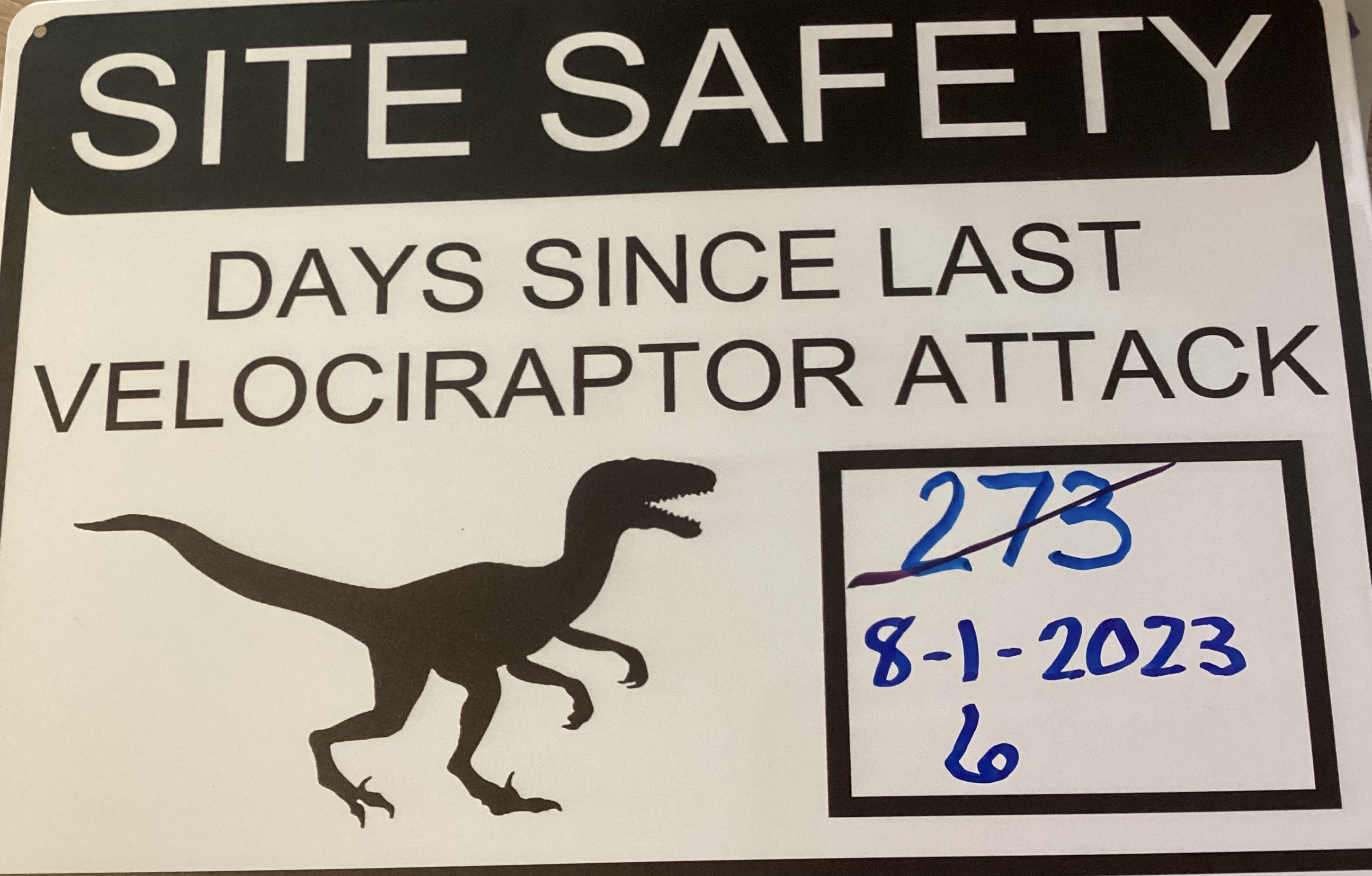
What if I suffer another concussion? (I was so aggravated at myself to have to update my sign a week ago):
What if I become legally blind?
What if I have to have my cochlear implant removed to get an MRI and accurate MS diagnosis?
What if I get ALS like my Mother?
What if… ?
I mean seriously it could go on and on! I’m grateful my interests and subsequent training and education meant I pursued psychology. Yes, yes, occasionally I grieve being rejected by Hogwarts, but psychology likely saved me! Seriously! I use snippets of cognitive behavioral therapy (CBT) every SINGLE DAY! I know that I’m prone to cathastrophizing my life. I know this bad habit is detrimental to my emotion self and mental health. It also takes a toll on my physical health.
When I find myself perseverating on negative “what if’s…?” I have to deliberately pause and choose to say the opposite.
What if I go another year without any new concussions? I’m taking great pains to walk safely, work around the house safely, etc. That last concussion may have been my last!
What if the meds I am taking save my eyesight?
What if the MRI (after surgical removal of my CI magnet) shows a definitive MS diagnosis? Then I can find proper treatment!
What if I live as long as my Mom did (78) and die from “old age” and not ALS?
In CBT, you have to start with your thinker. If you can change your thinker, it will aid in changing your feeler (heart) and in turn change your behavior (anxious thoughts, depression, self-harm, etc.) Change your THINKER to change your FEELER to change your BEHAVIOR.
So there isn’t anything wrong with “what if…?” thinking. Just make sure most of your “what if’s…?” are positive thoughts and affirmations. It’s hard enough being a person with disabilities and invisible or chronic illness. Don’t become your own worse enemy. Cue the music and summon your Mission: Impossible chi and see if this CBT tool can at the very least improve your mental health and personal regard.
I’m a co-advisor for a campus student club/chapter of Active Minds. One of the things we talk about in our meetings at LEAST once a semester is that using the right word doesmatter. Check out this great (short) video that emphasizes some of the things we share with our students: MUST SEE VIDEO
Two words I habitually say are “CRAZY” and “INSANE”. Truthfully, I had achieved a point where most of my verbal language (well… and SIGN for that matter) had eliminated these two words. I don’t know if it was the break between semesters or what – as I’m certainly not making excuses. To my dismay (with a little bit of HORROR thrown in) I discovered that these words were back — being used again as a common descriptor in my everyday language.
As a matter of fact when my epiphany occurred, I was actually having a Zoom meeting with the co-advisor of our much loved club, Active Minds. At least twice I said something about how “CrAzY” something was in regards to the total and normal OVERWHELM that accompanies this ongoing pandemic. My friend and colleague (to her credit) didn’t call me on it (though I wouldn’t have minded if she had), but y’all? American Sign Language is my second language! Therefore, facial expression, body language, posture, etc. are something I just pick up on as a normal part of any kind of communication, including verbal. So she tensed and her eyes popped wide; she calmly agreed with what I was saying but used better words like “disappointing”, “frustrating” and so on. I left that meeting determined to get back on track with using better words. Words that do not have negative connotations and stigma attached to them. It’s a “speech rule” that is important to me, so renewing this pledge to do better was also important to me.
Other Kinds of Poor Choice Phrases
This past week I was painfully reminded of other types of habitual words and phrases that are shockingly an eye-opener to the receiver. These are the kinds of phrases that make me WINCE – and I’m not always good at hiding that wince. I have a student in one of my face-to-face classes that says “what do you care, right?” and sometimes “what do I care, right?” It is very obviously a verbal habit because it rolls off the tongue almost like it is “filler”. For this student, I can only guess that it was habit, but self-fulfilling prophecy,Pygmalion effect, and abuse are likely culprits of using a phrase so frequently and out of context.
To explain how tragic this repeated verbal phrase is, we’ve only had two classes so far this semester and yet I know for a fact that I and others have noticed. Sure, the phrase was verbalized along with an eye roll, a self-deprecating chuckle, and failure to make eye-contact. It was not difficult to register the
PAIN
FEAR
LONLINESS
S.O.S.
in this oft-uttered phrase during our 10 minute after class “chat. Trust me. I’m no conversation guru nor interpreter police. However, I do pick up things like this because I *do* pay attention to facial expression, body language, posture, hand shapes (tense fists) and more when I communicate because I hear with bionics. I need those other cues for total understanding and clarity.
PERSONAL GOAL: Somehow, some way, let this student know during our semester together that I do. I do care. I care a great deal.
Check Yourself
I would like to put out a challenge to every person reading this post who also lives with visible or invisible conditions or disability.
DO YOU FREQUENTLY AND HABITUALLY USE ANY LANGUAGE THAT UNDERMINES WHO YOU ARE?
It may not be words or phrases you even say out loud. Perhaps you only THINK these words that are ultimately harmful to who you are. You may need some help with this challenge. Ask someone else if you ever habitually utter negative words or phrases. Maybe even ask them to get back to you on it so that they can think about it. (BONUS: Perhaps they will also discover that they do this as well!)
If you are like me, we have been saying these things (or thinking them) so long that they are firmly entrenched in the way we respond and communicate with others. One of my siblings constantly smacks their head and says, “stupid, Stupid, STUPID” to themselves. Yup. That one is obvious.
Maybe (like me) self-deprecating humor is a way you cope or “deal” with your disability. Heck, many diversity champions and comedians use this means to educate and advocate. But y’all? You and I know when we are in advocate mode or bad-habit negative talk. Having a balance disorder, I am a klutz. I am constantly tripping, stumbling, and weaving my way around campus. For a very long time I would laughingly tell a concerned member of my “village” that “GRACE is not my middle name“. That is mild negative response really. However for ME, it started to fester a little. Every time I said this after an awkward stumble, I felt…
less.
Now when I “skid around a corner and clutch at Finn’s vest while correcting my sliding right foot and over-compensating for a bounce of my shoulder off the nearest doorframe” (I kid you NOT), I simply say, “Whoa. That was a close call”. That’s enough for me now. I don’t feel less when I say it. Saying NOTHING does not work because I will be bombarded by well-meaning people in my “village” who ask if I am OK. Acknowledging my “close call” for some reason reassures everyone that I really am OK. “I’ve got this”. Recognizing negative language and learning to use BETTER words really does make a difference. It impacts self-esteem. Choosing BETTER words strengthens diversity advocacy and pride.
You have “stuff”. I have “stuff”. Y’all? We all HAVE “STUFF”.
I am — who I am — because of “my stuff”. Your own “stuff” may not define you but it certainly shaped the person you are. It is a wee bit aggravating, however, when someone says “You are such a Super Hero or an inspiration” because of who I am as a person with disABILITY. It’s not that I don’t want to inspire someone. I hope my adult children and grandchildren think I am worthy of imitation and example. I also want to instill in them (and others) their special value because of who they are all because they are here,
on earth,
within our community,
making a difference where they can.
This Doesn’t Mean…
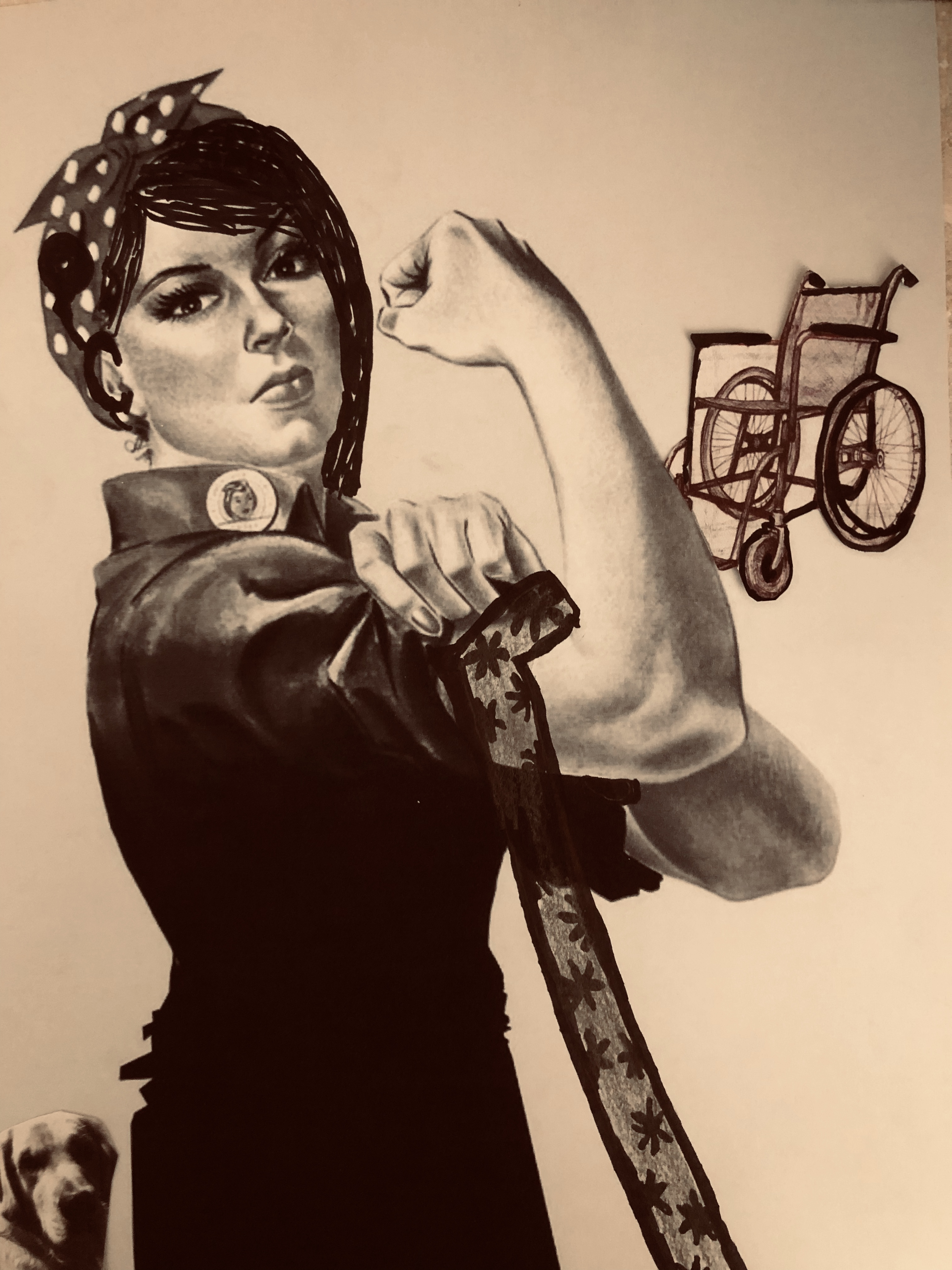
I am not grateful for all God has allowed in my life to make me the woman I am. I want to encourage. I want to be a good example to others. I want to make a difference. This does indeed mean that I am grateful for my disABILITIES. My hearing loss has taught me about communication and about visual cues about the soul of a person. My balance disorder has taught me to take special care, that every step and turn should not be done impulsively. My cane has taught me to lean on something sturdy to provide a 3-point foundation. My service dog has taught me to pay attention and to have confidence in something with far keener senses than I have. I am grateful for my disABILITIES. Yet, I want to inspire, encourage, and don super hero capes because I am a strong woman.
Your stuff may not be disABILITY. Maybe you are a member of a diversity group and the challenges that has presented has strengthened once weak character muscles. Advocacy and inclusion awareness activities have broadened your scope and influence. You are strong because of it.
Maybe that you are a single parent, a survivor of a serious illness, domestic violence, recovered addict, or live with other invisible or chronic illnesses, have made you the strong person you are.
I’m currently staying with my mother who is recovering from a 2nd hip replacement. A North Carolina sister-friend contacted me and we were to have lunch today to catch up. It’s raining, like… a LOT. This means my balance is wobbly, my tinnitus is roaring, and I’m feeling particularly shaky. My friend texted me early (knowing the state I am likely in right now) and suggested a (quite literal) raincheck for lunch.
Does this mean that I’m weak… today? No. I may have to make smart decisions to keep myself safe and avoid likely falls and concussions, but this does not make me weak. I am still strong. It simply means that today my strength is manifest in my practice of good self-care. I can wobble and be strong by making smart decisions to take care of myself.
Challenges not Limitations
Each of you have something that makes life a challenge. Whether it is something physical, spiritual, emotional, or cognitive, we all have challenges. I don’t like the word “limitations”. I prefer to think I am not limited in any way. Instead, I have challenges that exercise my muscles to make me strong. It might mean different choices. Perhaps it means a “raincheck”. I may have to ask for assistance from my service dog or even a person. I am not limited. I simply have challenges. These challenges make me strong.
This post began with exposing something everyone already knows. We all “have stuff”. Your own “stuff” presents challenges, but those challenges make you strong.
This doesn’t mean that you may occasionally feel overwhelmed. It doesn’t mean that there is anything wrong with the fact that at times, you just want to give up. That’s where the rest of us come into the picture. We need each other. We need to support each other. We need to celebrate with each other. If you haven’t seen the now viral video of Miss Nigeria going bananas with genuine glee at the “win” of her friend Miss Jamaica, you have missed out. You can view it here.
I want to be the kind of support and help to YOU, that I don’t hesitate to respond with questions from people who follow my blog or who know about my work in the disABILITY community. I want to celebrate every win you have. I also want to assist when you do not win, and I want to stand in the gap for you when you simply need someone to care. Blogs, vlogs, online support groups, and social media platforms have become a valued network and access to “Miss Nigerias”.
Hey… I totally get feeling all alone on my own little island, crippled by my MIND about my own disABILITIES. It happens. We buckle, hole up, and lick our wounds. Friend, please don’t stay there. Look for the resources and help easily found in a vast array of fully accessible environments. Indeed, we all have “stuff”. We also need each other.
My granddaughter Samantha Jean just turned two-years-old. Samantha is at the stage where she has opinions and expresses those opinions. These opinions vary from what she wants to wear today, to what she wants to eat, to what she wants to DO, and what she wants you to do. She is just full of opinions. She also is very independent already.
“I do it!” After caring for her a couple of weeks while mama was in the hospital having her baby brother (rather early), this phrase quickly made its way to “Samantha’s Favorite Words” list.
I had to learn to let her do it, even if I wasn’t happy with the results when she was finished. Thankfully, since she is only 2, I was able to distract her to “fix it” or wait until she moved on to another activity and straighten, organize, or re-do the activity to my satisfaction.
(Yeah. I’m a little OCD and a bit of a control freak!)
What I love about Samantha, is that unlike many two-year-olds, if she was NOT able to do something she rarely had a meltdown about it. I was amazed at the first time she asked me for “halp”, and graciously stepped aside to let me do it.
I heard these requests for “halp” for numerous things:
When trying to stick her head through an arm hole instead of the one designated for her – ahem – HEAD,
When trying to get blueberries to stay on her spoon,
When trying to safely navigate the steps on the back porch which were a bit too much for such short legs,
When her train rolled to where she couldn’t reach it underneath the buffet,
When trying to read a book,
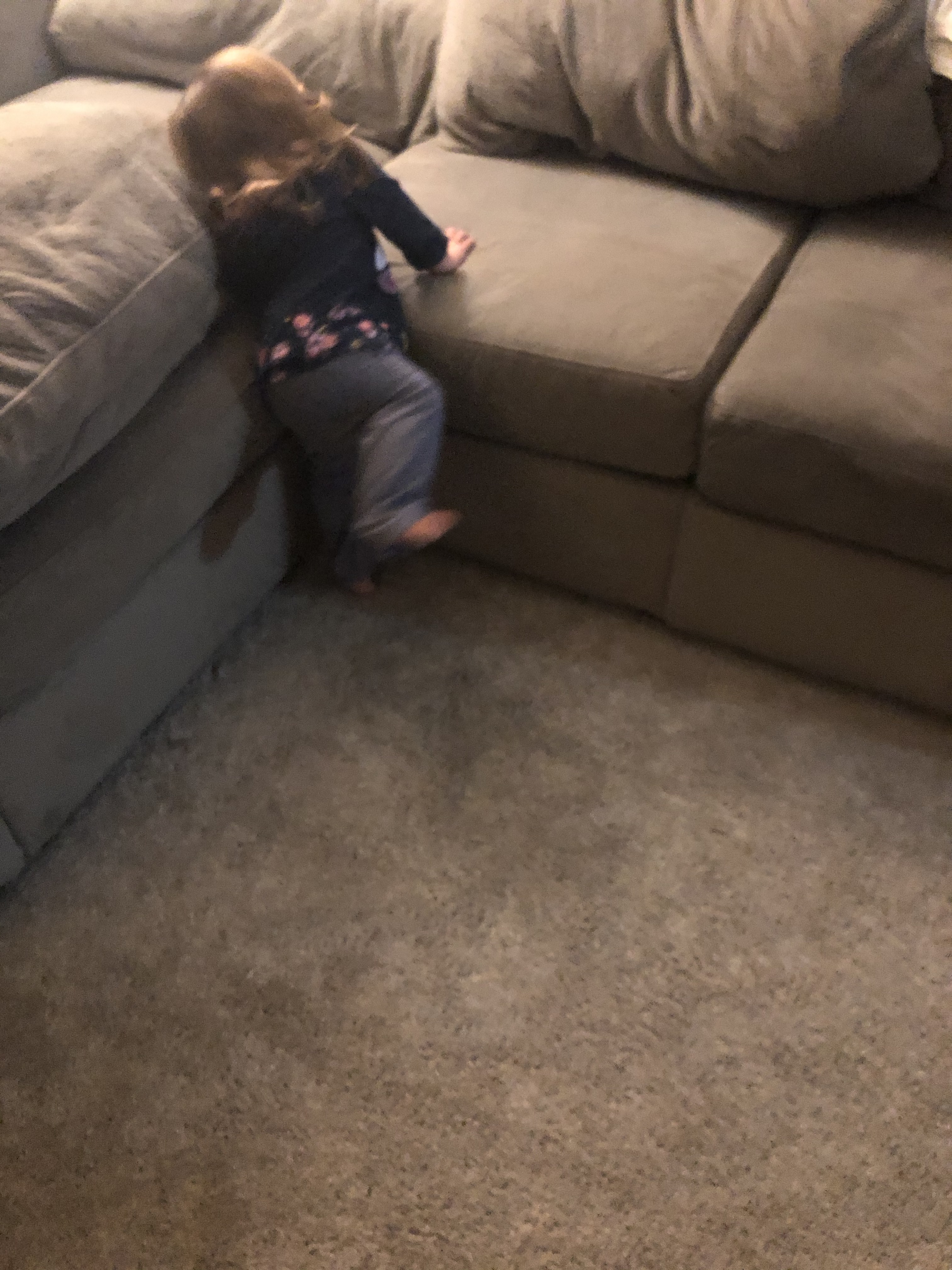
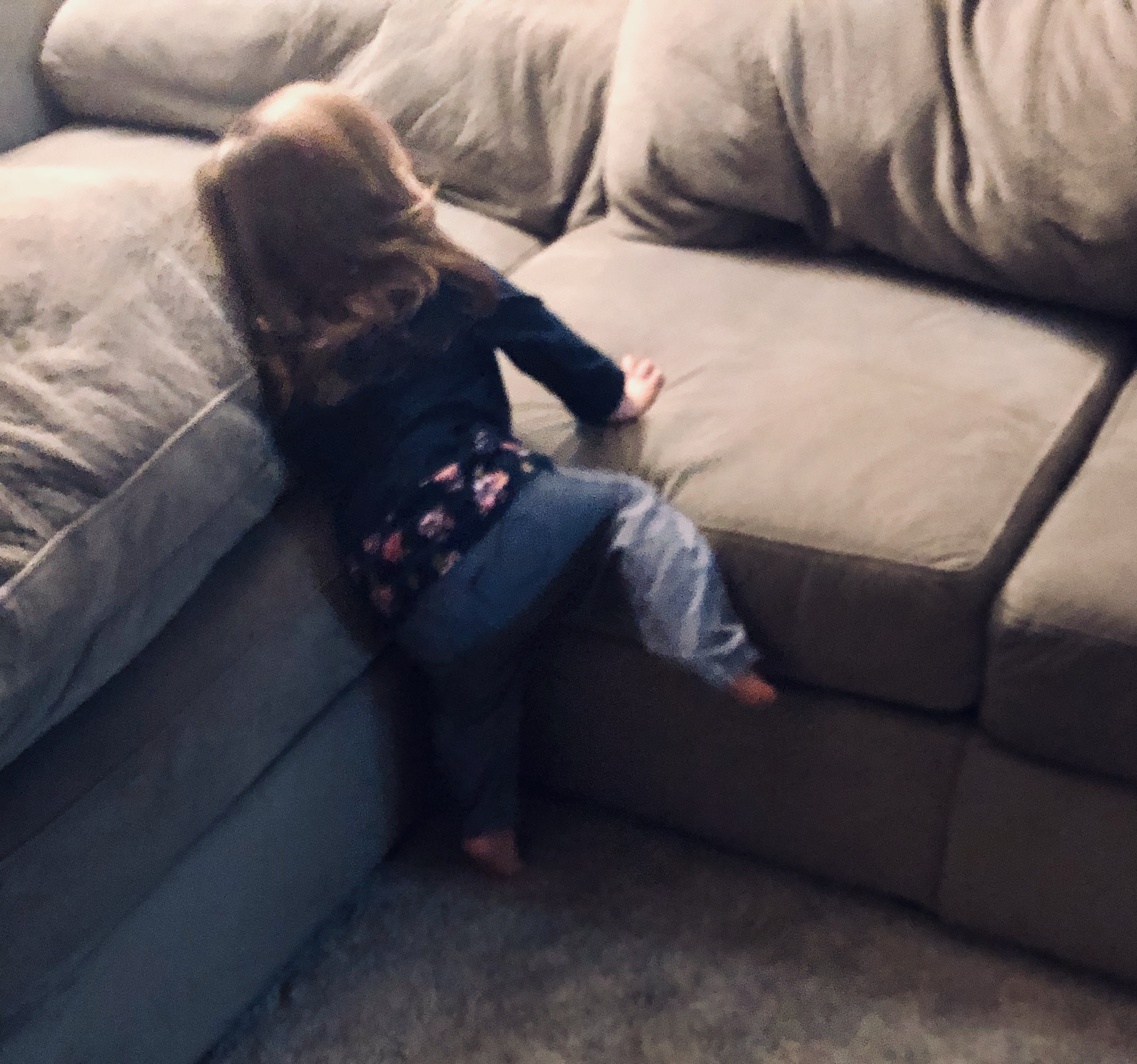
When trying to get up on some of the furniture, (see photos)
Sometimes Samantha would ingeniously choose a way to do something differently so that she could stay independent in the activity. For example, if there was something for her nearby she could use as a means of boosting herself up on tall furniture, she might drag that toy or bench close to use it to navigate her destination without “halp”.
She cannot manage “Grandma” yet so she calls me “Geegay”. I figure she will get there so I think the latter is awfully darn CUTE. I loved hearing Samantha say, “HALP, Geegay!” throughout the day. She more often did things without assistance, but never hesitated to ask for help should she:
Figure out she really did need it to accomplish what she wanted to do.
Was too tired to find an accessible means to accomplish it on her own, or the effort wasn’t worth the “gain”.
I had to admit while living with her, I saw the lesson to be learned again and again.
Stubborn People with disABILITY
I realized the other day that I have lived with disABILITY longer than I have lived without. The feeling was strange since I had simply shouldered new challenges and practiced “keep on keepin’ on” while aging. People with disABILITY (congenital or acquired) often find that as they age, accommodations that were once enough to give them access to an activity or opportunity, no longer are enough. Perhaps even accessibility tools, electronics, devices, etc., may have once allowed you to be independent in a task but as you age you find those things are not enough to be completely independent.
My life with a disABILITY started at the age of 6 with a traumatic brain injury, broken bones, and destroyed hearing in the left ear. After a long recovery, I never felt like a person with a disABILITY until about the age of 18 when my hearing loss became bilaterally progressive. I eventually acquired Meniere’s disease (a vestibular disorder) and really began identifying as a person with a disABILITY at the age of 26 or 27.
I have a good friend who describes herself as “bilaterally hearing-impaired”. Because we are both currently training our third service dog and work at the same place, we often train together. One thing I love about hanging out with Jessica is that she always asks if she can do something for me. Whether it is to get the door for me, pick up something I’ve dropped, carry something for me, etc., she always asks first. She doesn’t assume I want her help, she thinks to ask first in the event her assumption I need it is unwanted or not needed.
Sometimes I say, “actually Finn has been working on door buttons, let us see if he will get this door open for us”. Perhaps the item I dropped is something my Golden puppy can safely work on his retrieve and get for me, so I will let her know that Finn and I have “got it handled” and no “halp” is needed. After training together for some time, Jessica once replied to my “no thanks we’ve got this” with a very thoughtful reminder.
“No problem. However, we know each other well enough now that I trust you to let me know when you need help and that you will ask for that help”.
The first time she interjected this reminder, I found myself thinking about it the rest of the day. Can you guess why? It is simple really. People with disABILITY can be pretty stubborn, and never ask for “halp” when they really need it. We can even earn the reputation of being ornery about our refusal; ungracious in both word and attitude.
In my early adult years of learning to live with deafness and balance issues, I adopted a rather unattractive and even dangerous attitude of “I am woman. Hear me roar!” This could be interpreted as, “I don’t need help. Leave me be. I’ve got this. Don’t you dare pity me!”
The only reason I can think of that I acted with such vehement, even arrogant refusal is that I didn’t want people to pity me. I also did not want them to think that I was UNable rather than differently-abled. I think that all changed for me when I realized how it made ME FEEL when I asked to assist someone who needed my “halp” and they refused. After realizing I felt “robbed” and even hurt when denied the opportunity to help someone that I cared about who obviously needed my “halp”, I started re-thinking my own stubborn refusals.
I have lived with the assistance of 3 service dogs now. Even so, there are things my canine partner cannot do for me, or cannot do SAFELY on my behalf. I have learned to ask for “halp”.
I have never, EVER been turned down. Even should I ask the most cantankerous-looking curmudgeon in the aisle at the grocery store to get the 32-ounce can of turnip greens on the bottom shelf because a) I can’t bend down and get it, and b) the circumference is to large for my Golden’s mouth, I have never been told NO when asking for “halp”. (Hey we love our turnip greens in this house! I lived in the South a loooooong time).
Solutions to World Problems
Surely a solution to the world’s problems is to simply be kind to others. We all know that isn’t going to be the norm, however. Still, individually we can do our part and hope (even pray) for a ripple effect.
In every way that YOU can, make a difference.
If someone needs it, “HALP” them. Do it with a smile and without conditions. Do so easily, readily, and without any need for acknowledgement. Be the kind of person who so naturally sees a need and meets that need that it becomes who you are and not what you do.
But…
It is always good to ask. Never assume that someone who appears to need help, wants your help. Maybe they have some assistive device that will allow them to pick up that item without “halp”. They want to be independent.
BUT…
Don’t be a stubborn jackass. If you need “halp”, ASK. If someone asks if they can “halp” and you simply need a few minutes to do it yourself, explain that graciously. Don’t become haughty and retaliate with angry words and threats about where you are gonna hit them with your cane. Don’t tell them what to do with their request to “halp”. (Ahem)
Necessary Reminder
May I share something with you that you already know?
Even able-bodied people need “halp” sometimes. Whether it is assistance with a task, or a needed hug at a low moment, all of us need each other. The next time you need assistance for “halp”, just ASK already!
Even my two-year-old granddaughter will ask for my help when she knows she needs it. She even does so when she recognizes that she can do the task, but that it will get done quicker and with less effort if she simply asked for HALP.
Pogosyan (2018) provides multiple reasons why we should be willing to help and accept help from others. “Research has found many examples of how doing good, in ways big or small, not only feels good, but also does us good” (para. 2). So in closing, I would like to remind you (and yes myself as well) that disallowing someone to assist actually robs them of the benefit gained from that help.
Pogosyan goes on to explain that, “One reason behind the positive feelings associated with helping others is that being pro-social reinforces our sense of relatedness to others, thus helping us meet our most basic psychological needs” (Pogosyan, 2018, para. 1). In a very powerful way, it supports our need for EACH OTHER.
I’m starting to think this world is just a place for us to learn that we need each other more than we want to admit. – Richelle E. Goodrich
Our greatness has always come from people who expect nothing and take nothing for granted – folks who work hard for what they have, then reach back and help others after them. – Michelle Obama
A hero is just someone who is brave a little bit longer
For a former “farm girl”, I recognize it goes against the grain to say I HATE RAIN.
Besides… I don’t HATE rain, I hate the consequence of rain.
Not the consequence of providing necessary water to growing plants.
Not the consequence of washing the world clean.
I hate the consequence of navigating a rainy day. It promises bruises, headaches, falls, and sudden yelps and “CRAP, woah!” exclamations.
The irony is not lost on me that although I am profoundly deaf (when not wearing my cochlear implant),
although I have post concussive syndrome from numerous falls,
although I have a bum ankle that I badly sprained 4 years ago and wish to God I had broken instead,
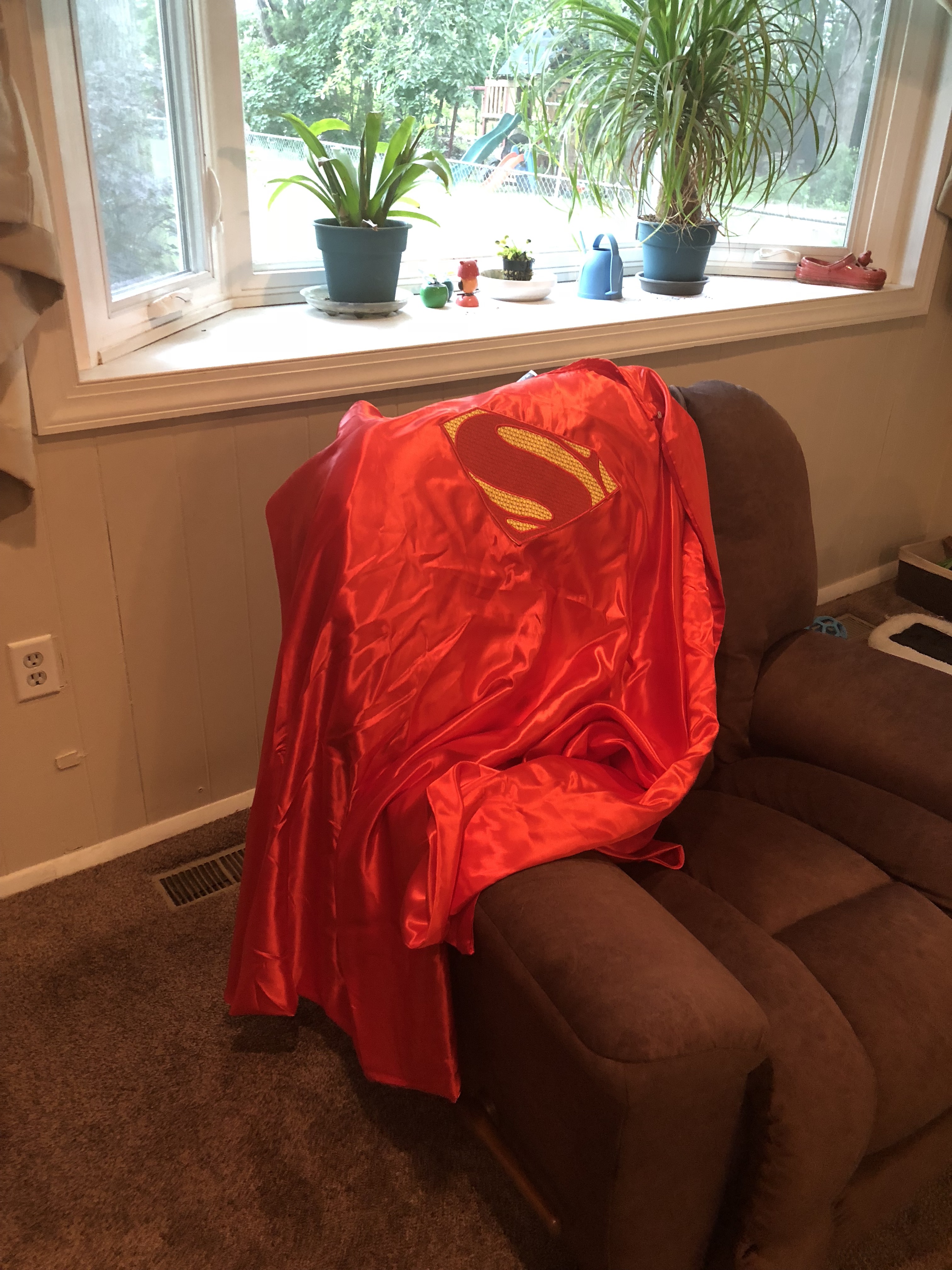
… Meniere’s disease is the battle for which I must “don the cape”. Something that falls into the “invisible illness” category. A disease/disorder with no cure and few agreed upon symptom smashers.
Meniere’s and weather changes are incompatible. On bad weather days I sometimes have to psych myself up and recognize that I cannot change the weather today and I cannot cure my Meniere’s. What I can do is “don the cape” and make the best of it.
Today I had my heart set on going to training at Fidos For Freedom, Inc., the organization from which I received both of my service dogs. My current service dog, Milo, loves going and the extra practice does us both good. I usually don’t wave the white flag on a day until I actually get up and go look at the sky. Lord knows, our weather forecasters are not very accurate about a “3 day” or “5 day” outlook. (Super strange that it seems the m0re technology available to us, the more meteorologists miss the forecast). I usually know it’s raining outside as soon as my feet hit the floor. I certainly cannot hear it <grin> as I don’t “have my ears in yet”. This morning I knew as soon as I swung my feet out of bed that it was raining. It’s fairly easy to guess when the entire room is spinning and the floor seems to be missing under my feet.
I always start out strong. I CAN DO THIS. I let the dogs out and start my coffee. Something I do each and every morning. No matter that I am doing it while hugging the nearest wall or counter.
I didn’t sink to the floor this morning, sobbing, after letting the dogs in for breakfast. I hung on to the chair rail molding on the wall and shook, said a few choice words, immediately asked for forgiveness and pled in genuine prayer to help me let go and walk to the kitchen. I’ve learned that caving to the despair only exacerbates my symptoms.
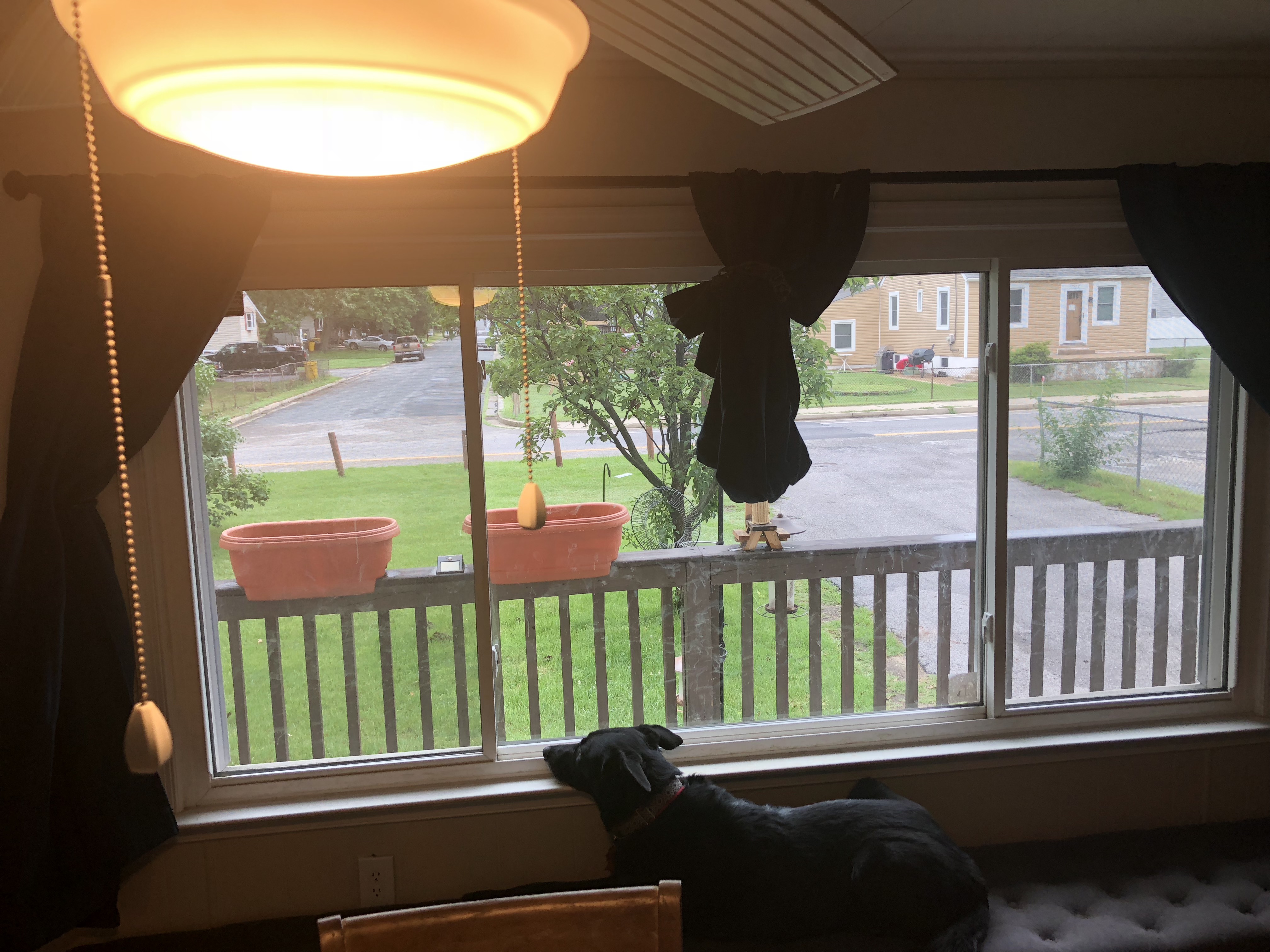
So I’m not going to Fidos For Freedom, Inc. today even though Milo-bear is looking forlornly out the window wishing we weren’t at home.
Please do not misunderstand this post. I’m not looking for sympathy. I am not inviting you to my pity party. I simply want to share what it is like to live with a chronic, invisible illness. It might also surprise you that I am glad
happy
untroubled
delighted
pleased
… at peace with having this disease. If I did not have Meniere’s disease, I know that I would not have the heart and passion for people who live with invisible illness. When I am the one tagged to produce a post for “Hearing Elmo”, I do not do so from the keyboard of an expert. I don’t have the answers. I don’t have anything profound to share today.
NOTE: Like to write? Want to share your journey? Hearing Elmo welcomes guest writers!
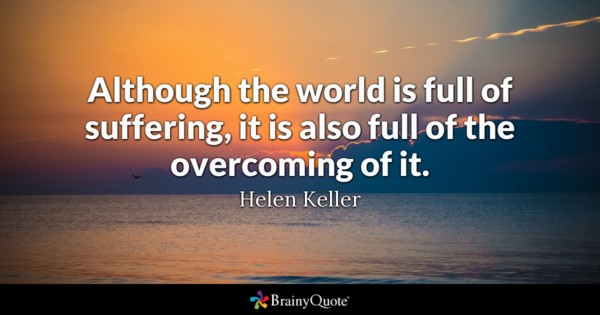
Instead I can salute and encourage all who must “don the cape” and simply make it through today. Overcoming one hour at a time and making the best of it. Shauna Niequist said, “… what I can do is offer myself, wholehearted and present, to walk with the people I love through the fear and the mess. That’s all any of us can do. That’s what we’re here for.”
We are super heroes because simply “overcoming it” is our default and salvation. It’s not always pretty and I don’t always “rock my cape” with grace, drive, and power. Sometimes I just feel pissed. But…
I’m overcoming it. I’ve had practice. I’ve got this.
And friend? So do you.
Nope. It ain’t easy. You can overcome it. You have before. You will today. “Don the cape” and get through today.






 Hearing Elmo