They May Not Get It

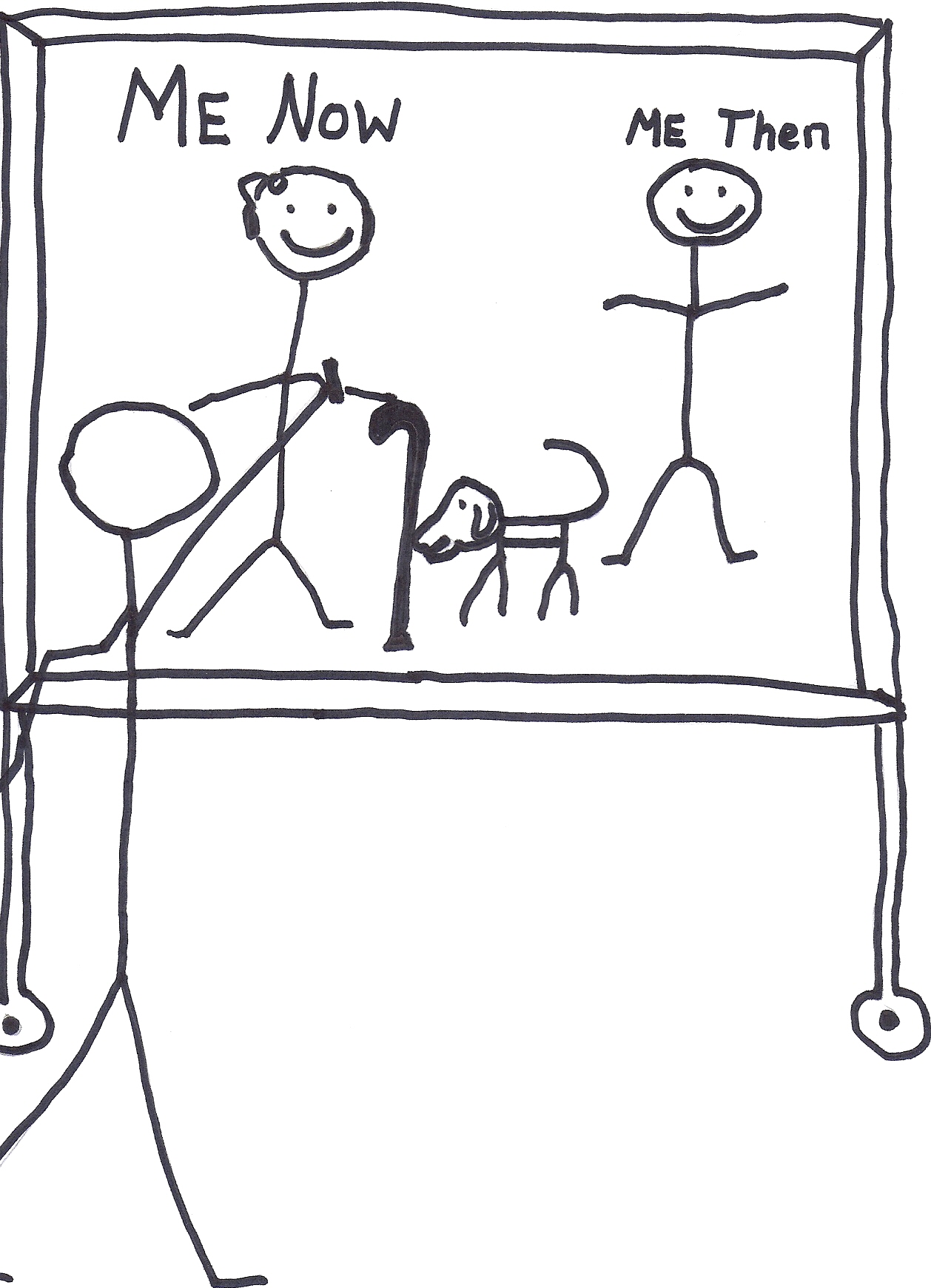
(Hey… I’m not an artist! But have you ever felt this way?)

One of the questions I am asked the most by folks who contact Hearing Elmo, is “Why doesn’t my family accept and understand who I am NOW?”

Before I even begin writing, let me express my hope that many of you will respond and share as I am very aware I do not have all the answers.

Why It Hurts

1. It hurts because the transition from “normal” to where you are was painful.

The school of hard knocks is – well – hard. Acquired disabilities and invisible/chronic illness are not easy to get use to when they first change a person. The journey from diagnosis to acceptance is a hard one. It hopefully has made us “better” and not “bitter”. I can attest to feeling stronger, more confident, and much more in tune with who I really am post-disability. Some of us have progressive symptoms and illnesses. We may adjust, only to have to do so again in a year or so. This too can grow us. But honey? It isn’t easy.

However, BECAUSE it was hard, it is hurtful when folks who knew us WHEN (back before our diagnosis), don’t accept or try to understand who we are NOW. We are still the same people. Our personalities have not changed. Our strengths and weaknesses are all still present – although you may have developed some new strengths because of your life path. So it is difficult when family members may sometimes be the hardest to teach how to talk to us now that we have a hearing loss. Or perhaps you are frustrated because a family reunion at a theme park is not ideal for you because you cannot ride any of the rides. Maybe you are utilizing a wheelchair, walker, or cane. A picnic and hike may not be a good way for you and your siblings to catch up – even if it has been a year since you’ve seen each other.

It’s not like we want recognition for the pain we’ve experienced. We aren’t looking for a medal. However, seeing any eye rolls or hearing frustrated sighs serve only to remind us our family

STILL

DOESN’T

GET

IT.

2. You expect your family members to care enough to accept you.

It’s not wedding vows. “In sickness and in health, for richer or for poorer…” But we have a reasonable expectation that our family members are going to love us and be there for us regardless. It doesn’t matter if we acquire a disability. We are still the same person. If Lymes disease has you aching and feverish a week out of every month, we expect compassion, not disdain. If CFS or MS has you weary, tired, and feeling as energetic as a centenarian, you expect understanding and maybe an offer to run an errand for you. If your eyesight is worsening due to various illness or disorders, you never expect frustrated outbursts when you explain you don’t have a ride to go to your nephew’s graduation.

But friends? Family members can need educating. Advocacy may begin at home. We wish it wasn’t necessary, but it may be very necessary. My kids grew up with me at best, hard-of-hearing. My husband, however, knew me before hearing loss. So I have to be willing to tell (nicely) him what works and what doesn’t. Don’t be surprised if it takes numerous lessons. Some heads are thicker than others.

What to Do

Talk to them. I’d elaborate, but honestly? You need to talk to them. Explain how you feel. Be willing to be vulnerable. Start with phrases that explain specifics and not general accusations. Example:

“When you sigh as I wobble into a shelf at the store it really hurts my feelings. I can’t help it when my world ‘twirls’. It’s hard enough to face the stares and hear the whispered remarks from strangers. I expect better from you. I expect your support.”

They May Never Get it

We can choose our friends, but we don’t choose our family. Blood is blood and it simply cannot be changed. However, you do not have to put up with people who ridicule you or try to injure you with words. You do not have to deliberately spend time with people who only make you feel worse. Sometimes? Sometimes those toxic people are family members. I hate it for you. I hate it for me. But it can be the painful truth.

Sometimes those friends that we choose? They become family. Maybe not by blood. Perhaps not by legal adoption. But folks who encourage us, lift us up, make us better people, understand, lend compassion and energy? They can become like family members. My heart’s desire is that you will find some folks like this if you haven’t already.

I welcome your thoughts on this. Knowing family members may grieve the person they once knew, or have trouble adjusting to the fact you are “differently abled” is important. Be patient. But also put healthy boundaries in place to keep unhealthy people from de-railing your progress with your own adjustments.

Denise Portis

© 2012 Personal Hearing Loss Journal
A Whispered Thank You

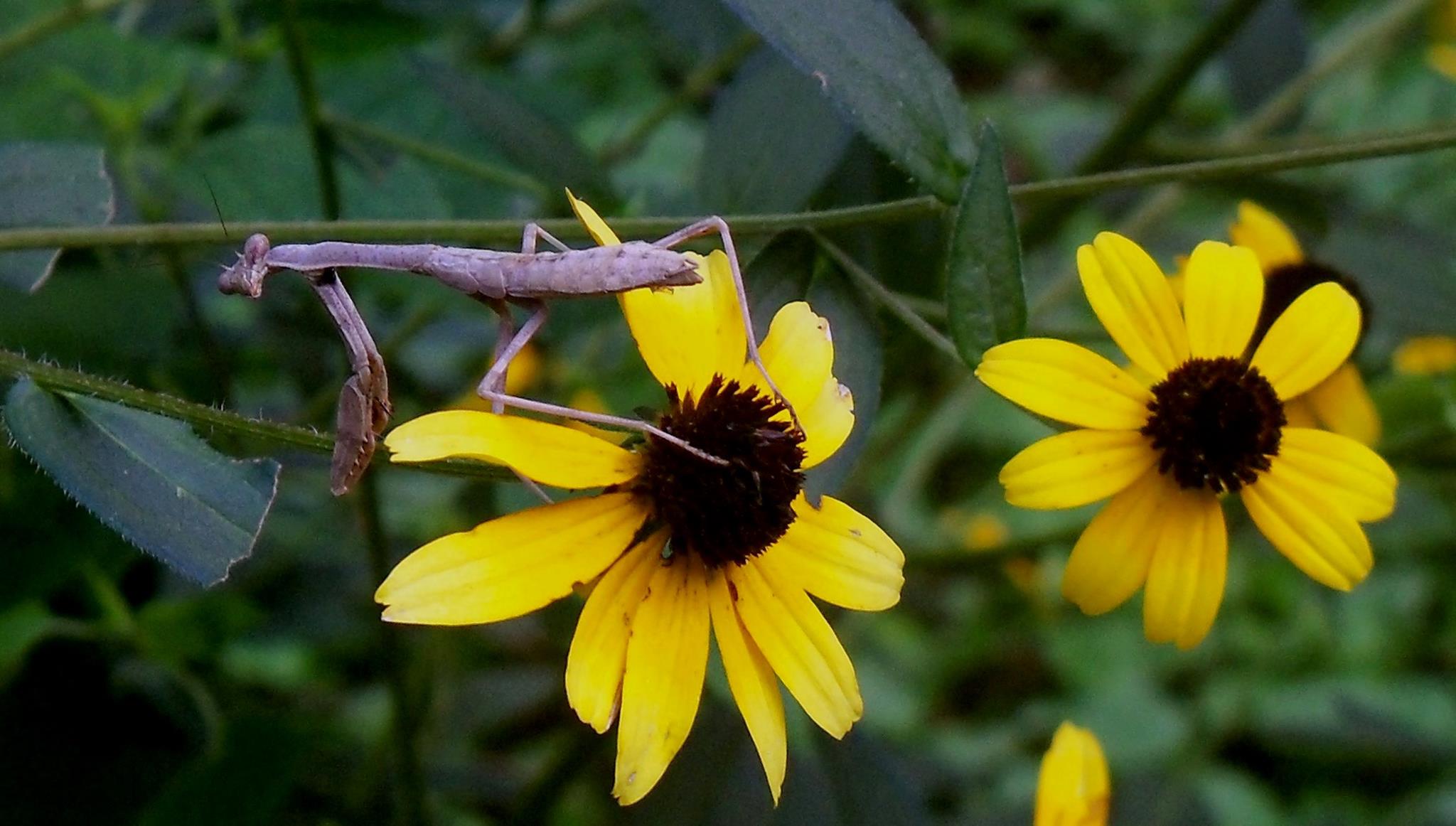
Praying Mantis calisthenics – photograph by Deborah Marcus (NC), friend and nature photographer

Not long ago while visiting in NC, I spent an afternoon with my friend, Deb, at the North Carolina Zoo. Deb takes pictures of life in nature; everything from plant life to animal life (and everything in between). She sees things that most folks miss and often stopped and pointed out things I would have just walked right by as my “notice-er” is out of practice. When Deb takes a picture she always whispers, “thank you”. When I first caught her doing it we were just thrilled and tickled that I was actually hearing her whisper of thanks! Cochlear implant sisters-in-arms, we always celebrate those moments.

However, since my visit I have given her habitual murmured thanks a lot more thought. When I tend to think on somethin’, I ponder, speculate, question, and soul-search. Eventually I write about it – even if it takes me almost 15 months to get around to it!

Like a Dangling Spider Cares?

I have to admit, when I first heard her thank a lily-pad, skimming dragonfly, I thought, “Umm. This critter does NOT care if she thanks it for the Kodak moment or not”. But it’s deeper than that. An attitude of gratitude and respect is cultivated. We certainly aren’t born with it. I remember teaching my toddlers “please” and “thank you”. Sure… some of that can be a learned behavior from appropriate modeled examples. Some folks are just naturally friendly and easy-going. Some walk around like a sour puss (I’ll not mention any names) and thanks is a foreign language. Most of us fall somewhere in between, our emotional health dependent on life circumstances. This is why an attitude of gratitude must be created and exercised faithfully to instill a HABIT.

It starts with the small things. Walking out underneath my porch to dispose of an empty plastic container, I thank the spider who just snagged that mosquito. (No. I haven’t found it in my soul yet to thank any skeeters). I try to thank my family members for doing things – EVEN IF IT IS THEIR JOB TO DO SO. I thank my students for turning their work in on time; or, if late, for eventually turning it into me! I thank the very pregnant, adjunct coordinator for my department, as she certainly has better things to do (like nesting) than to email all of us our reminders for the semester. I thank the person in training at the U.S. Post Office for waiting on me – which they stuttered out a very surprised “Your welcome!”. (Doin’ everything I can to assist in a decrease of “goin’ postal”). I thank the cashiers at the grocery store, Wal-mart, and CVS. (I thank the produce department workers, which is only funny to you if you know me well). I thank my waiter/waitress every time they do the smallest thing for me at a restaurant… even though it is their job. I thank “hound dog” for every task she does for me, which only increases the tempo of her wag. Do you see how far this attitude of gratitude can go?

Sitting with a friend waiting for small group to start one Sunday morning, I startled her by saying, “thank you for being my friend”. She sat there with her mouth hanging open waiting for “more” or for “the other shoe to drop” (like… would you DO THIS FOR ME?) She said, “That’s it? Well gee. I’ve not received a thanks like that in awhile!” I grinned at her but thought, ►well why not?◄  Why do we not thank the folks in our life even when there is no real reason? Keeping it to ourselves doesn’t bless anyone.

“Silent gratitude isn’t much use to anyone.”

~ Gladys B. Stern

Expressing our thanks must be EXPRESSED. William Ward said, “”Feeling gratitude and not expressing it is like wrapping a present and not giving it.” According to “Happy Life U” (you should check it out!) expressing thanks can actually improve emotional happiness.

New research shows that practicing gratitude may be the fastest single pathway to happiness, health, long life, and prosperity. In a remarkable study performed by Dr. Emmons, people who kept a gratitude journal for just 3 weeks measured 25% higher on life satisfaction after wards. They exercised more, drank alcohol less, and their families and friends noticed that they were nicer to be around. And the effects lasted for several months beyond the initial 3 week study. Other studies on gratitude are confirming these results. People who take the time to notice and appreciate the good things that come their way through grace, or luck, or the goodness of others are happier and more peaceful. They do better on cognitive tests and tests of problem solving skills. They practice healthier habits, have better relationships, are more optimistic and live longer. Gratitude is one powerful emotion (Happy Life U, 2011-2012, para. 5).
 

So What Has This Taught Me?

I already explained I’ve been thinkin’ on this topic for better than 15 months. I’ve even followed up with a conversation or two with my friend, Deb, about this which likely has her wondering why this is so important to me. I write a great deal about invisible and chronic illness, acquired disabilities, and living victorious lives in the bodies in which we find ourselves living.

Naturally, I had to research if being thankful could help folks in the community of souls of which I self-identify. Wood, Joseph, and Linley (2007), suggest that gratitude can be a powerful social support tool that folks with disabilities can use to help them. They asked 236 folks with various burdens (disabilities, chronic and terminal illnesses, addictions, etc.) to participate in a study that asked them to keep a gratitude journal. Folks discovered their written “thanks” eventually jumped off their pages and out of their mouths. “Gratitude correlated positively with seeking both emotional and instrumental social support, positive reinterpretation and growth, active coping, and planning” (Wood, Joseph, & Linley, 2007, p. 1076).

Allison Shadday has MS. She believes we need to shift our attention. “Sometimes we all have to slow down intentionally before we’re able to genuinely appreciate the many positive aspects of our lives. If you find yourself feeling critical or negative during the day, take a deep breath and redirect your attention to something for which you’re grateful. Notice if your body becomes more relaxed and your breathing more steady. Tune in to how your attitude shifts when you focus on the sweetness in life. This is living consciously” (Shadday, 2006, p. 51).

It seems… being thankful makes us healthy. More than that… it can make us HAPPY. The recipient of our thanks may not deserve it. They may not look like they need it.

Do

It

Anyway.

I think you will find it can change YOUR life, for the better.

Denise Portis

© 2012 Personal Hearing Loss Journal

Note:  You can “see” and “hear” more from Deb at http://visionsofsong.wordpress.com/

Happy Life U. (2011-2012). New Science of Happiness. Retrieved August, 12, 2012, from http://www.happylifeu.com/Attitude-of-Gratitude.html

Shadday, A. (2006). Embracing an attitude of gratitude. Inside MS, 24(6), 50-51.

Wood, A. M., Joseph, S., & Linley, P. (2007). Coping style as a psychological resource of grateful people. Journal Of Social & Clinical Psychology, 26(9), 1076-1093.

Another Look at Isolation

Hearing Elmo welcomes Melissa Sisco, from Alabama to our list of talented writers who have learned to “write from the heart”. Melissa is the mother of two young daughters. She was first diagnosed with Meniere’s Disease in 2007, and also has asthma/allergies, a heart condition, weak bones, endometriosis, and diabetes Type II. Melissa admitted that “Meniere’s Disease has been the single most challenging medical diagnosis I have experienced in my 32 years”.

I’m not really sure why I’m attempting to do this.  I’m not much of a writer; at least I haven’t been for a very long time. But writing is one thing that, luckily, I can still do.  I really connected to the last piece that Denise wrote because I am right there, right now. Alone and isolated.  I don’t go out much at all, especially by myself.

In brief summary, my name is Melissa, I am a late-deafened adult, 32 year old female, married for 9 years (to an amazingly understanding husband), mother of 2 beautiful girls, ages 3 and 5. I was first diagnosed with Meniere’s Disease in my left ear when my oldest was 4 months old. I woke up one morning and could not hear anything out of my left ear and I was so dizzy I couldn’t even sit up straight in bed. About two years ago I joined the ranks of the Bilateral, but am lucky to only have moderate hearing loss in my right ear.  I wear an obscenely expensive digital hearing aid in my left ear (sometimes) and I need one in my right ear, but just can’t afford it right now.  I am not Deaf enough to qualify to be a member of the Deaf community where I live, and I am apparently “wrong” for choosing a hearing aid. But I can’t hear enough to qualify for the Hearing World anymore either.  I feel lost in limbo. I simply belong nowhere.

Why It Can be Difficult

I used to enjoy simple things like shopping, (especially shoe shopping) but now I avoid shopping trips as they make me nervous and, frankly the last time I did go out, (to my favorite shoe store) I literally knocked over a little old lady who was standing directly behind me.  I didn’t know she was there, couldn’t hear her or sense her at all.  I backed up from a store display to get a better view and plowed that precious little woman straight into a mannequin.  I was so embarrassed, I apologized profusely as other patrons helped her up and glared at me like I was the devil incarnate.  I left the store and haven’t gone back since.

At work I hide in my cubby hole of an office (it’s actually the records closet and my office).  Once upon a time, I was a 911 dispatcher, and I was really good at it. I did that for nearly 8 years, before my hearing loss reached the point where I can no longer do that job safely.  I was lucky to not have been let go, and I am now relegated to some sort of mish/mash office manager and dispatch supervisor. I know I am unbelievably blessed just to have a job, but I avoid even my coworkers now because most of the time I have no idea what they are saying, so I just nod my head and try to wear my neutral “yes I understand” expression, which is a big fat lie.  I have a strong aversion to my work desk phone.  It’s set as loudly as possible, yet I still have to ask people to repeat.  (My employer is working on getting me a CapTel phone, but our system is slow as molasses). Sometimes, when I see a number from someone I know I have a particularly hard time understanding (ahem –soft spoken females like me), I just let it ring to voicemail. I have found I also do this at home, and on my cell phone.  Although to be fair, half the time I really can’t hear them ring, or –at home anyway- I hear it but can’t find where the “ring” is coming from.  (Usually I’m hoping it’s a real sound and not just a figment of my broken cochlear nerve as I frantically search room to room looking for my telltale “flashing strobe light” phone.)

Recently a group of female friends (ok coworkers and coworker’s wives – I don’t really have a lot of friends anymore) went out to dinner and a movie and actually invited me to go along.  I really wanted to go, I wanted to be with other people and I really wanted to see that movie!  But I remembered that previously, I had a difficult time asking for, receiving, and setting up the captioning device at that particular theater and I’m not going to pay $15.00 to see a movie I can’t “hear/read.” Keep in mind if you are new to the whole captioning thing, you can ask for it, but that doesn’t mean the minimum wage paid teenage employee has any idea what you’re talking about. I dreaded the embarrassment of going through the captioning device thing again, especially in front of others. Also the chosen restaurant was a loud, noisy Mexican joint with great food and a fun ambience, but a terrible place for even the highest quality hearing aid to make a difference. So I lied and said I had no one to watch my kids. Can you say Avoidance?

I rarely get invited anywhere nowadays and subsequently lost a number of “friendships” because of having to cancel last minute because of my lovely vertigo spells. Apparently, “Sorry I’m too busy hanging on to the floor for dear life and vomiting to go out tonight,” has a limit on the number of times it can be used as a forgivable excuse.

Trying to Find the Positive

There are good things about losing your hearing, really there are. If it’s really noisy and I’m trying to sleep (like my neighbor and his oh so noisy garage band at 10 pm, or the neighborhood dogs howling for no reason at all) I can sleep on my good ear so I can’t hear anything.  If I have a migraine the hearing loss is actually a relief.  I can sometimes pretend I didn’t hear something if it’s something I don’t want to talk about.  (I think my husband has figured that last one out, drat.)  When my daughter(s) start whining/throwing tantrums I can literally turn my deaf ear to it.  Although they have also figured that out too.  I really try to appreciate the few sounds I can still hear, now more than ever. I try to imprint these sounds upon my memory so that I never forget – the giggling laughter of my little girls, my husband whispering “I love you” in my good ear, the melody of morning songbirds, and the relaxing sound of ocean waves.

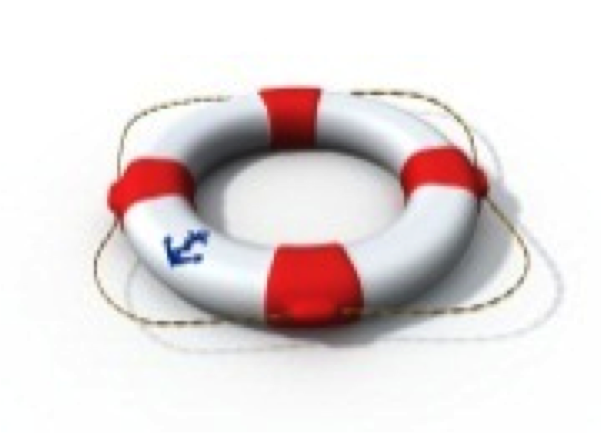
I can actually swim in real life, (well I could swim once anyway), but as for living the new life of a Deaf/ Hard of Hearing person I am barely hanging on to my flotation device.  Denise always manages to end her musings on a positive note, so I will try my best.

I hate feeling sorry for myself.  I hate being depressed.  I hate hating everything. I can’t stand people who constantly whine and throw pity parties for themselves. I certainly don’t want to BE one of them. I’ve always been of the mindset that if you fall, you pull yourself up by your bootstraps and keep going.

I know that I am lucky not to be dying from some terminal disease, I am just going deaf and I’m dizzy most of the time.  I know, rationally, that I just have to learn to adjust to my “new” normal. I just don’t happen to be particularly impressed with what my new normal is, or what it may be in the future.  So I’m angry sometimes.  Well, really more like awfully T’d off. And I am actually annoying myself with the unnecessary amount of negative energy that I am producing.

I try to remember that the good Lord doesn’t give us more than we can handle. But God apparently thinks I have the strength of Hercules or something, but I disagree.  Grrrr.  I get so mad at myself, at what is happening to me, and I’m mad at being mad.  I don’t like mad people!

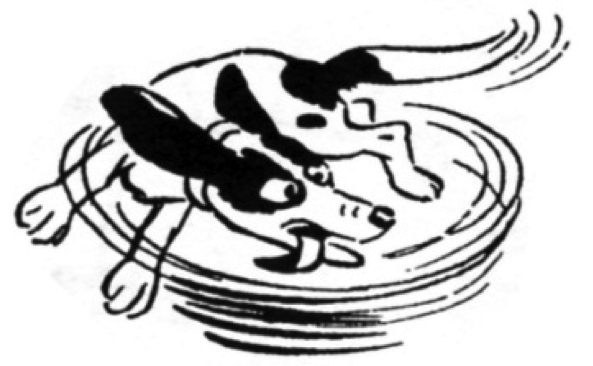
I suddenly have a great amount of sympathy for that poor dog that continues to chase his own tail in circles.

I might be barely hanging on, and I can’t hear the people who may be shouting at me –trying to help me, but I’m not giving up either.  I’m pretty good at the doggie paddle, so I will keep on paddling, I just don’t really know where I will end up. I try to keep a sense of humor about all this when I can, although, sometimes others (fully hearing or truly Deaf) kind of miss the point.

I truly believe that where there is humor there is laughter and laughter spreads joy.  And one can still laugh even if you can’t hear yourself do so.

One of my favorite quotes is by Gustave Flaubert –

– “One can be the master of what one does, but never of what one feels.”

At this point in my journey, I know my future is up to me and my actions will determine what is next, but I just feel lost at sea- drifting somewhere, and I don’t even have any oars, or a decent GPS system to help me navigate.

Salud and good luck on wherever you are on your personal journey.

Melissa

© 2012 Hearing Elmo

Decisions, Decisions…

For a totally unrelated reason, I was reminded this week that my husband cannot swim. I hate it when a discussion brings up old nightmares about the topic too! Goes to show how much our subconscious is at work… especially when sleeping. Anyway, this conversation about the fact that my husband cannot swim had me dreaming about one of the most terrifying events that led up to my banning him from going into the ocean.

The year was 2001, and my family and I were in Siesta Key, Florida. Terry was taking some classes to finish up his doctorate. Always nice when degree completion requires on-site classes in Sarasota, and you can time it where the whole family can be dragged down with you! Terry wasn’t getting much rest and relaxation. Going to class all day and putting the finishing touches on his dissertation were exhausting. At night he was glad to just catch whatever sunshine was left in the day and rest on the beach while I corralled the kids into a distance I could easily manage their activities.

I’m not sure what prompted a non-swimmer without a life vest to decide to get on an inner tube, launch one’s self into the ocean, and drift off to sleep. He swears up and down he had no idea he’d drift out to sea. After all, when he got past the breakers and could just snooze, the ocean was calm and serene. I’m the one with hearing loss (a fact I’ve made plain on this blog). But exhaustion and FREAKIN’ DISTANCE FROM SHORE will dissipate sound waves and keep someone from hearing shouted warnings; even from hearing ear-drum piercing screamed warnings. That’s right. Picture me on shore with kids, jumping up and down, screaming warnings that a riptide had caught him and he was oblivious to the danger. I remember thinking, “he has the room key around his wrist so I can’t even get into our condo and have one of the kids call my parents to let them know Terry drowned”. Morbid, yes? But I knew Terry could not swim AT ALL. The man cannot even dog paddle (something Chloe has told me since that she’s a little embarrassed about actually).

We may not have been able to attract Terry’s attention, but we did other folk’s. Soon a small crowd of people were whistling and hollering for “Terry!” A man, likely a native, stopped close to me and said something. I could hear the rumble and pitch of his voice. I stopped screaming long enough to sputter, “I have a hearing loss and have to see your face to hear”. So he touched my shoulder to get my attention and said, “He can’t swim? Want me to go after him?” I looked out at my still sleeping husband and agreed immediately. “YES PLEASE!!!!” (At least I’m polite...)

So the man went after my husband. He must have been shouting as he swam, because when he got closer to Terry, I could barely make out that Terry finally woke up. I saw a flail of hands, legs, and arms and prayed he’d hold on to that inner tube! The rescuer had started further up the beach to Terry and I think the tide and his strokes eventually got him safely to Terry’s side. He must have given him instructions to kick, which he did as well along with some steering, and eventually ended up on shore about a mile from where we all started. The small crowd of people had followed the kids and I down the beach. Some kind soul had picked up our things and carried them with us, knowing I wasn’t cognizant enough to even do that.

Drifting Off

A very popular topic for writers who discuss acquired disabilities and chronic illness, is social isolation. Isolation does not happen all at once. It is a gradual process; a series of small decisions and choices that eventually yield a self-perpetuated aloneness. We become “deaf” to the shouted (and well-meaning) warnings of people around us. Can we be rescued? Will we even allow a “strong swimmer” to intervene?

For people with hearing loss, isolation is almost a part of the process of learning to live with it. I know few people who are late-deafened that did not have at least a short period of self-imposed isolation. Why? Well experts have said of the late-deafened, “They no longer felt they belonged in the hearing world, and neither did they belong in the prelingually deaf world. Onset of deafness had left them in a twilight zone between worlds and had robbed them of their identity” (Barlow, Turner, Hammond, & Gailey, 2007, p. 442). Other acquired disabilities can produce the same isolation, however.

Physical difficulties can prevent people with a mobility impairment from creating social networks. Even the weather can keep some folks with mobility issues away from others. If you have a power wheelchair or scooter, you do not want to go out in the pouring rain or blistering heat. Despite the intentions of the ADA, not all places where friends get together are accessible. Whether you are born with some limitations, or acquired them later in life, disabilities or chronic illness may result in feelings of loneliness and isolation, and a lack of access to support information (Matt & Butterfield, 2006).

Not As It Seems

Not all decisions to RSVP to invitations with a “No, thank you” are because of isolation, however. Friends and relatives need to understand and trust that sometimes? Those “no’s” are not a pity party nor decision to pull back. I don’t go to pool parties. I have technology that cannot get wet and a husband who cannot be in the heat because of having one kidney. (And have you picked up yet that THE MAN CAN’T SWIM?) Sometimes there are very legitimate reasons for declining an invitation. A person may not be able to do evening gatherings because they have legitimate needs for an early night. Folks with disabilities and chronic illnesses often require more sleep than the average adult. It is not always possible to nap the afternoon before in order to go to some evening “shin dig”. Some people have to offer late apologies to activities they had planned to go to… but they have a “flare” when it comes time to prepare for an outing of fun and fellowship. The weather gets the final say for some of us. I can agree to go to a “Girl’s Night Out” a week in advance, only to have a weather system move in to where I can barely move in an upright position.

But…

I have also fudged about going to things I really could have had I really wanted to attend. Sometimes we say “no” because that is

EASIER or

HABIT.

We have to learn to police ourselves and ask ourselves some legitimate questions when our first impulse is to decline an invitation.

Social Networks

Nothing gets on this female’s nerves more than when I hear someone ‘pooh-pooh’ social networks like FaceBook, My Space, Blog networks, online support groups, and message boards and forums. I have heard holier-than-thou folks spout that these avenues “aren’t real people” and therefore are not “real relationships”. Drs. Patricia Obst and Jana Stafurik refute this much better than I can. “Online we are all able-bodied“. Online there is a “psychological sense of community and social support found through membership of disability-specific websites” (Obst & Stafurik, 2010, p. 525). These researchers looked at 160 different individuals who had various disabilities or chronic illnesses. “Results indicated that users did receive moral support and personal advice through participating in such online communities. Further, results indicated that online social support and feeling a sense of community online were positively associated with participants’ well-being in the areas of personal relations and personal growth” (Obst & Stafurik, 2010, p. 526).

I am always thrilled to have guest writers here on Hearing Elmo. (Interested? Email me at denise.portis@gmail.com). This forum has provided information and support to individuals “living it” and to family members and friends for information. I have been invited to write in other forums and welcome the opportunity. Ever heard the phrase, “dissemination of information”? The Internet makes us equal. It provides an easy, inexpensive way to find support, learn, advocate, and connect.

It can also serve as an avenue in which a warning comes through loud and clear… even to those of us who are late-deafened.

Are you avoiding outside activities?

Are the reasons you are doing so legitimate?

Are you connecting with others?

Are our decisions prompted by necessity or the result of anxiety, depression, and an attitude of giving up? These are important questions to ask ourselves. Please don’t find yourself adrift on an ocean with the shore out of reach. Ask for help. Discover a hero swimmer on their way to rescue you.

Denise Portis

© 2012 Personal Hearing Loss Journal
Barlow, J., Turner, A., Hammond, C., & Gailey, L. (2007). Living with late deafness: insight from between worlds. International Journal Of Audiology, 46(8), 442-448.

Matt, S. B., & Butterfield, P. (2006). Changing the disability climate: Promoting tolerance in the workplace. American Association of Occupational Health Nurse, 54, 129–134.

Obst, P., & Stafurik, J. (2010). Online we are all able bodied: Online psychological sense of community and social support found through membership of disability-specific websites promotes well-being for people living with a physical disability. Journal Of Community & Applied Social Psychology, 20(6), 525-531. doi:10.1002/casp.1067

If Fish Aren’t Stupid…

I love it when I learn something new. Even when that learnin’ means that it contradicts something I previously thought was true. I grew up on a farm/ranch in SE Colorado. The families I knew, including our own, had all kinds of animals. Common critters included horses, cows, pig, sheep, chickens, turkeys, peacocks, ducks, geese, and even a llama or two! Something you didn’t see a lot of in the family rooms of various ranch houses were aquariums. We had some big ol’ goldfish that grew to an astonishing size in the cow tank near our house. What was even more astonishing than their size is that they survived the frozen tank winter after winter. I can’t remember who first told me that fish are stupid. This was long before “Finding Nemo” even came out in theaters, with Dory convincing us all once and for all that

fish.

are.

stupid.

After I went away to college and married a city boy, I actually lived in town big enough to have cable television. I found that I had a lot of years of catching up to do on Animal Planet, the Discovery Channel, and many other educational animal shows. However it wasn’t until my daughter’s boyfriend – the one who happens to know all there is to know about owning a freshwater tank – put up a couple of aquariums in our home on behalf of beloved daughter, that I began to see freshwater fish up close and personal. As a matter of fact a big 30 gallon tank sits behind my desk, so it is pretty hard to miss the freshwater angelfish swimming around the tank. I very soon discovered that my preconceived notion about the stupidity of fish was – well – WRONG. They really do NOT have 30 second memories. They are affectionate, can remember the easiest “trail” through the freshwater plants to circumnavigate the tank, will follow a person around the tank to “beg” for food, they can be aggressive and yet can be tame enough to actually take blood worms from your fingers. They will live in harmony with other types of fish (but not all), and seem to actually play with each other occasionally. Don’t get me wrong. I’m not ready to whip out an IQ test to see how they fare, but I really no longer believe that fish are stupid.

Other Wrongs – Now Corrected

I just turned 46-years-old this week. That is really hard for me to wrap my mind around. I remember when my mother turned 46-years-old, I was a very young and immature 23-years-old. I remember filling out her birthday card to send from my little apartment in Chattanooga to her “home on the ranch” in Colorado and thinking… “Wow. Mom is O.L.D. She is definitely entering her “senior” years now.” I’ve got to tell you now that I’m 46-years-old myself? Well, let’s just say I want to open mouth – insert foot.

I also grew up with very limited experience with any person with chronic illness or invisible disabilities. I did not have very much experience with people with even visible disabilities. Growing up in a small farming community limits one in that way I guess. It wasn’t until I became deaf and developed Meniere’s disease that I first really began meeting people of all kinds who are “differently abled”. Having an acquired disability today is much different than it use to be simply because we have the Internet that connects us to each other and to a wealth of information as well. I grew up believing that people with disabilities were to be pitied. Knowing what I know now about a community of which I am proud to be a part of, pity is the last thing any of us want. I’m constantly amazed by the perseverance and strength that I see in people with all kinds of various “differences”. I hate to even use the word disability, but it is the language present in our current laws that protect the rights of those who have them. A fellow client from Fidos For Freedom, Inc., first introduced me to the term “differently abled”. I find that this phrase much more accurately describes those who live a victorious life despite any physical, mental or emotional differences they may have. Through networks such as the Hearing Loss Association of America, Cochlear Americas, Invisible Disabilities Community and Invisible Illness Awareness Week I have learned that having invisible issues also creates incredible strength and depth to the human soul. I’ve met some wonderful people who have taught me how to navigate life with grace and a “can do” attitude.

I’ve learned that all of us should “check our preconceived notions” at the door. Assumptions are a discriminatory lot. I do have to admit to also enjoying lessons learned from erroneous stereotypes. After all, that means I’m still learning. You can teach an old dog new tricks! After all, I’ve learned that fish aren’t stupid…

Denise Portis

© 2012 Personal Hearing Loss Journal
Walk a Mile in My Shoes

Gonna change directions here today as the death of Whitney Houston coincides with something I am seeing more and more in the disability community.

It doesn’t matter whether or not you like Whitney Houston. What I am disappointed to see is some of the comments and “hatin’ on” this artist since her death. I actually saw on one person’s Facebook that drug addicts and alcoholics get what they deserve. “Someone with so much talent shouldn’t have wasted it”

Wow. I mean REALLY?

Unless you were thrust into fame and fortune at a relatively young age…

Unless you had to deal with the media on a daily basis, giving up any hope of privacy…

Unless you married for love and were crushed by disappointment…

Unless you raised a child as best you could in the backdrop of an industry that can be unforgiving…

Unless you developed an addiction because of life’s crushing problems and entered rehab while the whole world knew it…

Unless you made mistakes and fell back into bad habits – all while the whole world watched…

… then keep your mouth shut about Whitney Houston.

Why Does This Upset Me? Why Should it Upset YOU?

Anytime people begin to criticize and judge someone else a change takes place. Amnesia.

I rarely hear someone criticize and judge someone who is just like THEM. It usually happens when someone is different than you are. Criticizing is easy when we don’t walk in that person’s shoes. Judging is a simple task when we cannot hope to understand what really caused someone to do something when they are different than we are. We forget all the times we have been hurt for being judged and criticized by people who do not understand our own choices in life.

Wanna get me ticked off? Criticize and judge someone who chose to mitigate their disability with a service dog when you don’t live with a disability. Sometimes even others within the disability community may scratch their head and wonder why a person would choose a service dog when “they have the same disability you do”. What they may not know is that there ARE various differences between your disabilities. Your lives may be different. They may have 24/7 help that you do not have access to in your own life. Why don’t we celebrate “whatever works”?

In the hearing loss community, I know people who criticize people who don’t allow “nature to take its course” and embrace their deafness. To some, if you do not learn ASL then you are shunning a community that could be your family. For others who have accepted technology and/or surgery to stay connected to the hearing world, they may criticize those who have learned ASL for various reasons – personal reasons! I know people who criticize other people’s choices about hearing aids or cochlear implants. Why are we prone to criticize anyone who makes a different choice than what we have made for ourselves?

I think perhaps it is a form of self-protection. We may somehow feel that if someone who is very similar to us chose another path, that their choice may mean that our own path was a wrong one. It may be a form of defensiveness. If we see someone successful at living life with a disability, we may feel the need to criticize because we still have some problems with our own disability. If we see someone floundering at living life with a disability – and they chose another path? Many point and say, “I told you so”.

We could all learn to be more compassionate. We could all learn to listen more and keep our mouths shut.

When you judge another, you do not define them, you define yourself.” –
Wayne Dyer

If you judge people, you have no time to love them.” –
Mother Teresa

What May Happen if You Reserve Judgment

If you can keep your opinions to yourself, you may just make some discoveries:

You didn’t understand why they did what they did until you got to know them better.

You misunderstood their choice

After learning more about the person, you actually agree with their choice.

After time you find that you still would have done it differently yourself, but it seems to work for them.

If you can keep your negative opinions to yourself and instead pray for and encourage that person, you may discover a…

FRIEND who has the same taste in shoes!

Denise Portis

© 2012 Personal Hearing Loss Journal
Why I Love Winter – Restoration


Part Three of Four…

February starts this week. This winter has been a mild one in my neck of the woods. Very little snow and mild temperatures make many folks exclaiming “What a terrific winter we’re having!” I don’t begrudge the milder winters to those that enjoy them. I do love my snow though! When we have more than our share of winter weather, I’m happily out in it directly after a snowfall, shoveling and scraping and tossing the “white stuff” around!

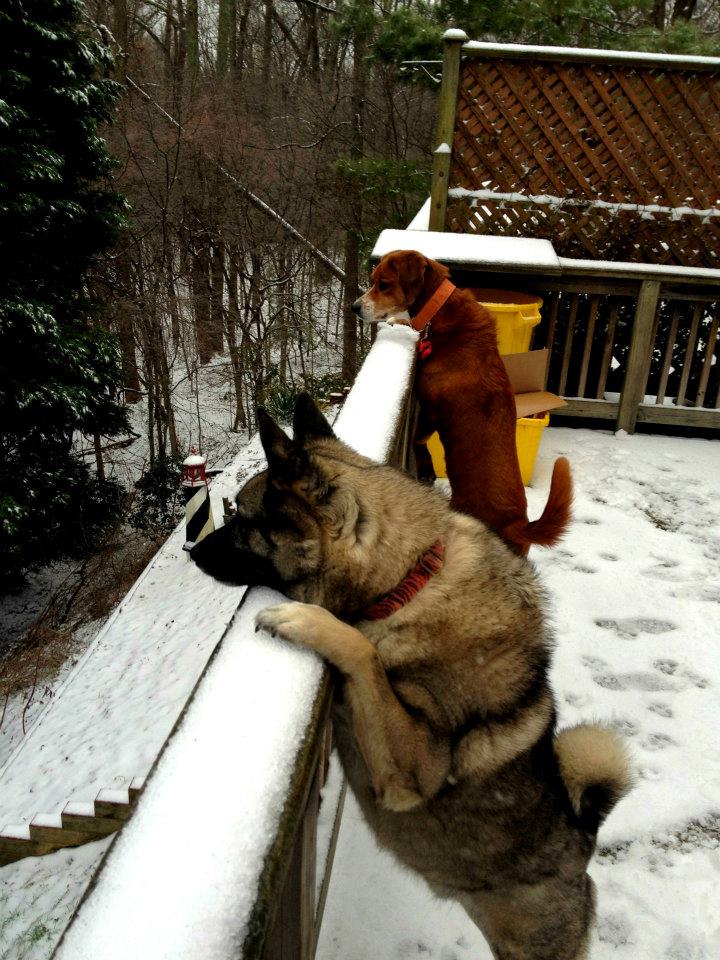
Some of nature goes “dormant” during the winter while other types of plant life may just conduct photosynthesis at a reduced rate. Animals may hibernate, or only move about sparingly to limit calorie burning. Our winter has been so mild the squirrels have been scampering about much like they do in the autumn. I know for a fact the raccoons are out and about for we finally had to break down and purchase “raccoon proof” trashcans. I’ve seen deer near the creek below our home. So have the dogs:

Foxes stare at us from the bushes and shrubs at night when we take the dogs out for the last time. Animals are busy, busy. The trees and perennials are just – C o N f U s E d.

When I think of winter, however, I think about all the restoration that is taking place. Nature may not LOOK alive, but it is. Many types of life are resting, preparing to get very busy producing new growth or replenishing body fat. Growth spurts cannot happen without winter and the dormant phases many types of life experience. This period of restoration actually prepares and allows this growth.

An old, but favored song about the seasons says it much better than I am able to describe:

Every Season

Every evening sky, an invitation
To trace the patterned stars
And early in July, a celebration
For freedom that is ours
And I notice You
In children’s games
In those who watch them from the shade
Every drop of sun is full of fun and wonder
You are summer

And even when the trees have just surrendered
To the harvest time
Forfeiting their leaves in late September
And sending us inside
Still I notice You when change begins
And I am braced for colder winds
I will offer thanks for what has been and was to come
You are autumn

And everything in time and under heaven
Finally falls asleep
Wrapped in blankets white, all creation
Shivers underneath
And still I notice you
When branches crack
And in my breath on frosted glass
Even now in death, You open doors for life to enter
You are winter

And everything that’s new has bravely surfaced
Teaching us to breathe
What was frozen through is newly purposed
Turning all things green
So it is with You
And how You make me new
With every season’s change
And so it will be
As You are re-creating me
Summer, autumn, winter, spring!

Life Restored

In my own life I have periods of “winter”. Frankly and honestly? I have been more dead than alive during specific life seasons. I don’t know if I could even call it “dormant”, but I do know life continued for spring eventually DID come.

Experiencing deafness as an adult and acquiring a balance disorder is never a welcome addition to life. One doesn’t ASK for disability, chronic illness or invisible difficulties. Yet, some of us are asked to walk this road. I wish I could say that I have always accepted what has come with grace, humility, and courage. I cannot.

Depression is an ugly thing. It comes in many forms. Depression also spawns a number of different symptoms and feelings in individuals. For me, it meant I almost lost my life. There were some close calls. Even when I was able to get past the despair, there were days I simply felt numb – going through the motions of being a mother of preteens, working, and barely surviving. It wasn’t until the crisis had passed that I was even able to share with those closest to me what I had gone through and how close I really came to the “end”. Maybe that is why this blog is so important to me and why I open it up to authors of all kinds to tell their story. In 2002, I was reading a lot of things on the Internet. Some of it saved my life.

As I began to learn to cope with everything that was happening and learned to adjust to my worsening hearing and balance, I got a lot of rest. Not even necessarily the poor type of rest that comes with depression. I did begin to slowly heal from the inside out. No (grin). My ears didn’t heal. But I did gain momentum in learning more about HOW to cope with hearing loss and balance issues. I learned to ask questions. I learned what worked for me and what did not. I surrounded myself with people who were ahead of me in the process and along side of me in the journey. Eventually I discovered I could also reach out to those who were still coming to terms themselves with hearing loss. I felt restored.

I want to close this post out with the video (captioned in both English AND Spanish) of “Every Season”. I hope you find as much wisdom in the simple song as I have. If you are experiencing winter as the result of chronic or invisible disability and illness, please write me. I handle all correspondence through this blog confidentially unless you specifically ask me to post your response for some reason. (Please email me at denise.portis@gmail.com    instead of leaving a comment as these DO become public). Despite my hearing loss I am a good listener. (SMILE) I do not claim to have all the answers, but I have a story, too, and we may share many experiences, frustrations, and successes. I hope (and even pray) that your winter is a time of restoration.

Denise Portis

© 2012 Personal Hearing Loss Journal
Why I Love Winter: Expectation

(Part Two of Four)

I like having things to look forward to in the future. “Beats” dreadin’ it, right? It doesn’t even have to be something BIG. In fact, some of my favorite things – are “small” things. Is the song by Julie Andrews who plays, Maria, going through your head now?

Raindrops on roses and whiskers on kittens
Bright copper kettles and warm woolen mittens
Brown paper packages tied up with strings
These are a few of my favorite things

One of the many reasons I love Winter is that I love the feeling of expectation… of anticipation. You see… I know in a couple of months, the earth will awake. I love seeing frosty, ice-crystal tree buds, bright green with new life and colors peek-a-boo’ing at me all around my neighborhood. Nature holds it’s breath all Winter. As the temperatures warm and sap begins flowing in the trees, as the frost dissipates from the thawing ground to allow the first flowers to push up through the warming earth… nature exhales.

Perhaps I have a good imagination. But one thing I love about Winter is that there is a feeling of expectation, renewal, and life that builds a yearning in my heart even while the icy-cold fog greets me every morning. I know change is coming.


In many ways, this mirrors how I am slowly adapting to life. Life can be hard. If you haven’t learned that yet, sit down and brace yourself. It’s coming. Difficult days and trying times are a part of life. I realize I’m talkin’ like I’m as old as the hills. But at 45-years-old, I have lived enough of life to know there are hard times and good times in life.

When I’m going through a particularly tough time, I remind myself that this time will pass. Better times are ahead and I only need to persevere. Yes, I realize that there are times in our lives where it seems like “when it rains it pours… and our umbrella is broke”! You may be experiencing that kind of time. I’ve experienced them myself. Do you know what I’ve learned?

When I am experiencing a short-term, tough time, I’m able to grin and bear it and push ahead with this thing called “life”. However, sometimes it seems nothing is going right. Medical problems, personal loss, destroyed relationships, financial strain, and new challenges do NOT give us a feeling of exhilaration – rather, one of defeat. “That’s it, God!” (waves a white flag) “I give up. I’m done. Hello? Yup it is me, here! Chucking it all in… finished, quitting, stoppin’ right now. Stop the train, I’m gettin’ OFF”.

That’s when we need someone else to remind us of the days ahead. Ask for help. If you notice another who is shell-shocked by current life crisis, be their “someone”. We need someone to gently jog our memory about the coming tomorrow and the new opportunities, a “new normal” physically, and that “joy comes in the morning” (Psalm 30:5 “… weeping may endure for a night, but joy comes in the morning“). You see… this “Winter” in life is temporary. There’s an “exhale” coming!

Problems suck. We all want a problem-free life. I remind myself as I’m experiencing new (and sometimes, old) problems, that good can come from these tough times. I grow stronger, more resilient, and even more content. During this Winter there is a feeling of expectation. I can feel my very soul stir and my senses tingle as anticipation races through my veins! There is very little we are guaranteed. But friends? Spring is one them. Spring is coming!

Denise Portis

© 2012 Personal Hearing Loss Journal

Imagine!

Emmanuel Kelly The X Factor 2011 Auditions.

Click on above link for short performance!

I’m not a huge YouTube fan, because captions on music and video are not “perfect”. It’s better than it use to be, but it isn’t good enough that I could say I really enjoy it.

However, this past year I discovered “The X Factor”. It is now in the U.S. and the FOX network is underway on season one. I still like watching the shows in other countries as well. I came across this very special one this past week.

I was so impressed with Emmanuel Kelly’s performance. I think he and his brother’s adoption story and courage can teach so much. Bravery, courage, and “spunk” are not narrowly defined by a body that wields these attributes. Imagine what our world would be like if everyone saw with filtered eyes what Emmanuel’s mother did. Imagine what it would be like if everyone had someone in their corner during developmental years to mold and shape phenomenal human beings. Imagine if every individual with bodies that are broken, damaged, disABLED, or diseased learned to refine and use their gifts.

Learning to live with an acquired disability can be hard. There are always harsh lessons. Yet… acquired disability is not the end of life. We all have talents, skills, and gifts that are not affected by any changes you may find that define “the new me”. Sure… you may lose a few opportunities. I use to sing in choirs. (SMILE). Yet, I still choose to discover, refine, and eventually use the gifts that I DO have. You can do the same. May we all learn to look past first impressions and appearances… learning to IMAGINE.

Imagine there’s no Heaven
It’s easy if you try
No hell below us
Above us only sky
Imagine all the people
Living for today

Imagine there’s no countries
It isn’t hard to do
Nothing to kill or die for
And no religion too
Imagine all the people
Living life in peace

You may say that I’m a dreamer
But I’m not the only one
I hope someday you’ll join us
And the world will be as one

Imagine no possessions
I wonder if you can
No need for greed or hunger
A brotherhood of man
Imagine all the people
Sharing all the world

You may say that I’m a dreamer
But I’m not the only one
I hope someday you’ll join us
And the world will live as one

Denise Portis

© 2011 Personal Hearing Loss Journal

30 Things

From Invisible Illness Week

30 Things About My Invisible Illness You May Not Know:

1. The illness I live with is:

Invisible if I want it to be, but I wear bling and use a service dog so that it is not.
2. I was diagnosed with it in the year:

1993
3. But I had symptoms since:
I was 6 years old after a car accident.

4. The biggest adjustment I’ve had to make is:
Learning to hear with a cochlear implant and learning how to adjust on days my Meniere’s disease symptoms have me wobbling around with poor balance.

5. Most people assume:
My cochlear implant has “fixed me”.

6. The hardest part about mornings are:
Not being able to hit “snooze” on my alarm clock since that happens to be my service dog, Chloe. When the alarm goes off, she kisses me awake and there is no going back to sleep. The dog is definitely a “morning dog”.

7. My favorite medical TV show is:
Not really a medical show but I do like Dr. Phil. He’s a “reality therapist” and I think everyone who has an invisible illness needs to have a healthy dose of reality!

8. A gadget I couldn’t live without is:
FM Clipboard for classes.

9. The hardest part about nights are:
Trying to ignore the tinnitus that comes roaring into play after removing my cochlear implant.

10. Each day I take __ pills & vitamins. (No comments, please)
1 prescription (blood pressure) and 9 different vitamins – one of which is Manganese. Studies have shown that people with Meniere’s disease may have a Manganese deficiency.

11. Regarding alternative treatments I:
Have tried numerous ones including acupuncture, chiropractor, and vitamins.

12. If I had to choose between an invisible illness or visible I would choose:
Visible – no question. This is why I try to make my invisible illness – VISIBLE.

13. Regarding working and career:
I am proud that I am able to work having made a number of adjustments and having chosen to be partnered with an assistance dog.

14. People would be surprised to know:
That I dread group activities because I don’t hear as well as they think I do.

15. The hardest thing to accept about my new reality has been:
That I must sometimes choose not to do things I once enjoyed because of my symptoms. For example: If there is a movie I wanted to see that is coming out, but the weather is bad and my Meniere’s disease has flared up, I cannot go and have to put it off.

16. Something I never thought I could do with my illness that I did was:
Go back to school and finish my MS.

17. The commercials about my illness:
There are none. I’ve never seen a late-deafened/cochlear implant commercial, nor a commercial about Meniere’s disease.

18. Something I really miss doing since I was diagnosed is:
Listening to music.

19. It was really hard to have to give up:
Friends who couldn’t cope with the new me accompanied by a service dog.

20. A new hobby I have taken up since my diagnosis is:
Blogging/writing

21. If I could have one day of feeling normal again I would:
Go to an amusement park and ride every roller coaster there!

22. My illness has taught me:
That the disability community is live and well and fully utilize the Internet to connect, support, share information and to be proactive.

23. Want to know a secret? One thing people say that gets under my skin is:
“Nevermind”. If you aren’t willing to repeat it for someone who hears differently are you not behaving as if it doesn’t matter to THEM?

24. But I love it when people:
Include me.

25. My favorite motto, scripture, quote that gets me through tough times is:
Helen Keller:  “Blindness separates us from things but deafness separates us from people. “

26. When someone is diagnosed I’d like to tell them:
Email me. Ask questions. I want to help!

27. Something that has surprised me about living with an illness is:
How family members who once knew you “when” are not willing to learn about the new you.

28. The nicest thing someone did for me when I wasn’t feeling well was:
Email me and ask how I was doing.

29. I’m involved with Invisible Illness Week because:
Many illnesses and disabilities are invisible. I want to raise awareness.

30. The fact that you read this list makes me feel:

Appreciative that you care enough to learn more!

Denise Portis

© 2011 Personal Hearing Loss Journal