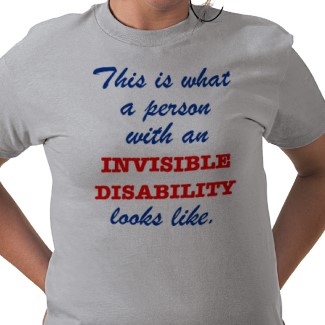
“It’s Just Lack of Sleep…”


When I was in college I adopted horrendous study habits that included “all nighters” and cramming. I also began to nap. I needed them. Between work study at the campus library and going to school full-time, naps were a coveted, hard-earned prize. I felt better after a nap. I could think better, got along better with my roommates, and could better survive the next long night of studying.

My children are 11 months a part. (No… it was not planned that way!) I did various “odd jobs” throughout their childhood so that I could stay home with them when they were babies, toddlers, and pre-schoolers. Thankfully, this meant I could nap at the same time they did. Let me tell you nap time may have been a thing of dread for a precocious three-year-old, but they were a luxury I enjoyed! I used a baby monitor even after my kids were not babies so that I could sleep with my good ear on it in order to make sure they stayed in their beds for their naps.

Darn it. My kids grew up and my part-time jobs began insuring I would no longer have a nap. I miss them still. I may not get a nap anymore, but I do make it a priority to get a good night’s rest. There is no magic number for hours of sleep necessary for an adult to function optimally. According to the National Sleep Foundation, sleep needs are individual; however, experts agree that healthy adults need 7 to 8 hours every night without risking accumulation of sleep debt (National Sleep Foundation, 2010). You may be slack-jawed having just read that. What adult consistently gets 7-8 hours of sleep every night? Few do.

According to the 2008 Morbidity and Mortality Report, 29% of all American adults report sleeping less than seven hours a night habitually. The report clearly stated that, “The importance of chronic sleep insufficiency is under-recognized as a public health problem, despite being associated with numerous physical and mental health problems, injury, loss of productivity, and mortality” (MMWR, 2008, p. 1175). So if we know we need more sleep, but don’t make it a priority… what is really at risk? Actually… a lot. Depression, heart disease, injury at work or when driving, and risk of DEATH may result from habitually losing sleep.

Factor in Invisible Illness or Disability

Let’s say you have an invisible illness or disability. You may argue (albeit weakly) that you get as much rest as other adults you know. I heard a mother with severe hearing loss complain of rarely getting a good night’s rest, “… in spite of being completely deaf at night without the hearing aids. It’s a matter of getting to bed and going to sleep. So much to do!” You may not realize that if you are operating with an invisible illness or disability you actually need more sleep. Don’t take my word for it. Lack of sleep may seriously impact the quality of life of a person with hearing loss (Preminger & Meeks, 2010). I have met people with Fibromyalgia, Chronic Fatigue Syndrome, MS, brain injury, PTSD, hearing loss, balance disorders, and paralysis who have all shared that they do not get as much sleep as they really need to live their best life.

For some, it may be that they are trying but chronic pain or discomfort may limit how much sleep they are able to get each night. For MANY, however, they simply do not take into account that they need more sleep than the average adult. Why do we make excuses for not making sleep a priority? If a doctor told you that you will feel better and perform better if you could make it a priority to get 2 to 3 more hours of sleep each night, would you do it? “Doctor’s orders”? If research and word-of-mouth testimonies give two thumbs up to getting more sleep, why do we ignore this?

I get 8 hours of sleep every single night – and sometimes I get nine! I’m no saint, but honey? Let me tell you I am ALL DEVIL if I do not get enough rest. It is beyond being grouchy too. I’m more insecure because I don’t hear as well. I fall more and sport pretty, but painful bruises. I don’t make time to exercise if I’m tired. My heart needs to exercise. I have a propensity towards depression when I don’t get regular aerobic exercise. My tinnitus is worse. I say “HUH?” more. (Honestly, I do!) Those who know me well… know how poorly I function when I do not get enough sleep. I lack the finesse of it being a cumulative effect too. Instead it shows up immediately. One of the most unselfish, “good for me” things that I do for myself is make 8 hours of sleep a night a priority. It’s a MUST in my daily schedule.

How about you? Do you get enough sleep? I have never met anyone that couldn’t re-arrange LIFE in order to prioritize sleep if they really chose to do so. It is a little embarassing the things we cut out of our life in order to make a good night’s rest a priority. You may cut out things like less time on FaceBook, or surfing the net, or channel surfing on television. If you live with an invisible illness or disability, how about trying a little test. For one month, really strive to get at least 8 hours of sleep each night. Journal about how you feel and about the steps you took in order to make sleep a priority. Ask others if they notice any changes in behavior, over all mood, and performance. You just may be surprised how important sleep is to even YOU.

Do you know you need more sleep but simply cannot find those hours? Talk to your doctor about whether or not you have a comorbid sleep disorder in conjunction with your illness/disability diagnosis. It is not uncommon to have difficulties going to sleep and STAYING asleep when you struggle with other issues.

I’m interested in your feedback! Have you found getting more (or less) sleep impacts your disability?

Denise Portis

© 2011 Personal Hearing Loss Journal

————–

Are sleepy workers a threat to safety, productivity?. (2009). Occupational Health Management, 19(2), 20-21. Retrieved from EBSCOhost.

National Sleep Foundation (2010). How much sleep do we really need? Retrieved August 22, 2011, from http://www.sleepfoundation.org/article/how-sleep-works/how-much-sleep-do-we-really-need

Perceived insufficient rest or sleep among adults — United States, 2008. (2009). MMWR: Morbidity & Mortality Weekly Report, 58(42), 1175-1179. Retrieved from EBSCOhost.

Preminger, J., & Meeks, S. (2010). The influence of mood on the perception of hearing-loss related quality of life in people with hearing loss and their significant others. International Journal of Audiology, 49(4), 263-271. doi:10.3109/14992020903311396
Deep Breath – Start Fresh

Invisible Awareness Week is September 12th – 18th this year. I love the theme of this year’s promotion. How often do we take a DEEP BREATH and START FRESH? Perhaps the better question is how often do we NEED to do these two things?

Invisible illness or disability definitely takes adjustment. However, just when we may feel as if we have adjusted to a new lifestyle something will happen to take us back to “ground zero”. It may be that your disability or illness is progressive. Or perhaps, your life has simply changed in such a way that living with your challenges requires a new plan. For example, my children are now adults. Even though they still live at home at 21 and 20-years of age, both are working and going to college. This means that they may LIVE here, but I don’t see them as often as I did when they were younger. That means I don’t have the assistance of people who hear as often as I once did.

Part of the reason I decided to train and be matched with a canine partner, was so that I would be independent of my family’s help. Chloe has been a big blessing and I am grateful for her work of being my EARS and to help me with balance-related tasks. For all that she does, however, there are things she cannot do for me. A couple of weeks ago I needed to make a doctor’s appointment. The voice on the other end of the line had a heavy accent. Chloe obviously cannot assist me in understanding a voice with a heavy accent. However, I have found that because my life changes have been gradual, I already had a plan in place for when no one was home to help me with a call that had a heavily accented voice.

Are you a person living with a chronic or invisible illness? Do you have an invisible (or visible) disability? Do a quick assessment of your life, coping mechanisms, and skills. Do you need to take a deep breath and start fresh?

If you are a person living with invisible illness, I encourage you to check out the site for Invisible Awareness Week. Perhaps you can help to spread the word! There are a great number of resources available at the website.

Denise Portis

© 2011 Personal Hearing Loss Journal

Timeless Reminders

In 483 B.C., Medo-Persian King Xerxes (also known as Ahasuerus) threw a huge, 7 day party. What was strange about this party is that it FOLLOWED a 180 day, kingdom-wide celebration. I mean… who has THAT kind of money? I guess Xerxes did – and he had no qualms about spending it. At some point in the party, Xerxes makes a mistake. He assumes his queen, the beautiful Vashti, will want to come to the men’s party and parade around for everyone. She set him straight pretty quickly… all through the channels of the first private messaging system… eunuchs. After consulting the fellas in his “boys club”, Xerxes boots Vashti to the curb… or actually to a part of the harem where he’ll never see her again. ‘Cept… now he’s lonely. This lonliness sets in play a kingdom-wide search for all the beautiful single women in the kingdom. That’s right… there’s a job opening in the palace.

Hadassah was a young Jewess being raised in Susa by her cousin Mordecai. Was it because she was near the palace at Susa that she was picked up so quickly? We don’t know, but we do know she was a “hottie”. Beautiful in form and face. Her name was changed to Esther and she began the year-long process of getting her chance with Xerxes to see if he liked her well enough to become his new queen. History tells us that in 478 B.C., Esther becomes queen. Guess she made an impact…

Xerxes was a “strange ‘un”. He paid attention to seemingly unimportant things and completely overlooked really important details… like signing a law from a “Jew hater” named Haman to wipe out and annhilate all the Jews on a specific day. Haman is conniving and manipulative and leaves out the little detail about exactly WHO the race was to be destroyed. Xerxes didn’t have a problem with the Jews – one saved his life even (wouldn’t you know it was Esther’s cousin Mordecai?) – but Haman certainly did. If you are familiar with the story, you know that Queen Esther is given the opportunity to save her people from this vengeance edict that was drawn-up and pushed through into law by Haman. During a pep talk from her cousin Mordecai via that early private messaging system… he tells Esther something that has reverberated down through the years to words we all know. “FOR SUCH A TIME AS THIS”. Those six words are profound, aren’t they? Unfortunately, Esther 4:14, has an even greater timeless reminder that is often overlooked. Mordecai actually says, “And who knows whether you have not attained royalty for such a time as this”. Yup. Esther saves her people by exposing Haman and suggesting to Xerxes to write a counter-law that will allow the Jews to fight for their very lives instead of rolling over and giving up. It seems no one wants to face a Jew with a sword. They are saved.

I think we miss an important reminder when we take only those six words out of context. All the pieces were in play at the right time, right place… all for a very important reason. I’ve often thought about my own life and tried to look at opportunities available to me that I have as a result of – all the pieces being in play at the right time and right place. Who knows whether or not I became deaf for such a time as this?

You Have a Disability. Now what?

I’m reasonably certain that if I asked for a show of hands for anyone who signed up for developing a disability or acquiring an invisible illness, I’d see a “room” full of people sitting on their hands. To be painfully honest with you, there are days that I really hate being deaf and only being able to hear if I wear bionics. I can get extremely depressed after experiencing a day where I had to navigate my space hanging on to walls or using a cane. I didn’t ask to become deaf, nor aspire to being a person with Meniere’s disease. Yet I firmly believe that everything has a purpose. So I’m deaf and hear again with a CI. What can I do with that?

Do you know that you have access to people that may be unique to YOU? The Internet may bring like-minded people together for discussion and support, but many of these people you may never meet face-to-face. Yet in YOUR life, there are real people that you have contact with that I do not. You don’t know the sad-eyed waitress at my favorite locally-owned restaurant. You don’t buy stamps from the grumpy postal worker I see once a month. You don’t stop and wait your turn at the crosswalk where a harried, sweaty, “I can’t take much more of this”, crossing guard faithfully sees school children across the busy street each weekday. These folks are unique to me, just as specific individuals you know at work, school, church, and PTA are unique to YOU.

Do you literally navigate life by using a power-scooter or walker? Then you are mobile in a manner I do not understand. Do you have fibromyalgia? I don’t understand that kind of pain – symptomatic of an invisible illness often misunderstood. Even those I know who have hearing loss and Meniere’s disease face different problems, frustrations, and symptoms than I experience. Hearing loss is often as unique as the individual. Yet all that is YOU, puts you in a unique position to make a difference where you are. I cannot influence the people that are unique to you.

You know something? It helps me to remember this timeless reminder when I am feeling particular frustrated about my life. I’m in a specific time and place with specific gifts, skills, and personality to influence those around me in a positive way. What is frightening is remembering that I can also influence others in a negative way. Going back to Mordecai’s pep talk to Queen Esther, he also reminds her that if she keeps her mouth shut and doesn’t ask Xerxes for the life of her people, then deliverance will come from another place.

Esther 4:14, “For if you remain silent at this time, relief and deliverance will arise for the Jews from another place and you and your father’s house will perish. And who knows whether you have not attained royalty for such a time as this?”

I don’t know about YOU, but I want to seize my opportunities. Sure… some may seem like small opportunities for impacting the life of another, but who is to say that opportunity is without worth? If I don’t live my life actively looking for opportunities to make a difference, then someone else will be in a position to do it instead. Especially if it is an opportunity to be a blessing and to make a positive difference in another. You are unique. The opportunities available to YOU are unique.

President Harry Truman said, A pessimist is one who makes difficulties of his opportunities and an optimist is one who makes opportunities of his difficulties”. Yup. I realize there is some therapeutic value in the occasional pity party. However, don’t stay as a permanent guest. You are missing opportunities if you keep your eyes on SELF. I believe living a life looking for opportunities makes life worth living. I try to re-evaluate where I am in finding and seizing opportunities every Monday. Mondays are dreaded by most; however, I’ve come to look forward to them as I’ve discovered self-evaluation can be invigorating – or at least a KICK IN THE PANTS.

Denise Portis

© 2011 Personal Hearing Loss Journal


“Family”

Approximately 1 in every 8 Americans experience some degree of hearing loss (Binder, 2011). This is approximately 36 million people – just in the United States. While to some, this number may seem overwhelming or unfortunate. For me? I have to admit to a small “thrill” – for you see… I’m a part of this “family”. I am one of those “1 in 8”.

What is “family”? The obvious definition includes those to whom you are related. I’m very grateful for my immediate family, for in many ways they fall into the “family” of which I am writing today as well. For the purpose of this post, “family” consists of individuals who understand by direct or indirect experience, a life that may be different as the result of disability – whether it be congenital or adventitious.

Hearing Loss Association of America

I recently had a couple of wonderful weekends that helped solidify this feeling of “family” for me. The first was when I went to one day of the 4 day national convention for the Hearing Loss Association of America. This year it was in my area, so I could not pass up trying to go at least one day. I was able to attend a number of workshops, all of which had CART. The rooms had terrific amplification, so I was able to hear the speakers of each workshop very well thanks to my cochlear implant. However, there were a number of people in each workshop who used the CART. On a large screen next to the speaker, every word spoken was also typed by a trained captionist. Those who had never experienced CART before, and therefore had never experienced workshops such as these that were truly accessible, hung on every typed word! As I looked around, nearly every ear had a hearing aid or cochlear implant – sometimes BOTH. I counted six hearing assistance dogs in attendance at the convention on Saturday. I was surrounded by “family”. Even those without hearing loss knew someone who did, were family members, or professionals that worked with our population. Between workshops old friends and new friends often crowded around talking. I couldn’t get over feeling like I knew these people. There were no snide comments or competition over who had the better cochlear implant or hearing aid. We were all “family” – with an intimate knowledge of what it means to live with hearing loss.

I attend a local chapter of HLAA, but being at a national event has no equal. The Internet has allowed people with similar disabilities to contact, share information, and get to know each other in a supportive environment. Some of the people I met I had only known online. However, these national conventions allow us to meet face-to-face! What a treat to literally hug the neck of some of my “family”!

This past weekend, I was able to hang out with a wonderful friend who has bilateral Nucleus Freedoms. She lives in North Carolina and since my husband and I were going down to visit his mom and dad, I took the opportunity to spend the morning with her. She took me to one of her favorite places – the North Carolina Zoo. I hadn’t seen the zoo in at least nine years – not since I had moved away from the area in 2002. We have so much in common in addition to hearing loss. No – we do not have similar backgrounds or childhood experiences. But we both are advocates and do all we can in our own small realm of influence to make a DIFFERENCE. She is a sensitive soul who sees much more than a normal set of eyes can see. It shows up in her photography and in the simple things she points out. A whispered, “L o o k“, usually yields a treat of catching LIFE in an unexpected way. I consider her “family” although we are not related.

Fidos For Freedom, Inc.

At Fidos For Freedom, clients include those with mobility issues caused by numerous types of disability or illness, and people with hearing loss. I cannot count the number of different types of disease, invisible illness, and disabilities present in our “family” at Fidos. The fact we are there for the same reason makes us “family”. Whether client, trainer, puppy raiser, volunteer, or DOG… we find a bond and sense of “family” that cannot be found in other groups in our lives.

I am thrilled to share information and get to know people all across the U.S. who are partnered with assistance dogs. Our disability or invisible illness may be different… but we are the same. Some have partners from organizations like Fidos and some are owner-trained teams. Regardless, we are “family” and I feel a loyalty towards these teams that defines the kind of “family” we are.

Sometimes FAMILY are not “Family”

My readers share with me sometimes that trying to get family to understand what it is like to live life in “their shoes” is quite difficult. For those who acquired disability or invisible illness later in life it may make more sense that family members such as parents and siblings seem incapable of grasping who you are now. However, there are others who have shared that even though their own challenges began at birth, family members are unable to fully understand (or perhaps cope?) what it is like to experience life with additional challenges. I truly believe that people with disability and invisible illness are more capable than those who are “normal”. Learning to adapt, and seeking support, information, and techniques create a malleable, strong individual. Oh sure! There are times we flounder. Change is never easy. But the end result yields a person who is extremely ABLE – not disabled. It is unfortunate that many people to whom we are related are unable to really connect with us once change takes place. Perhaps our peers often become “family” to us because they help us stay connected to life in a more positive way. They understand. Relatives often lose contact with us or only see us once in a great while. These individuals who offer daily support, information, and “family” literally evolve into a close knit community and family. I have had some readers share that they are closer to those in their peer group (disability group) than they are to siblings, parents, and other relatives. They have shared that not only do these “real” family members not understand – they don’t want to understand. I was recently reminded that my own siblings do not really know who I am anymore. After something rather tragic occurred in a relationship I find now broken, I wailed to my mother on the phone how terrible it all was. I shared some things with her that I had never shared before… and she responded, “You never shared these things with me when you were going through this”. So I am (painfully) aware that sometimes our family members are unaware and out of touch because we withdraw.

I am blessed to have family who are also “family”. My immediate family have been a safe haven of support throughout all of my adult life. My children have never known me without hearing loss. Mom’s favorite word growing up has always been “huh?” My husband held my hand both literally and figuratively throughout the process of losing my hearing over 12 years. When I became profoundly deaf, he was my biggest cheerleader in seeking other technology that would help me hear again. My family willingly sacrificed so that I could attend trainings and eventually receive an assistance dog so that I could be more independent. My immediate family members advocate for those who have any type of special challenge. They have participated in TBI (traumatic brain injury) camps, hearing loss conventions, local HLAA chapters, Walks for Hearing, cancer awareness walks, and much more. They know and realize that  disability or invisible illness does not define the person. They have always seen the PERSON first. Because they understand what it means to live with disability or invisible illness simply because they LOVE someone who does have challenges, they are “family” as well as family. I hope that many of you have family members that are also “family”. People who support you without hindering you. People who cheer you on and look forward to your eventual success.

Look for – and BE – “Family”

If you are currently adjusting to acquired disability or invisible illness – please know you are not alone. Find a computer and Internet access. It won’t take you long to discover you are not walking this road alone. As you reach out, look for ways to connect and be “family”. I promise you that there is no other feeling like finally… belonging.

Binder, M. (2011). Hearing. The Ear Man: Hearing Aid Service. Retrieved June 28, 2011, from http://www.theearman.com/hearing.html

Denise Portis

© 2011 Personal Hearing Loss Journal


“I See Him as a Friend”

Hearing Elmo welcomes guest writers! (I figure you get tired of only hearing my point of view!) Today I welcome a distant cousin, Ted. Ted and I “met” on Facebook, connecting with family and friends in a way only Facebook seems able to do. It is great fun to talk to him because we grew up in the same small town, “middle of nowhere”, farming community. Ted works with a non-profit called “Aids – Out of Africa” (http://www.facebook.com/pages/AIDS-Out-of-Africa/109654919088134) and is also active in his community, helping to dispel myths about people with disabilities. How? By being their friend…

Hope to hear more from Ted in the future!

—————————————————————————————————-

When my cousin was asking for stories for the web site about disabilities I was a little confused.   But I walk around in a state of confusion anyway so it didn’t bother me.  I did however start thinking.  Disability is all around us every day.  Sure we recognize the Disabled Vet in the wheelchair or the blind with the service animal, but we miss many of the other truly disabled.  Disability comes to many in all forms.

Having been associated with the Veterans Hospital for the past 30 some years, I have become accustom seeing “Disabilities” and don’t stop to stare or wonder the why’s or what’s of this concentrated elite group of America’s often forgotten service men and women.  Some are missing arms or legs, some are blinded, some in wheelchairs.  But many have hidden  “Problems” that we don’t see.  They are legally blind but do not require a service animal or the typically white cane.  Some are deaf but with the miracles of new hearing devices are able to communicate without being obvious.  When I walk into the audiology clinic, the receptionist, Peggy, greets every patient looking directly at them, speaking clearly, just a touch of volume, and a little slower.  Suddenly I realize that she cares.  That means a lot.  And when scheduled for the optometry clinic the doctor personally called my home to reschedule an appointment because she was being transferred and wanted to personally follow up on a surgery.  I take that kind of service very serious.  I appreciate those who care to go that little extra distance.

Now for the purpose of this writing and the  personal note.  Charlie is a friend, I call him a friend because he always takes the time to come over and speak to my wife and I every Monday at the weekly auction we seem to always attend.  He jokes with us and tells us what has happened during the past week.  If Mary is not with me, he will ask about her and the same if I am not in attendance.  He pats me on the back and makes me happy.  I see him on occasion at different locations all over town.   He is the kind of friend that never complains about his personal problems.  If his personal transportation broke down, I would help him replace or repair as necessary.  However he has a disability that many shy away from.   Charlie is limited mentally.  His appearance also makes many uncomfortable.  His teeth were not taken care of but that is in a stage of repair now.  Most people see him as a nuisance or embarrassment.  I see him as a friend.  I have asked myself what is there about Charlie that makes me proud to be his friend?  It is because his “Disability” only exist in the minds of the “Normal” people around him.  Charlie is seen all over town because although he is not allowed to drive, rides his bike pulling a trailer, around to selected locations to do odd jobs.  He is at the auction because he helps load items for buyers for whatever “Tip” they might give him.  During the night he sometimes shows me how much money he has taken in from his work that night.  In his mind he is not “Disabled”.  He is however truly challenged.   He lives alone, and pays his rent.  He wears clean clothes, and is showered and shaved.  I cannot compare him to all the people that thinks the world owes them a living because he makes his own lemonade out of the lemons that nature has dealt him.

So as we walk past people at Wal-Mart, or set beside them on a bus, we don’t really understand the limits of their “Disabilities”….. Perhaps better yet we do not understand their unlimited  “Abilities”.  Maybe the person just needs a friend.  I don’t think the word “Disabilities” is a true description.  I think that the word Challenged is better.  But neither fits my friend Charlie for in his mind he is not challenged nor disabled,  he is making a living the only way he knows how.  If he receives a little help along the way, that’s great.  But he would rather be accepted as is, where is.  So when you are asked to repeat a statement because the person could not hear or more likely not understand you, don’t get angry or say, “Forget it” for they can’t forget.  Try to be more like Peggy, louder, slower and facing them.    If the vision impaired need a little assistance, offer to help.  Just a, “Need some help with that?”, can make a person’s day.   It might even make your day.  An older person might be struggling to reach an item off the shelve.  When you hand it to them, there is a moment where you feel like you have really done something great and you have.

Ted C. Burhenn.

We’ll Never Be the Same

“observe a leaf falling from on high…listen to the sounds it makes as it touches branches on the the way down…then the sound of landing. I didn’t realize until today that I can do that. I cried. Good thing no one was there. 🙂

A friend of mine penned the above words in her “status message” on Facebook, yesterday. Honestly? When I read the words, goosebumps erupted on my arms and neck and I felt an overwhelming emotion well up in my chest. I sat at my desk and “cried like a baby” if you must know. Deep, wrenching sobs that shook my entire body and caused my assistance dog to lay her head on my knee and look imploring up at me … asking to “help” as best she could.

Why?

Unless you’ve lost something and regained it through surgery, rehab, hard work, and perseverance you could never understand completely. When an individual chooses to be surgically implanted with cochlear bionics, they can only do so after their “natural hearing” has reached a point that other assistive devices provide little help. Many resign themselves to not ever hearing again “this side of Heaven”. To regain that and as an added benefit, the ability to interact and communicate with others, strengthening old relationships or forging new ones, repairing self-confidence and esteem, all “sweeten the deal” and make the decision even more lifechanging. For some, aural rehab goes very quickly, while for others that first year can be frustrating and challenging. In the end, we’ll never be the same. We will never take for granted our hearing and the ability to listen to the sounds around us. One becomes a part of a “family” of other folks who are “hearing again” as well. We get it. We understand. We’ll never be the same.

The Internet has changed our world, but there are some unheralded benefits of having the Internet. It has provided a connection for people with disabilities, health concerns, or chronic illness. Support groups and message boards exist for every type of health issue.

Those with the invisible illness/disability of fibromyalgia or chronic fatigue syndrome are connected to others who live with the knowledge that today things might be pretty good – but tomorrow you may be bedridden. Those with chronic, hard-to-explain pain disorders can communicate with others who live the same life and share the burdens and triumphs of living with a disease that WILL NOT squelch their inner spirit.

Those who have a loved one that has survived a traumatic brain injury can find others who “miss the person they once loved” and are “learning to love the person left behind”. They can share successes and set-backs, fashioning relationships with other parents, spouses and loved ones who understand because they LIVE IT.

Individuals who live with mental illness can connect with others who understand the stigma and prejudices. They can connect with others who are SURVIVORS.

People (finally) diagnosed with the new epidemic of Lyme disease can find a community of people who have learned how to talk to their doctors, discuss holistic practices that provide relief, discover medications and lifestyle changes that can make a difference in the number of recurring flares, and how to remain positive and proactive in living with the illness.

I have a cousin in the latter stages of treatment for breast cancer. Her “voice” has changed throughout this process and I can tell by reading her penned words that she has a new fascination, anticipation and appreciation for life. She will never be the same.

I think we are slow to recognize how hardship, tragedy, trials, and adversity can provide the surprising and unexpected benefit of a permanent change in hearts, minds, and bodies. For many of us our very foundation has been rocked and rebuilt. Life is different. Sweeter.

We’ll never be the same.

Denise Portis

© 2010 Personal Hearing Loss Journal