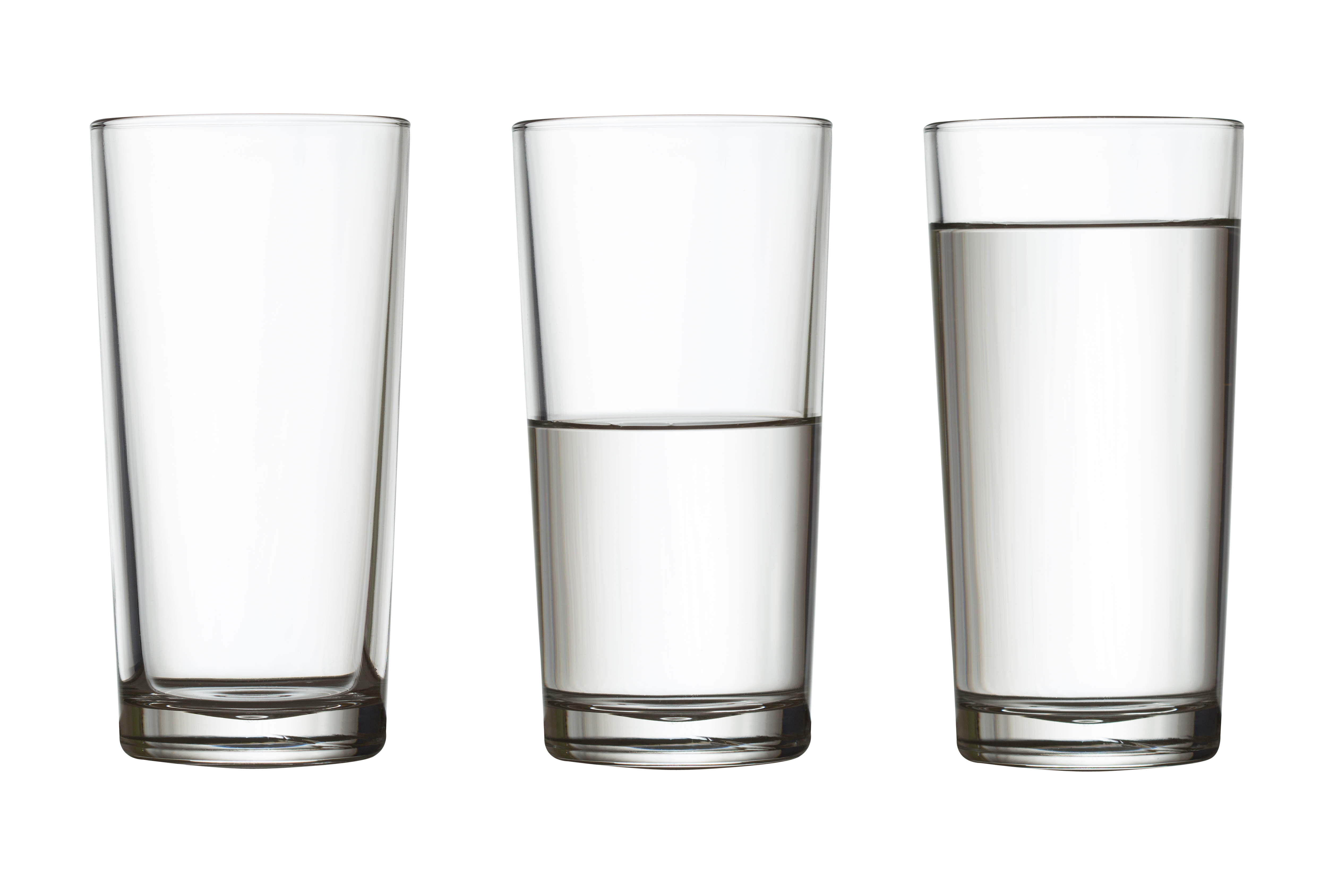
When “LIFE” Happens and Your Glass is Half-Full

glass half full2

One frustration that I often hear from Hearing Elmo readers is that living with a disABILITY or chronic illness is “manageable” if only LIFE itself were a little easier. However, the old adage is true… “Life is hard“. It just is.

I take an unconventional interpretation of the “Glass Half Full” expression. I realize the original meaning is — Are you an optimist or a pessimist? I look at this analogy in a similar way that the “The Spoon Theory” describes energy levels, daily quotas of tasks, etc. For some of us, our glass is never completely full. I wake up first thing in the morning after a good night’s rest, and my glass is half full. Don’t get me wrong… I’m in a good mood. As a matter of fact, I’m one of those annoying “morning people“. I grin ear-to-ear, greet the dogs and take them out, fix my coffee, and eagerly open my calendar to see what the day holds.

Because I have had a hearing loss and Meniere’s disease for over 25 years now, I have learned to manage my time very carefully. I work hard to not “bite off more than I can chew“. The great thing about being an adjunct professor at a community college, I can stretch my 3-4 classes a semester out over the day and week so that I have “down time” for office hours or simply chill time in between classes. I am involved in a number of community service and social justice issues, but I work hard to make sure monthly meetings do not interfere with my “regular scheduled programming” (a.k.a. my LIFE).

Have you noticed, however, that just because you have a disABILITY or chronic illness, LIFE and its occasional sucker punches, still occur? We don’t get special treatment. Just because our glass starts out at the beginning of the day — HALF FULL — doesn’t mean that LIFE and the normal crap that happens within it, will not happen to us as well.

You are going to catch the flu.

You are going to have unexpected car expenses.

Someone is going to hurt your feelings.

You will be treated unfairly.

It is going to rain (and if you live where I do – it will rain a lot).

Your dog is going to be sneaky and eat grass and then surprise you with a present around 2 AM.

You may experience a divorce.

You may become estranged from an adult child or (once) close friend.

You will be accused of something you did not do.

You may be treated with disdain and anger as you navigate your “normal” in a world that does not view you as such.

A doctor is not going to listen to you.

A spouse or significant other is going to get frustrated with you – as if you can change your “normal”.

Your alarm is going to go off and you will want to hurl it through the window.

You will accidentally burn supper.

You are going to trip (and if you have Meniere’s – often!)

You will be misunderstood.

You will lose people you care about and will grieve.

Grief

Last week, my precious father-in-law passed away. My husband and children went to North Carolina and thankfully arrived before he was gone. I stayed home to take care of pets, cover classes for my husband, and “hold down the fort”. Can I just say I hate,  “holding down the fort”?

My family members are home now, and I am grateful I will have the opportunity to attend my father-in-law’s Celebration of Life later this summer.

I am running on EMPTY. This is final exam week and the extra stress that comes with grief and worry for my loved ones has taken a toll. You see… LIFE doesn’t pull any punches. Just because you have a disABILITY or chronic illness, you will still experience the normal things in LIFE that every person does. Losing people we care about is part of LIFE. It sucks. It hurts. It is hard. For those of us with a glass that starts “half full”, it may mean we need to take care to – TAKE CARE.

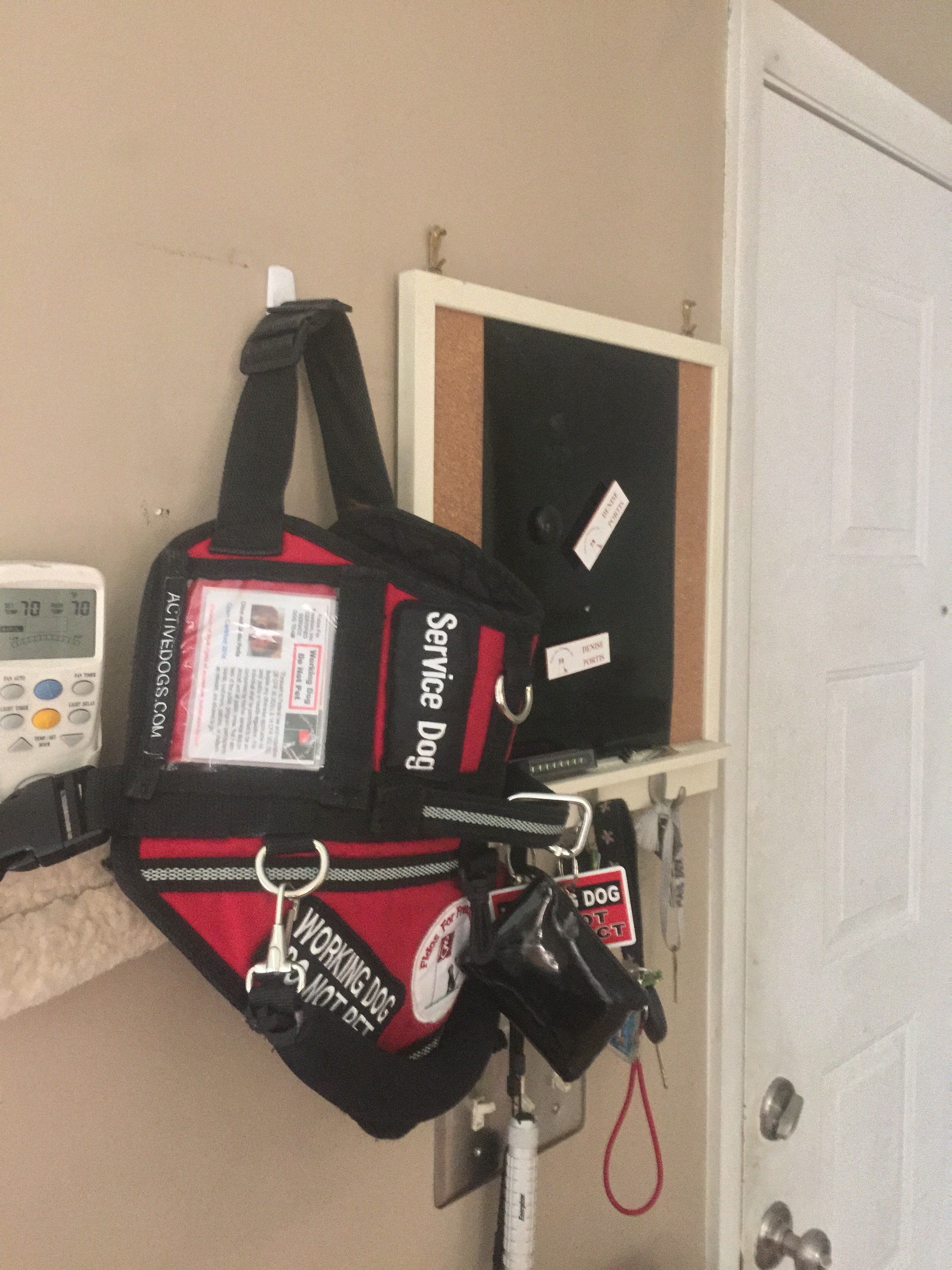
I normally go to bed between 9-10 PM. This past week I have made an effort to retire between 8-9 PM. We’ve had an excess of rainy weather which causes my balance to really be a trial for me. I am taking extra measures to make sure I change elevations carefully (stairs or bending) and am giving my service dog a serious work-out with various skilled tasks that I can do when my balance is not as wobbly. I’m trying to eat healthy, balanced meals.

Experiencing grief is a normal part of life. It cannot be avoided, and we cannot wish it away. If disABILITY or chronic illness is a new normal for you, I encourage you to prepare in advance for LIFE. We are not granted special privileges just because we have special challenges. So my advice is to do what you can to have a plan in place for when LIFE happens. The plan may include steps to take extra care of yourself. It may mean you make that phone call or send that email to someone you know you can dump on safely and wail or whine to your heart’s content. You may want to make an appointment with a counselor (so have one in advance on standby in the event you need an objective listening ear).

The Benefits

I learned something important over the last week. If I have prepared – as best I can – to absorb life’s normal sucker punches, and take steps to function in spite of a half-full glass, I can still BE THERE for those I care about.

I am not so energy-depleted that I fail to recognize the needs of others. I can support (as best I can) those who are grieving. Because I’m getting extra rest, I can think of small (seemingly) unimportant things that can make a difference in the life of my grieving husband. Like… making Cheeseburger Hamburger Helper for supper (something I cannot even eat but is his major comfort food). I can take on some extra chores around the house to give him the opportunity to have some extra time to grieve either openly or privately. I can be a listening ear (difficult but doable when you have a hearing loss). These simple things would be virtually impossible if I didn’t have a plan.

I am not so naive to believe that having a plan will mean you never have anything take you by surprise. LIFE is really good at surprises – some good and some bad. You cannot prepare and plan for every surprise. I hate to be a downer and fess up that at times I’m just DONE. For whatever reason, I allow hopelessness and despair to rule and reign in my heart and mind. For me, it helps to acknowledge that I’m at the end of myself and need help. It may mean seeking spiritual renewal. I may need to overhaul my schedule. I may need to just experience the YUCK. Sometimes all one can do is wade through and survive. The sun really DOES come out tomorrow. (… and thankfully? my weather forecast for tomorrow really does include SUN).
glass half full1

Denise Portis

© 2016 Personal Hearing Loss Journal
Mindfulness: And the Skies Opened Up

IMG_2764

I apologize for how long it has been since I have posted anything. I am one week from finishing all my coursework towards my Ph.D. and have been busy working, going to school, and finalizing my dissertation committee. To say I’m exhausted is an understatement. I try to be serious and mindful about how much rest I am getting. I was thinking last week when I turned the big 5-0, that I have now lived longer as a person with disABILITY and chronic illness than I lived without those challenges. It influences what I have chosen to study and what I am passionate about. When you are ABD (All But Dead — just kidding: all but dissertation), you tend to think about your dissertation each and every day. This means that everything I am reading and researching for the literature review of my own work is on my mind each and every day. I even dream about it! “Predictors of Posttraumatic Growth in Persons with Acquired Disability” takes up much of my brain power.

These past few days I have been “chasing a rabbit” (like my retired service dog, Chloe)  and reading published articles on mindfulness as it incorporates one of the major domains of posttraumatic growth. I suppose “mindfulness” started out as a Buddhist tradition; however, in the last 8-9 years, the field of psychology has come to recognize it as a means to treat numerous physical and psychological disorders. In my short personal history of 25+ years, I have learned that folks with acquired physical challenges–whether the result of illness, accident, or genes–also experience comorbid anxiety or mood disorders (Carson, Ringbauer, MacKenzie, Warlow, and Sharpe, 2000; Siegert & Abernathy, 2005; Weintraub, Moberg, Duda, Katz, and Stern, 2004). You do not have to convert to Buddhism to practice mindfulness. Kozlowski (2013), explains that mindfulness has been Westernized by psychology and “it is purposefully devoid of spiritual or religious connotations and focuses simply on the act of awareness. And if you want to take it to a level that we can all relate to and understand, at its core is stress reduction” (para. 5).

You’d think as someone who has worked so hard to hear again, I would rarely purposely “go deaf”. Yet, I have discovered that if I want to do some deep thinking, praying, and just spend some time being aware of all the “stuff” in my life, I have to reach up and click my cochlear implant off. I need the quiet to take the time to be mindful of what is currently stressing me (and how to de-stress), what my priorities are, and how I can make a difference TODAY in the life of someone – ANYONE. My bionic hearing is wonderful, but I cannot focus when my processor is busy – processing. So I “go deaf” – on purpose. I need to reduce distractions. For me that means being alone with my thoughts and perhaps a pad of paper nearby so I can jot things down as I think of them.

Mindfullness & Preparation

Learning to be mindful, meant that I learned to change how I view disABILITY and illness. I learned not just to experience my “new normal”, but to own it. With that acceptance came the understanding that I am able to make a difference in such a way that I would not have been able to had my “normal” not changed. I likely wouldn’t know the people I know. I would not have been drawn to studies about posttraumatic growth. I wouldn’t have chosen to invest my time in student populations of individuals with visible and invisible conditions. My life – that I embrace and love – would not be what it is today.

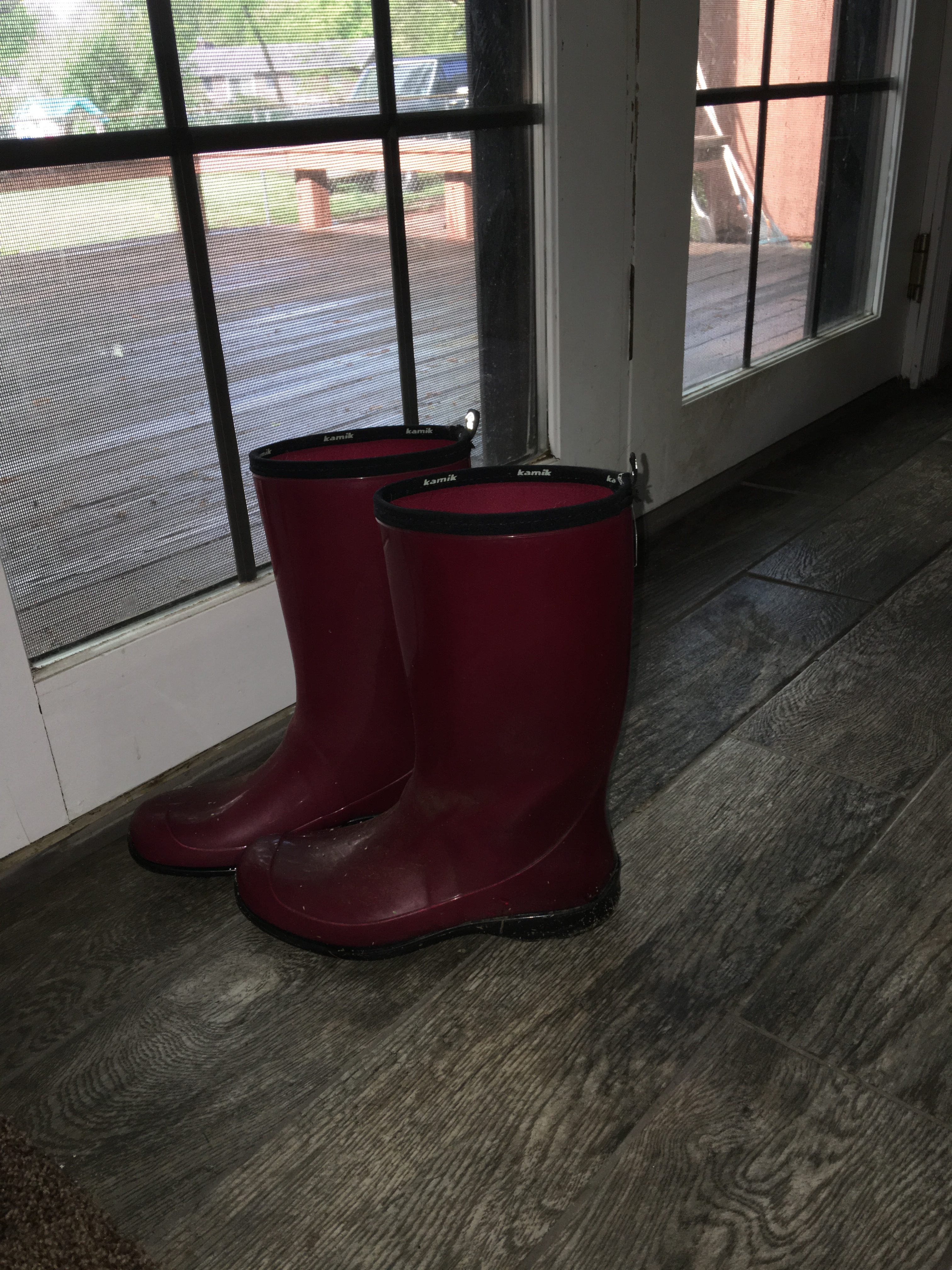
Learning to be mindful also taught me to prepare. I knew before this ten-day deluge of rain that I was going to have a much tougher time with my balance. I deliberately scheduled an additional hour of sleep each night, made sure I had my cane and service dog equipment ready to go each morning, placed my umbrella and rain boots by the back door, planned where to park to eliminate having to by-pass major puddles of standing water, deliberately stayed where I could see outside to determine when the rain had let up enough to take the service dog out or to make a quick trip to the campus testing center or copy center, and made sure that I allowed extra time to get to where I needed to go each day because I knew my mobility issues would require I traverse slowly and methodically. Even though the sun sets much later now that it is the month of May, I made sure that I had someone to drive me for evening obligations as I knew my vertigo would be worse by day’s end. Being mindful about the forecast and likely changes in my symptoms, meant that I could “hope for the best and prepare for the worst“. A nice little “perk” of Meniere’s disease is that if you learn to recognize the changes, you discover that you are a living, breathing, and walking barometer. (I’m likely more exact that local forecasters).

So… when the skies opened up, and delivered mist & sprinkles, steady, significant amounts of rain, and at times-torrential downpours, I was as ready as I could be! I suppose some folks might think that being so mindful and preparing for worsening symptoms, is the equivalent of being self-centered. I have learned the hard way, however, that if I do not take care of myself, it is impossible for me to take care of anyone else. I MUST take deliberate steps to insure I am prepared for long periods of rain, for example. If I do not, I will be nearly useless to anyone else. I’m not trying to avoid or escape the worsening symptoms I know are to come with a long bout of rainy weather. It is a type of cognitive-restructuring (from the psychologist’s point of view). As a person of faith, I work at being “mindful” of His promises. It helps me to remember He is mindful of me (Psalm 8:4, Psalm 111:5, Psalm 115:12, Romans 8:5-7, Romans 12:2, 1 Corinthians 2: 9-12, 16, Colossians 3:1, and 2 Peter 3:2).

A Long-Term Benefit of Being Mindful

In closing out this post (and greeting a day where the sun has finally breached the dark clouds), I want to share something I’ve learned simply because I really HAVE been at “this” a long time now. When you are mindful, purposefully focus your thoughts, prepare, and live deliberately, you will find that some good habits develop. On about “Day 6” of our recent monsoon-like weather, I came into my 8 AM class and… honestly? I wanted to go sit down and cry. I was tired of the vertigo, tired of the nausea, tired of the wobbling, and tired of the balance corrections. My head hurt and I was cranky. Darn — if it wasn’t only 8 in the morning! After booting up the computer, turning on the projector, and fishing out my lesson plans, I looked up to greet the class a few minutes before “launch”. I always try to ask students by name how things are going for them. I try to really get to know them and let them know I care. I noticed on changing my visual perspective an empty chair of a student who just buried her father. I caught in my peripheral, the quiet entrance of a young man making his usual unobtrusive way to his seat in the back. This young man just found out his cancer has returned for the fourth time. I saw the sleepy, single mamas and the students who took two early morning classes (including mine) before going to work for eight hours. I saw and waved to the student who attends classes, works four hours, and then goes to sit with her husband in a hospice center before staggering to bed each night. All the very temporary “woe is me” disappeared,

Just.

Like.

That.

Mindfulness doesn’t mean I do not have “bad days”. Being mindful, doesn’t mean I will always be in a super, good mood. However, being mindful gives me a better perspective and deeper appreciation for what really matters. I can more quickly rebound from self-pity and look for opportunities to make a difference – even in a sometimes “broken” body and weary mind. Being mindful allows me to wake up to a Milo-bear (service dog) alarm-clock with an attitude of “BRING IT ON“. For me… it makes a difference.

L. Denise Portis

© 2016 Personal Hearing Loss Journal
Carson, A. J., Ringbauer, B., MacKenzie, L., Warlow, C., Sharpe, M. (2000). Neurological disease, emotional disorder, and disability: They are related: A study of 300 consecutive new referrals to a neurology outpatient department. J. Neural Neurosurg Psychiatry, 68:201-206.

Kozlowski, E. (2013). Can Christians Practice Mindfulness? Huffpost Healthy Living. Retrieved May 6, 2016, from http://www.huffingtonpost.com/eden-kozlowski/mindfulness-and-religion_b_3224505.html

Siegert, R. J., Abernethy, D. A. (2005). Depression in multiple sclerosis: A review. J. Neural Neurosurg Psychiatry 76:469-475.

Weintraub, D., Moberg, P., Duda, J., Katz, I., & Stern, M. (2004). Effect of psychiatric and other nonmotor symptoms on disability in Parkinson’s disease. Journal Of The American Geriatrics Society52(5), 784-788 5p. doi:10.1111/j.1532-5415.2004.52219.x


Use Your Words

use your words

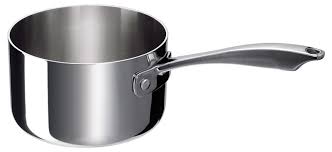
Not too long ago, I stood in the kitchen with a piece of my kitchen cookware, and dramatically wiggled the (seemingly constant) loose handle.

“Hey, honey,” addressing my husband, “hand me the thingie-majig out of the… (I gestured wildly towards the drawer)… the… the… THINGIE!”

My husband turned to face me and raised his left eyebrow. It was only the left one. You know… the one he raises when I’ve said something truly ridiculous and he’s trying to make a point?

… with an eyebrow? Yeah. That one.

I continued to gesture holding the slightly, heavy pan and sputtered and fumed, not daring to repeat my request, only adding a bit of a head flick towards the… the… THINGIE.

At this point my husband’s raised eyebrow lowered. Instead both eyes grew wide with alarm. Both eyes. You know… the ones he widens in horror when he realizes I truly expect him to read my mind and decipher both thingie-majig and thingie?

“Denise.” (When he pauses like that not only do I know I’m in for a mini-lecture, but it also means it may be deserved).

“You canNOT expect me to actually know what you mean. We’ve been married a long time, but I know thingie-majig, thingie, whatcha-ma-callit, and doo-hickey are interchangeable, obscure references to whatever happens to be going through your brain at the time!”

Do you know I tried to argue with him?

“Terry.” (Cuz, what’s good for the goose is good for the gander).

“I’m holding a pan. I’m jiggling the loose handle. I need to use this pan. The handle is loose. I need a screwdriver. The “thingie-majig” is a screwdriver, of COURSE” (I sighed super loud for a little dramatic effect and continued). “I gestured towards the junk drawer with my eyes, head, and elbow. The drawer is the “thingie”. Now who wouldn’t KNOW THAT?”

His eyes lost their incredulous look.  It was like watching a slideshow of emotions flick over his face.

First anger. (“Is she SERIOUS?”)

Next came a sad effort at stifling his laughter.

Then that lightbulb look. I love this look. It’s a slow-simmer realization that darn it. “Darn it, she’s right! That kinda made SENSE!”

He scratched his head and bent to collect the screwdriver from the bottom junk drawer. “It sucks that what you said made sense”.

I demurely accepted the screwdriver and sweetly…

Kept.

My.

Mouth.

Shut.

… because it didn’t make sense. I didn’t use words! Well, I did… but they weren’t real words. How can I call that communicating effectively?

When We Don’t Use Our Words

When you’ve lived with a chronic illness or disability long enough, the vocabulary associated with it becomes second nature to you. However, it doesn’t become second nature to others. You know all the medical terms and acronyms associated with your “new normal”. You shorten things and abbreviate information with people who really do not completely understand what you are trying to convey.

So… use your words.

  1. Use specifics.

Don’t say, “I can’t hear well”. Instead be specific and offer an alternative that may help.

“I can’t hear well in this cavernous room with so much background noise. Can we step out into the hallway to finish this conversation?”

2. Don’t leave out details that actually assist in expressing your need.

Don’t say, “Will you watch the dogs for me while I talk to mom?” Instead provide some more detail so that your request isn’t unreasonable.

“The dogs are wound up and my mom is trying to FaceTime me. Can you take them outside while I talk to her for a few minutes? I will be able to concentrate and hear her better.”

Don’t say, “Oh my gosh I need to leave right now!” Instead provide the details for your hasty departure so that whomever is accompanying you can make polite excuses and follow you in a more polite way.

“Oh my gosh. The ceiling fans in here are low and are moving in the opposite direction of my inner ‘SPIN’. I need to step out right away”. 

3. Avoid acronyms unless they are truly universal.

A.S.A.P.  – – – Yeah. We all know what this means.

BPPV – – – To most with a balance disorder or Meniere’s disease, we understand this to stand for benign paroxysmal positional vertigo. Few others will know what this is. I have even discovered that within disability groups (types), members will often use acronyms that they think are universal to “us” and they are not. For example in a Meniere’s support group I belong to, the members constantly refer to Meniere’s disease as MD. As a volunteer and participant of a service dog organization that includes a number of mobility challenges, MD stands for Muscular Dystrophy for both myself and many others.

I have been surprised how understood and universal the acronym MS is. Many, many people seem to understand it stands for Multiple Sclerosis. Why is that I wonder? (I’m asking for real responses and not rhetorically!)

4. Don’t use cues unless you have practiced them and both you and your “helper” understand the cue. 

If someone has facial hair or talks behind their hand, I’m likely not comfortable stepping into their personal space to hear them better. I will turn to my husband and touch the corner of my mouth. This means, “What’d he say? Repeat for me please?” We’ve used this FOREVER and it works without any hitches for us now.

I have trouble in places that have huge, open areas, or extremely, high ceilings. I may “look” fine. But if I pick up the vest handle on Milo’s equipment and quietly ask for my husband’s arm, he knows I’m about to do a face plant. If my husband isn’t around, I take Milo’s vest handle and head for the nearest wall so that I may continue with whatever I was doing safely, or talking to whomever I was trying to talk to before my “Woah!” I have never had someone argue with me about moving towards a wall. (I’m pretty sure people would rather move than pick me up off the floor).

5. Complete your thought. Use real words.

Just because you know what you are talking about, doesn’t mean you can voice a sentence fragment.

“Put it over…” 

Put it over where? If the other person wasn’t watching, they do not know where you mean for them to put it.

Recently I got up on a step stool (never a good idea) to dust the ceiling fan blades in the dining room. The fan was OFF, so “color me SURPRISED” when I was hit with a sudden bout of vertigo and actually felt my vision tunnel as I struggled to stay conscious.

“Please! Right now!”, I screeched.

Manners didn’t matter. Specifics about the timeframe were irrelevant. I fell. My husband did hear the fall. Well… he HEARD the screech too, but he simply didn’t know what it meant. It was vague. It could have been meant for the dog who just stole my sock for the fourth time and I was demanding it back. (Hey. It’s happened).

He was horrified he didn’t interpret my call for help for him to actually get his butt there immediately. I hit the carpet and the dogs scattered safely out of the way. Since I didn’t injure anything (dogs included) I could laugh as soon as I made it vertical again. “Well geesh. It’s not like I called your name or explained why I needed you! I should have said, ‘Terry! Come quick!’, right?”

As fond as I am of “thingie-majig”, “thingie”, “doo-hickey”, and “whatcha-ma-callit”, they aren’t words. They stand for whatever word is missing from our immediate working vocabulary. They are stand-ins, and we simply cannot expect someone to make sense of them. When it comes to our challenges and self-advocacy, it makes sense to —

Make Sense.

Use your words.

Be specific.

Use necessary details.

One final word of advice though. Sometimes we work SO hard to be good communicators, we may offer a little too much information. If I throw the acronym at ya, of T.M.I., — does that make sense to you?

Too Much Information. We can blow people away with unnecessary details and specifics.

Several weeks ago I ran into one of my students in the hallway and we were headed in the same direction. He opened the door to the stairwell and I leaned over to hit the elevator call button. He said, “Oh here, let me carry that” and reached for my bag assuming I would be able to take the stairs if someone carried my bag.

I said, “Oh no. I can’t take the stairs. Even though I have Milo it will take me ten minutes to make it up one flight of stairs. I’ll be late for class. I just can’t traverse the stairs safely at top speed. I need to wait for the elevator. I don’t always wobble, or have bad balance days, but I never climb or descend stairs safely”. By the time I finished with my over-zealous answer, he was practically cross-eyed.

“TMI?” I sheepishly asked.

“A little… but we’re cool!” he cheerfully responded. He ended up taking the elevator with Milo and I because we were headed to the same class and were discussing something he was passionate about – projective tests (ugh. Hate them!).

So just be careful about being specific and detailed, without killing someone with unnecessary information.

Denise Portis

© 2016 Personal Hearing Loss Journal



Cowlicks and Compromise

cowlick

Cowlicks and Compromise

I have a cowlick. I remember the first time I noticed the little tuft of hair—likely no more than 20 hairs total, in my bangs. I was at my grandmother’s house who lived on the farm 1.5 miles west of our own farm. I was washing my hands at the sink, and could just barely see my face and head in the mirror above the sink.

<SIGH> “Lookit this hair! It won’t lay down! It points the wrong direction”.

My grandmother informed me that it was a cowlick. Astonished and more than a little bit worried, I gnawed on my lower lip as I contemplated this new information. Demanding to know the “when and where”, Grandma calmly informed that it happened when I was a baby. I remember thinking, “Who would let a cow lick their baby’s head?” Either Grandma was tired of my questions, or she could see that this greatly concerned me. “It’s like a blessing. Even the cows knew you had great potential. You can do ANYTHING!”

I know she thought she was encouraging me, and later it actually WAS the source of encouragement when I recalled her words. However, she likely would have cracked up if she’d known how often I struggled to wash the cow saliva off my head after that.

Dreams, Goals, and Aspirations

I was a lucky little kid. I grew up in a small town, surrounded by really good people and warm, supportive family members. I was always told that I was really going to be something one day… I was going to make a difference. Whether it was the school counselor assisting me with college applications, or individuals in my church, each time it was said I thought, “This cowlick is coming in handy!”

Obviously, I grew to realize the cowlick had nothing to do with my “can do” attitude, but that seed planted as a youngster, certainly added to my determination. I already had a hearing loss in my left ear as I headed off to college. I would have one more surgery during Christmas break of my Freshman year. I never considered my hearing loss an issue as I had perfect hearing in my right ear.

Compromise

I know that I am a little bit stubborn. It’s not just because I’ve been told that I am, I recognize that it is hard for me to compromise. I’ve learned to compromise, which has only helped my relationships and even my marriage. I think in the beginning I saw compromise as “caving”. Because I was raised to be a strong, independent woman, I didn’t see how compromise could be a valued characteristic. I think compromise is actually misunderstood a great deal; perhaps even, considered a weakness.

My favorite definition of compromise (because there are a lot of them out there depending on the context in which the word is used), is from Chen (2004), when “a person has to give up something less feasible and achievable in order to accomplish career goals and projects that are more practical and obtainable” (p. 17).

After losing the rest of my hearing (ages 25-30), and discovering that what I thought was a natural “clumsiness”, earning the nickname of “Accident Prone Portis”, was actually Meniere’s disease, I learned to compromise simply because I was forced to do so. I learned to use adaptive devices, technology, and even learned to ask for help. I learned that to be realistic, I needed to cross some things off my my “to do” list. There are some things I just cannot do. That’s ok. It doesn’t mean I’m giving up or “settling”. I do get tickled at folks sometimes when they email me to say, “You are so inspirational!”

I’m not.

Huffingpost Post did a terrific piece on this topic. “When we think about inspiration, what inspires us most are ordinary people who have done extraordinary things. We appreciate when someone has the ability and willingness to be selfless, creative, innovative, or just dares to be different” (Green, 2013, para. 1). I’m not this person. I have no more talent, will power—or even COWLICK POWER—than anyone else. I have really good days. I have really bad days. Just this last week I found myself doing a little “soul cleansing” in the shower (the only safe place to bawl my eyes when you have service dogs in the house who cue off your mood).

I was crying because I was mad. Mad, that I’m forced to change the way I do my make-up. (I know… right?). I’ve always thought my best “feature” was my big, brown eyes and dark eye lashes. When my Daddy finally allowed me to wear make-up I learned early on how to highlight what I thought was one of my best features. My husband told me when we were dating that he just loved my eyes and wrote poetry about my peepers.

With progressive illnesses, one discovers that it is just that.

Progressive.

It sucks. Between my poor balance, shaky hands, and neuropathy in my fingers, it is impossible for me to use eye make-up now. I’ve had to change—to compromise HOW to wear and apply make-up of any kind. This… THIS is what reduced me to tears for a solid week! Some of the folks who write me and tell me that I’m “inspirational” also say, “I find that I spend too much time feeling sorry for myself!” Y’all? I’m crying in the shower because I can’t wear eye make-up!

I’m not very hospitable, but one of the great parties I know how to give is a PITY PARTY. I think most people who live with special challenges and illnesses find that they spend an inordinate amount of time feeling sorry for themselves. One quickly learns not to whine out loud because others frown on that. Both God and my husband know that I’m a whiney-baby. Trust me – I get feeling sorry for yourself. If your “differently-abledness” has you feeling sorry for yourself, you aren’t alone.

Weiner, Graham, and Chandler (1982) did some fascinating research on pity, anger, and guilt. Anger and guilt are associated causes perceived as controllable, while uncontrollable causes of negative events trigger self-pity (Weiner, Graham, & Chandler, 1982). I didn’t choose any of the challenges I deal with on a daily basis. You likely didn’t “sign up for” the challenges you face as well! When things happen outside of our control, it is natural to have feelings of self-pity. Charmaz (1983) explains that the medical field tends to “… minimize the broader significance of the suffering experienced by debilitated, chronically ill adults. A fundamental form of that suffering is the loss of self in chronically ill persons who observe their former self-images crumbling away without the simultaneous development of equally valued new ones” (p. 168).

All of us grew up with dreams and aspirations. Some of us read books about having one year goals, five year goals, and ten year goals… working hard to lay the groundwork to make sure the goals were attainable. Instead, life happens. You may feel as if your life has been de-railed as you struggle to stay on track on a journey you had all mapped out.

The key is to compromise – but not give up. You may have to change the way you do things. I threw away all my eye shadow and purchased a magnified mirror and set up a means to steady my hand so that I can at least wear mascara. Other compromises are more worthy of being called “growth”.

Finishing school through distance education instead of doing so through a brick-and-mortar institution.

Using a cane and service dog to avoid running into quite so many walls each and every day.

Asking a student to follow-up with an email because I cannot hear them over the “buzz of sound” after class, and the acknowledgment that if they speak loud enough for me to hear them, everyone will hear.

Letting someone with normal hearing take the minutes of a committee meeting, even though my desire is to take notes.

Sitting on my caboose during the music in church because I cannot stand when the words are on a screen with lights, movement, and flashes. (Remember the good ol’ days when we used hymnals?)


Asking a family member to chauffer me around if I have to be out after dark (oncoming headlights trigger vertigo).

Using a cutting board ALWAYS, since not being able to feel your fingertips is dangerous when wielding a sharp knife.

Asking my service dog to fetch clothes out of the dryer so that I can fold them, even though I occasionally have to wipe doggie drool off of clean, dry clothing.

The KICKER compromise that many of us have to learn as a result of our new normal?

Asking for help to do something when we once did it all by ourselves.

When Do You Choose Not to Compromise?

A tough lesson in living a differently-abled life, is learning how to compromise by your own volition and to accept your own reality, and learning when NOT to compromise for others. Having a long-term blog on disability issues, invisible illness and chronic conditions, I have received one type of letter more than any other.

“My _______ (family, spouse, friends, co-workers) want me to stop using ________ (a cane, walker, service dog, assistive listening devices, medication) because it _________ (embarrasses them, makes them uncomfortable, makes me look bad).”

I wish I could reach out and SMACK UP ‘SIDE the HEAD, the folks who are saying this to you. They don’t realize all the compromises you’ve already made in order to successfully navigate your life and accommodate your new normal. (That’s right… you’ve resorted to mascara ONLY).

My friends? Don’t ever compromise… on chosen means of compensating just to make someone else feel better about your challenges. That isn’t compromise. That’s caving to a bully. Compromising by doing something differently in order to continue DOING means you are in control. Buckling to the pressure of someone who doesn’t live what you are living, will only yield bitterness, brokenness, and an unhealthy dependence. Do we need to ask for help sometimes?

Yes.

However, having a means of independence and being asked to give it up to help someone else deal with your issues is detrimental to your mental health and relationships. There are plenty of people who care about me that I have learned to not “talk out loud” around. They misunderstand the reason I’m belly-aching and offer selfish advice.

“You get so mad when people interact with your service dog. Why don’t you stop using one and find some other means to cope with your disabilities?”

This from a peripheral family member who:

  1. Is never around for me to ask THEM for help because they are in absentia nor have any meaningful intersection in my life.
  2. Is able-bodied (though mean spirited)
  3. Hates dogs

If using a service dog has enabled you to be more independent, then:

  1. Be more careful of whom you belly-ache too. Contact a fellow SD partner or a trainer.
  2. Find a way for the “drive by petting” interactions to become a positive advocacy channel.
  3. Join some face-to-face or virtual support groups with individuals who mitigate their disabilities with the partnership of a service dog.

I was recently contacted by the wife of a guy I graduated high school with in 1984. He’s coming up on the BIG 5-0, and she was looking for pictures “from way back” that we had so that she could use them at his birthday party and celebration. I took out some old yearbooks and began flipping through them. My senior yearbook had some great pictures of “all those from the class of ‘84”. In one section, the class voted on and selected one male and one female for specific “categories”. I was selected as “friendliest” and also “most likely to succeed”. (Don’t get any grand ideas… my graduating class boasted of 22 students). I sat there a couple of minutes wondering…

“Am I successful?”

“Did I waste my cowlick?”  

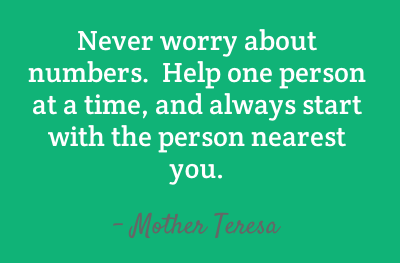
What I find valuable is making a difference, even if in only in one person. I have good days and bad days, but ALL days are lived where I look for and try to make a difference in at least one. It’s an adopted attitude that has really helped me adjust to being a person with invisible disabilities.

never-worry-about-numbers-help-one-person-at-a-time-2

Denise Portis

2016 Personal Hearing Loss Journal
Charmaz, K. (1983). Loss of self: a fundamental form of suffering in the chronically ill. Sociology Of Health & Illness, 5(2), 168-195. doi:10.1111/1467-9566.ep10491512

Chen, C. P. (2004). Positive compromise: A new perspective for Career Psychology. Australian Journal of Career Development. 13(2), 17-28.

Greene, R. K. (2013). What is the true meaning of inspiration? Retrieved February 1, 2016, from http://www.huffingtonpost.com/r-kay-green/giving-back_b_3298691.html

Weiner, B., Graham, S., & Chandler, C. (1982). Pity, anger, and guilt: An attributional analysis. Personality and Social Psychology Bulletin.  8(2), 226-232.

Through the Eyes of a Newbie

Milo Cade - Fidos For Freedom, Inc., Service Dog.
Milo Cade – Fidos For Freedom, Inc., Service Dog.

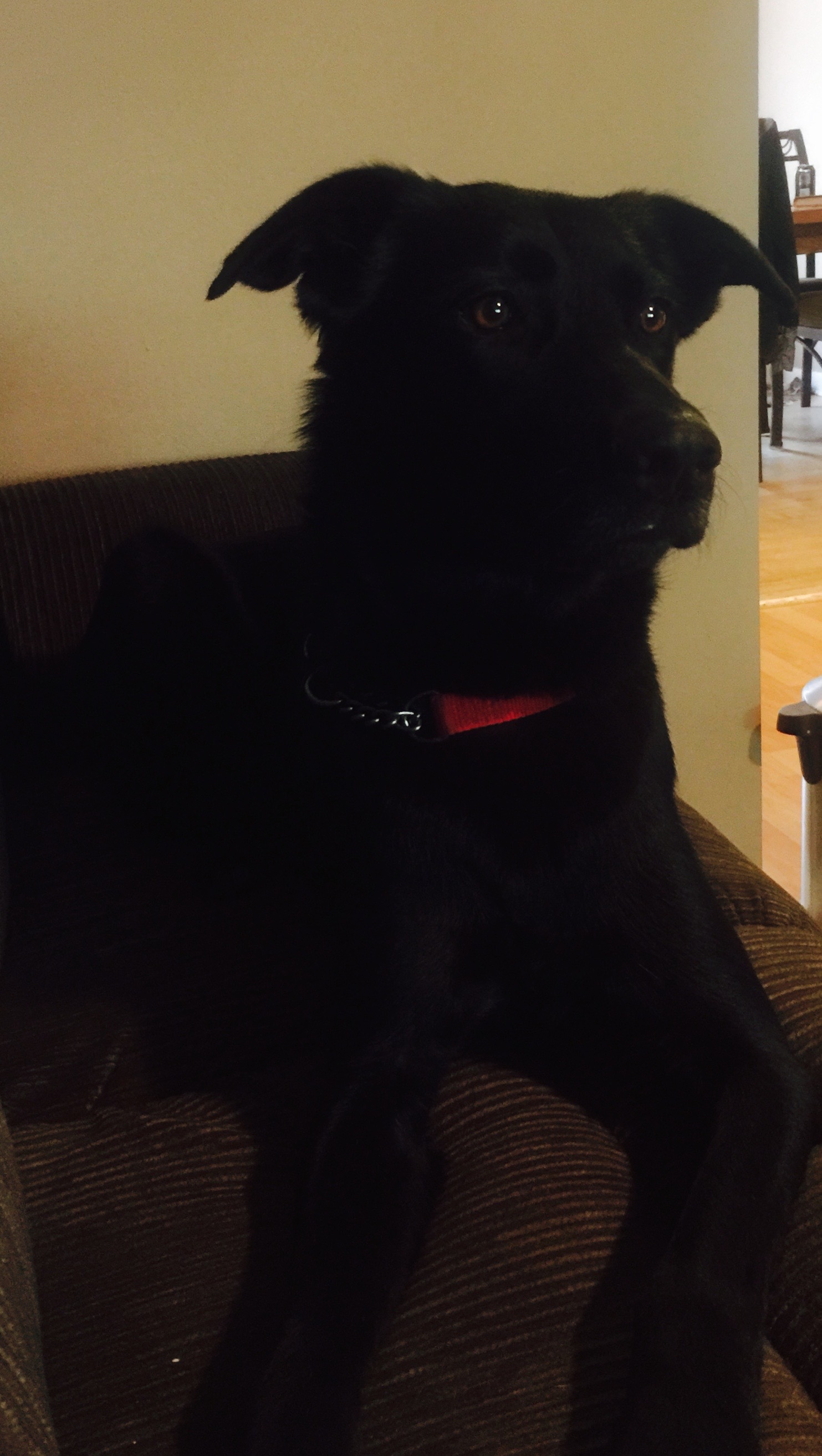
Many of Hearing Elmo’s readers know that I retired my service dog, Chloe, this year. Since May 1st, she is enjoying retirement and still does some hearing alerts at home. She is happy, spoiled, and we believe well-deserving of all the naps and belly rubs she is currently receiving. I was recently matched with Milo, from Fidos For Freedom, Inc. Milo is a shepherd/lab mix and I am enjoying the process of being partnered with a mobility/balance service dog versus a hearing/balance assistance dog. We determined my primary needs are mitigating issues with Meniere’s disease and not hearing alerts. I love my cochlear implant, and feel like I have adjusted to the world of “hearing again” very well. My balance is, and will continue to be, a major issue. I suppose in a way, this is an introduction of my new partner, Milo.

One thing I have enjoyed is experiencing MY world (work, church, walks, etc.) through the eyes of a newbie. For Milo, everything in MY world is new. He looks at everything in awe. If he isn’t looking in awe, he is sometimes in “investigation mode”.

Is it scary?

Is it freaky?

Is it edible?

Is it alive?

What does Denise think?

At a training session with my trainer a week or so ago, I brought Milo to one of my classes. I had allowed enough time to exit the service dog safely from my car. I had allowed time for a short potty break. (Honestly, Chloe hasn’t been at home long enough for me to get out of the habit of some of these things. I found myself at a potty area recently and realized I didn’t have a dog by my side!). I allowed enough time. Not.

I did not allow time for all the new things my newbie partner was seeing. The grassy area was new. The trees and picnic bench were new. The ramp into the building was new. The automatic door push-button was new. At least… it was new to MILO. For just a brief second, I was mildly annoyed. I had not allowed time for appraising all of these new environments. That was MY bad, not Milo’s. I want my dog to be confident and aware of his surroundings. I was almost late to class, but the time I took “extra” was time worth taking. Newbies need some extra patience from those of us who are veterans to the schedule and environment. We owe it to them. But you know something?

Blowing It BIG!

I really know how to blow it. I mean, I don’t do anything half-way. This isn’t always a good thing. I recently became extremely exasperated with someone relatively new to “hearing again”. I try hard to be a positive advocate for people with disabilities, and chronic and/or invisible illnesses. This blog is, in part, a way that I try to raise awareness and encourage people to talk about tough subjects.

I see this lady about 3 times a month at the grocery store. Over a year ago she saw my CI, asked about it, and eventually had surgery herself. This individual was relatively new to hearing loss. She was still struggling to help the people important to her understand that the CI did not “FIX” her hearing. Instead it was restored to a type of hearing (bionically) and  she would still be in environments occasionally where she would need others to understand that she needed to 1) see their face, 2) slow them down, and 3) find a quieter spot. After listening to her for about ten minutes – really distraught about not feeling accepted –  I felt myself becoming impatient. We had this conversation before and I felt as if we were “beating a dead horse”. Remorse and shame immediately washed over me. I stuck my finger in my own face and preached, “Really, Denise? Really?” (Y’all are trying to figure out how you stick your own finger in your face, aren’t you?)

As I had (thankfully) kept my mouth shut, I continued to listen and realized she was now apologizing… “I’m sorry I keep bringing this up. I just can’t seem to help them understand that the CI was not a CURE. I’m so frustrated!”

I realized then and there that I needed to put myself in newbie shoes more often and remember how difficult those early years were. Advocating and educating take time. Families and friends do not just wake up overnight and suddenly “get it”.

I told her that I often forget how hard those early years were, and that she had to keep at it… eventually some of it would start to sink in for her family members.

As a person of faith, I believe everything happens for a reason. We may not always like the purpose behind God allowing something to happen, but there is always a reason. I’m also (gulp) old enough now to know that we may not EVER completely understand why something happened this side of Heaven. I have ALWAYS felt like that the acquired disabilities I have were allowed so that I could help others… or at least try to do so. I blow it. I blow it BIG. However, I think those of us that have lived the life a few years, owe it to the newbies in our lives, to lovingly coach, encourage, cheerlead, advise, and HUG often.

You are going to have newbies in YOUR life. Unless you are isolating yourself, you will have folks new to whatever “ails ya”. People will look to you for understanding and advice. You will be able to empathize much better than their doctor, their families, and their co-workers. Of all people – YOU get it.

Are you looking for a way to invest your life in someone with similar challenges? There are opportunities everywhere. You simply need to know where to look. Urban areas often have face-to-face support groups for various illnesses and disabilities. There are numerous online support networks, discussion forums, and peer supports. Many doctor’s offices and rehabilitation specialists have contacts to support personnel. Invest yourself in the life of a newbie. Remind yourself while investing how difficult those first years were! It shouldn’t surprise you to discover, sometimes by accident, the student becomes the teacher. Always, always be teachable.

Denise Portis

© 2015 Personal Hearing Loss Journal

The Two Sides of Me

happy-sad

I work as an adjunct professor at a local community college. This year I was thrilled to participate on the “Year of Social Justice” committee and to head up one of the major activities for the year – “disABILITY for a Day”. The students were given 5 disabilities to choose from, and were to experience a day of class rotation with the chosen disability. We limited the options because we did not want students (for example) choosing a mental illness and inadvertently feeding the stigma of various diagnosis. The students were to then answer 10 response questions and write an essay about the experience; or, create a video segment on their experience. If a student had a disability or invisible illness, they could do the activity “as their norm” or choose something different.

I received a number of finished products from some of my own students, some of whom I had no idea had a disability or invisible illness, and a few that I did. With permission, I am sharing part of that response (and leaving out names and identifiable descriptions).

An Invisible Influence

While I consider myself a person with invisible disabilities (profound hearing loss/hearing again bionically, and Meniere’s disease), I have worked very hard to make the invisible – VISIBLE. I learned in my late 20’s, that it served in my favor for people to recognize that I did not hear normally nor move normally. I do this by “BLINGing up” my cochlear implant, using a brightly-colored cane, and going about my daily life with a service dog by my side.

Although I have “been out of the closet” for years, there are more subtle things that I do not even realize are an influence for others who are struggling. I’m open about my challenges and actually have to work hard at not using too many personal illustrations throughout my lectures. (It’s one thing to educate your students about the disability community, and another to overwhelm them with details).

When I stumble, I usually say, “Woah!” and then grin super big and ask “would you like to see the rest of the dance?” I giggle at myself. Genuine, embarrassing/snorting giggles. If I turn too quickly towards the white board and slam into it, cheek first, I would have a spiffy comeback sometimes such as “ouch… up close and personal”. At times I would simply say, “Crap. It’s gonna be one of those days”. My students knew when I was having a particularly bad day because I would sit during most of the class, or simply announce that I was going to limit motion today (so please come to ME-smile).

One day in class, I reached to pick up a paper clip that I did NOT want Chloe to retrieve and fell on my face to the floor. Several students were there in seconds lending me a hand to resume my vertical stance. After hearing a couple of times, “Geez, professor. Ask for help”, I learned that I could ask for assistance when my service dog could not do so safely, and no one minded at all! I work hard at being transparent. I simply didn’t realize how well students with disabilities could see right through some of the “stuff” I used to advocate in a positive way.

I had a student this semester with visible disabilities, hidden and covered up to make them as invisible as possible. The student sat on the front row and wore a hoodie the first couple of weeks of class. It hid her face and her torso. I saw a transformation in this student in only four months. It wasn’t until the “disABILITY for a Day” assignments were turned in that I understood the why behind the change.

By the end of the semester, the hoodie was gone, she sported sparkly jewelry that actually drew attention to some of her challenges. She smiled (and golly did she have the most beautiful smile). She talked to everyone in her vicinity in the classroom. I saw students come up and hug her at the end of the semester and exchange phone numbers. The following is part of what she shared:

The Two Sides of Me

I always tried to hide my disability. In public I would cover up as much of me as possible. My face could be seen and I’d smile when someone looked at me. I would never allow them to look to long. In reality, I was broken, scared and even scarred. I have a professor who embraces all that she is, disabilities and all. I’ve seen her put other people’s unease at rest. She cracks up at herself. When she is having a bad day, she says so but continues to do her thing and teach. She never makes us feel sorry for her on her bad days. I’m not sure how she does it because one thing I hate is pity. Maybe it is because she is real when she is having a good day or bad day. I’ve heard her use the words “differently-abled”. She says she borrows it from a lady she knows with incredible courage and strength who lives with significant challenges. I don’t know why I’m 19 and only now figuring out that I’m differently-abled and not disabled. I have now learned to tell my family or close friends that I’m in pain or having a bad day. I don’t let it drag me down though. I have really good days, too. I’ve even learned how to put on make-up with one hand. Yay, me! There are two sides of me, and I like both sides.

I Get it Wrong – So Will You

I don’t share any of this to “toot my own horn”. As a matter of fact, I’ve made so many mistakes. For example, I had a student ask me this last semester, “Are you OK, today?” “Sure,” I replied with false sincerity. “Bull****”, they replied.

Busted.

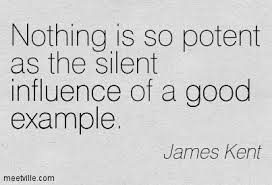
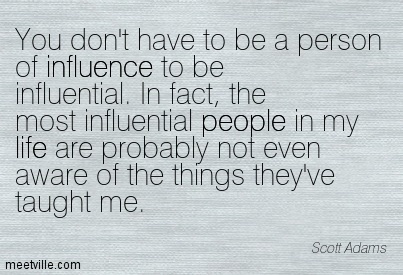
I share this post today for one reason only. You often aren’t aware of your own influence.

Do you have a tough life? Be genuine, but live as if you are being watched. Be real, be transparent, but remember that someone somewhere is taking notes.

good example

“Denise, you have no freaking idea what it is like. You have plenty of support. You have a job. You have friends”.

Yes. I hear from disgruntled readers from time to time that I cannot understand what it is like to experience the hardships they face. They are right. Their challenges are not my own. I know that I do NOT always have good support and feel alone. I have a job, but it is really hard to go to work some days. I have friends, but only a few that I could actually say, “please help me”. I don’t want anyone to ever think that I do it right all the time. If I was perfectly at ease with who I am and comfortable in my own skin, I wouldn’t be seeing a counselor twice a month. I have major depressive disorder and it is very closely linked with my disabilities. I do not want anyone to think I do not struggle – for I do. My motto is “I have disabilities; my disabilities do not have me”.

Quotation-Scott-Adams-life-influence-people-Meetville-Quotes-125021

Live your life – that’s right, the one that is often TOUGH – as if someone was watching.

Someone is.

Denise Portis

©2015 Personal Hearing Loss Journal
SYTYCD

funny_dancer

We had a brief spat of rain this past week. When that happens I’m at risk for a “brief splat”. Folks? I think I’m more reliable than the Weather Channel. Seriously.

I’m like a human barometer. If it is going to rain, I know it. My vestibular system goes haywire, the tinnitus increases, and my world spins much faster than it normally does. So on a rainy day this past week, I was in class and took a very quick, very unwise turn from the whiteboard to face the class.

I actually have no idea why I didn’t fall. Call it luck. Maybe it was God. Perhaps I’m just THAT GOOD. However, just because I didn’t fall doesn’t mean I didn’t “bust a move”. As a matter of fact, it takes quite the “fancy footwork” to correct a near fall.

I stood there for a minute, with my arms stretched out to aid in my balance correction. I know my eyes were as wide as saucers. I actually heard my breath HITCH. (And if *I* heard it, it must have been VERY LOUD). I may not be able to move fast, but I think fast. I immediately thought, “Ok. How do I explain this? Do I cover with a counter-move?”

I pictured myself launching right into the MOONWALK, and prophesied I’d end up on my fanny.

I pictured myself STAYIN’ ALIVE, but this was long before THEIR time. Instead I decided to just lower my arms slowly and calmly say, “WHEW!”

A student in the front row nonchalantly said, “You should charge for that. Seriously. It’s that good”. Everyone laughed and the tension was broken. Professor Portis didn’t land on her face…

TODAY

How Do You Explain It Away?

If you have an invisible illness or disability that sometimes has your body doing things you wish it didn’t do, you’ve likely tried to think of ways to explain it to others when it happens.

I have a friend with a neurological disorder which causes her extremities to sometimes “twitch”. If she is fatigued and having a “bad day”, she may twitch very violently. I’ve learned to give her a little bit of space so that I do not accidentally get “hit”. I’ve known her awhile, however. Other folks who aren’t use to being around her, may experience a “near miss”. She cracks me up with her practiced come-backs.

“Duck!”

“You should see what I can do on a dance floor!”

These are coping mechanisms. Not everyone tries to laugh it off and poke fun at themselves. Some folks ignore it. Some folks just apologize (like it’s their fault? Wha…?) Some people don’t even try. They isolate themselves so that they aren’t put in a position to have to explain anything.

Kids. Expect it! They Are Curious!

Some of the best things ever said to me about my disabilities came out of the mouth of babes — children! I get so cracked up sometimes that it is all I can do to bend down to take the time to explain.

I’ll never forget when a kiddo pointed to Chloe in vest and asked, “Why does that dog have on a SADDLE?” 

Sometimes OTHER people help me out. They help me explain to children what is going on. The Costco I go to on occasion know me now simply because folks start recognizing my service dog. One day I was in the freezer section and had to pass a more narrow opening to the aisle due to two cooking stations set up at the end. My balance wasn’t great that day, so I decided to just hang on to the cart and walk on through. The Costco deli representative had better ideas.

“Here, you’ve got to try this. It is really good!” She stuck a toothpick in a piece of meat that she had just fried up in her Wok. I shouldn’t have done it, but I reached for that toothpick.

Yup, I almost fell face first into the Wok. The lady grabbed my elbow and continued to extol the virtues of the seasoned meat.

A child nearby exclaimed with horror in their voice, “Dad! That lady almost fell in that cooker!”

The Costco worker, without missing a beat, said, “No worries. I caught her. We’re not frying up that kind of meat today”. Everyone laughed and numerous folks moved their carts clear so I could get through with giant cart and service dog in heel. I wasn’t the least bit embarrassed. I’m glad when people can tell that I am comfortable enough with being ME, that I don’t mind a little humorous dialogue.

When to Accept That There is No Way TO COVER

Humor doesn’t explain away everything. Laughing at yourself doesn’t always succeed at helping others feel more comfortable. Sometimes, all you can do is state the facts and move on.

I am sporting a big cut on my left thumb. It is healing and my nail is finally growing back. I acquired this injury as the result of cutting an apple with a paring knife on a day I wasn’t being extra cognizant of the fact that I have peripheral neuropathy. I was in class the day of the “big cut”. A student asked, after pointing to the huge bandage on my thumb, “what in the world happened to your thumb”? I explained how I got my “boo-boo” and the student stated the obvious. “Maybe you should get someone else to cut your apple!” I laughed and agreed, but have to tell you… I was peeved for a minute. I mean, I work SO HARD at being independent! I can’t even cut my own apple safely. I was still in a peeved mood when I went for my neurologist check up that afternoon. This was a re-check after the March 8th concussion. It was supposed to be a quick “in and out”.

But…

I was still peeved. After checking everything out, I told Dr. S. “Listen. I’ve had vestibular rehab. I use a service dog. I have my cane with me all the time. I walk with a helmet now on bad weather days. I never wear socks. I alert family members when I’m headed to the shower. I don’t drive at night. I drop things all the time, and cheerfully allow my retired dog to retrieve things if she’s there, or without shame, ask for assistance when she isn’t. You’ve got to help me! I can’t even cut an apple!” I exclaimed while gesturing towards my injured thumb.

I’m sure Dr. S. has heard exasperated – even desperate demands for an answer all too often. He sat there a minute digesting all I said. I have a feeling that after all the tests have been run and all efforts at rehabilitation are exhausted, his response is at times, “I’ve got nuthin’

However, he got a lightbulb look on his face and turned to his computer. He typed something in and then turned the screen so that I could see it.

apple slicer

Ah. An apple slicer. I bought one at Target that very weekend.

If something is difficult for you and you need a “work around“, brain-storm with a doctor, friend, or family member. Perhaps there IS a way you can do – whatever it is you are having trouble doing – safely! I think asking for opinions help others  understand that you really are striving to be independent, too.

SYTYCD (A television show called, “So You Think You Can Dance“),

if you use humor to help educate and advocate,

if you speak in plain terms to help others understand,

or if you get a bright idea from another source… simply celebrate the fact that you found a new AND SAFE way of doing things. A positive attitude goes a long way!

Denise Portis

© 2015 Personal Hearing Loss Journal
NOT “The End” – Turning the Page on a New Chapter

"Hanging it Up"
“Hanging it Up”

I’m a reader. Perhaps it has something to do with having a mother who was an English teacher. Maybe it is because both my parents are readers. All I know, is that I can’t remember not having books. I lived in a rural, farming community and as it was before the “age of the Internet”, much of what we did in our free time was reading. Thanks to my mom, I have read all the “great classics”. I also grew up reading series such as “Trixie Belden”, “The Bobbsey Twins”, “Nancy Drew”, “Hardy Boys”, “Sugar-Creek Gang”, “Agatha Christie”, and “Little House on the Prairie”. I remember being SO BORED one summer that I started reading my dad’s favorite series, “Louis L’Amour” and discovered they were actually OK too!

I always felt a little melancholy when coming to the end of a good book. If it was a series, I fretfully waited for the sequel to come out. It was especially hard when the author ended a book with a “cliff-hanger”. I think that is when I started biting my nails.

I’ve had an emotional roller-coaster kind of 2015. I have been slowly easing my service dog, Chloe, into part-time work. I have already started training for a successor dog at Fidos For Freedom, Inc. In the past week, Chloe has gone from part-time working dog to “when hound dog feels like it”. I always ask her if she wants to “get dressed” and more often than not she flops her tail at me and gives me a sweet hound-dog look. “See you later, mom! I’ll be here when you get back!” 

Her vest is more often hanging on its hook, than it is being worn by faithful service dog. It has been a harder transition on me than it has been on her, and frankly? That’s the way I want it.

People notice that Chloe isn’t with me now. I suppose when you are thought of as a team, when the “cute red head” is missing, people notice. I’ve answered these questions dozens of times:

“You get to keep her, don’t you?”

“What will she do all day?”

“How will a new partner and Chloe get along?”

At first, it made me really sad to see her vest hanging on it’s hook as I walked out the door. I had an overwhelming feeling of finality. I know I’m making the right decision, but for awhile I felt like I was facing the end of a book–“The End“.

However, I realized that just like in OUR lives, finishing one chapter in life doesn’t mean the book is over. We plan to ease Chloe into therapy dog work if it is something both my husband and I can work into our schedules. If she doesn’t transition that direction, she will continue to be a beloved furry member of our family.

When the Life You Had Is Over…

One of the most disconcerting things about acquired disabilities or invisible, chronic illnesses, is that at some point you may not be able to do everything that you once were able to do. I’ve heard some people say, “Don’t ever say you CAN’T. Just find a new way of doing it!” But friends? That isn’t always realistic.

Take roller-skating for example. I love to roller-skate. I was actually pretty good at it, too. I could skate backwards, do a single axle, speed race, limbo on skates, and much more. Post balance/vestibular disorder, I can no longer skate. Sure, I could probably find various devices to prop myself up, or skate with a walker on wheels. But, I won’t be skating like I was. This doesn’t mean that I stop doing ALL extra-curricular activities. There ARE some things I can still do and do so safely. I simply started a new chapter in my book, “This is My Life“.

Some people find that after acquired disability or diagnosis, they can no longer work. Their “new normal” includes chronic pain, debilitating fatigue, or other symptoms that make it impossible for them to work “9 to 5”. However, they may find they there are some things they can do to continue earning a paycheck. There are a variety of things one can do to earn money while working at home.

Some people become volunteers and do a number of things that yield personal satisfaction and allow them to “give back”; however, the activities are not dependent on a set schedule. I know some people who no longer work due to a diagnosis, and likely do TOO MUCH as volunteers. There are so many opportunities! There are so many ways people of various abilities can do to benefit others.

If your life took an unexpected turn after a diagnosis or acquired disability, your book isn’t finished. You are just starting a new chapter.

BUT… YOU DON’T UNDERSTAND. Everything in my life has changed! I cannot successfully reach goals I made a long time ago before this diagnosis. My friends have changed. My relationship status has changed. My book really is approaching “The End”. 

Perhaps your life really did experience a 180 change in direction. Some of my favorite books are part of a SERIES. The book may have ended, but there is a sequel. Set new goals. Make new friends. Do new things. I have found that some of the most rewarding experiences I have had were the direct result of my embracing my own “new normal”. I stopped trying to be the Denise I was before hearing loss and Meniere’s disease. The people I have met, the job that I have, and the organizations in which I am involved would have never been a part of my life if I hadn’t been forced to start a new chapter, or even a new book in a part of a series.

Hanging your vest up? Have major changes happened in your life? Your story isn’t finished. The chapter may be done. The book may even be finished. Your story is NOT complete.

Writer’s block? Network with others who have similar diagnosis as you do. See what they do to volunteer, serve, or even jobs and careers they may have. It’s never too late to go back to school! Many older adults sit in my classrooms taking classes to earn a degree and prepare them for something new. Gone are the days where all my students were 18 and 19 years old.

From an editorial review of “The Story of My Life” by Helen Keller: “Many of her later works were largely autobiographical, but there was always an emphasis on the inherent power of the individual to journey through life with hope. The Story of My Life is the first chapter in such a journey.”

If your life has significantly changed, it is simply the end of a chapter. Your story – your journey continues.

Denise Portis

© 2015 Personal Hearing Loss Journal
Embracing It!

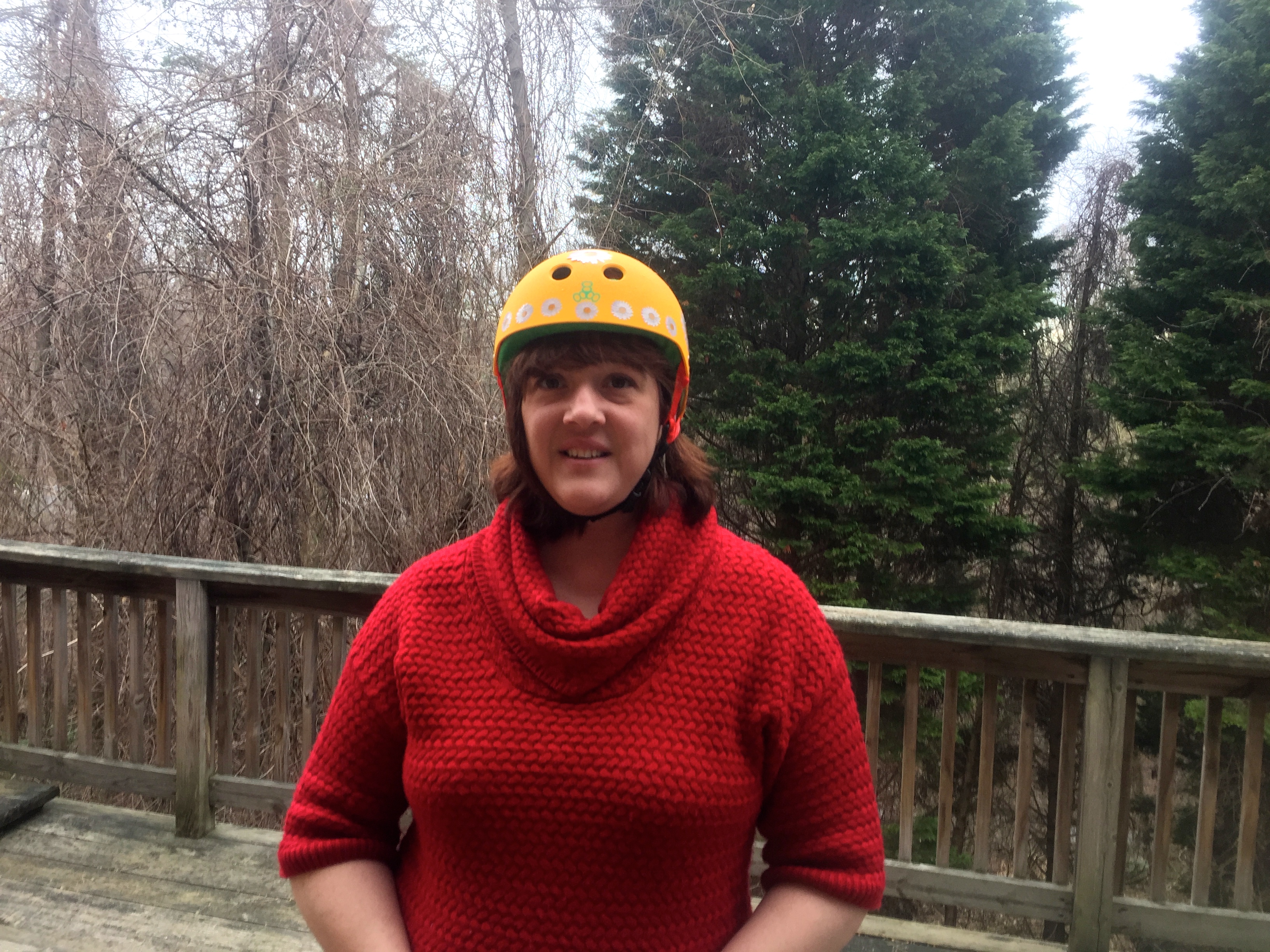
"So... tell me the truth. How does this look?" (Terry) "Baby? You are rockin' that helmet!"
“So… tell me the truth. How does this look?” (Terry) “Baby? You are rockin’ that helmet!”

I believe that there are very legitimate reasons for people who choose to keep invisible disabilities invisible. I respect their choice and their reasons for doing so. In many circumstances, it makes “good sense” and isn’t at all about vanity or shame.

I am “all out there” for lack of a better way to put it. In my profession, in my life, in the community service arenas I’m involved in, and for personal safety reasons, making my invisible disabilities – visible is the right thing to do.

I wear bling on my implant. I think it is fun. It puts a smile on my face. I’m so SO thrilled to be hearing again. The progression of my hearing loss took 12 painful years. I was completely deaf for almost two, silently researching and investigating cochlear implants. I’m so proud to be hearing again. Some say I’m flaunting it. Ummm…

YEAH.

If you do not want to bring attention to disabilities, do not ever choose to be partnered with a service dog. Even though our dogs are taught to be nearly invisible (and don’t you know folks are always startled when I get up to leave restaurants because they had no clue my dog was there?), when you walk through a store or into a doctor’s office, your service dog will bring attention to the fact that “something is different about you”. It has been a very long time since working dogs were only trained to be guide dogs. There are diabetic alert dogs, seizure alert dogs, autism dogs, PTSD service dogs, mobility assist dogs, balance assist dogs, alzheimer assist dogs, hearing assistance dogs, and the list goes on! My service dog makes me more independent. I don’t have to ask for help nearly as often. I don’t miss things (sounds my CI won’t pick up), and I’m confident and more safe. But choosing to have a service dog will bring attention to you.

When my Meniere’s disease worsened, I finally realized that 3-5 falls a week were too many. When I have my cane, I stumble maybe 3-4 times a week, but rarely go all the way down. I average only 2-3 falls a month now. I have three canes. They are bright, bold, and beautiful. I don’t try to hide that I carry a cane with me.

I love to be outside. Perhaps it’s the “farm girl” in me, but I love to be outside and love to walk. Just because I have a balance disorder does not mean that I am going to stop walking. Yet… I seemed to have trouble doing it safely. Even with cane and service dog, I was still taking tumbles when the roads or sidewalks were bad. Winter is my favorite season. I love snow, love ice, love “visible breath” in the air… but I have had some bad winters, 3 years in a row. As a matter of fact, when perusing my medical records with my neurologist, I was averaging 2 concussions each year, usually in Winter months. My last mild concussion was March 8th. I have a follow up with my neuro the first week of May. At the last appointment, he said, “You know. You need a helmet for when you walk!”

I laughed and said, “all my friends tell me I need to be wrapped in bubble wrap or need to wear a helmet.”

He looked at me eye-ball to eye-ball and said, “You don’t understand. I’m being serious. You CANNOT continue having concussions”.

Oh.

OH.

NO FREAKING WAY!

I sat there a little stunned for a minute but then began to consider the possibilities. I’m not afraid of what people think. I don’t care about what is fashionable – heck I consider myself a “disability-advocate fashion expert”. But could I embrace a helmet for walking when road and sidewalk conditions were bad?

I decided that yes… Yes, I could!

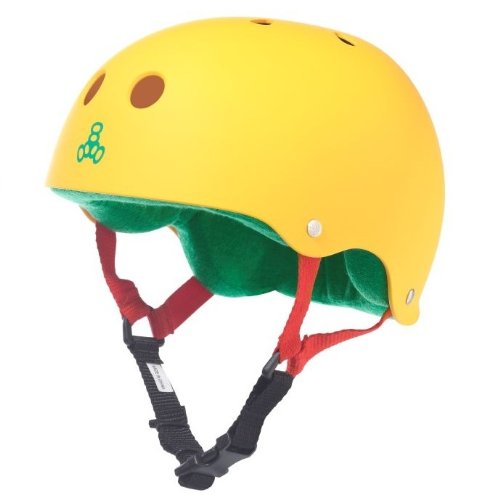
So I started researching, (cuz, yeah, that’s what I do) and found the helmet I wanted. I was crazy ecstatic that it is called a … “Brainsaver“! Ain’t it great? *BEAMS*

Triple 8 Brainsaver Rubber helmet with Liner in Rasta Yellow

I blinged up the helmet with some of my favorite stickers, (I’m a nut for daisies), and now I’m all set for walking. I even fixed the liner where my cochlear implant magnet had a little place to “rest” inside so it would not get pushed off.

I realize my approach to MY LIFE may not work for you. However, I love embracing who I am and holding my head high. I want to be an example to others, but I certainly know and understand that it is “different strokes for different folks”.

I hope I can report this time next year that I haven’t sustained any new concussions. Yay for me, and yay for neurologists who push to get their patients to take their brains seriously.

Denise Portis

© 2015 Personal Hearing Loss Journal
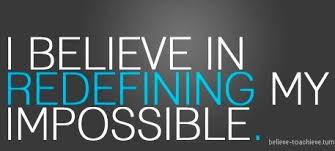
How Can I Redefine Me?

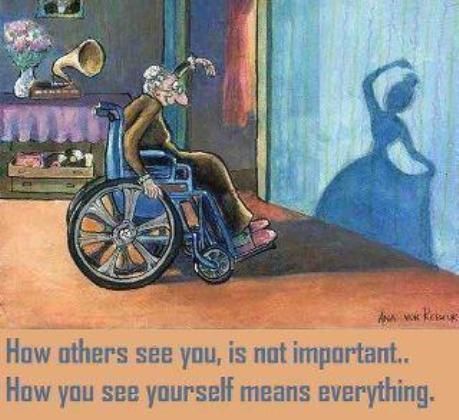
redefine

I stopped looking at myself as “disabled” a long time ago. I am, however, quite comfortable with being a person with disabilities. A friend, fellow-client at Fidos For Freedom, Inc., and blogger, was the first person I ever heard use the words, “differently abled”.

I have to tell you that sometimes I’m really feeling my disabilities. It can make me discouraged and frustrated. So many of us who live with disabilities or chronic illnesses often gripe, “I’d like just ONE DAY of feeling normal”. 

I’ve become very comfortable with being a “hearing again”, cochlear implant recipient and “late-deafened” (without my technology). I’ve even grown accustomed to having a vestibular disorder (Meniere’s disease). I use a cane, have a service dog, and bedazzle my cochlear implant with some amount of pride and transparency.

One thing I’m not OK with is concussions. I’ve had a lot. I was even told I had “post-concussive syndrome” after a moderate concussion in 2013. “You know… like football players have.” But…

I don’t play football.

My neurologist had me do ten weeks of vestibular rehab. This was actually a fantastic experience and I learned all kinds of tricks, most importantly how to fall safely – cuz I’m going to fall. Sure, I learned all the great things to minimize the possibility of falling, but I will take some tumbles. So I learned how to unlock my knees and SIT (albeit without any grace) to avoid falls. In spite of this, stuff just happens. And you know what? I get mad.

March 8

Take March 8th for example. There was some ice and lingering snow everywhere. I prepared to walk – which means I had my no-slip boots on, my tripod cane, and service dog (who is off vest but heels like the pro she is). I bundled up and made sure my charged cell phone is in a buttoned down pocket. I don’t use my cell phone while walking. No ear buds or attachments either – No listening to music. I pay attention when I walk. (Well, I also talk to my dog but that was the topic of another post).

So when I crossed a street and fell backwards on the ice I actually felt MAD on the way down. I had taken all these precautions! The back of my head actually BOUNCED on the road. Right before I blacked out I thought…

THIS SUCKS. 

I wasn’t out very long (I rarely am). I suffered with a headache for 4 days and made an appointment with my neurologist. (Follow up in May)

I remember thinking after texting my husband and making my way the rest of the way home, that I do not like being this person. I don’t like being the fall guy (get it?). By the time I walked the 2 blocks towards home, Terry met me and I sat on the porch for a good cry. After eliminating some of that tension (and freaking my husband out), I sat there to think (and yes, hold ice on my head). I kept thinking, “This isn’t who I am. I am not the walking, talking concussion waiting to happen. I have GOT to get a handle on this.” I needed to redefine myself. I’m NOT a fall guy. I’m a very careful person who sometimes sits quickly. I sit when I’m lucky… and when I’m not that’s OK. I have plan for that, too. I’m thinking a hockey helmet when the roads and walks are bad. Imagine how I can bedazzle THAT.

Your Thoughts Matter

Two hours before my fall, the pastor of my church (Weem’s Creek) spoke about courageous faith. Do you know that people with disabilities and chronic illness are some of the most courageous people I know? Here are some of his main points. If you aren’t a person of faith, read on anyway. This can easily pertain to anyone. If you are a person of faith you may be like me and think, “Well why have I never seen this before?”

1. To live a courageous faith, we must cultivate a habit of thinking thoughts that are from God. Instead of focusing on not thinking wrong thoughts, we need to focus on thinking right thoughts.

2. We can’t always control the thoughts we have, but we can control the thoughts we hold. We need to learn to hold the thoughts that are true, noble and excellent… those from God.

3. Meditate on God’s Word, not on our misery.

I think ATTITUDE is the real disability. If you can change your attitude, you will never feel disabled. Change your attitude – and that new attitude will CHANGE YOU.

I think of it as redefining me – redefining what having a disability means. My focus is on what I can do. I pour energy into discovering how to do things that I want to do – perhaps differently (using canine, technology, or assistance). This keeps our disabilities from defining US.

Be careful to acknowledge that everyone has a personal “definition”. Just because you may have a hearing loss too, doesn’t mean we define who we are the same. Being in control of our own definition (even if we need a necessary “redefine”), also helps others see us how we see ourselves.

It may take some work. I have a colleague at work who constantly tries to “help”. I finally told her one day, “watch how I do things WITHOUT your assistance”. That shut her up, made her watch… and don’t you know she learned so much? She told me later she just assumed I needed help. Having a disability does not mean you are “not able”. Most of us find very unique ways to be VERY abled.

Are you at a point in your life where you need a little redefining? Perhaps you have believed some of the “hype” about what you cannot do because of your diagnosis. Redefine yourself and hopefully change both your attitude and how others see you.

redefine4


L. Denise Portis

© 2015 Personal Hearing Loss Journal