Turn On Date

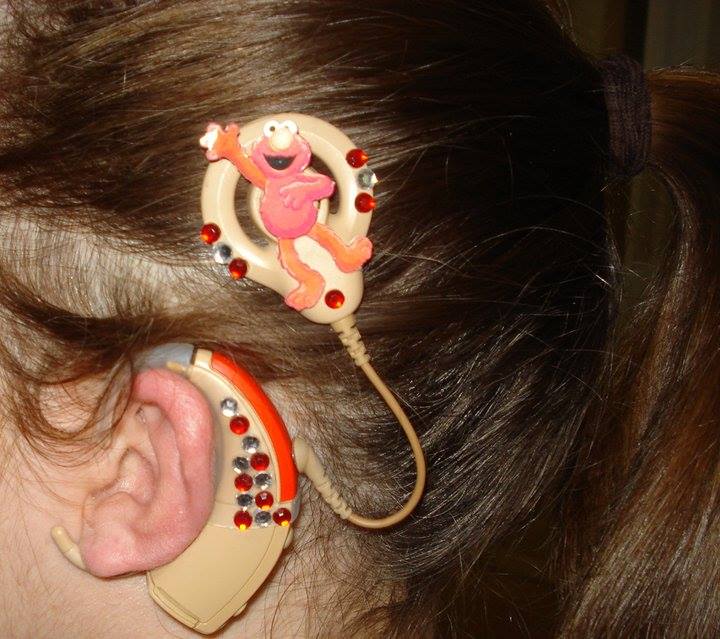
Elmo bling

One of my favorite discussions to have with people who have chronic illness, invisible or visible disabilities, or living a “new normal”, is sharing stories of how their adopted vernacular throws others they communicate with for a loop. We probably all have stories to tell. If your life is different because of a surgery, technology, or diagnosis, you may be using words and phrases that confuse and irritate folks who don’t live a similar life. I try to be careful and take a quick look around at WHO I’m talking to when having a conversation, but that is after really screwing up a lot in the early years. Here are some of my more memorable screw ups:

Your Turn On Date

Johns Hopkins sends folks my way when they are considering a cochlear implant, especially if they have Meniere’s disease as well. I have learned that when talking to someone new to the idea of cochlear implants, you cannot talk to them like someone who has already had the surgery. Cochlear implant peeps throw around terms that make perfect sense to US, but not so much to others. Case in point: I met with a lady with Meniere’s at a library who was investigating cochlear implants. At some point in the conversation I said, “Now the date you are turned on, you need to have a designated driver if possible. Everything will be so strange and you may not be able to drive safely if you don’t have someone to drive for you after you are turned on“.

Her eyes got big and she paled. She stuttered out, “Wha…wha… WHAT!?!?” I’m savvy enough to figure out by the way she answered that she didn’t understand my terminology. I thought I’d clear it up but succeeded in only making it worse…

Yes, when you go to the audiologist and they turn you on…” I stopped. Seeing her dropped jaw will silence me. I backed up and tried again, using “activation date” instead of “turn on date”. Do you know something? Unlike others who meet with me, she never followed up with post-surgery emails or meetings! <BIG GRIN>

I Lost My Ears

I had only been activated 8 months when I lost my ears. Now for CI folks, they get that when we talk about our “ears” we are talking about the external technology… not about our “listening appendages”. I was in a super Walmart, looking for a very specific jar of dill pickles (because yes… I’m that picky), when my cochlear implant – which has a magnetic coil to keep it on my head – flew off my ear and into the pickles.

Had I stayed still and searched the immediate jars I would have found it right off. As it was, being new to “hearing again”, I immediately stood up and screeched because my world had suddenly and completely gone SILENT. An older lady shopping amongst the same shelved pickles looked at me strange. I nervously picked up jars of pickles looking for my “ear”. The lady came closer and joked, “Are you pregnant?“. I turned to her with big tears in my eyes which made her come closer and immediately quit teasing me.

Are you OK?” she asked kindly. I looked at her and wailed, “I lost my ear! I can’t find it!

She looked at me bug-eyed and walked away. Quickly.

Thankfully I found my CI attached to the metal lid of some nearby olives. No wonder I couldn’t find it amongst the pickles.

I’m Not Turned On

When we lived in another part of Maryland, we use to have to drive a long way to go to church on Sunday. We actually went into another county to do so. Normally my family doesn’t listen to the car radio because they know that I’m totally incapable of tuning out the radio and hearing just the conversation. However, on longer trips, I often say, “I’m turning my ears off” so that they can listen to the radio and they know if they need me they only need to tap my shoulder. In truth, it is nice being able to sit in “total silence” from time to time. It is certainly conducive to “deep thinking”.

So one Sunday on our way to church, I gave the family heads up that I was going silent on purpose. I must have moved from “deep thinking” to day dreaming. We got to church, got our stuff out of the car, and Terry and I waved goodbye to the kids as we headed over to the building where we had small group Bible study. I’m still deaf at this point and I couldn’t tell ya if Terry was talking to me. I know my mind was somewhere else – that’s for sure! We went into the classroom and sat down at the big table. Some other couples were already there. One of the ladies leaned up so that she could see around Terry and said something. It was then I realized I still hadn’t turned my cochlear implant back on. “Oh! Wait, I’m not turned on!

I reached up and punched the correct button and looked around at a bunch of stunned faces. Terry was actually embarrassed. (If you know Terry, you know he rarely gets flustered). A few who caught on a little late began to snicker. Me? Well I thought it was just HYSTERICAL. So I managed to get out in between laughs, “Oooops. I need to find a better way to say I don’t have my CI on“. Terry quickly said, “Yes Denise. Yes you do!“. It took a number of months for me to live that one down.

Remember Your Audience

Do you live with a chronic condition or acquired disability? Have you become an expert in navigating your “new normal”? Can you “talk shop” with the rest of your population?

It’s hard to remember that just because WE understand what we mean, others may not. We tend to use words and phrases that become a part of our vocabulary. Try to pay attention to your audience. A good advocate learns to do that. You may have to deliberately choose to use a different word or phrase if no one really connects with it but you. For example, I had to stop referring to my bright purple cane as “my third leg”. I’m fairly naive and had no idea the shocked looks were from folks who had heard that phrase in a completely different context.

In order to really educate and advocate, you need to use terminology that the general public will understand. You may think a word or phrase is very obvious, but others may not ever hear that word in conversation. I was trained at Fidos For Freedom, Inc., to know how to advocate for accessibility with my service dog. The trainers didn’t tell us, however, that not everyone in the general public knows what the ADA is! (Thankfully, they also equipped us with great little brochures and handouts with the law explained on them).

Fibro fog” may only mean something to other folks with fibromyalgia. “CFS zombie” may only be a phrase others with chronic fatigue syndrome use. HoHearies can be figured out by most of the population, but is only self-identified by those who are hard of hearing. The general public may even make incorrect associations just because they don’t understand your chosen words. I had no idea anyone would ever think “tinnitus” was something caused by a cut from a dirty tin can.

You are a more effective advocate when you “consider your audience” and appropriately explain symptoms, treatment, and diagnosis. The goal is to educate after all. If you only succeed in confusing those around you, you haven’t really helped to educate.

What’s REALLY fun is when those closest to you start to confuse others as well. Terry often asks if I “have my ears on” now.

Denise Portis

© 2014 Personal Hearing Loss Journal
False Coping Skills and Elephants

IMG_1238
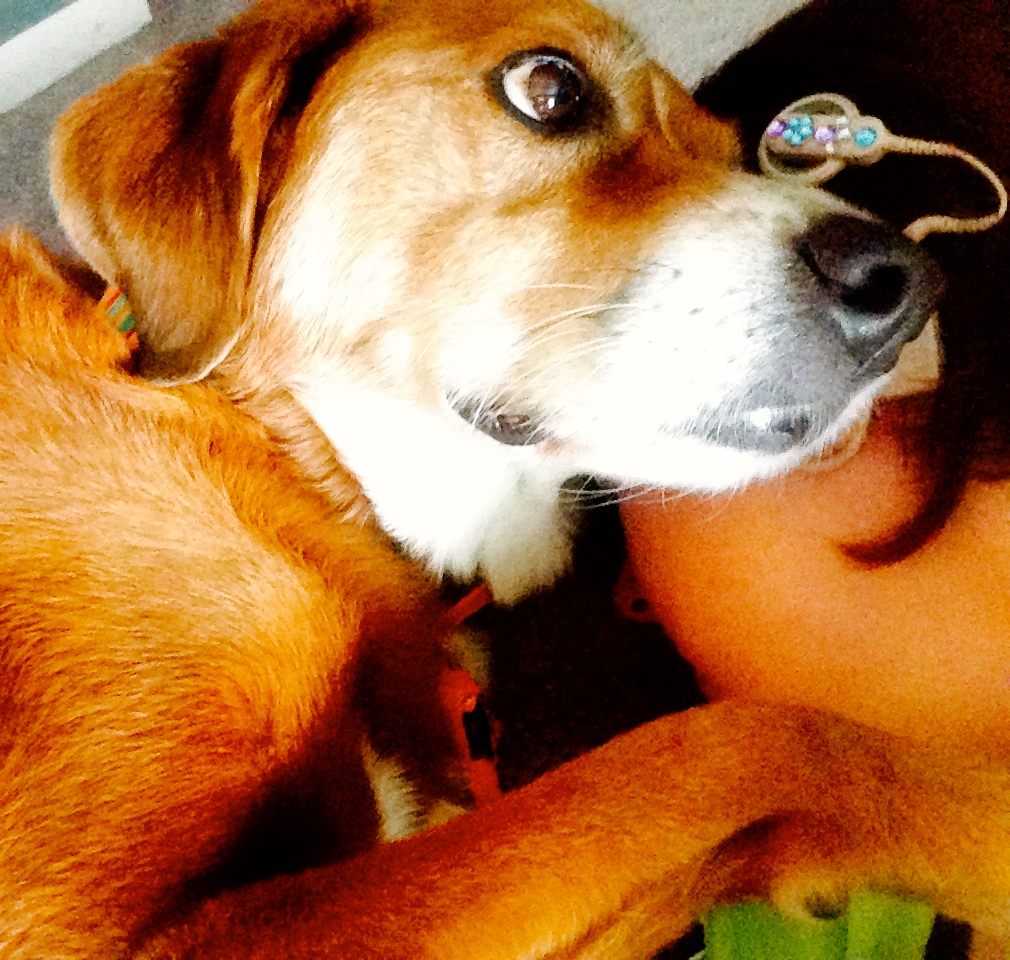
Hound dog knows when I’m “finished”

Ever wake up just feeling completely whipped?

I feel like I’ve developed GREAT coping skills. After all, you either learn to cope or you’re “done”. So the options are pretty clear cut IMHO. Two coping skills I learned early on in adjusting to my “new normal” as a person who is “differently abled”, include:

1. Start each day new. Yesterday is gone. Tomorrow will come without my worrying about it now. Handle today and today only.

2. Stay busy. Staying busy helps to keep your mind off your troubles and focus on the here and now. It can be busy-ness towards important things, or even the mundane.

The second one I use a great deal, but I’ll be honest. It isn’t exactly a HEALTHY coping mechanism. I don’t do well with a lot of down time. A perfect day for me is getting up (safely – believe me, it can be hard when you have a balance disorder and go VERTICAL for the first time that day), taking my dog for a walk while planning my day, re-enter the house in high gear without stopping until bedtime.

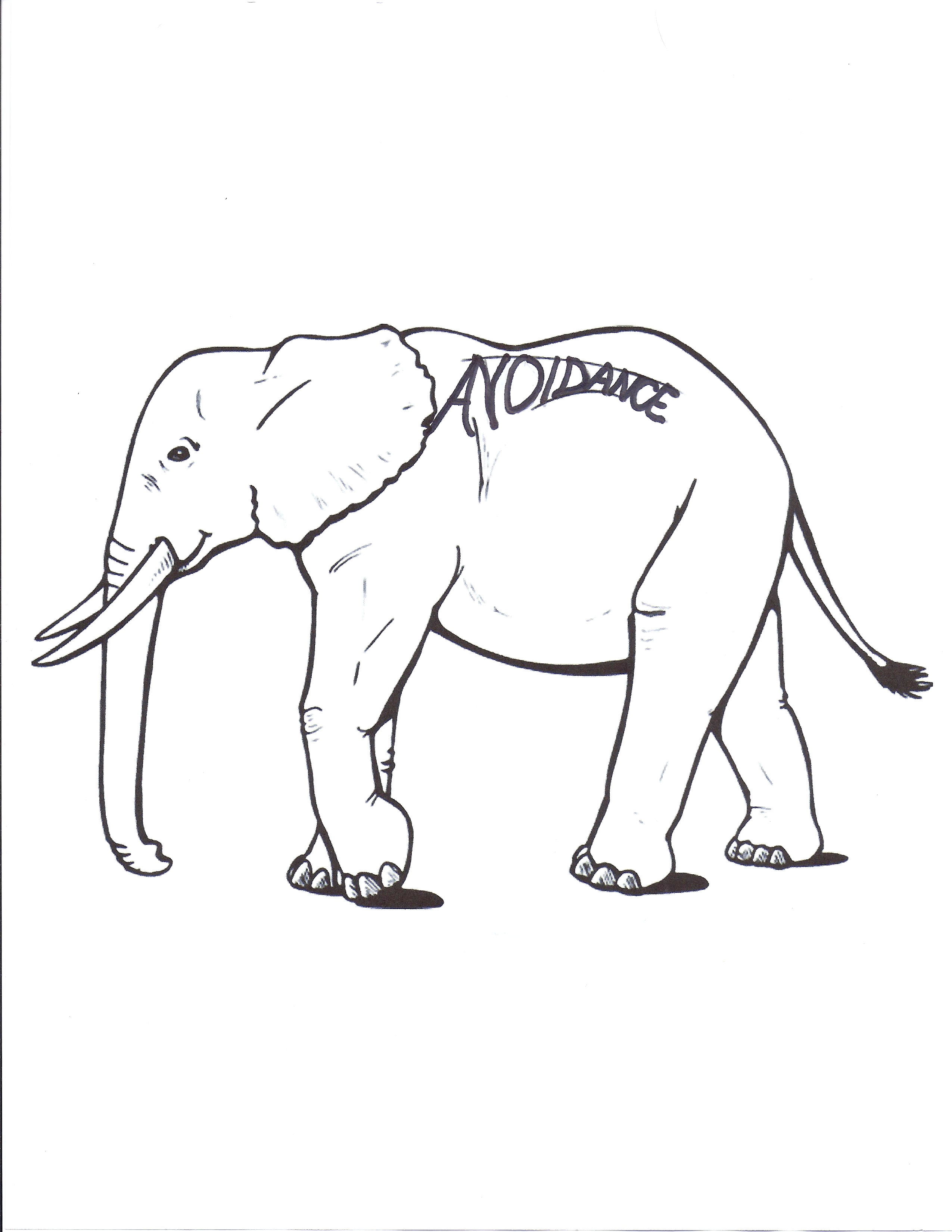
Yeah. Not always healthy. The problem with staying BUSY in order to cope is that it is a false kind of coping. This type of coping skill isn’t actually a coping skill at all. It is called avoidance. And friends? I do this really well. Some of you do too. (You know who you are…)

Staying Busy to Avoid

Do you “do busy” really well? It may be time to stop to discover WHY you stay so busy. Do you strive to remain busy to avoid unpleasant thoughts, actions, environments, even people? Don’t confuse healthy boundaries with avoidance. One is – well… HEALTHY. The other? Not so much. As a matter of fact, avoidance can lead to a number of physical and emotional problems. Psychologists have recognized avoidance for what it is for decades now. Yes, in the right context it can be healthy. But it is easy to AVOID to the point of harm. Spira, Zvolensky, Eifer, and Feldner (2004) explain that being busy to avoid our problems is actually a predictor of panic disorders. You see? The problem with staying busy to avoid something is that eventually you really will run out of things to do. Worse? Your body physically screams, “ENOUGH ALREADY!” and shuts down.

I am finishing up the last of numerous classes in my doctoral work and have already begun the very long process of dissertation study. This work keeps me really busy and it is work I actually enjoy because psychology is what I “do”. I work part-time as an adjunct professor and this helps to keep me busy. I love my work, love my students, and love to teach. The problem with working as part-time faculty at a community college is that it is impossible to predict how many courses you will be teaching semester to semester. For example, I taught the first summer school section, but not the second. I used the extra time in the beginning to catch up on some of my own school work and to do some “Spring cleaning” that had been long delayed… seeing as how it is SUMMER. These past few days though I’ve found I have had some down time. *grimace*

Forced Mindfulness

When I am forced to the point of literally running out of things to do… even for just a day or so, I find it debilitating.

Scan 3

Whoosh.

(Hear that? That was the air being sucked out of my lungs when the elephant in the room finally sat. On. My. Chest.)

I don’t do “mindfulness” well. I’m learning though.

Brown and Ryan (2003) explain mindfulness as being AWARE and ATTENTIVE. Let me explain on a more personal level and maybe you can “see” yourself somewhere in this:

Avoidance:

My new normal of hearing with a cochlear implant and living with a balance disorder is not easy. I’ve adjusted. Only to have to re-adjust. That’s OK. I’m flexible. Most of the time.

I work at a job I love and navigate life safely with a service dogMost of the time.

I am optimistic, cheerful, can poke fun at myself and enjoy busting my butt to help others. Most of the time.

I’m very busy and drop exhausted into bed each night and sleep well. Most of the time.

I have taken control of chronic depression and don’t let it control me. Most of the time.

I don’t feel sorry for myself. I like me. I recognize that I am doing well. Most of the time.

Truthfulness:

My new normal of hearing with a cochlear implant and living with a balance disorder is not easy. I’ve adjusted. Only to have to re-adjust. That’s OK. I’m flexible. Most of the time. 

Some days having a CI and Meniere’s disease sucks. I don’t hear perfectly. I feel left out. I’m tired of falling. I’m tired of running into things. I hate long-sleeves and high collars since they only hide bruises. I’m tired of adjusting. I’m going to cry. I’m going to scream. I may swear. 

I work at a job I love and navigate life safely with a service dog. Most of the time.

I love my job but it is really hard when the hallways are crowded. It can be overwhelming to have to rush from one side of campus to another. Crap. It’s raining? Really? *waves white flag*

I am optimistic, cheerful, can poke fun at myself and enjoy busting my butt to help others. Most of the time.

Sometimes I want to change my “… I’m fine, how are you?” to “I’m having a sucky day. And frankly? I don’t care how you are doing if you want to know the truth!!!!”. I’m going to have to ask for help. After all, Chloe cannot 1) retrieve a bag of dropped potatoes in the grocery store, 2) pick up that tiny paperclip without risk of swallowing it, 3) get the umbrella I dropped in a puddle without getting really muddy, 4) tell me EVERYTHING WILL BE OK.

I’m very busy and drop exhausted into bed each night and sleep well. Most of the time.

I can lay in bed and worry. 

I have taken control of chronic depression and don’t let it control me. Most of the time.

It’s hard when I have to “own” the knowledge that I will always “deal” with depression. 

I don’t feel sorry for myself. I like me. I recognize that I am doing well. Most of the time.

uh-huh. Ri -i -i -i -i -i…ght.

So yeah, sometimes I’m forced to pay attention and be aware. How is that helpful? Well, for starters attentive awareness facilitates choices of behaviors that are consistent with my needs, values, and interests (Brown & Ryan, 2003). It is healthy to really navigate personal feelings, thoughts, and even pain. David Cain wrote about mindfulness in a way that really “stuck” with me. It changed the way I view “forced attentive awareness”. Check out this great article, “How to Make Mindfulness a Habit With Only a Tiny Commitment“.

For me, mindfulness means being truthful with ME. I am learning to be mindful even when I am super busy. I do this because there will be days I am NOT busy and I want mindfulness to be an invited friend instead of unexpected guest. As a person of faith, it is also super helpful to be frank with God. In doing so, I am actually able to recognize false coping skills that in the long run are not healthy for me.

I’ve heard some folks say, “Oh golly. I can’t go there and allow myself to FEEL. You don’t know what I’ve been through“.

No. No I don’t. But I do know that pretending those feelings don’t exist do not change the fact that the elephant is THERE. At some point in time it’s gonna sit. On your chest. You won’t be able to breathe.

Be Mindful of Your Pachyderm

It is healthy to habitually and mindfully pay attention and be aware of what and who you really are. What are your struggles and successes? Where have you been, where are you now, and where are you going? Who is helping you get there?

What is really hard for you? What have you learned to do well? What do you need to change?

WHO ARE YOU? 

Don’t pretend that being mindful is the same thing as having your mind full. The latter is just another form of busy-ness on the cognitive level. Be attentive. Be aware. Do this with enough frequency that you can be mindful each and every day – for even just a few moments. I make it a priority to be mindful for a longer period of time – like a whole DAY, at least once a year.

But the elephant “sat” without invitation for me this past week. It took me by surprise. That is going to happen. However, if you’ve practiced mindfulness, you are going to discover…

YOU CAN BENCH PRESS AN ELEPHANT.

Denise Portis

© 2014 Personal Hearing Loss Journal
Brown, K., & Ryan, R. M. (2003). The benefits of being present: Mindfulness and its role in psychological well-being. Journal Of Personality And Social Psychology84(4), 822-848. doi:10.1037/0022-3514.84.4.822

Cain, D. (2013). How to make mindfulness a habit with only a tiny commitment. Rapitude.com. Retrieved July 20, 2014, from http://www.raptitude.com/2010/03/how-to-make-mindfulness-a-habit-with-only-a-tiny-commitment/

Spira, A. P., Zvolensky, M. J., Eifert, G. H., & Feldner, M. T. (2004). Avoidance-oriented coping as a predictor of panic-related distress. Journal of Anxiety Disorders, 18(3), 309-323. dii: 10.1016/S0887-6185(02)00249-9

Beaver – Destructive or Discerning?

swimming-beaver-344367-m

We have beaver. Actually, we’ve had beaver for about 16 months now, however this summer it is really evident WE HAVE BEAVER.

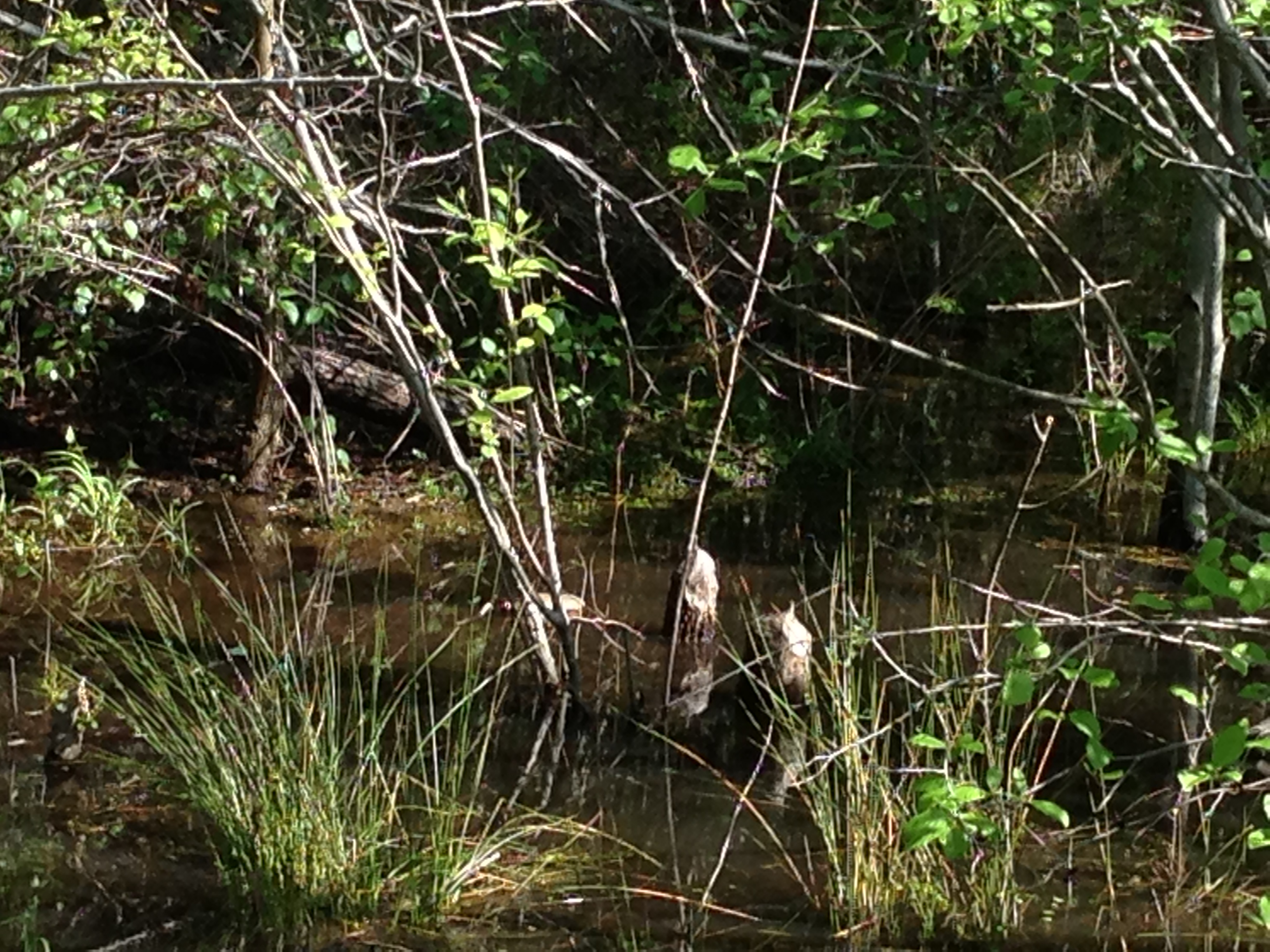
Our townhouse community sits up at the top of a hill. It is a closed cul-de-sac community, so it is great that “through traffic” is not an issue here. A brand-new walking path is now within footsteps of my front door. It will eventually connect to other walking paths, but for now it is about 1.5 miles round trip. At the bottom of our “hill” the path takes us by both a busy road, and what was once a small creek. In the Spring, I use to get a kick out of “hearing” the water sounds, especially after heavy rains. Last Spring those water sounds disappeared. However, I spotted this:

beaver10

… and then this:

beaver11

The creek quickly turned into a pond. And this year? Well let’s just say there is a new ecosystem near my house.

I came across a huddled group of homeowners about 3 weeks ago, whispering and gesturing towards the pond with banks now within 60 feet of our back doors. I stopped to see what was going on, and because it was early enough in the morning with few traffic sounds, I could actually hear their whispers.

“Will the water level rise much more?”

“What do you think they are up to?”

“Do they bite?”

Now my first thought was, “FOLKS. Beaver do not understand human language and to my knowledge they don’t have bionic hearing like I do. Why the HECK are you whispering?”

I didn’t voice those thoughts. Instead I said, “Ummm” (I’m ever so eloquent…)

Yeah, but have y’all been down to the pond area where the walking path is? Have y’all seen what has happened down there?

Blank looks. I discovered they don’t comprehend SOUTHERN. I tried to speak a little more cultured…

Yes, you should walk down there. There are 2 HUGE culverts about 8 feet in diameter. That water level will never get any higher unless those culverts become dammed up as well. If that happens, the city will just unplug them. After all, that road will flood before our homes will“.

Blank looks. See what a lack of exercise will do? Go walking folks, go walking. Check out what the beaver have done up close. Geesh. I think they were miffed I was talking in a normal tone of voice. After all… *sneaky whisper* … the beaver probably HEARD ME.

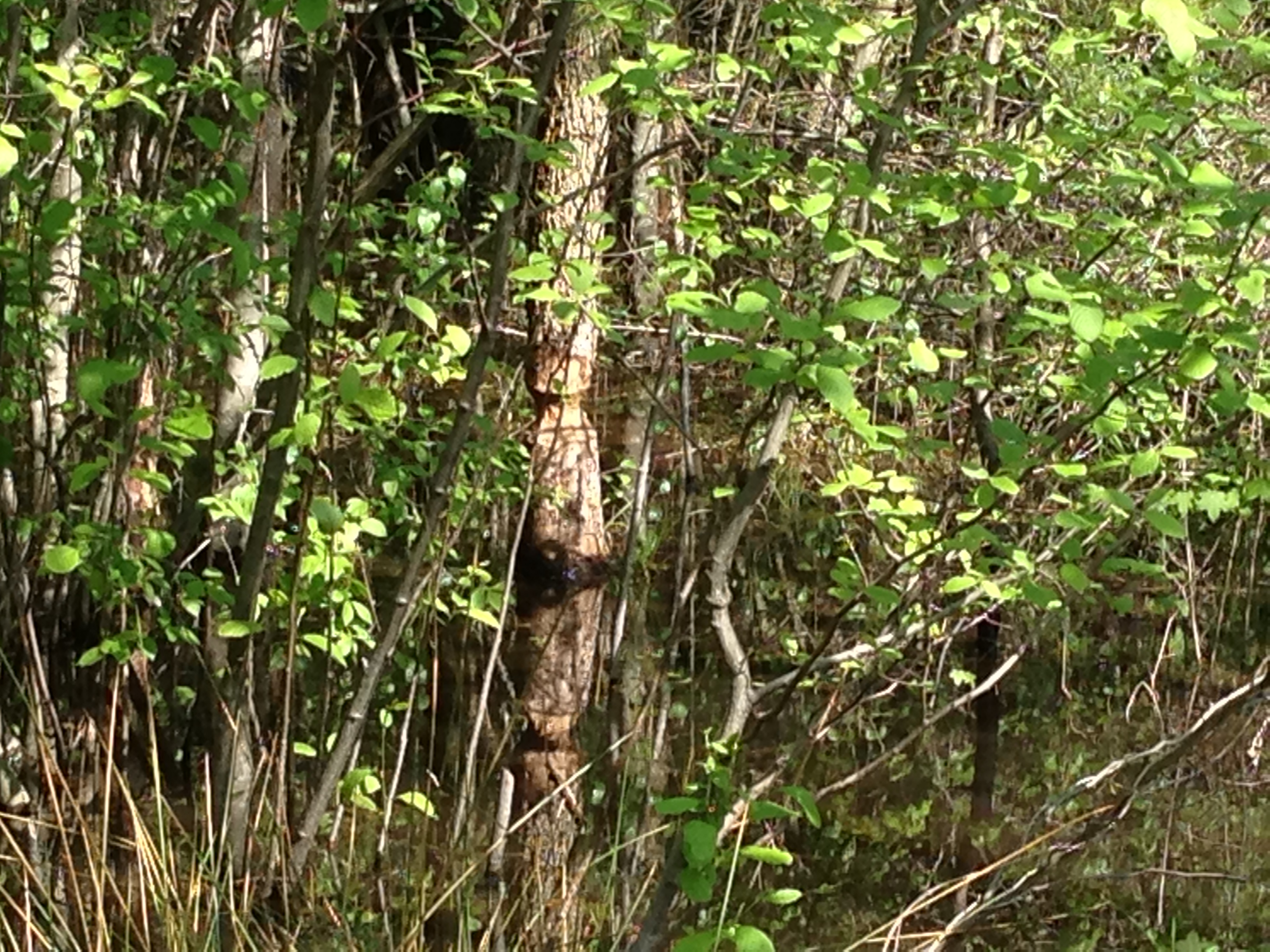
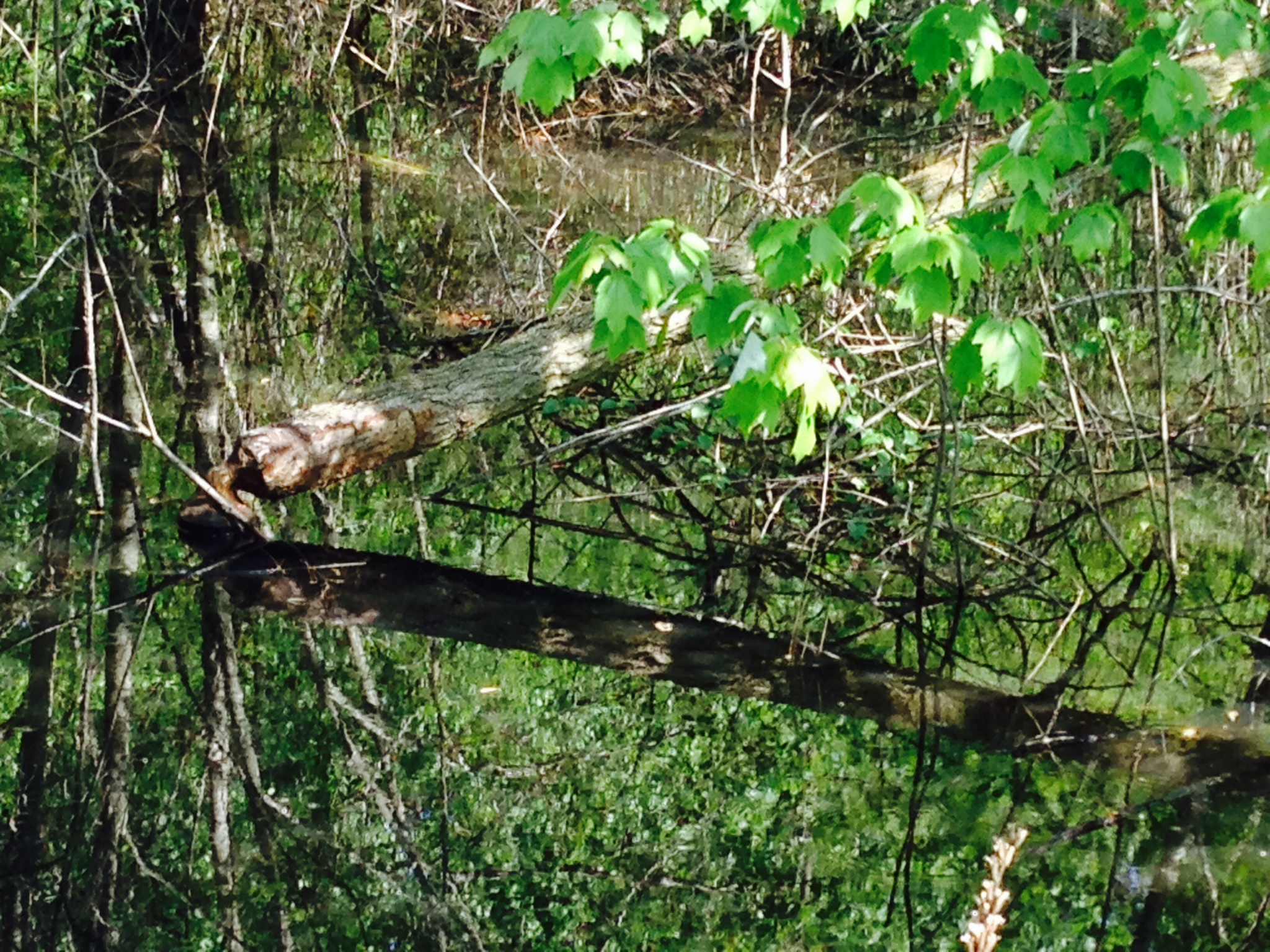
Beaver have made a comeback in Maryland. I pulled this from a neighboring county’s website:

“Beaver can be among the most beneficial of the county’s wildlife. They create favorable habitat for a variety of wildlife species including fish, birds, amphibians, reptiles, and mammals. This variety of wildlife is in turn valued for recreational, scientific, educational and aesthetic purposes. Beaver activity is also helpful in retaining storm water runoff and improves water quality by trapping sediment, nutrients, and pollutants. Beaver activity can also cause flooding of roads, trails, forest land. They also consume trees and shrubs. Their impacts often occur suddenly and dramatically.

These benefits and detriments often occur simultaneously at a single location. Because of the varying degrees of tolerance levels among people to beaver activity, there are bound to be disagreements on how best to “deal” with beaver conflicts.” (Howard County Parks and Recreation, 2014).

Living side-by-side with these amazing creatures is fairly simple. I’ve been thinking a lot about this family of beaver.

beaver3

They migrated to this area near the bay bridge and did what came naturally to them. Not with destruction in mind… but cunning and incredibly discerning architects, this family of beaver have created a whole new ecosystem. We’ve always had tree frogs (although it took Chloe’s trainer to clue me in to what I was hearing each year). But now we have:

Beaver8

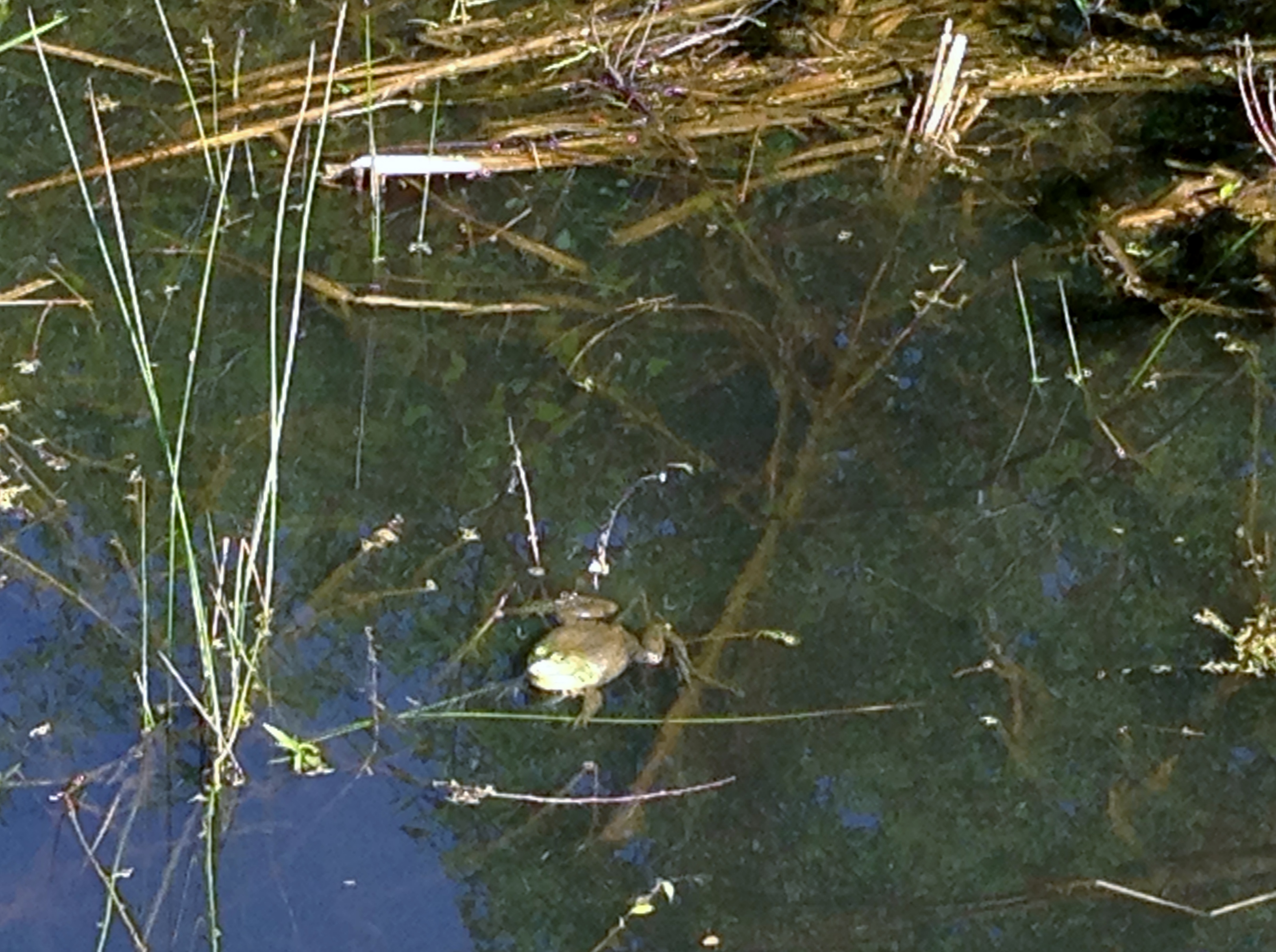
… bullfrogs. You should have seen Chloe’s head and ears the first time she heard THEM! These fellas stretch about two feet, nose to tip of hind legs. I know this, because I’m the crazy neighbor lady screeching to the neighborhood boys who have caught them and held them up to “Return them to the pond when you are done!”  There are also numerous plants I have never seen before in this area when all we once had was a creek…

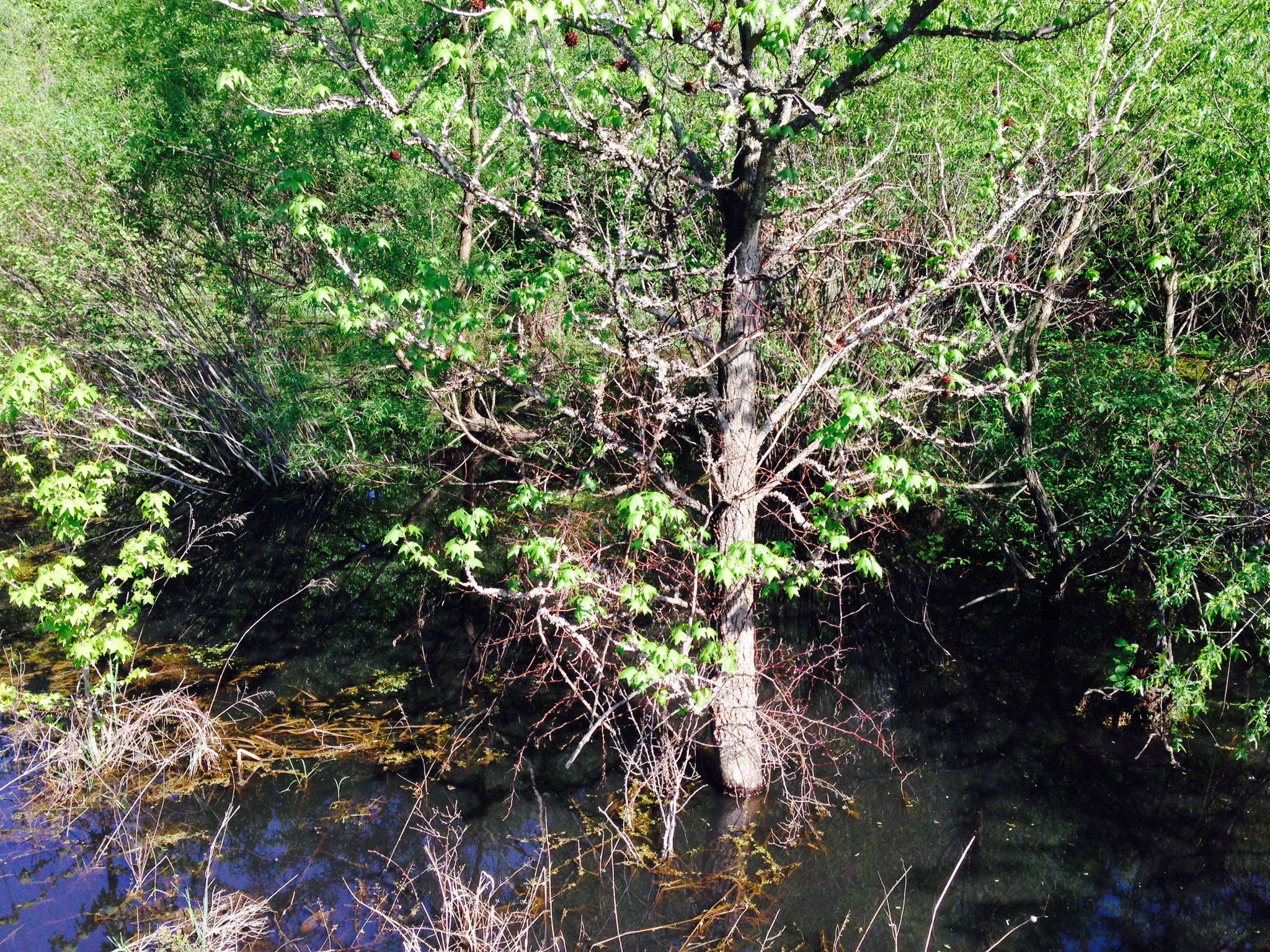
Beaver7

and the trees are flourishing…

beaver1

I counted 4 different families of mallard duck one evening, with little ones thriving in this secluded and protected environment. Turtles are sunbathing on any log or rock that breaches the surface of the water. The fox are back (having been gone for at least two summers). There are enough deer in our area now to make my poor hound dogs hoarse for all the barking alerts they insist on for me.

I cannot help but be amazed. The beaver strengthened and created a home just right for them, and in the process created a place to thrive for other species. Folks? I want to be a beaver.

I didn’t ask for disabilities. I never once thought, “When I grow up… I want to be DEAF and have a significant BALANCE DISORDER”. However, in my own process of adapting and making my environment safe and liveable for ME (cochlear implant surgery, service dog from Fidos For Freedom, be-dazzled canes, no-slip shoes, discovering where all the elevators are on campus, practicing all I learned in vestibular rehab.), I have created a new ecosystem.

I want MY WORLD to intersect with the REAL WORLD and help folks recognize the importance of inclusion. I work to make sure that my new life, teaches and advocates in accepting differences. I want others to recognize abilities rather than disabilities. I want my invisible disabilities to be visible and “pond-like“. I want my life to inspire others to choose to live equally purposeful lives. In my own small way I do this by working with my campus disability office. I openly talk about being “differently-abled” in class. I “plug” what I know whenever I can to whomever will listen… cochlear implants and service dogs, depression and coping skills. I have discovered my environment changing. People are coming out of the woodwork… or umm… newly created POND, and sharing with me that they have a mental illness, invisible challenge or diagnosis such as fibromyalgia, chronic fatigue syndrome, or Lyme’s disease.

Yes. Having an attitude of gratitude and focus on education and advocacy, has me walking by concerned citizens from time to time, whispering about a beaver conspiracy. But just as I’ve learned that being transparent is contagious, these folks will eventually HEAR and go walking to discover other new ecosystems. At least… I hope they will.

Do you live with disability? Are you struggling with an invisible illness? Do you have a chronic condition that folks do not seem to understand, nor comprehend how it affects you? Hearing Elmo is not just a place to “hear”. My desire is that numerous authors, both named and anonymous, begin to disseminate the kind of information that changes our environments. In the end, the beaver aren’t the sole beneficiaries. We all benefit. Would you like to write for Hearing Elmo? Contact me at denise.portis@gmail.com and type “Hearing Elmo” in the subject line. Building dams is pretty fun. It is unexpected. It is worthwhile. We can all make a difference!

Denise Portis

©2014 Personal Hearing Loss Journal

Howard County Parks and Recreation. (2014). Beavers. Retrieved May 16, 2014, from http://howardcountymd.us/DisplayPrimary.aspx?id=2396

Fundamental Attribution Error

hershey park

I drive my family crazy sometimes. I have psychology on “the brain”. Things I’m studying, things I’m teaching, things I’m thinking about (the dreaded dissertation looms after all), I tend to talk about. I mean a lot. Even when you don’t want me to.

Spring is a busy month for Hearing Elmo. For some reason, lots of folks tune in and contact me. I love to write (even email responses) so I don’t mind at all. To me? This is what Hearing Elmo is all about. I’m glad to be a small part in helping to raise awareness about invisible disAbilities and chronic illnesses. I learn SO MUCH from so many of you who write. So thanks! 🙂

Lately, I’ve had a lot of conversations both email and face-to-face with folks who are struggling with bad thoughts. Thoughts about strangling someone.

Even though it’s deserved.

People with disAbilities or chronic illness are often judged. Sometimes it’s a first impression. Sometimes it is by someone who knows better. I want to cover both today. In psychology we call this the “Fundamental Attribution Error”. Lilienfeld, Lynn, Namy, and Woolf (2013), explain that the fundamental attribution error “refers to the tendency to overestimate the impact of dispositional influences on other’s behavior. By dispositional influences, we mean enduring characteristics, such as personality traits, attitudes and intelligence. Because of the fundamental attribution error, we also tend to underestimate the impact of situational influences on other’s behavior” (p. 501). It’s that last part I want to talk about in this post.

People with Disability or Chronic Illness are Misunderstood

If you are reading this post you likely have some connection to invisible illness or disAbility. Perhaps your condition is not invisible at all. You may live with personal challenges.

easter 2014

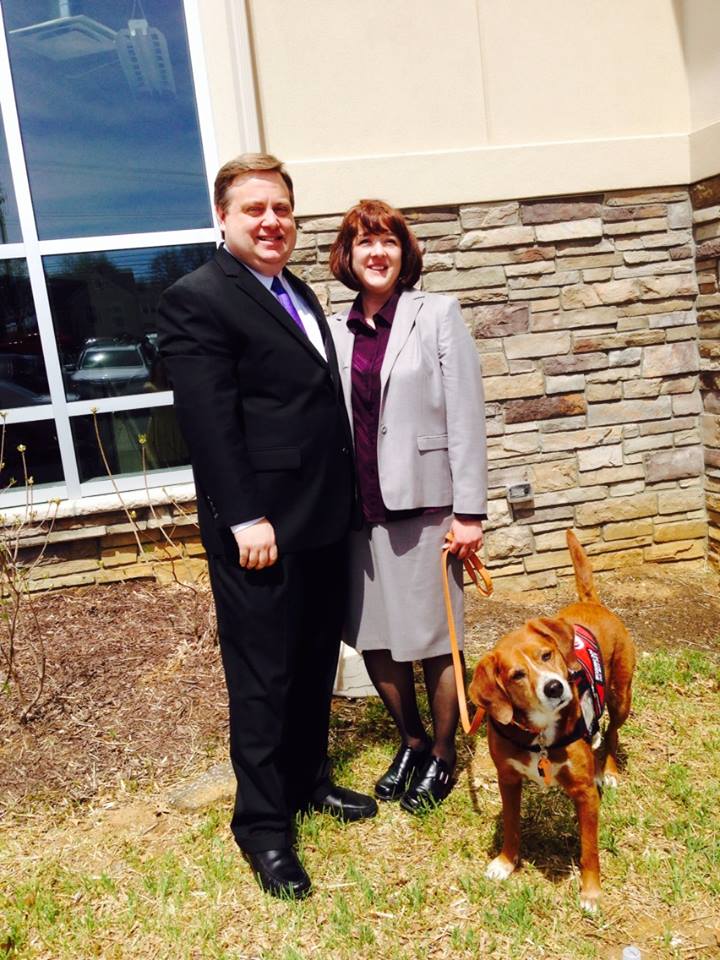
Easter Sunday I came home from church with husband and hound dog and went downstairs to work. After about 20 minutes I came to the realization many of you do each and every day. I was wiped out. I knew I would get far more work done if I went upstairs to take a nap. Some folks call these “power naps”. Me? I’m not going to sugarcoat it. I need naps sometimes because I have Meniere’s disease and hear with a cochlear implant. I’m 47-years-old. I get tired. I get tired a lot! So trudging upstairs I passed my husband in the family room and said, “I’m going upstairs to take a nap“. I stood there a second to see if that elicited any reaction.

Now Terry has been married to me long enough to know that if I actually say I need a nap, you better let me take a nap. No smart remarks. He only said, “Be sure to close the blinds or Chloe will bark at every little thing“. I’ve “trained him well“, yes?

But it isn’t easy being the significant other of someone who has a invisible illness or disAbility. When Terry first married me I was only unilaterally deaf and no balance disorder to speak of. Fast forward 28 years and I am now at a point where I can still do a lot. I have dreams, goals, work hard, am a wife, mother, mentor, teacher, student and writer… and I take naps.

I have been out and about before running errands or just shopping with my best friend – Terry Portis. I have out of the blue said, “Ok. You need to take me home.” The last time this happened we were going to a super Target. We had just parked in the parking garage and Terry started to get out. “Ok“, I said. “You need to take me home“.

He stopped and looked at me. After a long pause he asked incredulously, “You mean… now?

I looked at him eyeball to eyeball (which can be uncomfortable with the risk of losing your contacts – but I needed him to know I meant business). “Now” I responded.

So we went home. Sometimes when I “run out of gas” I do so very suddenly. There can be little warning. You could make me push it and we’ll both risk the reality of a major nosedive in “Lawn and Garden” with mild concussion and concerned gathered crowd to show for it. (Clean-up on aisle twelve…)

None of us ask to develop acquired disAbilities. No one prays for a chronic illness. People we know and love may get peeved at us that we require more rest than we use to need. Part of it may be that they miss doing things with you that they use to be able to do. My husband loves Target. But sometimes? Well sometimes you need to take me home and do it NOW. That can be hard.

So those of us who have the chronic illness or disAbility need to be understanding too. But… don’t be afraid to talk about it. One of my favorite “opening statements” for a heart-to-heart conversation begins like this:

“When you say (or do) _________________ it makes me feel like _______________.”

It lets the people I care about know that it DOES bother me when they say or do something – not seeing the whole picture. They don’t understand the situation well enough to get why I behaved a certain way or responded a certain way. So I need to remind them. That’s OK.

If you are the “significant other” – try to put yourself in the other person’s shoes. You don’t want to really know what they are going through for that would mean you’d have to share the disAbility or diagnosis to really get it. What they are going through is really… REALLY…

HARD.

But you know what? They can get through it because you are there to help them, encourage them, and cheer them on! (So don’t forget how influential you can be, OK?)

For Those Who Don’t Know me

Several times a year someone who doesn’t even know me will say something that I almost come unglued about. I have one of those moments where I want to strangle someone. But in most states that is still against the law…

Costco, October 2013: I was in the meat section trying to decide how many crock-pot size meals I wanted to make in the next couple of weeks when I heard a woman about 3 feet away say, “Oh MY GOD!!!!!!!!!!! A dog, in the meat section. I’m going to complain to the manager“.

I turned around and saw this woman standing there with hands on hips and an embarrassed husband standing next to her. Well my friends? Sometimes good sense just rushes right out of my head. I pointed my finger in her face and said, “This is a service dog. I am late-deafened and have a balance disorder. This dog has picked up dozens of things for me since I’ve been in this store for the last 20 minutes. You shouldn’t judge what you don’t know. I’d rather have disAbilities than be stupid. You can’t fix stupid“. And I walked away.

Amidst applause. For it seems we had drawn a crowd.

Yet I will be honest with you. More times than not I do NOT get to say something pithy and intelligent. Sometimes my heart is broken. Sometimes I walk away crushed. Sometimes I strangle people. (Ok, maybe not but I may FEEL like it).

It can be really hard when people judge what they don’t know. After stumbling into an end cap at a store I had a person jest, “Little early to be drinking, isn’t it?” I could get mad and “let it rip”. Or strangle. Cuz yeah I’m a little sidetracked by how satisfying that would be right now. But folks don’t know me. They don’t know my reality, or my day-to-day situational influences that have me moving, responding, and requesting naps. Then I have to make a decision.

A) Strangle them

B) Scream at them

C) Walk away. It isn’t worth it.

“C” is the best response most of the time.

———

Do you get tired easily? Does fatigue trigger headaches, body aches, and brain fog? Do you sometimes just need a NAP? People may not understand that. They may think you are being lazy. They may think you should try harder. They may need strangled…

… with the truth. So tell them!

Denise Portis

© 2014 Personal Hearing Loss Journal

Lilienfeld, S. O., Lynn, S. J., Namy, L. L., Woolf, N. J. (2013). Psychology: From inquiry to understanding (3rd ed.). Boston: Pearson Publishing.


Make a Difference

make a difference

My paternal grandmother passed away unexpectedly on March 28th. She was instrumental in my becoming, well – ME. I told her the FIRST time how important she was to me at Silver State Youth Camp in the Rocky Mountains when I was 13-years-old. I made it a point to tell her at least once a year, and to my knowledge never missed a year of telling her how important she was to me.

We have people we care about, and then there are usually a smaller group of people who influenced who you are. I’m convinced we do not have a whole lot of opportunities in life to invest ourselves THAT WAY in the life of another.

Searching for Significance

One of my favorite books is by Robert McGee. Searching for Significance is something all of us long for I believe. Something it took me years to learn, however, is that “significant” is what you deem important. What I think is significant and life-changing, may not mean a hill of beans to you. And that’s OK. We can’t find significance by asking others how they measure that. Significant things are as unique as people are. This is why so many of us are invested in causes, hobbies, and community service. For US, these things add significance to our lives. We want to make a difference by being involved.

One of my favorite quotes is by Joseph Campbell. “Life has no meaning. Each of us has meaning and we bring it to life. It is a waste to be asking the question when you are the answer.”  I find this rather profound. WE bring meaning TO life.

Life is hard. Living with disabilities is hard. Living with adult children at home is hard (not really but I had to throw that in there). If I expect my life – with all it’s trials and successes, joys and sorrows, to provide meaning, I’ve missed the whole point of living.

Some folks think they are not in a position to make a difference. You don’t have to have money or advanced degrees to make a difference. Everyone has some kind of talent. I have friends whose disabilities are severe enough they are really home-bound. Yet they have made such a difference in my life through the short emails or messages they send me – right when I need encouragement the most. I have had people I don’t even know make a difference.

I will never forget the homeless man I met at the inner harbor in Baltimore. My “quick diagnosis” was schizophrenia. He was a beggar, entertainer, and to many a nuisance. He stopped me to ask about my service dog. He asked if he could have her and promised to take good care of her. When I explained what she does for me I actually got choked up. He listened attentively and then squatted down and held her head for a moment. He muttered something to her and I couldn’t make it out. (It hadn’t registered with him that I said I was late-deafened). He looked up and said a little louder, “I was jus’ tellin’ her to be the best dog for you she could be because life is short. She makes a difference so she has to count now, not tomorrow”. I was like, “Woah.” That has stuck to me like super glue for 6 years now. It has inspired me to make a difference TODAY. We aren’t promised tomorrow to make a difference. Count now.

Just Remember to TELL THEM

If someone else does something that makes a difference to you, won’t you tell them so? It doesn’t have to be a huge announcement. It doesn’t have to be a flamboyant gesture. No need for helium balloons and streamers. Just tell them, “You made a difference”.

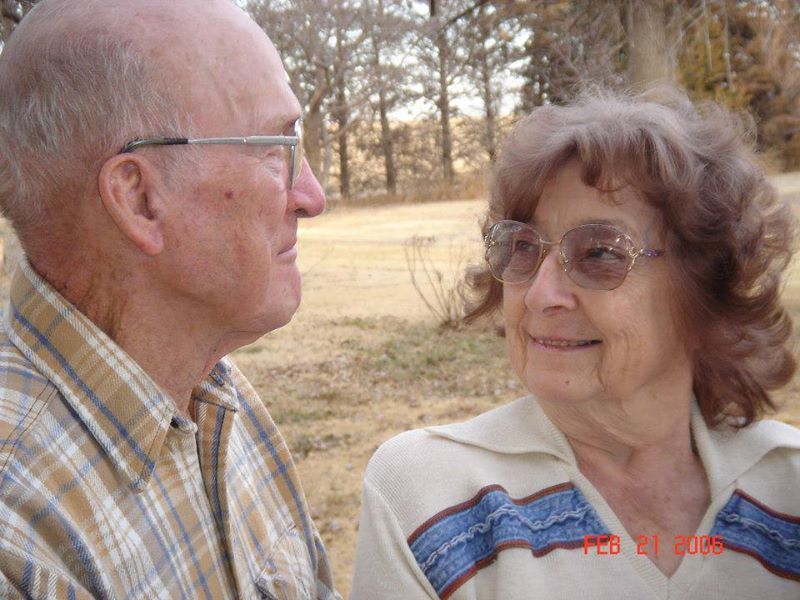
My grandparents... together again.
My grandparents… together again.

We need to let others know when they influence us or inspire us. Who am I because of my grandmother? Those who knew us both tell me I get my stubbornness from her. They also tell me my love of dogs, singing voice, hair color, and ability to confront people with courage all come from her. The reality is that even when my life began to change as the result of Meniere’s disease and deafness, her letters made a difference. She is a writer, and encourager, a cheerleader, an advocate, a teacher, and a legacy-builder. When she wrote, a common theme included near constant reminders that *I* could still make a difference. She encouraged me to be an advocate.

I am.

She encouraged me to write.

I do.

She told me I should not be afraid to speak and present to others.

I’m not and I do.

Her legacy of “making a difference” spans generations.

Very likely I do not know you personally. However, I do know that you *POINTS THROUGH YOUR COMPUTER SCREEN* can make a difference. It doesn’t have to be big. Betcha it is big to someone else though! That is what making a difference is all about.

Denise Portis

© 2014 Personal Hearing Loss Journal
Your Thinker and the Trickle Down Effect

squirrel-pin-tree-winter-snow-nature-hd-wallpaper-desktop-free-animals-picture-squirrel-hd-wallpaper

Wednesday, March 19th

I had a “pep in my step”. I had a whistle on my lips. My heart was glad. I was walking my service dog and most of the snow was gone from the ground.

“What beautiful weather for a walk!” I thought to myself.

But then a squirrel scampered down off a tree trunk merely inches in front of my well-trained service dog’s nose. It all happened so fast.

The first jerk on the leash put my body in motion. You can’t fight the laws of science. I was going to be in motion until something stopped my motion since my brain went on instant vacay. Let me tell you I stuck the landing. Nearby Olympic judges all held up “10” placards. Cheers all around (or at least in my imagination).

I lay there on the pine-needle strewn ground for a minute trying to determine if anything was broken. The world was still spinning. I closed my eyes for a minute and choked back the nausea. Flipping to my back I felt a hound dog kiss on my face.

“Whew. Chloe is still here”, I thought.

I forced my brain to verify the leash was actually still in my hand. YUP! I opened my eyes and focused for a second. Chloe went into a down/stay on her own and rested her head on my shoulder. The weight of my ding-a-ling service dog’s head was a comfort.

I heard something! Another good sign. My cochlear implant was still attached to my head. I focused on the sound and looked up – Up – UP into the tree boughs above me and spotted that rascal squirrel.

Oh.

My.

Gosh.

He had the impudence to sit up there fussing – at US. I couldn’t help but laugh. He was ticked! I laughed all the way up until he skipped away… jerking the branch he was on and dumping snow on my face and chest from twenty feet up. My laughter stopped immediately. I was choking after all…

I sat up and brushed the snow off and started to giggle again. Chloe wagged her tail in delight. It seems she wasn’t going to get a “Denise sermon” after all. Within 10-15 seconds though I was overcome with a different emotion. I sat there crying. Not just silent tears – nooooooo. This was unladylike, deep sobs with intermittent hiccups!

I sat there bawling my eyes out for five or six minutes, comforted by a hound dog most certainly sorry her instincts caused another “Timber…” moment for me.

Yes. I could see the funny. But fast on the heels of the laughter and positive attitude came an emotion near the surface most days. Self-pity. Sorrow. I hate my life.

Is Happiness a Choice?

One of my favorite books is “Happiness is a Choice” by Minirth and Meier. The premise of the book is that especially for those of us living with depression, happiness is a choice. The book’s number one principle is: “Change the way you talk to yourself”.

I’m on board with that. Really!

I am!

You can change some of the negative aspects of your thinking by challenging the irrational parts and replacing them with more reasonable thoughts” (Martin, 2010, para. 4). Whitbourne (2013) explained these, “inner monologues as “self-talk,” in which you provide opinions and evaluations on what you’re doing as you’re doing it. You can think of self-talk as the inner voice equivalent of sports announcers commenting on a player’s successes or failures on the playing field” (para. 1). I believe in the power of self-talk. I believe our “thinker” really can influence our behavior. My husband is a cognitive psychologist. He and I have a lot of discussions as I work on my own Ph.D. about the best ways to change behavior. He – and other professionals like him – believe that if you can simply change what your thinker is thinking, there will be a trickle down effect. It will influence and possibly change behaviors you wish to change. There is a lot of scholarly research and science to support this.

I believe this! I do! But I will be honest for a moment. There are times I want to just say…

SCREW SCIENCE

That’s right. Just in case you even needed MY – or ANYONE’s permission…

It is OK to be upset about the reality of your life.

Living with acquired disability sucks. Hearing loss sucks. Meniere’s disease sucks. How about you? Fill in the blank:

_____________________ SUCKS.

*Deep Cleansing Breath*

I’ve tried to explain to folks who ask, that living with a chronic condition or acquired disability is – on the best of days – HARD.

I still get the flu.

I have still lost people I love and miss them.

I have lost beloved pets.

I get headaches, body aches, and am growing older.

I get mad at my family sometimes.

I experience car problems.

I hate traffic.

I have unexpected bills.

I still have a period (hey! Jus’ layin’ it all out there! <BIG GRIN>)

All of these things happen to me just like they happen to you. Only folks with chronic illness or acquired disability have those things happen on top of what – for them, is the norm… living with challenges daily.

Yeah, yeah. I know!

I still get the flu   I can be thankful I have medicine to help and a hound dog to cuddle with. See? I can see the positive!

I have still lost people I love and miss them  I can be thankful I will see them again someday based on my personal faith beliefs and worldview.

I have lost beloved pets  I have other furry family members and that makes me happy.

I get headaches, body aches, and am growing older  Beats the alternative. Right? 

I get mad at my family sometimes   But I have a family…

I experience car problems.  But I have a car and this time we could afford the “fix”.

I hate traffic.  I have a job to go to.

I have unexpected bills.  But I’m smart enough to figure out how to pay that bill or arrange payments.

I still have a period Yeah. I got nuthin… (LOL)

So can my forced “change thinking” have a trickle down effect and influence my behavior, feelings, and perceptions? Yes.

And no.

Confused? I don’t mean to be the cause of a “What the heck you talkin’ about, Denise?” thoughts.

However, it is important – at least I think it is – to allow yourself to have moments of self-pity. Feel the sorrow. Rail at God. Write “My Life Can Suck” really big and pin it to a wall and throw darts at it. If it makes you feel better, do it. I think it is healthy to “own your feelings” about the reality of your life. It’s hard. You may feel alone. You may want to give up. It’s OK to feel that way.

But then? (Brace yourself…)

Change your thinker. Allow it to do what studies have shown actually works. The “Trickle Down Effect”. I’m here to tell you though that it isn’t a long-term fix. You may have to “adjust the knobs on your thinker” daily. Maybe on REEEEEALLY bad days – hourly!

Do you know what thoughts help me the most?

Keep on keeping on.

I can make a difference in the life of another.

Tomorrow is a new day.

Mean People Suck. (Sorry. That’s my favorite bumper sticker and I *had* to throw it in there).

Yup. They are platitudes. “Feel good self-talk”. But ya know something? It works for me because I also allow myself the freedom to sit in the pine-needles with snow covering my shoulders and bawl my eyes out.

So strive to improve your self-talk. But feel free to wail.

{{{{{{{{{CYBER HUG}}}}}}}}}}}} from me to you!

Denise Portis

©2014 Personal Hearing Loss Journal
Martin, B. (2010). Challenging Negative Self-Talk. Psych Central. Retrieved on March 21, 2014, from http://psychcentral.com/lib/challenging-negative-self-talk/0003196

Whitbourne, S. K. (2013). Make Your Self-Talk Work for You. Psychology Today. Retrieved on March 21, 2014, from http://www.psychologytoday.com/blog/fulfillment-any-age/201309/make-your-self-talk-work-you

Twinkle Lights that Don’t Twinkle

twinkle lights

I discovered something by accident last year. I don’t like for twinkle lights to twinkle. I mean… I want the lights to be ON and to actually light up, but I don’t want them to blink. Part of living with an acquired disability is learning to make adjustments. Having Meniere’s disease may mean that you learn what may be specific triggers for you and do what you can to avoid those triggers. I have problems with lights. This is part of the reason I don’t drive at night anymore. I don’t have night blindness, but oncoming traffic light triggers extreme vertigo. So I don’t drive at night. It’s a pain, but a necessary change in my life.

Other kinds of lights bother me. I discovered that Christmas tree twinkle lights make me feel as if the room is rotating. Quickly. So I am making adjustments that include a delay in decorating the family Christmas tree until I can get to the store to buy more twinkle lights – ones that don’t twinkle. So – picture with me plugging in our Christmas tree every evening and BAM. LIGHT everywhere. But it won’t twinkle… which means I can hang out in the same room as the tree is in without heaving all over the nearest family member.

Making Adjustments

One of the wonderful things about having a blog with numerous guest authors is that I have learned a bunch of things about other disabilities. Being a client at Fidos For Freedom, Inc., has also helped because I have been able to personally get to know people who live with other kinds of disabilities and chronic illnesses. Through the years I have learned about some of the adjustments that folks use to navigate life:

1. Get more rest

According to the National Sleep Foundation, average, healthy adults need 7-9 hours of sleep every night (National Sleep Foundation, 2011). While most of us very likely receive far less than that, the experts agree that this is the amount we should strive for every night. However, people who live with disability or invisible illness may actually require more. At the very least, these folks should make the 7-9 suggested hours a priority.

I now know that people with MS, fibromyalgia, chronic fatigue syndrome, and various neurological disorders may not only need a good night’s rest, they may also need a daily nap. Doing so may mean that they can continue their day performing at their best. Not taking one may mean they are more at risk for an accident, “brain fog”, etc. One of my friends actually said her doctor told her, “If I need to write you a prescription to take a nap everyday so that you can get the rest you need, I’ll write you one!” That’s what I need. A prescription for a nap! 🙂

2. Leave Home Prepared

People with acquired disability likely learned the hard way to leave home prepared. That may mean making sure you have extra cochlear implant batteries. It may mean that you have an extra cane in the car. Maybe it means that you make sure you have an extra meal or snack if you are diabetic. You may have a medical pack that holds injections, emergency contact information, medicines, etc. If you have a service dog it requires that you walk out the door with water, an extra meal (in case caught away from home during mealtimes), clean up bags, vest and I.D. Spontaneously running out the door while only grabbing your keys is something you just can’t do anymore. But that’s OK. Learning to leave home prepared really takes very little time and in the long run can only help you.

3. Medic Alert Identification

Whether you wear a medic alert necklace, bracelet, or carry a card, you probably have some way of letting emergency response personnel know about special medical information that may just save your life. My own bracelet was so old, the engraving was barely discernible after years of scratches and wear-and-tear. For less than $30 I replaced it. When I told my husband he’d see a charge for it on the credit card bill he said, “You know? I don’t even know where mine is. I probably should replace mine as well”. I sat there stunned for a minute – looking at my significant other who happens to only have one kidney and gave him a “Denise sermon” that was probably not only LOUD, but unforgettable. Did you know…

  • More than 95 percent of respondents look for a medical ID during emergencies.
  • More than 75 percent look for a medical ID immediately upon assessing a patient.
  • 95 percent look at the patient’s wrist to find a medical ID, and 68 percent look for an ID on the patient’s neck.

Some of the stuff out there is very attractive for those who turn up their noses at traditional looking medical alert jewelry. However, I must caution you that there has been an alarming trend suggesting these new options may not be identified during an emergency. Yes, the sterling silver band around my wrist may not be the prettiest thing in the world, but I’m confident that in the event of an emergency it will be recognized for what it is. I’m perfectly happy being “smart” if not fashionable.

4. Check the forecast

Meteorology is NOT an exact science. I always check the forecast. I may not be able to call in sick to work when it is raining and a Meniere’s flare kicks my butt, but just knowing in advance the weather is going to be bad can at least help me mentally prepare. I can make sure I grab that cane in the car and remember to hold Chloe’s vest handle instead of just her leash. People who have mobility challenges may have to make schedule adjustments if they cannot easily or safely navigate away from home if the weather is bad.

5. Charge your cell phone

Even though I have a hearing loss, with today’s technology advances I can use and carry a cell phone with t-coil settings, text, access the Internet, and much more from a mobile phone. The only problem I ever run into is when I carry around a phone that doesn’t have a charged battery. I’ve done this enough that I think I’ve finally instilled a good habit of always charging my phone at night, and making sure each vehicle has a charger that can be used with the cigarette lighter. I even carry a small charger that I can plug into a computer at work if needed.

6. Other:

Honestly? One could write a book on the number of adjustments one makes when living with a disability or chronic illness. Some of the things YOU do may not even be things someone who shares your diagnosis must do. Don’t fret about Christmas tree lights that don’t twinkle. Even people without disability make adjustments as they go through life. Folks get reading glasses, stop eating spicy food, and walk instead of run for exercise. We do this because we are smart (grin) and malleable. We do what we must. My Christmas tree may not twinkle from now on, but it is still BEAUTIFUL.

Denise Portis

© 2013 Personal Hearing Loss Journal

National Sleep Foundation. (2011). How much sleep do we really need? Retrieved October 22, 2012 from http://www.sleepfoundation.org/article/how-sleep-works/how-much-sleep-do-we-really-need

A Pocketknife to Clean Your Nails

pocketknife

ABOVE… My dad in 2011 when he visited Gettysburg with us.

Do you know every time I retrieve a nail file to smooth, clean, or file my nails I think of my dad? Isn’t it funny the kinds of things that will recall a memory for us? Not the kind of recall that triggers our sympathetic nervous system and launches a flashback in folks who suffer from PTSD. Instead, the kind of recall that knocks on the door of our heart with a “feel good” memory. The memory replays a specific conversation or event. For me, when I use a nail file I vividly recall how my dad would clean his nails with a pocketknife.

I couldn’t have been more than 7 or 8-years-old, for we had not yet returned to the family farm. My dad still worked for International Harvester at the time. One day I sat watching him clean his nails with a pocketknife.

“Why do you use your knife to clean your nails?”

Dad continued to clean his nails and thought about his reply. The man never just “spoke off the cuff”. He responded after a bit, “It does the job”.

“Well, will you clean MY nails?”

With less thought he replied, “I can’t. I can’t tell where your nail stops and your finger starts”. He scooted closer to allow me to see from a different angle how he was using his knife to clean up under the nail. I may have been young, but I immediately grasped why he couldn’t clean MY nails with this unconventional method.

Although I never could bring myself to clean my own nails with a pocketknife, I learned over the years that one can do things just as well by means of unconventional tools and methods. I would not have understood if someone had tried to tell me that I would eventually become deaf and develop Meniere’s disease – a balance disorder, and that by doing so I would have to adopt some new means to navigate my world safely.

Works For Me – But Maybe Not for you

I suppose one of my biggest pet peeves is when folks start dictating to someone who shares a diagnosis how they MUST go about treating that disease or disorder. Just because something works well for YOU, does not mean it will work well for someone else. This doesn’t mean we shouldn’t be willing to tell our story and share what works for us. Peer networks and support groups are invaluable in my opinion. However if I chose to use a nail file to clean my nails, and you choose a pocketknife, all that should be celebrated is that the end result yields positive benefits for us both. Clean nails are clean nails no matter how they got that way.

That doesn’t mean the process to clean nails is always easy. I have to sit to brush my teeth. That toothbrush swishing around in my head will make me pass out if I do not do so from a seated position. I never could sit on the lid of the commode to brush my TEETH. So I step into the bedroom and sit on the hope chest to brush my teeth. I have to be sure to keep my mouth closed so that there is no splatter. Ewww, right? This last week as I was sitting there brushing my teeth, it just hit me wrong. Here I was 47 years old and unable to brush my freakin’ teeth over a freakin’ sink like a normal – erm – FREAK! So…

I started crying.

My husband stepped into the bedroom. I can’t imagine what he saw. Here is the wife sitting and brushing her teeth, sobbing her eyeballs out, toothpaste now EVERYWHERE, including dribbling down her quivering chin. He calmly said, “You OK?”

Did I look OK? Alright, yuppers… I didn’t actually WANT his help. I just wanted to finish brushing my teeth. Those FREAKIN’ ones…

When a person with disability or chronic illness finds a way that works for THEM, it doesn’t mean it is easy. But this is why we are not disABLED. We are differently-abled. It is quite a cognitive and emotional boost to discover you can still enjoy something you did before – only in a new way. It may look strange, novel, or genius… but the reality is “it gets it done”. Yet what I find works for me, may not work for someone else with Meniere’s disease. I cannot safely clean their nails with my pocketknife.

Celebrate the Day

Gee, we live in a wonderful age of technology! When I think about the miracle in that I’m hearing again bionically, and all the cool tools available to me through simple apps on my iPhone, or special assistive technology, I get goosebumps! I live in a country where service dogs OTHER THAN guide dogs are fairly common. Email and texting – two communication devices I utilize frequently, are favored among the NORMAL hearing population. This makes my life so much easier!

Folks with mobility issues, learning challenges, hearing loss, chronic illness, and various disorders have options available here in the U.S. that we did not have 30 years ago – or even 10 years ago! Yet some of the things we learn to do are through our own ingenuity! I have quite literally patted myself on the back and mentally “high 5’d” myself when I discover a new way of doing things. To you being able to do the laundry without actually having to change the altitude of your head is not very impressive. But to me? This is a “WOO-HOO” discovery. But the proper lean formation, use of step-stool and service dog work for me. They may not work for you if you, too, have Meniere’s disease. But be willing to share ideas with each other without dictating proper protocol. The end goal is clean nails after all.

Denise Portis

©2013 Personal Hearing Loss Journal
You’re So Vain…

chloe hug

I love my local grocery store. Not so much that I was pleased I had to go twice this week after forgetting a few items, but the aisles are spacious, the employees know me (and Chloe) by name, and I save a lot of money in both sale items and even gas points. My unexpected impromptu second visit this week was disastrous, at least from an emotional standpoint. I came down the aisle looking for those elusive cotton balls that I failed to remember on my first trip and met a lady only slightly older than me with two canes. We stopped to chat for a minute and thought I had met another who understood when she surprised me by saying, “I just couldn’t work with a dog. It seems so vain because so much attention is brought on by being with one“.

I could feel the heat creep up in my face and I blinked back tears as I stuttered out, “Well different strokes for different folks I suppose“. (I’m always so proud of how eloquent I am in a pinch *rolls eyes*).

I really had very little left to say so quickly cut it short and moved on to find those STUPID cotton balls. Because ya know? Now I was MAD after that initial “kick in the gut” feeling so I determined then and there those cotton balls were stupid. Made me feel better anyway.

My husband and I kid around about how vain Chloe is. Her biggest fault as a service dog is that she is too friendly. She’s a flirt. She gets gently reprimanded on days my balance is really off if I put her in a sit/stay while talking, but then she wags and flirts and stretches for a kiss. Heaven forbid someone actually switch their attention to HER! Then she is like, “You love me. Denise loves me. We all love me. I love me.” She’s so vain! (♫♪ Chloe, you probably think this post is about you! Don’t you? Don’t you?♪♫)

Many people with invisible disabilities are not in favor of mitigating their disabilities with a service dog because it DOES bring attention to you. As a matter of fact, I know of cases where folks drop out of training programs when they discover that this service dog will bring unwanted attention to them. That isn’t worth it in their opinion. And… that’s OK. I have Meniere’s disease (a balance disorder) and am hearing again with cochlear implant technology. I HAVE chosen to mitigate those invisible disabilities with a service dog. I wear bling-bling on my cochlear implant processor. On days my balance is REALLY bad, I use a bright purple, metallic cane. This works for ME. It doesn’t mean it will work for YOU.

could’ve should’ve would’ve

If I could’ve… if I shoud’ve.. or if I would’ve – I suppose if I hadn’t been on the verge of tears I would have told this woman:

Do you know that before Chloe, I spent 20-30 minutes before work each day changing outfits trying to find one that hid all the bruises from my falls?

Do you know that when the elevator was temporarily out of service this week I didn’t have to cancel class because Chloe was able to counter-balance for me on the stairs?

Do you know this cochlear implant bling-bling helps people remember to face me when they speak if it is obvious I’m not hearing well?

Do you know all these patches and certification tags on Chloe’s vest legitimize her role as a service dog so that I have less access issues?

Do you know it takes me 45 minutes to get groceries each week now because Chloe picks up the things I accidentally drop compared to the 2 1/2 hour trips I use to have?

Do you know I never have to ask a stranger to pick up something for me now?

Do you know I’m working again because I don’t have to worry about putting students out to pick up pens, erasers, markers, or papers for me in the classroom?

Do you know I never have to worry about missing a phone call now?

Do you know I have the sweetest, “kiss me awake” alarm clock in the whole, wide world?

DO YOU KNOW I THINK YOU NEED A DOG BECAUSE YOU OBVIOUSLY DON’T HAVE ENOUGH LOVE IN YOUR LIFE?

Ok… maybe that last one is unnecessary.

But the reality?

weather vane

People with invisible disabilities or chronic illness are more likely to deal with VANES instead of vanity each and every day. We have things we pay attention to so that we stay SAFE, red flags that remind us we are pushing our limits. Boundaries in place to keep us from over-doing things. I know my body better than anyone… even my doctors. This past week we had torrential rains on Thursday. On Wednesday, I was in “full disability regalia“. Chloe, cane, and fresh batteries in the “ears” and still I wobbled and fumbled my way through the day because there was a system coming into our area! A student said, “Wow your balance is really off today!

I replied, “Yes! I’m a human barometer and much more accurate than the Weather Channel!

A thoughtful pause and then, “Is there an app for that?” (snicker… I love my students).

Like a weather vane that helps farmers or meteorologists know which way the wind is blowing, people with disabilities have things in place that allow them to “take their pulse” each day to see how to safely navigate the world around them.

I’ve met a good number of people who have a service dog. I’ve never met anyone that I suspected of choosing to do so because they wanted the attention. And so please understand that the only one who is vain in my partnership is CHLOE.

♫ You’re so vain
You probably think this POST is about you
You’re so vain
I’ll bet you think this POST is about you
Don’t you? Don’t you? ♫

That’s OK. If Chloe’s weakness is that she is warm and friendly… I can live with that.

Denise Portis

© 2013 Personal Hearing Loss Journal

If I’ve Said it Once…

If I've said it once

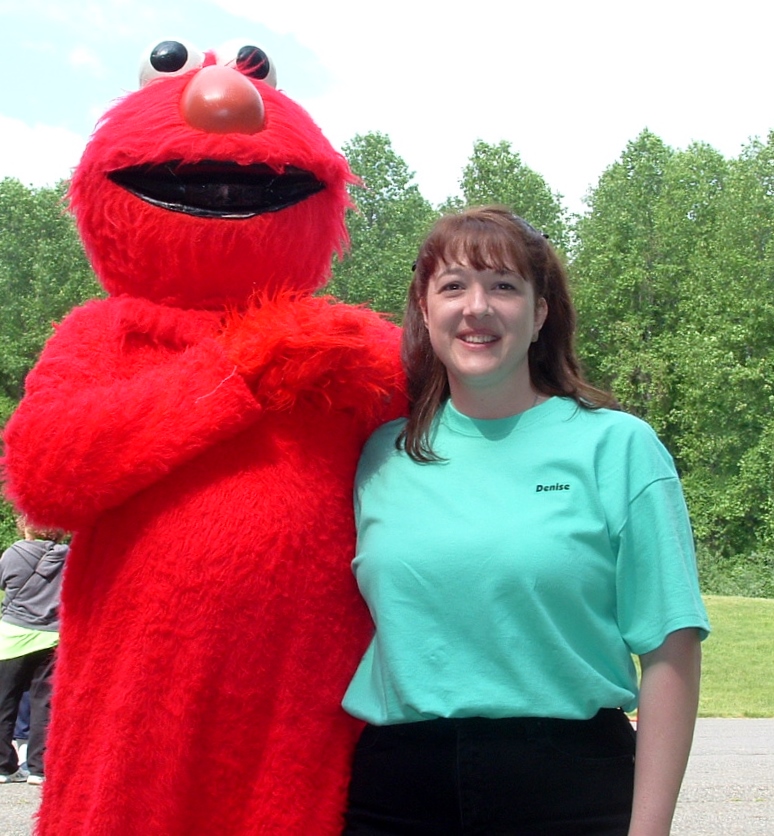
The photo above was taken at the 2006 Walk4Hearing in Pennsylvania. It was completely coincidental that the Walk coordinators invited “Elmo” to interact with the children on site that day. Poor Elmo had no idea what hit him as I squealed and came flying across the parking lot to hug his neck! Children he was expecting. A grown woman – not so much. However, Elmo encapsulated my reemergence to the hearing world – the first toy I heard months following my cochlear implant activation. Elmo’s voice (emanating from the “Tickle-me-Elmo” toy I found on the shelves of a local store) was the first CHILDHOOD voice I recognized after having been tweaked and re-programmed numerous times following my activation. It was an epiphany for me. From that moment on, I knew I was going to be OK. I could hear again – and more importantly RECOGNIZE voices. So to find Elmo that beautiful August day, 7 years ago, was thrilling for me!

I stepped back to introduce myself and explain “why the exuberant hug“. Elmo interrupted me and mumbled something. I said something to the effect of “HUH?” (I’ve always been particularly good with words).

Elmo spoke up. “I CAN’T HEAR A THING INSIDE THIS SUIT“. I stared blankly at Elmo for a moment and then broke into peals of laughter. Elmo put his hands on his hips and looked as exasperated as a character was able while inside a red furry suit! I apologized. Profusely. Welcome to my world!

Welcome to My World

Something numerous readers email me about is their frustration at trying to explain what is working – or not working, to closest friends and family members. I was at an ADI (Assistance Dogs International) conference in Baltimore several years ago and just happened to be in the right place at the right time; relaxing against a wall in the hallway outside a conference room. Because of my position, I was in the perfect place to see and hear a lady take her husband by the elbow and drag him over to the side (near me) to fuss.

She whispered (loud enough for even ME to hear), “If I’ve said it once, I’ve said it a thousand times… I cannot climb over your bag when you put it in the aisle. Do you want me to fall in front of everyone?”

Readers constantly tell me how frustrated they are to have to repeat “how to’s” to those closest to them. Folks they don’t interact with much they expect to remind about what works well for them and what doesn’t work. However, people think that if they are closely acquainted with someone they don’t ever need to be reminded of what they can do to communicate better, or to assist if needed.

A close friend of mine and follower of Hearing Elmo has MS and deals with fatigue frequently as a result. She was out to eat with her mother recently at which point her body just shut down. Although they were not finished eating, she needed to leave and needed to do so right away. She stood up and wobbled, and ended up asking her mother for assistance. Her mother did so but was very quiet on the walk out to the car. It was there her mom let her exasperation get the best of her.

“I don’t understand how you can be out on the field to oversee your son’s soccer team one day, and need help to the car the next. I don’t know how things can turn on a dime like that with you!”

My friend was shocked – and grieved that her mom, someone as close to her as anyone, failed to recognize what to her was obvious. One cannot pick and choose when fatigue and weakness will hit. My friend thought she had explained this to her mom (and very likely HAD). But her mom needed a refresher course in how symptoms of MS manifest themselves to my friend – a unique individual.

When my frustrated friend relayed what happened to me I thought, “Well welcome to my world”. Don’t all of us who live with invisible illness, disability, or chronic conditions deal with the same thing? We have to repeat ourselves – often.

Learning to communicate

It cracks me up to be on the training floor at Fidos For Freedom, Inc. sometimes. Clients and volunteers are asked to “Meet and Greet”. I hate these exercises. I’m not gonna lie. You pair off in groups of 2 or 3 and shake hands, talk, and introduce yourself. This is very “real life”. It is something we do in the “real world”. But I have to tell you there are few things I dread more. For one thing, that wonderful “voice in my head” via the training room floor’s hearing loop system is gone. Instead there is a BUZZ of voices overlapping and rising in volume all around me. I struggle and ask for repeats the entire time – all the while making sure my dog is in a proper down/stay and not flirting with nearby dogs. If more than one of us in the group have hearing loss, we juggle for position trying to put everyone on our “best hearing side”. If you look around the room there are plenty of people with cocked heads leaning close, or others who have definitely invaded the personal space of someone in their group. I’ve been in groups of people who did not have hearing loss who ask, “Now remind me which is your good side?”

My balance disorder allows me to move just fine. Standing still? Not so much. I wobble when standing still. Especially when standing in a large room with low ceilings and ceiling fans. I’m not the only one to be wobbling though. I giggled out loud one day when I lost my balance and a fellow client who uses a walker reached out to steady me and almost lost her own balance. She giggled right back in response and said, “I forgot you can’t hold still!” It was comical actually. Yes, we may both have balance problems, but we could help each other. We learn to laugh at ourselves if needed. We learn to accept help. We learn to communicate what it is we need.

Significant others and Spouses are “Just PEOPLE”

Do you get frustrated with the people in your life who should “know better”? “If I’ve said it once, I’ve said it a thousand times…”!

Even those we love the most are NOT mind readers. They may know how best to communicate with you if you have hearing loss. They may know that certain things like weather or temperature influence how you feel. They may know how certain medications may help – or hinder you. If I’m honest with you, however, I will admit that even *I* do not know how I will feel from one day to the next. Maybe even from one HOUR to the next. It is my responsibility to communicate my needs. It is my responsibility to give gentle reminders. I am responsible to explain 1001 times if needed.

We need to remember that those who love us? They’re just people. They do the best they can – and 9 times out of 10? They are not being a butt-head on purpose. My own spouse doesn’t even blink when I ask him to take my elbow one day, and maneuver my way around a crowded mall without assistance the next. If I’m telling him once AGAIN that I cannot take a call in a crowded store and to please answer my phone? He simply says, “Oh yeah!” (He’s cute that way)

Someone recently belly-ached to me, “At what point do I assume they will never get it? When do I give up?” Who said anything about giving up? There is no “end game” here. It’s a journey.

Let’s all be willing to communicate – again – what we need.

Denise Portis

© 2013 Personal Hearing Loss Journal