Part Two – It’s Not That Easy!

Melissa Sisco

Part Two of a two part post from Melissa Sisco. You may access the first part here. Melissa poignantly describes what it is like living with this invisible illness. She has taught me a great deal in her transparency in discussing these important issues. Welcome back, Melissa!

It’s Not That Easy

If I receive one more comment from someone indicating that I should “just go on disability” already I think I will scream. I know some of the people say it with genuinely good intentions, and some say it as a way to snipe at someone or anyone. Yes, I feel bad more often than I feel good.  Yes, working 8 hour days, 40 hour weeks, drains me of every last vestige of energy I have.  Life is hard.  That concept is not news to anyone and I am far from alone in making that statement. Part of me is not ready to throw in the towel yet. I am only 33 years old for goodness’ sake! I don’t want be a welfare/disabled parasite to this community, to my family, to the economy, or to myself.

Not to mention the fact that the people who say I should quit just happen to be relatively healthy and have absolutely no idea how difficult it is to obtain disability benefits, even if a person has an obviously debilitating disease (which I don’t – mine is invisible). It can take from as little as six months to five years or longer. That estimate is the result of the research I have completed upon looking at my options. Not pretty, and add the fact that the entire time I will receive no pay. If I even have the option of continuing benefits I will have to pay out of pocket. I carry the insurance for my family. Supposedly if I have a “life changing event” I can transfer the insurance under my husband’s name. Our premiums will go up because he is in a higher salary bracket; the children will be covered because they are already dependents – Thank God for that. But, there is no guarantee that I will not be subject to a 12 month waiting period; which would exclude anything I would/could be treated for during that time. There is also no guarantee that all of the illnesses I am diagnosed with and treated for right now won’t be excluded because they are “preexisting conditions.” That’s just bone chilling to think about.

We aren’t flat broke, but we aren’t exactly comfortable either. Luckily we’ve really worked hard to pay down our credit card debts, so at the very least we should qualify for loans if necessary. But I don’t think I could live with the knowledge that I was the one who caused my family’s financial ruin. It wouldn’t take much to put us there now. I don’t want to lose everything that we have worked so hard for. I don’t want to steal my children’s futures before they’ve barely even started. We struggle some months just to pay medical bills when we have insurance, I can’t imagine what the costs would be without. People like me can’t live without current medical technology. I have accepted that fact, and chosen to be grateful that God put me on this Earth when he did. Perhaps I was careless in having children; perhaps I never should have married. But my life right now is so wonderful, despite the illness and my worries. I cannot imagine not having the awesome privilege of knowing my beautiful daughters, or loving my husband for the last 14 years (married for 10!). I would not give up those blessings for anything. But my heart aches to think that I could be the one to drag my family down.  We do try to not “live above our means” but at the same time, you can’t take the money with you, however little it may be. That’s why we choose to take family trips, “vacation,” camp –whatever- when we do have the chance. At least enjoy what we have now while it is here.

But I am scared. I don’t think my husband really truly understands what my body is going through. Truth be told I wouldn’t wish this on anyone, so I’m kind of glad he can’t understand. But at the same time I want him to see that I am not a quitter, I am not giving in, I am not broken, and I am still me. My body just doesn’t quite work the way it used to. Too often I get home from work and it’s everything I can do to help with dinner, clean up some around the house and yard, and not fall into bed before seven o’clock. It angers me to no end when I can’t do anything but lie there, hoping to feel better. The guilt gnaws at me near constantly. My husband has to not only also work his tail off at work, but come home and cook dinner, clean the house, do the laundry, mow the grass, help the girls with their homework and put them to bed. Pretty much everything. And I just lie there waiting for my head to explode or the floor to fall out from under me. Sometimes both. It just seems so unfair. I know we both vowed to work together through sickness and health, better and worse; it just never occurred to us that sickness and worse could possibly come so soon in a marriage of two young people.

I fully understand that by choosing to continue working full time might very well speed up the pace of my illness. I may pay some awful consequences for myself and my family down the road because of my own pride and fear. I can’t see the future, but I am not going to apologize for living, even if it isn’t easy.

Melissa Sisco

————————

If you would like to write for Hearing Elmo, please contact me at denise.portis@gmail.com   The only “requirement” is that you or someone you know has an invisible illness, disability or chronic condition. We learn so well from each other – those of us who live this challenging yet rewarding life!

—-

Denise Portis

© 2013 Personal Hearing Loss Journal

To Be Understood Means to Understand

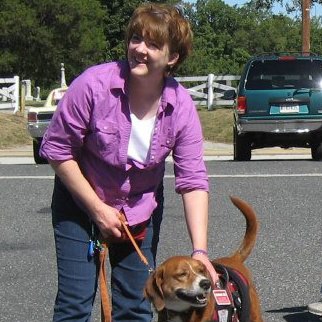
Melissa and her family

On 7/23/12, Hearing Elmo welcomed Melissa Sisco, from Alabama as a first-time guest author. You can access that post HERE. Hearing Elmo warmly welcomes Melissa again with a TWO PART post about her own invisible illnesses. Melissa is the mother of two young daughters and was first diagnosed with Meniere’s Disease in 2007. Melissa also has asthma/allergies, a heart condition, weak bones, endometriosis, and diabetes Type II. Melissa admitted that “Meniere’s Disease has been the single most challenging medical diagnosis I have experienced in my 32 years”.

The hardest things we encounter in life can sometimes be the ones you expect and assume will be easy. I am learning to realign and reign in my own expectations/assumptions. When you have struggled with a progressive illness for over six years, say one like Meniere’s Disease that causes hearing loss and loss of balance, you assume your family will support you the entire way. You assume that they will take the time to read the literature, the pamphlets from the doctors or at least even use Google or WebMD. You expect that they will get the hint as you slow down while walking, because your world has begun to buckle and spin. You assume that they will take it in stride when an episode of vertigo strikes and can only be remedied by lying down –for hours sometimes. You assume they will understand that an impromptu dunk in the water will harm your health in multiple ways because you have holes in your ear drums and have to wear ear plugs when you risk getting wet. You expect those closest to you to understand your new world, but the reality is that they don’t. Not at first. You actually have to teach them, or paint the picture if you will. They are not any more adept at struggling with accommodating my illness than I am. It really isn’t fair to expect them to know what was also foreign to me a decade ago. Experience can be the harshest yet greatest teacher.

Recently, a family member commented, “God, you really are deaf!”    Apparently he had been speaking to my deaf ear for several minutes without my noticing, “testing” my “deafness.” I simply turned to him, so we were face to face (even ground for me), and said, “Yes, so if you want my attention, try my right ear or tap my arm or shoulder please.”  All while smiling a really tight painful smile. Now what I really wanted to say was closer to a negative word, followed by an expletive, and ending with Sherlock. But I digress.

I admit I am still in the resentful stage, I resent that I should have to be the one to teach others about my own illness and its effects on my life. I never aspired to be a teacher; I haven’t the patience of those saintly souls. For reasons beyond me God has placed me squarely in a position where sometimes I have to teach, to save my own sanity. It’s just awfully annoying to teach family and friends who I expected to learn a little on their own in the last few years. My disease is nothing new anymore. I’ve learned a lot of my “new normal” on my own, (although I’ve been blessed to have great advice from those who’ve already invented this wheel –ahem Denise, Gayle, Shanna) but I do get downright angry when I have to teach someone something that should be obvious – at least in my opinion. I haven’t been wearing an absurdly expensive hearing aid in my left ear for 4 years just for kicks and grins. As more of my conversational frequency in my good ear wanes I have found that small talk is just no longer my cup of tea. I still avoid public situations in general. I have learned a distinct dislike of restaurants, malls, arenas and movie theaters. I am working on that, but I am a country girl at heart anyway. My country is just a bit quieter than it used to be, which is rather nice sometimes.

I have also found that there is finally a language I am really struggling to learn.  It’s called American Sign Language.  The only one I really need to know, and it makes Hebrew look like a piece of cake. (I would say Greek, but I can actually read that!) I’m quite certain that I appear as if I am under the influence of some sort of psychoactive drug when I’m trying to sign. The nuances of hand gestures completely elude me in a way that centuries-old grammatical rules never did. I can’t even profess to be able to understand it well, either. I get so focused on trying to comprehend one particular gesture/word I miss the next seven and am therefore totally lost. Like missing the pinnacle episode of your favorite TV show and trying to tune in to the next one and catch up – it just ain’t happennin’. I haven’t given up, but gosh is it hard. Bill is a great guy, but you can only make him repeat a phrase so many times before you start having weird animatronic/you-tube nightmares. (Thank the Lord, and Bill, for Lifeprint.)

I have recently also begun to despise the words disability and handicap with the exception of their necessary legal presence. I really just don’t see myself that way. I still do a number of things on my own; to include working, driving, doing basic household chores, etc. Although I despise it, I can grocery shop on my own, most of the time. I just can’t reach for anything on the top shelf, or on the bottom shelf, without relying on my cane or a sturdy wall or post. Sometimes it’s just easier asking for someone’s help. NOTE: Do not rely on shopping carts (that’s buggies for us southerners) for balancing because they have wheels. Really bad idea. Trust me.

I am able to be much more up front with people about my invisible “handicap.” I can flat out tell a stranger that I am deaf/hard of hearing, I need to see their face to understand them or I will ask them to type/write out something complex.  Most of the time this helps, and it is only occasionally that I encounter special people who begin to mimic Dr. Seuss using a bullhorn. Unfortunately, rhyming and loudness are lost on me. And it really annoys my co-workers or whoever else happens to be with me at the time. Sometimes I wish my hearing aid had a neon flashing light that proclaims “Deaf lady coming, repeat, deaf lady coming,” simply so I can save my breath. Sometimes I am saved by the Grace of God in the form of my own eldest daughter. She missed out on my shyness gene and takes the world by storm. She is quite eloquent when I see her shout at the top of her little six year old lungs, “My Mommy is deaf! Don’t you get it?”  All while sighing, knitting those eyebrows, putting her hand on her hip, and glaring at the perceived offender.  (Yes we are working on the politeness and manners thing- but it is easier said than done.)

A lady, let’s call her an acquaintance, I run into sometimes at work, asked me, “What is your cane for? I notice that some days you have it and some days you don’t.”  Another unexpected and unwanted teaching explanation. I replied to her that I have a balance disorder, some days I need it, and some days I don’t. Though you may not always see the cane it is usually nearby, just in case my power steering fails again without warning. She smiled at me with that look of “Bless your heart,” which forces me to fight the urge to strike her with said cane. I despise pity. I don’t want pity. I just want –a little bit— of understanding.

And I have to understand that not everyone else can see my illness, even if a person has known me for thirty plus years. One of my mandatory responsibilities now is to help others understand me as I learn myself. I have to constantly remind myself that, though my illness is invisible, dealing with it is truly a two way street. No one ever said it would be easy.

PART TWO: “It’s Not That Easy” will run Friday, July 19, 2013.

Thank you to Melissa Sisco!

Denise Portis

© 2013 Personal Hearing Loss Journal

I Don’t Like Music

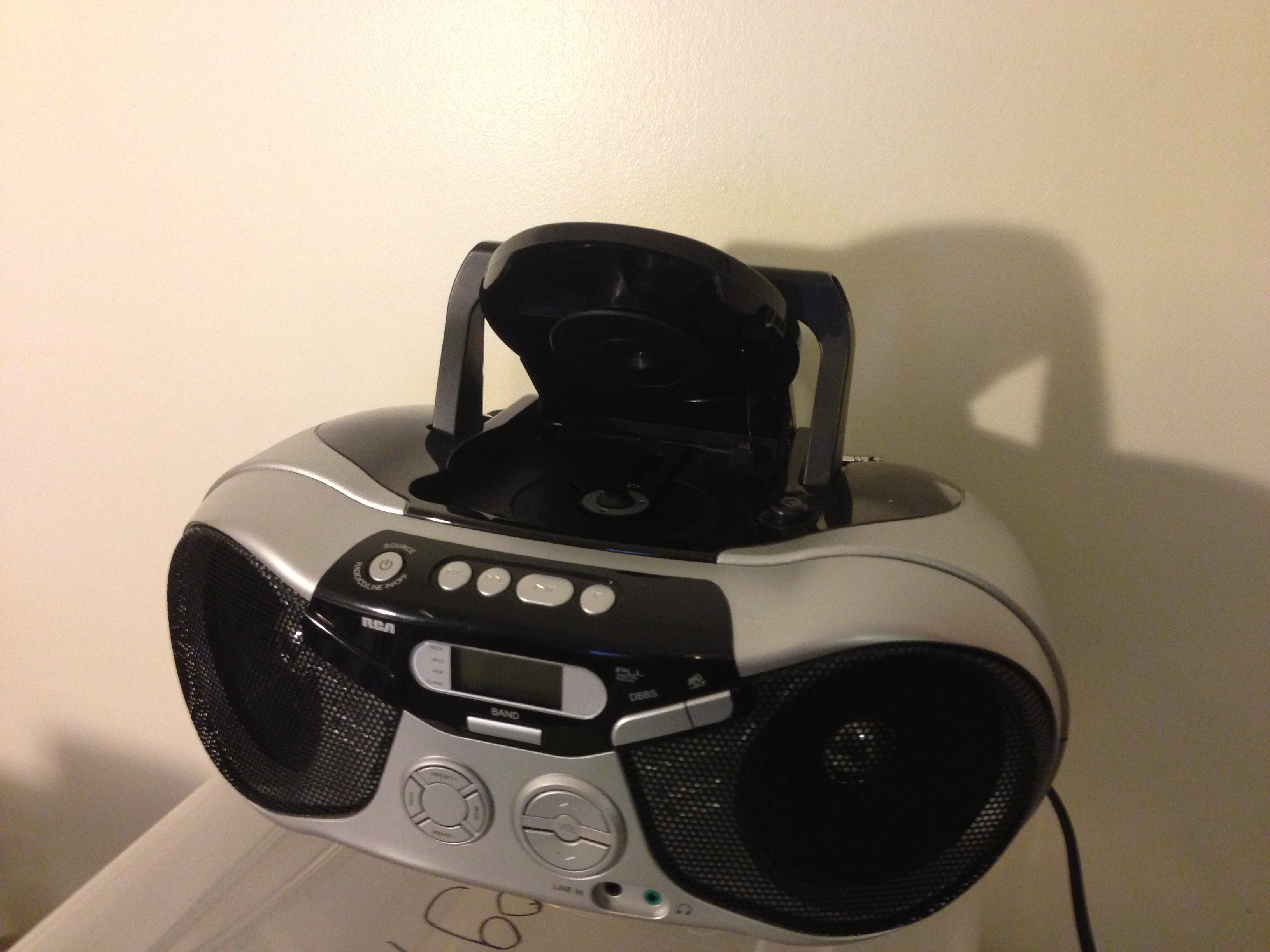
cd player

“Music was my refuge. I could crawl into the space between the notes and curl my back to loneliness.”
― Maya Angelou

If you follow Hearing Elmo you know that I want the emphasis here to be on invisible disabilities or chronic illnesses. Yes, my own challenges include hearing loss and Meniere’s disease but I always try to draw parallels to what unites us as a community of differently abled people!

I normally do not let this much time go between posts. I like to have guest bloggers (interested? email me at denise.portis@gmail.com), and I prefer that new posts are uploaded every Monday. I was dismayed to see that so much time has passed since my last post. It isn’t because I haven’t had the urge or the time. I’ve actually been trying to figure out HOW I wanted to say something without really getting caustic.

Do you have some pet peeves? Come on…’fess up! We all do, don’t we? Because we are individuals, we all have preferences, dislikes, and pet peeves. We have special things that MOVE us. There are things that energize our spirits. Yet, there are things that depress us. And folks? There are things that TICK US OFF. Consider me ticked off.

Not a Great Example?

While prepping for this post, I was relieved when I realized the person I bawled out is not a reader of Hearing Elmo. Small chance they will discover I’m relaying what happened on here – but rest assured they were fully aware of my opinion when the conversation was finished!

“I can’t believe you don’t listen to music. As a cochlear implant advocate, that is not a very good example! ‘It is too much work, is a cop out’ ”

I was stunned.

Cochlear implant companies have been working hard to make sure that those who “hear again” can also enjoy music in addition to hearing voices, being able to use the phone, and most recently to be able to enjoy water sports without having to “remove your ears”.

But I don’t listen to music. I concentrate better in the car when I do not have the radio on to interfere with my attention. On really long commutes, I do listen to talk radio. However, I don’t listen to music. Not even 80’s music which include songs I listened to while in high school! Oh sure, I have all the gadgets, wires, and assistive technology to allow me to listen to music. I just don’t like the way it sounds. Just as I worked hard at hearing voices I couldn’t see (phones), and hearing voices amongst a ton of background noise, I could devote time to listening to music – but I don’t.

Ummm… How is this Relevant?

You are probably wondering where I’m going with this. You’re shaking your head “yes” at your computer screen, aren’t you?

We have to respect the individuality of other people.

I have chosen to make the invisible things about me – visible. It was my choice. I did these things to celebrate who I am and to unashamedly live MY life.

I use a metallic purple cane on my really bad balance days. I chose to mitigate my disabilities with a service dog. I chose a cochlear implant instead of “embracing my deafness”. After a great deal of research, I chose the Nucleus Freedom instead of another brand. I wear bling-bling and would wear blinking lights on my coil if I could figure out how to make a go of that. I am only unilateral and have chosen not to go bilateral. I chose to work hard at communicating effectively. Music was just not important to me.

Is music important to you? As a person with hearing loss did you work hard at being able to once again enjoy music? Are you a musician? Does music fuel your soul? I’m am so happy for you – really I am!

But we are not cookie-cutter versions of each other. What was necessary, important, and “worth it” to you may not be the same things another would choose to work towards.

There ARE a few types of music I listen to one of which is Christmas music during the holidays. However, can I get a shout out for DISNEY TUNES? For some reason, I have really connected to a number of songs from Walt Disney movies. These animated movies were the first I viewed with closed captions as I developed hearing loss when my kids were small. Once I was implanted with a cochlear implant in 2005, one of the first types of music I DID make sure I listened to were some of these Disney songs. One of my favorite was detailed here AND just so happens to go along with this post.

United we Stand, Divided we fall

So as people who have invisible disabilities or chronic illnesses, we should strive to be respectful of individual choices. It is hard enough to work and live among folks who don’t always get it. Surely in our own community of courageous people we can respect individual choice?

Don’t agree with everything someone says or does despite your sharing a diagnosis? Cut ’em some slack.

What are some things that have left you feeling peeved when judged by your peers?

Denise Portis

© 2013 Personal Hearing Loss Journal

I’m NOT Always Upbeat. Sometimes I’m just “BEAT”

depressed 1 (2)

I received an email this week from one of Hearing Elmo’s readers. With her permission, I wanted to use one of the questions she asked for this post.

“Love your blog, but sometimes it makes me depressed. You are always so upbeat, and it seems as if you have it all together. Don’t you ever have a bad day?”

I had to smile when I received this email, and I’ve had this question before in various venues. I have actually shared “the good, the BAD and the UGLY” before on Hearing Elmo, but I do try to keep it positive. In doing so, I also strive to keep it REAL.

Having said that, I have bad days. Believe me! As a matter of fact the summer months are often my worst. I don’t work as much – or like this summer, not at all. Too much time on my hands is not a good thing. I try to stay busy and I made sure I signed up for some classes. I’m busy applying to grad schools (again). I’m cleaning more (grin), and have some extra time for Fidos For Freedom, Inc. However, I get depressed. I have days I just feel BEAT.

i surrender

Did you know that it is perfectly normal for people with chronic illness or invisible (or visible) disability to get depressed? Everyone struggles with periods of depression. Life is hard. I use to wonder if people with physical challenges had a higher probability to be depressed compared to the population without those challenges. In my interactions with various populations, I couldn’t help but wonder if we are more prone to depression? Then I developed a passion for psychology, so I thought one day, “What do the experts say?”

After writing a number of papers on the topic and being forced to look up scholarly, peer-reviewed research, I found that people with disabilities CAN be more prone to depression. So if you have days you just want to surrender? Give up? Wave that white flag? You are NOT alone.

Bryan Kemp (2005) said, “Depression is one of the most common, if not the most common, secondary conditions associated with disability. When it is left untreated, depression can cause inordinate personal suffering, increased disability, additional health problems, and stress in others” (p. 234). I thought it was very interesting that although depression is not an uncommon diagnosis, in folks with disability it can actual make your disability WORSE. I have friends and fellow-bloggers whose disability actually IS depression. We cannot continue to pretend that a diagnosis of mental illness is not debilitating. It is a SERIOUS illness. However, depression can be and is often a comorbid diagnosis to people who live with chronic illness or invisible disabilities.

In one study, 71% of people with Meniere’s disease were also depressed (Coker, Coker, Jenkins, and Vincent (1989). For people who have hearing loss, “Several studies have shown that uncorrected hearing loss gives rise to poorer quality of life, related to isolation, reduced social activity, and a feeling of being excluded, leading to an increased prevalence of symptoms of depression” (Arlinger, 2003, p. 17). These stats are only for the two “major players” in my own life. People with Chronic Fatigue Syndrome, Fibromyalgia, Lyme disease, Multiple Sclerosis, Parkinson’s, Diabetes, vision loss, anxiety, and many OTHER conditions are often struggling with comorbid depression.

So are you having a tough time coping with your own physical or emotional challenges? Do you struggle with symptoms of depression in addition to your day-to-day challenges? You are not alone.

So please know that although I don’t often write about feeling depressed or anxious, although I do not post about what a “terrible, horrible, no good, very bad day” I am having, I do indeed have these kinds of days! I’ve struggled to get out of bed (despite my red-headed, well-trained alarm clock). I’ve cried myself to sleep. I have pushed people away in anger – embracing self-imposed isolation. I’ve yelled at God at how unfair it is. But in the end, I do strive to be upbeat. It isn’t always easy. There are times I feel like a big, Fat, LIAR. Yet, I work hard at having a positive attitude. I’ve learned that if I change the direction of my “thinker”, I will change the attitude of my “feeler”. It is really cognitive behavioral therapy in a nutshell! Laura King (2011) said, “… the emphasis is on reducing self-defeating thoughts, with its emphasis on changing behavior. An important aspect of cognitive-behavior therapy is self-efficacy” (p. 538).

Something that really helps me is working hard to reach out to others. I have a number of support groups that I meet with in person, others through venues like FaceBook, and still others in online forums. Knowing I’m not alone is very important to me. Being able to commiserate with others who truly understand is of great value. I encourage you to reach out to others. Even if you are unable to locate “in person” support groups, there are a number of ways to find this support online. We need each other.

Denise Portis

© 2013 Personal Hearing Loss Journal

Arlinger, S. (2003). Negative consequences of uncorrected hearing loss: A review. International Journal of Audiology 42(2), 17

Coker, N., Coker, R., Jenkins, H., Vicnent, K. (1989). Psychological profile of patients with Meniere’s disease. Archives Otolaryngoloy Head and Neck Surgery 115(11), 1355-1357. doi:10.1001/archotol.1989.01860350089021.

Kemp, B. (2005). Workshop on disability in America: A new look. Washington D.C.: The National Academies Press.

King, L. (2011). The Science of Psychology. (2nd ed). New York: McGraw-Hill Publishing.


There’s a Goldfish in Mine!

Half empty, or half full? Well MINE has a goldfish in it.

I was in line at my local grocery store recently and overheard two women talking behind me. They were there to purchase their lunch evidently as they had salads and drinks only. Normally, I let people with just a few items go in front of me. For once, however, I was actually only there to pick up a couple of things I had forgotten in a previous trip. Besides… I was having too much fun eavesdropping.

Evidently one of the women had recently been dumped. Her friend and co-worker was trying to give her a pep talk using the old analogy of a “glass half full or glass half empty”. I continued to listen in, partly because I was thrilled I could do so <BIG GRIN> but also because I was really fascinated by the arguments she put forth about an issue that to her, was black and white. It was either a great thing you got dumped, or a really awful thing.

Lines were moving pretty quickly, so before I knew it I was headed out the door with my bag and faithful hound dog in heel. I continued to think about the analogy. The original intent was meant to convey, “Are you a pessimist or an optimist?” We all have relatively fixed personalities, but they can be adjusted. Cognitive behavioral psychology capitalizes on that truth to help people change negative thoughts and behaviors.

I really believe most of us do not respond to everything in a “half full” or “half empty” way, however. The more I thought about my own responses to life as it happens, I realized it certainly isn’t a “half full” or “half empty” option for me at least. My glass has a goldfish in it.

My Goldfish

I think folks who live with disability or chronic illness, cannot react to life in a concrete, optimistic or pessimistic way. For me, hearing again with a cochlear implant and navigating life with a balance disorder means that I react to life in a different way just because those two things are a part of who I am. I don’t just have a glass of water. Mine has a goldfish in it. I’ve learned how to take care of my goldfish. I wouldn’t be who I am without my goldfish.

I have some friends in a Meniere’s disease support group who have said that because their “glass is half full” (or half empty depending on their personality), things normal people deal with are just different for them. If they have a headache, are diagnosed with cancer, or lose someone close to them it is compounded by the fact they also live with an invisible or chronic illness. I get where they are coming from and understand what they are trying to say. They believe that experiencing normal life things (diagnosis, loss, etc) are different for them because they do so from a body that is already dealing with something else.

We all know each other pretty well in this group so when I bring psychology into it, they all roll their eyes at me. I truly believe that living with a chronic illness is all about perspective – but not in a “half full” or “half empty” kind of way. When I mentor someone, I try to help them get to a point of acceptance as soon as possible. Acceptance is not an attitude of “I give up. I’m not fighting anymore”. It is a recognition of the “new you” and learning to understand your new normal. That “normal” may even change if you have an illness that fluctuates or is a degenerative disease. For me, it was important to acknowledge this goldfish. I can’t change it and I don’t get a new glass. This is me… and I have a goldfish.

Just accepting that, has allowed me to be the best ME I can be. Psychologist Jennifer Kunst said, “The good news is that when relative changes can be made in one‘s basic approach to life, it makes a big difference. A modest change in your filter doesn’t change who you are at the fiber of your being. It helps you become a better version of yourself” (Kunst, 2012, para. 4).

For me, the hardest thing wasn’t that goldfish or learning how to take care of it. The tough thing was being around a whole lot of other people with only water in their glass.

“Sure, I’ll meet you up in the classroom, but I’m taking the elevator at the end of the hallway. See you in a few…”

“The dishwasher is running so I need you to come in here if you are going to ask me questions.”

“I hate to interrupt you, but I need to go up these stairs and I have to actually concentrate. Hold that thought…”

Family, friends at church, co-workers, and neighbors, are so accustomed to my goldfish they don’t really even see it anymore sloshing around in my glass. No one knows me better than my husband, Terry, I suppose. Yet, I even have to remind him that although I can talk to him in a restaurant that is almost empty without looking at him, I really need him to put his coffee cup down if the restaurant is full so that I can read his lips. It is my responsibility to feed my goldfish. Not his. I may have explained to him twenty different times that there are atmospheres I will hear “near normal”, and environments in which I’ll need his lips plastered to my forward microphone. However, it is my responsibility to communicate this to him.

We have very narrow staircases at home. On “good” days, I can jog up and down the stairs. Terry isn’t surprised anymore if I ask him to carry the laundry downstairs before he leaves, when I may have been “jogging” earlier. He isn’t shocked if I tell him to “go on up” at the end of the night, knowing I’m going to need to go up on all fours and take the time to do so. He knows I will communicate what I need. This goldfish is mine.

There is a terrific list of “acceptance rules” that the University of Washington put out. You can access it here. Two of my favorite “acceptance of the goldfish” quotes are:

Do not make people feel sorry for you or pity you. Get people to view you as an able person who is capable of anything within your reach if the doors of opportunity are open. (graduate student with a hearing impairment)

We should focus on the ABILITY in disability more than the DIS. If we can do that, then we are more apt to succeed. Also, know your limits. If you don’t know what you can or can’t do, how do you expect other people to know? Plan for success by using more of the cans than the can’ts. (college student with mobility impairments)

(University of Washington, 2013)

Don’t be aggravated about the goldfish. Honestly? Everyone has something in their glass besides water. If we were all just glasses of water, we’d all look alike. We are unique individuals. We all have something else in our glass. My opinion is that we accept that. I’m not this person that has a goldfish temporarily. The goldfish isn’t visiting and it isn’t something I can scoop out. This glass with a goldfish IS me. And I’m OK with that. I love what Karen Hall, Ph.D., said in her article “Radical Acceptance”. She said, “Radical acceptance is about accepting of life on life’s terms and not resisting what you cannot or choose not to change. Radical Acceptance is about saying yes to life, just as it is” (Hall, 2012, para. 1).

Denise Portis

© 2013 Personal Hearing Loss Journal

Hall, K. (2012). Radical Acceptance. Psychology Today. Retrieved June 12, 2013, from http://www.psychologytoday.com/blog/headshrinkers-guide-the-galaxy/201203/is-your-glass-half-empty-or-half-full

Kunst, J. (2013). Is your glass half empty, or half full? Psychology Today. Retrieved June 12, 2013, from http://www.psychologytoday.com/blog/pieces-mind/201207/radical-acceptance

University of Washington (2013). Mentor tip: Acceptance of disability. Retrieved on June 12, 2013, from http://www.washington.edu/doit/Mentor/mt_acceptance.html


Team Chatter

In public, I talk to Chloe constantly. May 4th I learned what this is called...
In public, I talk to Chloe constantly. May 4th I learned what this is called…

Photo by Julie Wu, volunteer and therapy dog handler for Fidos For Freedom, Inc.

A trainer exited Pi’s Deli behind me and said, “Great team chatter”.

I’m always so eloquent. I responded, “Ummmmm”, with a questioning look that spoke volumes.

Fidos For Freedom’s trainers have had a LOT of practice and experience with people with hearing loss. She rephrased. “Good communication with your dog”.

Oh.

When I hear a “new for me” phrase, I am often scrambling to catch up to the conversation as I work to interpret the meaning. Having been partnered with Chloe since 2007, I think I can safely say I’m a veteran team. That doesn’t mean that I don’t still learn new things, however. Phrases like “team chatter” may be heard, but not understood until I spend a few minutes pondering it.

What does it mean?

Team chatter is important in a service dog team for two primary reasons. Team chatter keeps your dog’s attention on YOU if you use their name a great deal and talk to them. A second reason, however, is that service dogs need to know when they are doing something right! The tone and certain words connect with them.

This trainer may not have put two and two together like I did when preparing for this post. But the trainers use team chatter as well. When I did something right, this trainer told me so. If something needed polishing, she would tell me. She gave feedback throughout the certification segment we were doing that morning. She is a trainer and I am a client. However, we too, are a team. We are co-volunteers – even teammates in an organization we both love. Fidos For Freedom, Inc. (see http://www.fidosforfreedom.org/ for more information).

Why People with Invisible Disabilities Need Team Chatter

In psychology we use the phrase, words of affirmation, to explain the inherent need we have to receive “high 5’s” literally and figuratively.

Paul Hulijich explains, “The mind is very powerful, and it needs to be spoken to. We are all aware of the power of being told, for example, that we look well; it often immediately evokes the feeling of being well. We are influenced by what people say to us” (Hulijich, 2012, para. 3). Since I have had to learn to do a great number of things “differently”, it means a lot to me when a trainer, friend, or family member tell me that I handled something well.

At my daughter's college graduation, May 11, 2013.
At my daughter’s college graduation, May 11, 2013.

My husband praised me for how I chose to ascend and descend a number of steps in various arenas this last weekend. Even with Chloe in a close “heel”, I’m just not safe on steps in large cavernous – or open air – places. I didn’t make a big deal about it, only reminding Terry, my husband to either stand immediately in front of me, or behind me. Placing a hand on his shoulder is all I need to keep from falling when going down steps. Going up is a little trickier, but we still have a well-rehearsed plan. He told me, “You use steps with a lot more confidence now. You don’t even miss a beat”.

I don’t know about YOU, but it means a lot when someone notices what was once trial and error, becomes a well-polished, good habit. I need affirmation when I’m told that I pick up cues about my volume better. It means a lot when someone notices that I grin and advocate when having a near miss in a crowded hallway, and make it a learning opportunity.

One day last week, Chloe did not accompany me to work as she wasn’t feeling well. (She has chronic early morning acid reflux). I only had two classes that day and so opted to let her stay home with my husband since he was off. Just like any normal day, I dropped a number of things in the classroom. One student watched with wide eyes as I braced myself against a desk and used my foot to pick up a stack of quiz sheets with a rubber-band around them. “Oh my gosh, you do that without even thinking about it! You live YOU very well!”

I blushed but also BEAMED at the impromptu praise. What Greg said, echoed the beat of my heart. This is what I want – to live ME very well.

We Can Use Team Chatter too!

Do you have a hearing loss? Do you live with a balance disorder? Have you learned to navigate life with low vision? Do you have a chronic or invisible illness? Whether you are new to “the new you”, or a veteran, there are people around you who could use some team chatter.

I know, I know! It may not always seem as if they are ON YOUR TEAM, but there are still co-workers, friends, and family members who could benefit from being told when they are doing something RIGHT.

Sarah, a person with low vision, once asked me where her husband was. I pointed and said, “He’s right over there”. She reached up and grabbed my pointing arm and followed it with her hand in the direction I was pointing. Off she went in the RIGHT direction, leaving me pondering my own OOPS. After that, I did much better about responding with phrases like, “at your 9′ o’clock”; or, “over your left shoulder about 25 feet away”.

She noticed. “Denise, you do a great job at giving me directional assistance. It really helps!” I’ve tried to remember to do the same for the folks in my life.

“Thanks for re-phrasing that. I understood it perfectly the second time. You don’t even have to think about doing that for me now. Thanks!”

“I appreciate you habitually moving to allow me to stand next to the side when we get on the elevator. It really helps to have something to lean against”.

“Thanks for ignoring Chloe when we talk in the office. I know you love dogs, and because she knows you it can be hard to ignore that wag! It really helps me though, so thank you!”

As a person with both Meniere’s disease and hearing loss, I do a lot of reminding about what works well to assist me, and what does not. (This can be tricky because we don’t want to embarrass or offend someone!) Sometimes I feel like I’m constantly in “education mode”. Yet, we need to remember to tell folks around us when they get it right! It affirms what they do or say in interacting with us. Perhaps they even just need to hear that they “leave us be” in a healthy way! “Thank you for not assuming I needed help with that and waiting to see if I ASKED for help”.

I hope you will work to incorporate team chatter into your own relationships. Words of affirmation and open communication can be so important. Don’t assume others know when they are doing a good job. Let them know!

Hulijich, P. (2012). Affirmations. Psychology Today. Retrieved, May 12, 2012 from http://www.psychologytoday.com/blog/mind-wellness-awareness/201211/affirmations

Denise Portis

© 2013 Personal Hearing Loss Journal

Square Plates

Exactly what I want at Target!

Square plates. I WANT THEM.

Why are plates ROUND after all? Squares have such nice neat corners. It isn’t as if round plates hold more! Round plates are not any better at preventing food from escaping if you are an – erm – especially aggressive eater. Or, perhaps TWO-years-old!

I really want square plates. They are different. They accomplish the same purpose. Am I rebel? No, no… you see, my friends?

I’m a SQUARE. That’s right, you heard it first here at Hearing Elmo. (smile)

We May be the Same – But We’re NOT

I have met a lot of people with hearing loss and cochlear implants. We may all have hearing loss, but we are not the same. That is why our hearing aids and cochlear implants are programmed especially for our hearing health profile.

I have met many with Meniere’s disease. I may have the same diagnosis as you do of Meniere’s disease. That does not mean that we share the same triggers. It does not mean that what works to alleviate the severity of symptoms for YOU, will work the same for me.

Unfortunately, even though we may belong to the same community of people – those who live with some sort of invisible or chronic illness, those who are differently-abled, we forget that we are individuals. What works for one will not work as well for another.

There are three cochlear implant manufacturers. I love my cochlear implant. Neither I, nor my audiologist at Johns Hopkins, ever thought I would be hearing this well. My cochlear implant is not “better” than someone who chose another manufacturer, however. Consumers – the patients – have a responsibility to thoroughly investigate all the details about all of the brands available. We pick what we believe will work best for US.

Round plates and square plates do the same thing. They hold food. But some of us like round plates – and some of us are SQUARES.

It always grieves me when I see posts at various online support groups where one member bashes the ideas of another. Or perhaps they are insistent that everyone try their extremely low-salt diet (which happened on a Meniere’s group of which I am a member). It didn’t matter that several of us explained we had tried low sodium a number of times and had found it made little difference.

We need to respect other people’s choice to use round plates – or square ones. In the hearing loss community, our mantra should be “whatever works”. In groups that formed to support those living with Meniere’s disease, we should work on actually BEING supportive. If WE aren’t supportive of each other, how can we ever expect the community at large to be?

Are you a member of a support group for your own illness or disability? Encourage others to be supportive and open to new ideas. Everyone just might learn something! Regardless, we need the non-judgmental atmosphere of a friendly, empathetic community. Respect each other. Before you know it you just might start seeing :

by 10 Strawberry Street

… TRIANGLE dinner plates.

Denise Portis

© 2013 Personal Hearing Loss Journal


Are Doctor’s Offices Truly Accessible?

doctorI recently returned to my doctor for a check-up as I’m on a number of blood pressure medications. I have been on blood pressure medicines since the age of 20. My genetics guaranteed I would have blood pressure related issues.

I grimace and swallow my meds every morning and think with tongue in cheek, “Thanks, Dad!” 

I hate going to the doctor even for something as routine as a blood pressure check and to request refills for my medications. I’m not afraid of doctors. I actually LOVE my primary care. His personality and method of “doctoring” suits my personality very well. He’s very business-like and professional, but also has a level of genuine compassion lacking in many who have been in the medical field perhaps too long. His staff is fantastic. The office is close to my home and to my work, so it is very convenient.

But I hate going.

My doctor’s office is not accessible. Oh sure they have properly marked handicapped spaces in their parking lot and curb cuts for those with mobility challenges. Their waiting area is spacious and the hallways are easily navigable. My doctor’s office is very high tech. Written charts? Pffflllttttt. Thing of the past. My doctor and staff use iPads, notebooks, and stylus.

But I hate going.

Again… my doctor’s office is not accessible. At least not for me. Just in case you are new to Hearing Elmo I am a late-deafened adult, “hearing again” with a cochlear implant. I also have Meniere’s disease, a balance and vestibular disorder. I mitigate my challenges with a service dog as well.

Do you know how hard it is to step on a scale when you have a balance disorder? The platform is about 12″ x 9″. Scales are usually against a flat wall, with nary a thing in sight to grab to hold still. It isn’t like I can grab Chloe’s harness when being weighed. I don’t need her extra 62 pounds on the scale – believe me! So I grab the wall and do my best to keep from tilting. I very likely look as if I getting frisked. After some close calls I HAVE noticed that there are TWO nurses with me now when I am weighed in each time. Someone has put a note in my chart I think! I’ve tried to sneak a peek at this electronic chart. “Tilt-a Whirl Queen” or “Weebles Wobble” must be tagged somehow, I’ve just yet to actually see it in writing! (grin)

After getting weighed we head to an examination room. I sit in a chair while the nurse takes my blood pressure. It is always high, but not because of ineffective medications. It is not because I’m afraid of doctors. I’m convinced my blood pressure is high because I know what is coming. In breezes the doctor, with a smile and a firm handshake.

“Let’s hop up on the table. How have you been? Everything going OK?”

I only see the man twice a year so I can’t expect him to remember. The guy is popular with – “Best in Annapolis” kind of awards all over the wall. No way in the world he could remember. **But would it kill you to read my chart?**, I think to myself.

“I don’t hop anywhere. Sorry. As a matter of fact the table is too high for Chloe to help me so I need you to hold your arm like this…” (and I demonstrate with my elbow bent and arm horizontal to the floor). I repeat what I’ve said every time I go there, “It would be nice if these examination tables had rails or something!”

My doc is good-natured and sticks out his arm. I grab it and clamber up onto the examination table. As per usual, when I turn to sit the room tilts and I struggle to stay conscious.

“Wow, Denise. Your eyes! You have positional vertigo.” Yeah. Ya think? He sits on his stool and rolls over closer to me – unknowingly causing another bout of vertigo. I just sit there and hang on for dear life as he uses his finger to “flit” from screen to screen, reading up on my medical history.

“Well your blood pressure is pretty high. Let’s take it again.” he states while reaching for the blood pressure cuff.

I don’t say a word as I’m too busy hanging on for dear life.

After taking it he turns to me and says, “It’s high. Do you take it at home? Is it perhaps high because you are here? Many people have elevated blood pressure at the doctor’s office.”

“I take it at home and it is well within the normal range every single day.” I indicate with my eyes the paper sticking out of my bag – WayOverThere. He grabs it and scans the paper. “Wow, these numbers look great! It must just be high today because you are here”.

“Doc,” I patiently explain despite having repeated this conversation every 6 months for the past three years, “my blood pressure is high because

I’m

sitting

UP

HERE.”

Again with my eyes, I indicate the death grip I have on the edge of the thin mattress.

He looked thoughtful for a moment, flicked to some more screens on the iPad and turned to grin at me. “We’ve had this conversation before, haven’t we?” Yup. I love my doctor.

So What Can Doctor’s Offices Do?

For people with hearing loss:

1. Sound baffling

Doctor’s offices are full of flat surfaces and medical equipment. It can greatly improve communication to have some type of textured wallpaper, 3-diminsional cloth artwork, or even flat art-deco carpet squares on the walls. Not much can be done for cabinets, medical receptacles, and sinks. These have to be easy to clean and disinfect. I get that.

If possible, a room or two with lower ceilings and foam ceiling tiles can greatly assist in eliminating the bounce and echo of sound.

2. Face the person

Even if you have to look down to write in a chart, or type on an iPad, turn your chair so that you are facing the person. Do this EVEN IF YOU AREN’T SPEAKING. Do you know how often people with hearing loss strain to determine if someone is even speaking?

Checking ears? Looking in eyes? Listening to their thumper? It only takes a second to look the person in the face – FIRST – and explain what you are going to do next. If you want the person to hold their breath for a second, don’t ask behind their back. Actually… what is WORSE is telling them to “OK, breathe normally” behind their back! (Grin)

3. Write everything important down

New prescriptions? Re-check in six weeks? Instructions to check things like blood pressure or blood sugar at home? Write these instructions down.

4. Take their picture

Whether you save a small digital picture to their electronic file, or staple a Polaroid into the manilla folder and chart of their medical history, know what your patient looks like. When the door opens to that waiting room and the nurse calls the name of who is to be seen next, it helps to lock eyes with that person with hearing loss when you say their name. Take my word for it. Another blood pressure spike occurs for anyone with hearing loss sitting and worrying they will miss their name being called. Chloe’s head pops up and looks at anyone saying “Denise”. However, most people with hearing loss do NOT have a service dog alongside them.

If a nurse calls the next patient and every individual still has their head buried in the eight-month-old “Good Housekeeping” magazine, chances are the person didn’t hear you. It may not help to even say the name much louder. Besides… that is embarrassing. Know what your patient looks like.

5. Don’t say, “Call me”

Even though there are many wonderful options for people with hearing loss to use the telephone, it isn’t a good idea to say, “call me”. Email should be an option available to anyone who is more comfortable making contact in written form. If the patient is waiting for test results, email them. If a refill cannot be prescribed until an appointment is made, email them. If the patient contacts your office through email, don’t respond by trying to call the number on file. Email them back. People with hearing loss are on a level playing field with email. Plus, having a written confirmation only insures there are no misunderstandings.

If a patient DOES utilize various technologies and captioned phones, be aware that the patient may ask for repeats. Or, there may be a slight delay as the patient reads what the captions display. Doctor’s offices are busy places. Be aware that another minute or two may be needed to properly and fairly communicate with a patient who has hearing loss.

6. Don’t talk when they’ve removed their assistive devices

Checking the ears of a patient must be standard procedure in medical offices. However, someone with hearing loss will:

1) need a moment to remove hearing aids and/or cochlear implants

2) need something to put them in while you check those lovely ear canals

3) need a moment to re-insert the assistive devices after the quick check

7. Be willing to repeat

You know they have a hearing loss. They know you have a busy medical practice and other patients to see. However, if they ask for a repeat, please just do it? Don’t sigh or begin talking like you are now speaking to a toddler. They aren’t stupid, they simply didn’t hear you. (People with hearing loss should learn to ask for repeats of only the parts they actually didn’t hear. In this way, others aren’t forced to repeat something completely, when perhaps only a section of what you said was actually missed).

8. Ditch the gum

I love fresh breath.

I feel for someone trying to stop smoking.

However, please refrain from chewing gum or sucking on mints when you go into the examination room of someone who probably speech reads.

For people with balance disorders:

1. Understand that heights – even small ones – can be a problem

Offer an arm or grab an elbow when people with balance disorders climb up on scales or examination tables.

Don’t finish up and say, “Meet me up front” to a half-naked patient sitting up on an examination table with a death grip on the mattress. Offer assistance to help them down. (I actually fell from an examination table getting myself down and landed on a stool which rolled and crashed into the cabinet – creating a terrible racket. The nurse ran back into the room clutching her chest and exclaimed, “You scared me to death!” Laying on the floor and looking up at her I sarcastically spit out, “Well gee. How sorry am I?” Note: My good manners fly out the door when I have to respond from the floor).

2. Move slowly

People with balance disorders often have problems with vertigo and focus when others move fast. Love that stool on rollers? Move slowly please. This isn’t a medical office Grand Prix.

3. Follow the light with your eyes…

… is easier said than done. Seriously, you have no idea how hard this can be if you have something like Meniere’s disease.

4. Sit still

Most examination rooms have stools on rollers. Many people fidget and don’t even realize they are. If you are sitting on a medical office stool, chances are this means you can swing from side to side as you talk to the patient. I’m not saying pretend you’re a statue. But bouncing knees, swinging from side-to-side, or rolling quickly from one side of the room to another can really do a number on a patient with a balance disorder.

 Patient responsibility

Ultimately, it is the patient’s responsibility to remind medical personnel what you may need to communicate effectively and navigate safely. However, some small and inexpensive adjustments can be made to make doctor’s offices more accessible.

Denise Portis

© 2013 Personal Hearing Loss Journal

Unplug…

unplug

In today’s world of media overload, with technology and electronics in every household, the word “unplug” usually means when an individual deliberately steps away from these items to recharge.

For many with chronic illness or invisible disability, to unplug might mean something different. Saturday night my small living room was seething with emotions. There were five adults, including myself, parked around a television watching the Ravens beat the Broncos. We had hoped. We had prayed. But all the experts had convinced us the Ravens didn’t stand a chance. To watch the game unfold and the Ravens take the win in double overtime, my senses were in crippling overload. Long ago I conceded using closed captions during a NFL football game. I admire and appreciate the hard work of those who work for the captioning organizations, but the captions really do interfere with watching sports as there is no “perfect” place to put the captions and not cover up a play or stats. So I was watching the game by only utilizing my cochlear implant and hearing aid.

I watched five minutes of the post-game show and quietly headed upstairs. Once in my bedroom, I flipped on the light and opened my Dry ‘n Store in one practiced motion. Off came my “ears”, off came my shoes, and I threw myself onto the bed with all the grace of a wet noodle. Chloe hopped up and snuggled close, perfectly content to escape all that testosterone downstairs. I think I laid there with my eyes closed for an hour – not napping – just coping. I needed the quiet. I love my bionic hearing, but there are times I literally suffer from sensory overload. My eyes, ears, brain, and yes VOICE were worn out. I needed to unplug.

There have been times I have pushed through that feeling of “I need to unplug” and only regretted my choice to do so. I am more prone to fall when worn out. I miss things when communicating. My speech actually deteriorates when I reach the breaking point. Hearing takes work – at least for me it does. You might not be able to tell by looking at me that I need a “senses” break because hearing loss and Meniere’s disease are both invisible. Goodwin and Morgan (2012) explain that, “many chronic illnesses have highly variable symptoms that are largely invisible to others. The symptoms can cause fatigue and pain, affect cognitive function, create sudden emotional shifts, and even impair speech (para. 6). It is in my best interest to know when I need to unplug.

I know many people with hearing loss who unplug in their own way. One bilateral friend takes long walks with just her camera. She has a real knack for connecting with nature and sharing that connection through her camera lens. I suspect it is her way of unplugging. She may have her “ears on” still, but nature’s melody is a distinctly different sound than what one hears in a crowded cafe or work environment. Another friend with bilateral cochlear implants actually takes yearly retreats. She not only unplugs, she truly isolates herself in order to fully rejuvenate and refresh her soul. Many with hearing loss, however, simply go to bed early. It doesn’t bother me at all that my family teases I’m the first one in bed every night. I require a full eight hours of sleep – hard to do in the day and age in which we live!

Use a Calendar

My calendar is very important to me. However, it is not because I forget appointments if I don’t schedule things carefully. My calendar is actually a tool I use to help me know when to unplug! By carefully tracking what I do in addition to just a normal workday, I can avoid serious physical and mental fatigue. Having Meniere’s disease means that I have to be responsible for how tired I allow myself to become. If I’m seriously fatigued and weak, I am more susceptible to falls and injury. With my doctor’s recent warning ringing in my ears about doing everything in my power to avoid anymore head injuries, I carefully plan each and every week. Many people with various disability or invisible illness must do the same. The Multiple Sclerosis Foundation Medical Advisory Board encourages us to be careful planners. “Conduct an energy audit. Ask yourself how much energy do I have? What time of day do I have the most energy? What time of day do I have the least energy? What do I want to do? What must be done? What can wait? Keep a journal and record your daily activities along with the times that you do them. This will enable you to recognize your patterns of fatigue more readily. Monitor these patterns and plan your day accordingly” (MS Foundation, 2009, para. 14).

When I see that a day is as full as I dare allow it to become, I block off any other available times. I know I will need the latitude to unplug if needed. I may even have to turn down opportunities to visit with a good friend, or going to something I would really like to do. My calendar enables me track what I know I’m capable of doing in any given day.

Using a calendar can also help people with invisible disability or chronic illness to determine what is really important. I have become an expert on running errands… making sure to do things all in the same area of town so that I do not have to make any special trips – which are time thieves. Having to do spur-of-the-moment errands may mean I do not get to do things that are really important to my mental, emotional and spiritual health. Morgenstern (2008) is adamant about controlling your schedule, and failure to do so creates a life that not only runs you ragged, but regularly throws you curve balls and prevents you from focusing on the things that matter most. For those of us who live with disability or invisible illness, this may mean we set ourselves up for injury, debilitating fatigue, mistakes, or relapse. Getting control of your schedule can only benefit you.

I hope you have learned to unplug when needed. One doesn’t need to lay in the dark, isolated from all sense-sapping triggers. You can relax on the deck with a cup of coffee. Take a bubble bath! Read a good book. Immerse yourself in a hobby. All of these things can help you unplug and recharge!

Denise Portis

© 2013 Personal Hearing Loss Journal
Goodwin, Stephanie A. and Morgan, Susanne (2012). Chronic Illness and the Academic Career. American Association of University Professors, May-June. Retrieved January 12, 2013 from http://www.aaup.org/article/chronic-illness-and-academic-career#.UPQg_mdyHTo

Morgenstern, Julie (2008). SHED your Stuff, Change Your Life. Fireside Publishers, New York.

Multiple Sclerosis Foundation (2009). Fighting Fatigue. Coping with Multiple Sclerosis, July issue. Retrieved January 14, 2013 from http://www.msfocus.org/article-details.aspx?articleID=48

Sunshine

sunshine

I was so glad to see the sunshine today. I read the weather forecast last night and tried to tamp down the anticipation and excitement in my heart. We’ve had such rainy, humid weather. I’m just a “mess” for lack of a better word when we have periods of days like that. Meniere’s disease is a burden I do not gladly bear. I’ve yet to be able to “find thanks” for it, though I have learned to do so is the best way to come to a place of full acceptance.

So when I saw the forecast I was optimistic but influenced by the realist within me… you know, the one who has seen the poor forecast predictions for the last week? We don’t get “full sun” today, but I am embracing the “partly cloudy” let me tell you!

Humidity is not really the “friend” of a person with hearing loss without Meniere’s disease as well. Veterans will tell you that faithful use of a desiccant brick (I use “Dry ‘n Store” myself) will prolong and improve the use of hearing technology such as hearing aids, cochlear implants and more!

We’ve no control over the weather. We can try to keep these devices dry, but “weather happens”. I do try to be careful and have an umbrella in every car, near the door, and in my rolling cart that comes into every classroom with me. I faithfully attend to the weather forecast so as to be better prepared for the day ahead.

Sometimes humidity and moisture problems occur in addition to weather-related incidents. Here are some I’ve dealt with myself:

1. Stepping into the shower, “hearing”. You’d think since I cannot hear the shower run anymore as I walk into the bathroom “deaf”, if I can actually hear the water running it would clue me in to the fact that I forgot to remove my “ears”. A couple of times a year I will still step into the shower not quite as “naked” as I should be. Thankfully, realization hits quickly. I shriek, streak to the bedroom, dry them off, tuck them into the Dry ‘n Store, and pray they dry quickly. Bedtime RITUAL is what has helped me avoid any of these wet OOPS lately. Having a routine before doing things like showering may help!

There is a cochlear implant by Advanced Bionics that can be completely submersed in water. My Nucleus Freedom by Cochlear is water resistant. For me this means I can have some of those OOPS episodes and not have to worry about damaging my CI!

2. Sometimes I sweat. Yeah, I know. Not very feminine or attractive. I crack up reading labels in the deodorant aisles at stores. Men’s products claim to control sweat. Women’s products boast of smelling pretty, not leaving white marks, and control perspiration. <snort>

I’ve found a great product though, and highly recommend EAR GEAR. They claim to be hearing instrument ARMOR. I love their products. They have products for BAHA, hearing aids, and cochlear implants. Ear Gear protects our devices from moisture and dirt. They also happen to be very comfortable. I have very small ears and the products actually help my devices “slip” less as well. Click HERE to check them out. They have some cool colors too, which is always a perk in my opinion as I sport my “bling” proudly!

I’m not an athlete, but I know some late-deafened folks who are. There are various companies that sell products that help devices not only stay dry but also help them STAY PUT. Megan at Hearing Sparks discusses seven great products that are of special interest to those who need hearing technology protection that are ACTIVE. You can access this post HERE.

I’m going to cut this post short. I’ve some sunshine to go embrace…

Denise Portis

©2012 Personal Hearing Loss Journal