Without a Purpose

Pictured: Close up of 5-year-old English Cream Golden Retriever, Finn with partner/author Denise Portis in background looking over Finn’s shoulder into the camera lens.

In May of 2023, I was forced to quit my job due to declining health and progressive disabilities. If you throw in the facts that teaching psychology, mentoring students, disability advocacy, and suicide prevention were my life’s calling…. my PURPOSE, it stands to reason I have not adjusted well. My disabilities spiraled out of control after two semesters of incredible stress, anxiety, and yes – discrimination. The toll was SO HIGH, in fact, I had to drop legal proceedings because I knew that by the time my case was heard, I would likely be dead. That sobering reality made me quickly determine, “what is really important here?”

I wanted to argue that my PURPOSE was important. For 27+ years my identity was wrapped up in being a teacher, a disability advocate, a disability mentor, and making a difference in my little part of the world. Suddenly, just to survive, I was at home and only leaving for doctor appointments. My coworkers were my third service dog and two family pet dogs.

In my mentoring platform, one of my “go to” topics was always:

FIND YOUR PURPOSE. PURSUE IT WITH ALL YOU CAN WITH THE ‘SPOONS‘ YOU HAVE.

As every disability and related health concern worsened, I struggled with a new disability that I had never had to deal with before.

Hearing loss and hearing with bionics? Easy-peasy.

Mobility limitations and post-concussive syndrome? Piece of cake!

Vestibular disorder and vertigo? BRING IT ON!

Losing 68% of my vision in my right eye and no longer able to drive? *brain and heart implode*

My anxiety shot “through the roof” (though my lifelong depression is actually very stable and “good”… one of those things that makes me go “Hmmmm”). I had poured my life into a place and a community to find myself suddenly WITHOUT those things; without a purpose. At first I struggled and wrestled with trying to figure out a new purpose. But y’all? When your life’s purpose is the heartbeat of who you are as a person, provides the means to keep you going… how exactly do you let go of that?

You don’t.

I am not the first person with disability and – yes – passion, to not be able to do what I wish I could, what I used to be able to do. I am not the first person with disability finding themselves forced to take a breather and re-prioritize. I am not the first person with progressive disabilities to actually have that progression completely change my disabled self. For those of us that have had to leave a professional career, we meet a new antagonist named “Loneliness”. It sucks to go from having people to NOT having people.

As I struggled and prayed, and cried about finding a new purpose, it hit me one morning. As a “fall risk” and concussion patient, I avoid being hit as much as possible. However, this time the knock up the side of the head was a eureka kind of moment; an epiphany of sorts! I don’t need a new purpose. My purpose has always been that which stemmed from a life-changing “Ebenezer” moment.

“If you only make a difference in ONE, that difference is profound, indelible, and enduring”.

I do not need a new purpose. My purpose hasn’t changed. My audience may have changed. The manner in which I work and advocate may have changed, but my purpose has not.

Do you ever feel SO disabled, bound by the constrictions of your own health challenges and limitations that you feel worthless? Do you feel like you are purpose-less? Wilder (2019) explained it well when he said, “What we do does not determine our value as human beings, but at the same time, what we do is a healthy part of the human experience. Purpose allows people with disabilities to participate in that part of the human experience if employment is currently not an option for them. Participation is important because doing something usually makes someone a part of something. That not only boosts self-esteem and self-worth, but also reduces isolation and loneliness.” (Wilder, 2019, para. 5).

(If you haven’t read The Spoon Theory, see it in its original form here. I talk about being a “Spoonie” a great deal). If you do not have enough spoons to work or “do” with measurable results, you still may have a purpose. Wilder (2019) goes on to say, “Sometimes a severe disability can leave a person with few options. In those cases purpose can be found in being a good son or daughter, brother or sister, mentor or parent, and friend or neighbor. Being a positive presence in one’s family and community is truly a noble purpose. Achieving it can be as simple as participating in a healthy relationship with another person to the best of one’s ability.

The bottom line is that people with disabilities who can do something; need to do something. The mental and physical health benefits alone make it necessary. Replacing isolation with participation leads to better relationships, and happier and longer lives. People with disabilities have a lot of things taken away from them. However, a purpose is difficult to take away from someone – and it is a great way to take some of those things back.” (Wilder, 2019, para. 8-9).

My purpose hasn’t changed. A purpose keeps our brains firing, our heart beating, and lungs breathing.

L. Denise Portis, Ph.D.

©2024 Personal Hearing Loss Journal

Wilder, J. (2019). The complicated relationship between disability and purpose. Psychology Today. Retrieved January 8, 2024 from https://www.psychologytoday.com/us/blog/disability-in-motion/201901/the-complicated-relationship-between-disability-and-purpose#:~:text=Purpose%20allows%20people%20with%20disabilities,someone%20a%20part%20of%20something.

The Selfless Practice of Self-Care

It’s strawberry season! My little city just had a strawberry festival, and although I was not able to attend (there was a torrential rain), my husband picked me up some strawberries as he knows my fondness for anything “berry”.

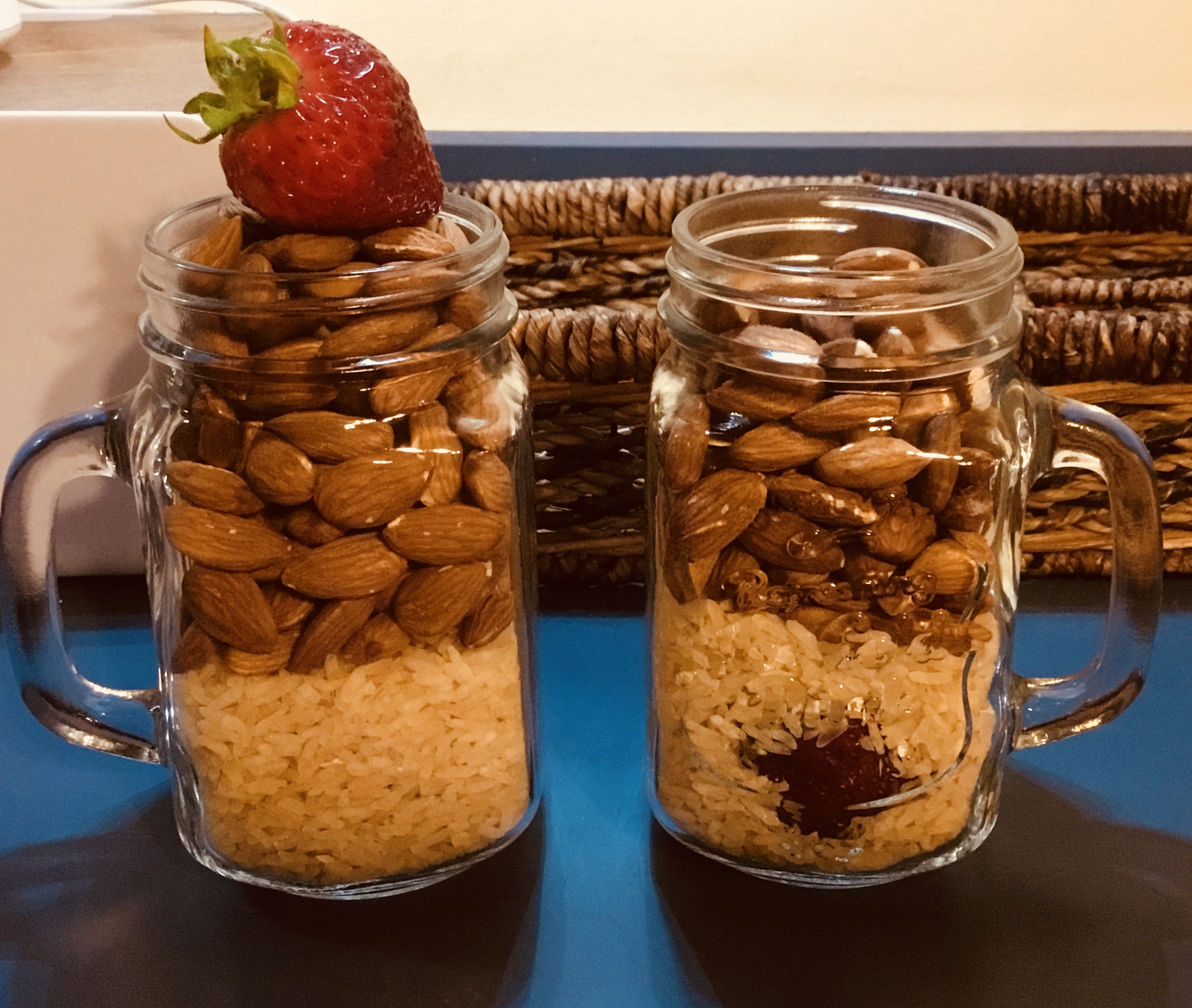
Lately I have been thinking about “self-care” a good bit. I recently made a choice to not do something on behalf of someone I care for and I knew (from their reaction and words) how much I disappointed them. With strawberries on hand (and no dried beans or walnuts as the illustration normally requires), I decided to re-do the illustration with some different elements. I had rice, almonds and now strawberries. Hey… you work with what you have, am I right?

I hate disappointing people. Especially people I really care about and enjoy being around. I have only recently earned a self-awarded “certificate of self-care advocacy”. My normal response to being asked to do something I cannot do, should not do, and will sacrifice my health/mental health to do was “sure! No problem!” and a default. It’s hard to practice self-care at times, because others misunderstand and may believe you are being selfish, self-pitying, or lack compassion for others. I have learned to “stick to my guns”, but it doesn’t mean I don’t recognize and feel another’s disappointment in me. The flip side? I am not disappointed in myself.

My Re-Make of an Old Illustration

So let’s say the grains of rice are all the little things we do each and every day. They are choices to spend 5-10 minutes doing “this or that”. They are relatively unimportant tasks that if left undone, the world does not implode.

The almonds are more important things. I’m going to call my “nuts” family <grin>, close friends, advocacy groups, work and professional life, and community service/faith practices.

The strawberry is me. This big, luscious (- hey… jus’ sayin’) berry includes my physical health, mental health, emotional well-being, and spiritual well-being.

In the jar on the left <points up>, I filled my day/life with all the inconsequential things first, then the “nuts” in my life, and finally me – a big, beautiful strawberry…

… that doesn’t fit.

The jar on the right has the berry going in first. The rice and nuts settle around it just fine. (Yes, I measured and each jar has equal amounts of rice and almonds). If you look carefully, not only did everything FIT, there is some left-over room at the top.

Mayhap poorly illustrated, the point is that if you do NOT put yourself first everything will NOT fit.

Ya gotta NOURISH to FLOURISH

Folks with disability have a hard time with self-care. Let’s stop and discuss possible reasons:

  1. They feel guilty already because they may require another’s assistance and time to do normal tasks.
  2. They rarely have 50/50 friendships. They fear they will be labeled as “takers” and not “givers”.
  3. They fear a lack of control over their lives. Instead, they sacrificially try to help others first, ultimately hurting themselves.
  4. They want to be useful and have a life of purpose.
  5. They believe to say they cannot do something admits defeat.
  6. They work WAY to hard trying to live up to the accomplishments or abilities of someone else who shares their diagnosis but not their life. (No two people are alike).

One of the hardest lessons I’ve learned is that I cannot live a life with purpose and make a difference if I do not take care of myself FIRST. It’s not selfish. It’s selfLESS. If I do not take care of myself, I am useless and unable to do anything at all for anyone else. I have made the mistake of saying “yes” to something with too high a price tag, only to suffer for days, weeks, or months physically, mentally, emotionally, and spiritually. When I practice good “self-care”, I am actually able to do MORE for others.

Now you may be thinking that’s all fine and dandy, but if I am saying “no” to things in order to protect my energy levels, health, and mental health, aren’t people going to really stop seeing a person with disability who CAN have a life of purpose and instead see someone DISABLED?

Not if you handle turning down requests the right way.

You can’t babysit your niece this weekend because you know you need some extra rest? Ask if you can babysit with a 7-10 day notice so that you can rest up in ADVANCE and help with babysitting.

You (and others) were asked to volunteer for a community service opportunity that would mean an entire day of being in a big crowd? (With Meniere’s disease, I can only take so much jostling). Ask if you can donate snacks for the breaks. Ask if there is anything you can do behind the scenes.

Work is having a “walk a mile in her shoes” event. (Everyone wears heels and walks a designated route and distance to support rape, sexual assault, and domestic violence programs and survivors). Y’all? I can’t walk 3 feet in heels with a balance disorder, let alone toddle, stumble and do face-plants all the way around a track with my colleagues. This doesn’t mean I can’t: Invite others to participate, give extra credit to students who participate, volunteer to hand out bottles of water (and bandaids-snort), and cheer along the side-lines. 

Let’s say you really like visiting with a person and care about them a great deal. However, what if they have baggage (in the form of spouses or intimate partners) that may accompany your “person” who is toxic to you and everyone you know? Offer to meet with the friend for a one-on-one lunch or visit. You set the safe boundaries and ultimately enjoy your time with them.

Work related requirements: I have learned that if a meeting or activity is required and yet will not be fully accessible to me (hearing, space to move safely, etc.) to request accommodations WITHOUT APOLOGY. However, then I work hard to be fully invested and participate with enthusiasm. 

In closing, I wanted to share a final thought. This one I am still working on and currently fail to do it right more than I do it wrong.

Don’t apologize for practicing self-care.

I worry too much about what people think I suppose. I tend to TMI (too much information) after declining an invitation to participate in something and make excuses when none are necessary. I’m trying to learn not to say:

I’m sorry I can’t help with that. I know I’m letting you down.

and instead say,

I know myself well enough I cannot do that safely. I am trying to practice self-care. May I do “this (fill-in-the-blank)” instead?

Develop a self-care plan. Chart out (it helps to see it, I promise!) what you can do in a day and what you can do in a week. Stubbornly defend your right to say “no” to something when your chart is already full. Y’all? Don’t scratch out that necessary NAP to do a task for someone else instead. If your nap is needed to re-charge, make it a priority.

Take care of yourself! (A great article on what self-care IS and IS NOT – CLICK HERE).

L. Denise Portis, Ph.D.

© 2018 Personal Hearing Loss Journal