Cognoscente, Aficionado, and Cutting the Crap

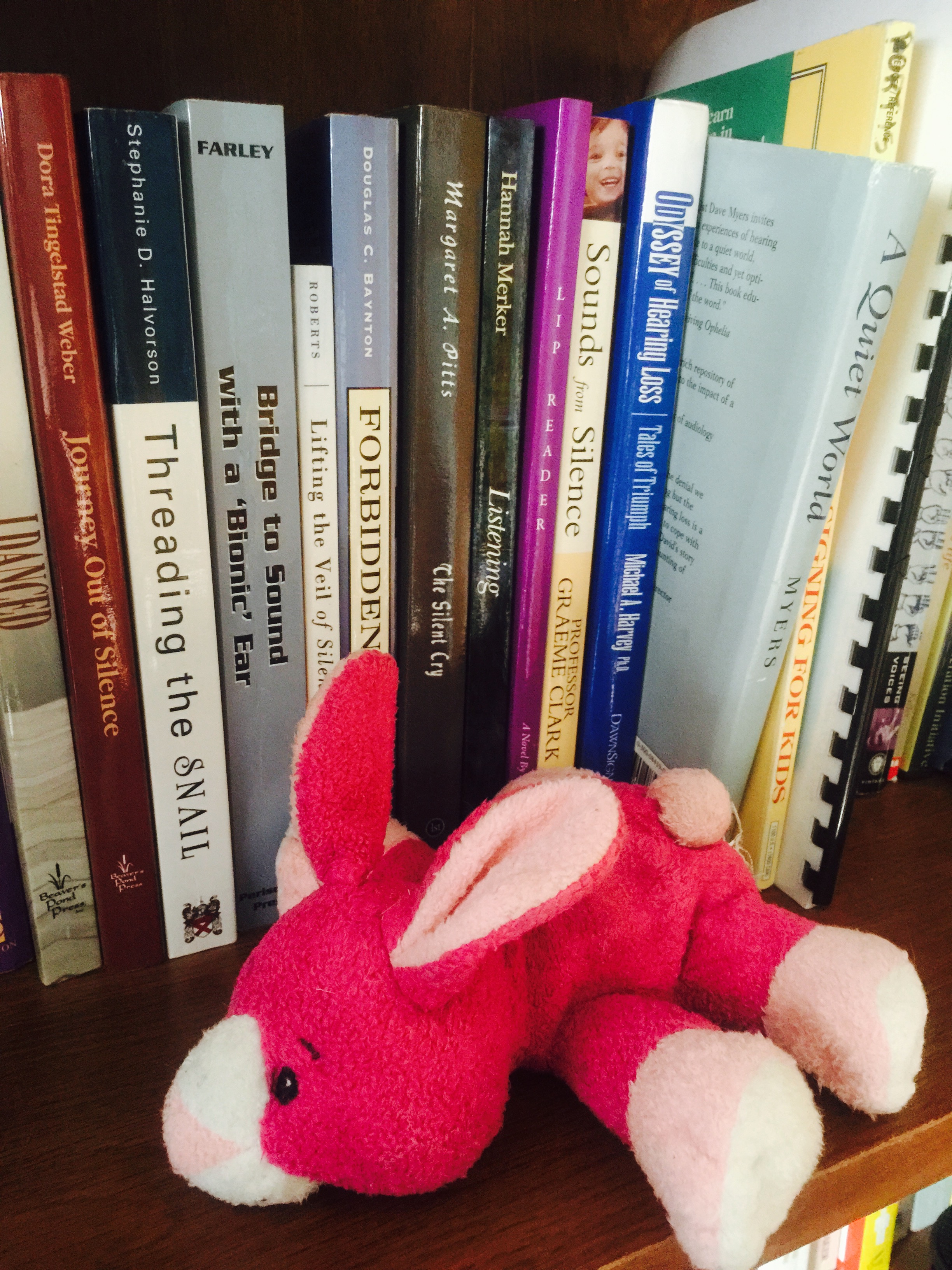
The bunny is currently resting...
The bunny is currently resting…

It may or may not be news to you that I am in grad school. Part of the program I am in requires academic residencies. I just completed another one on Dec. 27-30th and there are few things I despise more.

It isn’t because I don’t enjoy the workshops and expert speakers. I do.

It isn’t because I hate the schedule. It’s hard, but I can do it.

It isn’t because I am not learning anything. I am.

Academic residencies are very tough for me because a lot of blow-hards attend and I consider myself lucky to exit the residencies having met one or two people who ARE NOT.

I’ll admit it. I am a bit of a loner. It isn’t that I don’t LIKE people. I do. As a matter of fact, I love people. However, if I have 30 minutes to eat lunch, I’m not going to go to a crowded restaurant, nor stand in line for a turkey sandwich that costs $11.00 plus tax. I’m going to pack my own lunch, sit in a nearly deserted room at the next location of a required workshop, and work on my homework while I regenerate. (Did I explain I was part Borg?)

On Sunday, a longer residency day for me, I was holed up in a large room eating my lunch and tossing Chloe’s pink bunny while completing an essay on boolean phrases (aren’t I talented?) Unfortunately, by day two, other people are also figuring out these empty workshop rooms are great places to eat lunch. Some of these people are talkers. *grimace*

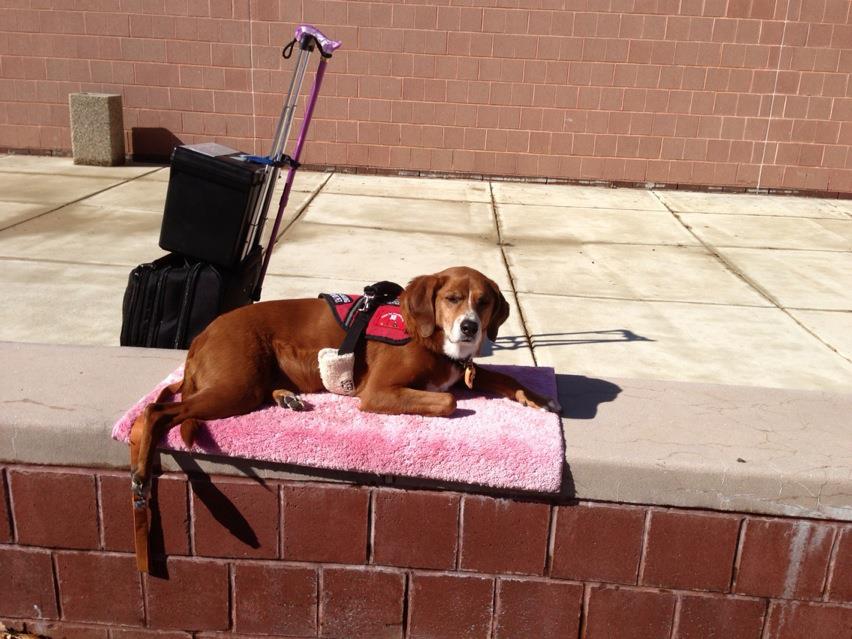
I suppose an “off vest” service dog playing with her toy, wagging her tail like crazy,  and huffing quietly to me so I’ll throw it again, invites spectators and conversationalists. Sometimes I really want to PLAY DEAF. I cannot, however, for I feel a certain responsibility to be a good testimony and example of a “hearing again” person. So darn it. I am pulled into conversations.

“Oh this is great that you allow your service dog an opportunity to unwind. That is a great stress diversion instrument!” said a very well-meaning (I’m sure) observer.

I know I looked at her funny. I’m pretty sure an eyebrow went up. Unfortunately, funny looks and raised eyebrows invite further conversation.

“Will your dissertation be about the place of service animals in the lives of persons with disabilities since you are a cognoscente in this area? I know many of us who are scholar-practitioners are aficionados in our area of interest”, said the now expectant observer.

I may love people, but sometimes? Sometimes I’m not very good with people.

I snorted.

That’s right. It’s a good thing my sinus were clear because lord knows what would have flown out.

I pointed to Chloe who was currently rolling around “scenting” her pink bunny and said, “You know that is a slobbery toy? It’s not an INSTRUMENT. I am doing my dissertation on something I believe in and yes, know well because I live it. But let’s cut the crap on the big talk. It’s lunchtime and I’m relaxing so you don’t have to impress me. Heck. I hardly even know what you are saying!”

Are you as horrified as I was? I wanted to slap my hand over my mouth and then immediately apologize. What happened next had me exchanging emails and finding a new friend.

“Oh thank God. My partner tells me to cut the crap all the time. Don’t you hate feeling like you have to ‘play doctoral program’ when you are here? I mean we are all just trying to get done, doing our best to reach goals. Holy realist, Batman. Can I eat lunch with you tomorrow?”

(In case you are wondering if that is her quote, I can’t make this stuff up. I even emailed her later and asked to “quote her” in an upcoming post).

I howled with laughter. I mean, I had tears rolling out of the corners of my eyes. Chloe was a bit concerned but continued to take advantage of her off-vest playtime.

Stop Trying So Hard

In the years I have chosen to identify as a person who is “differently abled”, I have met two kinds of kin.

One group of folks I feel a certain amount of kinship with since they, too, live with a chronic condition, disability, or invisible illness, are commitment-aholics. They choose to be involved in everything – just to prove they can. (A friend wrote an excellent post about this – click here to read it). They work so hard at making sure they are independent, they smack the back of the helping hand reaching towards them.

They work so hard at proving themselves at work, they are over-committed to volunteer committees and focus groups. They strive so hard to show the world (and themselves) that they CAN, they do very little well. They bust their butts to impress us. The reality is they walk around with – erm… – busted butts.

My other “cousins” are people who refuse to participate in much of anything for fear of letting others down. Instead of learning what their own physical, emotional, and mental limitations are and living an abundant life within those boundaries, they isolate themselves and refuse to put themselves in a position that they may blow it. They get around making poor choices by choosing not to make any choices at all. Their souls are withering and they don’t even know it.

Use Your Talents and Skills. Just STAY REAL

We all have talents. These are gifts we are born with while a skill, on the other hand, is something we are good at because we’ve worked hard at being good at it. We can even take natural born talents, work hard, become skilled, and use these abilities in our personal and professional lives.

It is very important to use what is available (talents) and work hard (become skilled) so that each of us can make a difference (with our abilities). Yet, too many times we get side-tracked by making sure folks recognize what we are good at doing. Cut the crap. Be real, but be nice. Be who you are – which means at times you are wearing a cape, and other times you are asking for assistance. Share who you are (why keep abilities to yourself?) but be a humble expert in who you are. Don’t be an over-achiever. Don’t be an under-achiever. Just be real!

Denise Portis

© 2015 Personal Hearing Loss Journal
 

Accepting Help ≠ Dependence

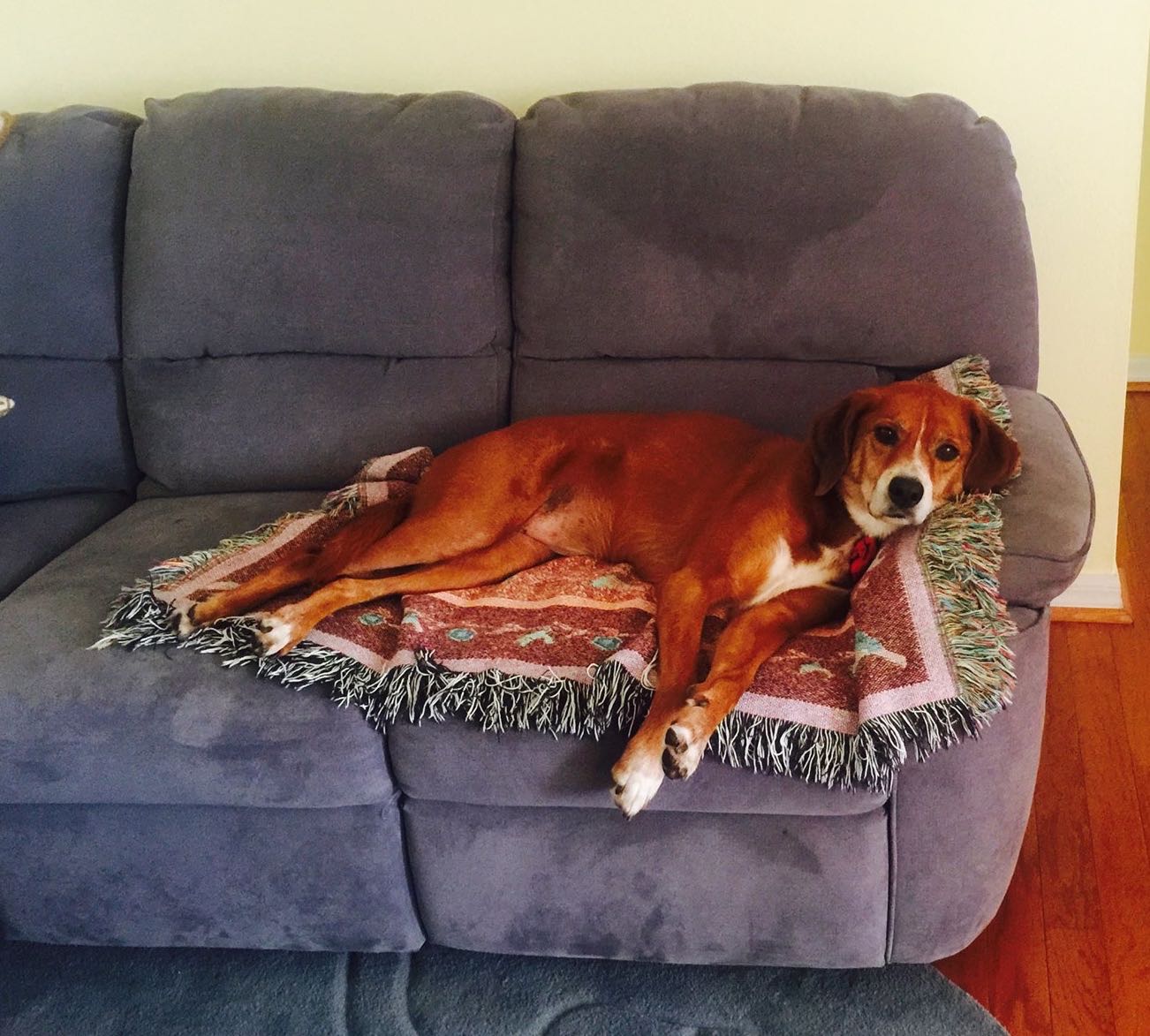
This service dog took full advantage of a holiday vacation in Florida.

My Christmas holiday was a blur. They can be that way sometimes. I flew to Florida with my husband to be with my parents for Christmas, but I had a TON of homework. Chloe, faithful service dog, at least got the opportunity to really chill out. When I got home, I headed to an academic residency for 4 days.

Even being super busy, I still learned a few things. I learned some things about myself, about other people, and about acceptance. I began to lose my hearing and balance at the age of 25. Now that I am 48-years-old, you would think I have learned all that one can learn after living with hearing loss and a vestibular disorder for 2+ decades!

Ungracious Acceptance

Acceptance of my life as it is, seems to be an ever-evolving concept. Sometimes I take things in stride. Progression of the toll my diagnoses have, a new “timber – down goes Denise – fall”, having to switch out cochlear implant batteries mid-conversation, taking the elevator instead of escalator or stairs, and having to wait for an empty handicap stall in public bathrooms so that my dog and I BOTH fit, is really second nature for me now.

But sometimes? Sometimes I am WITCHY about it. (Feel free to put another first letter there as it probably fits from time to time). Maybe it’s hormones? Perhaps it is a lack of sleep? It may be I just had an unpleasant encounter with someone who was condescending towards me when my being differently-abled became apparent. For whatever reason, at times when someone asks if they can assist I must look…

S c A r Y

I assume this because their eyes get big, they throw up their hands in an “I surrender!” pose, and they take two full steps back. I don’t MEAN to put off that vibe, but I know there are times I must do so. I work SO hard at being independent. I love the color purple, but that isn’t why I carry a bright purple cane. I love dogs, but that isn’t why my 24/7 partner is a service dog from Fidos For Freedom, Inc. I love dangly earrings, but I don’t wear “bling-bling” on my cochlear implant because I’m a drama queen.

(OK, OKAY! I’m a drama queen, but in THIS instance it is not why I have bling-bling on my cochlear implant! Yeesh!)

I do all of these things to be independent. I yearn for independence and inner strength. I forget sometimes that the latter is the result of a “thinker” and “feeler” in sync in the body of a person who is differently-abled. Part of it, I actually HAVE caught the exasperated looks on faces when I do ask for help with something. It can be fleeting, but it’s there. I’m deaf, not blind. (We can debate if differently-abled people are far too sensitive about this and see things that are not there later).

Yeah, so? Let’s Go!

While in Florida, amidst homework and research, I did insist on going out to eat every day. I did a little bit of shopping at a place we don’t have in Maryland. Bealls was a very cool place! We also do not have a Belk. So yup. I did a little shopping.

When we went out on the town to do these things, we had to borrow my parent’s car. It is a big ol’ SUV and Chloe had to sit in the back compartment. It gave her plenty of room to stretch out and seemed like a great option for four people plus one service dog. The problem was that my parent’s SUV sits very high. Chloe is 10+ years old. She is retiring in May of 2015 (unless she lets me know it needs to be before then). The first couple of times I gave the “Chloe… OUT” command, she jumped from the back, only to have her front legs collapse and do a hound face plant in the parking lot. The first time it happened, I gasped. The second time it happened, I’m pretty sure I yelled. OK, yeah. I don’t yell. I have a hearing loss. I SCREECH. Ask me to demonstrate sometime, but bring the ear plugs.

Because my husband, Terry, didn’t want to see what a third time would trigger, he suggested, “Let me lift her out of the back and set her on the ground!

I said, “Ok, but do it in a way you don’t embarrass her. Make it quick and don’t make a big deal about it.

Perhaps I should explain that I disagree with those who say that dogs don’t exhibit or feel some of the same things humans do. I have seen dogs excited. I have seen them pissed. I have seen dogs pouting (do I have some stories about my grand-dog, Pegasus, or what?). I have seen dogs embarrassed. Point & laugh and dogs will duck their heads in shame/embarrassment.

Chloe’s weight ranges from 59-62 pounds. Needless to say, we don’t carry her around. I wasn’t sure how she would respond to being lifted from the back and set on all fours on the pavement; nor, did I know how she would respond to being lifted up into the back of the SUV.

The first time we opted to lift the service hound out, I held my breath. Terry reached into the back, hooked his arms under her and locked his hands over her spine, and carefully picked her up and set her on all fours.

PUH.

I exhaled rather noisily, and watched as she wagged her tail and moved to heel position, looking up at me as if, “Yeah, so? Let’s go!

I was stunned. I had a treat in my hand to cajole her back into a good mood. Instead I went into the store as if nothing out of the ordinary had happened. I watched Chloe from the corner of my eye. (Ummm… explain to me how oval shaped things like eyeballs have corners?) I digress…

I fully expected Chloe to act, I don’t know… WEIRD for awhile. However, she took it all in stride. She needed the help, being rather fond of her own face, and didn’t even miss a step in going on about her job after accepting assistance.

Do you know where I’m going with this?

WHY???????

Why do we act so weird when we need help? Maybe it is just a little help.

… like picking up the dropped blue tooth device I spotted in a hallway that I could not bend to get, and didn’t want Chloe to destroy by enthusiastic fetching.

Maybe it was a lot of help.

… like helping me dislodge my wedged rolling briefcase from the elevator door as it was stuck solid. I struggled with my butt holding the door, cane braced, and dog freaking out as I tugged on a very STUCK wheel.

Sometimes? Sometimes, we just need a little help to continue doing our thing. We need a helping hand. We aren’t signing an I.O.U. If we truly want the world to be a kinder place, then why are we prickly when someone asks if they can help? By accepting help we are not sticking a “I’m WEAK” note on our forehead. We can accept help and still be independent. We aren’t waving all rights to an independent life should we accept help once in awhile. For most people, helping another is done so with no strings attached. They don’t even think twice about it. They may never think about it again, while WE sit there perseverating on it and making a huge deal about it. Why can’t we just say, “thank you!” and our attitude be, “Yeah, so? Let’s go!

PRIDE.

Pride can be a good thing. There are good types of pride, and crippling types of pride. Learn the difference. Learn to accept help. It doesn’t mean you are signing on to a life of dependence. It means that you are SMART. You know your limitations and are making wise choices to do what is best for YOU. Face plants on the pavement aren’t fun. All you will have for that type of stubbornness is a skinned chin. (Ask Chloe…)

Denise Portis

© 2015 Personal Hearing Loss Journal


Fundamental Attribution Error

hershey park

I drive my family crazy sometimes. I have psychology on “the brain”. Things I’m studying, things I’m teaching, things I’m thinking about (the dreaded dissertation looms after all), I tend to talk about. I mean a lot. Even when you don’t want me to.

Spring is a busy month for Hearing Elmo. For some reason, lots of folks tune in and contact me. I love to write (even email responses) so I don’t mind at all. To me? This is what Hearing Elmo is all about. I’m glad to be a small part in helping to raise awareness about invisible disAbilities and chronic illnesses. I learn SO MUCH from so many of you who write. So thanks! 🙂

Lately, I’ve had a lot of conversations both email and face-to-face with folks who are struggling with bad thoughts. Thoughts about strangling someone.

Even though it’s deserved.

People with disAbilities or chronic illness are often judged. Sometimes it’s a first impression. Sometimes it is by someone who knows better. I want to cover both today. In psychology we call this the “Fundamental Attribution Error”. Lilienfeld, Lynn, Namy, and Woolf (2013), explain that the fundamental attribution error “refers to the tendency to overestimate the impact of dispositional influences on other’s behavior. By dispositional influences, we mean enduring characteristics, such as personality traits, attitudes and intelligence. Because of the fundamental attribution error, we also tend to underestimate the impact of situational influences on other’s behavior” (p. 501). It’s that last part I want to talk about in this post.

People with Disability or Chronic Illness are Misunderstood

If you are reading this post you likely have some connection to invisible illness or disAbility. Perhaps your condition is not invisible at all. You may live with personal challenges.

easter 2014

Easter Sunday I came home from church with husband and hound dog and went downstairs to work. After about 20 minutes I came to the realization many of you do each and every day. I was wiped out. I knew I would get far more work done if I went upstairs to take a nap. Some folks call these “power naps”. Me? I’m not going to sugarcoat it. I need naps sometimes because I have Meniere’s disease and hear with a cochlear implant. I’m 47-years-old. I get tired. I get tired a lot! So trudging upstairs I passed my husband in the family room and said, “I’m going upstairs to take a nap“. I stood there a second to see if that elicited any reaction.

Now Terry has been married to me long enough to know that if I actually say I need a nap, you better let me take a nap. No smart remarks. He only said, “Be sure to close the blinds or Chloe will bark at every little thing“. I’ve “trained him well“, yes?

But it isn’t easy being the significant other of someone who has a invisible illness or disAbility. When Terry first married me I was only unilaterally deaf and no balance disorder to speak of. Fast forward 28 years and I am now at a point where I can still do a lot. I have dreams, goals, work hard, am a wife, mother, mentor, teacher, student and writer… and I take naps.

I have been out and about before running errands or just shopping with my best friend – Terry Portis. I have out of the blue said, “Ok. You need to take me home.” The last time this happened we were going to a super Target. We had just parked in the parking garage and Terry started to get out. “Ok“, I said. “You need to take me home“.

He stopped and looked at me. After a long pause he asked incredulously, “You mean… now?

I looked at him eyeball to eyeball (which can be uncomfortable with the risk of losing your contacts – but I needed him to know I meant business). “Now” I responded.

So we went home. Sometimes when I “run out of gas” I do so very suddenly. There can be little warning. You could make me push it and we’ll both risk the reality of a major nosedive in “Lawn and Garden” with mild concussion and concerned gathered crowd to show for it. (Clean-up on aisle twelve…)

None of us ask to develop acquired disAbilities. No one prays for a chronic illness. People we know and love may get peeved at us that we require more rest than we use to need. Part of it may be that they miss doing things with you that they use to be able to do. My husband loves Target. But sometimes? Well sometimes you need to take me home and do it NOW. That can be hard.

So those of us who have the chronic illness or disAbility need to be understanding too. But… don’t be afraid to talk about it. One of my favorite “opening statements” for a heart-to-heart conversation begins like this:

“When you say (or do) _________________ it makes me feel like _______________.”

It lets the people I care about know that it DOES bother me when they say or do something – not seeing the whole picture. They don’t understand the situation well enough to get why I behaved a certain way or responded a certain way. So I need to remind them. That’s OK.

If you are the “significant other” – try to put yourself in the other person’s shoes. You don’t want to really know what they are going through for that would mean you’d have to share the disAbility or diagnosis to really get it. What they are going through is really… REALLY…

HARD.

But you know what? They can get through it because you are there to help them, encourage them, and cheer them on! (So don’t forget how influential you can be, OK?)

For Those Who Don’t Know me

Several times a year someone who doesn’t even know me will say something that I almost come unglued about. I have one of those moments where I want to strangle someone. But in most states that is still against the law…

Costco, October 2013: I was in the meat section trying to decide how many crock-pot size meals I wanted to make in the next couple of weeks when I heard a woman about 3 feet away say, “Oh MY GOD!!!!!!!!!!! A dog, in the meat section. I’m going to complain to the manager“.

I turned around and saw this woman standing there with hands on hips and an embarrassed husband standing next to her. Well my friends? Sometimes good sense just rushes right out of my head. I pointed my finger in her face and said, “This is a service dog. I am late-deafened and have a balance disorder. This dog has picked up dozens of things for me since I’ve been in this store for the last 20 minutes. You shouldn’t judge what you don’t know. I’d rather have disAbilities than be stupid. You can’t fix stupid“. And I walked away.

Amidst applause. For it seems we had drawn a crowd.

Yet I will be honest with you. More times than not I do NOT get to say something pithy and intelligent. Sometimes my heart is broken. Sometimes I walk away crushed. Sometimes I strangle people. (Ok, maybe not but I may FEEL like it).

It can be really hard when people judge what they don’t know. After stumbling into an end cap at a store I had a person jest, “Little early to be drinking, isn’t it?” I could get mad and “let it rip”. Or strangle. Cuz yeah I’m a little sidetracked by how satisfying that would be right now. But folks don’t know me. They don’t know my reality, or my day-to-day situational influences that have me moving, responding, and requesting naps. Then I have to make a decision.

A) Strangle them

B) Scream at them

C) Walk away. It isn’t worth it.

“C” is the best response most of the time.

———

Do you get tired easily? Does fatigue trigger headaches, body aches, and brain fog? Do you sometimes just need a NAP? People may not understand that. They may think you are being lazy. They may think you should try harder. They may need strangled…

… with the truth. So tell them!

Denise Portis

© 2014 Personal Hearing Loss Journal
Lilienfeld, S. O., Lynn, S. J., Namy, L. L., Woolf, N. J. (2013). Psychology: From inquiry to understanding (3rd ed.). Boston: Pearson Publishing.


Alone in a Crowded Room

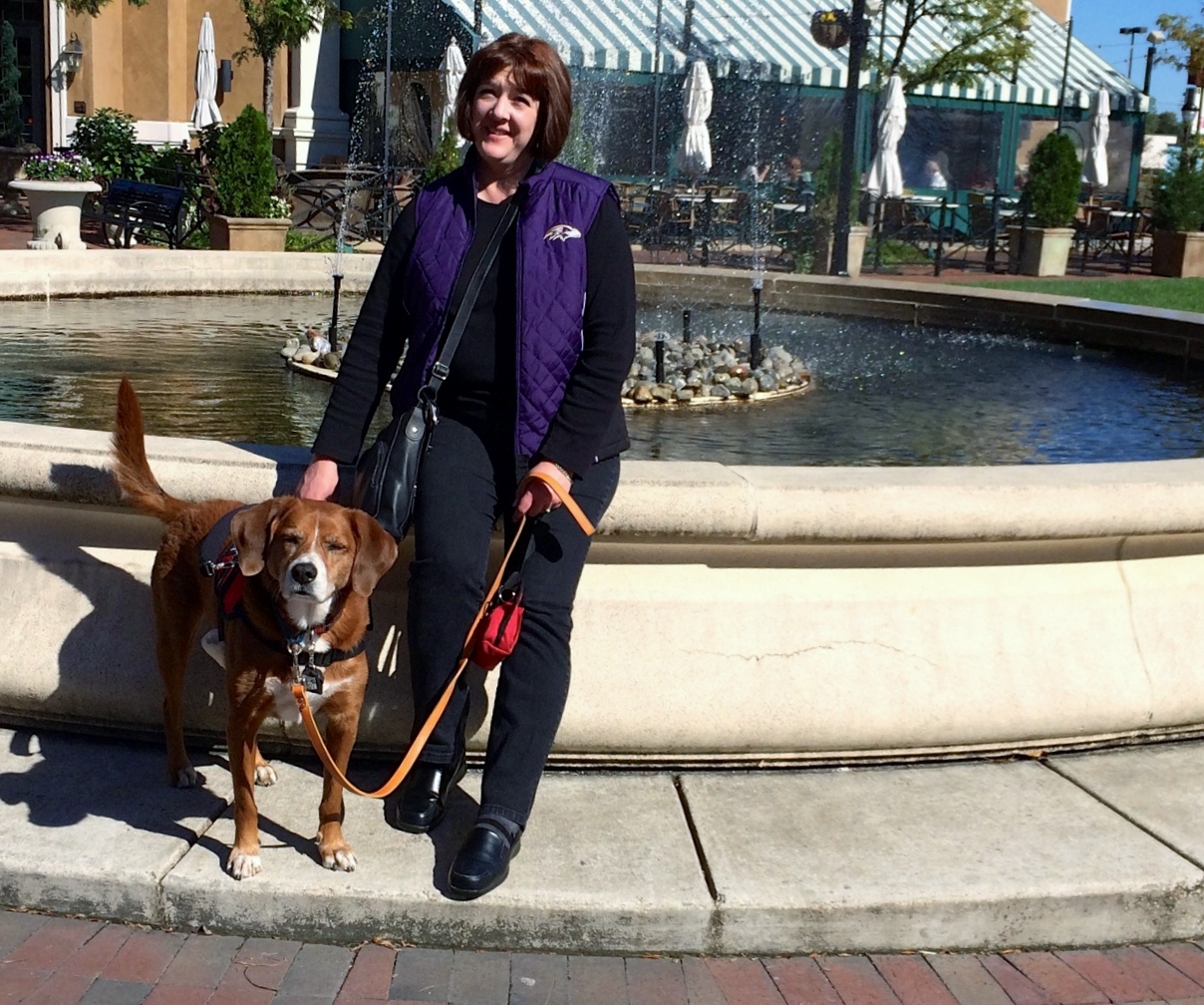
I can clear out a crowded fountain area just by "arriving". My wobble and service dog can put people off.
I can clear out a crowded fountain area just by “arriving”. My wobble and service dog can put people off.

I’m big on time alone. I guess I’ve always been a bit of a homebody. Don’t get me wrong. I love interacting with people. However, if I go to much time without some “alone time”, I’m a grouch. I can tell I’ve reached my limit when I don’t filter what I’m saying and just “tell it like it is”. I’ve always wondered if it is an unconscious desire to drive people away by just being mean and ornery because I want – I NEED – to spend some time alone? It is a little “red flag” for me. If I get grouchy, I examine my schedule to see if I’m spending enough time alone. The time is necessary for me to re-group.

Hearing loss requires ACTIVE listening

Perhaps it is because I have a hearing loss and it requires so much attention just to listen. I may need to repeat all or part of what I heard in order to seek clarification. I can’t listen without thinking about listening. Gone are the days I can prepare food in the kitchen or wash dishes while talking. I have to stop what I’m doing and actively engage in conversation to communicate. I have to see well to hear well. I have to stop what I’m doing and concentrate just to hear.

My husband has been accompanying Chloe and I for our evening walks lately. I’ve discovered that it is even difficult to WALK and talk at the same time. If I’m to communicate while walking, I don’t look to see where I’m stepping. It doesn’t take much for me to stumble. But who can watch the path if you are having to look at the talking head?

Needing alone time means that I prioritize “me time” just to give my mind a break. I don’t even have to “turn my ears off”. But just being able to “be” without having to give something – or someone my undivided attention is very necessary to my coping.

Alone because of Self-imposed isolation

People with disability or invisible illness are sometimes alone by choice. It is easier to be alone than it is to deal with others. Maybe the stares bother us. Maybe we are tired of having to tell the same ol’ story about why we move funny, have a service dog, or overuse the word “Huh?“. Maybe it is just HARD to get out and about. Physical barriers can prevent some people with mobility impairment from creating social networks, creating a feeling of isolation and a lack of access to support (Matt & Butterfield, 2006). It may be HARD to go shopping or run errands. It may require a plan of action not needed by others. Spur-of-the-moment activities may be a thing of the past for people who are “differently-abled”.

Maybe the person has felt shunned or as if they are “too much work”. I know that I have made the choice to not participate in something if I know I can’t be independent. It has kept me isolated at times. Chloe, service dog extraordinaire, can do so much for me. But she can’t disintegrate background noise so that I can hear better, nor can she eliminate a spin in my visual field. I’m incapable of visiting, for example, a food court in a mall without assistance. I cannot order, carry a tray, and walk to a table by myself. I’ve even clipped Chloe to my belt loop before with faith she would heel on command, and would find that I still have trouble balancing a tray with food and drink. I can’t balance it all and also look up to find an empty table. Balancing myself and avoiding falls is hard enough without trying to balance “stuff”! This has caused me to feel like I’m not as connected to some of the people I know who go and hang out at the mall or go to a coffee shop together.

Isolated because of Stereotypes

Sometimes people who are differently-abled are isolated because they ARE different. It is a common problem with human beings. If someone is different we may have stereotypes about what we perceive is different about them and then treat them in a unique way as a result. Sometimes people ignore folks with disabilities or chronic illness because they don’t know what to do or say. A colleague at work once told me, “Denise I’ve seen you wobble before just standing and waiting for an elevator. I was fearful that if I stopped and talked to you and accidentally bumped you that you’d go down for the count!” She had to learn through numerous interactions with me that I rarely fall as the result of another. I fall flat on my face under my own steam thank you very much. This same colleague told me that I “looked vulnerable”. Having a disability can scare people into keeping a distance – fearing what they don’t understand and choosing not to interact to cope with that fear.

People with disabilities can sometimes advocate in a very negative, belligerent way. After doing so, they only succeed in setting the stage for that person when they encounter the NEXT person with disability that comes into their store or restaurant. I can always tell when a manager has had “difficult encounters” when they come up apologizing all over themselves to ask if Chloe is a service dog or if they can assist with anything. They have had to “battle it out” with angry people before to simply inquire if the dog they have brought into their establishment is a service dog.

One day last month when I went out to eat I was given one of those electronic alert boxes to alert me as to when a table was available. The hostess kept apologizing and asking if she needed to come and get me, or would I be able to tell if the box was vibrating. Since it lit up and shook, I explained I didn’t need to hear anything. I would know when a seat was available. After being helpful to the point of almost becoming a nuisance, she said, “You are so nice. Usually when I ask if I can help someone who needs extra help they become angry and loud“.

I blinked a couple of times. It helps me process. I responded, “Oh I’m loud, but I can tell you want to help. Maybe you should wait to see if the person asks for extra assistance“.

Her eyes lit up and she acted as if that was the most novel, innovative idea. “Well why didn’t I think of that?” she gushed. Why indeed?

The administrator at one of the schools I teach at told me, “Denise? I never know if you want or need my help with something. So I’m going to trust that if you need help you will ask!” I’ve always appreciated that. I know my limits. I’ll ask if I need help.

Yet many don’t know what – if anything – to do to help. So they hang back and inadvertently ignore a person who is “differently-abled”. Regardless of abilities, most people just want to fit in and belong. They need connection. Without it a person can become depressed or anxious – even paranoid.  Pretty, Andrews, and Collet (1994) explain that two important aspects of connectivity: a sense of community and social support have both been found to buffer against the effects of stress, anxiety and depression and to enhance well-being. People don’t realize that by forcing isolation on someone they can cause emotional injury. There is a difference between choosing quiet time alone, and enduring the painful reality of being alone in a crowded room. So what’s a person to do?

Include them. Treat them like you would anyone else. Trust they will ask for assistance if needed. Treat them with respect – just like you should every person. Love them. There may be a few things they do differently, but their need for inclusion and connection is the same as your own. Work at really seeing every soul in a crowd. No one should be invisible.

Denise Portis

© 2013 Personal Hearing Loss Journal

Matt, S. B., & Butterfield, P. (2006). Changing the disability climate: Promoting tolerance in the workplace.American Association of Occupational Health Nurse, 54, 129–134.
Pretty, G. M. H., Andrews, L., & Collet, C. (1994). Exploring adolescents’sense of community and its relationship to loneliness.Journal of Community Psychology, 22, 346–358.

Reliable Transportation for Cara and her Tanks

cara

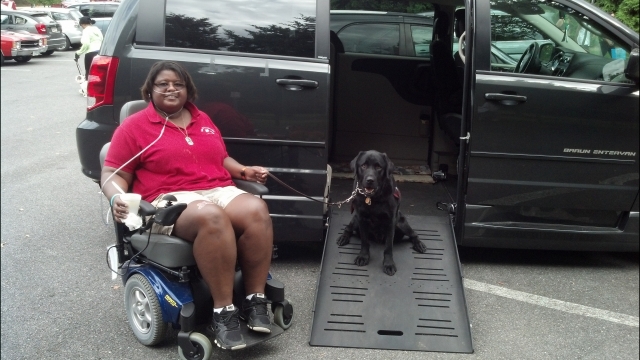
I have met so many special people in my life. One of those special people is someone who has become one of my closest friends. Cara is a fellow client at Fidos For Freedom, Inc., where I trained and received my own assistance dog, Chloe. I rarely promote fundraisers on here so I hope you understand that when I do choose to share a story it is because it is for a very unique and special reason.

Cara first joined the Fidos For Freedom, Inc., family to train and be matched with a service dog to mitigate a chronic illness – Multiple Sclerosis. Since that match with her beloved, Tank, she has also been diagnosed with additional life-threatening illnesses. Cara doesn’t let “life” get in her way. She continues to volunteer for Special Olympics as her son enjoyed the activities. Justin (her son) passed away a couple of years ago, but she continues to stay active giving of her time and energy to this wonderful organization. Cara also often provides leadership in various roles at Fidos For Freedom, Inc., and encourages new clients as well as “veterans” like myself.

Cara’s current transportation is “beyond any mechanic’s ability to fix” and she is fast coming to the point where she will no longer be able to attend Special Olympics activities, or Fidos For Freedom activities and trainings. Cara is trying to raise money for the conversion of a used van to make it accessible for her use. Please read her story below and click on the links provided to read an in-depth biography of this incredible lady – as well as information about why she is raising money.

Imagine not being able to go out and hop in a car, call a taxi, etc., because you do not have transportation that can carry you, your wheelchair, service dog, and oxygen tanks. You become house bound and lose the ability to be involved with others and with life. Help us not let this happen to my friend, Cara.

This is not a scam. Would you consider donating even a small amount? More importantly, will you share this post with others and encourage them to donate small amounts as well? In a short time, people networking with other people, folks who CARE about others and reach out to help, will help Cara meet her goal to have reliable transportation so that she may continue the quality of life she enjoys. I hope you will consider helping – and sharing!

===================================

Today I’m launching a fundraiser at http://tinyurl.com/AVanForCaraAndHerTanks. I usually don’t like asking for help, but find myself in the humbling position of needing to do that.

Due to my failing health, I am using my wheelchair a lot more often lately. The lift in my van is labor intensive and is becoming more difficult for me to use. In addition, my van is old and I’m concerned about it’s safety on the road. I drive myself to the hospital and to several specialists, almost once a week.

I am asking for your help in raising the funds I need to modify a used van with an automatic ramp, lower the floor, put in a kneeling system, etc. This will allow me to transfer to my chair safely from inside the van. I’ll be out of the elements, away from strangers, and out of the way of traffic.

Please visit my fundraising page at http://tinyurl.com/AVanForCaraAndHerTanks where I share my story and to find out how you can help. If you would also share this with your friends and family, it would help me greatly!

Thanks in advance for taking a look and helping if you can! Cara, service dog Tank, and O2 Tank, Jr  🙂

Denise Portis

© 2013 Personal Hearing Loss Journal

A Pocketknife to Clean Your Nails

pocketknife

ABOVE… My dad in 2011 when he visited Gettysburg with us.

Do you know every time I retrieve a nail file to smooth, clean, or file my nails I think of my dad? Isn’t it funny the kinds of things that will recall a memory for us? Not the kind of recall that triggers our sympathetic nervous system and launches a flashback in folks who suffer from PTSD. Instead, the kind of recall that knocks on the door of our heart with a “feel good” memory. The memory replays a specific conversation or event. For me, when I use a nail file I vividly recall how my dad would clean his nails with a pocketknife.

I couldn’t have been more than 7 or 8-years-old, for we had not yet returned to the family farm. My dad still worked for International Harvester at the time. One day I sat watching him clean his nails with a pocketknife.

“Why do you use your knife to clean your nails?”

Dad continued to clean his nails and thought about his reply. The man never just “spoke off the cuff”. He responded after a bit, “It does the job”.

“Well, will you clean MY nails?”

With less thought he replied, “I can’t. I can’t tell where your nail stops and your finger starts”. He scooted closer to allow me to see from a different angle how he was using his knife to clean up under the nail. I may have been young, but I immediately grasped why he couldn’t clean MY nails with this unconventional method.

Although I never could bring myself to clean my own nails with a pocketknife, I learned over the years that one can do things just as well by means of unconventional tools and methods. I would not have understood if someone had tried to tell me that I would eventually become deaf and develop Meniere’s disease – a balance disorder, and that by doing so I would have to adopt some new means to navigate my world safely.

Works For Me – But Maybe Not for you

I suppose one of my biggest pet peeves is when folks start dictating to someone who shares a diagnosis how they MUST go about treating that disease or disorder. Just because something works well for YOU, does not mean it will work well for someone else. This doesn’t mean we shouldn’t be willing to tell our story and share what works for us. Peer networks and support groups are invaluable in my opinion. However if I chose to use a nail file to clean my nails, and you choose a pocketknife, all that should be celebrated is that the end result yields positive benefits for us both. Clean nails are clean nails no matter how they got that way.

That doesn’t mean the process to clean nails is always easy. I have to sit to brush my teeth. That toothbrush swishing around in my head will make me pass out if I do not do so from a seated position. I never could sit on the lid of the commode to brush my TEETH. So I step into the bedroom and sit on the hope chest to brush my teeth. I have to be sure to keep my mouth closed so that there is no splatter. Ewww, right? This last week as I was sitting there brushing my teeth, it just hit me wrong. Here I was 47 years old and unable to brush my freakin’ teeth over a freakin’ sink like a normal – erm – FREAK! So…

I started crying.

My husband stepped into the bedroom. I can’t imagine what he saw. Here is the wife sitting and brushing her teeth, sobbing her eyeballs out, toothpaste now EVERYWHERE, including dribbling down her quivering chin. He calmly said, “You OK?”

Did I look OK? Alright, yuppers… I didn’t actually WANT his help. I just wanted to finish brushing my teeth. Those FREAKIN’ ones…

When a person with disability or chronic illness finds a way that works for THEM, it doesn’t mean it is easy. But this is why we are not disABLED. We are differently-abled. It is quite a cognitive and emotional boost to discover you can still enjoy something you did before – only in a new way. It may look strange, novel, or genius… but the reality is “it gets it done”. Yet what I find works for me, may not work for someone else with Meniere’s disease. I cannot safely clean their nails with my pocketknife.

Celebrate the Day

Gee, we live in a wonderful age of technology! When I think about the miracle in that I’m hearing again bionically, and all the cool tools available to me through simple apps on my iPhone, or special assistive technology, I get goosebumps! I live in a country where service dogs OTHER THAN guide dogs are fairly common. Email and texting – two communication devices I utilize frequently, are favored among the NORMAL hearing population. This makes my life so much easier!

Folks with mobility issues, learning challenges, hearing loss, chronic illness, and various disorders have options available here in the U.S. that we did not have 30 years ago – or even 10 years ago! Yet some of the things we learn to do are through our own ingenuity! I have quite literally patted myself on the back and mentally “high 5’d” myself when I discover a new way of doing things. To you being able to do the laundry without actually having to change the altitude of your head is not very impressive. But to me? This is a “WOO-HOO” discovery. But the proper lean formation, use of step-stool and service dog work for me. They may not work for you if you, too, have Meniere’s disease. But be willing to share ideas with each other without dictating proper protocol. The end goal is clean nails after all.

Denise Portis

©2013 Personal Hearing Loss Journal

You’re So Vain…

chloe hug

I love my local grocery store. Not so much that I was pleased I had to go twice this week after forgetting a few items, but the aisles are spacious, the employees know me (and Chloe) by name, and I save a lot of money in both sale items and even gas points. My unexpected impromptu second visit this week was disastrous, at least from an emotional standpoint. I came down the aisle looking for those elusive cotton balls that I failed to remember on my first trip and met a lady only slightly older than me with two canes. We stopped to chat for a minute and thought I had met another who understood when she surprised me by saying, “I just couldn’t work with a dog. It seems so vain because so much attention is brought on by being with one“.

I could feel the heat creep up in my face and I blinked back tears as I stuttered out, “Well different strokes for different folks I suppose“. (I’m always so proud of how eloquent I am in a pinch *rolls eyes*).

I really had very little left to say so quickly cut it short and moved on to find those STUPID cotton balls. Because ya know? Now I was MAD after that initial “kick in the gut” feeling so I determined then and there those cotton balls were stupid. Made me feel better anyway.

My husband and I kid around about how vain Chloe is. Her biggest fault as a service dog is that she is too friendly. She’s a flirt. She gets gently reprimanded on days my balance is really off if I put her in a sit/stay while talking, but then she wags and flirts and stretches for a kiss. Heaven forbid someone actually switch their attention to HER! Then she is like, “You love me. Denise loves me. We all love me. I love me.” She’s so vain! (♫♪ Chloe, you probably think this post is about you! Don’t you? Don’t you?♪♫)

Many people with invisible disabilities are not in favor of mitigating their disabilities with a service dog because it DOES bring attention to you. As a matter of fact, I know of cases where folks drop out of training programs when they discover that this service dog will bring unwanted attention to them. That isn’t worth it in their opinion. And… that’s OK. I have Meniere’s disease (a balance disorder) and am hearing again with cochlear implant technology. I HAVE chosen to mitigate those invisible disabilities with a service dog. I wear bling-bling on my cochlear implant processor. On days my balance is REALLY bad, I use a bright purple, metallic cane. This works for ME. It doesn’t mean it will work for YOU.

could’ve should’ve would’ve

If I could’ve… if I shoud’ve.. or if I would’ve – I suppose if I hadn’t been on the verge of tears I would have told this woman:

Do you know that before Chloe, I spent 20-30 minutes before work each day changing outfits trying to find one that hid all the bruises from my falls?

Do you know that when the elevator was temporarily out of service this week I didn’t have to cancel class because Chloe was able to counter-balance for me on the stairs?

Do you know this cochlear implant bling-bling helps people remember to face me when they speak if it is obvious I’m not hearing well?

Do you know all these patches and certification tags on Chloe’s vest legitimize her role as a service dog so that I have less access issues?

Do you know it takes me 45 minutes to get groceries each week now because Chloe picks up the things I accidentally drop compared to the 2 1/2 hour trips I use to have?

Do you know I never have to ask a stranger to pick up something for me now?

Do you know I’m working again because I don’t have to worry about putting students out to pick up pens, erasers, markers, or papers for me in the classroom?

Do you know I never have to worry about missing a phone call now?

Do you know I have the sweetest, “kiss me awake” alarm clock in the whole, wide world?

DO YOU KNOW I THINK YOU NEED A DOG BECAUSE YOU OBVIOUSLY DON’T HAVE ENOUGH LOVE IN YOUR LIFE?

Ok… maybe that last one is unnecessary.

But the reality?

weather vane

People with invisible disabilities or chronic illness are more likely to deal with VANES instead of vanity each and every day. We have things we pay attention to so that we stay SAFE, red flags that remind us we are pushing our limits. Boundaries in place to keep us from over-doing things. I know my body better than anyone… even my doctors. This past week we had torrential rains on Thursday. On Wednesday, I was in “full disability regalia“. Chloe, cane, and fresh batteries in the “ears” and still I wobbled and fumbled my way through the day because there was a system coming into our area! A student said, “Wow your balance is really off today!

I replied, “Yes! I’m a human barometer and much more accurate than the Weather Channel!

A thoughtful pause and then, “Is there an app for that?” (snicker… I love my students).

Like a weather vane that helps farmers or meteorologists know which way the wind is blowing, people with disabilities have things in place that allow them to “take their pulse” each day to see how to safely navigate the world around them.

I’ve met a good number of people who have a service dog. I’ve never met anyone that I suspected of choosing to do so because they wanted the attention. And so please understand that the only one who is vain in my partnership is CHLOE.

♫ You’re so vain
You probably think this POST is about you
You’re so vain
I’ll bet you think this POST is about you
Don’t you? Don’t you? ♫

That’s OK. If Chloe’s weakness is that she is warm and friendly… I can live with that.

Denise Portis

© 2013 Personal Hearing Loss Journal

Obtuse on Purpose

Chloe enjoys some downtime in between classes.

Sometimes, someone just rubs me wrong. I try to practice what I preach here at Hearing Elmo. I know that my interactions with another person can influence their opinion about – for example, all people who have a service dog, or all people who have a balance disorder. Yet sometimes… someone just rubs me wrong and I respond inappropriately.

In the early days, if someone made a comment about my service dog, cochlear implant, or wobbly gait, I’d put my hands on my hip and “give them what for”. It was pointed out to me by friends and family that I needed to work on that. It was hard for me not to have a knee-jerk reaction to what I viewed as rudeness.

Today, I do better. Yet sometimes… someone rubs me wrong. I had a day like that this week.

I went to the copy center to copy an exam I was getting ready to give to eager Introduction to Psychology students. *snort*  The copiers are jamming up and not wanting to “do staples” right now, so I brought my exam to the front desk and asked for assistance. As I waited for it to be printed, another professor came into the copy center.

“Oh what a beautiful dog! I just think it is terrific what you do. But I don’t know how you give them up, honestly!”

I was obtuse on purpose.

“Oh, I’m keeping her. I’m not going to give her up“, I replied.

L   O   N   G          P   A   U   S   E

“I’m sorry?” she asked, clearly confused.

“I’m not going to give her up. I’m keeping her”, I repeated.

L   O   N   G          P   A   U   S   E

“But… but don’t you have to give them back?” she asked.

“She’s my service dog. We’ve been together almost 6 years now”, I replied with saccharin sweetness.

L   O   N   G          P   A   U   S   E

“You mean a therapy dog?” she asked, still clearly confused.

“Oh no. She is an assistance dog. I really couldn’t do my job without her. She’s essential to my even being here”, I admitted.

L   O   N   G          P   A   U   S   E

“But… WHY do you need her?”, she asked as she leaned closer to finally read all the details on Chloe’s vest. Her eyes got big and she murmured… “Oh…”

Then she looked at me. She actually took a step to the side to look me up and down. I was incredulous! I shouldn’t have been surprised when she said, “You don’t look deaf or talk like you’re deaf”.

With a huge, sweet smile I exclaimed, “Well thank you!” (refusing to even go there). I inwardly chanted my motto… “EDUCATE ONE PERSON AT AT TIME”.

She continued to wait in line and watch me. Finally, my copies were done and I allowed Chloe to do “paws up” to say hello to one of her friends behind the desk. He patted her once and said, “Now you take care of your mom, Chloe! Don’t let her fall today!” Chloe wagged her tail and turned to see me out the door.

I noticed this other professor’s eyes get even bigger as she stared at us while I gathered my things to prepare to leave. I’m talking, openly staring, not even pretending to be sly about it. As I turned to push open the door, I turned, looked her in the eye, and said, “You know? You don’t look like a hearing person!”

I was obtuse on purpose. And perhaps – a little mean. I’m pretty confident, however, that in this one instance – it may have helped open her eyes at her own behavior. One can hope, right?

Invisible illness and disability are invisible. Duh, right? The very nature of what these disorders, illnesses, and disabilities are mean that at first glance, you cannot see them. It may not be until someone bends, or walks, or speaks, or sits that you notice what is really going on with them. Please respect them enough to not ask impertinent questions.

Making a Difference

At a Giant grocery store several weeks ago, I came in the door right behind another lady. She sat in the nearest motorized shopping cart and proceeded to pull out carefully. To keep Chloe’s paws and my clumsy feet out of her way, I stepped to the side for a moment and smiled while waiting for her to go by me. A woman turned from the produce section with a bag of lemons in her hand (appropriate – believe me) and said to this lady, “Oh wow, you should leave those for handicapped people. That is why they are there!”

The lady sat there a minute stunned. I felt like leaning over and whispering, “Gun it dearie. You are aimed right at her!”. Instead I put a hand on her shoulder (which made her jump) and said, “Some people don’t realize that some disabilities are invisible. Ignore her”.

Her eyes filled with tears and she seemed disconcerted by both this woman’s comment and my own intervention. To not bring any more attention to the situation, I patted her shoulder one more time and walked towards the vegetables.

Whether you have an invisible condition yourself, or know someone who does, you can EDUCATE ONE PERSON AT A TIME. Perhaps being obtuse on purpose is not the best way. However, you CAN find a way to make a difference! Look for opportunities to do so!

Denise Portis

© 2013 Personal Hearing Loss Journal

The Road to Rescue

Hunter with service dog, Raven.

A young woman I have come to admire, Hunter Lia Zager, received her service dog from Fidos For Freedom, Inc. where I train with Chloe. Hunter has a rare and unusual disease that even leaves her doctors stumped at times. She desperately needs the funds to get her vehicle modified for accessibility. The state is helping with a big chunk, but she still needs to raise over $12,000 herself. Hunter is only 25 years old and currently relies on (often unreliable) public transportation to go to work, doctor appointments, and much more. Imagine being limited to your home many times, simply because you lack a vehicle that can carry wheelchair, service dog, etc. Minimum donations are only $1.00 and you can donate using PayPal, or debit or credit card. If you would do two things?
1) Share this need with others on your own BLOGS.
2) Consider donating – even SMALL amounts add up.

I know times are hard for many people. However, I want to help this courageous, wonderful young woman reach her goal so that she can have reliable, accessible transportation. Please help. Please share! Thank you!

TO DONATE

Hunter’s story:

My name is Hunter Lia and for the first time in never I’m asking for help. At 25 years old I am terminal, but I have never held my arms up and said I was willing to stop my fight. 5.5 years ago I became ill with a very rare neurological disease, Complex Regional Pain Syndrome (CRPS), the most excruciating disease known to modern medicine. The road has been hard, but I am so terribly blessed to have such wonderful people and a wonderful service dog in my life who have helped carry me through the toughest of times.

This disease has consumed my entire body and caused me to reach deep stage 4. CRPS didn’t stop there, it turned my body into melting pot of other diseases. It has paralyzed areas of my body such as my intestines, which are incapable of processing food (Gastroparesis), created a neuro-cardio disease, Postural Orthostatic Tachycardic Syndrome, a neuro-pulmonary disease, Respiratory Dystonia of the Chest Wall, Spinal Stenosis, and countless other conditions and diseases. It is also now believed that on top of all this, Multiple Sclerosis (MS) might be one of my latest additions. Having every aspect of your body fail you is a tremendous burden for one to carry, especially when you’re just 25. Most 25 year olds are able to go out at night, travel, make plans for the future…for me, just the thought of that takes up all my energy. I wear devices for low hearing and low vision, but outside of attempting to take my wheelchair and service dog everywhere, it’s difficult to make my life easier and manage with a disintegrating spine, excruciating pain, and countless other symptoms and challenges.

One reason I’ve struggled so much is that my vehicle is not accessible. I traded in a SUV for a minivan in the hopes I could outfit it to all my body’s needs. I never realized the costs would be over $45,000 to adapt the vehicle. I am getting state assistance, but the last 25% is my responsibility. With all the other medical expenses I’ve had to incur, I don’t have even a fraction of the money to pay the company responsible for outfitting the car. I need your help. I am trying to raise over $12,000 to make my vehicle accessible. If I could do this, I would no longer have to worry I wouldn’t be able to keep my job and health insurance due to transportation challenges, worry about not having a vehicle in an emergency, reach doctors and specialists, and really just live life to the fullest. I know this economy is difficult, but every penny will help me reach my goal. And if that’s too difficult, passing this on would mean the world to me. Thank you for taking a moment to ready my story.

TO DONATE